Home Blog Page 2161

You will plunge Nigeria into more hardship, PDP tackles APC senators over $22.7b loan approval


THE main opposition party,  Peoples Democratic Party (PDP) has reacted to the approval of President Muhammdu Buhari’s request for a fresh $22.7 billion loan by the senate on Thursday, saying that the ruling All Progressives Congress (APC)was only out to repress and plunge Nigerian citizens into more hardship.

The PDP in a statement issued in Abuja by its National Publicity Secretary, Kola Ologbondiyan, particularly called out senators under the platform of APC who it said have further shown that their party does not have the interest of Nigerians at heart with such approval.

It said it was distressing that the APC senators approved the loan, even when the Buhari Presidency has not justified the request; a situation that validates apprehensions that the APC senators have become rubber stamp legislators.

“The fact that the $22.7 billion loan request brimmed with unexplained, obscure, over-bloated and questionable subheads, such as the scandalous $500 million dollars (N180 billion) smuggled in under the guise of upgrading the NTA shows that the APC and a cabal in the Presidency are in a huge financial racket, for which they are ready to plunge Nigerians into more suffering.

“In approving the loan, even after it was clear that Nigerians are averse to it, the APC senators have confirmed that they are in league with other APC leaders to fleece our nation and bring more hardship to Nigerians,” PDP said.

The party noted as disheartening that under the Buhari Presidency the country’s foreign debt has continued to accumulate with nothing to show other than excruciating unemployment rate, decayed infrastructure, a worsening governance system, escalated insecurity and unprecedented poverty.

It however, commended the PDP senators for standing with Nigerians in fearlessly rejecting the loan as it would bring more hardship and further mortgage the future of our nation.

The PDP therefore called on Nigerians to unite in defence of the nation by raising their voices to demand that senate reverses this unpatriotic approval, “which is completely against our national interest.”
Senate approves $22.7b loan amidst rising debts, depleting foreign reserves

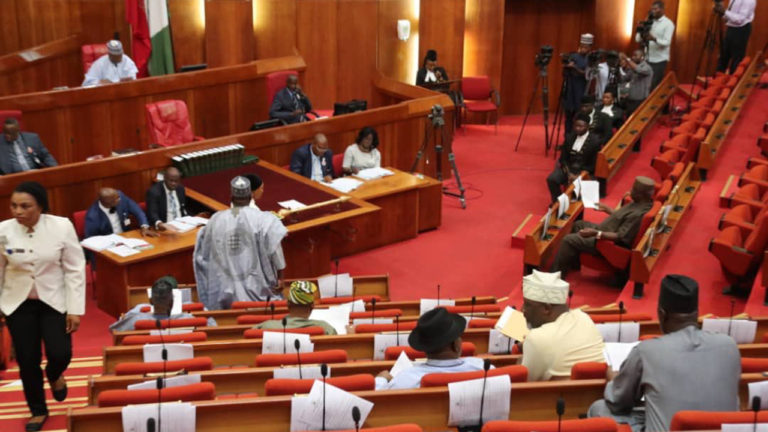
THE Senate on Thursday approved $22.7 billion loan request by President Muhammadu Buhari.

The request was finally approved after initial objection from selected members of the red chamber.

Prior to the approval, the lawmakers had heated argument for about 45 minutes which eventually ended in a closed-door session.

Enyinnaya Abaribe, the Senate Minority Leader was more vociferous among other senators who kicked against the request for the $22.7billion loan by the president.

He tasked the lawmakers against immediate consideration of all recommendations required for the loan, as spelled out by the Committee on Local and Foreign Loans.

According to him, the two-item recommendations should be considered one after the other, “item by item.”

“We are going to pass a loan approval of $27 billion and we that will pay back are making efforts to seek clarification but you Mr. President, you are not giving us the privilege to make our point known,” Abaribe said.

“All I wanted to point out which we found out on this floor that you are denying us is that there are some aspects of this loan that we must vote on to decide whether they are in our interest or not. And the Senate Leader had confirmed with me that he wanted the same.

“We accept the ones that will raise our economy. We have some issues with certain things in there. The reason report of committees come to the general house is for us to make our inputs into those things, now we want to make our input but you shut us out.”

But the Senate President, Ahmed Lawan accused him of providing only synopsis rather than full details of his point of order regarding the loan.

“You have not been denied. Minority Leader, you know the process more than anybody else. So, you have not been denied.”

Lawan further insisted that the minority lawmakers have had their fair shares on the floor of the senate.

However, the senate president disagreed with Abaribe.

He insisted that the loan would be used for the benefit of the majority of the masses such as developmental projects.

It could be recalled that the last Senate under the leadership of Bukola Saraki turned down the loan request.

Meanwhile, as of July 2019, the Debt Management Office (DMO) pegged the debt at $68.74 billion.

The debt is, however, projected to rise to $160.94 billion by 2021 and $245.79 billion by 2024.

ICIR announces names of successful applicants for open contract reporting project

THE International Center for Investigative Reporting, (ICIR), is glad to announce names of successful applicants for its Open Contract Reporting (OCR) project for Nigerian journalists.

A total of 108 in all, the successful qualified journalists are drawn from the online, print and electronic (Television and Radio) media across the six geo-political country. An average of three journalists were chosen from each state.

The project is aimed at building capacity for Nigerian journalists to investigate and write about budgetary and procurement issues, with a view to promoting accountability and transparency in the public sector.

However, unlike the first phase of the OCR project, this would focus more on journalists working in states and local government levels. The goal is to make these tiers of government more transparent and accountable in their budgetary and contracting processes.

The project, funded by a two-year grant from the MacArthur Foundation, is part of its On Nigeria Project, which seeks to reduce corruption by supporting Nigerian-led efforts that strengthen accountability, transparency, and civic participation.

The qualified journalists will participate in two intensive training programmes over a two-year period that will be delivered by professionals from within and outside Nigeria. The training programmes for 2020, six in all, the first of which would be held in April, are scheduled to hold in different zones of the country.

The ICIR would provide financial support to the journalists to undertake investigative reporting projects on budget, procurement and contracting processes in critical sectors of the economy, including Power and electricity, Education, Water and the Environment and Health.

Successful candidates will soon be contacted for the next stage on the project. They are:

North Central North West North East 
Abdulrauf Halima Abullahi Zulkiful Adenuga David Oluwayomi
Abubakar Bashar Akoji Ojonicko Akoji Ahmed Amina
Akogun Abdullahi Dare Ashiru Salim Mahuta Al-Gazali Abdulhamid
Alagboso Chibuike Clement, Philip Shimnom Azubuike Nathaniel Chima
Aliyu Usman Omotosho Ibrahim Abdullahi, Yunusa Bashir, Hassan
Amos Abbah Isuwa Sunday Duku Joel
Busari Sabitdeen Niyi Khadeejarh, Mohammed Fidelis Jack Vincent
Deshi Munkuwe Nengak Khadija, Ishaq Bawas Habiba, Garba
Emejor Chibuzor Kelechi Kolawole Omoniyi Hamza, Suleiman
Fadare Titilope Lawal Mohammed Dahiru Ibrahim Abdullahi Ahmed
Gai, Victor Nick Midat, Joseph Ishola, Michael Adeyemi
Gwamzhi Lisa Gwamkat Muazu Abubakar Ahmad Mohammed Haruna Salisu
Ibrahim Mshelia Andrew Naziru, Idris Ya’u Okechukwu, Onuegbu
Joseph A. Danjuma Oyibo, Salihu Padio Phineas
Nnabuife Collins Salisu Yakubu Peter Cheman Koti
Omidiji Isaac Tope Shindong Aquila Bala
Owolabi Damilola Paul Solomon Kefas Steven
Oyibo Ediri Suleiman Qosim
Seun Durojaiye Tunde, Omolehin
Uchehara Ikedichukwu Usman Mukhtar Yahya
Uduu Ode Nasiru Yusuf, Ibrahim


South East South West  South South 
Acha Emmanuel Onwuka Abiaziem Chinyere Oluchi Aliogo Ugo
Alonta Gabriel Chidiebere Adegboyega Abimbola Chime Vivian Chekwube
Aneke Chidera Rosecamille Agbor Timothy Chuku, Edith Onyinyechi
Attah Aloysius Emeka Akinola Adenitan Charles Ehvwubare Markson Oghenekparobo
Chijioke Arinze Gideon Ayeleso Olorunyomi Ekpokpobe Iteveh Okeoghene
Emoghene Paul Fasogbon Omolabake Yemisi Elom Sunday Njoku
Jude, Chienedu Igbonwelundu Precious Ijeoma Ezenwafor Chioma
Kenechukwu, Andeh Jibueze Joseph Ikisikpo Marian Onyinye
Nchetachi, Chukwuajah Kanabe Olere Medinat Izogu Oweikewari Preye
Ndeke Uche Kolawole Tobiloba Ayodele Joseph Ebitibi Kanjo
Nkwo-Akpolu Moses, Peter Obeme-Ndukwe, Ifunanya
Nwazue Emmanuel Ogunjobi Gabriel Ayodeji Okenyi Kenechi
Onuoha Andrea Oyedeji ‘Niyi Onojeghen Okpare Theophilus
Pamela Eboh Oyetunde Oluwatobi Saasongu, Stella Shina
Tochi, Onyeubi Seye-ojo folashade Simon Ekemini Enobong
Tajudeen Adebanjo Uchegbu Kingsley Ndubuisi
Uthman Samad Udobia, Edidiong Udobia
Ojuroungbe Sodiq Temitope Uko, Dianime Friday


About ICIR
The International Centre for Investigative Reporting, ICIR, is an independent, non-profit investigative reporting news organization, which aims to use watchdog reporting to promote transparency and accountability in the public space.

With donor support, the Centre has successfully trained over 500 Nigerian journalists from newsrooms across Nigeria in Investigative and Data Journalism and supported over 500 investigative reports published in several news outlets within and outside Nigeria. Many of these investigative reports have won awards, nominations and fellowships owing to the impacts they contributed to societal and economic development.

About PPDC
The Public and Private Development Centre, PPDC, is a non-governmental organization that advocates for open data and transparency in procurement processes in Nigeria. With its work in the last 10 years, the PPDC has become Nigeria’s most respected procurement-monitoring agency.

The PPDC seeks to increase the participation of citizens in procurement governance in a way that prevents corruption and in the last 10 years worked actively on procurement governance issues.
To enable journalists to report more on procurement processes and link these to public services, PPDC uses the Budeshi platform to also empower reporters in linking expenditure to public infrastructure and services.


CBN releases operational guidelines for Micro finance banks in Nigeria

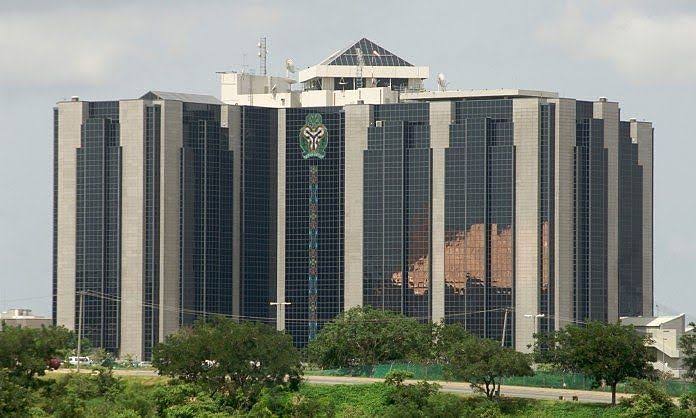
THE Central Bank of Nigeria (CBN) on Thursday released guidelines for the operations of Micro Finance Banks (MFB) in Nigeria.

The guidelines cover ownership and licensing requirements, permissible and prohibited activities, funding, corporate governance, prudential and anti-money laundering requirements for the Micro Finance Banks.

According to the apex bank,  MFBs are allowed to accept various types of deposits including savings, time, target and demand deposits from individuals, groups and associations.

The banks are also given the licence to provide credit to customers and provision of housing microloans.

However, the CBN in the guidelines stated that microfinance banks are prohibited from; foreign currency transactions (except it is a foreign currency borrowing), international commercial papers, international corporate finance, international electronic funds transfer and clearinghouse activities.

On the ownership of a MFB, it said a microfinance bank may be established by individuals, group of individuals, community development associations, private corporate entities and foreign investors.

The apex bank made it clear that this ownership is subject to a maximum of 49 per cent shareholding for individuals and aggregate related parties.

The CBN also categorised MFBs in Nigeria into four categories which are tier one MFB, tier two MFB, state MFB and national MFB.

It explained that a tier-one MFB with urban authorization shall operate in the banked and high-density areas, and is allowed to open not more than four branches outside the head office within five contiguous Local Governments Areas.

Also, the tier two MFB with rural authorization shall operate only in the rural area, and is allowed to open one branch outside the head office within the same Local Government Area subject to the approval of the CBN.

A state MFB is authorized to operate in one state or the Federal Capital Territory (FCT), while it is allowed to open branches within the same state or the FCT, subject to the prior written approval of the CBN.

It stressed that a newly licensed state MFB shall not commence operations with more than 10 branches.

A national MFB is authorised to operate in more than one state including the FCT.

A newly licensed national MFB shall not commence operations with more than 10 branches.

NYSC DG to passing out corps members: Set up businesses to save yourselves frustration of searching for scarce jobs

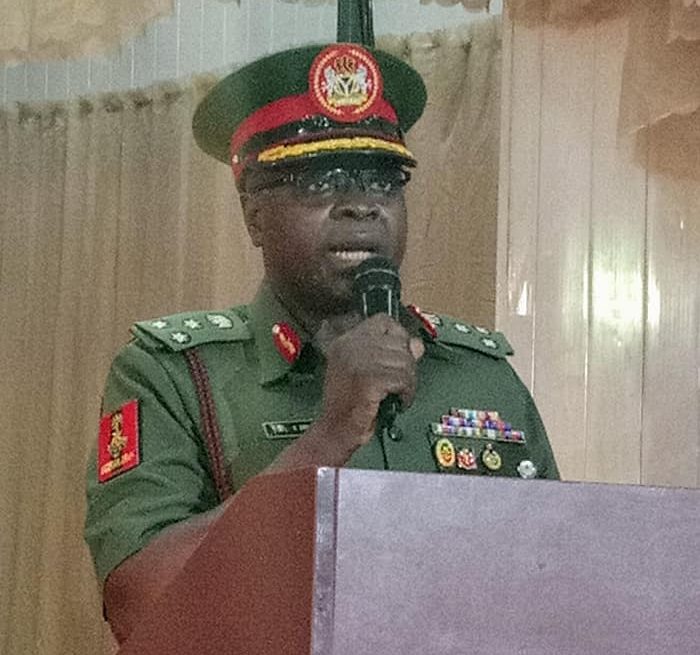
THE Director-General, National Youths Service Corps, Brig-Gen Shaibu Ibrahim, has advised the outgoing corps members to embrace credit facilities to save the frustration of searching endlessly for scarce jobs.

This was contained in his farewell speech at the passing out parade of the 2019 Batch A corps members at the old parade ground in Abuja on Thursday.

Ibrahim saluted the patriotic spirit and commended the efforts of the corps members during their service year and also acknowledged that they have positively impacted the socio-economic well-being of the host communities.

“Indeed, Nigerians deeply appreciate your contributions to the national development process, especially in the areas of education, healthcare delivery, agriculture and infrastructure as well as the uncommon patriotism and diligence exhibited in the discharge of your responsibilities in your respective host communities,” he said.

The NYSC DG said the corps members exemplary selfless service rendered at the place of their primary assignment and community developments efforts are truly worthy of commendation.

“Your affinity to your host communities during your primary assignments should equally form the basis of life-long friendships, national unity and integration, which is the major reason for establishing the NYSC Scheme.

“My dear compatriots, the end of the service year represents an important period in the life of every Corps Member. It marks the end of a phase of dependence on the government, parents and guardians for upkeep. It is a period when those who have imbibed the lessons of the service year are ready to explore and conquer the wider world,” Ibrahim said.

He added that the passing out corps members have been adequately equipped for the future with their exposure to the realities of life during their national assignment.

“It is now time to apply the lessons learnt from the Skills Acquisition and Entrepreneurial Training to make the right decisions for your future.

“I admonish you also to shun negative tendencies and other social vices. Given your level of education and strengthened by the experience of the service year, you must remain focused, resolute and confident in your ability to earn a decent living from genuine and honest endeavours,” he said.

He, therefore, wished all the corps members safe journey to their various destinations and also implored them to be security conscious as they traveled.

“It is my fervent prayer that the Almighty God will continually guide and protect you. I wish you well in your future endeavours,” he concluded.

FG to review 2020 budget as crude oil prices shrink

THE Federal Government has announced the plan to review the 2020 budget as oil prices and revenue shrink further due to the negative impact of the coronavirus.

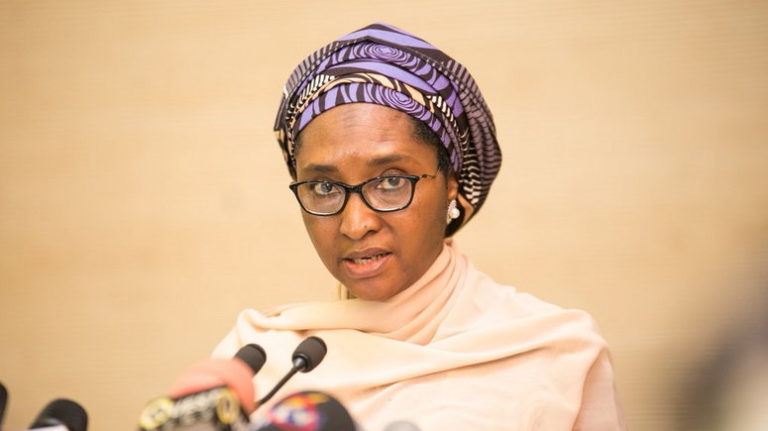
Minister of Finance and Budget Planning, Zainab Ahmed said the Federal Government intends to review Nigeria’s 2020 budget as a result of the current nosediving oil prices at the international market.

Global oil prices have had a steady decline which is attributed to the growing spread of the Coronavirus epidemic.

Brent crude price which is the benchmark for Nigeria’s crude price is down by 22.5 per cent to date.

It will be recalled that the 2020 budget was bench-marked on an oil price assumption of $57 per barrel and oil production of 2.18m barrel per day.

According to the 2020 budget document, crude oil sales were expected to contribute 35 per cent of the Federal Government’s total revenue.

“We will do a mid-term review, and if the impact is so much, we will need to do an adjustment in the budget, working together with the National Assembly,” Ahmed said.

“I am glad to inform you that our oil production as of today is two million barrels per day and at times slightly higher like 2.1 million. That in its self will be a cushioning effect for us in the current oil price,” Ahmed added.

Also,  the Federal Government had declared its plan in February 2020 to issue a $3.3 billion euro bond where $2.8 billion is earmarked as external financing for the 2020 budget

According to CSL research team, an economic and financial analysis institution, the easiest alternative for the Federal Government would be to increase the planned debt finance raise via Eurobonds.

“We think the low-interest-rate environment would help the Federal Government raise cheap debt,” the team said.

Reports from Organization of the Petroleum Exporting Countries (OPEC) have revealed that oil traders are struggling to sell oil from West Africa (Nigeria and Angola) as European and Chinese refiners are cutting demand due to tight margins and lower economic activity.

According to these reports, 70 per cent of April futures cargoes from Angola and Nigeria are yet to find buyers.

This also showed that millions of barrels to be exported in March remain unsold.


It is true, Jamoh is new NIMASA DG— Garba Shehu

PRESIDENT Muhammadu Buhari has appointed Bashir Jamoh as the new Director-General of the Nigerian Maritime Administration and Safety Agency (NIMASA), Senior Special Assistant, Media and Publicity to the president, Garba Shehu confirmed to The ICIR.

Jamoh was appointed as a replacement for Dakuku Peterside whose tenure as the agency DG expires on March 10.

Responding to inquiries by The ICIR on the development, Shehu in a terse reply to an SMS sent to him by The ICIR, said: “it is true.”

The presidential spokesperson’s confirmation laid to rest, speculation about Peterside’s sack by the President.

Meanwhile, reports said that the Minister of Transportation, Rotimi Amaechi whose ministry oversees NIMASA said he was unaware of Peterside’s replacement.

The PUNCH reported that Amaechi denied knowledge of the appointment during a television programme on  Africa Independent Television (AIT).

Amaechi explained that although Peterside’s appointment expires on Tuesday, March 10,  he should have been informed before his sack.

“As the Minister of Transportation, I should know, the government does not take unilateral decisions. If he were to be sacked I should have been intimated of his sack, but I am not aware. Although his tenure expires on Tuesday,” he was quoted to have said.

Amaechi claimed that even although President Buhari has the right to appoint a DG into the agency, it should follow his recommendation.

Disputing reports that a new DG has been appointed, Amaechi said: “I don’t think the news is right, I feel its mere speculation. They should wait until next Tuesday. As I said, the President has the authority to appoint whoever he wants to appoint and if he wants to extend his tenure he can do so.”

South Africa records first case of Coronavirus— four African countries now with confirmed cases

SOUTH AFRICA’s Minister of Health,  Zweli Mkhize, on Thursday, announced that the country has recorded its first case of the COVID-19 also known as Coronavirus.

South Africa is the fourth African country to have a confirmed case of COVID-19, raising the recorded number of infected persons in the continent to eight.

Nigeria, Senegal and Algeria are the three other countries. Egypt was reported to have recorded a case of the virus, but it was categorised by the World Health Organisation (WHO) under East Mediterrianian Region.

Mkhize made the announcement in a tweet, where he said that the National Institute for Communicable Diseases confirmed that a suspected case of COVID-19 in the country tested positive.

He further said that the patient is a 38-year-old man who arrived from Italy with his wife on Sunday.

The minister revealed that the patient has been in isolation since Tuesday and a tracer team has been activated to trace all contact made by the man.

He added that the patient is a father of two.

According to the WHO latest situation report, COVID-19 which originated from China and began spreading in December, has now infected over 93,000 people globally, and killed over 3,000 people.

In Nigeria, a single case of an Italian citizen who tested positive to the virus is still keeping the country on its toes.

Meanwhile, barely 14 days after The ICIR reported that Nigeria was unprepared to battle Coronavirus following findings that no single isolation ward or centre existed in the Federal Capital Territory (FCT), Senate President, Ahmad Lawan confirmed that the nation was not ready to fight the outbreak.

Lawan who led a delegation of the National Assembly leadership to the University of Abuja Teaching Hospital (UATH) on Wednesday, submitted in a series of tweet that Abuja and the six surrounding states in the whole of the North-Central has no isolation ward or centre which can be used to handle any case of Coronavirus.

Weak economy, insecurity, bad governance push Nigerians to rush to Canada—API study

NIGERIA’s weak economy and widespread insecurity as well as bad governance have been identified as the key push factors driving the recent trend of Nigerians seeking migration opportunities to Canada.

A new study report titled “Deconstructing the Canada Rush: Motivations for Nigerians Emigrating to Canada, released on Tuesday by Africa Polling Institute revealed that Nigerians are rushing to Canada because Nigerian government has failed to provide them opportunities and security.

“Simply put, Nigerians are not emigrating to Canada because they want to, they are going there because they do not believe Nigeria provides them any opportunities, and security, to thrive as citizens,” said Beh Ihua, Executive Director of the institute.

A large number of those who were polled also preferred Canada over Nigeria due to their desire to provide a better future for their children.

In the last few years, the number of Nigerians seeking to emigrate to Canada has maintained an upward trajectory, it said.

It said Nigerians who are emigrating to Canada are not the ordinary poor Nigerians, but are the highly skilled, well educated, mostly employed and upwardly mobile group of individuals, who constitute the middle-rung of the socio-economic class of the country.

The study report also identified favourable Canadian immigration policies as pull factors that are also making it easy for well-educated and highly skilled Nigerians to migrate, noting that the trend would not end soon.

Ihua explained that “Our study highlights existential gaps in government’s inability to stimulate a strong thriving economy, galvanize an effective security architecture that delivers security to all citizens, and promote institutional reforms to deliver public goods to citizens.”

“A resounding theme from this study is that most individuals are migrating in search of opportunities, whether in the form of employment and career advancement, educational opportunities or for a safer and more secure future for their children.

“This highlights sentiments to suggest that these indicators seem somewhat elusive in the Nigeria of today. The results however suggest that migration is fueled more by the pursuit of opportunities, than by the fear of danger(s).”

He emphasised that there is every need to strengthen current policies that stimulate economic growth and development in the country, which will make staying in Nigeria an attractive option

“At the very least, the government needs to invest more in basic infrastructure and actively tackle corruption,” Ihua said.

“Furthermore, the country can position itself to more actively take advantage of its youth bulge to be a hub for technology, industry and manpower development.”

“The government should also strengthen policies and programs aimed at actively managing labour migration from the country by engaging with foreign partners.”

Canada, he explained, had signaled interest to work with Nigeria in this direction with the visit of Canada’s Immigration Minister to Nigeria in May 2018, to engage support from Nigeria’s government to tackle irregular migration.


FG recoups stolen N594b in less than 3 years through whistleblowing

ITSE SAGAY, the chairman of the Presidential Advisory Committee Against Corruption (PACAC) has revealed that the Federal Government of Nigeria has been able to recover N549.09 billion stolen funds in less than three years through its whistleblowing policy.

He disclosed this at the opening ceremony of a two-day workshop on Entrenching Whistleblowing Policy in Regulatory and Revenue Generating Agencies in Nigeria organised by the PACAC in collaboration with the African Centre for Media Information and Literacy, (AFRICMIL) in Abuja on Wednesday.

According to Sagay, the policy has been successful in terms of government assets recovery through whistleblowing as well as the revelation of the varieties of fraudulent ways through which some Nigerians steal from the country.

He added that although the policy has been successful, there is still a vital need to elevate it from being a policy to an Act  of the Parliament to encourage more whistleblowers.

“Leaving it as a policy will create the impression that the Federal Government is not bound to pay a reward for information leading to recoveries thus discouraging informants, secondly, a legal framework will contain provision not only for the protection of the informant’s identity but also in extreme cases for giving such informants new identities for their protection, ” Sagay noted.

Coordinator of AFRICMIL, Chindo Onumah while delivering his welcome remarks at the event said the government needs to adopt a strategic tool for reducing corruption if it intends to popularize whistleblowing.

He added that AFRICMIL has embarked on crucial activities in three years by creating awareness through media and civil society engagements, stakeholders’ forum, training for staff of the Presidential Initiative on Continuous Audit (PICA) among other things.

Speaking on the importance of eradicating corruption in the governance of Nigeria he said: “achieving that means greater transparency from government organisations responsible for government’s revenue or whose regulatory functions have a direct bearing on economic growth”.

In his remarks, the Deputy Director of MacArthur Foundation in Nigeria, Oladayo Olaide said if citizens were able to expose corrupt practices then the government owed them a duty to be able to take actions when they were exposed.

He noted the importance of accounting officers across Nigerian ministries and agencies to be accountable to the people on the public resources at their disposal.