Home Blog Page 2160

Women and girls with disabilities in Nigeria are the most vulnerable groups but the system doesn’t care

FOR LOIS Auta, 39, growing up with an unusual health condition and appearance was difficult.

As a child, she found herself shying away from playing with her peers because she was diagnosed with Poliomyelitis, also known as polio.

Polio is a highly contagious disease caused by a virus which attacks the nervous system and often results in permanent paralysis.

At the age of two, Auta, was already down with polio, which crippled her lower limb and this kept her away during play time.

She would often lock herself indoors after several attempts to join her peers at the neighbourhood playground failed.

That was her only way to avoid being mocked by others because of her condition.

The reality of her disability was biting at her self esteem but her parents made the journey easy. With unwavering love and assurance from her mother, Auta came to accept her condition and planted a mantra in her heart which she recited when life got tough.
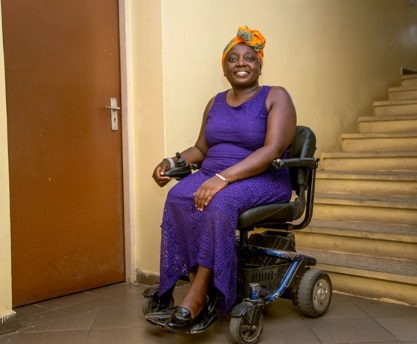
Lois Auta, founder/CEO Cedar Seed Foundation

“I see my disability as a blessing and not a curse. I see it as a bridge and not a barricade. I see my disability as an opportunity to change the world. I’m a woman with 99.9 percent ability,” she recited joyfully.

But reciting the power line is the easiest part, believing it is a struggle and having to face life in Nigeria as a person with disability is a constant battle, she says.

Living with disability in Nigeria

Auta had one of her prayers answered when she got admitted into University of Abuja to study Public Administration. But she would soon be confronted with reality of attending classes on daily basis.

That was the big hurdle she had to overcome in an institution where there are no provisions for people with special needs.

University of Abuja has no lift or elevator for students and no ramps for physically challenged students.

With no access to classrooms on top floors, Auta, who moves around with the aid of a wheelchair, had to rely on her classmates to lift her up the stairs in order to attend her classes until she advocated for all her classes to be taken in classrooms located on the ground floor.  

When her advocacy got attention, it became possible for her as well as other students with disability to attend classes. But this required that all classes with a student with disability be relocated to the ground floor.

Despite this, other classrooms remain inaccessible to persons with disabilities, especially those who are wheelchair-bound.

But Auta’s adjusted reality is a single lucky case most people with disability in the country, have no  access to a range of public spaces or services and unlike Auta, have no opportunity to advocate for what is needed.

Mary, Auta’s friend, was once a victim of the systemic negligent of PLWD.

According to Auta, Mary, who also moves around in a wheelchair, was a few months pregnant and had to visit the hospital for antenatal care regularly.

She faced what was best described as a sordid experience in her life, Auta said.

During one of the hospital visits, Mary fell and lost her child because there was no ramp to aid her  movement as a wheelchair-bound patient.

“There are no facilities in place for persons with disabilities to move around independently,” Auta said while recalling the story of her friend.

Mary’s predicament paints a picture of what many who are living with disability face on daily basis in Nigeria.

According to the World Disability Report of 2011, over 25 million Nigerians have at least one disability and more than 50 percent of the 25 million Nigerians living with disabilities are female.

Despite reports showing that over 15 percent of Nigeria’s population lives with at least one form of disability or another, the country neglects its most vulnerable group.

This lack of proper attention and provision for people with special needs prevents about 25 million citizens from functioning as members of the Nigerian society and in worse cases, leaves them vulnerable and at higher risk in cases of emergencies and danger.

The systematic neglect also violates their rights as human beings.

All across the country, there is a large absence of ramps, handrails, walk-ways, assistive devices and lifts in most public buildings, roads and institutions; including courts, police stations, media houses schools, hospitals, government secretariats and offices, car parks, recreation centres and even polling stations (during elections).

Visually impaired persons are unable to access government websites, independently cross roads, or participate in decision making processes.

Their education is also affected due to absence or inconsistent use of Braille, a system of touch reading and writing for blind persons in which raised dots represent the letters of the alphabet.

Public transport and services; including; trains, buses, airplanes, banking halls and ATM machines, and hotels remain largely inaccessible to persons living with disability in Nigeria.

Not only are persons with disability left to struggle through life in Nigeria, for women and girls with disabilities, it is more difficult their suffering in fact is said to be multifaceted. 

Triple jeopardy

“Women and girls with disabilities face triple-fold discrimination; first as women, then as women with disabilities and because they are very poor,” says Irene Patrick-Ogbogu, a polio victim  who is also the Executive Director of Disability Rights Advocacy Center (DRAC).
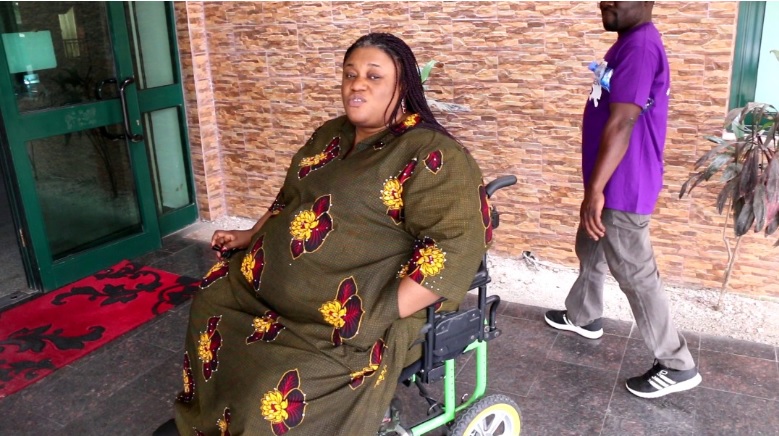
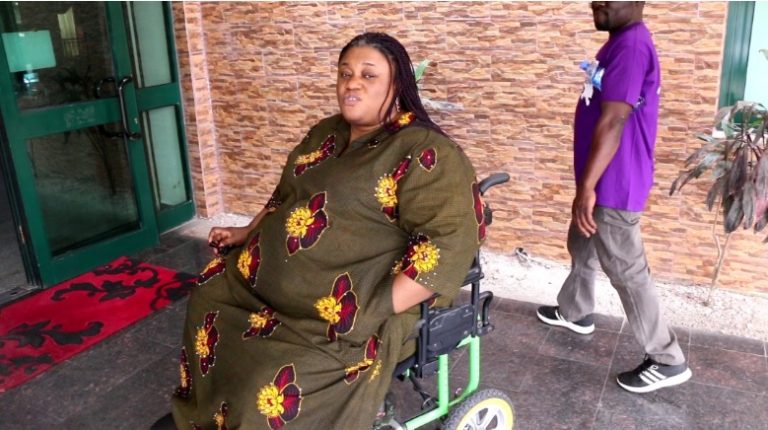
Irene Patrick-Ogbogu, Executive Director of DRAC Photo: ICIR

According to her, women in this part of the world are considered and treated as second class citizens due to a notorious patriarchy system.

On another level, being a woman or girl with disability affects how they are perceived in the society and lastly poverty – a result of a stifling environment, she said.

With no level playing field, she added that such women become targets and are subject to sexual abuse, emotional violence, gender-based and domestic violence.

“In cases where abuse occurs, justice is not considered an option,” Patrick-Ogbogu said.

Patrick-Ogbogu was heartbroken when she spoke about 13-year-old Juliet Achinaya, a visually-impaired minor who fell victim of rape. As she recalled the poor girl’s plight, her sad countenance was unmistakable.

She said Achinaya had faith in morality when she reported that her lesson teacher had forced himself on her. 

The young girl shared details of the rape incident when she was found in torn clothes with blood dripping from her private area but instead of getting justice, Achinaya’s account of the moment she was defiled faced scrutiny due to her disability.

After several seeds of doubt got planted, the young girl withdrew her testimony, admitting to her guardian that there was no way she could identify her rapist — her story died and so did her sense of right and wrong.

 The Executive Director of DRAC narrated another heartbreaking story of  a 14-year-old girl with cognitive disability identified as Grace Ogbeh, who had no one to turn to when she was raped in school and got pregnant.

When asked who was responsible for her pregnancy, according to Patrick-Ogbogu, she pointed at the security men at her school.

However, the young girl met doubting eyes and ears, especially those who ought to fight her cause, when she was questioned about how she could identify her rapists with her disability.

In protecting the family’s name, Ogbeh’s parents withdrew her from school, aborted the pregnancy and sought other means to raise their child without formal education.

Like Achinaya, Ogbeh’s story was punctured because of her disability. The young girls never got justice due to their disabilities.

Emotional and physical abuse

In Emmanuella’s case, it was emotional and physical violence perpetrated by her husband.

At a young age, Emmanuella had her dreams of having a normal life crushed after she got immunized with an expired polio vaccine. She suffered part paralysis as a consequence and till this day relies on crutches to move around.

However, she never gave up on chasing and achieving her dreams.

Emmanuella, a Bachelor of Science degree holder in Management with a Masters’ degree in Business Administration (MBA), decided to settle down with a man, whom she considered a life partner.

Emmanuella
Photo: ICIR

However, her joy was short-lived.

It started when she met her husband. She was constantly reminded by friends and family that she was lucky to find a man despite her ‘condition’ and should try her best to always make him happy.

“My pastor’s wife told me to wake up every morning and worship my husband for marrying me in my condition,” Emmanuella recalled.

During the course of the marriage, she was subject to emotional and physical violence by her husband.

According to her, after the birth of her first daughter, her husband became distant and would only come close to her for sexual relations.

For peace to reign, she would always make herself available to him.

After a while, Emmanuella became pregnant with her second child, but her husband never wanted a part of that and demanded she terminated the pregnancy.

While she agreed to avoid his anger, she requested he spoke to both their parents about his desire. That was, according to her, when things got ugly.

“That very day on the bed, I held on to my husband pleading for him to not get angry over my request and he pushed me till I landed face flat on the floor,” Emmanuella said while flashing a weak smile.

“He left me there and walked out,” she said, recalling the painful memory.

During the same time, Emmanuella was diagnosed with a terminal illness and was left to fight alone.

“All I wanted was for my husband to hold me and assure me all will be well but all I got was silence,” she recalled sadly.

Having been married for only a few years and being told her husband deserves her worship, Emmanuella didn’t think seeking justice was not an option and so for her sanity, she walked out of the marriage.

According to her, he never looked for them till this day.

Barriers in accessing justice

“Women with disabilities are a demographic that is often rendered ‘invisible’ by the system,” says Toyosi Giwa, Coordinator of Sexual Assault Referral Centres (SARCs) and manager at Rule of Law and Anti-Corruption (RoLAC) Programme.

According to Giwa, the justice system itself struggles to take account of exactly how many persons with disabilities are in Nigeria as well as how different types of disabilities are distributed among them.

This reality thus creates a vacuum and hinders access to justice, she said.

Giwa added that, for women and girls, there is a stigma attached to being a victim of abuse and it discourages them from speaking up.

She lamented how the puzzle is tougher for women and girls with disabilities who she said because of their disabilities are physically unable to access law enforcement agencies and in some cases can’t report their stories due to communication barriers.

In her view, Patrick-Ogbogu believes there no enough provisions in place to protect people with special needs in Nigeria.

“In most police stations, there are no sign language interpreters, how then can a deaf woman or girl report that she has been sexually abused to a police officer?, Patrick-Ogbogu asked a quiet room during an interview with The ICIR.

 Babatunde Fasiu, the Legal Officer for Lagos State Office for Disability Affairs, said there are no facilities to aid the communication needs of persons with disabilities in police stations.

“Many people with disabilities cannot go to the station because they lack access,”Fasiu told Premium Times.

In most cases, they are required to pay for a sign language interpreter and those who can’t afford it are left barricaded from seeking justice.

But communication barrier and inaccessibility are not the only hindrances to getting justice for persons with disability, there is also discrimination. 

According to Fasiu, this kind of discrimination perpetrated by the law enforcement agencies goes unchecked. 

“No one has been prosecuted for discriminating against people with disabilities,” he said.

Not only is discrimination against the group perpetrated by those legally bound to protect them, the government also plays a role in enabling it. 

In a 2008 study conducted by the United Kingdom Department for International Development, it was found that Nigeria still operates under the charity model of disability.

According to the study, it was found that the Ministry of Women Affairs, formally charged to handling the welfare and rights of persons with disabilities, “understood disability within a discourse of welfare and charity.”

Its adoption of the charity model activates its response to it.

According to Auta, persons with disability in Nigeria are seen as beggars who should be pitied, noting that, because of this, opportunities are not given to them to activate their potentials.

Globally, the standard practice is the social model of disability which places emphasis on social adaptation, inclusion, and empowerment for persons with disabilities.

In attempt to abide by global standards, the Nigerian government passed the Discrimination Against Persons with Disabilities (Prohibition) Act, 2018 into law in January 2019.

What the law says

Nigeria ratified the United Nations Convention on the Rights of People with Disabilities (CRPD), an international treaty to protect the human rights of persons with disabilities, in 2007 and its Optional Protocol in 2010. 

To ensure implementation of the CRPD, the Nigerian government passed the Discrimination Against Persons with Disabilities (Prohibition) Act, 2018 known as the National Disability Law, following almost a decade of advocacy.

The law which aims to protect the rights of persons with disabilities covers issues of discrimination; access to public buildings, services and facilities; calls for inclusive education; access to transport systems and establishes a National Commission for Persons with Disabilities.

Almost two years after the law was signed, it is yet to be implemented.  Public spaces are yet to be reconstructed to accommodate the needs of people with special needs. Motor parks and public transport systems across the states including the Federal Capital Territory are still unfriendly to physically challenged persons.

In general, public facilities and services remain largely inaccessible to the group and for women and girls, access to justice remains a mirage.

Editor’s note: Some names of victims in this report have been changed to protect their identity.

* This investigation is supported by the Institute of War and Peace Reporting and the International Centre for Investigative Reporting, ICIR.
Danfodiyo students lament late issuance of Identity Card


Abiodun Jamiu, (Student journalist)

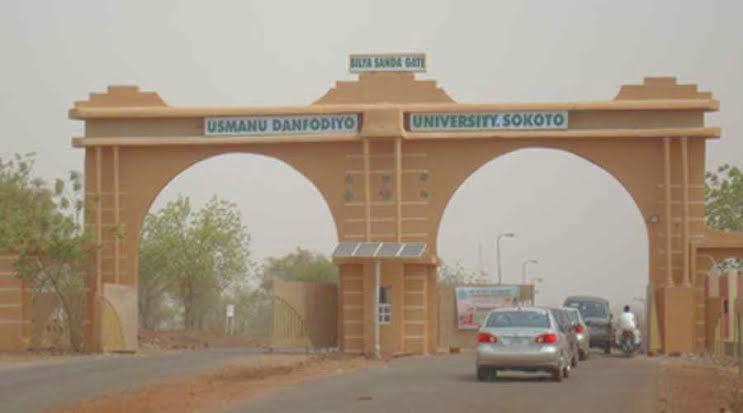
THERE is a growing disquiet among students of Usmanu Danfodiyo University, Sokoto, over the failure of the authorities of the university to issue student’s identity (ID) card to current 200 level students of the university, a year after their admission.

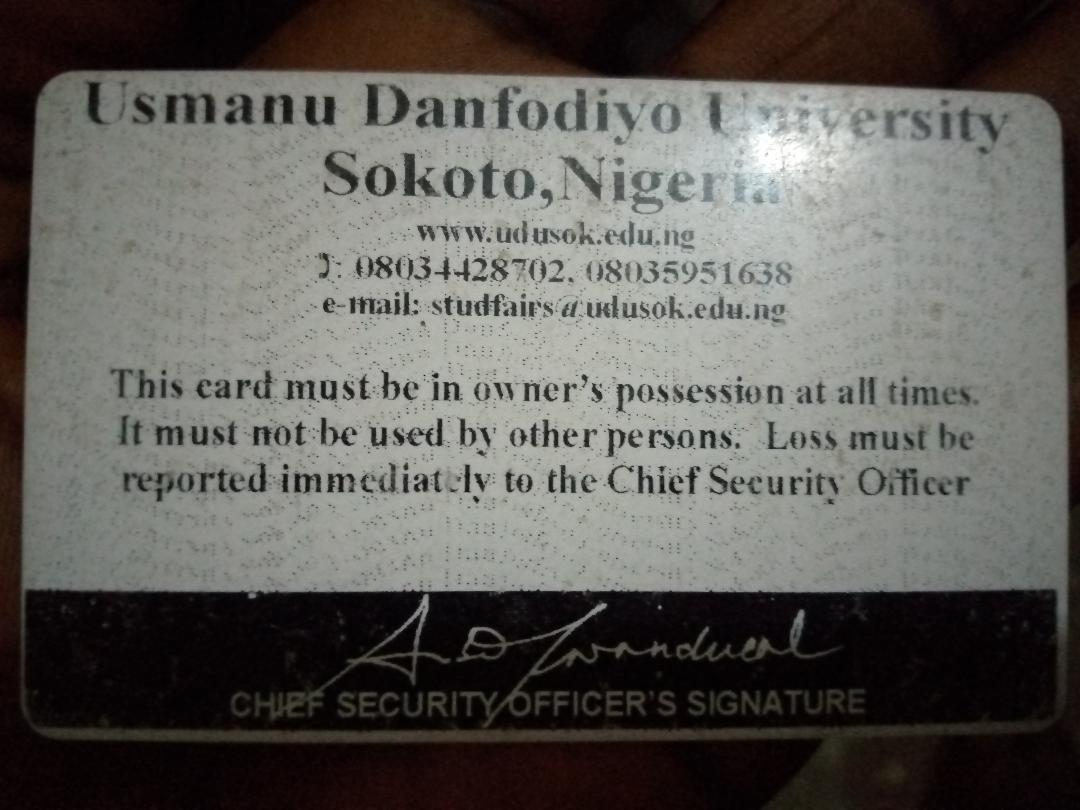
The delay in the issuance of the student’s ID negates the university provision which states that students must identify themselves by providing identity cards when required.

Students who do not have an identity card may be denied access to university facilities or other benefits meant for students especially as a pass into the examination hall.

The Student Affairs Division of Usmanu Danfodiyo University, Sokoto is responsible for the issuance of identity card to students upon the payment of prescribed fees determined by university management.

In place of the card, a confirmation letter – 210 X 297-millimetre sized document – given at the point of confirmation of admission is the sole the means of identification for the students, but they hardly have it handy for fear of misplacing it.

Students’ frustration due to non-issuance of ID card

Already, many students have forfeited a number of opportunities because they could not present their student’s Identity Card. Sheriff Oshubiyi, a 200 Level student of law, is one of those ruing the indifferent attitude of the university’s authorities to resolve issues around the delay in issuance of the ID.

“It is very disheartening that up till now we have not been issued our school I. D card, a frustrated Oshubiyi laments.

“This issue is something that we are very sad about. Come to think of it, the fact that we are yet to be given the ID card is affecting us as students because there are some occasions whereby we need the card but since we are yet to be given, we won’t be able to make use of it.

“As a student, there was an Oratory contest for university students which I have been eyeing for a long time but I could not because they requested an identity card.”

While relating an oratory contest he missed because he could not provide an authorised  proof he is a university student, he urged the management to speed up the process of issuing the ID card.

This, he suggests should be done in earnest so that newly admitted students will not suffer the same fate.

I hope the school management would resolve this matter by issuing the ID card to the concerned students to focus on the new students, Oshubiyi said.

Another student who goes by a name, Barakat, and also a 200 Level student of Political Science, says  she has found it difficult to take advantage of opportunities such as scholarships and symposium that are available to students.

“I have stopped bothering myself about applying for scholarships that require me to submit my proof of studentship because we don’t have one. Some of us need the ID card to apply for opportunities, but we could not,” Barakat said.

“Often time, this card is requested by security personnel along highways whenever we are travelling back home, if not for those in higher levels that provide it, who knows? We might be tagged criminals. We just hope we would be given before it is too late”

Disappointed, Adedeji Mutmainah, another 200 Level student  at the Department of Public Administration, blames the delay in the issuance of ID card on maladministration by the management of the tertiary institution.

She says, the tradition across other universities and indeed all tertiary institutions is that ID cards are issued  to students in their first year.

Second year into her study, Mutmainah felt disappointed that after a session she has no proof of her studentship.

“We should have been given the ID card to serve as evidence that we are a student of this school,” she said.

“Imagine anyone of us engages in a brawl and  claims to be a student of UDUS, is there any proof to support the person’s studentship? It is greatly disheartening. With this development, the onus lies solely on the management because the card should have been issued to us since our first year. I was expecting it, and it is quite uncalled for.”

When she attempted to apply for an accounting program, Mutmainah recalled how she almost missed the opportunity, but was saved by obtaining the National Identity Card to prove she is a student.

“Last session, I wanted to enroll in an accounting program, but I couldn’t. The organisers requested my school identity card during registration which obviously I don’t have. I had to go extra miles, enrolled for NIMC card because I could not provide any proof that I am a university student,” she recalled.

Abdulwakil Busari, 200L student of Engineering, fault the lateness of the management on student’s identity card. With anger visibly written on his face, identity cards differentiate between students and visitors, he posited. And a university hemmed by satellite villages with their population as the university, Abdulwakil feels insecure.

‘The delay is uncalled for. Almost all universities issue ID cards to their students immediately after the matriculation. For instance, newly admitted students of Kwara state university have been given their ID cards. Here, we are in 200 L, we have not been issued, what fate would then befall UDUS newly admitted students if not the same fate? He inquired

“I don’t have any grouse against the management, they should just give us the id card because we don’t have any means of identification except the confirmation letter. And to that extent, we are not secure. With the ID card, we would be able to differentiate between Yaro boys and students”

Apart from the late issuance of the card to students, the use of identity card is not given prominence in the university. This has fueled displeasure among students who demanded the use of lanyard to distinguished them from the satellite villages in the university.

Reacting to the problem of non-issuance of ID and it’s implications for students, Adegbite Taoheed, a  400 Level student of Literature in English stated that ‘it is often very difficult to recognize students on campus.

Taoheed wondered how security personnel on the campus are able to identify students and visitors when certain population of students are without Identity Card even after a year in school as students.

“With ID card, there would be easy identification of students, and if at all they want to apprehend anybody – a visitor or stranger, the security would be able to identify strangers from students.”

We are processing it – Dean, Students’ Affair

When contacted, the Dean, Students’ Affairs, Aminu Mode revealed that once the card is ready, the students would be notified as the management is already working to ensure that it is available to all the affected 200 level students.

“The ID card is being processed. Immediately it is ready, we would notify the students”. Even today, we wanted to go and check, but I have been in a meeting since morning,” Mode explained.

Speaking on the campaign for the use of lanyard with their ID in the university,  Mode stated that the campaigners should have channeled their concerns to the appropriate authority for consideration.

The DSA who revealed that the university would soon unveil her anthem courtesy of a student’s recommendation charged students to write the management on burning issues on campus, noting that the management would gladly welcome such advances.

“Instead of writing it directly, recommend it to the management. Even if it is written one million times, and it is not written to the management, it is just a waste of time. But when a proposal is written to the management, we would definitely work on it. Even if you write to the management as a student, say Abiodun Jamiu’ referring to this reporter ’with its benefits, the management would look into it.”

“As a student, forget about your affiliation, write to the management and propose it. The university would even commend the students. Because it is a common practice in universities, it would help to secure the ID card, we would do the needful. I only get to read it on social media platforms.

“Presently. We are working on the university anthem, it was proposed by a student in my dept (Modern European Languages and Linguistics, MELL) through my office and the university form a committee, I am a member.

But when you continue to write without meeting with the management, no one would make any changes among them. When you write to the university through the students’ affairs, it can make changes.”
Speaking further, The DSA, therefore, said the management would clinically look into it “even if we would say students should pay one naira or ten naira for it, we would have to sit and deliberate on it.”

Border Closure: We have saved millions of dollars, we don’t need to import rice, says Buhari

NIGERIAN President, Muhammadu Buhari says the country does not need to import rice from other countries because it has been able to save millions of dollars.

Buhari made this known in a press statement obtained from the social media handle of the presidency in which he spoke on border closure and other national matters.

“We have saved millions of dollars. We have realised that we don’t have to import rice,” the president said in the statement.

He added that the partial border closure has helped Nigeria curb the importation of illegal goods, most especially drugs and small arms, which he said were threats to the country.

“We have curtailed the importation of drugs and proliferation of small arms which threaten our country,” he added.

However, the president noted that Nigeria would implement the reports on the border closure by the tripartite committee consisting of Nigeria, Benin and Niger as soon as the committee’s report is received.

“Nigeria will implement the decision of the tripartite committee, made up of Nigeria, Benin and Niger, on the partial closure of the land border, as soon as the report is received,” the president noted.

Speaking on the reported case of COVID -19 otherwise known as coronavirus in Nigeria, Buhari commended the Chief Executive Officer (CEO) of Dangote Groups, Aliko Dangote for donating N200 million towards curbing the spread of coronavirus in the country.

He commended Dangote for his gesture, recalling that the group had in the past donated N1 billion towards the fight against Ebola Virus in Africa.

“Hand in hand, standing shoulder to shoulder, we can confront our challenges as a country. This is a path for us all to follow as a people,” he stated.


Extra charges on withdrawal, deposit above half a million – CBN

THE Central Bank of Nigeria (CBN) is set to implement a new policy on cash-based transactions which demands a cash handling charge on daily cash withdrawals that exceed N500,000 for Individuals and N3 million for Corporate bodies by April 1, 2020.

The apex bank had directed all Deposit Money Banks (DMB) in the country to charge 3 per cent on withdrawals of more than N500,000 and 2 per cent on lodgement of the same amount for individuals.

While banks were instructed to charge corporate accounts 5 per cent processing fees for withdrawals above N3 million and 3 per cent for the same lodgements.

According to the CBN, the new policy on cash-based transactions (withdrawals) in banks, aims at reducing the amount of physical cash circulating in the economy.

The CBN said this is to encourage more electronic-based transactions for goods, services and transfers.

The apex bank report showed that the essence of this policy implementation is to reduce the cost of banking services and drive financial inclusion by providing more efficient transaction options and greater reach.

Thomson Foundation launches 2020 mobile journalism worldwide contest

0

IN partnership with Mojofest, the Thomson Foundation, has launched its 2020 mobile journalism worldwide contest.

The organisation also announced that apllicants between age 18 and above can enter the contest.

Contestants must complete four specific assignments, one each week throughout March 2020: participate in a photowalk and share their photos; create and share two video sequences; record and share an interview; and create and publish a video story on a change-making member of their community.

The judges will pick the best stories with the overall winner receiving an all-expenses-paid trip to Mojofest in London between 13-14 May, 2020. At least five others will be shortlisted for outstanding content and each participant who completes the programme will be issued with a certificate of achievement.
The deadline is March 15.


Click here to register

Can Dettol antiseptic cure Coronavirus? Here are the answers

THE label on the bottle of Dettol, a  brand sold in the United Kingdom and other countries worldwide reads that the disinfectant can cure Human coronavirus.

But the reports that Dettol can cure Covid-19 is circulating fast and wide on social media, especially through the WhatsApp platform.

Dett

But can Dettol actually cure coronaviru?Findings

Although it is true that Dettol disinfectant can cure coronavirus, however, it can only cure Human coronavirus and not 2019 novel coronavirus.

The Citizen quoting African Check reported that Kate Wikilson while fact-checking the claims of Dettol curing coronavirus said there is a difference between COVID-19 and Human coronavirus.

According to the Centre for Disease Control (CDC), “Human coronavirus usually causes mild to moderate upper-respiratory tract illnesses, like the common cold”.

Although it shares some of the same symptoms as the COVID-19, Human coronavirus is not lethal like the 2019 novel coronavirus.

Dettol in a response to claims that the disinfectant can cure coronavirus said the virus is relatively new and as such the COVID-19 has never been tested using the product.

“This is a new strain of coronavirus never seen before in humans so is not yet available for testing with our products.  We continue to work with our partners to ensure that we have the latest understanding of the virus and will be testing our product range once health authorities make the strain available,” Dettol noted.

As at the time of filing this report, the World Health Organisation (WHO) said that there has not been an identifiable cure for the deadly virus that has claimed more than 3000 lives worldwide.


Cameroon confirms first case of COVID-19 as deadly virus spreads across Africa

THE Cameroon Ministry of Health has confirmed its first case of COVID-19 also known as coronavirus.

The first victim, an old  58-year-old French citizen who had arrived in the capital of the country, Yaounde on 24th February was tested positive.

According to reports, the victim whose name is withheld has been placed in solitary confinement in a care center at the Yaounde Central Hospital for treatment.

Cameroonian government added that it is making efforts to curb the virus from spreading across the nation.

“All measures have been taken by the government to contain potential risks of the virus spreading,” the government said in a statement.”
With the confirmation of this report, Cameroon becomes the eighth country to be confirmed of Coronavirus case in Africa.

Others are Nigeria, Algeria, South Africa, Egypt, Kenya among others.

The deadly virus has been responsible for over 3,000 deaths in China and across the globe.

Coronavirus: Lagos records 3 new suspected cases, patients in isolation

THE Lagos State Commissioner of Health, Akin Abayomi, has announced that three new suspected cases of Coronavirus have been recorded in the state.

Sharing the information via Twitter, the commissioner revealed that the patients have been isolated in the containment facility located in Yaba area of Lagos.

According to him, the patients are from England, China and France. He added that the three were quarantined after being subjected to the Coronavirus test, the results of which are being expected. He gave no further details about the patients.

Since Nigeria announced its first case of the disease last week, many have expressed worry over its spread when the nation’s ability to curb an outbreak is under question.

Recently, Senate President Ahmad Lawan led a delegation to inspect the isolation centre at University of Abuja Teaching Hospital (UATH) and found that no structure was in place to handle even a single case of Coronavirus.

Lawan’s finding corroborates the investigation carried out by The ICIR two weeks ago, when it was found that two major hospitals in the Federal Capital Territory, FCT, – UATH and National hospital – were are ill-equipped to handle the deadly virus or any other infectious disease.

Meanwhile, globally, according to the World Health Organisation, WHO, the virus has infected over 95,000 people and killed 3,000 persons since an outbreak was first recorded in Wuhan, China, in December 2019.

There is no known cure or vaccine for the virus but health advisories state that people should carry out  steps to prevent infection and keep safe. These steps include wash of hands with alcohol-based hand rub or washing them with soap and water regularly and maintaining at least 1 metre (3 feet) distance between yourself and anyone who is coughing or sneezing.

Nigeria posts worst crude oil sale record since 2018 as coronavirus pushes major buyers away

THE Federal Government has announced plans to review the 2020 budget as the nation’s crude oil proceeds have been hit by the economic effects of the global coronavirus outbreak but its inability to sell its crude oil supplies poses a bigger economic threat.

ZAINAB Ahmed, Minister of Finance and National Planning revealed this after the Federal Executive Council meeting in Abuja stating that 2020 budget was to be financed by the crude oil benchmark of $57 per barrel but with the global oil price at $53 per barrel the prospects of sustaining the budget is grim.

“We are concerned because it COVID-19 does have an impact on revenue and at the current crude oil price of $53 per barrel is below the budget benchmark. What we are doing is that we are studying the situation and when the budget was passed we committed to do a midterm review,” she said.

She noted that with crude oil production beyond the two million barrels per day projection, there will be a bit of cushion for the shock of the COVID-19 effect.

“I will want to inform you that crude oil production is now at 2 million barrels per day and on some days, it moves up to  2.1 million barrels per day. That in itself will be a cushion, we will have to do some revisions in the budget by way of budget adjustment,” she said.

However, recent developments show that the review of the nation’s oil price ceiling cannot solve the problem of oversupply of crude oil in the Nigerian oil market since the coronavirus outbreak major buyers of Nigerian crude oil are buying in smaller quantities which puts the economy in a risky place.

Nigeria is a major producer of sweet grades crude oil which is ideal for refining into petrol, but in recent months the demand for Nigerian crude from China and several European countries has been low due to weak margins according to a Bloomberg report.

The report highlighted that 70 per cent of April crude oil cargoes from Angola and Nigeria were yet to be sold, which is a sharp decline from the normal pace of sales.

This means that the unsold crude oil cargoes will make up Nigeria’s crude oil oversupply competing against the cargoes due for export in May which are yet to be purchased.

It also indicates that crude oil supplies from Nigeria exported in April likely wouldn’t reach China until May or early June since it takes about 25 days for a ship travelling at 20 nautical miles from Lagos to Shanghai, China which also depends on the Chinese demand for crude oil supply.

China is the biggest buyer of crude oil from Africa with key producing nations which include Angola and Nigeria.

Records show that Nigeria’s crude oil exports dropped in February to 1.15 million barrels per day, which is the lowest monthly rate since June 2018 but it is anticipated that the economic effects of coronavirus will be felt as most February cargoes had already been traded before the health crisis intensified.

Nigeria’s April export crude oil program is unsold, while about half of Angola’s planned shipments for this month have yet to find buyers. The report estimates that 55 Nigerian cargoes and 18 Angolan cargoes have yet to find buyers.

The sluggish sales for April are interlinking with unsold crude oil supplies for March which analysts suggest that 17 per cent of March volumes for Nigeria and Angola haven’t yet been purchased, along with some shipments from smaller producing countries namely the Republic of Congo, Gabon and Chad.

Proceeds from oil constitute about 90 per cent of the country’s total revenue, however, the 2020 budget, signed by President Muhammadu Buhari in May, was based on oil production of 1.8 million barrels per day with an oil benchmark price of $57 per barrel.

With the dwindling sale of crude oil from Nigeria, the economy is likely to experience tougher times if the surplus crude oil produced by the country is not sold which will put its revenue under undue pressure.

You will plunge Nigeria into more hardship, PDP tackles APC senators over $22.7b loan approval


THE main opposition party,  Peoples Democratic Party (PDP) has reacted to the approval of President Muhammdu Buhari’s request for a fresh $22.7 billion loan by the senate on Thursday, saying that the ruling All Progressives Congress (APC)was only out to repress and plunge Nigerian citizens into more hardship.

The PDP in a statement issued in Abuja by its National Publicity Secretary, Kola Ologbondiyan, particularly called out senators under the platform of APC who it said have further shown that their party does not have the interest of Nigerians at heart with such approval.

It said it was distressing that the APC senators approved the loan, even when the Buhari Presidency has not justified the request; a situation that validates apprehensions that the APC senators have become rubber stamp legislators.

“The fact that the $22.7 billion loan request brimmed with unexplained, obscure, over-bloated and questionable subheads, such as the scandalous $500 million dollars (N180 billion) smuggled in under the guise of upgrading the NTA shows that the APC and a cabal in the Presidency are in a huge financial racket, for which they are ready to plunge Nigerians into more suffering.

“In approving the loan, even after it was clear that Nigerians are averse to it, the APC senators have confirmed that they are in league with other APC leaders to fleece our nation and bring more hardship to Nigerians,” PDP said.

The party noted as disheartening that under the Buhari Presidency the country’s foreign debt has continued to accumulate with nothing to show other than excruciating unemployment rate, decayed infrastructure, a worsening governance system, escalated insecurity and unprecedented poverty.

It however, commended the PDP senators for standing with Nigerians in fearlessly rejecting the loan as it would bring more hardship and further mortgage the future of our nation.

The PDP therefore called on Nigerians to unite in defence of the nation by raising their voices to demand that senate reverses this unpatriotic approval, “which is completely against our national interest.”