Home Blog Page 219

‘They have finished Nigeria,’ Sowore reacts to N712.26bn earmarked for Lagos Airport repair

0

HUMAN rights activist Omoyele Sowore has reacted to President Bola Tinubu’s approval of N712.26 billion for the full rehabilitation of the Lagos Airport terminal, saying, “They’ve finished Nigeria.”

The ICIR reports that the Minister of Aviation and Aerospace Development, Festus Keyamo, revealed that the Federal Executive Council (FEC) on Thursday, July 31, approved N712 billion for the full rehabilitation, upgrade, and modernisation of International Terminal One at the Murtala Muhammed International Airport, Lagos.

Keyamo said the approval was the centrepiece of a sweeping N900 billion aviation infrastructure plan for the country, noting that the project, awarded to China Civil Engineering Construction Corporation (CCECC), would strip the old terminal down to its structural core before rebuilding it with new mechanical, electrical, and plumbing systems.

He also noted that the project would be executed for over 22 months with funding through the Renewed Hope Infrastructure Development Fund.

In a post on his social media handle on Friday, Sowore expressed concern for the country, suggesting that the deteriorating condition of the Murtala Muhammed International Airport was deliberate.

“Now I understand that the situation at Murtala Mohammed International Airport, showing its disgraceful dilapidated state, resembling a war zone, was not accidental.

“It appears that it was intentionally neglected to facilitate a massive scheme for ‘repairs’ totalling N712 billion. They’ve finished Nigeria,” Sowore said. 

The ICIR reports that the Minister of Aviation also disclosed that the domestic wing apron of the airport would be expanded over a three-phase project totalling more than 82,000 square metres, valued at N24.3 billion, to accommodate more aircraft.

He explained that the airport upgrade covered runway rehabilitation and improved lighting systems in Lagos, Port Harcourt, and Kano airports, aimed at enhancing aircraft landing capabilities during low-visibility conditions, such as the harmattan season.

FCT NANNM chairman counters minister, says nurses have yet to call off strike

0

THE Minister of Health, Ali Pate, a professor, on Friday announced that the warning strike by the National Association of Nigerian Nurses and Midwives (NANNM) had been suspended, following a closed-door meeting with the union’s leadership in Abuja.

Pate told reporters that the industrial action, which began on July 29, was called off after a closed-door meeting and agreements reached with the association.

Contrary to the minister’s claim, a branch chairman of the association who attended the meeting told The ICIR that the strike had not been suspended and that members across various states had not been directed to resume work.

”There’s a protocol at the union. Whenever we meet the government officials, we need to go back to the members of the union to share the messages and what we discussed. But we have not done that,” he said.

When asked if there was a positive feeling that the strike would be suspended, he said, “I can’t determine that. We are just messengers. It’s left for the members to decide based on the information we share with them.”

The strike came against the backdrop of repeated warnings from the union that it would not suspend the strike based on promises alone.

The national chairman of the union’s Federal Health Institutions Sector, Morakinyo-Olajide Rilwan, said on Thursday that the nurses would not heed government appeals to return to work without tangible actions taken to meet their demands.

He also explained that the association had been patient and given sufficient notice, but the government failed to act.

The ICIR reports that the Minister of Labour, Muhammadu Dingyadi, had on Wednesday, July 30, urged the nurses and midwives to reconsider their stance. 

While appealing for the suspension of the strike, he encouraged the union to continue dialogue, describing industrial action as an unproductive solution. 

He said discussions would resume on Friday at the Ministry of Health.

The union’s demands include gazetting the scheme of service for nurses, upward review of allowances, introduction of speciality allowances for specialist nurses, improved remuneration, recruitment of more nurses, and the establishment of a dedicated department for nursing within the Federal Ministry of Health.

The ICIR reports that the strike has grounded services at most federal hospitals in the country since it began.

After ICIR investigation, Customs storms Saki, clamps down on smugglers

0

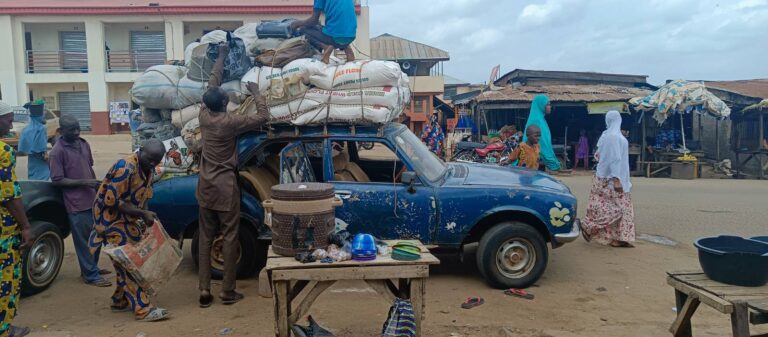
THE Nigeria Customs Service (NCS) has deployed a detachment of officers to Saki town in Oyo State to stop smugglers who have turned the border town to a trafficking hub.

The ICIR gathered from sources in the town that Customs officers have descended on parks and several roads linking the ancient town to Benin Republic where goods traffickers ply.

“It is very difficult for any vehicle in Saki to move goods to anywhere now. It’s no longer business as usual. Customs have been moblised from Abuja to the town and the borders. Motorists are no longer allowed to convey goods as you saw when you came for your investigation.

“In fact, I bought a bag of rice last week here in Saki to send to Ibadan. No driver agreed to accept it from me. The rice is still in my house as I speak with you. There is fear everywhere among the drivers in Saki. Things have really changed here. The Customs are also along the borders to make arrests. But I can’t confirm if people have been arrested along the borders,” said one of the sources.

In June, The ICIR exposed how artisans and professionals abandoned their jobs in the town and its environs for smuggling between Nigeria and Benin because of huge fortunes they made.

Prior to the investigation, the Nigeria Customs Service had only one post with about two officers along the Saki-Okerete border, and the officers often looked away as contrabandists conducted their trade. People engaging in the illicit business told The ICIR the officers were not after them but car smugglers.

The journey from Saki to Okerete by car is about six hours.

The route was one of the borders where the Nigeria Customs Service had banned the movement of goods in Nigeria.

However, the Nigeria Immigration Service opens the border to human movement (not goods, which only the Customs has the power over). Immigration officers of both countries collect bribes and allow people who do not have travel documents, including a national identity card of either nation to pass freely.

Hundreds of vehicles load from Saki to different routes linking the town to Benin daily. They do this gleefully in the presence of the Federal Roads Safety Corps (FRSC) officers who turn a blind eye.

Scores of motorbikes are also involved in the business. Like their vehicle counterparts, they strapped their goods on purpose-built planks and rods, which enables them to convey large goods.

While most vehicles stop at Okerete, motorcycles drive into Benin Republic. The first major town in Benin is Kilibo, where many residents buy and sell at Okerete at the community’s Sunday Market.

Smugglers make between 60 and 100 per cent gross profit from the smuggled commodities, which include beverages, petrol, yam, processed cassava, beans, and onions.

The commodities are cheaper in Nigeria. Similarly, Nigerians import mainly rice from the Benin Republic, where it is sold at about half of its price in Nigeria.

In addition to smuggling, The ICIR investigation revealed deforestation on Nigeria’s land linking Benin. The report also noted the large population of Beninese in Saki town.

The ICIR had contacted the Nigeria Customs Service in June over the smuggling business. It’s spokesperson, Abdullahi Aliyu Maiwada, an Assistant Comptroller of Customs, confirmed that the border was closed to the movement of goods by the Federal Government.

Presented with the findings, Maiwada said that the service was doing its best.

“I can say without doubt that there is no Customs in the world that has ever brought smuggling to an end. Our role is to suppress smuggling to the barest minimum. This is evident in the interceptions we’ve had in Oyo, given the records available in the state,” he had said.

Following the devlopment, The ICIR contacted him again, on Friday, August 1, for reaction. He directed the reporter to the Customs spokesperson for the Oyo and Osun states Command, Abdulmalik Akintola.

Akintola acknowledged the latest development in Saki and along the borders.

“We are aware of that,” he said when informed of how Customs officers have stormed Saki and its environs to declare war on smuggling.

“Even before that, the command had organised a meeting to ensure that our men are on their toes to carry out their duties as expected of them,” he stated, adding that the Customs Area Comptroller rewarded outstanding officers in the command, which, according to him, motivated all staff to rev up their performance.

Asked if arrests had been made, he said he had not been around, but the command must have arrested smugglers in Saki and its environs.

Read the report HERE.

Smuggling hub: Saki-Benin border remains a thriving hotspot despite ban

Trump hits Nigeria, other African countries with 15% tariff

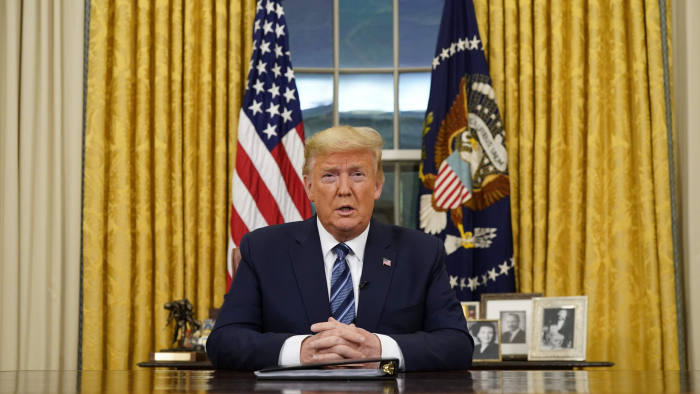
UNITED States President Donald Trump has imposed a 15 per cent import tariff on Nigeria and other African countries to advance his sweeping executive order.

The White House announced the modified reciprocal tariff rates on Thursday, July 31.

In the review reciprocal tax order, Trump slammed 15 per cent on Africa and other countries.

The countries include Afghanistan, Angola, Bolivia, Botswana, Cameroon, Chad, Costa Rica, Côte d`Ivoire, Democratic Republic of the Congo, Ecuador, Equatorial Guinea, Fiji, and Ghana.

Others are Guyana, Iceland, Israel, Japan, Jordan, Lesotho, Liechtenstein, Madagascar, Malawi, Mauritius, Mozambique, Namibia, Nauru, New Zealand, Nigeria, North Macedonia, Norway, Papua New Guinea, South Korea, Trinidad and Tobago, Turkey, Uganda, Vanuatu, Venezuela, Zambia, Zimbabwe

The revised global trade blitz comes following that Trump had, in April this year, slammed sweeping tariffs on global trading partners, including imposing 14 per cent on Nigeria.

Trump’s imposed tariffs, which were greeted with retaliations from other countries, were to take effect after 90 days to give time to negotiate the trade deals, with the deadline set to August 1.

Most negotiations, however, failed to produce new agreements, triggering the rollout of increased tariffs under Trump’s revised global scheme.

It can be noted that in Africa, the US President did not strike a single trade deal with any country, despite frantic efforts by several officials on either side of the divide.

As countries tried to find their way around the taxes in that period, Trump imposed travel restrictions on several African nations.

Nigeria was not initially included, but was later added as the policy evolved.

The Nigerian Minister of Foreign Affairs, Yusuf Tuggar, had said West African nations intended to boost trade with the US but cited the travel restrictions as a barrier.

Trump further imposed various degrees of tariff rates on other countries, as highlighted below.

  • 10% – Falkland Islands, United Kingdom, and all other countries not listed in the executive order
  • 18% – Nicaragua
  • 19% – Cambodia, Indonesia, Malaysia, Pakistan, Philippines
  • 20% – Bangladesh, Sri Lanka, Thailand, Taiwan, Vietnam
  • 25% – Brunei, India, Kazakhstan, Moldova, Tunisia
  • 30% – Algeria, Bosnia and Herzegovina, Libya, South Africa
  • 35% – Iraq, Serbia
  • 39% – Switzerland
  • 40% – Laos, Myanmar (Burma)
  • 41% – Syria

The reciprocal tariff rates order issued on Thursday read in part, “These modifications shall be effective concerning goods entered for consumption, or withdrawn from warehouse for consumption, on or after 12:01 a.m. eastern daylight time 7 days after the date of this order, except that goods loaded onto a vessel at the port of loading and in transit on the final mode of transit before 12:01 a.m. eastern daylight time 7 days after the date of this order, and entered for consumption, or withdrawn from warehouse for consumption, before 12:01 a.m. eastern daylight time on October 5, 2025, shall not be subject to such additional duty and shall instead remain subject to the additional ad valorem duties previously imposed in Executive Order 14257, as amended.”

The ICIR reports that China — which has been locked in a protracted trade war with the US — is still in negotiations with the Trump presidency.

Canada faced a 35 per cent tariff while Mexico was hit with a 25 per cent fentanyl tariff on cars, a 25 per cent tariff on fentanyl, and a 50 per cent tariff on steel, aluminium, and copper — all of which take effect in 90 days.

Also, Brazil is hit with a 10 per cent tariff, while a separate 40 per cent tariff is slapped on the South American nation in the revised tariff.

Two teenage girls killed, dismembered in Kogi

0

TWO teenage girls have been reportedly killed and mutilated in Okekwu Village, near Ogbogbo, in Igalamela/Odolu Local Government Area of Kogi State.

The ICIR reports that the girls identified as Ajuma Simon, 17, and Omojo Shuaibu, 18, were returning from a local market at about 7.00 p.m. on Wednesday, July 30, when they were ambushed just two kilometres from Okekwu and killed by suspected armed bandits.  

Residents who spoke with journalists said the girls were trekking along a bush path leading to their village. Their assailants allegedly ran after them in a bid to rape them.

The girls were said to have run for about 300 metres before they became tired, and their killers pounced on them before dismembering them.

The assailants macheted and butchered the girls beyond recognition.

Sources recounted hearing the victims screaming for help during the attack, but by the time the villagers arrived at the scene, the victims had already been dismembered.

One of the community sources said that when people arrived at the scene, one of the victims was still alive and revealed that the armed men came intending to either rape or kidnap them.

The source also said local security personnel and youths mobilised to the scene Thursday morning and evacuated the bodies, which were subsequently deposited at a morgue in Idah, Idah Local Government Area.

The ICIR contacted the Police Public Relations Officer in the state, William Ovye Aya, to seek a reaction to the incident.

Aya, who Daily Trust said confirmed the report, denied knowledge of the incident.

He promised to consult and reach out to this organisation after his findings.

He thereafter did not respond to calls and text messages sent to his phone line.

The girls’ killing adds to the growing homicide rate in the state.

The ICIR reported that a photojournalist, Ayo Aiyepekun, was recently murdered in Lokoja, the state capital.

Aiyepekun, who until his death worked with Inside Story, a platform based in Lokoja, was allegedly killed on Tuesday, July 22, by his neighbour, Adebayo Pelumi.

According to the victim’s colleague, the suspect called the deceased to assist him with his poultry farm, located within the compound, where the Inside Story also operates from.

The deceased and the suspect lived within the premises.

Unknown to the suspect, another colleague, who witnessed the killing, was within the building, working on a video with the deceased. The incident occurred around 7:30 pm.

Aviation unions give Keyamo 7-day ultimatum to implement new salary structure

0

AVIATION unions in Nigeria have issued a seven-day ultimatum to the Minister of Aviation and Aerospace Development, Festus Keyamo, over what they described as a delay in implementing a new salary structure for workers under the Nigerian Airspace Management Agency (NAMA).

The unions, in a letter dated July 31, voiced their frustration that despite concluding negotiations with NAMA management over eight months ago, agreed salary adjustments remained unimplemented.

The letter was signed by the general secretaries of four prominent aviation unions, namely the Air Transport Services Senior Staff Association of Nigeria (ATSSSAN), National Union of Air Transport Employees (NUATE), Association of Nigeria Aviation Professionals (ANAP), and Amalgamated Union of Public Corporations, Civil Service, Technical, and Recreational Services Employees (AUPCTRE).

The workers threatened to withdraw their services if the issues were not resolved by August 7.

The unions noted that their branches had already issued and served notices of ultimatum, which the national unions had adopted.

“A seven-day notice of withdrawal of services from today, Thursday, the 31st day of July, 2025, is hereby issued,the workers stated, adding that if the ultimatum expired without an acceptable decision, all NAMA workers would begin a nationwide strike, withdrawing their services.

The ICIR reported that in 2024, Keyamo had appealed to unions to shelve their proposed nationwide strike over the Federal government’s 50 per cent deduction from the internal revenues of agencies in the sector.

The proposed strike was slated for August 21, according to a memo signed by the union leaders.

ASUU, others ground activities in LASU, begin indefinite strike

0

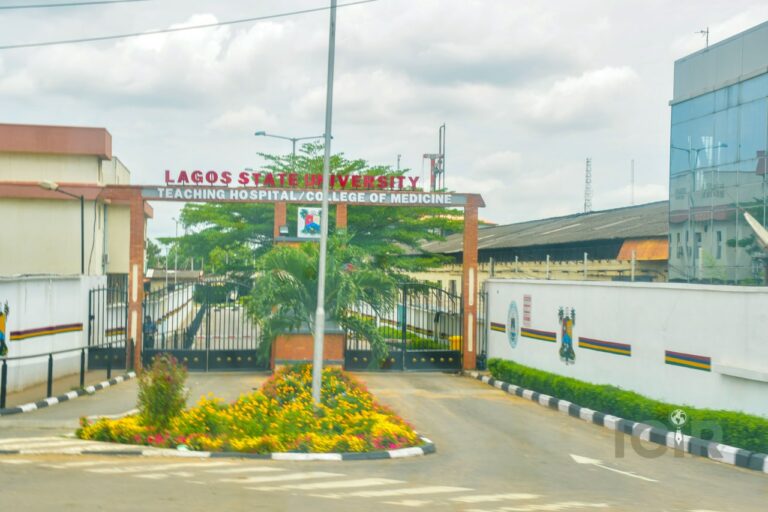
THE Joint Action Committee (JAC) of staff unions, including the Academic Staff Union of University (ASUU-LASU), at Lagos State University (LASU) has declared an indefinite strike, effectively grounding all academic and administrative activities across the institution.

This disruption came just days ahead of the university’s 2024/2025 second semester examinations, which were scheduled to begin on Monday, August 4.

In a letter dated July 31, 2025, and addressed to the university’s vice-chancellor, Ibiyemi Olatunji-Bello, the committee announced the commencement of the industrial action over unresolved issues with the school management.

The joint committee comprises the Academic Staff Union of Universities (ASUU-LASU), Senior Staff Association of Nigerian Universities (SSANU-LASU), Non-Academic Staff Union (NASU-LASU), and National Association of Academic Technologists (NAAT-LASU).

The notice was jointly signed by the chairman of the ASUU-LASU, Ibrahim A. Bakare, and Secretary Sylvester O. Idowu; chairman of SSANU-LASU, Oluwaseyi Lawal and Secretary Waheed Majekodunmi.

“Sequel to the decision reached at the Emergency Congress of the Joint Action Committee of the Lagos State University Staff Unions (ASUU-LASU, SSANU-LASU, NAAT-LASU & NASU-LASU) that an indefinite strike action should commence effective from Thursday, 31st July, 2025, we write to notify you that the indefinite strike action has commenced in Lagos State University,” the statement read.

The unions directed all their members at LASU’s main campus, the Lagos State University College of Medicine (LASUCOM), Ikeja, and the LASU Epe campus to withdraw their services and vacate their duty posts with immediate effect.

They emphasised that the strike would continue indefinitely until all demands are met by the appropriate authorities.

Two strikes in eight months

The ICIR reports that this development marks a continuation of labour unrest at the institution, following a previous strike action led by the JAC in December 2024.

The ASUU-LASU, while announcing the strike, protested the Lagos State Government’s refusal to implement the 25–35 per cent salary increment approved by the Federal Government in January 2023, despite similar compliance by 18 other state universities.

A statement by the ASUU-LASU Chairperson, Ibrahim Bakare, a professor, and Secretary Sylvester Idowu in December noted that the declaration of the strike action conformed with the decision of the Joint Action Committee (JAC) of all the staff unions in the university.

“We note with dismay that this agreement has been implemented in all the federal universities and eighteen (18) state universities as of today,” the statement said.

CJID report flags Lagos, FCT, Imo, others hostile areas for journalists

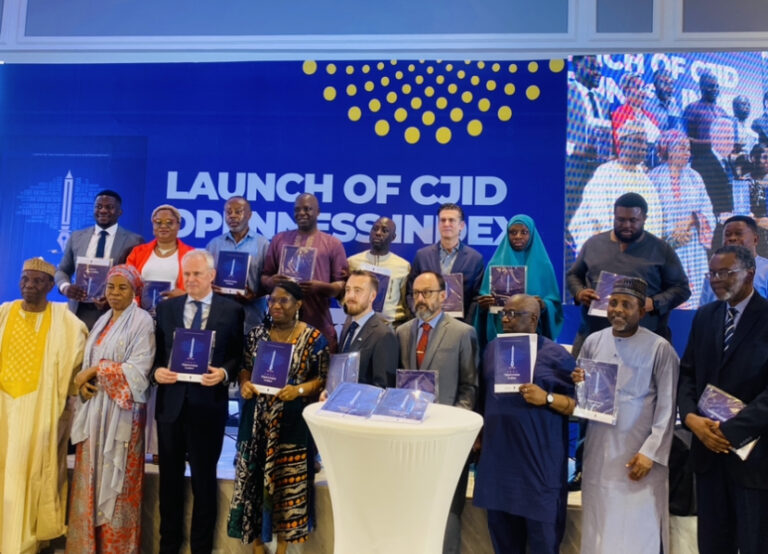
DESPITE being Nigeria’s media and commercial hub, Lagos State has been identified as one of the most hostile environments for journalists. This is according to the 2024 Openness Index released by the Centre for Journalism Innovation and Development (CJID).

The index, unveiled on Thursday, July 31, shows that press freedom landscape registered a concerning 50.51 per cent average in 2024, placing the nation squarely in the ‘Average Enabler’ category.

Lagos, the Federal Capital Territory (FCT), Imo, and several other states performed relatively ‘poor’ across indicators related to media safety, political tolerance, and freedom of expression.

The report, based on a sample of 1,110 respondents, including journalists, media owners, and civil society actors, categorised states on a spectrum from 0 to 100, where 0-39 represents ‘Extreme Inhibitors,’ 40-49 ‘Inhibitors,’ 50-59 ‘Average Enablers,’ 60-69 ‘Satisfactory Enablers,’ and 70-100 ‘Good Enablers.’

Nigeria’s national average stood at 50.51 per cent, placing the country in the ‘Average Enabler’ category, some states recorded scores ranging from 21.63 to 50.52 per cent on either of the seven indicators.

The indicators are political, legal, security, economic, sociocultural, media environment and gender inclusion.

Lagos scored just 29.21 per cent on the indicator measuring violent treatment of journalists, despite ranking 22nd overall. 

Presenting the findings to the audience, on Thursday, at the launch of the openness index, Victor Ayidun-Aluma, a professor of Mass Communication and Social Change, stated that the index was designed to combine perception data with incident-based evidence in order to provide a holistic, and actionable picture of democratic openness at the state level.

While noting that the national average places Nigeria in the ‘Average Enabler’ category, he stated that the detailed state-by-state breakdown showed significant variations. 

For instance, Cross River State leads the overall ranking with 70.40 per cent, placing it in the ‘Good Enablers’ category, while states like Anambra, Nasarawa, Bauchi, Ebony, and Imo, record lower scores, indicating a more challenging environment for press freedom. 

According to the report, media professionals in Cross River reported minimal interference in their work and also the civil society actors described constructive engagements with public officials. 

On the lowest performing states based on the perception index, the report found them to perform below average on indicators that appraised political tolerance, media independence, and behaviour ofthe security forces, reflecting a repressive environment.

“Twelve states ranked as average enablers, including Katsina  (57.51 per cent) Abia, (53.15 per cent), and Kwara, (50.53 per cent). 

“Twenty-two states ranked as inhibitors, including FCT Abuja (49. 28 per cent), Jigawa (48.95 per cent) Lagos, 48.93 per cent), Akwa Ibom, (47.81 per cent), Kaduna, (45.72 per cent), and Imo, (40.70 per cent) – the worst performing federating unit. No state ranked as an extreme inhibitor of press freedom and freedom of expression,” the report showed.

Inhibitors of press freedom 

The key challenges identified as inhibitors to press freedom include significant economic challenges at both national and subnational levels. 

According to the report, news organisations face financial constraints due to shifts in advertising revenues, increased competition from technology companies and social media, and reductions in global funding for journalism. 

These economic pressures, it noted, often lead to operational cost increases and inflationary pressures, jeopardising editorial independence as media organisations may seek funding from government or corporate entities.

The index also pointed to legal restrictions, Strategic Lawsuits Against Public Participation (SLAPP), and political intimidation as significant hindrances. 

Mediocre performance 

Speaking with The ICIR, on the findings, the Executive Director of CJID, Akintunde Babatunde, described the ‘average enablers’ as a ‘mediocre’ result that falls short of acceptable standards. 

He also stated that journalists are often “scared for their lives,” subjected to attacks, or even “kidnapped” while performing their duties. 

These incidents, he noted, are a clear indicator that the environment is far from enabling.

“Beyond the index, we have very clear incidents of press attack, media attack, that makes it difficult for journalism to be done,” he said.

The ICIR reports that the findings of the report are heavily corroborated by data from the CJID’s Press Attack Tracker (PAT), which documented 140 attacks between December 2023 and November 2024. 

According to the report, which encompasses data from the Press Attack Tracker, the threat of violence is particularly acute in some states, such as the FCT and Lagos, where 45 and 21 attacks on journalists, respectively, were recorded during the period under review

Nigerian media faces existential challenges – Panelists

One of the panellists on the state of the media and civic space in Nigeria, the Vice Chancellor of Federal University Kashere, Umaru Pate, a Professor, noted that Nigeria media industry now faces several existential challenges, adding that some of the problems are beyond press freedom.

 Pate also noted that many journalists are faced with economic difficulties which consequently has an impact in their practices.

He added that “economic independence determines editorial independence.”

He also highlighted challenges such as credibility crisis, accessing and mastering technology, safety of the media, and poverty. 

On his part, Tonie Iredia, a professor of Media Law and Broadcast Management, said Nigeria has had many incidents of threats and attacks on journalists for a long time, adding that: “There is no freedom of press in Nigeria.”

He noted that Section 39 and other line items of the Nigerian Constitution do not protect media freedom and rights as people wrongly believe.

PMS pricing: marketers seek Tinubu’s intervention on Dangote’s dominance

THE Nigerian Petroleum Suppliers Owners Association of Nigeria (NOGASA) has allayed fears over Dangote’s dominance in the petroleum downstream sector, while seeking presidential intervention on the imminent job losses for its members.

The association’s president, Benneth Korie, made this known at the Annual General Meeting (AGM) of the organisation held on Thursday, July  31.

Korie said Dangote’s presence in all the petroleum downstream sector value chain, comprising refining, blending, storage, logistics, and price fixing, was exposing Nigeria to high monopoly risk and job loss for NOGASA members.

The ICIR reports that Dangote Petroleum Refinery has been playing a dominant role in Nigeria’s petroleum downstream sector, specifically in petrol blending, price fixing, and with proposed logistics control scheduled to kick off in August.

On Sunday, June 15, the Refinery announced plans to begin a nationwide targeted distribution of premium motor spirit (PMS) and diesel to major retail outlets across the country.

The distribution was to serve marketers, petrol dealers, manufacturers, telecoms firms, aviation, and other large users across the country.

It was scheduled to commence on August 15, and according to the oil giant, it has procured 4,000 brand-new compressed natural gas (CNG)-powered tankers to ensure smooth take-off of the scheme.

The company has also been playing a major role in price reduction, which the marketers fear could expose Nigerians to a higher risk of possible scarcity if it fails to meet such a role.

“We want the president to advise Dangote. We suggest that Dangote and the petroleum union suppliers meet at a round table to ensure we avert possible loss of jobs and problems. He is deep in the petroleum supply chain, and our members are already affected since we have more than 50,000 filling station retail outlets.

“We have various petroleum retail outlets across the country, and if he chooses to play in the value chain, many of us could be out of business. At this stage, we want the president to intervene,” Korie said.

Dangote has also embarked on petroleum blending, distribution through its CNG trucks, and has selected filling stations with which it partners, thereby dominating the downstream value chain.

Before his entrance into the Nigerian petroleum downstream sector, Nigeria had been witnessing long queues, especially during the festive season.

Meanwhile, NOGASA officials pointed out that entrusting Dangote with 95 per cent of Nigeria’s energy needs could expose Nigeria to energy insecurity.

“One person will be playing the role of a refiner, petroleum blender, and a price fixer. We had a similar situation in our cement sector, and the price has been out of reach for a long time,” the President of Petroleum Retailers Association of Nigeria, PETROAN, Billy Gillis-Harry, told The ICIR on the sidelines of the event.

He stressed that Nigeria could run the risk of energy insecurity if Dangote controlled a chunk of the petroleum downstream sector and the supply logistics.

“Dangote is leveraging his dominant position to fix prices and beat competition, and it’s not in the best interest of our business. This is already leading to market shutdown of retail outlets,” he added.

He suggested to the petroleum regulatory authorities to ensure everyone plays by the rules of the game, adding that “regulatory oversight needs to be intensified for clarity.”

Earlier in his remarks, the Director-General of the Nigeria Midstream and Downstream Petroleum Regulatory Authority (NMDPRA), Farouk Ahmed, represented by Ngozi Nwankwo, said, “The regulatory authority would support investors with enabling laws to succeed in the oil and gas business.”

He urged operators in the downstream sector to always seek regulatory support to enhance a level playing field for businesses.


Obi, not Atiku can easily defeat Tinubu in 2027 – El-Rufai’s son

BASHIR El-Rufai, son of former Kaduna State Governor Nasir El-Rufai, has predicted that if Labour Party presidential candidate in the 2023 poll, Peter Obi, contests again with a strong running mate from the North, he could easily defeat President Bola Tinubu in 2027.

He stated this on his X handle on Thursday, July 31.

He wrote, “Atiku is a force to be reckoned with. He also feels the stars have finally aligned in his favour. And although 2019 is thought to have been his best shot, this may be one of those ‘moment meets the man’.

“However, the sheer force of Obi’s numbers and cult like follower-ship brings a challenge. His appeal across the youth & this younger generation is one profound aspect of his leverage. Obi, as a flag bearer with a strong Northern candidate, would defeat Pablo on election day before our dear mother of the nation — Aunty Remi finishes his breakfast around noon.”

Recall that as part of its strategies to dislodge the ruling All Progressives Congress (APC) in the 2027 elections, leading opposition figures, including former Vice President Atiku Abubakar, Obi, former Rivers State governor Rotimi Amaechi, and Nasir El-Rufai, respectively, launched a coalition in Abuja on March 20.

The younger El-Rufai, in his remarks on X, said that Obi posed a significant challenge for Abubakar, highlighting the former Anambra State governor’s strong appeal among the youth as a key factor behind his growing support base.

The ICIR reports that El-Rufai’s comments are coming ahead of the 2027 elections, with a major coalition involving Abubakar, Obi and Ameachi seeking to grab power through the African Democratic Congress (ADC).

While Abubakar recently quit the Peoples’ Democratic Party (PDP), Obi has yet to quit the Labour Party. However, the senior El-Rufai abandoned the APC for the Social Democratic Party (SDP). The party eventually banned him for 30 years for engaging in anti-party activities.

There are permutations that Abubakar will pick the ADC presidential ticket, which he has asked party leaders to throw open.

There are, however, fears in Obi’s camp that he might end up not picking the party’s ticket.

Obi has declared interest in running for the presidency in 2027 on the ADC platform and rule the nation for only four years, thereby completing the South’s eight-year presidency rotation, after Tinubu’s four years.

There are also strong indications that he would not accept being a running mate to Abubakar in the ADC, which could have fueled Bashir El-Rufai’s position.

Media reports have suggested that the PDP, which he quit preparatory to the 2023 poll, is seeking his return to enable him to pursue his ambition on the platform.

Obi was a running mate to Abubakar in 2019 on the PDP platform before the two leaders went their separate ways in 2023.

Had they parleyed in 2023 as they did in 2019, they could have defeated Tinubu, given that Tinubu polled  8,794,726 million votes, Abubakar got 6,984,520 million, and Obi garnered 6,10,533 votes in the election.

The ICIR reports that Obi is seeking the presidency for the second time. Should Abubakar contest, he will be doing so for the seventh time.