Home Blog Page 223

Meet BBNaija Season 10 male housemates

IF Saturday night’s unveiling of Big Brother Naija (BBNaija) Season 10 female housemates set the tone for what the audience will get from this year’s show, Sunday’s launch of their male counterparts has truly kicked things into higher gear.

The second night of the premiere introduced a bold mix of charisma, ambition, and unpredictability. From doctors and DJs to hype men and heartbreakers, it’s clear that the theme, “10 Over 10,” isn’t just a nod to the show’s decade milestone; it’s a statement of intent.

Scenes from the night show confident struts, statement outfits, and personalities ready to claim camera time. As viewers get their first impressions, social media has already begun doing what it does best: dissecting, debating, and drawing early battle lines.

Here’s a look at some of the men stirring early interest:

1) Koyin (21, Ogun State)

A model and self-described “party monster,” Koyin brings Leo energy and a love for the spotlight. He calls himself the “snub king” but says he’s also here to cause a few emotional ripples.

2) Danboskid (25, Ekiti State)

Mr. Ideal Nigeria 2024 and a self-declared gym freak, Danboskid, is trading cement mixers for cameras. With his cool confidence and zero-chase policy, he’s expecting the fans, and maybe the girls, to come to him.

3)  (29, Ogun State)

A hype man with an unfiltered mouth and major stage energy, Rooboy isn’t one to hold back. “Loud for a living, real by default,” he says, and fans should expect nothing less.

4) Bright Morgan (27, Imo State)

Actor, gym enthusiast, and lover of the mirror, Bright is coming in with confidence and a strict no-romance policy. He’s focused on gameplay, not distractions.

5) KayBOBO (26, Ekiti State)

A pro American football player and poet, KayBOBO blends brawn with brains. He’s already declared himself “The Terminator”, warning housemates that he’s here to shake the table and flip a few chairs.

6) Faith (25, Osun State)

A doctor by profession and, according to him, a flirt by energy. Faith is bringing brains and unpredictability, and there are also whispers of possible polyamorous plotlines ahead.

7)  (27, Kogi State)

A sailor turned creative, Kuture is navigating fashion, interiors, and music with flair. Describing himself as “single until made,” he’s hungry for success and not shy about it.

8)  (27, Anambra State)

Funny and unfiltered, Denari mimics accents like a pro and lives for food and football. He’s bringing zero-commitment energy and probably some comic relief.

9) Kayikunmi (25, Ekiti State)

Loud, funny, and strategic, this royal-born banker is already plotting both his win and his romantic options. Expect a mix of bold moves and soft charm.

10)  (29, Rivers State)

A confident entertainer on his way to becoming a lawyer, Mensan describes himself as the “sweet bad guy”, and he’s stepping into the house to bring pressure and plot twists.

11)  (Otega, 32, Delta State)

A chef with emotional depth and a mind built for tech, Otega is walking in with heartbreak and unpredictability in his luggage. He’s already promised to stir things up, and we believe him.

12) Victory (28, Akwa Ibom State)

A proud pig farmer and self-proclaimed “king of arguments,” Victory brings passion, unpredictability, and a love for chaos with a soft spot for the elderly.

13) Jason Jae (29, Ondo State)

A choreographer with a calm exterior, Jason says he’s a Games Master ready to outplay the rest silently but strategically.

14) Kola (28, Ekiti State)

A software analyst and certified lover boy, Kola is walking in with charm and a serious game plan. “Drama doesn’t follow me, I escort it,” he says. 

With the full house now assembled, the dynamics are already shifting. Love triangles, ego clashes, and strategic alliances are all but guaranteed. With each contestant bringing distinct energy and ambition, viewers are in for a season that blends entertainment with unpredictability.

From the looks of things, BBNaija Season 10 is no longer warming up; it’s in full swing. And judging by the early buzz, it just might live up to its “10 Over 10” promise.

Kogi vows justice for slain photojournalist

KOGI State Government has vowed that those responsible for the killing of photojournalist, Ayo Aiyepeku, would be brought to justice.

The government disclosed this in a statement issued by the Commissioner for Information and Communications, Kingsley Fanwo.

Fanwo said the governor, Usman Ododo, had directed security agencies to conduct a thorough investigation to unravel the issues surrounding the murder of the deceased.

“The government will leave no stone unturned in the pursuit of justice, ensuring that the perpetrators of this heinous act do not go unpunished” he said.

The ICIR reports that Aiyepeku, an indigene of Ekinrin Adde in Ijumu Local Government Area of the state, was allegedly killed on Tuesday, July 22, by his neighbour, Adebayo Pelumi.

According to reports, Pelumi lured the deceased to his poultry farm within the same compound they lived in around 8:30 p.m.

A colleague of Aiyepeku, who was with the victim shortly before the incident, said Pelumi called Aiyepeku for assistance at the farm.

The colleague recalled seeing Pelumi repeatedly strike Aiyepeku on the head with an iron object, rendering him unconscious. The suspect then allegedly dismembered the body and attempted to transport parts of it in his Hilux van.

The witness raised an alarm, attracting security operatives to the scene. Although shots were fired at Pelumi’s vehicle, he fled the scene with the victim’s body, prompting a police manhunt for him.

The decomposing body of the 26-year-old photojournalist was found on the outskirts of Lokoja the following day, after intense search.

The case took a dramatic twist when the prime suspect was later discovered dead in a hotel room in Lokoja, with initial investigations pointing to suicide.

Pelumi’s remains were found on July 24, evening in the bushy area around the Crusher axis of Lokoja, the state capital.

A bottle containing a poisonous substance and a handwritten note were allegedly found at the scene.

Security operatives are handling the corpse, which has already been deposited at the Specialist Hospital in Lokoja, as investigations continue.

Fanwo in his statement said investigation into the circumstances surrounding the murder and the subsequent death of the prime suspect was ongoing.

“Justice may not bring the dead back to life, but it will console the family of the deceased that their son did not die in vain.

“The safety and security of our people remain a top priority of our administration.”

He called on the public to stay vigilant and assist ongoing investigations by providing law enforcement agencies with credible information.

Tinubu feeding Nigerians with wrong data to cover economic woes – Obi

LABOUR Party presidential candidate in the 2023 general election, Peter Obi, has claimed that President Bola Tinubu’s government is providing Nigerians with incorrect statistics to conceal economic woes under his watch.

The former Anambra State Governor stated this in a post on his X handle on Monday, July 28.

“President Tinubu is now overfeeding Nigerians with wrong statistics from wrong unemployment figures, wrong inflation figures, and now GDP [gross domestic product] rebasing, all to put a positive spin on our deteriorating economic and household conditions,” Obi said.

He cited unemployment rate, inflation figure, and rebased GDP figures as wrong statistics under Tinubu.

He, however, noted that in November 2022, while campaigning in Delta State, Tinubu, who was the All Progressives Congress (APC) presidential candidate in the 2023 election, had promised to put food on the table of Nigerians and had shown disdain for statistics about the nation’s economy at the time.

“Na statistics we go chop? (Are we going to eat statistics?) All I want is to put food on the table of Nigerians,” he quoted Tinubu to said during the electioneering.

According to Obi, it is now two years into Tinubu’s four-year tenure, and Nigeria is classified as one of the hungriest nations in the world, with millions of Nigerians not knowing where their next meal will come from.

“Governance is not rocket science; it’s not a gamble, like I have always reiterated, it requires sincerity of purpose, character, competence, capacity, and compassion,” he added.

The ICIR  reports that since he assumed office on May 29, 2023, Tinubu’s administration has made significant changes to the methodology used in the calculation of the unemployment rate, inflation, and GDP figures, as Obi cited.

In August 2023, the National Bureau of Statistics (NBS) changed the methodology for calculating the country’s unemployment rate and slashed the figure to 4.1 per cent in the first quarter (Q1) of 2023 from 33.3 per cent in the fourth quarter (Q4) of 2020.

The sharp drop in unemployment rate, many analysts had argued, was not reflecting the accurate picture of the level of unemployment in the country.

Following the rebasing of the consumer price index (CPI) by the NBS, Nigeria’s headline inflation rate dropped to a new low of 24.48 per cent year-on-year in January this year, from 34.80 in December 2024.

Similarly, on July 21, the NBS released the long-awaited rebased GDP figure, stating that in real terms it grew by 3.13 per cent year-on-year in the first quarter from 2.27 in the same period of 2024.

In nominal terms, GDP growth increased to N372.82 trillion or  $242.64 billion as of December 31, 2024, from $187.75 billion. It, however, left the country to retain its fourth-largest economy in Africa in 2024, despite rebasing the economy.

SDP bans El-Rufai for 30 years

0

THE Social Democratic Party (SDP) has expelled former Kaduna State Governor Nasir El-Rufai from its fold.

According to the party’s National Working Committee (NWC), EL-Rufai’s expulsion is for 30 years.

The party said the former governor was ineligible to associate with it in any form for the next 30 years.

It accused El-Rufai of pretending to be a member, manipulating processes, and trying to destabilise the party.

This was disclosed in a statement by the SDP National Publicity Secretary, Araba Rufus Aiyenigba, in Abuja, on Monday, July 28.

According to the statement, the party’s NWC took the decision following detailed investigations into El-Rufai’s contentious claims of membership and his alleged backdoor political activities.

The SDP said the former governor never registered with it at his ward level as required by law, but falsely declared on social media that he had joined the party.

It accused him of gross indiscipline, misinformation, inducement, and manipulation, which allegedly fueled internal divisions and threatened the party’s unity and ideological integrity.

The SDP accused El-Rufai of secretly aligning with the African Democratic Congress (ADC) and trying to drag the SDP into “an unauthorised coalition.”

“Having confirmed that he publicly declared for the ADC and continued to act in a manner contrary to the principles and practices of the SDP, the party has no option but to disassociate and excommunicate him.

“Consequently, El-Rufai has been banished and banned from applying to the membership, identifying with the name, insignia, logo, or participating in any affairs of the SDP for a period of 30 years, effective immediately,” the party stated.

The SDP urged the Independent National Electoral Commission (INEC) and other bodies not to recognise El-Rufai as its member, cautioning that he was not authorised to represent the party.

The ICIR reports that El-Rufai resigned from the ruling All Progressives Congress (APC) in March 2025 and joined the SDP.

“Today, the 10th of March 2025, I have submitted a letter resigning my membership of the APC to my ward in Kaduna, effective immediately.

“Subsequent to this, I had concluded consultations with my mentors, colleagues, and loyalists alike about the future and have decided to join the Social Democratic Party (SDP) and adopt it as the platform for our future political engagements and activities,” the former Kaduna governor said in a statement.

In March 2025, a new coalition emerged, led by former Vice President of Nigeria Atiku Abubakar.

Apart from Abubakar, who was the presidential candidate of the PDP, others in the coalition include notable figures, namely former Anambra State Governor and 2023 presidential candidate of the Labour Party (LP), Peter Obi, former Rivers State governor, Rotimi Amaechi and El-Rufai.

According to the group, it seeks to consolidate opposition efforts and present a unified front against the APC in the 2027 election.

On July 5, 2025, the coalition adopted the ADC as its platform and appointed interim leaders, including David Mark as its National Chairman.


Adamawa flood: Five dead, 55 injured, says NEMA

0

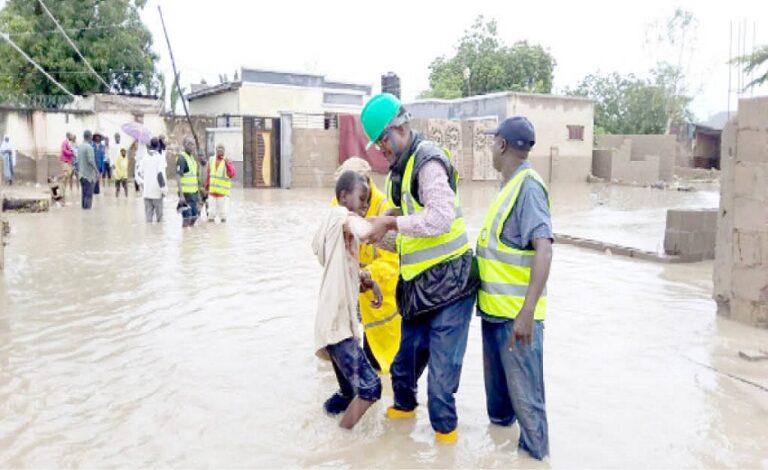
THE National Emergency Management Agency (NEMA) has confirmed five persons dead and 55 others injured from flooding in parts of Yola, Adamawa State.

The NEMA’s Head of Operations in Yola, Ladan Ayuba, confirmed the number of victims and stated that the injured were receiving treatment at the Modibbo Adama Teaching Hospital. 

Speaking with The ICIR on Monday, July 28, NEMA’s national spokesperson, Manzo Ezekiel, corroborated the fatalities figure. He added that a team from the organisation was on the ground in the town.

He promised to give a further update before the end of today (Monday).

Meanwhile, residents in the state capital gave higher numbers of casualties from the flooding, with some claiming as many as 40 people died.

The Adamawa flooding occurred on Sunday, July 27, following a heavy downpour in Yola and its environs. The flood submerged houses in some of the affected places.

Media reports indicate that boats have been used to rescue people in areas such as Sabon Pegi, Shagari Phase II, Anguwan Tabo, Tashan Sani, Modire, Ummare, Ibnu Abbas, and Yolde-Pate.

Officials of the Red Cross, the State Emergency Management Agency (SEMA), and the Nigeria Security and Civil Defence (NSCDC) are among those working together with NEMA to support and rescue the victims. 

Many residents have since been seeking shelter in emergency camps and schools.

The state Deputy Governor, Kaletapwa Farauta, a professor, visited the affected areas on Sunday. 

Farauta also visited the injured at Modibbo Adama University Teaching Hospital, expressing concern over the level of destruction and directing that temporary shelters and essential relief materials be provided to the victims immediately.

“The government will ensure the victims receive food, clothing, and medical care without delay,” he promised. 

The ICIR reported in June 2025 that NEMA announced the deployment of its personnel to 15 high-risk states to raise awareness among residents about the looming threat of floods and the urgent need to relocate from vulnerable areas.    

The NEMA spokesperson said the affected states include Kogi, Imo, Enugu, Adamawa, Taraba, Borno, Zamfara, Katsina, and the Federal Capital Territory (FCT).

HE said the May 23 flooding in Mokwa Local Government Area, Niger State, took many residents by surprise, especially those living in gully-prone areas. Despite earlier warnings issued by authorities, many victims of the flooding built their residences in the gully areas.

The ICIR reported that the Niger State Government said the flooding killed over 200 residents, with more than 1,000 residents missing.

As another judge seeks to suffocate the people of Nigeria

0

By Chidi Anselm Odinkalu

THREE different decisions of the highest court in the country over the past two decades illustrate how the judicial conspiracy against popular sovereignty in Nigeria has prospered.

In 2008, the Supreme Court ruled that elections in Nigeria are not governed by any foundational or legal principles. In other words, Nigeria has no legal standard for a free, fair or credible election. The same court has ruled that in organising elections, the Independent National Electoral Commission (INEC) is not bound by its own administrative regulations and guidelines.

So, INEC can behave with impunity as a lawless institution and citizens and political parties have no right to have any expectations of the commission. The court has equally held that in Nigeria’s version of elective government, judges have the power to declare the majority votes in an election entirely “wasted” and to install manifest losers as winners.

These decisions have combined to denude elections in Nigeria of meaning as expressions of the will of the people. In these judgments and until now, the focus was on elections. The effect on citizenship, as the basis of the right to vote and to constitute a government was arguably indirect.

In a decision on July 23 (this past week), Oluseyi Owoeye, a judge of the Federal High Court in Lagos, goes dangerously further in this project of judicial liquidation of the constitutional foundations of elective government. According to the judge: “Any question bordering on the action or omission of any or person [to] guarantees (sic) the participation by the people in their government is not justiciable before any Court of law in Nigeria.” As far as wilful and cynical jurisprudence goes, this takes the prize.

Given the significance of this judgment for civic rights in Nigeria, it is essential to provide some context so that those who are interested may follow the issues fully.

Chapter IV of Nigeria’s Constitution guarantees a set of Fundamental Rights which it requires the courts to enforce through an expedited process inscribed in the Fundamental Rights (Enforcement Procedure) (FREP) Rules made by the Chief Justice of Nigeria (CJN). For reasons that are not entirely clear, however, the rights guaranteed in Chapter IV do not include the right to vote or to participate in government.

Instead, Chapter II of the same constitution contains two important provisions of relevance to this. First, section 14(2)(a) exhorts that, “sovereignty belongs to the people of Nigeria from whom government through this Constitution derives all its powers and authority.” As a complement, section 14(2)(c) follows this up with the promise that “the participation by the people in their government shall be ensured in accordance with the provisions of this Constitution.” However, in an earlier stipulation in section 6(6)(c), the same constitution precludes courts from exercising their powers to enforce these provisions of chapter II.

There are at least two exceptions to this constraint. First, under item 60(a) in the Exclusive Legislative List, the National Assembly may make laws “to promote and enforce the observance of the Fundamental Objectives and Directive Principles contained in this Constitution”, and the courts will be bound to enforce such laws. Second, under section 12(1) of the same constitution, the courts are bound to enforce the provisions of a treaty which has been enacted into law by the National Assembly, even if such a treaty covers issues contained in Chapter II of the Constitution.

In Nigeria, the African Charter on Human and Peoples’ Rights straddles both exceptions. Article 13(1) of the Charter makes up for the omission of a right to vote in the constitution by guaranteeing the right of citizens to participate in their government.

In this sense, the Charter implements the provisions of Section 14 in Chapter II of the Constitution. The National Assembly enacted it into domestic law through the African Charter on Human and Peoples’ Rights (Ratification and Enforcement) Act and the Supreme Court has recognized that the African Charter “is now part of the laws of Nigeria and like all other laws the Courts must uphold it.” The FREP Rules are explicitly available for the enforcement of the rights contained in the African Charter.

This context is essential to explain why this decision this past week by Oluseyi Owoeye of the Federal High Court in Lagos is both cynical and dangerous. In reaching this decision, the judge claimed that he could not enforce the guarantee of the right to participation in the African Charter on Human and Peoples’ Rights because participation is only contained in Chapter II of Nigeria’s Constitution, a provision to the enforcement of which he cannot lend his judicial powers.

That is manifestly disingenuous. It is also plainly misguided as a matter of law. If a judge cannot protect the right of citizens to participate in their government, why is he a judge? Will he prefer to protect stolen elections, instead?

The facts are also relevant here. On 20 July 2023, a class of Nigerian citizens instituted this case. The defendants were the INEC, the National Human Rights Commission (NHRC) and the Attorney-General of the Federation. Against INEC, they alleged multiple violations including exclusion from the register of voters, deliberate mismanagement of election logistics, wilful destruction of voters cards, and complicity in election-related violence.

Both the INEC and the NHRC entered appearance. The case took two years to come to judgment but, despite repeated reminders and orders by the Court, the Attorney-General of the Federation, a named defendant in a matter of such high civic and constitutional significance, could not be bothered to file any defence or instruct any of the numerous lawyers in his office to appear on his behalf. It is well possible that the judge took a cue from the attitude of the Attorney-General and decided to find a way to play good and avoid entering into the substance of the case. If that is so, then he settled for the worst possible escape route.

The logic of precluding courts from lending their powers to enforce the right to participate in government under an elective system essentially hollows out any idea of effective citizenship. Courts cannot decline the protection of the right to participation on the one hand and, on the other, agree to protect the integrity of elections or the obligations of those required by law to ensure that the ballot is credible. Effectively, if upheld on appeal, this judgment will license judicial burglary of Nigeria’s civics.

It is surprising that a case of this scope in its implications could have flown so beneath the radar of public attention to judgment. This case will naturally go next to the Court of Appeal. Hopefully, it will merit the attentions of a full panel of the Court of Appeal. At that point, civic groups will hopefully apply to join as interested parties in the appeal and there will also be similar applications by other groups to join as friends of the court (amici curiae).

This judgment by Oluseyi Owoeye of the Federal High Court is the latest in an increasingly fevered judicial effort to decapitate citizenship as the basis for government in the country. It egregiously perverse and should not stand.

It is worth recalling that among the truly unsung heroes of the resistance to military rule in Nigeria in the last three decades of the 20th century were judges in various courts around the country who opposed or constrained the excesses of military rule through their judgments. If the country’s current experiment in civil rule fails, it will be because some judges have replaced soldiers as those most enthusiastic about suffocating elective and accountable government founded – as the constitution mandates – on the will of the people.

A lawyer and a teacher, Odinkalu can be reached at chidi.odinkalu@tufts.edu 

35 kidnapped victims killed in Zamfara over failure to pay ransom

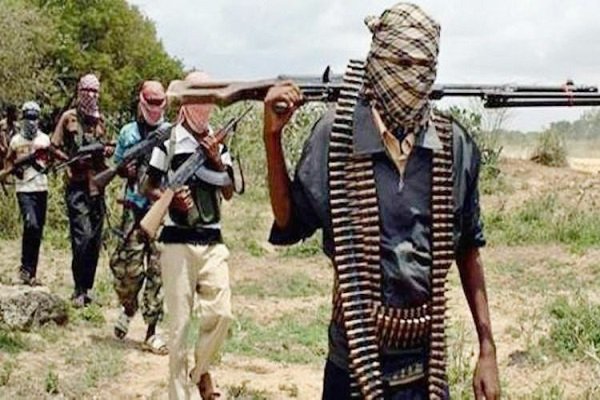
Thirty five kidnapped victims from Banga village in Kaura-Namoda Local Government Area of Zamfara State were reportedly slaughtered by bandits after failing to raise a N35 million ransom.

According to Punch Online, a resident of the village, Sani Suleiman, revealed on Sunday, July 27, that bandits had abducted 53 people from Banga village and demanded a ransom of one million naira for each captive.

Suleiman said that the victims had been in captivity for several months, but only 18 of them, who were able to pay the ransom, were released.

“Those who were released after paying the ransom told us that the bandits slaughtered the remaining 35 captives who could not pay the ransom one after the other in their presence,” he said.

Suleiman appealed to the state government to intervene and deploy security personnel to the area, warning that residents might be forced to flee in search of safety as the village was under the bandits’ control.

Ahmed Danmanga, the Special Adviser on Security Matters to the state Governor Dauda Lawal, also confirmed the incident but said he could not verify the exact number of residents killed.

“I am aware that the bandits have killed some residents of Banga village, but actually, I don’t know the exact number of people killed.

“As I am talking to you now, we have deployed mobile police to protect the lives and properties of the people of the village. Zamfara State Government is working around the clock to ensure that the people of the state are given maximum protection against banditry and other criminal activities.

Danmanga lamented that the state remained handicapped by inadequate security personnel.

Zamfara State has faced insecurity, losing hundreds of its residents to the menace in recent years.

While bandits and terrorists have been largely responsible, politicians and traditional rulers have also been found to be among the sponsors of the attacks.

Recall that a member of the Zamfara State House of Assembly, Aminu Ibrahim, representing Kaura Namoda State Constituency, was arrested last year over alleged involvement in banditry and kidnapping in the state.

In 2019, the committee on armed banditry set up by the  Zamfara State government submitted its report, with a recommendation for the removal of five emirs and 33 district heads in the state.

The committee chairman and former Inspector General of Police, Muhammad Abubakar,  recommended the deposition of the emirs and district heads (whose names were not made public) following their alleged involvement in a series of atrocities committed by armed bandits and cattle rustlers in the state.

The ICIR reports that Zamfara State has faced security challenges over the years, ranging from insurgent attacks to banditry. Many communities across about 14 LGAs have been displaced, with residents of Maru, Anka, Shinkafi, Maradun, Zurmi, Gusau, and Bungudu LGAs being the worst hit.

ASUU warns FG over stalled renegotiation

THE Academic Staff Union of Universities (ASUU) has warned that the government should be ready to face the consequences of its “persistent inaction” regarding the stalled renegotiation over critical issues affecting university lecturers and the wider education sector.

According to Punch Online, ASUU President Chris Piwuna stated on Sunday, July 27, that the union had lost patience with the government’s continued failure to take meaningful action, despite years of assurances and dialogue.

“In the days and weeks ahead, the government should be ready to accept whatever they see”, Piwuna warned.

He said that the union’s demands were clear and well-documented, pointing to the 2009 agreement with the government, which addresses key issues including conditions of service, university autonomy, academic freedom, sustainable funding, and earned academic allowances.

“We are tired of words and promises. Our efforts are frustrated by the government. It has been seven years now since we started renegotiation with the government. It has reached a point that something must give way. We either have an agreement or we don’t. We are tired of words and promises of action. Our members can only respond to action,” he said.

The ICIR reported that ASUU called on the Federal Government in May to implement the 2009 FG/ASUU agreement or risk another nationwide strike.

By early July, more branches of the union downed tools following the delay in payment of salaries.

For instance, the Chairman of the University of Jos branch of ASUU, Jurbe Molwus, announced the withdrawal of services by the union members at the university, citing the delay in the payment of their June 2025 salaries.

The ASUU president, in his latest remarks, pointed out that challenges like infrastructural decay, staff demoralisation, cultism, and the deteriorating quality of education in universities could best be tackled through enhanced funding and better remuneration for lecturers.

“We believe that the infrastructural decay, demoralised staff, cultism, and poor quality of education in our universities can best be addressed through increased funding and improved remuneration for our members.

Let me be clear: non-teaching staff of the university should be carried along as our salaries are reviewed. It will promote harmony and stabilise the system,” he said.

The ICIR reports that while the national body ASUU has yet to declare a strike since President Bola Tinubu took over power on May 29, 2023, despite threatening to down tools several times, the union suspended work for over 600 days during the late former President Muhammadu Buhari’s administration.

Sanwo-Olu swears in 57 newly elected Lagos LG chairmen

LAGOS State Governor Babajide Sanwo-Olu has sworn in the newly elected chairmen and their deputies across the state’s 57 Local Government Areas and Local Council Development Areas.

The ICIR reported that the Lagos State Independent Electoral Commission (LASIEC) declared the All Progressives Congress (APC) as sweeping the polls.

The exercise was marred by low voter turnout and allegations of irregularities in some areas.

The opposition parties in the state rejected the poll, alleging widespread irregularities, voter suppression, and ballot box stuffing.

A former deputy governor of the state, Senator Kofoworola Bucknor-Akerele, called for the cancellation of the election over alleged irregularities.

During the swearing-in ceremony on Sunday, July 27, Sanwo-Olu described their election as a call to service and a commitment to selfless leadership.

“Your victory is not a trophy, it’s a mandate, and it comes with weighty expectations,” he said.

He urged them to prioritise grassroots development, uphold transparent governance, and remain accountable to the people.

He also outlined key expectations, including improved roads, enhanced security, accessible healthcare, quality education, modernised markets, cleaner environments, youth empowerment, and inclusive governance, adding that their performance would be measured by their actions.

“Today’s Lagos is not the Lagos of yesterday. We are a 21st-century megacity, driven by the energy of over 24 million people. This state is the economic engine of our nation.

“We are living through a new era of local government autonomy – fiscal and administrative independence now affirmed by the Supreme Court of Nigeria. Lagos has always led the charge in this regard. As chairmen, you now have direct access to your council’s funds. With this comes direct accountability. No excuses. No finger-pointing. The buck now stops with you.

He charged the newly elected chairmen to use the autonomy wisely with transparency. 

“Let your tenure reflect not political entitlement, but public responsibility. Leadership must never be about personal gain; it must be about public impact.”

The ICIR reports that Sanwo-Olu’s claim of adherence to the Supreme Court ruling is untrue, as states that have conducted local government polls in the country since the Supreme Court ruling on local government autonomy in June 2024 have only recognised those approved by the Constitution, and not Local Council Development Areas.

NDLEA arrests 80-year-old grandma, others for drug peddling

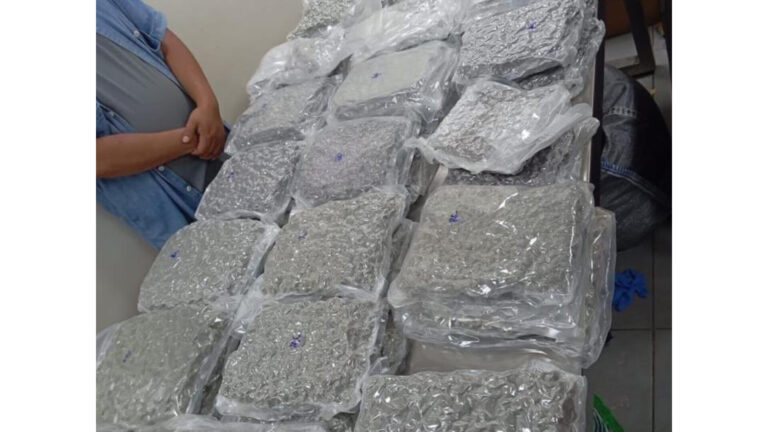
THE National Drug Law Enforcement Agency (NDLEA) has arrested an 80-year-old grandmother, Grace Ekpeme, and a Chinese businessman, Liang Tak You, for drug peddling.   

In a statement by the NDLEA Director, Media and Advocacy, Femi Babafemi, on Sunday, July 27, the duo were among those caught in a nationwide crackdown that uncovered synthetic cannabis, popularly known as colorado, hidden in ‘moimoi’ sachets, and Canadian loud concealed in imported canned food items.

According to Babafemi, Liang was apprehended on Friday at the arrival hall of the Murtala Muhammed International Airport in Ikeja, Lagos State, after tracking him from his port of departure, allowing him to pass through immigration and other airport protocols before arresting him on his way out of the airport.

“The suspect, who arrived in Nigeria from Bangkok via Dubai on an Emirates Airlines flight, is a Chinese national, naturalised and based in Malaysia. He reportedly travelled to Thailand to pick up two suitcases containing 50 parcels of loud, weighing 26.10kg, before flying to Nigeria”, Babafemi said.

He further stated that in a separate operation, 80-year-old Ekpeme was arrested in the early hours of Saturday, July 26, at Edet-Nsa Street, Base Site, Calabar South, Cross River State, after intelligence linked her to drug trafficking. 

Babafemi also explained that the operatives had intercepted another suspect, Chidi Agbafo, in Lagos, three days before arresting Ekpeme.

“Also in Lagos, NDLEA operatives on Wednesday, July 23, intercepted a suspect, Chidi Agbafo, along the Epe–Ajah Expressway while transporting consignments of 21.7kg of Colorado—some of which were packaged in moimoi cooking sachets—and 3.8 litres of codeine-based syrup in a commercial bus en route to Warri and Oghara in Delta State”

In 2024, The ICIR reported that the agency arrested 66,085 drug offenders and convicted 12,201 in 53 months.

The agency seized 1,143,717.44 kilogrammes of assorted illicit drugs and rehabilitated 26,393 drug addicts within the same period.

In the latest raid, Babafemi revealed that 101kg of Canadian loud was discovered hidden inside 202 factory-sealed tins of imported food labelled ‘Bean Salad Mix’ and concealed in two Toyota Sienna buses packed in a container that arrived from Canada at the Apapa Seaport in Lagos on Friday, July 25.

“On the Abuja-Kaduna highway, NDLEA operatives on patrol on Wednesday, July 23, “arrested one Usman Musa with 71,000 pills of opioids—including tramadol, diazepam, and Exol-5—while travelling in a commercial bus headed to Kano.

“In Borno State, a 30-year-old woman, Binta Usman, was arrested on the same day at her residence in the Muna Moforo area of Maiduguri, where 30.1kg of skunk was recovered. A follow-up operation on Friday, July 25, led to the arrest of her accomplice, Bala Abdullahi, in the same area,” he added.

The agency also disclosed that three brothers, Nanna, Chizom, and Maxwell Ozirinye, were arrested on Saturday, July 26, during a raid on a cannabis plantation located in Bending Corner Forest, Idoani, Ose Local Government Area of Ondo State.

Operatives of the NDLEA destroyed 2,500kg of skunk grown on a hectare of land and recovered 121.4kg of processed cannabis at the plantation.