Home Blog Page 2239

School children in Abuja still defecate openly because there are no toilets

0

School children in Abuja, the federal capital territory of Nigeria, still defecate in the open field because there are no functional toilet facilities within the school premises. Seun DUROJAIYE visited some of the schools in the Abuja communities and brought this report.


By  Seun DUROJAIYE (@seunduro1)

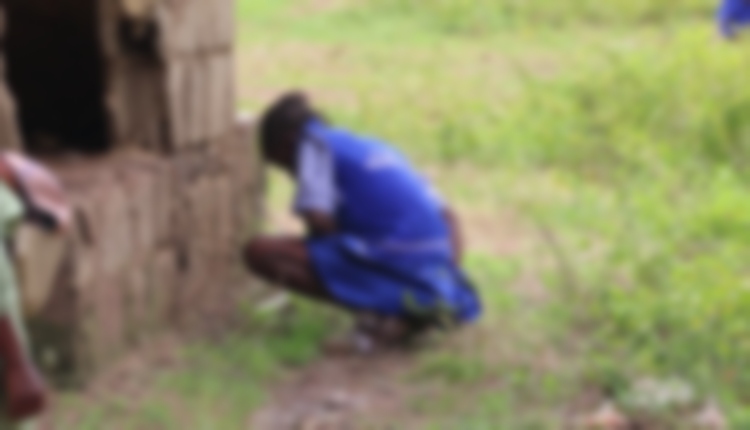
IT was break time at L.E.A School Chukuku, when a young girl, Blessing Udeh, hurried towards a building in the school premises, squatted and urinated on the floor. Within minutes, over four students had followed suit, each picking different spots around the same building, originally designed to be a pit latrine but now abandoned.

L.E.A School Chukuku, located in the Gwagwalada-Kuje axis of the Federal Capital Territory, has a population of 1,049 students with more girls than boys. Though the school has several blocks of classrooms, there are no functional toilets for the students to use.

There are three toilets in the school. One is reserved for teachers. Of the other two meant for students, one is kept under lock and key due to lack of water, while the only accessible toilet, a pit latrine, is in unusable condition.

Therefore, students can only do their business on the floor within the school premises, and, if need be, walk further into a nearby bush to defecate.

For young female students who have started menstruating, the condition is more awful. One of them, Dorcas, 13, who is in grade 6, told this reporter that there is no provision for sanitary towels and therefore she uses a rag during her period. And when she is pressed in school, she arms herself with a sheet of paper, secures a spot in the bush nearby and does her business. There is usually no water available to clean up, as there is no borehole or water reservoir in the school.

“I use rag during my menses and anytime I want to use the toilet, I go into the bush,” Dorcas said shyly. On several occasions, she has had to leave the school premises for home so she can clean up, a journey of about 25 minutes. Therefore, she sometimes misses classes, especially when in her period. When nature comes calling, all students in L.E.A Chukuku, like Dorcas, either take to the bush or go home.

“We give them tips on how to manage the situation when defecating in the bush. We tell them to be careful and ask them to watch the spots in the bushes they use and we always advice them to wear their shoes so they don’t catch infections,” says Margaret Achine, acting headmistress (administration) of L.E.A Chukuku.

With over a thousand students under her, Achine works hard everyday to ensure her students get good education and stay safe while in school. She said the children find it difficult to use the toilets because of the bad state they are in as some villagers contribute to the deplorable condition of the school toilet.

According to Achine, some locals gain access to the school premises, misuse the toilets and leave them messy. She says it is more worrying that the school has no healthcare facilities to handle infections that might arise from children’s exposure to the unhygienic environment.

“The school doesn’t have a clinic, we only have a first aid box which we use in assisting the students when they get injured but when there is any issue that we can’t treat with the first aid box, we take them to the clinic in the area.” said Achine, when asked how sick children are cared for in the school.

With no access to water or functional toilets, learning is not as easy and is mostly hindered. Other times, lack of toilet facilities not only impedes education but exposes children to diseases that can cause irreparable damage or, in a case of inadequate healthcare, even death.

The reality is no different for students of L.E.A School Kwaita Tsoho, another public school located in Abaji Area Council, Abuja.

The school, established in September 1993, comprises of two blocks of classrooms that accommodate 220 pupils.

The two blocks of classrooms, already dilapidated, sit on a vast portion of land. The roofs have caved in, letting rainfall directly into the classrooms, creating a pool of mosquito-ridden water.

A structure built to serve as a toilet lacks facilities and is filled with bushes, broken tiles, and stands as a hub for reptiles.

Toilet facility at L.E.A School, Chukuku. PHOTO CREDIT:ICIR.

“The school has no toilets. Pupils, teachers and non-teaching staff use the bush for urinating and ‘shitting’; therefore, the compound is polluted,” said Saidu Saliu, headmaster of L.E.A School Kwaita Tsoho.

Due to lack of toilet facilities, exposure to faeces and use of indiscriminate water, Saliu has watched his pupils fall ill on many occasions, causing them to miss school to battle for their lives.

“Actually, children fall sick often due to the polluted compound and exposure to faeces they easily catch cough and we have had cases of cholera,” Saliu said.

Just like L.E.A School, Chukuku, L.E.A School Kwaita Tsoho has no clinic. In fact, when children fall sick, they are rushed to the primary healthcare centre in Kwaita Hausa, a 30-minute drive by car on a long length of untarred road. By foot, it could take more than an hour, depending on how fast a person walks.
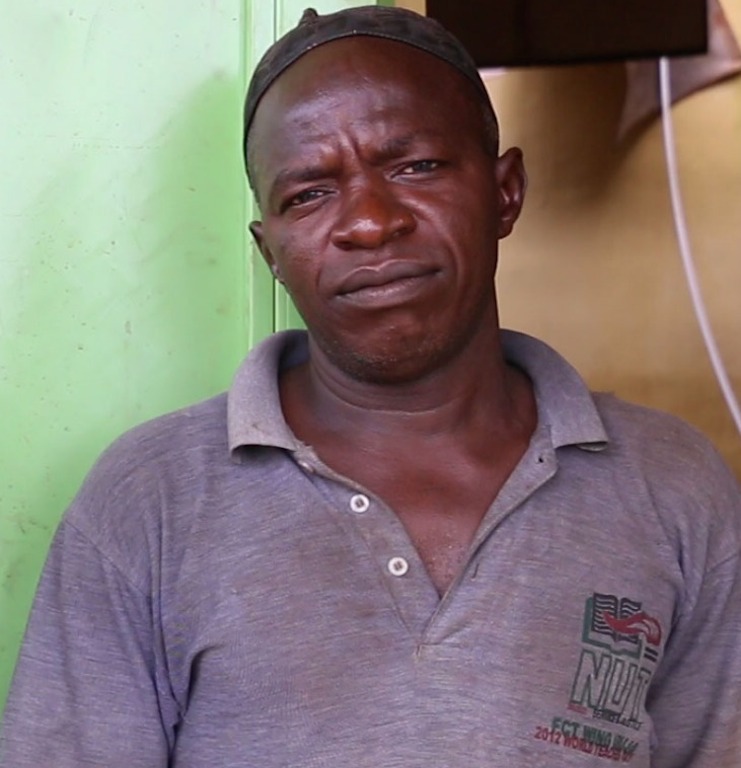
Headteacher L.E.A School Kwait Tsoho, Saidu Saliu speaking on the practice of open defecation in his school.
PHOTO CREDIT: ICIR.

Saliu said children in the school have no option than to drink from the stream, just like the rest of the residents of the community. “When students use the bush, the faeces gets washed into the stream in the community and students drink from it because there is no enough borehole for us to use in the village.”

The situation is worse during the rainy season. The classrooms also get flooded and students are forced to remain home. On days they can make it to school, the classrooms are not functional and they create a makeshift class; where benches are arranged under a tree in the school premises.


Stories of students’ lack of access to decent toilets is reproduced also in L.E.A School Kuchiko Layout, another public school located in Bwari area council of Abuja. Not fewer than 120 pupils are crowded in three blocks of classrooms, but the school has no single toilet.
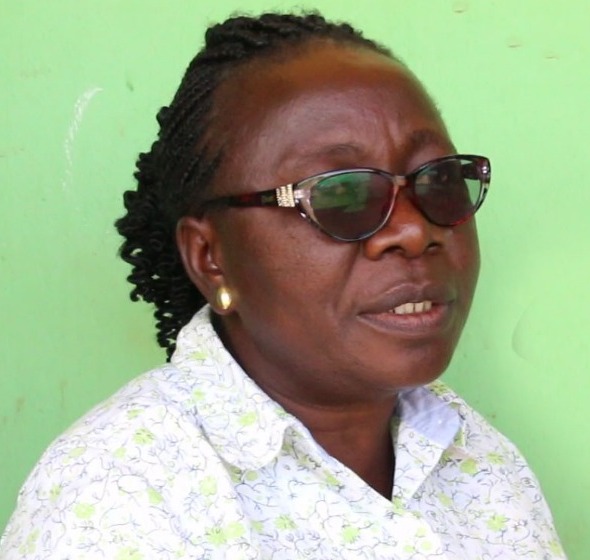
Omoboja Joshua Florence, head teacher L.E.A School Kuchiko in Bwari area council. PHOTO CREDIT: ICIR.

“Our pupils have no option than to us the bush.” said Florence Joshua Omoboja, headteacher of L.E.A School Kuchiko layout. And, like students in other schools visited by this reporter, students are also exposed to the threat of snakebites.

“Some of the students often run back from the bush when they come across reptiles,” said Mrs. Omoboja.

“When the students go to the back of the classroom to urinate of excrete, a lot of them complain that the place is smelling and at times, it makes them vomit. Some of them complain of stomach pains. Sometimes, a lot of the students are asked to go home during school hours so they can use the toilet. When they walk home, it takes a lot of time before they can return to classes.” continued Omoboja.

Since its establishment in 2016, the school population has grown to 120, but supported only by 21 teachers, all of who also have no choice but to report to the bush whenever they are pressed.

Teaching and learning become more difficult during the rainy season. “Everywhere gets muddy. And for the students to go into the bushes during that time is very difficult. At the end of the day, we have to encourage the students to manage themselves because holding urine for too long causes stomach ache,” Omoboja said, showing visible concern for the students under her care and the teachers, under her leadership.

Open defecation affects rights to sanitation and education, though outdoor defecation is still prevalent in third world countries, the situation is worse in Nigeria.

Records show that about 673 million people globally practiced open defecation in 2019.

This is down from about 892 million people, or 12 percent of the global population, who practiced open defecation in 2016.

In that year, seventy-six percent (678 million) of the 892 million people practicing open defecation in the world live in just seven countries, and Nigeria is one of them. Besides this, Nigeria has the worst open defecation record only behind India.

About 123 million people don’t have access to decent toilets and 47 million people practice open defecation on a daily basis in the country. In fact, the problem of open defecation is closely linked to poor sanitation and inadequate water supply in Nigeria and due to poor water supply and sanitation, citizens, especially children, are exposed to alarming rates of diseases.
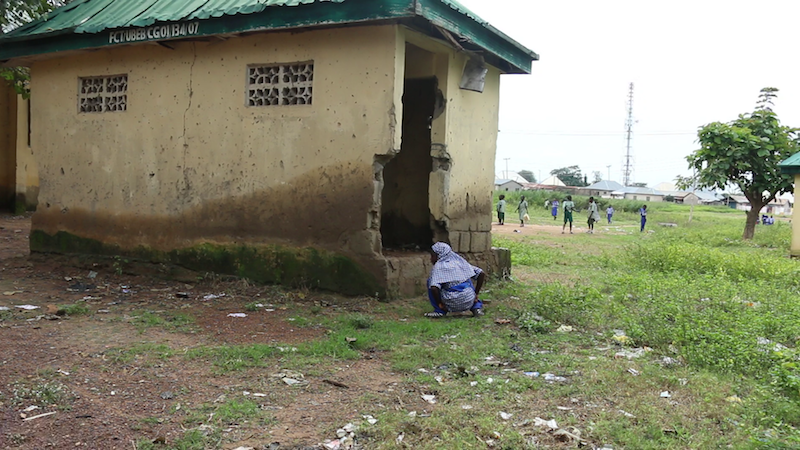
A secondary school student of L.E.A School Chukuku urinating on school grounds. PHOTO CREDIT: ICIR
A primary school student of L.E.A School Chukuku urinating on school grounds. PHOTO CREDIT: ICIR

According to Water Aid, a charity organisation established in 1981, which focuses on developing solutions to help provide water, toilets and hygiene to people, Nigeria loses 59,500 children, under age five, every year due to poor water and sanitation.

These figures hold true in 2019, nine years after the United Nations General Assembly recognised right to sanitation as a human right.

The World Health Organisation’s data also shows that diarrhea is the second largest killer of children under age five in Nigeria and it is reported that 88 per cent of diarrhea cases are attributable to factors originating from poor management of human feces.

Poor water and sanitation, and lack of toilet facilities in most communities, schools and public places promote an open defecation culture and pose dangerous health risks and, in many cases, death. This problem also contributes to low student enrolment in schools.

UNICEF has reported that 10.5 million children are out of school in Nigeria, and 61 percent aged between 6-11 attend primary schools, the rest stay away – lack of basic facilities in schools is partly the reason why schools are not attractive to pupils, several studies have found.

Health implications

In the communities where L.E.A School, Chukuku, Kwaita Tsoho and Kuchiko are located, the healthcare centre is far away, and the facility is ill-equipped.

At Primary Health Centre (PHC) Kwaita Hausa, the only community health facility catering to people leaving in Kwaita Hausa, Sabo and Tsoho – where L.E.A School Kwaita Tsoho is located, diarrhea and vomiting are frequently reported.
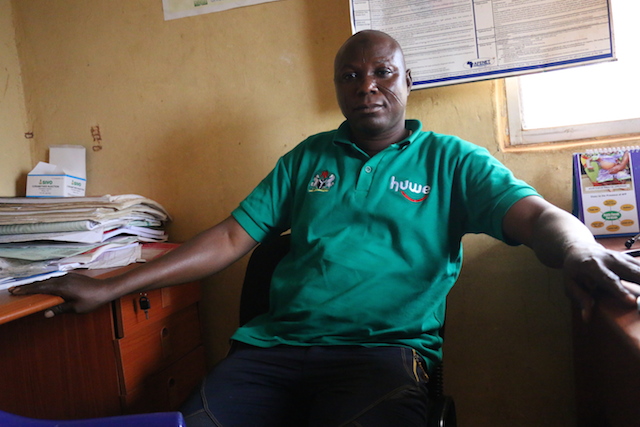
Kaura Alhassan, a community health worker at Kwaita Hausa health centre. PHOTO CREDIT: ICIR

“We attend to nothing less than 15 students in a week and most of the cases are diarrhea and vomiting,” said Kaura Alhassan, a community health worker at PHC Kwaita Hausa. Alhassan who has been working in the health facility for a decade told Legit.ng that diarrhea and vomiting cases brought to the centre are linked to children drinking unclean water and constant practice of open defecation.

“Their only source of water is the river and some use well water and they are not treated sources. The people also defecate openly and during the rainy season, the human waste gets flushed into the river and they drink the water and before you know, they catch all manner of infections and get diarrhea,” said Alhassan.

Young patients at primary health centre. Kwait Hausa in Abaji area council. PHOTO CREDIT: ICIR

While the healthcare centre tries to provide treatment for children brought in, they cannot control what happens when parents don’t bring their children to be treated due to poverty and, in some cases, the children die. “People are dying in this area due to untreated diarrhea cases,” said Alhassan.

“This is a rural community. Not everyone has money to come to the health centre. So, parents prefer to provide home remedies for children who suffer from diarrhea and vomiting. And some children die because they don’t get the necessary medical attention,” Alhassan said.

Poor sanitation is estimated to cause 432, 000 diarrhea deaths annually and is also a major factor in several neglected tropical diseases, including intestinal worms, schistosomiasis (blood in the urine/stool), and trachoma, WHO has reported.

The negative impact of open defecation can be measured from the fact that one gram of faeces can contain 10,000,000 viruses, 1,000,000 bacteria, 1,000 parasite cyst and 100 parasite eggs and pathogens. When ingested, through drinking water as in most cases, they pose dangerous health risks.

When this happens, the only viable solution is having access to quality healthcare facilities, which can arrest the diseases by treating patients. PHC Kwaita Hausa cannot diagnose some diseases because of capacity issues.

“We don’t have the facilities but If there is an outbreak of any case, we usually notify the LGA, that is the disease notification centre unit and they come up and collect the specimen for lab confirmation,” Alhassan added.

Experts state that poor sanitation is linked to transmission of diseases such as cholera, diarrhoea, dysentery, hepatitis A, typhoid and polio and exacerbates stunting. Similarly, in Primary Health Centre (PHC) Kuchiko – the only health centre close to L.E.A School, Kuchiko layout, the community health care worker, Mrs. Sarah Danladi said most cases they treat in students, in the community are diarrhea and vomiting.

“Most cases we treat in students are diarrhea and vomiting. We also treat malaria and schistosomiasis (urine in blood) and most of these cases are linked to open defecation,” said Danladi. She said the stream, which is the only source of water in the community, is often polluted by human waste. Residents drink the water, use it to cook, or bathe, which eventually cause them to be sick, she told Legit.ng.

“In a year, we can treat two cases of schistosomiasis and if we don’t have the drugs, we refer them to the general hospital. For diarrhea and vomiting, we get many cases. In a month we can treat up to 10 cases.” How huge is the problem?

According to the WHO, poor sanitation and open defecation practices kill more children every year than AIDS, malaria, and measles combined.

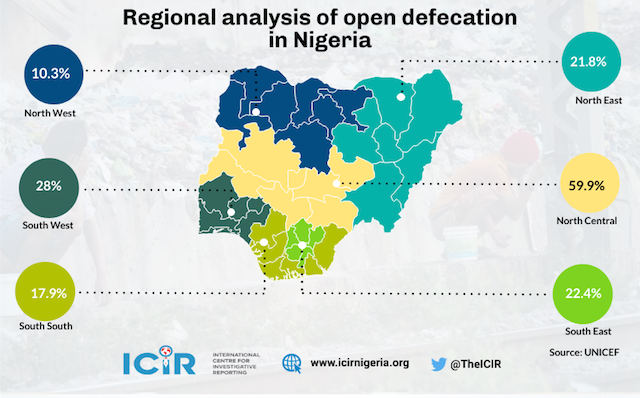
The Northcentral region comprising of six states including; Benue, Kogi, Kwara, Nasarawa, Niger, Plateau and the Federal Capital Territory, record the most prevalence of open defecation at 59.9 percent, according to UNICEF data.

The Southwest region made up of Ekiti, Lagos, Ogun, Ondo, Osun and Oyo states follow second with 28.0 percent rate open defecation practice, while Southeast region comprising of Abia, Anambra, Ebonyi, Enugu and Imo at 22.4 percent.

Southsouth region made up of Akwa-Ibom, Bayelsa, Cross River, Delta, Edo and Rivers states records 17.9 percent. While Northeast region comprising Adamawa, Taraba, Yobe, Borno, Bauchi and Gombe follows next with 21.8 percent, and North-west comprising Jigawa, Kaduna, Kano, Katsina, Kebbi, Sokoto, Zamfara at 10.3 percent.

With 47 million Nigerians reported to be practicing open defecation in the country, the possibility of Nigeria achieving an open defecation free country by 2025, in line with the sustainable development goals appears bleak.
Government’s commitment versus need

According to UNICEF, achieving an open defecation free Nigeria would require constructing nearly 20 million household toilets and 43,000 toilets in schools, health centres and public places and it will require an average annual investment of about N100 billion (approximately 75 per cent household investment; 25 per cent government contribution).

In the last three years (2017,2018,2019), according to the national budget, the Nigerian government has taken on projects that seem to address the problem of outdoor defecation.

In 2017, the Federal Ministry of Education was allocated a total of N30 million for projects that address open defecation. In the same year, the Federal Ministry of Water Resources was allocated a total of N2 billion to embark on projects designed to curb open defecation, improve poor water, sanitation and hygiene, mostly through advocacy. Some of the projects were carried over till 2018, with most ongoing and more money allocated to its achievement.

In 2018, the water ministry was allocated a total of N1.6 billion for projects seeking to address poor sanitation and hygiene, according to the national budget.

Again, in 2019, the Federal Ministry of Water Resources was allocated N1.4 billion for projects relating to water, hygiene and sanitation – a path towards curbing open defecation. Also, in 2019, the federal ministries of Education and Environment were allocated N128.7 million and N33 million respectively. Notwithstanding, funds spent on intervention projects are inadequate and still fall under the 25 percent requirement prescribed by UNICEF.

Also, the number of schools in Nigeria that are still without functional toilets and access to water show that the allocations are inadequate.

Water is important to keeping a hygienic environment. But with the majority of Nigerians, especially those living in rural communities lacking access to safe and sufficient water, the battle against open defecation seems hopeless.

The Federal Ministry of Water Resources is the agency with the mandate “to develop and implement policies, projects and programmes that will enable sustainable access to safe and sufficient water to meet the social, cultural, environmental and economic development needs of all Nigerians.”

However, many communities and schools in Nigeria still lack access to safe and sufficient water in 2019.

New promise

On November 20, 2019, President Muhammadu Buhari signed an executive order to end open defecation in Nigerian by 2025.

Executive Order 009, was established under the Federal Ministry of Water Resources’ “Clean Nigeria Campaign Secretariat.”

According to the executive order, the secretariat is authorised to, on behalf of the President, ensure “that all public places including schools, hotels, fuel stations, places of worship, market places, hospitals and offices have accessible toilets and latrines within their premises”.

The President’s pronouncement is a clear departure from the earlier statement of Minister of Water Resources, Suleiman Hussein Adamu. While speaking in a brief interview with Legit.ng weeks earlier, the minister confirmed that most monies released to the ministry to curb open defecation are meant for awareness campaigns. He said the government is only looking to promote the culture of toilet use, hence the ‘Clean Nigeria: Use the Toilet Campaign launched on November 19, 2019.

When asked whether the government is set to contribute 25 percent of N100 billion needed to curb open defecation as prescribed by UNICEF, the minister said: “The dialogues and the then-upcoming campaign lunch are incurring cost. The government is not going to build household toilets for people except maybe in some public places and schools but our focus is to educate people about the dangers of open defecation, which is why we have launched the Clean Nigeria campaign.”

The minister’s response suggests that the government would rather fund public campaigns rather than provide toilets that are functional in all public schools and communities in the country. But the challenge with spending money on intangible projects such as advocacy and campaigns is that such expenditures are hard to monitor and leave little room for transparency and accountability.

More so, if the ministry decided to embark on building toilets in public places such as schools, markets etcetera, it is unlikely it would meet its target because only 58 percent of 2017 budget (N25.2 billion) of its N43.5 billion capital allocation was released.

In 2018, only 43.8 percent (N24 billion) of its N54.8 billion capital allocation was released and less than half of that (N12.4 billion) was eventually utilised. For 2019, as of November 15, only 33.8 percent of its N31 billion capital allocation has been released. This trend only shows that the government’s commitment to end open defecation is more of a promise on paper.
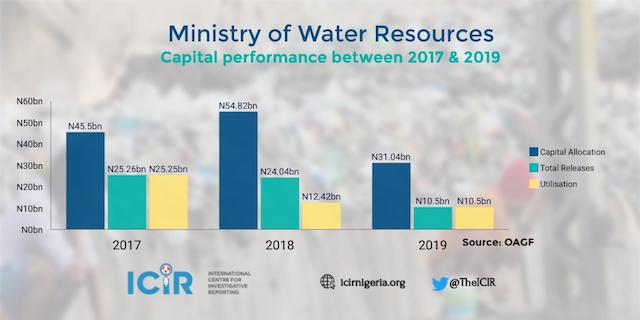
Budget of the Ministry of Water Resources. Data Source: UGC Visualisation; Damilola Ojetunde

Experts speak

Experts have linked open defecation to diseases that affect and kill millions of people in Nigeria. According to UNICEF, poor sanitation is linked to transmission of diseases such as cholera, diarrhea, dysentery, hepatitis A, typhoid and polio and exacerbates stunting. In fact, poor sanitation reduces human well-being, social and economic development.

In a study carried out by the Department of Community Medicine, Niger Delta University, Morufu Raimi, stated that Nigeria loses 1.3 per cent of the national GDP – N455 billion – annually due to poor sanitation. Connected Development (CODE) is one of the local NGOs that have mapped cases of sanitation and open defecation in many rural communities in Nigeria. The organisation has found that over 60 million don’t have access to toilet facilities.
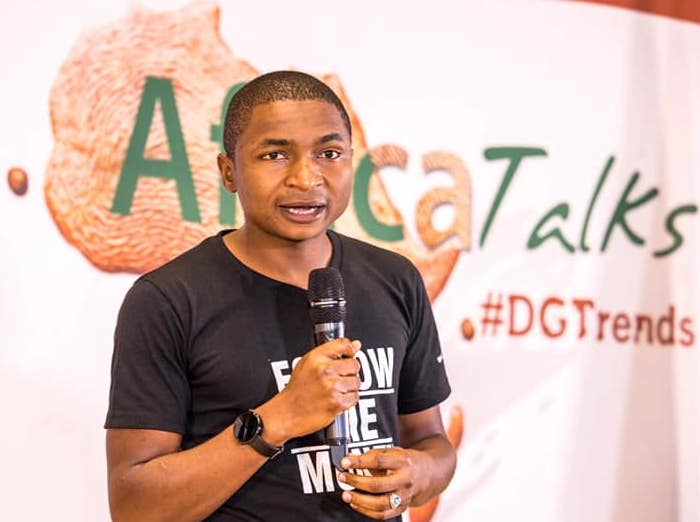
Hamzat Lawal, Chief Executive of CODE. SOURCE: Facebook

“This means people are openly defecating,” said Hamzat Lawal, Chief Executive of CODE. He told Legit.ng in an interview about a community in Bwari Area Council called Shere that has existed for over 200 years but does not have access to clean, potable drinking water, they only have a stream as their source of water supply.

“This community also has a Federal Government Girls’ College and they don’t have toilet facilities and water. When girls are menstruating, it means that they are likely to miss three-five days of basic education. Also, when girls try to go out to use toilets outside their school premises, they are likely to get attacked and raped,” said Lawal.

Lawal said when his organisation visited Bwari Area Council and went to the primary health care centre most of the sicknesses were from water-borne diseases because community members do not have access to potable water.

“What it means is that when they go to the stream and drink the water, they get contaminated. This tells you that if we tackle issues of water, sanitation and hygiene in Nigeria probably 50 percent of diseases will be curtailed,” Hamzat concluded.

This investigation is supported by the Institute of War and Peace Reporting (IWPR) and International Centre for Investigative Reporting, (ICIR).
OPL 212: EFCC seeks to confiscate $24 million awarded to firm for alleged fraud

0

ON Friday, the Economic and Financial Crimes Commission, EFCC, filed fresh charges against six suspects involved in an alleged criminal conspiracy that led to the contract award of SNEPCO Bonga Field Development Project in Oil Prospecting License, OPL, 212 to BCE Consulting Engineers according to a report.

The suspects who are to be arraigned before the Federal High Court sitting in Lagos are being charged for alleged fraud, tax evasion, theft, forgery and money laundering.

The suspects involved in the lawsuit include BCE Consultant Engineering, BCE Consulting Engineers Limited, BCE Consulting Engineers Limited, Akinola Ogunlewe, former permanent Secretary during the administration of ex-President Olusegun Obasanjo, Abolaji Ogunlewe and Babajide Soyede both former employees of the Nigeria National Petroleum Corporation, NNPC, who incorporated BCE Consulting Engineers.


READ MORE:

The ICIR had earlier reported that the Supreme Court in its judgement in July had directed the NNPC to pay BCE Consulting Engineers the sum of US$22,630,000 as damages for the illegal cancellation of a contract awarded to the firm in 1999.

The Federal Government and NNPC had sought the review of July 5, 2019, Supreme Court judgment by a panel, headed by Justice Mary Odili, over an alleged error of facts.

The NNPC claims there was no bid process for the contract and the National Petroleum Investment Management Services, NAPIMS, were compelled to award it.

They also alleged that the contract was hurriedly awarded to BCE nine days before ex-President Olusegun Obasanjo assumed office which the Supreme Court did not take into account in its earlier judgement.

In a twist of events, the EFCC has moved to freeze $24,006,431.85 in the custody of the Registrar of the Court of Appeal yet to be paid to the firm after the initial Supreme Court award of $22,630,000 which they claimed had “strangely” incurred interest of $1,376,431.85.

The anti-graft agency requested that the court restrains all dealings and transactions in a bank account 099900001060 and the $24,006,431.85 contained in the account held for the benefit of the 1st and 2nd respondents namely BCE Consultant Engineering and BCE Consulting Engineers Limited.

However, the EFCC seeks a court order that “the bank account listed in the schedule hereto, held for the benefit of the 1st and 2nd respondents, currently being investigated for the fraud, tax evasion, offences of conspiracy, theft forgery and money laundering be temporarily attached and taken over by the Economic and Financial Crimes Commission pending the conclusion of investigation and consequent prosecution of the offences described aforesaid.

”That all dealings and transactions in the aforesaid bank account and the funds therein, held for the benefit of the 1st, and 2nd respondents, currently being investigated for offences of fraud, tax evasion, conspiracy, theft, forgery and money laundering be suspended and some temporarily vested in the Economic and Financial Crimes Commission, pending the conclusion of investigation and consequent prosecution of these offences against them,” the court document reads.

Kogi Supplementary Election: CDD charges INEC, security agencies, others to redeem selves

0

THE Centre for Democracy and Development, CDD, has called for a credible electoral process that reflects the democratic will of the people during the supplementary election for the Kogi West Senatorial District and the Ajaokuta Federal Constituency vote on Friday.

The call was contained in a press release signed by Idayat Hassan, executive director, CDD on Thursday that also asked the respective agencies to proactively curb the menace of vote-buying.

Hassan said the onus of credible electoral process rest on all stakeholders, especially the Independent National Electoral Commission (INEC) and security agencies, to redeem themselves given the violence, voter intimidation and brazen electoral fraud, which characterised the November 16 polls in Kogi and Bayelsa States.

CDD said its observation during the polls showed the processes were seriously tainted by a myriad of electoral malpractices, which fundamentally undermined the integrity of the process and outcomes in Kogi and Bayelsa States. 

The group expressed hope that the security agencies, which “failed to protect voters and poll officials the last time would have taken due note of the local and international condemnation which greeted their abysmal performance on November 16 and are ready to make amends”.

The non-profit group also urged political actors to refrain from sponsoring thugs to disrupt the process and cause harm to voters and poll officials. 

“We equally restate our call to political actors to play by the rules, the statement read partly.

Apart from the task of ensuring the electoral space is safe, CDD also called on the respective agencies to proactively curb the menace of vote-buying, “which would be rife in this supplementary election.”    

The Director said the  CDD Election Analysis Centre (EAC) would be deploying its accredited non-partisan observers across the Polling Units where the supplementary election will be held. 

“CDD calls on eligible voters to come out to vote for a candidate of their choice. We equally restate our call to political actors to play by the rules, and refrain from sponsoring thugs to disrupt the process and cause harm to voters and poll officials,” she said.

The Kogi West Senatorial district supplementary election will be conducted in 53 polling units across seven local governments with a total of 45,767 registered voters. The election will also be conducted in Ajaokuta Federal Constituency in 22 polling units with 15,438 registered voters.

Nigeria’s external debt rises by 163 per cent between 2015 and 2019

2

FOLLOWING a second attempt by the Nigerian President Muhammadu Buhari to obtain approval from the National Assembly for  $30 billion dollars loan earlier rejected by Bukola Saraki-led 8th National Assembly in 2016, Nigeria may be heading into a perpetual debt trap.

In 2016, Buhari sought the approval of the National Assembly for a $29.96 billion dollars loan, saying the external loan was targeted to fund projects across all sectors with an emphasis on infrastructure.

The president was quoted saying the loan made up of proposed projects and programs loan of $11.274 billion, special national infrastructure projects $10.686 billion, Euro bonds of $4.5 billion and Federal Government budget support of $3.5 billion.

On Wednesday, during the ‘Fall 2019 issue of the regional economic outlook for Sub-Saharan Africa’ in Lagos, the International Monetary Fund (IMF) Senior Resident Representative and Mission Chief for Nigeria, Amine Mati said Nigeria’s debt has increased.

The ICIR takes a look at the external debt profile of Nigeria since June 2015 when former President Goodluck Jonathan vacated the seat for his successor.

Buhari inherited a national foreign debt of $10.3 billion in June 2015 from the immediate past administration by 30th June 2016, the nation’s loan later rose to $11.3 billion dollars.

This represented a 9.2 per cent increase in the National debt of the country.

Info-graphic credit: Damilola OJETUNDE

By June 2017, Nigeria’s foreign debt grew from $11.3 billion to $15.0 billion representing a total of 33.6 per cent increase compared to the figures in 2016.

Fast forward to 2018, from the $15.0 billion dollars, the external debt skyrocketed to $22.1 billion dollars making up to 46.8 per cent increase in foreign debt.

As at the end of the 2nd quarter of 2019, the arguably largest economy in Africa, Nigeria’s external debt increased to $27.2 billion dollars amounting to 23.0 per cent increase in the year.

Therefore, between June 30, 2015, and June 30, 2019, spanning the four- year first term of Buhari, the nation’s foreign debt cumulated by 163. 2 per cent.

But the president is set to take in more borrows as a request for a fresh $30 billion has been sent to the Lower and Upper Chambers for approval.

Former House Committee on Local and Foreign debts, Shehu Sani, in reaction to the second bid of Buhari to obtain the loan said, the 8th Assembly ‘turned down the FG loan request for $30 Billion to save Nigeria from sinking into the dark gully of a perpetual debt trap’.

He added that it was an action taken to stop the country from being recolonised by creditor banks.

Varsity magt denies expelling student for impregnating lecturer

0

 By Vincent Ufuoma


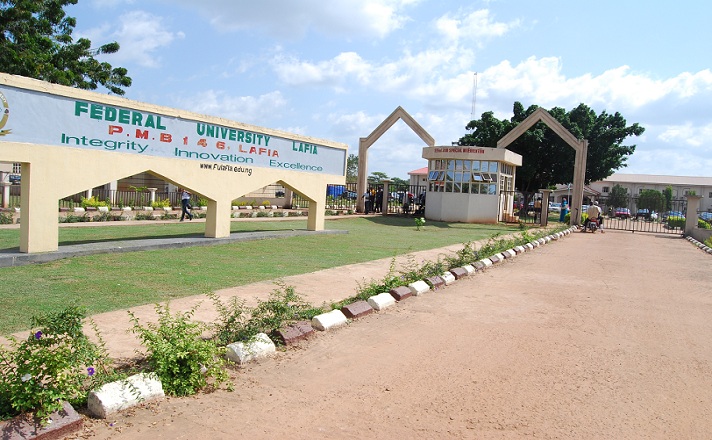
THE management of the Federal University of Lafia, Nasarawa has denied the expulsion of a male student for impregnating his lecturer, claiming there was no student that impregnated a lecturer.

It was reported that one Kelvin from the department of Computer Science of the University was expelled by the institution earlier this week for putting a female lecturer in the family way.

 Following the uproar that greeted the supposed expulsion of the student, Abubakar Ibrahim, the University’s Public Relations Officer,  said it was a rumour.

Ibrahim said the news flying around was from the imagination of its writer which is tailored towards destroying the image of the school.

“The attention of the Management of Federal University of Lafia (FULafia) has been drawn to a story which has gone viral on the social media to the effect that one “Kelvin,” said to be a student of Computer Science Department of FULafia, has impregnated a lecturer of the department.

 “This story cannot be further away from falsehood. Therefore, the management wishes to state categorically that the story is nothing but a fabrication by the writer, mischievous and aimed at destroying the good image and reputation of the Federal University of Lafia because no such incident has happened in the university,” he said.

The institution called on the general public to “disregard the purported story” as it would continue to maintain a high moral standard in the university.

Buhari’s third term: APC to expel member calling for Constitutional amendment

0

THE All Progressives Congress (APC) has promised to expel a ‘self-proclaimed’ party member, Charles Enya who called for a constitutional amendment to enable Nigeria President, Muhammadu Buhari run for a third term in office.

In a press statement signed by the National Publicity Secretary, Lanre Issa-Onilu, he wrote that the party is currently trying to find out the status of Enya who claimed to be a party member and if he is, they shall promptly commence the process of expelling him from the party.

He added that the person in question is a new enemy of the country and is most likely being sponsored by the desperate and misguided opposition.

“As a party, we would not take kindly to anyone or group causing an unnecessary distraction for this administration through anti-democratic actions,” he wrote

He said the party is focused on revamping Nigeria’s moribund infrastructure, growing the economy, fighting corruption, creating the right environment for teeming youths to deploy their creative energies, and providing adequate security for all Nigerians.

Onilu said besides that, at the last National Executive Committee (NEC) meeting of the Party, President Buhari didn’t mince words and he is not the type that talks tongue-in-cheek.

The statement further read that Buhari outrightly said he would abide by the constitution and uphold the oath of office he took, swearing by the holy book he believes in adding that he said his advanced age has made such an idea beyond his contemplation.

“The president said history would not be fair to members, if the APC collapses after his second term. What better proof is required of the President’s resolve to abide by the constitution on term limit?,” Onilu added.

He said, however, the Party is, by this statement sending a strong signal to such other busybodies like Charles Enya who may be contemplating testing the resolve of our government on our mission to work for the best for our country to be ready to face the law.


Soyinka reacts to misleading information over his battle with cancer

0

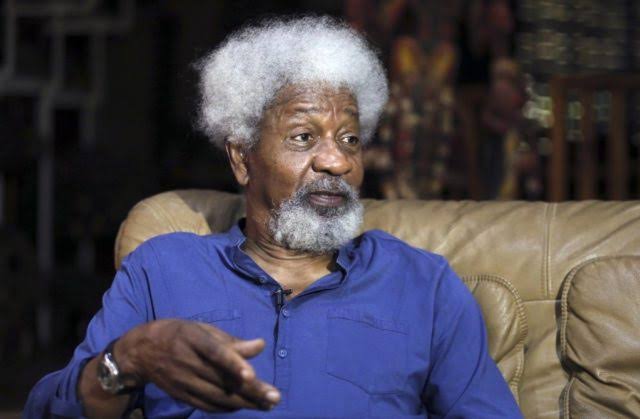
NIGERIA’S first Nobel laureate, Wole Soyinka, has berated the media for presenting a warped narrative of an interview he granted the British Broadcasting Corporation, BBC News Africa in 2015 over his battle against prostate cancer for which he was diagnosed in 2014.

The video shared on BBC News Africa  Twitter handle has been viewed by over 27,000 people with 940 retweets and over 1600 likes as at 7: 15 pm on Thursday.

Reacting to the misleading information being peddled by some media platforms, Soyinka said he has not been under any cancer-related condition in over five years because he revealed the information about his diagnosis after he completed treatment.

“The first – and most urgent – correction, of course, is to re-state that this is an ancient tale that is firmly situated in the past tense. In other words, I have not been under any cancer-related condition for over five years.

“Indeed, it was in order to avoid creating any such anxieties that I refrained from even revealing my own ordeal until I had fully and successfully concluded treatment,” he said.

Soyinka said he broke the news in solidarity with his friend, late Femi Williams, who was at the forefront of setting the Africa Cancer Centre in Nigeria in 2015.

“I made the original revelation in 2015, in support of the late Professor Femi Williams’ drive to set up an Africa Cancer Centre in Nigeria. It did not fail to strike an instructive chord that I had been a founding participant in that health initiative, little suspecting at the time that I was already a carrier of the enemy virus!” he said.

In the video, he said, “I don’t see why people have to go to Canada, Europe to receive treatment which is affordable in this nation, it is a shame.”

But this statement has been misconstrued by some sections of the media, saying he criticised Nigerians for seeking medical treatment abroad.

“Next, and more worrisome, is that some of the reportage suggests that I criticised Nigerians for seeking treatment outside the country. This is outright nonsense! Those who are able must seek health from wherever, including the outer planets, as long as a nation fails to provide even the most rudimentary but effective and sustainable health facilities for her own citizens,” he said.

The Nobel laureate said the need to address the misconception in the video was to stem the tide of what he described as “the cancer of illiteracy.”

“I have yet to see the programme, but perhaps I should start thinking of my next collaboration with the BBC or any other public awareness outreach, this time, around the urgent theme of a different form of cancerous affliction: the cancer of illiteracy!,” he said.

ICPC, NOA launch community campaign to monitor constituency projects

0

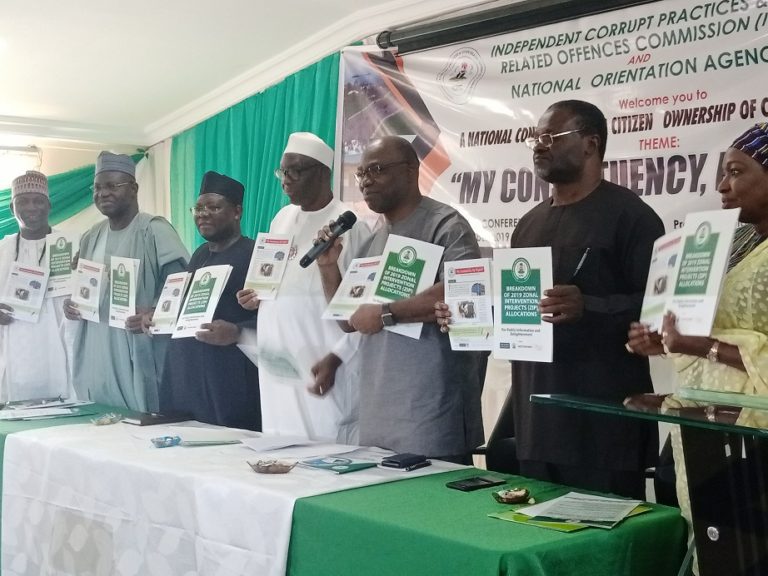
AS part of its effort to fight corruption, the Independent Corruption Practices and other related Offence Commission (ICPC) in collaboration with the National Orientation Agency (NOA) has launched a National Awareness Campaign on Community Monitoring and Ownership of Constituency Projects.

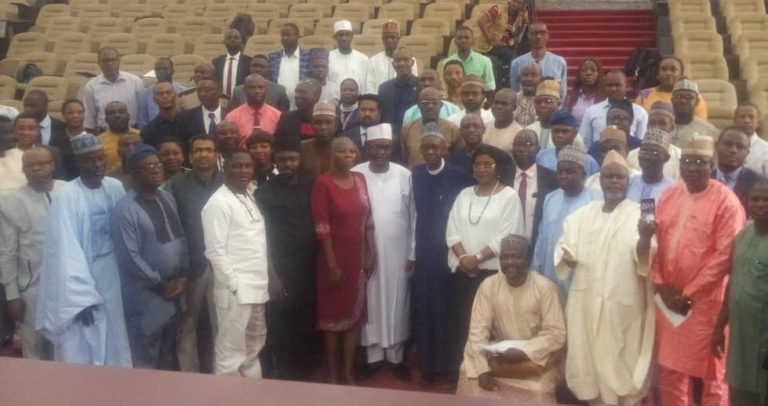
The campaign: “My Constituency, My Project” held on Thursday at the NOA headquarters Abuja is a new initiative that would ensure maximum participation of citizens in tracking constituency projects while holding representatives overseeing the projects accountable.

“It is a move to ensure that every fund allocated for the implementation of constituency project equal what is delivered by contractors and other parties,” said Garba Abari, Director-General, NOA.

ICPC said the new development was necessitated after a three-month field tracking exercise which comprised of 424 projects by its officials in selected states.


READ MORE:

The deplorable states of constituency projects and the gross fund misappropriation in the development sector which unfortunately is often fuelled by the lax attitude of project supervisors in monitoring contractors, the Commission said.

Professor Bolaji Owasanye, Chairman ICPC, in his remark condemned the culture of branding constituency projects as a personal favour to the citizens, noting that the new campaign is designed to educate and encourage the citizens to take ownership of government offers as theirs.

He said the partnership between the ICPC, NOA and other stakeholders is key to achieve the objectives of this campaign.

Owasanye urged the NOA to be proactive in the new partnership towards carrying out their duties as a government orientation agency to ensure that the campaign yield the desired results.

Hafiz Mohammed, ICPC field official, during the presentation of the new campaign, also expressed concern about the opacity around the constituency projects.

“Citizens do not  even know that the government funds these projects through tax returns and it  has been confused for ‘goodwill’ donations by politicians.”

Also bemoaning the slow pace of implementation of constituency, Dayo Olaide, Deputy Country Director, Mac Arthur Foundation recommended the creation of an independent committee that would query political dealings at the local government level.

“Corruption in constituency project is not just criminal but wicked, this is no different from a father raping his daughter,” he said.

Other stakeholders at the event such as media practitioners and non-governmental organisations also recommended that that detail of constituency projects should be made accessible to the public online, and the National Budget Office assured the audience to implement the recommendation.

Partners comprising the Constituency Projects Tracking Group include Nigeria Institute of Quantity Surveyors (NIQS), International Centre for Investigative Reporting (ICIR), PremiumTime Centre for Investigative Journalism (PTCIJ), Budgit, Office of the Accountant General of the Federation, Budget Office of the Federation, Bureau of Public Procurement, Office of the Auditor- General of the Federation and others.

Gas explosion: Traffic jam obstructs Lagos Fire Service

0

THE Lagos State Fire Service said its officials could not arrive on time to the scene of gas explosion in Ajegunle, Lagos State because of traffic congestion along the road.

The explosion which claimed the lives of 2 children and left several people injured, according to the Lagos Fire Service Officials, was said to have happened on Wednesday evening at Aduke Street, off Ojo Road, Ajegunle area of Apapa.

Acting Director, Lagos Fire Service, Margaret Adeseye, told The ICIR that the Lagos Fire Service couldn’t attend to the incident because of the traffic congestion along the road.

Her response was communicated to The ICIR through a spokesperson of the fire service.

“By the time we got there, the Federal Fire Service had already gotten there and we were advised to leave the area because according to them, tension had already built up in the area so because of that we couldn’t attend to it,” he said

“Because it’s very close to Apapa, Tankers and Trailers have already overrun the road, those are the challenges we faced,” the spokesperson added.

He said the Federal Fire Service advised the Lagos Fire Service to vacate the scene because tension had already built up and they could be subjected to attack.

He told The ICIR that the distress call was placed at exactly 04:44 pm but considering the traffic congestion they could not make it to the scene on time.

The ICIR spoke with an officer of the Federal Fire Service Control Room who disclosed that the distress called was placed to the Federal Fire Service at exactly 5:16 pm and was attended to around 5:21pm.


NUC holds discussion on ICT policy draft for Nigerian universities

0

NATIONAL University Commission (NUC) on Thursday held discussions with Information and Communications Technology (ICT) Directors from Nigerian Universities on the drafted policy on ICT in Nigerian Universities.

The Executive Secretary of the Commission, Abubakar Rasheed represented by the Deputy Executive Secretary (Administration), Kidado Kumo said the purpose for organising the debate is for all ICT Directors in universities to make input in the final document before its submission to the NUC board.

He said the discussion is expected to be focused on the installations and the standards that shall guide the ICT in Nigeria Universities thereby entrenching the ICT industry’s best practices.

He added that every sector of the National economy is ICT-driven and the advancement of ICT application in the education system should be no less.


READ ALSO:

Rasheed said the goal is to ensure sufficient deployment and good use of ICT in teaching, learning and research in NU which must be preceded by a robust ICT policy documentation as well as a practical guideline.

“The new discipline of computing now has about 5-degree programmes in Nigerian Universities comprising of the conventional BSC Computer science, BSC software engineering, BSC Cyber Security, BSC Information technology and BSC information systems,” he stated

He said seven universities have already keyed into the programs beyond the computer science known with institutions in Nigeria.

He encouraged directors of ICT in universities to collaborate to share knowledge and resources and establish a functional committee of directors of ICT in Universities, assuring them that the NUC will continue to produce policies in consultation with the university system.

During his welcome remarks, the Director of Research, Innovation and information technology, Lawal Mohammed Faruk said although he has received various comments from various University ICT directors all opinions shall be well discussed in the debate.

Faruk, while thanking the Directors for coming to the venue, reiterated the NUC’s commitment to ensuring that the opinions of the directors are considered before the submission.