Home Blog Page 2244

More than 80% of adolescents not active, putting their health at riskㅡWHO’s study

MORE than 80 per cent of adolescents worldwide are not physically active enough thereby compromising their current and future health, a World Health Organisation study reveals.

It means that four in every five adolescents do not experience the enjoyment and social, physical, and mental health benefits of regular physical activity.

The report which was conducted by researchers from WHO, Imperial College London, and the University of Western Australia was published on The Lancet Child and Adolescent Health Journal on Friday.

It stated that the majority of adolescents aged between 11 and 17 years do not meet recommendations of at least one hour of physical activity every day, while girls were found less active than boys.

Based on data received from 1.6 million students in 298 schools across 146 countries, the study found out that 85 per cent of girls were not active enough, while boys were set at 78 per cent.

“The trend of girls being less active than boys is concerning,” said study co-author Leanne Riley, WHO.

“More opportunities to meet the needs and interests of girls are needed to attract and sustain their participation in physical activity through adolescence and into adulthood.”

There are health benefits of a physically active lifestyle during adolescence, WHO said. 

“Improved cardiorespiratory and muscular fitness, bone and cardiometabolic health, and positive effects on weight. There is also growing evidence that physical activity has a positive impact on cognitive development and socializing. Current evidence suggests that many of these benefits continue into adulthood,” the report outlined.

To improve levels of physical activity among adolescents, the study recommended multisectoral action to offer opportunities for young people to be active, involving education, urban planning, road safety and others.

It added that the highest levels of society, including national, city and local leaders, should promote the importance of physical activity for the health and well-being of all people, including adolescents.

WHO said the situation is serious and countries must act now for the health of the future young generations.

“Urgent policy action … is needed now, particularly to promote and retain girls’ participation in physical activity,” said study author Regina Guthold of WHO.
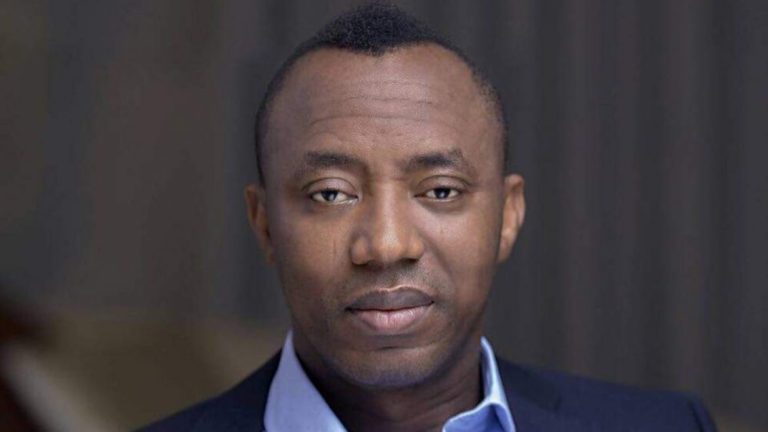
Sowore sues DSS, demands N500m for violation of human rights

OMOYELE Sowore, the Publisher of Sahara Reporters has filed a legal suit against the Department of State Service over his arrest and continuous detention since August 3, demanding payment of N500 million from the DSS for illegal violation of fundamental rights.

The suit marked FHC/ABJ /C51409/2019 and dated November 20 was supported by a 21-paragraph affidavit with respondents named as DSS and Abubakar Malami (SAN), Attorney-General of the Federation and Minister of Justice, according to SaharaReporters

“A declaration that the detention of the applicant from November 7, 2019 till date in violation of the order for his release made on November 6, 2019 is illegal as it violates his fundamental right to liberty guaranteed by Section 35 of the constitution of the Federal Republic of Nigeria 1999 (as amended) and Article 6 of African Charter on Human and Peoples’ Rights (Ratification and Enforcement Act (CAP A10) Laws of the Federation of Nigeria 2004,” it read partly.

As aggravated damages for the illegal violation of Sowore’s fundamental right to life, the dignity of his person, fair hearing, health, freedom of movement and freedom of association; the suit included a request from the court compelling the respondents to pay N500 million

Sowore also asked the court to restrain DSS from further violation of his rights.

“An order of perpetual injunction restraining the respondents from further violating the applicant’s fundamental rights in any manner whatsoever and however without lawful justification.”

Today makes it 112 days Sowore has spent in DSS detention since the arrest on August 3 for convening a Revolution Now campaign. The Federal High Court had granted him bail. Sowore after fulfilling the bail conditions was yet to be released from DSS detention.

Nigeria’s GDP grew by 2.28 per cent in 3Q of 2019, despite border closure

0

NIGERIA’S Gross Domestic Product (GDP) grew by 2.28 per cent in real terms, in the third quarter (Q3) of 2019, up from 1.81 per cent growth recorded in the third quarter of 2018, an indication of growth by 0.47 per cent points (year-on-year).

GDP represents the monetary value of all finished goods and services made within a country during a specific period.

According to the report released by the National Bureau of Statistics (NBS), the Nigerian economy grew by 2.28 per cent in Q3 2019, up from 2.12% growth recorded in Q2 2019. This indicates an increase of 0.17 per cent points between Q2 and Q3 2019 (Quarter on Quarter).

The GDP data released on Friday showed that the average daily oil production in the quarter was 2.04 million barrels per day (mbpd).

The non-oil sector grew by 1.85 per cent during the third quarter, while the non-oil sector contributed 90.23 per cent to the nation’s GDP in real terms.

GDP by sector shows that the industrial sector recorded the highest growth of 3.12 per cent when compared with other sectors. This is followed by the agricultural sector which grew to 2.28 per cent, while the service sector slowed down with a growth of  1.87 per cent.

Despite the increment in the GDP, the NBS data indicated that trading sector was not one of the main contributors to the growth.

In the third quarter of 2019, the nominal year-on-year growth rate for Trade stood at 1.13 per cent, indicating a decrease of –2.65 per cent points when compared to the third quarter of 2018, and –1.89 per cent points compared to the preceding quarter.

“Trade’s contribution to nominal GDP in the third quarter of 2019 was 14.69p per cent, lower than the contribution in the same quarter of the previous year of (16.45 per cent), and the preceding quarter (15.33 per cent),” said the bureau.

These changes could be an off-set of the country’s land border closure within the quarter.

According to the NBS, the growth rate in Q3 of 2019 represents the second-highest quarterly rate recorded since 2016.

However, the growth in the GDP rate might not be felt by the citizens just yet as inflation rate continues to rise.

Nigeria recorded  11.61 increase in the third quarter from 11.24 recorded in the second quarter report – showing depletion in the purchasing power of the Naira.

This is Benjamin Enwegbara, first African member of Austria Parliament

0

ON Friday, a Nigerian Economist, Benjamin Enwegbara was announced to have been elected into the parliament in Austria, a country in Central Europe, making it the first of its kind.

This information was disclosed by his delighted brother, Odilim Enwegbara, a development economist and a digital technology management analyst who lives in the capital city of Austria, Vienna.

“My immediate younger brother, Benjamin Enwegbara, who has lived in Austria and the UK since the 1980s and a cerebral economist with  a master’s degrees in business administration and public security has just been elected a member of the Austrian Parliament.

“The biggest news of my life. This is truly the biggest news ever happened to my family. He is the first African to be elected a member of the Austrian Parliament,” he said.

The parliament in Austria has two chambers namely; the national council and federal council. The national council of 183 members are elected by all citizens entitled to vote, every year or sometimes sooner.

Benjamin, 57, has worked as a management consultant and a director of Meriben Limited, a London-based company, with years of experience in the management sub-sector.

Nigerians have proven viable outside the country, getting elected as lawmakers in foreign parliaments.

The likes of Uzoma Asagwara, a nurse, broke a 150-year record in Canadian Parliament after emerging as the first black to be elected to the Manitoba legislature representing Union station constituency.

Also, Zulfat Suara, a Nigerian-American, emerged as the first Muslim lawmaker in Tennessee in the United States, after making it into the runoff of a Nashville council at-large election.

House of Representatives launches probe into $396.33 million spent in fixing refineries between 2015 to 2019

0

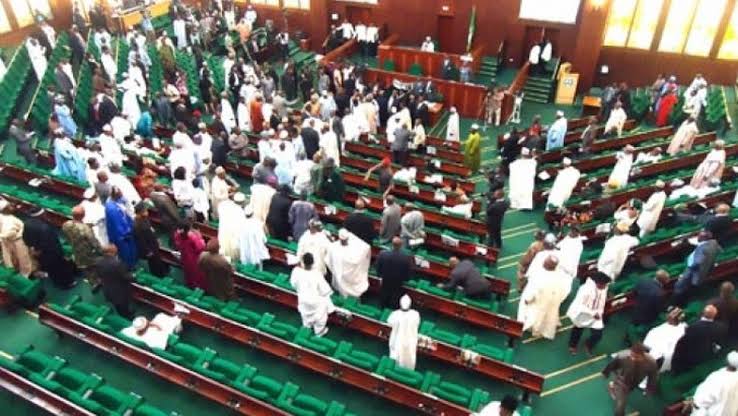
THE House of Representative has begun investigation into the financial allocations set aside for ‘Turn-Around Maintenance’ of the petroleum refineries in Port Harcourt, Warri and Kaduna, estimated to have cost $396.33 million in four years, according to a report.

The inquiry was initiated following the motion titled “Call for investigation of the $396.33 million allegedly spent in four years on turn around maintenance of the nation’s three refineries.”

At the plenary session, Ifeanyi Momah, representing Ihiala federal constituency of Anambra State called for the inquiry, alleging that the amount spent on maintenance of the facilities had not yielded the desired results.

The House also called on the Federal Government to consider “divesting a certain percentage of its shareholding in the Port Harcourt, Warri and Kaduna refineries to competent investors under a transparent and fair bidding process.”

Also, the House mandated the Committee on Petroleum Resources (Downstream) to conduct an investigative hearing into the maintenance expenses made from 2015 to date while the committee was to submit its findings within eight weeks.

Momah stated that Nigeria had been living with the “derogatory appellation” of being a major oil-producing nation that is heavily reliant on importation of refined petroleum products for its domestic consumption as a result of its low local refining capacity.

In a Twitter post, he stated the Nigerian people need an explanation of how the money was spent in refurbishing the refineries.

He also said this was in spite of the fact that the country has three major refineries with an installed capacity to refine 445,000 barrels per day, enough for domestic consumption and export.

“This objective has not been realised owing to a combination of factors, including corruption and inefficiency in the running of the refineries.

“The House observes the assertion by the Nigeria National Resource Charter in the report that the NNPC spent a whopping $396.33m between 2013 and 2017 to carry out repair works.

“We also observed the claim that the Nigerian National Petroleum Corporation, NNPC, spent N276.872 billion on operating expenses of the refineries between 2015 and 2018, as well as $36 billion on the importation of petroleum products between 2013 and 2017,” he said.

According to the lawmaker, the goal of establishing local refining facilities as a socio-economic game-changer has continued to elude the country’s oil and gas industry.

Senate approves bill to increase VAT payment by FG

0

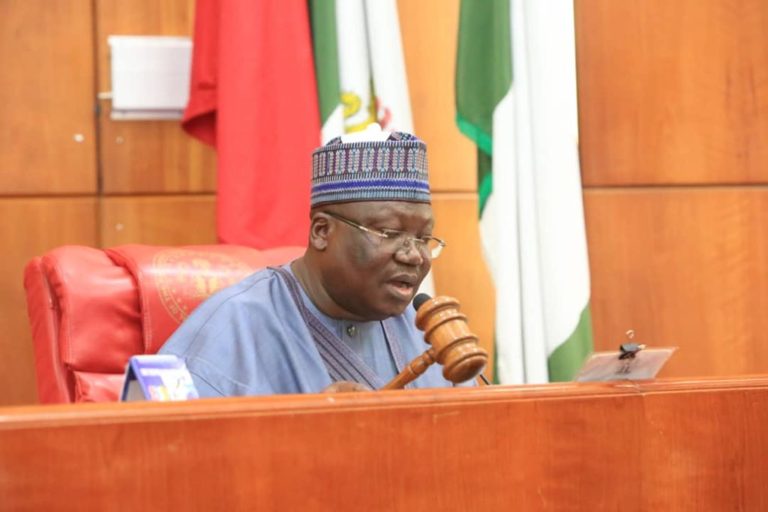
THE Senate on Thursday approved the request by President Muhammadu Buhari to increase value-added tax (VAT) from five per cent to 7.5 per cent.

In September, the federal executive council (FEC) approved an increase in VAT and subsequently sent a bill to the National Assembly for consent.

During the clause-by-clause consideration of the bill, Enyinnaya Abaribe, the Senate minority leader, protested the increase of VAT to 7.5 per cent from 5 per cent. The minority leader prayed the House to maintain the status quo, “Nigerians have suffered enough,” he said.

However, the Senate approved the request after Solomon Olamilekan, chairman of the finance committee, presented a report on a bill entitled ‘Nigeria tax and fiscal law’.


READ ALSO:

After the consideration of the clauses, Ahmad Lawan, Senate President, did not give room for amendment on the position of Abaribe but said the federal government will have resources to bridge the infrastructural gap in the country.

“Let me thank you for passing these seven amendments, largely to ensure that they streamline the tax system in Nigeria to ensure that we get revenue for the government to provide services and infrastructure to the citizens of this country,” he said.

“This is not only to ensure that we have credible sources of funding but ensure we have funding for other things of government. What we will do is engage revenue agency on a quarterly basis.”

However, a coalition of Civil  Society Organisations has called for reforms on the Federal Government’s new fiscal policies which it says does not take into account the economic position of Nigerians and would only increase the inequality gap.

“At the state level, there is no definite framework to tax the informal sector, these citizens of Nigeria who do their business at this economic level are only left at the discretion of the “man in power” at the state level as they are subject to any form of discretionary changes in the counts and rates of the taxes paid,” said Auwal Ibrahim Musa, Executive Director, CIVIL Society Legislative Advocacy Centre ( CISLAC).

The amendments which will become law when they are signed by the president seeks to amend company tax CAP C21 Laws of the Federation of Nigeria 2004, VAT CAP 4 2007, customs and excise tariff act CAP C49 Laws of the federation, personal income tax E8 laws of the federation, capital gains tax act CAP C1 laws of the federation, stock duty act 58 laws of the federation and petroleum profit tax law.


I try to be loyal to constitution ‘as long as it is humanly possible’ーBuhari

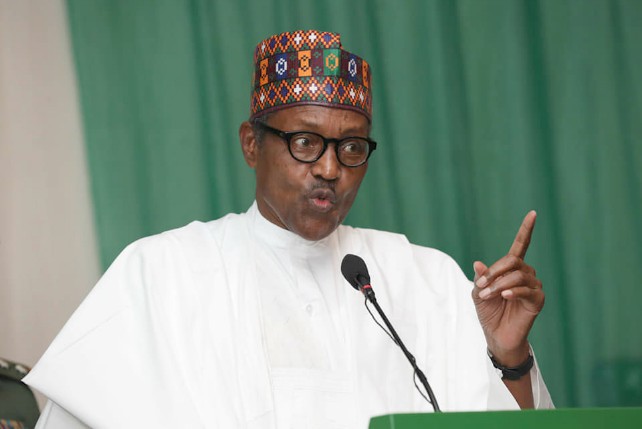
PRESIDENT Muhammad Buhari has said he “always” try to be loyal and obedient to the Nigerian constitution so long as it is “humanly possible”, adding that he would ensure equity and fairness that put the ordinary Nigerian on top priority. 

President Buhari made the statement while addressing speakers of the state House of Assembly on Thursday in Abuja, according to a press release signed by Femi Adesina, his special adviser on media and publicity.

The president had told the lawmakers that he would continue to focus on health, education, infrastructure and improving lives through social intervention programmes.


READ ALSO:

Noting that the constitution upholds the standards for all public officers and institutional operations, President Buhari said it could be adhered to, or altered to reflect some dynamics of the country.

He told the state lawmakers that the autonomy of state legislatures had been constrained by the constitution, adding that they should place the interest of the people first in all deliberations and negotiations.

“I try as much as I can to always be loyal and obedient to the constitution so long as it is humanly possible,’’ he said.

He said his administration would keep “pursuing the prosperity of all Nigerians by creating more jobs for the people, and plugging the weaknesses exploited by many to make quick money”.

“The 8th National Assembly sometimes kept the budget for seven months. And I had to call the Senate President and the Speaker then. I told them by delaying passage of the budget you are not hurting Buhari, but the people,’’ the President said.

He added that administration had dedicated “significant resources” to key social services sectors especially in health and education. 

“I also want to assure you that we remain committed to ensuring that equity and fairness prevail in governance. I will ensure that we consult your conference to further enhance the positive impact of our interventions across the country,’’ Buhari said.

The Chairman of the Conference of Speakers, Mudashiru Obasa who is also the Speaker of the Lagos State House of Assembly, urged the President to consider supporting the devolution of powers to states on some issues on the exclusive list like railway and the police for more effective governance.

Meanwhile, many Nigerians hold a contrary view to the claim of the President about being loyal and obedient to the constitution.

The arrest and detainment of Omoyele Sowore, the publisher of Sahara Reporters by the Department of State Security Service have been described by some Nigerians, national and international organisations as a deprivation of the respect to the rule of law.

Sowore, who was arrested for convening a Revolution Now campaign, has spent 111 days in detention despite having been granted bail by the Federal High Court and fulfilled the conditions.

Professor Wole Soyinka had recently pleaded for the rule of law to reign in the country, saying the failure to obey the law could lead to the death of ordered society.

Invictus Obi loses over N280 million to FG after court ruling

0

THE Federal High Court Sitting in Lagos has ordered the permanent forfeiture of N280,555,010.65 to the Federal Government, linked to embattled Nigerian entrepreneur Obinwanne Okeke, also known as Invictus obi.

The Economic and Financial Crimes Commission (EFCC) had filed an ex – parte motion to seize the money, stating that the funds were “reasonably suspected” to be proceeds of cyber-crime, requesting that the judge ordered a forfeiture.

The presiding judge, Rilwan Aikawa, had ordered the EFCC to publish the interim forfeiture order in a national daily and adjourned till November 21 for anyone interested in the money to appear before him to give reasons why the money should not be permanently forfeited to the Federal Government.

At the resumed hearing on Thursday, the EFCC counsel, Rotimi Oyedepo, said the anti-graft agency had published the interim forfeiture order as directed by the court but there was no opposition.

However, the said amount was traced to the bank accounts of Invictus Oil and Gas Limited and Invictus Investment Limited and the EFCC noted that two firms were owned by Invictus Obi whom it described as, “a strong leader of a cyber-crime syndicate that specialises in business e-mail compromise”.

The Commission, therefore, asked that the judge order the permanent forfeiture of the money to the Federal Government.

“I have seen the application seeking the final forfeiture of the sum of N280.5m warehoused in the two bank accounts, which was reasonably suspected to be proceeds of unlawful activities.

“I am satisfied that the requirements enumerated under Section 17 of the Advance Fee Fraud and other Related Offences Act have been met by the applicant in this suit; consequently, this application is hereby granted as prayed, as it remains unchallenged.

“The sum of N280.5m found in the bank account of Invictus Investment limited, who is the second respondent in this suit, is hereby forfeited to the Federal Government of Nigeria,” the judge ruled.

The United States Federal Bureau of Investigation FBI had apprehended Okeke, 31, over $11M fraud, allegedly defrauding some US citizens “through fraudulent wire transfer instructions in a massive, coordinated, business e-mail compromise scheme”. 

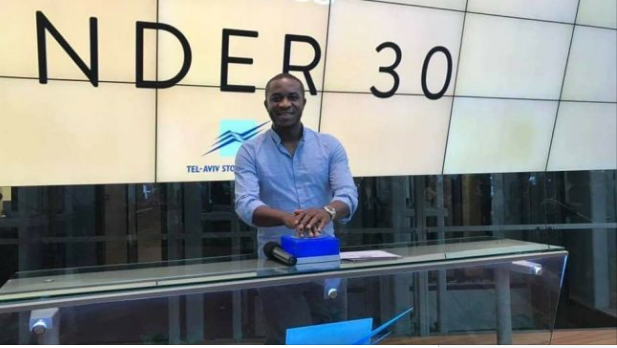
In 2016, Invictus Obi was celebrated by Forbes as one of Africa’s “most outstanding 30 entrepreneurs under the age of 30”. He was described by the magazine as “proof that there is hope for Africa”.

Okeke holds a master’s degree in International Relations and counter-terrorism from Monash University Australia, and he is the founder of Invictus Group – a conglomerate in construction, oil, gas and agricultural development.

He has investments in real estate development, energy and construction. His company, Invictus Group, operates in three African countries: Nigeria, South Africa, and Zambia.

We have tracked $113 million across 25 states in Nigeria – CSO claims

0

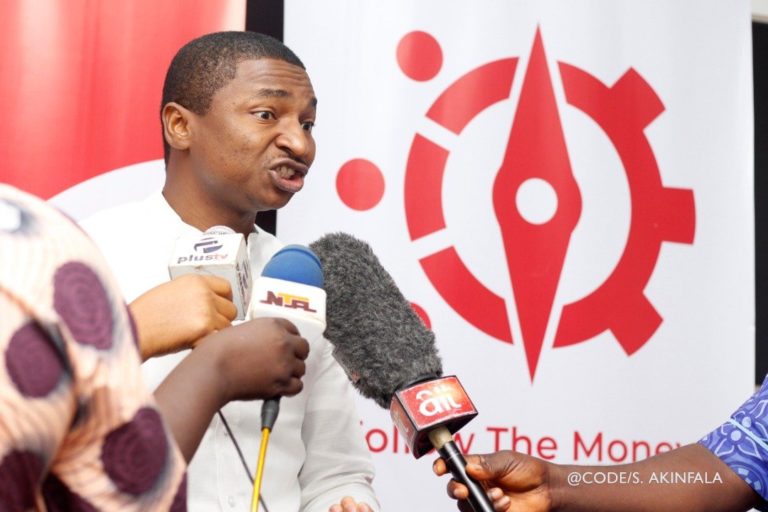
A CIVIL society organisation, Connected Development (CODE), said its Follow The Money initiative has been able to track an estimate of 113 million dollars across 181 communities in 25 states of Nigeria since its establishment in 2012.

Speaking at a Press address in Abuja on Thursday, the Chief Executive Officer of CODE, Hamzat Lawal told reporters that the fund that it tracked were funds that are budgeted for community projects.

He said the organisation has been able to save the government of over N15 billion naira because of the leakages that it has been able to block.

He said the initiative has now been established beyond the borders of Nigeria where the movement began in 2012.

According to Lawal, Follow The Money initiative is now established in Malawi, Cameroon, Kenya, Liberia, Gambia, Zimbabwe as well as Nigeria.

Lawal also disclosed that the movement is now collaborating with the Economic Financial Crime Commission (EFCC) to track government-funded projects.

He said the Acting Chairman of EFCC, Ibrahim Magu confirmed this during an interactive session with the organisation on Wednesday in Abuja.

“The Chairman has promised to provide government and security protection for our personnel during the discharge of their duties,” Lawal said.

He added that Magu also promised to create a Follow The Money Desk at the EFCC office in Abuja where the organisation can easily access the EFCC.

Celebrating the CODE’s seven years of existence, the organisation presented cash awards and medal of honour to three winners of the Follow the Money challenge.

Busayo Motunrayo, the community engagement manager with CODE, said the Follow The Money challenge required citizens to go into their communities and track government-funded projects.

He added that out of the nine finalists of the challenge, only three of them were picked from three states.

CODE Communication Lead, Kevwe Oghide told pressmen that a few weeks ago, Follow The Money movement won the 2019 Council of Europe’s Democracy Innovation Award in Strasbourg, France.

She said the award presented at the Council’s World Forum for Democracy 2019 recognised Follow The Money as one of the leading groundbreaking initiatives in the world.

Stressing on the importance of the award, Oghide said the council of Europe has 49 member states which Nigeria or Africa is obviously not one of them, but out of 27 Democracy Initiatives of the world, Nigeria won it.

“Honestly, I think it is ironic because we don’t even practice Democracy in this part of the world and Nigeria won the award in Europe where things are functioning,” she said.

She noted that the award should serve as a wakeup call for Nigerian Leaders to act more responsibly and improve inclusive public service delivery across the Nation.

The three winners of the challenge, Kehinde Akinsola from Kwara State, Ukeme Anwan from Akwa Ibom state and Muhammed Kime from Yobe state were presented a cheque of N100,000 respectively.

The ICIR reporter asked Lawal on what the organisation has been able to achieve in other African countries where CODE is established.

Lawal said Follow The Money has been able to monitor about 27 million dollar fund released to The Gambia by the European Union.

He also said the group followed the $10,000 dollars released for provision of facilities in a Kenyan Slum and efforts on sexual and reproductive health fund in Malawi.

Court nullifies creation of additional four Emirates in Kano, says it followed no due process

0

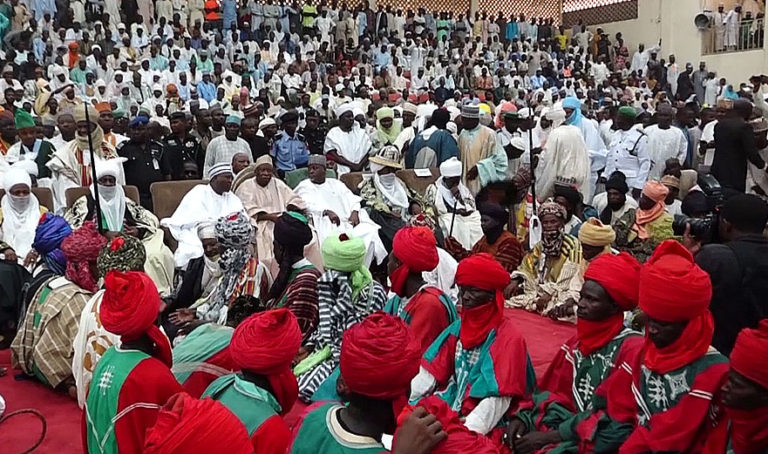
ON Thursday, a High Court sitting in Kano nullified the appointment and creation of an additional four Emirates in the state on grounds, the appointment followed no due process.

The creation of the additional Emirates comes on the heels of a passage of the bill by the State House of Assembly, seeking the establishment of four additional Emirates, namely; Rano, Gaya, Karaya and Bichiin.

The state governor, Abdullahi Ganduje had assented to the bill and issued letters of appointment to the four new first-class emirs.

Those presented with the letters of appointment include Aminu Ado Bayero, the son of Late Emir of Kano, Ado Bayero, as the Emir of Bichi; Ibrahim Abulkadir as the Emir of Gaya; Tafida Abubakar as the Emir Of Rano and Abubakar Ibrahim II as the Emir of Karaye.

However, in May, a former minority leader of the State House of Assembly,  Salisu Gwarzo had filed a suit challenging the legitimacy of their appointment and the deposition law 2019 that led to the creation of the additional Emirates.

So, in the hearing on Thursday, Justice Usman Na’abba said the Kano State House of Assembly violated section 101 of the Nigerian Constitution which gives the assembly the power to enact its rules and guidelines of proceedings.

He nullified the proceedings of the state assembly conducted on May 6, 7 and 8 which had created the new Emirates, stating that the legislature’s rules should have been in accordance with the Nigerian Constitution.

The judge also dismissed preliminary objections which had earlier challenged the jurisdiction of the court to handle the case and the right of the plaintiff to challenge the new Kano law.

Na’abba noted that the plaintiff, being the minority leader in the state assembly, had sufficient reasons for filing the suit and thus had the ‘locus standi’ to do so.

The judge restrained the four new emirs appointed by Ganduje to desist from parading themselves as first-class emirs.

Moreover, while it was reported that the creation of the four Emirates would make Kano traditional system more efficient, some others, claimed it was illegal and would incite unnecessary spending of funds.

Rather, they urged the government to concentrate on pressing issues, such as depletion of revenues, healthcare, security and educational challenges in the state.

Similarly, on November 20, Seyi Makinde of Oyo State withdrew the crowns of the twenty-one chiefs in Ibadan who were elevated to the status of kings by the former governor, Abiola Ajimobi.

Such development had caused a long rift among the Olubandan and some of the chiefs-in-council which led to Makinde opting for an out-of-court settlement to help restore peace between the Olubadan and his estranged chiefs.