Home Blog Page 2259

Journalists, CSOs raise alarm about media censorship in Nigeria

0

 THE Coalition for Whistleblowers Protection and Press Freedom (CWPPF) has raised alarm about  rising trend of media censorship by the Nigerian government.

In a statement released to mark the 2019 International Day to End Impunity for Crimes Against Journalists, the coalition, consisting of media and civil society organisations, has observed that public officers and influential individuals are becoming more intolerant of critical reporting and fair comments by journalists, therefore, resorting to the use of instruments of state criminal justice system to suppress freedom of expression and free press.

CWPPF  said it has recorded 71 attacks on the media, including arrests, intimidation, detention and killings, from January 2019 till date.

“We, as a coalition, totally condemn this abuse of power by state actors and security agencies.”

Citing Section 22 of the 1999 Constitution, article 19 of the Universal Declaration of Human Rights and article 19 of the International Covenant on Civil and Political Rights (ICCPR) among other legal instruments, the coalition insists that Nigerians and the press have right to freely express themselves.

CWWPF criticised the government for disobeying of court orders and charging journalists, such as Jones Abiri and Omoyele Sowore, with treason and terrorism for engaging in social activism and practising Journalism.

“This is unacceptable,” the group said.

Read the Press Statement below:
Statement by CWPPF on the occasion of the 2019 International Day to End Impunity for Crimes Against Journalists

The Coalition for Whistleblowers Protection and Press Freedom (CWPPF) notes the alarming trend of media censorship by state authorities in Nigeria. We observe that public officers and influential individuals are increasingly intolerant of critical reporting and fair comments by journalists. They, therefore, resort to the use of instruments of state criminal justice system to suppress freedom of expression and free press. From January 2019 till date, we have recorded 71 attacks on the media, including arrests, intimidation, detention and killings. We, as a coalition, totally condemn this abuse of power by state actors and security agencies.

Section 22 of the 1999 Constitution and several international instruments acceded to by Nigeria guarantee the right to press freedom as the media exercise their  statutory duties. The right of citizens to freedom of expression, to seek, receive and impart information and ideas through any medium is guaranteed under Article 19 of the Universal Declaration of Human Rights. Article 19 of the International Covenant on Civil and Political Rights (ICCPR) also guarantees the right to seek, receive and impart information and ideas of all kinds, either orally, in writing or in print, in the form of art, or through any other media.

The flagrant disobedience of court orders and the charges of treason, terrorism and cybercrimes against citizens by Federal and State Governments set a dangerous precedent in the misuse of the state criminal justice system to silence free expression. In recent times, the Federal Government has charged journalists, including Jones Abiri and Omoyele Sowore, with treason and terrorism for engaging in social activism and practising Journalism. This is unacceptable. As if taking a cue from the federal government, the governors of Cross River, Kaduna and Kano States have followed this trend by charging Agba Jalingo, Chidi Odinkalu and Nazir Ahmad respectively with obnoxious and strange offences of terrorism, cybercrime and criminal defamation.

Furthermore, some sections of the Judiciary, as a consequence of its lack of independence, have become willing tools in the hands of state and federal governments by granting judicial approvals that stifle free speech. They do this through the demand of onerous bail conditions and unconventional trial procedures in criminal charges against journalists and other citizens. This also contributes, in no small measure, to the validation of  human rights abuses by the State.

We demand that Nigeria must take steps to amend or repeal oppressive provisions of the Cybercrime (Prohibition, Prevention, etc.) Act 2015, particularly Sections 24 and 25, and other laws, which violate international and regional treaties on human rights to which Nigeria is a state party as well as Section 1(3) and 39 of the 1999 Constitution (as amended).

The government’s declared intention to regulate citizens’ use and access to social media and the civic space must not be in conflict with or constitute a breach of existing laws pertaining freedom of speech and association. Media stakeholders and the civil society need to continue to harp on the inviolability of Section 22 of the Nigerian Constitution, which accords the media the role of holding government accountable to the people. The campaign for free press must be sustained by the media and civil society to ensure that public officials fully guarantee that journalists, bloggers, broadcasters, social media users and all media practitioners are allowed to carry out their work without any form of intimidation and persecution. Government must also take concrete measures to respect, protect and ensure the effective enjoyment of the right to freedom of expression and media freedom.

Media practitioners must be proactive in the defence and protection of media freedom. We must engage in advocacy and public enlightenment while also holding regular public hearings into allegations of harassment and attacks on journalists, bloggers, broadcasters, social media users and all media practitioners’ right to freedom of expression.

We call on the African Union, regional and sub-regional bodies and the international community to prevail on state authorities in Nigeria to abide by their obligation to respect media freedom, citizen’s freedom of expression and enable the growth of a free and vibrant press in Nigeria.

Freedom of expression is critical to the sustenance of democracy and the advancement of an orderly, informed and progressive society. The Coalition is prepared to defend the interest of citizens and organisations whose rights are violated in the exercise of freedom of expression.

Signed by:

African Centre for Media & Information Literacy (AFRICMIL)

Civic Media Lab

Civil Society Network Against Corruption (CSNAC)

Daily Trust Newspaper

International Centre for Investigative Reporting (ICIR)

International Press Centre (IPC)

HEDA Resource Centre

Media Rights Agenda (MRA)

Nigeria Union of Journalist (NUJ)

OrderPaper

Paradigm Initiative (P.I)

Premium Times (PT)

Premium Times Centre for Investigative Journalism (PTCIJ)

Sahara Reporters (SR)

Socio-Economic Rights and Accountability Project (SERAP)

The Cable

Wole Soyinka Centre for Investigative Journalism (WSCIJ)


Appeal Court sacks Abdulmumin Jibrin, orders fresh election

THE Court of Appeal sitting in Kaduna  has ordered fresh election into Kiru/Bebeji Constituency Federal Constituency seat of Kano State.

By this ruling, Abdulmumin Jibrin, a member of the All Progressives Congress (APC) representing the constituency at the House of Representatives has lost his seat in the green chamber.

Jibrin, a former chairman of the House of Representatives Committee on Appropriations, was declared winner of the election for the seat in February but his victory was challenged by Aliyu Datti Yako , the candidate of the Peoples Democratic Party (PDP).

The petition of the PDP candidate was dismissed at the election petition but he appealed the judgment .

According to Daily Trust, Justice Ajoke Adepoju who delivered the judgment on Friday said the entire election conducted in the two local governments of Kiru and Bebeji could not stand as the final result contained in Form EC (8)E for the election was mutilated.

Justice Adepoju said since the result was mutilated any presumption on the actual result was a hearsay.

Jibrin has been at loggerheads with the leadership of APC after he was left out of the House of Representatives committee leaderships constituted by the Speaker, Femi Gbajabiamila.

He was the Secretary General of Gbajabiamila campaign team to clinch the position of the House Speaker.

Three months ago, he was suspended by the Kano State APC over allegations of anti-party activities.

In a statement signed by the chairman of APC in Bebeji local government, Suleiman Gwarmai, the party also recommended Jibrin’s expulsion.


Abuja still grappling with insecurity, waste management and poor streetlights ── Chair Senate Committee on FCT

0

THE  chairman Senate Committee on Federal Capital Territory (FCT) Abubakar Kyari says the capital city is still faced with problems of insecurity, waste management and poor streetlights.

Kyari stated this while presenting the report of his committee at the Senate Committee’s presentation of budget report to the appropriations committee on Friday.

He expressed concerns that the FCT Minister, Mohammad Bello may not have legacies to show after serving as the longest FCT Minister due to his pace.

“The FCT Minister at an interactive session with the Senate Committee on FCT pledged to work with us. I told him with the way he is going, he may not have legacies to show after serving as the longest FCT Minister,” Kyari said.

On the revenue drive of the FCT administration and its shrinking budget, he sounded a warning to the Minister to sit down and double his efforts in revenue generation.

“He needs to sit down and double his efforts in revenue generation. Abuja belongs to everybody; Abuja has grown but there is issue of insecurity, waste management and streetlight. He has to be proactive and act fast. This go-slow cannot work for us,” he lamented.

According to him, the FCT budget since 2008 till date has been shrinking, noting that accessing the funds from the approved budget has become a herculean task.

“Budget performance has highly declined,” Kyari said.

Speaking during the presentation, Barau Jibrin, a member of the Appropriations Committee decried the state of the FCT, which he noted deserves more facelifts.

“We are a bit disturbed from the way things are going on in FCT. This is one of the most important symbols of national sovereignty.

“There are certain innovations that can be brought to make the city beautiful, the Jabi Lake mall can be transformed to a tourist centre,” Jibrin said.

“If the Minister would not do it, you (Senator Abubakar Kyari) can do it. Please come up with ideas that can transform FCT to make it more beautiful. We want to see things that will further beautify the city.”

Speaking also, a former minister of FCT and a member of the Appropriations Committee, Adamu Aliero said the budget of FCT had been shrinking because the FCT administration had not taken many opportunities to generate revenue.

“I generated revenue through Pay As You Earn (PAYE) when I served as FCT Minister and same strategy can be implemented by the current FCT Minister,”  Aliero said.

“If FCT can concentrate on generating revenue on property tax alone, they won’t need allocation from the federal government.

“They should start collecting property tax. The ideas are there; they should also implement strategies on how to clean the city without outsourcing,” he added.

#NoShaveNovember: Global campaign commences awareness against cancer as Nigeria records 115,950 new cases

GLOBAL campaign to raise awareness against cancer – #NoShaveNovember on Friday officially commenced as part of efforts to reduce daily casualty figures associated with the deadly disease across the world.

The one-month long project was conceived in 2009 two years after Mathew Hill, a father of eight died as a result of colon cancer in November 2007.

Since then, the project has gained global attention while the month of November is set aside to support cancer patients and as well sensitise the public on the ailment.

“The goal of No-Shave November is to grow awareness by embracing our hair, which many cancer patients lose, and letting it grow wild and free. Donate the money you typically spend on shaving and grooming to educate about cancer prevention, save lives, and aid those fighting the battle,” the Web-based Non-Governmental Organisation (NGO) stated.

It currently works in partnership with the Prevent Cancer Foundation, Fight Colorectal Cancer and St. Jude Children’s Research Hospital in the United States while assuring its commitment to growing cancer awareness and raising funds to support cancer prevention, research, and education.

Cancer is world second leading cause of deaths killing estimated 9.6 million in 2018. Far worse, approximately 70 percent of these deaths from cancer occur in low and middle-income countries such as Nigeria and other African nations.

The International Agency for Research on Cancer in its 2018 report recorded 115 950 new cases of cancer in Nigeria with 70, 327 deaths .

The most common cancers according to the World Health Organisation (WHO) are:   Lung (2.09 million cases),  Breast (2.09 million cases),  Colorectal (1.80 million cases), Prostate (1.28 million cases), Skin cancer (non-melanoma) (1.04 million cases) and Stomach (1.03 million cases).

The most common causes of cancer death are cancers of Lung (1.76 million deaths), Colorectal (862 000 deaths), Stomach (783 000 deaths), Liver (782 000 deaths) and Breast (627 000 deaths).

The WHO also revealed that about 50 percent of cancers could be prevented only by avoiding the risk factors and implementing other evidence-based prevention strategies.

These risk factors include – tobacco use including cigarettes and smokeless tobacco, obesity, unhealthy diet, lack of physical activity, alcohol use, and sexually transmitted HPV-infection.

Others are infection by hepatitis, ultraviolet radiation, urban air pollution and indoor smoke from household use of solid fuels.

Court of Appeal strikes out Ajimobi’s petition against Balogun’s victory

0

THE COURT of Appeal sitting in Ibadan has dismissed the petition filed by immediate past governor of Oyo State, Abiola Ajimobi  challenging the decision of the Oyo State National and State Houses of Assembly Election Petition Tribunal on Oyo South Senatorial election held on February 23.

The Election Petition Tribunal had upheld the victory of  People’s Democratic  Party (PDP) candidate Kola Balogun who polled a total of 105,720 votes to defeat Ajimobi who had 92, 218 votes.

Haruna Tsammani, a justice of the Appeal Court, dismissed Ajimobi’s petition for lacking in merit and affirmed the decision of the tribunal.

News Agency of Nigeria (NAN) reports that Tsammani held that Ajimobi did not have the right to raise the issue of non-qualification of the respondent based on the conduct of PDP primary.

He further held that a person that does not participate in a party primary does not have the right to challenge the outcome of the primary.

“A person is qualified to contest once such a person satisfied the condition of the party and INEC confirmed such a person”, he said.

Tsammani said most of the witnesses presented by the petitioner were not qualified to tender exhibits and give evidence because they are not the maker of those documents tendered.

The tribunal on September 10 held that the petition filed by Ajimobi over the election of the Oyo South Senatorial Election lack merit and the petitioner was unable to convince the tribunal that the election was induced.

The Tribunal chaired by Anthony Akpovi therefore affirmed the Independent Electoral Commission (INEC) decision who declared that Muhammad Kola Balogun was the winner of the election.


Plastic Pollution: Less than 3 percent of polluters committed to migrating from single-use plastics – Report  

JUST less than three percent of world-renowned plastic polluters are truly committed to transiting from single-use plastics to reuse models championed by environmentalists across the world, Plastic Economy and Global Commitment Progress Report has said.

The report released in October noted that though, 43 of the signatories have developed active plastic reuse models, less than three percent of their packaging is actually reusable.

“Over a third of relevant signatories have active reuse pilots. However, less than 3% of signatories’ packaging is reusable today,” says the report.

“…reuse models still represent a minor part of the total packaged goods market today. Only 13% of larger signatories reported having reuse models in place across a ‘significant proportion’ of their portfolio. 36% reported that they are yet to start identifying reuse opportunities in their portfolio and less than 3% of the signatories’ packaging by weight is reported to be reusable.”

Top global producers and users of plastics according to the report include Nestle, PepsiCo, Unilever, Coca-Cola, Procter and Gamble etc.

The global commitment is a coalition, representing among others over 200 businesses across the plastic packaging value chain – accounts for over 20 percent of the plastics used globally.

Its ambition is to fix plastic waste and pollution from the source, starting with packaging with a target set at 2025.

However, plastic pollution has severally been reported as dangerous to human existence and the environment.

Reports say toxic chemicals used to produce the non-degradable packaging item leach out toxins from the plastics, finding its way into the body system.

Aside, it reportedly spoils the groundwater, threatens wildlife, and attracts other pollutants to mention but few.

“Exposure to them is linked to cancers, birth defects, impaired immunity, endocrine disruption, and other ailments.”

But the new report titled, the New Plastics Economy Global Commitment signed by Andrew Morlet, the Chief Executive Officer of Ellen MacArthur Foundation and Inger Anderson, Executive Director of the United Nations Environment Programme (UNEP) revealed that over $200 million commitment from five investors has been promised for the project.

“43 packaged goods companies, packaging producers and retailer signatories — 36% of the group — are currently engaged in testing and piloting reuse business models across different markets and product types.”

In the area of eliminating problematic or unnecessary plastic packaging, the report stated that 60 percent of the brands, retailers and packaging producers have eliminated or developed a concrete plan to phase-off the dangerous material from their portfolio.

For single-use straws, carrier bags and undetectable carbon black plastics, for instance, is reportedly approaching 70 percent, while for Polyvinyl chloride (PVC), the proportion is as high as 79 percent.

Some of the government signatories numbering 11 in total are said to be implementing legal and/or fiscal measures to stimulate the phasing out of similar items including single-use bags, straws, and ePS; half of those reporting are using bans to stimulate their elimination, with some providing financial incentives for innovation and research into alternatives.

Africans do not need aid—our young people need investments, says Elumelu

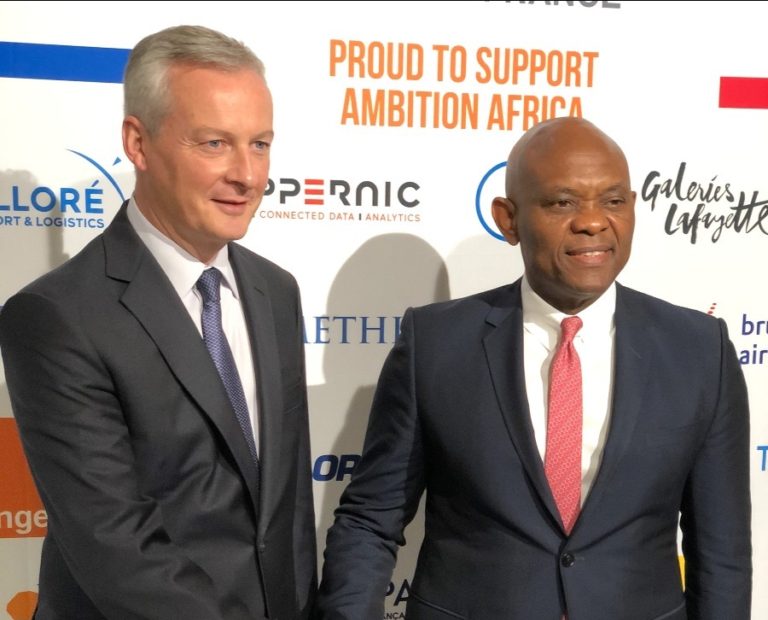
TONY Elumelu, Founder of the Tony Elumelu Foundation (TEF) and Chairman, United Bank for Africa (UBA) and Heirs Holdings has urged French investors to look to Africa for long term investment opportunities.

Elumelu who opened the “Ambition Africa” conference organised by the France Invest Africa Club in Paris, France said investors need to do much better and be much smarter in channelling funds to emerging markets.

“These markets present huge opportunities – as well as risks for investors, but investors need to fulfil a critical need to catalyse and improve the economy,” he said in a statement sent to The ICIR by Tony Elumelu Foundation.


READ ALSO:

“We salute companies like Total, Bouygues, Accor, Orange, and Bolloré as well as others who have accepted this challenge, but there is room for many more.”

Elumelu stressed the importance of private equity inflow into Africa, with a focus on investing in small and medium scale businesses, which according to him remains the lifeblood of the African economy.

He stated that Africa has the youngest workforce in the world, with over 60 per cent of its population below the age of 25.

This he said was a potential demographic doom that could be turned around to become the continent’s greatest asset if the youths have jobs and economic opportunities.

According to him: “Africans do not need aid. Rather, our young people need investments’.

“Private equity is a force for positive development in Africa. We have a large youth population, who are eager and innovative.

“They are looking at solutions to problems in their communities but are hampered by the access to capital and investment, mentoring and training. When done right, this kind of investment can bring not just capital but can also strengthen job creation, corporate governance and help improve sustainable business practices”.

He cited the impact and growth rate of the beneficiaries of the Tony Elumelu Foundation as evidence of the potential of SMEs in Africa today.

His Foundation has endowed $100 million dollars of his family wealth, to fund over 10000 African entrepreneurs in ten years.

Elumelu commended  French President, Emmanuel Macron’s initiatives for strengthening the relationship between France and Africa and concluded by inviting investors to consider investing in Africa for the long term.

“The key phrase here is long term investment – no one should come to Africa for short term gain. The time is now to invest in Africa. Private equity has to be part of it. We need it for all,” he concluded.

The French Minister of Economy and Finance, Bruno Le Maire, as he introduced Tony Elumelu to the audience stated that France could position itself and direct investment towards Africa to end the cycle of poverty and to accelerate development globally.

He commended Elumelu’s stance on strengthening the SMEs in Africa to catalyse development.

“We share the same ambition in Supporting African SMEs and entrepreneurs as this is essential for the economic development of Africa,” he said, referring to Elumelu’s passion to create wealth on the African continent.

Reiterating the stance to partner with Africa on long-term investments, Mr. Le Maire said “We will ensure that investments in Africa are sustainable, exemplary and environmentally friendly. We want to go fast, go quickly in the race against poverty and renunciation, throughout the continent”.


Onitsha Fire: Anambra restricts movement of petrol-laden tankers

0

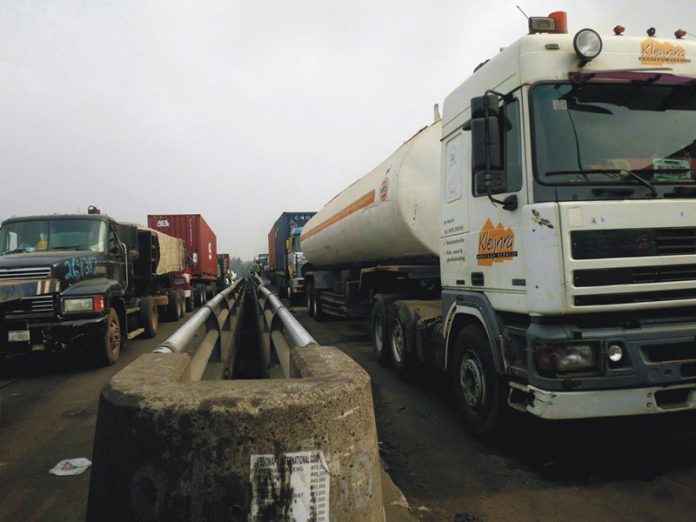
THE Anambra State government has announced a time restriction to the movement of tankers laden with Premium Motor Spirit (PMS) in the state from 8 pm-5 am, with effect from November 2.

The state Commissioner for Information and Public Enlightenment, Don Adinuba disclosed this in a statement on Friday.

Adinuba said the time restriction follows the incessant cases accidents by tankers carrying petroleum products in the state and the most recent one at the early hours of Thursday, October 31 along Enugu- Onitsha express road.

He explained that the restriction was to enable agencies like; the Anambra State Fire Service, Nigeria Police Force, Federal Road Safety Corps and other security, law enforcement and safety agencies to respond effectively, in good time to related emergencies as the Ochanja inferno.

Adinuba said all the affected agencies were directed to religiously enforce the restriction order on the movement of vehicles laden with petroleum products in the state.

“They have also been directed to ensure that such vehicles do not exceed the speed limit of 90 kilometres per hour,” the Commissioner said.

“Any violation of either the time restriction order or the speed limit will be punished accordingly. The protection of the life and asset of every person in Anambra State cannot be compromised.

“All stakeholders, including oil marketers, workers, tanker drivers and indeed concerned persons in the downstream oil sector are urged to bear with the state and help to adhere to this regulation which is made strictly in the overriding public interest,” he added.

Recalled on October 16, the residents of Onitsha, the commercial centre of Anambra  State witnessed  an inferno which razed down some parts of the Ochanja market.

The inferno reportedly happened, when a truck carrying petroleum product had an accident at the Upper Iweka axis of Onitsha.

It was reported that the fire had ravaged traders commodities, before the arrival of the state fire fighters.

The Federal Fire Services in a statement, said the delay was as a result of a gridlock encountered at the overhead bridge by the fire service operatives coming from nearby Asaba, Delta State.

Meanwhile, President Muhammadu Buhari,  reacted to the gory incident, calling on the Ministry of Transportation, Federal Road Safety Commission and other stakeholders agencies to urgently address the issue of safety standards in Nigeria, with a view to stemming the frequency of such tragedies.

“I am calling for urgent action on the part of those concerned to stem these frequent fatal disasters on public roads. Safety precautions and routine maintenance, often taken for granted by vehicle owners, must be enforced,” Buhari said.

AFDB capital base increases to $208b —largest since 1964

0

THE African Development Bank  (AfDB) has received a unanimous vote from its shareholders approving the sum of $115 billion increase to accelerate delivery on its High 5 development strategies across the region.

This was part of the outcome of  an extraordinary shareholders’ meeting in Abidjan, Coted I’voire who represented 80 countries.

The capital increase, the bank said, is the largest since its establishment in 1964.


READ ALSO:

The approval, increased the banks’ capital to $208 billion which is more than a triple increment from a previous $93 billion.

According to the AFDB, discussions for a general increment were ongoing since 2017 to help facilitate attaining its priorities hinged on the sustainable development goals and the African Union Agenda of 2063.

“This solidifies the Bank’s leadership on development financing for the continent and ensures that the Bank will continue to maintain a sterling AAA rating, all stable, from the top rating agencies,” the bank said in a statement posted on its official website.

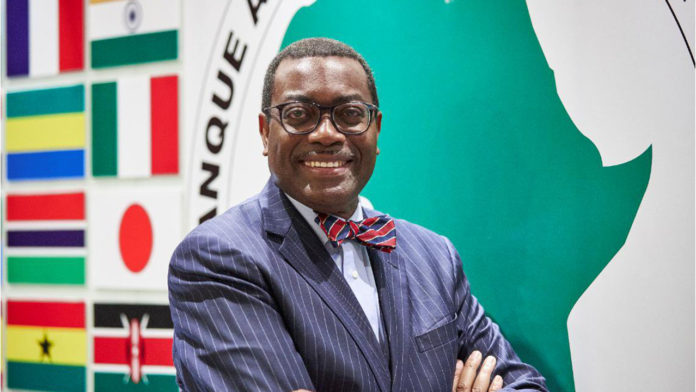
Akinwumi Adesina, President of the bank noted that the approval would be instrumental in the improvement of quality of life for Africans.

“This general capital increase represents a very strong commitment of all our shareholders to see better quality projects that will significantly have an impact on the lives of the people in Africa –  in cities, in rural communities, and for millions of youth and women,” Akinwumi said.


UCJ extends deadline for inter-university essay contest

THE Union of Campus Journalists (UCJ), University of Ibadan (UI) chapter, has announced an extension in the deadline for submission of entries for the fourth edition of its annual Inter-University Essay Contest.

Application for the contest was initially set to close on October 31, but has been shifted to November 30, 2019.

President of the UCJ, UI, Martins Isaac, said the fourth edition is the largest installment of the essay and it seeks to engage university students across the federation on the imperative subject of nation-building.

“UCJ, UI is proud to be spearheading this process of getting university undergraduates nationwide to inculcate the habit of thinking deeply and proffering solutions, rather than just whining and complaining, to the country’s problems,” he said.

He explained that contestants are required to discuss, ‘The Dire Need For Genuine National Development: Is Revolution A Solution?’ in a word limit of 1200.

Entries are to be in font size 12, 1.5 spacing and font type Times New Roman, are to be submitted in PDF format to ucjunibadan@gmail.com, along with the applicant’s short bio and scanned student identity card.

Launched in 2015, the 2019 edition comes with the highest prizes ever, as three winners will go away with the sum of N450, 000.

The first prize attracts N200, 000 plus an internship placement in a newspaper, while second and third prize go away with N150, 000 and N100,000 respectively.

Former president of the union, ‘Fisayo Soyombo, launched the maiden edition of the contest in 2007 but  was only held once in the seven years that followed.

Speaking on the 2019 edition Soyombo said “It’s an honour to be the one to revive this contest and take it on as an annual pet project”.

“Back in 2007, with the help of the likes of Obianuju Okafor and Chinyere Chimodo-Okeh, we ran a contest that gave out a total prize money of N340,000 — N100,000 for the first-prize winner, N80,000 for the second, N60,000 for the third, and N20,000 each for five other finalists,” he said.

“I am finally happy that, for the first time, we’ve now reached a point where we’re surpassing the 2007 total prize money,” he added.

Simult Omoya, Kunle Adebajo and Kanyinsola Olorunisola won the prizes of the previous contest in 2015, 2016 and 2017 respectively.