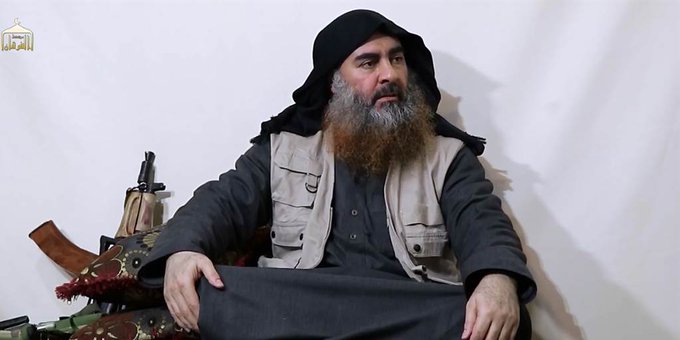
The US President Donald Trump has announced that Islamic State leader Abu Bakr al-Baghdadi was killed during a US military raid on Saturday northwest Syria.
“Al-Baghdadi has been killed… in a daring nighttime raid,” Trump confirmed this in a live address from the White House, reported by RT.
Trump boasted that the IS leader met his end “crying and screaming” due to being terrified by Americans might and that the US troops involved in the elimination of the terrorist “accomplished the mission in grand style.”
He died like a dog, like a coward. The world now is a much safer place.
According to Trump in the live address, Al-Baghdadi escaped to a tunnel dug under his hideout and took three of his young children. He was chased by the dogs and when he reached the dead end the terrorist detonated the suicide vest he was wearing.
The IS leader and his children died on site, Trump confirmed, saying the body of the notorious militant “was mutilated”, but the tests allowed to identify him.
The ICIR had earlier published a report on the uncertainty of his death before the confirmation from the US President.
Several reports had it that the Islamic State leader’s whereabouts were unknown for years. He made public appearances only a handful of times since founding his “worldwide caliphate” in 2014.
However, there have been previous reports of al-Baghdadi’s death, but none were confirmed.
THE leader of Islamic State OF iraq and Levant, ISIS or ISIL, Abu Bakr al-Baghdad, is believed to have been killed in a US military operation in Northwest Syria on Saturday, according to a senior US defence official.
CNN reports that final confirmation is pending while DNA and biometric testing is being conducted.
The defence official said the raid was carried out by special operations commandos and it appears that Baghdadi detonated a suicide vest during the raid.
According to the report, the CIA assisted in locating the ISIS leader, and Iraqi forces also gave “important information” in the operation, Maj. Gen. Tahseen al-Khafaji, a spokesperson for the Iraqi Joint Operations said.
Syrian Democratic Forces (SDF) General Commander, Mazloum Abdi, tweeted on Sunday that there was a “successful” joint operation with the US — but did not specifically name what that operation was or give any further details.
Successful& historical operation due to a joint intelligence work with the United States of America.
Newsweek first reported that Baghdadi was believed to have been killed. It will be recalled that the ISIS leader has been wrongly reported dead on several previous occasions, there is uncertainty over al-Baghdadi was killed in the raid as no source is yet to confirm the speculations.
However, Trump is scheduled to make a major announcement Sunday at 9 a.m.
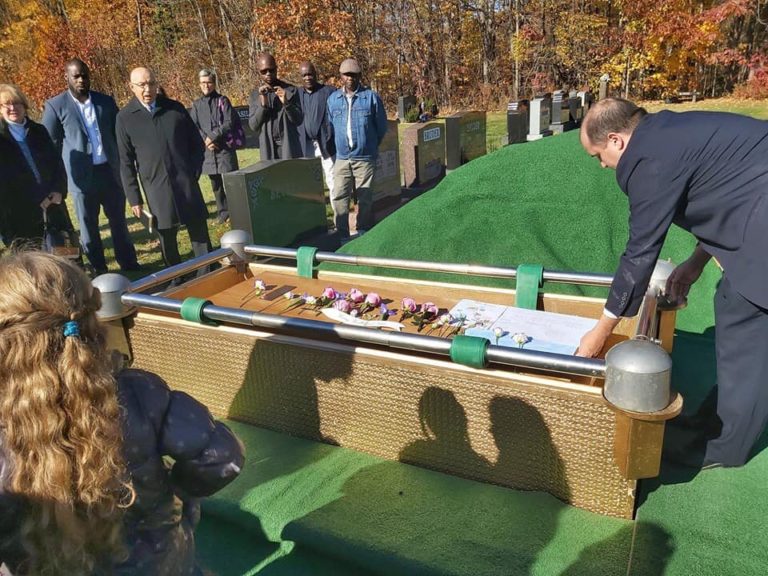
THE remains of Pius Adesanmi (47), the late Professor of English at Carleton University, Canada was finally laid to rest Saturday in Ontario, Canada.
He was buried at Capital Funeral Home & Cemetery 3700, Prince Wales Drive, Ottawa, Ontario, K2C 3H1, Canada.
The deceased family had on Friday announced the burial arrangement of the late professor, who hailed from Isanlu, in Yagba East Local Government Area of Kogi State.
Family and friends at the burial of the late Professor Piu Adesanmi in Canada, Saturday, October 26, 2019
Adesanmi was one of the 157 passengers on the Ethiopian Airline Boeing 737 -800 MAX flight which crashed while on route to Nairobi, Kenya, on Sunday, March 10.
He was scheduled to attend the United Nations Economic and Social Council (ECOSOC) in Nairobi. Also on board was Abiodun Bashua, former AU Deputy Joint Special Representative in Darfur, Sudan.
Following the incident which claimed lives of the employees of the United Nations, there was an outcry on the need to ban the aircraft model. This followed grounding of all Boeing 737 – 800 MAX by the affected airline.
The columnist was also celebrated for his outstanding contributions to social issues, academics and polity.
In March, friends and other close associates held candlelight in his honour to pay their last tribute.
SALEH Alhassan, National Secretary of Miyetti Allah Kautal Hore, on Saturday tendered an apology to Samuel Ortom, the Benue State Governor for herdsmen attack and killings in the state with the promise to ensure peaceful coexistence between the two ethnic groups.
This apology is coming 15 months after the executive member of the Fulani socio-cultural group accused Governor Ortom of fabricating lie against Fulani herders and demanded an apology.
“Today, they have arrested Aliyu Teshaku who is alleged to be the Head of the Livestock Guard in Benue who is behind those killings. He is arrested now. People that killed the two clergymen and 17 others in the church are being tried in Makurdi and they are all Tiv people. And they are all members of the livestock guard working for Governor Ortom.
“So we expect by now there should be an apology from the Benue State Government to our association because we have never promoted violence. We have always advocated for a peaceful resolution of the crisis,” Alhassan had stated.
But report by Channels shows Alhassan giving apology during a peace meeting with Ortom in Makurdi, the state capital. The meeting which reportedly held at the official resident of the governor was facilitated by Allen Onyeama, the Chairman of Air Peace.
Onyeama had earlier stressed need for peaceful living between ethnic groups in the state, hence the peace talk.
Amnesty International in its 2018 reported that about 3,641 lives were lost to the Herders/Farmers crisis from January 2016 to October 2018.
2018 Global Terrorism Index (GTI) also put the number of casualties from January to September 2018 at 1,700 persons.
Alhassan has recently described the governor as a peace-loving personality who remained firm, while supporting his people.
He regretted the killings in Benue and vowed that his people would live in harmony with the farmers henceforth.
In his remarks, the governor disclosed that the Open Grazing Prohibition and Ranches Establishment Law enacted by the states was to put an end to the killings of his people, stressing that it was to promote ranching.
He emphasised that the law was to promote the interest of farmers and herders, as such any individual who wishes to venture into animal husbandry business should acquire land in line with provisions of the law
The ICIR reached Alhassan for comment but he did not answer his calls.
THE Socio-Economic Rights and Accountability Project (SERAP) has called upon the Senate President, Dr. Ahmad Lawan to halt the salary payment of the Senator representing Plateau Central in the National Assembly, Mr. Joshua Dariye.
SERAP says despite its lawsuit to stop the Senate from paying the convicted Senator’s salary in Prison, Dariye’s salary has risen to over N200m, 16 months after his conviction on a 16-year sentence for corruption.
“Dear @DrAhmadLawan Nigerians would like you to stop payment of N14.2m monthly allowance to Dariye in prison. The payment has risen to over N200 million, 16 months after his conviction and a 10-year sentence for corruption and despite SERAP’s and Nigerians’ lawsuit to stop the payment.”
It says a public servant should be treated as corrupt when it is convicted of corruption, noting that the reason why Dariye’s salary is still being paid by the Senate is because months after his conviction, his seat has not been declared vacant in the Senate.
“When a public servant is found guilty of corruption, he/she has to be treated as corrupt until exonerated by a superior Court.
The fact that his seat has not been declared vacant shouldn’t be a ground for him to continue to receive the benefit/payment meant for working lawmakers.”
SERAP says if the payment of Dariye’s salary is not discontinued, it would undermine public interest and “also erode the confidence of Nigerians in public institutions.”
It says the situation might be a bad precedent for the Nigerian Public servants and service.
“If Dariye is allowed to continue to receive the payment, public interest will continue to suffer tremendously. It may also impair the moral of other lawmakers and may further erode the confidence of Nigerians in public institutions, and demoralise all other honest public servants,” it says.
There was a public outcry to stop the salary in December, 2018, when it was revealed by the media that the 8th Senate under the leadership of its immediate past President Dr. Bukola Saraki paid Dariye’s allowances even in Jail.
Mr. Dariye was in 2018 convicted and sentenced to 16 years imprisonment for criminal breach of trust and 14 years for criminal misappropriation of funds by Justice Adebukola Banjoko of the Federal Capital Territory High Court. The sentences run concurrently.
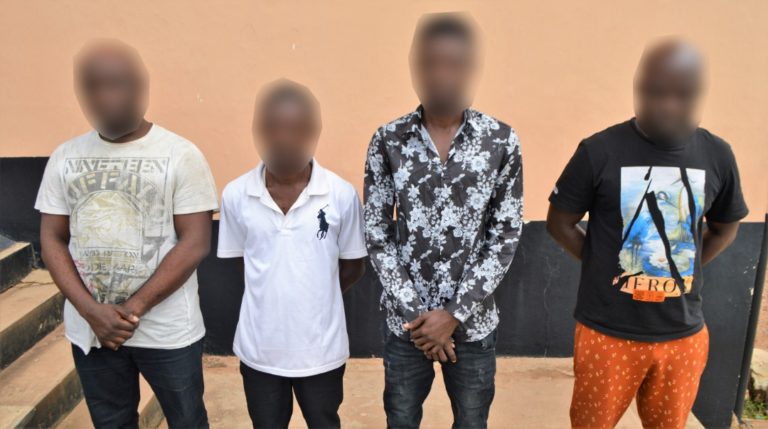
ECONOMIC and Financial Crimes Commission (EFCC) has apprehended a gang of fraudsters who harvest personal data of foreign-based Nigerians to defraud their friends and relations in Nigeria.
In a press statement signed by the Commission’s Head of Media and Publicity, Wilson Uwujaren, he wrote that the EFCC had stormed the gang and apprehended four men.
The suspects, Oladipupo Adebayo, Bimbo Bilewu, Ibrahim Odunayo and Oyeleye Oluwatosi are currently in the EFCC custody while others are yet to be in their custody, he said.
According to Uwujaren, the EFCC had launched a manhunt on the suspects after receiving a petition from one Prof Godwin Ekhaguere, a professor of Mathematics, who alleged in the petition that the gang defrauded him of Five hundred and sixty five thousand, five hundred Naira.
Ekhaguere also alleged that the fraudsters made him send MTN recharge vouchers worth thirty six thousand Naira while he was being defrauded.
According to him, he only realised that he had been scammed after he managed to reach his friends on the phone, who denied sending anyone to him thereafter he sent a petition to the EFCC.
EFCC disclosed that It was in the course of investigating the allegations that the Commission arrested Bilewu at an ATM point where he went to cash the money sent to him by one Pastor Osuji.
Osuji was also a victim of a crime similar to that which the Commission was investigating.
“The gang’s patterns of operation are similar in nature, one of them would call their would-be victim with the impression that he was an old-time friend, now based abroad, he would claim that he has a mouth-watering gift to be sent through someone who is allegedly coming home for an event.
“ The victim would then be handed over to the ‘home-bound’ member. He would be the one to make all sorts of requests ostensibly to clear some obstacles to delivering the consignments from the foreign-based ‘relation’ or ‘friend’, as the case may be,” EFCC stated
The statement further revealed that investigations into the gang’s operations revealed that they have a mobile application used in making a local number appear foreign to the call recipient and also use unregistered SIM cards to make their calls in order to blur out chances of tracing their real identities.
EFCC further stated that one of the tricks to evade arrest, according to investigations, was to open bank accounts in other people’s names and take over the ATM cards from them. They direct their victims to pay into such accounts and use the ATM cards to withdraw the cash.
The commission, however, noted that the suspects have owned up to the allegations against them, and are now helping the EFCC to investigate similar crime.
A NEW study conducted by the World Health Organisation (WHO) in 36 countries has shown that high rates of unintended pregnancy occur when women do not engage in family planning or make use of contraceptives.
The report published on Friday on the agency’s website stated that two-thirds of sexually active women who wished to delay or limit childbearing stopped using contraception for fear of side effects, health concerns and underestimation of the likelihood of conceiving. But that led to one in four pregnancies being unintended.
Stating the findings, 4,794 women had an unintended pregnancy after they stopped using contraception.
Of these women, 56 per cent who became pregnant were not using a contraceptive method in the five years prior to conceiving. 9.9 per cent of them indicated that the last method they had used was a traditional method (e.g. a withdrawal or calendar-based method), 31.2 per cent used short-acting modern methods including pills and condoms, and 2.6% long-acting reversible methods of contraception such as intrauterine devices (IUD) and implants.
WHO clarified that unintended pregnancies “do not necessarily equate to pregnancies that are unwanted”. But they might lead to a wide range of health risks for the mother and child, such as malnutrition, illness, abuse and neglect, or even death.
“Unintended pregnancies can further lead to cycles of high fertility, as well as lower educational and employment potential and poverty – challenges which can span generations,” the international organisation added.
Giving its recommendations, the report highlighted the need for high-quality family planning services.
“Services that enable women and girls to change modern methods while remaining protected through effective counselling and respect for their rights and dignity.
“Services that take a shared decision-making approach to selecting and using effective methods of contraception that most fit the needs and preferences of clients,” it outlined.
Many issues related to not using the method could be addressed through effective family planning counselling and support, WHO noted.
“High-quality family planning offers a range of potential benefits that encompass not only improved maternal and child health, but also social and economic development, education, and women’s empowerment,” explained Dr Mari Nagai, former Medical Officer for Reproductive and Maternal Health at WHO’s Western Pacific Regional Office and an author of the report.
Ian Askew, Director of the Department of Reproductive Health and Research at WHO, also noted: “Access to high-quality, affordable sexual and reproductive health services and information, including a full range of contraceptive methods, can play a vital role in building a healthier future for women and girls, as well as contributing to attainment of the Sustainable Development Goals.”
Unintended pregnancies remain an important public health issue. Globally, 74 million women living in low and middle-income countries have unintended pregnancies annually. This leads to 25 million unsafe abortions and 47,000 maternal deaths every year.
According to a report from the International Conference of Family Planning in November 2018, about 13.8 per cent of Nigerian women used contraceptives in 2018, and 1.8 million unintended pregnancies were recorded in the same year.
CONFLICT between the Office of the Attorney – General of the Federation (OAGF) and the Academic Staff Union of Universities deepens as ASUU responded to the claims of the OAGF as misleading, uncharitable and a blackmail of the union.
Following a press statement by the OAGF on the outcome of the meeting between the Union, OAGF and others concerning the directive of the federal government on IPPIS that all federal university workers must be enrolled under the platform; ASUU stated that the publication was against the Union based on arguments with the Accountant General of the Federation, Ahmed Idris.
In a statement signed by the Akure Zone of the Union, ASUU kicked against the directive with agitations that it contradicts the statutory law of academic professionalism and also overrides universities autonomy.
ASUU urged the general public to disregard the “blackmail” which was aimed at painting their membership corrupt amongst other things.
“It is a pity that the OAGF having failed to proffer intellectual and constructive responses to our observations on the proposed policy, rushed to the press to malign our members.”
“As a union of members with integrity, we are resolved to educate the public on the true positions of the ominous policy that is already regretted by those currently hosted on the platform. The sixteen-point release by the OAGF on ASUU’s opposition to IPPIS is just propagandic and does not show any sincere intention of the Government to follow simple laws in the Country”.
In the press statement made available to The ICIR, ASUU wrote that the points raised by the OAGF are still in contention as there is no assurance that the peculiarities have been adequately captured and besides the intention has somersaulted on point of law, which should be supreme.
“It is irresponsible of the OAGF to accuse the Union of promoting corruption by opposing IPPIS. The policy has provided ‘food for the boys’ under the supposed savings of N273 billion, we marvel at this huge savings and request that he publishes a full list of MDAs where these funds were recovered and what happened to the recovered funds (loot?).”
“Despite our cry of gross maladministration and mismanagement of funds by certain public office holders, the OAGF has not been heard to make any indictment. We call on the Economic and Financial Crimes Commission (EFCC) to undertake a covert investigation on the operation of IPPIS by MDAs currently on the platform, then Nigerians will truly know who is shielding and promoting corruption.The OAGF cannot absolve itself from this!.”
ASUU noted that the directive contradicted section 34 (1) of the Constitution of the Federal Republic of Nigeria which states that every individual is entitled to respect for the dignity of his person, and accordingly, no person shall be subject to torture or to inhuman or degrading treatment, no person shall be held in slavery or servitude; and no person shall be required to perform forced or compulsory labour.
‘The taxable components of the salary become vulnerable to the office and no longer as negotiated with respective state governments, issues of Promotion of our members and payment of arrears is already an issue with the platform elsewhere, where notional promotion is applied, third party deductions, and remittance to owner funds from news making the rounds, is very tedious in organizations presently on board IPPIS,” the Union wrote.
They lamented their disappointment, stating that the IPPIS tussle with the Union has been on since 2013 and they expected that a serious and anti-corruption minded government would have seen reason to respect the law and let the Universities run along their statutes, reiterated that universities are not MDAs, and should be left alone to run itself as it is practiced across the globe.
However, Nigerian President, Muhammadu Buhari has announced that any worker not enrolled on the IPPIS platform by October 31st will not be paid.
For more than two years, Kellu Haruna, a brave 35 years old internally displaced woman who became an activist, led more than 2,000 women in a campaign that took on both the federal government and the all-powerful Nigerian military. All she wanted, like the other women, was news of the whereabouts and the release of her husband, separated from her since 2015, and an explanation for the starvation that ravaged the military-run IDPs detention camps in northeast Nigeria between 2015 and 2016 that left several hundreds of people dead, many of them women and children.
After two relentless years of campaigning, she found out that her husband was alive and detained at the Maiduguri Maximum Prison. That news brought her enormous joy but also worries on how to secure his release. In the hours that followed, she spoke to other women about starting a mass protest in front of the prison. Sadly, her weak and sick heart could not contain the joy of her discovery and few hours later she had a stroke, which eventually led to her death days later.
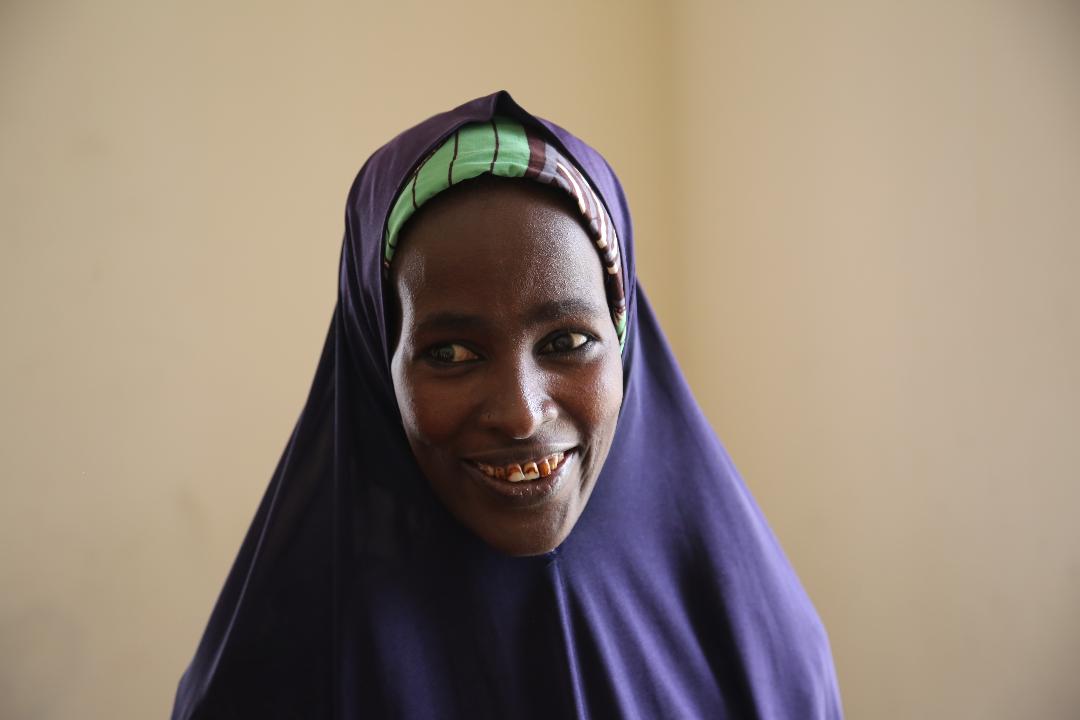
Her smile could make a stranger comfortable
A first encounter with Kellu revealed a shy, courteous and soft-spoken woman. She was gentle and had an infectious smile that made even a stranger she was meeting for the first time comfortable. She may have been one of the thousands of iIDPs that have died as a result of the 10-year-old Boko Haram crisis. Like many IDPs, she had not gone to school. And, she did not even speak English or Hausa, only her native Kanuri.
However, something stood her out. Unlike other, she was an activist, even though she neither set out to be one nor even understood what it meant. Circumstances thrust upon her frail shoulders the responsibility of leading a group of displaced women demanding for justice that until her death grew to over 2,000.
Kellu, from Andarra village in Bama LGA, was a mother of four – three girls and a boy. Her husband, Haruna Modu, is a 45-year-old trader. The family survived Boko Haram rule in 2015 and after a failed attempt to leave, they managed to escape their village in December 2015 and fled to Cameroon, where the army stopped them and handed them and other people over to the Nigerian army.
Nigerian soldiers took the group to Banki, where men and women were separated and screened. In total, 80 men, including Kellu’s husband, were taken to Bama prison and from there to Giwa Barracks in Maiduguri and then, later, to a section of the Maiduguri Maximum Prison run by the military. After four days, Kellu, her children and 35 other women and children were brought to Bama prison where they were screened again and transferred to Bama Hospital Camp, which was more of a detention camp set up and run by the military than an IDPs camp.
People, particularly women, were not allowed to leave, not even to go look for what to eat. This only exposed women to sexual exploitation by both soldiers and members of the Civilian Joint Task Force
Kellu and her family suffered immensely in this camp – there was not enough food or water and no toilet facilities. As a result of both hunger and diseases, the death rate was alarming, with up to 20 people dying daily by early 2016. Kellu saw countless people die and she herself lost her son and mother. Severely malnourished, she was transferred to Maiduguri in June 2016 with hundreds of others for emergency treatment.
One of the first things Kellu was focused on after her recovery was finding her husband, who, soldiers told her, was taken to Maiduguri. With no one willing to provide answers, she and some 200 other women decided to organise themselves and form a group to ask for their husbands’ release.
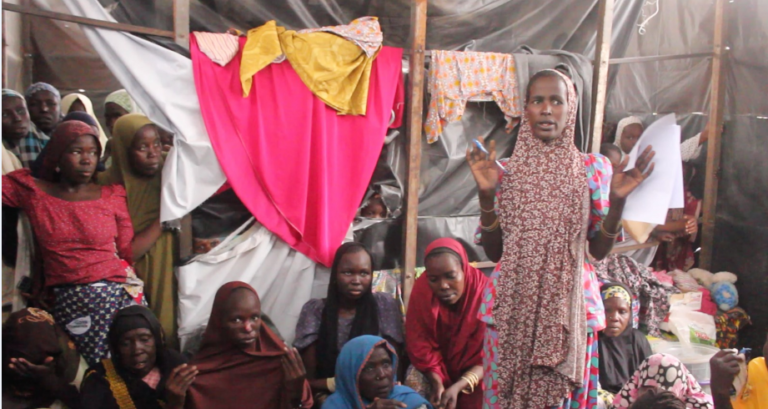
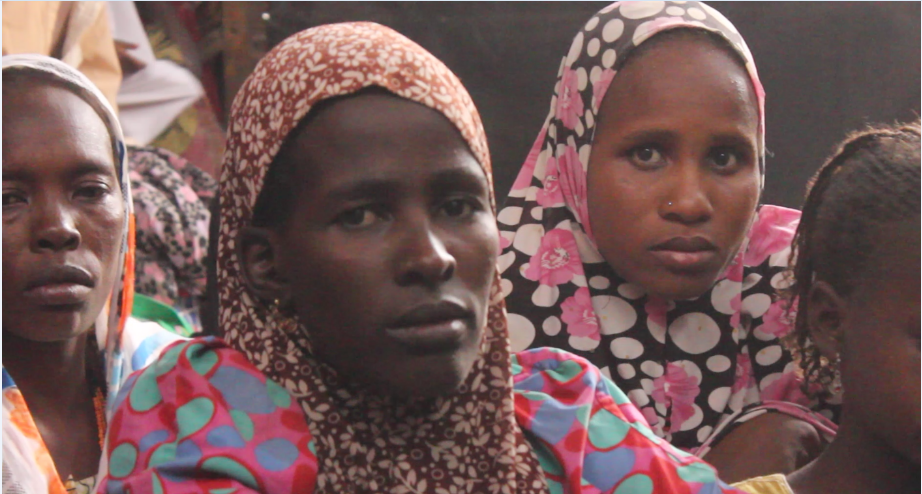
Kellu (middle) was the glue that held more than 2,000 women together in their demands for justice Copyright – Knifar
These brave women formed what is now known as the Knifar Movement – a group that now has more than 2,000 displaced women across Borno state with two goals: to campaign for the release of their husbands, who they believed were being arbitrarily detained somewhere by the Nigerian military; and to get justice for the hundreds of relatives who died between 2015 and 2016 in Bama.
The unanimity in making Kellu the voice and face of the group was easy and this paid off in no time. Kellu was a great listener, keen to let everybody take their time in voicing their opinions. She would never do or say anything that concerned others unilaterally without consulting them. Decision-making was democratic and, given that they all had the same demands, arriving at a decision took little time. She was the glue that in those early days held the group together. Whenever a woman felt overwhelmed by the situation, she would clearly explain why they should not give up but fight for their husbands.
First, the group petitioned the National Assembly to ask for the release of their husbands and an investigation into the sexual exploitation women were subjected to as a result of the absence of their husbands and the hunger this exposed them to, which in turn left them at the mercy of members of Civilian Joint Task Force and the military in Bama. They included in the letter to the National Assembly an initial list of 466 children and adults that died in Bama.
With the guidance of another brave woman, Hamsatu Allamin, founder of the Allamin Foundation for Peace and Development, they wrote to President Muhammadu Buhari, engaged with the National Human Rights Commission, NHRC, and appeared before the Presidential Investigative Panel to Review Compliance of the Armed Forces with Human Rights Obligations and Rules of Engagement (PIP), all with the same demands. Surprisingly, the PIP initially refused to take the women’s testimonies when it sat in Maiduguri, claiming there was no time, even though it still had a day left based on the timeline of its sitting in the Northeast before moving to other parts of the country.
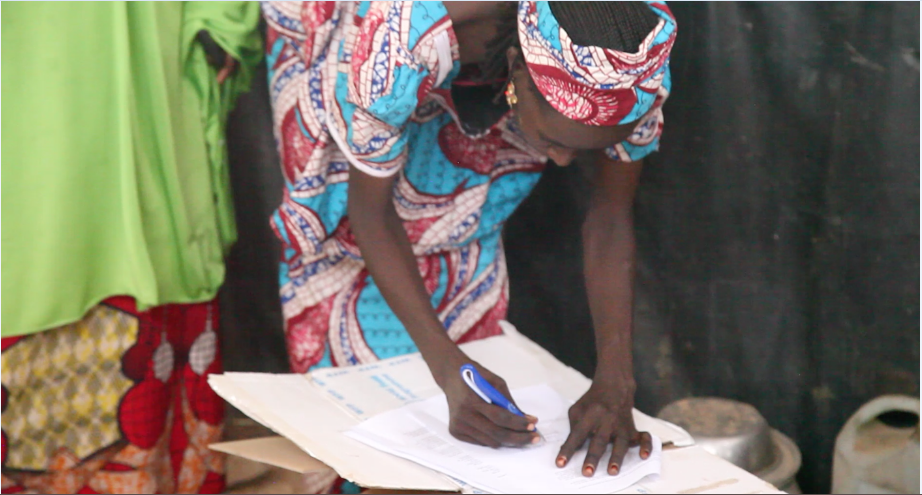
In 2018, she signed a letter to President Muhammadu Buhari on behalf of Knifar Copyright – Knifar
Kellu and the women wrote to the Panel chairman expressing their disappointment and requesting that he help pay for them to come to Abuja to testify, but the chairman responded that they would have to appear before the Panel in Abuja at their own cost. Not discouraged, the women found their way to Abuja and made their presentations. All they asked were the same things: the release of their husbands and justice for the hundreds of those who died at the IDPs detention camp in Bama.
While government did nothing about their allegations – the PIP report has not even been published – and the National Assembly could only promise to investigate, the women pushed on. The military tried everything to counter them and call them liars, even denying arresting their husbands. But the women were only spurred on rather than being deterred.
When the military organised a public relations visit for journalists to one of the Maiduguri IDPs camps to counter allegations that soldiers had sexually abused women, it was the Knifar Movement whICH exposed that the female IDPs were instructed to deny any of such allegations.
In their effort to seek justice, Kellu and some of the women met Fatou Bensouda, the Prosecutor of the International Criminal Court when she visited Nigeria in 2017. Kellu told her, in her passionate way, about their desperate situation and their struggle for change. Fatou Benouda promised to look into their situation, but this didn’t materialise. The women saw no change and when Fatou Benouda visited Nigeria again some months back, she didn’t reach out to the Knifar Movement.
All this while, Kellu was battling with a failing health, going in and out of hospital. In 2018, she was diagnosed with a heart condition; possibly resulting from the long suffering she endured, including the loss of her son and mother and the heartbreak of separation from her husband. While she was struggling to pay for the medications, she was told she would need surgery that she could not afford. Kellu herself always blamed it on the severe beating she received from a soldier in Bama hospital camp in 2015.
Despite her frailty, Kellu could not let herself and the other women looking up to her for leadership down. They searched for any clue that held information about their men. They mobilised women in IDPs camps across Borno State, asked questions, met with people released from detentions, all with the hope that someone would tell them if their men were alive and where they were. The only information they had was that most of the men were taken out of Giwa Barracks blindfolded in the middle of the night about two years ago. They did not know where they were taken to or what happened to them.
Few weeks ago, their probing paid off and they found out that some of the men were being held at the Maximum Prison in Maiduguri by the military in a section housing Boko Haram suspects. Not satisfied with this information, the women pushed for proof of life for as many of the men as they could confirm were being held there.
For the first time in almost four years, Kellu was 100 per cent sure that her husband was alive. When the proof of life got to her, the excitement was visible and she could not contain it. The ICIR found out that on that day, she could not sleep out of sheer joy. She called another woman and said that they should organise a protest in front of the prison to ask for their release.
The following morning, she was found unable to move or speak. No matter how much she tried to say something, the words would not come out. She was taken to the hospital and confirmed to have suffered from a stroke and treatment commenced immediately. All women of the Knifar Movement and other well-wishers contributed to the medical treatment, sacrificing the little money they had to feed themselves and their children.
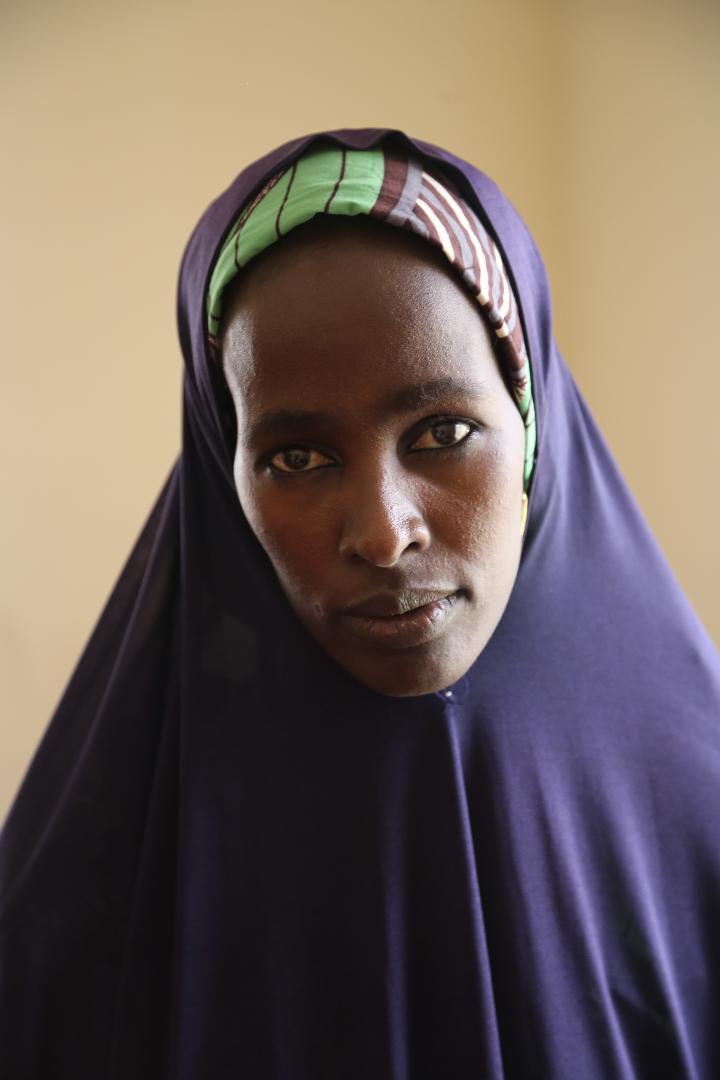
Kellu Haruna was the face and voice of the Knifar movement Copyright
Unfortunately, Kellu did not recover and died over a week later, a terrible end to an incredible journey, one filled with love, despair, death, frustration, betrayal, hope and hopelessness all in one measure.
Kellu died without seeing justice. Reflecting on her death one could wonder why the Nigerian government and the ICC, who are supposed to help to get justice, only delay accountability; Kellu is now among countless of Nigerian survivors of war crimes who have died before seeing any sign of justice.
She leaves behind three daughters to be looked after by the other women. She died with her hope dashed, the hope of getting justice and being reunited with her husband. If anything, she died knowing that her husband lives, which in itself bears the hope that one day, he may be freed and hold their daughters in his arms. And she died knowing that the women of the Knifar movement will never give up.
But, Kellu’s struggle doesn’t end here. Since her death, women have come to her camp from all over Borno state to pray for her and honour her struggle. The women in her movement are more determined than ever to get justice.
They may not speak English and many may not even understand Hausa, but they know what this is all about: justice. One can only hope that her daughters will soon be reunited with their father and grow up and go to school. Maybe one day they can tell the Nigerian authorities and indeed the international community about their remarkable mother, who died before justice was served. And maybe, just maybe, her daughters will see the justice Kellu was craving for.
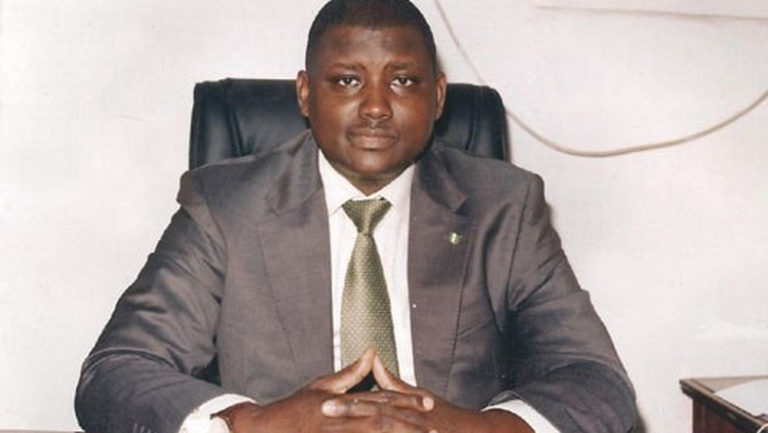
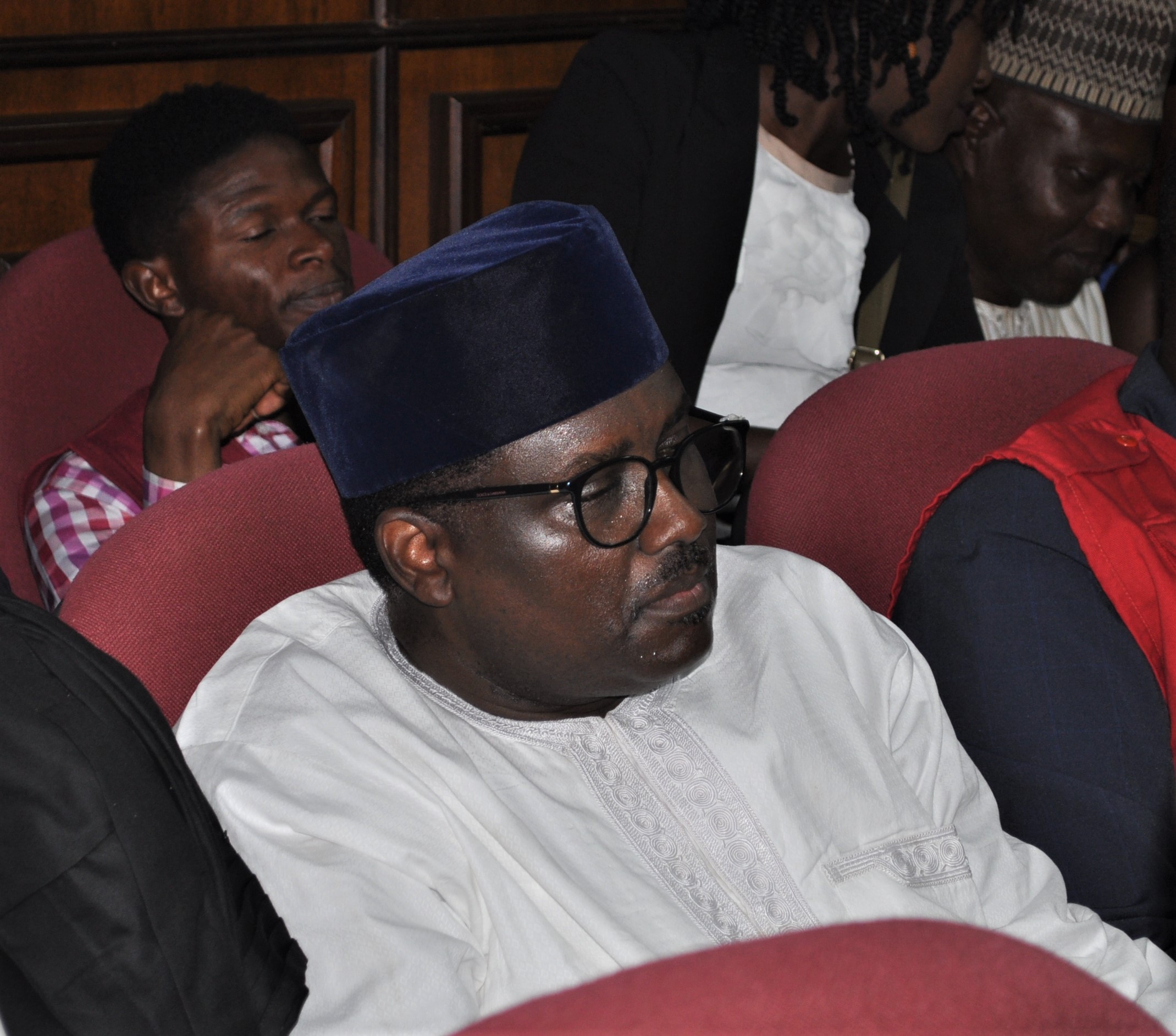
A Federal High Court sitting in Abuja on Friday ruled that the former chairman of the Pension Reform Task Team (PRTT) Abdulrasheed Maina be remanded in prison custody pending the hearing of the case brought against him.
Maina who was arraigned on a 12-count charge, bothering on money laundering, operating fictitious bank accounts and fraud pleaded not guilty to the charges.
At the hearing on Friday, the defence counsel, Ahmed Raji, prayed that the court allowed the defendant extra time to prepare for his defence.
On his part, the prosecution counsel, M.S Abubakar, in assent told the court they were ready to commence the trail since the respondent was in court.
Abubakar told the court the application filed by the defence for bail should not be considered, stating it was incompetent.
However, Justice Abang, in the course of his ruling ordered that Maina be remanded in prison, asking that he should be granted access to his lawyers.
Maina in court on Friday. Photo Credit: EFCC
The judge fixed November 19 to consider the competence of the bail application filed earlier before Maina was arraigned but adjourned the case to October 30 for the commencement of trial.
Earlier on Friday, Maina and his son Faisal Maina, a final year Telecommunications Engineering student at a Dubai University were arraigned by the Economic and Financial Crimes Commission (EFCC).
However, Faisal had fresh charges yet to be read, but a report by The Channels TV said Faisal was been charged for allegedly shooting at security operatives in a bid to evade arrest.
The ICIR had reported on how Faisal attempted to escape, in the course of Miana’s arrest at an Abuja hotel by the Department of State Services (DSS), who later handed him and his father over to the EFCC.
Maina who had been hibernating in Dubai, United Emirates after he fled Nigeria in 2015 to escape arrest by the EFCC, sneaked into the country recently.
Meanwhile, the Federal High Court in Abuja had ordered the temporary forfeiture of 23 properties linked to Maina.
Justice Folashade Ogunbanjo of the Federal High Court, Abuja had on Tuesday October 22, 2019 ordered the temporary forfeiture of 23 choice properties linked to him.
The order was based on an exparte application by the EFCC, which argued in sworn affidavits, that the properties are believed to be proceeds of the illicit activities of the defendant.
Consequently, the court ordered the Commission to cause a publication to be made in a national newspaper, inviting the defendant or any other person with interest in the properties to show cause, within 14 days, why the assets should not be finally forfeited to the federal government.
The properties include: Plot MF 19, Cadastral Zone, Karu, Abuja FCT. Acquired in mother’s name; Plot 18 Road F, Malali North East Residential Layout, Kaduna ;Flat 42C, SMC Quarters, Unguwan Dosa, Kaduna, Kaduna State acquired in suspected pseudo name; Plot No 965, Gwarimpa 1 District, Cadestral Zone, Abuja; Duplex Located at No.16 A Katuru Road, Kaduna; 52B, SMC Quarters, Unguwan Dosa, Lot 016 Comprising of 3-bedrooms semi detached bungalow, Kaduna; Property at Tola Street, Badarawa, Kaduna, comprising of 3-bedroom and an undeveloped land; Plot Y12, Kano Street, Kawo New Extension, Kaduna; a duplex at No. 21, 52 Crescent Kubwa Phase IV Estate, Abuja; House 8, 211 Road, A Close, FHA Estate, (3 bedrooms bungalow) Abuja and Farm at Dorawa, Karshi Development Area, Karu LGA, Nasarawa State.
Others are: Farm at Dorawa, Karshi Development Area, Karu LGA Nasarawa State. Plot 3A, Sambo Road Unguwan Rimi (comprising uncompleted buildings), Kaduna; Property located at 16B/BG Gombe Road, Biu, Biu LGA, Borno State; Plot MF-27A, new Pasali Layout, Kuje, Kuje Area Council, Abuja; Plot 1B Ajayi Road, Unguwan Rimi, Kaduna; Block 23, Flat 2 located at Life Camp (2 bedrooms semi detached), Abuja; Property at No. 62, A/C Maternity Ward, Damaturu Road, Biu, Biu LGA, Borno State; Plot of CofO Bo/426 beacon B5086, B5087, B5105, B5104, B5099 Cadestral Zone B05 Utako, Abuja; Plot 37, Kinshasha Road, Maiduguri, Borno State; No 16 Dabai Road off Mangoro Road, Sokoto, Sokoto State; No. 13, Korau Road, Nasarawa District, Kano, Kano State and Plot 965 Cadastral Zone, CO2, Gwarimpa. Abuja.