THE United Nations says efforts are on to ensure that the suspension placed on two Non Governmental Organizations, Action Against Hunger (AAH) and Mercy Corps working in the North East Nigeria is lifted very soon.
“I have received assurances from the relevant authorities that the suspension of the activities of Mercy Corps and Action Against Hunger announced in September will be lifted in the Next few days,” UN Under-Secretary for Humanitarian Affairs and Emergency Relief Coordinator, Mark Lowcock, made this know in a statement on humanitarian situation in Borno State.
The Nigerian Army in September suspended Action Against Hunger and Mercy Corps over allegation of aiding and abetting Boko Haram in North Eastern part of the country after reporting that they had given several warnings to them.
Lowcock explained that the development should allow an immediate resumption of life-saving assistance to nearly 400,000 people who have been without food and other essential help for the last month.
He further disclosed that the government also plans in the next fortnight to bring together all relevant stakeholders, including the UN and NGOs to discuss the shared challenges in Borno State.
“I greatly welcome all this enhanced dialogue between the Government and the international community, including international NGOs in pursuit of the shared goals of bringing peace, promoting recovery, assisting and protecting innocent civilians in the North-East who have been the main victims of the conflict is everyone’s interest,” he reiterated.
Speaking on his visit to Nigeria, Lowcock stated he was glad to have had the opportunity to review the situation with senior figures in the Nigerian government, with the military and other authorities in Borno, with international, national and local NGOs and others.
Lowcock said that with everyone he met during his visit, he was convinced that NGOs, through their rich network and capacity to reach people and their expertise and experience in operating at the community level have a very important role to play.
TIRED of incessant cultist attacks, Cross Rivers State Assembly is considering death sentence against any member of cult groups apprehended by the security operatives in the state.
As such, the state lawmakers have commenced a process to review the April 2002 Anti-Cultism Act passed into law by the Donald Duke, former governor of the state.
According to a report by Punch, the Cross River State Public Order Prohibition of Secret Cult And Offensive Weapons Bill 2019 was sponsored by the Deputy Speaker of the House, Joseph Bassey, in Calabar, the state capital.
“Cultism has become a top killer factor in the state, even more deadly than some diseases,” Bassey said. “The killing of young Crossriverians on campuses is alarming and we must take steps to address it.”
The lawmaker stated further that aside from defining who a cultist is, “this bill seeks to outline a stiffer punishment for any individual who is arrested for involvement in cultism to set as a deterrent to others.”
While serving, former United Nations Secretary-General, Ban Ki-moon advocated against capital punishment, saying, “…death penalty has no place in the 21st century.”
His position was further affirmed by Andrew Gilmour, the UN Chief’s Assistant Secretary-General for Human Rights during an event at the UN Headquarters, New York, United States.
Nigeria, recorded a higher number of deaths according to 2017 Amnesty International Global Report on Death Sentences and Executions. The report revealed that 621 Nigerians bagged capital punishment in 2017.
Meanwhile, Bassey argued that the bill would stop arbitrary attacks on campuses which often lead to the death of students.
In his remarks, Elvert Ayambem, the lawmaker representing Ikom II State Constituency, stressed the need for more stringent punishment stressing that it was not enough for the bill to sentence cult culprits to a few years in prison.
According to him, death penalty for one or two persons would deter the rest from the crime.
He emphasised that kidnapping, robbery and cultism have the same endpoint of taking human life, hence the House should resolve on the death penalty for offenders.
“When kidnappers seize a victim and a ransom is not paid, they often kill the victim. Likewise armed robbers; when they break into a home and there is nothing to rob, they kill the victims.
“Accordingly, the same is applicable to cultists who by the end of the day also kill. So, I maintain that the death penalty is spelt out for any offender,” he noted.
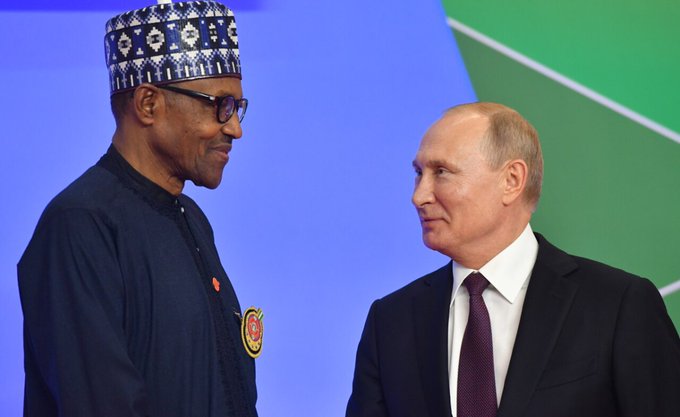
PRESIDENT Muhammadu Buhari on Friday left Sochi, Russia for Abuja after he had participated at the Russia–African Summit aimed at building stronger ties between the countries.
The presidency had announced his departure to the summit to meet with Russia’s President, Vladimir Putin, in facilitating the expansion of opportunities in the country’s security, trade and investment, science and technology, and gas production sectors.
The meeting was scheduled to hold between October 23 and 25, having in attendance 40 African leaders.
Tolu Ogunlesi, Special Assistant to the President on New Media and Head of Presidency Office of Digital Engagement (PODE), disclosed highlights of the bilateral agreements that took place at the summit.
“Agreement on a JV between Nigerian National Petroleum Corporation (NNPC) and Russia-based Lukoil, focused on refinery revitalization,” was part of the products of the meeting according to Ogunlesi.
“Nigeria and Russia agreed to revive and solidify the venture between the NNPC and Russia’s Gazprom for gas Infrastructure development in Nigeria,” he also said.
Ogunlesi disclosed that president Buhari requested for the return of Russia, on a government-to-government basis, to complete and launch the abandoned Ajaokuta Steel Rolling Mill.
He noted that the request was accepted by President Putin. Buhari equally sought Russia’s support for Nigeria’s aspiration for permanent membership at the United Nations Security Council.
The Russian government also agreed to construct a 1,400 kilometre Rail Line from Lagos to Calabar, Ogunlesi said adding that progress was made in the Russia’s plan to establish a nuclear power plant in Nigeria. About the plant, Putin stated that the next step would be the commencement of construction.
According to him, Buhari agreed to renew the Nigeria-Russia Military Technical Agreement “within the shortest possible time”, adding that this would propel Nigeria’s efforts to purchase military hardware from Russia on a government-to-government basis as well as underpin training.
He said the president assured the speedy resolution of entanglements surrounding the Aluminum Smelter Company of Nigeria, (ALSCON) located in Ikot-Abasi, Akwa-Ibom State.
Russia, on the other hand, he disclosed also assured of additional scholarship grants to Nigerians.
He noted that the Russian leader said his country is ready to support Nigeria’s efforts to attain self-sufficiency in wheat production and fertiliser production being the world’s “number one wheat producer”.
NIGERIAN Journalists have pointed at the Nigerian Army, Nigeria Police, and National Agency for Food and Drug Administration and Control (NAFDAC) as public institutions whose spokespersons they have had the worst experiences with .
This indication emerged in a poll conducted in October by The ICIR, in which journalists from various newsrooms were asked to disclose the government Public Relations Officers (PROs) with whom they have had their best and worst experiences.
They were also asked to rate their overall experience with the spokespersons and state what common problems they encounter in interacting with them.
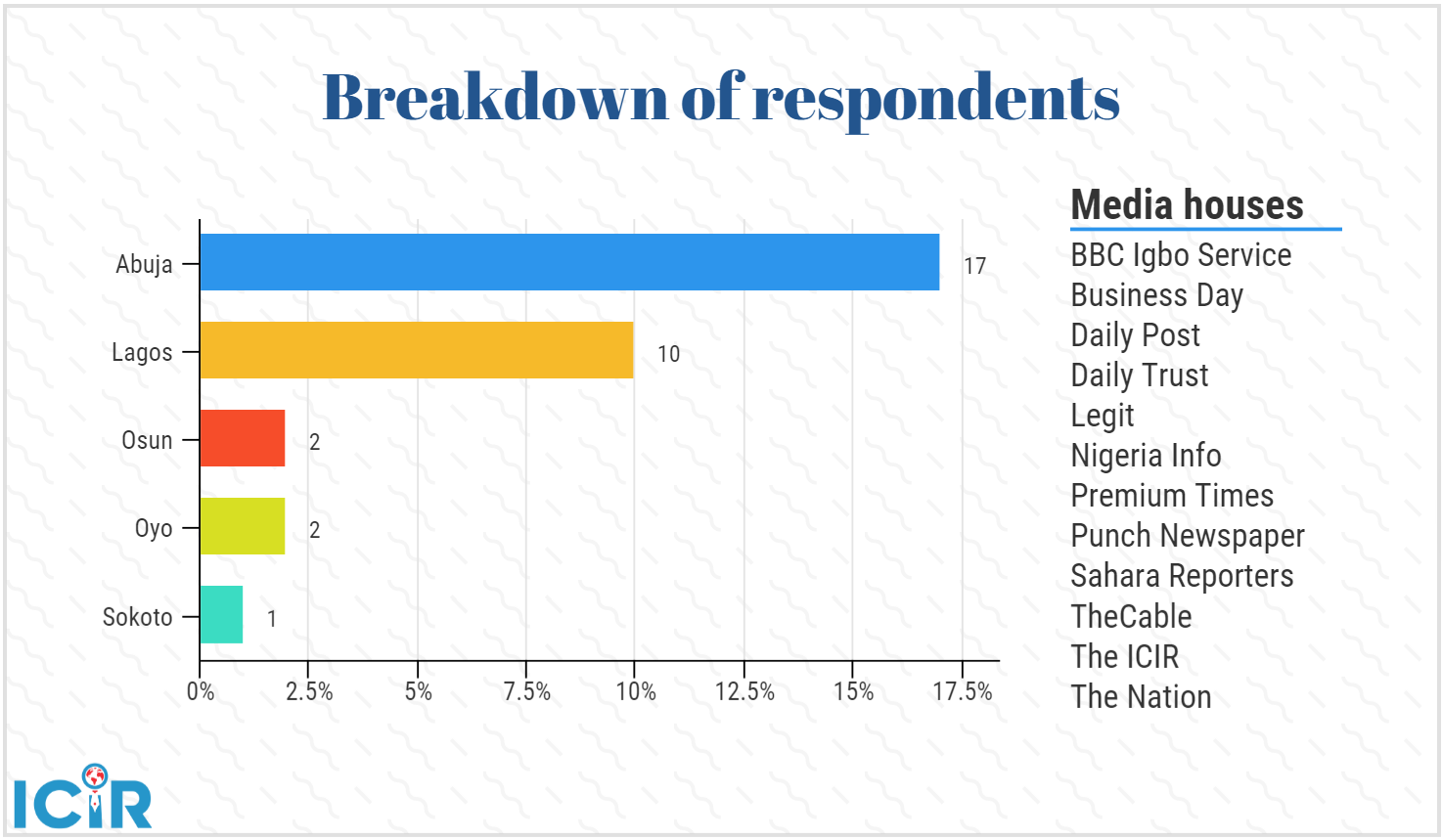
The newspaper received a total of 32 responses from journalists across 12 media organisations including BBC Igbo Service, Business Day, Daily Post, Daily Trust, Legit, Nigeria Info, Premium Times, Punch, Sahara Reporters, TheCable, and The Nation. Two freelance journalists also filled the survey.
Their roles range from reporters to content producers, photo-journalists, data analysts, senior investigative reporters, and editors.
Police, Army ranked worst by most
While some spokespersons and MDAs were mentioned only once in the “worst experience” field, there are those whose names came up multiple times. Topping the list is the Nigeria Police with nine mentions.
Two of the nine journalists specifically wrote the name of Jimoh Moshood, former Police Public Relations Officer (PPRO) and another two submitted the name of Frank Mba, the current PPRO.
Two other respondents included Bala Elkana, PPRO of the Lagos Police Command, while the names of Anjuguri Manzah, the FCT PPRO, and Olugbenga Fadeyi, Police PRO of Oyo State Command appeared once.
Following closely is the Nigerian Army with five mentions. Two of the five journalists wrote Sagir Usman, the Director of Army Public Relations appointed in February 2019 and a third journalist said he has had an awful experience both with Usman and his predecessor, Sani Usman.
“I could write their names a million times,” the respondent stated for emphasis.
Then there is NAFDAC, a Federal Government regulatory agency, having the third-highest number of mentions, three. Two respondents mentioned the agency’s national PRO (Jimoh Abubakar) while a third respondent filled in the name of the Lagos office’s spokesperson, “Christians Obiazikor”.
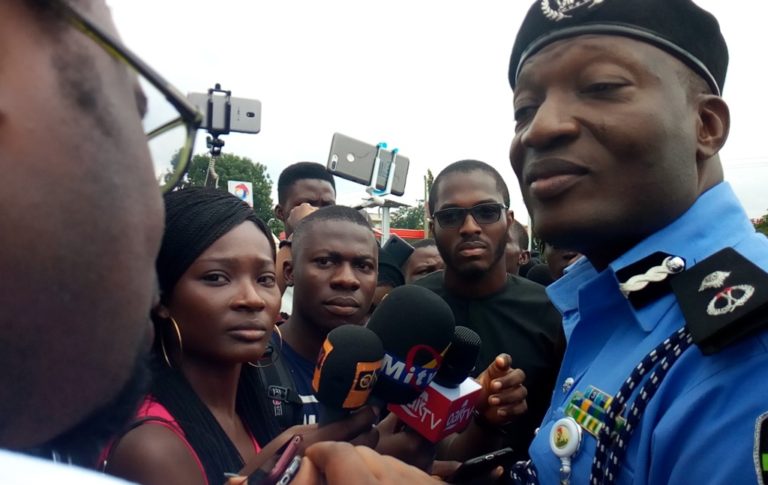
Police preventing journalists from covering a court trial. File photo.
Other MDAs mentioned twice include the Ministry of Education, Ibrahim Usman Yakasai of the National Universities Commission (NUC); Stella Nezan of the National Agency for the Prohibition of Trafficking in Persons (NAPTIP), and the Economic and Financial Crimes Commission (EFCC).
Those whose names came up once include the presidential spokespersons; State Security Service (SSS); Nigerian National Petroleum Commission (NNPC); National Drug Law Enforcement Agency (NDLEA); River Basin Development Authorities; Universal Basic Education Commission (UBEC); ministries of water resources, agriculture, labour, and environment; Boade Akinola, Director of Press at the Ministry of Health; Ayang Ogbe, Director of Promotion at the Rural Electrification Agency; and Usman Arabi of the Nigerian Electricity Regulatory Commission (NERC).
We also have Bisi Kazeem, Public Education Officer of the Federal Road Safety Corps (FRSC); Moses Adaguusu, Head of Public Affairs at the Corporate Affairs Commission (CAC); Isaac Okoroafor, Director of Corporate Communications at the Central Bank Nigeria; and Sunday James, PRO of the Nigerian Immigration Service (NIS).
Some state governors’ spokespersons also made the list, including Sam Onwuemeodo, media aide to former Imo State governor Rochas Okorocha; Taiwo Adisa, Chief Press Secretary to Oyo State governor; Toye Arulogun, former Oyo State Commissioner for Information; and Ismail Omipidan, Chief Press Secretary to the Osun State governor.
EFCC, NEMA adjudged to have best spokespersons
With the highest number of five mentions under the category of best government spokespersons, the EFCC was the respondents’ top choice. All five journalists mentioned Tony Orilade, former Acting Head of media, by name and one included Ayo Oyewole, the Lagos office’s Head of Public Affairs.
Orilade was appointed as the commission’s Acting Head of Media and Publicity in November 2018 and handed over back to Wilson Uwujaren, his predecessor, in August.
Coming second place is the National Emergency Management Agency (NEMA). Sanni Datti, the agency’s Head of Press and Media, was mentioned twice, and Manzo Ezekiel, a press officer, was mentioned once.
Three spokespersons of the Nigeria Police were likewise commended: Frank Mba, PPRO; Chike Oti, former PPRO of the Lagos State Command; and Anjuguri Manza, FCT police command PRO.
Mentioned by two respondents each were Sunday James of the NIS and the Ministry of Works. While one journalist generally commended the “Ministry of Power, Works, and Housing”, another praised David Henry, a senior information officer at the Works Ministry.
Commonest problem: ‘They hardly answer calls’
The journalists who filled The ICIR‘s survey have a number of complaints about the spokespersons working for government institutions, but the biggest issue apparently is the difficulty in getting them to comment. As much as 84.4 per cent of the respondents said the spokespersons “hardly answer calls or reply texts”.
For not being detailed and patient in responding, 62.5 per cent lamented this attitude, 37.5 per cent said their contact details are difficult to get, and 28.1 per cent said they aren’t polite in responding to enquiries.
In August, for instance, when The ICIR reached out to Lauretta Onochie, Personal Assistant to the President on Social Media, to speak on a fact-check, she replied that the reporter “must be very stupid”.
The ICIRhas discovered too from a study conducted in October 2018 that six out of 24 federal ministries did not have email addresses stated on their websites for easy enquiries.
Also, 12.5 per cent of the respondents complained that there are spokespersons who spam their mailboxes with press statements. Finally, asked to describe their overall experience in interacting with govt spokespersons, 65.6 per cent of the respondents replied that it has been fair (that is average).
The second-highest number of respondents (18.8 per cent) described their experience as bad, 9.4 per cent selected “awful”, and 3.1 per cent each picked “good” and “excellent”.
The questions put to journalists include the following:
What common problems do you face in your interactions with govt. PROs?
Name which PROs you’ve had your worst experiences with and the MDA(s)
Name which PROs you’ve had your best experiences with and the MDA(s)
How would you describe your overall experience interacting with govt. PROs?
‘Spokespersons need training’
Lekan Otufodunrin, Executive Director of Media Career Development Network and former Editor of Online and Special Publications at The Nation Newspapers, told The ICIR that government public relations officers can improve with adequate training.
He rated the spokespersons average and said he has heard a lot of complaints from reporters. He suspects that this is because many of the spokespersons were originally civil servants and have several restrictions at their workplace regarding speaking to the press.
“Unfortunately some of them do not also have the grounding to handle the flurry of requests coming these days,” he observed. “Before, they were just dealing with a few traditional media organisations. Now, everybody is pulling them here and there and there are all kinds of fact-checking… So I will say they are just average and can do a lot better.”
He emphasised the need to have the spokespersons take advantage of professional capacity-building opportunities. There needs to be stronger synergy among government officials especially in sharing information, he said, and MDAs also need to constantly update their websites with relevant information so as not to make their work “unnecessarily difficult”.
Otufodunrin also advised journalists to be more patient in expecting statements from government institutions and not to delay calling spokespersons until the last hour.
“They need to be a bit understanding,” he urged. “My experience is that people who work in government also have a lot of challenges.”
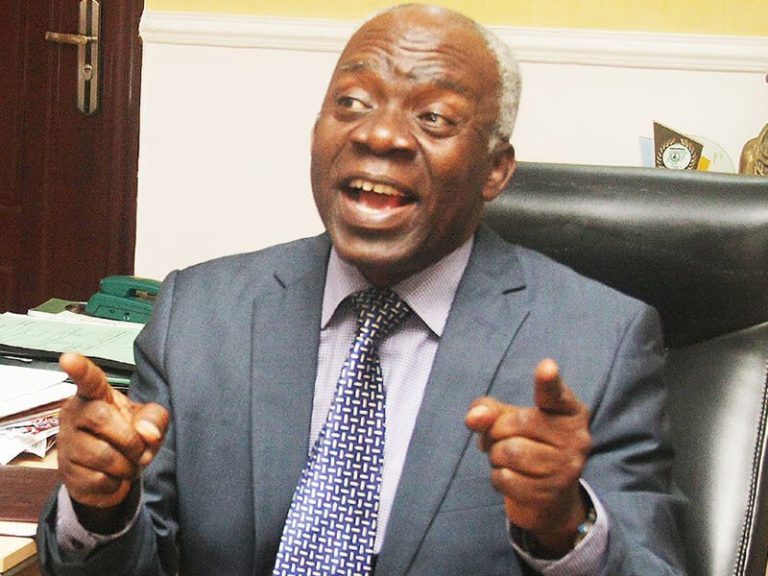
HUMAN Rights lawyer Femi Falana has advisedFederal Government to reopen the border with no delay, as its closure cannot be sustained for too long without serious repercussions for the Nigerian economy
Falana gave the advice while delivering a paper on Rule of Law, Good Governance and Economic Development at the annual conference of the ECOWAS Court of Justice in Accra, Ghana.
He asked that the government to ignore the endorsement of border closure by the International Monetary Fund (IMF) as the closure was inconsistent with the letter and spirit of ECOWAS Protocol.
The ECOWAS protocol according to him was hinged on Free Movement of Persons, Residence and Establishment and the African Continental Free Trade Agreement.
He posited that the endorsement of the IMF is a deliberate design to weaken the ECOWAS regional integration agenda.
Falana said there was a need for the Federal Government to urgently dialogue with neighbouring countries to fight the menace of smuggling which necessitated the country’s border to be closed.
He said this was imperative, because neighbouring countries may retaliate by imposing a ban on goods being exported from Nigeria by air, and may also close down Nigerian banks and other businesses operating in other member states of the ECOWAS.
“Instead of resorting to the unilateral closure of borders the federal government should drag the Republics of Benin and Niger to the Court of Justice of the ECOWAS for breaching the ECOWAS Protocol by allegedly encouraging the smuggling of petrol, rice and other products,: he said.
“In the alternative, smuggling should be addressed like terrorism which is being jointly combated by Nigeria and her neighbours.”
The human rights lawyer added that Nigeria should stop punishing law-abiding corporate bodies and community citizens because of the criminal activities of a few trans-border smugglers.
“The Federal Government should expose the smugglers by arresting and prosecuting them. The smugglers in Nigeria and the neighbouring countries are well known by the security agencies. Without official connivance, the crime of smuggling cannot thrive in the region,” Falana said.
He called on the Federal Government to take advantage of the ECOWAS Protocol Relating to the Re-exportation within ECOWAS of goods imported from third countries, beyond monitoring the borders with technology.
“Under the Protocol Benin, Togo and Ghana are only entitled to charge administrative fees in respect of goods whose destination is Nigeria,” he said.
He commended the ECOWAS Court for protecting the human rights of community citizens, whilst he asked member states to desist from disregarding the judgments and orders of the Court.
“Other leaders should emulate President Nana Akuffo-Addo who has ordered the Attorney- General and Minister of Ghana to ensure compliance with all decisions of the Court.
“The ECOWAS Commission should ensure that sanctions are imposed on recalcitrant member states in line with the ECOWAS Revised Treaty and the Protocol of the Community Court,” Falana said.
Earlier in August, the Federal Government had announced the partial closure of the Seme border for a total clamp down on smuggling and other illegal activities.
However, a few weeks ago, the border was officially closed to all forms of businesses across borders, inciting reactions from Nigerians who described the measure as the crudest and retrogressive decisions of the present administration.
A report by the National Bureau of Statistics (NBS) stated that the nation’s inflation rate had declinedfrom 11.08 per cent in July to 11.02 per cent in August, barely 11 days of 31 days for any significant impact to be felt either way on prices.
Conversely, the Nigerian Association of Chambers of Commerce, Industries, Mines and Agriculture (NACCIMA) said the closure of the country’s borders “is in order and long overdue”.
The Director-General of the Association in Niger State, Adamu Salihu enjoined the Federal Government to utilize the opportunity to reform the nation’s ports.
He asked that the government resist any pressure from any quarters for the reopening of the borders.
A GROUP known as “Concerned Nigeria” on Twitter has sent a petition to the Economic and Financial Crimes Commission (EFCC) over bullion vans seen at Bola Ahmed Tinubu’s house in Ikoyi, Lagos, on the eve of the 2019 presidential election.
Deji Adeyanju, a rights activist and leader of the group, who said though he doesn’t expect the EFCC will do anything about the petition, noted the group has decided to heed to the Commission’s demand for a petition to be forwarded to it before in order to investigates the incident.
“We @ConcernedNIG are going to submit a petition to the @officialEFCC on Friday about these bullion vans at Tinubu’s house on eve of presidential elections then wait to hear what excuse they will give again. We know they won’t take any action but we will submit the petition,” Adeyanju tweeted on Thursday.
The EFCC had said on its official twitter handle that its establishment Act empowers it to investigate “properties of any person if it appears to the Commission that the person’s lifestyle and extent of the properties are not justified by his source of income.”
This however, did not go down well with the Convener of End SARS campaign, Segun Awosanya, who accused the EFCC of fighting a one-sided war when it comes to corruption.
Awosanya said the EFCC only remembers that Act when it comes to prosecuting opposition politicians and “supposed Yahoo boys”.
He tweeted: “I’m sure this section only gives you an erection when it concerns Yahoo Boys and opposition politicians. While the miraculous self aggrandisers in bed with those the head of the EFCC worships are immune to investigation. Daylight bullion van exhibition of Bourdillon is justified right?”
The EFCC replied by asking Awosanya to send a petition on the subject to it.
“Kindly forward your petitions to or visit any of our zonal offices of head office to submit a copy of your petition,” the Commission had said.
AFTER 2o years of interventions, the Tertiary Education Trust Fund (TETFUND) is set to measure the impact of its interventions in Nigeria’s public tertiary institutions,Suleiman Bogoro, Executive Secretary of the Fund said on Thursday.
Bogoro disclosed this during a one-day meeting with the TETFUND Technical Advisory Committee on Impact Assessment in Abuja.
Bogoro recalled how monumental decay of the educational sector at all levels led to the agitation of the Academic Staff Union of Universities (ASUU) for a solution by the Federal Government which resulted into the establishment of Education Trust Fund (ETF) in 1993.
Represented by the Fund’s Director of Strategic Planning and Development, Ifiok Ukim, the TETFUND boss noted that the fund was initially meant for intervention on public primary and secondary schools but was eventually refocused to intervene in public tertiary institutions through the TETFund Act of 2011.
According to him, the project has made meaningful progress in years but has never been put into assessment since its establishment.
“In the 20 years of its interventions, the Fund had never presented itself for self-evaluation or examination, impact assessment which we are about to undertake is a contemporary phenomenon for reviewing and assessing progress made by any organization,” he said.
“It is important to the Fund as it would reveal the strengths, weaknesses, progress, challenges and windows of opportunities for it to improve on its service delivery to its beneficiaries.”
He continued that the TETFund, is determined to maintain a status as one of the most visible, impactful and relevant intervention agencies that has become a model in Africa.
Bogoro explained that they have selected a 62 men committee of experts in development work, research and scholarship including the leadership of ASUU to be part of the assessment committee.
He added that the committee shall be Co- Chaired by Nazifi Darma and Placid Njoku who are distinguished academics with lots of experience in development work.
“I have no doubt whatsoever that with the calibre of persons serving in the Committee they would deliver on the Committee’s mandates,” he said.
Highlighting the task of the committee, Bogoro stated that it shall carry out Impact Assessment of Education Trust Fund (ETF) Interventions, from 1999 to 2010, carry out Impact Assessment of Tertiary Education Trust Fund (TETFund) Interventions from 2011 to 2018;
The committee will determine the levels of Implementation of ETF/TETFund mandates and effectiveness, determine the achievements, challenges and weaknesses recorded and observed in the course of implementation of existing Projects, Programmes and Intervention lines of the Fund;
They shall also collate and analyse, selected speeches of past and present TETFund Executive Secretaries, annual/periodic publications and propose future direction of the Fund within the TETFund Statutory mandate as encapsulated in the TETFund Establishment Act 2011 among other obligations.
He however, gave the committee a deadline to submit the report of their findings on or before Friday, 29th November, 2019.
NIGERIA has moved 15 spots in the World Bank’s study Ease of Doing Business ranking from the 146th previous position in 2018 to 131 out of 190 economies.
The Doing Business Index is an annual ranking that objectively assesses existing business climate conditions across 190 countries based on 10 ease of doing business indicators.
The indicators include improvement in the sharing of credit information, strengthening minority investor protections, ease of paying taxes and electricity amongst other things.
Nigeria’s advancement on the economic chart comes a few weeks after the World Bank ranked it as one of the top 10 countries with improved economies in the world.
The ranking revealed that governments of 115 economies around the world launched 294 reforms over the past year with a total of 107 of such reforms coming from in Sub-Saharan African to top the list.
The report indicate that this has reportedly made it easy for the domestic private sector in the countries to engage in business activities while creating more jobs and expanding commercial activities and higher income.
The other seven economies where business climates improved the most were Saudi Arabia, Jordan, Togo, Bahrain, Tajikistan, Pakistan, and Kuwait
Meanwhile, China and India made the top 10 list of governments that have done the most in the past year to improve the ease of doing business in their countries.
Notwithstanding the ongoing trade war between China and United States, the Chinese economy made the top 10 list for the second year in a row.
The Asian country gained ahead of France to take the 31st spot in the ranking, also moving up 15 places just as Nigeria.
Similarly, India, also made it on the most-improved list for the third year in a row, moving up by 14 spots to 63 on the global rankings.
This feat by India has been attributed the country’s abolition of filing fees, lowering the time and cost of seeking construction permits and making trade easier with port improvements and an improved electronic platform for submitting documents.
New Zealand continues to top the global rankings, while Singapore, Hong Kong, Denmark, and Korea are right behind with the United States, Georgia, the United Kingdom, Norway and Sweden completing the top 10 list.
The study, however, does not measure the full range of factors, policies and institutions that affect the quality of an economy’s business environment or its national competitiveness as it affects the ease of doing business.
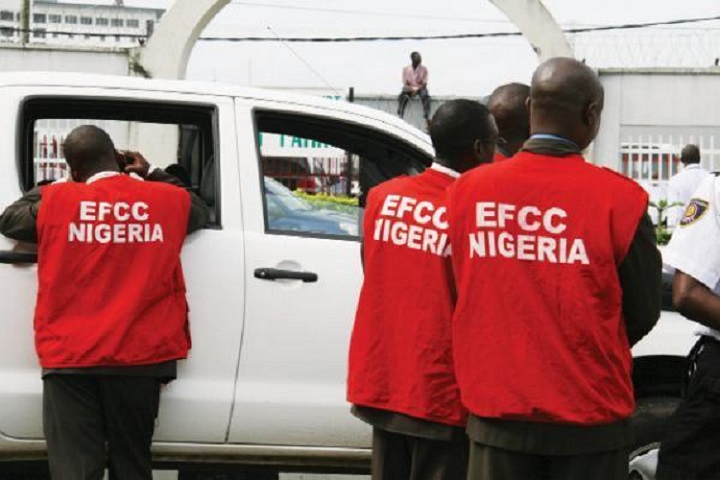
THE Economic and Financial Crimes Commission (EFCC) on Thursday re-arraigned, former chairman of the Independent National Electoral Commission (INEC) Maurice Iwu, before the Federal High Court in Lagos for an alleged fraud of N1.23 billion.
Iwu was re-arraigned before Justice Nicholas Oweibo on a four-count charge bordering on fraud and money laundering he allegedly participated in 2015.
The re-arraignment sequel to the transfer of the case from Justice Obiozor to Justice Oweibo which had started in August.
In one of the charges, the EFCC alleged that Iwu committed the offence in the build-up to the 2015 general elections in which President Muhammadu Buhari defeated then-incumbent President Goodluck Jonathan.
According to the prosecution team, Iwu, between December 2014 and March 27, 2015, aided the concealment of N1.23 billion in the account of Bioresources Institute of Nigeria Limited with number 1018603119, domiciled in the United Bank for Africa.
The anti-graft agency also alleged that the former INEC chairman ought to have reasonably been aware that the N1.23 billion was part of the proceeds connected to fraud.
Rotimi Oyedepo, prosecution lawyer for the EFCC told the court that Iwu acted contrary to sections 18(a) and 15 (2) (a) of the Money Laundering (Prohibition) Act 2011 and was liable to be punished under Section 15(3) of the same Act.
But the defendant pleaded not guilty to the charges.
Justice Oweibo permitted him to continue on the N1 billion bail earlier granted him by Justice Obiozor and adjourned the matter till November 25, 2019, for the commencement of trial.
KADUNA State Governor, Nasir El-rufai has reacted to the suspension of a lecturer of the Kaduna State University (KASU), Bala Umar over allegations of demanding sex for grade from an ex- student of Ahmadu Bello University (ABU Zaria) before he was sacked.
Umar’s appointment was terminatedby the authorities of ABU on misconduct bordering on extortion of students in July 2013. But he was employed by KASU in September 2013 even without a Phd at the age of 54.
He was suspended on Wednesday by the management of KASU after a one-man protest by a female graduate of ABU at KASU against him.
The lady, whose name was not given, alleged that Umar, who was sacked by ABU for sexual misconduct and later employed by KASU, was not fit to be a lecturer in any institution.
However, reacting to the suspension, El-rufai noted that the suspension of Umar is the first step adding that he and 15 lecturers sacked by the management of Ahmadu Bello University would be investigated and prosecuted by the Attorney General of Kaduna State.
“He and fifteen lecturers sacked by nearby ABU Zaria for sexual harassment will be fully investigated and prosecuted by the Attorney General of Kaduna State. We must face evil and end this scourge in our state,” he tweeted on Thursday.
Before Umar’s suspension on Wednesday, the management of KASU had set up a committee to investigate allegations against him by the former ABU student.
Two committees were set up to conduct investigations into the allegations.
The University Deputy Vice Chancellor, Academics, Abdullahi Ashafa who provided background to Umar’s suspension at a management meeting, said “If found guilty of tarnishing the image of the university, he will be queried, suspended and placed on half salary, then the reports and other decisions will be tabled before the university council for final decision.”
He maintained that “the incidence did not occur in KASU, noting that “Umar was appointed in error; there was no much investigation to ascertain what made him leave ABU at the age of 54.”
Chair of the committee on Umar’s case, Hauwa Evelin-Yusuf, said the committee members were to investigate the appointment of Umar, as well as the reasons he left ABU, and make recommendations.
“ABU terminated Umar’s appointment on misconduct bordering on extortion of students in July 2013 and KASU absorbed him in September 2013”.
“Our findings showed that Umar should have been employed on contract basis if his services were needed because he has no PHD and was 54 years at that time”.
She further disclosed that the committee discovered discrepancies in his submission and that of some students when they were interviewed.
“There were allegations of unethical behaviours and sexual advances but there were no evidences to substantiate the allegations, though there were students whose names were mentioned.
Evelin-Yusuf led committee recommended that Umar’s appointment be converted to contract with immediate effect; and the university could take further decisions.
She however advised that another committee be set up to investigate the case of an unidentified lady who came into the university’s vicinity with a placard saying she was a victim of Umar’s sexual harassment.
“We cannot identify the lady, but we have her picture and we need to look for her, know who she is and to ascertain if she is a student of KASU or ABU, we do not have that information, this is why we recommend another committee because this other issue came after our reports have been concluded,’’ she said.