Home Blog Page 2269

Call for application for the 2020 Resilience Fellowship

THE Global Initiative Against Transnational Organized Crime is calling for applications from interested and eligible candidates for a landmark edition of its Resilience Fellowship that offers support and opportunities to a cohort of individuals from around the world.

The Resilience Fellowship was launched in May at the United Nations Commission on Crime Prevention and Criminal Justice (CCPCJ) in Vienna to build a platform for cross-sectoral, global, and interdisciplinary collaboration between civil society actors, journalists, human-rights activists and others working to counter the effects of organized crime.

Thus, it welcomes applications from individuals of any gender, ethnicity, age, religion, or any other defining factor, who work in communities affected by organised crime.

With the theme “Disappearances Related to Organized Crime”, the fellows are expected to combine their various perspectives in the development of collaborative outputs for one year in areas including killings by organised crime groups, missing migrants, human trafficking, harvesting of human organs and unaccountable detentions

Explaining the theme, the Resilience Fund said that disappearances have been used to politically or criminally repress those who speak and act against human rights abuses.

“This global issue is prevalent around the world, making it a relevant and extremely important theme to many potential Fellows.

“Each fellow will receive $15,000 to be executed with no other limitation than the principles of professionalism, integrity and transparency, the proposal presented in the application form, the terms and conditions of the Fellowship agreement, and the implementation of collaborative actions with other fellows,” it stated.

The Fellowship that will run between January 15 and December 31, 2020, outlined the selection criteria to include participants should be from developing countries or countries disproportionately affected by organized crime and

“Participants should ideally work closely within communities severely affected by disappearances related to organized crime, or have strong ties within them, and should have ongoing or established projects or engagement,” it added as a criterion.

Deadline for application is November 15, 2019. For more information on how to apply, click here.
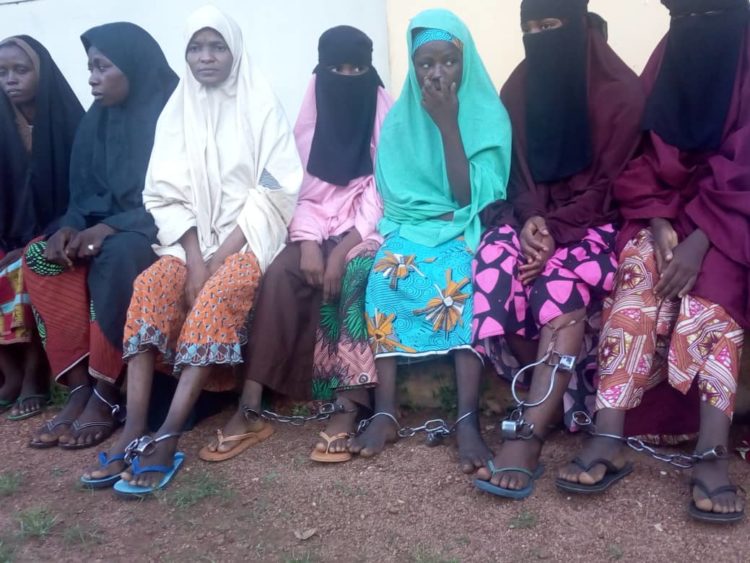
Again, 147 victims rescued from “torture centre” in Kaduna

THE Kaduna State police command has rescued 147 people from an illegal religious rehabilitation centre in Rigasa of Igabi Local Government Area, Kaduna. 

This is the third case, in a month, of exposing facilities regarded as  “reformation centres” where enrollees were subjected to several humanitarian issues that include sexual assaults and serious tortures.

In September, the police raided what it called a “house of torture” in Kaduna and freed over 500 victims including children. On Monday, the government rescued about 300 people at a centre in Katsina State where the victims aged between 7 and 40 years old were held captive.

And on Saturday in Kaduna, around 147 victims were rescued after the security operatives, along with Nasir El-Rufai, the state governor stormed an illegal facility popularly known as Malam Niga’s Rehabilitation Centre, according to ChannelsTv.

Some of the victims were found chained in their legs. 22 females were among the rescued people with four foreigners. While the owner of the centre was arrested for interrogation, the victims were all transported to the Hajj Camp in Mando area of the state capital for profiling and other humanitarian aid.

The Kaduna government also said the victims would be reunited with their families.

Some of the rescued victims on Saturday in Kaduna, Photo credit: Punch

A similar facility was raided by the police on Monday where over 300 people were put in a small mud house. An investigation by the police showed that the place had been in existence for 40 years.

Gambo Isa, Katsina Police spokesperson, had told The ICIR that the idea of religious reformation centre is a tradition in the Northern part of Nigeria. He said some parents often hand-over their wards, when they engaged in any kind of mis-behaviours which include drug addiction and stealing, to religious housing centre for reformation. 

However, the police claimed it had been receiving several reports concerning some centres violating the humanity of the enrolees that include sexual harassment,  lack of social amenities and some were chained on their legs and hands.

2020 Budget: Only 13 per cent of federal government debt to be serviced, inspite of N1.5 trillion new borrowing

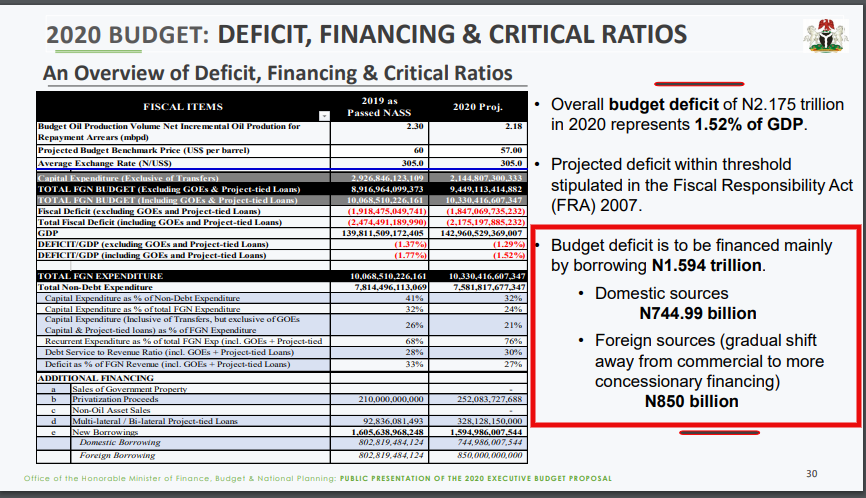
THE federal government is to service its debt with N2.7 trillion,  an equivalent of 13 percent of its debt in spite of its plan to borrow another N1.6 trillion in the 2020 fiscal year.

Data from the Debt Management Office show that Nigeria’s public debt portfolio stands at N25.7 trillion naira as of June 30, 2019. The Federal Government owed N20.42 trillion, while the 36 states and the Federal Capital Territory owes about N5.28 trillion.

For the Federal government debt of N20.42 trillion, external debt has a share of $27.16 billion (N8.32 trillion), while N17.38 trillion is borrowed domestically.

As at June 2018, Nigeria’s public debt stood at N22.38 trillion, which increased to N24.39 trillion in December 2018 and N24.95 trillion in March 2019 indicates that the debt profile has increased by N2.57 trillion in nine months.

A categorical breakdown of the federal government external debt shows that debt under commercial (Euro bonds and diaspora bond) has the highest of $11 billion. Debt from multilateral has $8.68 billion, Bilateral (China Exim Bank, JICA, India, and KFW) has $3 billion.

For the domestic profile, federal government debt by instrument stood as FGN Bonds- N9.69 trillion; Nigerian Treasury Bills- N2.65 trillion, Nigerian Treasury Bonds- N123 billion; FGN Savings Bond- N10.43 billion; FGN Sukuk- N200 billion; Green Bond- N25.7 billion and Promissory Notes- N707.75 billion.

Despite the increasing debt profile of the country, the federal government has planned to make another borrowing of about N1.6 trillion to finance mainly the 2020 budget deficit of about N2.18 trillion. The highlights/breakdown of the 2020 executive budget proposal presented by the Zainab Ahmed, Minister of Finance, Budget and National Planning shows that the federal government will borrow N744.99 billion from domestic sources and N850 billion ($2.78 billion) from foreign sources.

157,000 Nigerians died from tuberculosis in 2018, report reveals

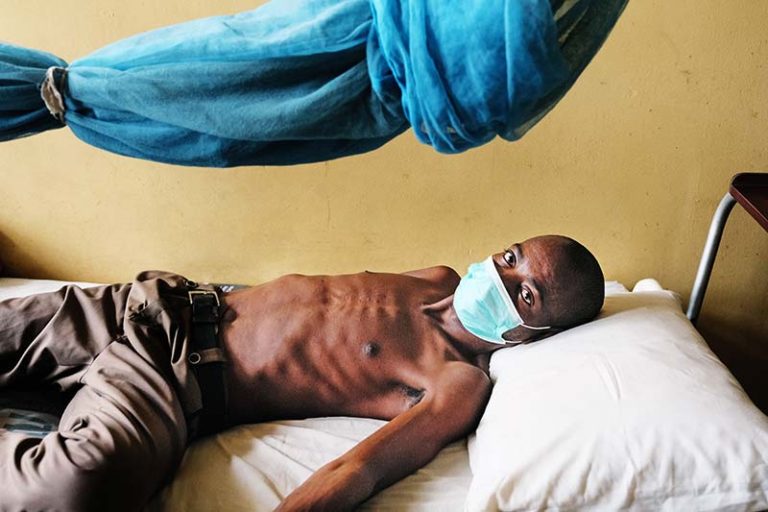
NIGERIA has the second-highest estimated deaths caused by tuberculosis in 2018, where a total of 157,000 citizens lost their lives to the disease.

The deaths burden is revealed in the 2019 Global Tuberculosis Report published by the World Health Organisation on Thursday.

The 297-page-report indicated that 1.5 million people died from TB in 2018. Breaking it down to regional levels, the South East Asia region had the highest number of deaths with 659,000, followed by the African region of 608,000 deaths. The Western Pacific, Eastern Mediterranean and European regions recorded 97,000, 79,000 and 27,000 deaths respectively.

India had the highest number of deaths from tuberculosis estimated at 440,000 people; Nigeria followed India with about 157,000 of deaths; Indonesia,  98,000.

With 157,000 deaths, it means, not less than 430 Nigerians die every day from tuberculosis in 2018.

Infographics credit: Rebecca Akinremi/ICIR

The report also showed that Nigeria had a total of 429,000 tuberculosis cases in 2018, a figure that indicated there was an increase in the disease’s burden when compared to the 2017 figure. In 2017, the total TB estimate for the country was 412,000.

So, Nigeria still secures the sixth position among countries with a high burden of the disease. It is the first in Africa. The five countries leading Nigeria are India with 2.6 million, China with 866,000, Indonesia with 845,000, Philippines with 591,000 and Pakistan with 526,000 cases.

South Africa and Bangladesh had recorded tuberculosis cases of 357,000 and 301,000 respectively, thereby following Nigeria as the seventh and eighth countries with a high burden of the disease. 

The report stated that faster reductions in TB incidence and deaths “require improvements in access to diagnosis and care”.

It also indicated that action on broader determinants of the tuberculosis incidence could also address the disease. The factors associated with risk of TB include levels of undernutrition, poverty, smoking, HIV prevalence, diabetes and alcohol consumption.

“TB disease is much higher among people infected with HIV; it is also higher among people affected by risk factors such as undernutrition, diabetes, smoking and alcohol consumption,” report noted.

“A recent modelling study also shows how poverty is an important underlying driver of national TB epidemics, and that eliminating extreme poverty and providing social protection (both targets under SDG 1) could substantially reduce TB incidence,” it added.

Infographics credit: Rebecca Akinremi/ICIR

Another problem the report identified to be affecting Nigeria is under-reporting of cases.

It stated that 12 per cent of three million missing cases of tuberculosis globally is from Nigeria. This means that 360,000 people that developed tuberculosis in 2018 in the country missed out of lifesaving treatment.

“Despite increases in TB notifications, there is still a large gap between the number of new cases reported
(7.0 million) and the estimated 10.0 million (range, 9.0– 11.1 million) incident cases in 2018.

“The Ten countries accounted for about 80 per cent of the gap, with India (25%), Nigeria (12%), Indonesia  (10%) and the Philippines (8%) accounting for more than half of the total,” it revealed.

Referring to the four countries- Nigeria, Indonesia, India and Philippines-, the reports noted that intensified efforts are required to improve reporting of detected TB cases and access to diagnosis and treatment.

The National Tuberculosis and Leprosy Control Programme (NTBLCP) during the 2019 World Tuberculosis Day, stated that the low number of people being treated in Nigeria was partly due to poor knowledge about TB and the low treatment coverage.

Between 2014 and 2017, Nigeria secured a total of $330 million (about N119.5 billion at $362 rate) to finance the fight against the disease.

Kogi State deputy governor impeached after long rift with governor

0

THE deputy governor of Kogi State Simon Achuba has on Friday been impeached by the Kogi State House of the Assembly after a long rift with the state governor, Yahaya Bello.

Achuba was removed after a closed-door session with the speaker of the Kogi Assembly, Mathew Kolawole and a seven-man committee set up to investigate an allegation against the deputy governor.

The committee had submitted their report to Kolawole after an inquiry into an allegation of misconduct levelled against him, which was deliberated upon before a verdict on his removal was reached.


Read Also:

However, the former deputy governor had been in a rift with his principal, which followed a series of allegation and criticism on the state governance by the former deputy governor.

Achuba alleged the state government had not paid him for about 22 months while also, criticizing the administration for non-performance.

He also raised an alarm of an alleged threat to his life, which in turn incited a statement from the government, saying the government do not train assassins or get involved in sending killers after another.

The disagreement and open blame from both Achuba and the state government had worsened, leading to the state assembly’s announcement to commence impeachment proceedings against the Achuba for disparaging the governor.

The former deputy governor unsatisfied by the actions of lawmakers filed an application before the Kogi State High Court, challenging the impeachment notice issued to him.

Consequently, Achuba was suspended by the leadership on the All Progressive Congress (APC) for allegedly taking actions, embarrassing the APC body in the state.

AFRICMIL urges government to protect whistleblowers

0

THE African Centre for Media and Information Literacy (AFRICMIL) has called on the Federal government to guarantee the protection of whistleblowers in Nigeria and, as a matter of urgency ensure the passage of the whistleblowing policy into law.

The call was made by the coordinator of African Centre for Media and Information Literacy (AFRICMIL), Chido Onumah at a public presentation of the second year report of Corruption Anonymous (CORA) held on October 17 at the Shehu Yar’ Adua Centre, Abuja.

The second-year report was themed, “Protecting Whistleblowers in Nigeria”.

Onumah during his presentation said AFRICMIL through CORA, a pro-whistleblowing project, supported by the John D and Catherine T MacArthur Foundation, has encountered whistle-blowers who are victimised every day.

He said although whistle-blowers are the first line of defence against crime, corruption and cover-ups, they are still afraid to come forward for fear of retaliation.

“In the last two years of our engagement with the whistleblowing policy as well as with whistleblowers, the major issue has been the lack of a legal framework to protect whistleblowers who face intimidation or threats.

“In addition to the need for whistleblower law and robust protection for whistleblowers, it is also important for service providers (government ministries, departments and agencies, MDAs) to be at the driving seat of instituting whistleblower policies and infrastructure to ease the process of reporting in the agencies,” he said.

The event which was chaired by Abdullahi Shehu of the National Open University of Nigeria (NOUN) also featured a three-member panel of discussion including Johnson Oludare of PICA, Ezenwa Nwagwu of SAY No Campaign and Andrew Mamedu of Action Aid.

In his remark, Africa Director, MacArthur Foundation, Kole Shettima, said exposing corrupt practices in the country is a non-negotiable venture as only the poor pay dearly for the challenges posed by corruption.

He said MacArthur was basically concerned about the standard of living of Nigerians and the need for good governance and accountability.

Speaking on the integrity of the Federal Government in implementing the whistleblowing policy, Abdullahi of NOUN, called on the government to be transparent in the process of recovering stolen funds and assets.

He urged the government to keep to their bargain, by paying whistle-blowers the percentage it promised them when they submit tips.

He said the body language of the federal government would tell if whistleblowers and/or Nigerians will continue to submit tips or support the fight against corruption.

On his part, Nwagwu the convener of Say No Campaign said unless the federal government provides a legal framework with which whistleblowers could function well, Nigerians may not possibly support the policy or the anti-corruption fight with positive actions.

He called on Nigerians to collectively lend their voices to the campaign for the passage of the whistleblower policy into law as it will benefit them more.

Oludare, Assistant Director at the Federal Ministry of Finance and head of the whistleblowing unit at the Presidential Initiative on Continuous Audit (PICA), commended AFRICMIL for working hard to promote the whistleblowing policy and for supporting PICA to realise its aim.

Embattled whistleblowers, Murtala Mohammed who was an auditor at the Federal Mortgage Bank of Nigeria and Sambo Abdullahi, a former auditor at the Nigerian Bulk Electricity Trade PLC (NBET), also called on the federal government to intervene in their ordeal as they have been faced with series of intimidation and harassment, including sack from work and denial of salaries because they exposed fraudulent practices at their places of work.

Oyo targets N20bn monthly IGR, currently generates N2 billion

0

THE Oyo State Government has revealed plan to achieve a monthly N20 billion Internally Generated Revenue (IGR), representing 900 per cent increase from  N2 billion IGR currently generated by the state.

The commissioner for information, Culture and Tourism, Wasiu Olatunbosun  disclosed this at a one-day workshop for the State media officers.

Olatunbosun said all efforts were concentrated at plugging tax holes to increase the State’s revenue.

He said the state has its concentration on four key areas: education, primary healthcare, agro-business and security, urging the media officers to key into the agenda of the present administration to achieve the set target.

“It is the belief of Governor Seyi Makinde that Oyo State can be taken from a Civil Service-propelled economy to an agro-business-driven economy and before the first term of this administration runs out, we will be looking towards achieving about N20 billion IGR target,”

However, data on IGR by states from the Nation Bureau of Statistics (NBS) show on a monthly basis, the State generated an average IGR of N2 billion monthly in 2018, 10 per cent of its new target.

In 2017, the state generated an average of N1.8 billion. In 2016, about N1.5 billion was generated, while in 2015, an average of N1.3 was generated.

So far in 2019, the half-year report on IGR by states revealed that Oyo generated about N2.3 billion monthly.


After 3 days of negotiation, FG, NLC finally reach agreement on minimum wage

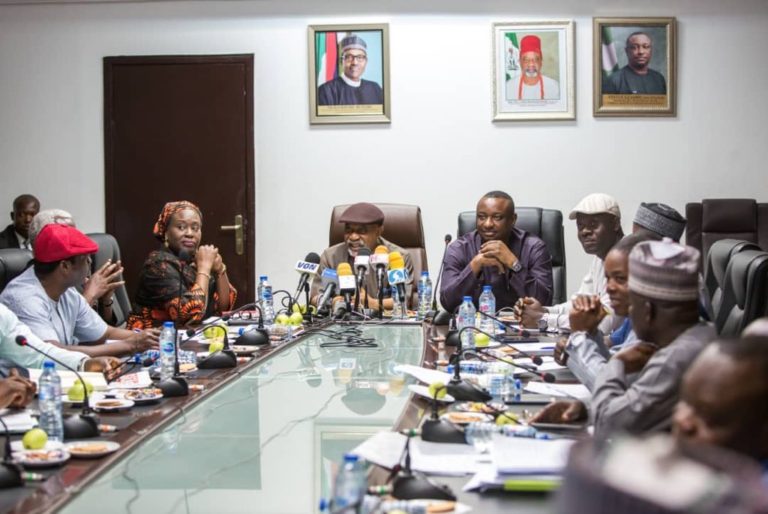
AGREEMENT has been reached by the National Labour Congress (NLC) and the Federal Government on the consequential adjustments to the new 30,000 minimum wage after several failed attempts.

NLC had earlier threatened industrial action if an agreement is not reached between both parties by Wednesday 16th October.

The Joint National Public Service Negotiating Council (JNPSNC), the ministry of labour and employment and ministry of state, labour and employment as Conciliators held meetings on 16th, 17th and 18th October which resulted into a resolution that the new minimum wage shall capture increment in Federal government ministries, Departments and agencies.

Federal government has agreed a 23.2 per cent increase for grade level 07 workers, 20per cent increase for grade level 08, 19 per cent for grade level 09, 16 per cent for grade level 10 – 14 and 14 per cent increase for grade level 15 – 17 workers.

In the other group of the agreement consisting of the Consolidated Health Salary Structure (CONHESS), Consolidated Research and Allied Institutions Salary Structure (CONRAISS), Consolidated University Academic Salary Structure, (CONUASS II), Consolidated Tertiary Institution Salary Structure (CONTISS II), Consolidated Medical Salary Structure (CONMESS).

Also are Consolidated Tertiary Institutions Salary Structure (CONTEDISS) and Consolidated Polytechnics and Colleges of Education Salary structure (COMPCASS) all got a 23.2 per cent increase for grade level 07 and its equivalent, 16% increase for grade level 8 – 14 and its equivalent and 10.5 per cent increase for grade level 15 – 17 and its equivalent.

Speaking before the agreement was signed, he Minister of labour and employment, Chris Ngige said, “this is a national law and it must be obeyed by all; state government, local government and all persons concerned that employ more than 25 persons in their organization”

Present at the meeting is the acting Head of Civil service of the federation, Folashade Yemi-Esan also the Minister of State, Labour and Employment, Festus Keyamo who revealed that at about 3 am, the parties signed terms of settlement.

Keyamo revealed that although the memorandum did not capture those of the law enforcement agencies but it has been done.

As contained in the communiqué made available by Keyamo, the agreement was signed by the Acting Head of Service of the Federation, Folashade Yemi-Esan, Director IPPS,OAGF of the Ministry of finance, budgeting, national planning Olusegun Olufeyinti and others from the government side.

While from the Labour side, the JNPSNC acting chairman, Simeon Anchaver and the JNPSNC Secretary General Lawal Bashir appended their signature to the agreement.

Chairman of the National Labour Congress (NLC) Ayuba Wabba and the President of the Trade Union Congress (TUC) Quadri Olaleye signed as witnesses.

Ayuba Wabba, NLC president said the organised labour would continue to be open – minded and would keep up with the principles of collective bargaining.

He mentioned that in the practice of bargaining issues have to be looked at from both sides, and stressed on the importance of making the workers happy and very productive.

President Buhari “shakes the tables” of NDDC, orders forensic audit of its accounts

0

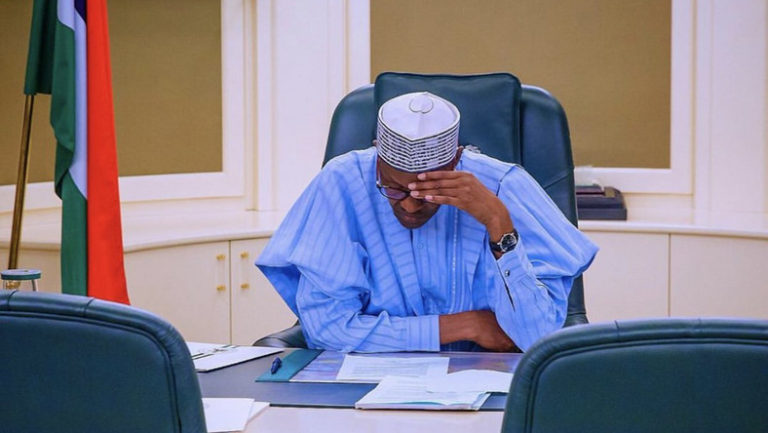
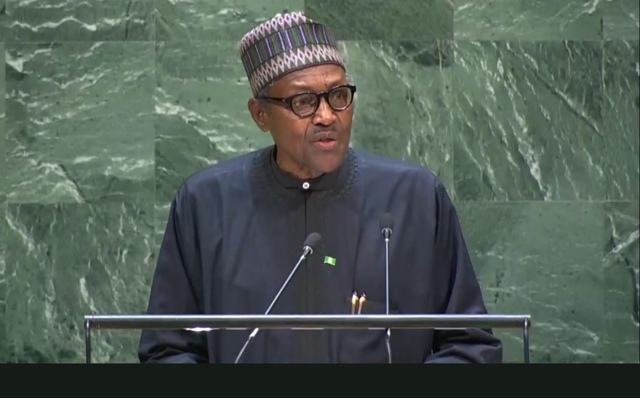
IN a series of tweets, President Muhammadu Buhari revealed that a forensic audit on the operations of the Niger Delta Development Commission, NDDC, from 2001 to 2019 in a move to check the excesses of corrupt officials in the agency at the expense of the Niger Delta.

President Buhari made this known at the State House in Abuja when he hosted a delegation of state governors from the South-South region led by Governor Seriake Dickson of Bayelsa State.

He condemned the huge resources that have been made available to the Commission without a commensurate slice of results to show for it.

“I try to follow the Act setting up these institutions especially the NDDC. With the amount of money that the Federal Government has religiously allocated to the NDDC, we will like to see the results on the ground those that are responsible for that have to explain certain issues,” he said.

“I am acutely aware, with my experience, that projects in your area are very expensive; that is why if any job is given, we must make sure that the company is competent and has the capacity to do it well with experienced consultants,” the president explained.

He said he would wait for the report of the audit before deciding on the next line of action regarding the organisation.

Governor Dickson also expressed dissatisfaction alongside the other governors with the operations of the NDDC, which is defined with poor handling of contracts, uncompleted jobs and lack of the required technical expertise.

BudgIT, a civic advocacy group in its 2018 report hinted that between 2000 to 2018 the NDDC had spent $40 billion on capital projects it had embarked on in the Niger Delta which is equivalent to an estimated N15 trillion.

Though, the expenditure of this huge sum has not translated into significant development of the oil-rich communities in the Niger Delta.

The NDDC was established during the Obasanjo administration to respond to complaints of neglect by the oil-rich communities in the region. Former President Umaru Yar’adua in 2008 created the Ministry of Niger Delta and made the NDDC an agency under the ministry.

FUOYE students disagree with management claim of 16-hour daily power supply

2

By Ayobami Olutaiwo (Student reporter)

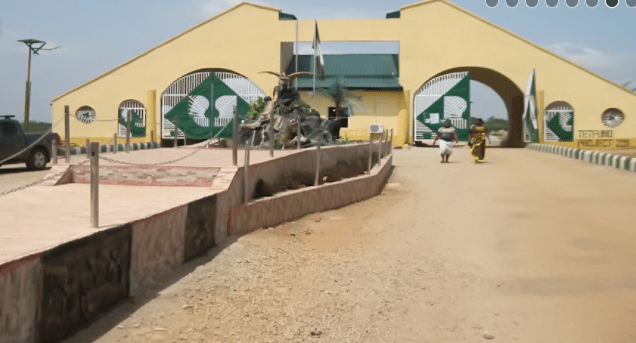
Students of Federal University of Oye Ekiti (FUOYE) have disagreed with management of the institution over a claim that the campus community enjoys electricity supply from generators between 6 am and 10 pm on daily basis.

FUOYE’s Spokesperson, Godfrey Bakji, had made the claim in a report published on Monday to support the University reasons for tuition increment.

“Besides, on a daily basis, we have to expend more money in managing the university and getting so many projects done as demanded by our students. We put on the generator as early as 6 am and put them off at 10 pm on a daily basis and we all know the cost of diesel,” Bakji noted on Monday.

But the FUOYE students disagreed to having a 16-hour power supply from morning to dusk every day.

A student, Oke Emmanuel, one of the school hostel executives told this reporter that the management statement was misleading, stating the timing the school powers the generator was not for 16 hours daily. He said the school hostel do not have light from 11 am to 7 pm as claimed by the authorities. 

“In the hostel, they put on the generator around 7 am and at times 8 am and put it off by 10 or 11 am. Later in the day, between 7 pm and 8 pm the generator would be powered and off it by 10pm and sometimes 11 pm, said Emmanuel describing the situation “not favourable and unhelpful.

“During that period that there will be no light, there will not be water too, and water is important, it is one of the things we lament on because if there is light, automatically, there will be water too,” he added.

A 300- level student of English, Olaniyan Folakemi said the non-hostels area of the school only get electricity from generators between 10 am and 4 pm every working day. “And, perhaps, if there is an issue somewhere, there won’t be light all through.”

“The claim that the management supply power through the generator from 6 am-10 pm is absolutely false because I have never experienced it and this is my third year on campus now,” she added.

Another student from the Faculty of Education, Ibrahim Akorede also said the students had never witnessed the supply of power from 6 am to 10 pm on campus.

“The management’s claim is not true. It is a total falsehood. The supply of power using the generator is between 10 am and 4 pm,” he said.

Effort to get reaction from the school’s spokesperson was proved abortive, as he did not reply to the text messages sent to him since Wednesday.

The university just increased the acceptance fees from N40,000 to N50,000 and medical fee from N5000 to N10,000.