Home Blog Page 2283

Revolutions that “fired” young Leftists

0

By Edwin Madunagu

I FEEL the need to begin with some clarifications on the title that has been constructed for this piece: “Revolutions that ‘fired’ young Leftists.” This need will be more than adequately met if a specific meaning can be attached to the word, “revolution”, as used in the article, and if the period under reference can be indicated—at least broadly. There is also the need to indicate the immediate inspiration for the discussion.

Assuming that it is now understood that the word “revolution” generally means a process of radical and fundamental transformation of a social order, its special meaning in this piece appears as the point in that process, the point known as “insurrection”, where the old regime collapses (or is overthrown) and a new one emerges (or is installed).  Historically, this “point” has been a couple of hours, a single day or, at most, a couple of days. Beyond this, the situation may require a new characterization: perhaps a “civil-war-in-revolution” or a “revolution-in-revolution.” (The latter is owed to Regis Debray). The history of revolutions illustrates this situation abundantly. The new regime may be a single power, a dual power or a multiple power. Of course, none of these possibilities can be “stable”.

In the Russian Revolution the “point” defined in the preceding paragraph was November 7, 1917 (October 25 in the Old Calendar); in the Chinese Revolution it was October 1, 1949; in the Cuban Revolution it was January 1, 1959; and in the Iranian Revolution—the one that became known as Islamic Revolution—it was February 11, 1979. Although we were greatly influenced by the history of modern revolutions in general and socialist revolutions in particular, the four revolutions listed above had the greatest impact on the consciousness of young Nigerian Leftists between the mid-1970s and the mid-1980s.

It was not just what happened at those revolutionary points that “fired” our consciousness. We were also “fired”, in particular, by how it happened, at what moments it happened, and the roles played by particular groups and individuals in what happened. Indeed, in some cases, and for many young Nigerian Leftists, the roles of particular individuals (and their latter fates) became the most critical factors in the overall assessment of a particular revolution! Although in real life it is difficult to separate the political biographies of great personalities from the political histories of the nations they led at their founding, we now know that for revolutionaries and students of revolutions efforts must be made at some separation.

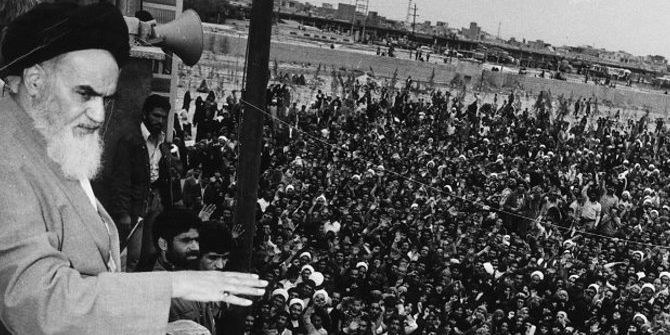
In the Russian Revolution the “great personalities” were Vladimir Lenin and Leon Trotsky; in the Chinese Revolution it was Mao Tse-Tung (now written Mao Zedung); and in the Cuban Revolution the personages were Fidel Castro and Che Guevara. In the Iranian Revolution the iconic personality was Ayatollah Ruhollah Khomeini. Whereas Lenin, Trotsky, Mao, Castro and Guevara were secular revolutionaries, Khomeini was a frontline religious leader. The point here is that they were all “worshipped” by young Nigerian Leftists—including those that professed atheism—during certain phases of the Leftists’ development.

We now come to what inspired this piece. A couple of weeks ago, the Nigerian state was reported to have accused a detained leader of a religious sect in Nigeria of planning to stage an Iranian-type Islamic Revolution in Nigeria. According to this report, the government made the allegation via a court affidavit. About the same time, in a different context, the government was also reported to have accused a Nigerian Leftist detainee of not just planning a revolution but also planning to link his revolution with the Islamic Revolution mentioned earlier. These, for me, are laughable cases. However, since they have now gone beyond mere rumours, the nation eagerly awaits the proofs of three charges: two individual “criminal” charges and one charge of “criminal collusion”!

The public responses these allegations evoked showed that many in the current generation of young Leftists may not be aware of the roles of secular Leftists in the making of what ended as an Islamic Revolution and the part played by that revolution in the further radicalization of the Nigerian Left in that period. It struck me that students of Marxist dialectics and theory of history have, in that story, a rich, modern and accessible material for case studies. This reflection was the origin of the present article. And it is to it we now return.

Older Nigerian Leftists may recall, and those not so old may have learnt that in September 1978, Nigeria’s military regime under General Olusegun Obasanjo carried out a fascist-like purge of Nigeria’s university system. This was done through arrests, rustications and dismissals of several Leftist students, lecturers and administrators over the “Ali Must Go” students’ protests of the previous April. The state had violently suppressed the protests. The national students’ body, the National Union of Nigerian Students (NUNS), which had been formed in 1956, before the country’s independence, was also proscribed. (NUNS was, before long, replaced by the current students’ movement, the National Association of Nigerian Students, NANS).

By February 1979, the Nigerian Left in general and the Leftist movement in Calabar, in particular, had largely recovered from the shock administered by the Nigerian state. The Calabar Group of Socialists (CGS) and the University of Calabar-based Movement for Progressive Nigeria (MPN), formed in the University in August 1977 and named after a similar but older formation at Ahmadu Bello University (ABU), Zaria, had resumed their revolutionary struggle. It was at this point, February 1979, that the Iranian Revolution exploded.

Every young Nigerian Leftist in the period under consideration (mid-1970s to mid-1980s) was compelled to study the history of revolutions, among other subjects. It was in the course of this study that aspects of the Russian, Chinese and Cuban revolutions “fired” our consciousness. This result was expected and almost “natural”. But what of the Iranian Revolution of 1979? For most of us who came into revolutionary socialist and Marxist consciousness at home in Nigeria, and who did not study history and political science as formal subjects in the university, the Iranian revolution of 1979 came upon us with the suddenness of an earthquake. The impact of two aspects of this particular revolution on our consciousness helped our final recovery from the shock brought by the fascist blow we suffered in 1978. These aspects were the tenacity and audacity of Ayatollah Khomeini and the heroism of the masses—especially students, rebel soldiers and youths—in one of the most dramatic of modern history’s “revolutions from below.” That revolution remains a classic.

Most of us were not, at first, bothered about the specific roles of the Iranian Left in that revolution. Even when we later learnt of these roles, our focus was still on Ayatollah Khomeini, students, workers, women and rank-and-file soldiers as if these segments of the population were mere autonomous agents of history. It was when we learnt, first, that the Left was under attack and, then, that Iranians had voted massively for the establishment of an Islamic Republic, that some of the older Leftists succeeded in forcing a serious internal debate on the Iranian Revolution in the Calabar Movement.

Even then: the apprehension generated at this point was mitigated or deflected later in the year when the Iranian students who invaded the American Embassy in Tehran on November 4, 1979 started sending us, directly and through third parties, volumes and volumes of previously classified information they captured.

This information included names and deployments of CIA agents in Nigeria in general and in Calabar in particular! The rest is history, they say. A point that remains indelible, however, is that the Iranian Revolution is a study in dialectics of history—like all great revolutions, some would say.

Madunagu, mathematician and journalist, writes from Calabar, Cross River State, Nigeria.
2019 FOI ranking: NERC, Federal Fire Service emerge winners

0

NIGERIA Electricity Regulation Commission has emerged as the winner of the 2019 National Freedom of Information(FOI) Compliance Ranking in an event held at the CBN International Training Institute, Abuja on Thursday 26, September.

Infrastructure Concession Regulatory Commission (ICRC), Nigeria Investment Promotion Commission came second and third respectively.

Federal Inland Revenue Service (FIRS), came fifty-seven while Independent National Electoral Commission (INEC) came one hundred and sixty according to the ranking.

In the Security Sector, Federal Fire Service came first, and 2018 winner Nigeria Security and Civil Defense Corps (NSCDC) came second while the Police Service Commission (PSC) came third.

Meanwhile, staff members of Independent National Electoral Commission, National Orientation Agency, (NOA), National Information Technology Development Agency (NITDA)  have opposed the ranking, claiming that their agencies deserve to have ranked better than they were rated.

Nkem Ilo, who gave an overview of the FOIA ranking,  said the parameters for the ranking were proactive disclosure, responsiveness in the request for information, level of disclosure, FOI training, and timeliness. Other parameters used include the establishment of  FOI desk Office in MDAs, publication, and submission of annual FOIA compliance report to the office of the Attorney General of the federation.

She noted that the process is focused on promoting accountability and transparency by encouraging timely access to information.

National Co-ordinator of Right to Know, Ene Nkwankpa in her opening remarks, said the 2019 ranking was co-organised by six Civil Society Organizations,   the Public & Private Development Centre (PPDC), BugdIT, Connected Development (CODE), Right to Know (R2K), Basic Right Watch (BRW) and  Media Rights Agenda (MRA) so as to give room for a robust evaluation across agencies.

She reminded the audience that the success of  FOIA is a collective responsibility, “because at the end of the day it is for the benefit of us all because we are all Nigerians and we cannot run away to Canada, and as we have noticed nations are driving us away”.

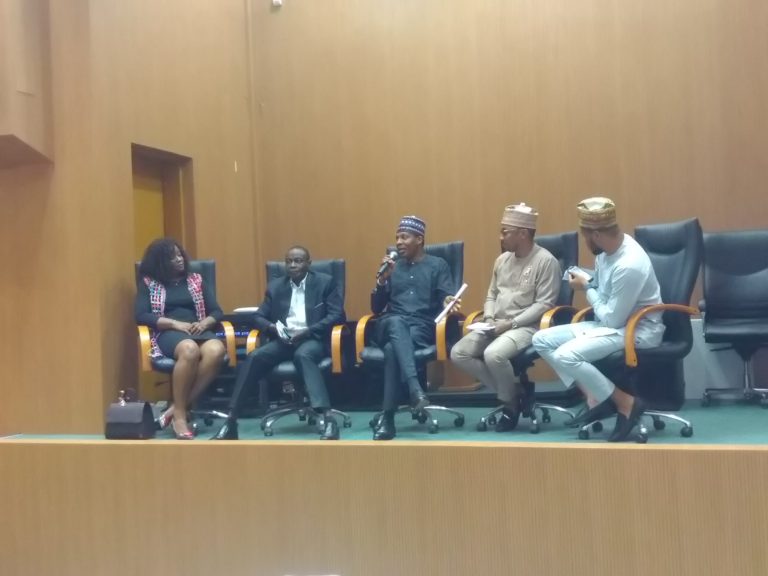
During a panel discussion moderated by Stanley Achonu of Open Government Partnership Nigeria Secretariat – Federal Ministry of Justice, panelists examined the prospects and challenges of FOIA in Nigeria under the topic: Data, Institution and Good Governance.

Chioma Agwuegbo, Founder of TechHer, attributed poor FOIA compliance of MDAs to staff deficiency in the use of technology. Most government bureaucrats, according to her, lack knowledge of technology, and could not develop long-term policy and identifiable goal that could help in keeping the public record.

She also blamed the Ministry of Justice, the agency responsible for enforcing compliance with FOIA of high handedness, particularly in the transparency case involving Cable Newspaper Journalism Foundation.

The Nigeria Investment Promotion Commission representative and panelist, Sabo Isiaku said public Institutions because of the nature of their work may not be able to meet up with the seven days requirements of the FOI Act and should endeavour to publish information on their website before they are asked for.

“Some ministries comply well with FOI act, some don’t  but with gatherings like this, I believe we’ll get to our desired destination.”

Edwin Daniel from OneCampaign also said one of the reasons government policies are failing is due to lack of information, noting that Data is at the heart of challenging poverty.

“How do you make policies for people that you don’t know their population? when was the last population census conducted?” he asked.

When asked why media organisations fail to invoke FOIA more frequently, editor of The ICIR, Ajibola Amzat, one of the panelists highlighted the challenges faced by newsrooms requesting public information using FOIA. The ICIR, he said, has submitted more than 70 FOI requests in the last one year to various public institutions, and more than 60 percent were turned down.

He said The ICIR experience is similar to other newsrooms. “As at yesterday, The Cable was in court with the Ministry of Justice about the information on Abacha’s loot. Sometimes ago, Premium Times also had to initiate a court process because of denial of access to information.”

One of the attendees, Chibuzor asked about the position of the civil service rule as against the full implementation of the FOI act, Isiaku said, the public/civil service rule is not a law, the FOIA is a law and thus it overrides the civil service rule.

‘​All you profess are lies and deceit’… ASUU replies FUOYE VC, alleges multiple misconducts

0

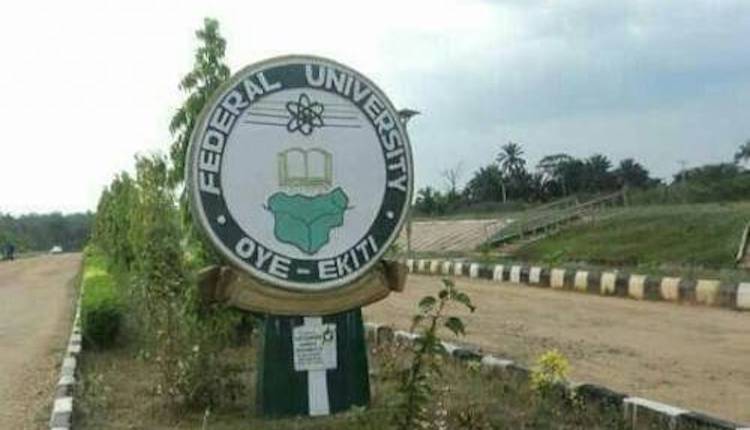
THE ACADEMIC Staff Union of Universities (ASUU), Akure Zone, has accused Kayode Soremekun, Vice-Chancellor of the Federal University of Oye-Ekiti (FUOYE), of deceit, cover-up of academic fraud, gross violation of university laws, among other wrongdoings.

It said this in a statement written in response to remarks made by Soremekun during an interview with The Guardian Newspaper published on Sunday.

“In the ’80s and ’90s when the compensation system was very poor, ASUU was very compelling and very necessary… But at the moment, there are some form of perennial faceoff between the unions on one hand and the management on the other hand and this is not good for the system,” the Vice-Chancellor had said.

“Moreover, some ASUU members think that they can just get away with anything in the name of ASUU activism. Whereas, the original members of the ASUU that we know stood for a fearless and honest interrogation of reality, but that is no longer the case.”


READ ALSO:

He also accused prominent members of ASUU of embarking on “short-run personal reliefs” and “hustling” for contracts from his school’s head of procurement.

Reacting, the staff union accused Soremekun of gross ineptitude and administrative impunity, adding that the “interview was carefully tailored with lies to mislead the general public”.

Its statement, obtained by The ICIR, was signed by Olu Olufayo, zonal coordinator of ASUU, Akure Zone; Adeola Egbedokun, chairperson of ASUU, OAU; Yinka Awopetu, chairperson of ASUU, FUTA; Kayode Arogundade, chairperson of ASUU, EKSU; and Akinyemi Omonijo, chairperson of ASUU at FUOYE.

The union said the university management has done nothing significant to address issues it has always brought to its attention.

The management, it said, looks on as members are victimised, frauds are covered up, the university’s rules are violated, and illegal recruitment, promotions and passages are done. It also said FUOYE has inadequate facilities and the Vice-Chancellor has “illegally” retained the Acting Bursar in violation of the institution’s norms.

“The interview granted by the Vice-Chancellor was very shallow and evasive. It could best be described as disconnected ramblings of a confused personality managing the affairs of conscious individuals,” ASUU said.

ASUU, in August, had urged President Muhammadu Buhari to set up a visitation panel to investigate the crisis at the university and “correct all ills and anomalies and transform the university that both staff and students can be proud of.”

The full press release:

The leadership of the Academic Staff Union of Universities (ASUU), Akure Zone read with abject consternation, the press interview granted by Prof. Kayode Soremekun, Vice-Chancellor, Federal University, Oye-Ekiti (FUOYE) in “The Guardian Newspaper” of Sunday, 22nd September, 2019 and resolved to rouse him from somnolence to face the reality of the matters that the union has been interrogating and his gross ineptitude as a University Administrator. The said interview was carefully tailored with lies to mislead the general public as has been the trademark of the errant Vice-Chancellor. 

Casting aspersion on the members of our union is a very cheap blow below the belt. We have observed that rather than engage on the issues raised by the Zone, his interview was laden with excuses – flimsy, uncoordinated, sloppy, un-academic and unintelligent. Comparing FUOYE with other public Universities is a misnomer in this case and we would like for the umpteenth time to set the records straight. The administrative impunity of the Vice-Chancellor has been catalogued in our earlier press interactions and till now, nothing significant has happened in addressing the issues.

Such impunities include victimization of our members, academic patronage and sycophancy, illegal recruitment, promotions and passages. Others include inadequate facilities; cover-up of academic fraud, licentiousness, vandalization, gross violation of University statutes and illegal retention of the Acting Bursar against University norms. Till date, the failure of the University Administration to investigate allegation of salary fraud by the Deputy Vice-Chancellor, Prof. Abayomi Sunday Fasina is still lingering. 

The interview granted by the Vice-Chancellor was very shallow and evasive. It could best be described as disconnected ramblings of a confused personality managing the affairs of conscious individuals. How and why the government up till now has not sent in a visitation panel to the university is still a wonder (or is he a sacred bull?). None of the issues raised was addressed; rather he tried unintelligently to paint some of our members in bad light while saluting a few national leaders in patronage? Let Prof. Soremekun be told that he does not have the moral right nor the impetus to mention their names let alone claim to be their associates. The likes of Comrades Olorode, Fashina and Jega are far too cerebral, principled and focused to be cajoled by your frivolity. Please ply your trade elsewhere!

Our Union remains steadfast and the membership ever conscious to resist agents of the denigration like you who are power-drunk and lack any constructive focus for our ivory towers. Though a professor, it is shameful that all you profess are lies and deceit. At this juncture, we would like to ask Prof. Kayode Soremekun, to tell the general public the circumstances that surrounded his hasty retirement from the Obafemi Awolowo University (OAU), Ile-Ife and the reason behind his unceremonious exit from the University of Lagos (UNILAG). His response to the above will determine whether he deserves to occupy the position of the Vice-Chancellor. 

Irrespective of the docility of the Federal Government, we shall continue to cry out to the public and remain ever vigilant as Vanguards of our ivory towers across the country. We shall continue to resist the vituperative remarks of Kayode Soremekun and his cohorts, while we continue to champion the course of a non-chaotic administrative system in FUOYE.

Finally, we want to advise that the Federal Government should take into cognisance the mental health of individuals before assigning them to positions of responsibility, especially at the ivory towers. Similarly, dubious characters should not be appointed into offices that require integrity, transparency and accountability. 

Thank you.

#RevolutionNow: Court threatens to arrest DSS boss if Sowore is not released from jail

0

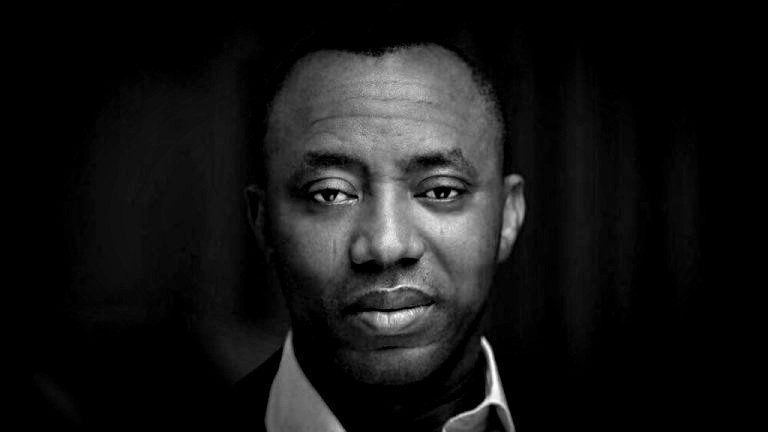
THE Federal High Court, Abuja, on Thursday has threatened to jail the Yusuf Bichi, Director-General of the Department of State Services, over his refusal to release Omoyele Sowore, the organiSer of #RevolutionNow campaign.

The Federal High Court had ordered the immediate release of Sowore from prison on Tuesday after ruling that there was no longer a valid reason to detain him any further.

But he is still kept in detention more than 24 hours after meeting his bail condition as set by the Abuja court on Tuesday.

“Take notice that unless you obey the order of the Federal High Court, Abuja Division delivered on September 24 which ordered you to release the applicant, you will be guilty of contempt of court and will be liable to be committed to prison,” the document read.

Sowore was arrested in Lagos on August 3, for planning to organise a protest- #RevolutionNow- but was charged with a seven-count charge bordering on treasonable felony, money-laundering and insulting President Muhammadu Buhari.


Nigeria to pay UK court $200 million to hear appeal in $9.6 billion P & ID lawsuit

0

ON Thursday, a United Kingdom Court permitted Nigeria to appeal the enforcement of the Commercial Court judgement in London granting Process & Industrial Developments, P&ID authority to seize assets worth $9 billion from the Nigerian government.

The Nigerian government had requested that the court issue a stay of execution of the arbitral award and also an appeal against the enforcement of the judgement.

However, the judge granted Nigeria’s request for a stay on any asset seizures while its legal challenge is been awaited, but ordered it to pay $200 million to the court within 60 days to ensure the stay.

The legal battle between the Nigerian government and P&ID over the failed 2010 gas supply deal to develop a gas-processing plant is coming to a hilt. Currently, Nigeria alleges the contract was enmeshed in corruption and the project was never meant to succeed but P&ID denies any wrongdoing.

On Tuesday, President Muhammadu Buhari in an address to the UN General Assembly in New York had described the P & ID contract as a scam to defraud the country.

“We are giving notice to international criminal groups by the vigorous prosecution of the P&ID scandal attempting to cheat Nigeria of billions of dollars,” he said.


READ ALSO:

Nigeria’s attorney general Abubakar Malami in the interview had stated that he was considering using the fraud allegations in court as part of its defence

A federal high court in Abuja had convicted representatives of the company of economic sabotage and ordered the forfeiture of assets linked to the firm.

The judgement of the high court formed part of the grounds of the country’s lawsuit.

Grace Taiga had been accused of facilitating the controversial contract and securing gratification to the tune of over $20, 000 while she served at the ministry in 2010.

Nigerian prosecutors said they had evidence of two bank transfers totalling $20,000 made by Dublin-based Industrial Consultants (International) Ltd – part of the P&ID group of companies. The payments, in 2017 and 2018, were made from an Industrial Consultants account at AIB and were purportedly for “medical costs”.

She is yet to be released on bail after failing to meet the bail conditions which involved paying a bail bond of N10 million and providing sureties resident in Abuja who are public servants not below directorate cadre.

GIJN 2019: If autocrats thought we were going away, they’re in for a surprise

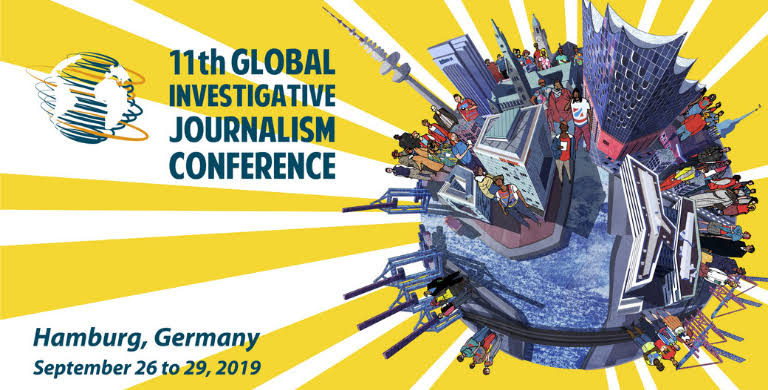
AS more than 1,500 investigative journalists from over 130 countries converge in Hamburg, Germany for the 11th Global Investigative Journalism Conference 2019, discussions on high stakes for an effective and sustainability investigative reporting is at the forefront.

According to the network, the gatherings of the muckrakers in Hamburg would harsh out better processes journalists can carry out investigations using tools available to them through–retooled defiance–considering growing assault on human rights, democratic institutions and the independent press.

David Kaplan, executive director of the Global Investigative Journalism Network (GIJN), during the plenary launch session, commended efforts of investigative journalists and their resilient in telling the truth even in dangerous situations.

“Attacks [on journalists] are at near-record levels, even in countries where we thought we were safe. In places like the U.S. and Britain, we’re under assault legally; by presidents who want to be autocrats; [and] online by people who want to make us and our families miserable.

“It’s a tough time for investigative journalists on the front lines. Despite all of this, we’re growing. We’ve got more journalists with better tools going after tougher targets, all over the world,”

“If autocrats thought we were going away, they’re in for a surprise,” he said.

Drew Sullivan, co-founder and editor-in-chief of the Organized Crime and Corruption Reporting Project, also noted that the cross-border collaborations and tools have since become an initiate that has facilitated speedy and accurate newsgathering with impacts.

However, he warned that with states, companies and Artificial Intelligence (AI) aggregators creating news, it could become harder to sift out the chaffs from the grains. Hence, Sullivan said that it falls on the investigative journalist to “cut through all the misinformation” with the help of tools made available to them.

Although it would seem the most distressing warning was that of Cordula Meyer, National desk editor, Der Spiegel, who said that it had become harder if not nearly impossible for the audience to believe factual evidence from investigative reports.

“If the evidence doesn’t mean anything anymore, we are really lost. About a fifth of our population in Germany don’t trust journalists. Some are lost — we cannot reach them with argument anymore, but some we can still reach: the sceptics.

“We need to offer all forms of dialogue to get news into discussions; we need to go into schools.”

The 2019 conference places more emphasis on data journalism, with 60 sessions dedicated to related subjects and skills. Other areas of focus include business, academic research techniques and sustainability strategies for the growing network of non-profit newsrooms.

(GIJN)

Nigeria Air Force neutralises ISWAP logistics base, training camp in Borno

0

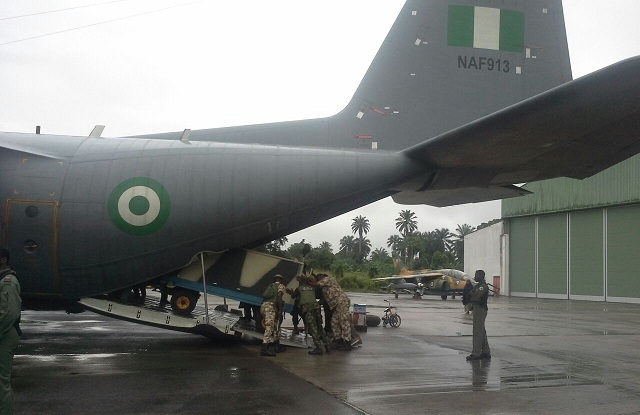
The Nigerian Air Force, NAF, on Thursday says it has destroyed a major Islamic State of West Africa Province, ISWAP, logistics base and training camp at Kusuma settlement in Borno State.

Following intelligence reports that a section of the settlement served as a training camp for the terrorists’, an aircraft detailed by the Air Task Force, ATF, of Operation Lafiya Dole bombed the location putting their activity to a halt.

Ibikunle Daramola, NAF director of public relations and information, revealed this in a statement stating that some buildings within the camp were being used to store fuel, arms and ammunition as well as other logistics supplies.

“The airstrike was executed after credible intelligence reports had established that a section of the settlement was serving as a training camp for the terrorists, while some buildings within the camp were being used to store their fuel, arms and ammunition as well as other logistics supplies.

“The pre-attack surveillance showed scores of fighters attempting to flee the location upon hearing the sound of the attack aircraft. They were engaged by the attack aircraft in successive passes, neutralising many of them. The terrorists’ logistics supply store, which was also hit, was seen engulfed in flames due to the raid,” the statement reads.

ISWAP has carried out a string of attacks in Nigeria in recent months, the northeast is home to two Islamist insurgent groups namely Boko Haram and Islamic State West Africa, ISWAP, which broke away as a faction in 2016 but conflict is now in its 10th year.

In July, President Buhari had directed the country’s air force and army to begin air patrols and ground operations to hunt down terrorist groups as part of the government’s agenda to provide security in the country according to a report.

Daramola in his statement said NAF would be operating in harmony with ground troops, to sustain its efforts to completely destroy all remnants of the insurgents in the north-east.

REA says fact-check on BUK hybrid solar plant is ‘incorrect’—so we took a closer look

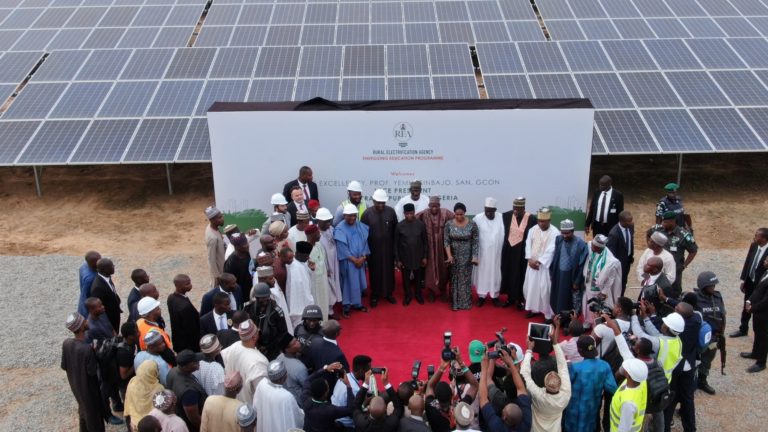
THE Rural Electrification Agency, REA, has reacted to fact-check published by The ICIR on Monday, which debunked the claim that it has commissioned  Africa’s “largest off-grid solar hybrid power plant” in Bayero University Kano (BUK).

The claim was made earlier in September by REA’s Managing Director, Damilola Ogunbiyi, and has been repeated by others, including Minister of Power Saleh Mamman.

The ICIR found a solar plant in Burkina Faso, also hybrid and off-grid, that has a capacity much larger than that of the recently unveiled project in BUK.

Fabien Cadaut, the Africa Energy Business Area Marketing Manager of Wärtsilä, the company that built the hybrid plant in Burkina Faso, confirmed that the project “is to date the world’s largest solar hybrid project and therefore larger than the one delivered in Nigeria”.

But reacting to the report on Tuesday, Ayang Ogbe, REA’s Director of Promotions (Information and Outreach), insisted that REA’s claim is correct and that the fact-check is presenting a “wrong impression”.

“You cannot say that apple is similar to orange,” the REA said during a phone conversation. “What I’m saying is they have different components. If you go to do any search about solar hybrid plants, you’ll see a thousand and one of them. But what we have in BUK is unique.”

In an email later sent to The ICIR by Ogbe, he said the plant in Burkina Faso does not qualify as a solar hybrid power plant but a “hybrid fuel/solar plant” because solar energy is not the dominant energy source.

“The Burkina Faso Project in question is synched to a 55 MW heavy oil fuel plant which makes it a hybrid fuel/solar plant (according to PV magazine) because heavy oil is the dominant source of energy,” he said.

“It is important to note that in the newest technology for solar hybrid powerplants, the PV component should be higher than any other component, which is provided in the Energizing Education BUK project. We maintain that the 7.1MW BUK project is the largest solar hybrid project with Battery storage in Africa.”

He concluded: “In view of these findings, the report published and twitted [sic.] by ICIR is INCORRECT.”

An email sent on Wednesday to METKA, the company commissioned to build the powerplant, asking if it holds the same view as REA is yet to be replied.

Hybrid solar plant or not?

According to Dr. Thomas Hillig Energy Consulting, experts on hybrid power systems and renewable energy solutions, “Hybrid power plants combine at least two different energy types [and] rather common is the combination of diesel-gensets and renewable energy systems with or without storage.”

“The actual configuration is very site and company-specific,” it added.

The World Journal of Mechanics, in 2019, also stated that “the hybrid renewable power generation is a system aimed at the production and utilisation of the electrical energy stemming from more than one source, provided that at least one of them is renewable.”

We checked PV magazine reports cited by the REA to substantiate its position. PV magazine is a publication that independently reports solar PV news and was launched in 2008 by the international photovoltaics (PV) community.

In its first report about the plant in Burkina Faso published in March 2017, the magazine described the project first as a “15 MW hybrid PV plant”. PV (photovoltaic) essentially refers to electricity derived from solar energy, and so a hybrid PV plant is the same as a hybrid solar plant.

It used the same description in its 2018 report but added that the project, synchronised with a 55 MW oil-driven power plant, “is one of the largest hybrid fuel/solar plants in the world”.

The ICIR has, however, found no evidence to suggest that the extent of solar energy composition in a hybrid plant affects its description.

Larry Edeh, country director of the Nigeria Alternative Energy Expo and director of the Sustainable Energy Practitioners Association of Nigeria (SEPAN), confirmed this during a phone interview on Thursday.

“A solar hybrid power plant”, he explained, is one where solar energy is augmented with other sources of energy, such as backup batteries or generators; and a powerplant can be called that even if the solar component is lesser in capacity compared to the energy source complementing it.

“These hybrid solutions enable fossil fuel generators to operate at lower loads, thereby significantly reducing the costs related to fuel usage, operation and maintenance,” explained Steven Murdoch, sales director at Global Mining. “They generate solar power but once the capacity drops or becomes intermittent, the generators power on to take up the load.”

Comparing composition: Wärtsilä vs BUK plant

On March 16, 2018, Wärtsilä Energy Solutions launched a solar plant with a 15 megawatt (MW) capacity installed for an off-grid gold mine belonging to Iamgold Essakane SA and located in north-eastern Burkina Faso. The mine produces about 400,000 ounces of gold every year.

The plant is hybridised with an existing 55 MW diesel power plant, thus totally a capacity of 70 MW.

According to the company, “The engine power plant provides backup, while the solar farm produces energy during the day. The solar PV plant and the engine power plant are controlled and operated in synchronisation, making it the largest engine-solar PV hybrid power plant in Africa.”

Essakane Solar SAS is composed of inverters and switchgear, a control system, and “approximately 130,000 photovoltaic panels”.

“It is estimated that this will reduce fuel consumption by some 6 million litres per year, while reducing the plant’s annual CO2 emissions by as much as 18,500 tons. This project has generated more than 200 employments during the construction phase and is expected to create 75 permanent jobs during the operation phase,” Wärtsilä announced.

On the other hand, the BUK plant, built as part of REA’s Energising Education Programme (EEP), is said to have a 7.1 MW capacity and is expected to supply electricity to 55,815 students and 3,077 workers of the university.

Information released after the launch at BUK states that the total capacity of the solar panels is 3.5 MW, as against Burkina Faso’s 15 MW. It also says the total installed capacity of the plant is 7.1 MW as against the other plant’s 70 MW.

Infographic released by REA says the solar panels are hybridised with backup generators having a capacity of 2.4MW. The project is made possible with the installation of 10,680 solar panels, and also, when fully operational, is to save 49,384 tons of annual carbon dioxide emissions and end the use of 16.5MW petrol and diesel generators.

Also, it is noted that the plant’s construction and installation have created up to 182 jobs, the bulk going to labourers and bricklayers.

Verdict unchanged

REA’s Energising Education Project is no doubt unique, particularly in how it also provides street lighting to schools and establishes training centres for students on renewable energy. Available evidence nevertheless contradicts the claim that the off-grid solar hybrid plants introduced under the project are the largest on the continent.

FUOYE shooting victim urges govt to set up investigative panel, bring culprits to book

0
By Vincent Ufuoma

ONE of the students injured during a police shooting on September 10 at the Federal University, Oye-Ekiti, FUOYE, Azeez Elijah Olawale, has called on civil rights organisations to put pressure on the government to set up an independent body of enquiry.

This to ensure that the victims get justice, he said on Thursday. He also called on the federal and state governments to increase investment in education and address issues that led to the student protest.

Olawale, who is the National President of the Nigerian Library and Information Science Students Association, has spent over two weeks of admission at the hospital, following the violent incident.

He was admitted at the Lagos State University Teaching Hospital (LUTH) for a surgical operation after a canister hit him on the head but is now recovering.

In his statement, he also sent his good wishes and prayers to the families of Okonofua Joseph and Oluwaseyi Kehinde over the death of their sons.

Two students of FUOYE died from gunshot wounds sustained after policemen opened fire at them earlier in September, following a demonstration against poor power supply. Others, including Olawale, were also injured.

Below is the full text of his message:

I will like to register my condolence to the families and friends of Comrades Okonofua Joseph and Dada Kehinde. Indeed, our country has once again lost icons and potential future leaders to the hand of the deadly Nigerian Police Officers.

The incident of September 10th, 2019 is a clear indication that the concept of fundamental human rights does not exist in this country we call ours.

As a young fellow like many other youths, I have been able to maintain my determination to always make my family proud and always engage in things that will put smile on their faces but for the first time in my life, I watched helplessly many of my family members and friends shed tears seeing me in a critical condition.

Who do I blame? Myself, the unarmed protesting students or Students Union leaders? No! I blame the institutional failure of our nation and the Nigerian Police Force who without conscience took the lives of innocent Nigerians at will.

I have scanned through various newspaper headlines and discovered that politicians have begun their usual practice of using cases like this to attack oppositions and to earn cheap political scores and popularity while appearing to the public as people who care for the masses.

I think it is high time we began to put away political sentiments and pursue justice for those who were murdered, injured and unjustly arrested by the Police during the protest.

I am joining my voice together with other millions of well-meaning Nigerians who have shown keen interest in seeing that the culprits are brought to justice and made to face the wrath of the law.

Over time, I have watched and followed the activities of Her Excellency, Erelu Bisi Fayemi and adore her passion for humanity, the poor and helpless and I am convinced that cannot order the killings of innocent Nigerians whose interest she has always protected. This is why I am calling on her to use her position and influence to pursue justice for the slain and the injured in FUOYE.

I am also calling on Human Right Commission and Civil Organisations to prevail on the Federal and Ekiti State governments to set up an independent body of enquiry to investigate this gruesome acts by men if the Nigerian Police in FUOYE and to ensure officers behind this acts are punished with fear or favour.

I want to implore the Ekiti State Federal Governments to give attention to the issue that led to the protest in other to avoid this kind of wanton killings. It is high time the Federal Government addresses the issues mostly raised by students and give priority to the welfare of students in higher institutions in Nigeria. Federal University Oye Ekiti students have only protested against epileptic power supply among many other issues we suffer from.

As the National President of Library and information science students across the country, I can authoritatively say that many institutions including FUOYE which is a Federal University lacks adequate facilities to run this programme effectively. Ours is not exceptional, other courses and programmes do not have a uniform faculty which affects the learning outcomes of students. Many cases of inadequate staff in different institutions among many other issues. This is also similar to other courses.

All of the aforementioned can be credited to the poor funding of schools owned by government either at the federal or state level and until these issues are properly addressed and arrested, the idea of protest which often leads to lost of innocent life of promising Nigerian youth and damages of properties may not be put to a halt.

May the soul of our brothers; Okonofua Joseph and Dada Kehinde rest in perfect Peace.

Did Buhari answer a question incoherently at UN Climate Action Summit? 

SINCE Tuesday, a video shared on Twitter by special assistant to the president on digital and media, Tolu Ogunlesi, has triggered negative reactions, with many accusing President Muhammadu Buhari of not really answering a question asked or even doubting the clip’s authenticity. But checks by The ICIR have shown these allegations to be misleading.

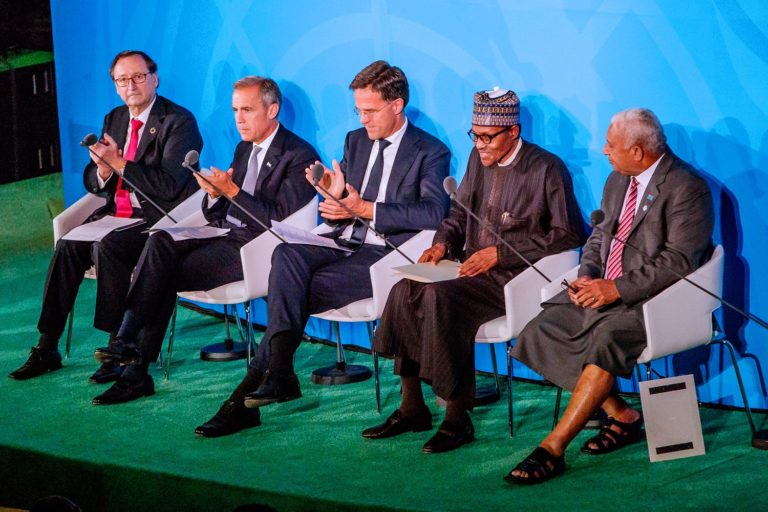
The four-minute-long video shows Buhari’s speech, following a prompt from the moderator, during a panel of world leaders at the United Nations Climate Action Summit held in New York on Monday.

“President Buhari, Nigeria has a very young population. Perhaps you might highlight what a pathway for a resilient future looks like,” the moderator said.

And in his prepared response, Buhari started by saying: “Your excellencies, ladies and gentlemen. I share the sentiment expressed by the Secretary-General that the world is on the verge of climate catastrophe. Undeniably, Climate Change is a human-induced phenomenon.

“It is now imperative that we must step-up our collective climate actions in line with the request of the Secretary-General. It is in this regard that I wish to reiterate Nigeria’s commitment to its obligation under the Paris Agreement, the aspirations enshrined in our Nationally Determined Contribution (NDC) and ensure a resilient future that mainstreams climate risks in our decision making.”

He then announced Nigeria’s various plans to tackle climate change, promote afforestation, ensure the availability of potable water, and improve waste management.

Reacting to the clip, a number of Twitter users criticised Buhari for not answering the question logically and rather reading a written speech.

Rights activist and co-convener of the Bring Back Our Girls Movement, Aisha Yesufu, teased Buhari and his supporters in several tweets.

“The WhatsApp meeting has been concluded and BMC has given Buharists their narrative. They are using RESILIENT from the question. They never fail to disappoint just like the incompetent clueless and inept Muhammadu Buhari they defend,” she wrote on Wednesday.

“At the end someone will tell Muhammadu Buhari that he did well and poor man will be feeling cool! Our enemies are usually the people with us who don’t tell us the truth,” she also tweeted. “No need engaging Buharists on their RESILIENT narrative. Let them have fun. It must be a herculean task defending the incompetence, ineptitude and cluelessness of Muhammadu Buhari.”

Saint Xavier (@SaintXavier2) also wrote in response to Ogunlesi’s tweet: “He was asked the place of the Nigerian youth in Nigeria’s future, but he read a readily prepared script that’s on climate change. Down this thread, all I see is people praising him for at least being able to read. That’s how hypocrisy numbs the brain and create mediocrity. Akpor!” His response has been retweeted 106 times and liked by 561 users.

“No connection between the question and the answer or did I miss anything?” Anene Chukwuemeka (@EmexOD) observed briefly.

No, it is not doctored

Checks by The ICIR revealed that the footage is not inaccurate and represents what truly transpired at the UN summit on Monday.

This is evident from a four-hour-long video of the morning session uploaded by the United Nations on YouTube. This version does not have the subtitle and transition included in the video released by the Presidency Office of Digital Engagement (PODE).

Other panellists read prepared remarks as well

The panel where Buhari presented Nigeria’s environment-friendly plans also had in attendance Josaia Voreqe Bainimarama, Prime Minister of Fiji; Mark Rutte, Prime Minister of the Netherlands; Mark Carney, Governor of the Bank of England; and John Haley, CEO of Willis Towers Watson.

Three minutes was allotted to each speaker for their contribution.

An assessment by The ICIR showed that the moderator’s remarks were not direct questions but simply prompts to introduce the panellists’ presentations as well as their country or organisation’s backgrounds.

In introducing Prime Minister Rutte for example, she had said: “The Netherlands is doing a lot on adaptation and resilience at home and abroad. Prime Minister Rutte, you have the floor.”

And she simply told Willis Towers Watson’s CEO, “Mr Haley, the Secretary-General is delighted that you are here today to launch a private sector-led initiative to strengthen the market for resilient investment. You have the floor.”

Just like Buhari, the Prime Ministers of Fiji and the Netherlands read entirely from pre-written speeches addressing similar questions of what their countries are doing to tackle climate change.

Carney and Haley appeared to briefly introduce their presentations extemporaneously before moving to read from their written remarks.

Comments ‘horribly wrong’, replies Ogunlesi

In an article published on Wednesday, Ogunlesi accused the Twitter users of “getting things horribly wrong and/or focusing on the wrong things, while completely missing the real/meaningful/actual message”.

The summit, he explained, was convened by UN Secretary-General Antonio Guterres as an opportunity for world leaders to “come to New York on 23 September with concrete, realistic plans to enhance their nationally determined contributions by 2020, in line with reducing greenhouse gas emissions by 45 per cent over the next decade”.

The theme of the panel where Buhari was featured was “Towards a Resilient Future” and the rider was, “Announcement of plans to mainstream climate risk in decision making.”

“In other words, panellists were billed to deliver remarks announcing their country/organisation plans to build a resilient, climate-sensitive, future,” the special assistant noted. “President Buhari chose to deliver prepared remarks.

“And the moderator’s question, was, in keeping with the theme: ‘President Buhari, Nigeria has a very young population; perhaps you might highlight what a pathway for a resilient future looks like?’

“The President did exactly that, in his prepared remarks, over the next few minutes, highlighting what a ‘resilient future’ will look like in Nigeria — by focusing on the administration’s policies (the ones already being implemented, like the Green Bonds, and the ones set for implementation, like the new tree-planting campaign, and the energy mix target).

“His prepared remarks were wholly in alignment with the theme of the Panel event, and the question he was asked.”

Ogunlesi argued that it was up to Buhari to choose whether to respond extemporaneously or “to go the prepared remarks way”.

“He chose the prepared remarks way. And most importantly, he touched on the issues re: mainstreaming climate action for the future and for the young people of Nigeria,” he added.