Home Blog Page 2284

El-Rufai fulfils promise, enrols son in public primary school

0

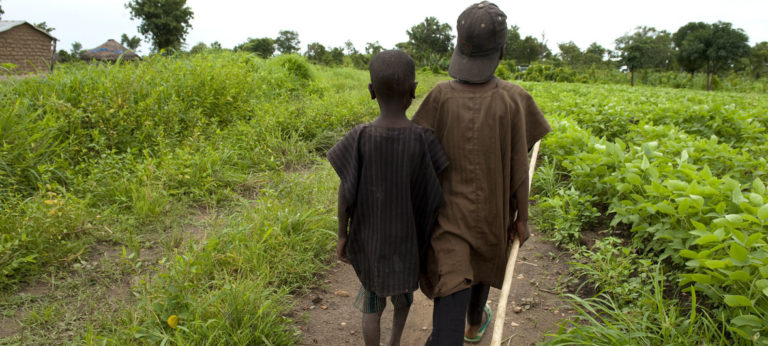
Following his commitment to improving the education sector in Kaduna State, Governor Nasir El-Rufa’i has enrolled his six-year-old child, Abubakar, in primary one of a public school as an act of fulfilling a promise he made in 2017.

The governor announced this on the Kaduna government’s Twitter handle @GovKaduna on Monday that Abubakar has been enrolled at the Capital School Malali, Kaduna State.

Fulfilling 2017 Promise

It will be recalled that Mr. El-Rufa’i in a state broadcast in December 2017 promised to enrol his child in a public school when he turns six years.

On 28 Dec 2017, Malam Nasir @elrufai stated that “I will by personal example ensure that my son that will be six years of age in 2019 will be enrolled in a public school in Kaduna State, by God’s grace,” the tweet reads.

The move which he said is part of reforms to revamp public schools in the state to make them more competitive.

“We are determined to fix public education and raise their standards so that private education will become only a luxury,” he said.

In one of Tribuneonlineng reports, the governor recalled that he attended Local Education Authority Primary School Kawo, Kaduna, in the 60s along with children of elites.

“So, if children of elites are in public schools, they will be forced to do all that is necessary to improve the schools,’’ he argued.

Photo source: @GovKaduna Twitter handle

Mr. El-Rufai also urged senior officials of the to enrol their children in public schools.

Similarly, this report is coming a few days after Kaduna SUBEB confirmed the commencement of a massive campaign to enrol 145,000 out-of-school children for the 2019/2020 academic year.

According to Premium Times, The board’s Acting Director, Social Mobilisation, Ibrahim Aminu, said the board had earlier mobilised 2,000 education stakeholders as influencers, who would sensitise and mobilise parents to send their children to school.

He added that the campaign, under the World Bank assisted Better Education Service Delivery for All (BESDA), aimed to enrol 727,764 out-of-school children in the state in the next five years.

“We have trained the 2,000 enrollment influencers, and they have begun community-based house-to-house sensitisation campaign on Monday with huge success so far recorded.

“If every school community will enroll at least 35 out-of-school children in the 4,260 primary schools in the state, we will achieve the 145,000 target.

“Already, we are recording more than 100 pupils enrollment in most schools,” Mr. Aminu said.


Fake scholarship scheme pulls down website after TETFund’s disclaimer

0

By DANIEL Whyte


A FAKE scholarship scheme that claimed affiliation with Tertiary Education Trust Fund, TETFund, and described itself as the first online intervention of the government agency has pulled down its website after TETFund released a disclaimer, denouncing it.

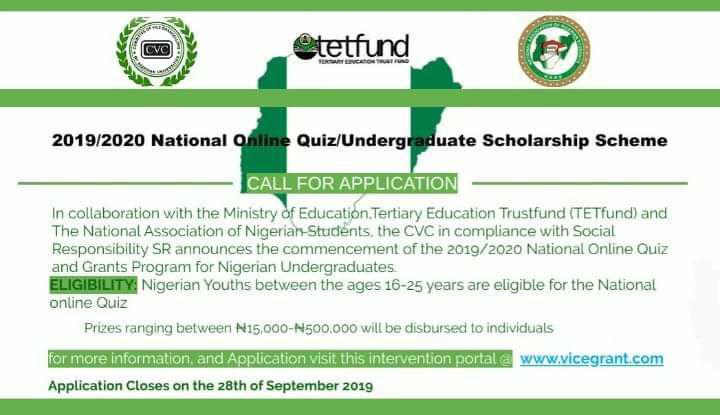
The scheme had earlier advertised the call for application for a supposed “2019/2020 National Online Quiz/Undergraduate Scholarship Scheme”.

According to a copy of the advert received by the the ICIR, it announced that “in collaboration with the Ministry of Education, Tertiary Education Trust Fund (TETfund) and The National Association of Nigerian Students, the CVC in compliance with Social Responsibility, SR, announces the commencement of the 2019/2020 National Online Quiz and Grants Program for Nigerian undergraduates”.

The said National Online Quiz is open to “Nigerian Youths between the ages 16-25 years” while prizes to be won range from “15,000–500,000” Naira.

Applications were also expected to close on September 28, and prospective applicants were urged to visit www.vicegrant.com for more information and application.

In a statement signed by Gbenga Arolasafe, Deputy Director, Public Affairs, and retrieved from the agency’s official website, TETFund, however, denied affiliation with this scheme and consequently warned the general public and most especially undergraduates to be wary of the scam.

The statement reads: “The attention of the Management of Tertiary Education Trust Fund (TETFund) has been drawn to a website (www.vicegrant.com) claiming affiliation with TETFund under a fraudulent Intervention named ViceGrant

“The operators of this illegal website claim that ViceGrant is an intervention established by TETFund under the TETFund Act and involved in accessing, processing and disbursement of the Committee of Vice-Chancellors and tertiary institutions leadership academic grant.”

TETfund described the scheme as an attempt to defraud unsuspecting students of Nigerian universities.

It said, “In their efforts to defraud unsuspecting members of the public, the perpetrators of this scam are currently inviting students to apply for quiz competition, undergraduate grants and post-graduate grants.”

The government agency refuted the alleged affiliation with the supposed intervention and warned the public from falling prey to the fraudsters.

“The general public and students, in particular, are hereby informed that TETFund does not operate any intervention named ViceGrant and has no affiliation whatsoever with the perpetrators of this illegal act,” the disclaimer read.

“They are therefore advised to disregard in their entirety, advertisements being placed by these fraudulent persons either on the website www.vicegrant.com or any other medium concerning ViceGrant as they do not emanate from or have any connection with TETFund.”

It further directed the public to its official website for authentic information about its grants.

Fraudulent advert from Vicegrant

Following the disclaimer, checks made by this reporter revealed that the website of the fake scheme has been pulled down.

The domain has since been placed for sale by GoDaddy, a publicly traded Internet domain registrar and web hosting company.

Checks by The ICIR on Whois, a database for verified website registration information, revealed that the site was registered on July 13 by an organisation referring to itself as the “Scholarship Board of Nigeria”. The domain registrant also gave their location as Kano.

In August, a similar case of scholarship fraud was reported in The Nation newspaper. Not fewer than 140 students of the Federal University Oye-Ekiti were duped of N2000 each to make them eligible for a scholarship opportunity offered by a fraudulent JK Consulting Firm.

FACT CHECK: Is BUK off-grid hybrid solar power plant the largest in Africa?

THE Federal Government on Tuesday, September 3 commissioned what it claimed to be the largest off-grid hybrid solar power plant at the Bayero University, Kano. The plant was commissioned by the Vice President, Yemi Osinbajo.

The claim

“The Federal Government, under the Rural Electricity Agency, will commission the largest off-grid solar hybrid power plant in Africa at Bayero University, Kano (BUK) under the Energizing Education Programme (EEP) today. The project will provide 55,815 students and 3,077 staff with constant electricity supply from the university’s 7.1MW solar hybrid power plant.”

The Managing Director of the Rural Electrification Agency (REA), Damilola Ogunbiyi, stated that “This is the largest off-grid solar hybrid power plant in Africa; We, as Nigerians, should be very proud of, thanks to the commitment of the Federal Government towards sustainable energy and education.

The Minister of Power, Saleh Mamman, in a tweet on Tuesday also shared from his handle that he would accompany the Vice President to commission the largest off-grid solar hybrid power plant. The post has been retweeted about 189 times and liked by 442 people as at the time of filing this report.

The same claim was shared on the official Twitter handle of the Federal Government of Nigeria, @NigeriaGov.

The tweet reads: “The @NigeriaGov (federal government), under the @realREANigeria (REA) will commission the largest off-grid solar hybrid power plant in Africa at Bayero University, Kano (BUK) under the Energizing Education Programme (EEP) today.”

What is a hybrid solar power plant?

A hybrid power plant is one that generates power by using two or more sources of energy. It also refers to a combination of solar and energy storage. The plant combines solar power from a  power system designed to supply usable solar power by means of converting light into electricity.

Verification

To verify this claim, The ICIR did a search of the largest off-grid solar hybrid power plant in Africa on the internet and also visited websites of contractors who have constructed solar hybrid power plants. The findings revealed that the commissioned power plant at the Bayero University, Kano is not the largest on the continent.

The largest hybrid solar power plant is in Burkina Faso. In March 2018, Wartsila, a power engineering firm completed the world’s largest solar hybrid power plant.

The power plant has a capacity of 15MWp (megawatt peak), doubling that of the BUK plant, and was awarded by the global renewable energy independent power producer, Total Eren, and African Energy Management Platform (AEMP).

As part of the verification process for the claim, Etore Thomas, the Deputy Director, Press and Public Relations at the Ministry of Power, could not respond to calls and messages sent when The ICIR contacted her even as she read the message sent to her via WhatsApp.

The ICIR contacted Ayang Ogbe, Director of Promotion (Information and Outreach) at the Rural Electrification Agency ( REA). Ogbe referred The ICIR to the website of the REA where numbers of who to talk to can be gotten. However, calls placed to the numbers could not be reached.

We also contacted Wartsila, the engineering firm responsible for the construction of the largest solar hybrid power plant. Wartsila confirmed that the project in Burkina Faso is currently the largest solar hybrid power plant.

“I confirm that the project delivered by Wärtsilä in Essakane, Burkina Faso is to date the world’s largest solar hybrid project and therefore larger than the one delivered in Nigeria,” wrote Fabien Cadaut, Area Marketing Manager of Wärtsilä’s Africa Energy Business.

Wartsila’s response

Conclusion

It is certain that Nigeria is not home to the largest off-grid solar hybrid power plant in Africa. Rather, Burkina Faso, another country in west Africa is.

The claim that the BUK off-grid solar hybrid power plant is the largest in Africa is, therefore, INCORRECT.

CBCN to Buhari: Do not allow ethnic, religious hegemony in Nigeria

0

THE Catholic Bishops’ Conference of Nigeria (CBCN) has urged government at all levels to shun ethnic or religious hegemony in Nigeria while ensuring religious and tribal equity, with no one religious favoured over another.

The CBCN stated this in a communique issued at the end of its plenary meeting held at the Divine Mercy Pastoral Centre, Agbamaya, Obada-Oko, Abeokuta, Ogun State.

The communiqué captioned, ‘Moving beyond precarious living in Nigeria’ was signed by the President and secretary of the association,  Augustine AKubeze and Camillus Umoh respectively.

“We urge especially the Federal Government, to ensure that it does not allow ethnic or religious hegemony to prevail in our multi-religious and secular state. No one religion should be favoured over another,” the CBCN said.

According to the document, the 10-day conference which held from September 11 to 20, was aimed at reflecting on issues affecting the Church and the Nigerian State.

Speaking on the need for national integration, the Catholic clergymen opined that much effort is required from both government and citizens to be co-opted into having a sense of belonging, irrespective of the nation’s heterogeneity in tribe, religion or political affiliation.

They however expressed displeasure on the state of the nation describing it as divided and in disarray following the outcomes of the 2019 election.

While calling for fairness, justice, and neutrality in relation to all religions and ethnic groups in the country, the CBCN members lamented that the absence of justice, would lead to lack of harmony, hysteria and poor development in the country.

“We, therefore, enjoin all Nigerians to see themselves as one united people and work for justice in order to ensure a peaceful and united nation,” the CBCN said.

In the Communique, the clergymen also expressed worry over the non-effect of religious practices on citizens especially on their moral, socio-economic and political lives.

“While praying for solutions to our problems, we must endeavour to be just in our dealings with others, work hard in fulfilling our duties, and collaborate with others in the social transformation of our country,” the paper said.

Stating its observation on Nigeria’s “derailing democracy”, the union said, “The qualities of accountability, transparency, independence of the judiciary, respect for fundamental rights, observance of the rule of law, and fair and credible electoral process, to mention only these, are still lacking”.

“We, therefore, urge all politicians, businessmen, religious leaders, public servants and indeed all citizens to live out the values of their faith for the common good,” the statement said.

The religious body, bemoaned the xenophobic attacks on Nigerians and other non-nationals in South Africa, leading to the lynching of Nigerians, lost of properties, inciting repatriation to the country.

They condemned “the unfortunate reprisals on perceived South African investments in some part of Nigeria, as two wrongs do not make a right!”.

The CBCN however, commended the South African Catholic Bishops’ Conference (SACBC) for “being prophetic in their condemnation of the attacks and urging the government to take decisive steps to end them”.

“At the same time, we note that South Africa and Nigeria have come a long way in fraternal and diplomatic relations. We advise Nigerians living at home and abroad to be good and law-abiding,” the Catholic Union said.

On the state of insecurity ostensibly ravaging the country, the CBCN stated that there are still “instances of killings as a result of banditry, kidnapping, assassination, armed robbery, reckless use of force by security agencies and lynching” inciting an upsurge in the cases of suicide, even among our youths.

While they noted the efforts adopted by the government to halt insecurity in the country, the religious body underscored the need for more strategic efforts, while praying for the peaceful repose of the victims.

“We urge governments at all levels to provide the enabling environment that would make it possible for both the government and the private sector to create job opportunities for our teeming youth population,” the CBCN said.

They said, “This would certainly minimize the menace of insecurity in our land”.

“We continue to urge the government and security agencies to do all they can to secure the immediate release of Leah Sharibu, the remaining Chibok girls and all the other persons still in captivity,” they said.

The Catholic union stating the roles of the family in the society, said they are the foundation for the integration of virtues and values in their offspring, calling on parents take the lead in upholding the ideals of decency, discipline, honesty, and marital fidelity.

The CBCN further emphasized the need for peace and justice in the country, which would translate to sustainable development.

“We enjoin all Christians and people of goodwill to preach daily this message of justice and peace, and to live it out coherently”, because “Where there is no fair sharing of wealth and opportunities, there is bound to be crisis.”

Charges against Sowore improbable…show ‘unprecedented level of paranoia’—Soyinka

0

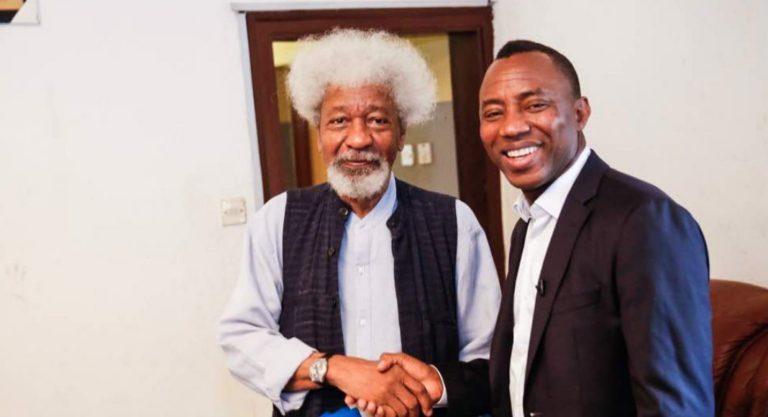
NOBEL laureate and professor of creative writing, Wole Soyinka, has described the charges filed against Sahara Reporters founder Omoyele Sowore as improbable and a sign that government “has indeed attained an unprecedented level of paranoia”.

In a press statement sent to The ICIR on Saturday, the renowned playwright and essayist described the news as depressing and said he at first thought it to be a product of misinformation.

“This is utterly depressing news. So, the Sowore affair has moved beyond harassment and taken on a sinister direction,” he said.

“Outside the country where I happened to be engaged at the moment, I can testify that the immediate reaction around me was to dismiss this as yet another grotesque product of Fake News, of which Nigerians have become the greatest practitioners. I confess that I also joined in this school of thought — at the start.”

He added: “Further checks have however confirmed that this government has indeed attained an unprecedented level of paranoia.”

Soyinka said he does believe the Justice Department, referring to the Attorney-General’s office, truly believes in the “improbable charges, as formally publicised”.

“So, once again, we inscribe in our annals another season of treasonable felony, history still guards some lessons we have yet to digest, much less from which to learn,” he concluded.

“Welcome to the Club, Mr. Omoyele Sowore.”

On Friday, the Federal Government filed a seven-count charge against Sowore, including treasonable felony, insulting the president, and money laundering. He was arrested at about 11 pm on August 2 by operatives of the Department of State Services (DSS) and has since been in detention.

Soyinka himself was charged with treason under the military regime of Sani Abacha. “We learned the decision to try us on treason charges had been taken before the recent violence … The whole thing is orchestrated. Abacha is trying to get rid of us,” the Nobel laureate, who was in California at the time, had said in his reaction.

In an interview granted in August, Soyinka had said justice is as important to him as air is to humanity.

“I find it indistinguishable from the nutrients that human beings require to live. If I step out of my house and there is some horrendous violation being done to another human being, I feel myself reduced, and for the rest of the day, maybe the rest of the week, I’m not really whole. It preys on my mind,” he explained.

OPINION: On journalism and patriotism

0

By Simon Kolawole


WHAT is patriotism? The definition should be fairly straightforward: loving your country. One of my favourite all-time tunes is the 1988 song, “Nation and the People”, by The Mandators, with the refrain: “Love your country/Your nation and the people”.

They sang passionately: “Some are trying to find solutions to all the problems we have/Some are trying to make it impossible for the problems to be solved.”

The song progresses deeper philosophically: “Must you sell your father’s land for the love of this vanity now?” If I were to start a civic club for secondary school students in the country, this song would be the anthem. It is an immortal call to patriotism.

If patriotism were that simple to define, why should anyone doubt the loyalty of a journalist to his country when he warns that there is danger ahead and demands that the government should act swiftly and decisively to prevent a calamity? Having grown up and started my journalism career under military regimes in Nigeria, I got the impression at some point in my life that “patriotism” means to “see no evil, hear no evil, speak no evil”.

That is, turn a blind eye to official impropriety. Journalists who report failings in the system are branded as “unpatriotic” by the state and marked for persecution. Till today, this official mindset has not changed.

I am bringing up the topic of “journalism and patriotism” today because of recent events in the land, particularly the resurgence of Boko Haram and the other security challenges.

They are, again, highlighting the constant battles we journalists fight in the line of duty: the blackmail and the intimidation we have to deal with from the authorities, who hide under their nebulous definition of “patriotism”.

The criteria are so narrow you are forced to wonder what exactly the role of a journalist should be. Is the journalist a thermometer — telling the society its “temperature” — or a thermostat — regulating the “temperature”? We must keep having this debate.

As an aside, I had an amusing experience recently. Sometime in 2017, a whopping fine of $6.5 billion plus $2.3 billion in interests was slammed on Nigeria by an arbitration tribunal in London, UK, in the case brought by P&ID over an alleged breach of contract. Immediately the news broke, I put my team at TheCable, the online newspaper I founded in 2014, on the alert. I asked them to dig up the details and draw out the implications “in the national interest”.

The young guys got down to work. What they found out was disheartening: Nigeria had been handling the case nonchalantly. If we did not take critical steps, our foreign assets — forex reserves not excluded — would be jeopardised.

Personally, I was very disturbed. So I adopted a two-pronged approach: on the one hand, I got TheCable team to stay on the story, highlighting the implications and alerting the government and Nigerians to the looming danger; on the other hand, I leveraged on my contacts in government to push for urgent action because it appeared nobody was really worried about the case.

Early this year, I spoke with the key government people I had access to, warning them that there was fire on the mountain and we must do everything to quench it, even if it meant sitting down with the P&ID guys to work out a much reasonable settlement. To me, $9.6 billion was murderous.

I would, on a good day, define that as “patriotism” if I was writing a dictionary. But you know what? In the last four weeks, at least three senior government officials have told me I have been classified as a “P&ID consultant”.

They said I am “unpatriotic” because of the series of articles we did on the case. In my naivety, I thought the “unpatriotic” people were those who signed that kind of contract, those who failed to defend the country properly in the arbitration, and those did not apply for a review of the award within the 60-day grace in 2017. I didn’t know it was the person running around for a solution without collecting one kobo that would be classified as “unpatriotic”. So it goes.

As a journalist and columnist, I face all kinds of insults, accusations, blackmail and intimidation all the time. I consider them as part of the terms and conditions. If you can’t stand the heat, former US President Harry S. Truman said, get out of the kitchen. Nonetheless, only God knows how many people have been framed up, humiliated or harmed in this country based on spurious security reports, cheap conjectures and irrational suspicion.

The danger, I should think, is that the feeble-minded will be coerced to “see no evil, hear no evil, speak no evil”. In fact, those with strong patriotic instincts will be forced at some point to ask themselves: “Who patriotism epp?”

Now, to the main focus today: how should the media report the Boko Haram resurgence? Despite claims that the terror group has been “degraded” or “technically defeated”, the reality is that we are still in trouble. Even President Muhammadu Buhari recently said Boko Haram acquires sophisticated weapons “with ease”. As journalists, are we supposed to continue to report only the victories recorded by the military and black out the blind sides? Is that patriotism?

Would we really be helping our country? Can living in denial — as we are expected to do — solve any problem? No. It can only endanger us all. Returning the issue to the front burner is very critical. That’s patriotism.

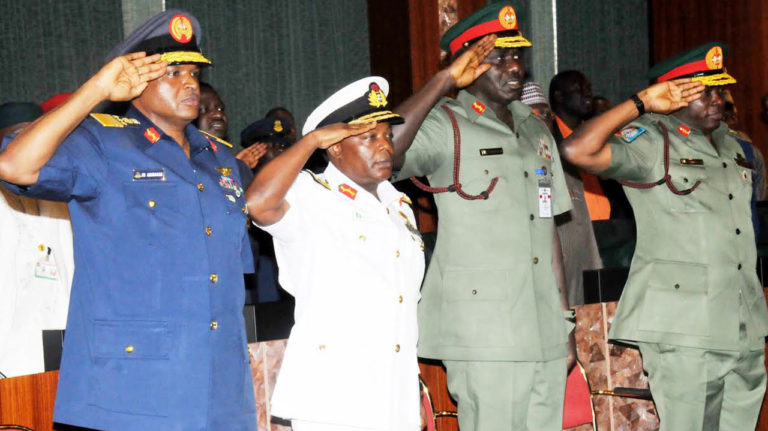
I have a story to tell. Sometime in 2014, I was invited as a panellist to the Chief of Defence Staff Conference in Abuja. Air Chief Marshall Alex Badeh (late), then chief of defence staff, was there, with Air Marshall Adesola Amosu, then chief of air staff, Mr MD Abubakar, then inspector-general of police, and several other top security chiefs. I was not the lead speaker; I was just a discussant.

But as soon as the officers realised I was a journalist, good God, they feasted on me like a hungry lion on bleeding meat. They did not even bother to ask the lead speaker any questions. All questions were directed at me. That day, I bore all the sins of Nigerian journalists. I was a sorry sight.

What was the issue? One military officer after the other said Nigerian journalists were “unpatriotic” because of the reports coming from the warfront in the north-east.

They said we were enemies of Nigeria. The military was winning the war, they said, but we were painting a different picture to Nigerians. At gunpoint, I still raised the issue of the welfare of soldiers: how they were eating cold lunch and sour dinner, how they were being given only three sachets of pure water per day in the hellish heat of Maiduguri, how they had no sleeping kits and how they were battle-weary and suffering from PTSD — in addition to poor equipment to confront the more sophisticated insurgents.

The way the officers dismissed the issues put the fear of God in me afresh. One service chief said: “There is nothing wrong with the soldiers sacrificing a little comfort in war front… we did not send them there to be eating fried eggs and baked beans.”

When he left office, he was arranged in court by the EFCC for an alleged fraud running into billions — the money meant for the soldiers welfare. He was preaching sacrifice at the conference! Another chief was said to have helped himself with billions while our soldiers were being killed like rats. Boko Haram soon overran three states and started attacking Abuja and Kano with ease. We were supposed to report that all was well.

The question is: who is unpatriotic? Is it the journalists that were reporting the true situation in the north-east or the security chiefs that were lying to their commander-in-chief while diverting funds meant for operation? In their warped definition, the security chiefs were the “patriots” for painting a false picture — while the saboteurs/traitors were the journalists who reported that a false picture was being painted.

General Martin Agwai, former chief of defence staff, came to my rescue that day. He said having spent 37 years in uniform and lived as a civilian for five years then, he could empathise with both sides. It is not simple black and white, he said. I started breathing again.

Before Agwai’s intervention, the police chief had accused Nigerian journalists of not putting the country first. He said he was in Atlanta, where CNN is based, shortly before the conference. He said robbery goes on in Atlanta but CNN will not report it.

Of course, he was incorrect. I watch CNN regularly and they report robbery, murder and mass shooting. BBC reports knife attacks in London and rolls out latest murder statistics. By his logic, we should not be reporting the cases of kidnappings in the country. We should pretend everywhere is safe so that many more Nigerians will walk into the hands of the kidnappers! Is that patriotism? We need to seriously debate this.

In the final analysis, I would argue that journalists should serve the cause of patriotism — but not as defined by the state actors.

There is a space for responsibility and restraint, no doubt; in fact, there are situations that require a journalist to be both a thermometer and a thermostat. It is not black or white. You can accuse Nigerian journalists of being sensational and insensitive at times and that would be in order, but that is a topic for another day.

It is patriotism we are discussing here. Certainly, a journalist’s perspective may never be acceptable to state actors. Painting a false picture, or hiding the real picture, can end up hurting the country. That cannot be patriotism — for sure.

AND FOUR OTHER THINGS…

THUMBS UP

Police have arrested Gracious David West, the alleged serial killer in Port Harcourt, Rivers state, reported to have killed seven young women in different hotels over two months. Their bodies were found in similar conditions: strangled, with a white piece of cloth tied around their necks.

Thumbs up to the police for this all-important arrest! Look at the way they also traced and arrested Hamisu Bala, aka Wadume, the suspected Taraba kidnap kingpin, after he was reportedly freed by soldiers. All the positive news from the police further confirms my pet theory: that if we really want to do things right in this country, we can. We don’t need to import a single talent to help us. Hope.

ADVISERS NOT ENFORCERS

I have never seen a set of appointments by President Buhari being publicly hailed as the ones into the newly formed Economic Advisory Council (EAC). In a different context, the Buhari cabinet could have benefited tremendously from having these eminent economists as ministers.

We must all remember, however, that this is an advisory council and they can only advise, or offer advice, to the president. Advice means advice. Nobody in the world is bound by anybody’s advice. It is, therefore, good to temper our expectations. EAC will offer technical advice but, as we all know, we also operate within socio-political realities. Buhari will bear the brunt, not EAC members. Realpolitik.

N400M QUESTION

I’m not sure many Nigerians are paying attention to the ongoing trial of Major General Hakeem Otiki, the GOC of army’s 8 division, Sokoto. Five soldiers were declared wanted by the Nigerian army after they allegedly absconded with N400 million cash belonging to an unnamed VIP. Otiki was accused of being complicit — although he has in turn protested that Lt General Lamidi Adeosun cannot preside over his court martial because of conflict of interest. I am not even interested in that. The question I have not been able to purge from my brains is: who is the owner of the N400 million cash? Who in the world were the soldiers moving the cash for? Who, please? Who?

FIGHTING BACK

The Nigerian government, having handled the P&ID case with levity for so long until the $9.6 billion looked like becoming a reality, has become more aggressive and has launched legal battles to prove that the gas project was a fraud from the beginning. On Thursday, some directors of P&ID Nigeria were arraigned by the EFCC before a federal high court in Abuja. They pleaded guilty to money laundering and economic sabotage and were summarily convicted. P&ID Nigeria was also liquidated. On this evidence, the federal government hopes to convince the appeal court in the UK to set aside the award because the contract itself was fraudulent from day one. Watching.


Simon Kolawole is the founder and CEO of TheCable. He tweets @simonkolawole.

ICIR reporter shortlisted for 2019 Thomson Foundation Young Journalist Award

THE International Center for Investigative Reporting, (ICIR), reporter, Amos Abba has been shortlisted for the 2019 Thomson Foundation Young Journalist Award.

The award, in its 7th year, enables journalists aged 30 and under, from countries with a Gross National Income, GNI, per capita of less than $20,000, to send in their best stories.

His investigation involved going undercover to visit herbal doctors in Abuja who falsely claimed to have a cure for cancer as they extorted unsuspecting patients faced with the unpleasant treatment effects of chemotherapy and radiotherapy.

Amos entry was selected as one of the unique ones due to his expose into the alluring ‘faith’ of the cancer patients in the ability of the herbal drugs to provide a cure for cancer which unfortunately led to further health complications.

Stories shortlisted for the award were picked from Armenia, Ghana, Pakistan, Nigeria, South Africa, India and Sri Lanka, which had “won over judges at the foundation with their stories about putting all people first”.

The ICIR  reporter was shortlisted alongside 11 other under-30 journalists from across the world in the award which also included two other Nigerians—Oladeinde Olawoyin of Premium Times and Banjo Damilola of Sahara Reporters.

Others are Aamir Ali (India), Kushane Chobanyan (Armenia), Meiryum Ali (Pakistan), Sarita Santoshini (India), Ridwan Karim Dini-Osman (Ghana), Rubatheesan Sandranathan (Sri Lanka), Bukeka Silekwa (South Africa), Saurabh Sharma (India) and Julius Luwemba from Uganda.

The award enables journalists aged 30 and under, from countries send in their best stories that could revolutionalise their environment or the world.

Amongst the 12 journalists shortlisted, three finalists will be selected who would be flown to London where the winner will be announced during a gala awards ceremony at the end of November.

Amos was also named the second runner up in the best science report category of the Nigerian Academy of Science Awards in 2018.


Presidency to UN rapporteur: Your report on violence in Nigeria is biased, disappointing

0

THE Presidency says it was disappointed by the United Nations (UN) rapporteur report on violence in Nigeria noting that the report was silent on intra-group violence in the country.

“We have read press reports of the UN rapporteur on violence in Nigeria. While we agree that the violence in Nigeria, or in any country, is a major concern and that there is a rippling effect, we are disappointed that the rapporteur was silent on intra-group violence,”said Garba Shehu, Senior Special Assistant to the President on Media and Publicity in a statement.

“The overall situation that I encountered in Nigeria gives rise to extreme concern”, with issues like poverty and climate change adding to the crisis, said Special Rapporteur Agnes Callamard after presenting a preliminary statement at the end of her 12-day mission.

But citing violence in Benue, Taraba, Cross River States and many parts of the country, Shehu explained that most of the casualties result from intra-group, inter-group and community violence.

“Many of the displaced persons across the nation are also victims of these conflicts,” he said.

While admitting  that violence between farmers and herders, which he said has ‘a long history in our country spiked in recent years, the presidential spokesperson noted, however, that the effectiveness with which the Federal and State authorities responded made a big difference.

“Calm has virtually returned to all parts affected by the peculiar violence.”

He said the Federal Government was saddened that the rapporteur did not address intra-ethnic conflicts and cattle rustling as key elements in herder/farmer conflicts.

“In Benue State for instance, the Tiv/Jukun conflict and kidnapping is a major problem. We are glad that local communities have fully realized this, and scholars with a strong motivation for peace and stability in their communities and the nation are trying to address the problem.

“Ignoring the salient issues will not help to solve the problem. If you are going to address violence and the general insecurity in Nigeria, incidents everywhere should be part of the narrative. Not addressing this might make it easier to blame the Federal Government, but national peace and security is community based and a collective responsibility.”

He insisted that arrests, prosecution and locking people up are only small parts of National Security and safety strategy.

Shehu said  the work of a US scholar of Tiv extraction, Professor Dick Adzenge in Benues State deserves special mention for attempting to get aspects of violence addressed.

“The expectation that arresting and putting people in prison is the only credible response to violence is a mistake. Professor Adzenge and a few others like him are working with young people, traditional rulers and communities to seek peaceful resolution of conflicts and encourage peaceful co-existence.

“The sort of effort we are talking about here has so far revealed interesting facts about the problem in Benue State that cannot be ignored.”

He concluded that “it is the sort of support we seek from the UN rapporteur in reporting, not the report that scratches the surface of the subject then ends up blaming the government under the able leadership of President Muhammadu Buhari.”

“The UN representative needs to be truthful and even-handed in her assignment,” Shehu said.


Money laundering, insulting Buhari, treason… FG finally charges Sowore—but not under anti-terrorism law

0

AS the court order permitting his detention for 45 days expires, Omoyele Sowore, founder of Sahara Reporters and 2019 presidential candidate, has finally been charged by the Federal Government under various laws.

But from available reports, none of the charges is based on provisions of Nigeria’s Terrorism Prevention Act, under which his detention order, valid till Saturday, was secured.

Rather, the Federal Government, in charges by Aminu Alilu, a Chief State Counsel at the Department of Public Prosecutions, levelled seven allegations against Sowore, including treasonable felony, insulting the president, and money laundering.

He was charged alongside Olawale Bakare, also known as Mandate.

According to Punch newspaper, “In the charges instituted against the defendants, the prosecution accused Sowore and his co-defendant of committing conspiracy to commit treasonable felony in breach of section 516 of the Criminal Code Act by allegedly staging ‘a revolution campaign on September 5, 2019 aimed at removing the President and Commander-in-Chief of the Armed Forces of the Federal Republic of Nigeria’.

“The prosecution also accused them of committing the actual offence of treasonable felony in breach of section, 4(1)(c) of the Criminal Code Act, by using the platform of Coalition for Revolution, in August 2019 in Abuja, Lagos and other parts of Nigeria, to stage the #RevolutionNow protest allegedly aimed at removing the President.

“It also accused Sowore of cybercrime offences in violation of section 24(1)(b) of the Cybercrimes (Prohibition, Prevention) Act, by ‘knowingly’ sending ‘messages by means of press interview granted on Arise Television network which you knew to be false for the purpose of causing insult, enmity, hatred and ill-will on the person of the President of the Federal Republic of Nigeria’.”

Finally, the paper reported that Sowore was also accused of acting in violation of section 15(1) of the Money Laundering (Prohibition) Act of 2011.

The section provides for the crime of stealing money or properties got from “illicit traffic in narcotic drugs and psychotropic substances” or from “participation in an organised criminal group and racketeering, terrorism, terrorist financing, trafficking in human beings and migrants smuggling, tax evasion, sexual exploitation, illicit arms trafficking in stolen and other goods, bribery and corruption” and so on.

Sowore was arrested at about 11 pm on August 2 by operatives of the Department of State Services (DSS) for calling for a revolution and “threatening public safety, peaceful co-existence and social harmony in the country”.

Relying on a provision of the Terrorism (Prevention) Amendment Act 2013, the Federal High Court in Abuja had, five days later, granted the DSS permission to keep him in detention without trial for 45 days. Sowore’s application to upturn this, in August, was not ruled upon by the court.

On Friday, September 16, Femi Falana filed another application for bail on his behalf.

The anti-terrorism law under which Sowore has been detained since August allows the court to grant such applications only where a person is suspected to have violated the Act.

Sowore’s continued detention has been condemned by various organisations, including Amnesty International and the Nigeria Labour Congress.

NGO recommends how to reform FSARS, suggests alternative police unit

0

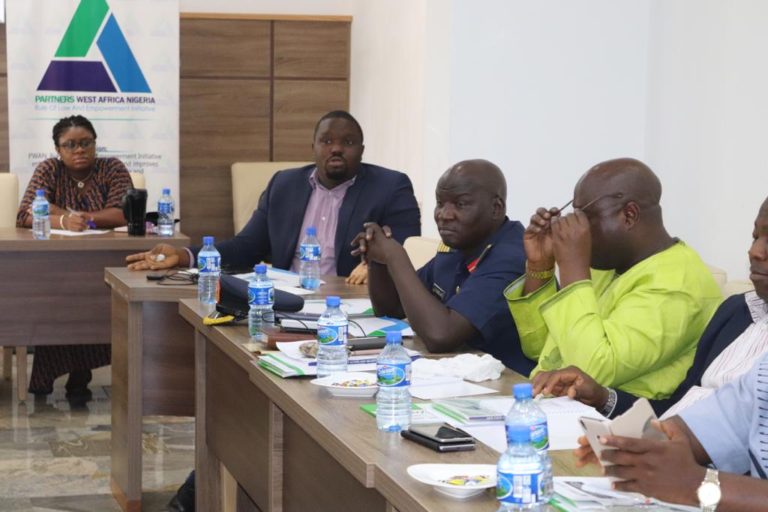
A NON-GOVERNMENTAL organisation dedicated to improving security governance, Partners West Africa Nigeria (PWAN), has suggested ways to improve operations of the Federal Special Anti-Robbery Squad (FSARS).

The organisation also suggested the establishment of an alternative police organ.

In a policy brief released on Friday, the NGO said it decided to present a solution in the light of the”underlying issues of extrajudicial killings, torture, unlawful arrests and extortion which have contributed to making SARS a shadow of itself and a threat to the society it came to rescue”.

To strengthen service delivery, it recommended a unification of the functions of already existing police units, including the Intelligence Response Team, Anti Kidnapping, AntiCultism Unit, Anti Car Theft, and Special Tactical Squad.


READ ALSO:

These, it said, will be brought under a new section that may be called an Anti-Heinous Crimes Section (AHCS).

“This section can take on a semi-autonomous position comparable to that of the Force Intelligence Bureau (FIB), reporting directly to the IGP with the DIG FCID playing a supervisory role,” PWAN recommended regarding its structure.

“At the federal level, it will be headed by an AIG. In the Zonal and state levels, they will be headed by a DCP and ACP respectively, while they report directly to the Zonal AIG and CP commands. The respective heads of the Zonal and State CID will also play a supervisory role.”

The aim of this new establishment, the NGO said, is to instil accountability and efficacy in the force and create a means to purge the police of “bad eggs”.

It recommended that before a policeman is recruited into the AHCS, he or she has to undergo a general screening “to consider criminal, emotional, health, addiction, motivation and other critical personality traits”, be checked for academic fitness, and have his or her character attested to by a senior official.

“The operatives must also be compulsorily trained on tactical operation, intelligence, citizenship and leadership, human rights, constitution, basic legal exposure, counter-terrorism, as well as explosives.

“In addition to the basic courses, there will be local and international refresher courses at least every 12 months, capacity building seminars as often as possible, passing prescribed course examinations to be critical to subsistence in the unit.”

It further suggested that allowances for the members of the section should be captured in the budget of the Nigeria Police. It stressed the need for the reorganisation or outright overhaul of the FSARS to be methodical “hence the recommendation that the status quo shall be maintained until screening, training and postings are concluded, before the official disbanding of SARS”.

PWAN finally recommended that the police be made financially independent through direct and sufficient budgetary allocations.

“The legislature must ensure that the Nigeria Police budgetary system is devolved not merely on paper in the budget proposals but practically, as the Zonal, State commands and divisional police formations cannot function optimally in securing their communities until they are given financial autonomy that must be transparent and accountable,” it said.

“Leaving the management of Police funds majorly at the apex will continue to diminish the desired efficacy and professionalism expected of an institution such as the Nigeria Police Force.

“The effectiveness of the AHCS upon establishment to deliver on its mandate largely depends on the manner it is run; this goes to all other Police establishments. There is dire need for financial autonomy which paves way for sufficient funding. This can only be actualised through practical devolution
of powers, not only in the section, but across the various arms of the Nigeria Police Force.”