Home Blog Page 2286

ICIR reporter shortlisted for 2019 Thomson Foundation Young Journalist Award

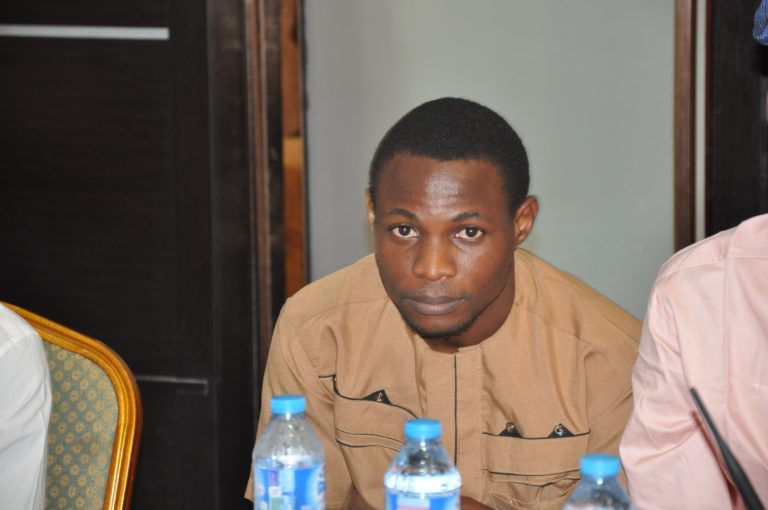
THE International Center for Investigative Reporting, (ICIR), reporter, Amos Abba has been shortlisted for the 2019 Thomson Foundation Young Journalist Award.

The award, in its 7th year, enables journalists aged 30 and under, from countries with a Gross National Income, GNI, per capita of less than $20,000, to send in their best stories.

His investigation involved going undercover to visit herbal doctors in Abuja who falsely claimed to have a cure for cancer as they extorted unsuspecting patients faced with the unpleasant treatment effects of chemotherapy and radiotherapy.

Amos entry was selected as one of the unique ones due to his expose into the alluring ‘faith’ of the cancer patients in the ability of the herbal drugs to provide a cure for cancer which unfortunately led to further health complications.

Stories shortlisted for the award were picked from Armenia, Ghana, Pakistan, Nigeria, South Africa, India and Sri Lanka, which had “won over judges at the foundation with their stories about putting all people first”.

The ICIR  reporter was shortlisted alongside 11 other under-30 journalists from across the world in the award which also included two other Nigerians—Oladeinde Olawoyin of Premium Times and Banjo Damilola of Sahara Reporters.

Others are Aamir Ali (India), Kushane Chobanyan (Armenia), Meiryum Ali (Pakistan), Sarita Santoshini (India), Ridwan Karim Dini-Osman (Ghana), Rubatheesan Sandranathan (Sri Lanka), Bukeka Silekwa (South Africa), Saurabh Sharma (India) and Julius Luwemba from Uganda.

The award enables journalists aged 30 and under, from countries send in their best stories that could revolutionalise their environment or the world.

Amongst the 12 journalists shortlisted, three finalists will be selected who would be flown to London where the winner will be announced during a gala awards ceremony at the end of November.

Amos was also named the second runner up in the best science report category of the Nigerian Academy of Science Awards in 2018.


Presidency to UN rapporteur: Your report on violence in Nigeria is biased, disappointing

0

THE Presidency says it was disappointed by the United Nations (UN) rapporteur report on violence in Nigeria noting that the report was silent on intra-group violence in the country.

“We have read press reports of the UN rapporteur on violence in Nigeria. While we agree that the violence in Nigeria, or in any country, is a major concern and that there is a rippling effect, we are disappointed that the rapporteur was silent on intra-group violence,”said Garba Shehu, Senior Special Assistant to the President on Media and Publicity in a statement.

“The overall situation that I encountered in Nigeria gives rise to extreme concern”, with issues like poverty and climate change adding to the crisis, said Special Rapporteur Agnes Callamard after presenting a preliminary statement at the end of her 12-day mission.

But citing violence in Benue, Taraba, Cross River States and many parts of the country, Shehu explained that most of the casualties result from intra-group, inter-group and community violence.

“Many of the displaced persons across the nation are also victims of these conflicts,” he said.

While admitting  that violence between farmers and herders, which he said has ‘a long history in our country spiked in recent years, the presidential spokesperson noted, however, that the effectiveness with which the Federal and State authorities responded made a big difference.

“Calm has virtually returned to all parts affected by the peculiar violence.”

He said the Federal Government was saddened that the rapporteur did not address intra-ethnic conflicts and cattle rustling as key elements in herder/farmer conflicts.

“In Benue State for instance, the Tiv/Jukun conflict and kidnapping is a major problem. We are glad that local communities have fully realized this, and scholars with a strong motivation for peace and stability in their communities and the nation are trying to address the problem.

“Ignoring the salient issues will not help to solve the problem. If you are going to address violence and the general insecurity in Nigeria, incidents everywhere should be part of the narrative. Not addressing this might make it easier to blame the Federal Government, but national peace and security is community based and a collective responsibility.”

He insisted that arrests, prosecution and locking people up are only small parts of National Security and safety strategy.

Shehu said  the work of a US scholar of Tiv extraction, Professor Dick Adzenge in Benues State deserves special mention for attempting to get aspects of violence addressed.

“The expectation that arresting and putting people in prison is the only credible response to violence is a mistake. Professor Adzenge and a few others like him are working with young people, traditional rulers and communities to seek peaceful resolution of conflicts and encourage peaceful co-existence.

“The sort of effort we are talking about here has so far revealed interesting facts about the problem in Benue State that cannot be ignored.”

He concluded that “it is the sort of support we seek from the UN rapporteur in reporting, not the report that scratches the surface of the subject then ends up blaming the government under the able leadership of President Muhammadu Buhari.”

“The UN representative needs to be truthful and even-handed in her assignment,” Shehu said.


Money laundering, insulting Buhari, treason… FG finally charges Sowore—but not under anti-terrorism law

0

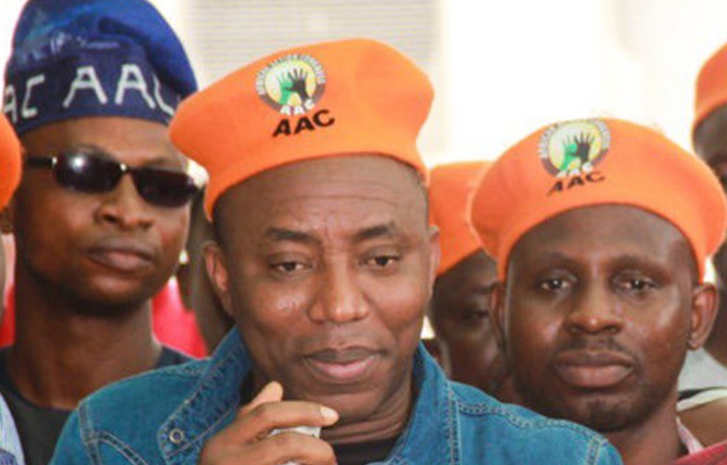
AS the court order permitting his detention for 45 days expires, Omoyele Sowore, founder of Sahara Reporters and 2019 presidential candidate, has finally been charged by the Federal Government under various laws.

But from available reports, none of the charges is based on provisions of Nigeria’s Terrorism Prevention Act, under which his detention order, valid till Saturday, was secured.

Rather, the Federal Government, in charges by Aminu Alilu, a Chief State Counsel at the Department of Public Prosecutions, levelled seven allegations against Sowore, including treasonable felony, insulting the president, and money laundering.

He was charged alongside Olawale Bakare, also known as Mandate.

According to Punch newspaper, “In the charges instituted against the defendants, the prosecution accused Sowore and his co-defendant of committing conspiracy to commit treasonable felony in breach of section 516 of the Criminal Code Act by allegedly staging ‘a revolution campaign on September 5, 2019 aimed at removing the President and Commander-in-Chief of the Armed Forces of the Federal Republic of Nigeria’.

“The prosecution also accused them of committing the actual offence of treasonable felony in breach of section, 4(1)(c) of the Criminal Code Act, by using the platform of Coalition for Revolution, in August 2019 in Abuja, Lagos and other parts of Nigeria, to stage the #RevolutionNow protest allegedly aimed at removing the President.

“It also accused Sowore of cybercrime offences in violation of section 24(1)(b) of the Cybercrimes (Prohibition, Prevention) Act, by ‘knowingly’ sending ‘messages by means of press interview granted on Arise Television network which you knew to be false for the purpose of causing insult, enmity, hatred and ill-will on the person of the President of the Federal Republic of Nigeria’.”

Finally, the paper reported that Sowore was also accused of acting in violation of section 15(1) of the Money Laundering (Prohibition) Act of 2011.

The section provides for the crime of stealing money or properties got from “illicit traffic in narcotic drugs and psychotropic substances” or from “participation in an organised criminal group and racketeering, terrorism, terrorist financing, trafficking in human beings and migrants smuggling, tax evasion, sexual exploitation, illicit arms trafficking in stolen and other goods, bribery and corruption” and so on.

Sowore was arrested at about 11 pm on August 2 by operatives of the Department of State Services (DSS) for calling for a revolution and “threatening public safety, peaceful co-existence and social harmony in the country”.

Relying on a provision of the Terrorism (Prevention) Amendment Act 2013, the Federal High Court in Abuja had, five days later, granted the DSS permission to keep him in detention without trial for 45 days. Sowore’s application to upturn this, in August, was not ruled upon by the court.

On Friday, September 16, Femi Falana filed another application for bail on his behalf.

The anti-terrorism law under which Sowore has been detained since August allows the court to grant such applications only where a person is suspected to have violated the Act.

Sowore’s continued detention has been condemned by various organisations, including Amnesty International and the Nigeria Labour Congress.

NGO recommends how to reform FSARS, suggests alternative police unit

0

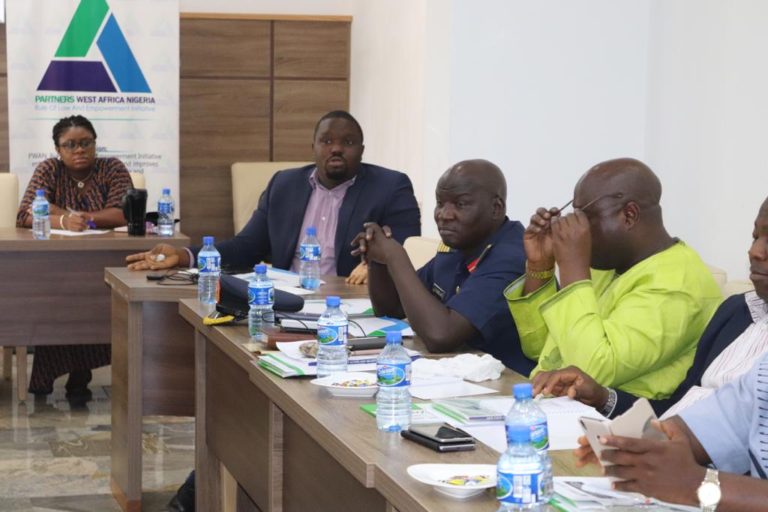
A NON-GOVERNMENTAL organisation dedicated to improving security governance, Partners West Africa Nigeria (PWAN), has suggested ways to improve operations of the Federal Special Anti-Robbery Squad (FSARS).

The organisation also suggested the establishment of an alternative police organ.

In a policy brief released on Friday, the NGO said it decided to present a solution in the light of the”underlying issues of extrajudicial killings, torture, unlawful arrests and extortion which have contributed to making SARS a shadow of itself and a threat to the society it came to rescue”.

To strengthen service delivery, it recommended a unification of the functions of already existing police units, including the Intelligence Response Team, Anti Kidnapping, AntiCultism Unit, Anti Car Theft, and Special Tactical Squad.


READ ALSO:

These, it said, will be brought under a new section that may be called an Anti-Heinous Crimes Section (AHCS).

“This section can take on a semi-autonomous position comparable to that of the Force Intelligence Bureau (FIB), reporting directly to the IGP with the DIG FCID playing a supervisory role,” PWAN recommended regarding its structure.

“At the federal level, it will be headed by an AIG. In the Zonal and state levels, they will be headed by a DCP and ACP respectively, while they report directly to the Zonal AIG and CP commands. The respective heads of the Zonal and State CID will also play a supervisory role.”

The aim of this new establishment, the NGO said, is to instil accountability and efficacy in the force and create a means to purge the police of “bad eggs”.

It recommended that before a policeman is recruited into the AHCS, he or she has to undergo a general screening “to consider criminal, emotional, health, addiction, motivation and other critical personality traits”, be checked for academic fitness, and have his or her character attested to by a senior official.

“The operatives must also be compulsorily trained on tactical operation, intelligence, citizenship and leadership, human rights, constitution, basic legal exposure, counter-terrorism, as well as explosives.

“In addition to the basic courses, there will be local and international refresher courses at least every 12 months, capacity building seminars as often as possible, passing prescribed course examinations to be critical to subsistence in the unit.”

It further suggested that allowances for the members of the section should be captured in the budget of the Nigeria Police. It stressed the need for the reorganisation or outright overhaul of the FSARS to be methodical “hence the recommendation that the status quo shall be maintained until screening, training and postings are concluded, before the official disbanding of SARS”.

PWAN finally recommended that the police be made financially independent through direct and sufficient budgetary allocations.

“The legislature must ensure that the Nigeria Police budgetary system is devolved not merely on paper in the budget proposals but practically, as the Zonal, State commands and divisional police formations cannot function optimally in securing their communities until they are given financial autonomy that must be transparent and accountable,” it said.

“Leaving the management of Police funds majorly at the apex will continue to diminish the desired efficacy and professionalism expected of an institution such as the Nigeria Police Force.

“The effectiveness of the AHCS upon establishment to deliver on its mandate largely depends on the manner it is run; this goes to all other Police establishments. There is dire need for financial autonomy which paves way for sufficient funding. This can only be actualised through practical devolution
of powers, not only in the section, but across the various arms of the Nigeria Police Force.”

Port Harcourt Killings: ‘Paraded suspect responsible for 5 out of about 9 killings’ ― Police

0

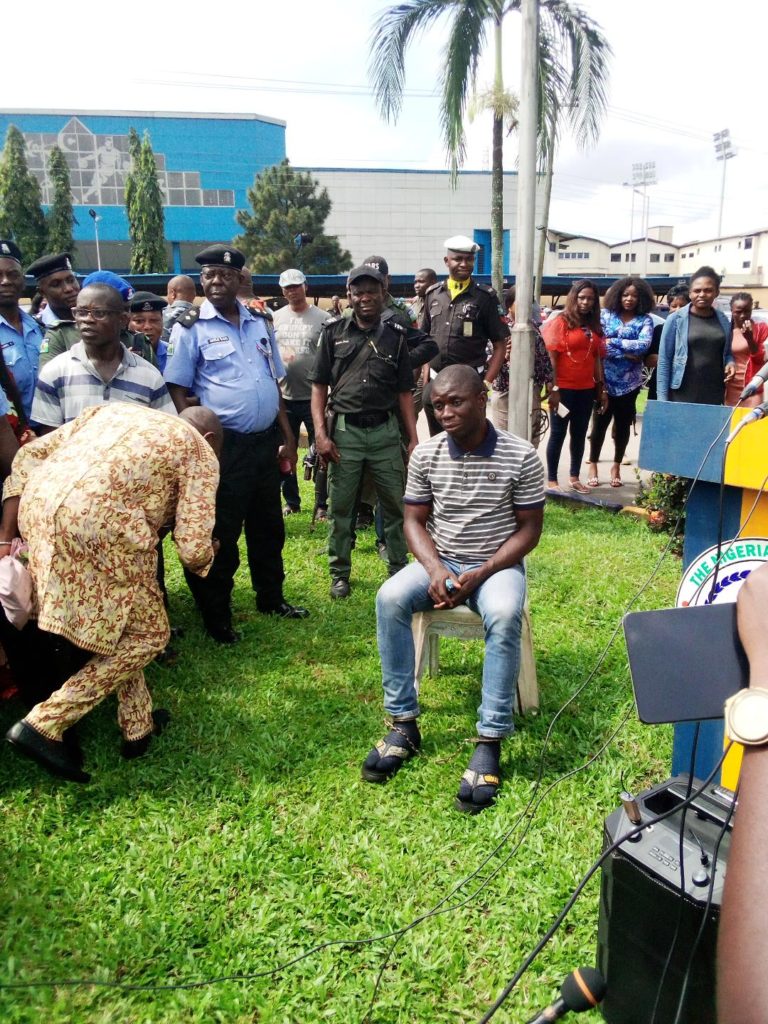
ALLEGED Port Harcourt serial killer, Gracious David West,  has admitted to the murder of five women during a parade by the State Commissioner of Police, Mustapha Dandaura, on Friday.

West, 26 was on Thursday apprehended by the police in Portharcourt along East-West Road enroute to Uyo .

Rivers State Police Public Relations Officer, Omoni Nnamdi confirmed to The ICIR that the suspect has claimed responsibility for five out of about nine recent killings in the state capital.

He further revealed that the police have other suspects in custody who are going to be subsequently paraded the following week while investigations continue.


READ ALSO:

Asked if there is any connection between the paraded suspect and the ones in custody, Omoni said, “There’s no connection now but at the end of the day we’ll be able to bring them side by side because we got this one (David West) yesterday. After parading others we’ll be able to confirm from them if they know each other.”

The State Police Commissioner, Mustapha Dandaura stated that the police recovered another corpse along Peter Odili road, Port Harcourt who he said was discovered to be one of the victims of the suspect but the hotel conspired to drop the corpse by the road side so as to avoid police investigation.

According to PM News,West revealed he has an uncontrollable urge to kill women and that he has approached a church to heal him spiritually but to no avail.

He also said he did not kill all of the women he has slept with and after killings he regrets his action but still does it again. West further admitted to have started his killings from Ikeja, Lagos State before moving to Imo State and now Port Harcourt.

“Before I strangulated them after love-making, I would use knife to cut the hotel bed sheets into a semblance of a twine or rope which I used to bind their hands and feet,” he was quoted to have said.

“I used the knife also to threaten them. The kitchen knife was sold to me by an aboki. I threatened that if my victims raised alarm I would kill them with the knife. Out of fear, they would keep quiet while I raised the volume of the television set in the hotel room to dwarf any noise. I never killed with the knife.”

West also confessed that he slept in hotel rooms because he does not have a home. The police questioned him on his means of survival and he replied, “After strangulating them, I would steal their ATM cards, empty their accounts from any nearby ATM machine and move on.”

Emefiele defends cashless policy, says not new in Nigeria

0

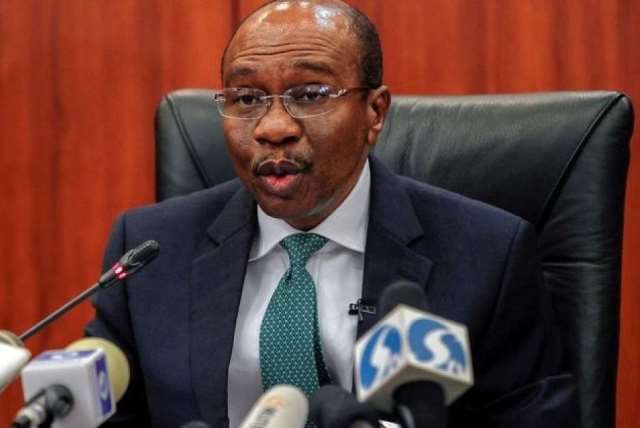
GODWIN Emefiele, Governor of the Central Bank of Nigeria (CBN) says the adoption of the cashless policy is in line with the apex bank strategy to eradicate fraudulent activities in the Nigerian banking system.

Emefiele explained that the policy was not intended as a strategy to disenfranchise businesses as being speculated by Nigerians.

The apex bank, had in a circular dated September 17, 2019 titled, Re: Implementation of the Cashless Policy, addressed to all Deposit Money Banks directed that as from September 18, lodgment of cash by individuals that is above N500,000 will attract 3 per cent processing fees for withdrawal and 2 per cent processing fees for lodgments.

For corporate bodies, it said, withdrawal or deposit above N3million will attract 5 percent processing fees or 3 per cent processing fees.

However, the CBN governor while addressing journalists on Friday in Abuja after the Monetary Policy Committee briefing  said that cashless policy was first launched in 2012 and not a new initiative in Nigeria.

He explained that Nigeria full adoption of cashless policy is in line with the Section 2 (d) and section 47 of the CBN Act as it would promote an efficient payment system that will end charges incurred from cash processing often passed on to customers by Deposit Money Banks, increase transparency in financial dealings and reduce fraudulent activities including ransom payments, extortion and cyber fraud.

Emefiele revealed that at the inception of the policy, that there have always been charges on deposits and withdrawals.

However, “Because there was lots of cash outside the banking industry we decided that there was no need to penalise those that wanted to bring in their cash from outside the banking industry into the banking industry, therefore, we retained the charges on withdrawals and relax charges on deposit.

“After five years, we expect that all the cash that was outside the banking system has been returned. So we think it is time to fully kick start the cashless policy” he explained.

Emefiele also explained that the implementation of the new Value Added Tax (VAT) is a government strategy of raising revenue to meet its obligations which includes the provision of good roads and proper electrification in the country.

The charges on deposits would be in full effect by March 2020 across all states.

He also confirmed the apex bank  will no longer provide foreign exchange for the importation of cassava and its by-products. This development comes few months after Nigeria placed a ban on forex for milk importation also.


Atiku breaks silence on tribunal defeat, thanks Nigerians for ‘immense goodwill’

0

PRESIDENTIAL candidate of the People’s Democratic Party (PDP) at the February 23 election, Atiku Abubakar, has finally spoken out after the dismissal of his petition challenging the re-election of Muhammadu Buhari.

The Presidential Election Petitions Tribunal on 11 September upheld the victory of Buhari, citing the petitioner’s failure to satisfactorily prove all the allegations brought before it.

According to figures declared by the Independent National Electoral Commission (INEC), Atiku lost to Buhari who polled a total of 15,191,847 votes compared to PDP’s 11,262,978 votes.

In a statement shared on Friday, Atiku said he has decided to seek a remedy in the judicial system in order to ensure “that the votes of Nigerians count and are counted”.

He stated that “those who do not want this as Nigeria’s reality, will use every trick in the book to undermine, discourage, misinform and mislead, but with God’s help and the support of Nigerians, we will ensure that Nigeria makes a course correction away from tyranny and towards democracy”.

The former Vice President urged his supporters to continue to back his ambition, adding that “even if there is little or nothing you can do to ensure that justice is done in Nigeria, just believe that it will happen.”

He further urged Nigerians to pursue “this just cause all the way, so that our judiciary are not afraid to do their jobs and have to be wary of blackmail, intimidation, and victimisation”.

“I note the immense outpouring of goodwill from ordinary Nigerians in every nook and cranny of Nigeria and from all regions, religions and relationships. Once again I thank you all for your support,” he added.

“I also thank the governors elected on the platform of my party, the PDP, as well as the National Executive Committee, for their unanimous and unambiguous support for the judicial phase of this struggle, especially after it was announced that we would go on to appeal.”

OPINION: Now that SA has apologised…

0

By Bola BOLAWOLE

NOW South Africa has apologised for the xenophobic attacks that saw to the death of many African compatriots in the hands of South African mobs, have we seen the end of a sad chapter in the history of Black Africa?

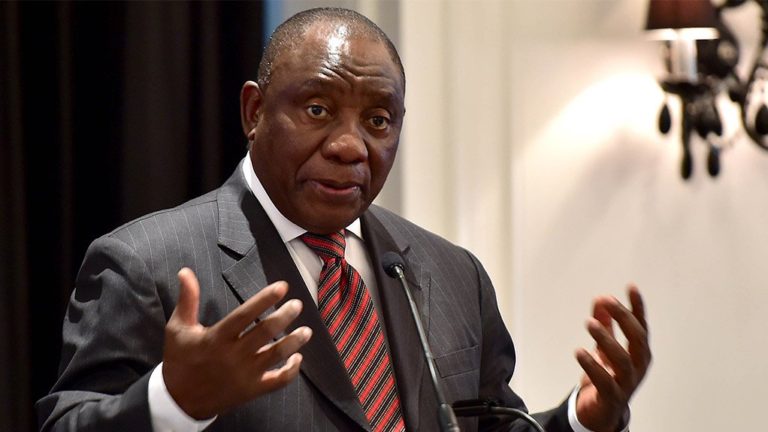
Nigeria was one of many African countries caught in the xenophobic web that the South African president, Cyril Ramaphosa, sent special envoys to apologise for earlier in the week as well as give assurances that all is now well – or, more appropriately – that all will be well.

Can we take his assurances for it? Cyril himself was a fire-eating Labour leader in the last days of the armed struggle against apartheid; so he should know the mentality of his people. A facade of hope that normalcy has, indeed, returned to SA was the fledgling anti-xenophobic movement in SA itself where “wives” of victims of xenophobic attacks were summoning up courage to come out of their cocoons to decry their own losses.

A few other conscionable South Africans have joined in their rank. Will these be enough to stem the tide? Is the SA Government sincere with its apology and can it do the needful? Are the xenophobes now tired, remorseful, been won over by superior argument or they are simply on recess, waiting for the next opportune occasion to strike? Time, as they say, will tell!

As the repatriation of the endangered Nigerians proceeds apace, it is safe to conclude that only a few will venture to return. Many will stay put, the dangers to their life and livelihood notwithstanding, while others will relocate to other countries.

The reasons for this are not far to fetch: The situations and circumstances that ran them out of their fatherland have not abated; instead, they have become more pronounced in the last four years of the APC/President Muhammadu Buhari administration.

While APC leaders have been creating millions of jobs by words of the mouth, the real unemployment situation has gone from bad to worse. Not only are new jobs not being created as claimed by government, those in employment are losing their jobs at an alarming rate. Absence of jobs, especially among the youth, has led to high rate of criminality, such that government now begs criminals to sheathe their sward, having lost the moral right, the wherewithal as well as the will power to fight crimes. Nigerians leave the shores of this country in droves in search of better living conditions.

“Better life”, which was nothing to write home about before, has deteriorated progressively since 2015. Inflation and devaluation have robbed the Naira of close to half of its purchasing power, if not more. Education, health, power supply, and infrastructure have decayed beyond acceptable levels. Corruption today is more mind-boggling than in times past; if in doubt, compare what Buhari spends as fuel subsidy with what Jonathan spent.

To make matters worse, the state of insecurity today – with Fulani herdsmen, bandits, kidnappers, ritualists and cultists rivalling Boko Haram – have left Nigeria worse than Buhari/APC had met it. Recent reports said 60 doctors leave Lagos hospitals every six months (10/month) while 700 (appro. 61/monthly) doctors dump Nigeria annually.

The Yoruba would say “Orisa boo le gba mi, fi mi s’ile boo se ba mi” If you can’t help, don’t make matters worse for me! Not so Buhari/APC!

South African returnees would therefore be returning to a Nigeria worse than the one they left behind. For those who left when PDP/Goodluck Jonathan was in power, they will have the added pains and humiliation of “Operation Crocodile Smile” to contend with.

The war of attrition between APC/Buhari and their allies on the one hand and pro-Biafra forces on the other is yet to abate. Ask Ekweremadu! Ask South-east governors! Few South-easterners, who form the bulk of the South Africa returnees, are proud of Buhari: The president’s bare-faced sectionalism, tribalism and nepotism have not helped matters! Expect a visibly embarrassed South Africa to put obstacles in the way of repatriation to try and squeeze the returnees, make their return difficult if not impossible as well as buy time while mending fences.

Only reason why SA pretends to be remorseful is because it risks isolation. It is doubtful whether Nigeria has made adequate preparation for the returnees. For those returning with empty hands, how do they start life afresh? Shame and fear of disgrace is another reason why some will be unwilling to return. “Iku ya j’esin”, our people will say. Better die than suffer ignominy! The politics of the repatriation, though, is not as much as doing a good job as giving an impression something was done. It is less of substance but more of appearance.

FUOYE: Two deaths too many

What is beyond dispute now is that two students of the Federal University, Oye Ekiti (FUOYE) died during a peaceful protest that went awry last week. Except for those who still have the milk of human kindness running in their veins in a Nigeria that had since lost all sensibilities and feelings but now has scant regard for human life, this is mere statistics – “only” two lives lost! Yes, “only” two!

Since the advent of APC/Buhari, our attitude to living and dying has become cavalierly. But consider that one of the “only two” were your own son – let our men and women of power consider that “just one”, not the entire “only two” of the FUOYE dead were their own son or daughter!

If you do not appreciate what belongs to others, someone is coming who will not appreciate what belongs to you. If you pay scant regard to the life of the other person, someone is coming who will pay scant regard to your own life or the life of someone you hold so dear.

That is the Law of Karma and the import of Prophet Nathan’s message to King David after he had killed “good man” Uriah and appropriated his wife Bathsheba. The least that Ekiti State’s Gov. Kayode Fayemi can do is to unearth the killers and ensure they are brought to justice if the blood of the dead, like that of Abel, is not to cry out of the ground against him.

As governor, Fayemi is the chief security officer of Ekiti and the buck stops on his table. It is his duty to get justice for those whose life, like Abel’s, Uriah’s and Nabot’s, was snuffed out in cold blood. Failure, he will account, like Dele Giwa minced no words in telling us, if not now then later; if not before man, then, before God.

Fayemi must follow up his instructions to the CP, Ekiti State to unearth the killer-cops. The death of the two FUOYE students, for now, has been woven around the legs of Fayemi’s wife, Erelu Bisi; unless Gov. Fayemi is able to shift the guilt elsewhere, that is where it will remain – and that is where justice shall be served.

Having first driven away the fox, let us now return to speak a word of truth to the FUOYE students: But for the fact that students will always be students, why demonstrate and risk your life over an occurrence as common in today’s Nigeria as power outage? For those of us not students and who also suffer power outrage – and have to pay rapacious estimated bills to boot – where do we carry our own protests, peaceful or violent?

But, then, like they say: “Agba wa bura pe ewe o se o ri!” As an undergrad at Ife, I, too, demonstrated on a countless number of occasions, storming Lagos and screaming “Obasanjo na goat o, na goat o, (Shehu Musa) Yar’Adua barawo ni, o omo eran” On one occasion we vandalised a posh car belonging to Oloye Olusola Saraki, the then Senate President, within the premises of the then Senate Building at the Tafawa Balewa Square, Lagos.

Thank God, we were not shot by errant security details of power-drunk politicians! It is likely that the Fayemis also demonstrated while on campus at Ife. What if they had been shot?

What is left of VP Osinbajo?
On Monday, the Buhari administration stylishly, even if in characteristically deceitful manner, admitted to the failure of policy and personnel when it disbanded its Economic Management Team headed by VP Yemi Osinbajo and instituted another called Economic Advisory Council (mere semantics!) headed by one Prof. Doyin Salami.

The new EAC got rid of Osinbajo as both head and member. Who does not know that this is an indictment and that Osinbajo is being held responsible for the many astounding economic failures of the Buhari administration?

Osinbajo as VP is not allowed into security meetings; Ministers and other political appointees report to the president through the Chief of Staff; civil servants and parastatals report to the president through Secretary to Government of the Federation; and now, the economic team bypasses the same VP who has the statutory responsibility of chairing their meetings! What is left for – and of – Osinbajo in the Buhari administration? Pity!

Bola BOLAWOLE can be reached through turnpot@gmail.com and 0807 552 5533

 

Former, Legal Director of Petroleum Ministry implicated in the failed P & ID scandal remanded in Suleja prison

0

GRACE Taiga, a former director of legal services at Federal Ministry of Petroleum Resources was on Friday remanded in Suleja Prison, Niger State for her alleged involvement in the controversial P & ID scandal.

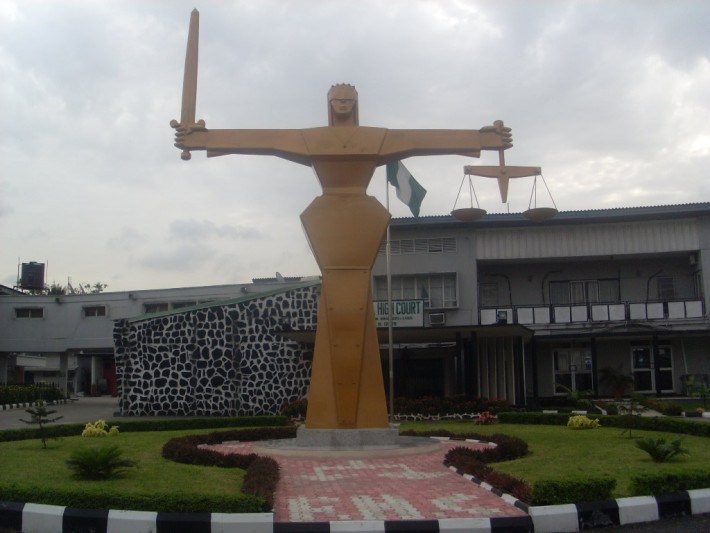
The Economic and Financial Crimes Commission (EFCC) arraigned Tiaga before the Abuja Federal High Court on an eight-count charge of fraud among other financial improprieties.

Investigations carried out by the anti-graft agency revealed that Tiaga  had allegedly received bribes to the tune of $20,000 to ensure that the gas supply and processing agreement between Nigeria and P&ID was successful.

At the hearing, the presiding judge, Justice Olukayode Adeniyi, allowed the charges to be read to her.

“That you, Process and Industrial Developments Limited being a company incorporated in the British Virgin Island (convicted), Michael Quinn (deceased), Brendan Cahill (at large), Neil Hitchcock (deceased), and Grace Taiga on or about the 11th January, 2010 in Abuja within the jurisdiction of this Honourable Court with intent to defraud made a false statement in paragraph 8 (g) of the Gas Supply and Processing Agreement (“GSPA”) to wit:

“The parties are aware that the 24inch Adanga pipeline presently under construction from the Addax operated OML 123 directly to Calabar and due for completion in 2010 which part of the said agreement you knew to be false and you thereby committed an offence contrary to section 362 (a) of the Penal Code Law and punishable under section 364 of the same law,” one of the counts reads.

The defendant pleaded “not guilty” to the charges when it was read to her.

However, Justice Adeniyi remanded her in prison until September 25 when her bail application will be heard.

Taiga’s ordeal is coming a day after a Federal High Court in Abuja convicted two representatives of P&ID for their role in the failed contract while the court also ordered the forfeiture of assets linked to P&ID to the government over tax evasion.

The EFCC has accused Taiga and Rilwan Lukman, a late former Minister of Petroleum Resources of violating the law and awarding the contract without the approval of the Federal Executive Council (FEC) or recourse to the provisions of the Infrastructure Concession Regulatory Commission Act.


Group urges government to close unmet gap of contraception for women living with HIV

1


THE Federal Government has been urged to ensure that women living with HIV/AIDS in the country have adequate access to effective contraceptive methods in order to make use of a new HIV drug, dolutegravir that manages the infection effectively.

SHEWE Group, a coalition of organisations that focus on HIV and sexual and reproductive health and rights that is behind the campaign said the drug has better treatment options for women living with HIV.

As part of a project that the coalition implemented in Lagos, Abuja and Ondo under the guidance of the International Community of Women Living with HIV, West Africa Region (ICWWA), it is canvassing for women living with HIV to have access to family planning.

According to the latest estimate by the United Nations AIDS (UNAIDS) agency and the National Agency for the Control of AIDS (NACA), 1.9 million people are living with HIV in Nigeria. Of this 1.9 million, the report say 1 million are women aged more than 15 years.

By accessing quality contraceptive methods, the group said the women would be able to use the “dolutegravir” drug which helps manages the disease better than another drug called “efavirenz (EFV).

Iwatutu Joyce Adewole who spoke on behalf of the Shewe coalition explained that the World Health Organisation (WHO) had pronounced DTG as the best anti-retroviral drug for people living with the disease.

Shewe urged the Federal Government to ensure access to quality contraceptive methods for these women in order to protect their pregnancy against neural tube defect. Neural tube defects are birth defects of the brain, spine, or spinal cord. They happen in the first month of pregnancy, often before a woman even knows that she is pregnant.

She added that the drug has fewer side effects and suppresses viral load better than others.

But Adewole said women of reproductive age living with HIV could be at risk by taking the drug if quality contraception was not being used noting that the  infants born by such women could develop neural tube defects.

“It is imperative of government and policymakers in closing the unmet gap of contraception for women living with HIV.

“For women of childbearing potential who prefer the option of DTG regimen should be provided with effective contraceptives.

“Nigeria has one of the lowest modern contraceptive prevalence rates in Africa. Inadequate availability of contraceptives, poor infrastructure and cultural aversion to family planning are some of the impediments to family planning uptake in Nigeria,” the group said.

There are ongoing studies to address the issue of neural tube defect signal among women that are exposed to DTG before contraception or early in pregnancy, according to WHO.

On July 22, the WHO recommended the use of the HIV drug dolutegravir (DTG) as the preferred first-line and second-line treatment for all populations, including pregnant women and those of childbearing potential.

Initial studies had highlighted a possible link between DTG and neural tube defects in infants born to women using the drug at the time of conception as four of 426 women who became pregnant while taking DTG had the defects.

Based on these preliminary findings, WHO said many countries advised pregnant women and women of childbearing potential to take efavirenz (EFV) instead.

However, recent data from two clinical trials noted the risks of neural tube defects are “significantly lower” than what the initial studies suggested.

WHO later considered the drug over other ARV drugs considering the benefits.

“DTG is a drug that is more effective, easier to take and has fewer side effects than alternative drugs that are currently used. DTG also has a high genetic barrier to developing drug resistance, which is important given the rising trend of resistance to EFV and nevirapine-based regimens,” it explained the drug’s benefits.