Home Blog Page 2293

Trump fires John Bolton as national security adviser

0

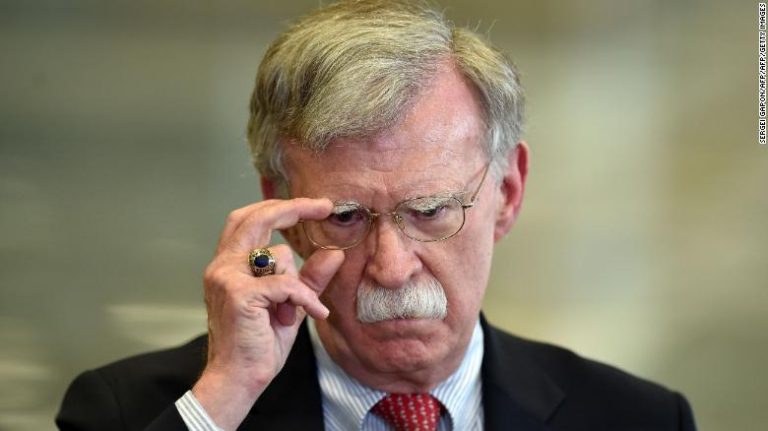
US President Donald Trump on Tuesday fired his National Security Adviser, John Bolton, over claims of having ”strong disagreement with many of his suggestions as did others”.

The US president made the announcement through his official Twitter handle

“I informed John Bolton last night that his services are no longer needed at the White House. I disagreed strongly with many of his suggestions, as did others in the Administration,” Trump tweeted.


READ ALSO:

Trump said in the tweet that he would be naming a new National Security Adviser next week.

Confirming the announcement shortly after Trump’s tweet, Bolton took to his Twitter own handle and said that he offered to resign but the President said they should talk the following day.

“I offered to resign last night and President Trump said, ‘Let’s talk about it tomorrow’,” he tweeted.

Bolton was named Trump’s third NSA in April 2018 after the departure of General Herbert Raymond McMaster.

Inside the administration, he advocated caution on the president’s talks with North Korea and against Trump’s decision last year to pull US troops out of Syria.

He masterminded a quiet campaign inside the administration and with allies abroad to convince Trump to keep US forces in Syria to counter any Islamic State and Iranian influence in the region.

Bolton served as the United States Ambassador to the United Nations from August 2005 to December 2006 as a recess appointee by President George W. Bush.

According to a CNN report last week, there were tensions between top figures on Trump’s national security team which had devolved into all-out hostility, creating a deep disconnect between staffers on the National Security Council, led by Bolton, and the rest of the administration, six people familiar with the matter said.


Our procession was peaceful but police killed 12 of our members—IMN

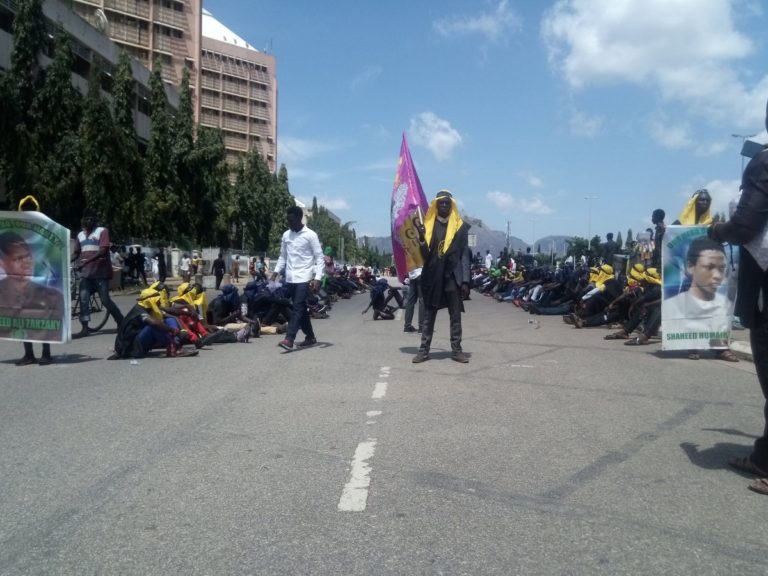
THE Islamic Movement in Nigeria (IMN) on Tuesday says 12 of its members who observed the Ashura mourning peaceful procession across the nation  were killed by men of Nigeria police.

The Movement said the affected members were killed in  Kaduna, Bauchi, Gombe states — three in each of the states while two persons killed in Sokoto and one in Katsina states.

“At least three people were confirmed killed by the police in Kaduna and 10 others injured, some fatally, when thousands of Muslim brothers and sisters trooped out in the early hours of today Tuesday to commemorate the tragic events of Ashura,” Ibrahim Musa, President Media Forum for the Movement said in a statement.

“In Bauchi, reports also have it that three people were killed during the Ashura procession when the police attacked the mourners. Likewise, three other people were killed by the police in Azare, also in Bauchi state. Another three people were killed by the police in Gombe, Gombe State.”

Explaining how the killed took place,  Musa said one person was reportedly killed by the police in Illela, during the Ashura procession, and another person was allegedly killed in Goronyo, both in Sokoto State.

In Malumfashi, Katsina State, he disclosed that another person was reportedly killed, adding that several persons sustained gunshot wounds in Katsina town when the police allegedly opened fire on the mourners.

“Not only during the mourning procession, but afterwards, as well as armed policemen attempted to forcibly make their way into the Islamic Centre of the Movement,” he said.

Musa noted that the 2019 Ashura procession held in all the state capitals of the North and Abuja, maintaining that ended peacefully in Abuja, Jos, Kebbi, Minna, Lafia, Yola, Gusau, Zaria, Kano, Jalingo, Damaturu, Hadejia and Potiskum.

“Today’s show of shame and rage by the police across the states was sequel to the tragic orders given to it by the Inspector general of police, Mohammed Adamu to brutally attack the peaceful Ashura mourners.

“That the mourning procession ended peacefully in places not attacked by the police is sufficient evidence as to who the instigators of violence are whenever we are carrying out our legitimate religious duties.

“We are grateful to Allah the Almighty that has granted us the courage to come out in several cities and villages across the country to commemorate the brutal killing of Imam Hussein (AS), the Grandson of Prophet Muhammad (S) as it is done in several cities across the globe, despite intimidation and threats by the federal government and its agents, acting on behalf of the Saudis by proxy,” Musa said in the statement.

The ICIR Police Spokesperson, Frank Mba did not respond to a text message sent to his mobile phone to to verify the casualty claim made by the IMN  as at the time of filing this report.

The police had on Monday issued a statement warning the group to halt the planned procession.

The police headquarters insisted that members of the Islamic group would be treated as terrorists, if they decide otherwise, thereby directing State Commissioners to prevent the procession from holding.

However, the IMN insisted the procession would hold as planned.

The Federal Government had in July, proscribed the group as a terrorist organisation.

The Kaduna Police Command also accused the protesters of defying prior warning.

However, after the procession, the group claimed the casualty figures might increase due to the alleged gunshot wounds sustained by some of the mourners.


Makinde moves against indiscriminate waste disposal in Oyo

0

GOVERNOR Seyi Makinde of Oyo State has moved against indiscriminate disposal of waste and erection of houses on flood plains in order to ensure an attitudinal change for better hygiene in the state.

This was made known on Tuesday by the state Commissioner for Environment and Natural Resources, Kehinde Ayoola, at a press conference organised by the ministry to sensitise the public on the hazard of poor sanitation.

“The problem of indiscriminate waste disposal, the building of houses on flood plains, with the tendency of all the foregoing even being aggravated by the universal menace of global warming and climate change,” he said.

Ayoola announced the governor’s approval of the establishment of four environment tribunals for the enforcement of the state’s environmental laws.

The tribunals, according to him, are to ensure a clean environment for the people of the state and are to be inaugurated soon by the governor.

He mentioned that the vulnerability of the state capital, Ibadan, to the river and urban flooding is induced by the city’s topography, hence the state’s implementation of the Ibadan Urban Flood Management Project (IUFMP)

“It is in the light of this that the government of the day in Oyo State has expressed its unreserved commitment to the full implementation of the Ibadan Urban Flood Management Project, the State-owned flood risk mitigation project with funding and technical assistance from the World Bank,” he said.

The commissioner said the proposed channelisation of major rivers and water channels in Ibadan under the IUFMP scheme is being processed and would commence soon.

“These include river Ona, Agodi Channel, river Ogbere, Kudeti channel etc. When completed, these massive channels, which are in the mould of the popular Ogunpa channel, would boost the flood-water runoff draining capacity of the city,” he said.

He further underscored the need for the indigenes to fulfil their sides of the bargain, to actualise all listed efforts to combat poor sanitation in the state.

“Our people are required now, more than before, to clear their surrounding and street drain channels, avoid dumping waste improperly, ensure that each household keeps a dustbin and patronise government-approved waste disposal contractors, avoid floodplains, obtain building approvals from relevant statutory bodies before commencing building, among others,” Ayoola said.

Nigeria’s economy shaky as FG reviews crude oil benchmark from $60 to $55 per barrel

0

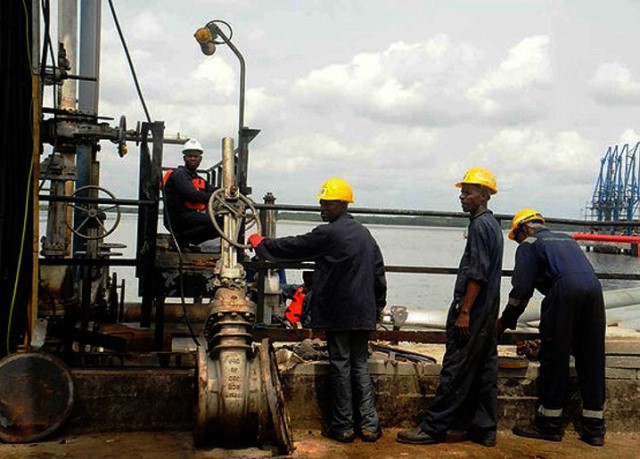
NIGERIA’s Minister of Finance, Zainab Ahmed on Tuesday announced that the country’s crude oil benchmark which was initially pegged at $60 per barrel would be lowered to $55 per barrel to contain the effects of an unexpected price shock.

In a report, Ahmed stated that indicators were pointing to an oversupply of crude oil in the global market which is a major reason for the review of the nation’s oil price ceiling.

“There are strong indications of an oversupplied oil market next year and lowered price expectations for the country’s benchmark crude,” she said.

Ahmed agreed that a lowered forecast for Nigeria’s benchmark price to $55 per barrel from $60 per barrel, would in part help “to cushion against an unexpected price shock.”

Nigeria and the United States are major producers of sweet grades crude oil which is ideal for refining into petrol, but US oil exports increased from 260,000 barrels per day in June to a monthly record of 3.16 million barrels per day putting Nigeria’s oil exports sales in jeopardy.

In August, The ICIR announced Nigeria has its largest oversupply of crude oil in 2019 with an excess of 25 cargoes of crude oil that were unsold for that month as countries that patronised its  crude oil reduced their imports.

This current development bolstered by declining crude oil prices, in the global oil market will affect the federally generated revenue distributed across the three tiers of government as the 2019 approved budget implementation was to be sustained by the $60 per barrel crude oil sales.

Revenue from the Federation Account is shared between the three tiers of government with the Federal Government staking claim to 52.68 per cent, the 36 state governments share 26.72 per cent and 20.60 per cent is allotted to the 774 local governments.

Proceeds from oil constitute about 90 per cent of the country’s total revenue, however, the 2019 budget, signed by President Muhammadu Buhari in May, was based on oil production of 2.3 million barrels per day with an oil benchmark price of $60 per barrel.

Ahmed also hinted that Nigeria currently stands as Africa’s largest oil exporter producing about 2.3 million barrels per day of crude oil and condensates.

However, Nigeria, a signatory to the Organization of the Petroleum Exporting Countries (OPEC), agreement to cut its supply of crude oil production to 1.685 million barrels per day, indicating it has failed to meet OPEC’s target.

OPEC and a Russia led oil-producing nations formed an alliance tagged as OPEC+ which had agreed to cut down inventories and remove 1.2 million barrels per day of crude oil from global markets on January 1, 2019 in a bid to raise oil prices.

Despite this, Russia’s oil output in August  exceeded its quota under the OPEC+ agreements.

Prince Abdulaziz bin Salman, a son of the  Saudi king, and a long-time member of the country’s delegation to OPEC, in a news report, said the pillars of Saudi Arabia’s policy would not change and a global deal to cut oil production by 1.2 million barrels per day would be maintained.

He added that the so-called OPEC+ alliance, made up of OPEC and non-OPEC countries including Russia, would be in place for the long term.

Eritrea, North Korea, Turkmenistan…seven other countries dangerous to be a journalist in — CPJ

0

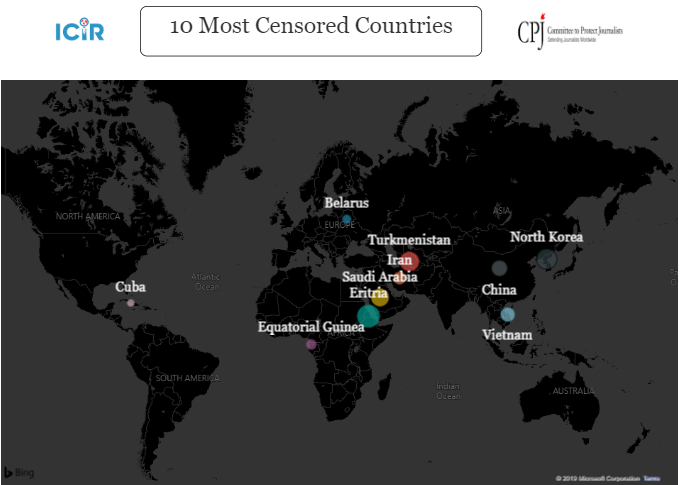
THE Committee to Protect Journalists (CPJ) has identified 10 countries that deploy sophisticated digital censorship, surveillance alongside imprisonment and harassment to silence independent journalism. 

The CPJ revealed the list of the ten most censored countries in a special report published on Tuesday.

Eritrea was ranked the first country that represses independent journalism, followed by North Korea and Turkmenistan.

Other countries that made the list of the anti-free press were Saudi Arabia, China, Vietnam, Iran, Equatorial Guinea, Belarus, and Cuba.

The CPJ’s ranking was based on the findings of research it had conducted into the censorship tactics used by authoritarian governments.

These tactics range from imprisonment, repressive laws to surveillance of journalists and restrictions on internet and social media access.

CPJ listed more tactics that these governments use to restrict press freedom to include the existence of criminal defamation or “false news” laws, digital and physical surveillance of journalists.

Other measurements were the blocking of news websites, restrictions on privately-owned media, exclusion of foreign correspondents, and targeted hacking or trolling campaigns.


“These countries flout international freedom of expression norms and guarantees by jailing reporters, using the state media as a mouthpiece for the regime, and forcing independent journalists into exile,” the report read.

The report mentioned that China, Saudi Arabia, Vietnam and Iran make use of sophisticated surveillance technology and targeted online campaigns to silence independent press.

“The internet was supposed to make censorship obsolete, but that hasn’t happened. Many of the world’s most censored countries are highly wired, with active online communities,” said CPJ Executive Director Joel Simon

“These governments combine old-style brutality with new technology, often purchased from Western companies, to stifle dissent and control the media.

“Censorship is alive and well,” he said.

Court orders permanent forfeiture of Diezani’s $40m jewelries, iPhone

0

ON Tuesday, the Federal High Court in Lagos ordered the permanent forfeiture of the 2,149 pieces of jewellery and customised iPhone, valued at $40million recovered from the former Minister of petroleum resources, Diezani Alison-Madueke.

While ruling, Justice Nicholas Oweibo held that Diezani, through her lawyer, Awa Kalu (SAN), failed to give reasons why the items should not be permanently forfeited to the Federal Government.

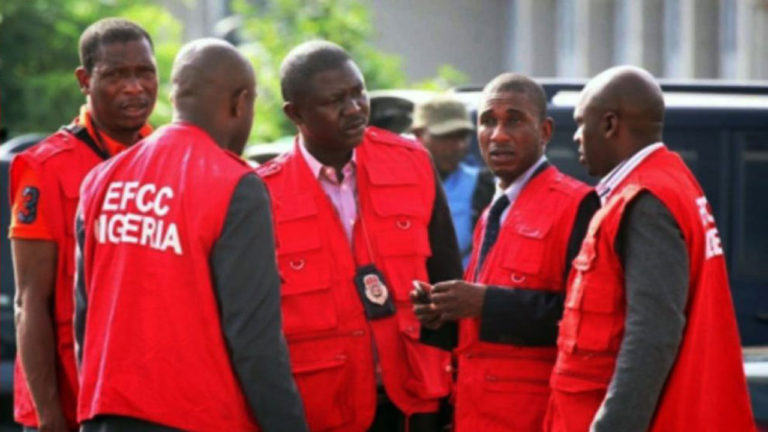
The Economic and Financial Crimes Commission (EFCC) had informed the judge that the jewellery and iPhone were sensibly suspected to be procured with fraud proceeds, stating that it was beyond Diezani’s legitimate earnings.

The ICIR reported that the court in July ordered the temporary forfeiture of pieces of jewellery and a customized gold iPhone belonging to Alison-Maduke.

The Commission secured the interim forfeiture of the items  following an ex parte application it filed.

In granting the order, Justice Oweibo directed the EFCC to publish the interim forfeiture order in any national newspaper within 14 days for the respondent or anyone interested in the items to show cause why they should not be permanently forfeited to the Federal Government.

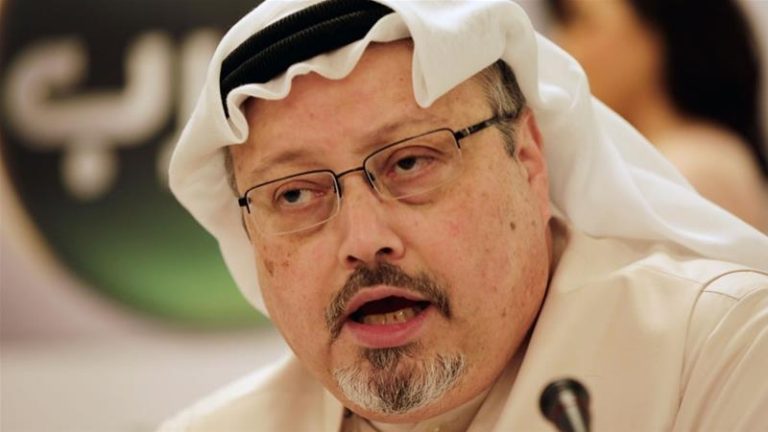
‘Do not do it, you will suffocate me’—shocking recordings from Khashoggi’s last moments

AFTER almost one year, audio recordings of the horrifying conversations between the 15-man Saudi hit squad and their victim, Jamal Khashoggi, Washington Post journalist, has been revealed to the public for the first time by the Turkish authorities.

Daily Sabah, a Turkish newspaper on Monday shared one of the recordings prior to and during the October 2, 2018 murder of the dissident journalist at the kingdom’s Istanbul consulate.

Khashoggi was killed and dismembered by a group of Saudi operatives in the country’s consulate in Istanbul on October 2, 2018 after he arrived at the consulate building to complete marriage procedures.

The newspaper revealed that the audios were obtained by Turkey’s National Intelligence Organization (MIT) right after the gruesome incident, and were shared with related Turkish authorities carrying out an investigation into the incident, as well as with international officials and institutions.

One of the recordings of the conversations between Maher Abdulaziz Mutreb, the number two man of the hit squad, and Salah Muhammed Al-Tubaigy, the head of Forensic Evidence at the Saudi General Security Department who was in charge of dismembering Khashoggi’s body was are stamped 1:02 p.m., just 12 minutes before Khashoggi arrived at the consulate building to complete marriage procedures.

In the recording, Mutreb is heard asking Al-Tubaigy if it was possible to put the body in a bag? to which Al-Tubaigy response was– “No. Too heavy, very tall too. Actually, I’ve always worked on cadavers. I know how to cut very well. I have never worked on a warm body though, but I’ll also manage that easily. I normally put on my earphones and listen to music when I cut cadavers.

“In the meantime, I sip on my coffee and smoke. After I dismember it, you will wrap the parts into plastic bags, put them in suitcases and take them out”.

The ensuing conversation had  Al-Tubaigy saying, “My superior at the Forensic Evidence does not know what I’m doing. There is no one to protect me.”

Few second late, Mutreb asks whether the “animal to be sacrificed” has arrived. At 1:14 p.m., while  an unidentified member of the hit squad says “(he) is here.”

Khashoggi is then ushered into the room by Mutreb.

According to the released recordings, Khashoggi is greeted by a familiar face or someone he knows, gauging from his reaction. He is told that the Consul General Mohammad al-Otaibi is also present in the building. First, he is politely invited into the consul’s office on the second floor. When he starts to get suspicious, he is pulled by the arm. He then says;”Let me go, what do you think you’re doing?”

“Please sit. We have to take you back [to Riyadh]. There is an order from Interpol. Interpol demanded you be returned. We are here to take you.”

However, the journalist said that there were no lawsuits against him, telling his captors that his girlfriend was waiting for him outside.

Mutreb was later heard hassling the journalist to send a message to his son telling him that he was in Istanbul and not to worry as he won’t be able to reach him for a while.

“I shouldn’t say kidnapped?” Khashoggi was heard firing back at his murderers. “How can such a thing take place at a consulate? I’m not writing anything,” he kept insisting.

Write it, Mr Jamal. Hurry up. Help us so we can help you because in the end, we will take you back to Saudi Arabia and if you don’t help us you know what will happen eventually,”  Mutreb said in response

There is a towel here. Will you have me drugged? the journalist queried. “We will put you to sleep,” the henchman had said.

After he was drugged, Khashoggi says “do not keep my mouth closed. I have asthma. Do not do it, you will suffocate me.” These were Khashoggi’s last words.

He was later suffocated by his killers with a plastic bag.  Before Khashoggi gives his final breath, scuffling and suffocation sounds continued for a while. Then the postmortem phase begins, which include sounds of dismembering Khashoggi’s body with an autopsy saw for the next 30 minutes.

Agnes Callamard, the United Nations’ special rapporteur on extrajudicial executions, in her report stated that evidence suggests Saudi Arabia’s Crown Prince Mohammed bin Salman (MBS) and other senior Saudi officials were liable for Khashoggi’s murder and called for sanctions to be imposed on the kingdom.

Initially denying and later downplaying the incident as an accidental killing in a fistfight, Riyadh finally admitted almost three weeks after the disappearance that Khashoggi was murdered in a premeditated fashion but denied any involvement of the royal family.


Tribunal rules on presidential election petition on Wednesday

THE Presidential Election Tribunal has announced that it will deliver judgement on Wednesday on the petition filed by Atiku Abubakar, former Vice president and candidate of the Peoples Democratic Party (PDP), against the election of Muhammadu Buhari, who flew the flag of the All Progressive Congress (APC).

The PDP and its candidate are seeking to nullify the election of president Muhammadu Buhari in the February 23 poll.

Buhari emerged winner of the 2019 election to beat Abubakar with a total of 15,191,847 votes, which represents 56.94 per cent of the total vote against the PDP candidate who scored 11,262, 978 (42.22 per cent).

However, the PDP insists that the elections were marred by irregularities and is asking the tribunal to declared Abubakar as the duly elected president.

The European Union  Election Observer Mission in its report on the election also said the 2019 elections were marked by severe operational and transparency shortcomings, electoral security problems and low turnout.

Boko Haram: Thousands of children held in military detention – Report

0

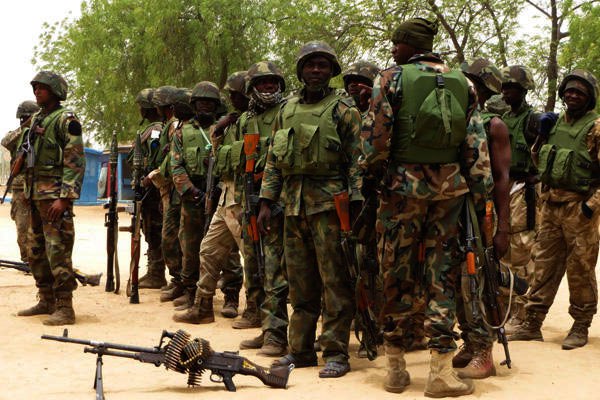
THE Nigerian military is holding thousands of children in horrific conditions in detention camps on suspicion of being members of the dreaded insurgent group, Boko Haram, Human Right Watch (HRW) said in a report released today.

HRW said children are held without charge for months or years in squalid and severely overcrowded military barracks, with no contact with the outside world.

It said some were arrested at age five years, with some spending years in military detention.

The 50-Page-report which was made available to The ICIR, titled “They didn’t know if I was alive or dead: Military Detention of children for suspected Boko Haram involvement in Northeast Nigeria”, documents how the Nigerians authorities are detaining children, often based on little or no evidence.

HRW in its report, recommended that Nigerian authorities should immediately release children currently in military custody

The report further stated that children described beating, overwhelming heat, frequent hunger and being packed tightly in their cells with hundreds of other detainees like razor-blades in a pack, as one former detainees said.

The body’s  Advocacy Director, Children’s Rights Division, Jo Becker, during a chat with newsmen in Abuja on Tuesday said “children are being detained in horrific conditions for years, with little or no evidence of involvement with Boko Haram, and without even being taken to court”.

According to her, many of these children already survived attacks by Boko Haram. The authorities’ cruel treatment adds to their suffering and victimises them further, she observed.

https://www.facebook.com/TheICIR/videos/1121423841384297/

“The Nigerian government should sign and put into effect a United Nations handover protocol to ensure the swift transfer of children apprehended by the military to child protection authorities for rehabilitation, family reunification, and community reintegration. Other countries in the region, including Chad, Mali, and Niger, have already signed such protocols.”

Between January 2013 and March 2019, Nigerian armed forces detained over 3,600 children, including 1,617 girls, for suspected involvement with non-state armed groups, according to the UN. Many are detained at Giwa military barracks in Maiduguri, the main military detention facility in Borno State.

“In June 2019, Human Rights Watch interviewed in Maiduguri 32 children and youth who had been detained as children at Giwa barracks for alleged involvement with Boko Haram. None of the children said they were taken before a judge or appeared in court, as required by law, and only one saw someone who he thought may have been a lawyer. None were aware of any charges against them. One was detained when he was only 5 years old.”

“Nigerian authorities arrested the children during military operations, security sweeps, and screening procedures for internally displaced people, and based on information from informants. Many of the children said they were arrested after fleeing Boko Haram attacks on their village or while seeking refuge at camps for internally displaced people. One said he was arrested and detained for more than two years for allegedly selling yams to Boko Haram members.”

She also said girls abducted by Boko Haram and forced to become Boko Haram members’ wives, were being maltreated and facing discrimination from soldiers and their communities.

“Approximately one-third of the children interviewed said security forces beat them during interrogation after their arrest or at Giwa barracks.”

Quoting from a detainee, Becker said, “One girl who was forced to marry a Boko Haram member said that after soldiers captured her, “the soldiers were beating us with their belts, calling us names and telling us they will deal with us because we are Boko Haram wives. Others said they were beaten if they denied association with Boko Haram.”

She continues, “Children described sharing a single cell, approximately 10-by-10 meters, with 250 or more detainees. They said the stench from a single open toilet was often overwhelming and that detainees sometimes fainted from the heat. In Maiduguri, the average annual maximum temperature is 35 degrees Celsius and temperatures can exceed 40 degrees.”

“Nearly half of the children said they saw dead bodies of other detainees at Giwa barracks. Many said they suffered frequent thirst or hunger.”

“Fifteen of the children had been detained for more than a year, and some had been held for more than three years. None had been allowed to contact family members outside the detention center, nor had the authorities contacted their families. Such cases may constitute enforced disappearances, a serious human rights violation.”

She further disclosed that the notorious Giwa Barracks in Borno State, has a holding cell for boys under 18 with children as young as 7, or even younger.

“Children said that Giwa has a cell for boys under 18 with children as young as 7, or even younger. The military also detains children in adult cells, where children said food and water were scarcer and conditions even more crowded. Very young children and babies are kept with their mothers and older girls in a separate cell. Three girls said they saw male soldiers making sexual advances toward female detainees or removing girls from the cell for long periods for what they believed was sexual exploitation.”

“The military provides no formal education or rehabilitation activities for children at Giwa. Children reported that their only activities were prayer, watching television, and informal lessons that some children provided for others. The overcrowded conditions made physical activity impossible, and some children said they developed sores from restricted movement.”

“Since January 2013, Nigerian authorities have released at least 2,200 children from detention, but we do not know the current number of children who may still be detained.  According to the UN, 418 children were detained in 2018, a significant decrease from 2017, when over 1,900 children were detained.”

“Following their release, some children said they suffered social stigma from presumed involvement with Boko Haram, even if they had no ties to the group. Nearly all said they wanted to go to school, but many said that available schools were too far away, or that they didn’t have money for transportation.”

“Nigerian authorities should immediately release children currently in military custody. If military or intelligence authorities have credible evidence of criminal offenses by children, they should transfer them to civilian judicial authorities to be treated in accordance with national and international juvenile justice standards.”

“Nigeria faces formidable challenges from the Boko Haram insurgency, but detaining thousands of children is not the answer,” Becker said. “Children affected by the conflict need rehabilitation and schooling, not prison.”

But the Nigeria Defence Headquaters in a statement released on  September 9, by Onyeama Nwachukwu, Acting Director of Defence Information, denied alleged detention of children in military facilities.

Nwachukwu, a Colonel said HRW report is not only false but capable of undermining the joint efforts of the armed forces and other security agencies to restore peace in the North East.

It said contrary to the allegations, the military actually manages children in the North East theatre as victims of war and not as suspects.

The statement reads, “It is an established fact that Boko Haram Terrorists (BHTs) indoctrinate women and children who they use as suicide bombers in the theatre of operations. In the conduct of their operations troops arrest these children while attempting to detonate explosives and provide tacit support to insurgents such as intelligence on troops movement and deployments.”

“Contrary to HRW claims however, the AFN manages children in the North East theatre as victims of war and not as suspects. Apprehended children are kept in secured places, where they are adequately fed, profiled and de-radicalized before their release.”

“This was evidently captured in the HRW Report, where it stated that “since January 2013, Nigerian Authorities have released at least 2,200 children from detention nearly all without charge. This statement further attests to the fact that the children are released to appropriate authorities after de-radicalization efforts by appropriate government agencies and NGOs.”

It is expedient to state that only profiled Boko Haram and ISWAP terrorists are held in detention pending their prosecution by appropriate prosecuting agencies, as the AFN is not vested with the power of prosecution. It is also necessary to clarify, that aside the set of children involved in acts of terrorism, some adult female Boko Haram terrorists arrested in terrorists’ enclaves during combat have also been found to be with children.”