Home Blog Page 2292

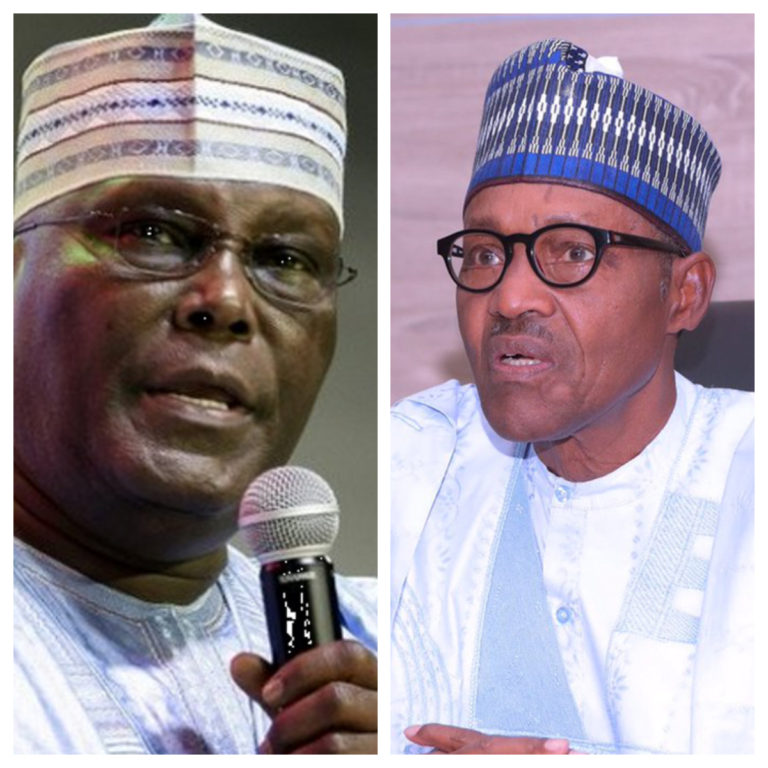
VERDICT: After 177 days of legal fireworks, tribunal throws out Atiku’s case

0

THE Presidential Election Petition Tribunal sitting in Abuja on Wednesday dismissed the petition of the Peoples Democratic Party (PDP) and its presidential candidate, Atiku Abubakar challenging the re-election of President Muhammadu Buhari.

This is coming 177 days after the PDP and its candidate in the February 23 election submitted their complaint before the Tribunal asking for the cancellation of the result of the election that produced president Buhari.

The Tribunal started hearing on the matter on March 18 in a case where president Buhari  and his party gathered 18 Senior Advocates of Nigeria (SANs) as defence counsel led by Wole Olanipekun, a former president of Nigeria Bar Association.

The PDP and Atiku had in March  filed a petition signed by 31 lawyers, 19 of which were Senior Advocates of Nigeria (SANs) before the Tribunal challenging the outcome of the February 23 election,

However, a five-man tribunal, led by Justice Mohammed Garba, in the lead judgement, on Wednesday said the petitioner did not prove its case beyond a reasonable doubt, dismissing the petition and urged the parties to bear their respective costs.

Other members of the panel were Justices Abdul Aboki, Joseph Ikyegh, Samuel Oseji, and Peter Ige.

In his ruling, Mohammed affirmed the decision of the panel who unanimously resolved all the five issues raised in the case against the respondents.

“In the final result,  I have come to the conclusion, which is inevitable and unavoidable, that the petitioners have not discharged the burden of proof required of any of the grounds of the petition in paragraph 15 of the petition,” he said.

The tribunal agreed that the petitioners presented electoral materials, including result sheets  used for the election to the tribunal without providing evidence of any of their 62 witnesses to the documents in their bid to prove the allegations in their petition.

“This petition is accordingly, and hereby dismissed in its entirety,” Mohammed concluded.

The five-man panel also dismissed the petitioner’s request for disqualification of President Buhari election for not possessing the required educational qualifications.

This was as it also faulted the documents tendered by the petitioners to prove the allegations over-voting and claim that the election results were transmitted electronically by card readers.

The nine-hour judgment which started around  9:30 a.m on Wednesday ended at 5:58 p.m. when the other members of the panel had delivered their supporting opinions.

The road from trial to final judgement

The petitioners in contesting the February 23 presidential election prayed the tribunal to order a re-run in 11 states claiming the elections we marred by irregularities, wrongful recording of results among other infractions.

The PDP and Atiku were asking the tribunal to invalidate the results initially announced by Independent National Electoral Commission (INEC), declaring  Buhari, winner of the 2019 presidential elections having polled a total of 15,191,847 votes.

In the petition filed by the PDP, it stated that Buhari did not win the highest number of votes in the elections. The opposition party argued that its investigations into the actual results from the elections  showed that it’s candidate won the elections with 18,356,732 votes instead of the 11,262,978 votes declared for him by INEC.

The allegation regarding the server also proved to be a contentious issue brought by the PDP and its presidential candidate in the petition as they accused INEC of storing the real results of the 2019 election in a central server.

The PDP also called several INEC staff as witnesses, all of whom admitted to sending results to a central server.

However, INEC declined to call a witness at the tribunal while president Buhari only presented seven witnesses. The APC also declined to call any witness stating that PDP’s witnesses were in support of the points raised by the APC.

INEC’s lawyer, Yunus Usman, said the claim by the PDP that results were transmitted to a central server stands against the provisions of the constitution. The INEC’s lawyer said the law prohibits electronic transmission of results.

The PDP argued that president Buhari did not meet the minimum educational requirements for emerging as a candidate for the election.

It equally alleged that the schools Buhari claimed to have attended did not exist during those periods and that his claim on an INEC form that his school certificate was with the military board was false and thus the president lied under oath.

The lawyer representing the APC said the PDP failed woefully in the number of witnesses it presented. He described as unfortunate the fact that the PDP presented only 62 witnesses to defend an election that held in over 119, 000 polling units.


‘I did not encounter any students or order their shooting,’ replies Ekiti First Lady

0

By DANIEL Whyte


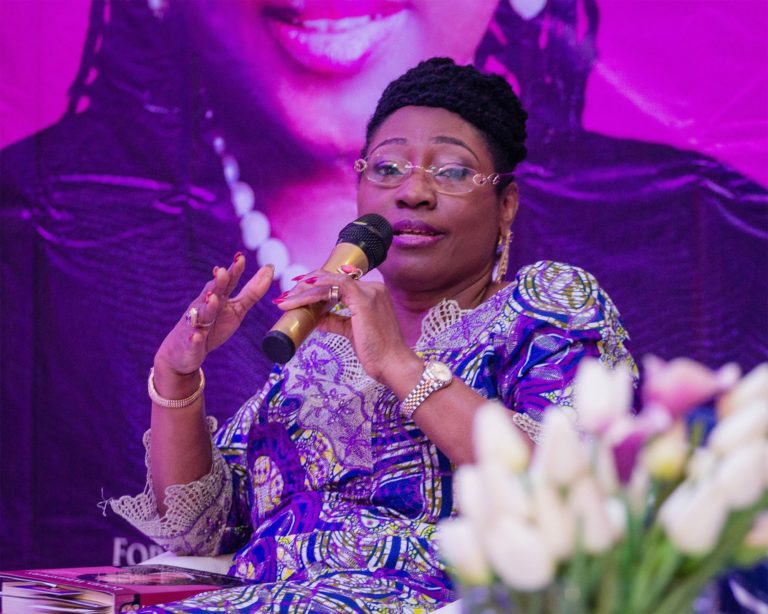
WIFE of the Governor of Ekiti State, Erelu Bisi Fayemi, has denied allegations that she ordered the shooting of students at the Federal University Oye-Ekiti (FUOYE) on Tuesday.

Pandemonium erupted as disagreement between officials of the Nigeria Police and students turned violent following a protest over lack of power in the host communities of the institution.

When the dust raised by the violence settled, two students were pronounced dead while two others are currently receive treatment. Shortly after the incident, the First Lady was accused of ordering the shooting of the students.

In a response posted via her Twitter handle, @bisiafayemi, the wife of the state governor denied ever ordering that the students be shot to disperse them.

She noted that the students had concluded the protest before she got to the town and everywhere was peaceful.

“There was no sign of any trouble. We proceeded to the venue of my town hall meeting at the civic center with women in Oye Local Government. The atmosphere was very peaceful, the women were singing and dancing and there was nothing to indicate that anything was amiss,” she said.

The First Lady confirmed that there was disturbance outside the venue of the event and she suspected that students of the federal university, “and possibly infiltrated by local thugs”, had re-grouped and were trying to gain entrance.

She said the security officers prevented this from happening, without stating how this was achieved.

“We finished our program, and by the time we got outside, we found that vehicles from my convoy and those of my guests that were parked outside the venue had been vandalised,” she narrated.

“As we were driving out of Oye town, we encountered at least two roadblocks that the students had mounted to prevent the movement of vehicles. I could see students/thugs throwing stones and large sticks at us as we drove by.

“However, the casualties that were recorded did not take place while I was there. There are eye-witnesses, photographs and video footage to confirm this. There are reports circulating that the crisis occurred because I refused to address the protesting students.”

She described the allegations as “totally false”, reiterating that the students had dispersed before she arrived and she did not encounter the protesters.

“It is possible, as I stated earlier, that the group that came to the venue trying to gain access with sticks and stones in hand might have included local hoodlums, but there was no way of telling the difference,” she said.

“I am scandalised and shocked beyond words to hear that I instructed security officers to shoot at students.”

She also added, “I firmly believe in citizens’ rights to protest on issues of concern” stating that she earlier met “members of a Female Sweepers Association, who were protesting a cut in their monthly salary by the previous administration.

“They wanted me to help them. They were very polite and pleasant.”

“I listened to them and promised to pass on their message to the appropriate authorities. These two protests happened on the same day. If I had met a group of protesting students, as a social justice activist myself, I would have listened to their complaints and addressed them.

“I am deeply saddened that at least one fatality has been recorded. As a mother my heart bleeds. All these students are my children, and no mother prays to weep over their offspring.”

“I extend my sincere condolences to the family concerned, and I wish those who are still receiving treatment a speedy recovery. The Obirinkete Tour has been suspended pending a review of what transpired yesterday,” she concluded.

Mnangagwa pays tribute to Mugabe, as body arrives Zimbabwe

0

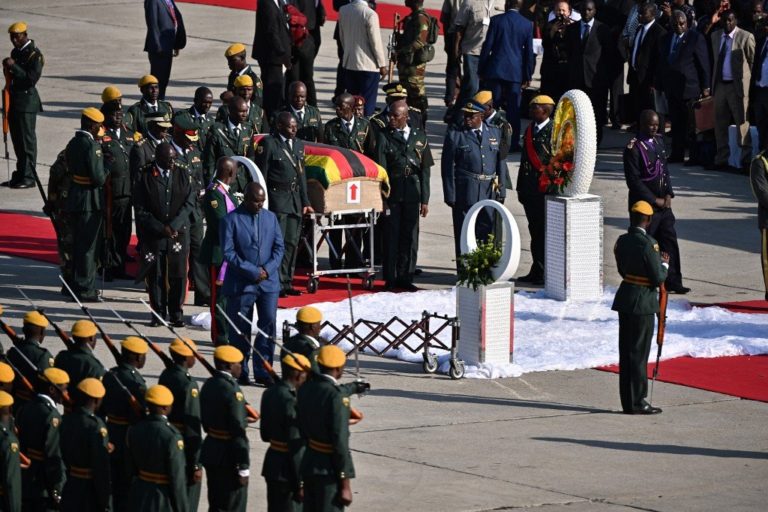
THE remains of the late former president Robert Gabriel Mugabe has arrived his home country, Zimbabwe.

Mugabe’s remains arrived at the domestic terminal of the RG Mugabe International Airport on Wednesday, the country’s Ministry of Information Publicity and Broadcasting said on Twitter @InfoMinZW.

In a series of video threads Zimbabwe’s President, Emmerson Dambudzo Mnangagwa, welcomed the Mugabe family as they arrive with the body of the late former president at the airport.

Mugabe reportedly died on September 6, in Singapore where he was believed to have received treatment for an undisclosed illness. Still, his death has elicited mixed reactions over the life and times of the Zimbabwe hero.

In President Mnangagwa’s remark, he said, the occasion served as a reminder for the living to guard jealousy the gains of independence and the liberation struggle.

Paying tribute to the nation’s hero, he said Mugabe served his people, country, and continent exceptionally, stating that he abandoned his education for the liberation struggle.
“He was a survivor of the Chimoio bombing,” he said
Mnangagwa said, “As Africa rises and takes its rightful place as a powerhouse on the world arena, there is no place for hate, division, and disunity among us, within the continent. To quote Julius Mwalimu Nyerere; “Without unity, there is no future for Africa”.
Late Mugabe before his demise was a former revolutionary leader who fought  against British imperialism. He was Zimbabwe’s prime minister between 1980 and 1987 and thereafter became president. He held onto this position until late last year.

In November 2018, after spending 37 years in power, Mugabe resigned amid wild jubilation in the country’s parliament and on the streets.

Another undergrad confirmed dead in Oye Ekiti Varsity

0

By Daniel Whyte


A SECOND student of the Federal University Oye-Ekiti, FUOYE, Joseph Okonofua, has been confirmed to have died at the Federal Medical Center, Ido, Ekiti state.

Okonofua, fondly called Joseph Icon by friends, is a third-year student of the Faculty of Education. He was also famous as a comedian in the school.

It was gathered that he sustained severe injuries after he was shot at the stomach amid the violence that broke out yesterday in Oye-Ekiti.

Upon his arrival at the university’s health centre, he was immediately transferred to a medical centre in Ido-Ekiti where he gave up the ghost.

Another student, Adesola Ayomide, said he was the only person with Okonofua as well as Lekan, another injured student, on Wednesday.

“Nobody showed up except the Faculty of Education President, Olanrewaju Olagunju, who came in the evening,” he said.

Ayomide narrated: “They took him to the theatre since 11.00 pm yesterday night. Although we were expecting him by 2.00 am this morning, but they were just telling us to wait that they wanted him to rest. Not until 7.00 am this morning did they break the news to us. We went to see Lekan at the other ward and when we asked for Joseph, a man told us he has been taken to the mortuary.”

“I can’t just believe it. All I knew was that before he left the ward to the theatre, he was just shouting, ‘Pain, pain, pain’,” he added.

Another student-witness, who identified himself simply as David out of concerns for personal safety, said Okonofua had gone to the rescue of another student, Azeez Elijah, who was hit on the head by tear gas, when he got shot.

“He carried Elijah and took him to safety,” the witness said.

“It was after then we heard gunshots. Upon hearing gunshots, we saw him on the ground and he had fallen, so people started rushing him and took him away.”

Yesterday, Oluwaseyi Kehinde, a new intake at the Department of Crop Science and Horticulture, was also shot dead, while Elijah received severe injuries to the head. The students had earlier in the day taken to the streets to protest frequent power outages, which they said prevented them from learning properly.

On Wednesday evening, the management announced that the school has been shut indefinitely and proscribed student union activities.

[Live Update] Buhari vs Atiku: Tribunal ruling on 2019 election

The Presidential Election Petition Tribunal (PEPT) has denied the Independent National Electoral Commission (INEC’s) request which sought to dismiss Atiku Abubakar’s prayer to disqualify Muhammadu Buhari as the President on the ground that he was not qualified to contest for the 2019 presidential election.

The tribunal is at this time delivering judgement on the petition filed by Abubakar, the presidential candidate of the Peoples Democratic Party, PDP against Buhari, the All Progressive Congress APC Party’s candidate’s election.

The tribunal also dismissed preliminary objections filed by INEC asking the court to dismiss the PDP’s petitions on the 2019 presidential election.

The tribunal further dismissed INEC’s allegation that PDP’s counsel, Levi Uzoukwu, is not a legal practitioner.

Arguments by President Buhari that Abubakar did not qualify to file the suit challenging his emergence as duly elected was also dismissed.

The allegation that President Buhari used government fund to lure voters as contained in the petition was also struck out.

The tribunal also dismissed the allegation that President Buhari unduly used to his advantage instruments of the state such as security agencies was also struck out.


1:39 The Tribunal resumes sitting

1:42 Tribunal reads out the petitions of the petitioners to include that the election of the second respondent is invalid.

That the second respondent as at the time of the election was no qualified as at the time of the election.

1:57 The case of the first respondent is that the second respondent was duly nominated, he conducted the election and won.

1:58 The second respondent was declared the winner and given the certificate of return after which the matter was subjected to the tribunal.

1:59 Section 131 and 137 of the Constitution are relevant to the tribunal and a person can contest if he is a citizen of Nigeria, has attained the age of 40 years…

2:00 A person cannot contest for president if the person is a lunatic or declared incompetent due to medical reason.

2:02 If the person is empowered by the civil service, a member of any secret service or has presented a forged certificate to INEC.

2:04 The petitioner insisted that the second respondent does not have the primary school certificate but the second respondent maintained he has the required certificates and post-primary and secondary certificates.

2:06 The second respondent says he went to military school from 1961 to 1963.

2:07 The defense Counsel, however, noted that other qualifications does not matter but the second respondent has the primary school certificate which is the requirement mandated by the electoral commission.

2:09 Based on the provisions of the Electoral Act, he says other requirements may not matter except for the statutory requirement.

2:11 The Form Exhibit A has been taken care of on Section 31 of the Electoral Act. He says the candidate is not required to attach his certificate before he is considered competent to contest for the election.

2:16 The Electoral Act says it is not only the presentation of certificate that makes the second respondent or a candidate qualified to contest for the election.

2:18 The petitioner’s case is frivolous

2:19 The second respondent went through the military after his secondary school education but the petitioners in Paragraph 4 submitted that the second respondent gave false information and submitted to INEC when he said all the information and credentials have been submitted to the secretary to the military board.

2:20 The Army further disclaimed the claim of the petitioner.

2:21 With no one to confirm the authenticity of the report, and no witness to cross-examine, the court insisted such document must be submitted through by the source….the maker must be called to testify the credibility of the document citing other similar cases.

2:25 Brig. General Olajide Olaleye did not support the position of the petitioner that the second respondent does not have a school certificate.

2:26 For the record, Olajide said available record shows Buhari applied to join the military in 1961 and the application was received and he was recommended fit for the commission.

2:27 “I consider he would pass maths, English..It is a practice that before candidates are shortlisted in the Nigerian Army, it is cross-examined, however, there is no record that this was followed in the 1960s”

2:29 Neither the original copy or certified true copy or statement of result of WAEC is in his personal file. what i have said here is what is contained in his perosnal file, Brig Olaleye had said.

2:30 the Nigerian Army holds the retired senior officer in very high esteem and respect but will not be a party to any controversy to his eligibility to any party. Suffice to say that Buhari rose to the enviable rank before emerging to the Head of State of our dear country in 1983.

2:31 This statement apparently, clearly, unequivocally confirms that the second respondent actually obtained WAEC and passed credit in 1961 in 5 subjects …the statement confirm the authenticity of R19,20,21, 22 and 23 presented by the second respondent.

2:34 While Brig. Olaleye said the original copy or the Certified True Copy is not in his personal file, this does not exclude the inference that the army may have the certificate having regard to the fact he stated, which again, i repeat that the entry made at Form 911A indicated that the former Head of State obtained the WAEC in 1961.

2:35 if indeed the second respondent did not present a certificate to the Army when he was commissioned as an officer, where did the second respondent get the record on Form 999A in its record that was presented. The only reasonable inference is that the second respondent presented his WAEC certificate upon joining the Army from which the army extracted the information.

2:47 The petitioner who alleged Buhari did not have the required conceded in Paragraph 1.10 in the first respondent final address…they cannot, therefore, rely on the position of the first respondent qualification.

2:48 The petition claimed the first respondent was sponsored by the second respondent and the first respondent duly cleared the second respondent.

2:50 It has not be shown that WEAC and the University of Cambridge are interested in this proceeding whether there is variation in names os Buhari in exhibit 19 and 21, whether it is Mohammed with O or Muhammed with U. The petitioner stated that the document cannot be said to belong to the second respondent because no facts were placed to confirm the name.

2: 52 But the first respondent insisted the name could be born by the same person referring to the case of Fayose and Dr. Levi. The variations in names are issued to the same person in respect of which the exhibits were issued.

2:54 from the position of the court, the names with O and U both oral and documentation belongs to the same person. I am of the view that there is no doubt that Exhibit R19 and 21 raltes to the second respondent.

2:55 I have no doubt in my mind again that the petitioners have not proofed or established that the second respondent does not have the qualification to contest under section 131, 137, 138 of the constitution.

2:56 The petitioners have failed to prove or show that Buhari had submitted to the first respondent an affidavit containing false information of fundamental nature in aid of his qualifications for the election as prescribed by section 35 (1) of the Evidence Act 2011 and certain by the decision of the apex court.

3:03 There must be eyewitnesses too. Both forms and witnesses are vital in contesting the illegality and lawfulness of votes and the result of an election. One cannot be a substitute for the other. It is not enough for the petitioner to tender only documents. it is incumbent for him to leave evidence of wrongdoings irregularities ….which affected substantially result of the election.

3:07 The petitioner insisted that by amendment of the Electoral Act, Section 52, voting shall be in accordance and determined by the INEC. INEC is empowered to submit result through the INEC Server.

3:09 It is as a result of the amendment that INEC could as well use the manual process.

3:10 By the power vested in me, I said INEC used a manual process for the conduct of the 2019 election, dealing with accreditation and voting procedures.

3:12 At the close of voting, counting, collection from polling units to ward levels, the presiding officers shall council all the unused papers, count all the votes in the presence of all polling agents, do a recount which will only be done once.

3:17 As can be clearly seen, the collation and distribution as shown on exhibit 28 is manual. From the polling unit under the electoral Act is manual. There is no provision from exhibit B27 or 28, or transmission of election result electronically either by the use smart reader or other means at any level of an election.

3:18 There is no provision in the amended electoral Act that empowers the first respondent (INEC) or any of its officers….the regulations and guidelines which allows transmission of any result electronically to any server.

3:24 The electoral law outlaw the use of electronic voting. It is stipulated to have been prohibited. However, even if there is no electronic voting, there is no provision of the electoral act which provides for the collation and transmission of election result across Nigeria.

3:25 The use of card readers have been considered by the Supreme Court in a number of cases but the supreme court has jettisoned the law on the position of the use of the card reader in an election and interpreted Section 52 (1B) of Act 2010 which provides the temporal prohibition of the e-voting machines in a number of cases, citing Wike and Peterside as instances.

3:37 In paragraph 18 and 19 of the witness statement of oath, he concluded, “bearing a simplified and common understanding of the server or a computer is a device or programme dedicated to managing  networks, resources such as storage, communication, security and centralised applications and  database management system, and acknowledging the INEC’s guideline which outlines a transparent and integrated electronic process of voters accreditation, vote collation and transmission. Indeed, there existed a robust system of servers which extensive use in the Presidential election is undeniable.

3:47 In effect, the evidence of PW3, 4, 16, 17, 36 and 59 together with the expert report and Exhibit P91 cannot be relied upon that there was indeed on fact, there was INEC Server or Servers as the case may be, wherein results were transmitted electronically from the smart card readers in the 2019 election. The pieces of evidence given by those witnesses lack the value to prove such an allegation.

15:54 That the first respondent officials did not correctly collect votes from polling units in Abia, Anambra, Adamawa, Bayelsa, Akwa Ibom, Ebonyi, Bauchi, Benue, Borno, Cross River, Delta, Edo, Ekiti, FCT, Enugu, Gombe, Imo, Jigawa, Kaduna, Kebbi, Kogi, Nasarawa, Lagos, Niger, Ogun, Osun, Ondo, Oyo, Plateau, Rivers, Sokoto, Taraba, Yobe and Zamfara State.

15:56 the petitioner did not call any witnesses in respect of all these sundry allegations made in each of these states to give evidence of wrongdoings and/or crimes allegedly committed in the presidential election in those states.

15:57 Apart from the fact that the allegations must be proved beyond every reasonable doubt because it is criminal in nature, it is also incumbent on the petitioners to call evidence, polling units by polling units in order to establish the accusations, irregularities and gross misconduct, alleged against INEC officials, the second respondents and other persons.

16:35 Those who testified as aid collation agents in this petition for Niger PW7, PW8 for Katsina, PW23 for Borno, and PW61 for Kogi State. Though some of the ward collation agents said they visited some of the polling units under them, where there were criminal complaints of violence and anomalies but none of them said he covered all the polling units and none of them stayed in any particular polling units throughout the duration of the election. Apart from two or three witnesses who said did not vote, all the said witnesses voted and were duly accredited based on their accounts.

16:50 Like I mentioned, there is no admissible evidence from any of the witnesses that could link all or any of the individuals mentioned therein with the allegation of corrupt practices and non-compliance with the electoral act.

16:51 The allegations against the said individuals were not established. Whatever evidence led, is tantamount to hearsay evidence as none of the witnesses actually witnessed any of the facts pleaded in the paragraphs of the petition.

16:52 What is more, none of the  personalities accused including the security agencies are parties to the proceeding and this court will be acting in violation of the rights, as we have already decided in the ruling I read this morning in contravention of Section 36 of the constitution as amended to adjudge them guilty of all the allegations against them.

16:53 Enough has been circulated of serious that serious and criminal acts of other offences and other criminal acts, irregularities, anomalies, riggings, etc have laid out on the onset on the treatment of these issues were made against the respondents and those perceived to  be their agents on duty on the day of election.

16:54 In the spectrum, like I mentioned before of criminal law, allegations against agents cannot be held against their matter without any evidence directly linking the matters with the allegations against their agents.

16:55 I’m not unmindful of the strong submission of my learned senior counsel for the petitioners who stated that the evidence of PW62 actually proved and established grounds 2 and 3 of the petition, that their evidence was not challenged during cross-examination.

16:56 In the petition final address, it replied to the first respondent in paragraph 5.03, 5.17 and 5.18 thereof, the learned senior colleague said thus, and I quote, PW61 is a collation agent of the petitioner in Kogi State. He is one Captain Joe Agada (rtd).

16:58 Under cross-examination, he said he voted in a polling unit at Olaiboro Unit 18, that disturbances started before the election. He also visited four polling units before the election and there are 2300 polling units in the state. He visited only four polling units where he said violence was perpetrated. This was under cross-examination of the learned senior colleague.

16: 59 When he was further cross-examined, he further said among other things that he was duly accredited before he voted and the card reader was used for his accreditation. He did not have the Form 48, to evidence the recording of any violence. He did not sign the form and he refused to collect the result after the election.

17:00 He did not have the voters register in respect of the places complained of about the complaint in respect of the state he represented the petitioner. They have dealt with the evidence of PW60 whose evidence is also hearsay in respect of the copies of Form ECA CA, ECA B and ECA C deployed in the 11 States in which he was engaged to examine.

17:03 The evidence of PW62, the star witness once again covered virtually all the facts pleaded in the petition. Under our cross-examination by our learned counsels for the respondent, he left no one in doubt that he had no knowledge of all that happened across the various polling units across the country.

17:05 Whereas, the petitioners based their allegations in Paragraph 107 to 387 of the petition. I have mentioned it, he stated that he was at the situation room of the PDP on election day and the information contained in his witness statement about wrongdoing at the polling unit, ward level, local government, the state level and across Nigeria were gathered from third parties who were their agents in the said level of the election process.

17:07 It was therefore not an eyewitness but any incident except the one that happened at the national collation centre, where he was the national collation agent for the petitioner.

17:08 He told the court that the collation was done all over the country including the national level manually. PW62 evidence cannot, in the list, at all command any value on the quantum of the pieces of evidence given by him, and do not establish the horrendous allegation on the commission of crime and criminal allegations contained in the paragraph of the petition.

17:10 He cannot be in the situation room in his party’s office and be at the polling unit in all the polling stations or voting points in Nigeria.

17:11 The petitioner underground two of the petition dealing with non-compliance with the provision of the electoral Act as amended fielded in the paragraph of the petition which I have mentioned that there was over-voting in so many polling units.

17: 13 For instance, in Paragraph 1153, the petitioners avert thus and I quote: “Over voting- The petitioners shall contend that out 1,941 polling units in the affected 26 local government areas in the states, the first respondent in respect of the 490 polling units, the result showed the number votes returned exceed the number of accredited voters.

17:15 The petitioners shall rely on this…they also pleaded that many voters on the voters’ register in the 11 focal states were disenfranchised of various allegations of violence, manipulations and compromise.

17:16 The law is not certain that the only way to prove over-voting, inflation or deflation of votes at the polling units, manipulation of voters’ register by INEC officials as pleaded by the petitioners can only be proved by a petitioner by tendering the voters’ register and the Form EC8A and other relevant forms used in the election to enable the petitioners show that if the figures of scores representing over-voting is removed from the declared result, the petitioner would win the election.

17: 17 The petitioners, in this case, have not done so, they tendered no voters register. The only form they tendered, Form EC8A, ABs, EC8Cs, EC8Es were not utilised or demonstrated before this court by any of the 62 witnesses called by them.

17:18 There is no doubt that this is detrimental to the petitioners’ case.

17:19 The petitioners also made an allusion to the fact that the first and second respondent rested their defence on the evidence submitted that they have abandoned their pleadings and admitted the petitioners’ case…

17: 20 No facts and evidence on record had shown that the petitioners had discharged the initial body of proves cast of them by law under Section 131, 136 of the Evidence Act 2011 and the Electoral Act, Regulations and Guidelines made ther under in respect of any of the grounds upon which the petition is premised.

17:21 The court cannot help the petitioners to do their job.

17:22 The respondents are therefore right in their submission that the petitioner dumped all the Forms EC8C series and other documents on this court and none of them were utilised by any of the witnesses who testified on behalf of the petitioners in order to demonstrate the specific areas that particularly relate to issues 2,4 and 5 in paragraph 107 to 387.

17: 23 All the exhibits like I said, in the earlier portion of this judgement which were not demonstrated or linked to specific areas that relate to issues 4 and 5 of this petition remained dormant and of no probative values to the petitioners.

17: 25 In the final result, for reasons set out in this judgement, I have come to the conclusion which is inevitable and unavoidable that the petitioners on the basis of their evidence adduced before this court has not proved any of the grounds contained in Paragraph 15 of the petition by law.

17: 26 Failure by the petitioners to satisfactorily discharge the burden or onus of proves placed on them by law, this petition is liable to be and is hereby dismissed in its entirety.

17:27 Before I end this judgement let me also place it on record and i will like to commend the learned senior parties for their industry and the brilliant final addresses on the issues canvased in this petition which were very helpful in the determination of this court.

18:183 the court proceeding ended at 18:13

UK to increase foreign students work visa by two years

0

THE United Kingdom has disclosed plan of increasing its number of international students to 600,000 in the next 10 years to the Kingdom.

This, it said, would be done through a two-year policy visa extension for foreign students in British universities after graduation.

British Prime Minister, Boris Johnson, disclosed this on Wednesday, stating that the policy was aimed at increasing student’s chances of finding long-term employment after studying.

In 2018, UK universities produced around 460,000 international students, excluding those from within the European Union. The government aims to increase the number to 600,000 over the next 10 years, The Guardian reports.

Johnson said the policy would take effect from 2020, recruiting talented graduates in disciplines such as mathematics, engineering, and technology, regardless of their skills or subject they studied.

The chief executive of universities UK, Alistair Jarvis,  said the past visa system kept the country at a “competitive disadvantage” in recruiting international students.

“The introduction of a two-year post-study work visa is something universities UK has long campaigned for and we strongly welcome this policy change, which will put us back where we belong as a first-choice study destination.

“Not only will a wide range of employers now benefit from access to talented graduates from around the world, but these students also hold lifelong links with the UK,” Jarvis said.

The Education Secretary,Gavin Williamson, said International students benefit the country, contributing to the cultural and economical system Britain.

“…which is why we’ve increased the period of time these students can remain in the UK after their studies,” stated.

“Our universities thrive on being open global institutions. Introducing the graduate route ensures our prestigious higher education sector will continue to attract the best talent from around the world to global Britain,” he said.

NAF jet destroys two ISWAP gun trucks in Garunda

0

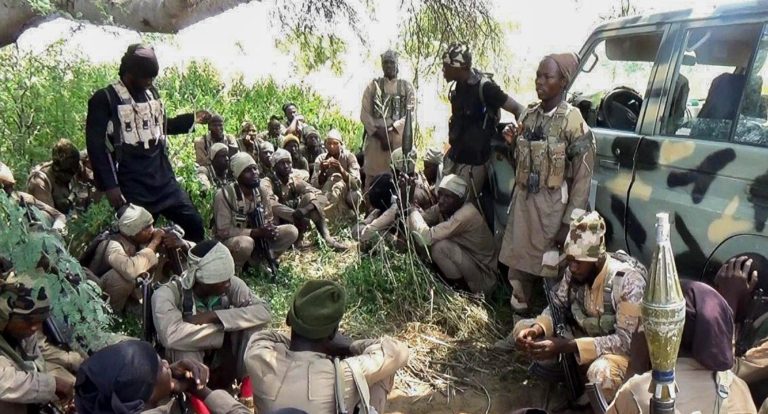
THE Air Task Force (ATF) of Operation LAFIYA DOLE has destroyed two gun trucks belonging to the terrorists group Islamic State West Africa Province (ISWAP) at a village called Garunda, Borno State.

Ibikunle Daramola, Director of Public Relations and Information, Nigerian Air Force (NAF) said the operation took place on Tuesday.

Daramola, a Air Commodore,  said in a statement that a NAF Alpha Jet aircraft on armed reconnaissance mission along the Gudumbali-Zari-Garunda axis spotted 2 ISWAP gun trucks emerging from Jumaacheri settlement heading towards Garunda.

“The Air Task Force (ATF) of Operation LAFIYA DOLE has dealt another blow on the Islamic State of West Africa Province (ISWAP) elements by completely destroying an ammunition-laden gun truck and immobilising another one belonging to the group at Garunda in the Northern part of Borno Sate. This was achieved yesterday, 10 September 2019,” he said.

“The attack aircraft tracked the 2 gun trucks as they attempted to evade detection by driving into folliage. The aircraft engaged one of the gun trucks, which was camouflaged under a tree, in successive passes scoring accurate hits leading to the neutralization of some of the ISWAP occupants.”

The gun truck, Daramola explained, was later seen engulfed in flames as a result of multiple mini-explosions of the on-board ammunition.

“The other gun truck was also tracked and immobilized after its occupants had abandoned it under another tree in the area.”

The NAF, operating in concert with surface forces, will sustain its operations against the terrorists in the Northeast, the NAF spokesperson.

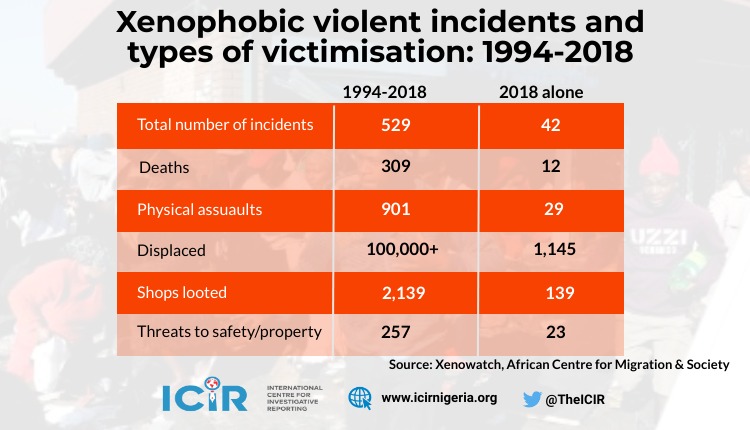
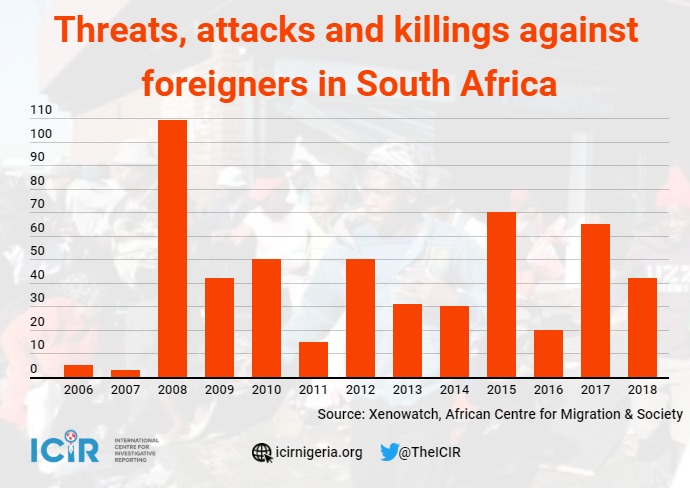
DATA: 309 reported killed, over 100,000 displaced due to xenophobia in SA since 1994

SINCE the end of South Africa’s apartheid system in 1994, there have been at least 569 incidents of xenophobic violence in the country. Of these, 529, recorded up till December 2018, led to 309 deaths, 901 physical assaults, 2,193 looted shops, and over 100,000 people displaced.

This is according to a report released by Xenowatch in December 2018. Xenowatch is an open-source tool developed by the University of Witwatersrand’s African Centre for Migration & Society (AMCS) for monitoring xenophobic threats and violence in South Africa.

Xenowatch, however, warned that these figures may be inexhaustive and an underrepresentation of the true extent of the problem because “many violence incidents are not reported and therefore not recorded on Xenowatch”.

“Many more [violent incidents] are suspected to have occurred since 1994,” it was noted. “Such an undercount is not uncommon with crime statistics related to vulnerable populations such as migrants”.

It is difficult to get more accurate figures as the government of South Africa does not gather data on threats and attacks against migrants.

Xenophobic attacks, which Xenowatch says are “a perennial feature in post-Apartheid South Africa”, manifest especially as homicides, assaults, robberies, looting, arsons, displacements, and threats of violence.

“Hostility towards foreign nationals is still pervasive and remains a serious threat to outsiders’ and local communities’ lives and livelihoods,” it states.

Xenowatch’s 2018 report does not take into account the casualties in the latest wave of violent attacks. Earlier in September, South African President Cyril Ramaphosa confirmed the death of 10 persons, including two foreigners, as a result of “acts of violence and criminality directed against foreign nationals and our own citizens” spanning several days.

“There can be no excuse for the attacks on the homes and businesses of foreign nationals, just as there can be no excuse for xenophobia or any other form of intolerance,” he said.

But many years of endless attacks and clear anti-foreigner sentiments show strongly that not all South Africans agree with Ramaphosa.

Only four days after the government’s release condemning the murder of 10, another two persons were killed and many others wounded in another bout of mob violence in Johannesburg.

Nigeria, one of the countries with most victims, has decided to evacuate hundreds of her nationals who are resident in South Africa and wish to return. 640 have already expressed their wish to move, Abike Dabiri-Erewa, chairwoman of the Nigerians in the Diaspora Commission, told CNN, adding that “there may be more people who want to leave”.

Infographic by Damilola OJETUNDE

Over time, some communities appear to be more prone to xenophobic violence than others. A travel advisory issued by Nigeria’s Ministry of Foreign Affairs last Wednesday warned citizens “to avoid travelling to high risk and volatile areas”, but did not specify what places to steer clear from.

Of all the 529 incidents recorded by Xenowatch as at last December, as many as 212 (40 per cent) took place in the Gauteng Province. Other identified “hot spot provinces” are Western Cape with 111 incidents (21 per cent), KwaZulu Natal (12.7 per cent), and Limpopo (7.6 per cent).

According to Statistics South Africa, the Eastern Cape and Limpopo have the highest shares of South Africans who are below the upper-bound poverty line, with 72.9 and 72.4 per cent respectively. Also, Black South Africans constitute the majority (64.2 per cent) of the poor population, followed by coloured people (41.3 per cent), Indians/Asians (5.9 per cent), and white nationals (1 per cent).

“The mapping of xenophobic violence incidents within police precincts across South Africa found the following precincts to experience the most reported xenophobic threats and violence in Gauteng: Hillbrow, Katlehong, Alexandra, Diepsloot, Atteridgeville, Mamelodi, Tembisa, Moroka, Jabulani, and Benoni,” states Xenowatch.

“In the Western Cape, the following precincts were found to experience the most reported xenophobic threats and violence: Khayelitsha, Milnerton, Philippi East, Nyanga, Brackenfell, and Mitchells Plain. reported xenophobic incidents.”

And in KwaZulu Natal, Durban Central, Kwa Mashu, Chatsworth, Umlazi, and Pietermaritzburg are the most volatile precincts.

FUOYE shuts indefinitely after student’s protest against poor power supply

0

By Daniel Whyte


THE Management of the Federal University Oye-Ekiti (FUOYE), Ekiti, has announced the shutdown of the university indefinitely.

This follows the violent attack that erupted at Oye-Ekiti, the university’s host community, on Tuesday after a protest led by the student leaders. This had led to the death of a student and caused three others to sustain injuries.

The management earlier announced on Voice FM 89.9 Ado-Ekiti that the university has been closed down immediately and students’ union activities have been suspended.

The announcer said, “Following the actions acted out by some youths in Oye-Ekiti earlier today, the authorities of the Federal University, Oye-Ekiti, FUOYE, hereby announce immediate and indefinite closure of the university to forestall further breakdown of law and order.”

“In the same vein, the Students Union of the institution has been suspended indefinitely,” the statement also stated.

“Following this closure, the student populace is therefore ordered to vacate the university premises no later than 10 am tomorrow, 11th September 2019.”

A broadcast text was likewise sent students of the campus on Tuesday evening to announce the shutdown.

“This is to inform the community of Federal University, Oye-Ekiti that the management of the university has shut down the University indefinitely,” the message read.

One shot dead, three injured as violence erupts after students’ protest in Oye-Ekiti

0

By DANIEL Whyte


A STUDENT of the Federal University Oye-Ekiti, Ekiti, Oluwaseyi Kehinde, has been shot dead during a disagreement that turned violent on Tuesday. Kehinde was a new intake at the Department of Crop Science and Horticulture.

Another student, Azeez Elijah, a third-year student of Library and Information Science got a severe injury to the head and is currently receiving treatment at the university’s health centre.

Several others were also injured, including Okonofua Joseph and Olamilekan Abdulmuiz, who have been admitted at the Federal Medical Centre, Ido.

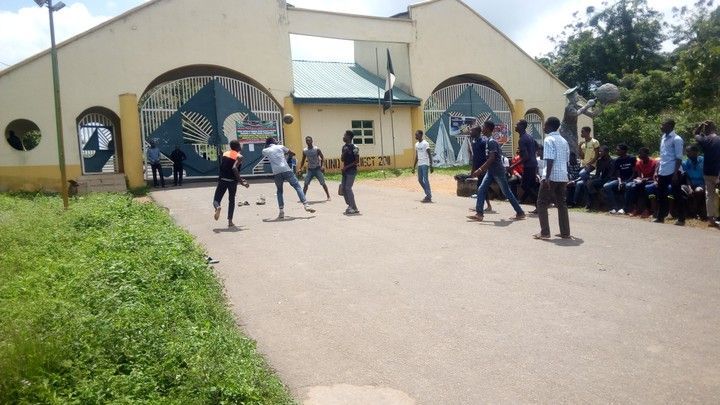
Students of the university had on Tuesday converged at the school gate to stage a protest against the lack of power supply in the university’s host communities. The protest got intense as they blocked the federal highway which runs through Oye-Ekiti and connects to Abuja.

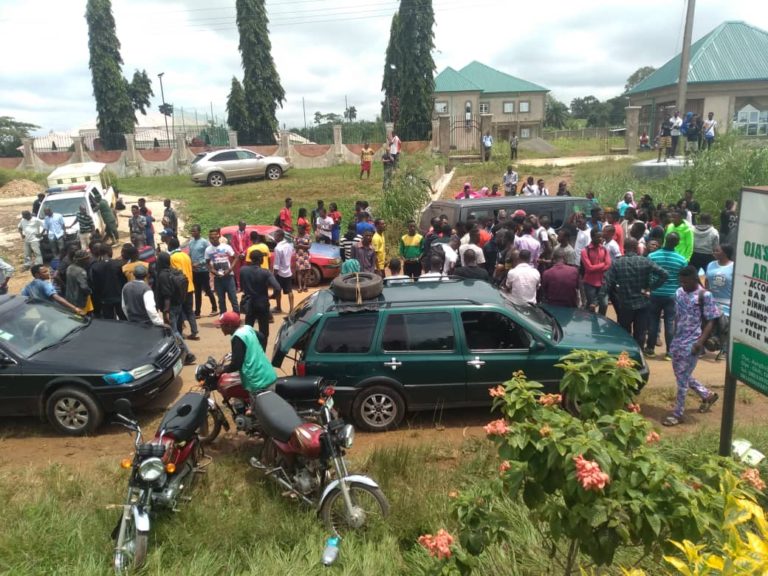
An eyewitness who prefered to be anonymous said the violence broke out when a confrontation ensued between the aggrieved students and the security operatives accompanying the wife of the governor of Ekiti State, Erelu Bisi Fayemi, who was on a tour across the 16 local governments in the state.

“The issue started when a security official attached to the governor’s wife slapped the Students’ Union President intentionally which sprouted controversies within the environment,” he said.

The witness further said that the Counter-Terrorism Unit Officer who slapped the president scampered for safety to avoid being lynched after which aggrieved students demonstrated their displeasure about the situation.

Student Union’s stance

Speaking to this reporter, the Students’ Union Government (SUG) President, Oluwaseun Awodola, said the protest led by the student leaders had long been concluded before the wife of the governor arrived, and denied the allegation that the convoy of the wife of the governor was attacked.

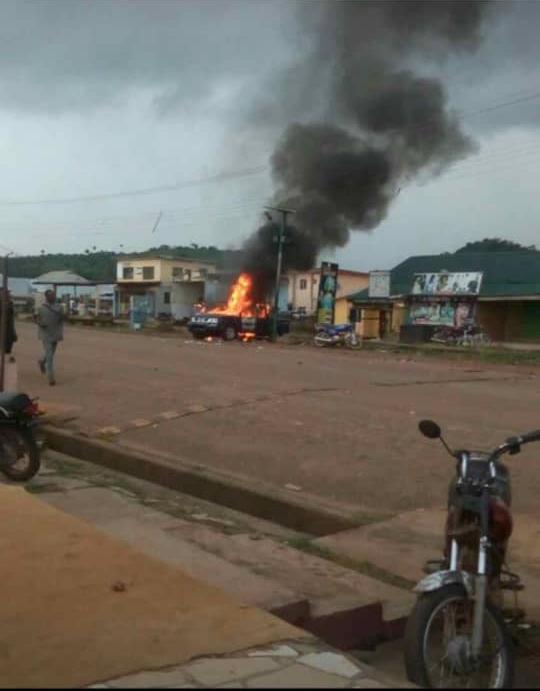
Police van burnt amidst violence in Oye-Ekiti

He narrated that they had dispersed after the protest had been concluded and he had gone to the house of his friend to sleep. “Not long as I was sleeping, my phone rang; I picked and I was told some students have been arrested at Ikole,” he said.

He noted that it was this that he went out to sort out initially when he was told the Chief Security Officer of the governor wanted to see him.

“All of a sudden, from nowhere, a MOPOL officer, CTU officer from nowhere just came and slapped me while people were watching.”

It was the slap that agitated onlookers who were students and indigenes as they expressed their displeasure which later took a violent turn after an officer shot at one of the students.

He added that “nobody attacked the governor’s wife; I didn’t see her, the only person I saw was the CSO to the governor.”