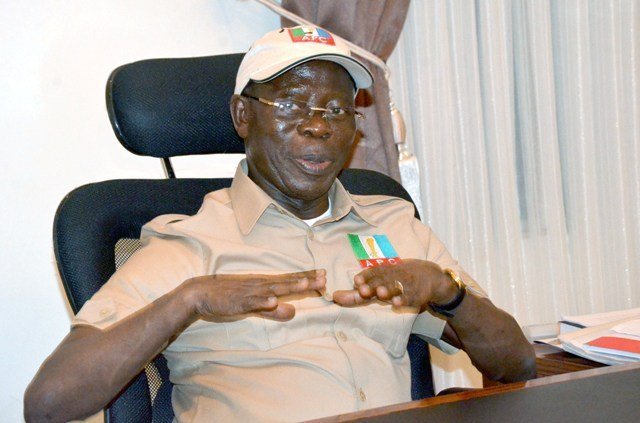
ADAMS Oshiomhole, national chairman of the All Progressives Congress (APC), says he’s confident his party will maintain its victory at the 2019 presidential election even if the opposition party takes its case to the “world court” or Supreme Court.
Oshiomhole passed the remark on Thursday while addressing State House correspondents. He was in the company of women leaders of the ruling party who had paid a visit to President Muhammadu Buhari to congratulate him over the ruling of the Presidential Election Petition Tribunal.
The petition against Buhari’s victory filed by the Peoples’ Democratic Party (PDP) and its presidential candidate, Atiku Abubakar, was dismissed on Wednesday by the Presidential Election Petition Tribunal sitting in Abuja.
“We as a party we are confident that if it is within the Nigerian law for PDP to go even to the world court, we will meet them there. The Supreme Court of Nigeria is not that of PDP or the APC, the Supreme Court is governed by law and is to interpret the evidence before the court of Appeal,” Oshiomohole said.
‘They are not at liberty to introduce new issues neither can they bring in new witnesses. So, if it is what I heard yesterday which I believe you also heard, thanks to the media, most Nigerians were detained for eight hours listening to arguments of the judges one after the other.
“Even though we thought it was getting longer and longer but we realised that they tried to deal with the issues raised, even the ones you and I as a layman will consider inconsequential, they dealt with each of them, trashed them and arrived at a conclusion.
“So, I don’t want to sound arrogant. Yesterday (Wednesday), I said that I hope this whole contestation is about Nigeria who actually won the election and both parties are committed to building Nigeria and is not about who should be given the key.”
He said, now that the tribunal has reached a decision, “it is time to queue behind the winner and move on”.
“Our winner is the best example that losing an election is not tantamount to the end of your political life. He lost three and today he is the president,” the APC chairman added.
“But, when I see the arrogance with which they pronounce and they bring what I call television lawyers, who pronounced with some managerial finality as if they are judges even without any evidence before them, let me now say authoritatively, we are now ready to meet them.
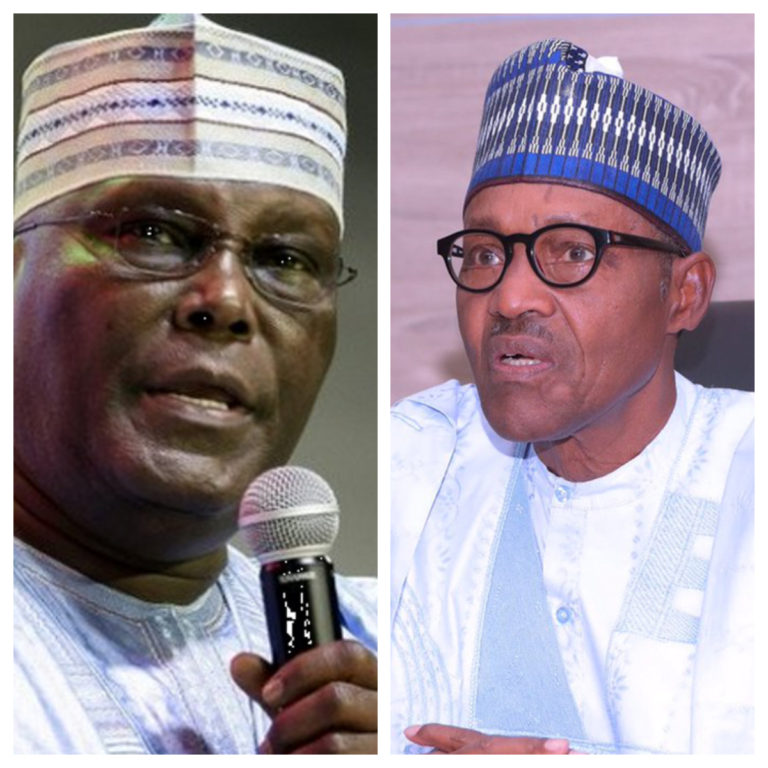
“President Buhari is now ready to meet defeated Atiku Abubakar at the Supreme Court and the APC is ready to meet the PDP at the Supreme Court and Adams Oshiomhole is ready to meet my brother Secondus at the Supreme Court and he will take second and I will take first, in shaa Allah.”
A prosecution witness, Musa Sunday, who is testifying against a former governor of Plateau State, Jonah Jang, in an alleged N6.2billion fraud, on Thursday narrated to a State High Court, sitting in Jos, Plateau State, how his aide conveyed cash to him at the Government House.
Jang and the aide, Yusuf Pam, a cashier at the Office of the Secretary to the State Government (SSG), are accused of colluding to divert state funds for personal use and are standing trial before Justice Daniel Longji.
A statement issued by Wilson Uwujaren, Head Media and Publicity at EFCC, said Sunday, who is testifying as the 11th prosecution witness, while being cross-examined by Mike Ozekhome, SAN, counsel for Jang, gave a vivid description of how Pam, during investigations into the alleged fraud, took him through the hidden back passage through which he usually used to take cash to Jang.
He said: “The new Government House is located at the outskirt of town amidst a lot of buildings.
“Among the buildings was the office of the SSG of the state where Pam and the EFCC detectives reported their arrival to the SSG.
“From the SSG’s office we were led to the Government Office, the Governor’s office, a storey-building with two doors one at the main entrance and at the back exit.
“There, Pam showed us how he delivered cash in ‘Ghana must go’ bags to the former Governor.
“He had clearly said and even showed me the back entrances where the cash was stacked and given to the governor.”
While identifying Exhibit P62, a response from the Plateau State House of Assembly dated July 19, 2018 and September 2014, alongside the letter from the EFCC requesting for information, Musa told the court that investigations revealed that memos were written by the Commissioner of Finance, who was involved in seeking approval for the disbursement of the funds involved in the alleged fraud.
“However, the monies were further transferred from Plateau State One account to OSSG account where the second defendant withdrew cash and delivered to the first defendant,” he said.
While trying to infer that the prosecution of Jang was political, Ozekhome questioned the witness, as to why it took four years before the former governor, who contested under the Peoples Political Party (PDP), was arraigned in court.
“Four years later, Jang was charged on April 4, 2018, and don’t you think this has a political undertone?” Ozekhome queried.
“So between 2014 and 2018 when the petition was received and when he was first charged to court, it took four years, don’t you think this has a political undertone?.
Replying, Sunday said: There are laid down procedures following investigation, the legal team take up the cases and charge them to court. All these processes take time.”
Under cross-examination, the witness further confirmed that about $100,000 was deposited in a single day into the Standard Chartered Bank.
He said: “On the May 6, 2014 $50,000 cash deposit in tranches of $10,000 five times and on May 7, 2014.
“Yakubu Jang, son of the first defendant was among the persons who deposited monies into the account.”
The case has been adjourned to September 13, 2019.
OUTRAGE spread with fire and blood across Africa as the demon of xenophobia took control of the mind and conscience of hundreds of South African youths.
Thirsty for blood and destruction, they struck their African brothers to death, looted the fruits of their victims’ labour, burned down the remnant of their hard work, and cursed them to hell.
The streets of Johannesburg were covered with the fog of wailing and lamentation. This madness is tagged xenophobia – the fear, resentment, dislike, intolerance of strangers. But after a critical look at the victims of this violence, many have re-christened the orgy of violence as Afrophobia – the dislike, resentment, intolerance, fear of [other] Africans.
Attacks on African immigrants in South Africa is not new. It manifests in the daily police crackdown on ‘undocumented migrants.’ In 2015, hoodlums took the law into their hands in mass onslaught against African immigrants.
The shock wave of the merciless attacks reverberated, not only in South Africa, but in many countries of Africa. Friends and foes of the former Apartheid enclave did not spare their condemnations. So widespread and bitter was the denunciation of Pretoria that many thought it would be the last time scoundrels would engage in such a shameless and senseless assault on African immigrants.
But the mayhem which began on September 1, 2019 proved optimists wrong and pessimists right.
The loud refrain from the protesters who ambushed and raided other Africans in Johannesburg could be paraphrased thus: ‘foreigners [other Africans] are taking jobs meant for South Africans. They have caused crime rate to surge.’
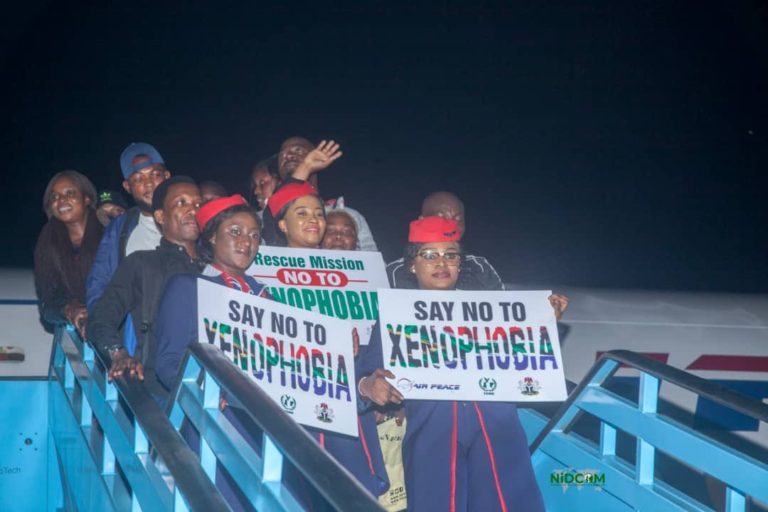
Air Peace repatriated about 187 Nigerians from South Africa this week
With the use of data obtained from South Africa this impression is examined as follows in relation to the roles Nigerians are accused to have played in that country’s predicaments:
Are Nigerians taking jobs that belong to South Africans?
A 2015 release by Statistics South Africa, an organization that “processes and analyses data collected by immigration officers of the Department of Home Affairs (DHA) at all air, land and sea ports of entry/exit,” provides a range of evidence on what Nigerians do in South Africa.
For instance, in 2015, a total of 10,334 Nigerians was given temporary residence permits in South Africa to enable them study, get medical treatment, visit family members, work or engage in business activities. The report says, priority was given to those who intended to establish business or invest in existing business ventures in South Africa.
In the order of priority, the South African immigration least considers requests for temporary residence permits for work. But for those considered, their requests must meet three conditions: “critical skills permit, general work permit and corporate work permit.”
From Stats South Africa data, the temporary residence permits given to Nigerians in 2015 were categorized thus: Work (14.1%) – barely above 1,000; Business (25.7%) – above 2,500; Study (15.1%) – about 1,600; Health (11.1%) – about 1,200; Visiting relatives (15.9%) – about 1,700. From this figure, it is apparent that the majority of Nigerians in South Africa engage in business activities, not taking up paid jobs.
For those who go there to work, many of them are medical doctors, university lecturers, and those who possess “critical skills,” while those who go to South Africa to study actually pay their way – they take money from the Nigerian economy to inject into South Africa’s economy in the search for knowledge. Below is a bar chart showing the distribution of temporary residence permits issued to Nigerians in 2015.
From the data it is clear that 84.7% of Nigerians who received temporary residence permits contributed to the growth of the South African economy as businessmen, tourists, students, or those who went there on medical tourism.
What role do Nigerian businesses play in South Africa
In 2015, Nigerians took the lion share of the number of temporary residence permits issued from those who sought to engage in business activities in South Africa. Of the total number of such permits, Nigerians received some 25.7% of the total number.
This was followed by nationals from Bangladesh (15.7%) and Ethiopia (13.4%). This signifies that from among African nationals in South Africa, Nigerians have invested more than any other. But this is better understood in the context of the decline in investment in South African economy by multinationals and even white South Africans. In this last 10 years, the South African economy has grown at snail speed, performing at less than 4 per cent.
A report by Stats SA last year provides an insight. It says, “Almost all industries contracted when compared to the fourth quarter of 2018…manufacturing falling by 8.8%, mining down by 10.8%, agriculture down by 13.2% and electricity shrinking by 6.9%.
Transportation fell by 4.4%, trade was down by 3.6% and construction declined by 2.2%. Government, on the other hand, grew by 1.2%, finance by 1.1% and personal services by 1.1%.”
Under this atmosphere it is the informal sector of the economy that attempts to rescue the situation, and that is the arena where Nigerians with temporary residence permits for business play. This aligns with a report by Migrating for Work Research Consortium quoted by City Press of South Africa which indicates that international migrants were “less likely to be unemployed,” but were “more likely to create work in the informal sector.”
City Press reports further that “for non-migrants, only 5% are employees and 9% are self-employed. So rather than taking jobs, migrants are net job-creators, a trend our country desperately needs.”
In spite of the fact that Nigerians top the chart of Africans who invest in the informal sector in South Africa, they are not preferred when South Africans approve permanent residence permits.
The SA immigration gives preferences to Zimbabweans, Indians and Chinese, over and above Nigerians. In 2015, the number of Zimbabweans granted permanent residence permit was 2,152, Indians (619), Chinese (583), Nigerians (355), closely followed by DRC applicants (325). The chart below shows the preferences:
Source: Stats South Africa
Are Nigerians [or foreigners] responsible for upsurge of crime in South Africa?
There is hardly empirical data to support the impression that foreigners are responsible for the upsurge in crimes in South Africa. What is apparent is that crime is very high in South Africa. Data obtained from Statistics SA shows trend, as shown in the table below
Source: Stats SA
However, the South African police cannot link the upsurge in crime to drugs or the activities of other Africans.
In 2017, Africa Check quoted Justice and Correctional Services Minister Michael Masutha as saying that as at July that year only 7.5% of people in South African prisons were foreign nationals. Apparently, this assertion suggests that most people (92.5%) who committed crimes were South Africans, not foreign nationals.
As at the time he made the statement, there were 157,013 inmates in SA prisons, out of which 11,842 were foreigners. Among the foreigners were Zimbabweans (41.5%), and Mozambicans (24%). In spite of this, most of these foreigners may not have committed violent crimes like murder, rape, armed robbery, arson, car-snatching, burglary, etc. They may have been arrested in raids by South African police because they were ‘undocumented immigrants.’
Is South African government preventing xenophobic [Afrophobic] attacks?
Multiple reports say the South African police have arrested over 400 persons involved in xenophobic [Afrophobic] attacks. On his own South African President Cyril Ramaphosa denounced the killers, called for their arrest, and declared that “We are against xenophobia. These attacks are completely against the rule of law.”
The criticism of Pretoria over the current attacks stems from the lack of evidence that the authorities had done much to prevent Afrophobic attacks. After the attacks in 2015, the UNHCR carried out an investigation and published a 108-page report on the mayhem.
Its major recommendation included “the creation of strategic advocacy platforms,” and the creation of “evidence-based [programmes that would facilitate the] understanding of current socio-political and socioeconomic conditions and theoretically sound and empirically supported behavioural change models” and to “dedicate more oversight, training, human and financial resources to anti-xenophobia programming.”
The UN body and South Africa were supposed to have enlightened the people against a repeat of xenophobic outburst. It is not clear if UNHCR or South African government have carried out activities in line with these recommendations. If they have, then the recent attacks on Africans show that the behavioural change envisaged did not take place.
How would Afrophobic attacks affect Nigeria-South Africa relations
Protests over xenophobia
The Afrophobic attack is a low point in the relations between Nigeria and South Africa. In 2018, the trade between the two countries hit N1.5 trillion, as Nigeria is a major supplier of oil and gas to South Africa, while South Africa ships automobiles, wine, paperboard, etc to Nigeria.
Nigeria’s exports to South Africa in 2016 was put at about $2 billion but import from South Africa was $438 million. As at 2003, about 55 South African companies had made investments in Nigerian economy.
This shows that the attacks are not good for business between the two countries. It is also the reason why South Africa should put in place measures that would prevent a future outbreak of violence that targets African immigrants. Nigeria and South Africa need to close ranks in order to lift Africa from poverty and under-development.
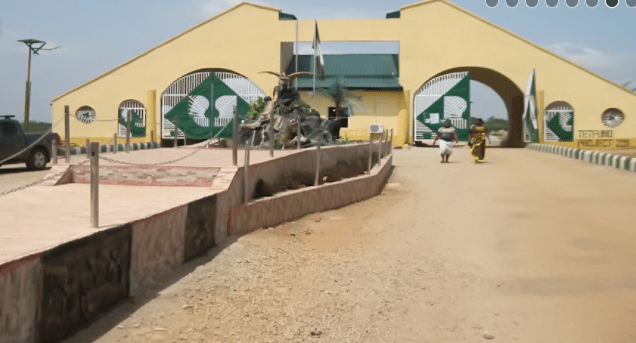
THE management of Federal University Oye-Ekiti (FUOYE), Ekiti State, constituted a 12-member investigation panel, in reacting to the death of two students of the university during protest against power outage in the university host communities.
This information was contained in an internal memorandum made available to this reporter on Thursday and signed by the Director of Administration, Olatunbosun Odusanya.
The mandate of the panel, according to the memo, is to investigate “the root causes” of the “students’ misdemeanour” and “to nip in the bud future occurrences”.
The committee is to be chaired by Abayomi Fasina, the Deputy Vice-Chancellor. Some of its other members include P.O. Oladele; Paul Ogidi, the university Chief Security Officer; Dosu Malomo, the Dean of Students’ Affairs; Oyedokun Alli, head of General Studies (GST); and Chika Asoqwa, Head of Mass Communication.
This is coming in the wake of the death of two students of the university, who were shot following a protest against poor power supply on Tuesday.
Oluwaseyi Kehinde, a first-year student of Crop Science and Horticulture, was shot dead after a violent disagreement with security operatives on Tuesday evening, while Joseph Okonofua, a third-year student of Biology Education, was confirmed dead on Wednesday morning. He had sustained a gunshot injury to the stomach.
Following the protest, the institution had announced the indefinite shutdown of the university and the proscription of the students’ union and had ordered the students to immediately vacate the university’s premises.
Meanwhile, the university Public Relations Officer, Godfrey Bakji, has said he is yet to ascertain the identities of students that the university lost.
“If it is true that we lost a student, it is regrettable. But as we speak, I don’t even know the identity of the students in question which is why I have been skeptical about responding to it but if it is confirmed that we lost somebody in the fracas, it is quite unfortunate and it is regrettable,” he told this reporter.
Informed that one of the deceased students was from Faculty of Education, he said, “Be that as it may, the management wouldn’t be happy about what happened. So we condole with the parents and the friends and all his other relatives; it is just unfortunate that someone could die that way.”
“Whatever line of action the management would take, that one would come in due course, I am not privy to that yet,” he added.
ONE of the 187 Nigerians who just returned from South Africa as a result of the recent xenophobic attacks has recounted his ordeals in the hands of the irate South Africans who he said burnt down his mechanic workshops and cars.
“I am a mechanic; I have a workshop. So they came to my workshop; they burnt the place, they broke all the cars. I’m a German car mechanic,” said Bethel Mido as he arrived along side others at the Murtala International Airport on Wednesday.
Mido, a German car mechanic said he watched as his means of livelihood were being destroyed by the South Africans who insisted foreigners, including Nigerians must leave their country.
According to him, he decided to fill the forms to return to Nigeria “Since they burnt all the cars,” adding, ” I couldn’t afford to pick them anymore, so yesterday I had to fill the forms, I have to leave.”
With over 600 Nigerians willing to return to the country, over xenophobic attack, 187 comprising men, women, and children arrived a Lagos, at 9:35 pm on Wednesday having being delayed for about five hours at the South African airport by Immigration officials.
The delay was as a result of wrong documentation and expired Passport of some Nigerians willing to return home.
Some other returnees also narrated their experiences in South Africa. One of them who did not give his name said his business in the country had crumbled.
“The business that I’m doing, everything is crumbled because they bunt those cars, that place is where I’m supplying my product,” said unnamed returnee.
Jude Anthony, another returnee also expressed grief as a foreigner in South Africa for about seven years. He said the attack in the country on foreigners, was a coordinated policy dated to the regime of the past government.
“The experience has been terrible. I have been in South African for seven years; I witnessed the bestiality of humanity in South Africa,”Anthony said.
“I have seen violence on blacks on blacks, I will not blame the people that much because what is happening in South Africa is coordinated.”
He insisted that “Xenophobia is a policy-driven right from the era of former president Jacob Zuma or even the regime preceding Zuma,” adding, that ” it is driven by the South African police.”
“In the presence of the police, people are being slaughtered like chicken and there is no outrage from the West; the West is not condemning it, America is not condemning it because they see it as black on black violence. Which is very wrong, violence is wrong, criminality is wrong,” Anthony said.
However, the Federal Government has unveiled its plan on a reintegration program for all returnees, especially for those interested.
According to Abike Dabiri-Erewa, Chairman of the Nigerians in Diaspora Commission, “they are to receive airtime which would last for well over two months, as well as a soft loan from the Bank of Industry to support those interested in little businesses”.
She said each sim card will have #160,400 worth of talk time, plus 9GB of data valid for two months, as well as transport stipend to convey them to their various destinations.
Dabiri-Arewa who received the returnees in Lagos expressed hope that the South African government would show a political will in deploying efforts to stop the killings of foreigners in its country.
She called for unity of Africans while asking to desist from all forms of hatred.
THE International Committee Red Cross (ICRC) has said nearly 22,000 Nigerians have been reported as missing during a decade of conflict in Northeast region of Nigeria.
The Geneva based humanitarian institution said the figure is the highest number of missing persons registered with the ICRC in any country.
The ICRC said families in Northeast Nigeria are often separated while fleeing attacks, with others loved ones abducted or detained and do not know their whereabouts.
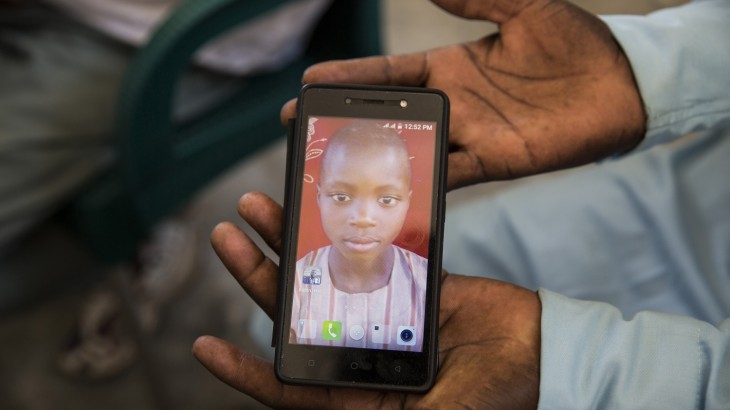
“Every parent’s worst nightmare is not knowing where their child is. This is the tragic reality for thousands of Nigerian parents, leaving them with the anguish of a constant search. People have the right to know the fate of their loved ones, and more needs to be done to prevent families from being separated in the first place,” said ICRCPresident Peter Maurer on Thursday at the end of his five-day visit to Nigeria.
“Families are the greatest casualty of 10 years of war in northeast Nigeria. They have been torn apart. Children have been killed and maimed in bomb blasts. Their health facilities have been ruthlessly attacked and their homes and belongings destroyed. Families belong together and above all, civilians must be spared in war” Maurer said.
During the visit, Maurer met with President Muhammadu Buhari and high-level government, civil society and business leaders and spoke with families who have been affected by conflict in Maiduguri and Monguno, many of whom have missing relatives.
The ICRC works with the Nigeria Red Cross and other Red Cross and Red Crescent societies in the region to trace missing people by showing photographs, calling out names, and going door-to-door in camps and communities.
Boko Haram— a jihadist group which seek to established an Islamic State across the country, in 2009, led an insurgency that started in the Northeast Nigeria State of Borno.
The group has also been joined in its quest for an Islamic State in Nigeria by the Islamic State in the West African Province (ISWAP), a group headed by the so-called Caliph of the Islamic State, Abu Bakr Al-Baghdadi.
The humanitarian organisation noted that, millions have been displaced with thousands of death recorded affecting both economic and social activities in the area in the decade old conflict.
According to the ICRC, nearly 60 per cent were minors at the time they went missing, meaning thousands of parents don’t know where their children are and if they are alive or dead.
It is also disclosed that 367 cases have been solved by the ICRC since it received it first cases in 2013.
This, it said underscored the immense challenges that come with finding missing people and reconnecting them with their families in Nigeria.
Large swathes of the northeast of the country remain completely inaccessible to humanitarian organisations. People have also been displaced by fighting many times, making them harder to find, it said.
“So far, 367 cases have been solved since ICRC received its first cases in 2013, underscoring the immense challenges that come with finding missing people and reconnecting them with their families in Nigeria. Large swathes of the northeast of the country remain completely inaccessible to humanitarian organisations. People have also been displaced by fighting many times, making them harder to find.”
“What troubles me is that I haven’t heard whether he is dead or alive. I just don’t know. Whenever I cook food for his siblings, I think about him. For the three years that we stayed in Maiduguri, my husband was very distressed and would repeatedly have nightmares. He would call the name of our abducted son, ‘Alkali, Alkali, Alkali’ all the time”, Falmata Amodu, the mother of a boy who went missing in 2013 at age 10 while fleeing an attack, was quoted.
Two million people, according to the ICRC are estimated to be displaced from their homes in Northeast Nigeria.
“In Monguno, internally displaced Nigerians outnumber residents nearly two to one. Health care is also a major concern, as health workers and medical facilities continue to come under fire.” it said.
The humanitarian institution further condemned the killing of its captured ICRC health workers by Boko Haram.
“Nearly a year ago, two ICRC health workers, Hawa Mohammed Liman and Saifura Hussaini Ahmed Khorsa, were deliberately killed after they were abducted from a clinic in Rann in Borno State. These attacks on health care are not only a violation of international humanitarian law, but also an assault on people’s basic right to receive health care.”
THE Federal Government has asked Atiku Abubakar, presidential candidate of the Peoples Democratic Party (PDP) to apologise to Nigerians for distracting the President Muhammadu Buhari’s administration instead of heading for Supreme Court to appeal the verdict of the Presidential Election Petition Tribunal.
The tribunal on Wednesday had dismissed the petitions of Atiku and its party that challenging the victory of president Buhari in the February 23 presidential election.
The PDP had rejected the Wednesday ruling saying it would pursue its case at the Supreme Court, Nigeria’s apex court.
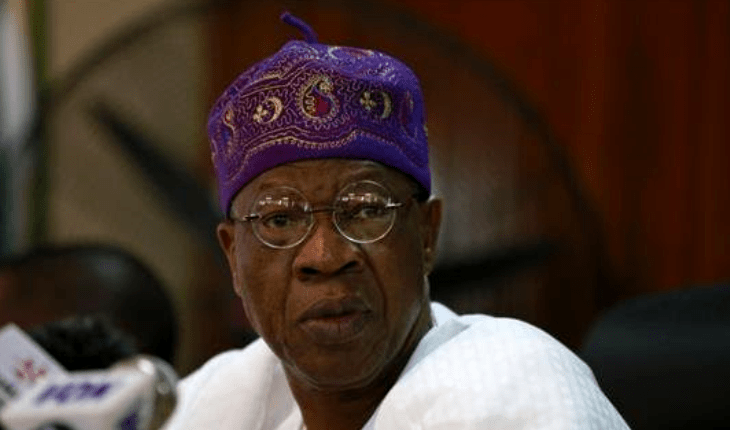
But on Thursday, Lai Mohammed, the Minister of Information and Culture said Atiku and its party should accept the defeat, according to a statement signed by his media aide Segun Adeyemi and published on the Ministry’s Twitter handle.
The statement was issued in St Petersburg, Russian Federation.
The Minister urged the PDP and its candidate to drop their right in pursuing the “petition to the highest level” while reminding them there was a limit to “tomfoolery.”
”Nigerians are tired of this orchestrated distraction, and will rather wish that the opposition, having lost at the polls and in court, will now join hands with the government to move Nigeria to the next level,” he said.
Lai noted that Atiku and its party should be thanking their stars for not being prosecuted after they presented “fraudulently-obtained evidence” in court.
“It is intriguing that a party that trumpets the rule of law at every turn will present, in open court, evidence it claimed to have obtained by hacking into a supposed INEC server.
“Don’t they realise this is a criminal act for which they are liable?
“Instead of threatening to head to the Supreme Court, driven more by ego than commonsense, they should be sorry for allowing desperation to overwhelm their sense of reasoning. Enough is enough, he said”
THE Peoples Democratic Party (PDP) has rejected the Wednesday judgment of the Presidential Election Petition Tribunal that gave victory to President Muhammadu Buhari.
The opposition party described the verdict of the Tribunal “as provocative, barefaced subversion of justice and direct assault on the integrity of our nation’s justice system.”
A statement by the National Publicity Secretary of PDP, Kola Ologbondiyan said the party was particularly shocked that the tribunal failed to point to justice despite the flawless evidence laid before it, showing that president Buhari was not only unqualified to contest the election but also did not score the majority of valid votes at the polls.
Ologbondiyan said that the party was bewildered that a court of law could validate a clear case of perjury and declaration of false information in a sworn affidavit, as firmly established against president Buhari, even in the face of incontrovertible evidence.
He lamented that it was also rudely shocked that the Court took over the roles of the Respondents’ lawyers who clearly abandoned their pleadings by refusing to call evidence in defense of the petition.
“The court raked up all manner of excuses to make up for the yawning gaps occasioned by the total absence of any evidence from the Respondents,” he said.
According to him, Nigerians and the international community watched in utter disbelief when the tribunal ruled that one need not provide a copy or certified true copy of educational certificate such individual claimed to possess, contrary to established proof of claims of certification.
“The party notes as strange that the court even went ahead to provide rationalizations in favour of President Buhari, even when all hard facts before it shows that he did not possess the claimed educational certificate and that the Army was not in possession of his WAEC certificate as claimed in the affidavit he deposed to in his Presidential nomination form,” Ologbondiyan said.
“The PDP also described as shocking that the court approved the flawed declaration of President Buhari as the winner of the election despite evidence to show the perpetration of illegalities, manipulations, alterations and subtraction of valid votes freely given to Atiku Abubakar by Nigerians.”
“Indeed, the pervading melancholic atmosphere across our nation since the verdict is a direct indication that the judgment has not fulfilled the desires and expectations of Nigerians.”
While assuring Nigerians not to lose hope, the PDP spokesperson said that lawyers were upbeat in obtaining justice at the Supreme Court.
“This is more so as the tribunal itself admitted that there are several errors in the judgment.”
FOLLOWING a report of an attack in Yongogba village in Takum Local Government Area of Taraba, the State’s Police Command say there was no fresh attack in the state.
The State Police Public Relations Officer, David Misal, a Deputy Superintendent of Police (DSP) confirmed this in a phone conversation with The ICIR on Wednesday.
“This reports of the attack, I do believe is not under our areas of coverage. It could be probably somewhere else, and is being mistaken to be in Taraba exactly,” he said.
The police spokesperson noted was no case of attack reported to the police. He said: “If it exists, probably it was not reported to the police”.
A media report earlier on Wednesday said gunmen suspected to be Jukun militia had attacked and killed two people in Yongogba village in Takum Local Government Area of Taraba.
The report said the village was invaded by attackers, who rode on motorcycles and two Toyota Hilux about at 8:45 am on Wednesday, with scores of individuals missing.
It said the attackers, “burnt the entire village and looted valuable property”.
Misal who was earlier contacted by The ICIR said no such news was reported, but requested additional time to confirm the report.
Afterward, he said despite inquiries from the various divisions in the state, no records of the clash between any group was mentioned to the police.
“Straightly after I had a call with you, I contacted my divisional officer who is on the ground; he confirmed to me that such a report has not reached him yet,” Misal said.
“Because the report stated that we have no record of any fresh attack between any groups. We don’t have such a report.”
Misal said, “But I wonder, if there is an issue then the police should be the first point of contact, so obviously nobody reported and we don’t have such report at the moment”.
The state has come under series of attacks, owing to the communal clash between the Jukun of Taraba and Tiv of Benue State.
The Tiv and Jukun have a long history of a communal clash, alleged to have resulted from the fear of domination; land resources and ownership; unequal representation in political positions.
Although President Muhammadu Buhari has promised to end this prolonged clash between both tribes, claiming lives and displacing many, leaders of both communities say, they are being marginalized as minorities in both states.
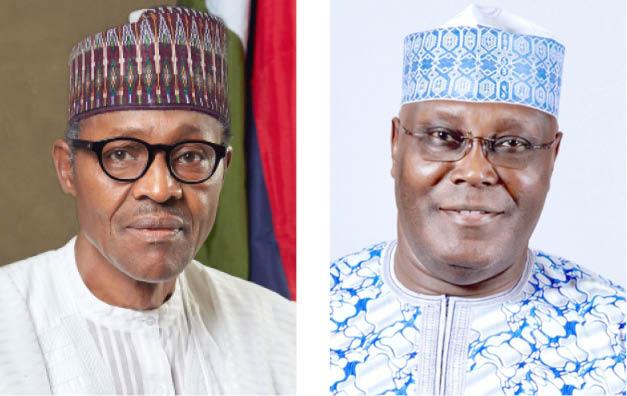
THE Presidential Election Petition Tribunal sitting in Abuja on Wednesday dismissed the petition of the Peoples Democratic Party (PDP) and its presidential candidate, Atiku Abubakar challenging the re-election of President Muhammadu Buhari.
This is coming 177 days after the PDP and its candidate in the February 23 election submitted their complaint before the Tribunal asking for the cancellation of the result of the election that produced president Buhari.
The Tribunal started hearing on the matter on March 18 in a case where president Buhari and his party gathered18 Senior Advocates of Nigeria (SANs) as defence counsel led by Wole Olanipekun, a former president of Nigeria Bar Association.
The PDP and Atiku had in March filed a petition signed by 31 lawyers, 19 of which were Senior Advocates of Nigeria (SANs) before the Tribunal challenging the outcome of the February 23 election,
However, a five-man tribunal, led by Justice Mohammed Garba, in the lead judgement, on Wednesday said the petitioner did not prove its case beyond a reasonable doubt, dismissing the petition and urged the parties to bear their respective costs.
Other members of the panel were Justices Abdul Aboki, Joseph Ikyegh, Samuel Oseji, and Peter Ige.
In his ruling, Mohammed affirmed the decision of the panel who unanimously resolved all the five issues raised in the case against the respondents.
“In the final result, I have come to the conclusion, which is inevitable and unavoidable, that the petitioners have not discharged the burden of proof required of any of the grounds of the petition in paragraph 15 of the petition,” he said.
The tribunal agreed that the petitioners presented electoral materials, including result sheets used for the election to the tribunal without providing evidence of any of their 62 witnesses to the documents in their bid to prove the allegations in their petition.
“This petition is accordingly, and hereby dismissed in its entirety,” Mohammed concluded.
The five-man panel also dismissed the petitioner’s request for disqualification of President Buhari election for not possessing the required educational qualifications.
This was as it also faulted the documents tendered by the petitioners to prove the allegations over-voting and claim that the election results were transmitted electronically by card readers.
The nine-hour judgment which started around 9:30 a.m on Wednesday ended at 5:58 p.m. when the other members of the panel had delivered their supporting opinions.
The road from trial to final judgement
The petitioners in contesting the February 23 presidential election prayed the tribunal to order a re-run in 11 states claiming the elections we marred by irregularities, wrongful recording of results among other infractions.
The PDP and Atiku were asking the tribunal to invalidate the results initially announced by Independent National Electoral Commission (INEC), declaring Buhari, winner of the 2019 presidential elections having polled a total of 15,191,847 votes.
In the petition filed by the PDP, it stated that Buhari did not win the highest number of votes in the elections. The opposition party argued that its investigations into the actual results from the elections showed that it’s candidate won the elections with 18,356,732 votes instead of the 11,262,978 votes declared for him by INEC.
The allegation regarding the server also proved to be a contentious issue brought by the PDP and its presidential candidate in the petition as they accused INEC of storing the real results of the 2019 election in a central server.
The PDP also called several INEC staff as witnesses, all of whom admitted to sending results to a central server.
However, INEC declined to call a witness at the tribunal while president Buhari only presented seven witnesses. The APC also declined to call any witness stating that PDP’s witnesses were in support of the points raised by the APC.
INEC’s lawyer, Yunus Usman, said the claim by the PDP that results were transmitted to a central server stands against the provisions of the constitution. The INEC’s lawyer said the law prohibits electronic transmission of results.
The PDP argued that president Buhari did not meet the minimum educational requirements for emerging as a candidate for the election.
It equally alleged that the schools Buhari claimed to have attended did not exist during those periods and that his claim on an INEC form that his school certificate was with the military board was false and thus the president lied under oath.
The lawyer representing the APC said the PDP failed woefully in the number of witnesses it presented. He described as unfortunate the fact that the PDP presented only 62 witnesses to defend an election that held in over 119, 000 polling units.