Home Blog Page 2301

Who do ‘Magu boys’ work for, EFCC or an emperor?

By Fredrick Nwabufo

A SCATHING detraction to professionalism in Nigeria is the customisation of public offices. Institutions are built around personalities rather than on principles and service.

The corrugation of Nigeria’s public offices and institutions has a long history. But of significance is the brazen privatisation and deployment of public office to insular ends by Michael Aondooakaa, attorney-general of the federation (AGF) under Umaru Musa Yar’adua, in 2009.

Aondooakaa was AGF and in the same breath, counsel to George Akume, then Benue state governor, who was being investigated by the EFCC for alleged corruption to the tune of N2 billion.

Being Nigeria’s chief law officer, Aondooakaa, who naturally should have recused himself from the case, went to work undermining and frustrating the EFCC.  In fact, prior to his appointment he had filed a suit at the supreme court seeking the dissolution of the anti-graft agency. And he refused to withdraw this case or his representation in the matter even after his appointment until the apex court dismissed it.

That was the standard-bearer of Nigeria’s law begriming the constitution. Earlier, in 2007, he attempted to retard the arrest of James Ibori in the UK – an action which led to a diplomatic scuffle with the country. Nuhu Ribadu’s unbending stance in this case, led to his mortifying discharge weeks after.

There are analogous cases in the Buhari administration –  one of which is the ”cleansing and empowerment” of Abulrasheed Maina, former pension chief, who was declared wanted by the EFCC for corruption, by Abubakar Malami, attorney-general of the federation.

I believe the office of attorney-general of the federation has been one of the most abused of all offices in the country.

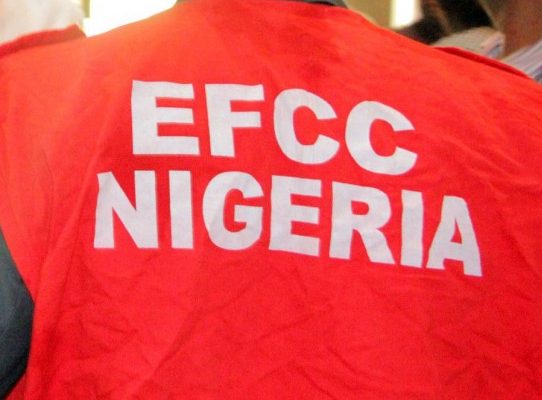
In the same vein, the tagging of top staff of the EFCC as ‘Magu boys’ by the agency accents the execrable customisation of public office in the country. It is the reason the institutions function with human frailties; that is, if the head of an institution is incompetent or corrupt, the entire body necrotises.

This is the lamentable piece of hagiography the agency footnoted in a photo on social media.

”#Photo Magu Boys, led by EFCC’s Lagos Head of Operations, Mohammed Rabo, on the move as they continue to tame the corruption monster from the Lagos axis of the battlefield. With the acting Chairman, Ibrahim Magu, giving orders and directing affairs, the war is winnable.”

The reluctance of public officers to distinguish themselves from their offices is the reason abuse of office is rife here. There is Ibrahim Magu and there is the EFCC. Two separate entities. Personal foibles and interest must be detached from public office.

If Magu leaves as EFCC chairman, will those agents still be ‘Magu boys’? Will they be working for him or the agency? Whose interest are they serving, Magu or Nigerians? And do they work for Magu or for Nigerians?

It is a downing reality how individuals expropriate public offices, design them in their own image and build a temple in them for everyone to worship.

A few days ago, after the inauguration of ministers, a herd of staff members of the ministry of finance abandoned duty and stayed out in the rain to welcome Zainab Ahmed. They formed a doughnut around the minister and chanted, ”mama oyoyo” as she sauntered into the premises with an insufferable gait. She soaked in all the praise and sycophancy.

But did the minister not realise that it was wrong of them, the jamboree being during work hours? And is there no regard for professionalism?

Also, the privatisation of institutions like the police and the DSS, which are sometimes deployed in witch-hunt, is the reason their performance is underwhelming. Until public institutions truly become public; they cannot serve Nigerians.
Mr. Nwabufo could be reached @FredrickNwabufo

Lagos is the least safe city globally- Report

A NEW report by the Economist Intelligence Unit (EIU) has classified Lagos as the least safe city globally where above 50 per cent of its residents reside in slums.

Of the 60 states across the world ranked in the report titled Safe Cities Index 2019, Lagos was the only city in Nigeria included and that was the first time. It secured the least position.

Tokyo, Japan’s capital; Singapore and Osaka were the top three safest cities respectively.

The cities were ranked based on digital, health, infrastructure and personal securities.

On digital security, the report checked the privacy policy, citizen awareness of digital threats, level of technology employed, dedicated cyber-security teams, percentage of computers infected and percentage with internet access.

The infrastructure security considered the enforcement of transport safety, pedestrian friendliness,  road network, power network, rail network, the percentage living in slums, and air transport facilities.

The indicators used to measure health security are including environmental policies, access to healthcare, number of beds per 1,000 population, number of doctors per 1,000 population, access to safe and quality food, quality of health services, air quality, water quality, and emergency services in the city.

The level of police engagement, community-based patrolling, available street-level crime data, the prevalence of petty crime, gender safety (female homicide), and rate of drug use were the measures used in speculating each city personal security.

The report stated that the proportion of people living in the cities were 58 per cent but would increase to 68 per cent by 2050.

It stated that some of the developing countries would struggle to deal with the “extent of change”.

“Indeed, the challenges of urbanisation, if unmet, can entail substantial human and economic risks.

“On the other hand, if they are effectively addressed, the growth of cities may become an essential part of how emerging economies find a way to catch up to those in more developed countries and how humanity as a whole creates more sustainable ways to live,” the report read partly.

It noted that urban management would play a fundamental role in defining the quality of life of most human beings in the coming years.

“A look at the top five cities in each pillar—digital, health, infrastructure and personal security—yields a similar message. In each area, leading cities got the basics right, be it easy access to high-quality healthcare, dedicated cyber-security teams, community-based police patrolling or disaster continuity planning.”

But Lagos earned below-average scores in all the four measures.


On digital security, Lagos was score 42.2 per cent, thereby secured the 56th place, only leading Dhaka, Cairo, Ho Chi Minh city and Yargon.

For infrastructure security, Lagos dropped to 58th spot with 37.4 scores, leading only Dhaka and Caracas.

In both the health and personal security table, Lagos had the lowest scores, thereby ranked poor in both security matters.

And at the overall list, the largest city in Africa earned the 60th position, the least, after securing the lowest score of 38.1.

The Economic intelligence report also estimated that half of the Lagos residents LIVE in the informal settlements, a situation Alioune Badiane, president of The Urban Think Tank Africa (TUTTA) described as main harbinger of insecurity.

He said the growing number of Lagos slum dwellers arose not from a growing population per se, but from poor or insufficient planning.

“It is not acceptable. We have a lot to do, but the number one priority is improved urban planning and better city management, Badiane was quoted in the report.

Four S’African policemen on trial over death of Nigerian businessman

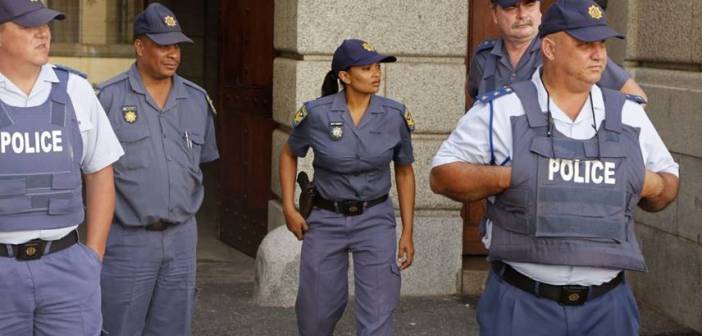
THE South African Police have arrested four officers reportedly associated with the death of Pius Abiaziem, a Nigerian businessman in South Africa.

In a statement signed by Gabriel Odu of the Nigerians in Diaspora Commission, (NIDCOM), the suspects are to face trial soon.

Abike Dabiri-Erewa, the Chairman of NIDCOM in the statement urged the South African Police, “to expedite action on the matter and speed up the trial of the alleged four policemen, and others currently on trial for various offences committed against Nigerians living in South Africa”.

Abiaziem was reportedly killed on August 23, following an argument that ensued between him and the South African policemen.

The police officers picked him up in an eatery, asking that he be taken to his home for a search and interrogation, but Abiazem refused to be taken to where they wanted to take him.

The deceased was married to a South African lady who was present at the scene of the incident.

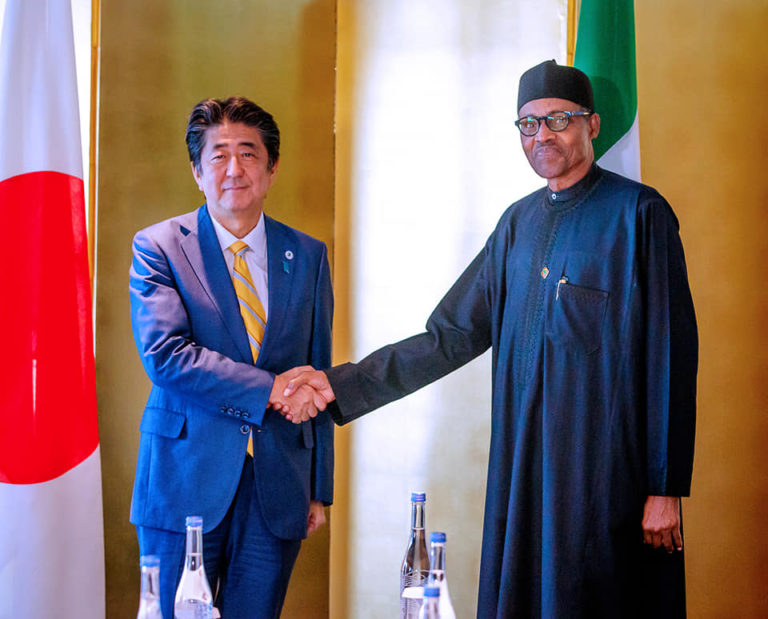
Cyril Ramaphosa, South African President, assured his counterpart, President Muhammadu at the 7th Tokyo International Conference on African Development (TICAD) in Yokohama, that his government was working to end killings of Nigerians in his country.


FOI Act: CBN, budget ministry deny access to vital information on economy

THE Central Bank of Nigeria (CBN) and Ministry of Budget and National Planning have denied The ICIR access to public information regarding key economic issues.

The ICIR on August 7 filed two Freedom of information Act, FOIA, requests asking for details of the FOREX intervention and specific items in the 2018 and 2019 budgets from the CBN and the budget and planning ministry respectively.

Over three weeks after the requests were made, none of them has provided the information.

In specific, The ICIR requested for the following information from the CBN: a breakdown of schemes created by the CBN to sell dollar at N305 per unit, one of which is the Forex Intervention Scheme, the value of the amount that has been given out so far for each scheme, a breakdown of the value per sector, and the list names of the beneficiaries of the forex intervention scheme.

From the Ministry of Budget and National Planning, The ICIR requested for details of budget code ERGP18115478 and line item “OSSAP- SDGs (SPECIAL PROJECTS)”in the 2018 budget, details of conditions and amount accrued to each grants on budget item “OSSAP-SDGs (CONDITIONAL GRANTS)”, details of conditions and amount accrued to each grants on budget item “OSSAP-SDGs (CONDITIONAL GRANTS)”, details of budget code ERGP18115483 and line item “OSSAP – SDGs: SDG PROJECTS 1 (2017 OUTSTANDING LIABILITIES)”, details of budget code ERGP18115551 and line item “OSSAP – SDGs: SDG PROJECTS 2”.

This should include total amount released and total amount spent on the project, details of budget code ERGP7115496 and line item “Subscription to shares in international Organisations”, and list of international organisations and amount contributed to each of the organisations according to budget code 22040203 and line item “Contributions to International Organisations” in the 2019 budget.

The ICIR’s experience with the CBN in the last year reveals that Nigeria’s apex bank is a serial defaulter of the FOIA law.

In July 2018, an FOI request was filed to the CBN on details of stamp duty recovered by the Nigerian Postal Service (NIPOST), after its initial response that it will revert back to the ICIR, more than a year after, the CBN is yet to provide the information.

In its usual way, the CBN wrote the newspaper on August 9 that the current request was being processed and that it will get back to the organsisation.

“…we wish to inform you that the request is being processed and we will revert to you as soon as possible,” reads CBN’s letter written to days after it got the FOIA request.

On compliance with the FOI Act, the CBN is known for denying the public information at its disposal when asked for it. The FOI compliance ranking carried out by the Public and Private Development Centre (PPDC) also confirms this.

In the latest 2018 FOI compliance ranking by the Centre, CBN ranks 47th (third from the bottom).  In 2017, the apex bank maintained the third least position, ranking 40th, and in 2016, it ranked 44th with no proactive disclosure of information, responds to requests between 15 days and more as against the seven days stated by law.

On its own part, the Ministry of Budget and National Planning asked for an extension of 30 days to “source and collate the requested information”.

In 2018, the ministry ranked 56 (second from the bottom), indicating that the ministry does not proactively disclose information to the public, responds to requests between 15 days and more, and also partially disclose information where it will grant any request.

The 2017 ranking shows that the ministry and the CBN were ranked the same position− 40th position. While in 2016, the ministry ranked 5th by fully disclosing information to the public, partially proactive with its disclosure and responding between 15 days and more. The last best ranking for the ministry.

The ICIR spoke with an expert, Sam Ofia, FOI desk officer at the PPDC, he said the CBN deliberately frustrates access to information.

“We are not new to it, they have always been like that. It is as if they have a copy and paste thing there on their desktop. So whenever they see anything that has to do with FOI, they just copy and send back to that particular address.

“The CBN and NNPC, most especially always think they are the fat cow of this country because they are managing the resources of this country and so, they are no-go area. That amount to a denial of information because as MDAs, they are meant to provide information to the public and also provide the exact time you would have to wait for the information.

“I think their denial is intentional because they always believe nothing can happen. We have a matter against them in court. We are in the court of appeal now including NNPC on this same issue,” Sam said.

On her own part, Ene Nwakpa, the National Coordinator of Right to Know Nigeria (R2K) said they have people with similar experience. However, in terms of compliance of submitting their annual report, she said the CBN has really been efficient.

What the FOI Act says

The FOI Act was signed to law in 2011 by former President Goodluck Jonathan and since then, all requests for information received by a public institution have to be dealt with in accordance with the FOI Act.

Sections 1 and 2 of the FOI Act establish the right of any person to apply for information or records in the possession of a public institution. Generally, these rights are:

  • The right to access or request any information or record that is in the custody or possession of any public institution or private bodies providing public services, performing public functions or utilising public funds.
  • The right to be told whether the information or record exists.
  • The right to have the requested information or record released if the information or record is in the custody or possession of a public institution.
  • The right not to demonstrate any specific interest or purpose in the requested information or record.
  • The right to receive information that public institutions are obliged to proactively disclose under the Act.
  • The right to take legal action in Court to compel any public institution to comply with the provisions of the Act, including discharging their proactive disclosure obligations under the Act.

Also, according to Section 29 of the FOI Act, every public institution must submit its annual report on or before February 1 of each year to the AGF on all applications of FOI request they received.

For 2017, only 73 out of 900 public institutions in Nigeria complied to that provision of the FOI act. This amounts to about only 8.1 percent compliance to section 29 of the FOI act by public institutions.

The ICIR in 2018 reported how budget provisions meant for the implementation of FOI request have not been utilised fully to ensure compliance with the FOI Act.

EFCC Chairman advocates greater attention to cybercrime

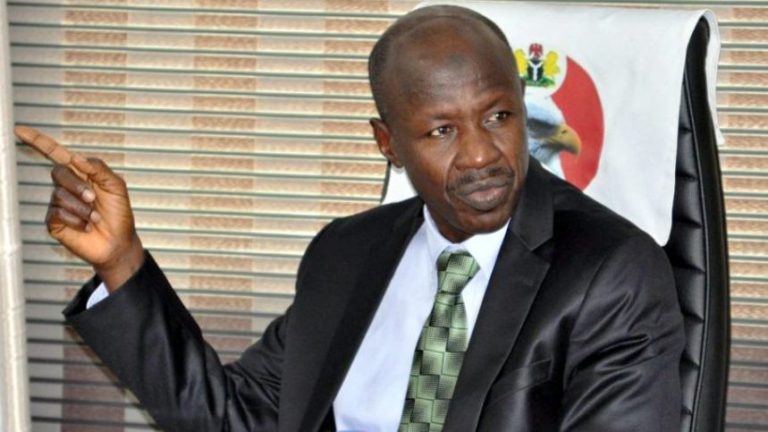
Ibrahim Magu, acting chairman of the Economic and Financial Crimes Commission (EFCC) said Nigeria should pay “greater attention” to cybercrime as the act implicate the image and economic health of the country.

Magu expressed his concern through the head of EFCC Gombe state, Micheal Wetkas,  at a media briefing cum town hall meeting in the state on Thursday.

“Every email sent from Nigeria is being screened before delivery, we are being denied visas to other countries,” he explained how the involvement of unscrupulous Nigerians in cyber fraud was impacting negatively on the country’s image globally.

Magu added that it undermined the quest for foreign direct investment.

He said the commission is working with the United States’ Federal Bureau of Investigation (FBI) and other international law enforcement agencies to address the menace of computer-based fraud.

The anti-graft head said he was optimistic of the collaboration, describing it as a major step towards tackling cyberfraud among Nigerians.

Many Nigerians have been indicted of internet fraud, also known as “yahoo yahoo” or cyber fraud, both within and outside the country.

Within the country, the EFCC which is charged with the arrest of suspected fraudsters usually releases the cases of computer-based frauding made available on its website and to journalists.  A week does not go by without a reported case of an individual or a group, mostly youths and students, arrested or prosecuted for cyber-related crimes by the commission.

On August 22, the FBI published the names of 80 Nigerians indicted of cybercrime in the U.S. They were charged to a Californian court on the case bordering on internet fraud.

Similarly, the United Kingdom Metropolitan Police, in May 2018, also reported that six Nigerians residing in London had been jailed for forty-three years after being convicted of cyber theft worth millions of pounds.

Umar Danbatta, Cheif Executive Officer of the Nigerian Communications Commission (NCC), had disclosed in 2017 that Nigeria ranked third globally in cyber crimes, being led by the UK and the U.S.

A journal published on the Researchgate showed that the majority of internet fraudsters in Nigeria are youths, majorly through an operation called “phishing”.

It recommended that the Nigerian government should make “the welfare and wellbeing of the citizens of paramount importance so as to lessen the burden of individuals by providing good-paying jobs and other basic amenities”.

Media urged to focus more on plights of IDPs, women and children

Media organisations in Nigeria have been urged to focus more on the plights of persons affected by hostilities and conflicts, particularly by privileging reports that call attention to the welfare of the displaced.

In a report titled, “Monitoring media reportage and portrayal of Internally Displaced Persons (IDPs) in Africa,” produced by Journalists for Christ (JFC) International Outreach, Nigeria, the media is further urged to produce more incisive reports that investigate allegations of corruption in the management of resources for IDPs.

In the report which is a product of a survey that covered coverage and portrayal of IDPs by six Nigerian national dailies and two online newspapers, JFC said issues affecting women and children should be given more space in the media.

“Media organisations should endeavour to fund journalists to independently visit IDP camps to be able to include feature articles, including objective reports on the management of the situation of life of IDPs in the camps,” JFC said in the report.

The report surveyed The Punch, Nation, Vanguard, Daily Sun, Daily Trust and Leadership as well as Premium Times and the Cable.

The survey showed that security issues about IDPS topped publications by the media mentioned, noting that humanitarian support by local and international organisations was also a major focus of the publication.

It lamented, nonetheless, that most of the stories were news-based, and did not allow for the coverage of deeper issues affecting the IDPs such as the provision of basic amenities, sexual harassment, health condition, and human right abuses.

While noting that most reports were based on official sources and visits facilitated by government agencies, JFC said such reports also did not have pictures to support the plights of the IDPs which could have provided graphic evidence of the situation and plights of the displaced persons.

JFC recommended that IDPs issues deserve editorials and reportorial slants that implore government agencies and related institutions to put in place policies that guarantee, advance and promote improvement in the provision of basic amenities and the rights and dignity and welfare of IDPs.

Those engaging in criminal activities abroad do not represent us – Buhari

PRESIDENT Muhammadu Buhari on Thursday said that the few Nigerians abroad indulging in criminal activities do not represent the values of the majority of the people of the country.

He disclosed this during a meeting with leaders of the Nigerian Community living in Japan on the sidelines of the Seventh Tokyo International Conference on African Development (TICAD7).

“Let me also say that there are few Nigerians in the Diaspora that are giving us a bad name by engaging in criminal activities. These Nigerians are a minority, they do not represent the values of our country, and I plead with them to change their ways.”

According to him, “We will not condone any crime whether at home or abroad, and we will also not allow these Nigerians define us as a people with a reputation for criminality.”

READ ALSO: Buhari to Béninois president: We can’t allow smuggling to continue

In a statement shared by the president’s special adviser on Media and publicity, Femi Adesina,  Mr Buhari urged Nigerians in Japan to be good ambassadors of their fatherland.

“I am personally very happy that there are millions of Nigerians all over the world, like you here, who are truly making us proud,” he said, describing the majority of the over 17 million Nigerians in Diaspora as “the face of Nigeria globally and our ambassadors for good.”

President Buhari, however, urged his audience to continue to contribute their quota by helping to develop their host country and Nigeria as well.

“I look forward to your inborn gift, ability, and capacity in taking up this challenge,” he said


Court frees ex-president Jonathan’s aide of N1.6b fraud allegation

ON Thursday, Waripamo-Owei Dudafa, former senior special adviser on domestic affairs to ex-President Goodluck Jonathan has been discharged and acquitted of  an allegation of N1.6bn fraud.

The Federal High Court in Lagos discharged Dudafa alongside a banker, Joseph Iwuejo since the Economic and Financial Crimes Commission (EFCC) failed to prove the charges against them beyond reasonable doubts.

According to the judgment by Justice Mohammed Idris, EFCC through his counsel, Rotimi Oyedepo, failed to prove the charges against the defendants beyond reasonable doubts.

Justice Idris further held that the prosecution failed to call “material witnesses”, such as Jonathan, one Somprei Omeibi, the Central Bank of Nigeria Governor and ex-National Security Adviser, Sambo Dasuki, who were essential to the proving of the case.

So, he said convicting the duo was difficult, as prosecution case did not measure up to the expected minimum requirement to secure a conviction, The PUNCH report.

The judge said the failure of the EFCC to call the witnesses was lethal to the case of the prosecution. He mentioned the case was based on misgivings, and not grounded to secure a conviction.

Judge Idris dismissed all 22-counts against Dudafa and Iwuejo, discharged and acquitted them, saying the EFCC had not concluded inquiry before rushing to court.

However, the EFCC has vowed to appeal the judgment at the Federal High Court sitting in Ikoyi, Lagos.

The duo was docked by the EFCC before Justice Idris of the Federal High Court Lagos on 22-counts of charge bordering on money laundering of over N1.6bn while performing his duties as a top aide to the former president.

They laundered the funds through the accounts of four companies – Ebiwise Resources Limited, Avalon Global Property Development Company Limited, Rotato Inter-Link Services Limited, and Pluto Property and Investment Company Limited.

Dudafa allegedly received the assistance of the second defendant, Iwuejo, a branch manager of a new generation bank, who was in charge of the said accounts.

WaterWide Commemorates World Water Week: How pure is our water? 

By Winifred Obam

WATERWIDE, a non-profit organisation that tracks government spending and international aids for water, sanitation and hygiene (WASH) in rural communities in Nigeria joins to commemorate World Water Week organized by SIWI an annual focal point for global water issues.

We strongly believe that water is key to future prosperity and that together, we can achieve a water-wise world.

The human need for water can never be overemphasized. Water is a transparent, odourless, colourless and tasteless chemical which is the major constituent that makes up the earth. Water is vital in almost everything we do and it plays an important role in the world economy. At the national level, water helps in virtually everything we do; drinking, cooking, bathing, washing, food processing, building, transportation and so many other things.

However, water is highly polluted and unpolluted water is hard to come by; studies show that only 0.003 per cent of water in the world is unpolluted. Some of the few causes of water pollution are littering, oil spillage and chemical dump from factories.

In rural areas, water happens to be a very scarce commodity and even the one that is available is not well purified for the basic needs of the community. Over time, several means of purifying water have been used to make it safe and pure enough for consumption, though these means of purification have not reached most rural areas.

The rural dwellers still consume polluted water which results in diarrhoea, liver problems and skin diseases. One may wonder why people would consume something harmful to them. This, however, is due to the lack of information about the dangers attached to the consumption of polluted water. Most people in rural communities are not aware of the need to consume clean water and do not even know that the consumption of polluted water might be the cause of some diseases and few deaths amongst them.

A roundtable discussion during the ongoing World Water Week event organised by SIWI. Photo credit: Waterwide.

Therefore, the first step to tackle the issue of consumption of polluted water is to create awareness in the rural community about the dangers of polluted water. Members of the rural community may find it strange being that they have consumed this water their whole life and are being told it’s dangerous to their health.

Hence, it does not stop at creating awareness about polluted water but as a society, we can proffer solutions that will help to keep our water pure. Organizations that are out to reach the rural community can start by giving lectures on how to purify water.

Some of the cheapest and safest methods of water purification include boiling, filtering and treating it with chemical or chlorine.

Boiling and filtering are quite easy to do since it does not involve any long process. Boiling your water involves heating it in a fire till it gets to 100 °C. Everyone has access to a fire and to purify water in the rural community it is good to engage in this simple method of water purification and store it for drinking and cooking.

Filtration is straining the water through a clean cloth or a sieve, while the use of chemicals is putting in a certain amount of water purification chemical for a period of time to help purify the water. However, the use of chemicals and filtration may not give the same result as boiling the water to 100 °C; therefore boiling is recommended for those at the rural communities.

There are several other means of water purification used in urban areas and as the rural area develops, these methods should be introduced for the good of everyone.

As we commemorate World Water Week 2019, we all have the duty to amplify the need to achieve sustainable development goal six (SDG 6), the world needs to know that.

Water is the source of life and as vital as water is, consuming polluted water is endangering to not just the individual but also to the society; therefore the goal is for everyone to have access to clean and pure water in order to lead a healthy life.


EFCC tasks CAC on proxy companies

THE acting Chairman of the Economic and Financial Crimes Commission (EFCC), Ibrahim Magu, has challenged the Corporate Affairs Commission (CAC), the government agency responsible for company registration to be alert to the existence of proxy companies.

Magu told Nazir Sani, Head of CAC office, Borno State to ‘speed up response time’ and better cooperate with the  EFCC on its anti-graft war.

In a statement issued on Thursday, he emphasised that their cooperation remains vital to investigate and prosecute companies involved in suspicious activities.

“The Corporate Affairs Commission is doing a very good job in responding to requests put to it by the EFCC, but we want to urge you to speed up the response time, in order not to delay our investigations and possible prosecution,” says Magu.

Magu, represented by Lawrence Iwodi, the EFCC Regional Head stressed the need for the CAC to ensure due diligence while performing its responsibilities. He promised to help checkout companies established mainly to perpetrate frauds.

“While we urge you to respond promptly to our requests, it is necessary for you to carry out due diligence, especially as it relates to Know Your Customer, KYC, and when there is a need for an update on a company’s address”.

According to the statement, some proxy companies were being set up in Borno and Yobe states, with the sole aim of siphoning public funds.

He restated the commitment of the commission to go after such companies.

“As stipulated in the EFCC Establishment Act 2004, the CAC is a member of the EFCC Board. It is an essential partner with the anti-corruption agency in the fight against corruption.”

In his reaction, Sani assured the EFCC of the CAC’s continuous support.

“We will continue to give the EFCC topmost priority in responding to request sent to the Corporate Affairs Commission,” he stated.