Home Blog Page 2300

2019 ELECTIONS: Melaye, Dambazau’s son, others— list of politicians sacked by tribunals

0

THE 2019 general elections might have been won and lost, the tribunals have continued to upturn some victories and losses.

Since the setting of the election petition tribunals to look into petitions arising from the elections which were generally criticised as being fundamentally flawed, a number of mandates have been retrieved.

Depending on when the results and winners were announced by the Independent National Electoral Commission (INEC) in each case, the petition tribunals have till sometime in September or October to deliver judgements on the applications before them.

Section 134 of the 2010 Electoral Act stipulates that any election petition shall be filed within 21 days of the announcement while the tribunal is required to give its ruling in writing within 180 days from the day the petition is filed. Appeals of the rulings are also expected to be resolved within the following 90 days.

Below are some of the politicians affected by tribunal decisions voiding electoral victories from the 2019 general elections till date.

While many still have a chance of overruling the decisions on appeal, there’s one case where the Supreme Court itself has given a final verdict.

Supreme Court sacks Mukhtar Idris and 35 other Zamafara APC candidates

The Supreme Court, in a unanimous decision delivered in May, nullified the victory of all candidates of the APC who contested in Zamfara State during the general elections. In total, 36 members of the party lost their seats, from the gubernatorial candidate (Mukhtar Idris) and his running mate to National Assembly and State Assembly aspirants. Replacing them were candidates of the PDP who had the second-highest amounts of votes.

According to the apex court, votes that accrued to the APC candidates were a waste as the party conducted no primaries in Zamfara.

In August, some members of the APC, including former deputy governor Mukhtar Anka and former state assembly speaker Bature Sambo defected to the PDP. Anka explained that they were moved by the exemplary leadership of Bello Mutawalle, the governor and member of the PDP whom Idris lost to.

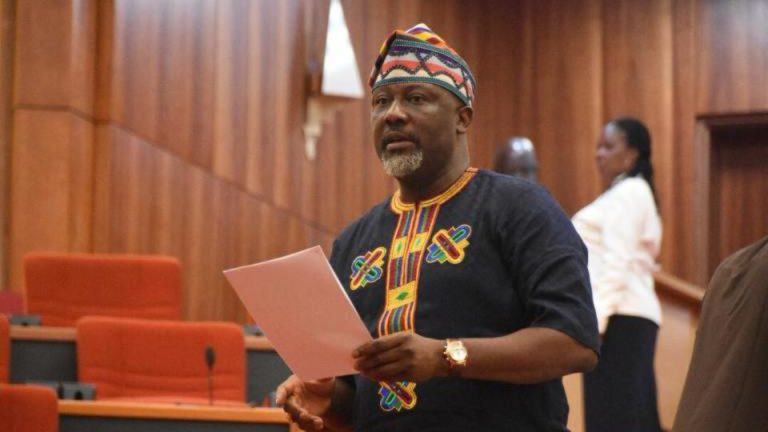
Dino Melaye’s victory voided

On Thursday, August 23, a Kogi-based election tribunal nullified the election of Dino Melaye as the lawmaker representing Kogi West senatorial district and demanded that a fresh election should be conducted.

Melaye is a candidate of the PDP and had had his victory challenged by Smart Adeyemi, the APC candidate in the same race who was declared runner-up.

He is also one of 13 aspirants for Kogi’s top executive seat cleared by the PDP for the gubernatorial election coming up in November.

PRP’s Abdulkadir Umar Sarki loses at Tribunal

Sarki’s election was nullified last Thursday by the National Assembly Election Petition Tribunal sitting in Bauchi.

Having contested on the platform of the People’s Redemption Party (PRP), he is representing the Katagum Federal Constituency at the House of Representatives. His victory was challenged by APC candidate Ibrahim Mohammed Baba.

The tribunal held that the election should have been declared inconclusive taking into account the cancellation of results from seven polling units, votes from which exceed the margin between the two top candidates. It also ordered for a rerun.

Dambazau’s son victory nullified

Kano State’s election petition tribunal on Friday declared the announcement of Shamsudeen Dambazau, son of former minister of interior, as the lawmaker representing the Sumaila/Takai federal constituency a nullity.

Kawu Sumaila who won the party primaries was disqualified by the Federal High Court, and Dambazau had been the first runner-up.

Clarifying the implication of Sumaila’s disqualification, the tribunal said the seat belongs rather to the party that came second in the election, not the runner-up at the APC primaries. The tribunal, therefore, ordered the electoral commission to issue a certificate of return to Surajo Kanawa, the PDP candidate.

The court held: “If a tribunal or court found out that a candidate did not participate in any stage of the election process, the tribunal has no option other than to declare the next candidate with the highest number of votes, as the winner in the election.”

Sumaila’s counsel stated that his client has accepted the court’s decision.

Bamidele Salam too

On Monday, September 2, the election petition tribunal in Osogbo, Osun, voided elections conducted in some units in four local governments, citing over-voting as the reason, and ordered for a rerun. This, in effect, nullified the election of Bamidele Salam, a candidate of the People’s Democratic Party (PDP) representing the Ede Constituency at the House of Representatives.

Salam told journalists the verdict is not acceptable to him and he will consult his lawyer on how to challenge it.

Meanwhile, one of the most-anticipated decisions with regards to the general elections is that of the Presidential Election Petitions Tribunal. All parties have closed their arguments and the tribunal has reserved its judgement.

Justice Mohammed Garba who heads the five-man panel said on Thursday, August 22, that the judgement will be delivered at a later date to communicated to the parties’ counsel.

APC will retain Kogi, says Tinubu—it’s a walkover for us, PDP boasts

NATIONAL Leader of the ruling All Progressives Congress (APC), Bola Tinubu says the party will win the November 16 governorship election in Kogi State.

Despite poor records of performance, incumbent governor of the state, Yahaya Bello was elected the party’s flag-bearer last Thursday after securing 3,127 votes out of a total of 3,596 delegates that were accredited.

But Tinubu who spoke in Benin during the 90th birthday celebration of the Esogban of Benin, David Edebiri, said APC would win both governorship elections in Kogi and Bayelsa states because ‘all stakeholders would work in unison, like the bunch of brooms that swept the debris of the past for a better Nigeria.’

Bayelsa State which is currently under the control of the people’s Democratic Party (PDP).

“What I expect in Bayelsa and Kogi is victory. There is no other party in the states…politics is a market of many branches and this is the broom; the broom will come together as a bunch to sweep all the debris of the past. That is it, and we are going to win the election,” Tinubu said.

However, reacting to the choice of Yahaya Bello as the APC candidate, Kogi State PDP says the forthcoming election has become a walkover given the poor performance record of the governor.

Bode Ogunmola, PDP spokesperson in the state said the choice of Bello would ensure an easy win for the party.

Ogunmola cited “general public resentment against Bello’s administration” as another reason PDP would win the election.

According to him, the party had, all along, been praying for the APC to “make the mistake of re-presenting Governor Bello.”

“It is a well-known fact that Governor Bello cannot win any local government, given his poor performance and the way and manner the resources of the state are being massively looted”  he said.

“His desperation to return is to save himself from going to prison over looted funds. That was why he had to spend hugely to get strong contenders disqualified.

“If he succeeds in fooling the leadership of his party and the delegates, we are confident that he cannot fool Kogi electorate who are victims of his monumental mis-governance.”

Ogunmola assured the electorate that it was determined to give the state “a better alternative,” adding that it remains “the most credible alternative.”

Meanwhile, the PDP has 13 aspirants jostling for the governorship ticket.

The aspirants were screened by a Screening Committee headed by the Governor of Taraba State, Darius Ishaku, at the PDP presidential campaign office in Maitama, popularly called the Legacy House.

According to the list, the aspirants cleared in Kogi State include Wada Idris, Dino Melaye, Erico Ameh, Aminu Suleiman, Grace Adejoh, Abubakar Ibrahim, Kabiru Haruna, Musa Wada, Saliu Atawodi Mohammed Adah, Victor Adoji, Baye Averehi, and Emmanuel Omebije.

Boko Haram: Army announces death of three soldiers

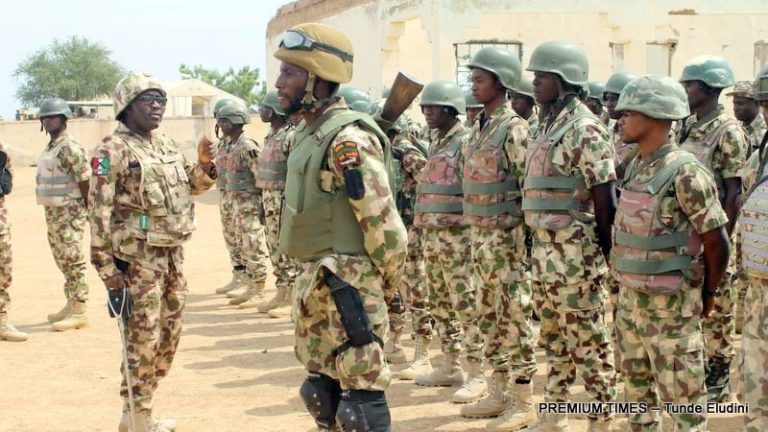
THE acting Director of Army Public Relations, Colonel Sagir Musa, on Sunday, announced the death of three soldiers while combating the Boko Haram insurgents in Borno State.

The army acting spokesperson said the incident happened as troops of Sector 3, Operation Lafiya Dole engaged members of the insurgents, stressing that some of the insurgents were also well killed.

“Sadly, during the encounter, three of our gallant soldiers paid the supreme price while eight other soldiers sustained injuries,” said Musa.

“The bodies of the fallen heroes and those that sustained injuries have since been evacuated. The wounded are being treated and are in stable condition”.

In a statement of confirmation to ChannelsTV, Musa explained that the troops attached to Super Camp Monguno attacked the terrorist members, Friday while on patrol along Monguno-Mairari-Gajiram axis in the state.

He stated that the patrol team got in contact with the terrorists group and engaged them with heavy fire weapon which reportedly led to the death of “countless number” of the insurgents fighters.

According to the army acting spokesperson, some weapons and military equipment were recovered from the Boko Haram members. He said few insurgents also escaped with gunshot wounds, as a result of blood trails in the general area.

He restated commitments of the military to win the battles. Musa said the troops are still combing the general area with a view to clearing remnants of the fleeing terrorists.

He concluded that Lieutenant General Tukur Buratai, the Army Chief of Staff, along with some principal staff officers from the Army Headquarters, Theatre Commander Operation Lafiya Dole and other commanders, have visited the troops and those wounded in action.

The Federal Government though claimed to have technically won the battle against the insurgents, the Nigerian military also has recorded several casualties.

But information about some of the slain soldiers  are kept secret.

For instance, on 17th July, 2018 62 soldiers were reportedly killed at Jilli, a military base in Geidam Local Government Area of Borno State.

On 23rd July 2018, another set of eight soldiers were ambushed and killed in a military convoy in Yobe state.

Fashola warns public against fake Facebook account registered in his name

THE Minister of Works and Housing, Mr Babatunde Fashola (SAN), on Sunday, issued a disclaimer advising the public to disregard a fake Facebook account registered in his name with his picture.

The fake account is FasholaRajiFashola.

The re-appointed minister and a former Governor of Lagos State described the action as a fraudulent means the scammers intend using to extort the public.

Fashola who has in the past disclaimed such fake accounts, reiterated that his verified Facebook account remains @BABATUNDEFASHOLA.

“With several reported and deleted in the past, the latest addition to the fake accounts set up in the former Lagos State Governor’s name along with his picture reads “FasholaRajiFashola” and the scammers wrote that the Federal Government was giving out the sum of N700, 000 to youths and young adults to enable them to pay school fees, set up businesses and invest in businesses, among others,” Fashola says in a statement issued by Hakeem Bello, his Special Adviser on Communications.

The ICIR observed part of the publication was written in very poor English by the accused scammers.


The poorly written claim reads in part, “All The Nigeria Citozings Of All The And Local Government In Nigeria Are Beneficiary Of The Federal Government Money Enpwoerment To Empower The Youth To Pay There School Adult To Do Business E.T.C Contact Number: 09035339533)

“Good News… To All Nigeria Youth And Adult. Federal Government Is Giving Out #700,000 Free Cash Transfer To All To Empower The Youth: Further Their Education’s, Open Good Business And Learn Good Works. Call Mr Adebayo Kola The Federal Government Cashier On 09035339533”.

Fashola is not the first in this new cabinet of President Muhammadu Buhari to lament over fake account. The newly appointed Minister of Health, Osagie Ehanire on 22nd August raised similar alarm over a false twitter account opened in his name.

However, the Minister described as unfortunate the fact that despite repeated warnings and disclaimers, certain unscrupulous elements still engage in the act of defrauding unsuspecting members of the public through different social media platforms falsely linked to him.

The call, he noted became necessary in view of the increasing activities of the scammers.

While appealing to the public to always clarify with the appropriate agencies of government at all levels before engaging in any dealings with his purported personal staffs, he urged the public to report to the law enforcement agencies so that those involved in the nefarious acts could be brought to justice.


SERAP, BudgIT, others tackle NASS over N5.5bn cars for senate principal officials— go to court

THE Socio-Economic Rights and Accountability Project (SERAP), BudgIT, Enough is Enough (EiE) and 6,721 concerned Nigerians have filed a lawsuit against the release of N5.550 billion for purchase of luxury cars for principal members of the ninth Senate.

SERAP and others, in the suit, are asking the Federal High Court to restrain and stop the National Assembly Service Commission from releasing the money until the downward review of the amount proposed by the Senate.

In the suit number FHC/L/CS/1511/2019 filed last Friday at the Federal High Court, Ikoyi Lagos, the plaintiffs argued that: “Spending a huge sum of N5.550 billion to buy luxury cars for principal members of the ninth Senate is unjust and unfair.

They said such huge budget to purchase cars negates the constitutional oath of office made by members to perform their functions in the interest of the well-being and prosperity of Nigeria and its citizens, as contained in the Seventh Schedule of the 1999 Nigerian Constitution (as amended).

The plaintiffs also argued: “The proposed spending by the ninth Senate raises pertinent questions: What is the economic value and contribution of the vehicles sought to be purchased to the grand scheme of Nigeria’s economy? What are the parameters used to arrive at cost efficiency and value for money in the decision to purchase the vehicles? Where are the vehicles purchased by the eighth Senate?”

The 6,721 concerned Nigerians who joined the suit as co-plaintiffs with SERAP, BudgIT and EiE include: Bring Back Our Girls (BBOG) co-conveners, Oby Ezekwesili and Aisha Yesufu; Jibrin Ibrahim; Edetaen Ojo; Abiola Akiyode-Afolabi, and Deji Adeyanju.

The plaintiffs argued: “The failure or refusal by the Senate to comply with legal and constitutional provisions is nothing but an act of arbitrariness. The money could be better allocated to more important sectors of the National Assembly expenditure – like constituency projects and National Assembly-endowed educational scholarships.”

The suit, filed by Kolawole Oluwadare and supported by an affidavit of urgency, read in part: “A public officer shall not put himself in a position where his personal interest conflicts with his official duties. But the plan to spend N5.550 billion to buy vehicles for principal members of the Senate is a textbook case of a conflict of their personal interests with national interest of fiscal efficiency – a conflict eventually resolved in favour of personal and self-interest.

“Members of the National Assembly as public officials form a very tiny percentage of about 200 million Nigerians. It is public knowledge and judicially noticed that members of the Senate are still eligible to collect huge sums of money as monthly allowances and severance pay on conclusion of their respective terms at the National Assembly.

“It is thus rational that this matter is presently generating a lot of public concern and many Nigerians are now calling for a review of the sum proposed and budgeted for vehicles for members. In the face of glaring facts about Nigeria’s dire economic position vis-a-vis the scant allocations to critical sectors of the nation, we can only pray the Court to do substantive justice by granting our reliefs sought.

“There is real urgent need to assign, hear and determine this matter expeditiously. The well-being and prosperity of Nigeria requires commitment and sacrifice by all and sundry. However, the plan to spend N5.550 Billion [amounting to 6.4 percent of Nasarawa State budget] is anything but a commitment to pursue the interest, well-being and prosperity of Nigeria and its citizens.

“We urge the court to grant the plaintiffs’ reliefs by stopping the spending of N5.550 billion on luxury cars by the Senate and compelling the Senate to undertake a downward review of the sum proposed and budgeted, consistent with the provisions of section 57[4] of the Public Procurement Act 2007. Unless the reliefs sought are granted, the Senate will continue to benefit from the breach of the law, and at the expense of millions of Nigerians living in poverty.”

Sierra Leone investigates president’s aide for displaying wealth at Synagogue

SIERRA Leone anti-corruption agency is investigating a top aide to the country’s president, Fatmata Edna Kargbo after she talked about her newfound wealth in church.

According to CNN, Kargbo was invited for questioning after she displayed a photo of her new house and appointments letters to a church congregation in Nigeria.

Margaret Murray, a spokeswoman for the country’s anti-corruption agency was quoted by CNN as disclosing the investigation.

Kargbo was the the Chief Protocol Officer of Sierra Leone’s President Julius Maada Bio before she was asked to proceed on leave after the video sparked public outcry.

“I cannot delve into the details because the investigation is ongoing and she’s been cooperating since we invited her for questioning,” she said.

The Cable Network News reported that it reached out to Kargbo but has yet to hear from her at the time of publishing.

The case is being investigated under the country’s Anti-Corruption Act of 2008 which empowers the agency to probe unexplained wealth of public officials.

A presidential media aide told CNN that Kargbo was ordered to go on leave in August. He claimed the directive is not linked to the investigation.

She came under scrutiny after a video of her sharing a testimony at the Synagogue Church of All Nations (SCOAN) surfaced online sparking outrage from citizens who questioned the source of her wealth.

In the two minutes long video, the public official spoke about her appointment and how it had helped her complete a house she said she started around ten years ago.

“Initially, I was staying in a two-bedroom house while I was constructing this house, so I give God all the glory for blessing me with this house,” she said.

Meanwhile, Synagogue Church of All Nations (SCOAN) has reacted to the development.

Joshua’s television channel, Emmanuel TV, released the video of Kargbo’s actual testimony, which she shared on Sunday 21stJuly 2019.

https://youtu.be/TPD94TeLX68


According to Kargbo, after visiting SCOAN – “the house I constructed for 10 years without finishing – in exactly 14 years, I was able to complete it through the grace of God!”

This contradicts the narrative implied by most media reports that the Sierra Leonean politician amassed excessive finances within the short time frame of her appointment as Bio’s Chief Protocol Officer in April 2018.

The clip released on Emmanuel TV also paints Kargbo as a patriotic figure who championed the cause of her nation during the deadly Ebola outbreak in the nation in 2014.

A letter from then President Ernest Bai Koroma to Joshua, requesting his assistance in the nation to battle the deadly virus, is revealed, alongside a donation of $50,000 to Sierra Leone and 4,000 bottles of ‘Anointing Water’ to help curb the spread of the disease.

Kargbo revealed she personally received the gifts from Joshua – which were sent in a private jet chartered to the tune of $50,000 – and ensured they reached the affected areas, claiming that the regions where the ‘water’ reached were later declared Ebola free.

Although most media reports claimed Kargbo had been ‘sacked’ from her job, a statement from the presidential office indicated she had only been placed on leave pending the outcome of the corruption investigation.

How Accountant General of the Federation, Ahmed Idris turned ‘blind eye’ to fraud at NBET

THE Accountant General of the Federation, AGF, Ahmed Idris was a significant player in the trail of fraudulent practices that occurred at Nigeria Bulk Electricity Trading Plc, NBET under the watch of Marilyn Amobi, its embattled boss, fresh revelations have shown.

A trove of documents obtained by The ICIR revealed that Idris had turned a blind eye to a series of infractions and irregularities that took place at the electricity company by sidelining existing laws.

Oversight functions without oversight

NBET was granted self-accounting status by the AGF’s office in 2012 after fulfilling the conditions stipulated by the financial regulations act which includes setting up an internal audit and finance units at the company.

With this status,  NBET would be able to enjoy the benefits of an autonomous agency, managing its operations and funds without undue interference.

But in June 2017, Idris directed staff from his office to be transferred to NBET to head the Internal Audit and Finance Departments, heeding a request from Amobi to send treasury officers to NBET.

In a news report, he threatened to cut off fund releases to agencies that reject treasury officers from his office claiming it was the mandate of his office to manage financial and audit units of government agencies.

“It is the role of Treasury officers to manage the Finance and Accounts Departments as well as the Internal Audit Units in MDAs.

“As long as you receive public funds from government, you must allow the Treasury Officers to manage operations of the system and application of the funds,” he said.

Idris contradicted himself because NBET had attained self-accounting status and was able to manage its audit and financial operations without unnecessary influence from his office.

He reassigned Waziri Bintube of the Finance Department to the department of Risk and Guarantee, while Sambo Abdullahi of the Internal Audit unit was transferred to Learning and Development, Department of NBET.

The AGF brought Hauwa Bello from the National Centre for Women Development, NCWD, to become head of Internal Audit at NBET and Ibrahim Otaru from his office was also transferred to head NBET’s Finance department.

His action was an obvious violation of Section 2.4 (b) of NBET’s charter which reserves powers of organizational restructure within the agency for the board of Human Resource Committee of NBET but allows the AGF to make reviews.

However, since Amobi was appointed substantive boss of NBET in July 2016, there has been no audit of the financial accounts of the electricity company. Available records show that from 2015 to 2018 there were no external audited financial statements submitted by the firm to the Office of the Accountant General of the Federation, OAGF, as required by law.

The last financial audit carried out by external auditors, PriceWaterhouseCoopers, PWC, and Aminu Ibrahim & Co was in 2014, reflecting a flagrant breach of the financial regulations and extant circulars.

Under the direct watch of staff from the OAGF, the same trend continued from 2017 to 2019 without any sanctions from the Accountant General, Idris.

Section 3210 (iv) of the financial regulations and extant laws stipulates that “The Chief Executive Officer shall submit both the audited accounts and management report to the Auditor – General and the Accountant General not later than 31st May of the following year of account.”

This breach of the law has continued at NBET with the staff of the OAGF in charge of internal audit and finance units of NBET.

In the face of the alleged corrupt infractions at NBET under the supervision of staff from the OAGF, The ICIR identified suspicious NBET’s projects that were inserted in the Federal government approved budgets of 2018 and 2019.

In its 2018 approved budget, a project titled “External audit for the year ending December 31, 2017,” referred to as an ongoing project was earmarked to cost ₦43,565,908 but enquiries by The ICIR revealed that no external audit was carried out at the electricity company within the period.

However, NBET slated ₦22, 687,536,388 as the required amount it needs to execute its projects in the approved 2018 budget, but ₦27,782,386,771 was released by the federal government which was more than enough to ensure the projects were fully carried out within that fiscal year.

The difference between the amount utilized by NBET and the amount released was an excess of ₦5,094,850,383 according to data obtained from the OAGF.

Surprisingly, only ₦21,915,509,596 was utilized by NBET in the 2018 budget but the financial audit of its accounts for that fiscal year which was a significant provision in the budget was not done.

External audit of NBET’s accounts which was expected to cost ₦73, 600,000, also appeared in the 2019 approved budget but as at the 31st of May, its financial books were not audited by an external auditor.

Meanwhile, every financial statement of government parastatals, agencies, and ministries ought to be audited within 6 months of the succeeding year, with copies submitted to the OAGF, Auditor General of the Federation and the Public Accounts Committee of the National Assembly.

Shady emoluments, sketchy agreements

In July 2018, Amobi made a request to the head of Corporate Services at NBET in a letter demanding that two members of staff posted from the OAGF to her agency should receive a salary upgrade and also be put on NBET’s payroll.

“The Director of Finance/Accounts, DFA, and Head of Internal Audit, HIA, will be paid the difference between what their counterparts earn at NBET from what they earn at the OAGF that is (₦23,302,910.52 – ₦5,135,001.96) for the DFA and (₦19,251,174.19 – ₦2, 548,925.04) for the HIA,” a section of the letter reads.

Their appointments letter signed by the AGF reflects a sketchy agreement, which did not state their exact employment status if it was in an acting capacity at NBET or on permanent transfer basis from the OAGF.

It also did not state if they would be answerable to Amobi or the accountant general of the federation who put them in charge.

Section 5(a) of the Federal Government Public Service Rules defines transfer as the permanent release of an officer from one scheduled service to another or from one class to another within the same service.

This provision of the law guides the deployment of civil servants from one agency to another for which their remuneration is handled by their new ministry but in this case, their salaries were upgraded by NBET and their names were also on the OAGF’s payroll.

Meanwhile, the directive from Amobi was carried out resulting in the upgrade of Ibrahim’s monthly salary from ₦427,916.83 which was what he received at the OAGF to ₦1,513,992.38. Hauwa also receives ₦1,391,854.10 compared to what her peers on the same grade level at the OAGF who collect ₦212,410.42.

The names of the staff included on NBET’s payroll from the OAGF are Hauwa Bello, Ibrahim Otaru and Alex Ogbuokiri who was also posted to the Department of Internal Audit.

However, this violation of the public service rules has continued unabated under the supervision of the AGF without his intervention.

In January 2018, NBET’s heads of internal audit and finance who were officers assigned from the OAGF approved a mortgage payment for Amobi to the tune of ₦77,371, 600.80 which was a 6 years upfront payment for her rent and furniture allowances.

With less than three years to the end of her four-year tenure, this illegal payment was approved by the staff of OAGF which the Independent and Corrupt Practices Commission, ICPC, in its March 2019 report indicted Amobi for receiving an excess furniture allowance ₦22,646,328.48 above the approved ₦5,777,595.00 for Chief Executive Officer, CEO’s of Ministries, Departments and Agencies.

 AGF refuses to comment

The AGF is charged with the responsibility to manage receipts and payments of Nigeria to ensure a proper system of account exists in every department of the nation’s treasury and to exercise general supervision over the receipts of public revenue and over the expenditure of the Federal Government.

The ICIR wanted the AGF to explain the separation of duty of the OAGF treasury staff who were serving as head of finance and internal audit since their role was to be an independent observer reporting to the AGF.

When contacted, Idris did not respond to text messages, WhatsApp messages and phone calls sent to him, despite the fact that he read the message. The green tick on WhatsApps confirmed he did.

Idris was re-appointed as Accountant General of the Federation in June after completing the four-year term from June 2015.


Blame Attorney General Malami for $9.6 billion judgement debt – P&ID

Process and Industrial Development (P&ID), the Irish firm that recently won a $9.6 billion judgement against Nigeria, has said that the Attorney General of the Federation, Abubakar Malami, should be held responsible.

The firm said the Buhari – led administration had ample time since it came into office to settle the matter.

P&ID Facts in a statement titled, “Nigerian Attorney General Malami’s Revisionist History”, published on its blog said the Attorney General could have settled the problem shortly after he took office in November 2015 for $850 million, but personally took the decision to gamble on the arbitration and turned an $850 million liability into a $9.6 billion debt.

The ICIR had earlier reported exclusively on the major actors who were at the centre of the controversial deal, as well as the level of involvement of Nigerian officials in the botched gas project.

The engineering firm said the Muhammadu Buhari Administration did not make any attempts at settling or negotiating with P&ID.

The firm alsostated that it is now focused on enforcing its legal rights in the UK, including seizing Nigerian assets to satisfy the award.

See P&ID’s statement excerpted below

“It is another day, and with it comes another attempt from the Nigerian Government to create a fictional history of the P&ID case.”

“This week’s series of desperate conspiracy theories point to something deeper: the Buhari Administration is refusing to admit its own role in the P&ID case from 2015-2019 after it came into office.”

“Appearing on CNBC Africa, Attorney General Abubakar Malami sought to wipe his hands and the hands of the Buhari Administration clean when he stated, “[t]he government as a unit was delicately involved. And that was the government in 2010, the award was in 2012, and then three years thereafter the current administration under the leadership of Muhammadu Buhari came into place. So the time when this administration came to place in 2015, the award was over three years, there was no appeal, no application for execution, no application to set the award aside.”

Attorney General Malami seems to have a case of amnesia.

Let’s set the record straight:

May 3, 2015: P&ID offers to settle the dispute with the Nigerian Government for $850mm. President Goodluck Jonathan indicates they are handing over the negotiations to the incoming Buhari Administration.

May 29, 2015: Muhammadu Buhari is sworn in as the 15th President of Nigeria, but fails to appoint a cabinet for five months.

July 17, 2015: The Arbitration Tribunal found in favour of P&ID (i.e. – the Liability Award). The new Buhari Administration did not make any attempts at settling or negotiating with P&ID, and did not make any effort to challenge the decision.

November 11, 2015: Attorney General Malami was sworn in November 11, 2015, just under three months after the Liability Award.

May 27, 2016: The Arbitration Tribunal wrote to the Nigeria Government confirming that: “As the parties will be aware from Procedural Order No 12, the Tribunal has decided that the seat of the arbitration is England. It follows that the Federal Court of Nigeria had no jurisdiction to set aside its Award.” Neither Attorney General Malami, nor any representative of the Buhari Administration did anything in response other than continue with the proceedings, thereby tacitly accepting the analysis of the Arbitration Tribunal.

June 24, 2016: Having failed to set aside the Liability Award by falsely claiming the seat of arbitration was in Nigeria; not England, Attorney General Malami wrote personally to the arbitrators to say “my office has taken over the handling of the above arbitration on behalf of the Ministry of Petroleum Resources.” He asked for and obtained an extension of time to file a defence to quantum, and appointed his own legal team in place of the Ministry of Petroleum Resource’s legal team.

August 30-31, 2016: The Quantum Hearing (i.e. – amount of damages payable) takes place in London. Attorney General Malami’s legal team conducted Nigeria’s defence at the quantum hearing. Expert witnesses as to quantum were called to give evidence and were cross-examined.

After the Quantum Hearing, Attorney General Malami instructed his lawyers to request a standstill agreement, which would take effect from the date of the Award.

This fact has never been publicly reported until today.

January 31, 2017: The Arbitral Tribunal issued a final award, ordering Nigeria to pay P&ID $6.5 billion plus $2.3 billion in uncollected interest as of March 2018.

February 17, 2017: The Award on Quantum was delivered to the parties on February 17, 2017. Despite the 60-day standstill having been agreed by P&ID, Attorney General Malami made no attempt to negotiate with P&ID during the 60 days following the handing down of the Quantum Award.

April 28, 2017: After the 60 days had expired, Attorney General Malami instructed his lawyers to write to P&ID’s lawyers and explained that “The delay was occasioned by the bureaucracy of the Federal Government in a bid to determine a reasonable strategy after receipt of the Arbitral award.” The Attorney General’s lawyers added: “we now have the authority of the Vice President of the Federal Republic of Nigeria to meet with the Claimant to negotiate the Terms of the Arbitral award.”

Today: In the lead up to the judgment by the English Commercial Court, Attorney General Malami allowed the time for acknowledging service in both the United States and London to lapse without filing any response. In both jurisdictions, Nigeria’s lawyers Curtis Mallet had to apply for ex post facto extensions of time and make the necessary apologies and explanations to the court.

In London, a senior Curtis Mallet partner explained that the Claim Form was “immediately filed and not passed up the chain of command” at the Ministry of Justice. The partner pleaded that “the delay was neither deliberate nor intended to be disrespectful to the Court.”

In the US, Curtis Mallet explained that the deadline was missed because they were in the process of being formally retained by the Nigerian Government and had been instructed to enquire about the potential for a settlement

The Attorney General’s pronouncements in the Nigerian press are a clear attempt to cover up his own incompetence and that of the Buhari Administration. This is a matter, which could have been settled shortly after he took office in November 2015 for $850 million. Instead, he personally took the decision to gamble on the arbitration and turned an $850 million liability into a $9.6 billion liability.

And at no time since has Attorney General Malami assumed responsibility has he raised any allegation of fraud or scam, either in the arbitration or in the subsequent enforcement proceedings. The reason for this is that there was no fraud. All of this raises serious concerns for foreign investors in Nigeria, whether you are investing in a commercial enterprise or buying Eurobonds. Not only will Nigeria deliberately refuse to pay an international arbitration award backed by an English Court, but they are prepared to launch sham investigations and character assassinations when all else fails.

This is a serious assault on the Rule of Law by a demonstrably dishonest administration.

Meanwhile, P&ID is now focused on vigorously enforcing its legal rights in the UK, including seizing Nigerian assets to satisfy the award. This will begin as soon as possible.

Leah Sharibu still alive – FG

The Presidency on Saturday dismissed speculation that Leah Sharibu, the Dapchi schoolgirl held captive by Boko Haram, is dead.

It said Miss Sharibu is still alive and that the Federal Government is currently negotiating  her release from the terrorist group.

Senior Special Assistant to President Muhammadu Buhari on Media and Publicity, Garba Shehu, said this in a statement shared on his official Facebook page. 

Shehu said the Buhari administration will not give up on the safe return of Sharibu,a student of Government Girls Science and Technical Secondary School, Dapchi, who was kidnapped by a faction of Boko Haram terrorists in February 2018.

The presidential spokesman  assured Nigerians that the government would not relent on the release of Sharibu, a Christian, who was denied freedom by the terrorist group because of her faith.

‘‘Instead of giving up, the government is carrying forward processes that should hopefully yield her release by her captors.”

Shehu was responding to a worrying cycle of speculations on whether Leah Sharibu had been harmed by her abductors.

He said emphatically that much of what is written about the girl in the press is untrue.

“Lines of communications remain open with the kidnappers, ISWA, to secure the release of Leah Sharibu.

‘‘Contrary to false reports, she is alive – given assurances from our security agencies-, and the government is committed to her safe return, as well as all other hostages to their families.

READ ALSO: Buhari calls for action to end Tiv – Jukun crisis

“Kidnapping for ransom should never be encouraged. This means not capitulating to the demands of terrorists: refrain from rewarding their heinous crimes with payment.

‘’With the abduction of loved family and friends, the government understands how difficult these time are for them, but government is pursuing many options to ensure the safe return of Leah Sharibu.

“We must commit to law and communication, using the breadth of strategies at our disposal: legal initiatives, stakeholder cooperation, involvement of all relevant parties and the use of the latest hostage negotiation techniques.

‘‘Kidnapping for ransom is rising across the Sahel. We must – collectively – make sure we implement best practice to prevent its exploitation,’’ he said.

Appealing for patience in dealing with the challenge this case poses, the presidential spokesman assured that the administration is fully conscious that any misstep on a delicate issue as this can be costly.


Buhari calls for action to end Tiv – Jukun crisis

President Muhammadu Buhari has called for an end to the deadly Tiv-Jukun crisis after the gruesome killing on Wednesday of a Catholic priest in Taraba State.

The President said the killing of the clergyman highlights the “urgency of addressing this embarrassing and persistent conflict.”

Rev. Fr. David Tanko is the latest victim of the crisis that has engulfed several  communities in Taraba State.

The clergyman was reportedly killed between Kasuan Haske and Tor-Tsee village on his way to his station at Amadu from Takum on Wednesday.

The Tiv and Jukun, spread across Benue and Taraba states and have a long history of communal clashes, mainly over land and political rights.

The President in a statement issued by his Senior Special Assistant on Media and Publicity, Garba Shehu, said the governors Darius Ishaku of Taraba and Samuel Ortom of Benue, royal fathers, specifically the Tor Tiv and the Aku Uka of Wukari, religious and community leaders in the two states should immediately find a lasting solution to the crisis

He said, ”I have watched with trepidation and disbelief how hate and bigotry have inhabited the human soul, resulting in brothers killing brothers”.

”On behalf of the Federal government and the entire people of the country, I offer my condolences to the Catholic community, the government and people of Taraba over the losses arising from recent incidents involving the warring communities.

“The persistent deaths and destruction and the seeming desire by the warring sides to push each other to extinction is embarrassing, and this is against the essence of our ethnic and religious diversity in the country.

“Progress is impossible where violence and destruction are allowed to dominate our daily lives.”

While acknowledging  the Tiv/Jukun violence to be one of Nigeria’s most persistent and intractable security problems, the Nigerian leaderbassured the affected communities that the Federal Government would not leave them to their fate or treat cases of communal violence with levity and indifference.

“The deployment of security men can only provide a temporary solution.”

”The long term and lasting solution to this deep-seated antagonistic relationship between the warring factions depend on the willingness of those involved to listen to reason and give peace a chance.”

“It is time for leaders of the ethnic groups to come together and draw up a roadmap for lasting peace. The impact of this persistent violence on the social and economic life of the people is incalculable,” the President said.

“To this end, a high level intervention from the federal level made up religious, community leaders and top security operatives is being put together by the Secretary to the Government of the Federation (SGF) to examine all issues underlying the conflicts in the hope of finding a permanent solution.”