Home Blog Page 2299

There was only sporadic act of violence, no xenophobic attacks in South Africa — High Commissioner

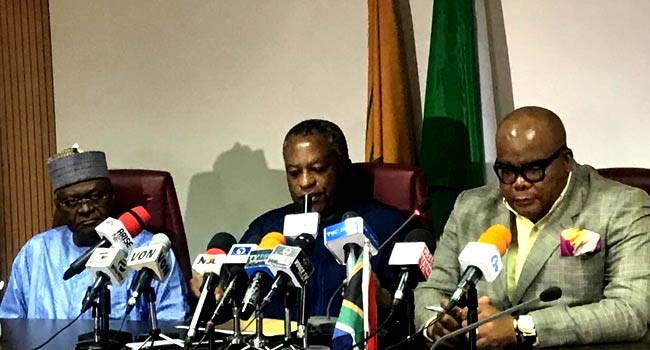
BOBBY Monroe, South Africa’s High Commissioner to Nigeria, on Tuesday  says there was only “Sporadic act of violence” in his country and not Xenophobic attacks on Nigerians as reported in the media.

Monroe who was summoned by the Federal Government to explain why Nigerians in South Africa have become targets of Xenophobic attacks said the attacks were not targeted at Nigerians in his country.

Answering questions from Nigeria’s Minister of Foreign Affairs, Geoffery Onyeama, the South Africa’s High Commissioner to Nigeria maintained that businesses belonging to the South Africans were also affected in the violence.

However, Onyeama disclosed that Nigeria would no longer accept such re-occurrence from the South African government.

During the meeting, the Foreign Affairs Minister called for compensation of Nigerians due to losses suffered during the attack.

He also announced a proposal to the South African envoy for both military outfits of the two countries to meet over the reoccurring concerns.

“We feel that as Nigerian government, definite measure have to be taken to stop once and for all this act of aggression and criminality against Nigerians in South Africa. I invited the head of mission in South Africa today….the South African government has issued a statement, arrests have been made but for us, going forward, we are determined that we should not have any recurrence of this going forward,” says Onyeama.

He added that “We must put in place adequate measures to ensure this does not occur. We have made very concrete measures to South Africa today and we believe that if those measures are implemented, we have a very good chance of ensuring that this does not occur.”

“There has to be accountability and responsibility for compensating that have suffered loss and we are going to absolutely push for that. I’ll not go into details.”

“The South African and Nigerian forces can have an arrangement where there would be cooperation on the ground in South Africa to arrest such events of occurrences and this is something we will have to work out details with South African government to address the challenges posed by these attacks at the ground level. We have put that forward. We hope the South African government will support us.”

The Minister had on Monday condemned the attack on Nigerians which was widely reported by the media.

Abike Dabiri-Erewa, Chairman of Nigerians in Diaspora Commission also criticised actions of the South African protesters against Nigerians and other foreigners in the country.

She sought for better engagement and urgent intervention of the African Union (AU).

Buhari sends delegates to Ramaphosa

Meanwhile,  President Muhammadu Buhari has sent a special envoy to the South Africa President, Cyril Ramaphosa, to express his disappointment on the attacks on Nigerians.

According to a statement issued by Femi Adesina, the President’s Special Adviser on Media and Publicity, the Nigerian delegate would arrive in Pretoria on Thursday.

Though, identify of the delegate was kept hidden, Buhari expressed concerns about the “reported attacks on Nigerian citizens and property in South Africa since August 29, 2019.”

“The President had instructed the Minister of Foreign Affairs, Geoffrey Onyeama, to summon the South African High Commissioner to Nigeria and get a brief on the situation; express Nigeria’s displeasure over the treatment of her citizens; and assurance of the safety of their lives and property,” Adesina stated in the document.

I inherited N14b pension debt, but I’m paying N1.09b— Gombe Governor

0


THE Governor of Gombe State, Muhammad Yahaya, on Tuesday says he inherited N14billion pension liability from the past administration in the state but he has approved the sum of N1.097 billion to commence payment of outstanding gratuities for eligible state retirees under the civil service.

The governor disclosed this in a statement issued by his Senior Special Assistant on Media and Publicity, Ismaila Uba Misilli,  that the payment was to cover 504 eligible state retirees since 2014.

“The amount of N1,097,968,035 is to cover payment to 504 eligible state retirees, with 50 percent approved for immediate payment to the beneficiaries,” he said.


READ ALSO:

Yahaya said payment of the gratuity for local government retirees will be endorsed after verification by the committee while stating the governor’s resolve, to taking out the accumulation of gratuity and pension arrears owed retirees for the past eight years.

On his official Twitter handle, @GovernorInuwa, he said the approved money was part of the N14billion backlog of pension and gratuity arrears he inherited.

“…This is part of the 14 billion naira backlog of pension and gratuity arrears I inherited. This would have been different if the previous govt had utilized Gombe’s resources judiciously. I intend to clear those backlogs. The one for local governments’ workers will also follow”  Yahaya wrote on Twitter.

Yahaya said his government would encourage reward for hard work, while he called on civil servants to rededicate themselves for effectual service delivery.

“After serving our state with honor, our retirees deserve a dignified retirement life…”


ICPC moves to recover N840m from ex-president of Customary Court of Appeal

THE Independent Corrupt Practices and Other Related Offences Commission (ICPC) has requested a Federal High Court, Abuja, to order the interim forfeiture of N840 million traced to a retired President of the Benue State Customary Court of Appeal, Margaret Igbeta.

The Commission, in an ex-parte motion filed at the court, said that the order would stop  Igbeta from accessing the money alleged to have been obtained through fraudulent activities in the course of her official duties.

A statement by Rasheedat Okoduwa, Spokesperson for the Commission said the request for the interim forfeiture is pursuant to Section 48 (1), (2) and (3) (a) and (b) of the Corrupt Practices and Other Related Offences Act, 2000 and Section 6 (6)(a) of the 1999 Constitution of the Federal Republic of Nigeria, as amended.

The retired resident of the Customary Court of Appeal was accused of operating a proxy fixed deposit account in the name of her maid, one Theodora Atsu, with Ecobank Plc, where she accumulated N870, 321, 492.15 between 2008 and 2019.

She was said to have opened the account with her passport and the name of Atsu on March 5, 2008, with an initial deposit of N8 million.

Igbeta subsequently made several other huge deposits including N123, 745, 925.57 and N5 million, in the months of March and May, 2008.

It was also noted by the Commission that the money was far above her legitimate earnings both as a judge and President of the Customary Court of Appeal within the period that the account was operated and would have used to meet the infrastructural needs of the citizens and development of the nation.

ICPC therefore prayed the court to grant the order in the interest of the nation.


Tuberculosis, Malaria keep spreading in Nigeria despite increased funding, strategic plans

THE Global Burden of Diseases’ (GBD)  report on causes of mortality in 2018 listed both Malaria and Tuberculosis as the fourth and sixth leading causes of death in Nigeria.

The cases of malaria and tuberculosis have since become a burden in Nigeria, as the country keeps recording the highest rate of cases and deaths globally in malaria, while for tuberculosis, it has secured the top position in Africa; second highest globally. 

Malaria — still a burden to Nigeria

Despite being a preventable and curable disease, malaria a major public health issue affecting millions of Nigerians, including children. Malaria is caused by parasites that are transmitted to people through the bites of infected female Anopheles mosquitoes. 

Though all ages are at risk of the disease, children are the most vulnerable and prone to attain complications. It could easily lead to the death of under-five children.

Nigeria has continually been marked the highest country with the disease, despite a national malaria strategic plan in 2015 that aimed at reducing it to pre-elimination levels and malaria-related mortality to zero by 2020. 

The plan, titled “Nigeria’s Road to Malaria Elimination by 2020” was presented by Nnenna Ezeigwe, the then National Coordinator of the National Malaria Elimination Programme in July 2015.

Four years down the line, and one year to go, Nigeria still named the country with the highest burden of the disease and more cases in 2017 than in the previous two years.

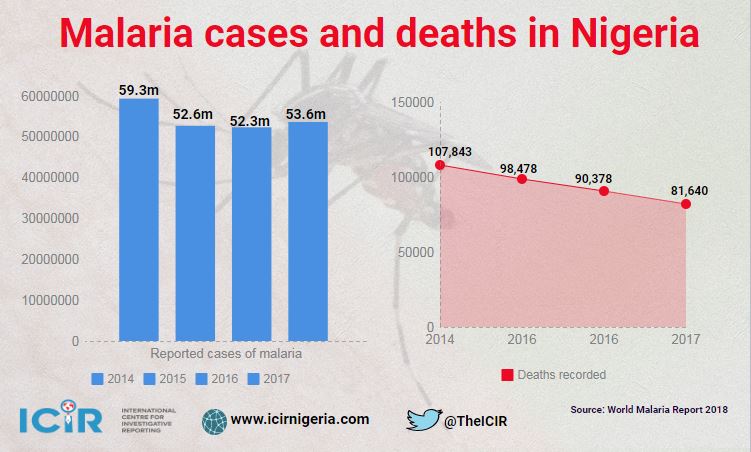
According to the World Health Organisation (WHO)  world malaria report in 2018, which recorded malaria cases and deaths from 2010 to 2017, Nigeria had continually maintained the topmost burden of malaria both in total cases and deaths. 

Though there had been a slight reduction in the number of deaths from 107,843 in 2014 to 81,640 in 2017, the number of malaria cases appeared to be stagnant and even increased in 2017.

 There were 59, 363,039 reported cases of malaria in 2014 while in 2015, the country recorded 52.7 million cases, similar to that of 2016 which was 52.4 million cases. 

And in 2017, the number of newly reported cases of malaria was 53 million. Thus of the 219 million cases recorded globally, Nigeria shared 25 per cent burden, the highest in the world.

Increased in malaria issue in Nigeria is a worrying trend in the country, despite funds received by the country in fighting the disease.

The latest malaria report estimated that in three years —between 2015 and 2017, Nigeria received  more than $588 million from international donors to fight malaria (more than N213 trillion at the conversion rate of 362 dollars). 


The money represented the total received from four different donors which were the Global Fund, the World Bank, the United Kingdom and the United States Agency for International Development (USAID)/President’s Malaria Initiative (PMI).

Funds received by Nigeria to combat malaria have been on the increase each year.

In 2015, a total of $185.3 million was given to Nigeria. It increased to $194 million in 2016. And in 2017, international funds to address the country’s malaria problem was $207.9 million. 

The global health agency having identified Nigeria and 10 other countries with  very high rate of disease’ deaths and cases, developed four approaches for each country in eliminating malaria.

  1. Political will to reduce the toll of malaria: Grassroots initiatives that empower people to take action to protect themselves from malaria, as the Zero Malaria Starts with Me campaign, can help foster an environment of accountability and action. 
  2. Strategic information to drive impact: We are moving away from a ‘one-size-fits-all’ approach to malaria. Through better analysis and the strategic use of quality data, countries can pinpoint where to deploy the most effective malaria control tools for maximum impact. 
  3. Better guidance, policies and strategies: WHO will draw on the best evidence to establish global guidance that can be adapted by high burden countries for a range of local settings. This guidance will be continually updated and refined based on country experience and the development of new tools.
  4. A coordinated national malaria response: Key to success is a more coordinated health sector response complemented by other sectors, such as environment, education and agriculture. Aligning partners behind this country-led approach will 4 ensure that scarce resources are used as efficiently as possible.

Nigeria government is expected to fully incorporate the four strategies in addressing the fourth leading cause of deaths in the country.

Malaria is a preventable disease and its elimination is possible. In May 2019, the WHO certified Algeria as a malaria-free country. It should be noted that the first case of malaria was discovered in the country in 1880. 

“Now Algeria has shown the rest of Africa that malaria can be beaten through country leadership, bold action, sound investment and science. The rest of the continent can learn from this experience,” WHO chief had said.  
Tuberculosis —Nigeria keeps growing in the disease burden

Tuberculosis (TB) is also a prominent health problem in Nigeria. And it is preventable with a vaccine called Bacilli Calmette-Guerin which WHO described as a protector from being infected.

According to the Nigeria National Tuberculosis and Leprosy Control Programme (NTBLCP) during the 2019 World Tuberculosis Day, the disease kills not less than 18 Nigerians in every hour. Also, about 47 people are newly diagnosed with the disease every hour.

TB is an airborne disease, that is, it is spread from person to person through the air. When persons with the TB cough, sniff or spit, they propel germs to the air. If a person inhales only a few of these germs, such a person becomes infected. 

While anybody could be infected, the most at risk are those engaging with or suffering from any of the immunity impaired cases including HIV, diabetes, smoking, alcohol, and undernourishment. TB progresses faster and causes high morbidity and mortalities in HIV patients because of their compromised immunity.

The Nigerian government had established NTBLCP in 1989, a programme within the Department of Public Health in the Federal Ministry of Health, to tackle the issue of tuberculosis in the country.

The agency also had developed a strategic plan that aims at reducing the tuberculosis cases and deaths in the country.

As much as there is an availability of a strategic plan and funds in reducing the burden, Nigeria keeps growing in the disease burden.

According to the global TB report of 2018, which is the latest, Nigeria attained the first position among the countries with a high burden in Africa. It also occupied the sixth position globally. 

The position was in contrary to what was recorded in the 2017 report. That year, Nigeria was the second in Africa and seventh in the world.

According to the 2018 global report, $65 million (more than N23.5 billion at $362) was the amount provided by international funders to support tuberculosis fight in 2017 for Nigeria; $32 million was provided locally. For  2016, the international fund was $90 million and $31 million for domestic funding. 

Between 2014 and 2017, Nigeria had received a total of $330 million (about N119.5 billion at $362 rate). A total of $207 million was from the international donors while $123 million came from within the country which included government support.

Domestic and International funds towards ending tuberculosis in Nigeria

In spite of securing the money each year, tuberculosis is still a major problem affecting the  Nigrian populace, causing deaths of thousands. 

Approximately, there are  418,000 Nigerians that come down with tuberculosis every year but only 118,000 cases are treated and diagnosed. 

“Every single person that is not diagnosed or treated can infect between 10 to 15 other people every year,” said Lucica Ditiu, Executive Director of Stop TB Partnership in Geneva during the 2019 National Tuberculosis Conference in Abuja, Nigeria. 

“So we realise that unless we curtail it, this we keep growing.”

The NTBLCP, during the 2019 World Tuberculosis Day, noted that the low number of people being treated was partly to poor knowledge about TB that influences the health-seeking behaviour of people, and the low treatment coverage.

This could be implied that the Nigerian government is yet to provide enough treatment centres and to create a wide community awareness among the populace.  

“TB is not complicated, though not easy. Nigeria must act fast. Everyone needs to know there’s a TB problem in Nigeria and it is a big one. So, what do we do to our problems? We face them not avoiding them,” said Ditiu.

OPINION: Who will take over in Nigeria?

0

By Cheta Nwanze

GEOPOLITICS is the study of the effects of geography on politics and human relations, mainly the relationships between nations.

To most people, the word “nation” refers to countries, but the study of geopolitics may also focus on relations between sub-national geopolitical entities, such as our geopolitical zones, or even our ethnic groups. For example, geopolitics could refer to how Igbo people behave in relation to the South-East and the larger country they inhabit.

The world is changing under our feet, and the realities of today will be very different from the realities in a decade. For one, the US, which many have looked up to for a very long time, will become more insular. China will try to step in and fill the void, but I think we are tied to Europe for a while to come.


READ ALSO:

The main change for Nigeria is that our geopolitical problems for the foreseeable future will remain internal, and the challenge will be how to balance the needs of each of the various groups that make up the country. For the sake of convenience, let us consider what we now call the six geopolitical zones in the country.

The Middle Belt is dominated by “minority” ethnic groups who have various allegiances, exacerbating the conflict in the region that is at once ethnic and religious. Since 1960, this region has never been able to articulate a singular agenda, and because of age-old animosities, there are so many conflicts in the region that keep the people there unable to fight against the Hausa-Fulani-Islamic influence that is coming in from the North of their borders. For the foreseeable future, this region is likely to be a source of instability.

The North-East has borne the brunt of the Boko Haram insurgency over the last decade, and there is no sign whatsoever that this will go away soon. The region was also the base of Maitatsine. Historically, the northern reaches of this region, dominated by the Kanuri, was centred around the Lake Chad economy which is disappearing, and as a result generating refugees that will put pressure on the North-West and Middle Belt, with the effect that they may radicalise more and more people.

The North-West’s biggest problem remains its rapidly growing population and the fact that this growing population is largely uneducated and possibly uneducable. Based on current data, this may be the most self-sufficient region for food production, but the collapse of the Sahel economy means that it suffers natural trade restrictions which put a strain on its economy.

The South-East, historically the homeland of the Igbo people, was the heartland of the secession attempt in the 1960s, and of the current secessionist agitations. It is also the smallest region geographically, and the most densely populated. Its natives are aspirational, upwardly mobile, and geographically landlocked, which leads to fierce competition for scarce resources. There is a reason why three centuries ago, lots of Igbo people began to abandon their farms, and produce great traders — the land simply could not cope. There is no reason to believe that it will cope now. A drive from Onicha to Awka, just in Anambra state will show this expanding soil deterioration. Then there will be the geopolitics of coping with expansion from the North, and hostility from the South…

The first problem the South-South has is that more than any other region it has had its environment completely devastated by the very stuff, which keeps Nigeria going, in its current form. This means that it is food dependent on other regions. Add that like the Middle Belt, no ethnic group dominates here, and we have a recipe for anarchy brought about by the fact that the youth in that region have been so thoroughly devastated by a proliferation of arms, gangs, and turf wars for control of lucrative if illegal oil trades.

On the surface, the South-West is the most stable and forward-looking of Nigeria’s regions. The current Nigerian economy is centred here (46% of Nigeria’s tax receipts come from Lagos alone), and there is a knock-on effect from Lagos, which is beginning to lift Ogun up. But that is on the surface. In reality, we tend to forget that Lagos was federal capital for 87 years, and as a result, commanded the lion’s share of whatever development came the way of the various zones. This arrangement is still felt till today as Lagos is, without doubt, the centre of everything economic in Nigeria, despite Abuja’s pretensions to the contrary. The flip side is that Lagos is beginning to collapse under its own weight, and is now a demographic time bomb as more people move here.

These are challenges Nigeria has to think through.

Internationally we, or what is left of us, will come increasingly under French influence. China and India will remain too occupied in their neighbourhood, and while they will both project influence here, the geopolitical competition back home will limit what they can do. As said earlier, the Americans will lose interest. The Brits will be relegated to the background as they increasingly become an American vassal state if they survive the fallout from Brexit as a unit within the next two decades anyway.

Turkey will attempt to ramp up influence here, but its main challenge will remain Saudi Arabia as both of them, and Iran, compete for leadership in the Islamic world.

This leaves the field relatively free for France to expand its influence over the region, and given that we do not know how to play global realpolitik, we will quickly fall under the thumb of the French.

SBM Intelligence published a report recently on Nigeria’s geopolitical future that makes for interesting reading. Get it here.

With 147 kidnapping suspects arrested and others, IGP reveals scary South West crime figures

0

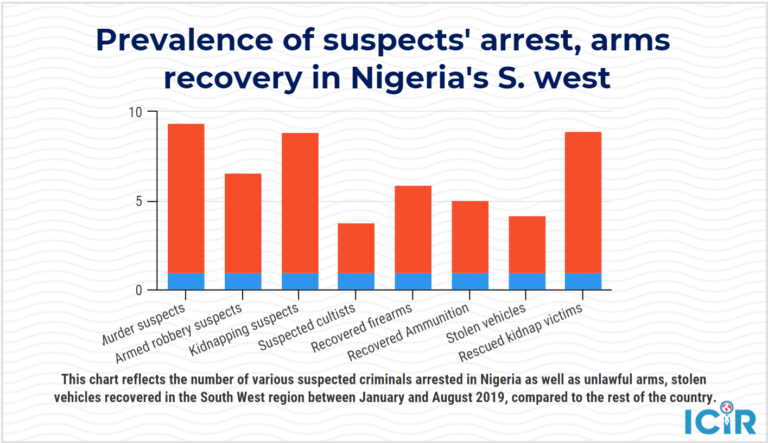
NIGERIA’s Inspector General of Police, Mohammed Adamu, has disclosed that the South West region has one of the highest rates of the arrest of suspected criminals and recovery of unlawful ammunition and firearms.

He said this on Monday at the South West Geopolitical Zone Security Summit held at the University of Ibadan, Oyo State.

The summit is the second facilitated by the Nigeria Police, following one organised for stakeholders in the North West in August.

“Between January – August 2019, a total of 552 murder suspects were arrested with 66 such arrests effected in the South West,” the IGP said.

“Similarly, 2,015 armed robbery suspects were arrested with 363 of the figure arrested in the South West, while 1,154 kidnapping suspects were also apprehended in various operations. 147 of these were arrested in the South West.

“Furthermore, 1,183 suspected cultists have also been arrested with 425 of this figure apprehended in the South Western States. In relation to recoveries, 1,356 firearms of various calibre and descriptions were recovered in various intelligence-led operations by the police with 277 of such recoveries made in the South Western part of the country.”

Adamu also said 5,270 out of the total of 21,300 ammunitions recovered by the police this year were from criminal syndicates in the South West“including about 2,700 ammunition recovered in June 2019 from a cross-border arms smuggling syndicate in Oyo State”.

“Furthermore, 1,541 stolen vehicles were recovered with 482 of such recoveries achieved in the South West while a total of 837 kidnapping victim were rescued with 106 of such rescues achieved in the South West,” he added.

The IGP said, despite these figures, the security situation across Nigeria has been stabilised, “generally speaking”.

“However, there are isolated cases of kidnapping and armed robbery in the South West, particularly, along Benin-Ore-Lagos Highway and across Ondo State,” he added.

He explained that the aims of the summit are to promote the ideals of community policing in the region and encourage communities and their leaders to cooperate with the police in developing new approaches to restoring order.

He said the police have procured new patrol vans to be deployed across highways and cities, and also plan to relaunch the ‘Safer Highway’ Motorised Patrol Scheme and the ‘Safer City’ Scheme in the South West.

“This will also involve the deployment of cutting-edge CCTV technology for surveillance functions across the highways and vulnerable locations in our communities in the Zone and other parts of the country,” the police boss said.

“In addition, a special operation is underway across the South West geopolitical Zone. The operation will specifically address the threat of kidnapping and armed robbery on the highways and other locations.”

The Nigeria Police, he also announced, will recruit 40,000 Community Police Officers (CPOs) across the country, comprising at least 50 from each local government area.  Adamu hinted 1300 of these officers will be drawn from professional bodies such as academic institutions, transport unions, traders’ associations, religious bodies, among others.

Dalori, Galaxy construction MD in court for fresh N95b fraud

THE Economic and Financial Crimes Commission, EFCC, on Monday arraigned Babagana Abba Dalori, with his firm Galaxy Transportation and Construction Services for N95.53 billion fraud.

He was accused of a fresh 12-count charge bordering on breach of trust and obtaining by false pretence.

Dalori was earlier sentenced to Kuje Prison on 20th June, for defrauding another person, one Abubakar Hajara of N10 million.

The accused was, however, arraigned again before Justice Muawiyah Baba Idris of the Federal Capital Territory High Court, Nyanya, Abuja.

According to the anti-graft agency, the defendant and his company allegedly obtained the sum from one Asiya Aliyu Bala, an offence; it stated is contrary to Section 311 of the Panel Code Act Cap 532 Laws of the country and punishable under Section 312 of the same Act.

The EFCC noted that when the case was brought up for hearing, prosecution counsel, Maryam Aminu Ahmed, applied that the charges be read to the accused.

One of the 12-count reads: “That you Babagana Abba Dalori and Galaxy Transportation and Construction Services Limited sometime in September, 2017 at Abuja within the jurisdiction of this Honourable Court with intent to defraud, obtained the sum of Ninety-five Million Five Hundred and Thirty Thousand Naira (95,530,000.00) from one Asiya Aliyu Bala, under false pretence that the money would be invested in the business of buying and selling of the of special trip(s) of excavated sand, which pretence you knew to be false and thereby committed an offence contrary to Section 1(1) (a) of the Advance Fee Fraud and Other Fraud Related Offences Act, 2006 and punishable under Section 1(3) of the same Act”.

Another count reads further: “that you Babagana Abba Dalori and Galaxy Transportation And Construction Services Limited, sometime in October, 2017 at Abuja within the jurisdiction of this Honourable Court, being entrusted with the sum of Fifteen Million, Nine Hundred and Fifty-Four Thousand Naira (N15,954,000.00), belonging to Maryam Halilu Ahmed, dishonestly converted it to your own use and thereby committed an offence contrary to Section 311 of the Panel Code Act Cap 532 Laws of the Federation of Nigeria (Abuja) 1990 and Punishable under Section 312 of the same Act”.

The accused however pleaded not guilty when the charges were read before him.

The prosecuting counsel consequently prayed the court to set a date for hearing and applied that the accused be remanded in the EFCC custody, arguing that the accused is still under investigation by the EFCC and might jeopardize the investigation if remanded elsewhere.

Justice Idris remanded Abba Dalori in EFCC custody and adjourned the matter to Wednesday, September 4, 2019, for the determination of the formal bail application.

“It would recall that EFCC arrested Abba Dalori for allegedly collecting N7billion from 20,700 potential investors. He allegedly lured unsuspecting investors with Returns on Investment (RoI) as high as 135% and, in some cases, 200%.

“On Thursday, 20 June 2019, he was remanded in Kuje Prisons, Abuja by Justice Venchak S. Gaba of the Federal Capital Territory, FCT High Court, in Kwali for obtaining money by false pretence from one Abubakar Hajara,” EFCC stated in a statement on its website.

FBI Wanted List: EFCC arrests female suspect three days after first arrest

THE Economic and Financial Crimes Commission (EFCC), on Monday, says a female suspect declared wanted by the United States Federal Bureau of Investigation (FBI) for alleged internet fraud has been arrested.

Ibrahim Magu, acting Chairman of EFCC disclosed this in Benin City, Edo State during a media briefing on the commission’s joint action with the FBI.

This is coming after the anti-graft agency disclosed it arrested three others — Joseph Oyediran, Ogbonnah Atoukaritou and Alpha Chidi Egbeonu, all on August 30 at different parts of the country.

The accused persons were linked to a $1.1 billion internet scam which allegedly involved 77 Nigerians.

Magu, who was represented by Muhtar Bello, the Zonal Head of EFCC, noted that the commission resolved to keep hidden the identity of the female suspect pending the outcome of on-going investigations.

He said the arrested suspect was “involved in obtaining/stealing people’s identification information which she forwards to her American collaborator.

Her collaborator used it to file for fraudulent tax returns with the Internal Revenue Service. She received as her cut, 185 Bitcoin which by current market value is N656, 371, 490.

Magu added that the Benin Zonal office arrested 133 suspected internet fraudsters in eight months at Edo, Delta and Ondo states.

The commission, he noted already secured 53 convictions in court.

“Over 30 exotic cars were confiscated from the suspects.  Other items recovered from them are laptops computers, mobile phones flash, drive, internet modem and charms.”

Magu said the commission independently arrested a cyber-criminal and two siblings, who were allegedly involved in Business Email Compromise (BEC).

“Their modus operandi was searching for victims email addresses especially Official Business Email addresses, create a phishing link and compromising the process in order to defraud unsuspecting victims.”

Narrating the usual flow of funds using graphical illustrations, Magu shared how funds were being moved from the ‘hackers’ to ‘farmers’ and the ‘pickers’, thus need for public sensitisation.

He hinted that the EFCC would soon commence clampdown on those who appeared to have legitimate businesses such as hotels, real estate, casino, oil, and gas but are international fraudsters.

Enough is enough— we will take definitive measures, Minister reacts to attacks against Nigerians in South Africa

0

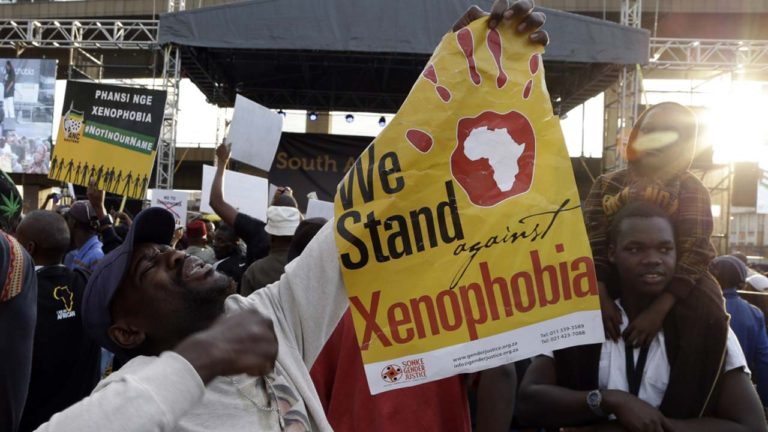
NIGERIA’s Minister of Foreign Affairs, Geoffrey Onyeama on Monday decried the continued attack on Nigerians by South Africans in a recent wave of attacks and looting of foreign-owned businesses in Johannesburg.

Onyeama in a Twitter message condemning the actions of the South Africans involved in the mob attacks which started on Sunday evening, noted that Nigerian Government will take definitive measures.

The attacks have resulted into death of three people, while about 50 businesses owned by foreign nationals have been looted and burnt.

“Received sickening and depressing news of continued burning and looting of Nigerian shops and premises in South Africa by mindless criminals with ineffective police protection. Enough is enough. We will take definitive measures,” he wrote on Twitter.

In a NAN report, President of the Nigeria Union South Africa, Adetola Olubajo, said the attacks began on Sunday morning in Jeppestown area of Johannesburg when a building was set ablaze by an angry mob.

“The mob also looted several shops that were around the vicinity suspected to be owned by foreign nationals.

“But the Police later dispersed the mob and made some arrests. Late in the evening of Sunday, September 1, a group of violent locals suspected to be Zulu hostel dwellers besieged Jules Street in Malvern, Johannesburg looted and burned shops/businesses,’’ he revealed in his statement.

He said several properties and businesses belonging to foreign nationals worth millions of Rands were looted and burnt in the attack at different locations in Pretoria and Johannesburg.

“Also, some businesses owned by foreign nationals were looted in Germiston on Sunday evening. A Nigerian-owned Internet Café and computer accessories business were among the looted shops in Germiston.

“When I got the sad news late Sunday evening, I immediately informed the Police in Jeppestown but lots of damage had been done already,” he said.

Oby Ezekwesili, a former Minister of Education and social activist in a tweet, also called on South African government to put an end the brutal attack on Nigerians in their country.

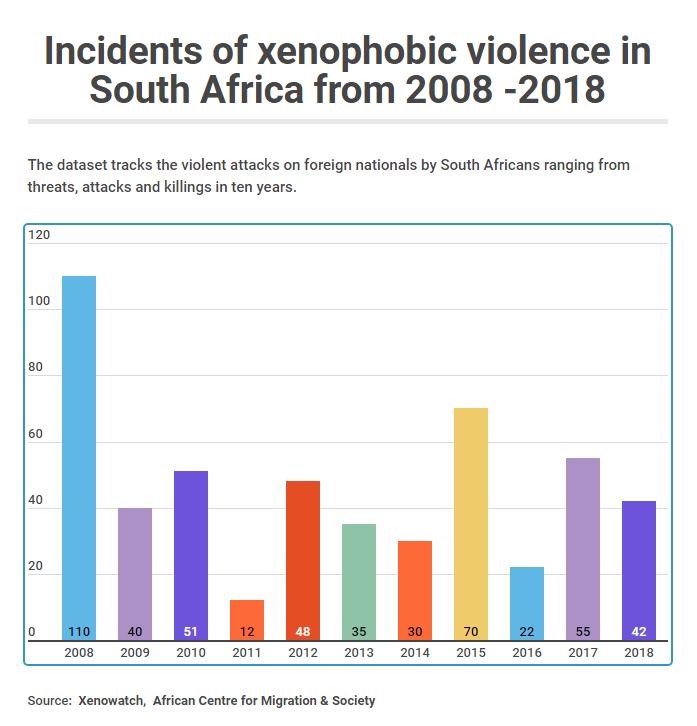
An open-source platform created by the African Centre for Migration & Society, (ACMS) at the University of the Witwatersand to monitor incidents of –and responses to- xenophobic violence in South Africa revealed that from 2006 to 2018 over 309 documented attacks were recorded.

This involves threats, attacks and killings of foreign nationals by South Africans for the period under review.

South Africa has a history of xenophobic attacks by black people who accuse citizens of other African countries, as well as Asian countries, of coming to steal their jobs.

The wave of xenophobic attacks that swept South Africa in 2008 claimed at least 62 lives. Subsequent incidents, particularly in 2015, have displaced thousands of African migrants and led to the large-scale looting of their shops and other businesses.

‘No scientific evidence yet against consumption of donkey meat’

BELLO Agaie, National President of the Nigerian Veterinary Medical Association (NVMA) on Monday said there is currently no scientific evidence that forbids the consumption of donkey meats for safety reasons.

Agaie told The ICIR in an interview following a stern warning by the Federal Capital Territory Administration (FCTA) on the consumption of donkeys and arbitrary sale of unwholesome meat in the territory.

“There is no scientific evidence yet against the safety of donkey meat,” says Agaie.

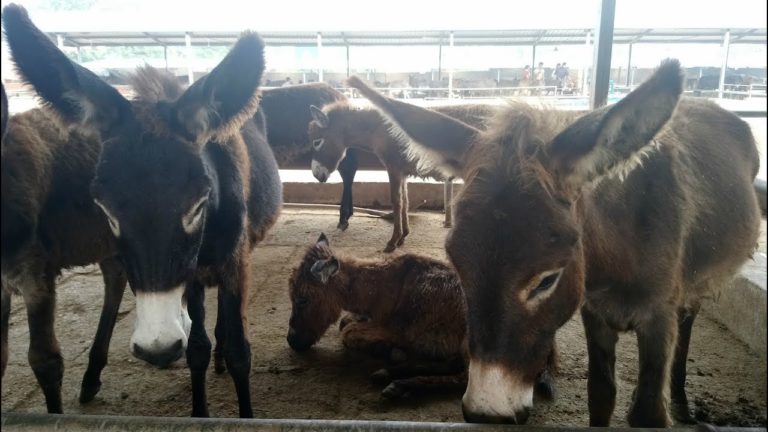
But he issued warning on the declining population of the domestic animal in the country, stressing that they might soon go into extinction.

“…However, we are concerned about the rate donkeys are being killed for meat and skin, Agaie, a professor of Veterinary Medicine said.

“They may soon go into extinction, which ultimately may affect biodiversity and ecosystem balance as they are not being quickly replaced when compared to the rate of their depletion.”

Two FCTA authorities had on Monday frowned at the persistent sales of donkey meat in the territory. The administration in a report by the Voice of Nigeria (VON) based its stance on safety reasons and the state of abattoirs.

The Abuja Environmental Protection Board (AEPB), described the sales of donkey meat in the territory as unacceptable, thus directed its Department of Monitoring and Enforcement to seize and destroy any unwholesome fresh meat brought into the territory for consumption.

“There is no guarantee of the health status of the meat brought in from the states, unfortunately, the jurisdiction of FCT inspection and regulatory agencies do not extend to other states,” Baba Lawan, AEPB Director had stated.

“As a budding world-class city and capital of Africa’s most populous nation, Abuja attracts a lot of local and foreign dignitaries, therefore, it deserves nothing but the best, especially in food quality”.

“They are free to operate in the states, but FCT should never be turned to a centre for dumping unhealthy meat. We won’t allow that,”  Regina Adulugba, FCT’s Director, Veterinary Services, in the Agriculture and Rural Development Secretariat warned meat traders in the report.

She earlier stated that the FCTA might declare State of Emergency on the abattoirs and slaughter slabs in Abuja.

On the poor state of abattoirs, the NVMA boss further advised the Federal Government, states and the local  governments to repair all abattoirs in the country in the interest of public health.

He emphasised on the need for veterinary experts to verify animals sold for consumption before final intake.

“Regarding the state of abattoirs, it’s not only worrisome but unfortunate. We urge governments at all levels to prioritize rehabilitation and upgrade of abattoirs nationwide in the interest of public health and ensure that veterinarians and veterinary paraprofessionals are engaged to certify the wholesomeness and hygienic status on meat and other products going to the market and eventually table from our abattoirs as required by our laws in line with international standards.”

The United States Centre for Disease Control says consumption of unwholesome meat could cause deaths or trichinellosis.

It defines trichinellosis as a disease contracted via intake of raw or under-cooked meat from animals infected with the microscopic parasite.

The Centre also advocates for the consumption of healthier animal, feeding, and processing to improve food supply safety.