Home Blog Page 2304

DSS, INEC seek legislation to check fake news

THE Department of State Security (DSS) and Independent National Electoral Commission (INEC) on Tuesday said the Federal Government may need to consider new legislation as part of efforts to curtail the spread of fake news.

He made this statement today in Abuja at an event organised by Centre for Democracy and Development, CDD.

“Why don’t’ we begin to look at the issue of legislation,” says Dr. Peter Afunanya, the DSS Public Relations Officer (PRO).

“In Japan, for instance, and some other countries, there is a common agreement by convention, even by legislation, their media do not report terrorism because, terrorist feed on publicity. Once you cut the oxygen of publicity, they become disinterested in their actions.”

Further justifying the rationale for the legislation, he asked, “why the average reporter or journalist takes interest in announcing the number of soldiers killed in a combat and they would not find it reasonable to announce how terrorist and Boko Haram members have been attacked, because he is afraid Boko Haram people would come and attack him…”

Afunanya, who insisted the DSS is a victim of the fake news syndrome, identified the false claim that Ibrahim El Zakzaky, leader of the Islamic Movement of Nigeria (IMN) and the former National Security Adviser (NSA) to ex-President Goodluck Jonathan, Sambo Dasuki died while in custody of the DSS.

However, he called for responsible actions from all stakeholders including traditional rulers, the National Union of Road Transport Workers (NURTW), Nigerian Union of Journalists (NUJ).

According to him, absolute law and absolute privilege don’t exist anywhere except for absolute responsibility.

“There are rights to demonstrations and protests, yes, but there are no absolute rights. You claim the right to freedom of movements but if there is a lawful curfew, that right of movement is restricted. Even rights to life, we do not have the right to take our lives not to talk of others. Understanding all of these will help us to be responsible citizens,” the DSS spokesman said.

In his remarks, Festus Okoye, INEC National Commissioner, also decried the negative impacts of fake news, especially during elections.

“I join the idea of the past speakers who called for legislation to regulate fake news,” he stated.

But Idayat Hassan from the CDD and Dr. Garba Abari, Director-General of the National Orientation Agency (NOA) said it would be difficult to gag the social media, but stressed that existing laws on cybersecurity and the penal codes should be well implemented.
NECO releases SSCE results, blacklists 18 supervisors

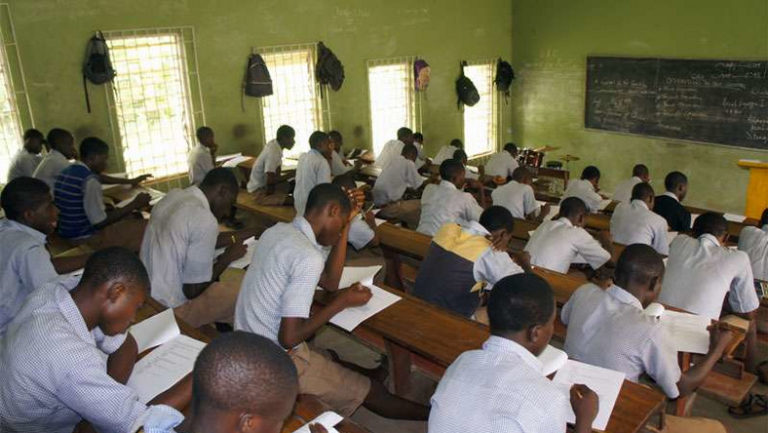
THE National Examination Council (NECO) says it has blacklisted 18 supervisors who took part in the conduct of 2019 Senior Secondary School Certificate Examination for their involvement in examination malpractices.

“A total of 18 supervisors were blacklisted for various offences ranging from poor supervision, aiding and abetting, connivance with non-candidates and so on,” said acting Registrar of NECO, Abubakar Gana, while announcing the results at the NECO Headquarters in Minna, Niger State on Tuesday.

Gana disclosed that the number of candidates involved in various forms of malpractices during the conduct of the examination increased with 40,630 cases recorded as against 20,181 cases recorded in 2018.

The reason for the increase in detection of malpractice, he explained was as a result of the use of biometric verification devices during the examination.

The Registrar also said the Council has sanctioned three schools in Kebbi, Oyo and Katsina states over various infractions committed during the examination, though he didn’t mention the names of the schools.

“Arising from the above, three schools one each in Katsina, Kebbi and Oyo states were recommended for de-recognition for two years for their involvement in mass cheating/whole centre cases,”  Gana said.

“In line with council’s zero tolerance for any form of examination malpractice, members of staff alleged to have behaved contrary to expectations are to face appropriate disciplinary measures once they fail to satisfactorily defend themselves.”

Speaking on the performance of candidates, the Registrar stated that the number of candidates who made five credits and above in English and Mathematics were 829,787, representing 71.5 per cent.

Gana said 984152 candidates representing 85.50 per cent made credit and above in English while 954,399 candidates made credit and above in Mathematics.

He added that a total of 1,041,986 representing 89.90 per cent made five credits and above irrespective of English and Mathematics, adding that the number increased by 0.5 per cent.

A total of 1, 163,194 candidates registered for the examination while 1,151016 candidates sat for the exercise including 161 visually impaired candidates.

Gana remarked that the June/July NECO exams was a success, noting that when compared to the 2018 exercise, there is an increase of 0.11 per cent in candidates who scored five credits and above.


Nigerians to pay higher visa fee as US retaliates

The United States Consulate on Tuesday has announced a higher fee for Nigerians applying for the US visa.

The consulate said that Nigerians will be required to pay for all applications for nonimmigrant visas in B, F, H1B, I, L, and R visa classifications. However, the issuance or reciprocity fee is different from the application fees as this will be charged in addition to the nonimmigrant visa application fee.

The fees, however, are non-refundable, and their amounts vary based on visa classification.

“The reciprocity fee will be required for all Nigerian citizens worldwide, regardless of where they are applying for a nonimmigrant visa to the United States.

“The reciprocity fee is required for each visa that is issued, which means both adults and minors whose visa applications are approved will be charged the reciprocity fee.

“The fee can only be paid at the U.S. Embassy or the U.S. Consulate General.  The reciprocity fee cannot be paid at banks or any other location,” the statement read in part.

Under the new policy which is expected to come into full effect on Thursday, August 29, Nigerian citizens whose applications for a nonimmigrant visa are denied will not be charged the new reciprocity fee.

“The total cost for a U.S. citizen to obtain a visa to Nigeria is currently higher than the total cost for a Nigerian to obtain a comparable visa to the United States.  The new reciprocity fee for Nigerian citizens is meant to eliminate that cost difference.

“Since early 2018, the U.S. government has engaged the Nigerian government to request that the Nigerian government change the fees charged to U.S. citizens for certain visa categories.  After eighteen months of review and consultations, the government of Nigeria has not changed its fee structure for U.S. citizen visa applicants, requiring the U.S. Department of State to enact new reciprocity fees in accordance with our visa laws.”


Oyo-Ita: Our probe is evidence-based, says EFCC, denies Abba Kyari’s involvement

THE Economic Financial Crimes Commission (EFCC) has denied the involvement of Abba Kyari, the Chief of Staff to the President in the ongoing investigation against the Head of the Civil Service of the Federation, Mrs. Winifred Oyo-Ita.

In a statement shared on its verified social media account, the Commission on Monday advised the public to disregard whatever information on the claim stressing that the probe is evidence-based.

Oyo-Ita was accused of N3 billion bribery scandal, and was later invited by the EFCC and thereafter asked to return to office.

It reads: “The attention of the Economic and Financial Crimes Commission, EFCC, has been drawn to reports by a section of the media, insinuating that the ongoing investigation of the Head of the Civil Service of the Federation, Mrs Winifred Oyo-Ita by the Commission was instigated by the Chief of Staff to the President, Alhaji Abba Kyari.

“The Commission wishes to state that there is no truth in these claims, and urges the general public to disregard the reports as the handiwork of mischief-makers.

“For the avoidance of doubt, investigation by the EFCC is evidence-based. Most often, they are triggered by petitions or intelligence. In the case of the HoS, Oyo- Ita’s investigation, it was prompted by intelligence received by the Commission.”

However, the Commission restated its commitment, stressing that the EFCC is an independent agency created by law to fight corruption without fear or favour in the discharge of its mandate, “the Commission does not take instructions from extraneous bodies neither will it lend itself to be used to settle scores by anyone.

“The Commission again wishes to appeal to the media to be circumspect in their reportage and not lend themselves to actions that could befuddle the activities of the Commission.”

Fake-news poses threat to Nigeria’s democracy – CDD

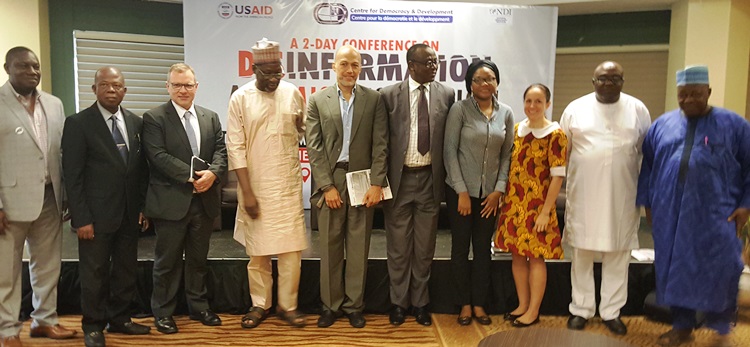
PROFESSOR JIBRIN Ibrahim, Senior Fellow, Centre for Democracy and Development (CDD) on Tuesday warned the spread of fake news could pose a serious threat to Nigeria’s democracy and ignite hatred in the society.

Beyond that, the social media trend, he noted could also alter the entire electoral process through the use of social media platforms.

Ibrahim spoke at a 2-day conference on Disinformation and Misinformation organised by the CDD in partnership with the National Democratic Institute (NDI) and the United States Agency for International Development (USAID) Abuja.

The event had in attendance CDD Director, Idayat Hassan, Aubrey Mccutcheon, NDI Chief of Party, Prof. Deji Adekunle, visiting Research Fellow, Nigerian Human Rights Commission (NHRC), Beatrice Reaud, Democracy Officer, from the USAID among others.

Ibrahim emphasised that from the colonial days, Nigerian politics have been plagued along ethnic and religious lines, stressing that prior to the advent of the social media, there were narratives established by politicians in the minds of the electorate.

According to him, since the mindset have been created, manipulating the electorate becomes easier.

“Fake news is capable of affecting the electoral system and democracy. The social media, in particular, has a lot of responsibility for distorting information….promoting division and hatred in the society,” says Ibrahim.

The last US election which brought in Donald Trump, and the Brexit were cited examples, Ibrahim listed as two scenarios and products of fake news influence.

He said Nigeria has 14 million people on Whatsapp, 25 million on Facebook, 7 million on Twitter creating media contents, adding that the news circulated does not largely come from the authorities but from individuals. ….”so if the pastor or schoolmate I receive this information from are people I know, they share because they do not know the information is false.”

“The reality, however, about social media is that it is individual engaging based on things they have seen but that information is highly centralised and controlled by those, who, today have the responsibility of distributing the contents we see,” Ibrahim added.

He argued further that most of the social media platforms, especially Facebook is neither pro-democratic not anti-democratic but pro-profit.

“These technologies are just a good capitalist. The stories that tend to generate emotions are when the content is graphic or extremely graphic. So it generates movements or traffic. That is where we have found ourselves when a few companies control the information flow in the world in a way that generates strong emotion in people and that creates profit for them.”

In his remarks, Prof. Adekunle described fake news as a form of distraction caused by those in power to distract the people from the main issue of public interest.

He advocated the innovation of a new tool, especially on the part of Information Technology (IT) companies to develop solutions that could discourage misinformation through provisions of massive facts.

“It is so easy to clone profiles even on Facebook and these are being done cleverly by a lot of people,” says Adekunle.

“But let me say that there is a responsibility to verify and then validate but if you cannot verify, then don’t validate.”

“How about a tool that does not only dislike but also pronounces comments as false, and then shared automatically. So if you pronounce something as false, all your friends will see it. So I believe that this is one way all companies like Facebook can support the fight against fake news.”

He, however, emphasised that people lack the ability to verify information. Thus called for a tool to enable the masses verify and discredit false information.

As part of efforts to check the spread of fake news, The ICIR had reported several Fact Checks on false or misleading claims made by public officials during and after the 2019 election.

Police invites Fatonyibo for questioning over rape allegations

BIODUN Fatoyinbo, General Overseer of the Commonwealth of Zion Assembly (COZA), on Tuesday has been brought in by the police in Abuja for questioning over alleged rape of Busola Dakolo.

Dakolo, photographer and wife of musician Timi Dakolo had previously accused the preacher of having sexual knowledge of her as an underage teen while she was still a member of the church. Fatoynbo has since continued to deny the claim.

Frank Mba, Police Public Relations Officers, has confirmed the accused was in their custody and being interrogated.

“Yes, he is in our custody. We have done a whole lot of background investigations and spoken to a whole lot of people before now,” Mba said.

The PRO said that the police was not about to neglect or forget the case as some people have speculated. He claimed they were only trying to conclude investigations on their end before bringing Fatinyibo in.

“We were not in a hurry to bring him because we wanted to have enough background information that would be used in interrogating him. We have done an extensive investigation,” he added.

Mba said they might have to invite other people in as the case progresses.


FACT CHECK: Photos of burnt animals in popular tweet aren’t from fires in Amazon

IN August 2019 many news outlets reported that the world’s largest rainforest, the Amazon, was burning at an alarming rate.

The National Institute for Space Research (INPE) in Brazil, the country home to more than two-thirds of the forest, recorded over 70,000 fires across the region in 2019. 

Many people have shared images of the fires and of animals killed in them on social media channels. But not all the burnt wild animals in the photos in circulation died in the Amazon.

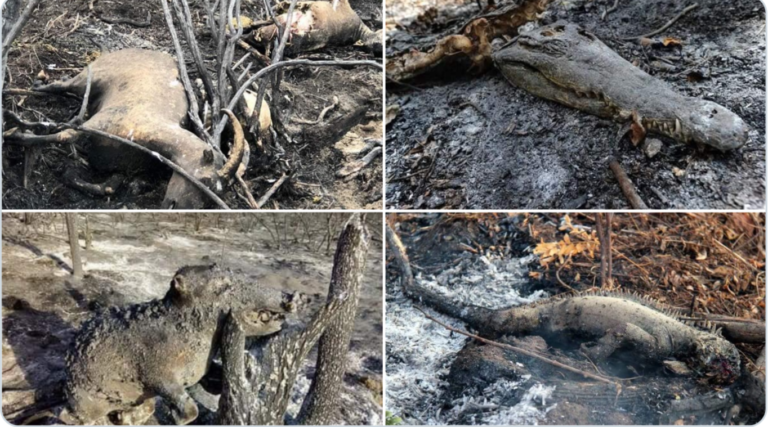
In one popular tweet, shared over 3,700 times and liked by more than 4,200 users at the time of writing, a US woman shared four pictures of charred bodies of animals. She wrote that the photos showed “only few of that [sic] animals that have been affected by the fire. We must protect our wildlife #AmazonFire #PrayForTheAmazon”. 

https://twitter.com/kawaii_kyunggie/status/1164360037709635585

Reverse image search shows photos old

But all four photos in the post are from fires not in the Amazon rainforest, reverse image searches revealed.

The first photo appeared in reports on forest fires in the Aysén region of Chile in February 2019.

The second seems to show a crocodile burnt in Guanacaste National Park in Costa Rica during a forest fire in April 2016. 

The third photo appeared in a report of a fire near Mendoza, a city in Argentina, in January 2018.

And in February 2019, Social Media Hoax Slayer reported that the fourth picture shows a lizard that died in a forest fire in Guatemala. The site linked to a May 2016 report by Prensa Comunitaria, a local news agency in the country, which credited the image to Telenoticias de Petén.

While the Amazon rainforest really is on fire, the four photos in this widely shared tweet are from much earlier time and elsewhere.


This fact-check was produced as part of an Africa Check fellowship completed by ‘Kunle Adebajo, a journalist at Nigeria’s International Centre for Investigative Reporting.

UN Under-Secretary-General tasks Nigerian youths to amplify good deeds

AMINA Mohammed, United Nations Deputy Secretary-General on Monday challenged the Nigerian youths across the globe to amplify their good deeds beyond individual success to overshadow other weaknesses.

She gave the advice at the launch of The Future Awards Africa (TFAA) held at Transcorp Hilton, Abuja themed: “The new Nigerian tribe”.

Describing the youths including those from other African countries as the generation of change-makers, she emphasised need to operate as a movement and support each other to realise personal goals.

“We have amazing youths doing great things everywhere. What we need to do is to amplify their voices and make it a movement, and not just a one-off or a shooting star.

“Now, more than ever before we need African youths to get active and use their greater awareness, education, and connectivity for a positive impact in our families, communities, schools, and the society overall,” says Mohammed.

“Let’s amplify the good things that we do so that we can crowd out the not-so-good things; if we put our attention on the good things, there is no stopping us. You are a generation of change-makers – innovators, entrepreneurs, etc., you have moulded your strong vision for a collective Africa, and I think that is really unusual.

“Challenge yourself and continue to empower fellow youths to achieve your full potential. As you lead and advance good governance in your various communities, remember to uphold values of shared responsibility, collectivism, accountability, obligation, and transparency.”

In addition, she advocated for unity among various socio-cultural and economic groups in the country.

According to her, Nigeria’s unity and diversity is its strength, and such should be embraced and explore the opportunities.

Citing the old national anthem as a reference, she noted that tribes and tongues may differ, “in brotherhood we stand and that was a really important part of what I feel we lost.

“While I will like to say more than brotherhood and sisterhood, I think the unity today is something we must need to talk about. It is our strength, our strength is in our diversity and it should not be what fragments us. It should not be what scatters us across opportunities that we have.”

In his remarks, the Minister of Youth and Sport, Sunday Dare identified the need to celebrate good deeds and reward great fetes. This, he noted would encourage other youths to do same and contribute meaningfully to national development.

Dare, however, announced plans to establish the Nigerian National Youth and Sports Award by 2020 to recognise young Nigerians making the nation proud at different aspects of life.

His words: “Further to this, we will push for the establishment and institutionalisation of the Nigerian National Youth and Sports Award, which we hope will commence in 2020.

“The award seeks to recognise and honour youth who have made astounding contributions in the areas of youth and sports development. In this way, we hope to project national icons that will not only inspire their peers but hopefully motivate and breed patriotism among them.”

It could be recalled that on August 23rd, the US announced a list of 77 Nigerians accused of internet fraud. Nigeria’s anti-graft agency, two days after disclosed its readiness to help the US prosecute the accused persons.

Earlier, Mohammed Yahaya, United Nations Development Programme (UNDP) Resident Representative expressed excitement on the milestones achieved by selected young Nigerians at different sectors of the economy.

But he called for consistency to ensure their dreams are realised.

“Every day, 33,000 Africans ended up in the job market and 60 percent of them don’t have a job,” Yahaya added.

Mr. Adebola Williams, co-founder of the TFAA, expressed similar views as the UN deputy director stressing that stories of Nigerians doing great exploits should be shared across board to overshadow the gloomy narrative.

“The TFAA has to go harder in telling the stories of innovation in our country. We must use our various platforms to tell the stories of great exploits by the Nigerian youths. We want to change the wrong perception of Nigerian youths.”

He, however, called for integrity on the parts of the youths, sincerity of purpose and commitments to change the wrong narrative about the nation.

Since its inception in 2008, 209 African youths have been awarded from 1,291 nominees in 25 countries.

INSECURITY: NLC plans National Security Summit, nationwide rallies


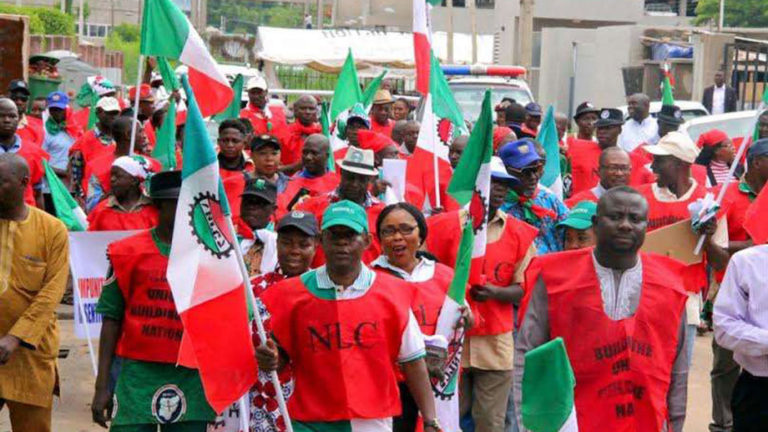
THE Nigeria Labour Congress (NLC) says it would convene a National Security Summit to dispassionately engage the current challenge of insecurity in Nigeria and proffer sustainable solutions.

The Congress also said it would hold rallies across the country to sensitise government and citizens on the need to urgently arrest the current drift in security.

These were contained in a communique issued at the end of the labour umbrella body’s National Executive Council (NEC) meeting held in Kano last week.

While appraising the security situation in the country, the workers ’union s noted that there has been an increase in the wave of insecurity in Nigeria especially as marked by a resurgence in kidnapping for ransom, armed robbery, communal clashes, and Boko Haram attacks.

In the document which was sent to The ICIR, NLC reiterated that the primary responsibility of government is the security of lives and property.

It called on government at all levels in the country to rein in the current resurgence in criminality and brigandage.

“The NEC called for improvement in the quality and quantity of policing deployed for the security of citizens and property,” NLC said.

The Congress also emphasized the need for improved intelligence gathering and the use of technology as being of utmost importance as effective measures in the fight against crime, brigandage, and terrorism.

It lamented the recent confessions of a recently arrested bandit who disclosed that helicopters dropped weapons for criminals, which it noted pointed to possible collusion between criminal elements and big-time financiers of criminality.

“The NEC also expressed worries over recent upsurge in attacks by Boko Haram terrorists who recently attacked three local governments of Gubio, Magumeri and Konduga in Borno North and the villages of Dille, Lassa, Ngurthlavu, Dagu, Yaffa, Maikadiri, and Kidlindila in Askira/Uba local government area of Borno South,” it said .

“The NEC also observed that most of the victims of the renewed security breaches in the country are workers and poor citizens. The NEC noted with alarm the impact of the rising wave of criminality on the lives of citizens and the socio-economic conditions in Nigeria particularly its consequences for the attraction and retention of foreign investment.”

Reacting to the delay in the implementation of the new national minimum wage, NLC said the government could no longer hide under protracted negotiations with workers in the public sector for consequential salary adjustment based on the new national minimum wage to delay the implementation of the new national minimum wage.

It insisted that the payment of the new national minimum wage should commence immediately, effective from the day it was assented to by President Muhammadu Buhari.

FBI bust: A double damage on every citizen of Nigeria – Presidency

The Presidency has said the United States Federal Investigative Bureau (FBI) charges against 80 people, most of who are Nigerians, in a wide-ranging fraud and money laundering operation that netted millions of dollars from victims of internet con jobs was a double damage on every citizen of Nigeria.

The ICIR had earlier reported of how 80 Nigerians were charge for internet fraud by the United States Justice Department.

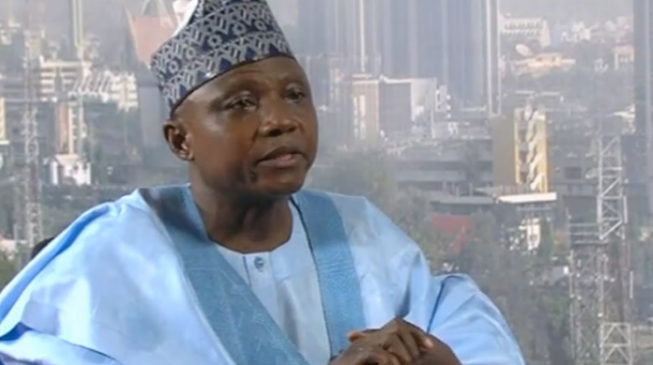
The Senior Special Assistant to the President on Media and Publicity, Garba Shehu said this when he appeared as a guest on Channels Television’s Sunday Politics.

Garba also disclosed that the federal government is working on an executive order to tackle fraud and money laundering.

He said, “This is a double damage on every citizen of Nigeria. It is a big scare on all of us who go out of this country and are seen in this image that these our brothers have created.

“We will cooperate with international organizations, the government will generate and ask for new laws from the National Assembly and there will be new executive orders that will block some of these loopholes that are being exploited by some of our fellow countrymen to go out there and embarrass and blacklist the country.”

He also said the Federal government administration will work with all nations around the globe to fight criminality. If Nigerians are involved in this thing, well hard luck to them.

“The president will not stand in the way of the justice system. Every citizen that travels out of this country is expected to obey the laws of their host country. President Muhammadu Buhari is not one to excuse Nigerians from the laws of countries in which they reside.

“Therefore you will expect a more vigorous engagement with National Assembly. The laws will have to change, this has got to be tackled and if it will take executive orders, this will be strengthened very rapidly.”

Asked if there is direct communication between Nigerian and the American governments on the incident, the presidential media aide said: “Yes, the diaspora commission is there and the Nigerian government has taken position on this matter, it is cooperation all the way.

“I think every person with a modicum of common sense knows that the action of few Nigerians is not the action of all Nigerians. We are 200 million plus in the country and you are talking about 80 Nigerians in this case, they will face the justice system, if the Nigerian Government is expected to cooperate in anyway, extradition, if it meets the requirement of our laws, they will be assisted to ensure they face justice in that country.

“Nigerians are hardworking people all over the world, there are millions of our citizens out there earning legitimate living, they don’t deserve to be so tarnished.”