Home Blog Page 2303

This man stole from Nigeria. Today, he’s minister in Buhari’s cabinet

The PREMIUM TIMES has reported that retired Major General Bashir Magashi who has just been appointed as the minister of defence by President Muhammadu Buhari was once caught in a corruption scandal involving deals worth $550,00(about N200million -at N362 to a dollar). But he was let off the hook after negotiating to forfeit part of his loot to the state. 

Years after, Mr. Magashi has found his way back into a government that swore to fight corruption as part of its cardinal goal. 

Read the report below: 


AS a top army officer holding command position, he abused public trust and was caught with his hand in the cookie jar. Realising that he had been boxed into a tight corner, with clear evidence of guilt laid bare before him, the officer sang like a canary as he confessed his thievery of public fund.

Sullen and distraught, he begged authorities, offering to forfeit more than two-thirds of his loot hidden in a secret bank account offshore, those familiar with the matter told PREMIUM TIMES.

He did not want to be prosecuted or publicly humiliated over the matter. His traducers empathised with him, accepted his offer, secretly reprimanded him and allowed him the freedom to enjoy the remainder of his loot in peace.

But that man — Bashir Magashi, a retired army major general — who got away with a slap on the wrist after stealing and shipping abroad not less than $550,000 while in service, has now bounced back, emerging one of the country’s most powerful ministers.

Last Wednesday, President Muhammadu Buhari appointed him to take charge of the nation’s defence ministry, a government department with the third-highest budgetary spending for 2019 –N159.13 billion.

Mr Magashi, 74, was a former military governor of Sokoto State (1990–1992) and was appointed the commander of the strategic Brigade of Guards in September 1993 ahead of Sani Abacha’s coup in November of that year.

The officer soon became a prominent and trusted member of Mr Abacha’s inner caucus. Members of that administration’s kitchen cabinet were from time to time arbitrarily allowed access to the nation’s coffers. At times, they were illegally allocated crude oil which they sold for hefty amounts of money. Mr Magashi benefitted generously from that arrangement.

After Mr Abacha died in 1998, the officer was appointed commandant of the Nigerian Defence Academy, a position he held till 1999 when the new Olusegun Obasanjo administration compulsorily retired all military officers who had served for six or more months in government. Mr Magashi was among those affected by the policy.
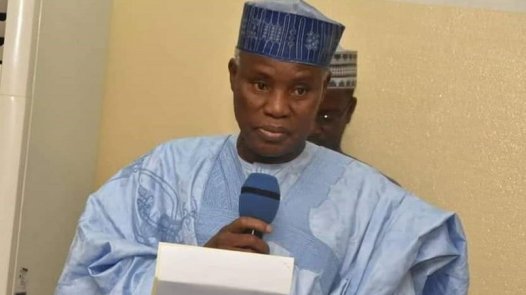
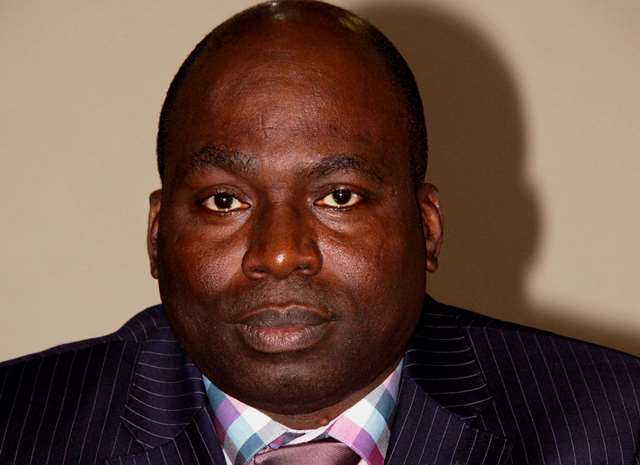
Bashir Magashi

Uncovering Mr. Magashi’s loot

Shortly after coming to power, the Obasanjo administration rolled out an ambitious anti-corruption programme. Apart from setting up anti-corruption agencies, that government also hired Swiss lawyer, Enrico Monfrini, to help it track and repatriate funds stolen and stashed abroad by Mr. Abacha and his collaborators.
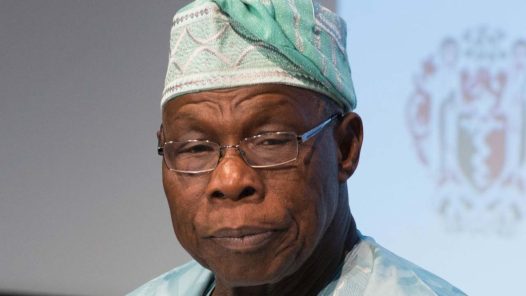
Olusegun Obasanjo

PREMIUM TIMES investigation shows that one of the accounts uncovered by Mr. Monfrini was a nominee (secret) one held for Mr. Magashi at the Jessey, UK, branch of Bank PNP Paribus. The account had $550,000 (about N200million -at N362 to a dollar).

Those familiar with the matter said immediately Mr. Obasanjo was briefed by the Swiss lawyer, he directed the then National Security Adviser, Abdullahi Mukhtar, to contact Mr. Magashi and other past and serving officials who abused their offices and stashed public funds in foreign banks. They must be compelled to surrender their loots, the then president ordered.

On October 26, 2006, the NSA, via memo NSA/A/225/I/C, updated Mr. Obasanjo on the cases of Mr. Magashi and four others. “The account (held for Mr. Magashi) has a total deposit of $550,000 and it remained intact until it was frozen in 2001,” Mr. Mukhtar wrote in his memo.

The then NSA said when confronted, Mr. Magashi admitted wrongdoing, saying the money was a proceed of illegal crude oil allocation Mr. Abacha made to members of the Provisional Ruling Council (PRC) under his government. The officer was not a registered oil trader at the time. And being a public servant, it was illegal for him to directly engage in private businesses.

President Obasanjo then directed that the entire sum be recovered from the retired general, the then NSA said.

However, “General Magashi pleaded for a concession and Mr. President left for him $150,000 from the said sum and to remit $400,000 to FGN which he has complied with as evidenced at Annex A, hereby attached,” Mr. Mukhtar said.

Mr. Magashi was granted that concession, and no charges were brought against him. It remains unclear why that approach was adopted in handling the matter. Both Messrs Mukhtar and Obasanjo could not be reached to comment for this story. Their known mobile telephone lines were reported switched off for most of Tuesday and Wednesday morning.

The minister declined to comment for this report. He did not respond to multiple calls, text messages, WhatsApp messages and emails requesting his comment.

Is Buhari aware?

It remains unclear Wednesday morning if President Muhammadu Buhari was aware of Mr Magashi’s involvement in the looting of Nigeria during the Abacha regime. Spokesperson Garba Shehu did not answer or return multiple calls from one of our reporters.

But a presidency official, who asked not to be named because he has no permission to grant media interviews, said, “I can tell you that there is no way the president would have ignored that kind of matter to appoint him if he were made aware.”
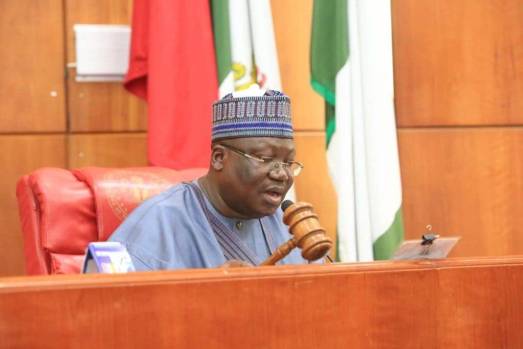
Senate President, Ahmed Lawan

If true that the president had no knowledge that Mr. Magashi once forfeited looted funds, it means the State Security Service, charged with vetting appointees to top government positions, again failed to do its job well.

The SSS had also failed in 2015 to detect that the NYSC certificate presented by former Minister of Finance, Kemi Adeosun, was fake.

It also means that the Nigerian Senate, which holds confirmation hearings for ministerial nominees, did a shoddy job, failing to detect Mr. Magashi’s corrupt past.
Inside story of the botched P & ID gas agreement

0

FOLLOWING a United Kingdom court judgement granting Irish owned firm Process and Industrial Developments Ltd, P & ID, rights to claim $9 billion worth of assets, the Nigerian government is likely to suffer great loss amounting to one-fifth of its foreign reserves.

The failed Gas Supply and Production Agreement, GSPA deal between P & ID and the Nigerian government which is currently the subject of civil litigation in London has raised concern among Nigerians who shudder at how such gaff could happen.

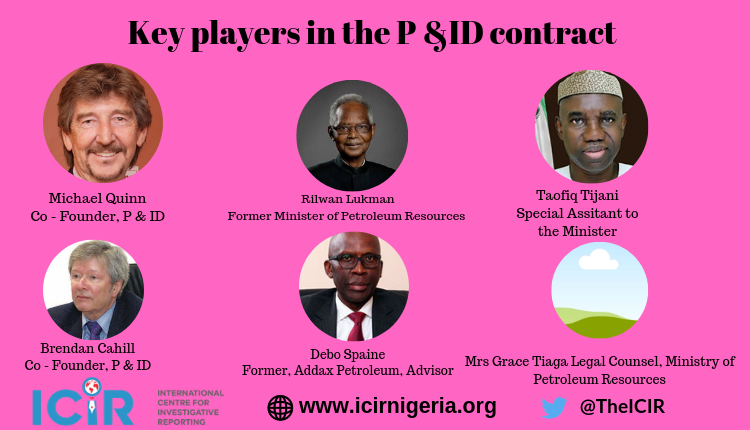
According to a court document accessed by The ICIR, late Michael Quinn, the co-founder of P & ID, in his witness statement tagged “Exhibit 5” in 2014 revealed the details surrounding the gas project and key figures involved in the build-up to signing the final agreement.

The ICIR takes a look at major actors who were at the centre of the controversial deal, as well as the level of involvement of Nigerian officials in the botched gas project.

Background

In 2006, former President Olusegun Obasanjo conceived the idea of building gas facilities that would supply gas to power stations across the country to improve power supply as part of his National Economic Empowerment and Development Strategy, NEED.

P & ID, an engineering firm registered in a tax haven in British Virgin Island, BVI,  boasting a 30-year experience in managing engineering projects in Nigeria formally approached the Federal government with a proposal on August 7, 2008, submitted to the late President Umaru Yar’adua to build a proposed gas plant in Calabar.

The gas processing plant was to refine associated natural gas into non-associated natural gas to supply gas to power stations which would increase the generating capacity of the national electric grid.

On 21 July 2006, P &ID (Nigeria) Ltd was registered to serve as its operating company within the country, which was an affiliate to P & ID.

In Michael’s statement, he admitted that his company’s affiliation to a tax haven was not a source of concern to the government, rather it was viewed as beneficial to its interest according to clause 8(e) of the GSPA deal.

“Following the initial transfer of five percent 5 per cent Equity to the Government or its nominee as provided for at Article 8 (e) above no new shares whether ordinary, preference or otherwise may be issued without the written agreement of the Government such agreement not to be unreasonably withheld and the Government shall be entitled to representation on the Board of P&ID in proportion to the equity held by the Government at any given time.” it reads.

In the build-up to submitting the proposal, P & ID limited had carried out an extensive two-year scale of feasibility studies from 2006, involving the purchase of licenses for the technology required to operate the gas stripping plant, propylene plant, the production of detailed engineering drawings and its internal project management costs.

P & ID hired several engineering firms to provide procurement and construction, which comprised about 100 volumes of documentation, a 3-D software model of the plant which was necessary to implement the project on the ground.

The firms include CB & I Lummus Technology Group in New Jersey, KRAN Developments in Johannesburg and ABB Limited in the UK which it claimed to have spent $29 million for their services during the feasibility stage.

In October 2008, P & ID made its presentation at the Ministry of Petroleum Resources with the Minister of State(Gas), Emmanuel Odusina at the instruction of the former President, late Umaru Yar’ Adua.

In his statement in court, he admitted that the late Rilwan Lukman who was a Special Adviser to the President at the time played a significant role to ensure P & ID get the deal.

“I believe that he, and therefore the Government, were confident in our abilities to undertake and complete complex natural gas-related projects,” he said.

In December 2008, Lukman was appointed as Minister of Petroleum Resources after a cabinet reshuffle after which he called for a review of the P & ID proposal.

He put his special technical adviser, Taofiq Tijani, in charge of the process who engaged P & ID in conducting several presentations, before a copy of the presentations was forwarded to Lukman in a letter on February 2009.

The proposal detailed the execution of the gas plant project which would be in two phases with the first phase focused on constructing a gas stripping plant to refine associated natural gas into non-associated natural gas.

The natural gas would be supplied to the power generating stations free of charge, while the proceeds from the by-products would go to P & ID’s account.

The timeline for the execution of the first phase of the project was two years after obtaining the required government approvals.

While the second phase would involve the construction of a polymer grade propylene plant that would make use of propane from the stripping plant to produce polymer grade propylene for sale on international markets.

The proceeds from its sale would also be used by P & ID to take care of its own costs, while the execution of the project was expected to take 15 months.

A half-done deal

The Minister of  Petroleum Resources, Lukman set up a technical working committee to assess the proposal submitted by P & ID with the firm invited for its meeting to ensure the feasibility of the project.

The committee made several adjustments to the proposal which includes the construction of a stripping gas plant instead of two plants to speed up the project, the construction of 2 process trains in two phases supplying 150 MMSCuFD for phase one and 250 MMSCuFD for phase two.

Cross River State was the accepted choice for phase one of the project, considering Addax Oil was flaring wet gas in OML 123 which was suitable for actualising the project.

In July 2009, a Memorandum of Understanding, MOU, was signed between P & ID and Lukman on behalf of Nigeria.

It was agreed that both parties would establish a framework and set out the principles under which they intend to enter into a definitive agreement to carry out their desired objectives.

However, a Joint Operating Committee was set up by Lukman to hasten the execution of the project, among those selected for the committee, includes Mohammed Kuchazi, Michael Quinn, represented P & ID, M. M Ibrahim who was then Head of Policy, Grace Tiaga from the Ministry of Petroleum Resources.

The Nigerian National Petroleum Corporation, NNPC, was also represented on the committee.

On 11 September 2009, after a series of meetings were held, Addax Petroleum, was invited to participate as a stakeholder in the meeting.

In a letter, to P & ID on 13, November 2009, Taofiq Tijani, technical adviser to Minister Lukman invited P & ID, Addax Oil and the government to a stakeholder meeting to fast track the project.

At the meeting, Jones Ogwu representing the Department of Petroleum Resources, DPR, Grace Taiga, sat in for the Petroleum ministry, Debo Spaine attended on behalf of Addax, and Neil Hitchcock, Michael Quinn represented P & ID.

Addax Petroleum confirmed it would deliver 100 MMSCuFD of natural gas from the 168 MMSCuFD of wet gas they were currently flaring to the P&ID site in Calabar via pipeline which was been constructed offshore from Adanga (in OML 123) to comply with the Federal government obligations.

At the meeting, a copy of the GSPA draft was handed to Addax Petroleum to show the specifications of wet gas that should be supplied to P & ID and Addax agreed to the terms.

Prior, to the execution of the final agreement, Michael claimed P & ID could not secure data on the precise composition of wet gas being flared at OML 123.

He stated that after several attempts through correspondence they did not receive a specific composition data which would have helped to fast track the process.

Before the GSPA contract was sealed, there were changes to the initial draft which includes the swapping of P & ID, Nigeria Ltd with the BVI affiliate without objections from the Nigerian officials.

Also, the federal government started the construction of a 24-inch pipeline from OML 123 to supply wet gas to P & ID for the first phase of the project, while P & ID agreed to build a pipeline of 70 km in length free of charge to facilitate the delivery of 250 MMSCuFD of wet gas for the second phase.

It was agreed that the first phase would commence on or before the last quarter of 2011, while the second phase was likely to kick start on or before the third quarter of 2013.

On 11 January 2010, P & ID finalised a 20 years agreement plan with the federal government signed on by Rilwan Lukman to build a gas processing plant in the country.

Road to a botched deal

Immediately, after P & ID sealed the GSPA contract the firm requested in a letter dated 12 January 2010, that the Minister of Petroleum Resources, Lukman put measures in place to speed up the project.

“To put in place all necessary modalities as soon as possible, with both Addax Petroleum and Exxon Mobil, in order to ensure the timely delivery of the currently flared Wet Gas for the project,” a section of the letter reads.

On 1 February 2010, P & ID formally requested for allocation of land from the then Governor of Cross River State, Liyel Imoke upon which the plant would be constructed. Fifteen days later, a 50.662 hectares of land, was approved for the firm’s industrial use at Adiabo in Odukpani Local Government Area.

The then NNPC Managing Director, Shehu Ladan issued a standing instruction to the National Petroleum Investment Management Services, NAPIMS, to provide engineering logistics to ensure Addax Petroleum and P & ID meet their targets for the project.

After a series of meetings with failure to reach a final conclusion, Goni Sheikh, the Permanent Secretary at the Ministry of Petroleum Resources, requested that a letter of undertaking be signed by P & ID and Addax Petroleum which was not carried out, Michael claimed.

In a letter, dated 10 March 2011, NAPIMS informed P & ID that Addax Petroleum was unable to supply the required amount of 150 MMSCuFD of wet gas from OML 123 for Phase 1 of the project because they required 50 MMSCuFD of lean gas for reinjection in OML 123.

P & ID argued it was a breach of the GSPA, but they proffered another solution stating that they would produce lean gas by stripping wet gas from offshore OML 123 to meet the needed quantity for Addax Petroleum.

David Ige, then General Executive Director, Power and Gas, NNPC didn’t agree to the proposal but suggested a “gas gathering” proposal which P & ID willingly considered though it was not in the initial agreement.

On 16 May 2012, Neil Hitchcock of P&ID, senior NNPC management headed by Dr David Ige, and the senior management of Addax Petroleum agreed to the amended project and promised to work together to ensure phase 1 of the project becomes a reality.

In June 2012, Addax Petroleum withdrew its cooperation stating it wished to “undertake the development of the non-associated gas themselves”.

Several attempts to get the then Minister of Petroleum Resources, Alison Madueke, to intervene in the matter was to no avail. In July 2012, P & ID wrote to the Federal Government placing a time limit for the federal government to wade in or P & ID would consider an alternative solution.

“Therefore, P&ID’s offer in principle to enter into an amendment [to the GSPA] will be regretfully withdrawn on 10 August 2012 if, by that time and date, no formal amendment has been agreed
and executed between the Government and P&ID,” a section of the letter reads.

After failing to get a definite intervention from the federal government, on 20, March 2013, Michael on behalf of P&ID wrote a letter to the federal government, to terminate the GSPA before proceeding to the arbitration tribunal in London on 22, August 2012 to seek redress.

N1.7bn Fraud: ICPC asks Court to remand head of Disability Cooperative Society in Prison Custody

0

THE Independent Corrupt Practices and Other Related Offences Commission (ICPC) has requested a Senior Magistrate Court, Wuse Zone 2, Abuja, to grant an order for the remand of the National Coordinator, Federal Civil Service Staff with Disabilities Multipurpose Cooperative Society, Alhaji Iliasu Olarewaju Abdul-Rauf in prison custody over his alleged involvement in N1.7 billion fraud.

Abdul-Rauf, currently under arrest by the Commission is alleged to have been involved in multi-million naira corruption scandal bordering on bribery, breach of trust, criminal misappropriation of funds and other fraudulent activities.

After his arrest, a search of his house by operatives of the Commission revealed 14 females aged between 11 and 33 years, locked up in one of the rooms.

The victims have all been evacuated and were handed over to the National Agency for the Prohibition of Trafficking in Persons (NAPTIP).

The suspect who also is facing multiple charges imposed by ICPC was said to have been a fugitive of the law, having escaped arrest by other security agencies in Nigeria.

He is alleged to have used his position as the National Coordinator of Persons with Disabilities Cooperative Society to hoodwink contractors into donating cash and items such as wheelchairs, crutches as Corporate Social Responsibility for non-existent contracts.

Some of the contractors are said to have paid as much as N50 million as the CSR, while others delivered large numbers of items to him.

The Commission, in the motion filed before the court, stated that Abdul-Rauf allegedly failed to rehabilitate ‘disability centres” across the country after collecting N1.7 billion from various contractors under the guise of awarding contracts for the project.

ICPC further noted that Abdul-Rauf had a history of running from the law, having absconded after an earlier charge had been filed against him by the Commission. The motion, therefore, added that the remand would prevent his escape a second time pending the completion of investigation.


Court adjourns motion countering IMN ban as terrorist group

THE Federal High Court (FHC) on Wednesday adjourned motion filed by Femi Falana, a Senior Advocate of Nigeria (SAN), seeking to counter the proscription of the Islamic Movement of Nigeria (IMN) as a terrorist group to September 11.  

The court made the decision when the Department of State Security (DSS) sought additional time to better prepare for the case.

Justice Evelyn Maha, the presiding judge, adjourned the case after listening to the submissions of both counsels – Falana and Mr. Ayo Apata, (SAN), Solicitor General of the Federation.

On August, the IMN, through his counsel had earlier filed a court motion challenging the action of the federal government on the proscription and restriction of its members’ activities.

The group was proscribed as a terrorist organisation last month via an ex parte order granted by Justice Maha.

However, the IMN insists action of the federal government was illegal, immoral and as such breached the fundamental human rights of its members, thus would be resisted.

Falana also maintained the same argument on the purported illegality of the proscription. Also, Mike Ozekhome described the action as illegal and unconstitutional.

They urged the court to vacate the ex-parte order.

“This Honorable Court on the 26th day of July, 2019 pursuant to an ex parte application brought by the Applicant/Respondent, made an order, inter alia, proscribing the existence and activities of the Respondent/Applicant (Islamic Movement in Nigeria) in any part of Nigeria under whatever form, either in groups or as individuals by whatever names they are called or referred to without affording the Respondent/Applicant the right of fair hearing,” the court has ordered.

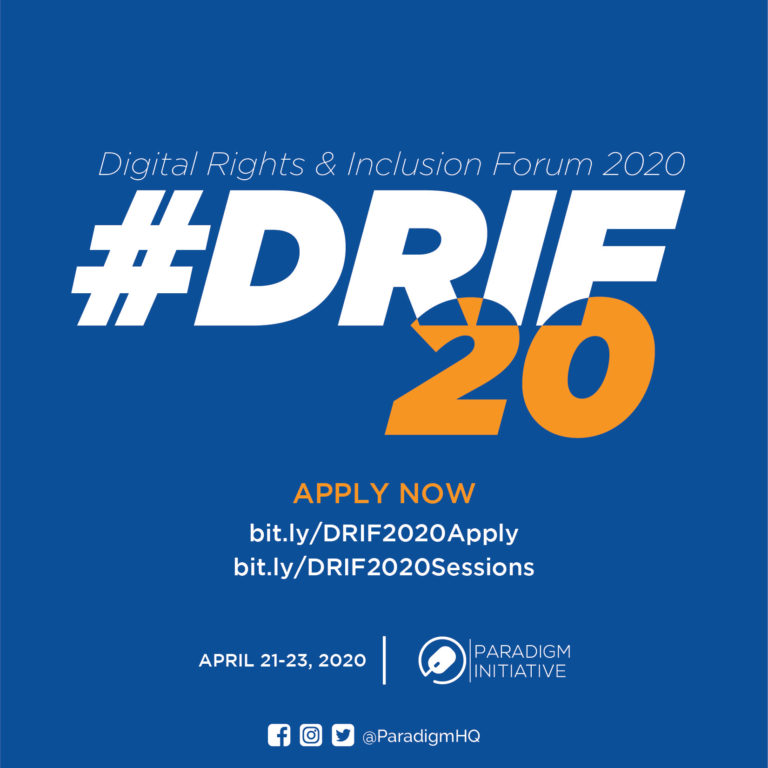
Paradigm Initiative opens entries for 2020 Digital Rights

THE Paradigm Initiative says it has opened applications for the 8th Digital Rights and Inclusion Forum (DRIF).

A statement by Director of Programs at Paradigm Initiative, Tope Ogundipe confirmed the annual forum will hold between April 21 and 23, next year.

DRIF, according to her, is a platform for shaping conversations at the intersection of human rights, development and digital technologies in Africa.

The Forum, she explained, has in the past welcomed digital rights activists, telecommunications industry professionals, government officials with oversight functions, members of the academia and others.

Ogundipe said the venue of DRIF20 will be announced soon.

According to her,  the 2019 DRIF has expanded conversations from digital rights to digital inclusion themes, and the expansion ensures more audience is co-opted into the conversations.

“DRIF also ensures the most pressing issues are addressed, such as; affordable broadband access in Nigeria, the rising tide of internet shutdowns in Africa, increase in the uptake of biometric and surveillance technology on the continent or how mobile technology is shaping development in Africa.”

She said DRIF20 would feature conversations on some of the most important trends across all regions of Africa and beyond on the intersection of human rights, development, and digital technologies.

“DRIF20 would build on the success of DRIF19 held in Lagos, Nigeria, that attracted over 300 delegates from 38 countries who deliberated in 26 sessions,” she explained.

Program Officer, Digital Rights, Francophone Africa, Paradigm Initiative, Rigobert Kenmogne, added that DRIF20 affords ample space for conversations around digital rights and inclusion in East Africa.

“East Africa has been in the spotlight for developments in digital rights in Africa in recent years, particularly with Ethiopia regularly shutting down the internet, and with the high profile national identity scheme (Huduma) in Kenya,” Kenmogne said.

DRIF20 would provide an important platform for civil society and other actors from these regions to collaborate on effective responses to these regional themes, she said.

Selected delegates and side-session proposal organisers will be contacted after the close of applications on December 31.

DRIF is a bilingual forum that caters to a diverse audience with translation services provided in English and French.

Applications to attend #DRIF20 can be made via http://bit.ly/DRIF2020Apply while side-session proposals can be made via http://bit.ly/DRIF2020Sessions.

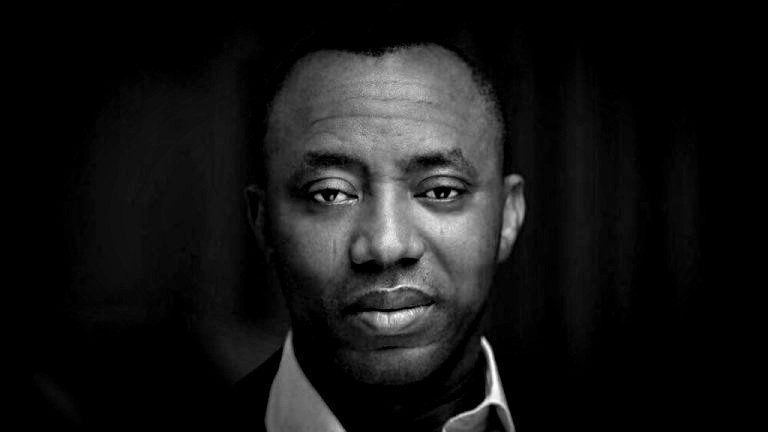
Court strikes out Sowore’s appeal against DSS detention

THE Federal High Court, Abuja, on Wednesday, has refused to grant the motion filed by Mr Omoyele Sowore, challenging his detention for 45 days by the Department of State Security DSS.

Justice Nkeonye Maha, who took over from Justice Taiwo Taiwo as the vacation judge declined all applications by Sowore’s Counsel, Mr Femi Falana, SAN.

Falana, who had earlier asked the court to set aside the ex parte order granted by Justice Taiwo, also applied for bail orally when Justice Maha rejected the application.

Justice Maha who stood on the ground of not having jurisdiction to review the decision by Justice Taiwo, noting that ruling of the vacation judge stated the matter would be heard on September 21.

The judge said she had no authority to proceed or review the judgment of her colleagues and that she would like to preserve the order of the court.

Sowore’s counsel, Femi Falana, disagreed with the judge’s position, noting that order 26 of the Federal High Court procedure stipulates that anyone affected by an ex-parte order can return to the same court to set it aside.

He said Sowore’s fundamental human rights were being violated with unnecessary detention and that Justice Maha has the right to hear and review the previous order.

It will be recalled that Justice Taiwo had in a ruling on an ex-parte application delivered on August 8, ordered Sowore’s detention for a period of 45 days to enable the Department of State Service (DSS) carry out and conclude its investigation of Sowore on allegations of instigating the public and seeking a change of the present administration through unconstitutional means.

However, Justice Maha hereby ruled that the case be referred to Justice Taiwo to properly air their grievances with his initial order.

Sowore, a former presidential candidate, was arrested by the DSS on Saturday, August 3, for calling for nationwide protests, tagged RevolutionNow, against the President Muhammadu Buhari-led government


G7 2019 summit: Why Nigeria was not invited

THE G7 2019 summit held in France between August 24 and  26 had come and gone. 

The G7 annual meeting is attended only by the heads of government from the seven permanent member states and two leaders of the European Union (presidents of the Commission and the Council). The G7 member states comprise France, Italy, Canada, Japan, Germany, the US, and the UK.

This year, France and current G7 President, Emmanuel Macron extended an invitation to non-G7 countries like India, South Africa, Australia, Chile, Egypt, Rwanda, Burkina Faso, Senegal, and Spain to participate.

The exclusion of Nigeria from the list of invited countries has caused a buzz on social media with speculations that  “misrule” of Buhari administration may have been the reason for the exclusion.

A popular tweet by Reno Omokri, a former presidential aide, claims that Nigerian President Muhammadu Buhari was not invited to the G7 summit due Buhari’s “misrule”.

However, a reverse image search of the picture in the tweet revealed that the picture was taken by Getty Images in 2017 at the G7 summit in Italy, thereby bringing the tweet and picture as misleading and not a recent picture. A FactCheck by the Guardian newspaper also debunked Omokri’s claim.

Nigeria was invited to the 2017 edition of the summit. Vice President, Yemi Osinbajo, then Acting President represented President Buhari who was on medical vacation in London. But Buhari attended the 2015 edition hosted by Germany between June 7 and 8, 2015.

Yemi Osinbajo, second from right with President Trump and other African Leaders that were invited to the 2017 summit
President Trump and Akinwunmi Adesina, President, AFDB at the G7 summit in 2017


The reason why non-G7 countries were invited

Inviting other non-G7 countries and its leaders to attend the annual summit has been a tradition over the past few years. These invitations are extended by the immediate G7 president and reflect the strategic interests of the host country.

According to the “a renewed format for the G7” published on Elysee of the French president’s office stating reasons for inviting partners for this year’s summit.

In times of massive “digital transformation and climate change”, France was keen to include more like-minded and democratic partners at this year’s G7. With this idea in view, four democracies — India, South Africa, Chile, and Australia — were invited to attend the G7 this year.

“With these four major democracies, we will work to strengthen the protection of fundamental freedoms at a time when digital technology and artificial intelligence are developing. We will propose tangible measures to protect the planet, focusing on the protection of biodiversity, the climate, and the oceans. Chile, which will be hosting COP25 in December 2019, will be a key ally in this context,” the statement in the format reads.

Another key aspect of Macron’s G7 presidency was his “African outreach” programme. According to the statement, African countries play a central role in the global fight against inequality.

In view of this, four African countries were invited to attend this year’s G7 summit — Burkina Faso, Egypt, Senegal, and Rwanda. In addition, the president of the African Union, Moussa Faki was also invited to this year’s summit. Faki is the former prime minister of Chad.

The other African country to be invited is South Africa. It has been invited both for its democratic credentials and its role in the African Union.

The leaders of the invited African countries hold key positions in the regional organisations in Africa.

Burkina Faso’s President Roch Marc Christian Kabore is chairing the 2019 Sahel G5 summit. Egypt’s President Abdel Fattah al-Sisi is currently chairing the African Union. Senegal’s President Macky Sall is chairing the state or government orientation committee of the New Partnership for Africa’s Development (African Union development agency NEPAD). And Rwanda’s President Paul Kagame chaired the African Union in 2018.

“Together, we want to find effective tools to ensure sustainable economic development in Africa, fostering the creation of jobs for young people and women’s entrepreneurship,” Elysee statement read.

ICPC proposes Electoral Offences Commission to handle vote buying and selling

THE Independent Corrupt Practices and Other Related Offences Commission (ICPC) says there is a need for the Electoral Offences Commission to investigate and prosecute electoral crimes, including the corrupt practice of vote-buying.

In a Policy Brief, Eradicating Electoral Corruption: Focus on Vote Buying produced by the Anti-Corruption Academy of Nigeria (ACAN), an arm of the ICPC, the Commission noted that stakeholders should take deliberate steps to emphasise prevention and deterrence in sanctioning offenders and in mobolising against vote-buying.

The brief which was presented to stakeholders in Abuja on Tuesday by the Chairman of ICPC, Bolaji Owasanoye, also proposed parameters for defining, reporting, sanctioning and popular mobilisation against vote-buying.

Explaining vote-buying, the document said it involves the exchange of money or any other thing that is of value to the recipient.

“Vote buying is not limited to transactional exchanges for votes but also includes vote brokerage and voter trafficking,” it said.

“The context in which the vote-buying occurs is such that is highly amenable to malicious and fictitious reports.”

It stressed that emphasis should be on credible reports that are supported by evidence, adding that such reports should be promptly processed by appropriate agencies and prosecutorial steps taken against the offenders.

In particular, the brief said, “as provided by the Electoral Act, candidates should be prosecuted for vote-buying where the vote-buying is done with the knowledge and consent of the candidate of the knowledge and consent of a person who is acting under the general or special authority of the candidate.”

Erring political parties, it noted, should also be charged as co-defendants in addition to prosecuting candidates.

On the role of the public in vote-buying, the Commission explained that the public needs to be properly mobilised against vote-buying.

“In educating and re-orientating the populace, it should be noted that there is a growing disposition and perception that it is acceptable for voters to collect money from vote buyers as long as voters do not go along with the demands or intentions of the buyers,” it explained.

“This belief is rooted in the cynicism that once public officials are voted into office, the legitimate expectations of the electorate will not be met by the public officials elected to serve. Hence, the cynical belief that is better to sell votes and thereby have parts of their expectations met in advance.”

The ICPC said citizens should be made aware that the disposition that it is justifiable or excusable to collect money from vote buyers fuels electoral corruption which in turn energises grand corruption which ultimately leads to poverty in all areas of public and private life.

Presenting the Policy Brief, the ICPC Chairman, Bolaji Owasanoye said it was important to note that vote-buying was not the only practice that bedeviled the electoral process.

“So the present focus on vote-buying does not exclude future work on dismantling other forms of corruption in the electoral process.

“The ICPC remains committed to working with all bona fide stakeholders in combating corruption in the country,” Owasanoye said.

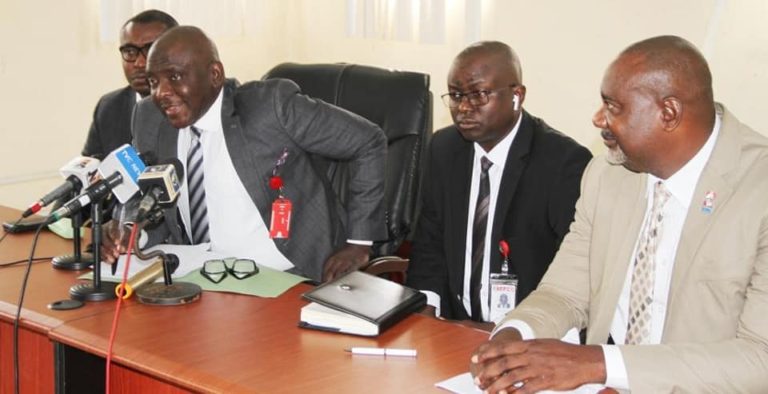
EFCC-FBI Collaboration: $314,000, N373m recovered – Magu

THE Economic and Financial Crimes Commission (EFCC), on Tuesday, said that it has recovered $314,000 and N373m ( N486m in all) from suspects in connection with the Federal Bureau of Investigation (FBI) probe.

In a press statement issued through the commission’s official Facebook page , the acting chairman of EFCC Ibrahim Magu said that the collaboration between the Commission and the FBI, led to recovery of the funds.

He disclosed that while the sum of $314,000 had been recovered, the sum of N373m had been traced to various commercial banks by the Lagos zonal office of the Commission and that the recent joint operations coordinated by the Commission had yielded 28 arrests, adding that 14 suspects had been charged and convicted.

The EFCC Chair further stated that “nine of the suspects are currently undergoing trial, while five are still under investigations.

“Over 80 cases are still under investigation from the EFCC-FBI joint operations.”

Speaking during a media briefing in Lagos on Tuesday, August 27, 2019, Magu, who spoke through Mohammed Rabo, Zonal Head, EFCC, Lagos, added that, the Lagos zone of the Commission, prior to the collaborative efforts with the FBI, had independently launched a sustained operation on perpetrators of various computer-related frauds.

He said: “From 2018 to date, the EFCC had launched a sustained operation on perpetrators of various computer-related frauds, which resulted in over 200 arrests, 130 convictions and recovery of a large number of exotic cars and properties suspected to have been acquired through the proceeds of crime.

“We had independently launched intensive investigative actions against the infamous Yahoo yahoo boys culminating in various strategic raids and onslaught on their hideouts.

“Our efforts in this regard have recorded tremendous successes leading to a number of arrests, prosecutions, and convictions.”

Magu also called on the media to continue to lend a voice to the fight against economic and financial crimes, saying that “no one has the monopoly of knowledge of how the fight should be fought and won.

“All the critical stakeholders, particularly the media, must continue to collaborate and cooperate with us to make the fight a success.

“I urge you to continue to help us sensitise, mobilise and educate all the critical stakeholders to continue to support the fight against economic and financial crimes. We must collectively strive to achieve the Nigeria of our dream.”

It will be recalled that FBI had released a list of 80 persons – mostly Nigerians  for their alleged role in email scams in which Americans were duped of over $70m.


EFCC to youth corps: Hold your leaders accountable

IBRAHIM Magu, the acting Chairman of the Economic and Financial Crimes Commission (EFCC), on Tuesday, told members of the National Youth Service Corps (NYSC) and other youths across the nation to hold their leaders accountable.

This becomes imperative to ensure accountability and the right use of the country’s resources for the benefit of all, he said.

Magu spoke at the NYSC Orientation Camp, Kubwa, Abuja where he charged the youth to stop the blame game.

Represented by Ms. Rashidat Abdullahi, an officer in the Public Affairs Directorate of the Commission, the EFCC boss decried how corrupt elites in power allegedly denied Nigerians the greater good of governance by cornering the nation’s resources to themselves and their families.

He said there is an increasing number of youths in positions of authority who are not accountable and transparent in their ways.

“The youths have found fantastic ways to manipulate the system,” he added.

Magu reiterated the need for the development of idealistic and morally guided youths to step into positions of authority.

He called on the youths to shun acts of corruption such as cyber-crimes.

“The Commission has from January 2019 till date, secured over 700 convictions on cases bordering on money laundering, advance fee fraud, bank fraud and other economic and financial crimes.

“Despite this milestone, the Commission realises that enduring success in the fight against economic crimes, including corruption can only be achieved when all stakeholders embrace this important fight. One critical group of stakeholders are the youths”.

The EFCC has recently pledged to support the US government in the prosecution of 77 Nigerians accused of cyber-crime.