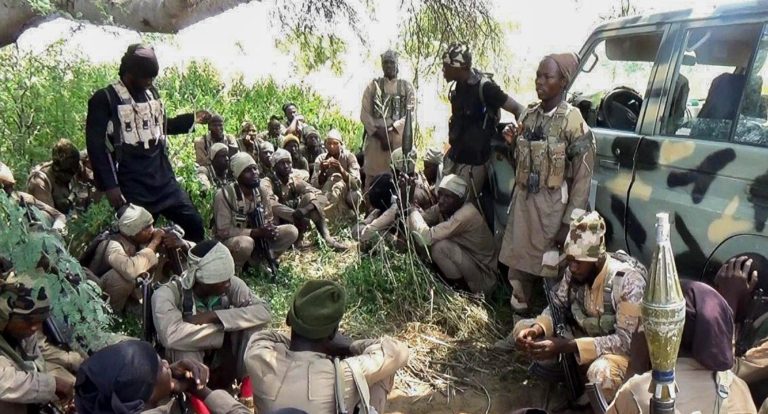
AT least 10 members of Islamic State West Africa Province (ISWAP), a splinter group of the Boko Haram terrorists were killed Monday morning by troops of Multi-National Joint Task Force (MNTF) in Baga, Borno State.
ISWAP terrorists numbering about 30 infested troops defensive locality, the Nigerian Defence Headquarters tweeted Monday afternoon.
“What was meant to be a surprise dawn attack on Multinational Joint Task Force and National troops this morning became a nightmare for the Islamic State West Africa Province (ISWAP), as 10 of its terrorists met their waterloo in Baga. Specifically, at about 5:30 am this morning,” DHQ wroteon Twitter.
“However, vigilant troops spotted their approach and promptly thwarted what could have been an audacious assault.”
It said 10 terrorists, including four suicide bombers were neutralized in the process.
Other terrorists, the DHQ wrote in the tweets, escaped with gun shot wounds noting that blood stained tracks were observed.
Part of what were recovered from the terrorists included assorted arms and ammunition.
Unfortunately, a soldier paid the supreme sacrifice while “five others sustained varying injuries and have been evaluated for medical attention, it said.
It stated that the MNJTF acting cohesively with national forces will continue to pursue courses of action necessary for the achievement of it’s mandate in the Lake Chad Basin.
Powerful forces in Kano and Jigawa states, including elected officials, collude with a Chinese industrialist to steal land from thousands of small farmers
By Bakare Majeed
IN parts of northern Nigeria, particularly in Kano and Jigawa states, a Chinese man known by the locals as Mr. Lee is as popular as Aliko Dangote, Nigeria and Africa’s richest man.
Lee’s chain of industries is known collectively as Lee Group of Companies, employing tens of thousands. At one of his factory along Hedejia road in Kano state, known as Asia Plastics, tens of motorcycles are parked by employees who daily depend on the firm to fend for their families.
However, this economic contribution happens at the expense of local farmers who bear the misfortune of owning lands in places where the Lee Group operates. And Lee’s interest is not in plots of land but in hectares, perhaps given the size and scale of his factories. Over the past four years, Lee and his companies may have secured over 12,000 hectares of farmlands belonging to eight different communities in Jagawa; and in Makole in Kano through means that smack of coercion and connivance with local chiefs and state authorities.
Sell your land or risk losing it anyway
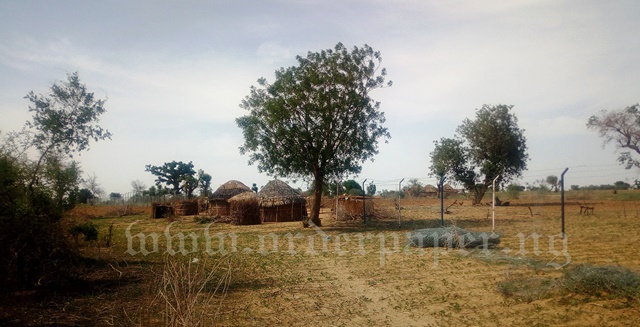
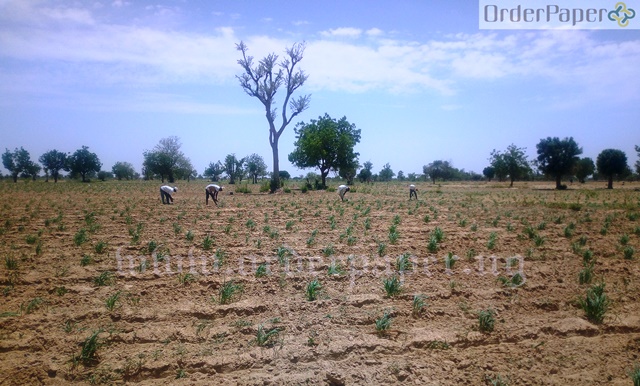
Fulani settlement that has agreed to move. Photo Credit: Orderpaper
The people of Garawa Mallam in Gagarawa Local Government area of Jigawa State are typically Fulani whose settlement is characterized by crop and livestock farming.
This particular settlement is off the quiet road in Gunjugu and the only presence of government is a hand pump water borehole and a basic school labeled with the Universal Basic Education (UBE) signage.
But for over four years, there has been a disruption in the way of life of the people of Garawa Mallam and eight other
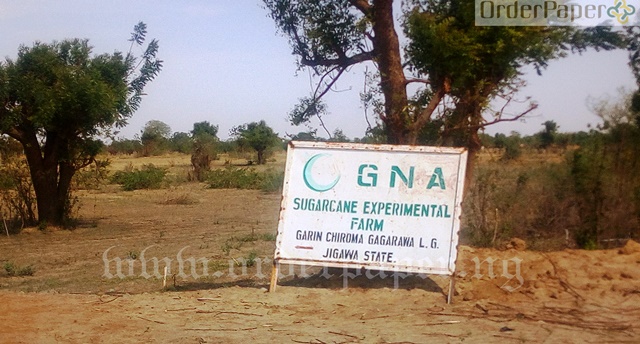
communities around it. This is simply because Lee is, with assistance of the Central Bank of Nigeria (CBN)’s Anchor Borrowers Scheme, building an experimental sugarcane farm. During a visit by this reporter, the local folks narrated ordeals in a land-grab scuffle that started four years ago. There are over 2,000 farms belonging to 1,200
farmers all of which sit on some 12,000 hectares of land.
Chairman of the community, Wada Bello, and some elders recounted experiences in the native Hausa language which an interpreter had the task of translating to this reporter.
According to Bello, it all started in 2015 when representatives of the Lee Group visited their farms and promised to build water channels and mini dams but with a condition of sharing the farmland in the ration of 1:2 with the bigger half proposed for the visiting investor. The offer was turned down, Wada said.
However, about two years ago, he claimed that some people came to their properties with survey equipment and informed the farmers they were set to begin planting sugarcane on the land. An offer to buy at N100,000 per
hectare was made, which was again rejected because the prevailing rate was “between N200,000 to N350,000 depending on the proximity to community and type of soil.”
At this point, Wada Bello got somewhat agitated, saying “attempting to steal our land is like trying
to kill us, and when people try to kill you, defending yourself is the only option. Look around the community, we have about three persons who are salary earner, the rest are farmers, it is the crop we plant and
sell that we use to feed our children, pay their school fees, and also marry for our grown up.”
Appeal to Buhari and used of force
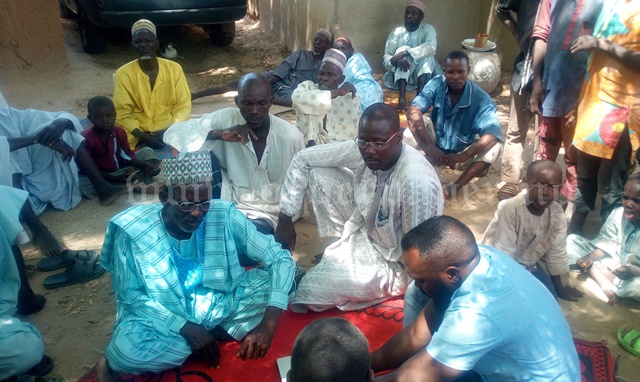
Affected farmers in Garin Mallam
The local chief noted further in an emotional tone, saying: “We are not scared, but we are not ready for violence, we are calling on Baba Buhari (President Muhammadu Buhari); this 50,000 people in this area voted for you, come to our aid, we are calling on international organizations, and foreign government to come to our aid.”
Another significant part of the community’s story is the intervention of the police which surprisingly, sided with the invaders against the very people it is meant to protect. According to Bello, agents of Lee persisted in the invasion of the community with protection from mobile police personnel after a unilateral determination of N40,000 was
dangled at the land owners as a ‘take it or leave it’ compensation.
Willy-nilly, the local folks ran to the court in search of justice in a matter that has dragged in the courts till date. As at time of this report, 13th of April, 2019 was the last hearing on the case. In another narration, Ado Idris, a member of the community said he and five others were arrested by the mobile policemen after they were invited for a
meeting over the land. He said they were however released same day even though another folk, Suraji Abdulwasiu, was not that lucky as he was detained for 13 days without trial, after he was picked up for protesting over the land.
The same sad story of the Gayawa Mallam farmers resonates in Gayawa Kano where the people also faced the grim prospect of “sell or forfeit your land.” The community which is in the middle of farmlands in Garki Local Government area has about 50 homesteads and the locals engage in either crop or livestock farming.
Yusuf Ghali, a young man directly affected, stated that they (the farmers) are only allowed to use the land surrounding the community, and nothing more, anything beyond a specific place is off limit to the community.
In another small settlement just across the fenced farm of Great Northern Agricultural Nigeria Limited, in Gayawa Chiroma, Mallam Haruna Ado was forced to move out of the land after about half of the community
accepted terms and conditions for the sale of their land foisted on them by the state government. The deal meant they had to move their abodes, which were typically made of bamboos, away from the land they had always
known and cherished as theirs.
The case in Kano and a judicial intervention
The land at gayawa Kano, Jigawa State
Along Wudil road, just on the outskirts of Kano city, 192 farmers also had tales of nightmare about the expansionist moves of the Chinese industrialist. According to Ishaku Yahaya, one of the 192 farmers whose lands were forcefully taken in Makole, Kano, the ordeal started during the administration of Ibrahim Shekarau the former governor of the state who is now a senator. He stated that the farmers were called to the House of Yusuf Bayero, the District head of Kudu, who shared N20,000 to each farmer.
“We asked him what is the money for, and he said, just go and spend it; we thought it’s the normal ‘political money’ that we do get but after a while we were called to sign some document; when we inquired, they said it’s for our farm lands, that it now belongs to Spanish Nigeria, a company of Lee.
We disagreed and subsequently, mobile police were brought in. ”Yahaya noted that the aggrieved farmers took the matter to the late Emir of Kano, Ado Bayero, who asked them to return to their farms since no one had officially purchased the land from them. After the death of the late King, Yahaya explained that the agents of the Chinese came back and made offers of between N20,000 and N38,000 to different farmers. He, however, said that the farmers
rejected the offers but again mobile policemen were deplored in full force to harass the farmers.
The aggrieved farmers sought help and were able to get a lawyer, Ibrahim Boyi, to offer pro bono legal service to represent them. On the 24th of November, 2016, a High Court in Kano granted an interlocutory injunction
restraining the Lee Group and Spanish Nigeria from encroaching on the land. Other defendants in the suit are: Sani Adamu Gano, former House of Representatives candidate, Kano state; Bayero Yusuf, District Head of
Dawaki Kudu; Haruna DanZango; Alhaji Maikudi Gaya (Acting Chairman of Dawaki local government); and the Commissioner of Police. According to an affidavit deposed by plaintiffs’ lawyers dated 12th January, 2017,
“the 4th Defendant (Maikudi Gaya, the Acting Chairman of Dawaki/Kudu Local Govt) played a great role by using the office of Executive Chairman of DawakI/Kudu Local Government of Kano State with the 3th
(Haruna DanZango) and 5th Defendants (Mr. Lee) to request all the plaintiffs to initially intimidate the Plaintiffs sometime back appear at Gidan Hakimi to collect the sum of N20, 000.00 which the 5th
Defendant had offered out of pity.” The 3rd and 1st defendants are local politicians, while the Messer Bayero and Gaya are current local head and local chairman respectively in the local community. The commissioner of
police, Kano State was equally joined into the case because, according to the aggrieved farmers, the Chinese man was using mobile police to harass the farmers.
But the company still went ahead to fence the land, according to Yahaya, who further stressed that the farmers were unable to farm on their land for three years until recently when the lawyer was able to force the police to respect the injunction of the court.
According to the court documents obtained by this reporter, Justice Lawan Wada Mohammed ordered “the defendant, their privies, agents are restrained from trespassing, using or developing structures on the farm
lands of plaintiff/applications, and use of armed personnel to harass, intimidate, stop or threatened the plaintiffs/applicants from further using their farmlands, pending the determination of their substantive
matter.” However, as at the time of the reporter’s visit, the farmlands were still fenced with concrete walls, though the farmers have started cultivating the land after three seasons of being debarred.
In an interview with the lawyer, he said that the position of his client is for the Lee Group to provide evidence of ownership of the land. “We are not against Mr Lee, this is someone who has provided jobs for millions of people, but what is right is for Mr. Lee to pay what is appropriate for the land. We have a hunch that some people were given
the money by Mr. Lee but they decided to short-change the farmers.”
The commissioner of Police, Kano State, is also a co-defendant in the law suit, could not be reached for comments in making this story.
Chase for official reaction
Several attempts by this reporter to get government reaction on the matter in both states were mostly futile as officials reached put up various evasion tactics. When this reporter visited the Chairman of Gagarawa local government area of Jigawa state, Ibrahim Ya’u, for comment, the young executive took to his heel. But an official, who declined to share his identity, said the local government would only intervene if and when the community agrees to sell and assist in resettlement by providing basic amenities in the new settlements subject to the resources available to local government.
He then referred further inquiries to the Jigawa State Investment and Property, an agency under the supervision of the Deputy Governor’s Office. But a visit to the office bore no fruit, as the spokesperson of the agency, Uba Keya, declared that they are not responsible for the land issues in question. He thereafter referred this reporter to
Ministry of Land. Just like the previous office visited, a mention of the topic of inquiry elicited evasive reactions from officials encountered. A secretary in the office of the Director of Land at the ministry claimed that the Director was not available.
Furthermore, a brief phone interview with Murtala Kwalam, the Permanent Secretary, Jigawa state Ministry of Land, Housing and Regional Planning, revealed the depth of official silence on the matter as he declined to
make any comment under the guise of being a civil servant.
“I cannot talk. I am a civil servant; go and meet the governor, meet the deputy governor,” he said before ending the call abruptly. It was same story of evasion in Kano State. The spokesperson of Kano State Bureau of Land who refused to give his name said that he was recently appointed and that the Permanent Secretary who could speak on the matter was not available.
The Central Bank intervention
On the 3rd of May, 2017, the Governor of the Central Bank, Godwin Emefiele, at the ground breaking ceremony of the plantation, declared support for the farming ventures of Great Northern Agricultural Limited.
“On our part as the Central Bank of Nigeria, I appeal to you to come over to us in the Central Bank, whatever support you need to get this project on ground, so that in the next couple of months we can come back and launch the programme, that support I assure you today, you will get from Central Bank of Nigeria,” he said.
This reporter could not verify the type of support given to the Lee Group after the pledge by Emefiele. It is also not clear whether or not the apex bank is aware of the land grab controversy involving one of the beneficiaries of its agricultural intervention. A reach out to the bank was not fruitful as calls and text messages made to Mr. Isaac Okoroafor, the Corporate Affairs Director of the CBN, were not answered.
LEE, the Chinese billionaire of Panama papers
One of Lee’s companies, Asia Plastic
Lee Sheau Yun is the name that towers over this entire controversy. The Lee Group has several of its subsidiaries in both states such as Viva Plastic, Asia Plastics, Spanish Nigeria Company, Great Northern Agricultural Limited. The man was also linked to the operation of companies in tax haven of British Virgin Island, according to the Panama
Papers which reported that Lee operated Smart City Holdings Co from 12th of January 2000 and was registered in British Virgin Island.
During a visit to the Lee Group at Jogana, Hadeja Road Kano, a security personnel at the gate claimed that Lee had left for China the day before. This reporter, however, learnt that the industrialist had passed away some days before then. He reportedly passed away in China.
Echoes in the National Assembly
The land grab controversy involving the Lee Group also resonated at the National Assembly. Sani Zorro, a member of the House of Representatives in the 8th Assembly moved two different motions calling attention to the issue. In 2016, Zorro in a motion [1] called for the intervention of the parliament but several members argued that land
matters fall within the control of the state government.
However, the then Speaker, Yakubu Dogara, asked the House Committee on Judiciary to advise on possible ways out of the logjam. Zorro told this reporter in an interview that that the chairman of the committee already informed
him of a means to treat the motion “but the former Deputy Governor, Ibrahim Hadeija, who is presently a Senator, visited Dogara and the motion did not see the light of the day.”
Nothing was heard of the motion again until Zorro sponsored another in April 2019. Although it scaled through this time, it was heavily opposed by several members including Aminu Suleiman from Kano State.
“THIS INVESTIGATIVE REPORT IS SUPPORTED BY FORD FOUNDATION AND THE INTERNATIONAL CENTRE FOR INVESTIGATIVE REPORTING, ICIR”.
THE publisher of OrderPaper Nigeria, Oke Epia, has raised an alarm over threats to his life and those of his colleagues issued serially by a former member of the House of Representatives, Tony Nwulu.
Nwulu sponsored the not-too-young-to-run bill that was signed into law by President Muhammadu Buhari last year.
Epia in a terse statement released to the media said himself and other journalists in the media organization have received threat calls directly from Nwulu and strange calls and text messages from persons some of whom refused to identify themselves.
He said the strange encounters with the politician started on the 21st of July, 2019 when the former lawmaker posted unwarranted, grave and unsubstantiated allegations of extortion and blackmail against the organization on social media over a publication he disagreed with.
The publication contained an objective assessment of his records in parliament, Epia said.
Taken aback by the outbursts, Epia said a letter was written to the politician asking for evidence to back up the claims in his posts which “are wild, tactless, libelous and absolutely unbecoming of someone who has held such high office as a federal legislator.”
But in a reaction, “Mr. Nwulu went on a binge of further verbal attacks and this time was calling my colleagues and issuing threats with a promise to hunt us down at all costs.
“Given the wave of attacks against journalists in recent times, we have decided to bring this matter to the public domain and let the world know that should anything untoward happen to me or any of our colleagues or the media establishment itself, Mr. Nwulu should be held responsible.
“According to the Press Attack Tracker which monitors attacks against journalists in the country, at least 36 Nigerian journalists were attacked between January and July this year.
“So when we now have someone saying that he will hunt us down, we need to make the world aware even though we have initiated appropriated steps to seek legal protection and redress both for ourselves and the reputation of our organization.
“And for the records, we stand by our story and insist that records available since the publication have further corroborated our reportage,” the Orderpaper publisher said.
They are out to blackmail me — Tony Nwulu
When contacted by The ICIR, the former lawmaker denied allegation of threats to the journalists. “Why would I threaten him? he asked. Describing himself as a law abiding citizen, Nwulu said he could not send any threat message or call to the journalist as “his life worth nothing to me.”
“He is just a false alarmist, ” Nwulu said, adding,”this is nothing but stock in trade of some journalists that blackmail and extort money from people.”
Challenging the publisher of Orderpaper to bring out evidences of threats to him and other colleagues, he said he had already reported the matter at the National Assembly police station, which according to him has sent an invitation to the journalist to appear on Tuesday, July 30.
“Let him provide the phone numbers and the text messages where I threatened him for police to investigate.”
Asked about the publication that is the bone of contention, Nwulu said it was a political mudslinging by the journalist arguing that the publication was done when he was running as governorship candidate of the Peoples Democratic Party (PDP) in Imo State during the primaries against the former deputy speaker of House of Representatives and incumbent governor of the state, Emeka Ihedioha who he said the publisher of Orderpaper served as Special Adviser on Media for.
“He worked for Ihedioha when he was the deputy speaker,” he said. “He published a derogatory and unsubstantiated claims about me during the elections, but I ignored it despite calls from some journalists to me that I should bring money so that they can correct the report.”
He said he also ran against Ihedioa as the governorship candidate of United Progressive Party (UPP) in the last general election.
His friends and well wishers, he noted, called his attention to the report again when elections had ended. “It was clear that it was a political mudslinging and this is tantamount to biting someone and going out to cry,” he explained.
On the constituency project mentioned in the report, Nwulu also challenged the journalist to provide evidence where the money is missing. He explained that constituency projects are domiciled with agencies of government that execute such projects. “I stand to be investigated, I have never done a single project for government in my life.”
“He said I ran opaque constituency projects which money ran into tens of millions, let him come and prove his case,” he said.
According to him, the publisher of Orderpaper must state the exact amount of money he said was missing as against tens of million of naira.
“You can allege something without proving it, this is blackmail gone wrong.”
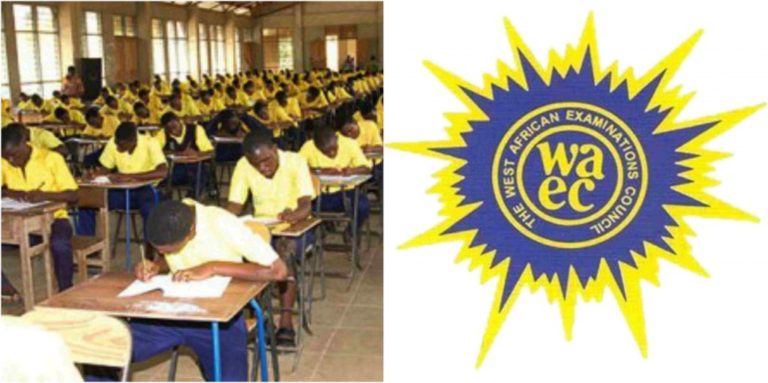
THE West Africa Examination Council (WAEC) has released the result of the 2019 May/June West Africa Senior School Certificate Examination withholding 180,205 results of candidates found to have involved in examination malpractices.
Head of Nigeria National Office Olu Adenipekun who announced the release of the result at a press briefing in Lagos at the council’s national office in Yaba, Lagos said of about 1.6million candidates who sat for the 2019 WASSCE, the females performed better than their male counterparts in securing a minimum of five credits including English and Mathematics.
He said a total of 1,596,161 candidates registered for the examination from 18,639 recognised secondary schools in Nigeria.
The examination body chief also disclosed that the results of 1,468,071 candidates, representing 92.32 per cent of candidates that sat for the examination, were fully processed; while 122,102, representing 7.68 per cent of candidates that sat for the examination had a few of their subjects still being processed.
Adenipekun explained that out of 1,590,173 candidates who sat for the examination, 822,098 were male while 768,075 were female, representing 51.70 percent and 48.30 percent respectively.
“No fewer than 1,309,570 candidates representing 82.35 percent obtained credit and above in a minimum of any five subjects, i.e with or without English Language and/or Mathematics; while 1,020,519 candidates, representing 64.18 percent, obtained credits and above in a minimum of five subjects, including English Language and Mathematics.
He remarked that this was an improvement against the 2018 result in which 49.98 percent of the total candidates passed, which is a 14.2 increase from the last examination result.
Of this number, 507,862, that is 49.77 percent, were males and 512,657, that is 50.23 percent, were female candidates.
“The percentage of candidates in this category in the WASSCE for School Candidates was 50 percent in 2018,” Adenipekun said.
He noted 299 were visually challenged, 842 had impaired hearing, 158 had low vision, 75 were spastic cum mentally challenged and 85 were physically challenged.
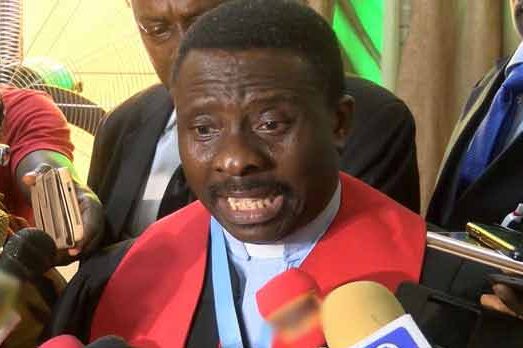
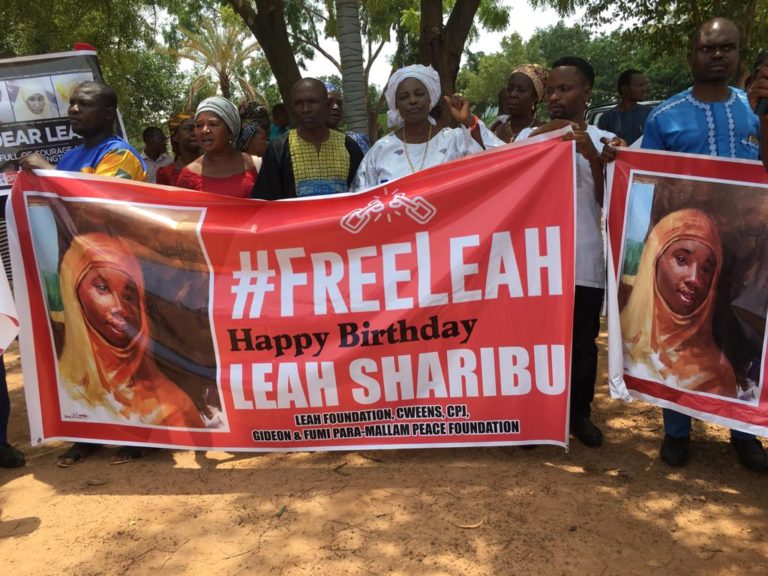
The Christian Association of Nigeria (CAN), has called on President Muhammadu Buhari to ensure the release of Leah Sharibu, Grace Taku and other hostages in the den of the Boko Haram terrorists.
President of CAN, Samson Ayokunle made the call in a statement on Friday signed by his Special Assistant, (Media), Bayo Oladeji.
According to him, the primary objectives of any ‘serious’ government, is the security of lives and property of the people, and failure in that responsibility may lose the confidence of the citizens.
Ayokunle said CAN has watched the viral video of Boko Haram terrorists’ camp where Grace Taku, an aide worker of Action for Hunger had appealed to the Federal Government, CAN and other wellmeaning Nigerians to facilitate her release and her colleagues from their abductors.
The christian umbrella body recalled that the Boko Haram sect sometimes in April this year reportedly kidnapped a National Youth Service Corps (NYSC) member, Abraham Amuta and a cleric with Living Faith Church (Winners Chapel), identified as Pastor Moses Oyeleke in Borno State.
“We have not heard anything about their whereabouts,” it said.
The CAN president called on the Federal government, and security agencies, to secure the freedom of those held hostages, such as of Leah Sharibu, Grace Taku and her collegues Amuta and pastor Moses Oyeleke before it gets too late.
“We urge the Federal Government to expedite action toward the captives’ release, as in that of Dapchi girls except for Leah Sharibu. We believe strongly that Leah Sharibu is still alive, hail and hearty and she will and others must be set free from the captivity. Enough of paying lips service to the menace of security challenges in the country,” CAN said.
He called on the government to carry out a total revamp of the country’s security apparatus, while asking developing nations to assist Nigeria in combating the challenges of insecurity before it becomes unbearable.
“There is no exaggeration to say Nigeria roads are unsafe as kidnappers, terrorists, killer herdsmen and bandits are operating with impunity.
How come these six aid workers were abducted and taken to the den of the captives without the awareness of the security agencies?
“What has become their intelligence gathering? Are we sure there are no saboteurs among our security agencies? Is there anything the government and the security agencies are doing to stop this menace that we don’t know to avert its negative effect as some notorious people taking law into their hands?” he said.
Ayokunle called the government and security agencies to ‘wake up from their slumber ‘ before it gets late.
“Our prayer is that the awesome God will come to the aid of this country. He will free all the captives and comfort all the bereaved of the killings in the country,” Ayokunle said.
The Aide workers were reportedly kidnapped by suspected Boko Haram terrorists, on July 18, around Niger border, on their way back from humanitarian fieldwork.
The Paris-based Humanitarian organization, ACF, had confirmed the individuals on the video were its workers, demanding on their release.
THE BringBacKOurGirls (BBOG) movement has asked the Federal Government to confirm or deny the claim of death of Leah Sharibu and Alice Lokshs with “’Proof of Life’ Video.”
The claim that Leah Sharibu, the sole remaining Dapchi schoolgirl of the 110 students abducted by Boko Haram on 19 February 2018, and Alice Loksha Ngaddah, an Aid Worker with UNICEF may be dead is extremely troubling, the BBOG said in a statement issued in Abuja on Friday.
The movement known for its advocacy for the release of abducted Chibok Secondary School girls said it was not satisfied with the assurances given by the spokesperson to the president, Garba Shehu that the government was in touch with the abductors.
Grace Taku, a recently abducted aid worker with Action Against Hunger, made this claim of Leah and Alice’s death in a ‘proof of life’ video released by the insurgents on Wednesday, July 24, 2019.
She stated that Leah and Alice were killed by the insurgents because of Federal Government’s inability to “do something”.
Not too satisfied with the government assurances which it said was full of innuendos, the BBOG called on President Muhammadu Buhari to provide an update to the people of Nigeria on the status of Leah Sharibu and Alice Loksha Ngaddah.
Among other requests, it want the president to confirm whether they are still alive and what is the Government under his leadership doing to secure their release from terrorist enclave that has lasted over 522 and 512 days respectively.
It also asked the president to facilitate what it called “belated justice of rescue to our 112 remaining Chibok girls who have been in captivity for 1,929 days and end the shame of his failure to keep promises made to ensure that all of them are rescued before December 31st 2015 – about four years ago.”
The movement said it remained resolute and determined to never cease demanding action for ‘our citizens’.
“The constitutional duty to uphold the dignity of life of all Nigerians must be performed by the Federal Government and President Muhammadu Buhari,” it said.
“As a citizens movement committed to keeping government accountable, we are not for turning until Leah, Alice, Grace, her five unnamed colleagues, Chibok girls, and other abducted citizens are rescued.”
Meanwhile, Rebecca Sharibu, Leah’s mother said she is hopeful that her daughter will return alive from Boko Haram captivity, adding that she looks forward to that day.
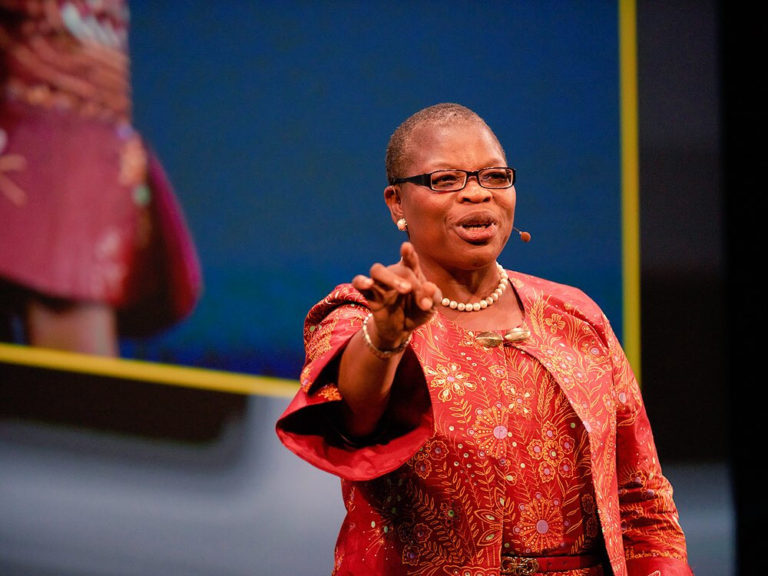
FORMER Vice-President of the World Bank’s Africa division, Oby Ezekwesili, said the Central Bank of Nigeria’s (CBN) plan of banning the importation of milk would hurt the poor and increase the number of malnourished children in the country.
Ezekwesili wrote on her Twitter handle, @obyezeks on Friday, that the banning of the milk and other dairy products was a wrong policy to be made for Nigerians.
The Governor of CBN, Godwin Emefiele had earlier announced on Tuesday that the Federal Government would soon place restrictions on the importation of milk and other dairy products.
He had said that Nigeria spent between $1.2 billion and $1.5 billion annually to import milk into the country.
“We can no longer continue to spend close to $1.2 billion to $1.5 billion, importing milk into the country, a product we can produce,” Emefiele said counting on the Nigerian herdsmen.
By producing the milk locally, Emefiele said the conflict between the herders and farmers would reduce.
“We have cows, if the cows are positioned in places without roaming around and they are given water to drink and grass to eat, they will be able to produce quality milk,” he said.
But the former minister of education, Ezekwesili, disagreed. She said the policy was “borne out of vindictiveness”.
Ezekwesili analysed that the banning of the milk would bring about its scarcity. She estimated that Nigerians consume up to 1.7 million tonnes of milk, while the milk production in the country was 600,000 tonnes.
“When milk ban policy happens, to avoid scarcity which prices milk up and out of the reach of the poor, Nigeria needs to immediately “triple” current production of milk.
“It appears from what the CBN said on the milk ban policy that it is a case of: ‘You folks rejected RUGA, here is your punishment.’ What a big shame that would be,” she tweeted.
Explaining on the need for the milk availability, she said: “Nigeria has the highest number of under-five children with chronic malnutrition (stunting or low height-for-age) in sub-Saharan Africa at more than 11.7 million, according to the most recent Demographic and Health Survey (DHS) (National Population Commission).”
“Child Poverty is even worst in a country that holds the ignoble record of being the World’s Capital of Extremely Poor People,” she tweeted.
Ezekwesili said President Muhammadu Buhari should flee from policies that could escalate poverty in the country.
THE Islamic Movement of Nigeria (IMN) says at least 20 of its members have been killed this week, after their violent clash with security operatives.
Quoting an unnamed spokesperson of the organisation, Reuterssaid the death toll may be as high as 25.
Though the police with whom the Shiite members clashed in the nation’s capital have yet to release any figure of the casualties, the group feared its injured members in police custody may have also died.
“More might die in police custody, because there are at least 15 people who are in the detention center with various degrees of bullet wounds, without medication,” one said
Police did not respond to repeated attempts to reach them for comment.
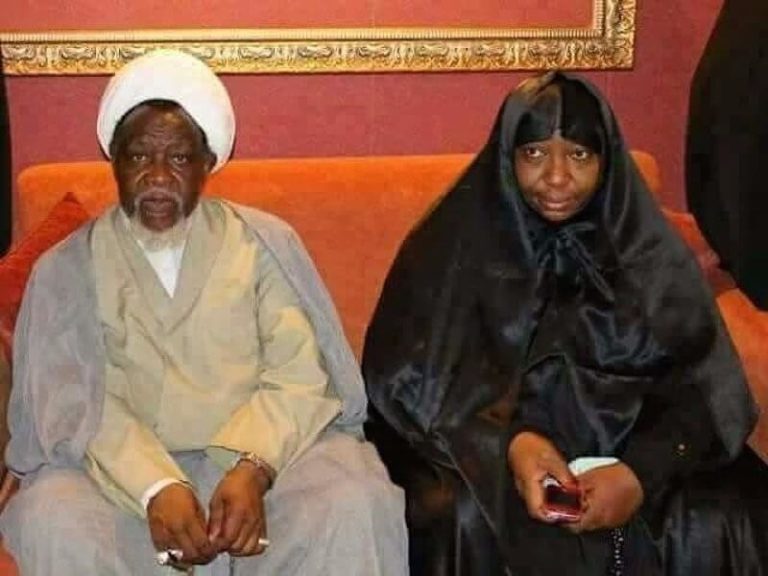
The Shiites are protesting in Abuja to press for the release of their leader, Ibrahim Zakzaky, who has been in detention since 2015 despite a court order to release him.
Monday’s protest led to the death of a Deputy Commissioner of Police (DCP) Usman Umar and a journalist with the Channels Television, Precious Owolabi.
Commercial activities were also paralysed on Tuesday in Abuja after the Shiites continued with their protest, again, engaging the police.
Nigerian police met the protests with gunfire and tear gas.
Most of the people killed after security forces opened fire on the group on Monday, with four others having since died in police custody from their bullet wounds, the spokesmen said.
Following security reports that the IMN members planned to stage protests across Kaduna, Kano, Lagos, Katsina, Abuja, Bauchi and Gombe on Friday, police said they had bolstered security across the country describing the protests as violent and unruly.
They “advised all would-be protesters to ensure they express their grievances within the ambit of the law,” according to the statement.
The Inspector General of Police (IGP) Mohammad Adamu in the statement assured citizens that proactive measures including aerial surveillance of major cities have been put in place to ensure the safety and security of lives and property of all Nigerians
Zakzaky has been held in detention since December 2015, when the army killed roughly 350 of his followers at his compound and a nearby mosque and burial ground in northern Kaduna state.
He faces trial on charges of murder, culpable homicide, unlawful assembly, disruption of public peace and other offences following the 2015 violence. He has pleaded not guilty.
THE World Health Organisation (WHO) has called on member countries to scale up investments in the elimination of Hepatitis disease.
WHO Director-General, Tedros Adhanom Ghebreyesus made this call on Friday ahead of the World Hepatitis Day coming up on Sunday, July 28.
By investing in diagnostic tests and medicines for treating hepatitis B and C, Tedros said countries could save lives and reduce costs related to the treatment of serious complications like liver cancer and cirrhosis (scarring of the liver).
“On World Hepatitis Day, we’re calling for bold political leadership, with investments to match. We call on all countries to integrate services for hepatitis into benefit packages as part of their journey towards universal health coverage,” said Tedros.
Viral hepatitis B and C affect about 325 million people globally, causing 1.4 million deaths. It is the second major killer infectious disease after tuberculosis. Nine times more people are infected with hepatitis than HIV.
A new study conducted by WHO published on The Lancet Global Health found that a total of $59 billion is needed annually in 67 low and middle-income countries to avert premature deaths of 4.5 million people by 2030. This means new hepatitis infections would be reduced by 90 per cent and deaths by 65 per cent.
WHO said as of today, 80 per cent of people living with hepatitis could not get the services they need to prevent, test for and treat the disease.
“Some countries are already taking action,” WHO statement read in part. “The Government of India, for example, has announced that it will offer free testing and treatment for both hepatitis B and C, as part of its universal health coverage plan” it added.
WHO also mentioned that the Pakistan government has also procured hepatitis C curative treatment at similarly low prices.
It urged all countries to invest in eliminating hepatitis through costing, budgeting and financing of elimination services within their universal health coverage plans. “…with 124 out of 194 countries developing hepatitis plans, over 40 per cent of country plans lack dedicated budget lines to support elimination efforts,” the health agency noted.
It also released online calculators(www.hepccalculator.org and www.hepbcalculator.org) to help decision-makers in evaluating the cost-effectiveness of their hepatitis treatment programme.
In Nigeria, hepatitis is a common disease. The WHO estimated that 11.2 per cent of Nigeria’s population is hepatitis B positive.
The figure indicates that 20 million Nigerians are living with the viral infection, meaning that one in nine Nigerians has this incurable but preventable disease. For hepatits C, which is curable, about two per cent of the population lives with it.
In 2017, former minister of health, Isaac Adewole expressed the determination of Nigerian government to eliminate hepatitis B infection by 2021.
Checking through the 2019 budget of the Federal Ministry of Health, N28 million was budgeted for the “acquisition of recombinant DNA technology for the local production of vaccines (HPV, hepatitis b/c, pediatric vaccines)”. No money was budgeted for the viral infection awareness.
THE presidency on Friday said efforts are being made to ensure the release of the six aid workers of the Action Against Hunger (ACF) abducted by suspected Boko Haram militants.
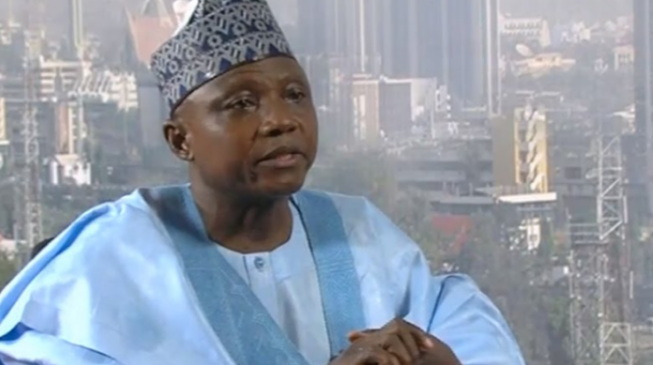
Senior Special Assistant to the president on Media and Publicity, Garba Shehu stated this in a series of tweets on his official Twitter handle @GarShehu.
The ACF staff were abducted on their way back from humanitarian fieldwork, at Damasak close to the border with Niger on July 18, 2019.
In a video released on Thursday, the six abducted workers were seen pleading to the Nigerian government for their release, quickly, before the unimaginable happens.
The presidential spokesperson however, said the government was making contacts, in the hope that the captors would have no reason to visit hardship or even harm on the innocent individuals.
He noted there has been engagement on previous cases on abduction, such as that of Leah Sharibu, a religious leader and many others sequel to the abduction of the ACF staff.
Shehu, however, said, that the latest incident had brought urgency to the efforts been made by the secret services.
“Presidency has been given assurances that contact is being made and the captors are being talked to,” he said.
The Paris based humanitarian organisation, ACF had confirmed that the video released showing a woman and five men were their staff members.
ACF on its part had demanded the release of its staff members, noting that their abduction fully contradicts International Humanitarian Law and internationally recognised standards for the protection of humanitarian workers and organisations.
There have been reports that the hostages are believed to be held in an ISWAP enclave on the shores of Lake Chad.
Villagers said the kidnapped aid workers were seen with their armed captors passing through the villages of Chamba and Gatafo on the day of their abduction.
ISWAP is a splinter group of jihadist group Boko Haram that swore allegiance in 2016 to IS leader Abu Bakr al-Baghdadi.
It has repeatedly attacked military bases and targeted aid workers in northeast Nigeria.