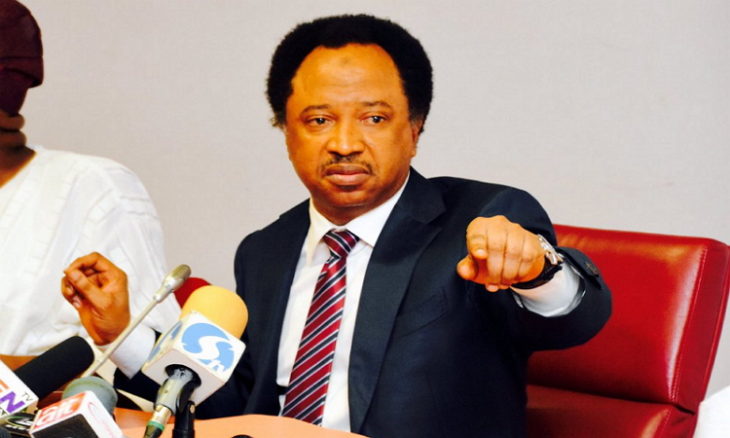
A FORMER senator, Shehu Sani says some Nigerian agencies in charge of emergencies and individuals in the presidency have turned the humanitarian crises in the Northeast to a profiteering industry.
“What we are witnessing besides genuine organisations that are helping in the Northeast, there are parasites who are profiteering from the crisis in the Northeast,” Sani who represented Kaduna Central Senatorial District in the 8th Senate said.
Sani said this has continued unchecked due to lack of transparency and accountability in the way funds are spent to assuage the sufferings of victims of the crisis.
“They have turned the humanitarian crisis into the humanitarian industry,” he added while speaking at a workshop on Forced Displacement held in Abuja on Tuesday.
The workshop with the theme: Rethinking humanitarian action in situations of forced displacement: Focus on Northeast Nigeria was organised by De Montfort University, Leicester.
While Sani did not mention any particular government agency or individuals cashing on the humanitarian crisis, he also indicted some top members of the presidency whom he said have been taking advantage of President Muhammadu Buhari to perpetrate corruption in the management of the Northeast crisis.
“A report that I presented two years ago painted a picture of the exploitation and plunder of helpless people by people holding positions of authority who are within the presidency,” he recalled.
“They capitalise on the president’s sympathy, concerns and interest of the Northeast and use it for their own personal benefit.”
He explained that the agencies bypass procurement laws during emergencies to shortchange the government and the victims.
“The law has made it easier in the case of national emergency or in the case of urgency, government agencies exploit the law or the act and they were able to bypass all the procurement laws and the checks and balances,” he said.
This, the former lawmaker said has “made it easier for them to simply write items, give themselves contracts and supply as long as these victims are there, nobody to ask a question.”
He said committees set up by the federal government to handle issues relating to emergencies operated without proper accountability.
“We had to travel to the Northeast to see the fraud perpetrated in the names of the victims. You will find out that they will write supply of food to IDPs N2million and then conference for IDPs N50million. I don’t really understand,” he explained.
Sani also fingered international donor agencies in the ongoing opaque operation concerning funds earmarked and released to address the humanitarian crisis.
“If we have to find a solution to this problem, what we need to do is to properly document what foreign donors are bringing into the country,” he said.
“There is no proper means by which we can know what they are bringing and where it goes. Does it go to the state government, does it go to the federal government or does it go to an agency of the government that already has captured that in its budget.”
He emphasised that the only solution to the problem is to ensure proper accountability in the way money is spent.
“Let us synergise and streamline the activities of government agencies and non-governmental agencies in finding a solution to this problem.”
Speaking earlier, the Project Lead for the workshop, Seun Kolade, explained that the workshop focused on how humanitarian actions can be redesigned around the affected people as the main actors and not just as recipients of aid.
He explained that the project intended to examine the extent to which the displaced population was drawing from the experiences and consequences of the insurgency and counterinsurgency.
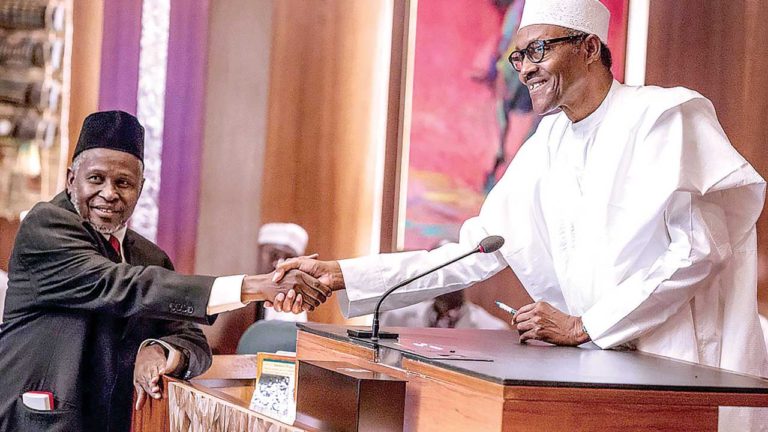
IBRAHIM Tanko Muhammad has been confirmed by the Senate as the substantive Chief Justice of Nigeria, CJN, six months after he was sworn-in by President Muhammadu Buhari to act in the capacity.
The House went into a closed-door session on Wednesday, following a motion by the Senate leader Abdullahi Abubakar, where it finally approved Muhammad’s nomination.
Senate President Ahmed Lawan had on Tuesday requested that the jurist’s curriculum vitae be shared among the lawmakers.
Muhammad was sworn-in on Friday January 25 at a brief ceremony at the Presidential Villa, following the suspension of the former CJN, Walter Onnoghen, accused of false assets declaration.
Tanko Muhammad, according to his profile provided by the Supreme Court, studied Law between 1976 and 1980 at Ahmadu Bello University, after which he graduated successfully from the Nigerian Law School in 1981. He obtained a Master’s degree in Law from the same institution in 1984, and then a doctorate degree in 1998.
He started his career in the judiciary as a Grade II Magistrate in Bauchi State and then rose through the ranks.
In 1990, he was appointed Chief Magistrate of the Federal Capital Territory High Court. From there, he became a Kadi of the Bauchi Sharia Court of Appeal, then Justice of the Court of Appeal, and then Justice of the Supreme Court of Nigeria in 2006.
He was, before his appointment as CJN, the second most senior Justice of the Supreme Court, ranking only below Walter Nkanu Onnoghen who was appointed to the court in 2005.
The Chief Justice of Nigeria is the head of the Supreme Court of the country. He is also, according to the constitution, chairman of the National Judicial Council and Federal Judicial Service Commission.
Onnoghen, the former CJN, was similarly not confirmed until about four months after he was sworn-in as acting CJN.
The delay had led to speculations that Buhari did not favour the idea of having a chief justice outside the Northern region.
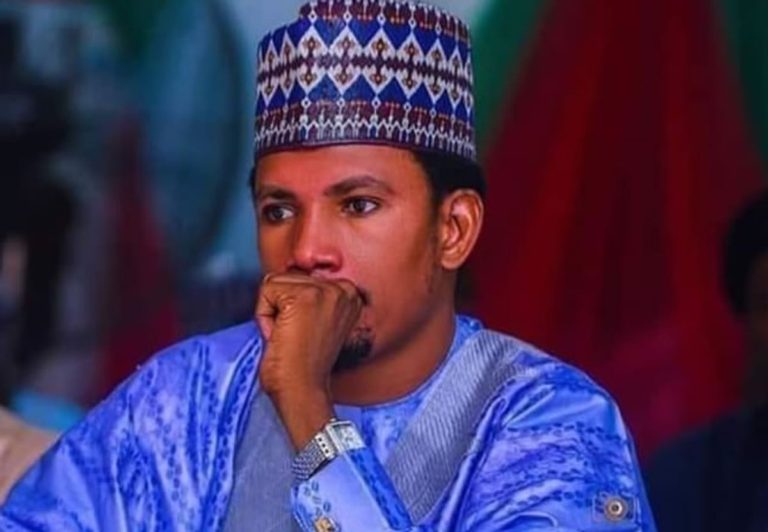
AN AD-HOC committee set up by the Senate to investigate the allegation of physical assault against Elisha Abbo, the lawmaker representing Adamawa North district, has said it would rather hold on till the court rules on the matter. But its request was rejected.
The bipartisan committee was set up on July 3 and was given two weeks to report back to the Red Chamber.
The committee chairman, Sam Egwu, however, said on Wednesday that the group needs more time to present its findings. He explained that the committee could not carry out its duty effectively as the parties invited, including Abbo, the Commissioner of Police, and victim’s lawyer refused to provide details because the matter is pending in court.
“We set out to do the investigation and in the course of that, we invited all the people that are involved,” he told the House.
“We invited our colleague and he made it clear to us that he was invited by the police and the case is already in court and therefore, it is sub judice.”
Egwu added that, because it is already before a court, “we want to wait until the court has taken their decision”.
Senate President Ahmed Lawan rejected this request and gave the committee an additional week to conclude its work.
“It is not our concern. We are not investigating criminal activities. We are investigating misconduct. The senate is not investigating what the police is investigating,” Lawan explained. “We can give you more time but we can’t stop our activities because the matter is in court.”
On July, Premium Times published a security camera footage that showed the Adamawa senator repeatedly slapping a woman at an adult toys store in Abuja. The event was said to have taken place in May, three months after the general election which he won as a senatorial candidate and a month to his swearing-in.
A report by The ICIR has also shed light on allegations of domestic violence and deliberate HIV infection of his former wife, Uche Eucharia Ojukwu, said to have led to her death in 2013.
Abbo was arraigned on July 8 at the Chief Magistrate Court in Zuba with two counts preferred against him. He pleaded not guilty and was granted bail, despite “profoundly apologising” on live television “with a deep sense of remorse and responsibility”.
On Tuesday, July 9, the lawmaker attended a sitting of the Senate ad-hoc committee where he refused to be questioned in the presence of journalists, with the explanation that the matter was in court.
Checks by The ICIR showed that the constitution empowers the National Assembly to investigate allegations of misconduct and it appears the law does not make an exception of cases under review by a court.
“Each House of the National Assembly shall have power by resolution published in its journal or in the Official Gazette of the Government of the Federation to direct or cause to be directed investigation into any matter or thing with respect to which it has power to make laws,” Section 88 states.
It further extends this power of investigation over the conduct of any person, authority, or government body that has the duty of executing or administering laws enacted by the National Assembly.
But such investigations cannot be conducted with the aim of meting out punishment. The purpose shall only be either to “make laws with respect to any matter within its legislative competence and correct any
defects in existing laws” or “expose corruption, inefficiency or waste in the execution or administration of laws within its legislative competence”.
The law provides that the House, in exercising its power, can procure all evidence and examine all witnesses relevant to the case. The House may also issue warrants to compel the attendance of witnesses and impose fines where there is a default.
Health is wealth. But quarry communities in Ogun are losing both to mining companies that are breaking everything, including the mining laws, Gbenga OGUNDARE reports.
A HUGE dose of entrenched ignorance and lethargy. That is about the only prescription anyone will need to live and remain unperturbed in Itokuland in Abeokuta, South-West of Nigeria. Life here, according to residents, is unbearable.
Everyday, the rural folks contend with regular blasts of explosives rocking their homes to the foundation, clouds of dust carrying granite particles, and jarring sounds of trucks moving all day long on the gravelly road that leads from Asun, in Obafemi-Owode Local Government Area of Ogun State, to the hinterland.
Itoku Baale, Elejigun, and many other villages lining the road owe their lives to 24 Hours Mining Company Limited, PWD, and four other companies blasting rocks and granite in that axis.
The villagers have nowhere else to go. And some eventually have paid the supreme price for their refusal to be uprooted from their native land.
Rasaki Soyoye was amongst those that granite dust has killed.
Chief Ariibi
“He coughed to death,” Alimi Ariibi, an 80-something-year-old man, told the reporter. He is the Baale of Elejigun, one of the communities near round-the-clock quarry operations.
Ariibi was smart enough to have identified the cause of the death of his kinsman as air pollution from unrelenting quarrying activities in their community. Other villagers just knew people were coughing or dying.
“But we can’t really tell what caused the coughing,” said an octogenarian who identified himself as Igbagbo. He is the Baale of Jagun, Orita Ijaye in Odeda.
Soyoye didn’t just drop dead. He actually took ill. Particles from mines are among the toxic pollutants the world Health Organisation classifies as ambient air pollutants. No fewer than 4.2 million people die annually around the world as a result of this. “Seventeen percent of all deaths and disease results from acute lower respiratory infection,” says WHO’s Department of Public Health, Environmental and Social Determinants of Health (PHE).
In Nigeria, air pollution kills 150 out of every 100,000, according to the 2016 report of State of Global Air.
Soyoye’s illness probably worsened because there was no clinic to take care of his failing health. The nearest community where there is a primary health centre is Obafemi, a 40-minute bike ride from the village.
Coughing resulting from inhaling dust-laden air is just one of the many ailments the villagers battle with. “We can’t even sleep because their motors go up and down every day and night,” Ariibi added.
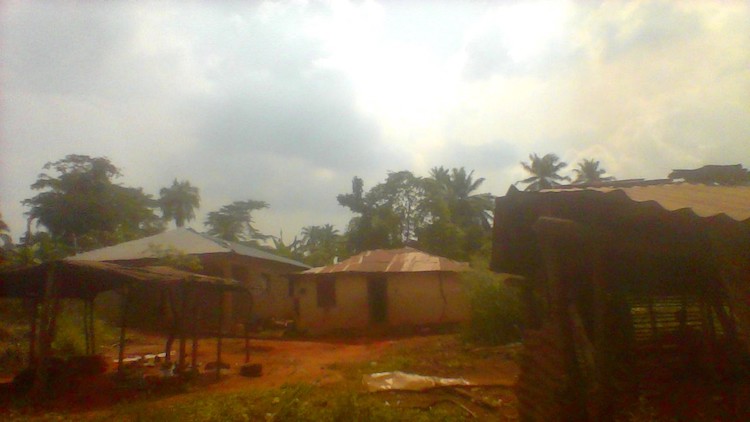
Elejigun is a ten-roof community of farmers. The women there outnumber the men. The older men who spent their youth in that village and had relished the freshness and calmness of their peasant life, sometimes are overwhelmed by a sense of nostalgia. Locating quarries in that area has turned their lives around—for the worse.
A number of the houses there are now heaps of rubble, decaying planks, rusty roofing sheets, and weeds, all covered in thick dust. Those still standing, including that of the late Soyoye, impaired by gaping cracks and thick fault lines, threaten to crumble any time soon.
Yet, whatever happens to the health and safety of peasants living at Elejigun and others does not bother the miners. It also appears that state and federal governments don’t care much either—despite the provision of the Mining Act that spells out responsibilities of a miner for the socio-economic wellbeing of its host communities.
The pain is heavy on the villagers, especially on their health.
“The quarries are putting us through a lot of suffering here,” griped Ariibi.
Elejigun
A state set on a hill
Ogun State is known for its rolling expanse of rocks and other solid minerals that abound in Nigeria.
The state, with its rural communities, has been one of the major destinations of miners, local and foreign, seeking the Golden Fleece buried in the jagged hills and laterite plains that are much of the landmass. Most of the investors are into quarrying, and the gold rush is largely towards the Odeda LGA and Obafemi-Owode LGA.
With its granite and other stone deposits, Odeda LGA alone, which has about 25 communities, is home to no fewer than 10 quarries. They are spread across villages like Itesi, Oguntolu, and others under Orile Ilugun; some are at Banja, Orita Ijaiye, and Odeda; others are at Mologede, Ososun, and Ayoyo.
These and other sites across the state spewed out 16 million metric tonnes of solid minerals in 2016. That was 38 percent of the total tonnes produced in Nigeria that year, making Ogun the leading producer of solid mineral in 2016, according to the National Bureau of Statistics.
The Southwestern state is also Nigeria’s largest producer of cement, grinding out 13 million metric tonnes annually.
But the life of the rural communities, especially those that have the misfortune of hosting quarrying companies, is nothing to compare with the amount of wealth mined out of their land. The resources in the underbelly of their land have rather become a curse.
Rights activists and environmental advocates have always criticized the investors and government for destroying the source of living of these rural dwellers.
Worse, the quarries are not just destroying the agrarian wealth of these communities; they are also ruining the health of the peasants and violating their well-being.
All that can ever be violated
Local laws, international charters, and principles of fundamental rights frown at this as it violates the rights of the people as recognised by the Nigerian Constitution, and as entrenched in the UN Guiding Principles on Business and Human Rights. It is also a violation of certain provisions of the Nigerian Mining Act.
Amongst other provisions for compensation, Section 116 and 117 of the Act that guides the activities of miners provides for a bill of responsibilities by the company to the host communities. The provision, known as the Community Development Agreement, lists out basic amenities the company and the community will draw up for the company to provide. Health care delivery is one of them. Others include school buildings, roads, skill acquisition programmes, electricity, SME kits, and so on.
“The Community Development Agreement shall be subject to review every five (5 )years and shall, until reviewed by the parties, have a binding effect on the parties,” subsection 5 of section 116 states.
This is different from corporate social responsibilities, said Eniolawu Olalekan, head, Geology Department at the OgunState Ministry of Commerce and Industry.
The law also makes the two parties develop an implementation and monitoring plan for those projects they agree on. So the CDA is more like a social contract document between the host community and the company. Any dispute following that, the law states, shall be referred to the Minister of Mines and Steel Development.
Itesi villagers
But from Itesi and Oguntolu, in Orile Ilugun, to Jagun and Oke Osun in Orita Ijaiye, down to Obete in Mologede, and Elejigun in Itokuland, none of the people knew about the CDA, not to talk of having one drawn up with the quarry operators when they came to start a business.
Some villagers do not even care at all for whatever goods are in store for them in the CDA. “How is it my business again getting into an agreement when the landowners have sold their land to the white men?” said a man who identified himself as chairman of Obete.
“Don’t waste your time telling us about the agreement. You see, we are fine. The quarrying does not affect us.”
Obete stands just a little farther than a kilometer from a quarry which bears no form of identification—like many others. Based on the 2013 records of the University of Ibadan researchers that looked into “Challenges of quarrying amongst rural dwellers in Odeda LGA, Ogun”, the quarry likely belongs to the Abuja-based Gilmor Construction Company which handled a water purification dam project in Ogun. And the village is one of the clusters of four communities in Mologede, along the Igbo Ora road.
By law, a community within a radius of one kilometre to a quarry must be re-settled by the quarry owner. Olalekan of the Ogun State Mining Ministry said it falls within the blast zone of the quarrying activities, and it is unsafe.
Yet the community leaders said they were just fine.
The Obete chairman’s devil-may-care attitude is not strange. The University of Ibadan researchers found out similar attitudes in their 2013 study across the Odeda quarry communities. Thirty-three percent of those interviewed were just as unconcerned about whatever impact the tremor and dust had on their health. They would not even attribute their ill-health to air pollution or anything.
In a sense, that coldness seems a façade for some kind of loyalty to the quarry owners.
It is, however, an eye-opener. It sheds more light on how the law, protective though, is rigged against the locals because of their ignorance—something the companies also exploit. It also reveals there are insiders the companies have kept sweet so the narrative can hardly nail the quarry owners for hazarding the health of the villagers.
How it works
At Itesi and four other villages under Orile Ilugun, there is one of such insiders: Patrick Owolese. He comes from Itesi, though he lives with his family in a small building of four rooms at Orile Ilugun—five minutes bike ride from Itesi. A green SUV was parked in front of the house on April 12 when the reporter met him for an interview. He also had some level of literacy because he brought out a tome of court papers when he was asked about the CDA document.
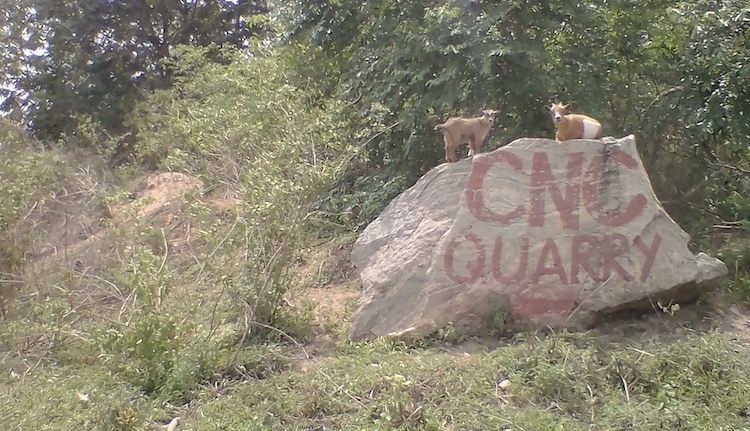
By rural standards, Patrick is a big shot. More so that he was the one that sold his family portion of the communal land to the company—CNC Quarry Nigeria Limited.
Whatever the amount of money that changed hands eight years ago when he leased the rocky land to CNC Quarry Nigeria Limited, —it didn’t enrich the larger family. Nor did the cash, which the villagers estimated at N10 million, better the lives of the communities. It is conceivable that this amount is all the villagers would ever get for the degradation of their environment and destruction of their sources of livelihood. The benefits in the CDA, the villagers assumed, have been factored into the lump sum which Patrick endorsed.
Other than its failure to renew its second five years’ plan of the 10-year lease agreement, which now landed both the community and the company in court, CNC is not a bad company, as far as some of the community leaders can tell. Patrick could even swear by his ancestors that the Chinese company has been fair enough to the communities. But older villagers and the youths at Itesi and Oguntolu think otherwise.
About 10 years of inhaling granite particles, feeling your heart pound as payloads of explosives go off now and then, and watching your relatives working on the quarry have accidents and die are no pleasant experiences. The locals believe, in their heart of hearts, the CNC owners are unfair to them.
Environmental health experts say some health conditions relating to mines, especially air pollution, have a latency period. Dust-related conditions, like asbestosis, for instance, take 10 years or more before showing any symptom. Ignorance of this makes it confounding to the villagers who know they are dying but can’t pinpoint what is killing them softly.
The UI researchers, in their survey, identified a number of illnesses common across the Odeda quarrying communities. A major symptom of pollution-related ailments noticed by the researchers was coughing, then asthma, rash, eye problem, and body ache. Some of the villagers could not link the sicknesses to the pollution in their environment. Instead, the villagers thought the diseases were acts of God.
As they advance, things get complicated. Granite dust banked up inside, according to occupational physicians, presents silicosis, tightness of the chest, respiratory problem, and heart problem. All of these are deadlier than runny noses and minor aches the victims experience early on in their exposure.
Not many of the villagers, however, seem interested in the pathogenesis of their health problems.
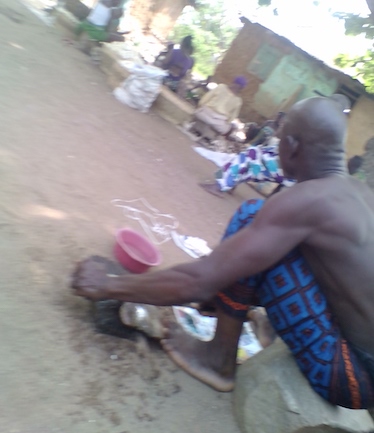
PaAkanni, a community leader at Itesi, said those dying amongst them show no worse signs than those of any sick human. “But what we are inhaling here is enough,” he said. “Who knows?”
The matron of the Primary Health Centre, Orile Ilugun, said the centre had no record of any respiratory health problems—or air-pollution-induced sicknesses—from the town and its neighbouring villages. Not because there is none, really. “They just don’t come here,” she told the reporter, adding they prefer to go to drug sellers in town.
Ben Pharmacy
Akanni confirmed this to be true. Since there’s no clinic, community people usually go to get treatment from one Dr. Ben at Orile Ilugun.
Well, Ben didn’t exactly look like a doctor when the reporter met him. He was more of a village know-it-all as he sat amongst his friends in a shop across the road. He is educated, to be sure. He speaks good English, as good as any other southeastern Nigerian living in a Southwestern village. He is also friends with a CNC’s Nigerian manager whose name is Marsi.
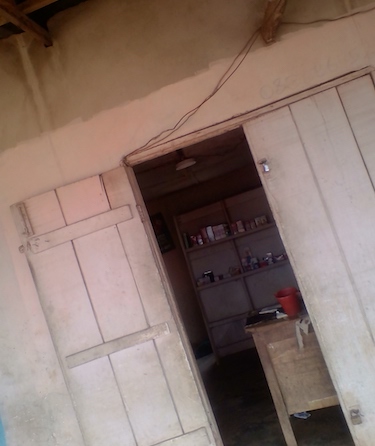
Ben’s drugstore, a small shop that had a quarter of its space partitioned with a wooden shelf, boasted of few drugs. The closed section might just be ideal for privacy if he had to give a shot of injection to locals he considered sick enough.
He said there had never been a case of respiratory problems resulting from inhaling quarry dust brought to him. “I don’t think those are common here,’ he said. “The Chinese owner of the CNC are actually trying,” he launched into an image-burnishing report. “They wet the road regularly. They give the communities scholarship. They give them bags of rice and money every Christmas.”
About the CDA that might have ensured the five communities had at least a clinic, Ben said that wouldn’t happen. “The heads of these families collect money from the Chinese and share it amongst themselves.”
The absence of a clinic for the quarry communities obviously creates a need. Meeting such needs brings Ben brisk business—at least those cases he can take on. But there have been emergencies a drug salesman like him cannot handle.
According to Akanni, a young man from Oguntolu who worked for the CNC was crushed by one of the company’s dumpers. He died before they could take him out of Itesi. His father, known as Baba Carpenter, a bedridden man of about 80, was still alive when the reporter sought him out for an interview.
He couldn’t explain well how it all happened and all that followed the incident. The villagers didn’t want to confirm or deny the story either. The reporter, however, gathered that he was offered N400,000 as compensation for losing one of his two children.
The chairman of Oguntolu, Lamidi Shotunde, a hoary-haired man in his 80s, lamented the neglect by the CNC. He explained how the tremor from rock blasting keeps tearing down their huts, and the toll the dust and blasts take on their health. “When our people eventually fall sick, they go to Odeda,” he said.
Oguntolu’s community leaders know neither about the CDA nor the possibility of a clinic, amongst other benefits, the agreement guarantees. So there was no forcing the issue. They have even concluded nothing good can come from CNC.
“Those people refuse to do anything as their blasting destroy our houses—now you are talking about the agreement and a clinic,” Shotunde said.
Another victim, Apostle Atanda, was amongst CNC’s truck drivers. He probably had had his gut scarred with hardened granite dust. At some point, he started coughing out blood. These were life-and-death situations worsened by lack of a single health facility in a cluster of no fewer than five communities. The villagers said no sick or injured worker is allowed to use the CNC clinic.
One of the Chinese owners of CNC who the reporter contacted by phone April 17 didn’t respond to the question on how the quarry owners have shown concerns for the health of the villagers. He gave no response either to the question of violating the Mining Act that provides for the CDA.
“I am not in Nigeria,” one of the directors identified as Jesse told the reporter. Pressed further, he disconnected the phone, leaving the caller at the mercy of a Chinese answering machine.
While Jesse is one of the known directors of CNC Quarry, its registered owners are Li Bin and Li Lin Lin, both living at 25, Xien Hu Village, Yun Yany County Chong, Qing, China. The company’s secretary,is, however, is a Nigerian: Mbalisi Charles, of Suite 4, Orji Kalu House, Jahi Road, BanexJunction, FCT, Abuja. The N10m-share capital business was registered in 2007, with the office address at 15, SerikiAro Street, Ikeja, Lagos. However, there is no quarry company in any of the apartments in that three-storey building. A Chinese travel agency just moved in sometime in May, according to a resident. Not much is known about the company’s annual report either. The last time CNC filed its annual report with the Corporate Affairs Commission, CAC, was 2012, two years after its registration.
This zero-sum contract is not just a CNC problem. It’s a custom among the quarry owners—from Odeda to Obafemi-Owode. There is nothing—not one brick of a structure—any of the over 50 companies put down for a clinic in any of the communities where they (miners) have hit pay dirt. They just got their licenses, paid the landowners some pittance, moved in, mined out the areas, made all the money, and left the environment and devastated the health of the communities.
Some even operate illegally. No fewer than 28 of the quarries registered by the Ogun cadastre office to operate in Odeda and ObafemiOwode LGAs carry on business with expired licenses.
FW San He Concepts, a Chinese companying quarrying granite, for instance, is still operating at Orita Ijaye, Odeda, with a license that expired in 2015. The company has another quarry in Obafemi-Owode.
Its owners are Hu Tianebg of 19-6-302, Penglai of Rd, Dinghai Area Zhoushan, ZheiJiang, China, and Fasiu Oke of 1/2, Onijoko Street, Off Abiola Way, Abeokuta, Ogun State. Oke’s shareholding was just N500,000 of the N10 million capital base.
Since its registration in 2007, it only filed its annual reports between 2008 and 2013.
From a detailed search at the Corporate Affairs Commission in Abuja, it’s apparent that all of these dodgy quarries are Chinese-owned. Except for 24 Hours Mining Company Limited. It’s a family business managed by Mahamoud Adamu resident at 6 Anthony Ukpo Crescent, Abraham Adesanya Close, Apo Legislative Quarters, Abuja. The quarry is a family business. It started with a share capital of N1m the Mahamouds raised when it was registered in 2011. Nothing more is known about the quarry. Not even its annual report, according to the report of a CAC search.
Annual reports do not only contain financial details of company assets and liabilities, but it also carries reports of its corporate social responsibilities and host community development activities. These reports would have shed more light on the CDA compliance—if they had been available.
Just as they slip off the grasp of the industry’s regulators and operate without any accountability to the authorities, so the miners also dodge their responsibilities to their hosts. These are small communities of peasants whose health and wellbeing, ravaged by quarrying, could have been improved had the community development agreement been drawn up and implemented.
Instead of taking the CDA seriously, the quarry owners would rather play do-gooders.
“They give each village two bags of rice, two gallons of oil, and N10,000 every Christmas,” Akanni said of CNC’s gifts to Itesi and Oguntolu communities whose combined headcount stands roughly at 300. He also admitted they gave them a borehole and offered their youth scholarship to the tune of N200,000 for 20 youth annually. It is like a windfall, and the entire community, youth, and adults, usually share it. “Some get N3000; some N2000,’ he said.
PWD, Gilmor, both construction giants, have stopped their quarrying operation since they finished the construction projects for which they needed stones. Oba Quarry Nigeria Ltd, which the villagers said belonged to former President Olusegun Obasanjo, has also left the site. But the impact of their quarrying and the sustained activities of the functioning 24 Hours, FW, and CNC cannot be wished away. None of them ever considered mitigating this impact on the health of the villagers. Nor did they draw up any CDA with their hosts.
“They don’t even care there are human beings here,” said a woman at Jagun whose baale denied they fell sick in that community. “Look at the water we drink here,” she pointed at a bucket half-filled with water the color of leaves.
Situations here and at Elejigun smack of recklessness by the FW and 24 Hours. The companies have never been in any way responsible to the villages, according to their leaders.
At least CNC and other companies that grudgingly gave boreholes and food items could label their gesture corporate social responsibility. The CSR, though, is no excuse for the quarry owners ducking the CDA—or even breaching its terms, supposing such agreement exists.
Being socially responsible is one good thing any quarry owner may choose to do, said Olalekan. “But the CDA is not negotiable.” Bigger companies that are more socially responsible still commit to community development agreements.
Blame the victims
Olalekan said that Lafarge, a cement giant in the state, is one company that has been a good corporate citizen going by its donations and social contributions to its host at Ewekoro. Even at that, he told the reporter, there were issues in their CDA that both had had to bring to the commerce and mines commissioner for settlement.
“That shows the Ewekoro community is enlightened enough to know about the CDA,” the geologist confirmed. Unlike those across the Odeda and Obafemi-Owode areas who were just getting to hear about it from the reporter.
“We have carried out enlightenment campaigns, telling them to always contact us when those foreign investors come so we can guide the host communities through the CDA process and other benefits,” he said. But the communities like to keep the government out of it; they want to keep the money investors initially pay them.
“There’s nothing we can do in such a situation where there’s no CDA, except they come to report it to us.” That’s not common, though. That is at the state level.
The Nigeria Extractive Industries Transparency Initiative (NEITI) can only watch as the quarry operators continue to plague unwary host communities. Enforcing Section 119 of the Mining Act is not the responsibility of the NEITI, but the Mines and Steel Development Ministry in Abuja, Orji Ogbonnaiya, Director of Communication at NEITI, told the reporter.
The Federal Ministry of Mines and Steel Development has cadaster offices across the nation to monitor mining activities. The officer at the Abeokuta office, one Engineer Ola, was said to be out in the fields when the reporter went there April 12. He didn’t answer questions sent later—on how the cadaster office is enforcing the CDA sections of the Mining Act, and whether the ignorance of the host communities should keep them in perpetual exploitation.
Ola merely thanked the reporter for the concern and observation.
“I am going to pass the information to my superior for necessary action,” he said in response to a text message sent to his phone line on April 17.
And the headquarters office, contacted earlier, would not respond to similar questions mailed to them, particularly on what can be done to help the communities who are ignorant of the CDA and its benefits.
It is clear the cadaster office is struggling to articulate its response to the questions. Which more or less means nothing is being done, and nothing may be done about the exploitation and suffering of the villagers.
That’s almost unthinkable. But it’s the reality discovered by the reporter. Communities like those visited by the reporter in the course of the investigation are off the radar of government in Abuja. Edward Opara, Director of Information at the Ministry of Mining and Steel Development, betrayed how clueless the federal authority is about the sufferings of the rural dwellers in Odeda and Obafemi-Owode LGAs.
When the reporter approached him with questions June 17, Opara simply owned up. He said the communities groaning under the terror of reckless miners in Ogun State are not known to him as the head of the press and public relations in the ministry. He, however, promised to take the issues to another director who can offer answers to the reporter’s questions.
Two weeks later, the reporter was still waiting for a response, despite a series of text messages as reminders.
“Sorry my brother, am in Jos for a week program. I will find out when I get back next week,’ he said in one of his replies.
Another week gone, Opara still didn’t have any explanation ready for the terror miners are unleashing on their hosts in Ogun. He wouldn’t even pick his calls either. On 3rd July, however, he eventually responded to a text message the reporter sent two days earlier.
“Good day my brother. The director in charge of the department wants to come there and see things to enable him take an appropriate decision. He needs the specifics,’ he wrote.
Public officers in Nigeria are notorious for evasive tactics if they do not have answers to question or are unwilling to provide any.
But if the federal regulator is slack in enforcing the mining law, how far can it go when it comes to charters like the UN Guiding Principles on Business and Human Rights? The principles mandate states to make laws and formulate policies that will be enforced to make companies live up to their responsibility in protecting human rights. Nigeria’s federal ministry of solid minerals has failed here.
And te regulatory failure is good for the quarry businessmen. By pressing home the ignorance of their hosts, they continue to break the mining law to increase their bottom line.
The victims, ultimately, have to take the blame for their suffering. And nobody is going to help them.
*This investigation was done with the support of Ford Foundation and the International Centre for Investigative Reporting, ICIR.
AFTER a three-story building collapsed in Jos, Plateau State capital, on Monday the National Emergency Management Agency (NEMA) has confirmed the death of 14 people, NAN has reported
Nurudeen Musa, head of the search and rescue operations of NEMA in the North-central disclosed the casualty figure on Tuesday.
The building collapse also took the life of the owner, Kabiru Nalele together with his two wives.
Apart from the 14 deaths, Musa said four people were injured and currently receiving treatment at the Plateau Specialist Hospital and Bingham University Teaching Hospital.
He said a joint rescue operation is being carried out by a team from NEMA, State Emergency Management Agency (SEMA), the International Red Cross and security agencies.
Residents of the area said the building collapsed occur after three days of heavy rains that rocked Jos North. When it happened, many people were reported to have been trapped by the ruins.
Building collapse leading to deaths and serious injury is becoming more frequent in Nigeria.
Earlier in March, a three-story building in Ita-faji, Lagos housing a nursery and primary school collapsed and claimed the life of 16 people, while many were seriously injured.
The collapsed building was reported to have been marked for demolition a number of times, but the demolition was not carried out until it came down on March 13.
Also in Portharcourt, Rivers State, a seven-story building under construction collapsed in November 2018 resulting in the death of several people. The building was said to have been constructed illegally.
A report published by the ICIR on March 22, confirmed that NEMA lacks heavy machinery needed for emergency rescue operations.
BARELY seven days after the Senate summoned the Nigerian envoy to South Africa on the alleged murder of late Elizabeth Ndubusi-Chukwu, a Nigerian, the South African government on Tuesday says the incident has been prioritised.
Mr Bobby Moroe, the South African Acting High Commissioner to Nigeria, disclosed that investigation has commenced, adding that video footage has been obtained from the hotel where she lodged after alleged initial reluctance by the hotel to cooperate.
An autopsy on the deceased proved that the late mother of two was actually killed, as she was reported to have died an unnatural death.
The late Ndubusi-Chukwu, who was the Deputy Director-General of Chartered Insurance Institute of Nigeria (CIIN), was killed last month in South Africa at the Emperor Palace Hotel, Johannesburg where she lodged while attending an international conference – African Insurance Organisation.
The death has however raised public outcry on the increasing Nigerian casualties recorded in South Africa. Unconfirmed reports further put the figure at 127 in the last three and a half years.
Governor Willie Obiano of Anambra State challenged the Federal Government to tackle the matter and unravel the ‘root’ cause, ‘no matter the cost‘.
The ICIR earlier reported the demands by Nigerians home and abroad for justice over the death. They also condemned the Federal Government’s slow response to activating investigation.
Former Chairman of the National Human Rights Commission (NHRC), Prof. Chidi Odinkalu, in particular, has tackled leadership of the Nigerian Diaspora Commission, chaired by Abike Dabiri-Erewa for being slow on the incident.
Lawyers under the aegis of the Anambra State Indigenous Lawyers Forum yesterday protested outside the premises of the South African High Commission in Victoria Island, Lagos over the killing.
Victims of rape hardly get justice in Nigeria. Oftentimes the miscarriage of justice happens because law enforcement officers compromise. ‘Kunle ADEBAJO reports.
“Sorry sir, this amount that they told me, I don’t have up to that o,” Nanpon Julius pleads after exchanging pleasantries and introducing himself. He is on the phone with Okokon Udo, a state prosecution lawyer working with the FCT Criminal Investigation Department, CID.
“How much do you have?” the lawyer asks in a deep, booming voice.
“I have N10,000 with me now. Someone gave me N5,000 and I’ve had N5,000.”
“Okay, bring it. But it won’t be enough, you’ll have to add another N10,000. Let’s work on something. I’m in the office,” Udo says hurriedly. For emphasis, he adds: “You go add another N10,000. Come, I’m in the office, ehn?”
JULIUS, a logistics officer for a food delivery startup in Abuja, discovered two months ago that his daughter, who is only three years old, has been defiled. She had complained of pains in her wee-wee (vagina) and checks at Maitama General Hospital revealed that her hymen is broken.
When he asked her who was touching her private parts, she answered “papa”. Papa is one of Julius’s neighbours, living on the floor directly above his at their residence in Katampe Extension.
Alarmed, he rushed to Gwarinpa Police Station to file a complaint. The police insisted on having test results from the Federal Staff Hospital. After the test, the doctor also confirmed injury on the hymen, but the test results would take three days before they are released.
On May 13, the police swiftly arraigned the suspect before the Upper Area Court, Zuba—nearly 30km away from Gwarinpa Estate. Oddly, this was before collecting the test results from the hospital, which were available later that day, and before speaking at all to the victim of the crime.
“They told the chief judge there’s no evidence on the case,” says Julius, who was also at the hearing. “And they didn’t investigate the matter. They took a statement from me and the witness I have, but they never questioned the girl to ask who molested her. There was nothing like that.”
Wanda Ebe, the founder of Wanda Adu Foundation, an NGO aimed at eradicating violence against the girl-child, was also at that trial. She tells The ICIR no one was at the court till past midday, though the proceedings were supposed to start by 9 am.
“The judge was not there, nobody was there,” she says. “We sat down there for hours. Nothing was happening. In fact, the cleaners started sweeping the courtroom by 11 am… before putting things in place one after the other. Then, taxi drivers were bringing in suspects on chains.”
Unsatisfied, and suspecting malpractice, Julius complained to the Centre for Transparency and Advocacy, which immediately contacted the Commissioner of Police. The COP, Bala Ciroma, then instructed that the case be withdrawn from the court for further investigation.
From incompetence to extortion
Things started to look good after the case’s withdrawal on June 19 and transfer to the state CID. A fresh investigation commenced soon after—in fact, the day after the hearing, June 20.
“They even came to my house and interviewed the girl; she mentioned ‘papa’,” Julius recalls.
“They asked who papa is and she described and pointed at him. They asked where he’s living. They climbed the stairs and she showed them his room. They were taking videos of everything. After that, they left. They said since I’ve given my statement and my number is with them, I should hold on, they would call me.”
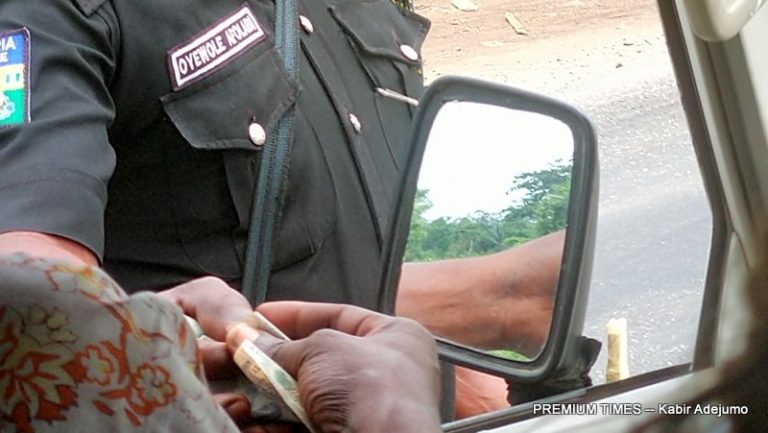
But that is not all. Before the officers left, they asked for money—N5,000. They said N3,000 is to type a report, and N2,000 to cover transportation expenses. Julius gave it to them.
When he called three days later, he was told the case has been pushed to the legal department for additional investigation.
“On Friday [July 5], I had a call from one of the barristers at the legal department,” he says. “He said I should come [as] they want to charge the case to court. I rushed to meet him. Then he, Barrister Udo, told me that I should bring N40,000 for casefile and signing …the chief judge will sign, this and that.”
Udo then asked how much he had with him but Julius asked to get back to him as he was not expecting to pay.
“Yesterday [July 9], he started calling me for the money, I said I didn’t have anything yet and will get back to him; someone has promised me.”
Acting on the advice of his spiritual leader, Julius went to the National Human Rights Commission where he was told not to pay a dime as it isn’t constitutional.
Okokon Udo. Source: Facebook.
Confronted with the allegation, Udo neither admits nor denies it. “Is that the work of your NGO?” he asks among other questions.
“Shut up. Shut up. Listen to me,” he says after he is asked again if he solicited money from the complainant.
“Is that the work of an NGO to make enquiries from police? Because you work as a journalist, you have to ask me bullshit questions? Is that supposed to be the purview of your duty?” the lawyer adds before eventually ending the call.
Called minutes later, he says he is “doing something for his boss” and should be contacted later but does not specify when.
Justice to the highest bidder
In 2017 the United Nations Office on Drugs and Crime (UNODC) released a report done in collaboration with the National Bureau Statistics. The study found the criminal justice system to be the most corrupt sector in Nigeria. Police officers, with a prevalence rate of 46.4 per cent, are most commonly paid bribes, followed by prosecutors, and then judges and magistrates.
“The experience of corruption in encounters with public officials whose duty it is to uphold the rule of law can lead to the erosion of trust in public authority,” the report observed.
The 2019 Global Corruption Barometer Africa report released last Thursday by Transparency International also confirmed the Nigeria Police as the most corrupt institution while the judiciary is ranked third.
Having to pay to get through the process of criminal litigation, which is the sole responsibility of the state, means poor Nigerians who are victims of sexual violence may never get justice.
The ICIRreported in June how Yetunde, an officer at the Nigeria Police’s Gender Unit in Abuja, asked the father of two underage rape victims for N50,000 to mobilise policemen and track down the suspect. Another victim of rape who was directed to a police station at Obalende, Lagos in January 2018, and spoke to the paper says she had to pay N8,500 to fuel a vehicle in order to arrest the suspect.
Ebe says not only do law enforcement officers extort those who complain of rape, but they also accept bribes from suspects to sabotage the case.
“The whole justice system is messed up,” she says. “Everywhere there’s corruption. It is only the rich so to say who can actually pay lawyers to pursue their case and see the end of it. But then, how many children of the rich are even raped? Most cases of rape and child defilement happen to vulnerable people in rural communities.”
“I have had a case of child defilement where the victim’s father went to the police and the questions the IPO [Investigative Police Officer] was asking him were: Who do you know? Who are your family members? Who is going to help you out on this case? Do you have money to pursue the matter?” she narrates in a displeased tone, referring to Julius’s case. “And the man replied that he is just a delivery guy with a monthly salary of N25,000 to N30,000.”
She says when they got the COP to withdraw Julius’s case, the IPO, Christiana Gloria, was infuriated. The officers also mocked the complainant, whom they had stereotyped as poor and helpless.
“Ah, so you even know people in civil society? So you even have people who can speak for you?” she remembers them asking.
“Their disposition is to take advantage of poor people or the fact that you don’t have anybody to pursue the matter for you. They’ll rather connive with the suspect, who’ll bring peanuts, and they will push the case under the rug. It is all about interest and what they get.”
Gloria says she has nothing to do with the case again as it’s been transferred to the state CID. She declines to comment on how well it fared before the transfer but says she did what she was supposed to do. Also, she does not deny that the victim of the assault was not interviewed or that the medical report was not presented as evidence in court.
When we asked Anjuguri Manzah, spokesperson of the FCT police command, if they are aware of such practices and what actions they are taking to curb them, he directs The ICIR to Frank Mba, the police public relations officer. Mba, however, did not answer his call and has not replied a text message sent to him.
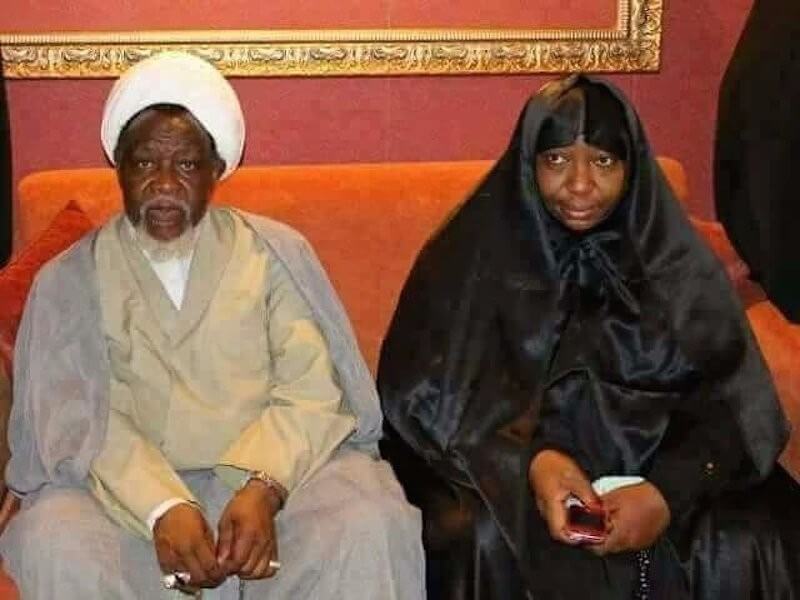
FOR the umpteenth time, Human Rights Lawyer and Senior Advocate of Nigeria (SAN), Femi Falana has advised the Federal Government to release the detained Shi’ites Islamic Group cleric, Ibrahim El-Zakzaky and his wife, Malama Zeinab El Zakzaky to avoid the likelihood of a fresh insurgency.
The lawyer asked for the cleric’s release for medical reasons, saying he already lost an eye.
“This nation cannot afford another war of insurgency which is being provoked by the contemptuous conduct of the federal government in the handling of the case of the El-Zakzakys,” says Falana in a report by The Nation.
In April 2017, Falana, in a public letter to President Muhammadu Buhari demanded the release of the cleric. The day coincided with the 500th day El Zakzaky and Zeinab have been in detention.
“In view of the commitment of your administration to end impunity in the country we urge Your Excellency to use your good offices to direct the State Security Service to release our clients from further incarceration in compliance with the orders of the Federal High Court.
“We also pray Your Excellency to direct the Nigerian Army to investigate and prosecute the military personnel responsible for the brutal murder of 347 members of the Shia Community at Zaria in December 2015,” the letter read in part.
“Should Your Excellency refuse to ensure compliance with the said orders of the Federal High Court we shall be compelled to embark on contempt proceedings against the Attorney-General and Minister of Justice as well as the Director-General of State Security Service. If the military personnel indicted by the Judicial Commission of Enquiry are not prosecuted we shall request the Special Prosecutor of the ICC to put them on trial for crimes against humanity.”
Two months after, the lawyer again petitioned the Vice President, Yemi Osinbajo also demanding for the release of his client.
In January 2018 Falana further demanded the release of the duo stressing that they were being held despite the Federal High Court order which ruled in their favour.
Meanwhile, in December 2016 the high court in Abuja ordered their releases from detention, saying the continued detention violates their rights and is against Section 35(1) of the constitution and the African Charter on Human and Peoples Rights.
Since December 2014 when the Islamic Movement of Nigeria (IMN) had a violent clash with the Nigerian military, the sect has repeatedly agitated for the release of their leader with the wife, while most of the followers were either shot, injured or arrested in the protests.
However, the Falana warned the sustained detention and killings of the El Zakzaky protesters by security operatives could unleash another form of insurgency the Federal Government has battled over the years.
According to him, over 1, 000 Shi’ite members were reportedly massacred by the military during the Kaduna incident, on order of the military chief over claims of an assassination attempt on the Chief of Army Staff, Lt. Gen. Tukur Buratai.
His words: “Without any autopsy or identification the slaughtered Shi’ites were given a mass burial in an unmarked grave in Mango village in Kaduna State. Even though the leader of the Shi’ites, Sheik Ibraheem Elzakzaky was not at the scene of the attack his residence was invaded by the rampaging troops two days later.
“The troops set the house ablaze, shot at Elzakzaky and his wife, Malama Zeinab Elzakzaky and killed three of their sons in cold blood in their presence. As if such barbaric assault was not enough the army arrested and held Elzakzaky and his wife in custody before handing them over to the State Security Service (DSS).
“At that stage, the houses of Elzakzaky and other leaders in Zaria were demolished by the Kaduna State Government on the orders of Governor Nasir El Rufai.”
Falana argued further that after the judicial commission of enquiry, set up by the state government to probe the massacre, it was established there was no plan to assassinate the COAS as claimed by the military.
File photo: The El-Zakzakys
According to him, findings by the commission showed that 347 Shi’ites were murdered by the military, an offence he said is against the Army Rules of Engagement and the Geneva Conventions.
“The detained Elzakzaky was prevented from responding to the allegations made against him and his group at the enquiry. But the judicial commission found that there was no plan by the Shi’ites to assassinate General Buratai.
“It was also revealed at the panel that 347 Shi’ites were massacred by the army in violations of the Army Rules of Engagement and the Geneva Conventions. Apart from condemning the brutal massacre of the Shi’ites, the judicial commission recommended that the culprits be prosecuted.
“Instead of implementing the recommendation by prosecuting the well-known murderers, the Kaduna State Government turned round to charge over 300 Shi’ites with the culpable homicide of a soldier who was killed by his colleagues during the attack.
“But the defence team convinced the Kaduna State High Court to free the Shi’ites as they were not involved in the commission of the offence. Accordingly, the charge was dismissed for want of evidence while the trial court proceeded to discharge and acquit all the defendants.”
“In particular, Elzakzaky has lost an eye while he is the process of losing the other one. The wife can no longer walk as a result of the gun wounds inflicted on her during the military attack of December 2015. Without adducing any reason whatsoever the federal government has ignored the recommendation of the physicians. The Shi’ites are currently protesting the refusal of the Buhari regime to release Elzakzaky and his wife from custody to enable them travel abroad to receive urgent medical treatment at their own expense.
“Elzakzaky must not be allowed to die due to medical neglect as it may provoke a crisis of monumental proportions. Therefore, the federal government should implement the unanimous resolution of the House of Representatives for the release of Elzakzaky and his wife without any further delay,” says Falana.
FOLLOWING the death of Kabiru Ismail, a top government official in Zamfara State, during last Sunday kidnap, Governor Bello Matawalle says he is meeting with his counterpart in Kaduna, Governor Nasir El-Rufai to ensure the safety of commuters across the states.
Matawalle disclosed this while reacting to the kidnap, which also involved abduction of the Director of Budget, Alh Hamza Salihu alongside a female passenger, who was reportedly shot at the leg and left in the pool of her blood at the crime scene.
Ismail, until his death was the Zamfara State Deputy Director in charge of budgets.
The officials were reportedly kidnapped near Kachia in Kaduna State while on their way to Akwanga, Nasarawa State on official function.
Yusuf Idris, Director-General of Press Affairs to the Zamfara State governor, in a statement in Gusau, confirmed the incident, stressing the governor’s resolve to address security officials in the state, with a view to apprehending the perpetrators and ensuring the release of the abducted.
“It is very unfortunate that while efforts are being strengthened to stop armed banditry, kidnapping, cattle rustling, and other crimes peacefully without any bloodshed, some bad elements who have chosen to remain unrepentant will still use security uniforms to stop and kidnap unsuspecting law-abiding citizens.”
There have been several reports of attacks, killings, banditry, and kidnapping in Zamfara in recent time.
In early March, about 113 people were reportedly killed in one week.
On 2nd June, the governor said the state might consider implementing death penalty law for armed banditry informants, after agitations from local vigilante groups for a death penalty for the bandits in the state.
The next day, Matawalle’s convoy was attacked along Lilo community, on the outskirts of Gusau while on his way to sympathise with victims of the previous attacks.
Thirteen days after, the governor met with security experts in Dubai to help address the insecurity situation in the state, yet cases of kidnapping, banditry, and cattle rustling have not ceased.
Data from the Council on Foreign Relations (CFR) Nigeria Security Tracker (NST) shows that between May 2015 to July 2019, 2,317 people have been killed only in Zamfara State. The data which captures the death incidents nationwide also revealed that 28, 637 casualties have been recorded in the country from May 2011 to date.
Meanwhile, the governor has expressed grief in the death of Ismail who lost his life in the hands of the kidnappers. He has condoled with the family of the deceased.
DATA from the Council on Foreign Relations (CFR), on Monday, showed that 28,969 Nigerians were killed from May 2015 till June 2019.
The data captures weekly the number of casualties, who lost their lives due to various causes, ranging from insurgency, herdsmen attacks, communal clashes among others.
Based on deaths by states represented on the maps, Borno State has the highest number of casualties, followed by Zamfara, Benue, Adamawa and Kaduna state respectively.
Deaths per month, however, showed that 6,323 causalities were recorded in the country from May to December 2015. In 2016, the number of casualties dropped to 5,763. The following year, specifically in 2017, it further declined to 4,618 while in 2018, deaths recorded rose to 6,565 people.
On Sunday, July 14 the ex-President Olusegun Obasanjo wrote an open letter to President Muhammadu Buhari, where he warned of imminent “dismemberment of the country,” if urgent action is not taken.
In the first half of 2019, the security tracker has recorded 5, 700 deaths, a figure higher than the combined number of deaths in 2018.
In January there were 1,077 casualties, 877 casualties were recorded in February, followed by 1,014 in March. In April, 1,072 deaths were recorded, 769 in May and 891 in June.
Due to an upsurge of insecurity in the country, the platform commenced monitoring of causalities on May 29, 2011, the very day former President Goodluck Jonathan was inaugurated to govern the country.
Similarly, some of the flash locations highlighted by the CFR were also reflected by the Armed Conflict Location and Event Data Project (ACLED), an international organisation which collects data on violence, fatalities and their locations across Africa, Europe, the Middle East and other regions of the world.
According to ACLED, 30, 805 Nigerians were killed between 2015 and 2019.