ON Friday, the Supreme Court in Abuja upheld the electoral victory of Gboyega Oyetola candidate of the All Progressives Congress, APC, in the 2018 Osun governorship election.
Justice Bode Rhodes-Vivor, who delivered the judgement of the seven-man judge’s panel gave a split decision with five votes in favour of Oyetola while two consented to Ademola Adeleke of the Peoples Democratic Party, PDP.
The apex court nullified the judgement of the tribunal that declared Ademola Adeleke as the winner of 2018 Osun Guber polls but agreed with the decision of Court of Appeal to the March 22 judgement of the Osun State election petition tribunal.
The appellate court ruled that the judge who had read the majority judgement at the tribunal, Peter Obiora, was evidently absent on February 6, when vital documents were presented before the court.
The Supreme Court set aside the entire proceedings of the tribunal and affirmed the election victory of the APC’s candidate.
After a rerun election in September 2018, the Independent National Electoral Commission, INEC, had declared Oyetola winner of the Osun governorship election.
Adeleke, filed a petition at the election petition tribunal to contest the victory of Oyetola of the APC which the tribunal ruled in favour of the petitioner as the winner of the September 2018 election.
The Osun tribunal in a split judgment of two to one ruled that INEC was wrong to have ordered a rerun election and nullified the rerun.
In May, the Court of Appeal in its verdict in a split decision of four to one ruled that the judge who issued the majority decision at the tribunal, stated that Peter Obiora, a panel judge of the tribunal was absent on February 6, 2019, when a major discussion on the issue of none-compliance was before the tribunal and could not have shown objectivity in his judgement.
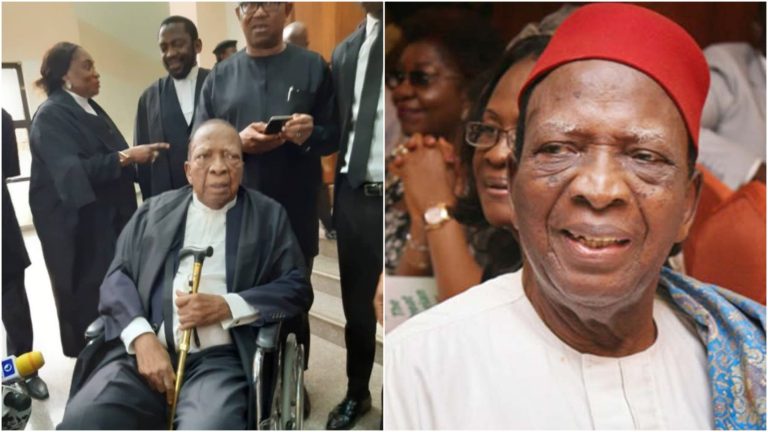
PROF. Ben Nwabueze, 88, and first lawyer from academia to become a Senior Advocate of Nigeria (SAN) has emerged leader of the petitioners’ legal team of Alhaji Atiku Abubakar, the presidential candidate of People’s Democratic Party (PDP), at the on-going Presidential Election Petition Tribunal (PEPT) in Abuja.
The legal luminary and elder statesman appeared at the presidential election tribunal, Thursday to throw his weight behind the former Vice President Atiku.
Nwabueze had earlier in November expressed. hope that Atiku would drive the nation to greatness. “I will not die until you (Atiku) become president.”
But that hope was quashed with the outcome of the presidential election.
Atiku has however contested the credibility of the poll where he was announced by the Independent National Electoral Commission (INEC) to have scored 11, 262, 978 as against President Muhammadu Buhari, the declared winner, who polled 15, 191, 847.
The European Union (EU) in a report had also declared that the election was marred by irregularities, a statement that casts doubt on the integrity of the election result.
Nwabueze is among those who believe that the integrity of the 2019 election was compromised and that the restoration of justice to the actual winner of the election is a duty of the court.
At the hearing on Thursday, the legal titan who was brought in through a wheelchair was granted access to address the tribunal while seated. Reading a prepared speech, he told the tribunal that his presence was necessary considering the significance of the case to the nation’s democratic development.
He later yielded the stage to Mr Levi Uzoukwu to announce the rest of the legal team and took his leave 30 minutes after.
Professional Career
Born on December 22, 1931, in Atani, Ogbaru Local Government of Area of Anambra State, Nwabueze commenced his primary school in CMS Central School, Atani from 1938 to 1945, proceeded CMS Central School, Onitsha from 1947 to 1950.
In a citation published by Hallmarks of Labour Foundation, an organisation established to recognise societal role models in Africa, Nwabueze later proceeded to the London School of Economics and Political Science, University of London, 1956 – 1961 and School of Oriental and African Studies, University of London, 1961 – 1962. From 1962 – 1965, he was Senior Lecturer at Holborn College of Law, London, and Senior Lecturer, University of Nigeria Nsukka, between 1967 – 1970. In 1971, he was Dean, Faculty of Law, University of Zambia and Director, Law practice Institute, Zambia, 1973 – 1975.
Three years after, Nwabueze earned his Doctorate degree in Law at the University of London. He eventually rose to become a member of Senate in Nigerian Universities and abroad including the Universities of Lagos, Dar-es-salaam, Nairobi, Haile Selassie in Ethiopia, Lesotho, Botswana and Swaziland between 1971 – 1978.
He is renowned to have published several books and ultimately for his contribution to the nation’s constitution and the legal system.
Nwabueze is also celebrated and recognised for singlehandedly drafting Kenya’s constitution which enabled the country transit from the one-party system to multiparty democratic system of government.
A strong advocate for a better Nigeria
When he clocked 82 in 2013, Nwabueze prayed at the presentation of his two-volume autobiography that he gets an extra five years to fulfil his purpose of uniting Nigeria.
Though Nigeria’s cultural diversity has been described as a blessing in disguise, he blamed her political and economic woes to what he termed “conflict of cultures”.
“The colonial culture had over the years wanted to wipe-off our traditional culture, which it has described as unworthy. Our pre-occupation today is to see how we can solve this problem; how we can unite the 389 ethnic groups that we have in Nigeria.”
Through the Project Nigeria Movement, set up by the elder statesman, he advocated for greater Nigeria, restructuring, constitution review as well as a review of minimum qualification to Bachelor of Science or equivalent for prospective presidential aspirants in the country.
“We need to experiment on a coalition government, otherwise called the unity government whereby whoever wins the presidential election will constitute his government with members drawn from all the parties that contested the presidential election in a manner to be agreed under a formal accord.
“Without prejudice to the provisions of the constitution, effective presidential leadership requires a president with a good and sound qualification, up to a minimum level of a university first degree or its equivalent with the academic knowledge, intellectual insights and mental orientation, ideas and perceptions in parts. He should have an ability to combine ideas and power intellectualism and politics,” he stated.
A critic of President Buhari, says the president is not a born-again Democrat
Nwabueze has never been a fan of President Muhammadu Buhari reasons best known to him. And at various public functions, and interviews, he took his time to share some of his reservations for the president and why Buhari could do more to unite the nation.
This position has been tightly contested but he remained resolute.
First, Nwabueze said being a former General in the Nigerian Army, Buhari was used to giving orders and as such the president would expect all of his orders obeyed unmindful of the current democratic setting.
He despises the “poor capacity” of the president to secure the country, especially his failure to disarm the alleged herdsmen attackers among other concerns.
The legal scholar wondered why the president, in his anti-corruption drive, seeks an alliance with the Saudi-Arabia.
“We are all against terrorism but don’t make it a religious issue. This country is not a Muslim country, it is not a Muslim state. He does not need to drag Nigeria into the coalition. Nigeria is not a Muslim state and that is why CAN in the North is up in arms over that. The opposition by CAN in the North is not enough, CAN all over the country should be up in arms as was the case when Babangida took the country to Organisation of Islamic Cooperation (OIC). I am surprised that the reaction so far has not engulfed the whole country.”
Nevertheless, Nwabueze has never spared the previous administration. He had taken to task the former Presidents Olusegun Obasanjo and Goodluck Jonathan who, he said, lacked the will to fight corruption.
He has advised President Buhari to admit that the nation has never been so divided until he came to power due to his statements and actions capable of tearing the nation apart.
“Since the 1967 civil war, I do not think this country has ever been as divided as it is now,” he stated.
IN SPITE of the overwhelming proportions of damages to farmlands, air, and water resources observed in Ogoniland by the United Nations Environment Programme (UNEP), the international organisation concluded in its 2011 report that all hope was not lost.
Though it may take between 25 and 30 years, “environmental restoration of Ogoniland is possible”, the report says. UNEP explains that, “the report contains numerous recommendations that, once implemented, will have an immediate and positive impact on Ogoniland”.
What UNEP recommended
Among the actions recommended by the United Nations agency are what they call emergency measures. These are eight in number and “from a duty of care point of view, warrant immediate action”. The government, it says, should ensure all drinking wells contaminated by hydrocarbons are marked to prevent further use, and provide adequate sources of drinking water to affected communities.
It also recommends signs are posted around all sites with contamination beyond intervention levels and around contaminated surface waters to prevent fishing and bathing. There should be a public awareness campaign against artisanal refining, and families whose rainwater samples tested positive to hydrocarbons should be discouraged from drinking from it.
The report further advises for the curbing of all sources of ongoing contamination, including artisanal refining in the creeks, before cleanup of the creeks, sediments, and mangroves can start. The swamplands and groundwater should be restored; and the government should set up an Integrated Contaminated Soil Management Centre in Ogoni, to create jobs for hundreds, as well as a Centre for Excellence for Environmental Restoration.
Then again, there should be a comprehensive medical examination and treatment of community members and a public health registry should be established for the entire Ogoniland to monitor health trends.
UNEP recommends for the government to set up an Ogoniland Environmental Restoration Authority (today known as the Hydrocarbon Pollution Remediation Project, HYPREP) with an initial capital injection of $1 billion.
“The Ogoni community should take full advantage of the employment, skills development and other opportunities that will be created by the clean-up operation which is aimed at improving their living conditions and livelihoods,” it says.
“Restoring the livelihoods and well being of future Ogoni generations is within reach,” it concludes, “but timing is crucial.”
Staggering environmental pollution in Ogoniland.
Recommendation vs. implementation: two parallel lines?
The implementation of the report has not gone without great challenges. Top stakeholders in the kingdom continuously protest such shortcomings as the failure of HYPREP to consult the communities and carry them along, siting of cleanup projects (such as the Integrated Soil Management Centre) far away from the heavily affected communities, failure to execute the emergency measures bordering on empowerment, medical assistance and water provision, as well as perceived politicisation and marginalisation in the award of contracts.
A recent investigation, in fact, showed that a great number of the contractors have no remediation experience whatsoever. Some of the companies were set up for totally unrelated tasks such as “poultry farming, cars sales, textile dealership and fashion, palm-oil production, building design, and construction”.
The exercise has been described as slow, owing to tedious bureaucratic processes. There are also those who consider the UNEP report outdated since the condition of Ogoniland, between 2011 and the present time, must have worsened with oil spills and unregulated artisanal mining endlessly taking place.
Erabanabari Kobah.
“You are coming to start cleanup on oil that was found eight years ago,” observes Erabanabari Kobah, environmental scientist and chief executive officer of Citizens Resource Services. “I think there should be further studies to determine the extent of contamination at this point so you can effectively cater for it. If HYPREP did not go about any research, I wonder what baseline information they will hinge their activities upon.”
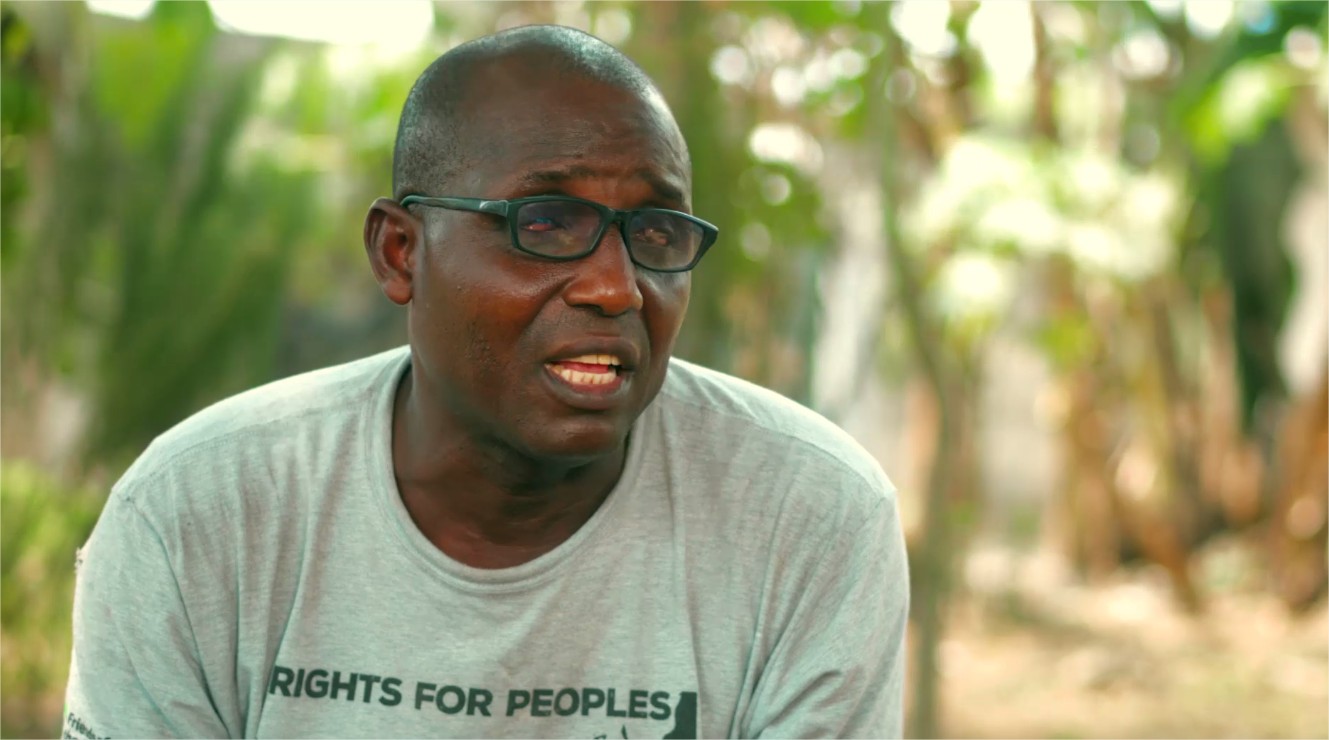
Summarising the key setbacks, former information officer of the Movement for the Survival of the Ogoni People (MOSOP), Bara-ara Kpalap, notes: “The UNEP report recommended what we call emergency measures. That is, before the remediation starts proper, there has to be some transitional measures like provision of alternative drinking water, health assessment of the people, placing of signposts at the areas that are badly contaminated and so on.”
“Currently, those transitional measures, nothing has happened to them. They have not been done till date,” he adds.
“Now, the communication linkage between HYPREP and the people is so poor, and because of that the people, particularly the rural dwellers, are in the dark about what is happening. They are not involved, they are not participating, and the people feel they are being excluded from the entire process. And, as a result of that, anger has risen in the area.”
He says even MOSOP, said to be the leading mass-based social movement of the indigenous people of Ogoni, has not been properly carried along by the project handlers.
Bara-ara Kpalap, former information officer.
NGOs to the rescue
Because of HYPREP’s inadequacy in fulfilling its mandate, a number of non-governmental organisations have had to fill what they can in the communication gap. One of them is the Kebetkache Women Development and Resource Centre, which creates awareness especially among women on what the cleanup is truly about.
“If you have gone to some communities, particularly in Eleme, Isisionken, those specifically mentioned in the UNEP report as having all their water bodies polluted, they turn up boreholes and then you can actually perceive diesel or kerosene from the water,” the founder, Emem Okon says. “Some of those communities claim HYPREP has not visited them, they have not been consulted, they don’t know what is going on.
“So that is why we, NGOs, take it upon ourselves, and also to campaign for peace because we know if there is no enabling environment for HYPREP to do what they are supposed to do, then the government will say community members did not give them access to implement the programme.”
Paramount rulers grumble
Traditional rulers in Ogoniland have also echoed many of the said challenges. Barisi Kpaama, the paramount ruler of Bara community and chairman of both the Gokana and Ogoni Councils of Paramount Rulers, observes that no proper HYPREP-led sensitisation has taken place at the grassroots, and says he doesn’t think the government is either ready or sincere.
If the cleanup isn’t done effectively, he warns, then it will lead to the gradual extinction of the entire Ogoni.
“The things that were required for the start of the clean-up appear to have been abandoned,” says the high chief. “We are fully informed that the UNEP recommended potable water for the Ogoni communities. But today that is not visible. The Centre of Excellence that was supposed to be built, we are not seeing it. And the world is hearing that UNEP Ogoni cleanup has commenced. It is funny to hear that.”
He adds: “They have actually entered into some communities, hoping to commence work. The paramount rulers are not aware. The youth are not aware. The people are not aware. So we see it as a calculated attempt to undermine the people of the Ogoni. And we also see that as a ploy, that maybe when there is a reaction the government will latch on that and say the place is not hospitable or conducive enough for them to carry on that job.”
Barisi Kpaama is the chairman of the Ogoni Council of Paramount Rulers
Mene Fabian Gbelesu, the paramount ruler of Keedere, similarly complains of HYPREP never reaching out to him. He says he even does not fully understand the implications of the cleanup. “I understand that if you enter your house, when you talk of cleaning, it is to make your environment clean. That is what I understand by it. But no person ever told me the details or the implications of it.”
He also says contractors will not be allowed into his community unless at least one or two of their conditions are met, including providing scholarship grants to students, youth empowerment, medical care, power supply, water supply, road networks, and so on.
“How do you think that we will be hungry and they will come to our community where they’ve never done anything?” he asks. “The whole community will vex for them … If they cannot do at least some of those things, they should not bother to come to our own community.”
We deserve some applause, says HYPREP
The various complaints nonetheless, Marvin Dekil, HYPREP’s project coordinator, insists the body deserves credit for its numerous successes. For starters, he says, HYPREP has introduced 16 companies for the carrying out of on-site remediation in the four local governments.
“I’m also happy to announce to you that I just came back from IITA, where we trained the first set of companies… youths, on their livelihood scheme in a partnership, tripartite arrangement between HYPREP, IITA, and SDA. So we have 15 Ogoni youth now undergoing training at IITA centre in Onne,” he reveals.
Since its project coordination office was set up in April 2017, HYPREP has organised training for 45 scientists from Ogoniland who take care of the bulk of the project’s technical work, he says.
It also plans to train 400 Ogoni women on agro-based livelihood schemes, in collaboration with the United Nations Institute for Training and Research (UNITAR). Dekil added that the project officers have continued to engage with the communities and robust sensitisation has taken place in different places in all four local governments.
Young fishermen in Ogoniland
The path to progress
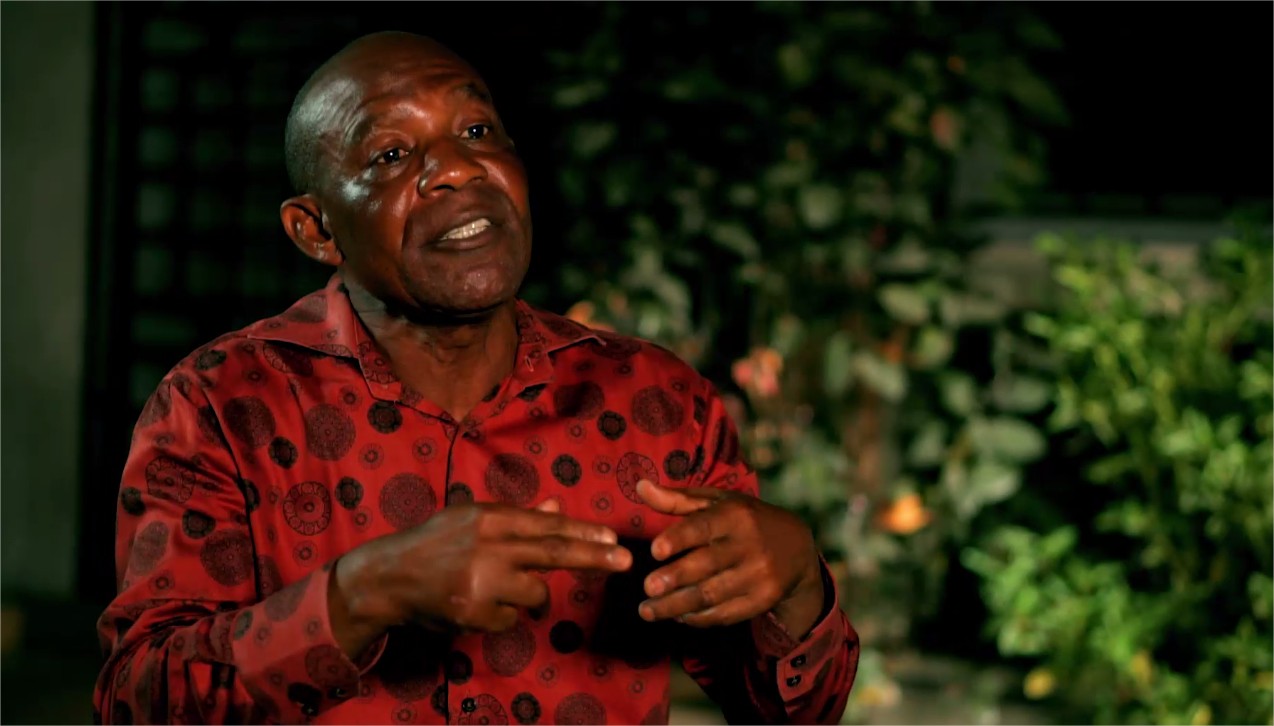
Kabari Sam, head of Environment and Conservation at the Centre for Environment, Human Rights and Development (CEHRD), believes the first step towards having an effective cleanup project is for HYPREP to immediately improve its communication strategy and mode of engagement. It also needs to vigorously strive for independence such that it is immune from the shock of administration changes, and as well work on a sustainable funding blueprint.
“We don’t have any document so to say that says that by August next year, NNPC, Shell, the refineries are going to contribute this amount of money for the next 25 years,” he laments. “There is no such document anywhere. And so Shell can decide to say, ‘Okay, this year we have not made that much profit so we do not have money to contribute to the clean-up process.’
“If we do not have that in place, we could have a sort of non-commitment in terms of finances from the government because up till now that we are speaking, the refineries have not contributed their part of the annual 200 million USD. So we are short of 200 million USD.”
He also recommends the drafting of Key Performance Indicators to be decided at a roundtable of all stakeholders and the setting up of an independent technical working group to monitor HYPREP’s activities and the performance of contractors. He stresses that everyone, including media organisations, civil society groups and community members have roles to play to ensure the project’s success.
Ken Ebiaridor, a project officer with Environmental Rights Action, an advocacy group, is confident that, with the right mentality, the cleanup can work. He believes the costs of failing are simply too enormous.
“If we don’t make this work,” he says, “then it may be that the Niger Delta will never be cleaned because this is a golden opportunity and we must put all hands on deck and ensure that it works.
“Let’s forget about the politics that people keep talking about, let’s forget that people have interests left and right, let’s forget that maybe the contractors may not suit one or two people’s profile or may not reach maybe those international standards we want; but we must make it work… it has to work.”
This report was developed using resources for a documentary produced by Oak TV.
THE trial of former Secretary to the Government of the Federation (SGF), Babachir Lawal and five others before Justice Jude Okeke of Federal Capital Territory, (FCT) High Court Maitama has been adjourned to September 18.
Lawal, his younger brother, Hamidu David Lawal, as well as Suleiman Abubakar and Apeh John Monday are facing prosecution by the Economic and Financial Crimes Commission, EFCC, alongside two companies, Rholavision Engineering (fifth defendant) and Josmon Technologies (sixth defendant) on amended 10-count charge, bordering on fraud, diversion of funds and criminal conspiracy to the tune of over N500million.
One of the charges reads: “That you Engineer Babachir David Lawal, while being the Secretary to the Government of the Federation (SGF) and a director of Rholavision Engineering Ltd on or about the 22nd August 2016 at Abuja in the Abuja judicial division of the High Court of the Federal Capital Territory, did knowingly hold indirectly private interest in the contract awarded to Josmon Technological Ltd but executed by Rholavision Engineering Ltd for the removal of invasive plant species and simplified irrigation to the tune of N258,132,735.99 (Two Hundred and Fifty Eight Million, One hundred and Thirty Two Thousand, Seven Hundred and Thirty Five Naira) only, by the office of the Secretary to the Government of the Federation (OSGF) through the Presidential Initiative for North East (PINE) and thereby committed an offence punishable under Section 12 of the Corrupt Practices and Other Related Offences Act, 2000.”
During the trial today, the first prosecution witness, Hamza Adamu Buwai, a civil servant with the Federal Ministry of Industry, Trade and Investment, who was the Head of Finance, Presidential Initiative for North East (PINE) under the Office of the Secretary to the Government of the Federation (OSGF) concluded his testimony .
Buwai told the court that there was yet another grass cutting project, which started in 2016, covering 250km, which involved irrigation on a motorised boat in Yobe State, along the river.
This contract, the witness said, was for N258 million, awarded to Josmon Technologies (the sixth defendant), with Rholavision (the fifth defendant) as the consultant.
Buwai further disclosed that after N225 million has been paid on the contract and with about 75 per cent of the work done, the first evaluation certificate was issued by Rholavision, adding that, “When the documents of procurement came to me for request for payment to the contractors for the sum ofN225million through the Permanent Secretary, Special Service Office in the office of the SGF, the approval was given and payment was made to Josmon Technologies and on completion of the project, a final evaluation certificate was given by Rholavision the consultant for payment in favour of Josmon Technologies.”
Buwai further revealed that for the payment of the remaining 25 per cent, two vouchers were issued in favour of Josmon Technologies with one capturing the sum of N182.95million and inclusive of N10.2million for withholding tax and N10.2million for value-added tax, while the other voucher captured the sum of N49.37million with N2.7million for withholding tax and another N2.7 for value-added tax.
He told the court that in the preceding project, the payment of N12.9million was raised by Rholavision to Josmon Technologies in its second evaluation and that it was paid excluding contingency. He informed the court that before the payment was made, the total contract sum was for N272million, while the first evaluation cost was N225million, including withholding tax and value-added tax of five per cent each.
Buwai explained that the reason for the difference in the evaluation sums was due to the contingency sum of about N35million in the project, adding that “that was why a payment of N12.9million was made,” observing that “the cost of two motorised boats was removed because the sixth defendant, Josmon Technologies indicated the use of some of our vehicles and we removed the difference of payment for motorised boats.” He added that a balance of 50 per cent to Rholavision was paid for consultancy.
The witness further informed the court that he raised the request for approval of payment through the permanent secretary and got the approval for the N12.9million paid to Josmon Technologies and N3.5million for Rholavision and that the payments were made through the GIFMIS platform.
Justice Okeke adjourned the matter to September 18 and 24 for the continuation of trial.
A candidate who took part in the 2019 Unified Tertiary Matriculation Examination (UTME) organised by Joint Admission and Matriculation Board (JAMB) is currently being held by the police for allegedly upgrading his result from 162 to 206.
Twenty- year- old Cletus Ayibantoye Kokowas who sat for the matriculation examination on April 11, 2019 in Yenagoa, Bayelsa State was paraded before journalists on Thursday at the Headquarters of JAMB after it was discovered that he engaged the services of a syndicate to falsify his result.
Cletus, however, ran into trouble after using the Board’s approved USSD code of 55019 to check his result and realised he scored 162 out of the total score of 400 and sought the services of a syndicate to upgrade the score to 2016.
The JAMBITE who was accompanied to the JAMB headquarters in Abuja from Yenagoa was cross-examined by officials of the Board who confronted him with documented evidence of his actual performance in the UTME.
He confessed that the syndicate had sent him a message that his result could be upgraded with certain marks if he could pay N10, 000.
The board’s record showed that he had checked his result using the USSD code on 15 occasions with all the datelines.
When asked to show the SMS he sent to JAMB to check his result, Cletus said it has been deleted from his phone, noting that the phone he used did not belong to him. But he however presented a screen shot of the 206 which the board said it discovered was an imposition of another figure.
“I didn’t know how it came about but they inbox me that they can really help me to upgrade my score,” Cletus confessed.
“I asked them if they can prove it. I sent them my registration number and email address that if they can do it, they should prove it.”
He said when the result was out and he checked it, “it was 206 then,” adding, “he called me that he had upgraded it that I should pay him the money, and I said I did not have the money.”
Cletus said he came to the JAMB headquarters to check the record if his score was 162 or 206, and if the syndicate was right or he was being fraudulent.
While he never told his father, Kokowa Honn Garen, of his arrangement with a syndicate to upgrade his score so that he could be admitted to the Nigerian Defence Academy (NDA), he insisted that the examination Board reduced his result from 206 to 162.
His father in a letter dated June 21, 2019, addressed to the Registrar of JAMB applying for the rectification of Cletus’ JAMB score also maintained that his son’s result was changed from 206 to 162.
Noting that his son checked his result with the same USSD code 55019 on May 12, and his total score was 206, Garen lamented that some days later, when Cletus went to access the NDA portal to obtain his examination card, he was denied access on the ground illegality.
“It was then to his greatest dismay, he discovered that his JAMB score 206 has been changed to 162,” the father wrote in the letter.
“He complained this change to JAMB office, Bayelsa State Branch and was told to direct his complaints to National Headquarters in Abuja.”
The father said the examination board’s inability to respond swiftly to all the complaints on the change of score had led to his son’s forfeiture of his NDA admission opportunity even as he pleaded for the rectification of the score so that he could have a good stand for his second choice of institution.
However, speaking on the matter, JAMB Registrar, Ishaq Oloyede said the board encouraged the candidate to come and prove his case with the promise to foot his hotel accommodation and transport bill.
He said the candidate would be handed over to the security operatives for proper investigation.
“When we started interrogating him, the boy confessed what he did. We are saying anybody that has a complaint should come forward,” Oloyede said.
“We cancelled results when candidates do what they are not supposed to do, but this one has forged result and cancelling result is not the punishment.”´
Oloyede lamented that the country is in serious trouble if candidates like Cletus succeeded in gaining admission with such forged results.
He said that there has been a campaign of calumny against the board by some individuals whom he said have vested interest based on the outcome of 2019 UTME.
According to him, about 80 people are currently being prosecuted for such offence, noting that the board under his watch would not rest in the fight against organised syndicates who are falsifying results.
The JAMB Registrar would not be intimidated into silence by those he said are behind the campaign to smear his name and that of the board.
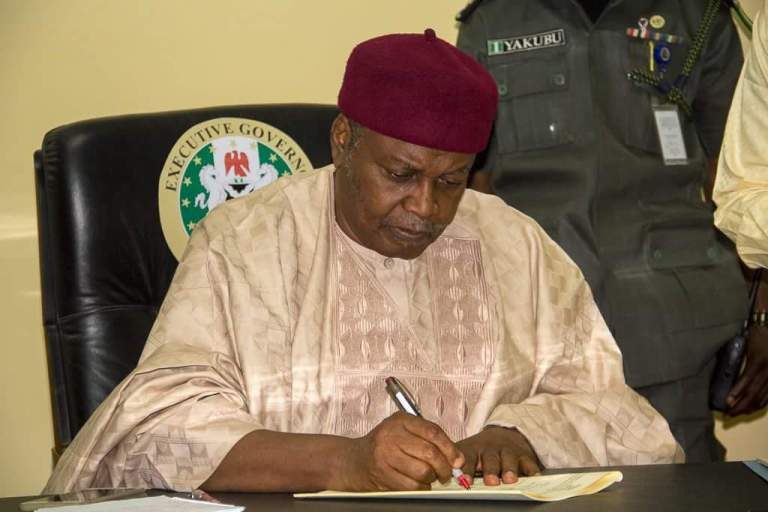
TARABA State Governor, Darius Ishaku, has signed an amendment of the Kidnapping and Abduction Prohibition Act 2010 which prescribes death penalty and life imprisonment for kidnappers and abductors.
The governor signed the law yesterday after the state assembly passed the bill after third reading.
The special adviser to the Governor on media and publicity, Bala Dan Abuinformation disclosed this in a statement on Thursday.
The bill, sponsored by a member of the State’ House of Assembly, Peter Abel Diah, was to ensure residents of Taraba were immune to the terror of kidnapping in the state.
According to the Diah, the law came as a result of rising concerns over the state of insecurity in Taraba, especially revolving kidnapping in the state.
He noted that under the new law, anybody found guilty of abduction or kidnapping in the state will pay the supreme price for it.
“In the past two years, not less than 20 persons, some of the government officials had been kidnapped from their homes and on the roads while travelling. It is expected that the new law will go along way in checking this menace.”
The new law prescribes punishment for violators as; any person who threatened to kill, maim, injure or cause panic in order to compel another person, corporate or government organisation to do or refrain from doing any act committed an offence and is liable on conviction to 20 years without an option of fine
Also, it says that any person who withholds details as to the existence of a kidnap group or is aware of the planning and execution of kidnap or abduction without informing relevant security agencies commits an offence and shall also be convicted to 20 years imprisonment without an option of fine.
The new law is an amendment of the Kidnapping and Abduction Prohibition Act 2010 by the Taraba State.
Taraba has been faced with various crimes of which kidnap is becoming more frequent, according to statistics reported on June 17. Security agentss have arrested not fewer than 32 suspects of kidnap as at when the report was filed.
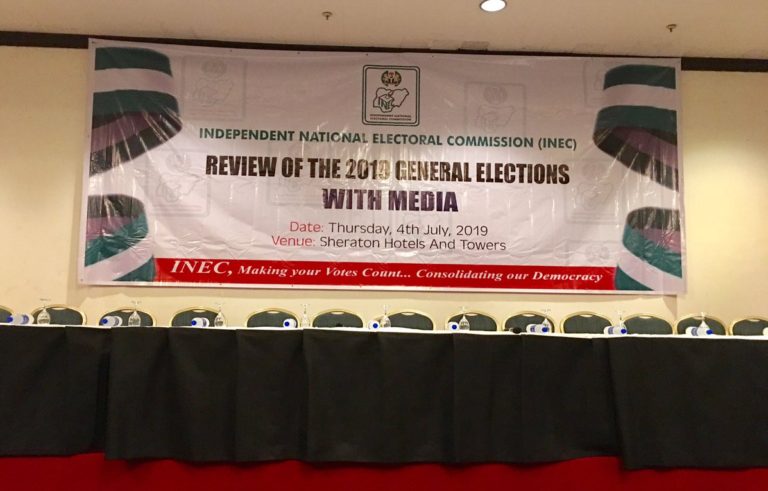
THE Independent National Electoral Commission, INEC, on Thursday, reviewed the 2019 general election with various media practitioners, as part of a series where it’s engaging with various stakeholders.
The consultative meeting, held in Abuja, was put in place so that journalists may share their experience, observations, and recommendations on all aspects of the election with the commission.
These aspects, INEC chairman Mahmud Yakubu said in his opening address, include: “logistics, security … coverage of elections, adequacy and effectiveness of public enlightenment done by the commission, access to information by the media, issues of misinformation, fake news, hate speech, and more”.
He said similar stakeholder meetings have been held with political party leaders, security agencies, and civil society groups.
“When we encountered challenges in the course of preparations for the general election, you were the first to be informed, given that the media is a gateway for information dissemination to citizens,” Yakubu said.
“I must place on record the commission’s appreciation of your support during the daily briefings following the painful but necessary decision to reschedule the general election.
“The live coverage on television, radio, online newspapers, and live streaming on other platforms free of charge—the commission did not pay for this, as well the subsequent incisive analyses of issues in newspapers and other platforms were no doubt another demonstration that for the media the nation comes above all else.”
In reaction to a question from The ICIR about the controversial INEC central server, Yakubu declined to comment, citing that the matter is sub judice (under judicial consideration). He, however, added that the statement suggesting that the server does not exist wasn’t absolute, but was made within a context.
The ICIR asked to know specifically whether INEC denies the existence of the server, despite the budgetary allocation for server, and the statements made by various INEC senior officials indicating that the server exists.
And Yakubu responded this way: “We can’t comment on live matters in court. There are comments made in the context of litigation because the matter is in court. You have statements on oath by the petitioner, you have statements on oath by respondents, please read these documents carefully and they are public documents. Then you will probably understand the context in which some response was made. To repeat what I said, we can’t comment on the matter that is before the court.”
Festus Okoye, chairman of INEC’s Information and Voter Education Committee (IVEC), while addressing participants said the commission will continue to give information to the media but will ensure to abide by the constitution and its legal mandate.
“The commission being a creation of the law will continue to be circumspect in commenting on or engaging in public debate or legal discourse on issues and matters that have been submitted to the adjudicatory purview of the court and the election petitions tribunal,” he noted.
Okoye also assured that INEC will continue to comply with pronouncements of court on electoral disputes.
“We will continue to exercise our powers in the overall interest of the electoral system. The guiding principle will remain what is right, what is just, what is constitutional and what is within our constitutional and legal mandate,” he said.
Also at the event were Seray Jah, acting country director of the International Foundation for Electoral Systems (IFES); Maria-Teresa Mauro, director of the European Centre for Electoral Support (ECES); and Christopher Isiguzo, president of Nigeria Union of Journalists (NUJ).
A fire broke out on a pipeline belonging to the Nigeria National Petroleum Corporation, NNPC, along Ijegun axis of Igando-Ikotun local council development area of Lagos State on Wednesday allegedly caused by suspected pipeline vandals engaging in oil theft.
Firefighters from the National Emergency Management Agency, NEMA, and the Lagos State Fire Service were on ground to control the fire outbreak.
The immediate cause of the fire is yet to be ascertained officially until a post-disaster report is made available to the public.
Ibrahim Farinloye, South West spokesperson for National Emergency Management Agency, NEMA, confirmed to The ICIR that the fire had been controlled but putting out the fire entirely might take longer.
” I can assure you that the fire has been put under control by several responders who turned up to ensure that their timely intervention salvaged the situation. Though, it will take a couple of days before the fire is entirely put out.
“Security agencies have also placed restrictions in the area to prevent hoodlums from taking advantage of the situation to carry out criminal activities,” he said.
On the casualties from the fire, he stated that two persons were confirmed dead while eight others were injured during the fire incident.
“We have two persons confirmed dead so far, while eight others have sustained a varying degree of injuries that’s all I can say for now,” he said.
Two days ago, a petrol-laden tanker exploded at Ahumbe Village in Gwer East Local Government Area of the state after the tanker fell along the Aliade–Makurdi highway with several residents in the area feared dead.
Though there is no confirmed report on the number of casualties involved in the accident, several reports state that residents in the area were scooping fuel after the tanker accident before the explosion occurred.
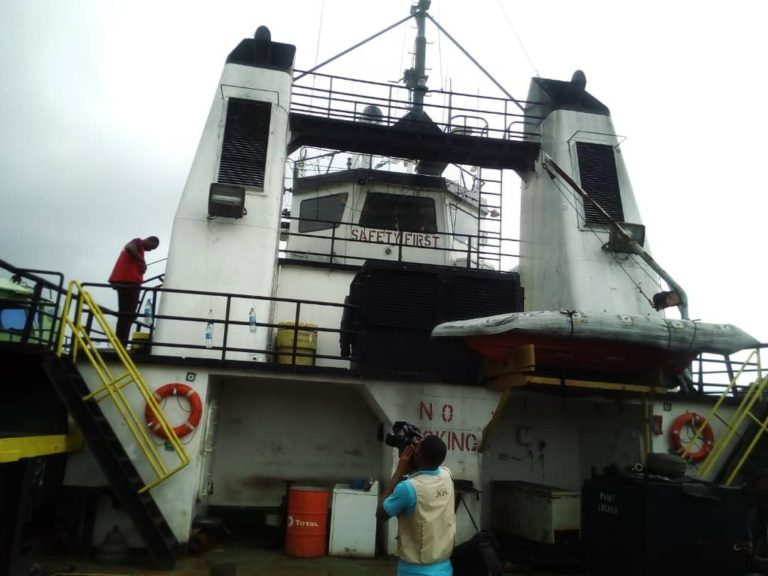
THE Nigerian Navy has handed over a Vessel, MV Messiah1 and Barge Miracle arrested for illegal oil bunkering to the Economic and Financial Crimes Commission (EFCC).
Tony Orilade, EFCC Ag. Head, Media and Publicity, said the arrest was made by Operation Delta Safe’s patrol team, Forward Operating Base (FORMOSO) of the Nigerian Navy in Yenagoa, Bayelsa State, and presented to the EFCC Zonal Office in Port Harcourt for further investigation and possible prosecution.
According to the statement, the Vessel and Barge were arrested by the team stationed at the Nigerian Agip Oil Company (NAOC), Brass Terminal, Port Harcourt, Rivers State on March 22.
The Naval Handing over Officer, Captain Suleiman Dantosho Ibrahim noted that both MV Messiah and Barge Miracle were each laden with 500,000 litres of products suspected to be illegally refined Automotive Gas Oil, (AGO).
Principal Detective Superintendent Shehu Jibrilla, who received the Vessel and Barge on behalf of the EFCC, assured the Navy of their diligent investigation and possible prosecution.
Similarly, the zonal office has commenced investigations of seven suspected oil thieves and two barges alleged to be involved in illegal oil bunkering.
The suspects were George John, Friday Kesiye, Longlife Adam Nanadighe, Ofuegbe Lukcy, Clement Abogha, Lawrence Brownson Kinanec and Kenneth Monday. The two other barges arrested by FORMOSO were Barge Kome XVIII (propelled by Tug Lady Virtue) and Barge Nicholas Marine (propelled by MV Aye).
According to the Naval Handing over Officer, Captain Suleiman Dantosho Ibrahim the two Barges were each conveying 500 metric tons of products suspected to be illegally refined Automotive Gas Oil (AGO), without necessary authorization.
“Four of the suspects were on board Barge Kome XVIII and the other three suspects were on board Barge Nicholas Marine when they were arrested.”
However, Principal Detective Superintendent, Shehu Jibrilla, who received the suspects and the Barges on behalf of the EFCC, assured the Navy of diligent investigation and possible prosecution of the suspects.
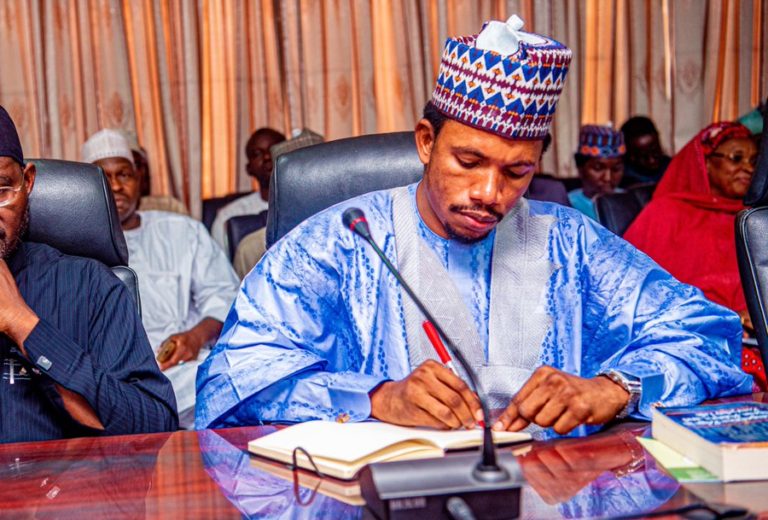
ELISHA Abbo, a lawmaker at the Senate, has been caught on a leaked videotape assaulting a woman at an adult toys store in Abuja after she pleaded on behalf of the store’s owner.
The video, published by Premium Times on Tuesday, also shows the senator inviting policemen to arrest the assaulted woman whom he accused of disrespecting him. In his response, the lawmaker said the event took place in March and that he was coordinating his team in order to properly respond to the allegation.
Since its release, Nigerians have continued to call for Abbo’s recall, arrest, and prosecution. Ahmed Lawan, the Senate President, also set up a committee to investigate the incident and the Inspector-General of Police likewise ordered his arrest.
Following the uproar, Abbo eventually tendered an apology “with a deep sense of remorse and responsibility”, and said the episode has taught him “a very great lesson both as a private citizen and a public officer”.
But who really is he? Here’s what The ICIR discovered.
Ishaku Cliff Elisha Abbo describes himself on Facebook as “an incorrigible optimist, fearless visionary, a generational blessing, intelligent and compassionate”. He married Ojukwu Uche Eucharia Cheche in September 2006 and has two children.
The 41-year-old is today representing Adamawa-North senatorial district at the ninth assembly, and he is reputed to be the youngest serving senator.
He is described as an Information and Communication Technology (ICT) expert, and his LinkedIn profile states that he is the chief executive officer of DTC Ltd.
Accused of plotting to rig Ekiti elections
Last year, in the build-up to the gubernatorial elections, the Kayode Fayemi Campaign Organisation (KFCO) alleged that former Ekiti State governor, Ayodele Fayose, was conniving with officials of the Independent National Electoral Commission (INEC) to rig.
The campaign organisation particularly named four INEC officials who it said were active participants in the plot: Egharevba John, Festus Aisien, Igidiogu Kelechi and Ishaku Abbo. Abbo, it said, led the team which had been lodging with the Fayose in the government house.
Bamidele Faparusi, KFCO’s Deputy Director General (South), in June 2018 said a secret meeting was held by all the parties at the government house and that “some sensitive INEC documents had been illegally produced” including stamps, result sheets, and accreditation forms.
“Curiously, these three top officials hold strategic positions in election management. One is from the Administration, one is from Stores and Distribution Dept while the other is ICT top official,” Faparusi said.
“For the reasons best known to them, only the Government House was their exclusive port of call; APC was never in the picture.”
Abbo soon after denied working with the former state governor to rig the election, describing the allegations as “blatantly false, malicious and a wicked attempt” to tarnish his reputation.
Discriminated against on the basis of HIV status
Academic papers published in 2002 and 2003 reported that Abbo, though he performed well after writing the recruitment test, was denied admission into the Nigerian Naval Training College, Port Harcourt, on account of his HIV status.
“According to his narration, he was admitted into the navy as a squadron leader and was then sent to Calabar for assignments. During the period a medical test was conducted without his knowledge of the reason of the test. He was later informed that he was HIV+ and was subsequently denied employment,” one study narrated.
In 2004, Abbo sued the college through a legal action instituted by Jude Okeke, then vice chairman of the Nigerian Bar Association, Abuja chapter. He asked the court to declare that his withdrawal was “illegal, unlawful and breach of his fundamental right to personal dignity”.
Jonathan’s political opponent until …
Abbo had, in 2015, been very vocal on his Facebook wall against the administration of former president Goodluck Jonathan and his policies, especially a perceived ethnic imbalance in his appointments. It’s also clear he publicly supported President Muhammadu Buhari’s policies during this period.
“No administration has used religion and ethnicity to divide Nigerians more than the current administration under the leadership of Mr Goodluck Jonathan. The ultimate test of any leader is looking at what has remained after he is gone,” he had written in March 2015.
However, in May 2018, Abbo wrote that he visited Jonathan, whom he described as “the father and Hero of democracy in Africa His Excellency Goodluck Ebele Jonathan (GEJ) the man that believed that his ambition is not worth the blood of any Nigerian”.
“I seized the chance to apologise to him for disagreeing with him politically in 2015,” he said. “In his usual characteristic manner, he opened his arms wide, forgave easily and received me with love. This man is the embodiment of humility and gentleness. We promise to redeem ourselves from our mistakes of 2015 come 2019.”
Elected senator
In February, Abbbo was elected as the lawmaker representing Adamawa North senatorial district on the platform of the People’s Democratic Party (PDP). He polled 79,337 votes, while Binta Masi Garba of the All Progressives Congress received 63,219 votes.