Home Blog Page 235

EXCLUSIVE: UNICAL knew admissions exceeded quota, went ahead anyway – sources reveal in Dental School crisis

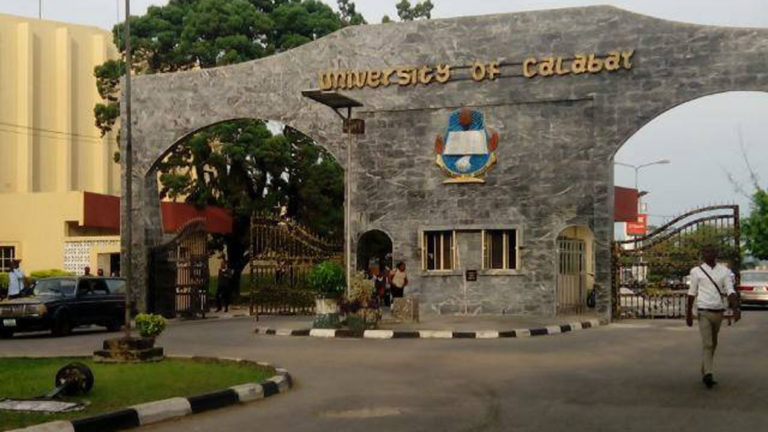
A WAVE of outrage has erupted online following news that over 300 Dental students of the University of Calabar (UNICAL) might be forced out of the institution because the school exceeded its admission quota for the Dentistry programme.

The students, some of whom are already in their sixth — final — year at the university’s College of Medical Sciences, were recently informed that they might not be allowed to graduate, register with the Medical and Dental Council of Nigeria (MDCN) — the regulatory body — or continue their studies, due to accreditation constraints caused by the school’s disregard for admission quotas.

Findings by The ICIR showed that the university management has also declared the admission into the 100 level ‘illegal’ due to the same accreditation issue.

A source privy to the matter in the university told The ICIR that the school vice chancellor, Florence Banku Obi, confirmed the development during a meeting with the provost, faculty stakeholders and the parents.

“Our school was asked not to admit year one until our accreditation and quota problems are resolved. But they went ahead to admit. She (the VC) stated at the meeting that their admissions were illegal and that there is no year one,” the source said.

The source further noted that the year one students had paid tuition and had received lectures, adding that they were even writing exams when the VC made the revelation.

The ICIR also gathered that the university is allowed a 10-student annual limit by the Medical and Dental Council of Nigeria (MDCN), but admitted far more than the quota at all levels.  A check from MDCN shows that as of July 2025 the quota for the school is 10. 

Screenshot from MDCN platform showing approved dental intake quotas . University of Calabar (UNICAL) allocated only 10 slots.

For instance, The ICIR gathered that the the university currently has 39 students in Year 6B, 97 in Year 5A and 128 in Year 5B, and over 60 newly admitted students.  However, due to the quota restriction, the university was instructed not to admit new students and, as a result, does not have any students in Year 2 and 3. The school did not respond to inquiries to confirm the data. 

“The school was asked to stop admissions. This was a directive by the MDCN to curb the number problem. But they opened it last year,” the source said. 

The source added that “We were told that our faculty had to transfer some students to other schools because we have far exceeded our quota of 10.⁠ Our final year students cannot do sponsio with their medical counterparts and have to wait till the end of the year, when hopefully we have fulfilled some of the requirements by MDCN.”

The source noted that the university management had promised the graduating class (Year 6B) that they would graduate from the institution by the end of the year, adding that the remaining students were informed they would be transferred to other schools, with only 10 students retained in each class.

Reacting, many Nigerians have taken to social media to express anger and solidarity under the trending hashtag #SaveDentalStudentsofUNICAL.

They are demanding justice for the affected students and accountability from the university and its regulatory bodies. 

They also appealed to the Minister of Health and Social Welfare, Muhammad Pate, and the Minister of State, Iziaq Salako, to urgently intervene in the matter.

A social media user with the profile name ‘DrMel,’ who claimed to be a former student of the same institution, said the issue had been a longstanding one, with the management doing nothing to prevent it.

“My colleagues and I were the first set of Dental students to graduate from UNICAL, and the things we went through can be made into a tragic movie script

“You’d think the school would learn from this, but here we have a university admitting a huge number of students, knowing fully well the quota is 10. What was your plan for them? They paid school fees, paid levies, bought texts, wasted time and effort, and now the solution is to transfer? To where? Other schools that have their own quota?” he wrote.

NADS attributes crisis to administrative failure

Meanwhile, the Nigerian Association of Dental Students (NADS), in a statement released on July 11, condemned the scandal. It described the development as ‘inhumane’ and a result of “administrative failure.” 

“These actions have not only breached regulatory guidelines but have also placed the futures of hundreds of innocent students at risk. Most alarming is the report that some final-year students, having spent over seven to eight years in training, were bluntly told by a university official to “go and learn a trade.”

“This is an appalling and inhumane response to a situation caused solely by administrative actions,” the group wrote.

It further demanded that the university management immediately suspend any directive asking students to transfer or abandon their dental education. 

It also asked the management to come up with a clear and transparent roadmap to resolve the crisis.

The ICIR reached out to the university’s Dean of Students’ Affairs, Patrick Egaga; he said he would get back with detailed information on the situation. He said he was not “currently on the ground.”

Efforts to also obtain the school’s reaction to this report through the Dean of the Faculty of Dentistry, Otasowie Osunde, also proved abortive, as calls to his line were not answered, and a text message sent to him was not replied to as of press time.

The ICIR has reached out to the MDCN and will provide updates when a response is received

SERAP sues NNPCL over ‘missing’ N825bn, $2.5bn allegedly meant for refineries repair

THE Socio-Economic Rights and Accountability Project (SERAP) has dragged the Nigerian National Petroleum Company Limited (NNPCL) to court over its alleged failure to explain the whereabouts of over N825 billion and $2.5 billion meant for the rehabilitation of the country’s refineries.

The suit, filed last Friday, July 11, at the Federal High Court in Lagos and marked FHC/L/MISC/722/25, followed allegations contained in the 2021 audited report by the Auditor-General of the Federation, which was made public on November 27, 2024. 

A statement by the organisation on Sunday, July 13, noted that the Auditor-General’s report raised red flags over multiple unaccounted oil revenues and unauthorised deductions linked to refinery repairs and crude sales between 2016 and 2021.

SERAP, in its suit, asked the court to compel the NNPCL to disclose the status of the missing funds, recover and remit them to the Federation Account, and hold accountable anyone found culpable. 

The organisation said the case sought to strike a blow against impunity in the management of Nigeria’s oil wealth, adding that the continued failure to account for the funds violated both national laws and international obligations.

The group argued that the NNPCL’s failure to properly account for the billions meant for refineries rehabilitation reflected a breach of public trust and deepened poverty and economic instability in the country. 

It also referenced recent remarks by Africa’s richest man, Aliko Dangote, who stated last week that NNPC-owned refineries might never work again, despite over $18 billion he allegedly said was spent on them.

The suit, read in part: “The Auditor-General fears the money may be missing. He wants the money recovered and remitted to the Federation Account. He also wants the NNPCL ‘to ensure that the amounts due for the Federation Account are not subjected to any deductions before remittance of net.

“The NNPCL also reportedly failed to account for over N343 billion [N343,642,598,726.51] ‘being proceeds from domestic crude sales. The money, meant for pipelines maintenance and management costs, was unilaterally deducted from the gross domestic crude sales,” the statement added.

It noted that the Auditor-General expressed concern that some of these funds might have been diverted, while others were either unjustifiably withheld or withdrawn from suspense accounts such as the CBN/NNPC sinking fund. 

The SERAP further stressed that in several cases, the audit report showed that funds meant for the federation account were unilaterally deducted by the NNPCL before remittance.

The organisation added these actions undermined the country’s economic development and contributed to growing deficits, forcing the government into unsustainable borrowing while Nigerians continue to suffer the consequences of non-functional refineries.

This development comes amid growing uncertainty surrounding the fate of Nigeria’s state-owned refineries. 

On Friday, July 11, The ICIR reported that the NNPCL was considering selling the Port Harcourt, Warri, and Kaduna refineries after over $18 billion was spent on their turnaround maintenance with little to show. 

The NNPCL’s Group Chief Executive Officer, Bayo Ojulari, speaking in Vienna at an Organisation of Petroleum Exporting Countries (OPEC) seminar, confirmed that a full review of refinery strategy was underway and that selling the assets was on the table.

This was as Aliko Dangote, who hosted executives of Global CEO Africa earlier on Thursday, July 10, told guests that NNPCL’s refineries were unlikely to ever function again, describing the repair efforts on them as akin to modernising a 40-year-old car.

The ICIR reports that refineries have long been a drain on public resources. This organisation reported that between 2017 and 2021, the Port Harcourt Refining Company alone posted losses exceeding N343 billion, even as it recruited hundreds of new staff and maintained annual salaries amounting to billions.


Inside the campaign to silence WikkiTimes

0

 By Usman Babaji

ON a hot February afternoon in 2023, Haruna Mohammed Salisu found himself shoved into a police van. Moments earlier, the 34-year-old publisher of WikkiTimes — a small investigative news outlet in Bauchi State — had been interviewing voters during the presidential election. Now he was under arrest, accused of “inciting public disturbance”. As armed officers hauled him away, Salisu realised this was the price one pays for telling uncomfortable truths in today’s Nigeria. WikkiTimes states that the arrest was politically motivated and believes the order may have come from the state governor. 

Hounded, beaten and thrown into jail for five days, Salisu was later released on bail. What is the reported offense? Covering a protest by local women who were expressing grievances against the state government. “They wanted to silence me forever,” Salisu recalled. “But surrendering to a bully means they could silence all of us– and that is very dangerous,” he’d added.

According to Salisu, during his detention he was held in a crowded cell and his phone was confiscated by police despite what he said was a standing court order for its return. This was one in a broader pattern of intimidation and pressure faced by WikkiTimes and its journalists.

Founded in 2018 to cover Northern Nigeria’s underreported regions, WikkiTimes has become a leading watchdog outlet, exposing corruption, abuse of power, and injustice in areas often ignored by mainstream media.

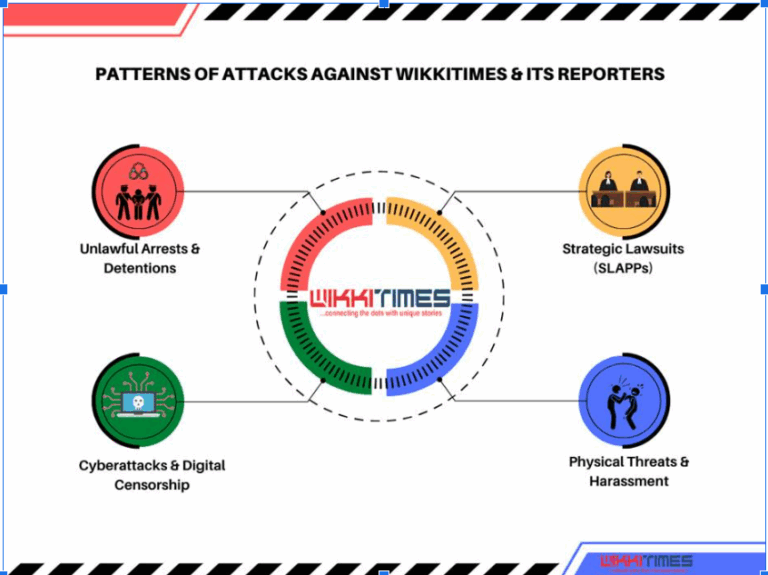
But this commitment to truth has come at a high cost. In recent times, WikkiTimes and its staff have faced an onslaught of retaliation. From strategic lawsuits and arrests to cyberattacks, harassment, and threats—all seemingly coordinated to muzzle the news platform.

“It has become a pattern now; some form of punishment follows every major story we publish,” Salisu explained.

The son of Bauchi State governor once publicly vowed “eternal enmity against me for a story that was yet to be published. And his father gave me the same treatment, because when I was interviewing the women, they arrested me, and later charged me to court for a story that was not yet published,” Salisu recounted.

Family members of a former WikkiTimes editor, Yakubu Mohammed, have received anonymous threats after WikkiTimes published a story alleging links between illicit mining operations and terrorism financing in Niger State. The message is clear: journalism that confronts the mighty is being treated as a crime in parts of Nigeria. 

Threats, intimidation and harassment

Efforts to intimidate WikkiTimes journalists have often taken a deeply personal turn. In one recent report, the outlet uncovered alleged terrorism funding and illegal gold mining  in Niger State, some of those named responded with outrage and legal threats, including a N10 billion defamation lawsuit against WikkiTimes, widely seen as an attempt to suppress the reporting. Such lawsuits, often viewed as strategic efforts to silence critical journalism, have become increasingly common.

Another investigation detailed how a Saudi-funded charitable hospital in Bauchi was extorting patients and evading taxes in violation of its non-profit mandate. The charity responded by dragging the outlet to court and demanding N1 billion in damages.

In early 2022, after WikkiTimes published an exposé on a N1 billion model school project that never materialised in Bauchi, former House of Representatives Speaker Yakubu Dogara responded with a N2 billion libel suit. The lawsuit claimed that WikkiTimes defamed him by reporting that funds allocated for a school in his constituency had been misappropriated. WikkiTimes has stood by its reporting, and the case remains ongoing in court.

The Media Foundation for West Africa condemned Dogara’s action as a “vexatious legal assault” aimed at intimidating the press.

Since 2020, WikkiTimes has faced at least nine lawsuits described by media rights advocates as SLAPP (Strategic Lawsuits Against Public Participation), legal actions intended to silence public interest reporting. The publisher argued that these cases are not really meant to be won in court – they are intended to drown the young outlet in paperwork, legal fees and stress.

“As a small platform, it is difficult to hire lawyers, fund several trips by our reporters to attend court hearings”, Salisu stated. Kamal Idris, a reporter who was a co-defendant in the Saudi-funded charity hospital case, shares the same views.

“The court cases were an eye-opener… but draining. We don’t have the resources that politicians or companies have”, Idris said, adding, “each lawsuit, even if frivolous, saps time and money that could be spent on journalism.”

Physical intimidation has often accompanied legal harassment. In June 2023, after WikkiTimes reported on threatening messages received by opposition politician Hussaini Musa Gwaba—who died under mysterious circumstances—the outlet faced backlash from Bauchi federal lawmaker Yakubu Shehu Abdullahi, who accused the publication of “cyberstalking” in a police petition following the report’s mention of his alleged dissatisfaction with Gwaba’s political appointment.

Police officers visited the office in Bauchi and detained publisher Salisu and reporter Idris for 48 hours.

“Our detention was a nightmare,” Kamal recalled. “We were tortured from the moment we were put in the cell. The cell was filthy, and we had to sleep and urinate in the same place. There were only two dirty buckets for us. The air was rank. By the time we got out, I couldn’t focus on work for days because of the trauma.”

During those two days behind bars, the journalists said they were beaten and threatened by inmates – an action they believe was pre-planned. “They put us in with deadly thugs and even terrorists,” Salisu said, describing the cell in Bauchi’s State Criminal Investigation Department (CID), where they were held. Eventually, both were charged under Nigeria’s Cybercrime law, referencing the article on Gwaba’s death. The court later dismissed the case.

The climate of hostility forced the then WikkiTimes editor, Yakubu Mohammed, to flee Bauchi in 2023. While Salisu was iin detention after the election-day arrest, word reached Yakubu that authorities were planning to arrest him next. The next morning, Yakubu packed up and quietly left Bauchi for his own safety.

“Your identity is known by all the local actors you report on,” Salisu explains of the risks inherent in subnational journalism. “It’s easy for them to profile you and trace your location. Very few of us do this kind of work where we operate, so we could easily be profiled and targeted.”

In Yakubu’s case, relocation was the only way to avoid becoming the next target. Other WikkiTimes reporters have also periodically gone into hiding or moved residences after receiving warnings that “the big men are after you.”

SLAPP and legal warfare against the outlet

In late 2022, Abdullahi “Baba Iyali” Abdulkadir, a federal lawmaker from Bauchi, filed a law suit against  WikkiTime  not for its original reporting, but for republishing an investigative story from a partner outlet. The report alleged that Abdulkadir was linked to a questionable road construction contract. In response, the lawmaker sued, claiming the story had “tarnished his image” among constituents and demanded damages along with an injunction to prevent further distribution.

In April 2024, WikkiTimes published a story by journalist Yawale Adamu alleging that  Mansur Manu Soro, a House of Reps member from Darazo/Ganjuwa, Bauchi State, had colluded with a local contractor to divert millions of naira from constituency projects. This led to a criminal complaints filed for defamation and “injurious falsehood” against WikkiTimes. By September 2024, a Bauchi magistrate issued a bench warrant to Salisu who was outside the country at the time pursuing postgraduate studies.

The journalist Adamu was brought before the court to face charges that carry a potential sentence of up to five years in prison.  “My only weapon was the truth, backed by evidence. But in Nigeria, the truth is dangerous,” Adamu said.

Soro himself has stayed mostly silent on the allegations, despite CPJ’s calls for the charges to be dropped. Meanwhile, he lodged a civil suit demanding that WikkiTimes retract the story, apologise publicly, and pay about N2.5 million in damages and legal fees.

In Kano State, a businessman named Surajo Marshal went to a magistrate court after a WikkiTimes article exposed irregularities in a multi-million naira school construction project he handled.

In an unusual move, the court issued a criminal summons against WikkiTimes over the report.  Publisher Salisu described the actionas irregular because the outlet had not been formally served any court documents. The report had detailed how six companies linked to Marshal allegedly constructed substandard classrooms.  Salius believes the case, filed ex parte without WikkiTimes knowledge at first, was clearly intended to pressure the outlet into silence.

A digital war on truth

When legal and physical intimidation have failed, WikkiTimes adversaries have turned to digital attacks. The outlet has weathered waves of cyberattacks and online harassment, often timed to coincide with its most sensitive investigations. In April 2025, WikkiTimes website suffered  400 coordinated cyberattacks  in a 48-hour period.

The deluge of malicious traffic and hacking attempts repeatedly knocked the site offline, disrupted publication schedules, and temporarily cut off access for readers. “Pages wouldn’t load, our admin panel was locked out, and we saw traffic from bots we couldn’t trace,” recalled Ibrahim Salisu, the outlet’s technical support lead, who worked around the clock to restore the site. “It felt like someone was intentionally trying to silence us or wear us down digitally,” he explained.  What disturbed him most was the persistence of the April attack. “It wasn’t just a random spike – it was calculated, coming at us from different directions.”

This was not the first incident. In April 2023, hackers breached WikkiTimes backend and wiped its story database, erasing several published articles before the site could be restored from backups. And in November 2022, the outlet’s Facebook page – which had tens of thousands of followers – was suddenly taken down by Facebook shortly after it published an investigation into cover-up involving a former Bauchi Police Commissioner.

The report alleged that the commissioner helped shield the state’s ex-Information Commissioner from justice after a fatal bar shooting. Days after publishing the story, WikkiTimes’ Facebook page vanished. The team believes the takedown may have resulted from coordinated mass reporting by supporters of those named in the story, though Facebook did not provide a specific reason.

Beyond direct cyberattacks, WikkiTimes has been hit by disinformation campaigns aimed at discrediting its work. In one case, a doctored video circulated on WhatsApp and Twitter, accusing WikkiTimes of receiving foreign funding to destabilise northern Nigeria’s stability and elites. The video – a montage of spliced clips with a fake voiceover – suggested the outlet was part of an international plot against the north, playing on popular conspiracy tropes. “It was absurd, but some people believed it,” says Salisu, noting that the disinformation emerged soon after WikkiTimes published a series of articles on high-profile corruption in northern states. Online trolls have also hounded the outlet’s reporters on social media, bombarding them with slurs and accusations of being “traitors” or “paid agents” whenever a new investigation is published. These coordinated smear efforts seek to erode public trust in the outlet’s reporting.

All of these digital assaults from hacking to propaganda reflect a growing playbook of censorship in the digital age. As Ibrahim – the outlet tech support observes:  “These kinds of attacks are becoming more common, especially against media organisations that speak truth to power.”

For WikkiTimes, defending against cyber warfare has now become as important as digging for documents or cultivating whistleblowers. “We expected anger and maybe a lawsuit or two,” says Haruna Salisu of the fallout from their stories. “We didn’t expect them to try to delete our journalism from the internet or to poison the information space with lies about us. It’s a different level of threat.”

 Solidarity and the struggle for press freedom

WikkiTimes’ plight has not gone unnoticed. Press freedom advocates in Nigeria and abroad have rallied, in cash and kind, to support the outlet. The Committee to Protect Journalists (CPJ), Media Rights Agenda (MRA), the International Press Centre (IPC), the Media Defence Uk, The Center for Collaborative Investigative Journalism, Forbidden Stories, Center for Journalism Innovation and Development (CJID), The Wole Soyinka Center and the Media Foundation for West Africa (MFWA) and many others have either issued statements or bankrolled WikkiTimes to confront its SLAPP lawsuits. They have also condemned the arrests, lawsuits and cyberattacks against WikkiTimes. These voices explain that an attack on one journalist or outlet is seen as an attack on the broader media and the public’s right to know.

Yet beyond public statements and legal advocacy support, the outlet’s staff continue to operate under tremendous pressure, often looking over their shoulders. Some have taken self-defence training; others vary their daily routes or use secure communications to avoid surveillance. “We have changed office locations more than three times within two years to avoid being tracked and intimidated by police and other powerful forces. That has come at a heavy cost on WikkiTimes”, Editor Aminu Adamu has said.

WikkiTimes’ modest revenues (largely from grants and donations) are being drained by legal fees and cybersecurity costs. “Every lawsuit means money for lawyers instead of reporting. Every cyberattack means money for IT security instead of field investigations,” the publisher said, describing how resources are diverted just to keep the outlet afloat and safe.

Nigeria’s broader climate for journalism only compounds the problem. In 2024, Nigeria ranked 112th out of 180 countries in the World Press Freedom Index, slipping to 122nd in 2025 amid rising threats to independent media and increased editorial interference

Media experts argue that the struggle of WikkiTimes is emblematic of a larger battle for press freedom in Nigeria. Hamid Adamu Muhammad, a mass communication scholar at North Eastern University, Gombe, says the pattern of harassing journalists for exposing the truth is as uncivilised as it is dangerous. “It is the responsibility of journalists to expose what organisations and governments are doing that is not right,” he said.

Global press freedom monitors echo that sentiment. They point out that impunity for crimes against journalists, gender-based online attacks, and targeted digital surveillance are three of the most pressing threats to free journalism today – and that violence is the most extreme form of censorship. In other words, when telling the truth leads to one being beaten, jailed or financially ruined, it’s not just a personal tragedy but a society-wide alarm.

“Journalism can only be exercised freely when those who carry out this work are not victims of threats or physical, mental or moral attacks or other acts of harassment,” it says.

Back in Bauchi, the WikkiTimes team soldiers on. They have learned to be resourceful and resilient – migrating servers when they come under attack, backing up content in multiple locations, fighting their battles in court during the day and chasing stories by night. Their determination has yielded small victories: public interest in their work is growing, and some corrupt schemes they exposed have been halted by embarrassed authorities. Each win, however minor, bolsters their resolve.

“We owe it to our people to keep going. If we don’t speak for our people, who will? We can’t let these guys get away with impunity,” Haruna Salisu declares.

This report republished from WikkiTimes is produced by WikkiTimes in collaboration with the Centre for Journalism Innovation and Development (CJID) as part of a project documenting issues focused on press freedom in Nigeria. 

Do these photos show hostels at universities in Ghana?

0

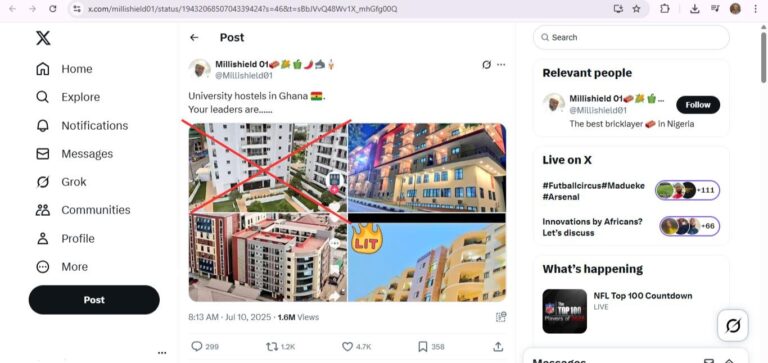
AN X user, @Millishield01, posted four pictures on the platform claiming they showed hostels at various universities in Ghana.

The caption of the post read: University hostels in Ghana. Your leaders are…

While reviewing photos, The FactCheckHub  observed differences in the architectural structures and paintwork of the buildings, prompting a fact-check to verify the accuracy of the claim.
Since being posted on Thursday, July 10, 2025, the claim has gained significant traction—garnering over a million views, 4,700 likes, and 1,200 reposts.

CLAIM

Four images show hostels from universities in Ghana.

THE FINDINGS

Findings by The FactCheckHub show that the claim is HALF-TRUE!

Image in the screenshot shows Gallery Apartments, a luxury residential building in Accra, Ghana, and not a university hostel.

A close inspection of the first image revealed it to be a screenshot from a TikTok video posted by user @__manasseh. The image appears four seconds into an 18-second clip that has attracted significant engagement on the app.

When the screenshot was analysed using Google Lens, multiple matches identified the location as The Gallery Apartments complex in Accra, Ghana, as featured on several hotel‑booking sites (examples here, here, and here).

Further investigation found another TikTok video of the same building, posted by a different user filmed from a different angle. The architectural features in the video matched those in the original image, confirming the location.

When the remaining frames were subjected to a Google Lens search, results indicated that they depicted various hostels at the Kwame Nkrumah University of Science and Technology (KNUST) in Kumasi, Ghana, specifically the MasterCard Foundation Hostel, Lienda Ville, and St. Theresa’s Hostel.

THE VERDICT

The claim that four images show hostels from universities in Ghana is half- true; while three of the images accurately depict student hostels, one of the images was misattributed, it shows Gallery Apartments, a luxury residential building in Accra, Ghana, and not a university hostel.

Republished from the FactCheckHub.

Tinubu backs AFRIMA 2025, sets up planning committee

PRESIDENT Bola Tinubu has endorsed the 2025 edition of the All Africa Music Awards (AFRIMA), which will take place in Lagos from November 25 to 30.

Tinubu’s endorsement followed a formal request from the African Union Commission, seeking Nigeria’s partnership in hosting the upcoming edition of the prestigious continental awards.

Following the preparations, the Minister of Arts, Culture, Tourism, and Creative Economy, Hannatu Musawa, inaugurated an inter-ministerial Local Organising Committee on Wednesday, June 9.

The committee will collaborate with the host city, the African Union, and the AFRIMA International Committee to plan and deliver the event.

According to the statement made available to newsmen, members of the committee were selected from key government institutions, including the Ministry of Foreign Affairs, Federal Ministry of Information and National Orientation, Nigerian Film Corporation, and the National Film and Video Censors Board.

Other participating bodies include the Federal Ministry of Interior, the National Council for Arts and Culture, and representatives from AFRIMA and the African Union Commission, among others.

Speaking at the inauguration, Musawa stated that AFRIMA aligned with Tinubu’s vision to harness the creative industry as a major engine for economic growth, national development, and social transformation.

“This is more than just an awards show. It is a major platform to create jobs, promote tourism, celebrate African talents, and tell our positive stories authentically through music to the world. We are excited to work with the Lagos State Government, the AFRIMA team, and the African Union to deliver a world-class event,” the minister was quoted as saying.

Also speaking at the event, the President and Executive Producer of AFRIMA, Mike Dada, expressed gratitude to the Federal Government for its prompt response and unwavering support for the 2025 edition of the awards.

“We thank President Tinubu for his quick and visionary approval and backing of AFRIMA 2025. This is not just an event approval. It’s a loud statement that the Nigerian government values the culture and creative industry (CCI) and its power to promote unity and prosperity across Africa,” Dada said.

He also commended the Lagos State government for accepting to be the official host city and for its partnership, as well as its investment in the creative industry.

“Nigeria has always been a creative and cultural powerhouse. With this support, we are confident that this year’s AFRIMA will be an unforgettable celebration of African talent and creativity for the whole world to see. It is fantastic that the Federal Government has come on board, and we are happy that the Minister has mentioned that all of us are going to work together with the host city, Lagos state, to deliver the best AFRIMA in history,” Dada said.

The All Africa Music Awards (AFRIMA), founded in 2014 through a partnership between the International Committee and the African Union (AU), was created to recognise and celebrate musical talent, creativity, and artistic achievements across Africa, while also promoting the continent’s rich cultural heritage.

NNPCL eyes public listing by 2028

THE Nigerian National Petroleum Company Limited (NNPCL) aims to list on the stock exchange by 2028, according to its Group Chief Executive Officer, Bayo Ojulari.

Speaking at the 9th OPEC International Seminar in Vienna, Ojulari said the plan was part of efforts to reposition the company as a competitive, profit-driven energy firm.

He announced the timeline in a video shared on the company’s official X handle on Friday, July 11.

He linked the planned listing to reforms introduced by the Petroleum Industry Act (PIA), describing it as a legislative milestone that provided stability and structure to Nigeria’s energy industry.

“As I mentioned earlier, we have a roadmap to be listed by 2028. The PIA has reset and brought stabilisation to the energy industry, particularly oil and gas in Nigeria.

It gives us the roadmap and allows us to monitor our progress,” he told an audience of energy leaders, ministers, and investors.

Ojulari acknowledged that implementing such legislative reforms would come with challenges, and implementing the Petroleum Industry Act would take time, especially for national oil companies.

He noted that collaboration between industry stakeholders and regulators had played a key role in driving the reforms.

The GCEO also highlighted recent leadership changes within NNPCL’s board, stating that the newly appointed directors brought private sector expertise and international experience. He noted that their appointments aligned with President Bola Tinubu’s agenda to reposition the national oil company for greater efficiency and competitiveness.

Ojulari said the NNPCL focused on building investor confidence by strengthening governance structures, promoting transparency, and ensuring operational stability. He emphasised that significant progress had been made to create a secure business environment in Nigeria.

He also reaffirmed that all strategic possibilities, including partial privatisation, were being considered to manage the nation’s oil assets. In a prior interview, he noted that the decision would ultimately depend on the findings of ongoing internal reviews.

The NNPCL’s Chief Financial Officer, Adedapo Segun, previously disclosed during the Nigerian Oil and Gas Energy Week that the company was undergoing a restructuring process aimed at meeting the standards of a publicly listed firm.

He explained that efforts were underway to establish a strong governance culture and operational structure in preparation for a future initial public offering (IPO).

“We are working on our corporate governance, our processes, and creating an environment that will support our IPO aspirations. We have management that is IPO ready. We need to build an organisation that is IPO ready,” Segun said.

Amnesty Int’l demands withdrawal of arrest warrant against Sokoto governor’s critic

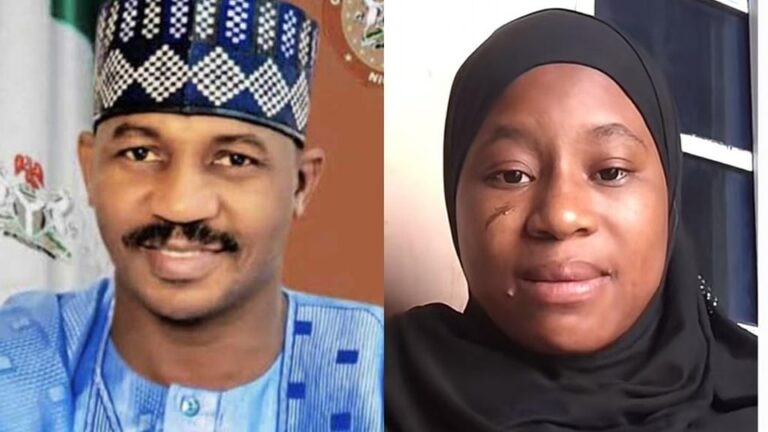
AMNESTY International has called for the immediate withdrawal of a warrant of arrest issued against Hamdiyya Sidi Sharif, accused of using abusive language against Sokoto State Governor Ahmad Aliyu.

The human rights watchdog described the warrant as unjust and a threat to a fair hearing.

In a statement on Friday, July 11, the organisation expressed concerns over the warrant issued by Wurno Magistrate Court on Thursday, July 10, after Hamdiyya failed to appear at a court hearing the previous day. 

Amnesty International said her absence was due to medical treatment she was undergoing following an abduction that left her with serious injuries.

It stressed that the warrant was “contrary to all tenets of fair hearing and justice,” and urged the court to halt its enforcement until a motion for trial in absentia, filed by her legal team on June 19, is heard.

Backstory

The young lady, Hamdiyya, is currently facing trial for using “insulting or abusive language” and “inciting disturbance” after criticising Governor Aliyu.

In November 2024, the 18-year-old had published a video criticising the Sokoto State governor over insecurity and the plight of displaced persons in the state. 

She also called on internally displaced people to occupy the governor’s office in protest.

She has been abducted twice since her trial began.

The first incident occurred on November 13, 2024, shortly after the video went viral, when armed men reportedly whisked her away when she went to retrieve her phone from a charging point. Premium Times reported that she was beaten and thrown from a moving tricycle, leaving her with severe injuries.

Also on May 20, 2025, her family and lawyers reported her missing after she left home for the market. She was later found abandoned in a bush in Zamfara State, visibly, according to Amnesty International.

Despite these ordeals, the organisation said that the state had continued to pursue charges against her instead of investigating the attacks or addressing the broader insecurity crisis in parts of the state, where gunmen are reportedly killing civilians, razing villages, and abducting women and girls.

“Instead of trying to suppress dissenting voices through the abuse of power, Sokoto State government and the Nigerian security agencies should prioritise urgently addressing rampant insecurity facing the people of the eastern part of Sokoto State, where gunmen have been killing people, razing villages, abducting women and girls – almost daily,” Amnesty Intenational added.

FG blames June salary delays on technology glitch

0

THE  Office of the Accountant General of the Federation (OAGF) on Friday, July 11, attributed the non-payment of some federal civil servants’ June 2025 salaries to technical glitches.

The Director of Press and Public Relations, Bawa Mokwa, in a statement, said that upon receiving complaints from workers regarding the non-payment of their June salary, an investigation was launched, and it was discovered that there were some glitches, especially for workers using Zenith Bank as their salary accounts.

The government noted that the clarification was necessary. It assured that it was working closely with the relevant service providers and stakeholders to resolve the matter.

“Upon investigation, it was discovered that the salary payments for employees across various ministries, departments, and agencies (MDAs) were affected due to a technical network glitch during the processing of salaries at the bank,” part of the statement read.

“The OAGF understands the anxiety and frustration this situation has caused, particularly given the importance of timely salary payments to the livelihoods and responsibilities of our valued public servants,” it added.

It further expressed regrets for the inconvenience the delay had caused, while assuring all affected employees that immediate steps had been taken to resolve the issue.

“The office is currently working closely with the relevant service providers and stakeholders to ensure that the failed payments are reprocessed without further delay. We appeal to all affected staff of the Federal Public Service to remain calm and rest assured that no effort will be spared in ensuring everyone receives their rightful salaries,” it said.

NNPCL may sell Port Harcourt, Kaduna, Warri refineries after gulping ‘$18 billion’ in repairs

0

CITING complications in revamping the Port Harcourt, Warri and Kaduna refineries, the Nigerian National Petroleum Company Limited (NNPCL) has revealed that the facilities could be sold off.

The decision came after the moribund refineries had allegedly gulped about $18 billion in turnaround maintenance.

The Group Chief Executive Officer(CEO) of the NNPCL, Bayo Ojulari, disclosed the possible sale of the refineries on the sidelines of the Organisation of Petroleum Exporting Countries (OPEC) International Seminar in Vienna, Austria.

Ojulari, who spoke with Bloomberg on Thursday, June 10, said the NNPCL was reassessing its refinery strategies and aiming to finalise the review by year-end.

“So, refineries, we made quite a lot of investment over the last several years and brought in a lot of technologies. We’ve been challenged,” he said.

He explained that some of the technologies had not worked as expected, adding, “When you’re refining a very old refinery that has been abandoned for some time, what we’re finding is that it’s becoming a little bit more complicated.

“So, we’re reviewing all our refinery strategies now. We hope that before the end of the year, we will be able to conclude that review. That review may lead to us doing things slightly differently.”

Speaking on the possible sale of the assets, he said, “What we’re saying is that sale is not out of the question. All the options are on the table, to be frank. But that decision will be based on the outcome of the reviews we’re doing now.”

Commenting on oil production costs, Ojulari hinted further that the operating cost of oil production in Nigeria ranged between $20 and $30 per barrel.

“For the cost of crude production, there’s a capital cost and there are the operational costs. The operating cost right now in Nigeria is hovering over $20 per barrel, which is quite high.

“Part of that is because of the investment we’ve had to make in terms of security of pipelines, which, as you know today, we have 100 per cent availability of our pipelines. That came out of the significant investment.

“So we believe with time, with stability, that costs will start going down; but for now it’s somewhere between $25 and $30 a barrel.”

Ojulari added that by the end of the year, the country planned to increase output to 1.9 million barrels per day(bpd).

The ICIR reported that the chairman of the Dangote Group, Aliko Dangote, expressed doubts that the refineries under the management of the NNPCL would ever work.

The billionaire businessman expressed this concern while hosting members of the Global CEO Africa from the Lagos Business School, after a tour of his refinery in Lekki, Lagos, on Thursday, July 10.

He pointed out that the NNPCL facilities had failed to work despite claims of turnaround maintenance.

“(The turnaround maintenance) is like you trying to modernise a car built 40 years ago, when technology and everything have changed. Even if you change the engine, the body will not be able to take the shock of that new technology engine,” Dangote said.

In 2021, The ICIR reported that the three refineries wasted taxpayers’ money without commensurate productivity. Between 2017 and 2021, the Port Harcourt Refining Company Limited lost N343.66 billion, while maintaining a staff strength of 506.

The refinery engaged 487 new workers in 2020, paying them N3.93 billion annually. Despite the moribund state of the refineries, each worker takes home an average of N8.072 million annually, according to the report.

Plateau court remands 20 suspects accused of killing wedding guests

0

THE Plateau State High Court, Jos, has remanded 20 suspects accused of killing wedding guests in the state.

The attack, carried out by a suspected mob in the Mangun community, Mangu Local Government Area (LGA), led to the death of 13 travellers while many others were injured. The victims were on their way to the Kwa community in the Qua’an Pan LGA of the state.

At least 32 victims, including children, were descended upon while heading for the wedding venue from the Basawa community in Kaduna’s Sabon Gari LGA.

The incident sparked widespread outrage across the country, with many demanding justice for the victims.

The court proceedings took an interesting turn on Thursday, July 10, when defence counsel Garba Pwol, a senior advocate, objected to the suspects entering their plea, citing the presence of two minors, aged 13 and 17, among the 22 suspects arraigned.

He argued that exposing minors to such proceedings was unlawful.

The prosecuting counsel, Samuel Idowu Ikutanwa, suggested excluding the minors’ names and allowing the remaining 20 suspects to take their plea.

The judge, Boniface Ngyon, ruled in favour of delaying plea-taking until the prosecution amends the charges to exclude the minors.

At the resumed hearing on Friday, July 11, following the court’s directive, the charges were amended, and the 20 suspects (excluding the two minors) pleaded not guilty to the four-count charges.

Ikutanwa read the charges against the accused, including criminal conspiracy, causing grievous bodily harm, culpable homicide, and killing and burning 13 people on June 20, 2025, contrary to sections 59 of the Penal Code, section 220, 313, and 187 of the Plateau State law cap 2017, respectively.

The prosecution claimed the defendants conspired to commit the offences, arming themselves with dangerous weapons like guns, cutlasses, machetes, and petrol.

The prosecutor then applied for a custodial order to remand the accused in Jos Correctional Centre, while the defence counsel filed a motion for bail.

Defence counsel did not oppose the application but instead filed a motion for bail.

The judge, in his ruling, stated that the application could not stand, considering the objections raised by the prosecution.

He thereafter adjourned the substantive suit to August 13, 2025, and ordered that the accused be remanded at the Jos Correctional Centre.

While addressing the press on Thursday, the Plateau State Commissioner of Police, Emmanuel Adesina, said the command responded swiftly to the attack by deploying personnel and operational assets to the scene, which led to the arrest of the perpetrators.

He confirmed that investigations had been concluded and the suspects were set for trial.

The ICIR reports that Plateau State has been one of the hotbeds for violence in recent years.