Home Blog Page 2369

INTERPOL issues arrest warrant against Nigerian for ‘parental abduction’ of 9-year old from Brazil

0

By Damilola BANJO

THE International Criminal Police Organisation, also known as INTERPOL, has issued a  REd Notice against Mr. Michael Olusegun Akinruli, a Nigerian who used to live in Brazil, for parental abduction of a 9-year old girl he had out of wedlock with Ms. Laurima De Jesus Pires, a Brazilian woman.

A Red Notice is issued for fugitives wanted either for prosecution or to serve a sentence. It is a request to law enforcement worldwide to locate and provisionally arrest a person pending extradition, surrender, or similar legal action.

The notice came 3 months after Mr. Akinruli defied a court order that mandated him to return Atinuke Folasade Pires Akinruli to the custody of his mother in Brazil, on or about February 3, 2019.

A Magistrate Court in Minas Gerais, Brazil, granted a 25-day travel authorization to Mr. Akinruli to visit Nigeria with his daughter, Atinuke, between January 9, 2019, and February 3, 2019, but Mr. AKinruli had since remained in Nigeria with the girl, in contravention of the Brazilian Court order.

On the February 4, Ms. Pires, the mother of the child, said rather than return to Brazil with the child, Mr. Akinruli sent her an email notifying her of a court injunction obtained from a Lagos State Magistrate Court, granting him full custody of Atinuke.

Ms. Pires, who has now taken residence at the Brazilian Embassy in Nigeria till she locates her child, said she has been denied access to the daughter and has no clue of her ex-lover’s whereabouts in Nigeria.

Love waxes cold

Ms. Pires met Mr. Akinruli in 2005, at the City of Belo Horozonte in the Minas Gerais. Their young love grew and they moved in together shortly after that. During this period of cohabitation, Atinuke was conceived and born in February of 2009.

However, three years after Atinuke’s birth, the love the two shared had begun to wax cold. “In 2012 I made a decision to separate because I could not bear to live with so many of his lies,” Ms. Pires said. “Living with someone who lies all the time is not easy at all.”

Ms. Pires moved out of their shared apartment with Atinuke, who was then 3-years old, and went back to her parents’ house. According to her, Mr. Akinruli had full access to baby Atinuke. “Michael always had contact and always participated in the life of our daughter,” she said.

In 2013, Mr. AKinruli, still living in Brazil, married a Nigerian woman but Atinuke remained in the custody of her mother. The battle over Atinuke’s custody, however, began in 2016 when Ms. Pires married another man.

“In the year 2016, I got married to my current husband,” she said. “In that same year 2016, Michael entered the justice system requesting that the guard of Keke was shared and also proposed to assume all the expenses with the studies of Keke”.

The court case in Brazil

In accordance with the Brazilian Family law, joint custody of Keke, Atinuke as fondly called by her mother, was granted. Ms. Pires said this was their living arrangement until Mr. Akinruli approached the court for a permit to bring Atinuke to Nigeria to continue her studies.

In a judicial order of a Court of First Instance in Minas Gerais, Ms. Pires claimed that Mr. Akinruli had previously filed for authorization to bring Atinuke to Nigeria for the period of two years. The mother denied granting the travel’s authorization, arguing that the father does not intend to return to Brazil.

However, while this proceeding was still on, Mr. Akinruli filed for a new permit, in limine, requesting to bring Atinuke to Nigeria for 30 days for the purposes of “leisure and familiar visit during the period of school vacation”.

Most motions in limine are filed by a party to limit or prevent certain evidence from being presented by opposing counsel at the time of trial. The purpose of a motion in limine is to prevent the introduction of matters at trial which is irrelevant, inadmissible or prejudicial.

The motion in limine was granted and, according to Ms. Pires, she only got to know of the order through a phone call from Atinuke at the airport. Mr. Akinruli’s Nigerian wife and the daughter he had with the Nigerian woman travelled to join him in Nigeria on February 1, 2019, two days before the mandatory return of Atinuke.

In obtaining the travel relief which was granted in limine, Mr. Akinruli presented to the court a return ticket and evidence that he had enrolled both Atinuke and her stepsister in a school in Brazil.

According to the court papers: “The father produced evidence of fixed residence in this Capital, which consisted of an incorporated company legally registered. He, furthermore, proved to exercise the function of the consul of Nigeria in Belo Horizonte. He proved to be a graduate student of ‘Pontifícia Universidade Católica de Minas Gerais’ (PUC-MG). He evidenced enrollment of both daughters (Atinuke and the sister Iwalewa) in a private school (Colégio Santa Maria). He evidenced the purchase of round trip tickets, with departure foreseen for 9 January 2019 and return foreseen for 3 February .2019.

“The Father represented that the purpose of the trip was to provide the conviviality of the daughters with the extensive paternal family and make her participate in the culture, habits, customs, religion and language of his country. The father had evidenced to be the president of ‘Instituto Iorubá’, which aimed to promote Iorubá’s culture and religion in Brazil. At last, he supplies (sic) the telephone and address of his sister (Paternal aunt of the infant’s), where he stated that he intended to be hosted during their stay in Nigeria.

“He requested the interlocutory relief, arguing to have to buy the tickets and the need of the occurrence of the trip during the school vacation of the infant. He argued that not granting of the interlocutory relief would bring serious financial damages, besides making the trip of the daughter with the father and paternal sister unviable.

“The request was considered, in limine, as a leisure travel’s authorization, with a familiar and cultural purpose, without the intention of fixation of residence abroad. The motives of the request (plausibility of material right) were understood as relevant, as well as there might be the possibility that the occasional granting of the request, only in a final decision, could prevent the intention of the trip. Therefore, the case would stop being useful to the fulfilment of the interest of the requesting party and of the infant’s. The effects of the interlocutory relief of the custody were granted in limine, to authorize the infant’s trip abroad.”

The court case in Nigeria

 Upon arriving in Nigeria, Mr. Akinruli, again approached the Lagos State Magistrate Court in Yaba with an ex-parte motion, seeking guardianship of Atinuke.

According to legal dictionary, ex-parte refers to motions, hearings or orders granted on the request of and for the benefit of one party only. Ex-parte matters are usually temporary orders (like a restraining order or temporary custody) pending a formal hearing or an emergency request for a continuance.

The court, not being aware of the full facts of the case, granted Mr. Akinruli guardianship of Atinuke in an ex-parte order issued on February 4, 2019, a day after Atinuke ought to have returned to Brazil.

On March 12, 2019, Ms. Pires filed a Preliminary Objection, praying the court to strike the ex-parte order for lacking in jurisdiction. The mother, through her lawyer, laid bare the fact of the case, while informing the court that there is a joint custody arrangement in Brazil.

Mr. K.O. Ogundare, the presiding Magistrate, not minding the plethora of reliefs sought by both parties, thereafter struck out the case for lacking in jurisdiction.

Ms. Laurima De Jesus Pires

Where is Atinuke?

The endless battle for the custody of Atinuke has continued in Nigeria with her mother in total darkness about her whereabouts. “I have only spoken with Keke two times since she came to Nigeria,” an emotional Ms. Pires said, unable to fight back tears.

On one hand, in the Red Notice issued by INTERPOL, Mr. Akunruli’s home address in Lagos was given as 26 Aladesuru Street, Papa­Ajao, Mushin, Lagos State – Nigeria.

Visit to this address revealed that it is in fact not Mr. Akinruli’s current home address but his friend’s apartment where he used to squat until recently.

The friend, who refused to give his name, said Mr. Akinruli no longer stays in the apartment. “He has got his own apartment and moved out of here,” he said. Although, neighbours claimed that Mr. Akinruli still visits the apartment regularly and sometimes stays for days.

On the other hand, in the court papers filed at the Lagos State Magistrate Court, said Atinuke now lives in Akure, Ondo State where she is allegedly schooling.

 Ms. Pires said she is ready to stay in Nigeria until she finds her daughter and return home safely with her.
INEC re-assigns 25 certificates of return following court orders

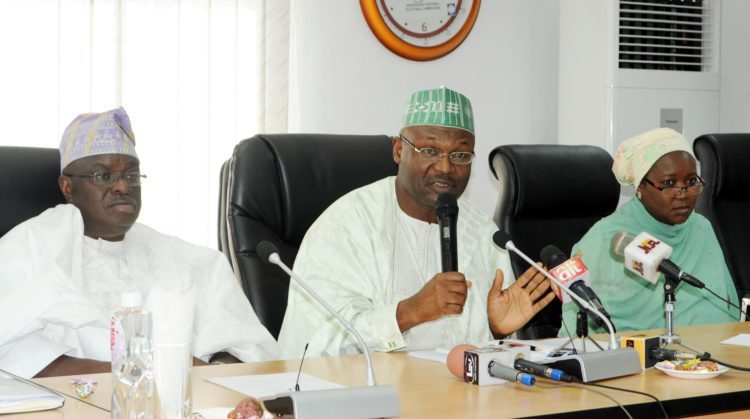
THE Independent National Electoral Commission (INEC) says it has withdrawn 25 certificates of return issued to some candidates who won during the 2019 general elections. The decisions to withdraw the certificates were based on court orders.

Chairman of the Information and Voter Education Committee (IVEC), Festus Okoye, said this at a ‘Forum on Media Coverage of 2019 General Elections’ held in Enugu on Monday.

Okoye said that 20 of the 25 certificates-of-return were withdrawn from All Progressive Congress (APC) members and given to other APC members; while two from People Democratic Party (PDP) members were withdrawn and issued to other PDP members.

He said the other three were withdrawn from APC and PDP and given to other political parties.

“Before we left INEC national headquarters on Friday; the commission has withdrawn 25 certificates of return from the first owners to their new owners following court orders to do that,’’ he said.

Okoye, however, lauded the media for its openness and robust engagement with the commission before, during, and after the election. He said the media had become critical stakeholders for the success of future elections.

He noted that the media had become the first line of reach of the masses as well as the platform for the explanation of INEC political and electoral decisions.

Okoye, therefore, called on the media and its practitioners to dig deep into the Electoral Act to ensure that the import of the recently amended sections is made known to the public.

“The media should also centre on the aspect of using Alternative Dispute Resolution (ADR) to resolve electoral issues especially at the party levels instead of going to the court,’’ he advised.

Speaking, President of the Nigerian Union of Journalists (NUJ), Chris Isigozu, said the media and its practitioners enjoyed a vast and robust relationship with INEC before, during, and after the elections.

Isigozu said INEC performed creditably well given the resources and length of co-operation from other stakeholders involved in the electoral processes.

“However, we are here to evaluate the entire process and see where we can strengthen our engagement and better the electoral system.

“We would be open and say it as it; so that the electoral and democratic processes can be better even as we go into off season elections,’’ he said.

In a welcome address, Enugu State’s Resident Electoral Commissioner (REC), Emeka Ononamadu, noted that evaluation of processes of the elections would help better the electoral processes as well as strengthen institutions and stakeholders involved in the entire processes.

“INEC wants to hear from the media, security agencies, civil society organisations, Non-Governmental Organisations etc on how the election fared. Whether there are avenues to improve on what we have.

“So, INEC is open to receive your objective deliberations and its outcome and we definitely take a critical look at your outcomes in order to better the electoral processes,’’ Ononamadu assured.

(NAN)

Hip hop rising star, Naira Marley remanded in prison for alleged internet fraud

UPCOMING Nigerian hip hop artiste, Azeez Fashola, popularly known by his stage name, Naira Marley, has been remanded in prison by the Federal High Court, Lagos, following allegations of internet fraud, commonly referred to as yahoo yahoo.

The Economic and Financial Crimes Commission (EFCC) filed an 11-count charge against Marey after he was arrested alongside four other upcoming hip hop musicians last week.

After investigations, however, the other suspects were released while Naira Marley remained in detention.

He was arraigned before Justice Nicholas Oweibo on Monday morning and he pleaded not guilty to the charges against him.

The matter has been adjourned to May 30 for the hearing of the bail application filed by Naira Marley’s counsel.

In one of the charges against him, Naira Marley was accused of conspiring with one Yard Isril, who was said to still be at large, to use a debit card belonging to someone else to “obtain gain” to themselves.

According to the EFCC, the offence is contrary to Section 27 (1)(b) of the Cyber Crimes (Prohibition, Prevention) Act 2015 and punishable under Section 33(2) of the Same Act.

The suspect risks a jail term of seven years or more on conviction or a fine of N5 million as well as the “forfeiture of the advantage or value derived from his act”.

Naira Marley came to limelight with his 2017 hit song titled ‘It’s a goal’, but it is his latest single ‘Am I a yahoo boy’, as well as his posts on social media which appear to be supporting internet fraud, that may have landed him in trouble. 

Many musicians have criticised Naira Marley’s perceived pro-internet fraud stance saying there should be no justification for engaging in criminal activities.

The EFCC has upped its clampdown on suspected internet fraudsters across the country. The commission has carried out raids on suspects’ hideouts in different regions in the country, arresting dozens of alleged yahoo boys and confiscating their property which included laptops and luxury cars.

EFCC confirms Imo governor, Okorocha is under investigation


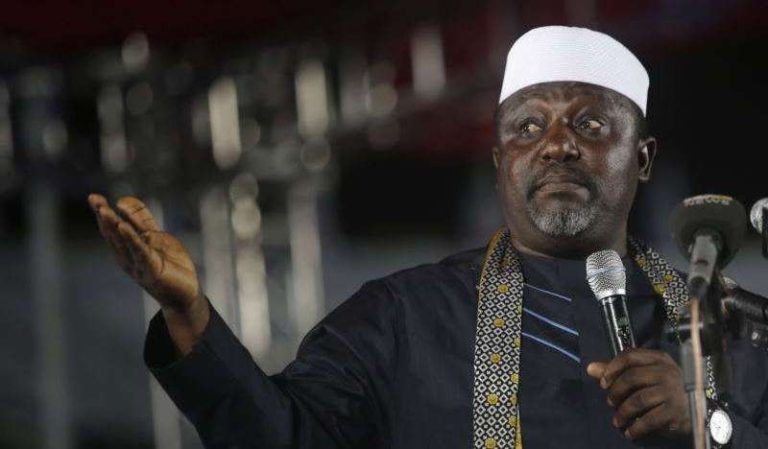
IBRAHIM Magu, Acting Chairman of the Economic and Financial Crimes Commission (EFCC) has confirmed that the outgoing governor of Imo State, Rochas Okorocha, is under investigation.

However, Magu, who is currently in the United Kingdom on an official function, declined to give further details about the ongoing investigation so as not to jeopardise the process.

“Definitely”, was Magu’s response when Channels Television asked whether Okorocha was being investigated.

“Of course, we are doing a couple of checks and investigations here and there. We are investigating almost everybody,” Magu added.

He further explained that what was being reported on social media was different from the facts available to the EFCC hence people should disregard the false reports making the rounds. It is only when the EFCC had gotten to a certain stage in the investigation would the public be notified of the development, Magu explained.

In March this year, ThePunch reported that EFCC arrested the acting Accountant General of Imo State, Uzoho Casmir, on allegations that he laundered the sum of N1.050bn for his principal, Okorocha, through an unnamed new generation bank.

Casmir had worked as a director of finance in Okorocha’s government before he was made accountant-general.

The EFCC suspects that the money was meant to be used for the purposes of vote buying as Casmir was said to have withdrawn the money in three tranches on Tuesday and Thursday leading up to the governorship election.

Okorocha did not contest the governorship election having completed his two-year tenure. However, his son-in-law, Uche Nwosu was on the ballot as the candidate of the Action Alliance (AA). The governor instead supported his son-in-law, abandoning Hope Uzodimma, the candidate of the All Progressives Congress (APC) to which Okorocha belongs.

Both Nwosu and Uzodimma were defeated at the polls by Emeka Ihedioha, candidate of the Peoples Democratic Party (PDP).

Okorocha himself contested and won a seat to represent Imo West Senatorial District in the National Assembly. However, he is yet to be issued with a certificate of return without which he could not assume his position.

The Independent National Electoral Commission (INEC) said Okorocha’s electoral victory was declared under duress and would not be recognised.

For years, Dana Air received donations from Nigerians for illegal charity

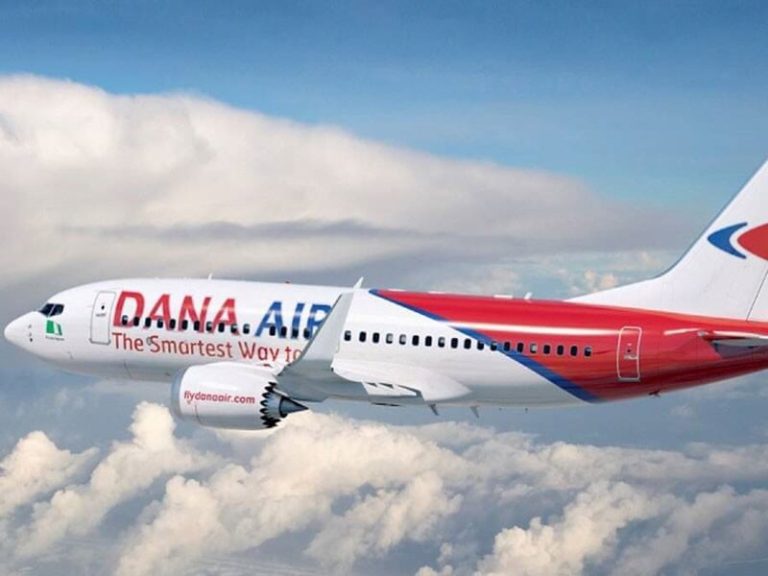
For many years, Dana Air, a domestic airline operator in Nigeria, raised millions of naira through inflight donations to Sri Sai Vandana Foundation, an illegal organisation that was not registered until October last year after The ICIR started its investigations into the airline’s charity business.


ABOUT halfway through the Lagos-Abuja Dana Air flight, after serving snacks and beverage, a plea comes for passengers to donate to charity and a member of the cabin crew thereafter goes through the aisle, handing down envelopes to passengers that indicate interest. 

On one side of the envelope is a superimposed picture of four kids, one has stunted hair growth, another has bulging eyes and all four of them show signs of deprivation with a bold print that pleads with the passenger, “Please give to change my life”. The other side of the envelope shows evidence of what the donation achieves – pictures of children with disability being catered for in an orphanage, plus a detailed explanation about the organisation that receives the donation and its charitable activities.

The passengers’ donation goes to Sri Sai Vandana Foundation, which claims to be a charitable trust founded in 1995 in Nigeria through which the Dana group of companies fulfils its corporate social responsibility. But when The ICIR started investigating the utilisation of the inflight donation, it discovered that the foundation was not registered with Corporate Affairs Commission (CAC), a fundamental requirement for running a Non-Governmental Organisation, NGO, in Nigeria.

All registered NGOs in the country are required to file annual returns to CAC, thus serving as monitoring and regulatory mechanism. Apart from the CAC registration, NGOs in the country are also obliged to get certification from the Special Control Unit Against Money Laundering, SCUMUL, a unit of the Ministry and Trade and Investment, which works closely with the Economic and Financial Crimes Commission, EFCC.

In July last year, The ICIR sent an email and text messages to the Dana Group, asking if the foundation was registered with CAC, how much had been raised from the inflight donation, the names of the organisations that the foundation claimed it has partnered with in delivering charitable activities, and how much each of these organisations received from the foundation.

The Dana Group declined to respond but two months later, specifically on October 19, Sri Sai Vandana Foundation was registered with CAC. That was after many years of its illegal operation in the country and unlawfully receiving donations from Nigerians.

Charity or greed?

One of the pictures on the inflight envelope donation showing charitable activity by Sri Sai Vandana Foundation at the celebration of Nigeria’s 54th Independence in an orphanage in 2014.

The inflight envelope donation was initiated on Dana Air in 2009, about a year after the airline commenced operation in Nigeria. Investigations show that it was the idea of Sickle Cell Foundation Nigeria, carried over from the defunct Bellview Airline.

“We introduced that scheme [inflight envelope donation] in Nigeria,” Ebenezer Adeleye, programme coordinator of Sickle Cell Foundation Nigeria, told The ICIR last week in his office in Lagos. “We started with the defunct Bellview. It was when Bellview folded up that Dana took it up but apparently they saw it as some sort of lucrative thing. They edged us out and started their own.”

Sickle Cell Foundation Nigeria’s partnership with Dana Air started in September 2009 and ran till June 3, 2012, when the airline’s plane crashed in Lagos, killing  159 people. Nigerian aviation authorities consequently suspended the airline.

When Dana Air resumed full commercial flight operation in January 2014, the Dana Group had decided to discontinue the partnership with the Sickle Cell Foundation Nigeria and printed its own inflight envelope donation to raise money for a foundation.

“By the time we asked if they still wanted to do that [the partnership] they said no,” Adeleye said. “Actually, people on that flight told us that ‘they are seeing envelopes on Dana Air but it is no longer Sickle Cell Foundation envelopes.’”

Adeleye disclosed that about N18 million was raised from the inflight donation for nearly two and a half years period that the partnership lasted. Then, the Sickle Cell Foundation printed and branded the envelopes with key messages on sickle cell, a genetic disease that has more people living with it in Nigeria than anywhere else in the world.

Adeleye explained that the partnership with Dana Air then was transparent. The Sickle Cell Foundation’s staffers would jointly remove the donated money from the envelopes with Dana staffers. The money would be jointly counted, recorded in a logbook and deposited into the foundation’s account.

“We are proud to say that all the monies to build this centre were from Nigerians, not a kobo from outside,” Adeleye said, adding that if the partnership with Dana Air had continued, the foundation could have achieved more.

The Sickle Cell Foundation Nigeria has its impressive Sickle Cell Centre opposite the University of Lagos Teaching Hospital and runs dedicated sickle cell clinics in four states. The centre has a laboratory that runs prenatal screening for sickle cell. “Those are some of the things such money [donation] should be doing,” Adeleye said. “We are just filing gap that the government is found wanting.”

At the time of the launch of the inflight envelope donation, Ramesh Hathiramani, chairman of Dana Group, said the collaboration was to raise money for the Sickle Cell Centre. “We believe that the contributions of our passengers will go a long way towards funding some of the projects of the Centre and ensuring that all persons affected by the disorder can live normal, pain-free lives,” he said.


The ICIR reporter was prevented from seeing those in charge of Sri Sai Vandana Foundation

Chasing passengers’ donation

The ICIR obtained three different envelopes that the foundation has used to solicit money from Dana Air passengers since it started its own charity scheme. The ICIR could not establish the year each of the envelopes was printed. Nevertheless, the changes in the envelopes contain invaluable information.

The first envelope did not have an account number and phone number. It simply refers passengers to  “further donation by cheque can be addressed to our office”.  The envelope also has a picture of a group of children with special needs. Underneath the picture is “some of our staff with the underprivileged children at Sai Orphanage-Ajah, Lagos.” The ICIR could not trace the location of this orphanage and could not find it in the list of registered orphanages in Lagos.

The envelope was later replaced by another one, which contains a phone number for further enquiries and an account number at Wema Bank with the name of the foundation. However, a reference to Sai Orphanage is missing in this second envelope.

Meanwhile, providing an account number raises a fresh question. How can an entity that is not registered to operate in the country open a bank account? For NGO to open an account with any bank, it has to provide evidence of legal registration with the CAC. For a few years now, banks have also requested for SCUML certification for NGOs before they can open bank accounts.

The ICIR sent enquiries to Wema Bank to explain how the bank opened an account for a non-profit organisation that was not registered with the CAC then. Both Funmi Falola, the bank’s head of Brand and Marketing Communications and Tunde Mabawonku, the bank’s Chief Finance Officer, declined to respond.

When The ICIR reporter met Falola at the bank’s headquarters in Marina, Lagos, she confirmed that she received The ICIR’s enquiries but she ignored them because she did not have a response. “Yes, I received the SMS but I still do not have a response,” she said.

The ICIR discovered that Ramesh Hathiramani, chairman of Dana Group, is a director in Wema Bank, with substantial shareholding. He is, in fact, one of the longest-serving directors at the bank.

The current envelope which is the third in its development adds a misleading email address that enquiries can be sent to. The email address is sathyasainigeria@gmail.com. But Sathya Sai is an international non-denominational voluntary organisation, founded by a spiritual teacher, Sathya Sai Baba. It originated from India and has branches in many countries, including Nigeria. The ICIR discovered that Ramesh Hathiramani, chairman of Dana Group, is the chair of Zone 9A (Africa) Sathya Sai International Organisation.

The ICIR asked the Dana Group to account for the inflight donation from Dana Air passengers since July 2018, but the request had been ignored until recently.

Envelop shared to passengers by Dana airline during flight. This particular envelope was collected by a passenger on May 18

Okwudili Ezenwa, Media and Communications manager at Dana Air told The ICIR that the questions about the expenditure of the inflight donation would take a long time to respond to. He, however, agreed to meet the reporter at Dana House in Isolo, Lagos to talk about some of the questions raised by The ICIR. But two days to the appointment, Ezenwa called on phone to say that he had to travel and would not be available for the interview again.

The ICIR had asked Ezenwa to send the annual reports of the Sri Sai Vandana Foundation, even if other requests would take the foundation longer time to respond to. Although he agreed to attend to the request, The ICIR has not received any official response from the Dana Group and its foundation.

After Ezenwa cancelled the appointment, The ICIR reporter still went to Dana House to see the coordinator of the foundation but was turned away at the gate after the security officer called someone to ask for permission.

The reporter had earlier called the phone number on the inflight envelope donation which was answered by a man with a thick Indian accent who identified himself as Kumar and the coordinator of the foundation. Kumar had promised to get back to the reporter with the requested information but he never did. The phone number is registered in the name of Rahul Patil, former deputy IT manager at the Dana Group who has returned to Mumbai, India since 2016.

The ICIR reached out to Tony Usidamen who was the head of Corporate Communications and Corporate Social Responsibility at the Dana Group during the time that the inflight envelope donation was launched in 2009, but he declined to talk about the inflight donation.  “I believe a serving official would be in a better position to answer any questions you might have,” Usidamen insisted.

The Dana Group has diversified trading and shipping businesses, as well as interests in pharmaceutical, food and beverage, plastics and auto industries, among others. The conglomerate which is family-owned was founded by its current chairman, Ramesh Hathiramani. He is an Indian, born in West Africa in 1950, according to the Dana Group.

From trading in the 1970s, Ramesh founded a pharmaceutical company which became the springboard for the Dana Group. He has handed the operation of Dana Group to his children: Jacky Hathiramani, group managing director and Gautam Hathiramani, group executive director.

Multiple registration: FG declares war on examination syndicates

FOLLOWING the mind-boggling examination malpractice uncovered in the conduct of the 2019 Unified Tertiary Matriculation Examination (UTME), Minister of Education, Adamu Adamu says the Federal Government would spare no effort to confront syndicates involved in examination malpractice in the country.

Adamu also directed all examination bodies to ensure the clean-up and sanitation of their registration process just like the Joint Admission and Matriculation Board (JAMB).

“Sadly, the youths that should be the hope of the future of the country are deeply involved in the canker. I wish to restate clearly that the Federal Ministry of Education will assist JAMB to ensure that the syndicate in the examination industry is frontally confronted in the overall interest of the country,” the Minister stated this in Abuja at the weekend while opening the refurbished headquarters of JAMB which reportedly cost about N45million.

“I hereby direct that all public examination bodies ensure the clean-up and sanitation of their registration process just like JAMB,” he added.

Represented by the Executive Secretary of National Universities Commission (NUC), Abdulrasheed Abubakar, the Minister said the recent ‘painstaking effort’ of the board at scrutinizing the process of  UTME and its relationship with intent, plans and execution of examination was not a misplaced one.

The outcome of the exercise, he said, had revealed that there was a lot of rot in the education system, which he added, was unfortunate, as it was practised mostly by the youths whom he said, are the country’s hope.

He also stated that the Federal Ministry of Education was in full support of JAMB’s efforts, noting that the government was impressed with the way the Board had been prudent in expending its resources and getting value for same, while also calling on the staff and community to use the facilities efficiently.

Adamu commended the management of JAMB for ensuring service delivery to the public.

“This has continued to be the flagship of the education sector in terms of transparent and honest service delivery,” he said

“There is no doubt about it that the motto of the Board which is Service and Integrity had long visualised the current leadership of the organisation.”

Adamu noted that President Muhammad Buhari’s second term would be an opportunity to consolidate on the gains recorded in the first term, while also improving in areas that average results had been recorded.

“I, therefore, congratulate Dr. Emmanuel Ndukwue, the Chairman of the Governing Board and his team for a wonderful job.”

The ICIR reported that a total of 15,145 results of candidates who were found to have identical data were withheld by the board when it announced the release of the result of 2019 UTME while 59,667 candidates were absent from the examination.


Talkin’ about a revolution

By Simon KOLAWOLE

I ALWAYS hesitate to use the “R” word because I don’t understand how it really works, but a lot of Nigerians have been talking about “revolution” for a while. They say Nigeria will experience a revolution at a point in time, given the way the society has been going: the rich getting richer, the poor getting poorer; the fat getting fatter, the lean getting leaner. One definition goes like this: “Revolution is a fundamental and relatively sudden change in political power and political organisation which occurs when the population revolts against the government, typically due to perceived oppression — political, social, economic — or political incompetence.”

It sounds interesting but many have also argued that a revolution is not possible in Nigeria because “we the people” are “docile”. Some say Nigerians deserve the kind of leaders they have. They collect cash, rice and vegetable oil at election times to trade their votes and are inevitably bound by the choices they make. It is said that morally, therefore, they cannot rise up against the same leaders they put in office after selling their votes. Nigerians are also sharply divided along ethnic and religious lines, meaning there can never be a consensus to rise up against the government in power because it will be resisted by those who have the incumbency advantage.

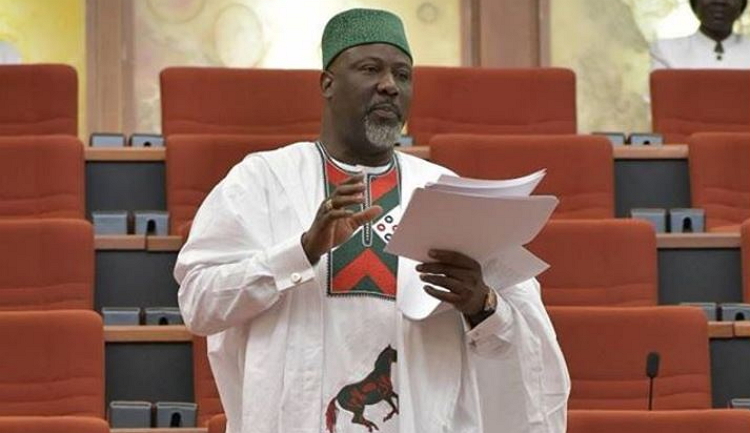
Revolution is too heavy an idea for me to discuss on the pages of newspapers, but Senator Dino Melaye got me thinking with his tweet on Thursday about the “revenge of the poor” and the “perilous times” that lie ahead. He tweeted: “I am afraid of the revenge of the poor, it happened in Russia, France and recently in Sudan. It can happen in Nigeria. Housing segregation put us the elite in jeopardy. Ikoyi, Banana, Maitama, Asokoro etc.  Our leaders + me beware of violent revolution. Perilous times loading.” Coming from a senator who has more fancy cars than the hairs on my head, the warning hit me like a half-hearted satire but I managed to survive it.

In my previous article, “Whatsoever a Man Soweth” (May 12, 2019), I did warn that nobody is safe in Nigeria, including those who think they are covered by a convoy of armed escorts. I also said that the rebellion by the vulnerable elements of the society seems to be in full motion as Nigerians groan under the pandemic of kidnapping, banditry, terrorism, internet fraud and all kinds of criminality. Unfortunately, the security system designed to protect the high and the mighty is failing. It is not just the poor and the lowly that are bearing the brunt, although it is only when the big fish are victims that we make so much fuss over the calamity that has befallen us as a people.

I don’t know if Senator Melaye actually meant what he was saying but I will, all the same, give us a few examples of how our legislators are contributing to the state of the union and how they are making “perilous times” inevitable — except they change their ways. As I will always argue, our leaders should stop thinking that Nigeria is like this because of some mistake or coincidence. No. We are only reaping what we have been sowing. What we failed to plan for yesterday is coming back to bite us today and unless we plan for tomorrow as a matter of urgency, the harvest is going to be bountiful but unpleasant. The ruling elite must chew over this again and again.

The first thing the lawmakers must realise (and I refer to both state and federal legislators because I don’t believe Abuja is the only problem) is that there is a link between their greed — the obscene allowances, extortion-driven oversight activities as well as padded budgets — and the poverty and insecurity in the land. It is a very simple matter. In a country where tens of millions are unemployed and those who have jobs are struggling to survive, each senator is pocketing N13.5 million “running cost” in a month. We still don’t know what members of the house of reps take home every month, neither can we say anything about state legislators. Maybe theirs is even fatter and juicier.

Imagine if the lawmakers — at all levels — are determined to live a decent life and are not obsessed with grabbing every naira in sight. Imagine they are working round the clock to hold the executive accountable for the budgets that are passed every year. Imagine that the lawmakers make sure what is budgeted for roads goes into roads, every kobo earmarked for education goes into education, and every naira allocated to health goes into health. Imagine that those public hearings are actually meant to hold MDAs accountable and expose the rot in the system. Imagine that the Auditor-General’s reports are used by the lawmakers to clean up the system rather than to extort.

Unfortunately, the lawmakers are a big burden on Nigerians. Not so long ago, the Bayelsa state house of assembly passed a bill granting themselves pensions. The speaker would take N500,000 monthly, the deputy N200,000 and the others N100,000. This, we must understand, is different from the severance package, which the rest of us are not privileged to know. We can only guess that it will not be miserly. All of this happening in a state where the majority of the people are struggling to make ends meet. So we run a society where the fat are getting fatter and are not ashamed to keep sewing bigger coats for themselves every day. But Nigerians are watching.

Not to be outdone, Kano state lawmakers have also passed their own law to award life pension to their principal officers. They will also be entitled to foreign medical treatment for life — while the people who voted them into office are not entitled to common paracetamol at the public hospitals. The lawmakers in several states, working as rubber stamps of incumbent governors, passed pension laws that awarded former governors new cars every three to four years, in addition to mansions in the state capitals and Abuja, foreign medical treatment and other sickening benefits. Nigerians are programmed to be exploited by their leaders in and out of office! The inequality is wicked.

The bazaar of budget padding by lawmakers is one of the most evil developments in this democratic dispensation. A former lawmaker once challenged me to define “budget padding” and I was wondering if he was pulling my leg. It so happens that an agency will prepare a budget of N10 billion and the supervisory legislative committee will tell the agency it can double the figure to N20 billion if they can bring a certain amount in cash upfront. Some lawmakers will even insist on nominating contractors for projects smuggled into the budget, and you and I know that the job may not be done at all. How can any society make progress that way? How can?

Melaye is talking about the coming “revolution”. Yes, the behaviours of the power elite are in the public domain. Nigerians are watching. They listen to the news every day and can tell you what the lawmakers are doing with our commonwealth. They are seeing pictures and videos on social media. They are reading the charges filed against politicians in court by the Economic and Financial Crimes Commission (EFCC). They know all these things. Nothing justifies criminality and I will never vote for criminality, but maybe it is time for Nigerian politicians — not just the lawmakers — to see how their greed and lifestyles are hurting Nigeria’s progress and breeding criminals.

You can always argue that we should not use poverty to explain the growing criminality in the land. But we need to step back again and again and ask the question: why are certain crimes becoming attractive to our young people? Many of those being arrested are university graduates and brilliant people whose energies have been deployed for the wrong use because they have nothing gainful to do. I will, therefore, conclude with the same admonition: the time has come for the Nigerian elite to have a “meeting” and agree to change their ways. Things cannot continue like this. They must forsake their greed and redirect our commonwealth from personal comfort to communal progress.

To make my admonition simpler: let our budgets and resources be utilised to build a society that prioritises the welfare of the majority and not the pensions, wardrobe allowances and DTAs of a tiny minority. Governors’ convoys must grow leaner and the presidential jets must reduce in population. Tracy Chapman, the American singer, sang in 1988: “Don’t you know/They’re talkin’ ’bout a revolution/It sounds like a whisper/While they’re standing in the welfare lines/Crying at the doorsteps of those armies of salvation/Wasting time in the unemployment lines/Sitting around waiting for a promotion.” Those who have ears, let them hear.

AND FOUR OTHER THINGS…

CHICKEN CHANGE

Abdulgafar Ayinla, a member-elect of the Kwara state house of assembly, has been arrested by the EFCC over an alleged N26 million property scam. Ayinla, a legal practitioner, allegedly defrauded a US-based client in a property deal. He is accused of collecting the money without delivering service and has allegedly confessed to the crime, promising to refund the N26 million to the petitioner as soon as he is inaugurated and he — wait for this — collects his “wardrobe allowance”! The lawmakers are really feeding fat on the treasury. Of course, he will be sworn in as a lawmaker. That is the way we roll. And we still wonder why Nigeria is like this. Honourable!

LOOT AND LAUGH

If you are a public officer in Bauchi state, I have some news for you: you can now loot and laugh all the way to the bank. The Bauchi state house of assembly has repealed the law on the recovery of looted public funds and properties. The law was passed on the floor of the house with only 13 out of 31 members in attendance. Governor Mohammed Abubakar had signed the law establishing Public Property and Funds Recovery Tribunal in 2017 allegedly to deal with his predecessor, but now that he is about to become a predecessor himself, he does not want to have a dose of his own medicine. And life will continue as usual. And we will keep wondering why Nigeria is like this. Licence.

SMOKING HOT

Is the grass greener on the other side? Rotimi Akeredolu, governor of Ondo state, has joined Omoyele Sowore, former presidential candidate, in stressing the value of marijuana business, which is projected to hit a global value of $145 billion by 2025. “We all know that Ondo State is the hotbed of cannabis cultivation in Nigeria… we would be shortchanging ourselves if we failed to tap into the legal marijuana market,” he said. Of course, there is a difference between medical use of marijuana, which has been identified as a cure for diseases such as epilepsy, and recreational use — which we regard as a vice. Marijuana is gradually becoming a burning issue in Nigeria. Highlight.

MYTH BUSTER

The full meaning of “sir” is “Slave I Remain”, isn’t it? It was a word introduced to Indians during the British colonial rule to make them subservient to their colonisers for life, according to the urban legend. While India was under various forms of British colonial rule from 1612 to 1947, the word “sir” entered the English language in 1297. That means it was in use about four centuries before India was colonised! Indeed, “sir” was a formal English honorific address for titled knights, not slaves, derived from “sire”. It was also used as a respectful address to “senior commoners”. Sir, sire, seigneur and senior all grew up together in the evolution of language. Fact.

Simon Kolawle is the founder and CEO of TheCable. He tweets @simonkolawole.

Hypertension still killing many Nigerians despite govt policy to reduce the number

WHEN Tanko Gwapna, a 46-year-old civil servant, felt continuous dizziness that affected his work, he had to listen to his wife’s advice to visit the hospital. He was earlier treated for Malaria, but the dizziness persisted. Eventually, he had his blood pressure measured and was diagnosed with hypertension.

That was in 2002. Tanko is still managing hypertension, 17 years later.

Hypertension, also known as high or raised blood pressure, affects millions of Nigerians.

Blood pressure is created by the force of blood pushing against the walls of blood vessels (arteries) as it is pumped by the heart.

The higher the pressure the harder the heart has to pump. Blood pressure reading comprises of two values: systolic and diastolic pressure. Any number above 140 over 90 is considered high.

This reporter met Tanko, now 63 years, on Thursday, May 16,  when he came for another routine checkup at the Wuse District Hospital, Abuja. His blood pressure was checked at the Medical Outpatient Department clinic, and measured 179 over 90, a figure that shows a high in the systolic pressure.

His treatment over the years has included a modified diet and a daily intake of anti-hypertension drugs.

“Whenever I get my salary, the first thing I do is to set aside the money for my drugs,” Tanko said to relate the importance of the medications to him. “Every month I set aside between N50 to N80 thousand”

“It is better living with a financial burden than not buying the drug and I die,” he said.

Though he is an National Health Insurance Scheme, NHIS, beneficiary, Tanko said he gets the medications paying out-of-pocket.

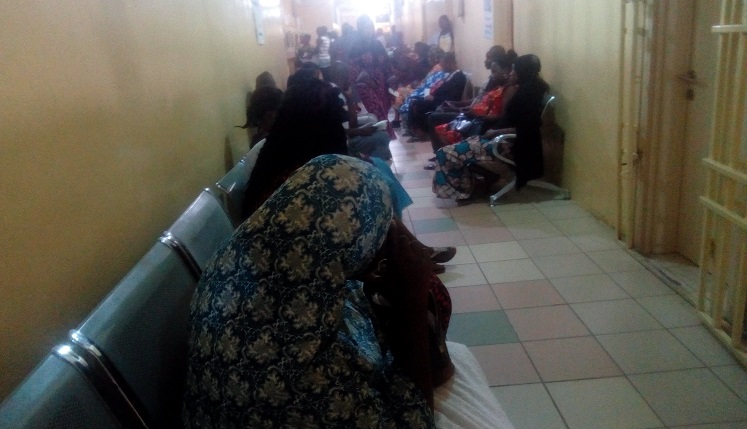
Tanko in white on a queue with other patients at the waiting area of MOPD clinic at Wuse District Hospital, Abuja. Credit: ICIR.

The disease, for Tanko, also came with complications. He had suffered a knee problem earlier between February and March. “You know when a man, as aged as I am, start crying out of pain, you should know that the thing must be very grievous,” Tanko narrated to The ICIR the pain he went through. Though after receiving a series of treatments, he said the condition disappeared.

Studies have shown that hypertension increases the possibility of knee arthritis, a condition that leaves the patients with a throbbing pain on the knees’ joints.

Tanko, who has been advised to be at the clinic on a regular basis, complained of the crowd in the clinic, causing patients to wait for too long.

“On some clinical days, I discover that this place is like a market. There are days I leave the clinic as late as 5:30 pm after arriving very early,” he said, stressing the shortage of doctors compared to the number of patients.

“Even that situation alone is enough to cause hypertension for me”.

The akara seller who suffers hypertension

Just like Tanko, Adamu Lami, a petty trader who sells bean cakes, commonly known as akara in Gwarinpa area of Abuja, also suffers from hypertension.

Lami was diagnosed as hypertensive in 2004 after a visit to the hospital due to a complaint of sleepless nights and persistent headaches.

Since then, Lami has been visiting the hospital on a monthly basis, but sometimes once in three months. As she does not have a personal blood pressure monitoring machine, she checks when she comes to the hospital after making the usual payment of N500 for registration.

At the hospital, she went straight for her blood pressure check. The figure was written in a paper for her, 163 over 103. It was high, the matron in the MOPD clinic told her.

“The madam (matron) advise me now to stop frying akara,” Lami said. “But wetin I go do,” the mother of six children said, agonising about how ending the business would result in financial difficulty.

Adamu Lami at the Medical Outpatient Department of the Wuse District Hospital, Abuja. Credit: ICIR
Adamu Lami, on Thursday, at the Medical Outpatient Department of the Wuse District Hospital, Abuja. Credit: ICIR


Efosa Obamwonyi, a Senior Registrar at the Obafemi Awolowo University Teaching Hospital (OAUTHC) told The ICIR that a very high BP, like Lami’s, was as a result of non-compliance with the drug prescription.

Hypertension is a disease that affects about 1.13 billion people worldwide, according to WHO statistics in 2018. Africa has the highest percentage of cases of hypertension.

According to the data, about 23.9 per cent of Nigeria’s population aged 18 years and above are hypertensive. That means that more than 38 million people have hypertension in country, a ratio of almost one in every four Nigerian.

Need to fight hypertension

Oladipupo Fasan, a consultant cardiologist at the National Hospital, Abuja told The ICIR that hypertension is a disease that one should not neglect.

Hypertension could lead to other diseases like stroke, heart failure, heart attack, eyes problem, knee arthritis and kidney failure, he said.

. “Anybody who is hypertensive can have these complications if not well managed.”

According to him, 80 per cent of Nigerians who develop hypertension may not know the specific cause. “Most of our patients fall into essential hypertension. We (doctors) cannot categorically classify what lead to their hypertension.”

He outlined the risk factors leading to hypertension as high salt consumption, obesity, excessive alcohol consumption, tobacco consumption, sedentary lifestyle with lack of exercise and a family history of hypertension.

For hypertension, there is no specific symptom, “that is why it is a silent killer”, Fasan said. He advised people should always measure their blood pressure regularly.

Hypertension on the rise despite government policy to reduce the number

There is a projection of 25 per cent relative reduction in hypertension prevalence by 2025, according to the targets contained in the national plan.

The national strategic plan of action on prevention and control of non-communicable diseases, including hypertension, was adopted in September 2015 to be achieved by 2025.

In the plan, hypertension was speculated as the commonest heart disease in Nigeria and the following targets were set to achieve a reduction in the modifiable factors that can lead to hypertension.

  • Tobacco: 30 per cent relative reduction in the prevalence of current tobacco use
  • Alcohol: 10 per cent relative reduction in overall alcohol consumption (including hazardous and harmful drinking).
  • Physical inactivity: 10 per cent relative reduction in the prevalence of insufficient physical activity.
  • Dietary salt intake: 30 per cent relative reduction in mean adult (aged ≥18) population intake of salt, with the aim of achieving the recommended level of less than five gram per day.

Four years after, however, there has not been any report on the progress made in realising the strategic plan.

In fact, the level of tobacco consumption has increased over the years not only among adults but in minors too. A report noted that one in four Nigerians aged below 18 has access to tobacco.

According to a research published on Pan African Journal, developing and implementing a strategic plan for physical activity are the best strategies that can help Nigeria move towards a more physically active population and society,

But Nigeria is yet to develop a national plan on physical activity, and this is part of the reason hypertension is on the rise in the country, Fasan said.

“Cases of hypertension is on the increase because we are yet to deal with all the modifiable factors in this country. There are no recreational centres in our communities, hence few Nigerians exercise regularly. And to take a walk sometimes, vehicular movements swarming around would even dissuade you to undertake such exercise,” he said.

Dressing Iran for barbecue

By Owei LAKEMFA

IT was Sunday, May 12, near the port of Fujairah, in the Gulf of Oman, United Arab Emirate (UAE). Four commercial ships were bombed. Two of them, Amjad and Al Marzoqah are tankers owned by Saudi Arabia; the third, A. Michel, a UAE flagged fuel bunker barge; and the fourth, a Norwegian tanker, the Andrea Victory.

The attacks fitted perfectly into the United States (U.S.) Maritime Administration’s alert of Thursday, May 9, which claimed that: “Since early May, there is an increased possibility that Iran and/or its regional proxies could take action against U.S. and partner interests, including oil production infrastructure, after recently threatening to close the Strait of Hormuz. Iran or its proxies could respond by targeting commercial vessels, including oil tankers, or U.S. military vessels in the Red Sea, Bab-el-Mandeb Strait, or the Persian Gulf.”

So what other proof is needed? Who does not know that Iran blew up the ships; is that not logical, or is it not what those preparing Iran for barbecue want the world to believe?

The Emirati minister of state for foreign affairs, Anwar Gargash announced “investigations” but said his country had already made its “own readings and conclusions.” He then made a rallying call that: “The international community (should) assume its responsibilities to prevent any parties trying to undermine the security and safety of maritime traffic.” It was a little veiled invitation for Western powers to carry out an invasion.

A day after the incident, the UAE invited the U.S. to “investigate” the situation. What gave the UAE the impression that it is the U.S. – which has announced its intention to destroy Iran – that is best suited to investigate? By inviting the Americans to investigate, the UAE had excluded the U.S. from any suspicion or complicity. By extension, it has also excluded American allies, because the U.S. is unlikely to indict its allies.

The UAE is not giving Iran the benefit of doubt. It is also not giving an ear to the cries of the Iranian Foreign Ministry that these attacks might be part of the: “plots by ill-wishers to disrupt regional security.”

Within hours of the American military investigation team getting to the UAE port, it made a predictable “initial” assessment, finding Iran guilty. The Americans leaked a report claiming that Iranian or Iranian-backed proxies used explosives to blow a 5-to-10-foot hole in, near or just below the water line of each of the ships.

That same Monday the U.S. was invited to “investigate” the attacks, its secretary of state, Michael Pompeo, flew to Brussels for talks with Germany, France and United Kingdom on how to handle Iran.

Saudi Arabia also has its own conclusions. Its energy minister, Khalid al-Falih said the bombings were part of plans to “undermine the freedom of maritime navigation, and the security of oil supplies to consumers all over the world.”

If we follow the Saudi logic, then which group or country has motives to endanger maritime navigation and oil supplies in the area? Certainly, it is not Iran because its national interests and economic survival are tied to free maritime navigation in its the Persian Gulf, which is an extension of the Gulf of Oman (Indian Ocean). Iran also has no reason to sabotage oil supplies because it derives 80 per cent of its earnings from oil, while 45 per cent of its workforce is in the industry. As such, despite American sanctions, military buildup and threats of invasion, it would amount to committing suicide for Iran to endanger oil supplies in the same waters it uses to sell its own oil.

Besides these, the unprovoked American sanctions against Iran are biting, while the Americans are flying their F-15s, F-35s and B-52 bombers in the Persian Gulf. The Iranians are seeking how to overcome these challenges and defend their country. Hence, it will make no sense for them to attack civilian ships in the UAE, including Saudi tankers and a European vessel. The Iranians are intelligent enough to know that such an act is likely to pitch them militarily against the combined forces of the Gulf Cooperation Council, which includes Saudi Arabia, UAE, Kuwait, Oman and Bahrain.

Again, we can ask, which groups or countries stand to gain in an armed conflict between Iran and the Gulf States? Which countries stand to benefit if the Muslim states attack each other or if their territories become battlegrounds? Which countries have been threatening to attack Iran and will, therefore, be glad if this job is done for them by the Gulf states? Which countries are supplying weapons in the Gulf and would want more sales? Which will be interested in getting their more modern weapons tested in a real war situation?

I suspect that the attacks were carried out to pitch the Gulf states against Iran or present a basis for declaring war against it. This deceptive art of levying war is an ancient one. When Britain decided to colonise Uganda in the 19th Century, it secured the services of a mercenary, retired Major Frederick John Dealtry Lugard to pacify its inhabitants. Lugard sent agents into the majority Muslim areas to kill Christians and blame it on the former, and then sent other agents into Christian areas to kill Muslims in supposed retaliatory attacks. This led to war and after the Ugandans had significantly weakened themselves, Lugard intervened to impose peace and colonialism.

Texas was part of Mexico. The emergent American state invaded Mexico and annexed Texas. Then in 1844, America offered the Mexicans $25 million to buy New Mexico. The offer was rejected, so America under President James Polk decided to engineer a pretence for war. It got General Zachary Taylor to carry out patrols on the uncharted American-Mexico border. This led to a skirmish and America declared war. Through such subterfuge, America extracted 500,000 square miles of land from Mexico.

When America and Britain eyed Iraqi oil in 2003, they manufactured the falsehood that President Sadam Hussein was supporting terrorist groups and that Iraq had weapons of mass destruction, which Prime Minister Tony Blair claimed represented: “a real and present danger to Britain”. On the other hand, American President George Bush lied that Sadam was importing large quantities of uranium from the Niger Republic to build nuclear weapons.

If the West wants war in Iran, it can do so under any pretext, including claiming to fight terrorism, defending democracy, rescuing the Iranian people from dictatorship, defending maritime trade or finding it guilty of bombing the four ships in the UAE port. However, it should think it through; a war against Iran can easily degenerate into a religious war leading to an international conflagration, which may consume a number of nations and send millions to early graves. It is cheaper to allow for peace.


Owei LAKEMFA, a former secretary general of African workers, is a human rights activist, journalist and author.

Nigeria keen to help Gambia replicate TSA policy

THE Office of the Accountant-General of the Federation, OAGF, says it will fully support the visiting Gambian team on its quest to learn operations of the Treasury Single Account (TSA).

A statement by Henshaw Ogubike, the Deputy Director, Press, OAGF, on Friday in Abuja, said Mohammed Usman, the acting Accountant-General of the Federation (AGF), gave the assurance.

Usman gave the assurance when he received the Gambian delegation who were in Nigeria to understudy the workings of the TSA.


READ ALSO:

He assured the team that the OAGF was prepared to share experience with it on TSA on its operates in Nigeria so it could replicate same in Gambia.

He said Nigeria would tap from the Gambians’ success story on Government Integrated Financial Management Information System (GIFMIS).

He also recollected how Gambia had hosted delegations from Nigeria on a study tour of GIFMIS about 15 years ago.

Usman itemised the activities lined up for the team which includes, lectures by subject matter experts, interactive sessions, and meeting with key stakeholders.

He added that the team would also visit Lagos where it was scheduled to meet some of Nigeria’s key players in the e-payments and FINTECH space whom he said were vital to an endeavour like TSA.

Sylva Okolieaboh, the Director, TSA, enjoined the visiting team to pay attention to every little item slated for discussion.

He promised to deliver on the promise of the Minister of Finance, Zainab Ahmed, to supply all their needs in terms of adequate knowledge of TSA so that the dream of a standard TSA in Gambia could be realised.

The team had earlier paid a courtesy call on the Minister of Finance who advised that relevant states that had implemented TSA successfully in Nigeria should either be visited or invited over to Abuja to avail the Gambian team their experiences. This, he said, was to equip them properly to successfully implement it in The Gambia.

The Gambian Team was led by the Permanent Secretary, Ada Gay, and Momodou Bah, the Accountant-General, Ministry of Finance and Economic Affairs.

They both spoke of their expectations of learning a whole lot from Nigeria to enable them break the bottlenecks that may likely impede their progress in the delivery of TSA.

(NAN)