Home Blog Page 2438

NBET managing director Marilyn Amobi involved in billions of fraudulent contracts

0

THE managing director of the Nigeria Bulk Electricity Trading Plc (NBET), Marilyn Amobi, fraudulently paid at least N2 billion to two power generating companies, documents obtained by Leaks NG have shown.

Leaks NG, founded in 2018, is Nigeria’s collaborative investigative initiative of eight leading newsrooms in the country.

The documents also revealed that Amobi, who was appointed the substantive head of NBET in July 2016, was also involved in a series of corrupt acts such as subversion of board approvals and infraction of procurement laws.

Fraudulent payments to GENCOs

NBET manages the electricity pool in the country’s electricity supply industry. A few weeks after she was confirmed as the managing director, Amobi started overpaying two power generating companies – Omotosho Electric Genco and Olorunsogo Electric Company.

This was a flagrant violation of the details of a Power Purchase Agreement (PPA) which the companies signed with the government in February and August 2016, respectively.

The PPA is an agreement between NBET and power generating plants for the sale and purchase of energy generated by the plants. Embedded within the PPA are the Gas Supply Agreement (GSA) that covers the supply of natural gas to the generating plant and the Gas Transportation Agreement (GTA), which is an agreement between gas transporters and power generating plants.

According to the PPA, to qualify for full payment, generating plants must provide evidence that they have active GSA and GTA or else the power purchase agreement would be deemed inactive and would only receive payment for the power they supplied.

“Seller (Omotosho Genco) hereby agrees that any claim for Available Capacity payment under the PPA are conditional on the Seller providing evidence acceptable to the Buyer (NBET) confirming that it has a legally binding and enforceable Gas Supply and Aggregation Agreement and Gas Transportation Agreement, in accordance with clause 3.2.2 and 4.2.1 of the PPA,” the agreement obtained by Leaks NG stated.

However, despite the fact that Omotosho did not provide evidence of gas supply aggregation and transportation, the company continued to tender request for full payment for 20 months. According to the document in possession of Leaks NG, the over-invoicing was detected in October 2017 following an NBET internal audit.

On September 22, 2016, NBET had written to Omotosho requesting that it fulfils the condition for the PPA. The generating company was first given a 30-day grace to provide the necessary documentation. The window to provide the document was later extended to 90 days, yet it never provided the document.

For instance, in June 2017, Omotosho supplied energy to the tune of 33.16 megawatts but invoiced up to 161.74 megawatts.

This implies that Omotosho laid claim to an excess of 128.58 megawatts as excess capacity for the cycle.

For this capacity, Omotosho requested for payment of N1,023,532,574 instead of N209,824,177, leaving an excess of N813,708,397 for the capacity in June 2016.

Similarly, Olorunsogo Power Plc, whose PPA took effect from August 2014 in the said month, tendered 11.9 megawatts for energy while 197.83 as capacity. Since the PPA was not active, the capacity ought to be equal to the energy to make the firm qualify for payment as stated in the agreement.

Olorunsogo issued an invoice of N1,251,881,528 for capacity for June 2016 as against N75,363,267 calculated by its actual energy. The difference is an over-invoicing of N1, 176, 518, 261.

For both firms, the over-invoicing amounts to N1,990,226,658 as excess in just one month, June 2016.

Leaks NG could not lay hold on all invoices issued by the companies. The two we obtained showed that NBET made partial payments to the companies.

In one of the invoices, Amobi paid Omotosho N339, 813, 418 in October 2016. The fund is part payment for July 2016 energy and capacity.

On the same date: October 11, 2016, NBET paid Olorunsogo N372, 498, 731 also as part payment for July.

These payments are clearly in breach of the PPA and the Nigerian Electricity Regulatory Commission (NERC) order of Transitional Stage Electricity Market (TEM).

Order IV of The TEM states that: “Gencos without effective PPAs shall be paid for their delivered energy and delivered capacity by NBET (Delivered capacity for the purposes of this order means the capacity equivalent of the energy delivered at Gencos busbar.”

These illegal payments would not have been possible without Amobi’s insistence.

While the Internal Audit of NBET refused to process the payment, Amobi signed the July payment on October 13, 2017 assuming the role of internal audit in violation of financial regulation.

This is a breach of Section 1705 of the financial regulations which states that “the Head of Internal Audit Unit in all ministries/extra-ministerial offices and other arms of government shall ensure that 100 per cent pre-payment audit of all checked and passed vouchers is carried out and the vouchers forwarded under security schedule direct to the appropriate Central Pay Office for payment. Checked and passed vouchers received in the internal audit Unit must be promptly dealt with and, under no circumstances shall a voucher be held in that unit for more than forty-eight (48) hours.”

Illegal payment to law firms
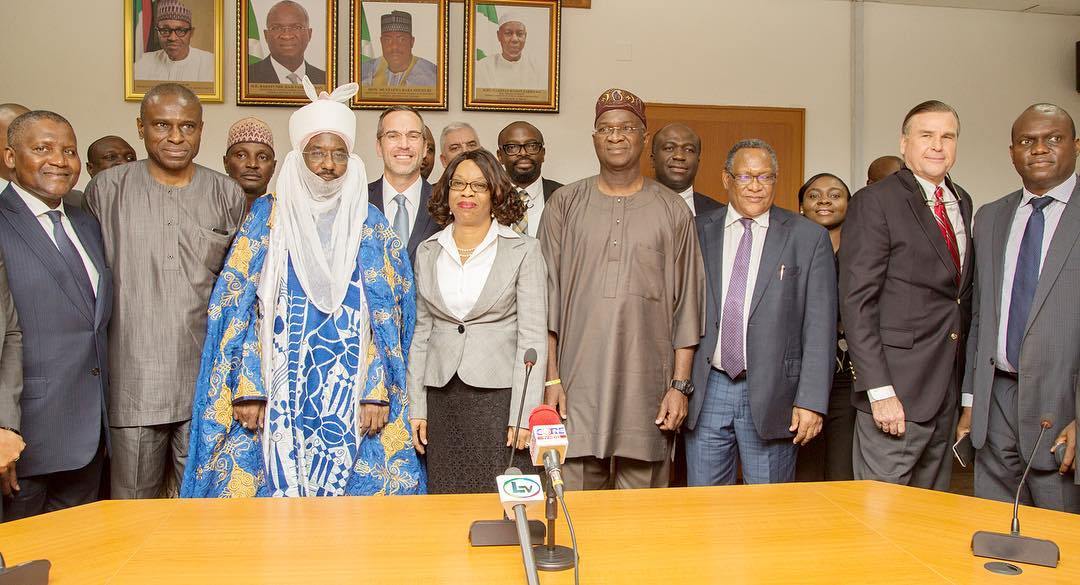
Minister of Power, Works and Housing, Mr Babatunde Fashola (4th r); Permanent Secretary, Power, Mr Louis Edozien (2nd l); Managing Director, Nigerian Bulk Electricity Trading Plc (NBET), Dr Marilyn Amobi (4th l); Emir of Kano, Muhammad Sanusi II (3rd l); Chairman, Dangote Group, Alhaji Aliko Dangote (l); US Ambassador to Nigeria, Mr Stuart Symington (2nd r); NNPC Chief Operating Officer, Mr Saidu Mohammed (3rd r) and other participants, after the signing of Power Purchase Agreement for the Qua Ibo Power Plant’s with NBET in Abuja on (6/10/2017). Photo Credit: Premium Times

Sometime in 2014, NBET wrote the Bureau of Public Procurement (BPP) to request the agency sign off on power procurement and retroactive no objection in procurement.

The request simply means that NBET requests to be excluded from being subjected to BPP act in its power purchase agreement. The request was declined by BPP.

In a response dated April 29, 2014, BPP stated that NBET, like other agencies, must follow due procurement process in power procurement.

BPP noted in its reply, “That if section 5 (a) of PPA was intended to exclude some sectors like the Power Sector, it would have been stated clearly. Consequently, giving NBET a one-off approval for NBET’s power procurement process would not only amount to a contravention of the Act, but it would also open a floodgate of similar requests thereby engendering confusion in the system.

“It is pertinent for NBET to note that electricity (being goods) can only be procured within one of the procedures stated in part 42.4 of standard bidding documents.

“The bureau therefore strongly advises that NBET should consult the Public Procurement Regulations manuals for complex projects and standard bidding documents for procurement of goods, as this would assist NBET in complying with extant procurement rules and regulations.”

However, the management of NBET, then under the leadership of its inaugural managing director, Rumundaka Wonodi, was unsatisfied with the position of BPP. The agency sought legal advice on the way forward.

On June 1 2015, NBET advertised a notice for an expression of interest to engage lawyers in such cases, more specifically on BPP’s response.

According to the advert, the successful law firm was expected to discharge such duties as, “General, corporate, commercial and administrative law, with a view to advising NBET on general commercial and contract matters, providing legal opinions as necessary, and advising on various civil law.”

According to a report by NBET’s evaluation committee, three firms: Azinge and Azinge, Chukwuka Ugwu and Associate and John Erameh submitted bids.

The process was, however, truncated upon advice by the Internal Audit Department of NBET.

Surprisingly, in April 2017, two years after, the Internal Audit received a request from Amobi for payment of N30 million to two firms.

Amobi wanted Azinge and Azinge to be paid a contract sum of N14 million and Aelex N16 million respectively.

The process that led to this request was one replete with infractions and breach of public procurement law.

It is worthy of note that the procurement process was stopped in 2015 and if there would be a need for the services of law firms in 2017, the process of engagement was supposed to take an entire new process according to procurement laws.

The BPP Act in Section 16(1)(b) states the process of procurement; “based only on procurement plan supported by prior budgetary appropriations and no procurement proceedings shall be formalised until the procuring entity has ensured that funds are available to meet the obligations and subject to the threshold in the regulations made by the Bureau, has obtained a “Certificate of ‘No Objection’ to Contract Award” from the Bureau.”

There was no new advertisement or procurement process but Amobi presented the two firms for payment.

Surprisingly, one of the firms laying claim to payment, Aelex, was not part of the 2015 process, as the firm was not captured in the evaluation report.

Illegal payment to consultant

In 2016, NEXANT, a software and energy firm, engaged a former staff of Power Holding Company of Nigeria (PHCN), Uzoma Achinaya, to provide advisory and analytics work for NBET.

According to the arrangement, Achinaya would work for NBET for a period, present a report to NEXANT and claim his payment from NEXANT.

This indeed happened. But instead of NEXANT paying the consultant, NBET’s leadership decided to pay him despite not being party to the engagement agreement.

On January 23 2017, Achinaya wrote Mrs Amobi requesting NBET to pay him N7 million advance payment for the work he had done so far.

“I refer to the advisory and analytics work that l have done for NBET on the sustainable solutions to the Liquidity Challenges in the Nigerian Electricity industry.

“I appreciate the steps NBET management is taking to resolve the issues with NEXANT regarding my contract which has resulted in the delayed payment of my fees for the services rendered. However, I have some very urgent family commitments, including school fees for my children, which need immediate funding. It will be appreciated if I can be granted a payment advance in the sum of Seven Million Naira (N7, 000, 000.00}, in lieu of the money I am owed for the work already done, to enable me meet some of these commitments.

“The amount should be recovered from my payment when the issues with NEXANT are finally resolved.”

The irregularities in the request were flagged by the Internal Audit, which declined payment to Mr Achinaya.

The audit department argued that it declined the payment because Mrs Amobi’s N7.5 million request was above her N2.5million approval limit and that the process of contracting was not subjected to any procurement process.

Internal audit also argued that the consultant does not have a Tax Identification Number (TIN) as stipulated by procurement law, inside sources told Leaks NG.

To bypass the procurement part, Amobi allegedly directed the Parastatal Tenders Board of NBET to seek consideration and approval for the requested fund.

The board submitted its report in March claiming that due process was followed in the award of the consultancy contract.

The memorandum for consideration and approval indicated that the bid was opened on March 1, 2017, with a deadline of March 6.

At the end of the process, two individuals were said to have emerged out of five expressions of interest received; Joe Agah with 59.7 total weighted scores and Uzoma Achinaya with 95.1.

The contract was later awarded to Achinaya at the sum of N25, 850, 000.

Even at that, the board did a shabby job in the cover-up.

The consultant started work in 2016, requested for payment in January 2017 for his ongoing work but the NBET management instituted a post-dated procurement process to make the payment possible.

Transfer of staff without board approval

In 2017, Amobi made a request to the Accountant-General for officials from his office to be transferred to NBET to head the Internal Audit and Finance departments. Inside sources alleged that she made this request because she felt the officials who headed the department at NBET was standing in her way.

The request was granted in June 2017. The AGF posted Hauwa Bello from the National Centre for Women Development (NCWD) to head the Internal Audit. He also posted Sambo Abdullahi to the Learning and Development, a newly created department at NBET.

Waziri Bintube of the Finance Department was reposted to Risk and Guarantee, another department created by Amobi allegedly to victimise the two top officials.

A month earlier, Amobi had facilitated the transfer of two people, Ajulo Adesola from the National Agency for Science and Engineering (NASENI) and Acho Onyechege from the Ministry of Niger Delta Affairs to NBET as treasury officers.

Though the new postings were communicated in a letter by AGF on May 30, 2018, they flouted the requirement of NBET charter which places the responsibility of recommending postings within the agency on the Human Resources Committee of NBET.

Section 2.4 (b) of the charter state that the Human Resource Committee shall ‘review and make recommendations to the Board for approval of the Company’s organisational structure and any proposed amendments.’

Although the Accountant-General reserves the authority to approve such reviews, the office does not have the power to make postings.

Amobi evasive, abusive

When contacted to respond to the series of allegations against her, Amobi rained abuses on Leaks NG reporter.

Without first listening to the reporter’s questions, in a statement, replete with swear words, she said she would not comment on any of the allegations because the issues are in court.

“If they are things about NBET that are currently in court, there is really no need…some of them are in court. I’m sure some people brought this to you.

“You’ve written a story about us before of us sending some people to America which of course didn’t happen. These are issues that are with EFCC, ICPC and even in the court,” she said.

After calling the reporter many unprintable names, Amobi ended the call.
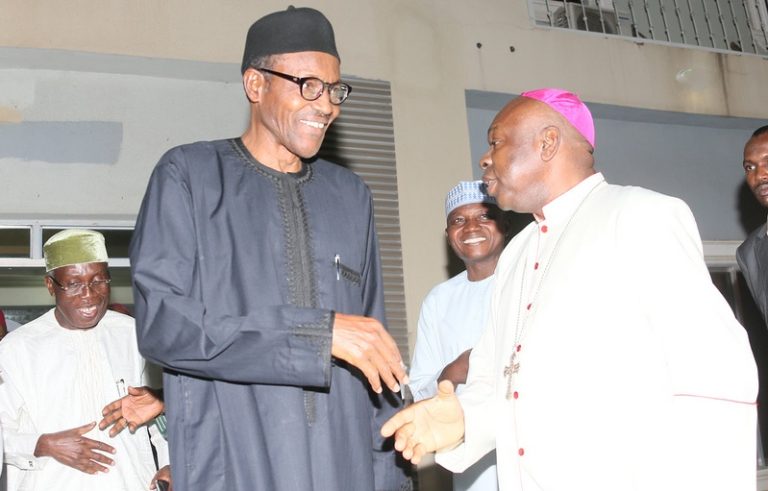
Feb 16: Nigeria’s future lies with electoral success, says Catholic Bishops

THE Catholic Bishops Conference of Nigeria (CBCN) says Nigeria’s future depends on the success or otherwise of the February 16 presidential elections, urging all stakeholders to put the nation before any other consideration.

In a statement issued in Abuja on Thursday signed by Augustine Akubeze and Camillus Umoh, President and Secretary of CBCN respectively, the Conference noted that “ the world is looking up to us and expecting much from us.”

The statement was titled: “Let us turn to God in prayer for our nation.”

The Conference said it was encouraged by the recent declaration of the President Muhammadu Buhari on the conduct of a peaceful and credible election.

“Our future depends on this and we urge the relevant bodies to put our nation before any other consideration,” CBCN said.

It called on the security agencies and Independent National Electoral Commission (INEC) to rise up to their duties and responsibilities to ensure that “we have peaceful, free, fair and credible elections.”

“We nevertheless reiterate that the primary responsibility for this lies with the government. “

The CBCN stressed that the coming elections would give Nigerians the opportunity to assess those who want to govern them.

“We must, therefore, think very carefully because electing our leaders comes with moral obligations and responsibilities. We wish to appeal to our fellow citizens to please put cynicism aside and go out to cast their votes on election day, guided by their conscience,” it said.

It also urged Nigerians to turn to God in “these trying times”.

“We know that God has shown and continues to show His love and care for us. Let us continue in prayer for our brothers and sisters who are in politics, especially those of them who are seeking elective positions.”

ASUU calls off three-month strike

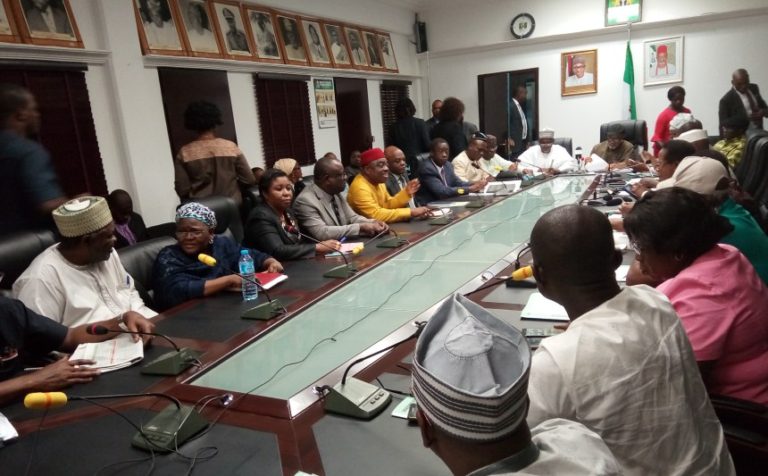
THE Academic Staff Union of Universities (ASUU) has called off the strike it embarked upon in November 2018.

The ICIR learnt the strike was suspended following a fruitful deliberation with the federal government on Thursday.

Earlier in the day, Biodun Ogunyemi, ASUU National Chairman, told journalists that the union has signed a document on behalf of its members and that a formal announcement to end the strike would be made later on Thursday.

When ASUU declared the strike in November, Ogunyemi had said that they would only return to school when the federal government implements the Memorandum of Understanding it entered with the union in October of 2017.

Since the commencement of the strike action, ASUU has held several meetings with the federal government represented by the Ministers of Education and Labour, Adamu Adamu and Chris Ngige, respectively.

Speaking with journalists after Thursday’s meeting, Ogunyemi directed all ASUU members to resume work on Friday, warning, however, that “should government fail to fulfill its part of the agreement as reflected in the 2019 Memorandum of Action, ASUU shall resume its suspended strike action as the union deems necessary”.

“ASUU notes, with serious concern, the covert and overt roles of some vice Chancellors in the management and application of funds attracted by our Union to Nigeria’s public universities. Consequently, we condemn, in the strongest terms, Vice-Chancellors who have made efforts to undermine and, in some cases, attempted to break our patriotic struggles for the revitalization of public universities in Nigeria,” Ogunyemi added.

“ASUU will not shy away from taking headlong those Vice-Chancellors who are reputed for acts of impunity, nepotism and other forms of conduct which are antithetic to university culture and the progressive development of our universities. Our union will compile all their shenanigans and forward them to relevant authorities for further action.”

Breaking: Agbakoba drags AGF to court over Onnoghen

FORMER, President of the Nigerian Bar Association, Olisa Agbakoba (SAN), on Thursday filed a suit against the Attorney General of the Federation, Abubakar Malami (SAN), over the suspension of the Chief Justice of Nigeria, Justice Walter Onnoghen, by President Muhammadu Buhari.

Onnoghen was controversially suspended from office on January 25 by President Buhari over allegation of non- declaration of assets.

The president immediately swore in Justice Tanko Muhammad to replace Onnoghen in an acting capacity.

Agbakoba, in his suit before the Federal High Court in Lagos, stated that Onnoghen’s suspension by the president was illegal.

The suit urges the court to overturn the decision of the president, while the second defendant listed in the suit is the National Judicial Council, NJC.

The affidavit filed in support of the suit, reads, “I know that the Constitution of the Federal Republic of Nigeria 1999 provides for the removal of the Chief Justice of Nigeria and that the Chief Justice of Nigeria can only be removed based on the recommendation of the National Judicial Council or an address by the president supported by two-thirds majority of the Senate.

“I am fully aware that contrary to the provisions of the Constitution, the president suspended the Chief Justice of Nigeria, Justice Walter Samuel Nkanu Onnoghen, based on an exparte order from the Code of Conduct Tribunal on the 25th of January 2019,” it reads.

The Senate had earlier filed a similar suit before the Supreme Court, contending that Onnoghen’s suspension by Buhari was not procedural as it did not have the input of the two-thirds majority of the Senate.

The Senate, withdrew the suit this week from the apex court, saying it would allow the NJC to deal with the issues.

Buhari sad over loss of lives at Taraba APC rally

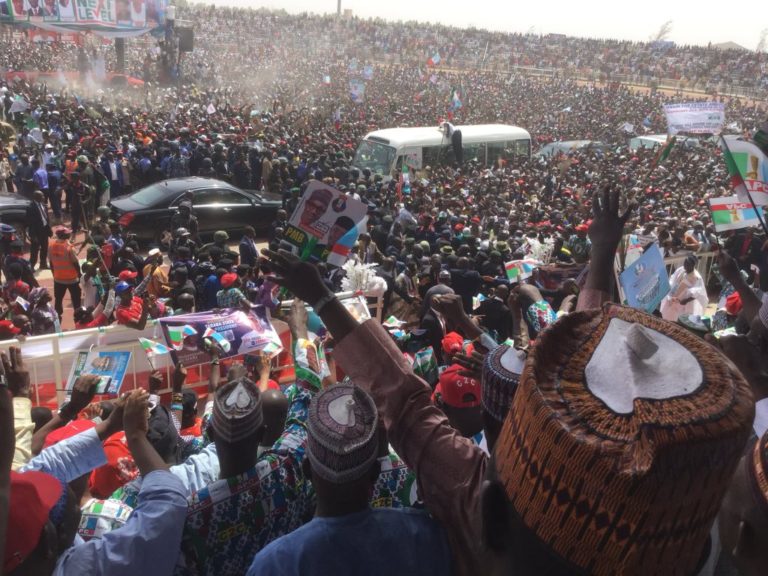
PRESIDENT Muhammadu Buhari has expressed sadness and regret over the loss of lives during the All Progressives Congress campaign rally in Jalingo, Taraba State, on Thursday.

Three persons were reportedly killed in a stampede at the rally that held in the Jolly Nyame Stadium Jalingo. In a statement issued later on Thursday, presidential spokesman, Garba Shehu, said the stampede was caused by poor crowd management.

“I always feel very sad and distressed when ordinary Nigerians who love me and our party because of what we stand for and have done, make personal sacrifices by taking the pains to show their support, end their lives tragically,” Shehu quoted Buhari as saying.

“I want them to stay alive and witness the dividends of purposeful governance that the APC administration will unfold when they renew our mandate.”

Buhari said he appreciates the massive support he has received all over the country in the course of the campaigns, but called for restraint on the part of his supporters and improved crowd management at rally grounds to avoid such tragic incidences.

EFCC arraigns NEMA pilot over N91 million fraud

0

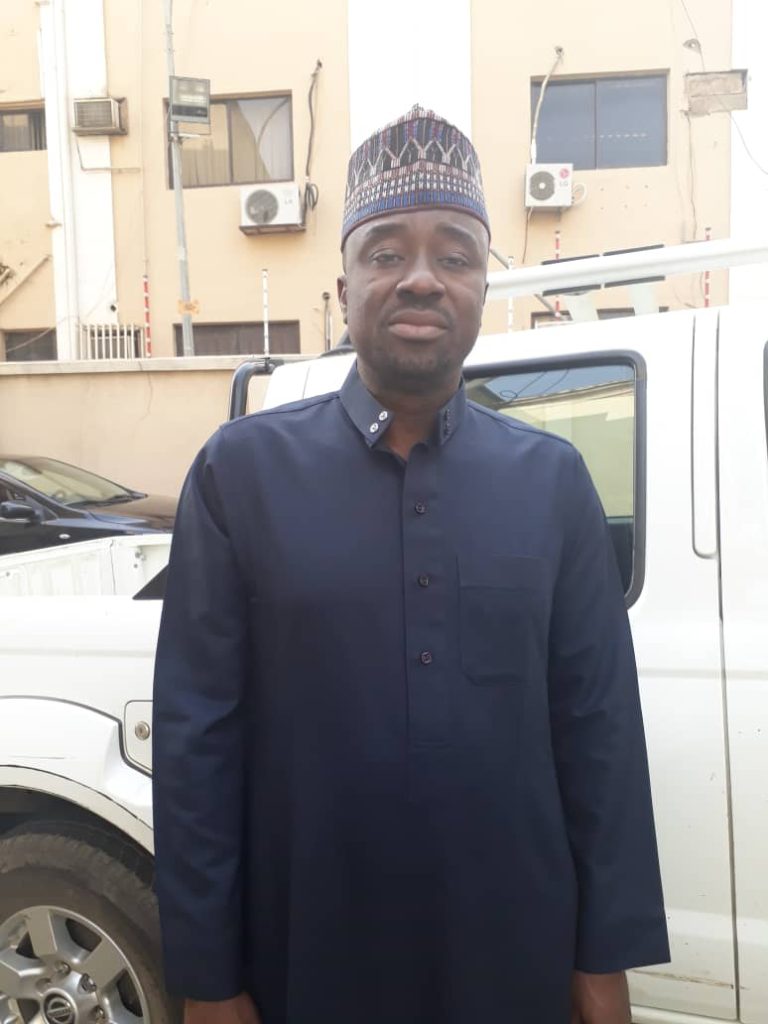
THE Economic and Financial Crimes Commission, EFCC, on Thursday arraigned Mamman Ali Ibrahim before Justice A. I. Kutigi of the Federal High Court, sitting in Gwagwalada, Abuja on a two-count charge, bordering on criminal breach of trust.

Ibrahim, who served as a pilot in charge of Air Ambulance Aviation Unit and Helicopter Emergencies Service with the National Emergency Management Agency, NEMA, is alleged to have diverted over N91 million, meant for taking care of the fleets, which includes Airbus, Air ambulance and the Helicopter.

His arraignment followed a petition to the office of the Vice President, which was forwarded to the EFCC.

Investigations carried out by the anti-graft agency revealed that Ibrahim brought the ambulance and the helicopter for commercial purposes. However, he claimed that the directive to use the aircraft commercially came from the office of a former vice president and a former Accountant General of the Federation, AGF.

A total sum of N285 million was realise from the commercial use of the aircraft, while N63 million was paid to the AGF.

While N11 million was paid to NEMA, but the balance was yet to be accounted for.

According to the petition, over N4million was paid into the account of Aerocare West Africa Limited, a company belonging to the defendant, which he transferred to his family members.

One of the counts reads in part: “That you, Mamman Ali Ibrahim, whilst being employed in the public service and serving as a pilot in charge of Air Ambulance Aviation Unit and Helicopter Emergencies Services with the National Emergency Management Agency, NEMA, between 2014 and 2015, in Abuja within the jurisdiction of this Honourable Court, while being entrusted with dominion over money, to wit, the sum of N64,550,810 (Sixty Four Million, Five Hundred and Fifty Thousand, Eight Hundred and Ten Naira) only, being part of the proceeds realised from the commercialisation of the aircraft belonging to NEMA”.

He pleaded “not guilty” to the charges.

In view of his plea, prosecuting counsel, Deborah Ademu-Eteh, asked the court for a trial date but the defence counsel, Aduojo Abah, moved the motion for the bail of his client.

Ademu-Eteh opposed the application, urging the court to “consider the severity of the punishment and the character of the evidence before the court”.

After listening to all the arguments, Justice Kutigi granted him bail in the sum of N50 million with one surety in like sum. The surety being a public servant not lower than level 14, must be a resident within the jurisdiction.

The case was adjourned to April 10, 2019, for trial.

EFCC discovers another Onnoghen account with $30,000 payment by controversial SAN

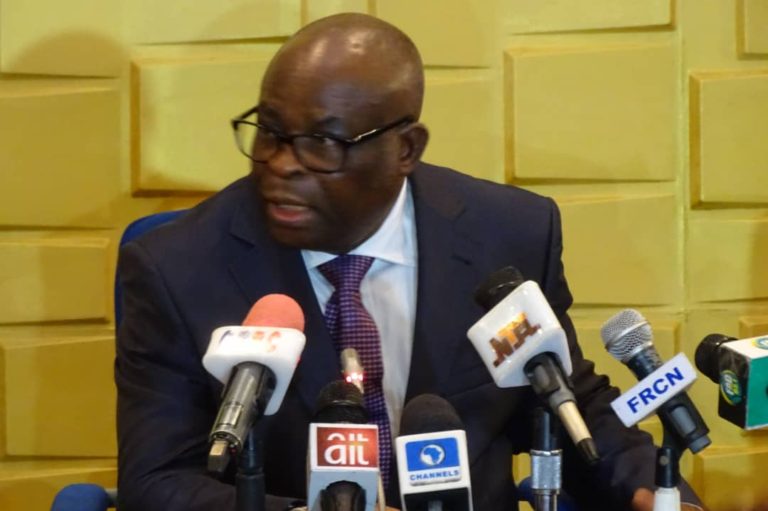
THE Economic and Financial Crimes Commission (EFCC) says it has discovered another undisclosed bank account belonging to the suspended Chief Justice of Nigeria Walter Onnoghen.

According to TheCable, the Heritage Bank account was also not listed by Onnoghen in his assets declaration form and it contains a $30,000 payment by Joe Agi, a controversial Senior Advocate of Nigeria (SAN) who has been charged with corruption in the past.

Onnoghen has already been charged with false assets declaration following a petition to the Code of Conduct Bureau that he did not include five bank accounts he has with the Standard Chartered Bank. But he has refused to appear before the Code of Conduct Tribunal to answer to the charges.

EFCC Sources told TheCable on Thursday that the fresh discovery was made in the course of ongoing investigations into several fraudulent activities the former CJN was involved in.

The $30,000, according to the EFCC sources, was paid into Onnoghen’s account sometime in 2009, adding that there were several other “suspicious payments” also traced to his accounts between 2011 and 2013.

The federal government had already frozen the five bank accounts that Onnoghen failed to disclose in his assets declaration comprising one dollar account, one pound sterling account, one euro account, and two naira accounts.

Altogether, the Nigerian Financial Intelligence Unit (NFIU) said the restricted accounts contained about $3million and gave a breakdown of how suspicious payments were made into the accounts.

Onnoghen was controversially removed from office by President Mohammadu Buhari and an Acting CJN, Tanko Mohammed, sworn in.

Recall that Joe Agi, the SAN who allegedly made the payment into Onmnoghen’s account, was also involved in the corruption case against Adeniyi Ademola, a former justice of the Federal High Court.

The EFCC had filed corruption charges against Justice Ademola and Agi following the raid on some judges’ residence by men of the Department of State Services in October 2016. Agi was said to have paid the sum of N160 million into Ademola’s account, as well as bought a vehicle worth over N8 million for the Judge’s son.

Justice Ademola was subsequently dismissed by the National Judicial Commission following the allegation.

However, the federal high court later dismissed the case, discharging and acquitting Justice Ademola following a no-case submission which he filed after the EFCC had closed its case. The federal government appealed the judgement but the Court of Appeal upheld the judgement of the lower court.

REPORT: One in four minors access tobacco

A TOBACCO report known as “Tobacco vs the People” has shown that a quarter of minors below the age 18 have access to killer tobacco products without knowing that the act violates existing legal provisions.

The provisions of the 2015 National Tobacco Control Act include the prohibition of tobacco sales to and by minors, the prohibition of the sale of cigarettes in single sticks and the prohibition of tobacco advertising, promotion, and sponsorship.

The report then recommends that stakeholders responsible for implementation should act fast.

Edo, Ekiti, Katsina and the Federal Capital Territory (FCT) constituted the population sample for the survey from which the research volunteers mapped 2,088 tobacco points of sale including kiosks, restaurants, bars, supermarkets, and other retail outlets.

The report shows that one out of four vendors (25 percent) sell cigarettes to minors while FCT scoring highest among the 4 states, which has up to half, that is 49.6 percent of vendors selling cigarette to minors.

Research correspondents shared their personal experiences to buttress the alarming findings of the survey.

Isaac from Katsina said he met a man aged 60 who revealed that he had started smoking from the age of 13 and he was still smoking, now all of his children smoke and he could not stop them.

Temitope from Ekiti, said he found that retailers prefer to sell in single sticks because they make more profit. He also observed that most of the vendors who sold to minors were men, advising that advocacy should target male vendors more.

Temitope also noticed that cigarettes advertisement may not be making so much impact, especially in rural areas. “I saw tobacco displayed next to sweets in several shops, and kids are constantly exposed to it”

Given the outcome of the survey, a panel discussion themed “Protecting Minors and Consumers from Tobacco and its harmful consequences” was organised.

Members of the Panel were Barth Ugwu, Deputy Director of Operations the Standard Organization of Nigeria (SON), Emmanuel Abraham, Tobacco Control Unit of the Federal Ministry of Health, Oluwafemi Akinbode, Chairman Board of National Tobacco Control Alliance and a representative from the Nigerian Security and Civil Defence Corps (NSCDC).

Discussants as they entertain questions

Ayodamola Owoseye, Senior Reporter Health, Premium Times moderated the discussion.

Before reeling out questions to the discussants, Owoseye shared her own feel of the cigarette during her Childhood. “My uncle then smoked cigarettes. He would stand at the door striking a pose with a cigarette in his hands and ask me if I had gotten my lunch box ready for school. His cigarette-in-hand pose fascinated me. So I smoked cigarette at 5’’.

On implementation of existing tobacco control laws, Ugwu from SON said they launched an action for enforcement around September last year but they allowed the grace of 18 months before they would swing into action.

A representative of the Civil Defence Corps said his organisation intended to create a special unit to control the use of tobacco.

Also a staff member of the ministry of health, Abraham Emmanuel, said that the smokers were not the real problem but victims of the manipulative tobacco industries. “We need to target the industries,” he said.

He called for a multi-sectoral approach to fight against tobacco, saying that the ministry could not fight alone. Moreover, he emphasized the role of the media in the fight against illegal tobacco use. He said, “the knowledge of the existing laws is the first step to enforcement.”

He therefore appeals to media organizations to do advertisements as part of their Cooperate Social Responsibility to let Nigerians know about the danger of tobacco consumption.

The representative of the NSCDC mentioned lack of timely information as one of the challenges they are having with enforcement but the moderator did not seem to agree with this, saying that tobacco law breaking scenes were all over the place for the security to see.

The panel concluded that the campaign against tobacco is a fight for all and urged everyone to join the fight if Nigeria must succeed.

The event was organised in Abuja  by Gatefield Nigeria, in partnership with National Tobacco Control Alliance (NTCA), and Campaign for Tobacco Free Kids (CTFK).


CCB flouts FOI Act, refuses to release Buhari’s cabinet asset declaration forms

THE Code of Conduct of Bureau (CCB) has refused to release copies of asset declaration forms of all cabinet members of the Buhari-led administration, thereby, flouting the Freedom of Information Act (FOIA), 2011.

The ICIR, on January 16, 2019, requested for the details of asset declaration forms of all cabinet members including the Secretary to the Government of the Federation, Chief of Staff to the President, Head of Civil Service of the Federation, National Security Adviser, and all the ministers. More than seven working days after,  CCB is yet to respond to the request and also fails to give a reason for the refusal, as stipulated by the FOI Act.

The CCB also this year turned down similar requests from AFRICMIL and The Punch Newspaper. AFRICMIL  had requested for the asset declaration form of the new Acting Chief Justice of Nigeria (CJN), Ibrahim Tanko Mohammed, while the Punch Newspaper requested copies of asset declaration forms of the Chief of Staff to the President, Abba Kyari; Secretary to the Government of the Federation, Boss Mustapha; Minister of Labour, Dr Chris Ngige; Minister of Works, Housing and Power, Babatunde Fashola (SAN); Minister of Communication, Adebayo Shittu; and Minister of Transportation, Rotimi Amaechi.

The CCB has reputation for violating FOI requests on details of asset declaration form of public office holders.

In 2017, The African Centre for Media and Information Literacy (AFRICMIL) and the Public and Private Development Centre (PPDC) submitted requests to the CCB for the forms of declaration of assets of elected and appointed political office holders in two tiers of government.

By enacting the freedom of information act, 2011, the seventh national assembly gave effect to the constitutionally guaranteed right of the public to access public documents held by public institutions and relevant private entities in Nigeria, and this includes asset declaration forms of public officials.

Recall that Walter Onnoghen, the suspended Chief Justice of Nigeria, was suspended based on a petition filed by a civil society group, Anti-Corruption and Research-Based Data Initiative. Led by Mr Dennis Aghanya, the group accused the CJN of false asset declaration and other sundry allegations.

Olisa Agbakoba, SAN, a former president of the Nigerian Bar Association said the information in the asset declaration forms of public officials should be released immediately upon request because they were in the public interest.

He said the idea of the CCB releasing the information to an applicant and denying another applicant could not have been done in good faith.

“Generally, the FoI overturns the Official Secret Act and it is to make public information accessible upon request. But there is a provision that says they (public institutions) can withhold it for good public reasons or in the national interest. But CCB must state that in its response to the applicant,” Agbakoba added.

FOIA was passed into law by Jonathan administration in 2011. The law was enacted to guarantee Nigerian citizens the right to access public information.


ITF says Nigerian youths are unemployable

THE Director-General of Industrial Training Fund, Joseph Ari has blamed the rising unemployment rate in Nigeria on the lack of essential skills among the youths.

The DG said, on Thursday, that there were many job vacancies in the country that were waiting for skilled manpower but Nigerian youths do not merit the positions, NAN reported.

He made the claim based on the results of a survey recently conducted by ITF in collaboration with the United Nations Industrial Development Organisation (UNIDO).  “Based on a Skills Gap Assessment survey in the six priority sectors of the Nigeria economy… vacancies exist in all sectors,” said Ari.

ITF boss said from the survey, 925 trades have been difficult and hard to fill in the country’s labour market. He said 19.5 percent vacancies are yet to be filled in the housing sector while the petrochemical sector has more than 13.9 percent vacancies for skilled workers.

The auto sector has 11.4 percent, textiles sector has 10.3 vacancies for workers.  Other areas include steel, leather and service have jobs waiting for the right workers as well.

Due to the lack of requisite skills from unemployed Nigerians, ITF DG said many vacancies are filled by non-Nigerians. “The unfortunate truth is that the vacancies are always filled by non-Nigerians,” he said.

According to ITF, 15.7 percent of all the hard-to-fill vacancies were due to lack of technical skills, while 11.8 percent were due to lack of basic Industrial Training (IT), skills. Lack of soft skills and advanced industrial training skills deprived many of employment in Nigeria.

The latest report from the National Bureau of Statistics (NBS) of the labour force statistics indicates a worsening unemployment rate. The December report shows that the unemployment rate in Nigeria increased to 23.1 percent in the third quarter of 2018. The figure means that 20.9 million Nigerians are jobless or unemployed.