Both reports quoted a spokesperson for the disaster mitigation agency in Indonesia, Sutopo Purwo Nugroho, as saying that the number is expected to rise “considering not all places have been checked.”
A BBC correspondent in Indonesia said there were reports that the death toll in Lampung province alone could be in the hundreds.
Authorities said the tsunami, which took place at 9:27 p.m. local time on Saturday, may have been triggered by “an undersea landslide resulting from volcanic activity on Anak Krakatau”.
Anak Krakatau, or “Child of Krakatoa,” is a small volcanic island that emerged from the ocean half a century after Krakatoa’s deadly 1883 eruption. The volcano has reportedly increased activity in the last six months.
Pandeglang district of Banten province suffered the most from the tsunami, and other two districts of Serang in the province and Lampung Selatan in Lampung province were also impacted by it.
Some residents in the Pandeglang region ran to a local mosque after the tsunami hit. Photo from BBC.
In the worst-hit area, huge waves rattled residential areas and several tourist destinations along the coastal areas, such as Pantai Tanjung Lesung, Sumur, Penimbang, Teluk Lada dan Carita.
The country’s Red Cross said it was on the scene and searching for victims in the rubble of one collapsed building.
Indonesia is prone to tsunamis because it lies on the Ring of Fire – the line of frequent earthquakes and volcanic eruptions that circles virtually the entire Pacific rim, the BBC reports.
In September, more than 2,000 people died when a powerful earthquake struck just off the central Indonesian island of Sulawesi, setting off a tsunami that engulfed the coastal city of Palu.
On 26 December 2004, a series of huge waves triggered by a powerful earthquake in the Indian Ocean killed about 228,000 people in 14 countries, mostly in Indonesia.
FIVE weeks ago in Lagos, I attended an event that officially announced the entry of world’s number one outdoor advertising company, JCDecaux, into the Nigerian market in partnership with Grace Lake Partners, a Nigerian investment and advisory firm led by the young entrepreneur, Mr. Ladi Delano. JCDecaux will operate in the advertising sector through Horizon Outdoor Advertising Limited, a fully owned subsidiary of Grace Lake. As officials of JCDecaux and Grace Lake spoke one after the other, what I was seeing was not just outdoor advertising but the frightening potential of this great country. I walked away from the event glad and sad in equal measure.
Why was I glad? Of course, a foreign investor has come into Nigeria, partnering with a local company and adding value to the economy. JCDecaux’s entry immediately raised the value of our outdoor market. It is a compliment in a season when investors are scared of coming to Nigeria for sundry reasons. JCDecaux is bringing cutting-edge technology and innovations. That is good news. What this will do, in a normal country, is to engender healthy competition in the outdoor market, raise the bar and expand opportunities for innovative players. For instance, banking in Nigeria has definitely benefited a lot from global partnerships and investments in the last 20 years.
I am also glad because of the little matter of job creation. According to Grace Lake, all the advertising gantries were built 100 per cent by Nigerians and the materials were sourced 100 per cent locally. This has enabled local supply chains, created jobs and activated technology transfer. That is a boost to the Nigerian economy, one company at a time. If there is one issue that has become disturbing in recent years, it is the unemployment situation in the country. Unfortunately, our understanding of how to tackle unemployment seems limited to what the government can do. Every presidential candidate is promising to “create jobs”. We shall discuss this in a bit.
One more fascinating thing for me about JCDecaux Grace Lake, as the partnership is named, is the social service content. Globally, ethical business emphasises not just profits but people, or rather, public service. Investors and entrepreneurs increasingly focus on what they can give in the process of getting. JCDecaux Grace Lake is providing us with a free real-time traffic information system to help us plan our movements in a state notorious for traffic gridlocks and bottlenecks. Also, JCDecaux Grace Lake has built modern, self-cleaning toilets at major bus stops in Lagos, all for free. This is the direction ethical business is going worldwide which we can learn from.
And now the sad bit. When Mr. Delano first mooted the idea of coming to do business in Nigeria to JCDecaux years ago, the answer was a capital no, according to him. You don’t need to ask why. There is this terrible impression about Nigeria outside the country. We are seen as a place where it is very complicated and frustrating to do business, right from arrival at the international airport to company registration, regulatory approvals, litigation system and critical infrastructure, among several other issues. We celebrate Nigeria as a vast market of 200 million people, but how can we make progress when all we do is just talk up “massive” potential?
When the National Bureau of Statistics (NBS) released the latest unemployment figures last week, everybody was alarmed at the ballooning labour market. An overwhelming majority of the unemployed are newcomers to the job market, most of them products of secondary schools and higher institutions. How can an economy with huge potential on every yard of its land be accumulating a population of the unemployed? How can we tackle poverty when there are no jobs? How can we contain crime when millions of youths are idle? How can we open up the economy to provide jobs in millions at a time like this? We need to put on our thinking caps.
I have been listening carefully to presidential candidates as they prepare for the 2019 general election. Most of them are promising to “create jobs”. This is a conceptual mistake which may be hampering our ability to address the unemployment problem in a more scientific way. Government does not create jobs in the sense that we are being made to understand it in Nigeria. We have to think through that very well. Of course, government can employ people (we have an estimated five million civil servants and political appointees across the nation) as well as do projects (constructions, for instance), but the bulk of employment can never be “created” by the government.
I am an entrepreneur and I directly employ about 20 persons. I can assure you that government did not create those jobs. The economy created them. I saw an economic need and plugged into it. If there is anything, the government has been trying to kill those jobs! We face constant harassment from tax authorities (we always come clean, by the way) but that is nothing compared to what other medium and small scale businesses are facing all over the country. How can you “create jobs” when self-employed Nigerians and entrepreneurs are being terrorised and extorted, officially and unofficially, every single day by government agencies? That is a killer of jobs.
Nigeria is in deep trouble, although we can enjoy playing the ostrich for the time being. The unemployed army cannot be expanding at this rate and we would still be expecting to tackle poverty and crime. Something has to be done. Something has to give. Irrespective of party affiliation and political sentiments, we need to re-appraise our approach to job creation in the country. If there is a conceptual flaw about job creation, then the wrong type of policies will continue to be made or proposed, the wrong ideas will be implemented and our later stage will continue to be worse than the former. My intention today is to tamper with our thinking a little bit.
One, we cannot run away from this fact: we need foreign investors. We need them badly. JCDecaux Grace Lake has injected a few millions of dollars into the economy, which is great news, but we can do with hundreds of more foreign investors in the various sectors of the economy. We need them. The all-important job creation benefit is there, the inflow of foreign exchange is there (this will make the CBN happy) and the injection and transfer of cutting-edge technology and global best practices are also there to take Nigeria closer to economic modernisation. I don’t know if there is any argument that can be made against this. I am open to persuasion.
Ms. Priti Patel, former UK Secretary of State for International Development, recently wrote a damning op-ed warning foreign investors about our lack of regard for the sanctity of contracts and the disobedience of court orders. Rather than address her concerns, we attacked her. No problem will ever be solved that way, trust me. What we need is introspection, not aggression and denial. We can attract billions of dollars of foreign investment if we do the right thing. It is about law, order, processes and incentives. We should stop assuming that because Nigeria has potential, investors should be running after us. There are many countries with more potential and less headache.
Two, the biggest employer of labour in Nigeria today is not government — federal, state or local. It is not the banks. It is not Shell or MTN. It is the medium and small scale enterprises, including self-employment. Unfortunately, they are the most harassed investors in Nigeria. The Presidential Enabling Business Environment Council (PEBEC), chaired by Vice-President Yemi Osinbajo, has done a good job of laying down the policies to improve ease of doing business, but officials of ministries, departments and agencies (MDAs) are doing everything to undermine this. They are terrorists, with due respect. They need to be reined in before they do more damage to the economy.
Many commentators, including myself, have written over and over again about how government agencies are killing businesses in Nigeria at all levels — federal, state and local. What is the president doing about it? What are the governors doing? How can we get the bulk of 20 million Nigerians off the job market if we are castrating small businesses under the guise of revenue generation? It is frustrating that we voice out our frustrations every day over matters that can be addressed without divine intervention. Just a little thinking, a little administrative action or a one-page, A4-size circular can take millions of our youths off the streets. Nigerians can create the jobs themselves.
In the end, while government cannot “create jobs” as we imagine it, it can create the enabling environment for businesses to thrive. That is what will create the jobs. Make the atmosphere conducive. Provide the infrastructure. Reduce the cost of doing business. Save businesses from heavy tax burdens. Design good industrial policy. Implement good monetary policy. Ensure macro-economic stability. Go out of your way to develop pro-business policies and create a pro-business attitude among agencies and regulatory bodies. Stop piling obstacles on the way of businesses that are adding value to the economy. Then watch unemployment shrink like magic.
AND FOUR OTHER THINGS…
MAN DOWN
So gunmen can take out a retired four-star general just like that? I couldn’t believe it when I heard that Air Chief Marshall Alex Badeh, former No. 1 military officer in Nigeria, was killed like a rat on Abuja-Keffi road while returning from his farm on Tuesday night. I thought it was fake news. Badeh was due to start testifying next month in his criminal trial by the EFCC. From media reports, nothing was stolen from him, so it was most probably not robbery. It also appeared to be an extraordinary operation — given the target, the swiftness and the precision. If this is not investigated with all seriousness, the conspiracy theorists would feel vindicated. Scary.
FLYING HIGHER
Have you seen the pictures of the new terminal building at the Nnamdi Azikiwe International Airport, Abuja? They are breath-taking. As someone who has spent considerable time lamenting the state of our airports compared to those in other African countries, I am glad to see the inauguration of another terminal building — after Port Harcourt. These airport projects were started by President Goodluck Jonathan five years ago and I am encouraged by President Buhari’s commitment to completing them. It appears the era of abandoned projects is gone. It may take time, but this country will be rebuilt brick by brick, one president after the other. Hopeful.
DAMNED DIAMOND
Many readers have asked my opinion on the merger between Access Bank Plc and Diamond Bank Plc, which is expected to turn Access to the biggest bank in Nigeria by certain indices — such as number of customers and asset base. To start with, this does not look like a merger to me. It sounds more like an acquisition. Diamond, which had been experiencing gross mismanagement, is going to lose its identity in the end. The bigger issue for me, though, is the process that led to the “business combination”. It appears there are a lot of procedural lapses that dent the integrity of the deal and I would not be surprised if it is eventually challenged in court. Questionable.
AND FINALLY…
I was tempted to switch off when I read that residents of Maiduguri, the capital of Borno state, were complaining about the 24-hour electricity supply provided by Yola Electricity Distribution Company (YEDC). They described it as a waste. In fact, in an interview with NAN, Mr. Ibrahim Suleiman, a resident, appealed to YEDC to reduce the supply of electricity to just 12 hours a day. Before you think they are out of their minds, they were indirectly complaining about the “outrageous” bills. More hours mean higher bills, so they would prefer more darkness. Can somebody please teach them how to turn off their appliances when not in use? Shocking.
Simon Kolawole is the founder amd CEO of TheCable. He tweets @simonkolawole.
THE state of public libraries in Nigeria is deteriorating daily. From shabby structures, poor funding, ill-motivated staff and outdated books to lack of power, the decay scares a majority of researchers away. REGINA OTOKPA in this report shows how corruption is killing a vital national asset.
HE was standing outside the state library with a black bag filled with books and study materials hanging loosely over his shoulders. He was uncertain whether to go back inside and continue reading, or head home and take it up from where he stopped. His dusty black trousers and white shirt were wet with sweat, and the hot Makurdi sun was making the situation worse in the stuffy hall where he had been studying for a little over three hours.
Benjamin Dzurngwe, a graduate of English Language from the University of Jos, is presently a third-year undergraduate of Law at the Benue State University. No week goes by without him paying a visit to the Benue State Library in Makurdi to sharpen his intellect of the career he has chosen. However, after each visit, he goes home smelly and dirty due to the poor condition of the reading environment.
“It is not conducive, the only reason why I come here is that I want some space, and I want to concentrate. Since I started coming here for over a year, I have never seen light on and the fans are not functioning. I study and sweat in this hot weather at each visit here. There are no current books; anyone who steps in here, does so with his or her materials,” Dzurngwe told this reporter in a rather disappointing tone.
Enquiries by Saturday Telegraph shows that the State Library Board has not purchased a book in the last 27 years. Since its inauguration in 1991 by the then Fidelis Makka administration, subsequent governments have continued to turn a blind eye and deaf ear to the yearnings of the library as its condition deteriorated from bad to worse. Makka was the military governor of Benue State between 1988 and 1992.
All that can be seen of the once vibrant two-storey building is a dilapidated structure housing obsolete books stacked on weak and dusty shelves. Brown reading materials are left carelessly on dirty tables and chairs. The second floor of the library has been shut down for years due to the leakage on the roof during the rains, and the reference section has been turned into a dumping ground for broken chairs and tables.
A room meant to be the e-library housing 50 computers on the second floor, has remained locked due to unavailability of internet services. The young man in charge of the unit stopped working over a year ago.
Our reporter was told that that the library has been starved of the fund for years. A library official, who spoke on condition of anonymity to Saturday Telegraph, said the students on industrial training help to keep the library clean. “There is no money to engage the services of cleaners.”
Besides the structural and institutional decay, workers have a poor attitude towards work. Contrary to the civil service rule of eight hours uninterrupted work, the Benue State Library operates between the hours of 8.00 am to 2.00 pm, making it difficult for users to carry out an extensive study. Angry over the worsening development, Nathaniel Unongo, a student of Fidel Polytechnic, Gboko, who was studying at the time of visit, wishes that the library experience will get better to enable readers acquire better knowledge.
He said: “It has been a while that I came here but each time I have to, we come in, arrange this place and clean it before we can use it. Just look at how the chairs and tables are kept, they are not properly maintained. This is the problem we have in Nigeria; if you go to other places you will not see such disorganisation.”
Another library official, who also spoke anonymously, said: “The library is a shadow of its glorious past. Before now, people trooped in here in their numbers, but now you only see a few persons here. The government has abandoned the library. We don’t get any allocation whatsoever. When Governor Samuel Ortom came to power, this was the first place he came and he promised to fix this place but till now, nothing has happened.
“We are not ready to work because we are not being paid salaries. Some of us have not received a dime for the past 10 years. We only pray and hope that the next government that comes to power will pay attention to the library.”
As in states, so it is at federal level
A visit to one public library in Nigeria seems to be a visit to all the 316 public libraries, including the National Library of Nigeria (NLN), and its branches across the country. They are characterised by old and dilapidated buildings, lack of electricity, obsolete books, limited users, non-functional e-libraries, inadequate staff, as well as non-functional generators and vehicles.
The NLN receives an annual budgetary allocation of N2 billion yearly to cover the headquarters and its state branches but what they usually get is between 1.5 billion and 1.8 billion. So, the total sum the federal government released from 2010 till date, stands at over N11.1 billion for execution of capital projects and over N4 billion for overhead costs to ensure the smooth operations of the national library and branches.
Released funds were for renovation and re-roofing of libraries, purchase of equipment, provision of constant electricity and most, completion of its headquarters and the construction of state chapters of the national library in 10 states. Katsina, Gombe, Oyo, Maiduguri, Adamawa, Ondo, Bayelsa, Rivers, Cross River, and Jigawa were supposed to benefit from this.
Despite the releases, the temporary headquarters of the NLN in Abuja is in a terrible shape. Just like the state branches, it bears the characteristics of shabby buildings, lack of electricity, virtually outdated books and lack of Information Communication Technology (ICT) facilities to provide quality service delivery to a society hungry for information.
Up till date, the construction of the NLN headquarters located on Plot 35 of the Central Business District Abuja, which was awarded to Messrs Reynolds Construction Company (RCC) in 2006 at the cost of N8.590 billion is still on. It was supposed to be completed in 22 months (February 2008), but it’s yet to be completed.
Investigations show that 12 years after the award of the contract, the sum of 11 billion has been expended on the project, which is presently at about 44 per cent completion stage. RCC, the preferred bidder, which got the contract four years after the bid opening in 2002 without revalidation of prices, had commenced work in April 2006 after obtaining an Advance Payment Guarantee (APG) in the sum of N1.718 billion from International Bank to secure the 20 per cent payment. However, the project stumbled on troubled waters when the Federal Government failed to release enough money for its completion and as such, was revised three times over the period.
At the expiration of the contract period in February 2008, the contractor stopped work and demanded an upward review of the initial contract sum. But instead of doing that, the client, the ministry of education on recommendations from a private consultant, approved a redesign of the specialist work on the project in 2009 to incorporate new technology, which led to the reduction in the number of floors from eight to five.
The contract sum of the reduced scope was reviewed upward to N17 billion from the original sum of N8.590 billion, followed by the issue of compliance certificate of ‘no objection’ on the review by the Bureau of Public Procurement and approved by the Federal Executive Council with a completion period of 21 months effective from July 2010.
But again, the project could not be completed due to the paucity of funds and the presidency in a presidential anticipatory letter with reference number NLO/C.62/VI/66 dated October 11, 2012, instructed RCC to revert the project back to full scope, just when the company was about roofing at the fifth floor.
In February 2013, RCC requested for more time and reviewed the contract sum upward to N48 billion but in 2014 an ad-hoc committee consisting all stakeholders was set up to resolve all pending issues. The committee recommended N38.764 billion as the revised cost with 30 months completion period expected to be forwarded to the presidency by the ministry for approval.
About two years ago, the cost of the National Library project rose to N38.7 billion in 10 years but according to the National Librarian, Prof. Lenrie Aina, an additional N60 billion is needed to complete construction of the building.
Aina, who insisted that the National Library branches do not lack current books, noted that books worth millions are purchased and distributed to the 27 branches every year. Blaming his staff for the slow rate of processing the books, he lamented that the library was short of manpower, especially a special breed of librarians known as cataloguers.
“Yes we have been having problems; we buy books every year running into millions, but some of the problems are the rate of processing, which has remained slow. Since I came on board, I keep quarrelling with my staff not to keep books at the headquarters, books must be at the branches and that we have been doing that. “
But contrary to his claims, there were no current books at the branches visited. Aina, who agreed that the state library boards and national library branches were starved of funds and in bad shapes, disclosed that in a couple of years, the branches would be granted financial freedom to access N10 million grants each, strictly for maintenance and purchase of library materials.
”We have generators in all the branches but maintaining them, buying diesel among others have been a major problem. We are planning to have grants for the branches so that each branch will have a certain amount of money, about N10 million depending on the branch, to be used for maintenance. They won’t have to depend on the headquarters any more. We are working on that and in a year or two our branch libraries will be in good shape,” Aina said.
Shelves filled with outdated books
With the National Library in such a sorry state, it is not surprising that state libraries are nearly dead. For many years, directors of state libraries have struggled to ensure facilities remain in a manageable form. With zero disbursements of budgetary allocations resulting from state governments’ refusal to release money allocated in the budget to state library boards, a majority, if not all public libraries in the country, can no longer afford to purchase even periodicals such as newspapers, magazines and journals.
To further worsen the grim situation, there is no imprest to run or maintain the generators, photocopiers and vehicles (for those who still have), and to purchase bandwidth subscription for the computers which are all covered up in dust and locked out of use in majority of state and branches of national libraries across the country.
Further checks by Saturday Telegraph revealed that majority of the directors are only able to attend conferences and run maintenance of the library from personal savings and contributions from all member of staff whenever salaries are paid.
“Sometimes we are asked to contribute N200. We use it to buy detergent, mop and to address little issues we can’t overlook,” Martins, an employee at one of the libraries, said.
While budgetary allocations are made for capital projects and overhead costs annually, recent tour of state libraries and national library branches in four geopolitical zones: Benue, Imo, Oyo and the Federal Capital Territory, depicts a grim picture of neglect and lack of funding.
Imo State Library, just like its counterpart in Benue, has been without power for over five years. The library has been grappling with total blackout since 2014 when it was moved from its old location on Bank Road to Port Harcourt Road in Owerri, by Governor Rochas Owelle Okorocha.
But unlike the Benue State Library Board, which last got new books about 27 years ago, the Imo State Library board took delivery of a new batch of books 25 years ago. Although the National Library, Owerri branch, last took delivery of about 1,000 set of new books in 2016, the books are not updated editions. In the Oyo State library and its branch in Ogbomosho books were last purchased over 10 years ago.
In efforts to ensure the shelves are not free of books, Nigerian libraries have resorted to the application of the law of legal aid deposit, which mandates publishers to donate not less than four books, depending on the state. This, according to them, is to keep the shelves stocked up regardless of its relevance to the general public.
The Acting Director, Library Services, Oyo State Library Board, Ibadan, Moses Adigun, explained: “We are bending the rule to make use of these kinds of materials so that our shelves will not be extremely outdated. We supplement them from our legal deposit copy but the legal deposit copy being submitted is not actually meant for our shelves, they are meant purely for bibliography services, for preservation and for authors to recall back when they are out of their copies.”
For his counterpart in Benue State, Mrs.Theresa Zamber, all libraries operating in the country whether public, national or private are expected to purchase new and updated volumes every year. Unfortunately, the paucity of funds has continued to be a barrier, because money is not adequately released to meet the needs intended.
Speaking to our reporter on behalf of Zamber, an employee of the library board, Mrs. Veronica Akpaka, said: “It is so bad that we cannot even afford to buy newspapers or magazines.”
Also, based on a survey report made available to the Ministry of Information and Technology by the Librarians Council of Nigeria on the state of public libraries in Nigeria, 21 state library boards, including the ones visited by this reporter, have computers and active internet connectivity.
However, the computers in the e-libraries of those visited were mostly free donations and have not been functional for years. For example, in the Oyo State Library Board, 50 computers were delivered in 2013 but there are presently less than 10 computers left in the abandoned e-library section under a rusted padlock and surrounded by bushes a few meters away from the administrative building of the ancient library.
Inadequate staff is another issue of concern. According to all library officials in the visited locations, this was occasioned by retirements, deaths and transfers. A good example is a branch of the National Library in Imo State, which presently has only five members of staff with three certified librarians instead of 25.
According to the Benue State Library board director, state government’s refusal to engage more professionals to man the library has led to the shutdown of some sections and branches in some of the communities. While the Gboko branch has been closed down for more than five years that of Otukpo, which is currently out of operations due to ongoing renovation by concerned indigenes, who benefitted from the impact of the library in the past, has been shut down since the retirement of the librarian in September 2017.
For Tony Ewache, a businessman on the street housing the Otukpo Library, a new librarian only got assigned to the library in June this year. The new librarian, he said, has really not resumed work.
Ewache said: “He just came, inspected the place but he has been in Makurdi ever since. The person who has been there before retired in September last year and after then, it has not been functioning. Besides, people don’t use the library because the books in it are all old and outdated. I am sure the individuals, who are contributing to refurbish the library, will also purchase new books.”
With a large expanse of land with modern structures loaded with outdated books and 100 non-functional computers, the staff of the Imo State Library Board consistently boycotts going to work due to lack of resources as a result of the inconsistent payment of salary by the state government. Scared for their lives, the employees do not spend much time on the corridors of the multi-billion naira structure due to the multiple cracks possibly resulting from the use of substandard building materials.
“Nobody is happy here; the governor said it’s an ultra-modern library but most of the buildings are collapsing and so we don’t stay long on the corridor for fear that it might cave in. We have 100 computers not functioning; they are under lock and key. The government does not give us subvention or imprest, the library has a bank account, which has not been operated for long. We have a bus we can’t fuel and we have not bought a newspaper in the last four years.”
A concerned indigene and library user, Uzoma Francis, lamented that the relocation of the library from Bank Road, a central point in Owerri where about 80 per cent of inhabitants reside, to Port Harcourt Road, caused a huge drop in the number of users due to the high cost of accessibility. He said: “When the library was centrally located before it was replaced by a chapel, the majority of its users spend as low as N50 to access it but now, to use the facility in one day, you have to spend at least N700 and still walk a distance before getting here.”
At the time of visit, there were only eight users in the library but the director, Lady Ijeoma Akanaga, explained that before the relocation, the library recorded between 350 to 400 users per day. “I don’t have the audacity to question staff when they don’t come to work. Where is the money when there is no salary? We do not generate money; if the government that owns this place does not fund this, it’s a dead end,” she added.
Implication of poor library services
The library, apart from the internet, is a vital platform for achieving a quality education. Although they were primarily set up to be centres of learning, information gathering, entertainment and fun to help promote literacy and the culture of reading, recent visits to those edifices have however revealed that the once vibrant institutions have become mere shadows. They have been left to rot away due to corruption, poor funding and understaffing.
People’s increased access to current information is a significant precursor to their physiological, psychological, social developments and technological innovations. Unfortunately, not only has the libraries been literarily abandoned by those in the corridors of power. This, in turn, has negated the role of providing the information needs of young adults to equip them with lifelong learning and literacy skills that could help to positively shape the future.
A library, according to experts, is meant to be managed by trained personnel. Ironically, the majority of workers in public libraries in Nigeria today, are auxiliary staff without professional knowledge of library services. Due to the challenges of outdated and uninteresting materials, unprofessional library staff, poor location owing to noisy environment and distance, inadequate funds and lack of interest, most public libraries are perceived to be archive sections lacking contemporary books, serials and audiovisual equipment, thereby keeping serious readers at bay. About 95 per cent of youths boycott the physical library and depend on their phones, cyber cafes and school libraries to carry out peripheral research.
According to Adigun, the dearth of funding and current books poses a great threat to the nation’s development. “Unfortunately, nearly everybody is running after money, but the money we are actually running after is a function of the information we have and the most deep-rooted information is seated inside books. But when you want to draw the budget for the library some people will ask you how much they are generating forgetting that you cannot quantify the amount of money being generated by the library.
“Our development and riches are a function of how much right information we get. Our development depends on our connection with information. Today’s world is on information and reading is the vehicle that drives that. The library is the tripod upon which development relies on,” Adigun said.
Unaccounted budgetary funds and releases
All the states visited had issues of zero allocation despite the yearly approval and releases of budgets to the sector. For example, records show that the sum of N87, 472. 783 was approved for the Benue State library Board in the state’s 2017 budget. Incidentally, the majority of the library employees have said that no fund was released to run the library, at least to the best of their knowledge, for years.
“Our financial situation is so bad that we cannot even afford to buy newspapers or magazines,” one of them complained. Both the state commissioner for information and chief press secretary to the governor did not react to this, despite repeated efforts.
Infographics-Actual Release to National Library
Although budgets for capital projects and overhead cost were approved annually for development of the Imo State Library Board, they were never released to the knowledge of the staff. Interestingly, out of the fixed amount of N140, 130,362 million approved for personnel cost every year, only N70 million gets released. A grumbling staff noted that “70 million is released every year, half of what is approved, but the irony is that the staff strength keeps reducing drastically, on a yearly basis.
The official record of libraries in the country is 316; a good number of them, however, are no longer functional. Some listed towns have never had a library sited just as witnessed in the case of the supposed Bwari Library in the Federal Capital Territory and Okigwe Library. These two represents a legion of fictitious library centres. In Imo State where the records state that 27 local government areas have active libraries, only 10 are functioning. Same in Benue State where nine libraries are listed, but only one is functioning at present.
After so many years in the Library sector, nothing will please Akanaga more than to see the Library assume its position in society. Highlighting the benefits of community and mobile library in the past, she hopes the government will reconsider resurrecting the mobile library commonly referred to as library on wheels, to restore the fast dying reading culture in the country.
The Reading Promotion Campaign introduced by Aina, according to Kalu Charles, assistant library officer, National Library, Owerri branch, is a viable project with the capacity to reinforce the ideals of reading. Seeking a buy-in from state governments and organised private sector, he stressed the need to engage more professionals to man the library.
To Adigun, the libraries can generate more revenue creatively through the lease of its facilities for social functions, organising book fairs and exploring the internet to carry out downloads and photocopying services. In like manner, the National Librarian is hopeful that the intensive discussions with state governments during his just concluded tour of the 36 states will bear fruits for erring state governments to emulate Kaduna; Bauchi and Bayelsa states library boards, which have attained standard optimal in public libraries.
This investigation is supported by the John D. and Catherine T. MacArthur Foundation and the International Centre for Investigative Reporting, ICIR.
Many rural communities in Ekiti State are at the risk of an outbreak of diarrhoea and other diseases. This is due to an acute shortage of potable water in spite of the multi-million naira constituency borehole projects purportedly facilitated by federal lawmakers representing the state. Almost on an annual basis, funds are allocated for the constituency projects through the lawmakers across the 36 states. INNOCENT DURU, who visited a number of communities to monitor how the 2016 projects benefit the people, reports that none of the boreholes on which millions of naira was expended is functional. This budget failure raises questions about the continuous allocation of fund for constituency through the National Assembly.
By Innocent Duru
ABIOLA, a middle-aged woman, missed her steps and skidded backwards as she tried to ascend the slope that leads from the stream where she had gone to fetch water. In the process, she spilt the water she had spent several hours scooping from the murky stream at Ifisin, a town in Ido Osi Local Government Area, Ekiti State.
For a while, she sat confused, apparently wondering how long it would take her to scoop the volume of water she had just spilt.
“This would not happen to me if the borehole beside our house were working,” she said in an emotion-laden voice as she picked her bucket and headed back to the stream.
People of Ifishin suffer water shortage on daily basis despite huge amount committed to the water project in the community and the neighbouring towns.
The stream water is not only unclean, but the path to the stream, is also littered with refuse and human waste, and residents said that all the rubbish is washed into the stream by floods in the rainy season. Yet, it remains a major source of water supply for the residents.
A 2016 constituency project which included borehole, facilitated by the federal lawmaker representing the area in the House of Representatives, Hon. Thaddeus Aina, ought to provide water for the people, but the pumping machine has stopped to function. According to the residents, the machine worked for only three months after which it packed up.
Ifisin borehole no longer in use few months after it was constructed.
Another borehole constructed for the community by a former senator in 2014 was also said to have stopped working shortly after it was constructed, leaving the residents at the mercy of privileged neighbours for their water needs.
The Ifisin borehole and 21 others had been facilitated by Hon. Aina and constructed by Alliance Boots Limited at the cost of N50 million with the Benin Owena River Basin Development Authority as the client. Other towns that benefited from the project include Usi, Ayetoro and Igogo. Ifaki and Ido originally listed as one of the beneficiaries were eventually excluded.
Expressing his disappointment with the project, a member of Ifisin community, Fatomilola Daniel, said: “When the borehole sunk in 2016 got spoilt three months after it was sunk, we the community members repaired it, but it only lasted another two months after the effort and has not worked since then. We were glad when the project was brought here but it has since stopped working.”
The Public Relations Officer of the community’s progressive union, Olaoluwa Arolasuyi, bemoaned the pains and danger the people experience searching for water, saying: “Ifisin is having a serious challenge with water supply. In fact, the challenge is always worse in the dry season and it has already started.
“The borehole sunk in the community in 2016 by Hon. Thaddeus Aina is not working. The one that was done in 2014 by Senator Olubunmi is also not working. The only borehole that is working here is the one done by the former accountant general of the state, David Ibikunle, through the MDG office.
“Most often, our people depend on stream water. We have four streams but they don’t produce enough water during the dry season. Besides, they are very far from where our people live. The streams are about two to three kilometres away from the town, and that is the distance our people go to get water.
“Many people in the community fall sick without knowing the cause of their problems. We really need urgent assistance to save our people from water-borne diseases.”
Corroborating Arolasuyi’s view, the president of the students’ union in the community, Sola Ojo, said members of the community had been forced to adapt to a horrible condition because there is no alternative “and it is affecting their lives.” He said: “The streams are very dirty and unfit for domestic use, but people still drink them. The roads leading to the streams, as you saw, are always littered with refuse. People defecate at the streamside and when it rains, a flood washes all the human waste into the stream, and that is what our people consume.
“The condition is worse in the dry season as they don’t have access to even the dirty water they get during the rainy season. We do have cases of diarrhoea, and when a resident dies, nobody cares to know the cause. They just take it as a normal part of life.”
When our correspondent visited the health centre in the community, a nurse, who craved anonymity on the grounds of being a civil servant, said diarrhoea and other water-borne diseases are usually rampant in the community during the dry season “because people have no access to good water. The streams and wells dry up and the boreholes that should have helped are not functional.
“I don’t have statistics for the cases that were recorded previously, but we have already drawn a chart for that purpose this year,” she added.
The water situation in Ido town was also of great concern as many of the residents suffer to get water. More pathetic is the case of old women who carry heavy containers to search for water because they have nobody to fetch it for them.
One of the two lifeless solar boreholes in Ise Ekiti.
The borehole in the area was said to have stopped working shortly after it was constructed. A food vendor at Oke Agbe Street where the project was sited recalled the joy that pervaded the community when the borehole was sunk.
“We were excited, thinking that an end had come to the challenge of water scarcity that plagued us. But to our surprise, it only worked for two months, after which we returned to the era of suffering to get water. We contributed money to fix the borehole but it still did not work.
“The truth is that the project was not properly done by the contractor. Even in the short period the borehole worked, you had to apply all your strength to press the handle before you could get water. While you do this, someone who is one kilometre away would hear the noise.”
To get water now, she said, “we travel long distances, and that at times requires crossing the busy road to fetch well water from private homes. If they don’t open their gates, we would be stuck. “As a food vendor, it affects my business. But the situation is worse for old women who do not have children to help them fetch water.
“At times, we go out as early as 3 am to search for water, because if you don’t go out that early, you would have no water to use. And going that early does not mean we will get water.
“The water we get at times is like something scooped from the gutter. We have to use alum to purify it. Many of us fall sick as a result.”
The story is the same at Idofin Street, where a 70-year-old woman, Grace Aguntasolo, said their borehole stopped working two months after it was sunk.
“We have been going through hell to get water. At my age, I and other old women who do not have children with us have to carry our buckets to fetch water from faraway places.
“Whenever school is in session, the authorities of the public school at Omodewa allow us to fetch water from their school. But when they go on holiday, we have to comb everywhere for water. “The irony of the whole matter is that the borehole in the school was sunk earlier than the one that packed up within two months. Only the people that made it can explain why.”
The President of Oja Odo community, Mr. Ojo Samuel, said apart from the failed 2016 constituency projects, the member of the National Assembly sank a borehole in the community on December 23, 2017, when the governorship election was close, but the borehole only worked for three months before it packed up.
“The project is not original at all. We are really suffering to get water. At times, we don’t get water to cook, not to talk of bathe, wash plates or flush the toilet. You know that can cause an epidemic,” Samuel said.
At the entrance of Palace Way, Usi, stands a signpost with bold information on the construction of the 22 boreholes in Ekiti State. Beside it is a hand-pump borehole that has stopped functioning and has become a plaything for children.
A failed borehole at Usi town.
A resident, Oloro Peter, said the borehole worked for about two months after which it got spoilt. He said: “The community contributed money and repaired it, but shortly after that, it got spoilt again. It has been like this since then. We get water from other boreholes done by private individuals or the community.
While the residents in this area are lucky to have access to other boreholes, other streets like Iworo and Irede don’t have such benefits.
A resident of Iworo, who gave her name simply as Esther, said: “When acute water scarcity comes, we would almost beg people to give us urine to use for domestic needs. That is how bad the situation is.”
At Ayetoro, another town that benefitted from the 22 borehole projects, only one non-functional hand-pump borehole on Ogbononiyo Street constructed in 2016 was sighted. According to the residents, the borehole packed up less than six months after it was constructed.
Another resident, Bunmi, said: “The borehole project was poorly done. If this is what we have to depend on, we would have died of water scarcity by now. We do enjoy pipe-borne and well water dug owned by privileged residents, but the problem with that is that people develop a stomach ache when they drink it.
“Aside from the well, we also have clean stream water which we drink. But the streams are very far. If this borehole were working, many people around this area would not need to suffer themselves going to the stream.”
Two of the projects were sighted at Igogo in Moba Local Government Area, but none of them was functional. The boreholes located at Oja (market) area and Idoka Street, were said to have worked for less than six months before they got spoilt.
One of the non-functional boreholes at Igogo.
Residents of the area were seen fetching pipe borne water, which they said is supplied about two times in a month. Another resident named Janet said: “We are dying of acute water scarcity. It would have been better for them to do one borehole that is functional than the two that were shoddily done. The streams are the alternatives we have when tap water is not supplied. But the streams are very far away. “Well water is another source of water supply for our people, but they are privately owned and their owners seldom open them for the public to fetch water. If tap water is not supplied, especially now that the streams are drying up, we would be very close to having epidemics, because it is any kind of water we find that we would use or drink.” No borehole project was sighted In Ifaki and Osi despite the fact that they were included on the list of communities that are supposed to benefit from the project.
The residents of Osi, in particular, are in danger of contracting serious ailments as one of the streams they depend on for water supply reeks of contamination. A resident, who gave her name as Bunmi, rued the challenge of water scarcity in the town, saying: “Most residents use stream water and a good number of them have spirogyra and other horrible things in them. “As you can see, this particular one lacks any quality of good water. It is greenish, thick like mud and full of bacteria. Many residents will tell you they don’t drink the water, but I must unequivocally tell you that they drink and cook with it when acute water scarcity hits the community. “Apart from the health implications, the distance our people go to get stream water is another issue that causes health challenges for them.” Another resident, Oluwadare Fisayo, said: “We don’t have any borehole sunk by any lawmaker either at the federal or state level. The boreholes we have were sunk by a private individual who runs Mercy International Mission. He gave us about six boreholes.
“The other one was sunk by a former governor, Segun Oni. His administration gave us two boreholes but only one is working. We contribute money to buy fuel to pump water and to repair it. We pump water every three days and contribute N200 each.”
Former Governor of Ekiti State, Segun Oni.
No single constituency borehole was found in Ifaki, one of the dominant towns in the area, even though it is included among the towns where boreholes would be dug. The first day our correspondent visited the area, residents were seen fetching water from boreholes said to have been constructed by Dr. Modupe Alade, the Secretary to the State Government during ex-Governor Ayo Fayose’s regime.
The former SSG was said to have constructed four of such functional boreholes across the town.
A palace worker, who identified himself simply as Adebanjo, said: “No constituency project was executed. It is the ones done by the former SSG that our people are enjoying. Even the borehole in the palace was done by the community.
“Aside from the boreholes, our people also use stream water. The stream water is good, but we need more boreholes to further meet the needs of our people, especially now that we are in dry season.
Unproductive 51 boreholes in Ekiti Central Senatorial District
At the market area in Iworoko is a big metal signboard which reads: “Construction of 51 numbers of productive boreholes ‘equip’ (sic) with hand pump at Ekiti Central Senatorial District.”
Ironically, the borehole in the community included in the project and others in adjoining towns like Are and Esure were not working. The client, like the projects in Ido Osi Local Government Area, is also the Benin Owena River Basin Development Authority with Mid-South Development Investment Limited as the contractor. The projects were facilitated by Senator Fatimat Raji Rasaki.
A river relied on by residents in Osi town.
The borehole at Iworoko, residents said, worked for just two months and had remained in that state since then. “The borehole is a huge waste of scarce resources. We go long distances to fetch water because a borehole that is supposed to serve that purpose is not working but merely occupying space. There is nothing productive about the projects, “a furious resident, Abayomi, said.
In Are, another town in the area, a number of the unproductive 51 borehole projects littered the roads. The borehole at Aba Are was said to have worked for two months, while the one at Ayegunle Are only worked for three months. While it worked, angry residents said, all they could get from the borehole was sand instead of water.
Of all the projects in the area, the one at Denorun Are appeared to be the worst, as it never worked for a whole day since it was commissioned. The story was not different at Esure where the borehole projects have become mere historical artefacts.
“We are suffering water scarcity. The stream from which we fetch water is about two miles away. The second one is about three miles. The woman that is washing clothes behind me had started fetching the water she is using about three days ago, a resident in Surulere part of the town, David Ajayi, said.
“The borehole project was not properly done. We did not use it for up to 30 days. It was only bringing out mud. Now that we are in the dry season, water will not flow in the streams, and that is dangerous. The women beat one another blue and black to fetch water at one of the streams which do not dry completely.”
Pa Ajayi’s remark was corroborated by another resident, Ogundiran Oluwafunmike. “I started fetching the water I am using to wash now since three days ago. I feel body serious pain after fetching water from the stream.”
At Araromi Obo, a town after Afao, the hometown of ex-governor Ayo Fayose, a borehole project done this year and facilitated by Senator Fatima Raji Rasaki has also gone bad.
A failed borehole project at Okeuko, Ayetoro.
“The borehole stopped working in August, just a few months after it was constructed. We have personally repaired it three times and it is still not functional. It all boils down to the quality of the materials used. If a good job had been done, it would not have spoilt so soon,” a resident said.
At Ise in Ekiti South Senatorial District, a white signboard with green imprints boldly announces two solar-powered borehole projects in the area. But in spite of the scorching sun that blazes through the community, the boreholes that ought to guarantee water supply was found to be dry and rusting away.
The projects at Oke-Odo Are and Oraye Ise part of the town were handled by Candid Oil Services and facilitated by Senator Abiodun Olujimi. Again, Benin Owena River Basin Development Authority awarded the contract. A total of N155 million was allocated for the construction of solar-powered boreholes spread across rural communities in the senatorial district that year (2016) without any clear description of the location.
“The borehole is not working. We trek up to four kilometres from here to get water. It would have made sense if they had given us a functional well than wasting so much money providing boreholes that are not working,” a resident, Yemisi, said.
Aside from the 2016 borehole projects, similar boreholes dug last year have also stopped producing water. One of them at Ofigba Street, Ise, according to a trader in the community, worked for only five months. “When they came to paste campaign posters, I told them about the borehole and they promised to come and do something about it, but they have not come since then. If they did it well, it would not have spoilt so soon,” the trader said.
This investigation was supported by the John D. and Catherine T. MacArthur Foundation and the International Centre for Investigative Reporting, ICIR.
UNION Bank, one of Nigeria’s foremost commercial banks, has claimed ownership of the $2.8 million dollars which the Economic and Financial Crimes Commission (EFCC) said it confiscated at the Enugu International Airport on Friday.
The commission had issued a statement saying two men were arrested with two suitcases containing $1.4 million each, and that they claim to be working for Bankers Warehouse, “a company they insisted is in the business of conveying money for some reputed banks in Nigeria”.
“The suspects confessed that they have been in the business of conveying cash for some notable banks, for over six years and were in the process of doing same for Union Bank Plc, located at New Market, Onitsha, Anambra State, when they were caught,” Tony Orilade, EFCC’s spokesman, stated.
He would later tell The ICIR via text message on Friday that the suspects “are presently giving useful information to operatives of the Commission, and will be charged to court soon”.
But no sooner had the press statement been tweeted by the EFCC than Union Bank responded to the tweet, sayingthat “Bankers Warehouse is licensed by CBN to provide Cash-in-Transit services” and that “movement of cash across states is routine for all banks”.
“We are surprised by the release of a news bulletin prior to the completion of EFCC’s investigation,” the bank tweeted.
4: This is a legitimate and routine operation consistent with banking.
Speaking to The ICIR on Saturday, Tony Orilade, the EFCC spokesman said it was not enough for Union Bank to claim that the suspects were carrying out a legitimate and routine operation. He insisted that such a huge amount of money found in the possession of individual persons was against money laundering laws.
“We don’t have any issue with whatever legitimacy they (Union Bank) are claiming, the point is that we are out to fight economic and financial crimes. That is our mandate,” Orilade said.
“Where we find an infringement to the laws, it is for us to take action, which is what we have done.
“If they think otherwise, even if we are at the point of prosecution, they are obligated to come forward with proofs, and it is for the judiciary to decide.
“That somebody has a license to operate a particular kind of business, once illegitimacy is observed, you don’t expect the security agencies to look the other way.”
Orilade also pointed out that the suspects were arrested at about 7.45 pm on Thursday, and that Bankers Warehouse, the firm they said they were working for, was contacted immediately but they refused to respond.
“Nothing followed until yesterday (Friday), about 24 hours after, that they (Bankers Warehouse) had to show up in the office” as at which time the suspects and the cash had been moved to the Enugu office of the Central Bank of Nigeria, Orilade said.
He said that the organisation (Bankers Warehouse) has an office in Enugu and did not need to travel a long distance in order to respond to the EFCC inquiry, but it deliberately refused to show up.
Orilade said that investigation into the case is still ongoing and the suspects are still in the EFCC custody.
MINISTER of Information and Culture, Lai Mohammed, says the Buhari administration has kept all the promises and obligations to Nigerians and is determined to do more.
Mohammed said this while addressing State House correspondents on Friday. He was responding to the criticism of the 2019 budget by Senate President, Bukola Saraki, who had described the budget as one that has no hope for Nigerians.
Refusing to join issues with Saraki, Mohammed said “it is not the practice of the executive to be exchanging words with the legislative arm of government” as both arms of government were independent of each other.
“To the best of our knowledge, we presented a budget given the circumstances of our resources this year, we feel that is the best we can. It is left for the National Assembly to consider it,” Mohammed said.
“I wish everybody Merry Christmas and as a government, we are happy that we have been able to meet all our promises, all our obligations to Nigerians. And as the year rolls out, we are more determined to even deliver more to Nigerians.”
During his presidential campaign in 2015, President Buhari and his party, the All Progressives Congress (APC) promised to run a government based on three major agenda, namely: to revive the economy, to reduce insecurity and terrorism, and to fight corruption.
The presidency has consistently maintained that it has delivered on the three major campaign promises, however, available statistics suggest otherwise.
A recent reportby the National Bureau of Statistics shows that the unemployment rate in Nigeria currently stands at 23.1 percent, as over 20.9 million Nigerians are unemployed. When Buhari took over in the second quarter of 2015, the unemployment rate was at 8.2 percent.
Also, the inflation rate is currently above 14 percent, up from the 9.30 percent it was in 2015. It had risen an all-time highof over 18 percent in 2016 when the country went into recession.
Nigeria’s debt profile under Buhari has risen to about N22 trillion, from the N12.1 trillion it was in 2015. The president, however, maintains that the debt level is within a healthy range.
On anti-corruption, the Buhari administration has commenced the trial of several high-profile, politically exposed persons on several allegations of corruption, but little convictions have been witnessed.
Two former state governors − Joshua Dariye of Plateau State and Jolly Nyame of Taraba State − were sentenced to 10 and 12 years imprisonment respectively for corruption, but their cases had been on long before the Buhari presidency.
The Economic and Financial Crimes Commission (EFCC) says it has secured 703 convictions between 2015 and 2018, including that of Dariye and Nyame, and one Joseph Nwobike, a Senior Advocate of Nigeria.
Between 2013 and 2015, the EFCC recorded 346 convictions, according to figures on its website. The statistics for the convictions secured by the commission from 2003, when it was created, to 2012, was not available on the website.
The commission also said it has recovered more than N794 billion, over $261 million, £1,115,930.47, €8,168,871.13, and 86,500 CFA, cash from “corrupt elements”.
These do not include “filling stations, petroleum products, land, jewellery, automobiles, real estate, vessels, hospitals, company shares, heavy machinery, and broadcast equipment” also confiscated by the commission.
Also, records from the websiteof the Independent Corrupt Practices and other related offences Commission (ICPC) have recovered billions in cash and property in the course of its anti-corruption activities.
On the issue of anti-terrorism and combating insecurity, the Buhari administration has consistently said it has tactically defeated Boko Haram, and that the insurgents no longer have the ability to launch massive attacks across the country like they used to do.
But while it is true that Boko Haram’s ability to launch attacks on targets outside the North East has greatly reduced, the group remains relatively potent in their stronghold of Borno State, according to recent events. They have carried out several attacks, most times successfully, on military formations in Borno State, killing several soldiers and making away with weapons belonging to the Nigerian military.
While campaigning for the presidency in 2015, Buhari said he would ensure the release of the over 200 Chibok schoolgirls kidnapped by Boko Hara. Indeed, some of the girls − 82 of them − have regained their freedom, though reports suggest FG paid millions of Euros to the terrorists for the release. However, majority of the Chibok girls have remained in captivity.
The insurgents even did a repeat of the Chibok incident of 2014, when over 100 school girls in Dapchi, Yobe State, were kidnapped in February this year. All but one of the girls were releasedafter one month, again, after the government had allegedly paid millions in ransom.
Outside the North East, there are several armed groups almost in all regions of the country terrorising citizens and appearing almost too strong for security operatives. In 2018 alone, there have been recurrent fatal attacks by suspected herdsmenin Benue, Kaduna, and Kogi States, bandits in parts of Zamfara and Plateau States, and kidnappers in parts of the North Central, South South, and South East regions.
Overall, just as was the case in 2015, Nigeria remains the third most terrorised country in the world in the latest Global Terrorism Index released earlier this month, though the number of terrorism-related deaths have dropped.
A recently retired Army Major General, Idris Alkali was murderedin Plateau State on his way to Bauchi from Abuja, and just a few days ago, the former Chief of Defence Staff, Alex Badeh, was murdered in cold blood along the Abuja – Keffi expressway, while returning from his farm.
The 2019 general election presents the best opportunity for Nigerians to decide whether indeed the Buhari administration has kept its promise to the people.
PLANS for the smooth conduct of the 2019 general elections may soon hit the rock as the Independent National Electoral Commission (INEC) has continued to disobey court orders that prevent the election body from using ballot boxes and other election materials under patent rights, unless royalties are paid to the patent owner.
Documents obtained by The ICIR show that the patents were duly registered by Bedding Holdings Ltd (BHL). Bedding Holdings specialises in the general fabrication and manufacture of steel metal products such as transparent ballot boxes, electronic collapsible transparent boxes and others.
On January 12, 1998, the company was issued with a Certificate of Registration of Patent Rights (RP 12994) and Registration of Industrial Designs Rights (RD 5946) over the fabrication of Transparent Ballot Boxes.
Also, on November 27, 2006, the company was issued with Patent Rights No. RP 16642 and Copyright Designs No. RD 13841 over the invention of “electronic collapsible transparent ballot boxes”, an improved version of the first product, as well as patent rights over the Proof of Address System/Scheme (PASS), which enables the production of the voters’ register.
The Electronic Card Reader (ECR) and Permanent Voters’ Card (PVC), BHL has said, are integral features of the second set of patent rights. All these, according to relevant laws, entitle the company to the sole right to produce and sell the patented products, unless it decides to grant licences to another corporation.
Sylvester Osadolo Odigie, BHL’s chief executive officer who says he has registered over ten patents recognised by the World Intellectual Property Organisation (WIPO), explained to The ICIR that he has been working with INEC as a specialised contractor since 1987, when it was headed by Eme Awa and was then known as the National Electoral Commission of Nigeria (NEC).
At the time, he said, cash boxes belonging to the Central Bank of Nigeria were the materials used for elections, so he came up with the idea of ballot boxes and got approval to produce 20,000 pieces. He also patented ideas and designs for card readers and voting cubicles, otherwise known as collapsible polling booths.
He added that the commission had been cooperating prior to the appointment of Maurice Iwu as the chairman of INEC in 2005. On January 29, 2003, BHL executed a licence agreement with INEC, granting licence over transparent ballot boxes till March 29, 2003.
Iwu, however, stopped all royalties BHL is entitled to from commission’s procurement and did not involve the company in further licence agreements. Subsequent chairmen of the commission, including Attahiru Jega and Mahmood Yakubu, have toed the same line. This is in spite of the clear provisions of the Patents and Designs Act.
Section 6(1) of the law states that “a patent confers upon the patentee the right to preclude any other person from … making, importing, selling or using the product, or stocking it for the purpose of sale or use”. Section 23(1) then provides that “a patentee or design owner may by a written contract signed by the parties grant a licence to any person to exploit the relevant invention or design”.
There are two subsisting court judgments which favour BHL, one declaratory while the other is monetary, but INEC has continuously disregarded both. This led the company to file an originating motion on December 13 for the execution of the judgments. Owing to the commission’s contempt of court, an interest of 10 per cent has accrued on the judgment debt, adding up to an estimated fine ofN20 billion.
Patent Rights, RD 12994, issued in 1998 to Bedding Holdings Limited on “Transparent Ballot Boxes”Patent issued in 1988 to Bedding Holdings for the invention of “Collapsible Steel Frame Structures”Patent issued in 2006 to Bedding Holdings for “Electronic Collapsible Transparent Ballot Boxes”
String of disregarded court judgments
In January 2014, The ICIRreported that the Federal High Court awarded against INEC the sum of N17.3 billion, being half the cost of the items imported for the election, which Bedding Holdings claimed would have been “minimum reasonable royalty accruable” to it.
The company had sued the electoral body for not seeking its consent as the owners of the patent over the use of a data capturing system and transparent, collapsible ballot boxes in Nigeria before awarding a contract for the supply of the electoral materials used in the 2011 general election.
The court granted all the reliefs sought by the plantiff, including a declaration that the plaintiff is the bonafide owner of the patent rights and that INEC infringed on the said rights by procuring certain materials without the plaintiff’s prior consent.
The court also stood by its ruling in 2012, read by Justice Adamu Bello, which had declared as illegal the use of the transparent ballot boxes in the Edo gubernatorial election and barred INEC from using the patented products for elections without the express permission and license of the plaintiff.
INEC has, however, gone on to organise several elections, including 2014 gubernatorial elections in Anambra, Ekiti and Osun States, and the 2015 general elections, without the active involvement or consent of the statutory patentee.
Before instituting the first case in 2011, Bedding Holdings wrote to INEC to inform it that its seeking bids for “the supply of 150,000 units of Collapsible Transparent Ballot Boxes” conflicted with its patent rights. But the commission went ahead to award contracts to Emchai Limited, Tambco United Limited and Anowat Project and Resources Limited, and then secured approval from the Federal Executive Council.
In his presentation to the council, the President said Emchai Limited possessed patent “to its design and specifications”. It was then discovered that the Registrar of Patents, under the Ministry of Trade and Investments, had indeed issued, in October 2010, the same patents issued to Bedding Holdings to other companies, including Tambco United Nigeria Limited and Anowat Project and Resources Limited.
In the 2012 judgment of the Federal High Court, an application for a perpetual injunction was granted, restraining all other persons, including the two companies, from dealing with the patented products except with the express consent and authority of Bedding Holdings.
2003 licence agreement between Bedding Holdings and INECCertificate of Registration of DesignSchematic diagram showing components of transparent ballot box, submitted as part of requirements for patent
BHL files again
Bedding Holdings has decided not to put the issue to bed as it has again filed an originating motion at the Federal High Court. Before this, in October, the court had granted a temporary garnishee order over INEC’s account with the CBN over its refusal to pay its judgment debt.
In the document filed on December 13, a copy of which was given to The ICIR, the company prays the court to declare INEC’s “continuous contempt’ as illegal, to compel the commission to abide by the 2012 and 2014 judgments, to direct the commission to pay exemplary damages of N50 billion for right infringement, and to restrain it from further using, without prior consent, the transparent ballot boxes, direct data capturing machines, electronic card readers, permanent voters; cards and the Proof of Address System Scheme.
Odigie, in his affidavit written in support of the motion, said it would be in the interest of justice for the court to grant his company’s application as it continues to “suffer great financial loss and hardship due to the act of the respondents in deliberately refusing to pay the royalties accruable to the applicant for the patented materials.”
Giving an ex-parte ruling on Tuesday, the court restored its judgement of July 5, 2015, affirming the patent rights of BHC and the implications of the rights. Justice Nnamdi Dimgba also gave permission to the firm to commence the process of enforcing the earlier judgment delivered by Justice Adamu Bello.
The case was adjourned to January 15, 2019, to allow the court hear the motion on notice filed for the enforcement of the judgment. If all the reliefs sought are granted, it is expected that the judgment may constitute a major setback for the 2019 general elections.
NEC’s award grant to Bedding Holdings in 1987 for supply for ballot boxes
INEC reacts
During a phone conversation with The ICIR, Rotimi Oyekanmi, Chief Press Secretary to the INEC Chairman, said the case is not new and advised that the history of the Bedding Holdings and the series of litigation be investigated. He suggested that no valid judgment has been delivered in favour of the company since the conflict broke out.
“They keep going to court, and I don’t know why they keep doing that. I don’t know what their motive is,” he said. “It is easy for a company to come and say they are doing this. You need to also, as journalists, investigate them. Who are they? What patent do they have? What have they done before? You know, when you are going to equity, you go with clean hands.
“If they claim to have done something, let them give you the history. When was the company created? Get all those facts. That is the starting point … because anybody can come and say I have taken anybody to court. Taking to court is not judgment. Anybody can go to court, but what does the judgment say? It is a long way to judgment.”
Oyekanmi also said the company’s persistence has implications on national security and questioned the good intentions of the owners.
He said: “We are having a major election. Do you know what it means? And one company is saying it is going to court that we should not have the election. Do you know the implication of that on national security? Because he thinks he wants to make money [inaudible sentence], and that’s the best thing he can do? This country belongs to all of us.
“What patent do they have? What do they manufacture? What is it that you have that you think it is because of that you have to stop a whole election management body from conducting an election. Please carry out your investigation, you will be surprised what you are going to find. I don’t want to say more than that.”
The INEC PRO said he would not give additional comments on the subject when The ICIR drew his attention to evidence of a contract awarded to Bedding Holdings in 1987 for the supply of metal ballot boxes by the then National Electoral Commission.
It is not clear if there are private companies in other countries that are repeatedly paid royalties for inventing and patenting voting equipment. However, the evolution of voting machines in the United States has been made possible through inventions by private individuals and corporate entities (including IBM) — some of them bought and deployed in various elections, such as the Votomatic.
In 1900, the government established the U.S. Standard Voting Machine Company, having Alfred Gillespie, a private inventor who introduced several refinements to the machines in use, on its board of directors. It had monopoly on voting machines until Samuel and Ransom Shoup obtained patent for a competing machine in 1936.
Not only does the US government buy patented inventions with thousands of dollars in appropriation, it also significantly boosts revenue by licensing government-funded patents to private companies.
In Nigeria, information about patents is not publicly disclosed by the Trademarks, Patents and Designs Registry. The country is one of the few that do not have statistics about patent applications in the 2017 World Intellectual Property Indicators report. It is reported that only 11.7 per cent of 4,823 patents filed between 1998 and 2007 in Nigeria were filed by local nationals, while the rest originated from foreign companies.
An elite team of the Nigeria Police Force (NPF), code-named, the Intelligence Response Team (IRT) have apprehended Umar Abdulmalik, a wanted Boko Haram Commander.
Abdulmalik is alleged to be one of the most deadly Boko Haram leaders and explosive experts in Abuja.
The suspected terrorist is believed to be involved in several bank robberies and killings in several parts of the country which also include planning the Kuje and Abuja’s Nyanya bombings of 2015.
He was also fingered in the Galadimawa roundabout 7 police officers killings, Lugbe police officers killer, Gwagwalada area police killings – all in Abuja.
He is said to be the overall Commander of Edo and Ondo States’ multiple bank robberies and several killings in Okene Axis of Kogi.
According to a NAN report, sources disclosed that Abdulmalik was the commander of the attack and rescue operations of the prison in Niger State early this year where he lost one of his eyes during the operation which led to the escape of over 100 prisoners.
“The suspect was arrested by the IRT Special team today after he escaped with bullet wounds from Abuja three weeks ago when IRT teams arrested four of his gang members and recovered 4 AK47 rifles and hundreds of ammunition.
“He is responsible for hundreds of death of innocent citizens and Police Officers across the nation, and he has been apprehended,” the source said.
The ICIR reporter contacted the Federal Capital Territory (FCT) police spokesperson, ASP Jesse Anguri to verify the circumstances that led to his arrest.
” I am not privy to the details of his arrest and cannot give any confirmations to you,” he said.
THE Economic and Financial Crimes Commission (EFCC), Enugu Zonal Office, on Friday, intercepted two suspected money launders with the sum $2.8million at Akanu Ibiam International Airport, Enugu.
They were caught with two items of luggage containing $1.4 million each, totalling $2.8 million, (over NI billion at 360 per dollar) at the departure lounge of the airport.
The suspects, Ighoh Augustine and Ezekwe Emmanuel, were to board an Arik evening flight to Lagos.
The anti-graft officials said the culprits were nabbed based on intelligent reports.
The suspects claimed they work for Bankers Warehouse, a company they insisted is in the business of conveying money for some reputed banks in Nigeria.
According to the Anti-graft official, the suspects confessed that they have been in the business of conveying cash for some notable banks, for over six years and were in the process of doing same for Union Bank Plc, located at New Market, Onitsha, Anambra State, when they were caught.
Tony Orilade, Acting head Media and Publicity EFFC, said in a statement sent to The ICIR that during interrogations, the culprits admitted that this would be the fourth time they were carrying out this kind of assignment this year.
“They are presently giving useful information to operatives of the Commission, and will be charged to court soon,” he said.
GOVERNOR of Bayelsa State, Seriake Dickson, says all Nigerians who are concerned about the issues of inequity and injustice in the country and are pushing for a better, stable, and just country, regardless of which part of the country they come from, are all Biafrans.
Dickson said this at the public presentation of a book, “We are all Biafrans”, written by Chido Onumah, the Executive Director of the African Center for Media and Information Literacy (AFRICMIL).
He said that Nigeria, as it is presently “is structured to fail” hence the need to take the issue of the restructuring of the country serious.
Dickson, who was the keynote speaker at the event, however, stressed that he does not support the concept of Biafra as a separate geographical entity that wants to pull out of Nigeria. According to him, that concept of Biafra should be de-emphasised.
“We are all Biafrans in so far as we are all concerned about the issues of inequity and injustice. And if the concept of Biafra is used as a constant reminder of the challenges and contradictions of our nation, then it is right to say that we are all Biafrans,” Dickson said.
“But I disagree with the concept of Biafra connoting a particular geographical location of our country that wants to be separate from the rest of Nigeria, I don’t agree with that Biafra.”
The Bayelsa Governor maintained that the issue of restructuring of Nigeria must be taken seriously if the country is to achieve the growth and development it craves.
He said the issue of restructuring should not be taken to mean resource alone as that is just one aspect of the broader issue which also includes devolution of powers, state policing, indigeneship, etc.
“Our nation remains a nation of great possibilities and potentials. This is the greatest black country there ever can be. We can do anything in this country if we come together and agree to do it.” Dickson said.
On the 2019 general election, Dickson said the elections will be a referendum on restructuring, urging Nigerians to vote out leaders who do not believe in restructuring.
“There’s no way one can address the challenges of our country, we can’t move forward until we go back to the faulty structure that we are currently operating,” he said.
Dickson also called on President Muhammadu Buhari “to use the power and influence and authority of that office to mobilise our country to do the restructuring that is possible”.
He expressed disappointment that Buhari did not endorse the reportof the committee set up by his own party, the All Progressives Congress (APC) to look into the issue of restructuring according to its 2015 campaign promises.
The committee, headed by the Governor of Kaduna State, Nasir El-Rufai, had recommended that country should be restructured, but the Buhari administration is yet to carry out any concrete action on the report.

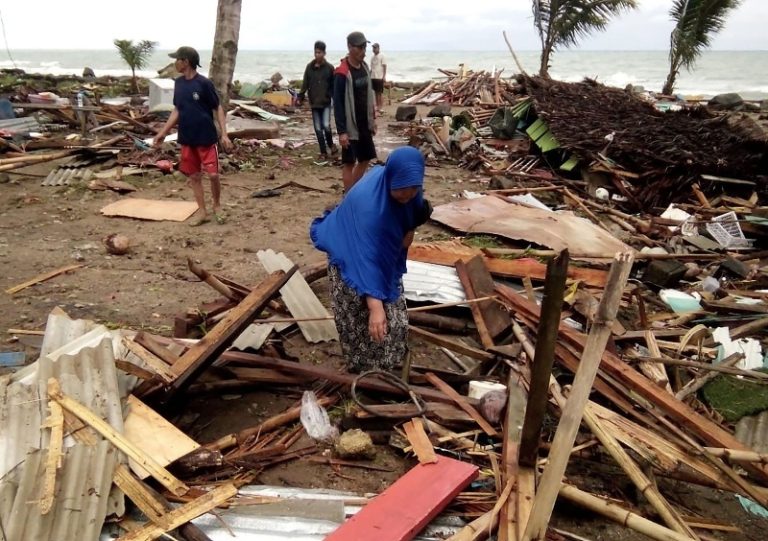

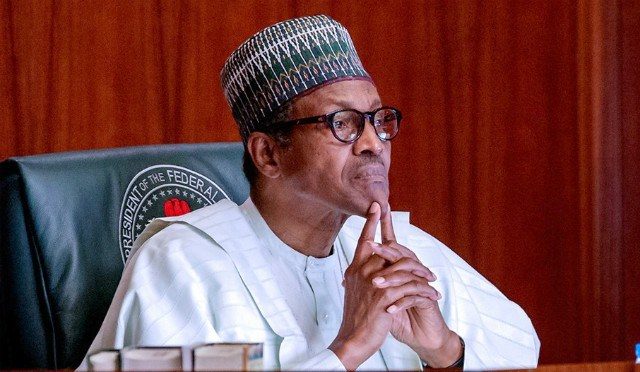


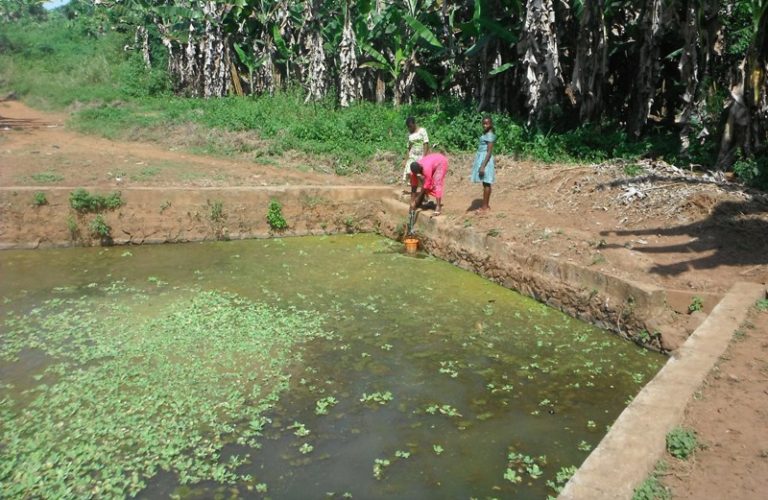


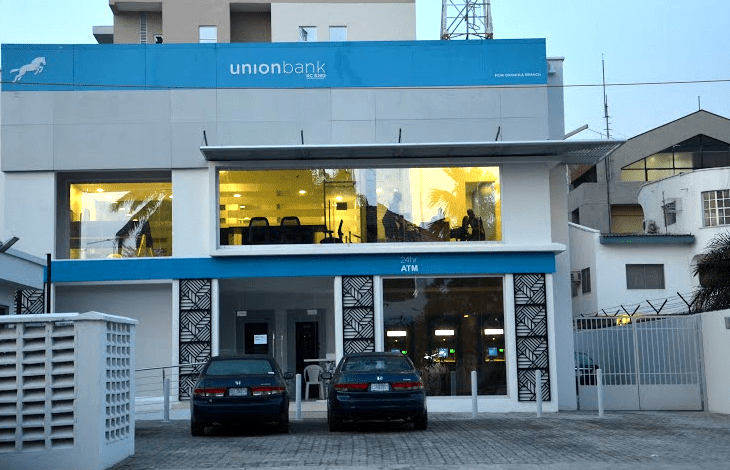
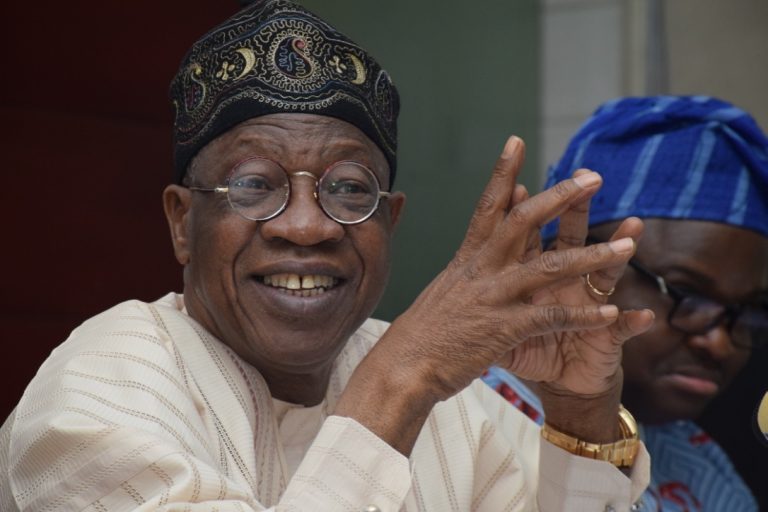


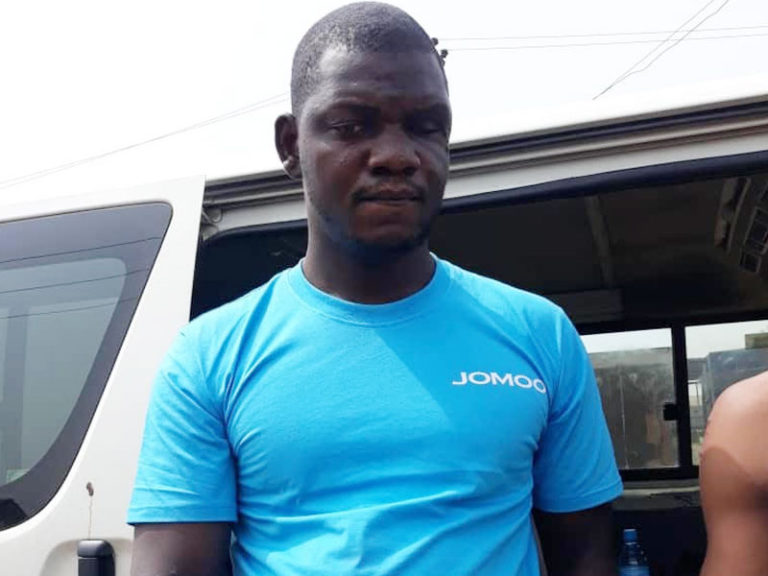


 He said that Nigeria, as it is presently “is structured to fail” hence the need to take the issue of the restructuring of the country serious.