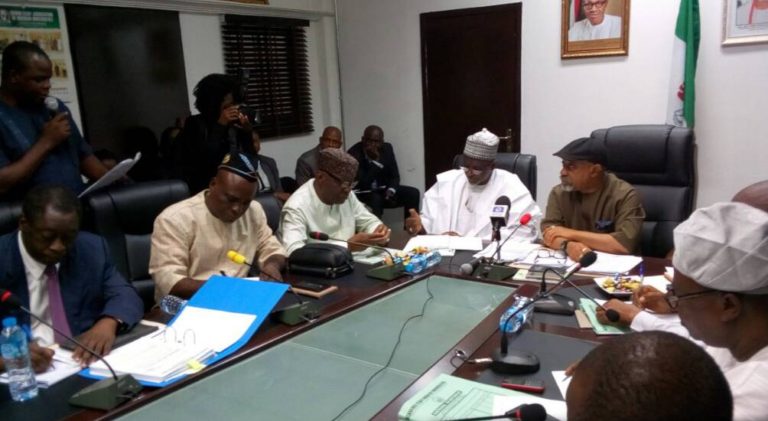
MINISTER of Labour and Employment, Chris Ngige, says the federal government has reached a partial agreement with the Academic Staff Union of Universities (ASUU) over the union’s ongoing strike.
But the leadership of ASUU said the industrial action remains ongoing as the government in the past has made mere promises without any concrete action.
Ngige had pointed out that some of the agreements in the Memorandum of Action signed between ASUU and the FG in 2017 will soon be implemented.
“I am happy to report that we touched some areas of understanding in implementation from the memorandum of action which we agreed to in 2017,”
“Some of these areas we have substantial compliance and some other areas have not been fully dealt with.
“Like the issue of shortfall in salaries of some federal universities’ workers and lecturers, ASUU has given a list to the accountant general’s office and we have agreed that by Wednesday that list should be cross-checked by the presidential initiative on continuous auditing. So, the accountant general’s office is to get back to us by Wednesday.
“We also have the issue of earned allowances, revitalisation, these are issues of 2009 agreement and partial implementation and we have agreed on the modus operandi to look into the fund situation, this is due to low revenue on the part of the government.
“We have agreed on what we are going to do to make sure that the outstanding amount is handled in a way that all parties will be properly accommodated.”
Ngige also said that the ministry of education will set up a committee to engage the Nigeria Governors’ Forum on ways to better fund state-owned universities.
But speaking with journalists after the meeting, Biodun Ogunyemi, National President of ASUU, said there was no concrete development yet to warrant the suspension of the strike.
“All we have heard today are just promises. There’s nothing to take back to our members,” Ogunyemi said.
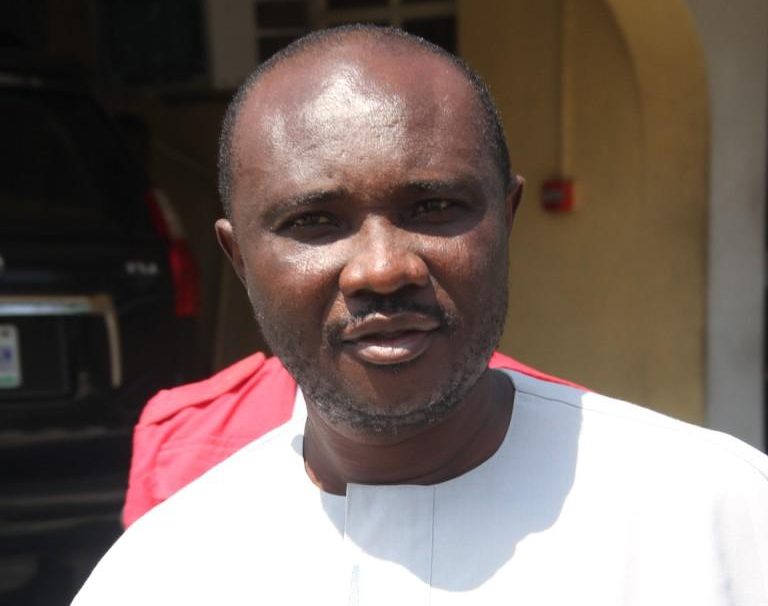
JUSTICE Chuka Obiozor of the Federal High Court, Lagos, has ordered the final forfeiture of several properties worth N1.8 billion belonging to Tuoyo Omatsuli, the Executive Director of Projects at the Niger Delta Development Commission, NNDC.
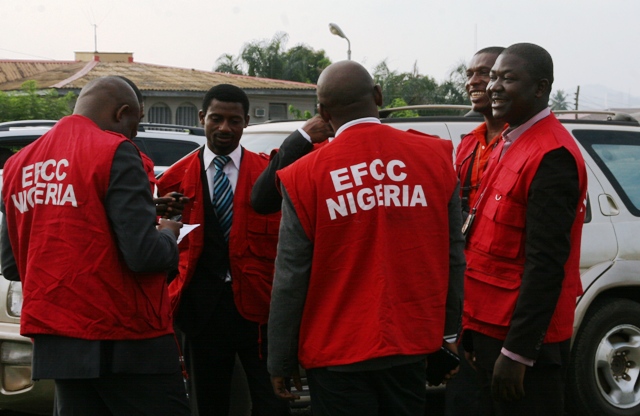
In a statement on Monday, Tony Orilade, the spokesman of the EFCC, said that the ruling on Monday follows an order of interim forfeiture of the same properties to the federal government earlier in May.
The order is following an ex-parte application filed by the EFCC, against Omatsuli.
The EFCC, through its counsel, Ekene Iheanacho, had narrated to the court how a contractor with the NDDC, Starline Consultancy Services Limited, was paid over N10 as consultancy fee for levies collected from oil processing companies in the Niger Delta Region, and how over N3.6 billion of the sum was paid as kickback to Omatsuli through a proxy company named Building Associates Limited.
“Some of the funds were used by Building Associates to buy properties in the name of a company, Don Parker Properties Limited, where Omatsuli had a majority shareholding,” Iheanacho further told the court.
The EFCC counsel also narrated how one Francis Momoh was introduced as a shareholder in Don Parker Properties Limited in order to disguise the nature of the crime.
Some of the properties belonging to Omatsale but now permanently forfeited to the federal government.
Some of the properties belonging to Omatsale but now permanently forfeited to the federal government.
Some of the properties belonging to Omatsale but now permanently forfeited to the federal government.
Some of the properties belonging to Omatsale but now permanently forfeited to the federal government.
While granting the interim forfeiture order earlier in May, the Judge directed the EFCC to publish the order in any national newspaper notifying the respondents or anyone interested in the properties to appear before the court and show cause why the properties should not be forfeited to the Federal Government of Nigeria.
In October, the respondents filed an application opposing the forfeiture order and claiming ownership of the properties.
However, Justice Obiozor ruled that the properties were acquired through proceeds from kickbacks received by Building Associate Limited operated by Momoh on behalf of Omatsuli, and therefore should be finally forfeited to the Federal Government.
The properties include Block 117, Plot 4, Lekki Peninsula Scheme, TPAO 992, Ikate Ancient City, Eti-Osa L.G.A, Lagos, measuring 1804.089Sqm and Plots 1-18, Block 43, TPAO 992, Ikate Ancient City, Lekki Peninsula, Eti-Osa, Lagos, measuring 10,000Sqm.
Others are Plot 1b, Northern Business District, Lekki Peninsula Scheme 1, measuring 1000Sqm and Plot 1; Block 25, Lekki Peninsula Residential Scheme 1, Eti-Osa L.G.A, measuring 2989.10Sqm.
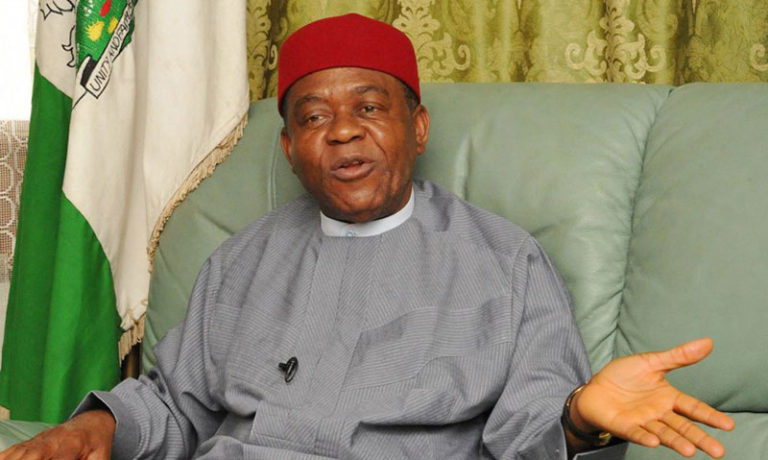
THE Economic and Financial Crimes Commission (EFCC) says the arrest of Ogbonna, son of the former Governor of Abia State, Theodore Orji, has nothing to do with Atiku Abubakar, but rather was in connection with an allegation of money laundering against the ex-governor.
The commission gave the explanation on Monday following reports by several media organisations, that it was the home of Atiku’s children that was raided on Saturday.
Reports earlier on Monday had it that Theodore Orji’s two sons were arrested and later released, but their vehicles remained in the custody of the EFCC. But the commission explained that the person arrested alongside Orji’s son was his friend and not his brother.
“The recent arrest of Ogbonna Orji, son of Sen. Theodore Orji, over money laundering, has absolutely nothing to do with son of ex-VP Atiku Abubakar,” the EFCC tweeted.
“The former Abia governor has been under investigations by the EFCC, for money laundering activities, which was discovered to have been carried out through his sons.
“The EFCC had been on the trail of cars allegedly bought by the sons, and last Friday the cars were traced to a nightclub in Abuja, where operatives waited patiently through the night to arrest the owners – Ogbonna and his friend, Kelvin Ilonah.
“They were arrested at about 5 am on Saturday, and they led operatives to their three-flat apartment, where documents retrieved showed that it was rented at a rate of N13million per annum.
“They have so far given useful information to the EFCC, which is aiding in investigations. It should be made clear that the EFCC never “went after” Atiku’s sons, neither was Atiku’s son arrested by the EFCC.”
LEGISLATIVE staff to federal lawmakers have petitioned the Acting Chairman of the Economic and Financial Crimes Commission, EFCC, Ibrahim Magu, to investigate an alleged criminal diversion of their budgeted legitimate entitlements.
They also requested that the EFCC chairman should prosecute the culprits and ensure prompt payment of their allowances.
This petition comes six days after an ICIR report revealed that hundreds of staff of the National Assembly shut lawmakers out of the assembly complex due to unpaid salaries and entitlements.
Also copied in the letter are President Muhammadu Buhari, Vice President Yemi Osinbajo, the Inspector General of Police, Ibrahim Idris, Director General of the State Security Service, Yusuf Bichi, and the Chairman of the Independent Corrupt Practices and Other Related Offences Commission (ICPC), Bolaji Owansanoye.
They accused the Senate President, Bukola Saraki; the Speaker of the House of Representatives, Yakubu Dogara and the Clerk of the National Assembly, Sani Omolori, of diverting funds appropriated to them, and of complicity in the management of the legislative aides’ account.
The National Assembly Act stipulates that each lawmaker, excluding principal officers, is entitled to five aides – one Senior Legislative Aide (SLA), two legislative aides, a personal assistant and a secretary.
Also, the President of the Senate is entitled to 45 aides, his deputy, 30, and 20 each for principal officers.
Similarly, Speaker of the House of Representatives has 35 assistants, Deputy Speaker, 15 and 10 each for the six principal officers of the House of Representatives.
In a report, the letter dated November 19, is titled “Petition on criminal diversion of funds of legislative aides by the clerk and presiding officers of the 8th National Assembly.”
In it, they explained that aides are employed on a short-term basis and entitled to allowances as applicable to other public servants and a severance package of 300 per cent of their annual basic salary at the end of the four -year tenure of their principals. ‘
Part of the allowance, they said, is the Duty Tour Allowance (DTA).
“Each SLA (Senior Legislative Aide) from Level 15 to 17 is entitled to the sum of N100,000 while another category of aides receives the sum of N75,000 every quarter as. DTA allowances. In essence, each aide is entitled to between N300,000 and N400,000 yearly as DTAs.
“We are also entitled to be trained four times yearly which was later compressed into twice a year. At the end of each training, each aide is entitled to an honorarium of N50,000 making a yearly total of N100,000,” part of the letter read.
They said of the 13 quarters DTA owed legislative aides of the 8th Assembly since June 2015, only two quarters have been paid, adding that there has been no training activities for the past three and half years despite the budgetary allocations for these items, “which were neither used for the said activities nor were they returned to government coffers as unused funds.”
“The non-payment of these accumulated legitimate entitlements has turned legislative aides into legislative slaves. We have been pauperized to the extent that we are unable to meet our financial obligations, like payment of school fees, hospital bills, house rents, debt serving, putting us into several embarrassing situations.”
The aides praised the past senate presidents for reportedly ensuring the payments of such allowances and accused the present leadership of fraud.
“It is pertinent to point that past Senate Presidents including Evan Enwerem, Chuba Okadigbo, Adolphus Nwagbara, Pius Anyim, Ken Nnamani and David Mark were all diligent in ensuring that legislative aides receive their appropriated DTAs and training allowances.
“We are hereby alleging criminal diversion of these yearly appropriated legitimate entitlements by the Senate President and Chairman of the National Assembly, Senator Bukola Saraki, the Speaker of the House of Representatives, Rt. Hon. Yakubu Dogara and the Clerk of the National Assembly, Alhaji Sani Omolori because of their complicity in the management of the legislative aides account,” the petition reads.
OFFICIALS of the Economic and Financial Crimes Commission (EFCC) raided the residence of the son of Theodore Orji, former Governor of Abia State, who is being investigated for alleged corruption.
According to the Premium Times, the house, located in the highbrow Maitama area of Abuja, also houses an apartment being occupied by the sons of Abubakar Atiku, the presidential candidate of the Peoples Democratic Party (PDP).
However, it is not clear who the main target of the EFCC raid was as some say the law enforcement officers had come for Atiku’s sons, Aliyu and Mustapha, both of whom were not around at the time.
Aliyu and Mustapha are believed to be studying abroad and only stay in the house when they are in the country. But, Chiemeka, the son of Theodore Orji, whose apartment is also located in the building, together with his brother, was present when the EFCC men came.
“When the EFCC officers arrived on Saturday, they met Theodore Orji’s sons at home, because they both live in the same building,” Premium Times quoted a source as saying.
“They asked to see the apartment of Aliyu and Mustapha Atiku-Abubakar but Theodore Orji’s sons refused to show them, saying their friends are out of the country, anyway.”
“The EFCC operatives then said they have intelligence that a large cache of dollars had been kept in the apartment which they had come to recover. They forcibly searched the apartment, but there was no hard currency or anything that could be construed as fraudulently damning.”
The sources said Chiemeka and his brother were released soon after they were arrested but their two cars were still in the possession of the EFCC as of Monday morning.
Atiku’s spokesman, Paul Ibe, confirmed the incident, describing it as a “grievous act of intimidation”.
“Atiku Abubakar is destined to win the 2019 presidential election, and Nigerians are set to ensure that destiny holds by voting for him en masse. This grievous act of intimidation now has an expiry date that is dwindling faster than a twinkle,” Ibe said.
However, Tony Orilade of the EFCC said he has no immediate knowledge of the operation. He said it was hugely unlikely that Abubakar’s sons could have been the targets of any such operation if it indeed took place.
Orilade pointed out that the EFCC has been investigating Orji, and it was possible the former governor’s children were the target of further investigations.
He is accused of diverting monies from the Ecological Funds allocated to Abia State to cater for environmental-related challenges, as well as monies from the Abia State Oil Producing Area Development Commission.
TWO investigative reports sponsored by the International Centre for Investigative Reporting (ICIR) were voted best and second best reports in the print and online categories of the 2018 Wole Soyinka Awards for Investigative Reporting in Lagos, on Sunday.
Both reports were sponsored by The ICIR as part of its Open Contract Reporting (OCR) Project, with support from the John D. and Catherine T. MacArthur Foundation.
The Kemi Adeosun certificate forgery report, written by Abdulaziz Abdulaziz of the Premium Times, was announced the winning entry in the online category. Abdulaziz was also announced as the 2018 WSCIJ-Nigerian Investigative Reporter of the year.
The 2018 WSCIJ-Nigerian Investigative Reporter of the year, Abdulaziz Abdulaziz of the Premium Times receiving his prize from Mr. Femi Falana
For the photo category, Kolawole Aliu, a 2017 runner-up, won for his photo, ‘The Menace of Lagos State Task Force on People’, published in the Leadership Newspaper, while Sharon Ijasan of Television Continental (TVC) won the television category with her story ‘Funding basic education in Nigeria’.
Chinelo Ozoalor of Federal Radio Corporation of Nigeria, Enugu, was the only journalist recognised for the radio category. She won the category for her report, ‘NECO Paper Leak Enugu’.
The winners, runners-up and commended works got cash prizes of N200,000, N100,000 and N50,000 respectively, plus a certificate of commendation. In addition, winners got award plaques and will proceed on an all-expense-paid international study tour in 2019.
John Momoh, Chairman of Channels Media Group, receiving his honorary award.
There was an honorary Lifetime Award for Journalistic Excellence, John Momoh, Chairman of Channels Media Group, owners of Channels Television, “for his over two-decade commitment to media excellence”. Similarly, Waziri Adio, the Executive Secretary of the Nigeria Extractive Industries Transparency Initiative (NEITI), was also honoured with the Anti-Corruption Defender Award for his consistent public stance against corruption. Adio is the 10th recipient of the award.
The 2018 edition of the Wole Soyinka Award for Investigative Reporting is the ninth edition of the awards, having begun in 2005. It is aimed at celebrating and rewarding outstanding investigative reports across the country.
The award is held on every December 9, the International Anti-corruption Day and eve of the World Human Rights Day, to highlight the crucial role played by the media in promoting the culture of accountability and transparency in government.
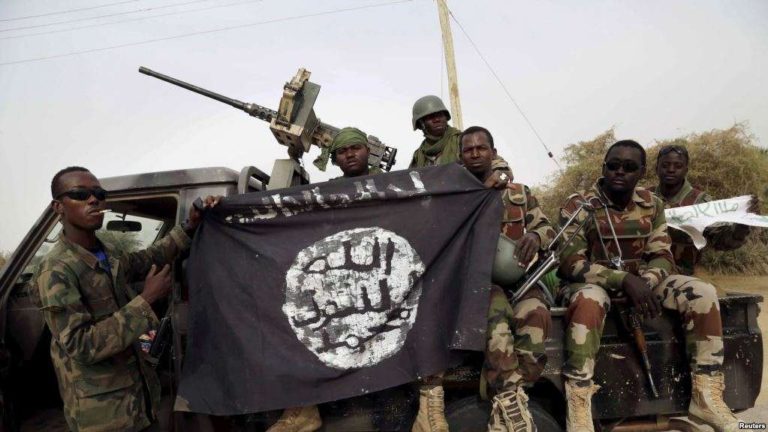
THE Amnesty International says there are critical evidences for the Office of the Prosecutor of the International Criminal Court (ICC) to open a formal investigation against Nigeria over serious violations of international humanitarian law and human rights law committed by both the terrorists group, Jama’atu Ahlis Sunna Lidda’awati wal-Jihad, popularly known as Boko Haram and Nigerian security forces since 2009.
The prosecutor of the International Criminal Court (ICC) publicly opened a preliminary examination on Nigeria on November 18, 2010, a year after insurgency erupted in the Northeast in order to establish whether a ‘reasonable basis’ exists to proceed with a full investigation into the situation in Nigeria pursuant to the criteria in the Rome Statute.
According to the Rome Statute, the ICC may open an investigation only if a state party is unable or unwilling to investigate and prosecute alleged perpetrators responsible for these crimes.
As a result of the preliminary investigation, the ICC’s Office of the Prosecutor (OTP) identified eight potential cases of war crimes and crimes against humanity perpetrated by both sides of the conflict.
“Eight years since the opening of the preliminary examination and faced with the continuing commission of crimes under international law and the possibility of a never-ending preliminary analysis, it is time for the OTP to open a formal investigation in Nigeria,” Amnesty International said on Monday, in a report titled “WILLINGLY UNABLE: ICC Preliminary Examination and Nigeria’s Failure to Address Impunity for International Crimes.
The Rome Statute of the International Criminal Court (often referred to as the International Criminal Court Statute or the Rome Statute) is the treaty that established the International Criminal Court (ICC). It was adopted at a diplomatic conference in Rome on 17 July 1998 and it entered into force on 1 July 2002. As of October 2017, 123 states including Nigeria are party to the statute.
The report critically assesses the ICC-OTP’s preliminary examination in Nigeria, and the ability and willingness of the government of Nigeria to ensure accountability for crimes committed by Boko Haram and Nigerian security forces.
It indicted the Federal Government of severe lack of co-operation which it said continues to critically affect the OTP’s ability to make a full and informed assessment of the Nigeria situation sonce 2010.
Amnesty International said it believes that the lack of relevant domestic proceedings and lack of co-operation is largely a reflection of the Nigerian government’s lack of willingness and its inability genuinely to bring perpetrators to justice.
In releasing the report which contains damning cases of war crimes and violations of human rights against both sides, Amnesty International pointed out that Boko Haram has killed thousands of civilians, abducted thousands of women, girls and boys, many of whom have been forcibly recruited as child soldiers or subjected to forced marriages and sexual slavery.
On the other hand, it also said that Nigerian security forces have committed extrajudicial killings, mass arbitrary arrests and detentions, torture and other ill-treatment, leading to thousands of deaths in custody, enforced disappearances, and other crimes including rape and sexual violence.
Between 2009 and 2015, Amnesty International said the terrorist group has “reportedly abducted at least 4,000 girls, women and boys,” with a majority of unmarried women and girls, and trapped tens of thousands more when it took control of towns in the Northeast.
As of June 2015, Amnesty International said it had documented that the Nigerian military had extra-judicially executed more than 1,200 people in the course of the conflict and arbitrarily arrested at least 20,000, of whom at least 7,000 have died as a result of the inhumane conditions in custody.
On Nigerian government’s failure to address impunity for international crimes, it argued that the Nigerian authorities claim that two recent inquiries, the Special Board of Inquiry (SBI) – established by the Chief of Army Staff (COAS) in March 2017 and the Presidential Investigation Panel to Review Compliance of the Armed Forces with Human Rights Obligations and Rules of Engagement (PIP) appointed by the Presidency in August 2017, represent genuine measures to investigate credible allegations made against military and CJTF members were never designed and mandated to identify perpetrators and recommend any criminal investigations or prosecutions.
Rather, Amnesty International said various commissions and panels of inquiry initiated and administered by the Nigerian government, including especially the SBI and PIP, have not been followed up by any further investigations, prosecutions or accountability measures in relation to senior and ‘most responsible’ military officials and/or into crimes under international law outlined in the OTP’s potential cases.
It added that the ‘inquiries’ were not conducted in a manner consistent with an intent to bring the persons concerned to justice but instead undertaken for the purpose of shielding the persons concerned from criminal responsibility.
The reports of SBI and PIP, Amnesty International maintained have not been made public by the government which further reinforces the unwillingness of the government to conduct a thorough and open investigation and prosecution into all the allegations and those involved.
The panels exonerated the military of any wrongdoings in its conduct in the Northeast— dismissed all allegations of possible individual criminal responsibility, including command responsibility, of (now retired) senior military officials, rejecting all documentary and other evidence presented to it.
“The much talked about PIP also concluded its 27 days of “public hearings” across the six geographic zones of the country and presented its report to the Presidency in February 2018. Similarly, the report has not been made public and hence its findings and recommendations remain unknown.
“Analysis of available evidence indicates that the SBI and the PIP proceedings were marked throughout by manifestly insufficient steps in their investigation, including patterns of ignoring evidence, lack of resources allocated to the proceedings, inability or unwillingness to conduct forensic examinations and other necessary steps,” it said.
Reacting to the trial of Boko Haram suspects, the human right organization said it believes that the three “mass Boko Haram trial” sessions which took place in Kainji, Niger State in 2017/18 constitute ‘sham’ proceedings undertaken on the basis of manifestly insufficient evidence and flawed investigations with the intention of hiding the government’s failure to hold Boko Haram perpetrators to account – “these trials too are not consistent with an intent to bring Boko Haram members to justice.”
It further indicted the Nigerian government on the mass trials which it said were marked by ‘egregious violations´ of defendants’ fundamental human rights, including rights to a fair trial and due process.
“These violations of fundamental human rights are ´so egregious´ that the ´mass trial´ proceedings should not constitute genuine proceedings for the purposes of the OTP’s admissibility assessment.”
Amnesty International concluded that the Nigerian government has not conducted any relevant national proceedings for the purposes of Article 17 of the Rome Statute into the ‘eight potential cases’ outlined by the OTP, and that Nigeria should be considered as ‘inactive’ as a result of this absence of relevant domestic proceedings.
IT is the second time in two years that Mr. Adewumi Alabi, a federal civil servant in Abuja, would cough out over N200,000 to replace the damaged engine of his Acura MDX 2008 model car. The Acura is his second car in the last four years that has developed engine problem less than two years after he bought it as ‘Tokunbo’ (a vernacular for ‘used’ goods) from the United States. An average of 5,706 used cars are imported monthly into Nigeria from the US, according to August 2018 stats from the US Department of Commerce, Office of Transportation and Machinery.
Though his damaged car engine is scheduled to be replaced with the new one in Abuja, Alabi travelled over 700km to the Ladipo Auto Spare Parts Market in Lagos, one of the biggest auto parts markets in Africa, to buy the engine on the advice of his new mechanic. Although it would take at least one week for it to be delivered to Abuja, Alabi did not mind.
Ladipo is one of the places to buy a variety of original auto parts and imported machinery, including automotive engines upon arrival in Lagos before they are transported countrywide, according to the Nigerian Port data.
The lesson learnt from the way his former mechanic handled the spoilt Mitsubishi car engine made him dump the mechanic. The man literally replaced the faulty engine with a ‘dead engine’. This time, he opted to buy the engine himself from Lagos.
“Before my Acura MDX engine completely broke down, I saw signs although I didn’t know the consequence. Signs of false gauge readings, high fuel consumption and emission from the car,” Alabi told Daily Trust on Sunday.
At Apo Mechanic Village, a bustling automobile spare parts market in Abuja where his Acura MDX engine would be fixed, he was told by Bisi, his new mechanic, that a thorough diagnosis of the car showed that the engine had sustained a serious damage.
The mechanic said the damage was caused by a prolonged use of contaminated fuel. He added that several taxi drivers who were his clients had also complained about similar problem linked to poor quality of fuel.
According to the National Bureau of Statistics (NBS), in 2018, Nigerians spent N135billion in 10 months to import parts and accessories, including car engines. When compared to 2017, the stats show that expenses on imported automobile spare parts have significantly increased.
This amount could be small when compared to what Nigerian car owners spend yearly on unplanned car maintenance or the cost to fix faulty engines caused by prolonged use of dirty fuel.
A cross section of car owners interviewed said the cost of fixing damaged engine ranged from N50, 000 to N500, 000, depending on the car model, the engine type and the nature of the repair, among other factors.
Only a few Nigerian car owners know that fuel that is high in sulphur (dirty fuel) could be responsible for damaged car engines. It starts with frequent engine failures.
The devil is in the fuel
Our reporter, therefore, spent several months investigating sulphur levels in the fuel imported into the country and found that the gasoline or premium motor spirit, (PMS), commonly called petrol, shipped into Nigeria from abroad contains sulphur level that is 86 times higher than the European limit and far above the limit set by Nigerian regulatory authorities.
According to the International Organisation of Motor Vehicle Manufacturers (OICA), the chemical called sulphur is a common impurity in both gasoline and diesel, which causes undesirable emissions of sulphur dioxide and trioxide (a poisonous gas with a characteristic rotten egg smell).
The OICA, which is the world’s authoritative forum on automotive issues, stated on its website that sulphur could lead to higher emissions and fuel consumption, and could permanently damage the device.
Sulphur, according to the U.S Environmental Protection Agency (EPA), is a natural component in crude oil that is present in gasoline and diesel, unless removed.
The Asian Clean Fuels Association (ACFA), in one of its monthly publications, stated that high sulphur in gasoline damages cars’ emission control systems and contributes to air pollution.
Although no publicly known research in Nigeria has established that high sulphur fuel usage causes damage to car engines, elsewhere, it has been proven to harm car engines.
For instance, in April this year, a few cars belonging to the police of West Palm Beach in South Florida, United States, reportedly broke down with engine failure. Six months later, 87 police cars had to have their engines replaced, costing the city $1.1 million.
City Administrator Jeff Green said an outside group came in to investigate the cause and found that the gasoline was bad, causing the engines to fail.
Four years ago, thousands of drivers in northwest Indiana and southern Illinois, US were hit by hefty car repair bills after a national chain sold contaminated gasoline. According to local news reports, scores of drivers began coming to repair shops reporting hard-starting and stalling engines, “check engine” lights, odd noises and other signs of engine trouble.
One of the affected motorists said in her lawsuit against fuel supplier, BP, that she bought more than $50 worth of gasoline for her 2008 Nissan SUV and that the next day, her vehicle started shaking, with the engine vibrating. Two days later, her SUV wouldn’t start in the morning. Days following the incident, BP recalled the bad fuel and said it would pay for repairs.
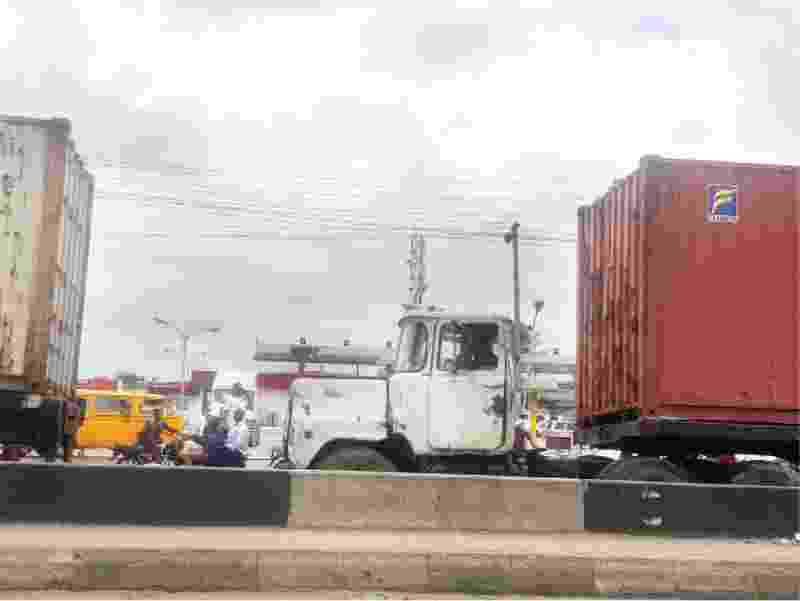
Photo used as illustration CREDIT: www.turkishmaritime.com
Lab analysis confirms high sulphur in PMS imported into Nigeria.
Our reporter took petrol sample from a Nigerian National Petroleum Corporation (NNPC) filling station in Apapa, Lagos, for laboratory analysis to determine the level of sulphur, which is the most important contaminant in fuel and found to have the most direct implications for health and the environment. The fuel sample was chosen from an NNPC outlet some kilometres away from the Apapa and Tin Can Island ports in Lagos because more than 80 per cent of petroleum product imports come through the two ports. The Apapa and Tin Can ports, according to NBS latest data, are Nigeria’s leading ports, with Apapa accounting for 51.2 per cent and Tin-Can Island 21.9 per cent of products imported into the country as at Q2 of 2018.
The fuel sample was collected from an NNPC outlet because in Nigeria’s current fuel supply chain, the NNPC is the country’s sole supplier of petroleum products, according to the junior oil minister, Ibe Kachikwu and NNPC Group Managing Director, Maikanti Baru. The NNPC imports the fuel through its downstream arm, then supplies substantial volumes to private marketers, known collectively as Major Marketers Association of Nigeria (MOMAN) and the Independent Petroleum Marketers Association of Nigeria (IPMAN), who altogether own hundreds of retail outlets in the country.
On the instruction of the chemist, 100ml of fuel sample was collected in two clean and transparent 50ml glass bottles. Because the bottles had openings, which allowed easy filling and then immediately closed, the petrol station attendant filled the bottles to 100 per cent capacity. The fuel sample was immediately taken to Intertek Nigeria Laboratory, located on Marine Road, GRA, Apapa, a few kilometres from the NNPC filling station.
Intertek is independent and internationally accredited, and one of the worlds’ leading petroleum testing services provider.
Our reporter had previously approached Nigeria’s standards regulator, the Standards Organisation of Nigeria (SON), Chemical Technology Laboratory in Lekki, Lagos, to conduct the sulphur test, but an official of the organisation said the agency, as at that time, did not have a sulphur analyser, the machine normally used to conduct the test.
The head of Chemical Technology Group of the agency asked our reporter by mail to direct further inquiries to the director, Laboratory Services, M.B Kehinde, who did not reply to emails and messages. But Intertek, which prides itself as an industry leader with over 130 years of experience in petroleum product testing and “with more than 43,000 employees in 1,000 locations in over 100 countries,” said its experts and global resources were equipped to meet testing, timeline and product needs.
“The petroleum testing labs follow ASTM, ISO, IP and other recognised petroleum test methods and regulatory protocols,” the company states on its website.
The fuel sample was then analysed for sulphur, using the ASTM method. The ASTM International, known as American Society for Testing and Materials, is an international standards organisation that develops and publishes voluntary consensus technical standards. Test methods for sulphur are specified by ISO and ASTM international standards.
When completed, the test result showed sulphur levels in the petrol sample to be up to 860 parts per million (ppm), which is 86 times above Europe’s 10ppm limit. The sulphur content in the gasoline, according to the test result, is beyond the 150ppm limit set by the SON last year.
NNPC mega station, few kilometres from Tin Can Island port, Apapa, where fuel sample was taken
Plans to end dirty fuel import suffers
On December 1, 2016, Nigeria, Benin, Togo, Ghana and Cote d’Ivoire agreed to ban Europe’s dirty fuels, limiting sulphur in fuels from 3,000ppm to 50ppm. The then Minister of Environment for Nigeria, Mrs. Amina Mohammed, said Nigeria and other African nations had decided that the sulphur in fuels imported should be reduced from 3000ppm to 50ppm, starting from July 1, 2017.
“Everybody knows that this is going to take some efforts, which is why we gave the six-month notice,” she said.
In April 2017, the SON, the body responsible for setting standards for imported goods, released new specification for petroleum products imports in Nigeria. After consultations with stakeholders, the agency announced that it had reduced the maximum allowed levels of sulphur in petroleum fuels imported into Nigeria, in line with the world trend. It said that from July 1, 2017, diesel fuel should have maximum sulphur levels of 50 ppm while gasoline should have maximum sulphur levels of 150 ppm.
But that was not to be because the government failed to enforce the ban on importation of high sulphur fuels after the July deadline.
Later, the Nigerian government, through the NNPC, announced again that it would cut the sulphur allowed in diesel by July 1 and petrol by October 2018 respectively. NNPC’s chief operating officer, Refineries and Petrochemicals, Mr. Anibor Kragha, was quoted by Reuters in March 2018 to have said in a presentation to the African Refiners Association (ARA), that the country would lower sulphur in diesel to 50ppm from 3000ppm by the 1st of July while petrol sulphur level cuts would start in October, moving to 300ppm from 1, 000 ppm. He said Nigeria was targeting a cut to 150ppm by October 1, 2019.
But the result of the test conducted by Daily Trust on Sunday showed that this has not happened. It is indeed business as usual as high sulphur fuels continue to flood Nigeria, to the detriment of its consumers and the Nigerian environment. Sulphur in gasoline is currently above the 300ppm target set by NNPC.
World’s capital for dirty fuel
The result of the test comparatively showed that gasoline imported into Nigeria has one of the highest sulphur contents among those shipped to other African countries. Not a single drop of the gasoline sold in Nigeria could legally be sold in some parts of Africa, let alone in Europe, from where most of the gasoline is imported.
In September 2016, the Public Eye, a Swiss non-governmental organisation, exposed how European trading companies were exploiting the weak regulatory standards in African countries to import fuels with sulphur levels up to 300 times higher than was permitted in Europe. After the revelation, most West African governments immediately set tighter limits for sulphur in fuels and kept to the deadline, one of them being Ghana.
Even before the Public Eye revelation, the comparative analysis showed that the sulphur levels in gasoline sold at pumps in other African countries were lower when compared to Nigeria. For instance, the Public Eye found between 120-190ppm sulphur concentration in gasoline grades sold in Angola, Africa’s 2nd largest oil producer as at December 2013; 275-718ppm in Ghana as at May 2015 and 79-155ppm in February 2016 in Cote d’Ivoire.
But in Nigeria, the result from the test conducted by Daily Trust on Sunday showed 860ppm sulphur.
Rabiu Suleiman, a seasoned Nigerian refiner with over 30 years’ experience working in Nigerian refineries said every country’s aspiration is to have ultra-low sulphur fuels, but it comes at a price.
Suleiman, who is currently a senior technical adviser to the Minister of State for Petroleum Resources on Refineries and Downstream Infrastructure, said countries like Ghana could afford to import high-quality gasoline because they had deregulated the market.
“Therefore, the selling price per litre (in Ghana) is more than twice or three times what is sold in Nigeria. The lower the sulphur the higher the price and the more the subsidy upon it. So, the higher the sulphur the more you get discounts on the cost of importation of that product,” he said.
He said African countries, including Nigeria, couldn’t meet euro standard fuel because they were at different stages of development and investment.
“To be able to get to that standard, you must be able to build refineries that are modern and can refine crude that can take out sulphur by putting an additional unit in the refinery, called sulphurisation unit. Because most African countries don’t have sufficient resources to do that, the UNEP has given various waivers to different countries. So it won’t be right to look at European standards and expect African countries to meet that standard,” Suleiman said.
Oil exports versus imports: A crooked ratio
Nigeria produces around 2.2 million barrels of oil, according to the latest stats from the oil ministry, but most of this crude is exported. So, while the country is a net exporter of crude oil, it must import gasoline. The paradox worsens further when the quality of the crude exported and gasoline received are compared.
According to the secretary- general of the Africa Petroleum Producers Organisation (APPO), Mahaman Gaya, Nigeria produces one of the best grades of crude, known for their low sulphur content. “For example, the Bonny Light has more quality than Brent and WTI,” Gaya told our reporter.
The Nigerian Bonny Light has one of the lowest sulphur contents of all crudes, such that even with a simple refinery, one can get a higher amount of ultra-low sulphur fuels than from other grades of crude.
In 2017, Europe received 38.6 per cent of Nigeria’s crude export, NNPC’s operations report showed. The Netherlands bought 9 per cent of Nigeria’s total exports while 5 per cent went to the US Atlantic coast, according to the NNPC data. But what does Nigeria get in return? Analysis of the sample conducted by Daily Trust on Sunday showed high levels of sulphur.
Why dirty fuel import can’t stop now -NNPC, SON
The spokesman for the NNPC, Ndu Ughamadu, said the status quo had remained because “the revised SON specifications are not in effect yet because they have not been approved by the Federal Executive Council (FEC). As such, the current SON standard of 1000ppm still prevails.” He said the primary consideration for the FEC was the impact on the pump price that would result from the importation of the lower sulphur PMS.
Ughamadu added that the incremental cost of the lower sulphur PMS is not the issue but capacity of international suppliers to meet demand.
The SON, in its reaction, said the implementation of revised standards for fuel import it set last year had been delayed by the government.
“Implementation is directed by the government. What we have done on our part is to coordinate the development of the standard,” the spokesman for the agency, Bola Fashina, said.
“We have coordinated the stakeholders to develop the standard in line with international best practice. That is where our own job lies. The implementation is above the SON, it is the government that will declare it as mandatory and give power to those who are to regulate,” he added.
This investigation was supported by Ford Foundation and the International Centre for Investigative Reporting, ICIR.
ON Friday, a little-known civil society group, Zamfara Unity Forum, issued a press statement raising the alarm that the Economic and Financial Crimes Commission (EFCC) was trying to interfere in the 2019 governorship election in Zamfara state. The allegation is that the anti-graft agency has arrested Mallam Dauda Lawal, the consensus governorship candidate of the All Progressives Congress (APC), and kept him incommunicado for over a week. This, the group alleged, was to force Lawal, a former banker, to drop out of the governorship race in favour of an unnamed anointed candidate. Unfortunately, the INEC deadline for substitution of the candidate has passed.
Zamfara presents a unique case in Nigeria. The incumbent Governor, Alhaji Abdulaziz Yari, had reportedly wanted his commissioner for finance, Alhaji Mukhtar Idris, to be his successor. However, he could not get his way through. Some of the aspirants reportedly met and decided to endorse Lawal for the governorship ticket following the inability of the party to hold a primary election in the state. Zamfara had been a fierce battleground during the primary, with reports of violence and gunshots rocking the state. Nobody would expect such a virulent contest in a state considered to be one of the poorest in Nigeria. But so it goes.
To make matters worse, INEC is yet to accept the candidature of Lawal. As far as the electoral umpire is concerned, APC did not hold any primary election in Zamfara and can therefore not present a candidate in the March 2, 2019 governorship election. The APC, on the other hand, says it will field a candidate because its constitution, a copy of which is in INEC’s possession, allows the party to pick its candidate either by a primary election or through the consensus option, depending on the circumstances it finds itself. There seems to be a logjam there. My opinion is that this would be eventually resolved by a court of law. I won’t worry about that.
What I really worry about is the implication of EFCC arresting Lawal at this point in time. Ever since I read this press statement, issued by one Comrade Usman Bungudu who was described as the convener of the forum, I had been expecting the EFCC to deny it. No such denial is forthcoming. I found this disturbing. The arrest of Lawal, for whatever reason, is ill-timed. Even if the EFCC has any serious case against him — which we do not know yet — it is going to be very difficult for the agency to explain to the public that it had nothing to do with Zamfara politics. The ordinary interpretation would be that EFCC is being used to decimate Lawal.
Why am I worried? As we prepare for the 2019 general election, I would say the greatest challenge ahead is the test of credibility. Whether or not we like it, the 2015 elections remain among the best we have organised. It was not as if they were perfect; far from it. The figures still looked incredible in at least six states across the country. There were reports of “communal voting”, underage voting and disenfranchisement in key places. But, by and large, 2015 represented a step forward rather than backward. And President Goodluck Jonathan put an icing on the cake by conceding while the final result was yet to be officially announced. He also did not challenge the outcome at the tribunal.
We should be making progress from there — by taking several steps forward, by adding what can make the elections more transparent and credible — instead of going backward. The Zamfara case, if true, will represent a step backward. No state institution should be involved in trying to influence the outcome of any election. The police tried to arraign Senator Ademola Adeleke over allegations of examination malpractices before the Osun state governorship election but backtracked at the request of President Muhammadu Buhari. Many Nigerians had accused the police of trying to influence the Osun governorship election in which Adeleke was the main opposition candidate.
As things would later turn out, Adeleke still lost the election and has now been charged to court by the police. Of course, police could, technically, argue that they were doing their job. You cannot, convincingly, argue against that. But it’s not all things that are lawful that are expedient. The moment politics is in the mix, the official argument would only be weakened. If EFCC had arrested and detained Lawal months before the Zamfara primary election, it would have been difficult to build a case of interference against the anti-graft agency. But coming right in the middle of an electioneering process, this move will certainly and justifiably raise dust.
We desperately need credible elections next year. We should not have to be arguing over legitimacy again. It creates moral and political setbacks. We need to focus on the key ingredients for credible elections: absence of violence and corruption; an unbiased electoral body; transparency; and neutrality of state institutions. When there is violence, credibility suffers. When there is inducement of voters, the system is distorted. When the electoral umpire is less than unbiased, the cause of a credible election will not be served. When state institutions, such as the security agencies, perform their duties in a way that influences election outcomes, credibility crumbles.
President Muhammadu Buhari has consistently maintained that he wants us to have credible elections in 2019. He has said it at every turn. In fact, I have lost count of how many times he has praised Jonathan for conceding the 2015 presidential election. This is what is called legacy. You don’t have to be a fan of Jonathan — but anywhere people discuss 2015 elections today, his name is mentioned in positive light for the way he reacted to his loss. If I were Buhari, I would do everything possible to create my own legacy so that history would be kind to me too. One legacy is to ensure that state institutions are not working, overtly or covertly, under political influence.
By all means, 2019 must be better than 2015. That is one sure way of evaluating our progress as a democracy. I shivered recently when the chief of army staff, Lt. Gen. Yusuf Buratai, said the army will replicate its success in the Ekiti and Osun elections in 2019. No, that does not sound right. To start with, APC was vehemently against the deployment of soldiers for election duty when PDP was in power. What changed? Also, statements such as this lead to accusations of partisanship against the military. There were allegations of intimidation of voters by security agencies in Ekiti and Osun and the cases are now before tribunals. The army shouldn’t be talking about “replication”.
INEC, under the scrutiny of Nigeria’s development partners and civil society organisations, has sought to be above the fray. INEC was subjected to intense pressure ahead of the 2015 elections apparently to exact neutrality from the umpire. No pressure can be too much on INEC because it is the body that can make or mar the elections. The way it handled the Osun governorship election has been criticised by the PDP, which believes it won and has headed for the tribunal to seek justice. We leave that to the judiciary to determine. But INEC must not just be fair, it must be seen to be fair. This is the least expectation of all neutrals.
Above all, Buhari must consciously work for credible elections as part of his legacy. He needs to review his decision to withhold assent to the electoral amendment bill, which many activists think will instil more transparency in the process — especially the aspect on electronic transmission of results from polling units. Enhanced transparency could be a win-win for everybody. Buhari should point out the new provisions he does not agree with in order to reach a compromise with the national assembly. I have not seen any provision that cannot be further amended in the national interest. We must not throw away the baby with the bath water.
Buhari saw himself as a victim of tainted elections in 2003, 2007 and 2011. What reforms has he promoted to make our elections more credible? What would history record against his name in electoral reforms? He needs to sincerely ask himself these questions. Jonathan gave us the popular slogan: “My ambition is not worth the blood of any Nigerian.” Buhari must give us his own by way of absolute commitment to credible elections. Also, he must let it be known to the security agencies that their role is to help the process run smoothly and fairly. He must let it be known to the EFCC and other anti-graft bodies that they should not meddle in the elections. Progress.
AND FOUR OTHER THINGS…
BOKO HARAM
I watched Hon. Sanni Zoro’s address to the house of representatives in which he lamented how unsafe parts of Borno and Yobe states are because of the Boko Haram insurgency. This, apparently, questions claims by the federal government that we are winning the war. However, it is comforting that Zoro went and returned alive, meaning there is still a bit of progress despite the recent setbacks. It is now left for President Buhari to do the needful by carrying out a comprehensive overhaul of his strategy, both military and non-military, so that we can deal a fatal blow on the insurgency. Things certainly have to change, except we want to be living in denial. Rethink.
AISHA AGAIN
Hajia Aisha Buhari has refused to enter a ceasefire agreement with the “two men” she has been fighting since 2015 for allegedly running her husband’s government despite not contributing “anything” to his victory. Speaking at a summit recently, she re-launched her tirade. “Our votes were 15.4 million in the last elections and after that… only for us to be dominated by two people… this is totally unacceptable,” she said. I think she owes us a book on these two mysterious men. If I were Aisha, though, I would be busy promoting Buhari’s re-election bid rather than giving the opposition more ammunition to take him out. Or is it a case of “my way or nothing”? Odd.
MBAKA, MBA!
I am generally against the involvement of clerics in partisan politics. Jesus Christ himself refused to be drawn into political games throughout his ministry on earth. Fr. Ejike Mbaka, spiritual director of Adoration Ministry Enugu, Nigeria (AMEN), has not only been deeply involved in partisan politics, he has now become brazen with financial demands from politicians. He said Buhari “will go nowhere if he remains ungrateful” to his ministry, apparently because he endorsed Buhari in 2015. He has also said Alhaji Atiku Abubakar, the PDP candidate, and Mr. Peter Obi, the running mate, might “end in shame” for failing to make donations at his harvest and bazaar celebration. Embarrassing.
AND FINALLY…
The Jubril Movement has sent me cracking since it launched the ultra fake news that President Buhari died in London last year and was surreptitiously replaced by one Jubril Al Sudani. Good effort, especially as I am a lover of humour. But the movement must be alarmed at how they are being taken seriously by respected people. Bishop David Oyedepo, unable to see the humour in Prof. Olatunji Dare’s satire on the Jubril tale, took to the pulpit to raise the alarm that Nigeria may be up for sale since the government had not refuted Dare’s claim that the country has negotiated, financially, with the Jubril family to keep the “secret” secret. Laughable.
Simon Kolawole is the founder and CEO of TheCable. He tweets @simonkolawole.
Nigeria’s former finance minister wrote a book about her time in government. It is a thinly veiled attempt to clean up her image.
NGOZI Okonjo-Iweala served as Nigeria’s finance minister twice since its return to democracy: first from 2003 to 2006 under Olusegun Obasanjo and more recently, from 2011 to 2015, under Goodluck Jonathan. Now she has written a book, published by an American academic press, ostensibly about those experiences.
Dr. Okonjo-Iweala comes from a family of academics. Her mother, Kamene, was a renowned sociologist and her father, Chukwuka, an economist (he is also a local king in the Delta region, and a former UN official and government official in Ghana.) She had her elementary education at the legendary St. Anne’s School Molete, which is one-hundred and forty-nine years old. Then completed her secondary education at the prestigious University of Ibadan International School. She then proceeded to Harvard where she obtained her Bachelor’s degree in Economics. She later obtained a PhD in Rural Economics and Development from MIT. Prior to becoming Nigeria’s Finance Minister in 2003, she worked at the World Bank where she rose to become the Vice President for Africa and later one of the several Managing Directors at the Bank. Upon Nigeria’s return to democracy in May 1999, she became an important figure in the shaping of neoliberal economic policies for the new administration, first as an adviser to Obasanjo and later as Finance Minister, where her office literally became an outpost of the IMF/World Bank. She helped populate both Obasanjo and Jonathan’s administrations with current or former employees of the World Bank/IMF and other sympathizers of neoliberal economic policies. Many of these people later constituted her kitchen cabinet. The neoliberal policies of the two administrations she worked for were largely responsible for the selling of national assets to individuals and cronies of the regimes in the name of privatization and commercialization. It wasn’t surprising when opposition to these policies became an important trope for the book that chronicled Okonjo-Iweala’s tenure as Finance Minister in Nigeria.
There aren’t many books by African finance ministers on their tenure, so her book would certainly elicit anticipation in some circles. The book is dramatically titled Fighting Corruption is Dangerous: The Story Behind the Headlines and opens with a story of the kidnapping of Kamene Okonjo, which she blames on intimidation by those that were benefitting financially from what she calls the “oil subsidy scam” because the alleged kidnappers did not ask for money. In her telling, they wanted her to announce on national radio and television that she was resigning from her job as Finance Minister and returning to the United States. According to Okonjo-Iweala, this incident happened because of her stance on corruption in the oil industry, especially the illegal payment of subsidies to oil marketers.
The kidnapping of Okonjo-Iweala’s mother is depicted as a game, which makes jest of the general insecurity ordinary Nigerians confront on a daily basis. The community where Okonjo-Iweala’s parents live and many communities in Nigeria are known to have recorded many incidents of kidnapping before and after the episode she described. This includes the kidnapping of the king of a nearby Ubulu-Uku community, a senior government official of the state, Professor Hope Eghagha, and the wife of retired Army General Oluwole Rotimi.
Kidnapping became rampant during the oil insurgency in the Delta and continued into the present so it cannot be conclusively said that there is a correlation between these acts of brigandage and the fight against corruption. The only correlation is the general breakdown in law and order as a result of the incompetency of the administration and the overall socio-economic downturn resulting from the neoliberal economic policies of the Obasanjo and Jonathan administrations that Okonjo-Iweala helped shape.
The story about her mother’s kidnapping, instead of an up-close view, is merely a device for four interrelated arguments to support the book’s claim that fighting corruption is dangerous. The first of these is the book’s suggestion that, Okonjo-Iweala’s anti-corruption campaign resulted in the kidnapping of her mother; secondly, she claims that her ethnicity warranted an opposition to her because some ethnic groups presume that the office of the Finance minister is their birthright, thirdly, Okonjo-Iweala’s feminist ideology warranted anti-feminist opposition to her fight against corruption and finally that some ideologues from the left were opposed to her anti-corruption crusade. These are the reasons Okonjo-Iweala concludes that fighting corruption in Nigeria is dangerous.
So far so good. However, what becomes clear, is that Okonjo-Iweala sees every disagreement with her economic policies as an attack on her person because of her gender, ethnic identity or her previous role as a World Bank employee.
Nigeria has a subsidy regime that started with the administration of General Yakubu Gowon in the early 1970s. The subsidy regime has been a recurring decimal in the annals of oil politics in Nigeria during the oil boom of that era and cannot be said to be a new thing as described in the book. It is what every regime has had to grapple with over the years. However, in the discussion of what she considers subsidy scam, she discounts the larger issue that surrounds the subsidy regime. For example, Nigeria imports refined oil for its local consumption. That makes the local price of premium motor spirit susceptible to the fluctuating oil market. The Obasanjo administration licensed private individuals to build refineries and over 16 years later, none has been built and nowhere was this stated in the book. Secondly, she argues that the whole subsidy regime is a scam but never admits to the culpability of the Jonathan administration and of course herself (the Coordinating Minister of the Economy) to such a scam. Blame it on others seems to be the fulcrum of the entire argument of the book.
Okonjo-Iweala borrowed straight from the neoliberal mantra that government should get out of the way when she writes, at the start of the book, that “The overwhelming majority of Nigerians are honest, hardworking citizens who want what citizens elsewhere want—for their government to provide peace, stability, and basic services and then get out of their way so they can live their lives.” While the majority of Nigerians want stability and peace, they also want a government that serves their interest by providing social services such as education, health and an economy that works for everyone, not the one that works for a few as it is now.
Describing Nigeria as a troubled country without giving proper context to why it is troubled fits into the prevailing narrative of Africa as a troubled continent that needs rescue. Nowhere is this narrative more prevalent than in the second chapter where she described how she was “begged” to leave her work in the West (as a World Bank employee) for the wilderness of Nigeria. This fits into the larger narrative of the “savage-savior” metaphor aptly elucidated by Makau Mutua in his book, Human Rights: A Political and Cultural Critique. It also fits the narrative of the white savior industrial complex aptly described by Teju Cole as a situation where Africa—in this case Nigeria—is considered so helpless that you would need some saviours from the West to come rescue it from what I call the permanency of economic retardation.
This chapter also shows how she constituted a “rescue team” made up mainly of present and former employees of International Financial Institutions. The chapter never hid her preference for those with Western experience and this speaks to her claim of being Nigeria’s saviour. In addition, she reconstructed the story of her being paid in United States dollars in ways that suggest she voluntarily dropped the idea of being compensated in dollars without disclosing that it was a court judgment that stopped the payment and asked her to refund all salaries paid to her in that amount to the government. She had insisted on being paid in US dollars upon her assumption of office as finance minister in 2003 with an annual salary of US$240,000 which is a violation of the Code of Conduct for Public Officers which frowns against maintenance of a foreign account. It is also a violation of the Certain Political, Public and Judicial Office Holders (Salaries and Allowances, etc) Act No 6 of 2002 which prescribes a yearly salary of N794,085.00 ($2185) for every minister of the Federal Republic of Nigeria. However, she failed to mention how Obasanjo’s dissatisfaction with her performance as Finance minister led to her being transferred to the Foreign Ministry where she later resigned. Rather, she constructed a story of resignation that never accounted for being transferred to another ministry that she thought was beneath her. She also did not disclose how she lobbied the Jonathan administration to return as Finance Minister rather, she claimed that private sector leaders came to beg her for the job. It is in this chapter that she actually began to show how every constructive opposition to her economic policies were seen as a personal attack on her. She singled out individuals such as Omoyele Sowore, publisher of Sahara Reporters and Femi Falana, a highly-respected lawyer in Nigeria as those who led the attack on her. However, she never affirmed how many of those so-called attackers merely pointed out the flaws in her economic policies, which were detrimental to most Nigerians. While Okonjo-Iweala argued that Mr. Falana singled her out for criticism. It is incontrovertible that the same Mr. Falana actually fought alongside Omoyele Sowore and others for the restoration of democracy in Nigeria. In the many years of military rule in Nigeria (1985-1999), Falana was incarcerated without trial several times for speaking out against economic inequality and other forms of injustice occasioned by neoliberal economic and political practices in Nigeria. The same can be said for Omoyele Sowore who, as a student activist in college, fought for the restoration of democracy. Basically, the duo of Sowore and Falana had merely continued their critique of economic policies that are detrimental to the wellbeing of Nigerians, which Okonjo-Iweala claims are personal attack.
Even more interesting is the fact that the book chronicled Okonjo-Iweala’s to and fro with Nigeria’s National Assembly in ways that see the assembly as the opposition contrary to the spirit of the constitution that sees the assembly as an independent organ. Every invitation to the assembly to give account of the stewardship of her ministry is considered an attack on her person such that the reader might be convinced that she would rather serve under a dictatorial government than a democracy. The National Assembly of Nigeria is expected to provide an oversight on the executive arm, surprisingly; the book seems not to recognize this constitutional role. Instead, the book paints a picture of the national assembly as one of those who always “attack” her. Painting the national assembly in this way suggests either a lack of understanding of constitutional governance by Okonjo-Iweala or a mere display of disdain for every criticism regardless where such criticism comes from. Okonjo-Iweala writes the same way about the governors of Nigeria’s 36 states as if the governors are expected to be appendages to the federal government, especially the office of the minister. For example, when the then governor of Edo state, Adams Oshiomhole, complained about what he called the illegal withdrawal of $2billion from the Excess Crude Account—an account operated by the Federating States and the Central Government. Okonjo-Iweala opined that Oshiomhole attacked her because she blocked him from obtaining a foreign loan. To her, any state governor that criticizes her is automatically seen as “attacking her person” regardless of the policy disagreements that may have warranted such criticism. While I admit that the current Nigerian system is not perfect and there are flaws in the National Assembly as well as the 36 states, I also believe that respect for the constitution is what creates a strong governance system in any society.
Furthermore, another argument made by her is the claim that, “there were ethnic jingoists who disliked the idea of someone from my Igbo ethnic group holding what they perceived as a powerful position that they believed belonged to their own ethnic group” (107). This assertion feeds into the prevalent narrative in Nigeria that a section of the country, specifically the Hausa-Fulanis tend to dominate what is considered to be “juicy” ministries and parastatals especially the Finance Ministry. This is not exactly true because, since independence in 1960, more southerners have held the position of Finance Minister more than those from the North. For example, between October 1st 1960 and September 14, 2018 when Kemi Adeosun resigned as Finance Minister, Nigeria have had 23 Finance ministers and only seven have come from the North, the rest have been from the South including the first Finance Minister (1960-1966), Festus Okotie-Eboh who is from the same Delta state as Mrs Okonjo-Iweala.
There are some historical inaccuracies such as describing Goodluck Jonathan as the first person from a minority group to become president leaving out General Yakubu Gowon, the longest serving Nigerian leader (1966-1973). Okonjo-Iweala says she was the first person to serve as a coordinating minister of the economy leaving out Chief Obafemi Awolowo who served as Vice-Chairman of the ruling council and Finance Minister during the reign of Gowon and of course Ernest Shonekan who was appointed by the Babangida Administration as Head of the Transition Council overseeing the economy before Babangida was forced out of power by popular protest in August of 1993 paving the way for Shonekan and later Abacha to become Head of State.
Finally, it is hard to find any evidence of the fight against corruption by Okonjo-Iweala in the entire book. She presided over the economy under two administrations adjudged to be some of the most corrupt in the history of the country. For example, electricity is a major challenge in the country and the $16 billion that Obasanjo administration under which Okonjo-Iweala served spent on the power sector was mismanaged and power is still at the level it was before the administration came to power in 1999. Over $32 billion was said to have been lost to corruption during the Jonathan administration because state coffers were turned into personal coffers by the president and his cronies and it is hard to fathom that a Finance minister who coordinates the economy can feign ignorance of the monumental fraud that took place under her watch. At best, the book highlights how narratives can be reconstructed in ways that turns principled opposition into personal attacks in an attempt to provide cover for someone who might be seen as culpable in the mismanagement of Nigeria’s wealth for about 16 years. If anything is dangerous, it is not admitting to one’s culpability in the scheme of monumental fraud in the history of Nigeria.