Home Blog Page 2475

The lady is not for turning

4

By Omolade Adunbi

Nigeria’s former finance minister wrote a book about her time in government. It is a thinly veiled attempt to clean up her image.


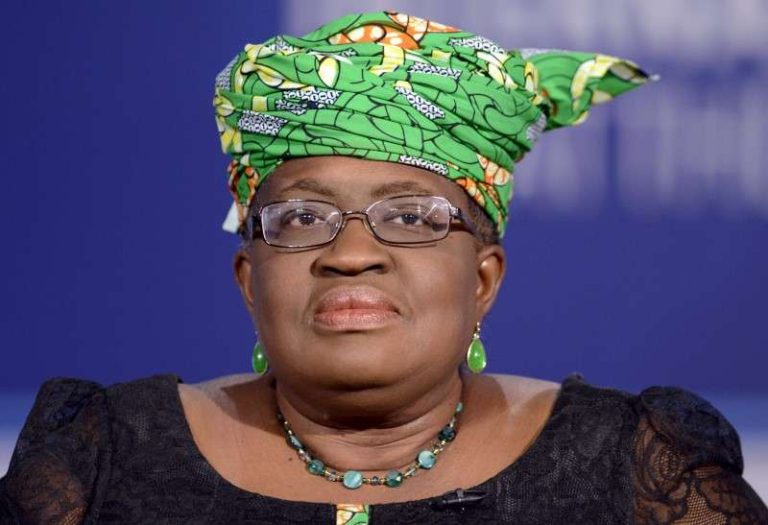
NGOZI Okonjo-Iweala served as Nigeria’s finance minister twice since its return to democracy: first from 2003 to 2006 under Olusegun Obasanjo and more recently, from 2011 to 2015, under Goodluck Jonathan. Now she has written a book, published by an American academic press, ostensibly about those experiences.

Dr. Okonjo-Iweala comes from a family of academics. Her mother, Kamene, was a renowned sociologist and her father, Chukwuka, an economist (he is also a local king in the Delta region, and a former UN official and government official in Ghana.) She had her elementary education at the legendary St. Anne’s School Molete, which is one-hundred and forty-nine years old. Then completed her secondary education at the prestigious University of Ibadan International School. She then proceeded to Harvard where she obtained her Bachelor’s degree in Economics. She later obtained a PhD in Rural Economics and Development from MIT. Prior to becoming Nigeria’s Finance Minister in 2003, she worked at the World Bank where she rose to become the Vice President for Africa and later one of the several Managing Directors at the Bank. Upon Nigeria’s return to democracy in May 1999, she became an important figure in the shaping of neoliberal economic policies for the new administration, first as an adviser to Obasanjo and later as Finance Minister, where her office literally became an outpost of the IMF/World Bank. She helped populate both Obasanjo and Jonathan’s administrations with current or former employees of the World Bank/IMF and other sympathizers of neoliberal economic policies. Many of these people later constituted her kitchen cabinet. The neoliberal policies of the two administrations she worked for were largely responsible for the selling of national assets to individuals and cronies of the regimes in the name of privatization and commercialization. It wasn’t surprising when opposition to these policies became an important trope for the book that chronicled Okonjo-Iweala’s tenure as Finance Minister in Nigeria.

There aren’t many books by African finance ministers on their tenure, so her book would certainly elicit anticipation in some circles. The book is dramatically titled Fighting Corruption is Dangerous: The Story Behind the Headlines and opens with a story of the kidnapping of  Kamene Okonjo, which she blames on intimidation by those that were benefitting financially from what she calls the “oil subsidy scam” because the alleged kidnappers did not ask for money. In her telling, they wanted her to announce on national radio and television that she was resigning from her job as Finance Minister and returning to the United States. According to Okonjo-Iweala, this incident happened because of her stance on corruption in the oil industry, especially the illegal payment of subsidies to oil marketers.

The kidnapping of Okonjo-Iweala’s mother is depicted as a game, which makes jest of the general insecurity ordinary Nigerians confront on a daily basis. The community where Okonjo-Iweala’s parents live and many communities in Nigeria are known to have recorded many incidents of kidnapping before and after the episode she described. This includes the kidnapping of the king of a nearby Ubulu-Uku community, a senior government official of the state, Professor Hope Eghagha, and the wife of retired Army General Oluwole Rotimi.

Kidnapping became rampant during the oil insurgency in the Delta and continued into the present so it cannot be conclusively said that there is a correlation between these acts of brigandage and the fight against corruption. The only correlation is the general breakdown in law and order as a result of the incompetency of the administration and the overall socio-economic downturn resulting from the neoliberal economic policies of the Obasanjo and Jonathan administrations that Okonjo-Iweala helped shape.

The story about her mother’s kidnapping, instead of an up-close view, is merely a device for four interrelated arguments to support the book’s claim that fighting corruption is dangerous. The first of these is the book’s suggestion that, Okonjo-Iweala’s anti-corruption campaign resulted in the kidnapping of her mother; secondly, she claims that her ethnicity warranted an opposition to her because some ethnic groups presume that the office of the Finance minister is their birthright, thirdly, Okonjo-Iweala’s feminist ideology warranted anti-feminist opposition to her fight against corruption and finally that some ideologues from the left were opposed to her anti-corruption crusade. These are the reasons Okonjo-Iweala concludes that fighting corruption in Nigeria is dangerous.

So far so good. However, what becomes clear, is that Okonjo-Iweala sees every disagreement with her economic policies as an attack on her person because of her gender, ethnic identity or her previous role as a World Bank employee.

Nigeria has a subsidy regime that started with the administration of General Yakubu Gowon in the early 1970s. The subsidy regime has been a recurring decimal in the annals of oil politics in Nigeria during the oil boom of that era and cannot be said to be a new thing as described in the book. It is what every regime has had to grapple with over the years. However, in the discussion of what she considers subsidy scam, she discounts the larger issue that surrounds the subsidy regime. For example, Nigeria imports refined oil for its local consumption. That makes the local price of premium motor spirit susceptible to the fluctuating oil market. The Obasanjo administration licensed private individuals to build refineries and over 16 years later, none has been built and nowhere was this stated in the book. Secondly, she argues that the whole subsidy regime is a scam but never admits to the culpability of the Jonathan administration and of course herself (the Coordinating Minister of the Economy) to such a scam. Blame it on others seems to be the fulcrum of the entire argument of the book.

Okonjo-Iweala borrowed straight from the neoliberal mantra that government should get out of the way when she writes, at the start of the book, that “The overwhelming majority of Nigerians are honest, hardworking citizens who want what citizens elsewhere want—for their government to provide peace, stability, and basic services and then get out of their way so they can live their lives.” While the majority of Nigerians want stability and peace, they also want a government that serves their interest by providing social services such as education, health and an economy that works for everyone, not the one that works for a few as it is now.

Describing Nigeria as a troubled country without giving proper context to why it is troubled fits into the prevailing narrative of Africa as a troubled continent that needs rescue. Nowhere is this narrative more prevalent than in the second chapter where she described how she was “begged” to leave her work in the West (as a World Bank employee) for the wilderness of Nigeria. This fits into the larger narrative of the “savage-savior” metaphor aptly elucidated by Makau Mutua in his book, Human Rights: A Political and Cultural Critique. It also fits the narrative of the white savior industrial complex aptly described by Teju Cole as a situation where Africa—in this case Nigeria—is considered so helpless that you would need some saviours from the West to come rescue it from what I call the permanency of economic retardation.

This chapter also shows how she constituted a “rescue team” made up mainly of present and former employees of International Financial Institutions. The chapter never hid her preference for those with Western experience and this speaks to her claim of being Nigeria’s saviour. In addition, she reconstructed the story of her being paid in United States dollars in ways that suggest she voluntarily dropped the idea of being compensated in dollars without disclosing that it was a court judgment that stopped the payment and asked her to refund all salaries paid to her in that amount to the government. She had insisted on being paid in US dollars upon her assumption of office as finance minister in 2003 with an annual salary of US$240,000 which is a violation of the Code of Conduct for Public Officers which frowns against maintenance of a foreign account. It is also a violation of the Certain Political, Public and Judicial Office Holders (Salaries and Allowances, etc) Act No 6 of 2002 which prescribes a yearly salary of N794,085.00 ($2185) for every minister of the Federal Republic of Nigeria. However, she failed to mention how Obasanjo’s dissatisfaction with her performance as Finance minister led to her being transferred to the Foreign Ministry where she later resigned. Rather, she constructed a story of resignation that never accounted for being transferred to another ministry that she thought was beneath her. She also did not disclose how she lobbied the Jonathan administration to return as Finance Minister rather, she claimed that private sector leaders came to beg her for the job. It is in this chapter that she actually began to show how every constructive opposition to her economic policies were seen as a personal attack on her. She singled out individuals such as Omoyele Sowore, publisher of Sahara Reporters and Femi Falana, a highly-respected lawyer in Nigeria as those who led the attack on her. However, she never affirmed how many of those so-called attackers merely pointed out the flaws in her economic policies, which were detrimental to most Nigerians. While Okonjo-Iweala argued that Mr. Falana singled her out for criticism. It is incontrovertible that the same Mr. Falana actually fought alongside Omoyele Sowore and others for the restoration of democracy in Nigeria. In the many years of military rule in Nigeria (1985-1999), Falana was incarcerated without trial several times for speaking out against economic inequality and other forms of injustice occasioned by neoliberal economic and political practices in Nigeria. The same can be said for Omoyele Sowore who, as a student activist in college, fought for the restoration of democracy. Basically, the duo of Sowore and Falana had merely continued their critique of economic policies that are detrimental to the wellbeing of Nigerians, which Okonjo-Iweala claims are personal attack.

Even more interesting is the fact that the book chronicled Okonjo-Iweala’s to and fro with Nigeria’s National Assembly in ways that see the assembly as the opposition contrary to the spirit of the constitution that sees the assembly as an independent organ. Every invitation to the assembly to give account of the stewardship of her ministry is considered an attack on her person such that the reader might be convinced that she would rather serve under a dictatorial government than a democracy. The National Assembly of Nigeria is expected to provide an oversight on the executive arm, surprisingly; the book seems not to recognize this constitutional role. Instead, the book paints a picture of the national assembly as one of those who always “attack” her. Painting the national assembly in this way suggests either a lack of understanding of constitutional governance by Okonjo-Iweala or a mere display of disdain for every criticism regardless where such criticism comes from. Okonjo-Iweala writes the same way about the governors of Nigeria’s 36 states as if the governors are expected to be appendages to the federal government, especially the office of the minister. For example, when the then governor of Edo state, Adams Oshiomhole, complained about what he called the illegal withdrawal of $2billion from the Excess Crude Account—an account operated by the Federating States and the Central Government. Okonjo-Iweala opined that Oshiomhole attacked her because she blocked him from obtaining a foreign loan. To her, any state governor that criticizes her is automatically seen as “attacking her person” regardless of the policy disagreements that may have warranted such criticism. While I admit that the current Nigerian system is not perfect and there are flaws in the National Assembly as well as the 36 states, I also believe that respect for the constitution is what creates a strong governance system in any society.

Furthermore, another argument made by her is the claim that, “there were ethnic jingoists who disliked the idea of someone from my Igbo ethnic group holding what they perceived as a powerful position that they believed belonged to their own ethnic group” (107). This assertion feeds into the prevalent narrative in Nigeria that a section of the country, specifically the Hausa-Fulanis tend to dominate what is considered to be “juicy” ministries and parastatals especially the Finance Ministry. This is not exactly true because, since independence in 1960, more southerners have held the position of Finance Minister more than those from the North. For example, between October 1st 1960 and September 14, 2018 when Kemi Adeosun resigned as Finance Minister, Nigeria have had 23 Finance ministers and only seven have come from the North, the rest have been from the South including the first Finance Minister (1960-1966), Festus Okotie-Eboh who is from the same Delta state as Mrs Okonjo-Iweala.

There are some historical inaccuracies such as describing Goodluck Jonathan as the first person from a minority group to become president leaving out General Yakubu Gowon, the longest serving Nigerian leader (1966-1973). Okonjo-Iweala says she was the first person to serve as a coordinating minister of the economy leaving out Chief Obafemi Awolowo who served as Vice-Chairman of the ruling council and Finance Minister during the reign of Gowon and of course Ernest Shonekan who was appointed by the Babangida Administration as Head of the Transition Council overseeing the economy before Babangida was forced out of power by popular protest in August of 1993 paving the way for Shonekan and later Abacha to become Head of State.

Finally, it is hard to find any evidence of the fight against corruption by Okonjo-Iweala in the entire book. She presided over the economy under two administrations adjudged to be some of the most corrupt in the history of the country. For example, electricity is a major challenge in the country and the $16 billion that Obasanjo administration under which Okonjo-Iweala served spent on the power sector was mismanaged and power is still at the level it was before the administration came to power in 1999. Over $32 billion was said to have been lost to corruption during the Jonathan administration because state coffers were turned into personal coffers by the president and his cronies and it is hard to fathom that a Finance minister who coordinates the economy can feign ignorance of the monumental fraud that took place under her watch. At best, the book highlights how narratives can be reconstructed in ways that turns principled opposition into personal attacks in an attempt to provide cover for someone who might be seen as culpable in the mismanagement of Nigeria’s wealth for about 16 years. If anything is dangerous, it is not admitting to one’s culpability in the scheme of monumental fraud in the history of Nigeria.

Omolade Adunbi is an Associate professor at University of Michigan
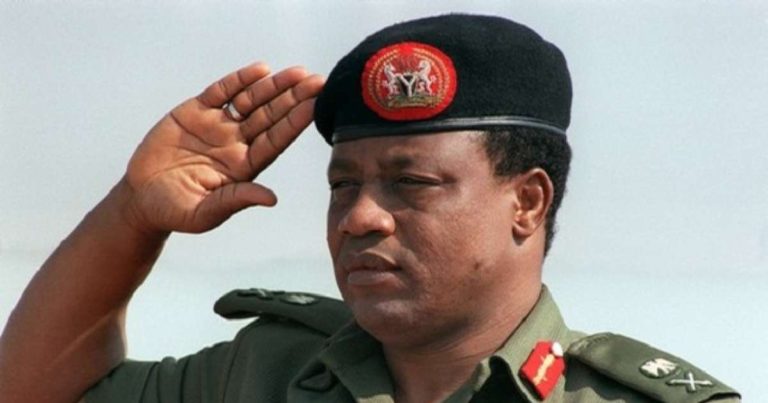
1966 Revenge Coup: I don’t regret taking part in it, says Babangida

FORMER Military Head of State, Ibrahim Babangida, says he did not regret taking part in the July 1966 coup d’etat, which was in revenge of an earlier coup in January 1966.

Babangida said this during a no-holds-barred interview with The Crest which was published on Saturday. He said that though the coup “went out of hand” as many of those who took part could not control themselves, he did not regret taking part in it because many of the people he and his colleagues at the time held in high esteem, were all killed in the January coup.

“Most of the people we revered were murdered (in the January 1966 coup). Even in the military, people like (Brigadier Samuel) Ademulegun (and his wife), Brigadier Zakariya Maimalari, (Colonel Kur) Mohammed, and so on. To us, the young officers, these people were our role models,” Babangida said when explaining the role he played in the coup.

“Then, politically, leaders like Sir Tafawa Balewa (Nigeria’s Prime Minister at the time), Sir Ahmadu Bello, the Sardauna of Sokoto (and Premier of the Northern Region), and Chief Ladoke Akintola, Premier of Western Nigeria, were killed.

“The atmosphere was conducive for a revenge coup… So, when the plot came, it didn’t take time to sit down and plan it.”

The July 1966 revenge coup is regarded as the bloodiest in the history of Nigeria, and Babangida said it was because “because it went out of hand”.

There was no control. The officers allowed things to go out of hand. Even other ranks were taking laws into their hands. It is unfortunate it happened,” he said.

Asked whether regrets taking part in the coup, Babangida’s answer was a curt “No”.

Banbangida also talked about how he was able to get the best brains in their various fields of endeavours to join his administration, albeit with some resistance. These included the legendary Olikoye Ransome-Kuti, a Professor of medicine whose works to strengthen Primary Healthcare in Nigeria are still being recognised to date, and  Godwin Ezekwe, a Professor of Science and Technology and the brain behind the Ogbunigwe bombs, which was used by the Biafran soldiers during the Nigerian civil war.

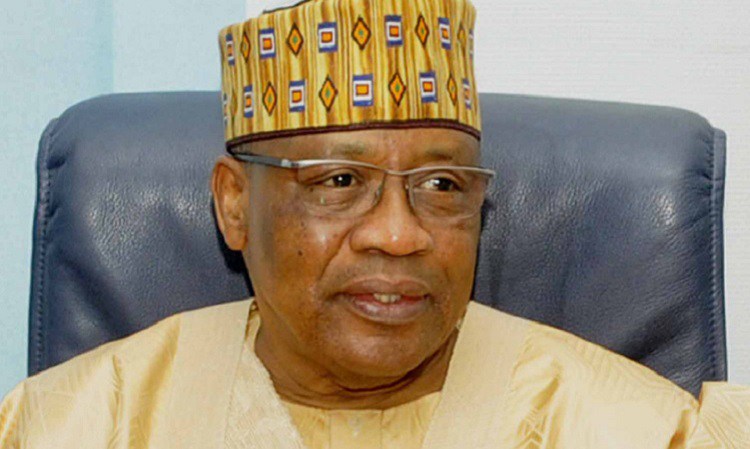
A much older Ibrahim Babangida.

On the kind of leader that Nigeria needs at the moment, Babangida said the country needs someone that has “the sagacity and eloquence of Zik; he must have the knowledge of Awo and he must have the charisma of Sardauna, Tafawa Balewa”. Such a man must also possess a deep passion and love for Nigeria like Olusegun Obasanjo. “He doesn’t compromise on anything Nigeria. No matter the situation, OBJ is going to stand for Nigeria.”

“I called them four-in-one; (such a man must be) one man with four qualities,” Babangida said.

The former President also spoke on why he cancelled the June 12, 1993, general election which is believed to be the freest and fairest in Nigeria’s history.

He said there could have been consequences if allowed the election to stand. He refused to say what those consequences could have been, saying, rather that they would be contained in his memoir which he is already working on and it will be out “very soon”.

Babangida, however, refused to admit that Moshood Abiola won the June 12 election, saying, rather, that “he was on the verge of winning the election”.

“By the time it was assumed that he (Abiola) won, officially, the official thing was not done. Results were still coming in, and it wasn’t declared. So, I think I would be deceiving myself if I say he has won.”

Recall that on June 12 this year, President Muhammadu Buhari conferred a posthumous national honour of Grand Commander of the Federal Republic (GCFR) on Abiola, and during the ceremony apologised, on behalf of the Federal Government, to the Abiola family, for denying him the mandate. He also declared that going forward, June 12 will be observed as Nigeria’s Democracy Day, and no longer May 29. The House of Representatives, on Wednesday, gave a formal approval to this.

When asked what was his thoughts on this, Babangida said he had “no comments”.

You can read the full interview here.

Buhari: Signing new Electoral Act now will create uncertainty, confusion in 2019

PRESIDENT Muhammadu Buhari says he declined to sign the Electoral (Amendment) Bill because doing so few months to the 2019 general election could cause “uncertainty and confusion”.

Ita Enang, Buhari’s aide on National Assembly matters (Senate), had told journalists on Friday that the President has “taken a decision” on the bill and has communicated his decision to the National Assembly.

Enang refused to say whether the President assented to the bill or not. But it is now clear that Buhari, for the fourth time, refused to sign the bill into law.

In a letter to the lawmakers as to why he would not assent to the bill, Buhari said the 2019 general election is so close at hand and a new act could create confusion. He suggested that the lawmakers should state clearly in the amendment bill that it would come into effect after the 2019 election.

“I am declining assent to the Bill principally because I am concerned that passing a new electoral bill this far into the electoral process for the 2019 general election which commenced under the 2015 Electoral Act, could create some uncertainty about the applicable legislation to govern the process,” Buhari wrote.

“Any real or apparent change to the rules this close to the election may provide an opportunity for disruption and confusion in respect of which law governs the electoral process.

“This leads me to believe that it is in the best interest of the country and our democracy for the national assembly to specifically state in the Bill, that the Electoral Act will come into effect and be applicable to elections commencing after the 2019 General Election.”

The President also pointed out other sections, as well as some terms used in the amendment bill which he felt needed to be revisited.

They include “section 5 of the Bill, amending section 18 of the Principal Act should indicate the subsection to which the substitution of the figure “30” for the figure “60” is to be affected”.

Others are: “Section 11 of the Bill, amending Section 36 should indicate the subsection in which the proviso is to be introduced.

“Section 24 of the Bill which amends Section 85 (1) should be redrafted in full as the introduction of the “electing” to the sentence may be interpreted to mean that political parties may give 21 days notice of the intention to merge, as opposed to the 90 days provided in Section 84 (2) of the Electoral Act which provides the provision for merge of political parties.

“The definition of the term “Ward Collection officer” should be revised to reflect a more descriptive definition than the capitalized and undefined term “Registration Area Collation Officer.”

There have been calls from several quarters for the President to sign the electoral amendment bill into law as it is believed to greatly improve Nigeria’s electoral process.

The ‘Situation Room’, a platform consisting of several Civil Society Groups working on elections and good governance in Nigeria also joined in asking Buhari to sign the bill.

Convener of the group, Clement Nwankwo, tweeted the following on Thursday: “With 10 Weeks to 2019 General Elections, Nigeria awaits President Buhari’s assent to the Electoral Act Amendment Bill. Its contents are not controversial and it seeks to improve Nigeria’s electoral process.”

And following the announcement on Friday that Buhari has again withheld assent to the bill, Nwankwo tweeted: “Its a sad day for Nigeria’s electoral progress that President Buhari will veto the Electoral Act Amendment on the claim it’s too late into 2019 Elections preparations and after refusing assent to 3 earlier versions, as well as failing to present his own version to the National Assembly.”

As it stands now, the 2019 general election will be conducted based on the provisions of the Electoral Act 2010, unless two-thirds of the members of the National Assembly vote to overrule the president’s veto.

Tope Fasua picks hole in ICIR fact-check, calls it ‘nonsense, nasty reporting’ — but he is incorrect

TOPE Fasua, founder and 2019 presidential candidate of the Abundant Nigeria Renewal Party (ANRP), has reacted to a fact-check published by The ICIR, referring to it as “nasty reporting” and “nonsense”, and asking that the report be rewritten.

At the first presidential debate held on Tuesday by the Centre for Democracy and Development, with the focus centred on security, Fasua had complained that budgetary expenditures on education, health and agriculture are inadequate.

“So as we are speaking about security,” he added, “remember what is called food security. We have food poverty in Nigeria. 90 million people are food poor in this country, in a country of abundance; and that is why we came with Abundant Nigeria Renewal Party.”

In the fact-check published on Thursday, The ICIR noted that this claim is “grossly exaggerated and contradicts figures from reliable sources”. This is because, according to the Food and Agriculture Organisation (FAO), as of 2016, 13 million Nigerians suffered from hunger.

Likewise, the 2018 State of Food Security and Nutrition in the World prepared by the same agency of the United Nations states that the prevalence of undernourishment (the traditional FAO indicator used to monitor hunger at the global and regional level) in Nigeria is 11.5 per cent (21.5 million people) and the prevalence of severe food insecurity is 24.8 per cent (46.1 million people).

The ANRP presidential candidate, however, expressed his displeasure with the report on the centre’s Facebook page, and argued that his statistics is correct.

“What kind of nasty reporting are you guys doing at ICIR?” Fasua asked. “If you want to play James Bond, better get your fact right.”

“According to worldpoverty.io, we have 89m people EXTREMELY POOR. What is extremely poor if not food poor? Dudes, get your act right if you want to go to town rubbishing people. I will take this up with the man I met who I believes [sic.] heads ICIR. Already I want you to rewrite the nonsense written about what I said here. Thanks.”

But is food poverty equal to extreme poverty?

In backing up his claim about food poverty, the presidential hopeful, who is a graduate of Economics and the CEO of Global Analytics Consulting Ltd, presented a figure about extreme poverty and suggested it is the same as food poverty. But is there any truth to this assumption?

On one hand, the UN declaration at World Summit on Social Development in Copenhagen in 1995 (p. 38) defines absolute poverty (or extreme, abject poverty) as “a condition characterized by severe deprivation of basic human needs, including food, safe drinking water, sanitation facilities, health, shelter, education and information. It depends not only on income but also on access to services.”

Former World Bank president Robert McNamara similarly described extreme poverty as “a condition so limited by malnutrition, illiteracy, disease, squalid surroundings, high infant mortality, and low life expectancy as to be beneath any reasonable definition of human decency.”

The World Bank Group and United Nations International Children’s Emergency Fund (UNICEF) have today placed a monetary benchmark on extreme poverty, one which is said to be more suitable to third world countries. According to this definition, extremely poor persons are those who “live on less than $1.90 per day”.

On the other hand, food poverty, also called household food insecurity, according to UNICEF, “is the inability to afford, or to have access to, food to make up a healthy diet. It is about the quality of food as well as quantity.” In other words, indices on food poverty are not about income (alone) or quality of health or access to education, but access to adequate and balanced diet.

2017 report by the Centre for Economics and Business Research (CEBR), a leading independent consultancy in the United Kingdom, defines “households that have to spend more than 10% of their income on food as being in food poverty.” Buttressing the point that food poverty is not just about how many dollars is earned by a part of the population, this report also concludes that while UK households are spending more on food now compared to five years ago, they are “eating much less”.

Elizabeth Dowler, Emeritus Professor of Food and Social Policy at the University of Warwick, goes further to define food poverty as “the inability to consume an adequate quality or sufficient quantity of food in socially acceptable ways, or the uncertainty that one will be able to do so.”

It is thus evident that extreme poverty is not the same as food poverty, as it encompasses a wide range of factors including food insecurity and malnutrition. This is corroborated by the Manchester Poverty Action Food Poverty Report which says that food poverty “has to be seen as one aspect of general poverty levels”.

Further reinforcing the point is a 2009 study published by the Philippine Institute for Development Studies, which distinguished the concept of “absolute poverty line” from “food poverty line”.

“By definition, the (absolute) poverty line is  the income needed to satisfy the minimum basic needs of food and non-food,” it states. “The  food component of the poverty line, referred to as the food poverty line (FPL), is augmented by an allowance for non-food needs to yield the (total) poverty line.”

It adds: “The FPL may be thought of as the amount needed for food to sustain normal  physical activity and good health, while the non-food component of the poverty line  consists of the cost of essential non-food requirements such as clothing, shelter,  primary schooling, basic health care, and the like.”

The connection between “hunger” and “food insecurity” is drawn by the World Hunger Education Service (WHES), which said the former is related to both food insecurity and malnutrition, adding that “the focus for global hunger is undernutrition”.

Source: World Poverty Clock
Discrepancy in figures, nonetheless

Under the assumption that Fasua implied food poverty and extreme poverty are one and the same, his figures, The ICIR observes, are still inaccurate.

While at the presidential debate he said 90 million Nigerians are “food poor”, in his later comment on the social media, he reduced this figure to 89 million. However, the figure provided by the authority cited by the presidential candidate, the World Poverty Clock, is: 88, 315,793.

In essence, there is a difference of 1.7 million Nigerians between the figure cited by Fasua and  the one cited by the authority he referenced in his Facebook post — still justifying The ICIR‘s original verdict that the statistics quoted by the ANRP flagbearer is exaggerated, and contradicts figures from reliable sources.

FEC approves 2019 budget, to fix date for presentation to NASS

THE Federal Executive Council (FEC) has approved the 2019 budget proposal after a special meeting chaired by President Muhammadu Buhari on Friday.

Minister of Budget and Planning, Udoma Udoma, said this while addressing journalists shortly after the FEC meeting ended.

He said the Council will liaise with the National Assembly on the appropriate date for the president to formally present the appropriation bill to the lawmakers for consideration and passage into law.

However, Udoma refused to comment on the details of the budget, saying that the constitution allows only the president to give out the details and that he will do just that when he presents the document before the National Assembly.

Recall that earlier in October, the FEC had approved the Medium Term Expenditure Framework (MTEF) and Fiscal Strategy Paper (FSP) for 2019  to 2021, which was the template from which the 2019 budget would be drafted. According to the documents, the 2019 budget was pegged at an estimated N8.73 trillion, N400 billion lower than the N9.1 trillion of 2018.

The estimated price of crude oil per barrel was fixed at $60, an estimated 2.3 million barrels of crude oil is expected to be produced daily, and the exchange rate remains N305 to 1USD.

Buhari returns electoral amendment bill to National Assembly

PRESIDENT Muhammadu Buhari has “taken a decision” with regards to the Electoral (Amendment) Bill and has returned the document to the National Assembly.

The Senior Special Assistant to the President on National Assembly (Senate), Ita Enang, made this known to State House Reporters on Friday.

“The president has taken a decision in accordance with the powers vested in him according to the Constitution. And by convention, that decision contained in the communication can only be revealed by the person to whom that decision is addressed. But the electoral bill has left Mr. President because he has taken a decision and has remitted it back,” Enang said.

He refused to say whether the President assented to the bill or not.

There have been agitations from several quarters for Buhari to sign the amended electoral bill into law so that its provision could be binding on the forthcoming 2019 general election. But there have also been parties asking the President not to give assent to the document.

Among the latter group are three political parties — Advanced Peoples Democratic Alliance (APDA), Allied Peoples Movement (APM), and Movement for Restoration and Defence of Democracy (MRDD) — that recently filed a lawsuit before the Federal High Court seeking a declaration that the signing of the Electoral (Amendment) Act into law would truncate the coming general election.

The Electoral Act has been amended four times but Buhari has declined to give assent to all of them.

Among many other things, the amended bill touches on such issues as which election comes first during general elections, the presidential or the legislative elections. The new bill also recognises smart card readers and any other technological methods as the only voter accreditation methods, thereby outlawing the manual system of voter verification where voters whose cards could not be interpreted by the smart card readers were asked to fill ‘incident forms’ and allowed to vote.

Also, the amended bill raised the amount of money lawfully permitted for a candidate to spend in the course of running for office. Similarly, the amount of money that individuals were permitted to legally donate to a candidate was also increased.

In declining assent to the Electoral Act the first time, Buhari asked the lawmakers to address some “drafting errors” in the draft before he could consider signing it into law.

“Mr President is declining assent to the Electoral Amendment Bill due to some drafting issues that remain unaddressed following the prior revisions to the Bill,” Enang stated at the time.

It is not clear yet why Buhari is rejecting this fourth amendment to the Electoral Act.

Meanwhile, Enang said on Friday that the President has assented to the amendment made to the National Open University of Nigeria (NOUN) Act. This means that NOUN can now operate like other conventional universities.

After ICIR report, UBEC pulls down error-ridden 2018 National Personnel Audit result from website

THE management of Universal Basic Education Commission (UBEC) has pulled down from its official site the 2018 National Personnel Audit result that was full of discrepancies, The ICIR reports.

This came five months after the ICIR reported that there were errors in data uploaded on to the site after the conduct of the National Personnel Audit.

In the report, it was pointed out that the Commission recorded figures obtained from Enugu State as that of Ondo State, while there was no data recorded for private schools in most states in the Southwest, including Anambra and Imo states in the Southeast.

The errors make it difficult for analysts to engage with the data meaningfully.

But speaking with The ICIR on telephone on Friday, Public Relations Officer of the Commission, Osom Osom, confirmed that the data was removed from the website after ICIR report pointed out the discrepancies.

“Yes that data has been pulled down after we spotted the discrepancies which your report pointed out,” he said.

He added that the processing of data from all over the state for the exercise is still ongoing, noting that the public would be duly informed by the office of the Executive Secretary of UBEC when the result is out.

The National Personnel Audit took place in two phases − the first phase was conducted in all states of the three geo-political zones in the southern part (South East, South South and South West) of the country from April 29- May 27, 2018. The second phase was conducted in all states of the three geo-political zones in the Northern part (North East, North West and North Central) of the country from June 3 to 30, 2018.

In April 2018, Executive Secretary of UBEC, Hammid Bobboyi, explained that the exercise would be a comprehensive audit of all public and private basic education institutions in the country, noting that it would help to obtain comprehensive and reliable data of children of school-going age enrolled in basic education schools− primary and junior secondary.

But while going through the data posted on the official website of UBEC as the outcome of the audit, The ICIR found out that contrary to the objective of the exercise, the figure recorded for Ondo State was the same as the one computed for Enugu State.

Though, the columns bearing the names of the two states were different, what was recorded for Enugu State was exactly what came up under Ondo State.

On the computed result of the audit, only five South West states− Oyo, Ogun, Osun, Ekiti and Lagos – have their data computed. All the Northern states, including the Federal Capital Territory, FCT,  were marked pending, suggesting that they were still being processed. Ondo State was however marked processed.

Similarly, Abia and Bayelsa states were the only two states from the South East and South South geo-political zones that were still pending.

But contrary to the claim by UBEC Executive Secretary that the exercise was going to be comprehensive to accommodate all the private basic schools in the country, only Enugu State, whose data was duplicated under Ondo among all the states whose data were already processed, had data on private schools.

Lagos, Ekiti, Ogun, Osun and Oyo as well as Anambra and Imo had no data for private basic schools.

About four years ago, the United Nations Education and Children Fund (UNICEF) revealed that over 10 million Nigerian kids are out of school, placing Nigeria among the top 12 countries accounting for the 47 per cent of the world’s out-of-school children.

The last school audit in Nigeria took place in 2010.

Trump tells OPEC not to slash oil production

US President Donald Trump on Wednesday urged OPEC members not to reduce production at their upcoming meeting, saying global oil prices should remain low.

Trump’s comment came as members of the Organization of Petroleum Exporting Countries and other oil-producing nations prepared to meet Thursday and Friday in Vienna to discuss lowering their output.

“Hopefully OPEC will be keeping oil flows as is, not restricted. The World does not want to see, or need, higher oil prices!” Trump said on Twitter.

If the 20 or so OPEC members and other nations at the Vienna talks — which account for more than half of the world’s oil — continue to pump at current record levels, they risk seeing prices continue to tumble.

Prices have already plunged more than 30 percent over the past two months and a barrel of Brent crude, the European benchmark, currently stands at around $60.

But if oil producers close the taps, they risk choking off the global economy, which needs affordable oil to keep running.

Trump has repeatedly accused the oil cartel of keeping prices artificially high.

That has put OPEC kingpin Saudi Arabia in a delicate position — Riyadh is keen not to incur Trump’s wrath as relations between the two countries become increasingly complicated in the wake of the murder of opposition journalist Jamal Khashoggi. (AFP)

State govts failed to access N86b UBEC grants


DESPITE complaints of paucity of funds to manage the nation’s education sector, a whopping N86billion matching grant provided by the Universal Basic Education Commission (UBEC) is lying unaccessed in the coffer of Central Bank of Nigeria (CBN), The ICIR can authoritatively report.

According to the Universal Basic Education Act 2004, the Federal Government’s intervention shall provide assistance to the States and Local Governments in Nigeria for the purposes of uniform and qualitative basic education throughout Nigeria.

The state governments in return are expected to provide a counterpart fund of what the Federal Government provides each year.

However, between 2005 and 2018, many state governments still have different amount of unaccessed matching grants.

According to data made available by the Commission on its official website, only 14 states out of the 36 states of the federation and the Federal Capital Territory (FCT) provided their counterpart fund to access the matching grant in 2017.

The states are Borno, Cross River, Delta, Gombe, Jigawa, Kebbi and Kogi. Others are Osun, Oyo, Rivers, Lagos, Sokoto, Taraba and FCT.

This information was as of September 2018.

The total grant for the year 2017 was over N47 billion while unaccessed balance stood at nearly N30 billion. Each state and the FCT were entitled to N 1,286,343,183.55 that year.

In 2018, the matching grant for each state and FCT was N982, 555,230.13. However, no state accessed the fund as of September 11, 2018, leaving N 36,354,543,514.81.

Between 2005 and 2018, the Federal Government has released the sum of N 428,711,342,750.15 as matching grants or intervention fund for state government. Within those periods, each state was expected to have received N11, 551,320,074.63 as intervention funds from the Federal Government.

Sixteen states did not access their combined 2015/2016 matching grant, leaving a balance of N18, 803,186,787.17 in the government’s treasury.

The Universal Basic Education (UBE) Programme was introduced in 1999 by the Federal Government of Nigeria as a reform programme aimed at providing greater access to, and ensuring quality of basic education throughout Nigeria.

Part of its aims is to reduce school drop-out, out-of-school children and improving relevance, quality and efficiency. Currently there are more than 10.5million out-of-school children in Nigeria.

But the inability of the state governments to provide counterpart fund has marred the implementation of the programme.

Court grants Deji Adeyanju N500,000 bail after 7 days in detention

DEJI Adeyanju, a political activist who was arrested by the police on November 28, has been released on bail.

Adeyanju had been charged to court on allegations of criminal defamation, and was granted bail, but he was rearrested based on a petition against him by the Chief of Army Staff Tukur Buratai, accusing him of defamation, incitement, and cyberstalking.

Buratai said Adeyanju promotes Boko Haram activities through his posts on the social media, and by so doing dampens the morale of the soldiers taking part in counter-insurgency operations in the North East.

It was based on this on this second allegation that Adeyanju was arraigned at the Wuse Zone 2 Chief Magistrate’s Court in Abuja on Thursday, where he was granted bail after pleading not guilty to the charges brought against him.

The magistrate in charge of the trial, Idayat Akanni, pegged the bail bond at N500,000 and ordered Adeyanju to produce two sureties who must be at least level-12 civil servants.

The matter was adjourned to January 27, 2019, for continuation of hearing.

An associate of Adeyanju’s, Ariyo-Dare Atoye, told journalists on Thursday evening that the bail conditions were met within minutes.

“This was a victory for democracy, one which was attained not only through the remarkable perseverance of Mr Adeyanju but also the resolve of Nigerians not to cave in in the face of tyranny,” Atoye said.