DESPITE complaints of paucity of funds to manage the nation’s education sector, a whopping N86billion matching grant provided by the Universal Basic Education Commission (UBEC) is lying unaccessed in the coffer of Central Bank of Nigeria (CBN), The ICIR can authoritatively report.
According to the Universal Basic Education Act 2004, the Federal Government’s intervention shall provide assistance to the States and Local Governments in Nigeria for the purposes of uniform and qualitative basic education throughout Nigeria.
The state governments in return are expected to provide a counterpart fund of what the Federal Government provides each year.
However, between 2005 and 2018, many state governments still have different amount of unaccessed matching grants.
According to data made available by the Commission on its official website, only 14 states out of the 36 states of the federation and the Federal Capital Territory (FCT) provided their counterpart fund to access the matching grant in 2017.
The states are Borno, Cross River, Delta, Gombe, Jigawa, Kebbi and Kogi. Others are Osun, Oyo, Rivers, Lagos, Sokoto, Taraba and FCT.
This information was as of September 2018.
The total grant for the year 2017 was over N47 billion while unaccessed balance stood at nearly N30 billion. Each state and the FCT were entitled to N 1,286,343,183.55 that year.
In 2018, the matching grant for each state and FCT was N982, 555,230.13. However, no state accessed the fund as of September 11, 2018, leaving N 36,354,543,514.81.
Between 2005 and 2018, the Federal Government has released the sum of N 428,711,342,750.15 as matching grants or intervention fund for state government. Within those periods, each state was expected to have received N11, 551,320,074.63 as intervention funds from the Federal Government.
Sixteen states did not access their combined 2015/2016 matching grant, leaving a balance of N18, 803,186,787.17 in the government’s treasury.
The Universal Basic Education (UBE) Programme was introduced in 1999 by the Federal Government of Nigeria as a reform programme aimed at providing greater access to, and ensuring quality of basic education throughout Nigeria.
Part of its aims is to reduce school drop-out, out-of-school children and improving relevance, quality and efficiency. Currently there are more than 10.5million out-of-school children in Nigeria.
But the inability of the state governments to provide counterpart fund has marred the implementation of the programme.
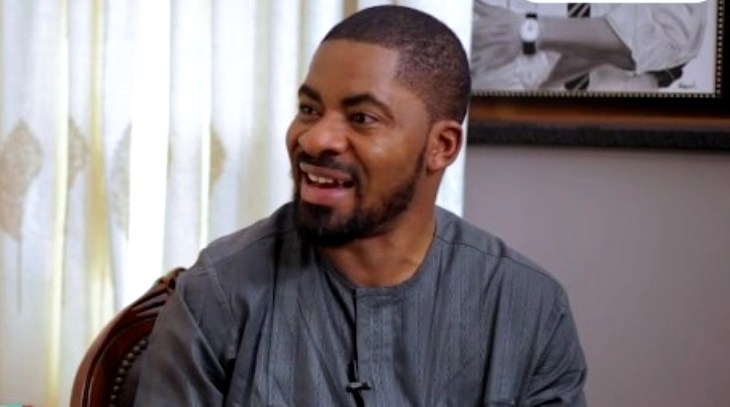
DEJI Adeyanju, a political activist who was arrested by the police on November 28, has been released on bail.
Adeyanju had been charged to court on allegations of criminal defamation, and was granted bail, but he was rearrested based on a petition against him by the Chief of Army Staff Tukur Buratai, accusing him of defamation, incitement, and cyberstalking.
Buratai said Adeyanju promotes Boko Haram activities through his posts on the social media, and by so doing dampens the morale of the soldiers taking part in counter-insurgency operations in the North East.
It was based on this on this second allegation that Adeyanju was arraigned at the Wuse Zone 2 Chief Magistrate’s Court in Abuja on Thursday, where he was granted bail after pleading not guilty to the charges brought against him.
The magistrate in charge of the trial, Idayat Akanni, pegged the bail bond at N500,000 and ordered Adeyanju to produce two sureties who must be at least level-12 civil servants.
The matter was adjourned to January 27, 2019, for continuation of hearing.
An associate of Adeyanju’s, Ariyo-Dare Atoye, told journalists on Thursday evening that the bail conditions were met within minutes.
“This was a victory for democracy, one which was attained not only through the remarkable perseverance of Mr Adeyanju but also the resolve of Nigerians not to cave in in the face of tyranny,” Atoye said.
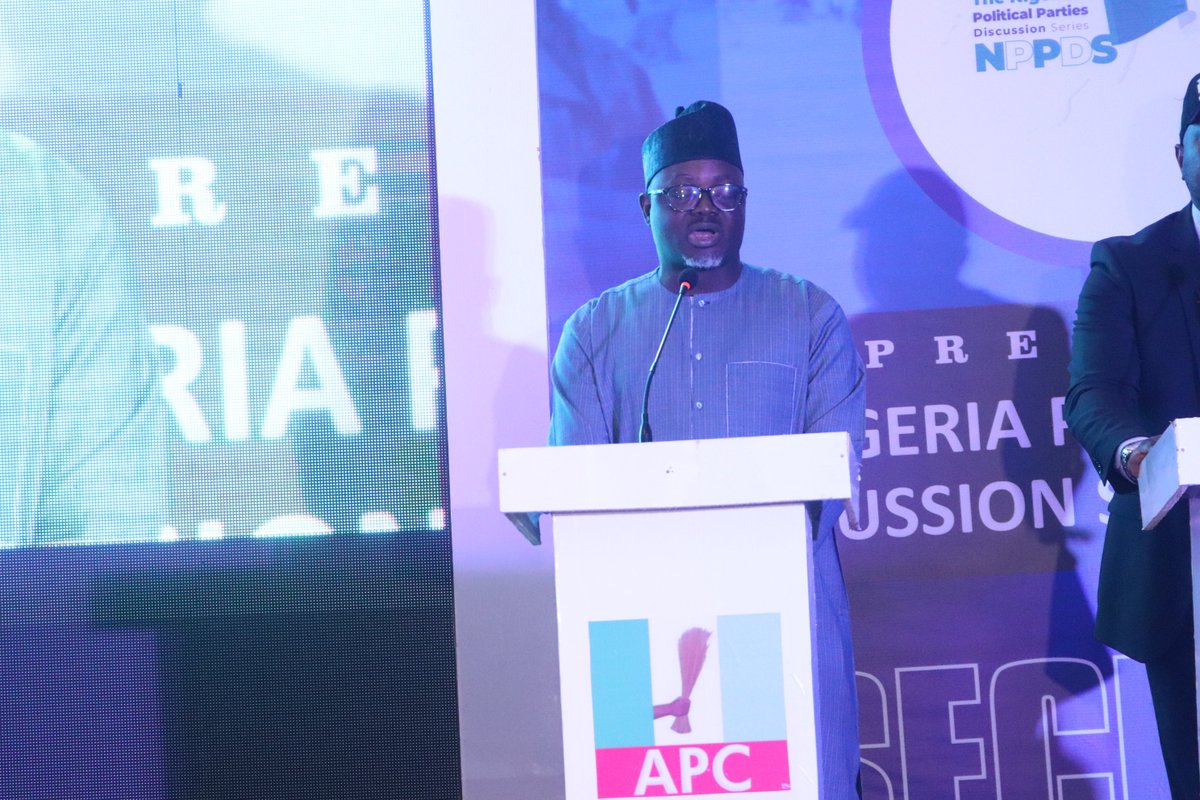
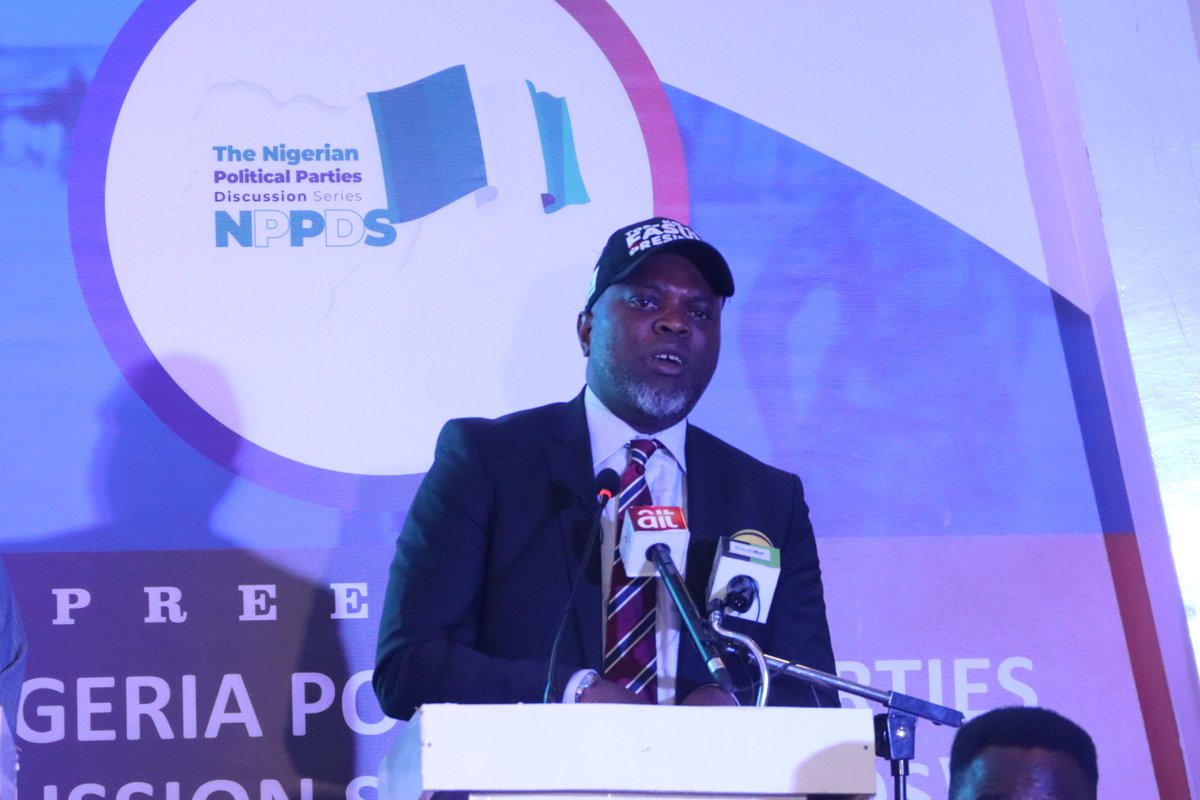
TOP members of the All Progressives Congress (APC), People’s Democratic Party (PDP), and Abundant Nigeria Renewal Party (ANRP) met in Sheraton Hotel, Abuja, on Tuesday to each convince Nigerians their parties possessed the best ideas in bringing lasting peace to the country.
However, not all their claims and arguments, as The ICIR later discovered in a follow-up fact-check, are founded on flawless facts. All three speakers — Lanre Issa-Onilu, APC national publicity secretary, Osita Chidoka, former Aviation Minister representing the PDP, and Tope Fasua, ANRP presidential candidate — committed one factual error or the other.
The event was the first of the Nigerian Political Parties Discussion Series for parties fielding presidential candidates. In this report, The ICIR places the claims of the various parties side by side with available evidence and gives verdicts on their factuality.
Lanre Issa-Onilu. File credit: CDD West Africa
APC: Neighbouring countries did not work with previous govt.
Claim: When he started off, Issa-Onilu, who represented the ruling APC, said “the issue of security is one which I always say we shouldn’t play politics with”. But it appears that is exactly what he did when he claimed that the trustworthiness of the Buhari administration, which the PDP-led government lacked, is what has won the country support from neighbouring African countries such as Niger and Cameroon.
He said: “I want to discuss the fact that this government is responsive. This government is taking far-reaching action because if the past government had looked for ways of tackling this issues in a way that will make this peace to be more durable, we will not be where we are today… But this time around, we could see that the most important thing in security is your reputation as a country and the credibility of the government in power … because we cannot tackle security alone without the other countries around you being fully involved.
“So the involvement of Chad, Niger, Cameroon and other countries that are cooperating with us has to do with the credibility of the government. The successes we have recorded are made possible because we have the credibility for suh countries to work with us. We know they didn’t work with the past government because there was no such credibility.”
Checks by The ICIR, however, revealed that it is incorrect to say neighbouring African countries did not collaborate with the previous administration to fight terrorism as there are numerous records showing otherwise.
In July 2014, following attacks outside local borders by the terrorist sect, defence ministers of Nigeria, Cameroon, Chad and Niger met in Niamey and pledged to expedite the creation of a 2,800-strong regional force to tackle.
Months earlier, in March, Nigeria entered into an agreement with France, the Republic of Benin, Cameroon, Chad, and Niger “to increase the level of coordination and exchange of intelligence as well as hold regular meetings of experts with a view to containing the menace.”
And beginning in 2015, before Buhari’s inauguration, the coalition of West African troops launched an offensive against the insurgents, with soldiers from Niger and Chad crossing into Northeastern Nigeria for the operation.
Verdict: The claim is false.
The APC national publicity secretary also said, in the last three years, “there has been massive improvement in the conduct of the police, in terms of them applying the best … that you expect for this kind of environment due to the job they are doing”. The 2016 World Internal Security and Police Index, which ranked Nigeria 127th out of 127 countries, however, gives a lie to this claim.
According to the report, “Nigeria was the worst performing country on the WISPI, with a score of 0.255. Nigeria scored poorly across all four domains [i.e. capacity, process, legitimacy, outcomes], and had the worst score of any country in the Index on the process and outcomes domains. All of its domain scores were in the bottom ten countries.”
Osita Chidoka. File credit: CDD West Africa
PDP: There is no centralised police force as large as Nigeria’s in the world
Claim: Speaking in support of the PDP presidential candidate’s state and community policing policy, Chidoka said Nigeria is the only country in the world that operates a police force having up to 370,000 operatives, which is controlled by only one tier of government.
He said: “Let me correct an impression. The Nigeria Police of 370,000 men is a big organisation. It is a humongous organisation. There is no police force in the world with 370,000 being controlled centrally from one location. I dare anybody to show me that police force.
“What we need to talk about here is fundamentally how do we structure the police to deliver public safety… that is why efforts are being made to ensure that we do not confuse public safety with just having a police force that is sitting in Abuja. We have to face reality, and the reality is that there is no organisation like the Nigeria Police Force anywhere in the world.”
According to the International Criminal Police Organisation (INTERPOL), the Nigeria Police Force has a strength of over 350,000 men and women; and a recent statement by the Inspector General of Police Ibrahim Idris suggests the population is within the range of 320,000.
This means the force is lesser than that of Indian force of 1.93 million, the Chinese force of over 1.6 million (based on a 2007 count), as well as those of the United States, Russia, Indonesia, Mexico, Brazil, Turkey and Pakistan.
According to a 2012 Police Decentralisation Index, the police systems in Russia, which has four tiers of government, operates a centralised force controlled by the top tier. Indonesia and Turkey also operate similarly centralised forces, while Mexico and Brazil have decentralised police organisations.
Verdict: The claim is false.
Chidoka, who is also a former Corps Marshall of the Federal Road Safety Corps (FRSC), equally said during his stint at the corps, they introduced a system of capturing all drivers’ licenses and vehicle number plates in the country “so that when you stop a car on the road, you just type in the number”.
“If you go to nvis.org.ng now, you will type in the car number and you will get the details of that vehicle. The whole idea is that we will invest in technology,” he added.
The ICIR checked the agency’s Number Plate Verification portal to confirm to what extent this claim is true. It was discovered that the information available to the public, after inputing a vehicle’s registration number, is scanty. The portal only states if the number is valid and then vaguely adds the type of car it was assigned to; for instance: “Number Plate is valid and assigned to CAMRY.”
Vehicle registration number verification on FRSC websiteVehicle registration number verification on LASG website
In contradistinction, however, the Lagos State Vehicle Number Plate Verification Portal, launched in 2017, not only displays the model of the vehicle if the number provided is valid, it also states the colour of the car, the chassis number, the vehicle status (whether duly registered by the Motor Vehicle Administration Agency), the issue date, as well as the expiry date.
Tope Fasua. File credit: CDD West Africa
ANRP: 90 million Nigerians are food poor etc.
Claim: In advancing his candidacy, Fasua, ANRP founder and presidential candidate, said 90 million Nigerians are “food poor”.
According to him: “It is not only the budget for security that is low. The budget for even food, for agriculture, for education, for health in Nigeria is low. So as we are speaking about security, remember what is called food security. We have food poverty in Nigeria. 90 million people are food poor in this country, in a country of abundance; and that is why we came with Abundant Nigeria Renewal Party.”
The ICIR has, however, not been able to find corroborating evidence for this figure. According to the Food and Agriculture Organisation (FAO), as of 2016, 13 million Nigerians suffered from hunger.
Also, according to the 2018 State of Food Security and Nutrition in the World prepared by FAO, as at 2017, the prevalence of undernourishment (the traditional FAO indicator used to monitor hunger at the global and regional level) in the total population is 11.5 per cent (21.5 million people) and the prevalence of severe food insecurity is 24.8 per cent (46.1 million people) — none as high as the figure cited by the ANRP candidate.
On the high side is a figure given in 2015 by Idiat Amusu, head of department, Food/Agriculture Technology at the Yaba College of Technology, Lagos. According to her estimates, “about 60 million Nigerians go to bed hungry”.
Verdict: The claim is grossly exaggerated and contradicts figures from reliable sources.
Also, speaking within the context of jobs and youth employment, Fasua seemed to suggest that over 80 per cent of young Nigerians are without jobs.
“A lot of internal security has to do with youth unemployment and youth poverty,” he said. “When young people under 18 years old are not under any kind of direction and no one cares for them. More than 80 per cent of them in this country are kind of ruderless. So, what happens is that if the country does not put jobs in the hands of our youth, the devil is going to put jobs in their hands.”
Again, if rightly construed, this figure also contradicts available data from the National Bureau of Statistics. According to the Bureau’s Labour Force Statistics’ Unemployment and Underemployment Report of 2017 (first to third quarter), “combined unemployment and underemployment rate for the entire youth labour force (15-35 years) was 52.65% or 22.64 million (10.96 million unemployed and another 11.68 million underemployed), compared to 45.65% in Q3 2016, 47.41% in Q4 2016 and 49.70% in Q3 2017.”
Verdict: The claim is vague and misleading, but also exaggerated if it was intended to refer to youth unemployment rates in the country.
The House of Representatives has approved that June 12 be marked as Democracy Day in Nigeria.
The approval follows the adoption of a report on a bill seeking to amend the Public Holidays Act 2004.
The members of the House of Representatives approved the bill on Thursday while considering a report on “A Bill for an Act to Amend the Public Holidays Act, Cap. P40, Laws of the Federation of Nigeria, 2004 to bring the Act in agreement with the current realities and necessities of the modern times and to declare June, 12 as Democracy Day in Nigeria and for Related Matters.
Considering the report at the plenary, the lawmakers approved the amendments to three clauses in the Act, as recommended in the report.
The clause carrying May 29 as democracy day was amended to June 12.
The lawmakers saw the need to give the declaration a legal backing, hence the introduction of the bill by Edward Pwajok (Plateau, APC).
President Muhammadu Buhari had in June, directed that the nation’s Democracy Day will, henceforth, hold on June 12 of every year as against the current arrangement where the ceremony holds on May 29.
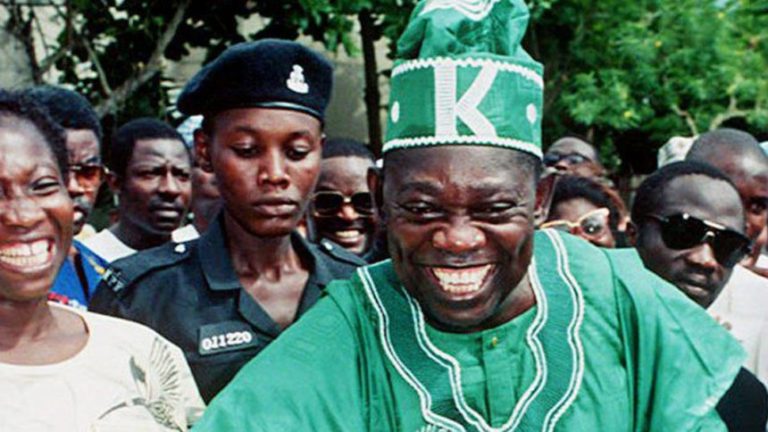
He also honoured the winner of the annulled June 12, 1993 presidential election, Moshood Abiola, with the highest national honour, the Grand Commander of the Federal Republic.
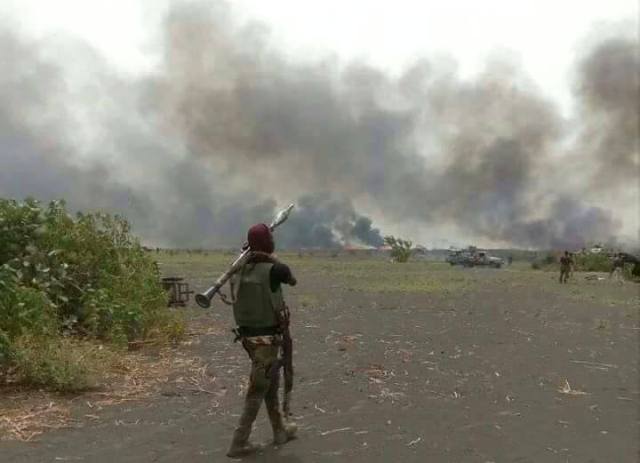
ACCORDING to the 2018 World Terrorism Index Report (WTIR), the counter-terrorism operations of the Nigerian military have yielded positive results so far as is evidenced by the drop in the number of terrorism-related deaths in the country.
However, “in Nigeria in 2018, there has been a dramatic increase in violence involving Fulani extremists even as deaths committed by Boko Haram are falling”.
“There has been a resurgence of the pastoral conflict in Nigeria over the past year, with Fulani extremists carrying out a number of high-profile attacks in the past six months,” the report read.
“Total deaths from terrorism in Nigeria fell to 1,532 in 2017, a decrease of 16 per cent from the prior year. The decline follows the 63 per cent drop in deaths in Nigeria in the preceding year and a 34 per cent drop in 2015. This highlights the effectiveness of the counter-insurgency operations undertaken in Nigeria and its neighbours, Cameroon, Niger and Chad.”
Nevertheless, Boko Haram remains the deadliest terror group in Nigeria, followed by the Fulani extremists. “The third deadliest terror group in Nigeria in 2017 was the Bachama extremists, who were responsible for four attacks and 30 deaths,” the WTIR read.
Graph showing the terrorism-related death figures of 2016 and 2017 in selected countries including Nigeria.
“Together, Boko Haram and the Fulani extremists are responsible for 63 per cent of terror attacks and 88 per cent of terror-related deaths in Nigeria.”
The Fulani herdsmen attack in Zaki Biam, Benue State, on March 20, 2017, in which 73 persons were killed after the assailants opened fire in a market, was rated as the 17th most fatal terrorist incidents in the world during the year in review. While the Boko Haram ambush on the NNPC oil exploration team in Jibi, Borno State in July 2017, where about 69 persons were killed, was rated the 20th most fatal terrorist incident that year.
Nigeria remains the third on the list of countries most impacted by terrorism in the world, behind only and AfghanistanIraq.
Overall, “the Islamic State of Iraq and the Levant (ISIL), the Taliban, Al-Shabaab, and Boko Haram were responsible for 10,632 deaths from terrorism in 2017”, however, the statistics for 2018 suggests that the number of terrorism-related deaths will continue to fall.
“Jama’tu Ahlis Sunna Lidda’awati wal-Jihad, more popularly known as Boko Haram, once the world’s deadliest terror group, has experienced a significant decline since its peak in 2014. However, the group remains the most active terrorist organisation in Nigeria and until 2017 was the deadliest terror group in sub-Saharan Africa,” the report read in part.
“Nigeria’s counterterrorism response in combating Boko Haram has been interrupted by the emergence of other extremist groups, most notably the Fulani herder extremists. The Fulani herder extremists have attacked civilians and military forces in the country.
“However, the sizeable drop in deaths and terror incidents since 2014 indicate the success of Nigeria’s Civilian Join Task Force and international coalitions.
“Alongside its counterinsurgency plan, the Nigerian government also struggles with negotiations and reintegration efforts regarding its longterm strategy to deal with Boko Haram and its associates.
“Of the ten deadliest attacks Boko Haram committed in 2017, all were in Nigeria and nine were in the Borno State. The group’s deadliest attack was an armed assault against a Frontier Exploration Services convoy that killed 69 people, most of whom were civilians.
Boko Haram has specialised in maximum-impact bombings and explosions since its initial insurgency in 2009.9 It is well known for its use of more uncommon terrorist tactics, including mass hostage-takings and the extensive use of children and women as suicide bombers.”
You can read the detailed 2018 World Terrorism Index Report (WTIR) here.
THE Registrar, Teachers Registration Council of Nigeria (TRCN), Josiah Ajiboye says Nigeria needs as much as 250,000 teachers annually to be able to address teachers’ deficit in the primary and post-primary schools.
“Some teachers are leaving the profession; some are retiring and are not being replaced. We need about 250,000 teachers annually because we have a shortage of teachers. The insurgency in the Northeast has made the situation critical,” Ajiboye said in Abuja on Thursday.
In April, on the eve of the 4th year anniversary of the abduction of more than 200 schoolgirls by Boko Haram in Chobok, Borno State, the United Nations Children’s Fund (UNICEF) said at least 2,295 teachers had been killed in the North-east since the conflict started in 2009.
A total of 1,400 schools were also destroyed by the terrorists since 2013.
The TRCN disclosed that Nigeria currently has over two million qualified and registered teachers in its public and private primary and post-primary schools.
He said the Council registered more than 500,000 qualified teachers since 2016 as part of efforts to eliminate quackery in the teaching profession.
“Within the period that I have been in the saddle, over 500,000 teachers have been registered within the period of two years, because before I came, they registered just over one million but about now, we have close to two million teachers that have been registered.
He said teachers who do not have the basic qualification requirement for teaching, which according to him remains the Nigerian Certificate in Education (NCE), have till December 2019 to get the necessary qualification and come forward for registration by TRCN.
Ajiboye explained that the National Council on Education which is the highest decision-making body on education has ratified the deadline at its meeting held in 2017 in Kano.
“The Council had taken a position a long time ago and it was reaffirmed at its Kano meeting in 2017 that anybody that is not qualified, not registered and licenced by TRCN by December 2019 would not be allowed in a classroom.
“The moratorium period was two years and we now have a year to go. By January 2020, we will begin to do enforcement and remove them from our classrooms,” he said.
The TRCN, he added would start the elimination of unregistered teachers from the profession in 2020 using six states as a pilot study.
The states are Nasarawa State for North Central, Ogun for South West, Ebonyi for South East, Cross River for South South, Jigawa for North West and Bauchi for North East.
“We have the list, we have the database of those who are qualified and those who are in school teaching but not qualified. It is going to be a continuous exercise. We will cascade to the rest of the country and route out those who are not qualified from the profession,” he said.
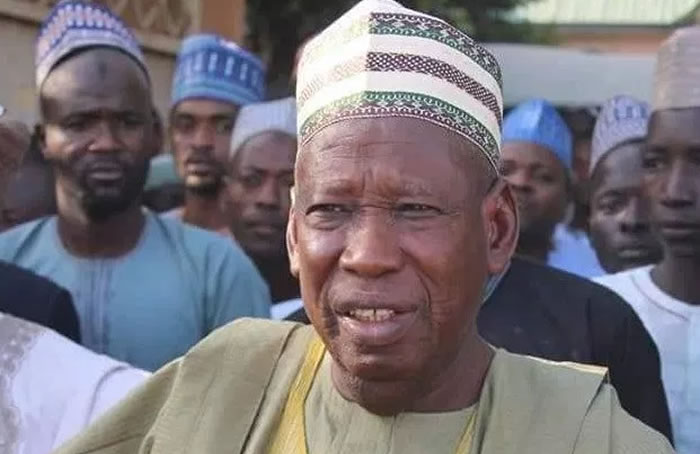
A Kano high court has ruled that the Kano State House of Assembly is not empowered by the law to investigate the $5 million bribery allegation against Governor Abdullahi Ganduje.
Delivering the judgement on Thursday, the presiding judge Justice Ahmad Badamasi said collecting bribe from contractors is a criminal offence in section 115 and 116 of the penal code, and the House has no capacity to investigate criminal offences.
He stated that the power to investigate criminal offence is vested on agencies under the executive arms such as police, the EFCC and the ICPC.
The judge gave an order restraining the House from an interview or inviting any person on the bribery allegation against Mr Ganduje as published by the Daily Nigerian newspaper.
The judge said the assembly, by the constitution, only has the power to make law and review existing law but not the power to investigate criminal matters
The suit was filed by Muhammad Zubairu, national coordinator of Lawyers for Sustainable Democracy in Nigeria, a pro-democracy group.
Joined as defendants in the suit were Baffa Dangundi, chairman of the investigative panel of the house, and the attorney general of the state.
Nuraini Jimoh, counsel to the plaintiff, applauded the ruling while Muhammad Waziri, the defendant’s lawyer, said he would consult his clients on their next line of action.
The state assembly had set up a seven-man committee to investigate the bribery allegation against Ganduje.
On November 5, NAN reported that the court had ordered the house to suspend the probe while ruling on an ex parte application by Zubair.
But the assembly decided not to comply with the order.
The chairman of the committee investigating the issue had said the court order did not stop the panel from continuing with the investigation.
However, on November 13, the assembly eventually succumbed to the order, saying the house is a law-abiding arm of government, and it would obey the court and suspend all forms of investigation on the case pending the court judgement.
In videos published by Daily Nigerian, an online publication, Ganduje was seen allegedly receiving kickbacks from contractors.
The governor has denied the allegation, saying the video was doctored.
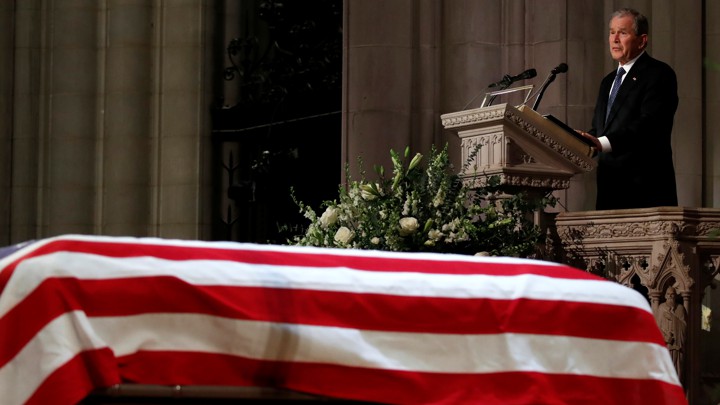
“LAST Friday when I was told he had minutes to live, I called him. The guy answered the phone, said: “I think he can hear you but he hasn’t said anything for most of the day.” I said, “Dad, I love you and you’ve been a wonderful father,” and the last words he would ever say on Earth were, “I love you too.”
The above was how George Walter Bush, the 43rd President of the United States of America, described the final moments of his father, George Herbert Walker Bush, the 41st President of the United States of America.
It was a moving tribute, laced with emotions and humor, and delivered with precise perfection to an audience made up of family, friends, and associates of the Bush’s, at the Washington National Cathedral.
The younger Bush described his father as “a genuinely optimistic man” whose “optimism guided his children and made each of us believe that anything was possible”, a patriot who had to “put college on hold and became a navy fighter pilot as World War II broke out”, and “a man in constant motion, but never too busy to share his love of life with those around him”.
“Dad could relate to people from all walks of life. He was an empathetic man. He valued character over pedigree, and he was no cynic. He looked for the good in each person and he usually found it,” Bush said.
“Dad taught us that public service is noble and necessary, that one can serve with integrity and hold true to the important values like faith and family. He strongly believed that it was important to give back to the community and country in which one lived. He recognized that serving others enriched the giver’s soul. To us, his was the brightest of a thousand points of light.”
Bush mentioned “Don Rhodes, Taylor Blanton, Jim Nantz, Arnold Schwarzenegger, and perhaps the unlikeliest of all, the man who defeated him, Bill Clinton” as friends who went on to become more like members of the Bush family.
He took the audience down the memory lane to how his dad, at 85 loved embarking on boat rides at top speed, and how, at 90 he once “parachuted out of an aircraft and landed on the grounds of St. Anne’s by the Sea in Kennebunkport, Maine”.
Personally, Bush said his father taught him “what it means to be a President who serves with integrity, leads with courage and acts with love in his heart for the citizens of our country”.
“To his very last days, dad’s life was instructive. As he aged, he taught us how to grow with dignity, humor, and kindness. When the good Lord finally called, how to meet him with courage and with the joy of the promise of what lies ahead,” Bush said.
And when he described Bush senior as “the best father a son or daughter could have”, the younger Bush broke down in tears.
“So through our tears,” he said, “let us know the blessings of knowing and loving you, a great and noble man. And in our grief, let us smile knowing that Dad is hugging Robin and holding Mom’s hand again.”
George Walter Bush is the second US President whose son also became President. The first was John Adams, the second US President, whose son, John Quincy Adams, became the sixth US President and served from 1825-1829.
Another funeral service is currently ongoing for the Bush at St. Martin’s Episcopal Church in Houston, after which he will be buried at the George H.W. Bush Presidential Library in College Station, Texas, beside his wife Barbara, and daughter Robin who died at the age of 3.
TOPE Fasua, the National Chairman of the Abundant Nigeria Renewal Party (ANRP) says the so-called tax reforms of the Muhammadu Buhari administration is a failure as the country is yet to earn from taxation as much as it did in 2013.
Fasua said this during a debate for presidential candidates in Abuja on Tuesday, attended by three political parties including the ruling All Progressives Congress (APC) and the opposition Peoples Democratic Party (PDP).
He said he was not impressed with the recent Voluntary Assets and Income Declaration Scheme (VAIDS) that was introduced by the Buhari administration. The scheme was aimed at getting Nigerians to voluntarily declare their assets for which they had not been paying appropriate taxes. In return, those who declared their assets would receive a significant waiver from the taxes accruable to their assets.
“VAIDS was a failure,” Fasua said. “VAIDS made less than ten per cent of what they (the Federal Inland Revenue Service) set out to make.
“They set out to make N350 billion (but) they didn’t make up to N30 billion. So there’s no tax reform.
“2013, maybe kudos to the guys in the PDP, was the year we made the most in the FIRS, we made N5.007 trillion in the FIRS. In 2014 we made N4.7 trillion. By 2015, when this government came, it went down to N3.7 trillion then climbed to 4.0.
“This year they’ve made about N4.3 trillion, they may close at N4.8 trillion. However, they devalued the currency by more than half…”
To clarify Fasua’s claim, the ICIR contacted the FIRS through its helplines as displayed on its website, but an official of the service, who gave his name simply as Ola, said he could not comment as the head of the service was the best person to comment on the issue.
The FIRS is notorious over the years for non-disclosure of relevant information either via its website or through freedom of information requests. The tax institution was 82nd on the 2018 FOI ranking list.
Fasua further said that “there is money in this country” but for bad governance.
“Why would Angola be making double our budget? Why is Angola budgeting $50 billion for 25 million people, Algeria budgeting $60, 68 billion, South Africa Budgeting $155 billion, and we say we are the Giant of Africa. Giant of people who are suffering.” he said.
However, checks by the ICIR revealed that while the 2018 budgets of the countries Fasua cited were higher than Nigeria’s in US Dollars, the figures were not the exact amount he quoted.
For instance, while Nigeria’s 2018 budget of N9.1 trillion amounts to about $25.2 billion, Angola’s 9.6 trillion kwanza is equal to about $31 billion, not the $50 billion Fasua quoted.
Similarly, Algeria’s 2018 budget in dollar termsis $133 billion, not 60 or 68 dollars, and South Africa’s budget of R1.67 trillion or $122 billion is less than the $155 billion Fasua claimed.
Several attempts to get clarification from Fasua failed as calls to his phone did not connect and an email sent to him was not replied.
Speaking further, Fasua said Nigeria has no business relying on crude oil as our major source of income, pointing out that even palm oil sells is more lucrative than crude.
“A barrel of crude oil sells for $50 dollars today. A barrel contains 159 liters, that means a liter of crude oil sells for N116 or thereabouts, (but) one liter of palm oil sells for about N4oo, and it takes less effort (to produce).”
He said Nigerians must think and act differently in order to move the country forward.
Fasua later explained via Facebook that the currencies of Angola and South Africa have “fallen drastically” in recent times, hence the discrepancies in the figures he quoted and what is obtainable today.
“If u research Angola’s currency you will realise it fell drastically lately,” he explained.
“9.6 trillion kwanza was worth $50 billion when I did my research months ago, and that was the amount in dollar terms WHEN THE BUDGET WAS MADE. Same for the (South African) Rand.
“BOTTOM LINE is we say we are the largest economy in Africa but provide for our people as if they were ants! this is totally UNACCEPTABLE.”
THE Economic and Financial Crimes Commission (EFCC) has filed a corruption suit against the President of the Nigerian Bar Association, Paul Usoro (SAN), accusing him of conniving with the Governor of Akwa Ibom State, Emmanuel Udom to defraud the state of the sum of N1.4billion.
The case has been assigned to Justice Muslim Hassan of the Federal High Court in Lagos, and December 10, has been fixed for the arraignment of the accused persons.
According to the EFCC, the NBA President, Usoro, committed the crime in connivance with Governor Udom and four others, namely: Nsikan Nkan, the Commissioner for Finance, Akwa Ibom State; Mfon Udomah, the Accountant-General of Akwa Ibom State; Uwemedimo Nwoko, described the Attorney-General and Commissioner for Justice of Akwa Ibom State; and one Margaret Ukpe.
The governor was not listed as a defendant in the charge sheet as, according to the EFCC counsel, Rotimi Oyedepo, he is “currently constitutionally immune against criminal prosecution”. The other accused persons were said to be at large.
Oyedepo stated that Usoro and the other accused persons committed the offence sometime in 2015, and that the offence was contrary to Section 18 (a) of the Money Laundering (Prohibition) Act, 2011 and punishable under Section 15(3) of the same Act.
Usoro was elected NBA President in August this year and was to chair his first meeting of the association’s National Executive Committee (NEC) on Thursday, before his arrest on Thursday.





 Overall, “the Islamic State of Iraq and the Levant (ISIL), the Taliban, Al-Shabaab, and Boko Haram were responsible for 10,632 deaths from terrorism in 2017”, however, the statistics for 2018 suggests that the number of terrorism-related deaths will continue to fall.