Home Blog Page 2477

EFCC sues NBA President, four others over alleged N1.4b fraud

THE Economic and Financial Crimes Commission (EFCC) has filed a corruption suit against the President of the Nigerian Bar Association, Paul Usoro (SAN), accusing him of conniving with the Governor of Akwa Ibom State, Emmanuel Udom to defraud the state of the sum of N1.4billion.

The case has been assigned to Justice Muslim Hassan of the Federal High Court in Lagos, and December 10, has been fixed for the arraignment of the accused persons.

According to the EFCC, the NBA President, Usoro, committed the crime in connivance with Governor Udom and four others, namely: Nsikan Nkan, the Commissioner for Finance, Akwa Ibom State; Mfon Udomah, the Accountant-General of Akwa Ibom State; Uwemedimo Nwoko, described the Attorney-General and Commissioner for Justice of Akwa Ibom State; and one Margaret Ukpe.

The governor was not listed as a defendant in the charge sheet as, according to the EFCC counsel, Rotimi Oyedepo, he is “currently constitutionally immune against criminal prosecution”. The other accused persons were said to be at large.

Oyedepo stated that Usoro and the other accused persons committed the offence sometime in 2015, and that the offence was contrary to Section 18 (a) of the Money Laundering (Prohibition) Act, 2011 and punishable under Section 15(3) of the same Act.

Usoro was elected NBA President in August this year and was to chair his first meeting of the association’s  National Executive Committee (NEC) on Thursday, before his arrest on Thursday.

Saraki vs Sowore: Court overturns N4bn suit against Saharareporters

0

The Court of Appeal in Ilorin, Kwara State, has nullified the lower court’s judgment that awarded a ₦4 billion cost as sum of damages against SaharaReporters and its founder, Omoyele Sowore, in a suit between the two and Bukola Saraki, Nigeria’s Senate President.

On Tuesday, the Appeal Court set aside the judgment of Justice A.S. Oyinloye of the Kwara State High Court in Ilorin delivered on June 28, 2017.

The Appeal Court judges, Justice Ibrahim  Salauwa, Justice Chidi  Uwa and Justice Hamma Barka, unanimously ruled that the judgment be nullified and assigned to a new trial judge at the lower court for a retrial.

Justice Oyinloye had entered a judgment of N4 billion against SaharaReporters and its founder, Omoyele Sowore, over allegations of defamation involving Saraki. However, the judgment was used to obtain a plaintiff order against the Sahara foundation, a separate entity.

Sometime in 2017, Saraki had sued the media organisation and its founder to the tune of N1 billion each as general damages for four different publications on its website.

He also sought the court “for injunction restraining the Defendants from further writing, printing or causing to be written, printed or circulated or otherwise published of the Claimant, the said or similar libel”.

However, Stanley Imhanruor, a senior lawyer from Falana & Falana’s Chambers, who represented the media agency at both the High Court and the Appeal Court, argued that his clients were never served in the motion on notice neither were they given an opportunity to defend themselves during the hearings that led to Justice Oyinloye’s judgment.

Paul Erokoro, Saraki’s lead counsel, had claimed in court that he could not serve the counter affidavit on the counsel for SaharaReporters because there was no address for service within the court’s jurisdiction. He argued that he had no obligation to serve counsel directly unless the court ordered him to do so or if he sought the court’s leave to serve counsel directly.

Imhanruor contested this argument, stating that his chambers had sent one Adams Adebara to the chambers of Tunde Olomu & Co to pick up the counter affidavit, to no avail. He told the court that, rather than give the document to Mr. Adebara, the chambers rudely dismissed him.

He explained to the court that Saraki’s lawyer had asked Adebara, who was to collect the counter affidavit, to meet with him on the premises of the court so that the bailiff could serve him, but Erokoro failed to deliver on his promise. He told the court that multiple calls to Erokoro were ignored.

The case was, however, withdrawn from the lower court, having lost faith in the process and an appeal was filed at the Court of Appeal.

The protracted case had taken several turns before the eventual judgement of the appeal court. In one of the hearings at the Federal High Court in Ilorin, journalists and student activists who had gone to court to observe the hearing were harassed by alleged loyalists of the Senate President.

College of Education Academic Union suspends two-month old strike

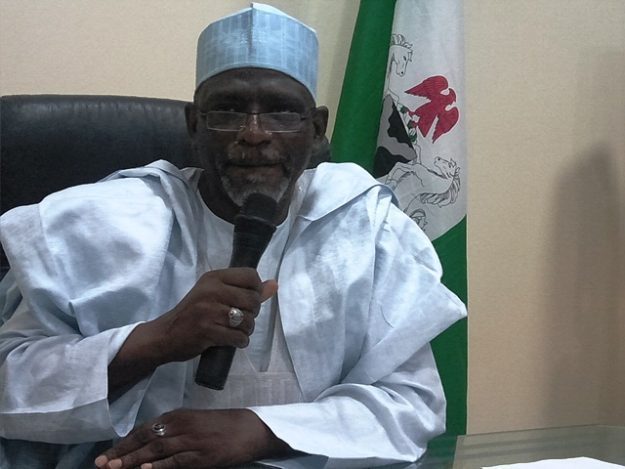
THE Colleges of Education Academic Staff Union (COEASU) has suspended over two months old strike its members embarked upon following the failure of the Federal Government to implement the 2014 Needs Assessment report on the 70 public Colleges of Education in the country.

President of the union, Nuhu Ogirima who announced the suspension of the strike in Abuja at the end of the expanded National Executive Council (NEC) meeting of the union on Tuesday, said the suspension followed reassurances from the government to meet some of the lecturers’ key demands.

He explained that the suspension was to enable the government to implement the terms of the agreement.

The union president said the NEC would reconvene in January 2019 to re-access government’s commitment to the implementation of the agreement noting that the union would not hesitate to recall its members to stay away from work if government reneges on the agreement.

According to him, the Federal Government has acknowledged the decay in Colleges of Education in the country and has agreed to implement the NEEDS assessment report.

Ogirima said the government has agreed to release a white paper tagged: Dual Mode’ to implement partially for some colleges to award degrees.

This was as he disclosed that government also promised to recall sacked lecturers of Ogun State Colleges of Education.

The ICIR recalls that the union had called on its members in October to prepare for a long-term strike after the Federal Government threatened them with no-work, no-payment rule.

“As we conclude the first phase of the national strike, we urge you all not to be distracted by the intimidation and threat posed by the government’s no-work-no-pay rule. The threat should rather strengthen our resolve that we have had enough of exploitative work. It is rather no pay, no work.

“So, we are braced up for a prolonged battle. If we refuse to stand for the colleges of education system now, we may not get it right again,” Ogirima urged COEASU members in October.

Meanwhile, members of Academic Staff Union of Universities (ASUU) who have been on strike since November 5,  over government’s failure to implement the Memorandum of Action (MoA) it signed with the union in 2017.

Moghalu absent, APC, PDP, ANRP represented, as CDD kicks off presidential debate series

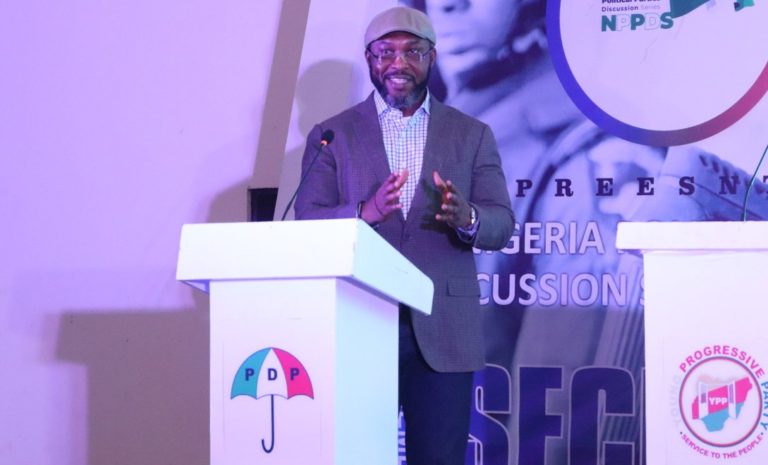
FROM the start of the event till it ended close to three hours after, neither Kingsley Moghalu nor any representative of the Young Progressives Party (YPP) made a show on Tuesday at the presidential debate organised by the Centre for Democracy and Development.

The event, which is the first of the Nigerian Political Parties Discussion Series for parties fielding presidential candidates, was held at Sheraton Hotel, Abuja, and received support from the Open Society Initiative for West Africa (OSIWA).

Scheduled to participate in the debate segment, which focused on security issues, were the ruling All Progressives Congress (APC), the People’s Democratic Party (PDP), the Abundant Nigeria Renewal Party (ANRP), and the YPP.

However, while others were represented by top party members, the lectern reserved for YPP remained unoccupied for the whole of the event.

Speaking on its party’s achievements in the area of security, Lanre Issa-Onilu, APC’s newly appointed national publicity secretary maintained that the Niger Delta and North-eastern regions of the country experience more peace under the incumbent administration.

“Today, North East is a lot better than what it was years ago,” he said. “We are not there yet. Niger Delta, we know what it was. Today, the Niger Delta is relatively peaceful. Our main source of income, oil, we have access to it — which was not possible four years ago in the Niger Delta. Also, the Ogoni cleanup is only possible because we have an improvement in security in the Niger Delta.”

He also said, while in Maiduguri a couple of weeks ago, he observed that the city was as peaceful as Ibadan or anywhere else, though he admitted there are still “issues on the outskirts and we still have surprises coming from the Boko Haram element”. Drawing from the United States of America’s occupation in Afghanistan, Yemen and other Middle-eastern countries, he argued that the war against terrorism takes several years.

“If the past government had looked for ways of tackling this issue in a way that will make this peace more durable, we will not be where we are today,” he said. “They didn’t have such policies and the implementation was completely not durable.”

He said the credibility of the Buhari-led administration accounts for its successes in tackling insecurity and is the reason neighbouring countries such as Niger and Cameroon are teaming up with the government to restore peace in the region. “They did not work with the past government because there was no such credibility,” he added.

Checks by The ICIR, however, revealed that it is incorrect neighbouring African countries did not collaborate with the previous administration to fight terrorism as there are numerous records showing otherwise.

In July 2014, following attacks outside local borders by the terrorist sect, defence ministers of Nigeria, Cameroon, Chad and Niger met in Niamey and pledged to expedite the creation of a 2,800-strong regional force to tackle.

Months earlier, in March, Nigeria entered into an agreement with France, the Republic of Benin, Cameroon, Chad, and Niger “to increase the level of coordination and exchange of intelligence as well as hold regular meetings of experts with a view to containing the menace.”

And beginning in 2015, before Buhari’s inauguration, the coalition of West African troops launched an offensive against the insurgents, with soldiers from Niger and Chad crossing into Northeastern Nigeria for the operation.

Osita Chidoka, former Minister of Aviation who represented the PDP, said the plan of the party’s presidential candidate, Atiku Abubakar, is to return to the fundamentals, review the recruitment process in the police, redefine the national identity card system and then devise a funding mechanism for the police before going into restructuring the police into community and state policing.

He, however, did not provide the financial implications of his party’s plan, and said the details will be unveiled gradually. He lamented the inadequate level of funding that goes into financing activities of the Nigeria Police.

“In 2016, the police had roughly 9,413 police divisions and the budget for fuel was N430 million,” he said. “If you divide it by N145 per litre of fuel, that will give you at least about 2.9 million litres of fuel. It looks like a lot of fuel, but if you divide it by 365 days, it amounts to 8000 litres of fuel.”

He continued: “If you divide it by the 9000 police formations in Nigeria, it amounts to one litre of fuel … so there is no funding for the Nigerian police to function. If you go back again into the issue of recruitment, all these agencies are filled with their brothers and sisters. There is nowhere in Nigeria you go to and you apply to the police force and the best and brightest are taken.”

During his address, Tope Fasua, presidential candidate of the ANRP, said his party’s focus is on technology, intelligence, and the role young Nigerians have to play in this.

“A lot of internal security has to do with youth unemployment and youth poverty when young people who are above 18 years old are not under any direction and nobody cares for them,” he explained.  “More than 80 per cent of them in this country are kind of ruderless, so what happens is that if the country does not put jobs in the hands of our youth, the devil is going to put jobs in their hands.”

“What we want to do is to create a certain programme called the Cleanest, Safest, and Most Organised Country in Africa Project, and what it is going to do is to channel the efforts and the energy and the passion and the innocence of our youth towards protecting their country,” Fasua added.

“We believe there are a lot of job opportunities in the security sector and we believe there are a lot of opportunities also in intelligence gathering and it is our youth who will do the work for us.”

US senators: ‘Zero chance’ Saudi Prince not involved in Khashoggi killing

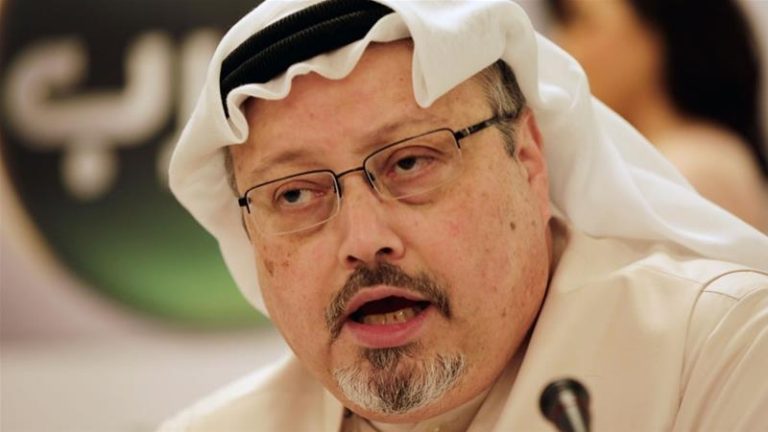
After a closed-door briefing by CIA Director Gina Haspel on Tuesday, some top US senators have said there is “zero chance” Saudi Crown Prince Mohammed bin Salman (MBS) wasn’t involved in the murder of journalist Jamal Khashoggi

“The views that I had before have only solidified,” said Senator Bob Menendez, the top Democrat on the Senate Foreign Relations Committee, who has called for a strong reaction from the United States to Khashoggi’s death and backs legislation to end all support for the Saudi coalition waging war in Yemen.

Lindsey Graham, Republican Senator told Aljaezeera, “You have to be willfully blind not to come to the conclusion that this was orchestrated and organised by people under the command of MBS.”

He added that it appeared the Trump administration does not want to recognise evidence of the crown prince’s complicity.

Republican Senator Bob Corker, chairman of the Senate Foreign Relations Committee, echoed the comments, saying he had zero doubt in his mind that Prince Mohammed ordered and monitored the killing of Khashoggi.

He added that if Prince Mohammed were put on trial, a jury would find him guilty in “about 30 minutes”.

The comments come after Haspel briefed top Republicans and Democrats on the Senate Armed Services, Foreign Relations, Appropriations, and Intelligence committees.

Although, president Donald Trump has repeatedly avoided any assertion that Prince Mohammed was involved in the killing and said the CIA had “feelings” the royal was culpable but not a firm conviction.

“I hate the crime, I hate the cover-up. I will tell you this: The crown prince hates it more than I do, and they have vehemently denied it,” he said late November.

In an earlier statement put out by the White House, Trump had praised Saudi Arabia as a “steadfast partner” and claimed, “We may never know all of the facts surrounding the murder of Jamal Khashoggi,” Trump said.

Khashoggi was killed on October 2 after entering the Saudi consulate in Istanbul to obtain documents needed for his planned marriage.

After offering contradictory statements for several days, Saudi Arabia admitted that Khashoggi was killed inside its consulate and his body was dismembered. The kingdom has repeatedly said Prince Mohammed had no knowledge of the killing, which Turkey said was ordered at the highest level of Saudi leadership.


Lagos Commissioner resigns, dumps APC over primary election controversy

THE Lagos State Commissioner for Energy and Mineral Resources, Wale Oluwo, has resigned his position and his membership of the All Progressive Congress (APC).

In his resignation letter on Wednesday, Oluwo cited the recently held APC primary election in the State which saw the emergence of Babajide Sanwo-Olu as the party’s flagbearer for the 2019 general election.

Sanwo-Olu, who had the backing of the former Lagos State Governor, Bola Tinubu, defeated the incumbent Governor, Akinwumi Ambode, in the polls, the first time a sitting governor would lose his re-election bid in the state.

But Oluwo said the process that threw up Sanwo-Olu as APC governorship candidate was “largely characterized by massive voter disenfranchisement, intimidation, violence, undue influence and non-compliance with all known principles of democracy”.

“In the particular case of the gubernatorial primary, which was conducted using the “open ballot” option in violation of the guidelines of the APC that specified the “open-secret ballot” option, it is clear to me that the core principles of merit, competence, justice and fairness have been sacrificed by the APC on the altar of political expediency,” Oluwo stated in the letter addressed to the Lagos APC Chairman.

“The integrity-deficient nature of the primary has significantly diminished the hard-earned reputation of our State as a reference point for free and fair democratic practice.

“I have struggled for weeks to understand the rationale for the apparent desperation and brigandage brazenly displayed by the party apparatchik in the various elections. I had never thought such a vicious attack could be unleashed on the progress that the state had made in its steady democratic journey.”

Oluwo also expressed his displeasure at “the indifference of the APC to the continued use of an arm of government by a powerful group within the party, to intimidate critical institutions of democracy in the State”.

He said such a development “undermines the doctrine of separation of powers, creates an atmosphere of uncertainty and impairs the government’s ability to implement policies and programmes that will benefit the majority of the people.”

Reports said Oluwo said he would work for the opposition Peoples Democratic Party (PDP) candidate, Jimi Agbaje, in the coming election.

24 hours after Osun College kidnap, police yet to uncover abductors

0

A staff of the Osun State College of Technology, Esa – Oke was killed, as six others were kidnapped by the gunmen who carried out the act on Tuesday. Two students who were also abducted escaped from the gunmen.

However, as at Wednesday morning,  the ICIR gathered that the two kidnapped students who escaped were in police custody.

Olaniyi Emmanuel Temitope, a registry staff of the institution was killed in the attack.

According to a statement released by the Osun State College of Technology, Public Relations Officer, Adewale Oyekanmi, he listed the names of the kidnapped staff as follows; Olaleye Olalekan, Adeyeoluwa Bankole, Jesuola Ajibola , Adenreti Chukwu and Rachael Onyinocha Akinboboye.

“There was an attack on Esa- Oke Road this evening after the closing of work, the list of staff members of Osun State College of Technology still being held in the bush by the kidnappers are; Mr Olaleye Olalekan Business Administration department, Engr. Adeyeoluwa Bankole , HOD civil engineering, Dr Jesuola Ajibola Director ventures, Adenreti Chukwu secretary to the civil engineering department, Rachael Onyinocha Akinboboye, OSCOTECH Microfinance Bank and Olaniyi Emmanuel Temitope registry staff(died on the spot),” he said in a statement.

Mr Oyekanmi also explained, that the gunmen blocked Esa-Oke Road (a road leading to the college campus), where they stopped several vehicles including the victims’ vehicles and abducted them.

The spokesperson of Osun state police, Folashade Odoro, in a phone interview with the ICIR, confirmed that the identity of the kidnappers was yet to be unravelled. She said efforts are on to secure the release of the other victims.

” We cannot determine the identity of the kidnappers presently, because investigations are still ongoing. As I am talking to you, I’m at the scene of the incident and we are working round the clock to make sure we release the others from the hands of the kidnappers.”

She also confirmed that the escaped students were in the custody of the police and debunked claims that the abductors were ” Fulani herdsmen”.

” Nobody knows who the kidnappers are and I cannot tell what I don’t know. Any rumour you hear is not true until we complete our investigation,” she said.

However, the Students’ Union President of the institution, Adekunle Adeleke,  said the two students who escaped from their abductors disclosed that their kidnappers were Fulani herdsmen.

“As at 4:30 p.m. yesterday, they launched the attack. Out of the eight people abducted, two have returned and six are still in the bush,” he said.

This would be the second incident this year that gunmen would kidnap people while on transit in the state.

According to a NAN report, a Methodist priest and two elders of the church were kidnapped on Iwo-Osogbo Road, while returning to Osogbo from Ile-Ogbo after a church meeting in June.

UN to investigate Khashoggi death, Saudi-Turkey investigation going nowhere

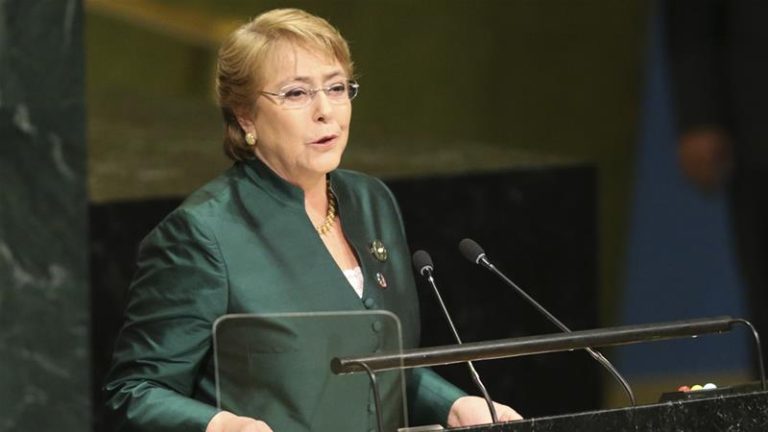
Michelle Bachelet, the new United Nations human rights chief has told Al Jazeera it’s time for the UN to investigate Jamal Khashoggi’s death – after almost two months of the Saudi and Turkish investigations that remain separate and seem to be going nowhere.

Jamal Khashoggi, a United States resident and columnist for the Washington Post was killed shortly after entering the Saudi consulate in Istanbul on October 2.

However, Antonio Guterres UN Secretary-General, currently at the G20 summit – is sticking to his position that he will not act until he gets a referral from one of the UN’s major bodies and one of the member states of the UN.


Meanwhile, US Senators yesterday said they are convinced that Saudi crown prince Mohammed bin Salman was involved in the death of Khashoggi.

ASUP to commence own strike December 12

AS the industrial action by the Academic Staff Union of Universities (ASUU) enters its first month, the Academic Staff Union of Polytechnics (ASUP) says it would be commencing its own indefinite strike from December 12.

National President of ASUP, Usman Dutse, said this on Wednesday, explaining that the decision is due to the failure of the federal government to meet the demands of the polytechnic lecturers.

Dutse said the resolution to commence the strike was reached at the union’s 93rd National Executive Council (NEC) meeting held at the Yaba College of Technology, Lagos last week.

He noted that the 21-day ultimatum issued by the union on October 2, has since elapsed and an extension of the ultimatum to November has also elapsed, yet the union did not go on strike.

“Government has failed to implement and fulfil agreements it reached with the union as contained in the memorandum of understanding signed,” Dutse said.

Among other things, Dutse said that “the issue of the funding of the institutions has always been a major concern”.

“The institutions are not funded. The states are even worse because state governments just establish schools without actually funding those schools. So, no infrastructure is in place,” Dutse said.

Also, the bill to review the Act on the establishment of polytechnics in Nigeria, according to Dutse, has not been passed by the National Assembly despite several efforts by ASUP to get the lawmakers to pass the bill. Dutse said perhaps the strike would help in fast-tracking the passage of the bill.

Another cause of agitation for the polytechnic lecturers is the issue of owed salary and allowance arrears, which in some states had risen up to 14 months.

“We have states that are owing about 14-month salaries. Some owe eight months. Benue, Ogun, Osun, Edo, Kogi are owing up to as long as 14 months,” Dutse said.

The last industrial action by ASUP was in November 2017, but following prompt action by the federal government and the agreement to implement the recommendations of the 2014 NEEDS assessment, the strike was suspended 15 days after.

The proposed strike by ASUP will, no doubt, do further damage on the Nigerian education sector. The ministry of labour and employment and the ministry of education have so far not been able to get the university lecturers to suspend their own strike.

The latest meeting between the FG and ASUU representatives on Tuesday ended in another deadlock.

Police say 16 personnel killed in Zamfara, four days after incident occurred

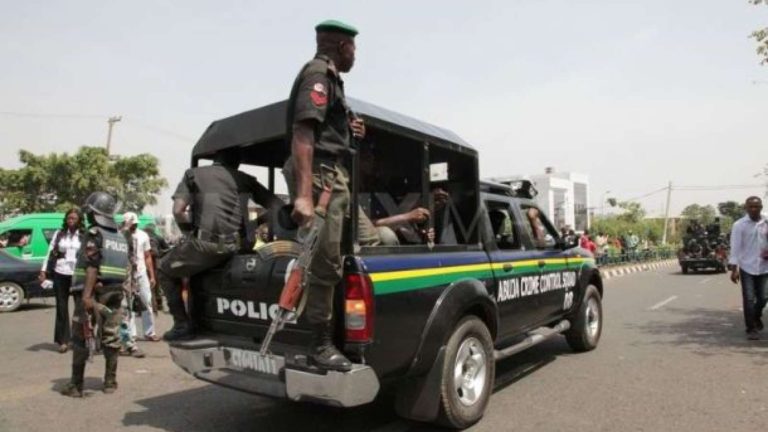
THE Nigeria Police Force has announced that 16 of its personnel were killed by unknown assailants in Zamfara State on November 29.

Jimoh Moshood, the Force Public Relations Officer, made this known in a statement late Tuesday, four days after the incident took place.

An earlier statement by the police had claimed that only one policeman was killed in the attack while 12 others were injured. The initial statement also claimed the police killed 104 of the bandits, destroyed 50 hideouts of the bandits arrested 85 suspects after a daredevilry ambush by the criminals.

In Tuesday’s updated statement, Moshood said a search and rescue operation by a Police Joint Intervention Force found 20 more policemen alive and 16 men dead.

“The IGP is saddened with the death of the gallant officers whom he describes as heroes of the Force; their demise is a great loss to Nigeria Police Force and our dear nation, Nigeria. The supreme price they paid for the security and safety of the Country will not be in vain,” Moshood said.

He added that “Police Special Forces personnel, Counter Terrorism Unit, Police Mobile Force, Federal SARS personnel with three (3) surveillance patrol helicopters have commenced an on-going operation being strengthened to rout out the remnant armed bandits and other criminal elements in the caves and mountains in the identified bandits hideouts in some locations in Zamfara State.”

Unofficial sources say the number of policemen killed in the November 29 attack could be as high as 50, and their bodies are yet to be evacuated by the officers.

Premium Times, in a report on Sunday, quoted a police officer who asked not to be mentioned as saying that “the bodies (of the slain policemen) are already decomposing because we have no capacity to enter the bush to recover them. We know they are over 50 who were killed, but those finding it difficult to move because they were seriously wounded could be still rescued”.

However, the Deputy Inspector-General of Police in charge of operations, Joshak Habila, told journalists on Wednesday that “we now have all our men, including the 17 that were killed and the 20 that went missing but now found and rescued”.

On Monday, December 3, former Vice President Abubakar Atiku urged President Buhari to declare a seven-day mourning for the slain police personnel. He pointed out that the incident, coming so close to the Boko Haram attacks on soldiers in the North East, ” is a red flag that calls for immediate and decisive action on the part of the leadership of Nigeria”.

In August this year, the Secretary to the Zamfara State Government, Abdullahi Shinkafi, said banditry in the State has claimed over 3000 lives in the past few years.