Home Blog Page 248

Protests rock Federal Character Commission over chairman’s tenure renewal

0

A ‘war’ of placards is raging at the headquarters of the Federal Character Commission (FCC) in Abuja, as staff supporting and opposing the Executive Chairperson, Muheeba Dankaka, are engrossed in protests.

The ICIR gathered that the protests are centred around whether or not Dankaka’s tenure, which expires on July 1, 2025, should be renewed by President Bola Tinubu.

While the ‘naysayers’ are kicking against the renewal of her first five-year tenure, describing it as amounting to a “suicide mission”, those in her support are insisting that she should be retained for bringing about reforms to the commission.

Dankaka was confirmed as Chairman of the FCC in June 2020, alongside 35 members nominated by former President Muhammadu Buhari.

However, her tenure has been riddled with controversy, including petitions to anti-corruption agencies, disputes with commissioners, and accusations of centralising power and neglecting due process.

Established by Act No. 34 of 1996 and strengthened by the 1999 Constitution, the FCC is tasked with promoting fairness and equity in the distribution of public posts and socio-economic infrastructure across Nigeria’s diverse regions.

The ICIR reports that the protests commenced on Wednesday, June 26, with the aggrieved staff besieging the commission’s premises with angry chants and displaying anti-Muheeba placards.

Security operatives, including personnel of the State Security Services (SSS) and the Police, took over the premises of the commission’s headquarters in order to keep the situation under control and prevent the protesters from clashing.

Some of the placards read: “Five years of draconic and oppressive administration of Dankaka; We say no to second term ambition”, “No to Sole Administrator in FCC”, “End of Hardship and Agony in FCC”, “BAT, give us a new Chairman” …

Some protesters displaying placards against the FCC chairman, Dankaka

Speaking with The ICIR on the development, the Chairman of the Tripartite Union of the FCC, Benson Agbo Ameh, said Muheeba’s five-year tenure had elapsed, but she was carrying on with business as usual.

“In previous cases, after making their valedictory sessions, the executive chairmen ceased to be in the office. But in this case, she refused to quit and has been carrying on with business as usual,” Ameh said.

According to him, Muheeba’s five years’ tenure at the commission was characterised by high-handedness and hardship unleashed on workers who were rendered redundant and denied their welfare.

“For instance, during her five years’ tenure, the benefits of retired staff were not paid for three years, even as subvention was not paid to state offices of the commission to operate. These are among the reasons we are against the renewal of her tenure.”

Another staff member of the commission, a female director, who sought identity protection for fear of being victimised, said renewing her tenure would amount to embarking on a “suicide mission.”

“We don’t want her for a second tenure because she has rendered us redundant. As a deputy director, I practically idle away in my office. She has engaged consultants who took over our jobs; it is only the accounts department that functions, “the source said.

Counter protest

However, The ICIR reports that even as the aggrieved staff prevented the embattled FCC chairman from getting access to her office on Friday, June 27, another group of staff was seen carrying placards and chanting solidarity songs in her support.

One of the placards reads: “Dr Dankaka has put an end to job racketeering at the FCC”, “Dr Muheeba is the best executive chairman in the history of FCC.”

Pro-Dankaka supporters displaying solidarity placards

A management staff in support of the embattled chairman, who spoke with The ICIR on the condition of anonymity because he was not authorised to speak officially, said the anti-demonstration did not reflect the views or interests of the commission

According to the source, under the “visionary leadership” of Dankaka, the commission has achieved remarkable progress in advancing reforms that have laid a strong foundation for continued growth and success.

“Her leadership has been marked by a steadfast commitment to excellence and integrity, relentless efforts to combat corruption and indiscipline within the commission, and the successful elimination of job racketeering, thereby ensuring merit-based appointments,” the source said.

Contacted via telephone, the executive chairman said she was praying in the Mosque and promised to get back to The ICIR to respond to the issues raised by the protesters after an hour.

However, when reminded after an hour, she sought more time but failed to respond subsequently.


Saboteurs working against NNPCL transformation, says management

0

THE new leadership of the Nigerian National Petroleum Company Limited (NNPCL) has said that some persons within and outside its organisation are working against its transformative efforts towards corruption-free operations.

They raised the concern in a statement on Friday, June 27, stating that a coordinated sabotage campaign is being launched against its leadership.

“The Nigerian National Petroleum Company Limited (NNPC Ltd.) has uncovered an emerging coordinated sabotage campaign being waged by a syndicate of known and faceless actors, both outside and within various levels of the organisation.

“This group is actively spreading lies and misinformation simply to discredit NNPC Ltd.’s leadership and derail the organisation’s ongoing transformation into a corruption-free, performance-driven energy company, in line with the mandate of His Excellency, the President of the Federal Republic of Nigeria,” the management stated.

The ICIR reported that President Bola Tinubu had on April 2 removed the former Group Chief Executive Officer (GCEO) of NNPCL, Mele Kyari, and his management team.

He said the decision was necessary to enhance the NNPCL operational efficiency, restore investor confidence, boost local content, and advance gas commercialisation and diversification.

He then appointed Bashir Ojulari as the new GCEO and Ahmadu Musa Kida as the non-executive chairman, overhauling the 11-man board and replacing them with new members.

In an ongoing probe on the NNPCL by the Senate Committee on Public Accounts, the state-owned oil company’s audited financial statements between 2017 and 2023 revealed that about N210 trillion was unaccounted for.

This has led the committee to summon the leadership of the NNPCL to clarify the discrepancies in its records.

However, neither NNPCL’s officials nor its external auditors showed up for a panel session that was slated for yesterday, June 26, The ICIR reported.

In response, the Senate committee had demanded that the company’s top executives appear before the panel by July 10 or face constitutional sanctions.

In its statement on Friday, the new NNPCL management claimed that the tactics of the saboteurs include planting scandalous and fabricated reports, curated to distract leadership, mislead the public, and undermine the commitment of our dedicated workforce and reform-minded Nigerians.

They stressed that these calculated efforts by those who feel threatened by reform, transparency, accountability, and change are clear evidence of the lengths to which they will go to obstruct the transformation of Nigeria’s foremost energy institution.

“We expect a surge of defamatory content in the days and weeks ahead. NNPC Ltd. remains undeterred. The transformation is underway, and no amount of sabotage will stop it.

“We urge our dedicated staff, stakeholders, and all patriotic Nigerians to stay focused, ignore the noise, and not be discouraged. We remain on mission,” the management added.

Wike declares end to feud with Fubara after Tinubu brokered peace

MINISTER of the Federal Capital Territory (FCT), Nyesom Wike, has announced an end to his prolonged feud with the suspended Rivers State Governor Siminalayi Fubara.

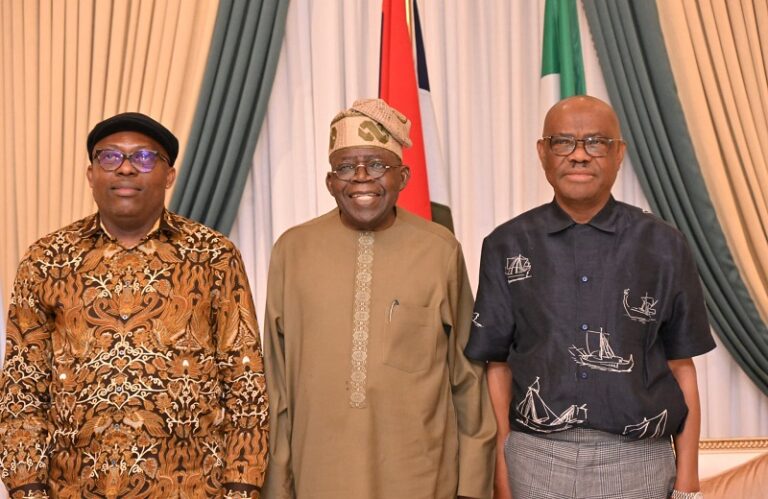
Wike, on Thursday night, confirmed that the crisis has been resolved, following a truce brokered by by President Bola Tinubu in Abuja.

In a chat with journalists after the closed-door meeting at the Presidential Villa, Wike said both groups arrived at a final agreement to end animosity and work together in unity.

The minister acknowledged that the crisis had remained for months but described the Thursday agreement as conclusive.

“Yes, just like humans, you have a disagreement, and then you also have time to settle your disagreement.

“And that has been finally concluded today, and we have come to report to Mr. President that is what we have agreed. So for me, everything is over,Wike stated.

He called for calm among his followers and those of Fubara, urging everyone to work together and put an end to acrimony,

He emphasised that there was no longer any reason for discord.

Meanwhile, Fubara has welcomed the truce, attributing it to divine intervention and a new beginning for the state.

“For me, it’s a day we have to thank Almighty God. For me, it’s very important that this day has come to be.

“What we need for the progress of Rivers State is peace, and by the special grace of God, this night, with the help of Mr. President and the agreement of the leaders of the state, our leader, peace has returned to Rivers State,he said.

Fubara pledged to fully commit to preserving the unity achieved during the meeting, stating that everything possible would be done to sustain it.

Leaders of the state House of Assembly were also at the meeting.

The ICIR reported that the emergency rule declared by President Bola Tinubu in the state might soon be lifted following the president’s meeting with the warring leaders.

Tinubu reconciled the parties whose feud led to the declaration of a state of emergency in the state by the president on March 18.

The president also suspended the Rivers Assembly. He appointed Ibok Ekwe Ibas, a retired rear admiral, as the state administrator.

Tinubu said the action was taken due to the prolonged crisis between the governor and the state House of Assembly, which he said threatened the peace in the state.

The ICIR reported that Tinubu, in a nationwide broadcast on Tuesday, March 18, imposed a state of emergency on the state, suspending Fubara, his deputy, and all members of the state House of Assembly for six months in the first instance.

Tinubu based his decision on Section 305 of the 1999 Constitution, saying he couldn’t continue to watch the political logjam in the state without any action to address it.

The president’s decision attracted outrage, with many condemning the decision.

The crisis has its roots in who controls the political structure of the state between the two leaders.

The People’s Democratic Party (PDP) is the ruling party in the state.

The crisis took a different turn when the Amaewhule-led House of Assembly threatened to impeach Fubara over his alleged failure to implement a Supreme Court ruling on the political situation in the state.

Nearly 90 per cent of the House members are loyal to Wike.


Tax Law: Government to track tax evaders through bank accounts, phone, NIN

The Nigerian government has vowed to expand the tax base by tracking tax evaders’ bank accounts, National Identity Numbers (NIN), and phone numbers, under the newly enacted tax laws.

The Chairman of the Presidential Committee on Fiscal Policy and Tax Reforms, Taiwo Oyedele, who disclosed this late Thursday, June 26, a few hours after President Bola Tinubu signed the Tax law, said the government had already projected a revenue of N50 trillion from the tax law, amid dwindling oil revenue resources.

“As long as you are captured through banking, National Identity Number -NIN, bank information, and phone number, you cannot evade tax again in Nigeria once you’re eligible.

“With the phone number and necessary information about your financial dealings, the government can track anyone when you travel, buy land, build a house, or open an investment account with stock brokers. We’ll track all those activities,” Oyedele said.

According to Oyedele, the government seeks to get to a point where it would be virtually impossible for taxable Nigerians to evade tax or underpay their taxes.

The ICIR reported that the four bills signed into law were the Nigeria Tax Bill, the Nigeria Tax Administration Bill, the Nigeria Revenue Service (Establishment) Bill, and the Joint Revenue Board (Establishment) Bill.

Now an Act, the Nigerian Tax Act aims to merge the country’s tax laws into a single, unified system, while the Nigerian Tax Administration Act creates uniform procedures for tax collection across federal, state, and local governments, replacing the current patchwork of different systems.

Oyedele clarified that under the new tax laws, Nigerian households earning ₦250,000 or less per month are classified as poor and exempt from paying taxes.

Oyedele, whom President Bola Tinubu appointed in July 2023, described his two-year stint as chair of the tax reform committee as both eventful and challenging.

He said that the objectives of the new laws, which would take effect from January 2026, were not intended to increase taxes but to stimulate economic activity in the country and track tax evaders.

He stated that the new laws would also protect businesses and ensure that the government doesn’t tax poverty, adding that the new laws “are efficiency-driven, growth-focused, and people-centric.

“This tax law will not give you cash in your pocket, but at least it won’t take your cash away if you are poor.”

He said nobody earning below ₦250,000 would have to pay taxes because they don’t even have enough.

“We have eliminated the tax component for people at the bottom, we have reduced it for people at the middle, and we have increased it slightly for people at the top.

“That middle, we estimated it at about ₦1.8 to ₦2 million a month. If you are earning that amount and below, your tax will not be zero, but it will reduce from what you are paying today,” he stated, noting that those who earn this amount are about five per cent of the total Nigerian population.

He said to arrive at a decision, his committee debated the poverty line of an average Nigerian.

His words, “We debated this question; we said: “Who is a poor person in Nigeria?

“First, we started with data like the World Bank and the UN will tell you two dollars, fifteen cents a day per person means you are at the poverty line but there are people who do not earn two dollars a day but they are not poor because they produce the food that they eat and they do not pay for transportation. I lived and grew up in the village.

“So, we had to factor that in. We drew our own (poverty) line for Nigeria based on an average of five people per family: two people working if they are lucky, taking care of the five.

“When we did the maths, it gave us an amount, and that was what we used in determining the income below which nobody should pay taxes.

“We came up with ₦120,000 or ₦130,000 per two people working in a household of five. If the earnings are about ₦250,000, they can take care of themselves. Of course, they are not going to have luxury, but at least they can take care of themselves. They are poor, and they shouldn’t pay taxes.”

Oyedele stated that Nigeria only got about 30 per cent of what it should be receiving in taxes, noting that the objective of the new tax laws was to close the 70 per cent gap.

How Nigeria can institutionalise World MSME Day – ASBON President

0

JUNE 27, 2025, marks the 9th annual International MSME (micro, small, and medium-sized enterprise) Day. Adopted on April 6, 2017, by the United Nations General Assembly, the day is aimed at raising awareness of the tremendous contribution small businesses make to sustainable, inclusive, and resilient economic growth. 

As the world marks this year’s celebration today with the theme ‘Business for MSMEs – Connecting the Entrepreneurs’, the president of the Association of Small Business Owners of Nigeria (ASBON), Femi Egbesola, shares his thoughts, in this interview with The ICIR, on how stakeholders should celebrate and why government should institutionalise the day. Excerpts:


The ICIR: What should the International MSME Day signify for enterprises in Nigeria?

Egbesola: The International MSME Day should be a time where MSMEs will have time to reflect and to strategise about better ways of doing business, particularly in these challenging times. As you know, the MSMEs have suffered a lot because of the current economic hardship. The sector has suffered so much that over two million businesses are said to have closed shop over time.
I think it’s time we begin to reflect on the challenges the sector faced. We should also use the opportunity to renew our commitments to continue to improve businesses in that sector. I see it as a time to celebrate our resilience and contribution to Nigeria.

These are the things that it should mean for us.  Unfortunately, Nigeria is not celebrating the MSME Day as it should; attention is not paid to it as we do to other seemingly less important things in Nigeria.

The ICIR: Do you think we’re utilising the MSME Day to create awareness of its contributions to the Nigerian economy, as the UN expects it to be?

Egbesola: For me, we are not creating enough awareness. While we have pockets or isolated programmes and events that celebrate the MSME Day, generally, the celebration has been in a low-key manner. I think the day should be used to celebrate MSMEs, to commend them for what they are doing, for employing as much as 87 per cent of the workforce in the country, and having 92 per cent of the entire business space.
I think that’s worth the commendation and celebration. It should also be a day where we should have national dialogues hosted by governments in all strata, both national and sub-national, to talk about the private sector and look at how MSMEs are contributing to the national growth and the economic growth. I think it’s also a time for the government to roll out national data and reports on MSMEs’ economic contributions that we are not seeing now.

It’s also good to see the media coming up to celebrate MSMEs. The media has been playing a key role in a lot of celebrations, and the MSME celebration should also be part of what should be in their calendar. I’m happy that this interview is coming up today, and we are talking about it. But, I expect that all social media platforms should also mark the day in their calendar, and celebrate it more than what we have now.

You can imagine if all the platforms we have – the social media, the print, the television, and radio – are all coming together on June 27 to celebrate the same thing. You can imagine the kind of awareness, visibility, and the kind of push or inspiration the MSMEs will get from social innovations.

The ICIR: Apart from the government bringing up stakeholder engagement, what other role should it play to create this awareness?

Egbesola: We would’ve loved governments to, first of all, institute what we call National MSME Week to celebrate MSMEs. Yes, we have an award programme tied to that week by the Federal Government at the moment, but even at that, this kind of award should not be at the centre only. We expect every state government to have MSME Honours or Award Nights during that week, particularly on that day.
Femi Egbesola, president, Association of Small Business Owners of Nigeria (ASBON).

We also expect that there should be a state-led celebration of clusters of MSMEs. We have a lot of clusters – business membership organisations and associations. There should be a situation where they will be brought together, and we’ll all celebrate it together. It’s supposed to be a time when there will be what we call public-private dialogue between the MSME, particularly stakeholders in the MSME ecosystem, with the government to dissect issues, challenges facing MSMEs, and come up with a communique action plan that will work towards resolving the challenges of MSMEs.

It should also be a time where we begin to look at policies that relate to MSMEs, particularly policies that will enable and support businesses, and ease of doing business. These are some of the things that we feel should be done during MSME Day, not only at the national level but also at the sub-national level.

The ICIR: How should the various bodies and associations in the MSME sector drive this awareness?

Egbesola: Associations, too, should also collaborate with the media to tell their stories. That is what we are doing in our association [Association of Small Business Owners in Nigeria]. During the MSME week, we always look at how we can celebrate MSMEs more; how we can tell our own stories and use them to issue press releases.
It’s also a time for us to organise many of our events, trainings, and expos. For us in ASBON, we have that coming up next week. We call it the Annual MSME Conference to celebrate MSME Day. That we have been doing every year; this is the sixth edition. That’s what we’re expecting other associations to do.

We cannot wait for people to come and blow our trumpet for us. We can always blow it ourselves, and that’s how associations should look at supporting MSMEs. We’re holding a Podcast this year and also collaborating with the Nigerian Economic Summit Group (NESG)for the MSME Day to celebrate the day.

We also use it to incentivise our members to celebrate the day in their small way. One way is by telling them to hang the theme of this year’s celebration in their offices, stores, shops, or wherever they are doing business, so that everybody coming into that environment would know that there’s a celebration going on and that it’s a business for MSMEs connecting the entrepreneurs.

The ICIR: What do you make of this year’s theme, ‘Business for MSMEs – Connecting the Entrepreneurs’? 

Egbesola: I think it’s one of the most fitting themes that has ever come to play when it comes to celebrating MSME Day. The time has come when we have to realise that we can’t continue to do things on our own. It’s time to network, collaborate, partner, and connect. That’s where we can survive as MSMEs. When it comes to connection at this time, it’s not only to connect to the government but also to the market, investors, collaborators, regulatory bodies, customers, and all of them. It’s a time to make a lot of connections, and these connections can always be leveraged with technology.

So, this year’s theme is very fitting, and I think we need that in the MSME ecosystem this time around. There’s a need for us to connect to everything that can support and help our institution to grow. Also, it’s a time for us to start using it to connect with large corporations, many of whose value chains have MSMEs working there. This kind of handshake with large corporations has to be intentional, and I think this theme for the year should be able to address that.

The ICIR: What support do you think should come from the UN to make this day worthwhile in subsequent celebrations?

Egbesola: I think what we should all do, starting from our international to our local scene, is to look at how we can institutionalise that day. It has to be all-inclusive. We must institutionalise it. It can start by engaging the schools, creating awareness about entrepreneurship, inspiring students to become future entrepreneurs, and, like I mentioned earlier, having a National MSME Week whereby we can outline activities for celebrating the day, featuring various programmes like quiz competition, dialogue, product showcase, and all of that.

It’s also good for us to publish data that contains how well or otherwise the MSMEs are doing, and develop whitepapers on that. It’s also good for us to look at how we can have dialogue platforms, policy townhall meetings, to create a dialogue between the MSMEs and the policymakers.

It’s also good to begin to look at how the states can localise this celebration and where local governments will begin to participate. I think if we have a coordinated national framework, the MSME Day could become equivalent to every other celebration, for example, our Independence Day. That’s how it should be because we’re the backbone of the economy, and I think we need to be celebrated, appreciated, and supported.

Emergency rule may soon be lifted in Rivers as Tinubu meets Fubara, Wike, lawmakers

PRESIDENT Bola Tinubu on Thursday night met with the suspended Governor of Rivers State, Siminalayi Fubara, and Minister of the Federal Capital Territory (FCT) Nyesom Wike, at the Presidential Villa, Abuja.

According to reports, the Speaker of the Rivers State House of Assembly, Martins Amaewhule, and members of the Assembly were also at the meeting.

It was gathered that Tinubu reconciled the parties whose feud led to the declaration of a state of emergency on the state by the president on March 18.

The president also suspended the Rivers Assembly. He appointed Ibok Ekwe Ibas, a retired rear admiral, as the state administrator.

Tinubu said the action was taken due to the prolonged crisis between the governor and the state Assembly, which he said threatened the peace in the state.

However, feelers from Thursday’s meeting show that the parties might have sheathed their swords, following the president’s intervention, and there are strong indications that the state of emergency imposed on the state might be  edging to an end.

The ICIR reported that Tinubu, in a nationwide broadcast on Tuesday, March 18, imposed a state of emergency on the state, suspending Fubara, his deputy, and all members of the state House of Assembly for six months in the first instance.

Tinubu based his decision on Section 305 of the 1999 Constitution, saying he couldn’t continue to watch the political logjam in the state without any action to address it.

The president’s decision attracted outrage, with many condemning the decision.

Prominent opposition leaders, legal experts, and groups, including Atiku Abubakar, Peter Obi, Rotimi Amaechi, Nasir El-Rufai, Femi Falana, the Nigerian Bar Association (NBA), the Labour Party (LP), and the Peoples Democratic Party (PDP), among others, condemned the action.

Recall that shortly after Fubara took over power, he fell apart with his predecessor and Minister of the Federal Capital Territory, Wike.

The crisis has its roots from who controls the political structure of the state between the two leaders.

The People’s Democratic Party (PDP) is the ruling party in the state.

The crisis took a different turn when the Amaewhule-led House of Assembly threatened to impeach Fubara over his alleged failure to implement a Supreme Court ruling on the political situation in the state.

Nearly 90 per cent of the House members are loyal to Wike.

Can academics use AI to write journal papers? What the guidelines say

1

By Sumaya Laher, University of the Witwatersrand

Artificial intelligence (AI) refers to “intelligent machines and algorithms that can reason and adapt based on sets of rules and environments which mimic human intelligence”. This field is evolving rapidly and the education sector, for one, is abuzz with discussion on AI use for writing.

This matters not just for academics, but for anyone relying on trustworthy information, from journalists and policymakers to educators and the public. Ensuring transparency in how AI is used protects the credibility of all published knowledge.

In education and research, AI can generate text, improve writing style, and even analyse data. It saves time and resources by allowing quick summarising of work, language editing and reference checking. It also holds potential for enhancing scholarly work and even inspiring new ideas.

Equally AI is able to generate entire pieces of work. Sometimes it’s difficult to distinguish original work written by an individual and work generated by AI.

This is a serious concern in the academic world – for universities, researchers, lecturers and students. Some uses of AI are seen as acceptable and others are not (or not yet).

As editor and editorial board member of several journals, and in my capacity as a researcher and professor of psychology, I have grappled with what counts as acceptable use of AI in academic writing. I looked to various published guidelines:

The guidelines are unanimous that AI tools cannot be listed as co-authors or take responsibility for the content. Authors remain fully responsible for verifying the accuracy, ethical use and integrity of all AI-influenced content. Routine assistance does not need citation, but any substantive AI-generated content must be clearly referenced.

Let’s unpack this a bit more.

Assisted versus generated content

In understanding AI use in academic writing, it’s important to distinguish between AI-assisted content and AI-generated content.

AI-assisted content refers to work that is predominantly written by an individual but has been improved with the aid of AI tools. For example, an author might use AI to assist with grammar checks, enhance sentence clarity, or provide style suggestions. The author remains in control, and the AI merely acts as a tool to polish the final product.

This kind of assistance is generally accepted by most publishers as well as the Committee on Publication Ethics, without the need for formal disclosure. That’s as long as the work remains original and the integrity of the research is upheld.

AI-generated content is produced by the AI itself. This could mean that the AI tool generates significant portions of text, or even entire sections, based on detailed instructions (prompts) provided by the author.

This raises ethical concerns, especially regarding originality, accuracy and authorship. Generative AI draws its content from various sources such as web scraping, public datasets, code repositories and user-generated content – basically any content that it is able to access. You can never be sure about the authenticity of the work. AI “hallucinations” are common. Generative AI might be plagiarising someone else’s work or infringing on copyright and you won’t know.

Thus, for AI-generated content, authors are required to make clear and explicit disclosures. In many cases, this type of content may face restrictions. Publishers may even reject it outright, as outlined in the Committee on Publication Ethics guidelines.

What’s allowed and what’s not

Based on my readings of the guidelines, I offer some practical tips for using AI in academic writing. These are fairly simple and could be applicable across disciplines.

  • The guidelines all say AI tools can be used for routine tasks like improving grammar, revising sentence structure, or assisting with literature searches. These applications do not require specific acknowledgement.
  • Across the guidelines reviewed, AI generated content is not allowed unless there are clear reasons why this was necessary for the research and the content is clearly marked and referenced as such. Thus, depending on how AI is used, it must be referenced in the manuscript. This could be in the literature review, or in the methods or results section.
  • Sage and the Committee on Publication Ethics emphasise that authors must disclose when AI-generated content is used by citing this appropriately. There are different conventions for citing AI use but all seem to agree that the name of the generative tool used, the date accessed and the prompt used should be cited. This level of transparency is necessary to uphold the credibility of academic work.
  • Other aspects linked to AI assistance like correcting code, generating tables or figures, reducing word count or checking on analyses cannot be referenced directly in the body of the manuscript. In line with current best practice recommendations, this should be indicated at the end of the manuscript.
  • Authors are responsible for checking the accuracy of any AI content, whether AI assisted or AI generated, ensuring it’s free from bias, plagiarism, and potential copyright infringements.

The final word (for now)

AI tools can undoubtedly enhance the academic writing process, but their use must be approached with transparency, caution, and respect for ethical standards.

Authors must remain vigilant in maintaining academic integrity, particularly when AI is involved. Authors should verify the accuracy and appropriateness of AI-generated content, ensuring that it doesn’t compromise the originality or validity of their work.

There have been excellent suggestions as to when the declaration of AI should be mandatory, optional and unnecessary. If unsure, the best advice would be to include the use of any form of AI (assisted or generated) in the acknowledgement.

It is very likely that these recommendations will be revised in due course as AI continues to evolve. But it is equally important that we start somewhere. AI tools are here to stay. Let’s deal with it constructively and collaboratively.The Conversation

Sumaya Laher, Professor, University of the Witwatersrand

This article is republished from The Conversation under a Creative Commons license. Read the original article.

N210trn unaccounted funds: Senate issues 10-day ultimatum to NNPCL

0

THE Senate Committee on Public Accounts has issued a 10-day ultimatum to the Nigerian National Petroleum Company Limited (NNPCL).

It issued the ultimatum on Thursday, June 26, following the failure of the representatives of the state-owned oil firm to appear before its investigation panel over N210 trillion discrepancies flagged in its audited accounts.

The committee, chaired by Aliyu Wadada, had on Wednesday, June 18, during an investigative session, raised an alarm when NNPCL representatives, led by the Chief Financial Officer, Dapo Segun, appeared before it, The ICIR reported.

It had highlighted discrepancies in the absence of detailed records by the NNPCL to justify massive discrepancies in its 2017 to 2023 audited statements, amounting to N210 trillion.

To seek clarity on these unaccounted funds in the NNPCL’s books, the committee then handed over a list of 11 queries to NNPCL’s finance team to respond to within one week and appear before the committee on Thursday, June 26.

However, NNPCL’s officials or external auditors did not show up despite the scheduled meeting.

In response, the committee had to issue a 10-day ultimatum, demanding the company’s top executives appear before the panel by July 10 or face constitutional sanctions.

In a letter dated June 25, the NNPCL had requested a two-month extension to enable the company to prepare necessary documents and responses.

“Having carefully reviewed your request, we hereby request your kind consideration to reschedule the engagement for two months from now to enable us to collate the requested information and documentation.

“Furthermore, members of the Board and the senior management team of NNPC Limited are currently out of the office for a retreat, which makes it difficult to attend the rescheduled session on Thursday, 26th June, 2025,” the letter was quoted to have stated.

However, the lawmakers rejected the request as the committee chairman explained that the NNPCL was not expected to submit documents, but rather provide verbal responses to the 11 questions requested from them.

“For an institution like NNPCL to ask for two months to respond to questions from its audited records is unacceptable.

“If they fail to show up by July 10, we will invoke our constitutional powers. The Nigerian people deserve answers,” Wadada maintained.

Tinubu signs tax reform bills into law

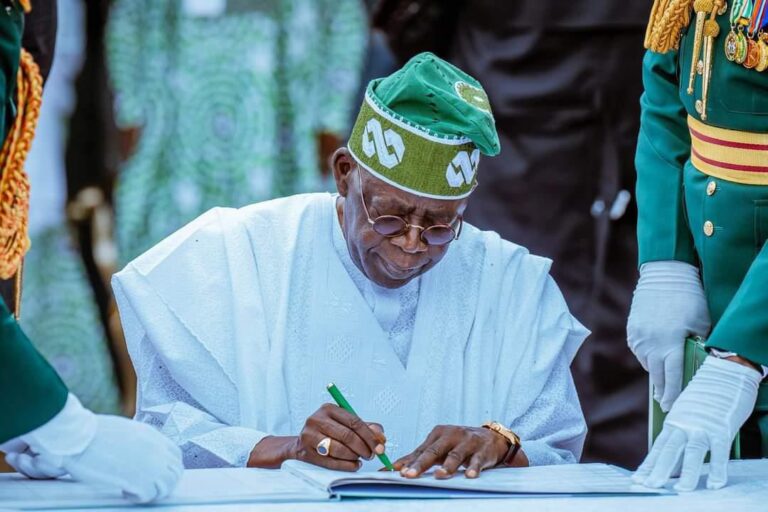
President Bola Tinubu has signed the four tax reform bills into law, stating that it marks a new dawn for the country.

He announced this in his official X handle on Thursday, June 26.

He said, “I have just signed into Law the four fiscal reform bills. It is a new dawn for Nigeria.

The ICIR reports that the four bills passed into law were the Nigeria Tax Bill, the Nigeria Tax Administration Bill, the Nigeria Revenue Service (Establishment) Bill, and the Joint Revenue Board (Establishment) Bill.

Now an Act, the Nigerian Tax Act aims to merge the country’s tax laws into a single, unified system, while the Nigerian Tax Administration Act creates uniform procedures for tax collection across federal, state, and local governments, replacing the current patchwork of different systems.

The Nigeria Revenue Service (Establishment) Act gives the tax collection agency greater independence and expanded powers, including collecting non-tax revenue.

The Joint Revenue Board (Establishment) Act will set up formal cooperation structures between different levels of government and create oversight bodies, including a Tax Appeal Tribunal and the Office of the Tax Ombudsman.

President Tinubu had expressed that the four landmark tax reform acts would usher in a bold new era of economic governance in the country.

He believes these reforms will go beyond streamlining tax codes to deliver the first major, pro-people tax cuts in a generation, targeted relief for low-income earners, small businesses, and families working hard to make ends meet.

“The four bills – the Nigeria Tax Bill (Fair Taxation), Nigeria Tax Administration Bill, Nigeria Revenue Service (Establishment) Bill, and the Joint Revenue Board (Establishment) Bill, will unify our fragmented tax system, eliminate wasteful duplications, cut red tape, restore investor confidence, and entrench transparency and coordination at every level,” he said.

He noted that for too long, Nigeria’s tax system has been a patchwork, complex, inequitable, and burdensome, stressing that it has weighed down the vulnerable and shielded inefficiency.

“That era ends today. We are laying the foundation for a tax regime that is fair, transparent, and fit for a modern, ambitious Nigeria. A tax regime that rewards enterprise, protects the vulnerable, and mobilises revenue without punishing productivity.

“We are also building a framework for the Nigeria of tomorrow — leaner, fairer, and laser-focused on unlocking opportunities for all,” Tinubu said.

He, however, expressed that the move is the beginning of a journey, not an end.

“We are not just signing tax bills but rewriting the social contract. We are not there yet, but we are firmly on the road.

“This is our rallying cry: Simplify. Reform. Grow. Let the world know that Nigeria is open for business, and this time, everyone has a fair shot. We are betting on a new Nigeria and building it block by block,” the President said.

Notably, top government officials witnessed the signing ceremony, held at the Presidential Villa in Abuja.

They include the President of the Senate, Godwill Akpabio, Speaker of the House of Representatives, Tajudeen Abbas, Senate Majority Leader, Opeyemi Bamidele, and House of Representatives Majority Leader, Julius Ihonvbere. Others include the chairman of the Senate Committee on Finance, Mohammed Sani Musa, and the House of Representatives Committee chairman on Finance, James Faleke.

Others were the Chairman of the Nigeria Governors’ Forum, Abdulrahman Abdulrazaq of Kwara State and the Chairman of the Progressive Governors’ Forum, Hope Uzodimma. Others also include the Minister of Finance and Coordinating Minister of the Economy, Wale Edun, and the Attorney General of the Federation, Lateef Fagbemi.

NDLEA arrested 66,085 drug offenders, convicted 12,201 in 53 months – Marwa

0

THE Chief Executive Officer (CEO) of the National Drug Law Enforcement Agency (NDLEA), Mohamed Buba Marwa, said the agency arrested 66,085 drug offenders and convicted 12,201 in 53 months.

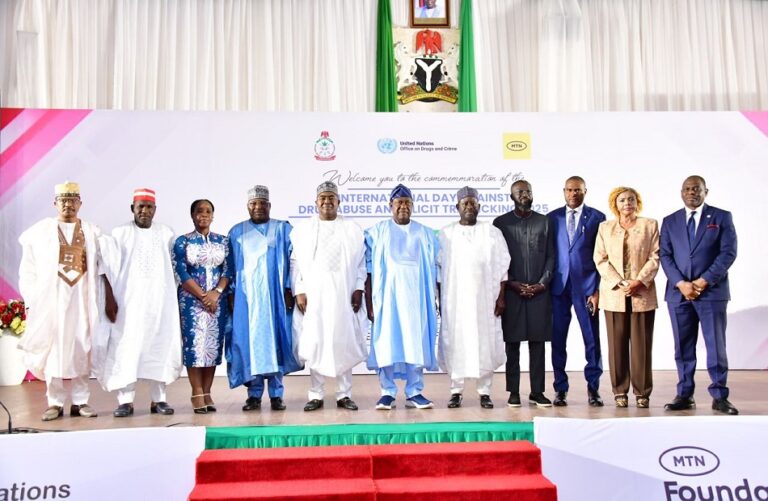
Marwa stated this at the grand finale of a weeklong programme to commemorate the 2025 World Drug Day (WDD) held at the Presidential Villa Conference Centre, Abuja, on Thursday, June 26.

He said the agency had seized 1,143,717.44 kilogrammes of assorted illicit drugs and rehabilitated 26,393 drug addicts within the same period.

He noted that prevention efforts would amount to little if access to illicit drugs remained open and easy.

“Put simply, while we work strategically to prevent individuals from initiating drug use, we must simultaneously shut down the pipeline through which these harmful substances are distributed. We must remove traffickers from the equation. This is a task we have continued to pursue diligently, deploying every resource at our disposal.”

He emphasised that parents played a significant role in addressing the issue and should be empowered to do so. He said that through initiatives like the War Against Drug Abuse (WADA) advocacy campaign, efforts were made to educate parents, teachers, and community leaders on safeguarding the younger generation. He stressed the importance of parental presence, guidance, and values in a child’s life.

“Teachers also play a crucial role. They are deeply influential in shaping character and instilling values during the school years. The national curriculum now includes topics on drug abuse, and teachers are in a prime position to guide and protect young minds,he stated.

He expressed gratitude to individuals and institutions that had helped to stem the tide of drug abuse in Nigeria.

“To the UNODC, INL, DEA, UK Border Force, NCA, and the governments of the United States, United Kingdom, Germany, and France, thank you for your continued and meaningful support,Marwa stated.

In his keynote address at the occasion, President Bola Ahmed Tinubu, represented by the Secretary to the Government of the Federation (SGF), George Akume, declared that the fight against the scourge of substance abuse and illicit drug trafficking in Nigeria must be embraced by all as a national movement rather than one for governments alone.

“Let us also be clear: this fight is not one for governments alone. It must be a national movement—driven by families, faith leaders, civil society organisations, youth groups, community leaders, businesses, and, crucially, people with lived experience. Their voices matter. Their stories inspire. Their leadership is essential,” the president stated.

He promised that Nigeria would stand firmly with the global community to tame the scourge of drug abuse and its consequences.

While commending the NDLEA, Tinubu noted that its efforts had not only attracted commendations from international partners and developed nations but also more support and collaboration with Nigeria in the global effort to curb the menace of substance abuse and illicit drug trafficking.

In his remark, Attorney General of the Federation (AGF) and Minister of Justice, Lateef Fagbemi, a senior advocate, said drug abuse was not just a public health crisis but a threat to national security, social stability, and economic development.

He said prevention efforts must be integrated into the nation’s educational system, health care services, and criminal justice programmes.

He said the Federal Government was committed to tackling drug problem and had put in place several drug control frameworks and instruments, including action plans and strategies with the overall aim of significantly reducing the prevalence of production, trafficking, sales, and use of illicit drugs and their attendant social, economic, and health implications.

Other dignitaries at the event included the chairman of the Senate Committee on Drugs and Narcotics, Ibrahim Dankwambo, who represented the Senate President, Godswill Akpabio, and the country representative of the United Nations Office on Drugs and Crime (UNODC), Cheikh Ousmane Toure.