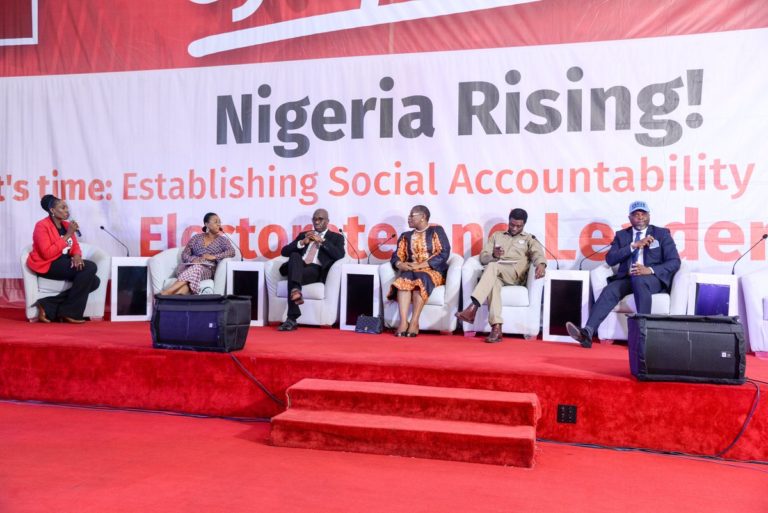
President Muhammadu Buhari and other leading candidates for the 2019 presidential elections were absent at the first 2019 presidential debate.
The debate, which was held in Abuja, and hosted by the Osasu Show, and supported by ONE campaign, Connected Development (Code) and YALI Abuja had some of the presidential candidates in attendance.
Atiku Abubakar, who is the People’s Democratic Party (PDP) candidate, sent in Segun Sowunmi his director of media and publicity to represent him at the event, while President Buhari of the All Progressives Congress (APC) sent in no representative for the debate.
Other presidential candidates who participated in the debate were Oby Ezekwesili of the African Congress Party of Nigeria (ACPN), Tope Fasua of the Abundant Nigeria Renewal Party (ANRP) and Alistair Soyode of the Yes Electorates Solidarity (YES).
Rotimi Amaechi, the minister of transportation, who was present at the event did not represent the president at the actual debate.
Speaking at the debate, Ezekwesili, presidential candidate of the ACPN, said she could have gotten angry and left, following the absence of the mainstream party candidates, but said she stayed for the debate out of respect for Nigerians present.
“When I looked and saw that the two main parties, one is absent, the second sent a representative, his spokesperson, I could have become arrogant and say I am not going to sit here, but I decided to stay out of respect for you.
“Let me make it clear, in this election every candidate must tell the Nigerian people what they are about. I have done this out of respect for you. But you would have to join me in saying, Buhari must debate, Atiku must debate. Butiku must debate,” she said.
When asked why she wanted to be president, she responded that the need to rescue the country from misguided leadership prompted her decision.
“Nigeria being the poverty capital of the world is a slur to us and the Operation Rescue Nigeria launched by the ACPN is timely. I believe that I have what it takes to lead the country out of our present predicament,” she said.
Tope Fasua, the presidential candidate of ANRP stated that his major aim would be to double the size of the economy if elected into office.
The panel session tagged ‘The Role of Inclusive Institutions, Rule of Law and Human Rights in Strengthening Democracy in Nigeria, had all the panellists present.
The panellists were Senator Dino Melaye, senator representing Kogi West; Rotimi Amaechi, Minister of Transport, Dr Ikpeazu O, Governor of Abia State, Samson Itodo, head of the Youth Initiative for Advocacy, Growth & Advancement (YIAGA); Hamzat Lawal, CEO Connected Development and Ovo Tarigho.
Also notably absent at the debate were Kingsley Moghalu, candidate of Young Progressives Party; Fela Durotoye, candidate of the Alliance for New Nigeria; Omoyele Sowore, African Action Congress (AAC) candidate and Donald Duke, Social Democratic Party’s candidate.
THEODORE Orji, the immediate past Governor of Abia State, South East Nigeria, is currently being questioned by the Economic and Financial Crimes Commission (EFCC) over allegations of embezzlement of public funds.
Orji, who is currently the Senator representing Abia Central Senatorial District, was invited by the EFCC following series of petitions against him, some of which dated back to 2015 when he left office.
Some of the allegations, according to ThisDay newspaper, were that the former governor diverted for his personal use funds meant for the boosting of small and medium businesses in Abia State, under the Small and Medium Enterprises Development initiative of the Central Bank of Nigeria (CBN).
Orji was also alleged to have embezzled Abia State’s allocation from the Ecological Funds disbursed by the federal government to assist States in tackling environment-related challenges such as erosion, floodings and the likes. It was for a similar offence that the former Governor of Plateau State, Joshua Dariye, was sentenced to 14 years imprisonment in June this year. The sentence was later reduced by the Court of Appeal to 10 years.
Also, Orji was accused of diverting huge sums of money from the Abia State Oil Producing Development Area Commission, the agency that is set up to see to the development of oil-producing areas. He allegedly used the illegally acquired fund to buy properties in various parts of the country.
Spokesman of the EFCC, Tony Orilade, confirmed to newsmen via text message that Orji was still with the commission as at Thursday morning.
“Yes. It is true that we have the former Abia governor with us,” Orilade wrote, providing no further details. “When it is time to press charges, we shall do that and the story will be in the media.”
Orji’s predecessor in office, Orji Uzor-Kalu, is also facing corruption charges brought against him by the EFCC. He is currently in a German hospital, according to his lawyers, where he is said to be recovering from an undisclosed ailment.
Uzor-Kalu’s bail was revoked by the judge handling his trial because he left for Germany without informing the court and obtaining the judge’s permission.
EVERY election season in countries well-governed, citizens expect that the policy documents of the leading candidates will contain not only promises but also what would come from their pockets to fund such plans. That is basically what the phrase, “no taxation without representation” connotes since it also presupposes that there can be no effective (and accountable) representation without taxation. But in Nigeria, our people have been conditioned to believe that government is a Father Christmas that dispenses the goodies of life free of charge without demanding anything of citizens.
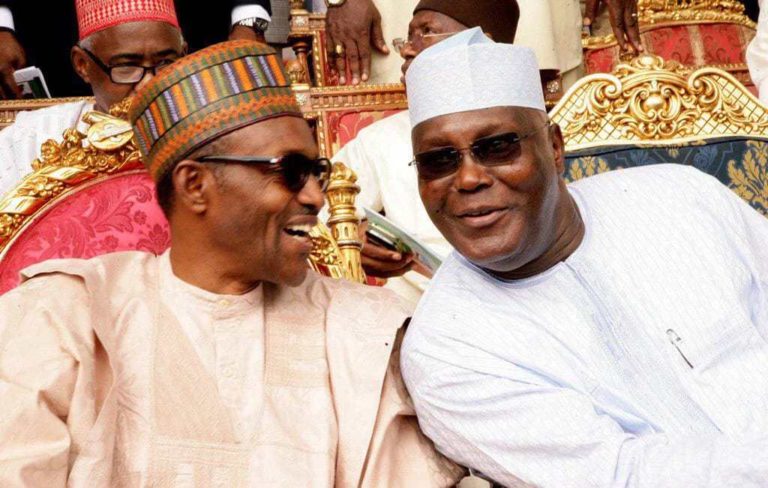
It is within that context that I will situate the campaign documents of the ruling All Progressives Congress (APC) candidate, President Muhammadu Buhari and his opponent in the main opposition Peoples Democratic Party (PDP), Alhaji Atiku Abubakar. I have read both documents and they lack rigour because there is no coherent funding plan that ordinarily should be tax-based unless of course the essence is to deceive. Given a low revenue problem compounded by dependence on oil, it is not enough to promise infrastructure, which we sorely need, the question is how? By borrowing more from China?
Meanwhile, I understand the predicament of the candidates. Atiku, a very wealthy man who owns a Private Jet, claimed in his Independent National Electoral Commission (INEC) form that he earned only N60.2 million in three years and paid the sum of N10.8 million as tax for those three years (between 2015 and 2017), an average of N3.6 million per annum. Another presidential candidate on the platform of the Social Democratic Party (SDP) and former governor of Cross Rivers State, Mr Donald Duke reportedly earned a combined sum of N5,618,419 between 2015 and 2017 and from that he paid a tax of N400,000, which means he paid an annual tax of N133,000. We don’t even know whether President Buhari has ever paid any tax on his legendary 150 cows that neither increases nor decreases with every election cycle for almost two decades now!
More than at any period in our history, the manifesto and other public documents of those who seek power must have realistic funding plans at the heart of which must be taxation. Sadly, the current tax regime in the country makes little sense which explains why less than a thousand Nigerians are paying tax of N10 million per annum, according to Mr Babatunde Fowler, the Federal Inland Revenue Service (FIRS) Chairman. I must commend Fowler for the expertise and tenacity he has brought to the whole tax matter, even when I believe he is relying on a model that cannot work. In a revealing interview in March this year, Fowler gave an example that summarises the problem with taxation in Nigeria, although he couldn’t see it: “If your turnover is N100 million, we assume that you make N20 million profit and we charge that N20 million at 30 per cent, then you pay about N6.6 million in tax.”
How does such an assumption make sense within our environment when people supply their own electricity, erect their own boreholes for water, pay for their own security and sundry social services that government should ordinarily be providing? On top of that, we have built a social security system around the most financially secure person in a household who bears the responsibility of members of the extended family. Should we not factor all these into the plan if we want to bring everybody under the tax net? Can’t we design what suits our own environment rather than copy wholesale what obtains in America? Are we not better off with flat rates as they do in Russia or Hong Kong?
Given the foregoing, the number one issue on the agenda of the candidates should be tax. Not only because we need all the money we can get to fix our infrastructure and pay for essential services but also because we will never be able to successfully tackle corruption and crime or instill any modicum of transparency in the governing process until we bring more income earners into the tax net. Besides, with a tax to GDP of 5.9 percent as against more than 20 percent by South Africa, it means more than 90 percent of Nigerians are outside the tax net. To bring in this people, mostly in the informal sector, we have to review and simplify the tax codes and create incentives for compliance.
One day, I am going to write about my experience with taxation in Nigeria but the lesson I have drawn is that the current regime does not encourage honest citizenship that is committed to meeting civic obligations. To compound the problem, tax has now become a weapon to kill small businesses. I know many people who are on the verge of closing down their businesses because they are better off without them due to these charges and taxes that are disincentives to small scale entrepreneurship in Nigeria. It is almost as if the regulatory environment is designed to stifle business in the country.
For two days last week, Mr. Lanre Gbajabiamila, new Director General of the National Lottery Regulatory Commission (NLRC) shut down the offices and business premises of Nigeria Brewery Plc across the nation despite a restraining court order. At issue is the definition of promos as distinct from lottery but the new NLRC took the laws into his own hands. The action of Gbajabiamila forced the NECA Director General, Mr Olusegun Oshinowo, to express shock “that a public servant will rashly shut down business premises of a multi-billion dollar investment without considering the dire implications on the economy.” These are some of issues you expect in a campaign year but what we hear are empty promises.
It is instructive that when Atiku ran for the PDP presidential ticket against then incumbent President Goodluck Jonathan in 2011, he had pledged that if elected, his medium-term (a four-year period) strategy would be to finance recurrent expenditure with non-oil revenue while every kobo earned from oil revenue is devoted to investment in infrastructure, security, education and health. “We would also encourage all state governments to set an agenda and timeline within which they would no longer depend on oil revenue for recurrent expenditure” Atiku said in a statement that elicited two columns from me when I returned to the country after the election. Right now, where he stands on issue of fuel subsidy in the downstream operations and the full deregulation of the entire sector is a matter of conjecture.
When the news broke early this year that the federal government illegally diverted $1.05 billion (N378 billion at N360 to a dollar) sourced from the Nigerian Liquefied Natural Gas (NLNG) dividend funds to secretly fund subsidy payment, there was a statement from the Atiku Presidential Campaign Organisation that “the subsidy regime as it is currently being administered is inefficient and shrouded in secrecy”. But there is nothing in his current plan about what he would do differently. In fact, the PDP said early this month that Atiku has worked out a pricing template that will immediately crash the pump price of fuel in the country to less than a hundred Naira per litre because “the appropriate pump price of fuel in the Nigerian market, under the current subsidy regimes of the Buhari Presidency, should be within the borders of N87 to N90 per litre as against the N145 currently being charged.”
If that statement is true of Atiku’s intention, then it is safe to conclude he does not even understand the problems in the sector. Buhari of course does not disappoint. We know the position of his government on subsidy on which hundreds of billions of Naira have been wasted and are still being wasted with the Nigerian National Petroleum Corporation (NNPC) acting as though above the law. Last year, the three moribund refineries in Port Harcourt, Warri and Kaduna recorded a loss of N10.79 billion. Meanwhile, in September 2015, the current Minister of State, Petroleum, Mr Ibe Kachikwu, then in his capacity as Group Managing Director (GMD) had said most memorably: “Personally, I will have chosen to sell the refineries, but President Buhari has instructed that they should be fixed.”
What Kachikwu said is what most reasonable people have said for years. Why should we continue to pump billions of Naira into what has become a waste? But Buhari likes subsidy which is why his government is borrowing to finance infrastructure without thinking of how to repay while taking more loans to meet recurrent expenditures. The Kaduna train project on which a loan was taken from China, is being run on subsidy. “We spend N56million per month and we get N16 million; so we are augmenting for both rich and poor—N40 million per month under the directive of the president because he fears that the poor might not be able to afford it’’, said the Transportation Minister, Rotimi Amaechi who does not see the problem in such an arrangement.
There are other questions begging for answers: At a period the Sahara Desert is inching gradually towards the South, what is the position of both Buhari and Atiku on the issues of environment? How would Buhari tackle education beyond refurbishing some primary school classrooms and where will the money come from? How will the new minimum wage be funded by Atiku who has endorsed it?
In all, the campaign documents being celebrated by the supporters of Buhari and Atiku are loudly silent on these and other questions. I know there are many candidates in the presidential race and I intend to look at some of them and what they bring to the table in the coming weeks. But it is safe to predict that the next president will be Buhari or Atiku. That is why it is very important that we scrutinise their policy prescriptions and pay more attention to what they say. Our future may depend on it.
The book of Jonathan
On Tuesday in Abuja, the former president of Nigeria, Dr Goodluck Ebele Jonathan, launched his book, ‘My Transition Hours’. As to be expected, the event attracted the High and Mighty in Nigeria as well as former presidents of Ghana, Benin and Sierra Leone. The book itself is more interesting for what it conceals than for what it says but I guess the essence is for the former president to respond to some of the accusations from those he described as purveyors of ‘fake news’.
However, let me say straightaway that Jonathan’s book vindicated everything that I wrote on the 2015 general election, ‘Against The Run of Play’. Even the recollection of his concession telephone conversation with his successor tallies with mine since all the people I said were with him were the same names he mentioned. Besides, the reasons I gave for his defeat were the same he cited though his perspective is that these issues were manipulated against him.
In all, it is a book worth reading even when it is short on details and does not shake any table. Except perhaps for President Buhari who may not like a recall of his ‘dog and baboon’ statement which preceded the violence that followed the 2011 presidential election as well as the rehash of the speech General Ibrahim Babangida gave on why the military ousted him (Buhari) from power in 1985, I doubt if anybody would find the book offensive. The former president was even gracious to those he believed conspired against him in 2015, perhaps because many of them are now back in the PDP. But there are grand omissions.
It is, for instance, curious that there is not a single mention in the book of Alhaji Adamu Muazu, the PDP National Chairman during the election. The only reference to Prof Attahiru Jega was: “…one of my party’s agents at the INEC National Collation Centre in Abuja, Elder Godsday Orubebe eventually got into a heated argument with the INEC Chairman, Prof Attahiru Jega.” Mrs Diezani Alison-Madueke also got only one mention in the book: “…the Coordinating Minister of the Economy, Dr Ngozi Okonjo-Iweala, the Petroleum Minister, Mrs Diezani Allison-Madueke, the then Governor of the Central Bank of Nigeria, Sanusi Lamido Sanusi (now the Emir of Kano), all spoke on the issue of subsidy.”
There were three references to former President Olusegun Obasanjo and they had to do with his (Jonathan’s) ascension to power. Not even his main traducer, Alhaji Lai Mohammed will feel uneasy with a single mention over his statements during the Chibok girls’ abduction saga nor would Mallam Nasir el-Rufai be disturbed about the rehash of a past Tweet ‘on the metamorphosis and variants of Boko Haram’.
Meanwhile, the current All Progressives Congress (APC) National Chairman, Comrade Adams Oshiomhole, who doesn’t spare the last administration, got a positive mention as Jonathan recalls the former Edo State Governor as “the only opposition governor who stood by what we agreed. He told his colleagues that it was not fair to turn against the president when they even wanted the deregulation to have started months earlier.”
I suppose the main idea behind the book was for Jonathan to offer a defence on sundry issues: allegation of corruption which the opposition used (and are still using) to define his era; the management of Boko Haram insurgency and the Chibok girls affair which he believed (and still believes) was ‘psychologically programmed’ to bring down his government; the January 2012 fuel subsidy removal saga that became another weapon in the hands of his opponents; the conspiracy by some northern politicians against his administration essentially based on religion and the fact that he comes from the minority group as well as President Barack Obama’s ‘decision’ to effect a regime change in Nigeria.
While readers will make their own judgement on whether the book answers their questions, what I find most profound in it is the prologue and that is the message that should resonate, especially in times like this. I leave readers with excerpts: “There is nothing wrong in seeking power. I have learnt from political ascendancy in the sixteen years that I served from Deputy Governor to President that power is a shield, for those who wield it and for the people it serves. I understand that power will protect you and enable you protect your charges. It will provide a shade from the blistering heat of the sun. When it is raining you can use it as an umbrella to protect yourself and the people you are meant to serve. And when you come to a river, you can convert it to a vessel that will help you and those who you lead to cross.
“I learnt from history and personal experience that if you use power as a sword, instead of as a shield, it will begin to drain the life out of you and cause untold hardship on those you serve. Too often, many people who see power from the side-lines erroneously believe that the man who uses power as a sword is the strong man. But this is not true. Real power is strength under control… I believe that any leader who insists on exercising most of the powers assigned to him in the constitution will end up being a nuisance to the society and a problem to himself.”
Truer words were never spoken!
And now talking about books, let me remind readers that ‘FROM FRYING PAN TO FIRE: How African migrants risk everything in their futile search for a better life in Europe’ will be publicly presented in Abuja this morning at the Shehu Musa Yar’Adua Centre. Time is 11 Am.
You can follow Segun Adeniyi on his Twitter handle, @Olusegunverdict and on www.olusegunadeniyi.com
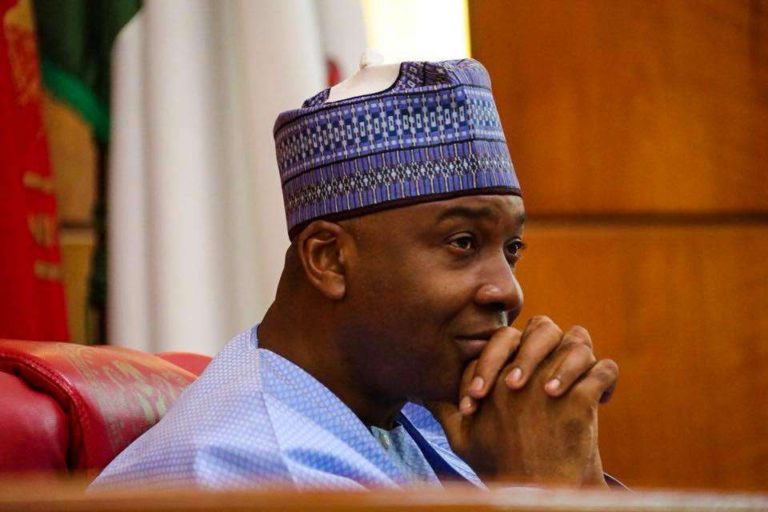
SENATE President, Bukola Saraki, has demanded a public inquiry into the death of Michael Adikwu, the suspected mastermind of the robbery incident which took place in Offa, Kwara State, in April this year.
The Kwara State Commissioner of Justice,Kamaldeen Ajibade, had told the court, during the arraignment of five suspects that took part in the robbery, that Adikwu died in police custody. The revelation came after the police had consistently said that the suspect is alive and was merely transferred to a different detention facility.
Recall that the Offa robbery suspects had named Saraki and the Kwara State Governor, Abdulfatah Ahmed, as their benefactors. In fact, one of the cars that were used for the robbery was said to have been given to one of the suspects as a gift by the governor.
The police also alleged that some of the armed robbers were part of Saraki’s entourage when he visited the traditional ruler of Offa community a day after the robbery incident to commiserate with him on the loss of some residents of the community who died during the robbery incident
In a statement issued on his behalf by his media aide Yusuf Olaniyonu, Saraki noted that the reported death of the prime suspect in the robbery incident, smarks of an attempt to cover up the real perpetrators of the crime.
Saraki pointed out that the police have been inconsistent in the various reports and statements it has issued with respect to the whereabouts of Adikwu who, himself, was a dismissed operative of the Special Anti-Robbery Squad (SARS) of the Nigerian police.
The statement read in part: “It should be recalled that when we mentioned it that the principal suspect had been murdered and that investigation into the Offa robbery attack was politically motivated and targeted at implicating me and other individuals, the police public relations officer, Moshood Jimoh said: ‘Michael Adikwu is in police custody’.
“The fresh facts have now thrown more light into why there had been inconsistencies in the various statements by the police. The police initially told the attorney-general of Kwara state that the principal suspect was alive and they only later reluctantly disclosed that he died in the course of arrest.
“How can a suspect confirmed to be in custody now be said to have died in the course of arrest? This contradiction shows a deliberate attempt to cover up something.
“It is obvious that the police have orchestrated the information they give to the public on the Offa robbery only to tarnish the image of the Kwara state governor and myself.
“We are calling for a public inquiry to probe the issues of extra-judicial killing, the cover-up of this killing with the aim of framing up some individuals for political purpose and politicising of criminal investigations. The facts need to be laid bare.”
Saraki said that the inquiry would provide answers to the many puzzles surrounding the Offa robbery incident and the people behind it, as well as “define the terms of handling of suspects in police custody and how to prevent extra-judicial killing of suspects”.
The ICIR reporter visited drug stores in major towns within Abuja namely Gwarimpa, Kubwa, Kuje, Apo, Wuse, and Area One in four days, purchasing malaria drugs banned by the Federal government to find out if the restriction placed on the sale of these drugs has been effective or not.
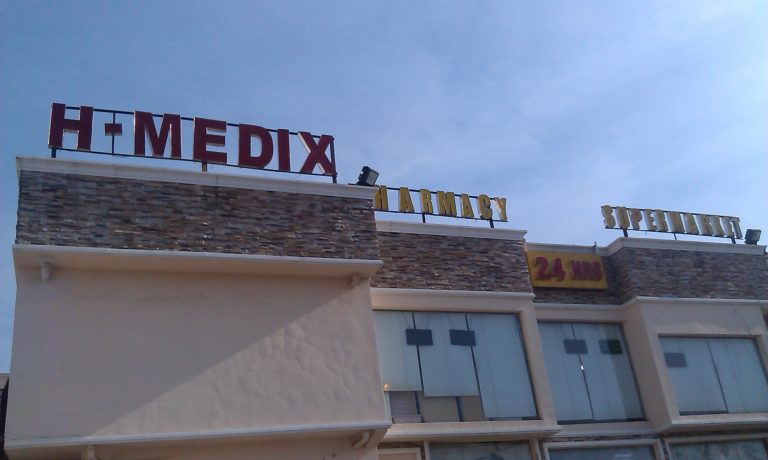
ALONG Ademola Adetokunbo Cresent, a densely packed industrial street in Wuse II, Abuja is H – Medix Pharmacy and Supermarket, a notable pharmacy in this district. The one storey plaza serves not only as a pharmacy but also as a thriving grocery store.
The ICIR reporter joined the queue of customers waiting to buy drugs and asked for chloroquine.
“For an adult or for children?” the attendant asked.
“For adults,” I replied.
She brought out a pack of the medicine containing five tablets of chloroquine with 2, 2, 1 dosage written on the pack.
“You take two after your next meal, then another two and the remaining one,” she said.
I paid N650 in cash and left the building.
Section 17 (1) of the Nigerian Food and Drugs Act stipulates a fine not exceeding ₦500, 000 or a jail term of not less than five years and not more than fifteen years for the sale, manufacture, and importation of prohibited drugs.
Despite the law to discourage the circulation of these prohibited drugs, they could be purchased easily from drug vendors and pharmacies in the locations visited by the ICIR reporter.
In 2017, the News Agency of Nigeria (NAN) reported that the Nigerian Senate had mandated the health committee to launch an investigation into the circulation and sale of 42 anti-malaria drugs banned by the European Union (EU) in the country. This development was sparked by the continued sale of chloro-quine and artemisinin drugs as a mono-therapy in the treatment of malaria in the country. But pharmacy stores continue to sell these drugs without qualm as The ICIR investigation has revealed.
Prohibited Drug Sale in Nigeria’s Largest Housing Estate
At Sycamore Pharmacy & Sundries in Gwarimpa, the lady in a brown long sleeve gown inquired from the customer what he needed.
“I think I am feeling very feverish,” I said.
“Well, it could be malaria,” the attendant replied without hesitation.
She recommended chloro-quine among other anti-malaria drugs which she said was very effective in combating malaria attacks. I also requested for dipyrone, nimulide, and sibutramine which had been banned by NAFDAC but she appeared unfamiliar with the brand names.
“We don’t have those drugs currently but we might get them soon,” she said, oblivious of the government ban on the sale of such drugs. She instead advised that chloro-quine, when combined with paracetamol brings a quicker result.
“You have to take paracetamol with the chloro-quine because it works fast when you take them together,” she said.
I paid ₦700 and collected the drugs from the shop but I was not given instructions on how to take the medication and no receipt was issued.
It was a similar case in Pharmacare Place located at Games Village estate. The cashier in the supermarket also served as the attendant in the pharmacy.
“What can I do for you, sir,” she asked.
“I want to buy chloro-quine,” I replied.
She found a chloro-quine pack from the shelf, and handed it to me and led me to the cashier’s seat where I paid ₦550 and got a receipt for the payment. On the chloro-quine pack was NAFDAC registration number that certifies the originality of the medicine.
The receipt obtained for the purchase of Chloro-quine
At Pharmacare Place in Games Village Estate, Abuja.
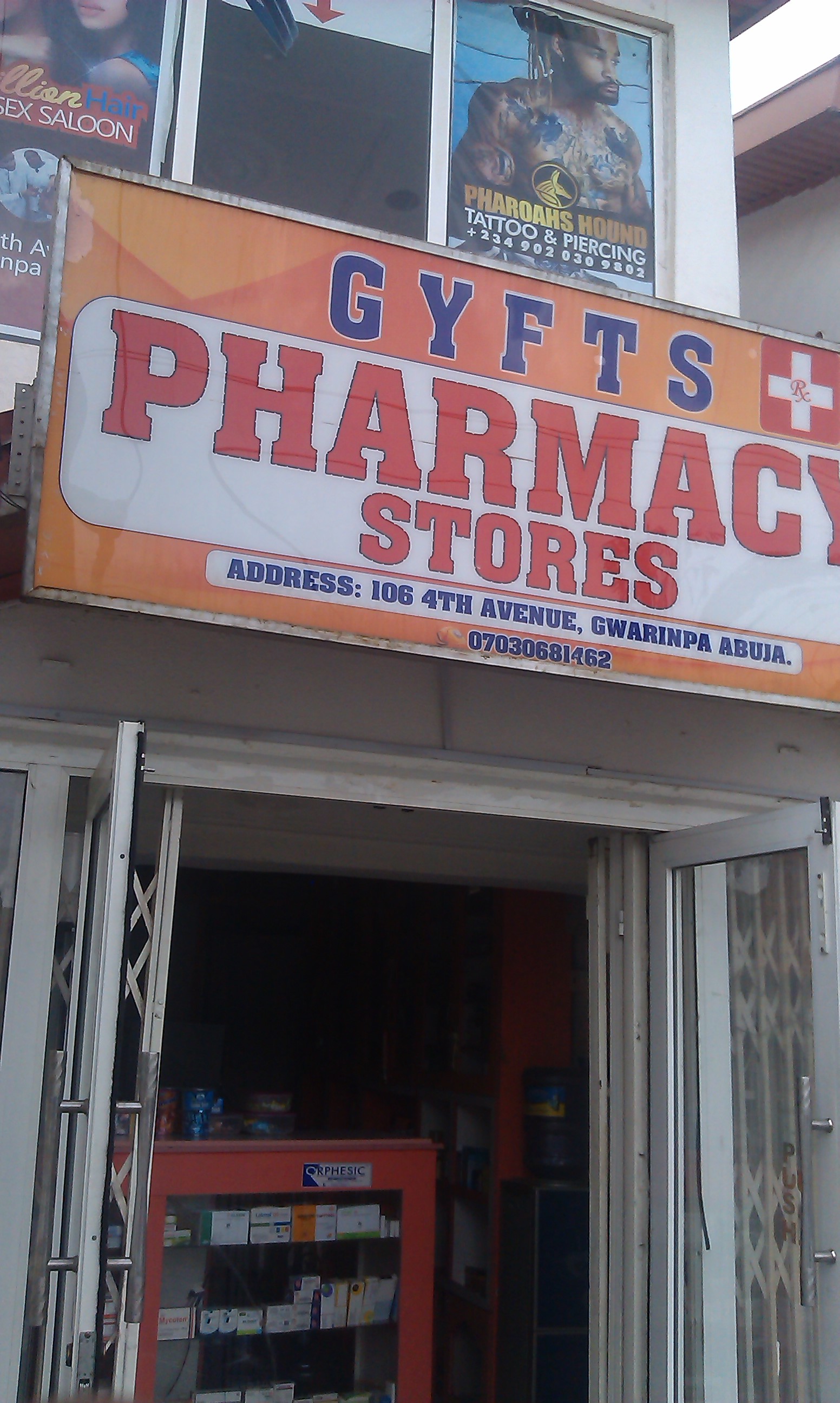
Other drugstores visited where chloroquine and other prohibited anti-malarial drugs are sold include: Life Care Patent Medicine Store, Juka Pharmacy, Alive Pharmacy all in Kuje; Sterling Pharmacy, Afarmar Pharmacy located in Area one, GYFTS Pharmacy Stores in Gwarimpa and Fadajoy Pharmacy in Kubwa. All the chloroquine drugs purchased from these drugstores bear NAFDAC numbers.
At GYFTS Pharmacy stores, Gwarimpa the reporter was able to buy the banned chloroquine.
Why the ban was put in place
The Federal Government in 2005 banned the use of Chloroquine and Sulfadoxine – Pyrimethamine as first-line drugs in the treatment of malaria because of the increasing evidence of drug resistance, which had led to treatment failures.
This led to the removal of chloroquine as a first-line treatment for malaria in the Nigerian National Antimalarial Treatment Policy 2005.
This decision was in response to the sanctions placed on chloroquine by the World Health Organisation WHO in 2002, the global health body recommended that oral artemisinin-based monotherapies (chloroquine inclusive) be withdrawn from circulation after carrying its Therapeutic Efficacy Testing which revealed that the drug had an efficacy of 35 per cent against the standard 95 per cent in fighting malaria.
A WHO document updated in 2015 lists Nigeria as one of the countries that have taken regulatory measures to withdraw the marketing authorisation of oral artemisinin-based monotherapies (Chloroquine inclusive) but chloroquine tablets and capsules are still widely sold in Nigeria, with many manufactured as recently as 2018, and bearing authentic NAFDAC registration numbers.
How self-medication fuels the sale of banned anti-malaria drugs
In a 2015 National Guidelines for Diagnosis and Treatment of Malaria report released by the Federal Ministry of Health states that Artemisinin-based Combination Treatments (ACTs) adopted by Nigeria for the treatment of uncomplicated malaria still remains the best available antimalarial medicines globally and are very effective in fighting resistant strains of the malaria parasite. P.falciparum, the most prevalent malaria parasite on the African continent, is responsible for most malaria-related deaths globally.
Last year, the Minister of Health, Prof. Isaac Adewole, reminded Nigerians that chloroquine and artemisinin monotherapy used in the treatment of malaria remain banned.
This development does not resonate with a majority of the Nigerian populace who self-prescribe and request for these prohibited drugs over the counter from drug vendors.
Thirty-five year old, Gloria Eze (not real name), a mother of one and a businesswoman is one of the many Nigerians who take to self-medication when ill. Uche, who lives in Apo, an Abuja suburb, says the most effective drug for malaria is chloroquine which she has consistently used for several years.
“Any time I sense the symptoms of malaria I take chloroquine which works for me. I don’t think it is true that chloroquine is not effective against malaria, I’ve used it countless times and it works every time. Many people complain about its side effects mainly itching of the body but I’ve never experienced it,” she said.
For Benjamin Idoko, a banker, self-prescription is just a way to reduce the time and cost of going to the hospital.
He said he recognises the symptom of malaria and knows how to treat himself. “Often if I am not relieved after a few days, I usually go for a proper check-up in the hospital. Most people patronize medicine vendors to reduce the costs of going to the hospital,” he said.
Cost is not the only reason why some people do self-medication. There are several others who abuse the drug, and only buy without a doctor’s prescription.
The Chairman, Pharmaceutical Society of Nigeria, FCT chapter, Jelili Kilani said self-medication is on the increase, therefore leading to higher incidents of addiction.
“There is an increase in the number of people using drugs irresponsibly without realizing the dangers that could occur after using these drugs for a long time. Someone feels a headache and takes an analgesic maybe paracetamol and whenever the person feels that symptom he immediately takes paracetamol continuously increasing the quantity without regards for a proper medical checkup then abuse may set in,” he said.
When asked why many drugs banned by the Federal Government can still be found on the shelves of reputable pharmacies and patent medicine stores, Kilani responded that the demand for these drugs influences the manufacture and sale of these drugs.
“The manufacturers and vendors of these drugs are trying to satisfy available consumers. They might know that these drugs are ineffective and the risks of adverse drug reactions are high but will be unable to psychologically do without these drugs when they experience familiar symptoms,” he concluded.
The reporter placed a call to the call center of H – Medix Pharmacy to find out why they still continue the sale of chloroquine and other anti-malarial drugs banned by the Federal Government.
The sales representative was not aware chloroquine was no longer recommended for consumption.
“I am not aware that chloroquine and the other drugs you mentioned had been banned but I will inquire and we will do something about it,” he said.
Unfortunately, one week after, the reporter was still able to purchase the banned drugs from the pharmacy.
Placing a call to NAFDAC Pharmacovigilance Center
NAFDAC’S spokesperson, Abubakar Jimoh said he was in a meeting when the ICIR called, and he did not respond to text messages sent to him either.
The ICIR also reached another staff of NAFDAC who identified herself as Afouma. After the reporter informed the woman about chloroquine he bought from a pharmacy to the lady, she said:
“Well, you will have to visit any NAFDAC office close to you with the drug to know if it is original or not. We conduct daily raids on chemists and pharmacies to make sure fake drugs are removed from these shops,” she said.
Her response gave less hope than expected from an officer empowered to protect Nigerians from those who profit from selling prohibited drugs.
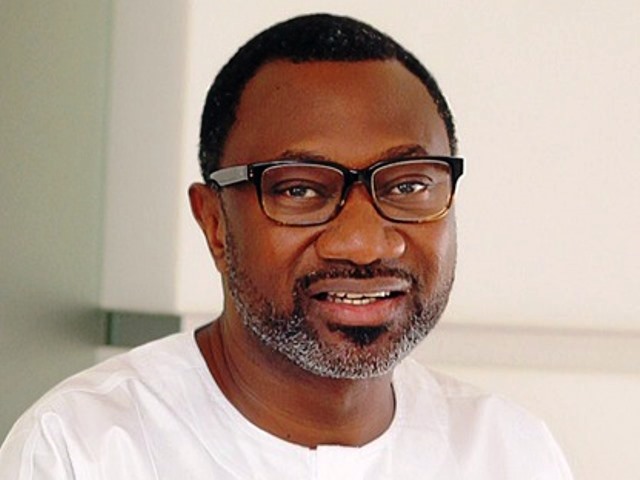
FEMI Otedola, the founder of Zenon Oil, has denied the claim that he offered to bribe former House of Representatives’ member, Farouk Lawan, when the latter chaired a legislative committee that probed alleged fuel subsidy scam.
Otedola said this while testifying before the Federal Capital Territory High Court on Wednesday in the bribery case brought against Lawan by the Federal Government.
Lawan was caught on camera stuffing dollar bills into his flowing dress and some into his cap, money he accepted as bribe from Otedola in order to remove his company from the list of those being probed for subsidy scam
At the hearing on Wednesday, Otedola said he could not have offered to influence the lawmakers as he was certain his company was never part of the companies that received subsidy grants from the Federal Government at the time.
Lawan had actually demanded $3 million which he said would be used to settle the other lawmakers. However, after receiving the initial $500,000, Lawan removed Zenon Oil from the list of companies being probed.
Femi Otedola
“I could not have put pressure on him because Zenon Oil was not involved in the theft of the subsidy fund,” Otedola told the court.
“He did demand. And if he did not demand, why will he collect and expect a balance of $2.5 million? He mentioned to me that the $3 million will be shared by himself and some other members of the House.
“Moreover, the company in question was not involved in the importation of petroleum motor spirit (PMS) and as such never applied to withdraw from the petroleum fund.”
“I did not offer any $3 million, because I was one of the biggest players in the business. And I reported the matter initially when I found out about the scam. And he (Lawan) mentioned to me that several companies that were involved in the scam were paying. And I reported to the SSS.”
The case was adjourned 28, 2019, for the witness to be cross-examined.
Lawan was first arraigned before Justice Adebukola Banjoko of the FCT High Court in February 2013 alongside another accused person, Boniface Emenalo, for allegedly receiving a total of $620,000 from Otedola.
Justice Banjoko later pulled out of the case after he was accused of bias by the defence.
The charge was later amended to reflect that the actual amount Lawan received was $500,000, not $620,000, and as such, Lawan was re-arraigned in December.
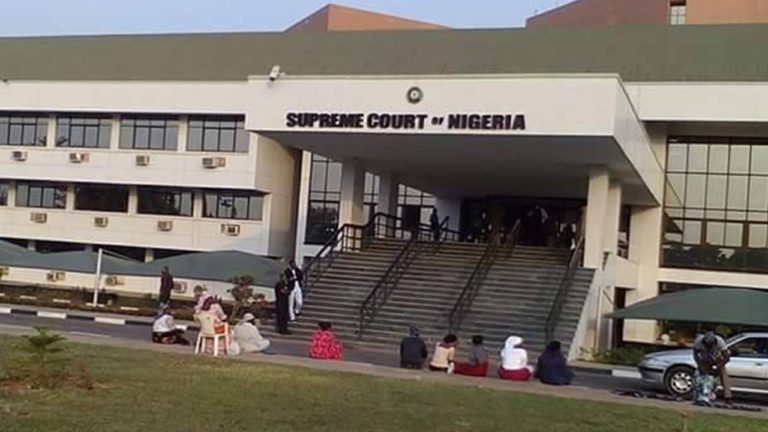
PRESIDENT Muhammadu Buhari has appointed Musa Abaji as a Justice of the Supreme Court of Nigeria, as confirmed in a letter he sent to the Senate on Tuesday.
Bukola Saraki, the Senate President, read out the letter to members of the house in a plenary session. The President had written that the appointment was made in accordance with the advice of the National Judicial Council.
“In line with 1999 constitution upon the advice of the National Judicial Council, I hereby refer for confirmation of the appointment of Justice Musa Abaji as the Justice of the Supreme Court of Nigeria.
“While hoping that this is expeditiously considered by the Senate, accept the assurances of my highest regard,” the letter read.
In a second letter, the president declined to assent to the Institute of Chartered Biochemist and Molecular Biology of Nigeria Bill 2018. He stated as his reason that, if passed, the bill will infringe on the mandate of the National University Commission and the National Board for Technology Education.
He also pointed out drafting issues on the bill.
“Pursuant of section 68(4) of the constitution, I hereby convey to the senate the decision on the 5th November 2018 to decline presidential assent to the Institute of Chartered Biochemist and Molecular Biology of Nigeria bill 2018 recently passed by the National Assembly for the following reasons;
“A. The provisions of section 13(3) to give the chartered biochemist and molecular biology power to approve the academic program and even close down programs in tertiary institutions will infringe on our mandate of the National University Commission and the National Board for Technology Education.
“B. There are certain drafting and administrative issues in the bill, including the failure in section 13(8), 14 and 22(2) to designate a chairman for both the practice and publicity committee and or specific process for how a chairman should emerge for either of the education, practice and publicity committees.
“This can lead to confusion in the administration of the council,” the president wrote.
THE Abuja Federal High Court has dismissed the no-case submission filed by Raymond Dokpesi, founder and emeritus Chairman of DAAR Communications Plc, in the ongoing corruption trial against him.
The Economic and Financial Crimes Commission (EFCC) made this known via it’s Twitter handle on Wednesday.
“Justice John Tsoho of a Federal High Court Abuja rules that Chief Raymond Dokpesi, founder of DAAR Communications Plc, has a case to answer in the alleged N2.1bn fraud case brought against him by the EFCC,” the tweet reads.
Dokpesi is alleged to have received the N2.1 billion naira from the office of the National Security Adviser in 2015, then headed by Sambo Dasuki, who is currently in the custody of the Department of the State Services (DSS).
The EFCC said the money was part of the $2.1 billion meant for the purchase of arms for the Nigerian Armed Forces but which was diverted during the run-up to the 2015 general election, adding that Dokpesi ought to have known that the monies he received from Sambo were proceeds of a corrupt activity.
The Commission had closed its case against Dokpesiin May this year, after calling a total of 14 witnesses and tendering several exhibits, but the accused person, through his counsel, Kanu Agabi, filed a no-case submission, saying that the witnesses and exhibits presented by the prosecution were not enough to establish a prima facie evidence against him.
But at the resumption of trial on Wednesday, Justice John Tsoho ruled that a prima facie evidence has been established and that Dokpesi has a case to answer.
One of the prosecution witnesses had told the court that monies were wired directly from the account of the NSA domiciled in the Central Bank of Nigeria (CBN) to accounts belonging to DAAR Communications in several instalments of N500 million, N620 million, N113million, among others.
Of those amounts, N68 million was used to construct Dokpesi’s house in his hometown, Agenebode, Edo State.
The case was adjourned to February 20 and 21, 2019, for Dokpesi to open his defence.
IN an attempt to draw attention to the achievements of the federal government in diversifying the nation’s economy, Vice President Yemi Osinbajo has reeled out figures about the Anchor Borrowers Programme (ABP) which conflict with all other available sources, The ICIR discovers.
One of the most celebrated achievements of the federal government under the leadership of President Muhammadu Buhari are those related to agriculture. The president made sure to emphasise them during his meeting, in April, with British Prime Minister Theresa May. He said it during his Democracy Day speech in May, and has mentioned it on several other occasions.
He has, in fact, accused Nigerian news organisations of under-reporting these achievements, especially as they relate to the local production of rice and the significant drop in imports.
Occupying the centre stage in this narrative is the Anchor Borrowers Programme, to which the bulk of the successes recorded has been attributed. However, as with a number of other top projects executed by the federal government, the ABP has been soiled by secrecy and a lack of transparency — especially in the population and identities of beneficiaries.
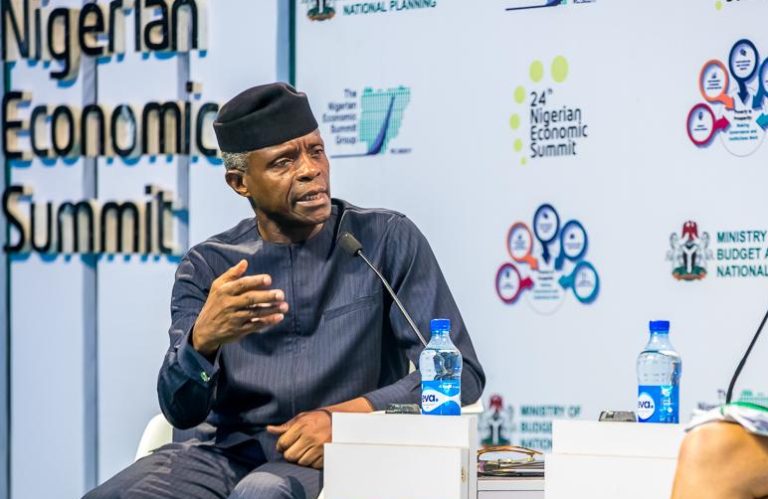
Speaking at the 24th Nigerian Economic Summit on October 22, Osinbajo appeared to have exaggerated statistics concerning the ABP, which is coordinated by the Central Bank of Nigeria’s Development Finance Department (DFD).
“Through the Anchor Borrowers’ Programme,” he said, “credit is given directly to smallholder farmers, and the Anchor Borrowers programme is our agricultural programme for financing smallholder farms.
“And the CBN and 13 participating banks have so far had given credit totalling to N120.6 billion, and this has been given to 720,000 smallholder farmers, who [are] cultivating 12 commodities so far including; Rice, wheat, cotton, Soya beans, Cassava, poultry and groundnut across the 36 States and FCT.”
The Vice President’s figures, however, cannot be traced to any other source, even as they conflict with those which have been provided by the Buhari Media Organisation (BMO) and corroborated in the administration’s scorecard.
According to the BMO, self-described as “a not-for-profit organisation that seeks to amplify the good work … of the Pres. Buhari administration”, the Anchor Borrowers Programme has made available “N82 billion in funding to 350,000 farmers of rice, wheat, maize, cotton, cassava, poultry, soy beans and groundnut; who have cultivated about 400,000 hectares of land”.
The same figures are contained and elaborated in the recently unveiled scorecard and manifesto of President Buhari tagged ‘The Next Level’. About 80 per cent of the N82 billion funding has gone into rice production, the document states, “further driving the nation’s target of attaining self-sufficiency in rice production”.
Lauretta Onochie, Buhari’s social media aide made a similar claim in October when she highlighted sixty-four (64) achievements of the federal government, in reaction to allegations of non-performance.
Likewise, Anne Ihugba, the Head of Corporate Communications at the Nigeria Incentive-Based Risk Sharing System for Agricultural Lending (NIRSAL) has said, through the agency which supervises mapping of farmers and disbursement, the ABP is creating over 250,000 direct jobs for farmers and up to 1.25m indirect jobs.
According to reports, NIRSAL’s entire database of farmers nationwide, from where beneficiaries of the borrowers’ program are drawn, has captured details of only over 400,000. This, as well, is a far cry from Osinbajo’s claim that 720,000 smallholder farmers have benefited from the programme.
Blemished by secrecy, shortcomings
The Anchor Borrowers Programme was established by the CBN in fulfilment of its developmental functions. President Buhari launched it in November 2015, with the objective of creating “economic linkage between smallholder farmers and reputable large-scale processors with a view to increasing agricultural output and significantly improving capacity utilization of processors.”
Funding for the project is sourced mainly from the N220 billion Micro, Small and Medium Enterprises Development Fund (MSMEDF) of the CBN, which was launched earlier in 2013.
Despite various calls, details of the claimed beneficiaries of the programme have not been made available by the CBN for independent verification, thus raising doubts about the fund’s credibility.
Investigations have revealed that various other shortcomings are hampering the project’s implementation such as the distribution of expired seedlings, late distribution of fertilisers, delay in fund disbursement, non-compliance from financial institutions, diversion of money into private and unqualified hands, as well as grossly inadequate coverage in various states.
Meanwhile, NIRSAL confirmed in a phone conversation with The ICIR that it is the only body in charge of disbursing funds to farmers under the scheme. An e-mail further sent, upon request, to the Head of Corporate Communications requesting for the latest figure of how many farmers have benefitted so far under the social welfare credit programme, has however not been attended to following an acknowledgement on October 25.
A call placed to CBN’s helpline for the Commercial Agricultural Credit Scheme for the purpose of seeking similar clarifications was however not answered.
THE Attorney-General of Kwara State, Kamaldeen Ajibade, has told the Ilorin High Court that Michael Adikwu, the prime suspect in the Offa robbery attack that occurred in April this year, died while in police custody, but many Nigerians believe he was murdered.
Ajibade said this on Wednesday when five of the robbery suspects were arraigned before Justice Halimat Salman on charges bordering on armed robbery and culpable homicide.
Adikwu, a former policeman who worked with the force’s Special Anti-Robbery Squad (SARS) was said to have killed about 22 persons during the robbery attack. According to Jimoh Moshood, the spokesman of the Police, Adikwu was dismissed from the force for allegedly helping a criminal suspect to escape from custody. He was later charged to court and was sent to jail in 2013, and upon his release in 2015, he became an armed robber.
He was later arrestedalongside many of his gang members, but people began to raise eyebrows when the police paraded the suspects in May, and Adikwu was not among them.
The suspects claimed that they were being sponsored by the Senate President, Bukola Saraki, and the Governor of Kwara State, Abdulfatah Ahmed, and had been used by both leaders to disrupt elections in the past. Both Saraki and Ahmed denied the allegations.
Also when Nigerians, including Saraki, started to ask questions regarding the whereabouts of the prime suspect of the robbery attack, especially following rumours that he was shot dead in the presence of the other suspects in order to coerce them to confess, Moshood insisted that he was alive and was still in custody.
“Michael Adikwu is in police custody. You know he is the one that led the killing of 22 people. He is helping the police in investigation… There is a state in the south-west where they kept him… ; that is where he is. I can’t mention the state. He is in one of the south-west states,” Moshood said at the time.
Moshood had also accused the Kwara State government of foot-dragging in prosecuting the Offa robbery suspects, saying that the police had concluded its investigations and handed the case files to the State’s Attorney-General.
The police spokesman had said that more than 20 “principal suspects” were arrested in connection to the robbery incident, but only five persons were arraigned in court on Wednesday, namely: Ayoade Akinibosun, Ademola Abraham, Ibikunle Ogunleye, Niyi Ogundiran, and Salahu Azeez.
The suspects, however, could not take their pleas as the prosecution team, led by the Kwara Attorney-General, Ajibade, asked for an adjournment to enable it to amend the charges as a result of the death of Adikwu.
The trial judge granted the request and adjourned the case to November 30 for the suspects to enter their pleas.
When the ICIR contacted Jimoh Moshood on Wednesday, he said he had no idea where the reporter got his information from. When he was told that the information was given in court by the Kwara State Attorney-General, Moshood said could not comment on a matter that is already before the court.
Twitter reacts
However, many Nigerians who reacted to the development on the social media believe that Adikwu was either murdered by the police, perhaps to cover the real sponsors of the gang, or he had died as a result of torture at the hands of the security operatives.
“(In) June 2018, I accused the Nigerian Police of murdering the mastermind of Offa Robbery and now it has been confirmed in court that armourer and mastermind, Michael Adikwu “died” in police custody,” tweetedAbdul Mahmud whose Twitter handle read ‘The Great Oracle’.
Another Twitter user wrote: “We’ve been waiting to hear a contradictory story, but it’s finally out that he died in custody, how did he die? we all know he was killed, simply because they want to nail it on someone! The Nigerian Police and their wayo ways.”
A Twitter handle with the username ‘A Concerned Nigerian’ wrote, “The Nigerian Police carries out extrajudicial killings EVERYDAY. Each day there is one suspect gunned down or tortured to death by the evil and unrepentant police officers. My elder brother, a few years ago, died in police custody before we could secure his bail. He was tortured by officers.”