THE Nigerian Medical Association (NMA), Abuja chapter, has expressed concern over Nigeria’s low rating in the global community and on the poor implementation of the Universal Health Coverage (UHC).
Ekpe Philip Uche, the Chairman of the chapter, said this on Monday at a press conference to mark NMA-Abuja’s physician week with the theme, “Universal Health Coverage: Leaving No One Behind”.
Uche said that the Sustainable Development Goals (SDGs) three and eight on UHC envisioned that by 2030, everybody could access health services they desire.
He added that the goal is to make quality health sufficient, effective and accessible with no financial constraints.
Uche said that the National Health Insurance Scheme (NHIS) still covers less than seven per cent of Nigerians till date.
“The NMA has thought it wise to bring to the attention of all, including the government of the day, partners and the public, the need for a multi-sectoral approach,” the chairman said.
This, he said, would be geared towards the institution of a political will for both investment and alternative funding to drive health reforms.
According to him, it is no news that government efforts to achieve universal health for Nigeria is below expectation, especially when compared with many other countries.
Phillip said that the major job for the NHIS was to provide basic health to Nigerians without impoverishing them irrespective of their socio-economic status.
He said while the formal sector had made significant progress, the informal sector which comprises over 80 per cent of the country’s population is not yet covered.
The UHC is included in the World Health Organisation constitution of 1948 which declares health as a fundamental human right.
According to the WHO, UHC means that all people and communities receive promotive, preventive, curative, rehabilitative and palliative health services they need without suffering financial hardship.
The United Nations member states, which include Nigeria have agreed to achieve the universal health coverage (UHC) by 2030 as part of the SDGs.
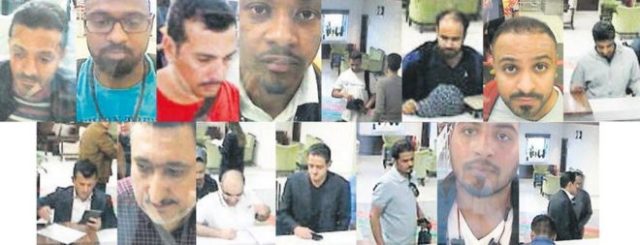
Turkish media have named 15 Saudi nationals whom Turkish officials suspect were involved in the disappearance of Jamal Khashoggi, a prominent Saudi journalist critical of the government who was last seen entering the Saudi consulate in the city of Istanbul on 2 October. The BBC reports.
Turkish officials believe the men are Saudi officials and intelligence officers, an allegation that appears to be supported by open source information that is freely available.
Saudi authorities deny any involvement in Khashoggi’s disappearance. They insist he left the consulate soon after getting the paperwork. Here are the men suspected to have murdered Khashoggi:
In 2014 the London-based Arabic newspaper Asharq al-Awsat said Dr Tubaigy was a lieutenant colonel working for the forensic science department of the interior ministry’s General Directorate of Public Security.
A man identified as the doctor can be heard recommending that other people join him in listening to music on headphones while he cuts up Mr Khashoggi’s body, according to the officials.
In an interview, accompanied by a photograph of him wearing a uniform, the doctor discussed a mobile laboratory that he had designed to allow pathologists to perform post-mortems in only seven minutes in order to quickly determine the cause of death of Muslims performing the Hajj pilgrimage.
Dr Tubaigy stayed at a Mövenpick Hotel Istanbul, 0.5km (0.3 miles) west of the Saudi consulate, and departed Istanbul airport on HZSK2 at 22:54 on 2 October. The jet returned to Riyadh via Dubai, landing late on 3 October.
A surveillance source confirmed to the BBC his identity as “an intelligence security operative”, having met him in 2011 and trained him in how to use offensive spyware technology on behalf of the Saudi state.
The spyware trainers nicknamed Mr Mutreb “dark face”, the source said, “because he looked always grumpy… he was very silent.
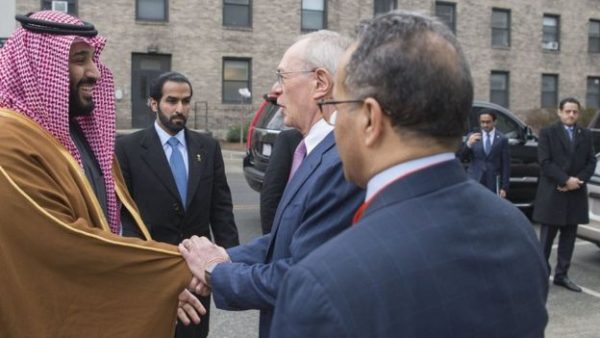
Photographs also show that he has travelled abroad with Saudi Crown Prince Mohammed bin Salman on at least three occasions since March 2018, suggesting he may have had a security role.
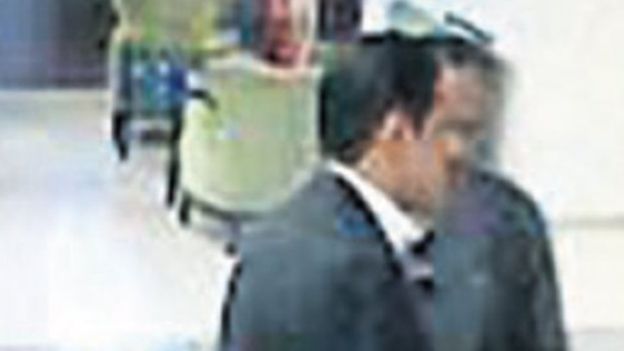
The Turkish pro-government newspaper Sabah also published pictures from CCTV footage that appeared to show Mr Mutreb entering the Saudi consulate in Istanbul at 09:55 on 2 October, just over three hours before the journalist arrived, and at the nearby consul-general’s residence at 16:53.
Turkish media said Mr Mutreb arrived in Istanbul on the private jet HZSK2 along with Dr Tubaigy, and also stayed at the Mövenpick hotel.
He flew out of Istanbul on another private jet owned by Sky Prime Aviation with the tail number HZSK1, at 18:40 on 2 October, according to Turkish media.
Abdulaziz Mohammed M Alhawsawi, 31
Photo credit: AFP
The New York Times cited a French “professional” who had worked with the Saudi royal family and identifying him as a member of the security team that travels with Crown Prince Mohammed bin Salman.
Someone with the same name is also listed on MenoM3ay as a member of the Saudi Royal Guard Regiment.
Mr Alhawsawi flew to Istanbul on a commercial flight, going through passport control at 01:43 on 2 October.
He stayed at the Wyndham Grand Istanbul Levant hotel, about 1km (0.6 miles) south of the Saudi consulate, and left Istanbul on HZSK2 with Dr Tubaigy.
A guard wearing a badge with that name also appears to have been photographed and filmed standing next to Crown Prince Mohammed bin Salman at an event in 2017, according to the activist Iyad el-Baghdadi.
Turkish media said Mr Alzahrani arrived in Istanbul on a commercial flight, and that he stayed at the Wyndham Grand and flew out on the private jet HZSK2.
He flew to Istanbul on a commercial flight and stayed at the Wyndham Grand. He went through passport control at Istanbul airport at 20:28 before departing.
Naif Hassan S Alarifi, 32
Photo credit: AFP
A Facebook account of a man with that name included photographs of someone in uniform bearing Saudi special forces insignia, according to Qutaibi Idlbi, a Saudi-born Syrian entrepreneur based in Washington who said he was an acquaintance of Mr Khashoggi
Mr Alarifi is also listed on MenoM3ay as an employee of the crown prince’s office.
He arrived in Istanbul on a commercial flight and went through passport control at 16:12. He stayed at the Wyndham Grand and departed on the private jet HZSK2.
Mr. Almadani arrived on HZSK2 and stayed at the Mövenpick. He went through passport control at Istanbul airport at 00:18 on 3 October before leaving on a commercial flight.
Mr. Albostani went through passport control at Istanbul airport at 01:45 on 2 October and stayed at the Wyndham Grand. He departed on the private jet HZSK2.
Mr Alotaibi flew into Istanbul on HZSK2 and stayed at the Mövenpick. He flew out on HZSK1.
Saif Saad Q Alqahtani, 45
Photo credit: AFP
A man with his name is identified on MenoM3ay as working in the service of Crown Prince Mohammed bin Salman, according to the Washington Post. Mr Alqahtani arrived in Istanbul on the private jet HZSK2 and stayed at the Mövenpick. He went through passport control at Istanbul airport at 00:20 on 3 October before leaving on a commercial flight.
Turki Muserref M Alsehri, 36
Photo credit: AFP
He arrived on HZSK2 and stayed at the Mövenpick. He left on HZSK1.
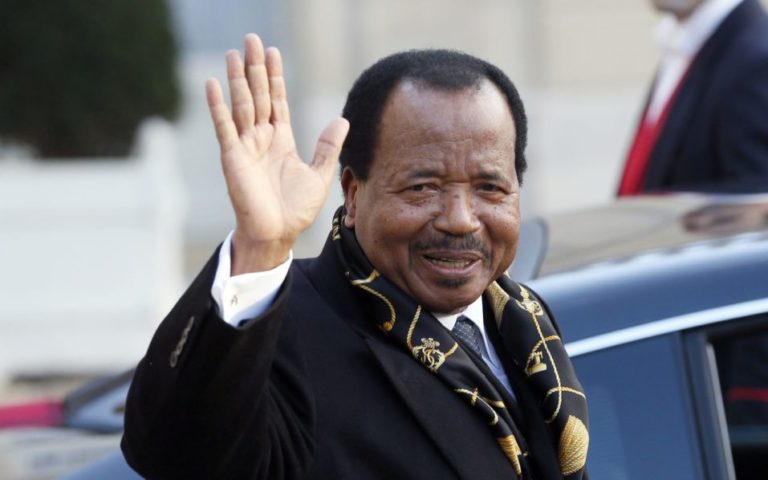
Cameroon’s President Paul Biya, Africa’s oldest leader, has won the election by a landslide to rule for another seven years, according to the official announcement made by Cameroon’s Constitutional Council.
At 85, Paul Biya is the oldest leader in sub-Saharan Africa. The win gives him another seven years in office and bolsters his place as one of Africa’s longest serving rulers after President Teodoro Obiang Nguema of Equatorial Guinea who is in his thirty-ninth year in office.
He won 71.3 per cent of the votes, but opposition candidates have said the election was marred by widespread fraud, a low turnout and violence.
Mr Biya’s closest rival, Maurice Kamto of the MRC/CRM, polled 14.2 per cent. Paul Biya took the majority of votes in all but one of Cameroon’s ten regions, losing out to Mr Kamto by a small margin in the Littoral region which is home to the economic capital, Douala.
Despite calls from opposition candidates for a re-run of the presidential election, the Constitutional Council dismissed 18 petitions claiming fraud last week.
Among those calling for a fresh vote were President Biya’s two main challengers – Mr Kamto and Joshua Osih of the main opposition SDF/FSD.
The announcement follows two weeks of tension in the coffee and oil-producing country where there has been a steady economic growth above 4 per cent since the last election, but most Cameroonians live in poverty.
Maurice Kamto proclaimed victory for himself on Oct. 8 based on his campaign’s figures without evidence to support his claims.
Kamto, who pronounced himself the winner of the vote before even the first results were announced – leading the government to brand him an outlaw – has alleged that six of the 11 members of the Constitutional Council were biased in Biya’s favour.
Threats of violence made against would-be voters by rebels in the Anglophone regions reportedly deterred many from voting. On Election Day, three separatists who were accused of opening fire on passers-by were shot dead by security forces. Some rebels also tried to disrupt the transporting of ballot boxes by calling for a total ban on all travel.
Cameroon’s electoral body Elecam also reduced the overall number of polling stations across the Anglophone North-West and South-West regions, and moved some others from turbulent zones to more secure areas.
Despite the unrest, and a desire among the youths for change, the opposition appeared unable to mount a credible challenge to Biya who, despite long absences abroad holidaying in Switzerland, has kept core support.
Election observers from the African Union (AU) reported that the election was peaceful but added that most parties were not represented when it came to who was allowed to oversee voting and ballot counts at polling stations
False claims were made on Cameroon’s state-owned television that Transparency International had deployed international observers but they issued a statement denying them.
Cameroon’s parliamentary and legislative elections were due to take place at the same time as the 7th October presidential elections, but have been postponed till 2019.
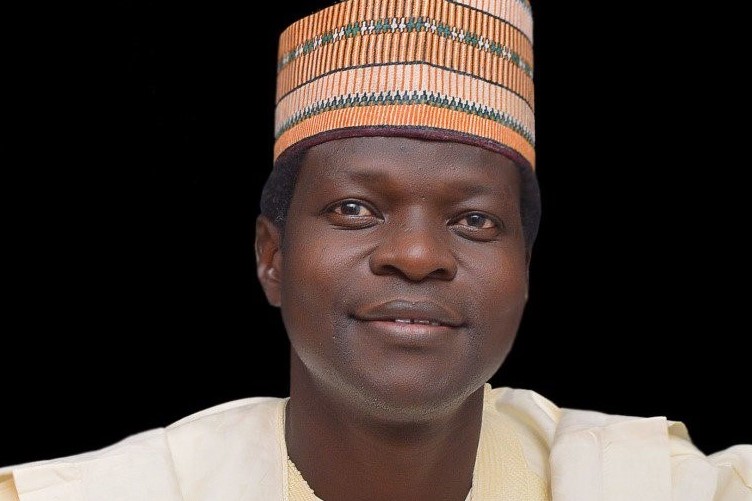
OMOYELE Sowore, the African Action Congress (ACC) presidential candidate has announced Rabiu Ahmed Rufai, a medical doctor as his running mate in the 2019 general election.
Malcom Fabiyi, the Sowore Campaign director-general, announced the appointment in a statement on Monday.
Rufai, who hails from Jigawa state and born on July 1976, is a fellow of the West African College of Physicians (FWACP) as well as a fellow of the Royal Society for Public Health (FRSPH).
Aside from practising medicine, he is an academic. The party vice-president candidate was the pioneer dean of the school of public health at the Federal University, Dutse from 2014 to 2015. He had served as an honorary consultant physician at the federal medical centre in Birnin Kudu between 2014 and 2015.
Sowore, while giving his remarks, said he could not think of anyone more qualified than Rufai as his running mate. The presidential candidate said Rufai would help reform the country’s health sector.
“Health is Wealth – and in our government, Dr Rufai will be responsible for ensuring that Nigerians have access to affordable and world-class healthcare and translating that to economic growth,” Sowore said.
He added that the health sector, which is part of their agenda, is a critical one which Rufai is most suitable to spearhead.
“In our bid to work on Nigeria’s multifaceted challenges and proffer solutions that will create a true giant out of our nation, we have always believed that health care, population health and health economics, ranks alongside national security and power, as critical areas that a serious government must address. I can think of no one more qualified than Dr Rufai to spearhead that aspect of our agenda.”
Rufai had a medical degree (MBBS) from Bayero University, Kano, and Masters in Public Health (MPH) from Leeds University United Kingdom.
His areas of expertise include Maternal and Child Health Services, Communicable Disease Prevention & Control, Health Systems Development for Primary Health Care, Health Management, Policy and Planning, Health Economics and Policy Research, Health System Development and Strengthening, Demography, Monitoring & Evaluation of Health Programs, Medical Statistics and Epidemiology.
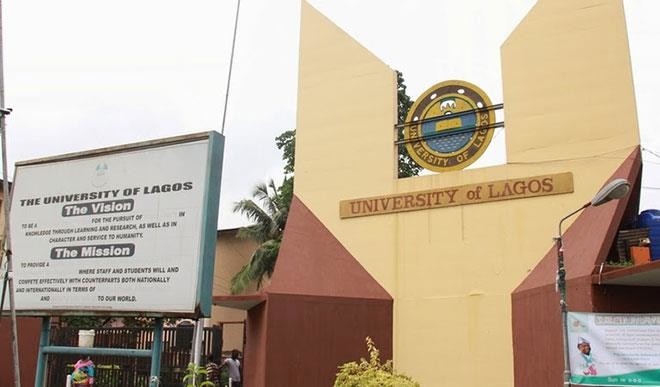
SUCCESS in the Unified Tertiary Matriculation Examination (UTME) and in the follow-up internal test of an institution are usually enough to qualify a candidate for admission into a Nigerian university. Not anymore, particularly if the University of Lagos (UNILAG) is the candidate’s first choice. As Mrs Taiwo Oloyede, Principal Assistant Registrar, Communication Unit, of the university announced days ago during an interaction with the News Agency of Nigeria, newly-admitted students will undergo a “compulsory” drug test from now on. If they pass, good luck. They fail, goodbye to admission.
“This test is compulsory and will be administered on new students before they are allowed to go ahead with registration,” Oloyede said. “Admission of any newly-admitted students who test positive for drug use shall be withdrawn. Our students must be seen to be good products not only of the institution, but also of the larger society.”
It is easy to see what UNILAG is trying to do. Fantastic conception but faulty execution. Tertiary institutions are easy breeding grounds for drug addiction; stamp drug abuse out of campuses and the society would have been done a huge favour. However, by Oloyede’s words, this drug screening will be a post-admission hurdle: it’s not like the identified drug addicts would be denied admission from scratch; instead, they would first have secured the admission, and then they would lose it. True, this method bars the guilty candidates from entering UNILAG, but what happens to them from then on? No one should expect that they end up in a rehab, or in the church or mosque; to lose their admission this way means they sink even deeper into drugs. It’s a scenario that sees UNILAG solve one problem for itself but simultaneously create two more for the society.
Withdrawing the admission of drug-positive fresh students won’t help UNILAG realise its ambition of ensuring that its students are “good products of the larger society”. To think it would, in the first place, gives UNILAG out as guilty of a defect common to the academia: the thinking that ‘citadels of learning’ are a society on their own, different in class, standard and expectations from the ‘larger society’. This societal superiority that the academia likes to claim is, in the moment, far from reach; it is difficult, but not impossible, to achieve. To happen, the institutions must truly be able to operate on their own, entirely devoid of human-capital support at least from the larger society. It means, for instance, that a university’s Faculty of Engineering can produce cars, and its graduates can repair them; it means lecturers can get their cars repaired on campus rather than embarking on a trip to the roadside mechanic several kilometres in ‘town’. It means its Faculty of Agriculture can cultivate crops, harvest them, process them and get them consumed — all on the farm. Until then, students whose admissions are withdrawn end up returning to the same “larger society” that UNILAG is an integral and continuous part of. Long and short, UNILAG hasn’t done anything to aid the cause of this ‘larger society’.
The threat of drug abuse to societal well-being is real, but it is important to understand that most drug abusers are not hardened criminals. They are more like prisoners — emotional/psychological prisoners of addiction. What they need is love, not force; rehabilitation, not rejection. In any case, any drug abuser who is brilliant enough to pass the UTME as well as UNILAG’s post-UTME test should not be discarded as entirely useless. If UNILAG truly desires to help itself and the society in one fell swoop, there are a number things it could do.
One is to take advantage of its internal intellectual capacity in availing the students of help. Its Department of Psychology exists for a purpose, and if that doesn’t include making psychological help available to needy students, such as those hooked on drugs, then the department is in dire need of some rejigging.
Another is to admit such students on condition, something similar to the ‘promoted on trial/condition’ we’re more accustomed to seeing in primary and secondary schools. Students found to be hooked on drugs can be admitted on, say, a two-year condition that they enroll at a rehab centre and produce periodic reports from the centre. Those whose reports prove progress with drug reliance retain their admission after two years, while those without remarkable progress forfeit it. A few students will still end up in the latter group, no doubt, but even they would recognize they were at least given a chance to fight for their educational survival. The real gain lies with those who would have won their battle against drug dependence in those two years.
But everyone deserves a chance to fight. To send drug abusers away from their dream university at the first time of asking is cruel and in consonance with the Nigerian mentality of judging a book by its cover. There are a few brilliant, morally-upright youth out there who missed their way at some point in their lives; if we can’t help them — or at least give them a chance to help themselves — then we must not crush them. What is guaranteed is that the success rate for rehabilitation of these admission seekers will be high, given that all of them are young and therefore still impressionable.
If we’re looking for drug addicts to kick out of certain sections of our society, focus should be on politics. Too many Nigerian politicians are hooked on drugs. Some of them we don’t know because they’ve mastered the art of covering their tracks; others we already know because no sane human utters the kind of words that come out of their mouths. I won’t mention these names but I won’t stop readers who choose to do so in the comment section. These are the real people we should be kicking out; but the students, what they really need is an arm around their neck.
Soyombo, former Editor of the TheCable and the International Centre for Investigative Reporting (ICIR), tweets @fisayosoyombo.
THE spokesman of the Nigeria Police Force, Jimoh Moshood, says investigations have been concluded into the robbery incident that took place in Offa, Kwara State, but the state government is reluctant to charge the suspects to court.
Moshood said this on Monday in reaction to allegations by a member of the Kwara State House of Assembly, Abdulrafiu Abdulrahman, that the police have been compromised in the Offa investigation.
The Kwara State police command had arrested suspected ritual killers who allegedly confessed to having sold about 31 human heads and body parts to several prominent politicians in the state and beyond. But Abdulrahman, who is Chairman of House Committee on Information, alleged that there was a plot by the police to force the suspected human parts dealers to implicate prominent political and religious leaders in the State.
But Moshood responded by saying that the police have long concluded the investigation into the Offa robbery and had handed the case file to the Kwara State Attorney-General since August.
“Investigation into the matter has been concluded by the police and the case file sent to Attorney General of the Federation who directed that the case file be sent to the Kwara State Attorney General for prosecution which the police has complied with since August 2018,” Moshood said.
“The Force has been waiting for the Kwara State Attorney General to take over the suspects from the police for prosecution.”
Moshood denied allegations that the arrested suspects were being forced to implicate come highly placed individuals in the state.
He said investigations into the alleged human parts buying and selling were still ongoing, “any individual or group found to be connected with this heinous crime will be arrested and prosecuted”.
“The Force has no plan to implicate any personality in the matter and there is no any cause for any innocent person(s) to be afraid of the law. The Force will not allow itself to be cowed, or obstructed from ensuring that the dictate of the law prevails in all matters,” Moshood said.
Recall that a similar scenario played out when the news broke that some suspected armed robbers that took part in the Offa robbery had been arrested.
Senate President, Bukola Saraki, told newsmen at the time that he had intelligent reports that the suspects were being forced by the police to implicate him by saying that they were his boys, and that was exactly what happened days later when the suspects were being paraded by the police.
The suspects said they were thugs that worked for Saraki and the Governor of Kwara State, Abdulfatah Ahmed. They further said that they were usually deployed during election periods to disrupt the process at polling units where their principals were losing.
THE Economic and Financial Crimes Commission (EFCC) has arraigned the former Governor of Ekiti State, Ayodele Fayose, before the Federal High Court, Lagos, on charges of corruption and abuse of office.
Fayose, who had reported to the EFCC Headquarters in Abuja on October 16, a day after former Minister of Solid Minerals Development, Kayode Fayemi, was sworn in as the new Governor of Ekiti State.
He has remained in custody since then and was transferred to the Lagos office of the EFCC on Sunday ahead of his arraignment in court on Monday.
Fayose pleaded not guilty to the charges against him.
FORMER Speaker of the Kwara State House of Assembly and the current governorship candidate of the Peoples Democratic Party in the state, Razak Atunwa, did not take part in the one-year mandatory National Youth Service scheme.
Atunwa, however, submitted a forged NYSC certificate to the PDP screening committee as part of his qualification to be eligible to run for governorship post in Kwara State, according to Premium Times.
This is coming after two top ministers were exposed as having not taken part in the NYSC, without which anyone who graduated before the age of 30 can be employed by either the public or private sector in Nigeria.
Atunwa is the preferred candidate of the Senate Bukola Saraki, who is seen as his political godfather.
Kemi Adeosun, former Minister of Finance, resigned her position and fled the country after she was found to have falsified her NYSC certificate, while Adebayo Shittu, the Minister of Communications, insisted that he did not need to take part in the one-year service because he had been elected into the Oyo state legislative House immediately after graduation.
According to the Premium Times report, the certificate which Atunwa submitted to the PDP indicates that he served between 1995 and 1996, and the certificate was purportedly signed by Walter Oki, the supposed Brigadier General in charge of the NYSC at the time.
However, Oki only became the Director-General of NYSC in 2002, a whopping six years difference from the time that Atunwa claimed he signed his certificate. The NYSC DG in 1996 was Soyemi Sofoluwe, also a Brigadier General. He was succeeded by S.M. Dule who served as head of the NYSC between 1996 and 2000.
Also according to the report, there were noticeable discrepancies between the certificate allegedly submitted by Atunwa and the certificates awarded by the NYSC to Nigerians who had studied abroad but returned home to observe the mandatory national service.
A copy of a page of the PDP nomination form that was filled by Atunwa.
For instance, while the NYSC certificate for persons that studied abroad bore the acronym FORN or FRN (indicating that the bearer attended a ‘foreign’ university), Atunwa’s forged certificate had the acronym KWP – a code for graduates of the Kwara State Polytechnic – even though he claimed to have graduated from the University of East London, with a degree in Law, aged 23.
When he was contacted, Atunwa maintained that he did not forge any document neither did he present any forged document to anybody.
“I did not submit any unsupported NYSC certificate as suggested by you. I strongly advise that you verify each and every assertion you wish to make. You may wish to make formal enquiries/verifications of all institutions concerned,” Atunwa was reported as having said.
The spokesman of the PDP, Kola Ologbondiyan, said he would investigate the allegation and get back to the reporter, but he was yet to do so before publication.
If the allegations against Atunwa proves correct, it could disqualify him from contesting the election. A clause in the PDP governorship nomination form states that a candidate will be automatically disqualified if it is found that any or all of the information he provided was false.
USMAN Yusuf, the suspended National Health Insurance Scheme (NHIS) Executive Secretary has resumed to the office on Monday, causing a ruckus at the Scheme’s head office at Utako, Abuja.
NHIS Workers at the office were protesting at the entrance of the building, as Yusuf was escorted by fully armed Nigeria police officers who fired tear gas at workers.
The NHIS workers had locked the entrance gate as early as 7 am. When Yusuf arrived around 8:30 am, the workers tried to stop him, but they were overpowered by the security personnel who followed him.
The NHIS boss was suspended indefinitely by the Governing Council on October 18 over allegations of corruption and sundry offences.
However, Yusuf ignored the resolution and resumed office on Monday.
He had argued that his suspension was illegal and the council has no legislative power to suspend him.
A memo he sent to Enyenatu Ifenna, Chairperson of the Council, stated that only President Muhammadu Buhari has the power to suspend the executive secretary.
“As you are aware, by virtue of Section 8 of the NHIS Act, my appointment, like yours, is at the instance of the President, while the Council’s power of appointment is limited to directors and other employees of the scheme,” the memo read.
At a press conference last week, Ifenna had accused the secretary of allegedly inflating the 2018 budget, “fraudulently inflating the cost of biometric capturing machines,” and “attempt to illegally execute N30 billion in federal government bonds”.
The Council also alleged that Yusuf carried out unauthorised staff travel “in defiance to council directive” among other offences
Yusuf had earlier been suspended in July 2017 by Professor Isaac Adewole, the Minister of Health, but was reinstated in February following the intervention of the House of Representatives.
GOVERNOR Nasir El-Rufai has imposed a 24-hour curfew on Kaduna town as violence in several parts of the capital city persists on Sunday.
“This is a notice of a 24-hour curfew imposed on Kaduna town and environs, with immediate effect. Residents are advised to comply by this directive. The decision has been taken in the best interest of the state,” El-Rufai stated.
This is a notice of a 24-hour curfew imposed on Kaduna town and environs, with immediate effect. Residents are advised to comply by this directive. The decision has been taken in the best interest of the state.
Violence broke out in the Kasuwar Magani area of Kaduna state on Friday, and according to the police, 55 people were killed. A 24-hour curfew was imposed in the area on Saturday as security operatives tried to get the situation under control.
But on Sunday, rumours of reprisal attacks began spreading around the town, leading to another round of violence. Residents ran indoors and locked themselves in for fear of being hurt.
President Muhammadu Buhari condemned the development on Sunday, adding that a special squad of security operatives had been deployed to ensure that the situation was brought under control.
“The violence in Kaduna, which has resulted in the deaths of 55 innocent people, is condemnable. The Police have been authorized to do everything possible to restore calm. A Special Intervention Force has been deployed to the flash-points, and the IG will provide regular updates,” the President tweeted.
“The disregard for the sanctity of human life is unacceptable. Violence is an ill-wind that blows nobody any good. I appeal to community leaders and citizens to always choose dialogue, patience and tolerance, to prevent crises from escalating into violence.
“…The Federal Government and its law enforcement agencies will work with the State Government and community leaders to ensure the full restoration of peace and security.”








 However, Oki only became the Director-General of NYSC in 2002, a whopping six years difference from the time that Atunwa claimed he signed his certificate. The NYSC DG in 1996 was Soyemi Sofoluwe, also a Brigadier General. He was succeeded by S.M. Dule who served as head of the NYSC between 1996 and 2000.

