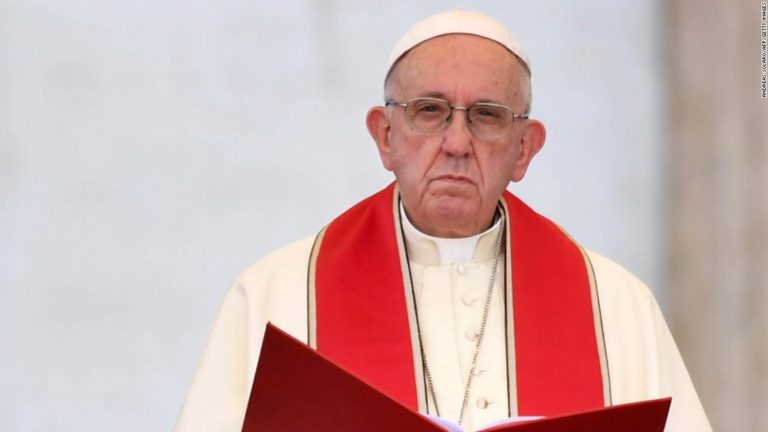
POPE Francis has accepted on Friday the resignation of Cardinal Donald Wuerl, the Archbishop of Washington, who had mismanaged cases of sexual misconduct by Catholic priests.
Wuerl resignation came after a damning grand jury report in August that detailed many acts of sexual abuse carried out by priests which were covered up by the Catholic church leaders.
The report included accounts of Cardinal Wuerl’s poor handling of accusations against priests when he was the bishop of Pittsburgh. His name was mentioned in the report 206 times.
The report said Wuerl had relied on the advice of psychologists to permit priests accused of sexually abusing children to remain in the ministry.
His role in the sex scandal compounded when a former top Vatican official wrote a letter to Wuerl accusing him of covering up Archbishop Theodore McCarrick, his predecessor, sexual misconduct. McCarrick recently stepped down from the College of Cardinals over accusations that he had molested an altar boy decades ago and coerced seminary students to share his bed.
Cardinal Wuerl had previously offered his resignation at age 75, as it is customary in the church, but he was allowed to stay on in Washington, where he had served since 2006. Pope Francis accepted his resignation on Friday, after being a subject of criticisms in the last months.
In a letter to Wuerl obtained by the Catholic News Agency (CNA) on Friday, Pope Francis told the cardinal: “Your renunciation is a sign of your availability and docility to the Spirit who continues to act in his Church. Your nobility has led you not to choose this way of defence. Of this, I am proud and thank you.”
The pope announced that the 77-year-old Wuerl would stay on as the Archdiocese’s caretaker until the appointment of his successor.
“In accepting your resignation, I ask you to remain as Apostolic Administrator of the Archdiocese until the appointment of your successor,” Francis said.
As an apostolic administrator, Wuerl will continue to lead the day-to-day activities of the Archdiocese, but will not be permitted to make any major changes.
But if a successor is not appointed and installed before November 13, Wuerl will attend the bishops’ conference annual meeting as the representative of the Archdiocese of Washington.
Cardinal Donald Wuerl
Cardinal Wuerl said in an interview with The Times that he would miss his role in planning the future of the Archdiocese and that in his new role as administrator, “You just keep everything in place.”
“If I can take the focus off of myself, my mistakes, and focus, and help us focus on survivors, healing, the future, then that’s why I’m doing this,” he said of his resignation. “One of the needed things today is transparency and accountability. We have to get that into the regular way in which the church does business, does ministry.”
Cardinal Wuerl called the Pope’s letter a “very, very beautiful” recognition of his effort to put his flock before himself, but added that the Pope, in choosing his replacement, would select a bishop who began serving after the American church adopted new guidelines in 2002 to prevent and punish abuse.
He said he was stepping aside to allow for new leadership that does not have sex scandal baggage.
THE outrage against Saudi Arabia over last week Tuesday’s disappearance of Jamal Khashoggi, a 59-year-old Saudi journalist within the precincts of its embassy in Turkey, is just the latest expression of international indignation against that country.
In my December 1, 2017 column titled “ Is Saudi Arabia also amongst the Terrorists?” I had drawn attention to the Saudi monarchy’s unacceptable behavior. I had decried its very liberal use of capital punishment even for alleged crimes which cannot be objectively substantiated such as sorcery and witchcraft. I had raised the problematic of detaining 208 prominent Saudis on accusation of corruption, finding them guilty without any formal charge or trial and holding them hostage until they raised and paid amounts the state claimed they had misappropriated. I had also raised concerns about the relegation of women to beings inferior to men, the depersonalization and inhuman treatment of migrant workers, the invasion of Bahrain, the continuous bombing of Yemen in a scorched earth policy, and the blockage of sovereign Qatar.
I had also raised the quite bizarre handling of visiting Lebanese Prime Minister, Saad Hariri who on November 2, 2017 had to ‘resign’ his position on Saudi television. As we also know, Saudi Arabia had contributed to the establishment, training and funding of the Islamic State (ISIS) the international terrorist group which became a Frankenstein monster.
Missing Saudi Arabian journalist, Jamaal Kashoogi.
The unfolding case of Khashoggi, a former Editor-in-Chief of the Saudi newspapers al-Arab and Watan, and a Washington Post columnist, began on Tuesday, October 2, 2018. On that day, he entered his country’s embassy in Istanbul, Turkey at 1 pm on appointment to pick documents relating to his scheduled wedding to his Turkish fiancée, Hatice Cengiz the next day, but did not reemerge. He had visited the embassy four days earlier. He called back that Tuesday morning and was given the 1.pm appointment. The fiancée had accompanied him to the embassy and witnessed him enter. She waited in vain for his reemergence. With the overwhelming evidence of his appointment at the embassy, and a living witness who had accompanied him to its gates, the Saudi government had no choice but to admit that Khashoggi entered the embassy, but claimed he left within twenty minutes.
However, the Saudis could not provide conclusive evidence Khashoggi left the embassy area alive. If he did, he would have walked up to his fiancée who was waiting for him. It would make no sense whatsoever for him to have left his American residence, and later travelled from London to finalize marriage plans with his fiancée only to abandon her at the gate of his country’s embassy, and not to have been in contact with anybody including family, friends and colleagues. The Turkish police conclusion that the Saudis abducted, killed and dismembered Khashoggi in the embassy precincts, is logical. What are missing are the details and how his body was disposed of.
Khashoggi had asked for an end to the Saudi-led war in Yemen, spoken against the clampdown on women activists, dissidents, and perceived rivals of the government and made a critique of the Trump administration regarded as a strong ally of the Saudi monarchy. For these, he was banned by Saudi authorities from further writing. Afraid he was being caged in, he left the country before it might become too late for him to do so. Khashoggi whose liberal style of journalism would have been mainstream in most countries, took up residence in Virginia, United States. His marriage plans led him into his country’s embassy in Turkey where he vanished. With no explanations, the Turkish hypothesis was that Khashoggi was probably murdered by a special squad of fifteen Saudi agents who arrived Turkey and entered the embassy about the time the journalist got there on appointment.
The Turks, who have published the photographs of the fifteen suspects, said although this group had booked for four nights at a hotel near the embassy, it left same day for the airport to board two private aircraft. Two leading American newspapers claim they have evidence that the Saudis eliminated the journalist. The New York Times wrote that the hit was ordered by the highest echelon of the Saudi regime while the Washington Post reported that American intelligence intercepted communication amongst Saudi officials planning the fate of Khashoggi.
The Saudis are so confident that their agents did such a clean job, that they confidently asked the Turkish law enforcement agencies to come to the embassy and carry out a forensic investigation. It has also mocked the world by inviting journalists to enter the six-storey embassy and search for their Saudi colleague. In the process, the embassy enacted bizzare acts like opening cupboards, file cabinets and drawers to show it is not holding or hiding Khashoggi.
Doubtlessly, finding the Saudi monarchy liable of kidnapping and eliminating Khashoggi is based on circumstantial evidence, but they are weighty and overwhelming enough to pronounce guilt. Also, the sordid record of the kingdom in executing similar brazen criminal acts makes reasonable human beings pose the rhetorical question; if not the Saudis, who else?
There is the case of Nassir al-Sa’id , founder of the Arabian Peninsula People’s Union (APPU), who ran an opposition radio programme and went into exile in Beirut where he disappeared in 1979 without trace. Prince Sultan bin Turki from his exile in Geneva, called for reforms in Saudi Arabia. He was lured to a meeting, drugged and smuggled by air to Saudi Arabia. He resurfaced in Saudi prison, and when later freed, fled to Geneva where he sued Saudi Arabia for his kidnap.
Prince Turki bin Bandar Al Saud, a former police boss, was imprisoned over an alleged family dispute. He moved to Paris after regaining his freedom. For three years from 2012, he carried out an online campaign for reforms in Saudi Arabia. He was visiting Morocco when he disappeared.
Prince Saud bin Saif al Nasr criticised the Saudi monarch from his exile in Europe. In 2015, he dis appeared without trace. He is presumed to be held in Saudi Arabia.
Prince Khaled bin Farhan was a Saudi dissident living in Switzerland. In 2003 he had a business offer from a Russian-Italian company which provided a private aircraft to take him from Milan to Rome. It turned out to be a ruse as he was taken to Saudi Arabia and imprisoned for seven years. He left for medical treatment in United States and sued in Switzerland for his abduction. In 2016, he left Paris to visit his ailing father in Cairo, Egypt only for the aircraft to be diverted to Saudi Arabia where he was dragged off the aircraft screaming.
The Saudi monarchy doubtlessly need an urgent evaluation, and the rest of humanity, needs to call it to order.
Owei Lakemfa, former secretary general of African workers is a human rights activist, journalist and author.
ONLY about 73 out of 900 public institutions have submitted their freedom of information (FOI) annual report for 2017 to the Attorney General of the Federation (AGF).
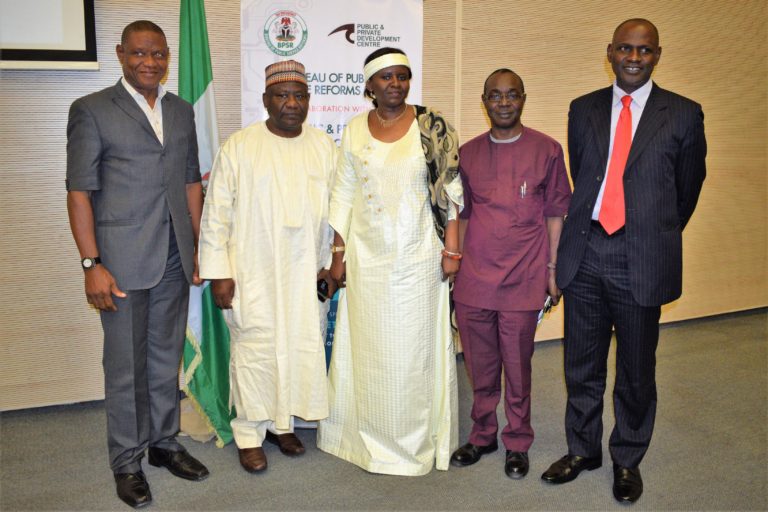
This statement was made at a one-day reform seminar on open government partnership organised by the Bureau of Public Service Reform in collaboration with the Public and Private Development Centre (PPDC) on Thursday in Abuja.
In a paper presentation titled: “Open Government Partnership: Amplifying Access to Information,” Benjamin Okolo, Deputy Director, FOI Unit, Federal Ministry of Justice, said the open government partnership seeks to promote fiscal transparency, anti-corruption, access to information and citizen’s engagement through technology.
“It is unfortunate that just about 73 out 900 public institutions in Nigeria have submitted their 2017 annual report to the Attorney-General of the Federation. This is the only report the Attorney-General by law submits to the National Assembly,” Okolo said.
Benjamin Okolo, Deputy Director, FOI Unit, Federal Ministry of Justice
According to section 29 of the FOI Act, every public institution must submit its annual report on or before February 1 of each year to the AGF on all applications of FOI request they received.
“Each public institution shall make such report available to the public, among other means, by computer and telecommunications, or if computer and telecommunications means have not been established by the government or public institution, by other electronic means,” section 29 (2) of the Act stated.
When The ICIR asked if there were sanctions against the defaulting public institutions, Okolo said the current FOI Act regime does not state specifically how defaulting institutions should be punished, but added that the ministry in its own capacity always name and shame erring institutions.
He also added that civil society groups such as Media Rights Agenda and PPDC have always exposed public institutions who do not respond to FOI requests and who do not submit their annual reports.
The ICIR had earlier in the year reported how budget provisions meant for the implementation of FOI request have not been utilised fully to ensure compliance to the FOI Act.
OCTOBER 11 of every year is the date set aside by the United Nations – since December 2011 – to celebrate the International Day of Girls, also referred to as the International Day of the Girl Child.
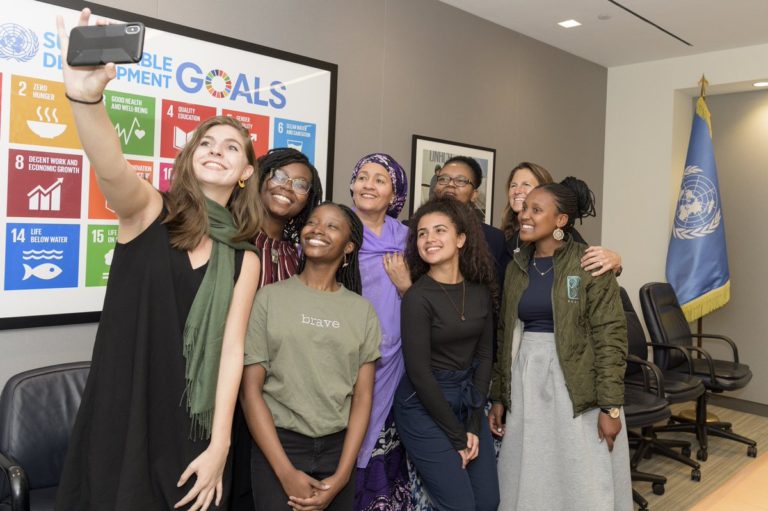
To mark the day, several world leaders and top officials of the UN, including Nigeria’s former Minister of Environment and current Deputy Secretary-General of the UN, Amina Mohammed,sent out messages onthe socialmedia, using powerful images and videos highlighting the numerous advantages humanity stands to enjoy if girl-child education and empowerment become a top priority for governments, especially in developing countries.
Mohammed, in a tweeton Thursday, described girls everywhere as “our hope, inspiration, future leaders, innovators & pacesetters who will make economies more inclusive & dynamic, families more resilient & communities free from fear, violence & poverty”.
In his own tweet, the UN Secretary-General, Antonio Guterres, pointed out that “roughly 1/4 young people, most of them girls and women, are neither employed nor in education or training”, adding that “we need to expand opportunities so that girls can access a full range of occupations on equal terms”.
Amnesty International used the opportunity to call on the government of Burkina Faso “to urgently protect the country’s girls from female genital mutilation and forced marriage”.
Also, the Governor of Kaduna State, Nasir El-Rufai, highlightedthat his administration has “implemented free education for all female students in public secondary schools” as part of efforts at giving them equal opportunities as boys to go to school and contribute more meaningfully to societal growth.
Below are what other world leaders and international organisations had to say to commemorate the day:
Today is about our daughters, granddaughters, sisters & nieces. It’s about making sure they grow up in a world where their voices are heard & they have the support they need to chase down their dreams. #DayoftheGirlhttps://t.co/SBGT0x9Hc0pic.twitter.com/DCz2XdlKuN
We join the world in celebrating International #DayOfTheGirl. We also recommit ourselves to furthering the empowerment and fulfilment of young women and girls across the nation. pic.twitter.com/ZKYin3sW5J
— Archive of the President of the 8th Senate (@SP8thNGRSenate) October 11, 2018
The initiative first started as a project termed “because I am a girl” by Plan International, an international non-governmental organization. The project was aimed at raising awareness of the importance of nurturing girls globally, but particularly in developing countries.
Eventually, during the 55th United Nations Commission on the Status of Women, the Canadian Minister for the Status of Women,Rona Ambrose,sponsoreda motion for the UN to set aside a day to raise support for the empowerment of the girl-child.
On December 19, 2011, the UN General Assembly voted in support of the motion, and October 11, 2012, was agreed upon as the inaugural International Day of Girls.
OLUSEGUN Obasanjo, two-time Nigerian president and former military ruler, has pitched his tent with Atiku Abubakar, flag bearer of the People’s Democratic Party (PDP) in the presidential race.
He openly declared his support for the opposition party’s candidate on Thursday when the latter, alongside prominent political and religious figures, paid him a visit at his Abeokuta residence.
The former chairman of PDP’s Board of Trustees referred to Atiku as the “president-to-be” and admitted he had bones to pick with him following his anti-party and anti-state conduct years ago.
He, however, said he has decided in line with his Christian faith to forgive his former deputy, seeing that he has shown remorse, asked for forgiveness, and has “learnt some good lessons”.
He said: “Let me start by congratulating president-to-be, Atiku Abubakar, for his success at the recent PDP primary and I took note of his gracious remarks in his acceptance speech that it all started here.
“Yes, when it started, it was meant for Atiku to succeed Obasanjo. In the presence of these distinguished leaders of goodwill today, let me say it openly that we have reviewed what went wrong on the side of Atiku.
“And in all honesty, my former Vice-President has re-discovered and re-positioned himself. As I have repeatedly said, it is not so much what you did against me that was the issue but what you did against the party, the government and the country.
“From what transpired in the last couple of hours or so, you have shown remorse; you have asked for forgiveness and you have indicated that you have learnt some good lessons and you will mend fences and make amends as necessary and as desirable.
“Whenever or wherever you might have offended me, as a Christian who asks for God’s forgiveness of my sins and inadequacies on daily basis, I forgive and I sincerely advise you to learn from the past and do what is right and it will be well with you. Obviously, you have mended fences with the party and fully reconciled with the party. That’s why today, you are the presidential candidate of the party.”
Obasanjo also praised Atiku as the PDP presidential aspirant with most exposure, experience, level of preparation, and understanding of the economy. He added that Atiku has the capacity to outperform Muhammadu Buhari, the incumbent president.
“You have better outreach nationally and internationally and that can translate to better management of foreign affairs,” he said.
“You are more accessible and less inflexible and more open to all parts of the country in many ways. As Pastor Bakare, one-time running mate of the incumbent President said, ‘You are a wazobia man.’ And that should help you in confronting the confrontable and shunning nepotism.”
The former president was, however, not this generous with compliments for Atiku in August when he told the press he would never forgive him or be on the same side with him.
“How can I be on the same side with Atiku? To do what?” he had asked.
He added: “If I support Atiku for anything, God will not forgive me. If I do not know, yes. But once I know, Atiku can never enjoy my support.”
“I do not have personal grudges with anyone. If you do not do well for Nigeria, you do not do well for all of us. It is not a question of working with or not working with an individual,” he said. “If you are working for the good of Nigeria, I am working with you. If you are not working for the good of Nigeria it does not matter who you are I am not working with you.”
Also, in 2014, Obasanjo had called Atiku “a blatant and shameless liar who was behind the whole episode of turning wholesome constitutional amendment efforts of the National Assembly to a futile exercise and as a means of riding on its ashes to be Nigerian President”.
Obasanjo’s endorsement is often sought by politicians eyeing the country’s top political seat. Former president Goodluck Jonathan advised Atiku, last year, to find a way to reconcile with him if he is to realise his ambition.
“He [Atiku] can’t get the APC ticket. If Atiku gets our party (PDP) ticket, he would compete well,” Jonathan said.
“He’s always a passionate politician. But he would have to reach out to our boss, Baba OBJ, the boss of all bosses. We’ve all learnt at different times that you ignore OBJ at your own peril. OBJ has the magic wand, respected at home and abroad.”
FINDINGS from a survey by The ICIR in a secondary school in the Federal Capital Territory on sex education show that five out of the 20 senior students surveyed, said they first learned about sex from their parents, six from teachers, and nine from friends. The students were between 16 and 21 years old.
The findings confirm that young people are still not getting the right education about sex from their parents or teachers as sex education often comes with uneasiness. Parents and teachers often hesitate from teaching young people about sex. But this oversight often comes with consequences.
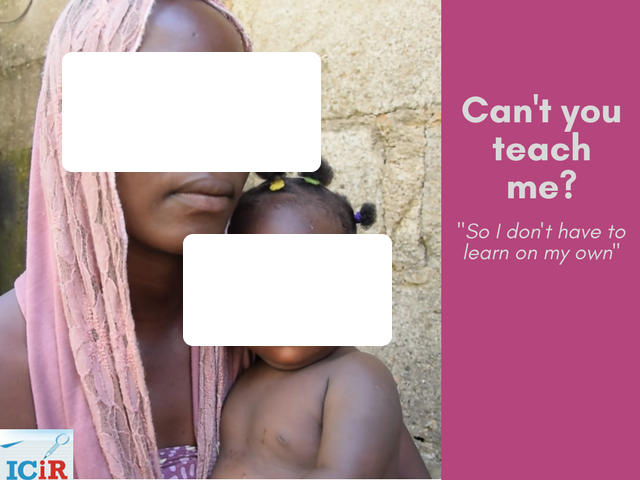
The ICIR interviewed some teenage mothers, many of whom said that they would not have gotten pregnant if they have had the right education about sex.
Here are excerpts of the interviews with teenage mothers
Ifeyinwa Marcel(16 years old)
Ifeyinwa is only 14 years old, a Junior Secondary School student in JSS3, the fifth child and the third daughter from a wealthy home, Ify (as she is fondly called) attended one of the top secondary schools in Enugu Metropolis. Her eloquence in English language is one of the things that would tell a stranger that she has good educational background.
She said she was not taught sex education at home and in class except the basic advice of taking care of personal hygiene.
“No, I don’t think I was taught in school, and if I was taught I can’t remember. But I was told to always be a neat girl. I learnt about sex education in antenatal classes when I was already pregnant. I was told the dangers of having premarital sex at the wrong time.
“At the antenatal classes, that was where I was told that sex with my husband would ease child birth pain and delivery of the baby, but I didn’t have a husband, because the father of my child [boyfriend] had abandoned me.
“My mother didn’t teach me these things, not that am blaming her, but I feel she is at fault here. I know I would do better for my child. I still remember when I started menstruating, the one thing she told me was anything you are doing just know yourself.
“It was when I got pregnant and had delivered did she tell me that I could get pregnant even while menstruating. She was aware I had a boyfriend then, but we never had any talk on sex education, I don’t think she did with any of sisters either. It was just the consistent –know what you are doing talk – that I got.
“I have two elder sisters and we never had “the talk”. We kind of just grew up. When I got pregnant, they were both angry and disappointed. One thing they kept saying was why didn’t you ask us? can’t you ask questions—why didn’t you ask us what to do or pills to take to avert the pregnancy?
“But this was when I was already pregnant. I was angry, they knew all of this and no one told me. I didn’t know how to calculate my menstrual cycle. Ovulation was a mystery, I didn’t understand how it worked. What I went through was too much, to carry another human being for nine months is not nine days.
“What a pregnant under age girl go through during pregnancy is is enough to teach a life’s lesson. Most of the time you can’t just help yourself. Pregnancy makes you more dependent as a young mother, and the morning sickness, Oh! God! ”
Amirat Yakubu (19 years old)
Amirat was left in the dark without proper information on sex education. She comes from a poor family.
Amirat was taught sex education in SS3. According to her, she did not quite grasped what was said, neither could she remember, except the fact that she was told that the touch of a man could get her pregnant.
“Na for SS3 our teacher tell us that if a man touches you, that means you will get pregnant. Some of the grownups were laughing in class but some of us did not understand.
“But before that time e get one boy for our class wey I like. Na him come tell me say wetin our teacher talk, say na lie, say no be so.
“My mama no teach me, as I done dey see my period na so she say make I go buy pad. Na the only thing wey she tell me. she also tell me say now say I fit get belle. “I ask her how, she tell me say no be wetin she go fit talk with me, say I go understand later.”
Her greatest regret she said was getting pregnant at an early age which has put an end to her academic pursuit. She said her father promised to put her through school. However, the possibility of that is quite slim considering the family’s financial position and her eight months old toddler. She is now learning tailoring.
Kadjidat Mohammed (18 years old)
kadjidat never had the guidance of both parents while growing up. With her father’s untimely death in an accident, and her mother remarrying, she was left to fend for herself and her three siblings at the age of 14, with little help from her aged grandparents.
Kadjidat was involved in her first relationship at 16 years of age and was raped and left pregnant at 17 years.
“After the death of my dad, my mum packed her things and left. She said she had to get married to another man because as a Muslim, she cannot stay alone like that. As the first daughter, I tried to advise her. My uncles’ second wife called us and talked to us and asked my mum what did she want again? She said nothing to us.
“Mohammed was my first guy. One of my best friend Zuliat I didn’t know they were dating each other. When I found out I called him. I said Mohammed, enough is enough. You cannot be dating me, and you are still dating my friend. He denied it. I told him I cannot continue.
“But after we broke up, he called me and said I should come and met him. I went and he said I should tell him my mind. I told him my mind. He said he cannot leave me, that all am saying am is in vain. When I was about to go out, he locked the door and forced me.”
“I called Mohammed. I told him I missed my period. He said I should go and abort the pregnancy.
“I could not meet my mum because I was afraid. I went to meet my mums’ best-friend. I explained everything to her, she called my mum and explain to my mum, but I did not narrate to her what happened. I just told her I was pregnant.
“she explained to her they called me, and asked who is responsible. I said Mohammed. They called Mohammed. H denied and said he did not know anything about me.
“Anytime I call him, he will insult me, and even sent me a text message that, that thing I called child that I am crying for that I should better take it to the real owner that he knows’ nothing about it.”
Meanwhile, Bose Duru, Chief State Council, Legal Unit, Social Development in Abuja told The ICIR that sexual harassment could be avoid to certain level if the girl child is educated at the right time about things that have to do with her sexuality.
“The truth is that some times religious bodies shy away from discussing sexuality education or abuse for that matter based on moral grounds. However, awareness should be created for advocacy against child sexual abuse and sex education in the interest of the society,” Duru said.
“Sex education is part of their lives, as we educate them on the whole activities of their lives, we cannot leave any aspect of knowledge or hide it away from a child just because we think that it is unnecessary.
“We can’t for some certain reasons overlook aspects that are important in the girl child life, we shouldn’t shield her from reality,” she said.
On the issue of girl child education and sexual molestation, Ruqayya Bayero, Principal Fouad Lababidi Islamic Academy, Muslim Community Center (MCC), Abuja, told The ICIR that shielding the girl-child from the knowledge of things that could affect her would only make her vulnerable to a life of hardship.
“Molestation is a social vice that unfortunately have entered our circle. The girl-child in Nigeria is not secured, and we have failed her by playing on religion. Every societal issue, notwithstanding the topic, I think should be discussed.”Bayero said.
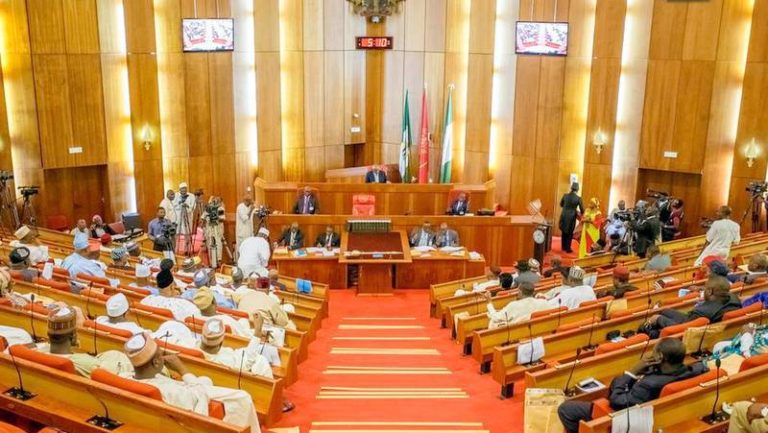
SENATE has approved N234 billion for the Independent National Electoral Commission (INEC) ahead of the 2019 general election on Thursday.
N45.5 billion was added to the initial N189 billion approved by the Senate Committee on INEC, bringing the total amount approved for the electoral commission to N234,507,272,393.
The 45.5 billion is for statutory transfers which are the mandatory expenditures made annually by the federal government for certain institutions including INEC. The transfers are to ensure the independence of such agencies.
The money was approved after Danjuma Goje, chairman of the appropriation committee, presented a report for consideration.
Goje said the N189 billion vired through recurrent, capital and service-wide votes of the 2018 budget
The Deputy Senate, Ike Ekweremadu, had suggested that the approval should be suspended till next week to have a full report. He said the interim report presented by Goje did not have the budget for the security agencies.
But Ahmed Lawan, Senate leader, objected to Ekweremadu’s position.
“We should approve the budget now and approve that of the security agencies next week,” Lawan said.
Barau Jibrin, the senator representing Kano north, said INEC needed the fund urgently. “It requires urgency. We will wait for the security agencies to bring their budgets,” Jibrin said.
Subsequently, the money was approved after the Senate President, Bukola Saraki, sought the views of other members.
Also at the plenary session, Senate confirmed the nomination of 23 names as commissioners of the National Population Commission (NPC)
The nomination of the commissioners was made by President Buhari in April 2018 after the positions had been vacant for about three years, making it difficult for the board of the commission to form a quorum for its meetings.
According to a request for confirmation of the nomination to the Senate by President Buhari in April, The confirmation was necessary “In accordance with the provision of Section 154(1) of the 1999 Constitution of the Federal Republic of Nigeria (as amended), I write to forward to the Senate for confirmation, the following names of 23 nominees representing their respective states at the National Population Commission.”
Deputy Senate President Ike Ekweremadu, while congratulating the new members of the commission, said the issue of population is vital to Nigeria as a country. “We hope these commissioners live up to expectation and provide a credible census,” he said.
Below is the list of the confirmed names and their states:
Nwanne Johnny Nwabuisi ( Abia)
Clifford T.O. Zirra (Adamawa)
Chidi Christopher Ezeoke mni (Anambra)
Isah Audu Buratai(Borno)
Navy Captain Charles Iyam Ogwa (rtd) (Cross River)
Sir Richard Odibo (Delta)
Okereke Darlington Onuabuchi (Ebonyi)
A.D. Olusegun Aiyejina (Edo)
Ekike Ezeh (Enugu)
Abubakar Mohammed Danburam (Gombe)
Uba S.F Nnabue (Imo)
Abdulmalik Mohammed Durunguwa (Kaduna)
Suleiman Ismaila Lawal (Kano)
Jimoh Habibat Isah(Kogi)
Sa’adu Ayinla Alanamu (Kwara)
Nasir Isa Kwarra(Nasarawa)
Aliyu Datti(Niger)
Yeye(Mrs) Seyi Adererinokun Olusanya(Ogun)
Prince(Dr) Olanadiran Garvey Iyantan(Ondo)
Senator Mudashiru Oyetunde Hussain (Osun)
Cecilia Arsun Dapoet (Plateau)
Ipalibo Macdonald Harry (Rivers)
Sale S. Saany (Taraba)
List of NPC commissioners
The plenary session was adjourned to Tuesday, September 16.
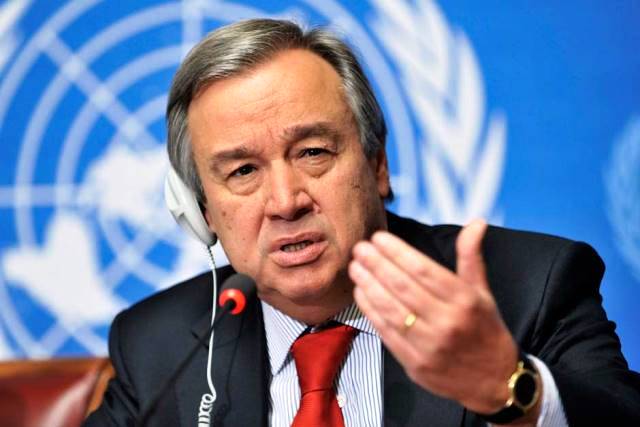
THE United Nations (UN) Secretary General, Antonio Guterres, has condemned the death penalty and urged UN Member states to put an end to the horrible practice.
In his address to celebrate the 16th World Day against the Death Penalty, he said efforts made towards abolishing the death penalty had been stalled by lack of transparency among member nations.
He said that the compromise made by member nations was incompatible with human rights standards.
The UN scribe, stated that hundreds of offenders – often impoverished, women or hailing from minority groups – have been executed without legal representation or transparent criminal proceedings, which could have spared them from the death penalty.
“In some countries, people are sentenced to death in secret trials, without due process, increasing the potential for error or abuse” the UN chief said.
About 170 member states had given formal consent to pull the plug on death penalties since the UN General Assembly’s first call on a moratorium on its use in 2007.
Guterres said he was concerned in particular by the number of juvenile offenders being executed. “Only last week, Zeinab Sekaanvand Lokran of Iran, was executed for killing her husband, when she was 17, despite a trial marred by irregularities”.
Andrew Gilmour, UN Assistant Secretary-General for Human Rights also shares similar views. “There is far too much secrecy, and it’s quite indicative of the fact that though many countries are giving up the practice, those that retain it feel that they have something to hide,” he said.
He said that majority of executions today are carried out in China, Pakistan, Iraq, Iran, and Saudi Arabia.
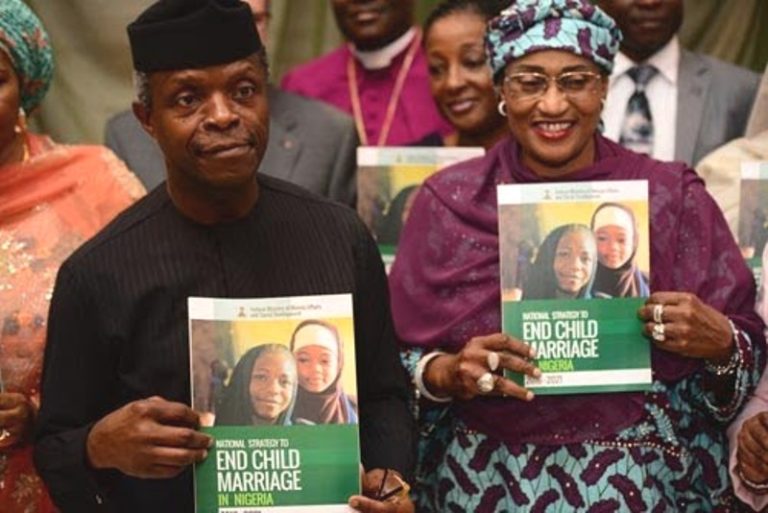
THE United Nations Children’s Fund (UNICEF) says an estimated 12 million girls below the age of 18 will be married off in developing countries and another 21 million between the ages of 15 and 19 will become pregnant.
To commemorate the International Day of the Girl Child, which is marked on every October 11, the UN urges governments across the world to come up with specific policies and programmes targeted at the education and protection of girl children.
“Across the world, girls face adversities that hinder their education, training, and entry into the workforce. They have less access to information, communication technology and resources, such as the internet where the global gender gap is growing,” reads a messageon the UN Women website.
Though the proportion of girls who got married before the age of 18 in the last decade fell from one in four girls to one in five, the UN says the rate is still way slower than the target set out in the Sustainable Development Goals to eradicate child marriage by the year 2030.
“At current rates, more than 150 million additional girls will marry before their 18th birthday by 2030,” a UN reportread.
“Evidence shows that girls who marry early often abandon formal education and become pregnant. Maternal deaths related to pregnancy and childbirth are an important component of mortality for girls aged 15–19 worldwide, accounting for 70,000 deaths each year.
“If a mother is under the age of 18, her infant’s risk of dying in its first year of life is 60 per cent greater than that of an infant born to a mother older than 19. Even if the child survives, he or she is more likely to suffer from low birth weight, undernutrition, and late physical and cognitive development
The Child Rights Act, which was domesticated in Nigerian 2003, pegs the legal age for marriage at 18. Part three of the Act dwelt on the “Protection of the rights of a child”, and section 21 of the act states as follows: “No person under the age of 18 years is capable of contracting a valid marriage, and accordingly a marriage so contracted is null and void and of no effect whatsoever.”
However, not all the states in Nigeria have domesticated the Act.
On December 19, 2011, the United Nations General Assembly voted to pass a resolution adopting October 11, 2012, and every October 11 of subsequent years as inaugural International Day of Girls. The objective is to create more opportunities for girls and increases awareness of inequality faced by girls around the world based on their gender.
The theme of the 2018 edition of the celebration is “With Her: A Skilled Girl Force”, which is aimed at challenging people all over the world to support girls everywhere as they inspire, innovate and take charge of their own future.
THE sun was intense. It was a Saturday, a day when many people were either relaxing at home or attending functions. However, parents clustered under a shade beside the gate of Government College Victoria Island (GoCoVi) in Lagos — their faces, a mix of excitement and exhaustion as they received their children who had just concluded the National Common Entrance Examination.
As the kids filed out — into the warm embrace of mommies and daddies — one could tell from the dissimilar expressions on their tired faces that even though they might have all written the same examination, answered the same questions, their experiences were, definitely, not the same.
“They paid money so that they will teach that girl…” were the words that caught my ears from the conversation among Air Force Primary School pupils, who had formed a small circle away from the other pupils.
The pupils, four girls and three boys, could not hide their irritation.
“Uncle was telling them answers, especially Latifa. Uncle said A, C, D, D… and later they will be saying don’t cheat during exams,” one of the angry pupils said.
I stood seemingly aloof, but close enough to capture their conversation. As I listened to the children recall how their teachers and parents — their first role models — colluded to compromise the examination they had just concluded, it became a surreal realisation that the act is, indeed, a common experience for many primary school pupils, and not just a wild journalistic conjecture.
The Common Entrance Examination is a capacity test written by final year pupils of primary schools for admission into Junior Secondary Schools. On one hand, there is the National Common Entrance Examination also known as ‘Federal Common Entrance’ organised by the National Examination Council (NECO) to screen pupils seeking admission into Federal Government Unity Colleges.
On the other hand is the ‘State Common Entrance’ organised by the education board of the states, for entrance into state-owned junior secondary schools. In Lagos State, where this investigation was carried out, the examination is called ‘placement test’.
Lagos: Where anything is possible
I had walked into Honeyville Schools as an aunt seeking to enroll her nephew into the school. Honeyville Schools is hidden amidst a line of closely-built houses on Tokunbo Street, Lagos Island. The school itself is a stretch of parallel rooms; what is commonly described as ‘face-me-I-face-you’ in local parlance.
The pupils screamed out different recitals from the opposite rooms used as classrooms. The sound from the classrooms created a cacophony capable of inhibiting learning. I peeped into the rooms, trying to find an adult standing in front of the screaming children.
“Good morning. I am here to make enquiries about enrollment,” I said to a stocky man, with low afro hair seated behind a table in the cubic-like room that served as the administration office.
Uncle Dayo — I later discovered was the man’s appellation — offered me a chair.
“What class is the child?” he asked.
“Primary four,” I said and quickly added that my main concern was to have the boy enroll for the common entrance examination.
Uncle Dayo did not ask further questions. He called in the proprietor, Segun Olatunji, a tall, fair man who carried himself with the poise of one fully aware of his position. Olatunji is the typical ‘Lagos sharp guy’; his mannerism and seeming impatience easily gave him away.
Lagos Island is that notorious city where almost anything — legal or illegal — can be done if one knows the ‘right’ people and has the right amount of money. It is not by happenstance that the city houses the ‘world-famous’ Oluwole Market where any kind of document — including currencies — can be forged, duplicated and curated.
Olatunji appeared to be that type of ‘right person’ that gets things done within his field — education. He would later say that he has been in the business of education for over 30 years; growing from being a classroom teacher to becoming a principal and now the proprietor of a school.
He entered the small office that could barely accommodate the three of us, took a chair at a corner as Dayo retold what I had said to him.
“But why do you want him in Primary 6? Is he too old for primary school already?” Olatunji asked, staring hard at me, as if trying to probe my body for answers to whatever was on his mind.
I knew that was the right opening to pitch in my full cover story.
“The case is complicated,” I started, wearing a subtle frown on my face to depict worry.
I explained to Olatunji that the child in question is my nephew. His mother — my own sister — was dead and his father was a no-good-fellow who had abandoned him. The boy stayed with his grandmother and it so happened that my other elder sister who lived outside the country wanted our mother to come join her abroad. Our mother — the boy’s grandmother — insisted she was not leaving the country without the boy.
Hence, I had been instructed to get the boy’s travel documents; and one of the things he would need was his record of schooling at least at primary level. Unfortunately, his current school was not government approved, hence the reason to enroll him in another school.
“Where does the boy live?” he asked, abruptly putting an end to my narration.
“He lives with his grandmother in Ijora,” I replied, not sure why he had asked.
“Okay. I can’t say anything now until I see the boy. Bring the boy tomorrow, because I am not sure a boy in Primary 4 now can write common entrance. When you bring the boy tomorrow, I will test him by myself to see if he would be able to pass the exams on his own,” he responded.
As I made to leave, I asked if his school was government approved, and he answered in the affirmative. I knew there was no way the school — with its chaotic environment — could have been approved by the Lagos State government but that lie was a clue that I had found my first subject. I knew there and then, that if Olatunji was offered the right amount of money, he would compromise any process.
Six years education in one week for just N120,000
A week later, I took a boy — my supposed nephew — to Olatunji. He asked him random questions about his age, class and school and then concluded the boy would not pass the examination. Although, I had carefully selected a boy who was not very bright academically, but it was baffling how Olatunji easily concluded — without any written test — that the boy would perform woefully in the exam.
“I thought so too,” I said in agreement with his verdict on the boy’s performance. “So, what can I do? How can you help me out?” I asked feigning dejection and frustration all in one stare.
Olatunji gave a succinct breakdown on how the 10-year-old boy would be “assisted” to pass the common entrance examination. Not once did he mention any tangible academic assistance for the boy, even when I suggested special tutorial classes. Olatunji was rather dismissive.
“No amount of lessons can help him within the short time,” he said in a matter-of-fact tone.
This school proprietor unabashedly offered to prepare his school’s report for a boy, who in his own assessment is academically poor. He would later suggest to me during a phone conversation that he would get another child to write the examination for my ‘nephew’.
“Let me tell you something,” Olatunji said, a dint of arrogance in his voice, “anything you want can be done. The only thing is, once we agree what would be paid, there is no problem.
Officials spearheading examination malpractice
“Let me be sincere with you,” he continued, “I will not allow the boy to go there and write. Another person will sit for him. The person I know is capable will sit for the examination.”
To be sure I understood what Olatunji had just offered, I asked if he was sure my nephew would be well documented.
“Once the form is filled, the form will be given to you and it will show the picture of the boy.”
After series of bargaining, assurance and reassurances, Olatunji finally agreed to a lump sum of N120,000. This, he said, would cover the cost of issuing term results for the six classes, fixing someone to sit for the examination and a testimonial to certify that the boy, whom Olatunji only saw once, completed primary education.
How Google-generated Pictures Ended Up On Lagos State Common Entrance List
It is often said that religion has no connection with morality. I can easily attest to that; for if it does, I should have been sent out of Deen Master, a Muslim primary and secondary school, with a stern warning never to return. Instead, I was welcomed with an assurance that I have come to the right place.
“All we need are two passport photographs of the boy when he was four and his recent picture,” ‘Dr. Owolabi’, the head teacher of Deen Master told me after explaining to him that I wanted to enroll my son, who was overseas, for common entrance examination.
Oluwaseun George Robert, my purported son, was a random picture downloaded from Google but to Owolabi and her assistant, Alimot Yussuf-Bello — a hijab-wearing Muslim sister — he was my son.
I had told them Robert lived with my cousin in Canada where he was schooling. I wanted him to apply for a scholarship and part of the requirements was that he needed to have had elementary education in Nigeria. The boy would not be present for the examination, I explained to Owolabi who allayed my ‘fears’, reassuring me that I had not made a strange request.
“We have helped parents like you before,” he said with an air of pride.
Owolabi billed N50,000 for the arrangement, which was paid in three installments only because I decided to keep the engagement alive by ”owing them some money”.
Google Generated Photo on Exam Register
On Saturday, July 28, 2018 when the Lagos State Common Entrance examination was written, Oluwaseun George Robert was on the list of pupils duly registered to write the exam.
Kid Mercenaries
Thirteen-year-old Olatunji Samuel had been contracted by his uncle, the proprietor of Honeyville, to impersonate my supposed nephew. It was part of the ‘N120,000 deal’ with the senior Olatunji; he had promised to get a ‘capable’ boy to sit in for the examination.
Being a psychologist as Owolabi claimed to be, one would expect him to know the effect of exposing children to such fraudulent practice, but he did not seem bothered.
Just as the Honeyville proprietor had contracted his own nephew, Fisayo Bello, a boy in Junior Secondary School of Deen Master, was also contracted by the school to write the entrance examination for my ‘son.’
These boys understood what they were asked to do; they had been taught to lie about their names if asked. They seemed to understand the rudiments of the ‘trade’; it is obviously not their first time or so it seemed.
The younger Olatunji, who was still in character when I spoke with him briefly after the exam gave my nephew’s name when asked his name.
“No, I mean your real name,” I said before he eventually let down his guard.
Certificates For Sale
The Mission Statement of Araromi Baptist Children School is a sad irony when mirrored against the actions of the school’s head teacher, Adebisi Oluwaremi. The airiness with which she received the request of a certificate for a child she had never seen — let alone taught — showed a lack of “godly moral and right values”— the hallmark of the school’s mission.
She immediately demanded N68,000 in exchange for Araromi Baptist School certificate.
“Can I pay N50,000?” I haggled like it was a piece of meat on the slab of a butcher.
“It’s a fixed price. In fact, if you want me to issue you teller for the payment, I am ready to do that,” Oluwaremi insisted on her price.
“We have been warned not to issue certificate for a child who has not attended this school. Also, we have been warned never to issue the certificate for any child who did not graduate from this school,” she claimed.
Sadly, the child she did issue Araromi Baptist Children School certificate to, she never even saw. It was the same picture — Google-generated — I had shown at Deen Master.
Testimonial of Araromi Baptist School
I went to Araromi Baptist School for two reasons — first, I had gone to a Muslim school and needed to balance the report; secondly, Araromi Baptist Church is a big church in Lagos State and I was hoping to be shown the door once I tabled my request. I had wrongly thought that a school owned by a popular Christian denomination like the Baptist would be different.
Tedious Verification Process Managed By Cantankerous Civil Servants
It is rather ironic that it is easier to fraudulently obtain a First School Leaving Certificate (FSLC) from the Lagos State Ministry of Education than it is to verify one. The process becomes even more tiresome with the attitude of some of the civil servants designated to manage the process.
After about six weeks of back and forth between the Lagos State Ministry of Education and the State Examination Board, I was told to make a payment of N5,000 into the Lagos State Government’s purse for the verification. I did.
I brought back the teller, then I was directed to make a photocopy of the teller.
“Go and make photocopy for us,” a tall slender staffer said with an air of arrogance.
The Lagos State Examination Board’s accounts department does not have a photocopying machine and I had to make the copy for the department, despite paying N5,000 into the government’s purse.
When I came back with the copy, the woman who had generated the payment slip for me did not allow me say a word.
“Go inside there and wait for me. I am coming, I am coming,” she said dismissing me while she continued chatting with the head of the department.
I sat for some minutes when the staffer who had ordered me to go make the photocopy beckoned that I bring the copied bank teller. I stood across the table from him with my hand outstretched to give him the teller I had photocopied, but he did not look up. His head was bent and eyes fixed on his phone. I stood, purposely not calling his attention; I wanted him to satisfy himself.
The woman, who had been chit-chatting with her boss in the opposite office all the while her colleague kept me standing as he browsed through his phone, then came and began to yell.
“I told you to sit down there. Sit down there,” she yelled repeatedly.
“Don’t yell at me. It was your colleague who asked me to bring the teller,” was the statement that seemed to agitate the workers.
In the twinkle of an eye, the offices had become an orgy of angry civil servants. The director vowed I would not get the verification done. He raced down to the verification department threatening fire and brimstone. Before long, the staffers at the verification department had gathered, abandoning their offices to form a solidarity caucus at the reception.
One of the staffers pulled me off the chair and dragged me out, kicking off my bag from the table. This went on in what felt like eternity. Eventually, I was told the verification was not ready and that I would be contacted when the director’s response is ready.
For six weeks — interfacing with nonchalant and rude civil servants who treated me like they were doing me a favour — the Lagos State Government could not determine the authenticity of the certificate.
This was the same certificate I got without breaking a sweat.
Ajenifuja Kazeem, a staffer of the State Universal Basic Education Board (SUBEB), offered it to me without as much as verifying the information I gave to him. Kazeem was at the reception having a chit-chat with his colleagues during the peak of work hours.
“What do you want?” he asked, barely regarding my presence. I explained I wanted to make enquiry on how to get my First School Leaving Certificate.
“Go to your primary school,” he told me.
“My primary school is no longer there,” I explained to him.
“It will cost you money then,” he said, continuing with “why didn’t you get it since you left primary school?” By this time, he had suspended the conversation with the others.
“When I got my own some years ago, I paid N7,000.”
“That’s fine. I don’t mind…,” I said, making a gesture to say money is not the problem.
While all of this went on, I did not sign the visitor’s register, neither did Kazeem direct me to any office. He brought out his phone and put a call through to a colleague, who according to him, helped him secure his own FSLC when he needed it.
Kazeem gave me the phone to speak with this friend. “The certificate will cost you N15,000,” he told me, cutting straight to business. That was ”the last and final price” as Kazeem’s go-to-man refused to lower his price.
First School Leaving Certificate Obtained from SUBEB staff
I made an initial deposit of N8000 which was given to Kazeem with the promise that the certificate would be ready in one week. Interestingly, I received a call from Kazeem three days later, informing me to come and pick up the certificate — same certificate that I could not verify in 6 weeks.
Struggle Between Right And Wrong
The Great Sharon School proprietor, who simply gave her name as Alayaki, is a pastor, or so she claimed. I told her the same cover story I had pitched at Honeyville and she bought it, or so I thought.
She gave the boy I took this time around for an assessment test and concluded the boy would need intensive lessons if he would pass the Common Entrance examination.
“If you enroll the boy with us, I am sure we can groom him well before the examination,” she told me in March 2018, when I first met her.
The Great Sharon is a low-cost school in Agege area of Lagos State. Unlike some of the low-cost schools I had visited on the Island, the school environment was serene and safe for children.
I knew it would be impossible to uproot my ‘undercover nephew’ from his school, to enroll him at The Great Sharon, so I told her the boy was the only help his grandmother had, hence, it would be impossible to enroll him in her school.
The boy was eventually enrolled for just the common entrance examination. This meant he was an ‘external’ pupil enrolled only for the purpose of writing the examination in the school.
“The uniform and the common entrance registration is N25,000,” Alayaki said.
Two days before the state common entrance test, I called Alayaki to negotiate for ‘assistance’ for the boy in the examination hall.
“It is not possible,” she retorted.
“I told you from the beginning that it is only God if he should write the exam and pass. It is objective. If he is able to shade the correct one, fine. And if he is unable…” she did not finish the last sentence.
“They don’t allow us stay close to the children. If it is something that is possible, I would let you know.”
Alayaki insisted there was no way the boy could be helped to cheat during the examination, but after what seemed like a long pause that turned out to have lasted only a few seconds, she asked that I call her back in the evening.
“Call me around 7 o’clock; there is something I want to tell you.”
“What did she want to tell me?” I thought to myself, feeling a tinge of disappointment in my gut. “There must be good people who would not betray the system, for the sake of Nigeria and the future of the nation… and I need to find at least one of them.”
7 p.m., Wednesday, July 25, I called back.
She did not buy the story I had told, but her religious antenna was pointing her in the wrong direction.
“I don’t know why you are so insistent about the boy writing common entrance. He is not the first person I will process things like that for, I told you.
“The embassy has nothing to do with the class a child is in. What they are interested in is the result that the boy is in school — the receipt — not the Primary Six certificate. That one is none of their business.
“So I was bothered. I said Lord what is happening? Why must this boy go with Primary Six certificates? Something must be wrong. If you want to be sincere with me; it is like you are covering up something. Something is fishy; remember I told you I am a pastor.
“If there is any restitution you need to make, go and do it. If there is anything you need to restitute from, do it. If there is anything you need to confess to whomever, do it.”
As she reeled out the advice, I was befuddled and unsure what she was trying to say.
“What restitution? Does she want me to confess that I had kidnapped the boy and wanted to smuggle him abroad? Or is she thinking that the boy had committed a grave offence in his school and I was trying to cover him up?” The questions continued to pile in my mind as I tried to understand her thought process.
Since I could not pin any of my thoughts down to her advice, I decided to redirect the conversation back to how she could get assistance for my nephew and again she insisted it was impossible to do.
I dropped the call, feeling I finally found the much elusive good aspect of the sordid story: an educationist who would not compromise the system for anything.
I was however slightly disappointed when I received her call after the examination informing me that my nephew was ‘assisted’ in the examination hall. However, she did not ask for any gratification for the ‘kindly gesture’.
Mega delight
Delight Mega School is in a residential apartment reconstructed with plywood into classrooms, where — I have no doubt — right values are being inculcated into the tots put in the care of Anu Mercy, the head teacher of the school.
The single storey building in cream and dark brown colours is located at Glover Street, Ebute Meta area of Lagos State.
Anu Mercy of Mega Delight Private School
I knew Anu was a different stock, when she firmly refused to fabricate continuous assessment result. I had met school owners, who did not bat an eyelid before issuing results and certificates for children they had not seen, but here was I, in front of this woman who could not conceive the idea of fabricating ‘ordinary’ continuous assessment result.
Like I had done in other schools, I had a cover story for her. The boy was my son; he had been home-schooled and needed to write the entrance examination so he would have the First School Leaving Certificate.
She was fascinated by the idea of a home-schooled child.
“I did not know that is possible in Nigeria,” she told me, but that was as far as Anu would allow herself be thrilled. “But what about his continuous assessment? We will need to compile his previous results; it is part of what we will use for the registration.”
“He does not have previous results. I told you he is home-schooled,” I said in response.
“Ah! That will be hard o because me I cannot lie,” she blurted out. “What I can do to help you will be to have him write the exams for previous classes and we will compile that as his CA.”
For two days, Anu would administer examination questions from Primary 1 to Primary 6 to the boy.
Anu maintained a jovial aura despite her strict and rather religious outward. Her hair was plaited into cornrows; she had no makeup on and wore a striped shirt with a long black skirt that was many inches below her knees.
A few days before the state entrance examination, I called her — the same day I called Alayaki — headteacher of Great Sharon.
“Assistance like what?” I could imagine the skin on her forehead squeezing into a frown. She would not be persuaded as she vehemently refused to aid any form of cheating.
Anu rejected the request. She insisted the boy would write the exams unaided. Of all the schools that I had gone; she was the only person who never agreed — at any point — to compromise.
Cheating spree
One of the obvious realities during the Lagos State Common Entrance examination in the centres monitored by my team of undercover reporters was the apparent disorganisation in the whole process.
In Government Girls High School centre at Iyana Ipaja, where my supposed nephew enrolled at Great Sharon School was posted, some of the pupils were seen moving from one class to the other with their question papers in hand.
An invigilator at Tulabville Private School at No. 53 Omidindun Street, Lagos Island, went in search of a ‘business centre’ to print more copies of the question papers.
However, apart from this shoddy organisation, the examination itself betrayed the usual decorum expected of any examination, unsurprisingly.
The invigilators were lax or at best perfunctory in their duties. Again, this is unsurprising; some of the invigilators had been reportedly compromised by some school owners — including parents — who paid them to ‘help’ some of the pupils
Toye Lukmon, one of the invigilators at Tulabville Private School, the centre where Honeyville pupils wrote their examination, reeled out answers to all the questions. Further investigation revealed that Lukmon is also a teacher at Yusfaith Private School, one of the mushroom primary schools at Isale Eko area of Lagos Island.
At Wesley Girls Senior Secondary School, Yaba, one of the invigilators — suspected to be a teacher in the school — freely gave answers to the pupils. The invigilator, a dark-skinned, average-height woman had struck a deal of N5,000 with an undercover reporter who was at the centre as a guardian.
The kid registered at Delight Mega School and was posted to Wesley Girls Senior Secondary School. He — like the two registered in other schools — had only one assignment; to capture whatever happened in his examination hall.
The pupils at Wesley Girls Senior Secondary School centre, boys and girls under the age of 13, were seen passing ‘chips’ — a booklet with solved questions — around. This they did under the supervision of the female invigilator who struck the N5,000 deal to ‘help’ the undercover pupil.
“This woman came to teach me, but battery had run out of my camera so I could not capture her,” the undercover pupil told the team as we all watched Nigeria’s future generation in full act of examination malpractice.
The woman was introduced to the reporter by the school security guard — a, tall, dark man with full lips. The reporter was unable to get her name; perhaps out of suspicion, she refused to have direct contact with the reporter. After the exam, when the reporter asked to greet her for the ‘favour’, the gateman informed that she said there was “no need”.
Examination malpractice, an organised crime
This investigation revealed among many other things, that this malfeasance is an organised crime as it involves the collaboration of not just the teachers, but the school owners and government employees appointed to protect the integrity of the whole education process.
Ike Onyenchere, the Chairman of Exams Ethics Marshal Board International, corroborated this as he revealed the sordid details of various examination frauds his organisation had unearthed during the course of their supervisory roles.
“Malpractice is no longer the indiscretion of pupils of students. It has become a money-making thing. It has become a syndicated affair, whereby the pupils and the students are mere instruments making money.
“There is also the situation where schools organise malpractice for their students. We have found that the unique proposition of many schools today is that ‘if you come to my school, I will give you 100 per cent pass. You cannot fail. Whether it is common entrance or WAEC or NECO, you will get 100 per cent’.”
And in order to maintain this high education reputation, Onyenchere said many schools engage in all sort of “scams”.
“As such,” he continued, “you now see the total involvement of people who should defend the education — the teachers, the head teachers, principal, proprietors and so on. Unfortunately, these are the kinds of schools parents look out for; where the children will be allowed to cheat. They look for situations where the proprietors, teachers and so on will form themselves into a syndicate of criminals and parents pay money for this.
“You also find the connivance of people who are supposed to be supervisory and regulatory authorities; the government, the ministry authorities, the regulatory agencies, the inspectors… these are the very people who form part of the racket. We have found situations where commissioners of educations who own private schools promote education fraud.”
Onyenchere explained that education malpractices cut across every stage of assessment, including the admission process, training, examination, certification, registration and regulation.
“It is not just restricted to sitting down in the hall and having examinations,” he explained.
What the law says
The Examination Malpractice Act (1999) considers a person to have cheated, if such person “by any fraudulent trick or device or in abuse of his office or with intent to unjustly enrich himself or any other person procures any question paper produced or intended for use at any examination of persons, whether or not the question paper concerned is proved to be false, not genuine or not related to the examination in question; or
“By any false pretence or with intent to cheat or secure any unfair advantage for himself or any other person, procures from or induces any other person to deliver to himself or another person any question paper intended for use at any examination; or
“By any false pretence or with intent to cheat or unjustly enrich himself or any other person buys, sells, procures or otherwise deals with any question paper intended for use or represented as a genuine question paper in respect of any particular examination; or
“Fraudulently or with intent to cheat or secure any unfair advantage for himself or any other person or in abuse of his office, procures, sells, buys or otherwise deals with any question paper intended for the examination of persons at any examination, commits an offence.”
Thus, Section 1(2) holds that if such offender is “a principal, a teacher an invigilator, a supervisor, an examiner…”, he is liable on conviction to four years imprisonment without the option of a fine.
Similarly, the law recommends five years jail term without an option of fine for teachers or school owners guilty of forgery.
In addition, Section 322 (1) (d) of the Criminal Law of Lagos State regards examination malpractice as a felony and punishable with ten years imprisonment.
‘Mercenary kids’ could go to jail
According to Section 3 of the Examination Malpractice Law, the children contracted by head teachers of Deen Masters School and Honeyville Private School, if prosecuted, could each earn three years in jail.
“A person who writes or attempts to write a paper in the name of some other person whether that name is the name of a person living or dead, commits an offence,” the Act states in Section 3 (1) (b).
Subsection (2) (a) adds that “in the case of a person under the age of 18 years, a fine of N100,000 or imprisonment for a term not exceeding three years or to both such fine and imprisonment.”
However, children charged with offences under the act must be tried under the provisions of the Children and Young Persons Act.
A person is considered a child under the Nigerian law if such person is 18 years or below. Section 2 of the Children and Young Persons Act describes a child to be a person under the age of 14 and ‘young persons’ between 14 and 17 are subject to special procedures.
Sections 26 (1), 27 and 28 of the same Act provide that if a child under the age of 7 commits an offence, he/she will be brought before the Juvenile Court.
Breeding a lawless generation
Exposing children to examination malpractice portends greater consequences for society, experts say.
Olufunmilayo Bammeke, a professor of Sociology, who x-rayed the effects of such examination fraud among children, said the consequences transcend the education sector.
“It affects the society economically. You cannot have any form of development because you cannot build on anything. It affects all sectors. Imagine a trained medical doctor, who had gone through medical school using malpractice; he becomes a danger to the society,” Bammeke said.
She opined that examination malpractice builds doubt in the system and frustrates the diligent ones who abide by the rules.
“It questions the principle of meritocracy; that is the ideal on which education is supposed to be built,” she said.
Similarly, a professor of Psychology, Babatunde Makanju, said examination malpractice “undermines the total moral fabric of a child.”
He argued that the psychology of the child is determined by the standards of the society and once the standard is faulty, the child grows to become lawless.
According to Makanju, “The society is meant to inculcate in a child that certain things are not meant to be done. That is what will determine whatever they do in future. The child knows that he probably came first (in class), but the child also knows that he or she got that by cheating and that the cheating was condoned.”
Government’s reaction
When presented with the findings of the investigation, the Executive Chairman of Lagos State Universal Basic Education Board (SUBEB), Sopeyin Oluremi, was surprised that impersonation is possible during the state organised Common Entrance Examination.
He said the state now has the pictures of candidates on their answer booklets in the bid to forestall cases of impersonation during the examination.
The undercover children who sat in for the examination at different centers also confirmed that there are pictures on the booklets. Unfortunately, despite this precaution, school owners induce government invigilators who aid and abet the act.
Oluremi, however, refrained from commenting on other findings presented to him. Instead, he requested for a proper interview when more evidence would be presented to him.
However, all attempts to secure another date to show the official the collage of pictures and videos captured during the course of investigation were unsuccessful. He did not respond to subsequent calls and text messages to his telephone number.
Also, Seyi Akitoye, the board’s Public Affairs Officers, who promised to notify this reporter on suitable date for the interview, never did.
Similarly, the Minister of State for Education, Anthony Anwukah, when contacted said he could not comment on the findings as he was out of the country at the time.
Way forward
Bammeke, the sociology professor, believes that children need to be carried along in advocacy against examination malpractice. She said this is necessary so that children can serve as a checkmate for parents who are likely to encourage such.
Another way to curtail examination fraud, the professor said, is for the media to continuously report the matter.
“The media can organise studies without declaring what they are doing. Observe an exam setting, record an examination setting and come up with findings and publicise it. The media has a role to play. The media must not compromise,” she says.
She also urged the government to put in place policies that would check corruption within the education system.
Report Sheet obtained from Deen Master Private School.
“There is a malpractice law. But it is not just the law; the law must be applied. We hear reports of examination malpractice, but we rarely hear of people who were imprisoned for malpractice. They law must be applied and we must make examples of people.
“It is sad that the way people feel shame now is disappearing. People flaunt negative behaviors and they get applauded because they do not question the means through which they have achieved their success. However, there will be change if we involve local communities and begin to shame people and stigmatise them.”
Similarly, Makanju, the psychology professor, puts the onus of ensuring the integrity of the education system on the “grown-ups” who are expected to know better.
“We have to intentionally realise that we have done a lot of damage in the past to those immediately around us and to the larger society because we fail to uphold the straight and narrow path and inculcate it in our children,” he said.
He added that for corruption in the education sector to be mitigated; the government must pay attention to education at all levels.
“There must be severe punishment for those who engage in malpractice. Anything that impinges on the moral upbringing of the younger generation, in such a way that the society pays a heavier burden in the future, should not be condoned at all,” Makanju said.
Onyenchere of the Exams Ethics Marshal Board warned that for any changes to be effective in the education sector, the government must not politicise appointments into the sector. He argued that the education sector is the foundation for all other sectors, hence the need to recruit the best hands.
”We need to clean the education sector for us to get a proper result, before we are able to make progress in the general fight against corruption,” he said.











 “Good morning. I am here to make enquiries about enrollment,” I said to a stocky man, with low afro hair seated behind a table in the cubic-like room that served as the administration office.


