THE Independent Corrupt Practices and Other Related Offences Commission (ICPC) says it has discovered the sum of N9.8 billion unremitted government funds at the Aso Savings and Loans Plc, a microfinance bank.
According to the commission’s spokesperson, Rasheedat Okoduwa, the money is part of proceeds of the sale of some federal government houses in the Federal Capital Territory (FCT).
In 2005, the government set up an ad-hoc committee to oversee the selling of some of its properties in the FCT. The ICPC received a petition with regards to the committee’s activities and commenced an investigation.
The investigation revealed that the sum of N9.8 billion, being mony realised from the sale of government properties between 2010 and 2014, and which was deposited in Aso Savings and Loans Plc, was utilised by the bank instead of being remitted to the federal treasury.
The Managing Director of the bank, Adekunle Adedigba, when invited for questioning by the ICPC, admitted that the bank had utilised the said money because it is currently experiencing paucity of funds, but added that the bank is willing to swap some of its properties in Abuja and Lagos in exchange for the unremitted funds.
Okoduwa stressed that the ICPC is committed to the recovery of the full value of the unremitted N9.8 billion by taking the properties offered by Aso Savings and Loans, subject to a valuation by the Ministry of Power, Works and Housing.
She added that investigations are still ongoing at the end of which anyone found in breach of the law will be brought to book accordingly.
Similarly, investigations by the ad-hoc committee on the sale of government properties also revealed that some persons who bought the properties made only part payments. Consequently, the ICPC said it has recovered over N20.6 from the affected persons between December 2017 and May 2018.
YOMI Okanlawon has just been offered admission by the University of Lagos into its Law programme. He received this news in September after logging into the Joint Admissions and Matriculation Board (JAMB) portal. But going by a widely circulated information, this should not have been possible.
Different reports on the internet around the period claimed JAMB’s website had suffered a setback, thus requiring that all candidates to re-upload their ordinary level certificates to qualify for admission.
“Parents whose wards or relatives applied for admission into any of the Nigerian universities are requested to tell them to upload their O’ Level/WAEC result to JAMB as quickly as possible,” stated one of such messages.
“Without this,” it continued with a note of authority, “their admission will not work. This information is from the V.C. and should be spread to others. PRO, COOU [Chukwuemeka Odumegwu Ojukwu University].”
Okanlawon, who like many others registered on the JAMB platform in March, told The ICIR , he decided not to follow the instruction to re-upload as he saw similar claims in 2017 and had become skeptical. He noted that the claim started circulating in August, following the JAMB admission policy meeting in Osogbo, Osun State.
“The same thing happened last year,” he said. “They will say JAMB database has developed fault, so students should upload their O’ Level results. They also say that your failure to re-upload means you have forfeited your admission for the year.”
He added that he understood it was compulsory for candidates relying on the awaiting result option to upload their results as soon as they were obtained, but it made no sense for the rule to apply equally to everyone.
“Personally, I have seen over twenty people, like myself, who have been offered admission without having to re-upload. There is nothing like that,” he concluded.
Bloggers: unofficial JAMB spokespersons
Those who bear news of JAMB’s directive and the supposed implications on candidates desperately seeking admission are mostly bloggers. Not only do they share and confirm the claim, they also attempt to outmatch themselves in proffering solutions.
“JAMB has urged all applicants, both Unified Tertiary Matriculation Examination (UTME) and Direct Entry candidates to re-upload WAEC result on JAMB Portal (WAEC, NECO, NABTEB etc) for 2018/2019 academic session admission exercise,” wroteCharles Obaleagbon, founder of St. Charles Educational Services who said he had been in “the educational business” since 2002.
“The only way you can re-upload your O’level result is to visit JAMB accredited CBT centre,” he added, in the blog post published in September.
He also emphasised, in the post, that re-uploading is compulsory, and urged readers to reach out to him for price negotiation.
Obaleagbon did not answer calls to his phone by The ICIR to confirm the source of his information.
Another blog run by Uwalaka Michael Ikechukwu “and a team of educational experts” similarly announced, in October, that re-uploading of results is compulsory for all candidates, whether or not they are awaiting results.
“Have you uploaded your results before?” Michael asked. “If yes, JAMB has given another instruction and directive to all candidates irrespective of their results status. JAMB has asked all candidates to re-upload their results to JAMB portal.”
WhatsApp broadcast: “JAMB lost their database again.”
WhatsApp, a popular cross-platform instant messaging service, is another medium where the claim was widely circulated. A recent broadcast on the platform stated: “To my greatest surprise, JAMB lost their database again. Hence, you all should go and upload your O’ Level. Do that before this week runs out. Locate any nearest CBT centre.”
Yomi, the author of the broadcast, proceeded to direct readers to his blog so as to find out centres close to them. When The ICIR called to ask if JAMB was truly encountering challenges with their database, he said “not really”.
“The fact is that some students went to the CBT centre and noticed that their O’ Level was no longer there,” he explained. “Some of them said some of their subjects were missing. They uploaded nine subjects, but found eight.”
He admitted these could have happened as a result of the candidates’ carelessness while registering, and suggested it was better if everyone of them went back to the centre to confirm their status.
The narrative is however not headed in the same direction on all blogs. A middle-aged blogger, who preferred to be called Mr Techie, strongly debunked the rumour in one of his recent publications.
“I’ve got a student telling me that he had already uploaded his NECO result during UTME registration,” he wrote. “While he went to another CBT centre, they still re-uploaded it and charged N500 instead of telling him that it’s not for those who had done that earlier.”
“Well, this is Nigeria,” he went on. “Most people are just opportunists. Most CBT centres can be taking advantage of your innocence and fool you that they re-upload the result. But know this, they don’t. A professional and trusted CBT centre will tell you the truth.”
CBT centres smile to the bank
For 2018, JAMB accredited a total of 649 Computer-Based Test (CBT) registration centres across the country, with some states having four and others well over thirty. They are, without doubt, the greatest beneficiaries of the circulated rumour.
The ICIR gathers that centres in Lagos charge applicants between N500 and N1000 to re-upload their documents even though, according to JAMB PRO, Fabian Benjamin, they are not meant to demand above N100 (for applicants who registered with awaited results).
It appears some centres also partner with bloggers to lure unsuspecting clients. On October 4, Aliyu Khaliphah, owner of Crystal Gist, posted on a Facebook group with close to 90,000 members, constituting mostly JAMB applicants, that the board has instructed the re-uploading of results “due to the innovation of CAPS”.
He advised members to visit the nearest CBT centre or “contact us for the upload”. When our reporter called the phone number provided, Khaliphah confirmed he has a CBT centre that can be used and gave an initial price of N1000.
“Though I used to say N1000, that’s not the actual price,” he added seconds later. “I used to charge N700.”
When the reporter told him he was resident in Abuja, he was told to go to Masaka because “there, they charge N500.” There are only three accredited centres in the locality: ChildWorth International School, God’s Own Scholars Academy, and Kada Model ICT Centre.
Khaliphah advertises his services on a Facebook group: 2018/2019 JAMB and Universities Screening Updates
‘There is nothing like that’, JAMB PRO confirms
Benjamin, a Doctor of Policy Analysis and JAMB’s Head of Media and Publicity, told The ICIR in a phone interview that the board has merely admonished candidates who are yet to upload their results to do so.
“If you have done it before, you don’t need to do it again,” he affirmed. “It is just for those who have not done.”
He also said uploading of results is a service rendered freely at JAMB offices and done at a cost of N100 at various accredited CBT centres. He added that the board has no control over what is charged by other internet cafes, which often claim to have made the upload when they really have not.
“In any case, you can only upload in regulated CBT centres, owned by us or registered by us. When they go to internet cafes, they will tell them they have uploaded and collect their money. Meanwhile, when admission period comes, they’ll discover that they’ve not uploaded their results.”
When The ICIR asked if there was truly a need for candidates who applied in 2017 to re-upload their results, based on a series of tweets on JAMB’s verified handle, he said there is nothing like that, but added that he would get back. Texts sent to his phone containing details of the tweets have not been replied.
CBT centres: greatest, but not only beneficiaries
While it is true that the widely held misconception surrounding JAMB result upload has paid off financially for CBT centres, they are not the only ones profiting from it. Bloggers who, knowingly or unknowingly, spread the fake news are also beneficiaries.
Oluwaseyi Babajide, Creative Director at Unibadan Efiwe, an Ibadan-based education and entertainment blog, told The ICIR most bloggers, because of website traffic, often post news without bothering about their authenticity. They simply copy and paste without confirming, he said.
“That kind of news is really sensitive and catchy or should I say juicy,” he added. “So it would draw more attention and traffic.”
Another blogger and Benin-based political scientist, Oladosu Olaleye, said a second factor is the urge to be among the first to report. He proposed that, to curtail the spread of false information, JAMB should use its website and social media accounts more actively to keep candidates abreast of latest developments, so they don’t have to depend on blogs.
SOLDIERS of the Operation Lafiya Dole have successfully repelled Boko Haram attack on one of the military bases in Borno State, Monday, leading to casualties on both sides.
According to a statement issued Wednesday evening by the Nigerian Army, the terrorists attempted to overrun an army position in Metele, a town close to Kangarwa in Borno State, but the gallant troops of the 157 Battalion stood their ground and engaged the terrorists.
“Unfortunately, the NA (Nigeria Army) lost 7 soldiers while 16 were wounded in action…The sustained superior firepower of the troops led to the neutralization of 76 BHTs (Boko Haram Terrorists),” the statement read.
Unfortunately, the NA lost 7 soldiers while 16 were wounded in action. The #COAS Lt Gen TY Buratai has commiserated with the families of the deceased and directed that the wounded be given adequate medical attention. Details later.
It added that Chief of Army Staff, Tukur Buratai, has commiserated with the families of the slain soldiers while the injured are getting adequate medical attention.
The attack came just a day after soldiers killed some Boko Haram fighters who attempted to infiltrate a military location along the Damboa axis of Borno State. Two of the terrorist were neutralized while others fled with gunshot wounds, according to the army.
The BHTs were completed routed by the troops and they fled in disarray due to superior firepower. However, Two of the terrorist were neutralized while others fled with gunshot wounds.
Nigeria is the least among 157 countries on social spending, tax and labour rights.
This was contained in a report released on Tuesday at the annual International Monetary Fund and World Bank meeting, holding in Bali, Indonesia.
The report titled “Commitment to Reducing Inequality Index 2018 (CRI)” shows that Nigeria’s position in the ranking has remained constant for two years in a row.
The CRI was developed by a United Kingdom-based charity Oxfam Committee for Famine Relief (OXFAM) and Development Finance International.
Among 157 countries, ranked in terms of their commitment to reducing inequality, Nigeria took the last position at 157.
The ranking was done based on three major indicators – social spending, tax and labour rights. These indicators are the critical areas necessary to reduce the inequality gap.
According to CRI, an increase in the number of labour rights violations and the social spending deterioration over the past year has caused Nigeria’s position to remain stagnant. It added that Nigeria performed low with regards to respect for women in the workplace and the enforcement of gender rights.
“One in 10 children in Nigeria does not reach their fifth birthday, and more than 10 million children do not go to school while sixty per cent of these children are girls,” the report said.
The index is topped by Denmark, based on its high and progressive taxation, high social spending and good protection of workers.
Among the emerging economies, China was ranked 81st on the list, Brazil 39th and Russia 50th. Regarding China, the report said it “spends more than twice as much of its budget on health than India, and almost four times as much on welfare spending, showing a much greater commitment to tackling the gap between rich and poor.”
Matthew Martin, Development Finance International’s director, said, “what’s most striking is how clearly the index shows us that combating inequality isn’t about being the wealthiest country or the one of the biggest economy.
“It’s about having the political will to pass and put into practice the policies that will narrow the gap between the ultra-rich and the poor,” he said.
The report noted that inequality slows economic growth, undermines the fight against poverty and increases social tensions. A part of the report read: “Government spending on health, education and social protection is woefully low and often subsidizes the private sector. Civil society has consistently campaigned for increased spending.”
It also cited other countries that have taken strong steps to tackle inequality in the past year. Ethiopia, although at the 131st place, has the sixth highest level of education spending in the world. Chile, at 35th, increased its rate of corporation tax and Indonesia, at 90th, has increased its minimum wage and spending on health, the report noted.
Winnie Byanyima, Oxfam International’s executive director said that inequality traps people in poverty. “We see babies dying from preventable diseases in countries where healthcare budgets are starved for funding, while billions of dollars owed by the richest are lost to tax dodging.”
The report recommended that all countries should develop national inequality action plans to achieve the UN’s Sustainable Development Goals (SDGs) on reducing inequality.
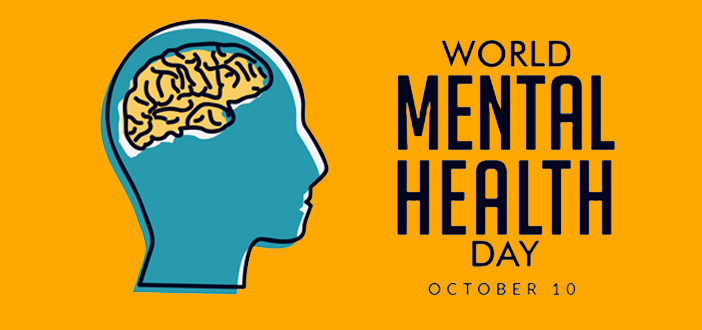
AS the World marks Mental Health Day, attention is again drawn to the failure of Nigerian government to enact laws that protect mental health patients from stigma and discrimination.
Experts have described the existing Nigerian legislation on mental health as archaic. The legislation is named the Lunacy Act of 1958, enacted two years before Nigeria’s Independence from Britain.
A research published on Omni International indicates that the Act does not meet mental health policy global standards and regulations set by the United Nations. It finds out that the Act confined the mentally ill people in non-therapeutic, overcrowded, unsanitary, and dilapidated facilities in Nigeria.
A bill was introduced to the National Assembly in 2003, but was not passed into law. In 2013, it was re-introduced, yet it has not been signed into law. The bill is for an act to repeal the Lunacy Act.
Jolaade Phillips, the Campaign Director and Communication Officer of Mentally Aware Nigeria Initiative (MANI) told The ICIR that the bill if enacted into will promote and strengthen mental health in the country. He said the rate of stigmatization and discrimination against the illness will reduce if the bill is enacted.
Phillips pointed out that a lot of hospitals in Nigeria have no focus on mental health. “As a country, we should have a mental health Act if we want to improve the status quo,” he said. “People should have more access to mental health treatment at a more affordable rate.”
According to the World Health Organization (WHO), the burden of mental disorders continues to grow in all countries in the world.
The WHO-AIMS report of 2006, which is an assessment of the mental health system in Nigeria shows that there is considerable neglect of mental health issues in Nigeria. However, 12 years after this report, the Nigerian government appears non-nonchalant in addressing the issues.
The WHO mental health Nigeria’s profile in 2014
A Nigeria Health Watch report by Ukwuori-Gisela kalu, a consultant clinical psychologist, noted that the lack of active policy and legislation for mental health has made the spiritual and traditional treatment of mental illness to increase.
The consultant said that a mentally aware Nigeria could exist if only there is a robust mental health law, policy and measures of treatment.
Timothy Adewale, the Medical Director of Neuro-Psychiatric Hospital, Aro, Abeokuta, Ogun State, on Wednesday at a press conference to mark the 2018 World Health Day, said the hospital admits a record number of new patients with mental illness every month.
“On a monthly basis, we have record of 250 to 300 patients in our hospital. I am not talking about those ones who are already with us. These are the new patients,” he said.
Adewale urged the National Assembly to pass the Mental Health Bill.
Apart from the legislation, Nigeria has not funded mental illness prevention and treatment the way it should.
According to the 2017 capital release document obtained from the Office of the Accountant General of the Federation by The ICIR, Federal Neuro-Psychiatric Hospital, Kware, Sokoto, budgeted N89.8 million for capital projects but only N44.8 million was released.
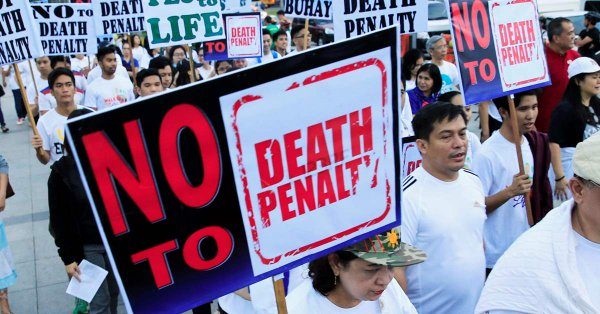
THE Amnesty International (AI) has revealed that a total of 993 executions were carried out in 23 countries around the world in 2017, noting that death penalty is a violation of the right to life.
In a publication released on Wednesday to mark the World Day Against the Death Penalty, AI said most executions took place in Iran, Saudi Arabia, Iraq and Pakistan.
These figures, the human rights organization noted did not include the thousands of executions carried out in China, where data on the use of the death penalty remained classified as a state secret.
But it said that figures were down by 4 per cent from 2016 and 39 per cent from 2015.
“The death penalty is a violation of the right to life as proclaimed in the Universal Declaration of Human Rights. It is the ultimate cruel, inhuman and degrading punishment,” AI said.
It advocated that prisoners under sentence of death must be treated with humanity and dignity and held in conditions that meet international human rights law and standards.
The organization said it is launching a new campaign to pressure five countries, Belarus, Ghana, Iran, Japan and Malaysia, to put an end to inhumane conditions of detention for prisoners sentenced to death and move towards full abolition of the death penalty.
“No matter what crime they may have committed, no one should be forced to endure inhumane conditions of detention. “Yet in many cases, prisoners under sentence of death are kept in strict isolation, lack access to necessary medications and live with constant anxiety from the threat of execution,” said Stephen Cockburn, Deputy Director of AI’s Global Issues Programme.
“The fact that some governments notify prisoners and their relatives a few days or, in some cases, a few moments before their execution is cruel. All governments retaining the death penalty must immediately abolish it and put an end to the appalling conditions of detention that too many death row prisoners are forced to endure.”
While Amnesty International has documented appalling abuses across the world, its new campaign highlights cases in Belarus, Ghana, Iran, Japan and Malaysia, where death penalty cruelty is rife.
In Ghana, death row prisoners have said they often do not have access to medication to treat illnesses and long-term conditions.
On its Twitter handle, AI asked the government of Ghana to abolish death penalty as a total of 160 people were on death row in the country as of end of 2017.
— Amnesty International Nigeria (@AmnestyNigeria) October 10, 2018
AI said Mohammad Reza Haddadi in Iran, on death row since he was 15 years old, has been forced to endure the mental torture of having his execution scheduled and postponed at least six times over the past 14 years.
Matsumoto Kenji, in Japan, has developed a delusional disorder most likely as a result of his prolonged detention in solitary confinement as he awaits execution. Also, Hoo Yew Wah, in Malaysia, lodged a petition for clemency in 2014, but is yet to receive any further news.
AI said secrecy surrounding the use of the death penalty is also prevalent in Belarus, where executions are strictly concealed from the public and are carried out without giving any notice to the prisoners, their families or legal representatives.
AI said it opposes the death penalty in all cases without exception regardless of the nature or circumstances of the crime, guilt, innocence or other characteristics of the individual or the method used by the state to carry out the execution.
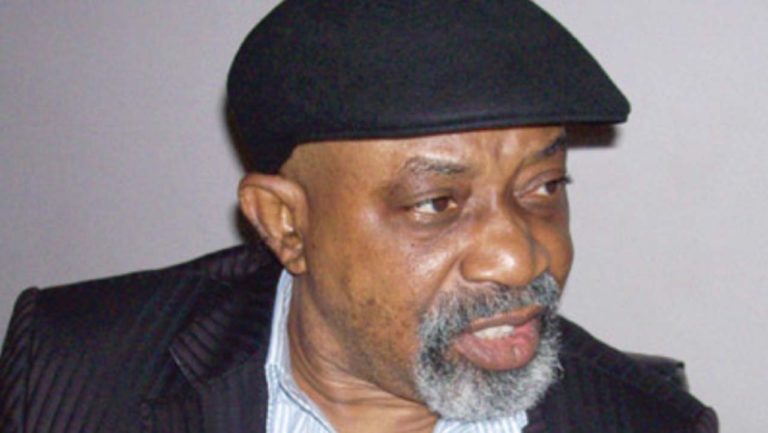
THE Minister of Labour and Employment, Chris Ngige says contrary to report that the federal government had agreed to pay N30,000 as the new minimum wage to workers, the government can actually pay N24,000.
While speaking in Abuja at the end of the weekly Federal Executive Council (FEC) meeting at the Presidential Villa, the Minister said the federal government has not shifted ground on its N24, 000 proposal, saying the issue of national minimum wage is a law that is binding on all.
“It is not cast in stone that because two sectors have agreed on N30, 000, it should be binding on others. The issue of national minimum wage is a law that is binding on all,” he said.
According to him, the state governments, the private sector and the organized labour proposed N20,000, N25,000 and N30,000 as national minimum wage respectively.
He added that the federal government would continue to discuss with the organized labour and all other stakeholders informally to arrive at a figure.
The Organised Labour, comprising of the Nigeria Labour Congress (NLC) and the Trade Union Congress (TUC), has proposed N56, 000 as minimum wage for workers.
The two labour bodies directed their members to commence an indefinite strike nationwide on September 27 following failure of government to meet their request on the new minimum wage.
The five-day strike which paralised economic and other activities across the country was suspended on September 30 to give room for negotiation between the labour representatives and the government team.
The federal government said it proposed N24,000 as the new minimum wage for civil servants after consultations.
There have been media reports quoting the NLC President, Ayuba Wabba as saying that the tri-partite committee discussing the demand for new minimum wage has agreed to increase it from the current N19,200 to N30,000.
Ngige said, “such information is not true.”
He explained that when the committee reconvened on October 5, after the NLC had called off its nationwide strike, “the organised labour came down to N30,000, the organised private sector came down to N25,000.”
He also said the federal government had to consult with the 36 state governors, adding that the government is still “consulting and negotiations is ongoing.”
He said in accordance with Convention 131 of International Labour Organisation, the most important thing to consider in fixing the new minimum wage is the ability to pay.
THE International Centre for Investigative Reporting (ICIR) in collaboration with First Draft is to partner with The Guardian and other stakeholders in the country to combat misinformation ahead of 2019 general election.
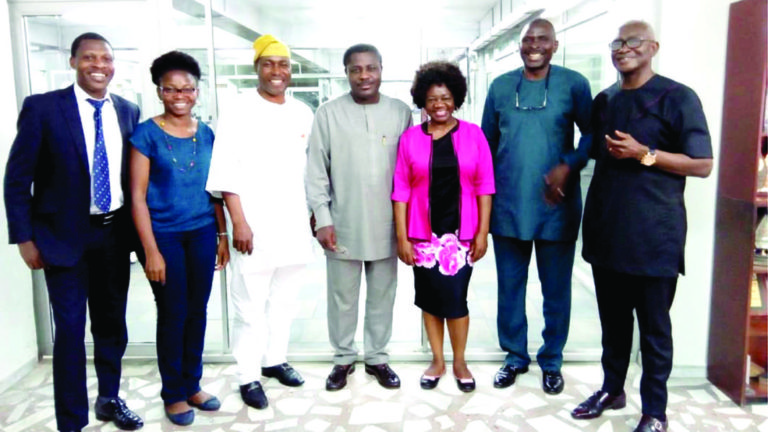
The ICIR team, comprising its Executive Director, Dayo Aiyetan; Editor, Ajibola Amzat and Programme Officer, Gloria Agema paid The Guardian a courtesy visit yesterday to discuss the project with the newspaper’s team.
Aiyetan explained that the goal of the project was to deploy the resources of collaborating media organisations in Nigeria and the United States to strengthen fact-checking and accountable journalism in the country.
“The stakeholder collaboration on fake news will allow various media partners to carry out real-time verification of rumours, manipulated photographs and videos on social platforms and debunk them before they go viral,” Aiyetan said.
He said the verification project would not only improve the public trust on the media, but also promote knowledge sharing among the partner newsrooms across the country.
The project is expected to commence in November with the training of journalists from the selected organisations including, The Guardian, Punch, Channels television, The Nation, TVC, Premium Times, Sahara Reporters, University of Lagos, BBC Hausa, News Agency of Nigeria (NAN), Tribune, The Sun and The Cable.
“We believe the best way to fight the threat of fake news and save the integrity of our profession in the country is for the credible newsrooms in the country to collaborate on this verification project,” Aiyetan said.
“Lessons learnt from this project will inform future academic researches and publication,” he added.
FINDINGS by The ICIR show that only N55 billion was allocated to 14 state universities by their state governments across 12 states in 2018. This amount comprises both the recurrent and capital expenditure of the universities.
In comparison, N46 billion was earmarked for the three premier universities – University of Ibadan, University of Nigeria and Ahmadu Bello University – in their combined 2018 budgets.
Across the border, the State of Missouri in the United States budgeted N83.2 billion ($229.4million) to four high schools in Columbia school district in 2018, according to National Center of Statistics. This amount is far higher than the combined budgets of the 14 state universities in Nigeria.
The state universities are Delta State University, Ambrose Ali University, Edo University, Kaduna State University,Kano University of Science and Technology, Umaru Musa Yar’dua University, and Adekunle Ajasin University.
Others are Ondo State University of Science and Technology ,Ondo State University of Medical Sciences, Yobe State University, Kogi State University, Ekiti State University, and Nasarawa State University.
State governments have continued to create universities without proper funding of existing ones. Between 2010 and 2018, 12 state universities have been established with some states creating second university or even third university.
Ondo State has three universities but budgeted less than N2 billion for the three universities. Adekunle Ajasin University’s 2018 budget is just N200 million. The other state university, Ondo State University Science and Technology has N1.2 billion while the third university in the state, Ondo State University of Medical Science is N500 million.
Other state universities are also facing poor funding.
Ephraim Iliya, a non-teaching staff at the Department of Microbiology in Imo State Universty, Owerri, decried the poor state of facilities at the school, attributing it to the meager fund received from the state government which is spent mostly on overhead and administrative costs.
“The funds received from the state government are mostly spent on administrative costs because there is no existing physical structure that has been in place in the last five years. The lecture halls are so crowded with students that the actual number of students exceeds the capacity of the school,” Iliya said.
Despite the failure of the Imo State government to fund the state’s university, the state announced last year the inauguration of another new institution known as Eastern Palm University. At the inauguration of the university, Governor Rochas Okorocha said that the structure on ground for the university exceeded that of any other university at the point of takeoff.
The benchmark recommended by the United Nations Educational, Scientific and Cultural Organisation (UNESCO) specifies that governments should set aside at least, 15 – 20 per cent of their total budgets for education. State governments in Nigeria do not comply with this recommendation as most state-run tertiary institutions are weakened by inadequate funding.
As much as the existing state universities are poorly funded, the National Universities Commission (NUC), does not seem to have any problem with the creation of additional state universities.
Ibrahim Yakassai, NUC’s Director of Information, who spoke to The ICIR, said he did not think that the proliferation of states universities was a problem. “We need more universities in the country than we currently have to address the problems of overcrowding in our universities,” he said.
“If you check the records, you will see that the number of people applying to get into higher institutions has increased. So, I don’t think there is anything wrong with building more,” he said.
Yakassai acknowledged that the problem is not the creation of additional universities by the states but poor funding of existing ones. “The major problem is poor funding to these schools. If that is addressed, then everything is settled,” he said.
Not everyone agrees with Yakassai. Mahmud Abdulsalam, a student of Ibrahim Badamasi Babangida University, Lapai,Niger State, was skeptical about state governments’ commitment to ensure high standard in the newly established schools because of their poor track record in maintaining existing ones.
Kingsley Amatawenze, the convener of the Readers Square, a Benue State-based non-governmental organisation said, “the state government cares less for the state of these schools after they’ve been created. They would rather build an empty school to score cheap political points rather than equip an already established school to function optimally”.
ABDULMUMIN Jibrin, former Chairman of the House of Representatives Committee on Appropriation, is one of President Muhammadu Buhari’s ardent supporters for the 2019 presidential election. But just about a year ago, the same Jubrin had openly urged Buhari to resign and “go and rest”.
Jibrin, representing Kiru/Bebeji federal constituency of Kano State, has endured a running battle with the leadership of the House of Representatives, having accused the Speaker, Yakubu Dogara, as well as three other principal officers of the House, of inserting illegal projects worth billions of naira in the 2016 budget.
On Wednesday, Jibrin posted a tweet describing Buhari as a “decent man” who does not “play dirty” politics, and whose “personal qualities and record in office” speak volumes.
PMB is unarguably a decent man in all ramifications. In all his contest, he never plays dirty. He sticks to issues because that's where his strength lies. Our supporters should learn from that. PMB has enough area of strength..from his personal qualities and record in office pic.twitter.com/4Xd0suYwCd
But it was the same Jibrin, who, on March 31, 2017, while still serving the suspension imposed on him for his allegations against the Speaker and others, posted a lengthy thread on Twitter, calling on those who love the President to prevail on him to quit the job and rest.
At the time, Buhari was still battling with the unknown ailment that saw him spend over 150 days (cumulatively) in a London hospital.
In that Twitter post titled, “PMB, TIME TO LET GO”, Jibrin noted that Buhari’s illness was slowing down the running of affairs in the country. “So many issues are left unattended even small issues that a presidential cough can deal with are left hanging”, he wrote.
Jibrin also suggested that the Buhari family could be compensated with a ministerial appointment to the wife of the President, Aisha Buhari, whom he said “has paid her dues to the APC, anyway”.
“At PMB’s age, working actively for over 50 years, even without his present health condition, his capacity will be greatly challenged,” Jibrin wrote.
“Life and health belong to God but the more I see pictures of Mr President, the more I am convinced he needs to go and rest. He needs it!”
Jibrin has since deleted the tweets from his handle but he is yet to go public with the reasons he is now campaigning vigorously for Buhari’s re-election. Calls and emails to him were not responded.