Home Blog Page 2511

ICPC partners CITN to toughen fight against tax defaulters

THE Independent Corrupt Practices and other related offences Commission (ICPC) has signed a Memorandum of Understanding (MoU) with the Chartered Institute of Taxation of Nigeria (CITN) to strengthen the Commission’s ability to better tackle tax-related offences.

According to ICPC spokesperson, Rasheedat Okoduwa, the MoU was signed by the Acting Chairman of ICPC, Musa Abubakar, and the CITN President, Cyril Ede, at a brief ceremony which took place at the Commission’s headquarters in Abuja.

Speaking during the event, Abubakar said that tax evasion was an offence punishable under the ICPC Act, and that training in areas of taxation would boost the performance of operatives investigating tax and non-tax related matters.

He expressed optimism that having investigators and prosecutors of the Commission well-grounded in specialized areas will make the prosecution of offenders easier.

Also speaking at the event, the CITN President, explained that part of the institute’s objectives was to ensure that corruption did not have a place in tax administration.

He stressed that law enforcement agents need to have the requisite knowledge, and undergo continuous training and capacity development programmes in order to be able to confront the challenges of tax evasion.

Under the MOU, the CITN commits to training ICPC operatives into experts in the area of taxation, and equipping them with the required knowledge needed to fight corruption in the tax sector.

In a related development, the British High Commission in Nigeria has described the ICPC as “a partner of choice to the British government”.

Officials of the British High Commission during a visit to the ICPC headquarters

The Regional Manager, Africa for Immigration Enforcement, British High Commission, B. Crosby, gave the commendation when during a visit to the commission’s headquarters in the company of the Director of Immigration Intelligence, United Kingdom, David Pennant.

Crosby expressed his appreciation to the ICPC for what he described as the commission’s invaluable support to the British government, and for the effort at curbing corruption in Nigeria and tackling illegal migration.

South Africa’s finance minister resigns over Guptas’ corruption scandal

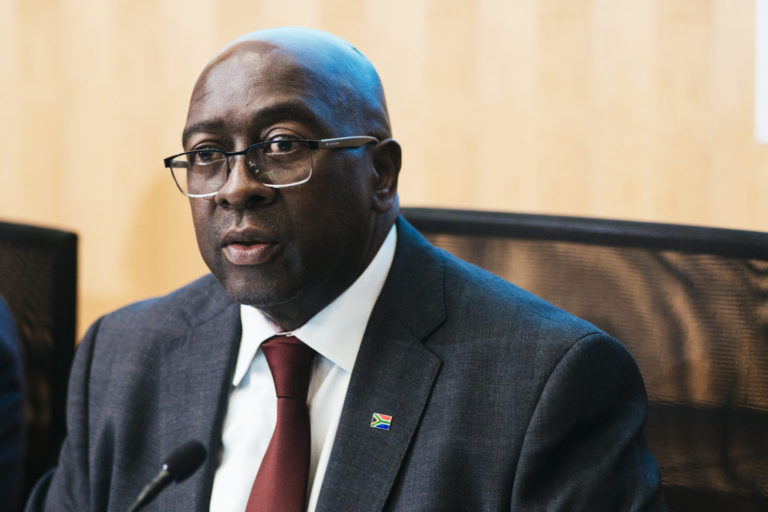
THE finance minister of South Africa, Nhlanhla Nene, has resigned from office after admitting meeting the Gupta family members, who have been accused of corruption.

The Guptas, a well-known business family in South Africa, were accused of working with the former President Jacob Zuma to get government contracts and determine cabinet appointments.

According to BBC, Cyril Ramaphosa, the country’s President said he accepted the minister’s resignation in the interests of good governance.

Nene was known for his support to President Ramaphosa to tackle graft that allegedly flourished under ex-president Zuma who was ousted in February 2018.

But Nene confessed to a judiciary inquiry last week that he had met with the Guptas at their home and offices six times, contradictory to his earlier statement that he had only met them in passing at special occasions.

Ramaphosa said there was no suggestion that Nene had done anything illegal in meeting the businessmen during his stint as deputy finance minister and finance minister in Zuma’s government

“It’s a measure of his character and commitment to the country that he has decided to resign despite not being implicated in any wrongdoing,” Ramaphosa said.

He added that Nene feared his testimony to the inquiry “detracted from the important task of serving the people of South Africa, particularly, as we work to re-establish public trust in government”

He said that the minister has been under intense political pressure to step down since making the admission.

Opposition groups in South Africa including the Democratic Alliance (DA) and the Economic Freedom Fighters (EFF) had called for Nene’s resignation.

“The DA’s complaint against Nene will be investigated,” said Oupa Segalwe, acting spokesman at Public Protector, South Africa’s constitutionally-mandated anti-graft watchdog.

The state prosecutor would investigate Nene for possibly breaching the executive code of ethics when he was the deputy minister.

The Guptas have three notable brothers accused of fraudulently profiting from vast government contracts, energy and transport deals under Zuma.

Zwelinzinma Vavi, an anti-corruption campaigner and former trades unionist described the Guptas ties with Zuma as a state capture.

Nene wrote an apology letter, after giving his testimony. “I was wrong in meeting the Guptas at their residence and not in my office or at least a public place,” the letter read.

He said those visits cast a shadow on his conduct as a public office bearer. “I deeply regret these lapses and beg your forgiveness.”

Ramaphosa appointed Tito Mboweni, a former central bank chief as the new finance minister on Tuesday.

Buhari bombards Senate with letters, requests approval of $2.78 billion Eurobonds

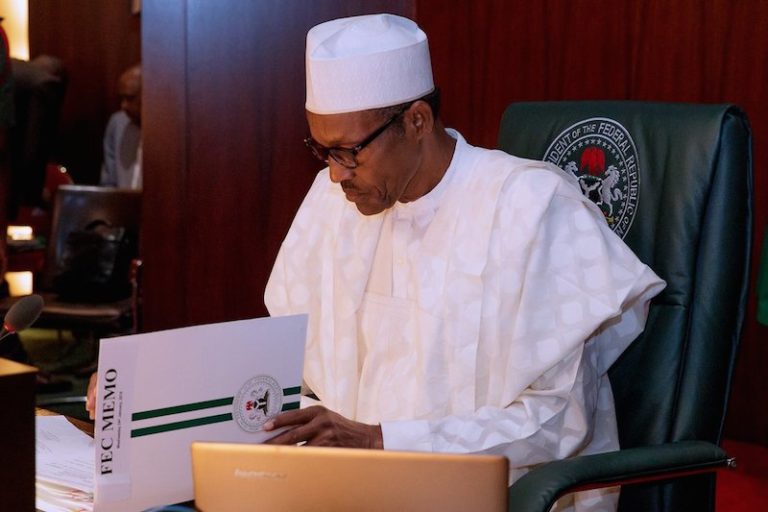
PRESIDENT Muhammadu Buhari on Tuesday requested for National Assembly resolution to raise $2.78 billion from the International Capital Market for part-funding of the 2018 budget.

The Senate President, Bukola Saraki read the President’s request from a letter dated July 23 during plenary.

This was part of the high-points of the plenary when the Senate reconvened on Tuesday after it went on recess on July 25, 2018.

He explained that the loan would be raised from Eurobonds and other securities in the international capital market.

According to the letter, President Buhari noted that the amount, approved in the 2018 Appropriation Act, would be used to finance deficits and key infrastructure projects in the 2018 budget.

He also requested for the legislative approval for an external capital sourcing of $82.54 million to refinance the balance of $500 million matured Eurobonds in the international capital market.

The requests, the President explained, were pursuant to Section 21(1) and 27(1) of the Debt Management Office (Establishment, Etc.) Act of 2003.

Beyond that, he also asked for the Senate consideration and approval of N346 billion as the 2018 budget proposal of the Niger Delta Development Commission (NDDC).

The figure is N18 billion lower than the N364 billion budget approved for the commission in the 2017 fiscal year.

A breakdown of the proposed amount shows a total recurrent expenditure of N32 billion and cumulative capital provision of N314 billion.

The president listed sources of revenue for the Commission in 2018 to include federal government contribution (N81.8 billion) and unpaid arrears by the federal government (N33.9 billion). Others are contributions from oil companies and others (N220 billion) and other “realised income” (N150 million).

Buhari also presented an Executive Bill titled ‘Suppression of Piracy and Other Maritime Offences Bill, 2018″ to the Senate for consideration and passage.

In a separate letter dated July 20, Buhari said the bill was intended to curtail illegal activities of pirates at sea and to reduce oil theft in domestic and international waters.

He added that the proposed legislation would also domesticate relevant provisions of international treaties to which Nigeria is signatory.

One of the treaties, according to the president, is the United Nations Convention on the Law of the Sea, 1982 (UNCLOS II) relating to piracy.

He identified another as the Convention for the Suppression of Unlawful Acts (SUA) against the Safety of Maritime Navigation, 1988 and its protocols.

In another letter dated September 10, the President Buhari also requested Senate to confirm the appointment of Olanipekun Olukoyede as Secretary of the Economic and Financial Crimes Commission (EFCC).

REPORT CARD: Despite Buhari’s 8000MW claim, Nigerians still live in darkness

AFTER about eight months of blackout resulted to losing all his customers, Abdurahman  Ilyas, owner and operator of a grinding shop is counting his losses. The community where he located his machines was cut off from the power grid after a protest by residents against paying for darkness as against power supply.

The residents revolted against officials of Abuja Electricity Distribution Company (AEDC) who went on mass disconnections for non-payment of electricity bills. But aggrieved residents chased them away, complaining that they have had to pay for more ‘darkness’ than power. The AEDC officials then decided to disconnect their power source. To many of them, they prefer to live in darkness than to pay for the service they did not consume.

Already, Ilyas has relocated his grinding machines from Garam, an agrarian town in Tafa Local Government Area of Local of Niger State to another village where there is fair power supply. Many other artisans and other residents have since been relocating from the community as blackout persists and no end in sight.

“We have not been enjoying good power supply and they were giving us crazy bill,”Ilyas said. “Now, they have disconnected us and everywhere is in darkness, if they can’t give us 24hours light, we won’t allow them to reconnect us.”

Garam borders Bwari Area Council in the Federal Capital Territory, but it residents have been living with irregular power supply before February 2018 when they were finally cut off the power grid.

“Even before they cut us off, we could not boast of having light for eight hours,” said Smart Osagie, owner of dry cleaning and laundry outfit in the community. “I spend more on fuel to power my business and all the gains go into buying fuel. Imagine, the AEDC people are still giving us crazy bills when we didn’t enjoy electricity.”

inhabitants  of the community had complained about the poor power supply to the area by the AEDC and the ‘crazy bill’ that they were being served but there was no improvement until that fateful morning around mid-February when AEDC officials were sent away and in retaliation they cut off the area from the power source.

Eight months on, the residents are demanding for 24 hour power supply but the AEDC is proposing to them eight hours. They are both unwilling to shift ground and the community has remained without power supply.

Despite claims by President Muhammadu Buhari that power generation has increased from 2000MW that he inherited to 8000 megawatts, many communities across the country have not witnessed improved power supply since May 29, 2015 that Buhari was sworn in as president.

 From 2000 to 8000MW: Has power got better under Buhari?

 Buhari in his acceptance speech as the presidential candidate of All Progressives Congress (APC) in the 2019 elections, he claimed that power generation has increased to 8000MW.

Many rural and urban communities, including the Federal Capital Territory (FCT) are still not enjoying uninterrupted power supply, three years into the administration of President Buhari. And the epileptic power supply keeps the cost of doing business high for both small and large scale business owners in the country.

Ahead of his election in 2015, Buhari, then a presidential candidate of APC promised Nigerians that he would increase power generation in the country to 20,000MW in the first four years of his administration if elected Nigerian president.

When he was making the promise as part of his campaign manifesto, power generation was hovering around 5000MW under his predecessor, Goodluck Jonathan. The national peak demand is estimated to be 19,100MW.

On Sunday, October 7, 2018 in his acceptance speech as the presidential candidate of APC in the 2019 election, the President told the world that Nigeria’s power generation has reached 8,000 megawatts.

“Power generation capacity has reached 8,000MW against less than 4,600 when we came into office,” he said. But this claim is not up to the half of what he promised Nigerians three years ago and there is no likelihood that the power generation would cross that line before the end of his tenure in May 2019.

Buhari also claimed that, “we are executing Independent Power Projects in 9 Federal Universities to deliver uninterrupted power supply and we intend to expand to a total of 37 universities.”

But The ICIR findings showed that after the official inauguration of these projects at the University of Ibadan (UI) and University of Calabar, the projects have not taken off.

In January 2018 alone, the system collapse experienced in the power sector cost the Federal Government more than N4.6billion revenue.

In addition to that, a total of 9,162.7 MW of power were not generated as a result of non-supply of gas to power generation companies (Gencos) from January 2 to 4 2018 due to the system collapse, according to analysis of statistics from the Advisory Power Team in the office of Vice President Yemi Osinbajo. The average power generation for that month stood at 3,723MW.

Due to another grid collapse in June 2018, the Transmission Company of Nigeria (TCN) announced that there was a drop in the electricity generated into the national grid by a total of 1,087MW.

The weakness of the Nigerian power grid came to fore as second collapse in two months  was recorded on the 8th of June with only 41MW  generated across the country. The collapse subsequently led to the shutdown of power plants nationwide. As of June, Nigeria had experienced a total of seven national grid collapses in 2018 alone.

Like Jonathan, Buhari yet to deliver on his improved power generation promise

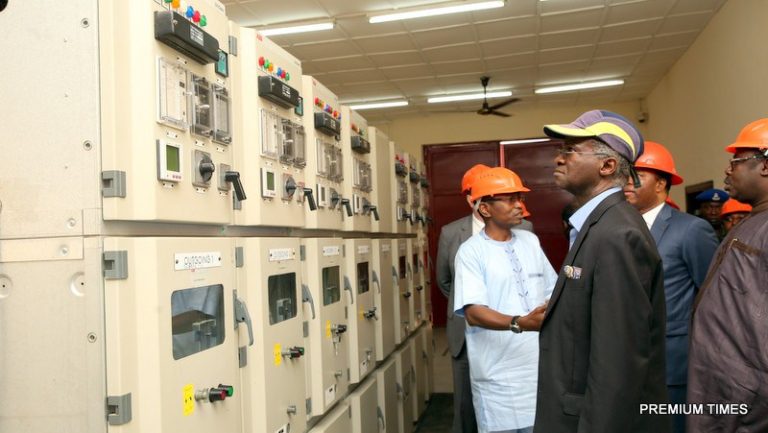
Two months after the grid collapse, Babatunde Fashola, Minister of Power, Works and Housing, told top directors, heads of units and chief executives of agencies and parastatals that the nation’s power generation had hit 7000MW.

“Three years ago, the story was that power generation was the main problem of Nigeria. The story was that the distribution companies were complaining that they did not have enough energy to distribute to Nigerians,” Fashola said in Calabar, Cross Rivers State

“We were distributing averagely 2,690MW of electricity to Nigerians, but today, that story has changed. Distribution has risen to 5,222MW, an all time national high. Transmission has reached 7,000 while generation has reached 7000. The problem has not finished but all we can say is that we have made progress.”

Many Nigerians still contend that this has not translated to improved power supply for domestic and industrial use in Nigeria. Even if these claims of power generation by the Buhari administration are true. Buhari has not delivered on his campaign promise of 20,000MW in four years. Like his predecessor, Buhari is still far from meeting up the expectation of Nigerians whom he had promised uninterrupted 24-hour power supply.

In 2011 when he was campaigning to be elected the substantive president after the death of Umaru Musa Yar’Adua, former President Jonathan also promised to improve power supply in the country in four years.

“If I’m voted into power, within the next four years, the issue of power will become a thing of the past. Four years is enough for anyone in power to make a significant improvement and if I can’t improve on power within this period, it then means I cannot do anything,” he told diplomats at the United Nations Economic Commission for Africa (UNECA), and the African Union, AU, in Addis-Ababa.

Power generation under Jonathan in 2010 after the demise of Yar’Adua was about 3,000MW. However, power generation reportedly dipped to 2000MW in 2015 when he was handing over to Buhari.

Buhari had accused the Peoples Democratic Party (PDP) of wasting billions of naira on non-existent power and managing to add a yearly average of 87MW of electricity. He blamed PDP for massive failure to substantially raise power generation and distribution despite spending between $16 billion and $20 billion.

“Nearly 16 years of PDP administration gave this country a miserly addition of 1,400 Mega Watts against the expenditure of more than $16 billion. That translates to 18.5MW per annum,” he said.

Nigerians still paying more to fuel generator

According to a report by The Point, Nigerians spent about N6.5trillion in 2017 to fuel their power generating machines, despite claims by the Federal Government that power distribution increased from 2,690MW in 2015 to 5,000MW by the end of 2017.

The report pointed out that average hours of power supply availability to state capitals and major cities in the nation dropped by over 50 per cent within the period under review.

For instance, while average hours of supply to registered consumers in the Federal Capital Territory, Nasarrawa, Niger, Kogi (Abuja Distribution Company) dropped from 20 to 15.  Supply to their counterparts in Edo, Delta, Ondo, Ekiti (Benin Disco); Lagos South (Eko Disco), Lagos North (Ikeja Disco); Oyo, Ogun, Osun, Kwara (Ibadan Disco) dropped from 16 to 11, 13 to 8.4, 16 to 10 and 12 to 6 hours, respectively.

Others like Yola, Yobe, Borno, Taraba (Yola Disco); Kano, Jigawa, Katsina (Kano Disco); Plateau, Bauch, Gombe, Benue (Jos Disco), and Cross river, Akwa Ibom, Rivers, Bayelsa (Port Harcourt Disco), also witnessed a drop, from 10 to 5.1, 15.2 to 8.1, 16 to 13.1, and 23.1 to 20.2 hours, respectively.

Plights of private businesses

The manufacturing sector appears to be the worst hit in the country. Despite the claims by the Federal Government that industries benefitted more from the increased power supply in 2017, operators in the sector are aggrieved over the expenses incurred in fueling, maintaining of generators and provision of alternative sources of power.

According to a survey conducted by the Manufacturers Association of Nigeria (MAN), manufacturers (both Small and Medium Enterprises and large firms) spent over N4 trillion on fuel and maintenance of generators and alternative power sources in the last one year.

A further analysis of the yet-to-be released result indicated that manufacturers spent over N2 trillion on fuel, maintenance of generators and independent power generation in the first half of 2017 as against a little over N1 trillion spent in 2016, showing an increase of about N1 trillion.

This spending also increased by about N2 trillion at the end of the second half of 2017.

World Post Day: NIPOST launches banking services, customer care centre

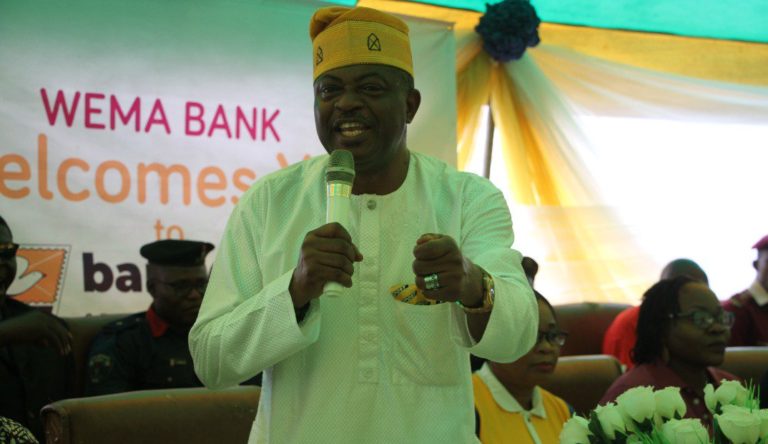
TAKING advantage of the 2018 World Post Day, the Nigeria Postal Service (NIPOST) has launched a new banking service in collaboration with two commercial banks in Nigeria: Wema Bank and Keystone Bank.

The event was held on Tuesday at the Post Office, Oyo town, Oyo state. It was to celebrate NIPOST’s evolution beyond mailing to financial services through agency banking.

In his address, Dotun Ifebogun, Head of Retail and SME Banking at Wema Bank, said NIPOST is now able to carry out banking transactions as well as BVN enrollment, deposits and withdrawal. The new services include deposit of money, withdrawal, payment for external examinations, government and utility fees, and so on.

Ifebogun also said Wema Bank has been engaging with NIPOST for some months in a bid to revolutionise the postal service, adding that the partnership between the two groups goes beyond Oyo town to all communities in Nigeria.

Ayo Ladigbolu, an Archbishop Emeritus of the Methodist Church of Nigeria, who represented the Alaafin of Oyo at the event, said NIPOST is the only organisation that has successfully connected all communities in Nigeria and the world.

“NIPOST has built a foundation of trust that I can boldly say that you should all embrace all products and services that is being launched by NIPOST today,” he said.

Officials of NIPOST during an awareness rally to mark the 2018 World Post Day

Bisi Adegbuyi, Post Master-General and CEO of NIPOST, in his remark said the new services launched by the post shows that it is poised to fulfilling its responsibility “by delivering good and happiness to the world”.

He charged Nigerians to take advantage of the broad range of services, saying utility bills can now be paid at any post office.

The service also launched a “revitalized and renewed” customer contact centre, which operates at all times, in order to enhance customer relations. The centre attends to customers in English, Yoruba, Hausa and Igbo, and may be reached through 07000647678 or 07000nipost.

Minister of Communications, Adebayo Shittu, had earlier said moves by NIPOST to venture into rural banking are aimed at taking banking services to rural dwellers who lack them and making the agency the biggest revenue-generating establishment of the federal government.

“We hope to establish NIPOST banking and financing in areas where banks don’t have sufficient presence,” Shittu said in August at a stakeholders’ conference organised by Postmaster General of the Federation in Lagos.

“We shall also establish NIPOST properties limited,” he said. “NIPOST has many landed properties scattered across the country and they are going to be used for the properties investments to bring a lot of money into the coffers of NIPOST.

“We are also establishing the NIPOST transport and logistics company, and to add to this is the establishment of NIPOST e-commerce services, which will carter for e-governance particularly with the application and delivery of drivers licenses, vehicle documents and international passports.”

The World Post Day is celebrated annually as a means of drawing attention to significance of postal services across the world, as well as highlighting how they have contributed to various communities.

The event was first declared in Tokyo, Japan, at the 1969 United Postal Congress, and is celebrated on October 9 to coincide with the date the Universal Postal Union was established in 1874.

The selected theme for 2018 is: ‘Imagine you are a letter travelling through time. What message do you wish to convey to your readers?’

US Ambassador to the United Nations, Nikki Haley resigns

THE United State’s Ambassador to the United Nations, Nikki Haley, has resigned. 

Reports from the US media say Haley’s resignation came as a surprise to a number of senior foreign policy officials in the Trump administration. She is one of President Trump’s inner cabinet and was appointed just four days after Trump took office.

Although prior to Trump’s presidency, Haley had been one of his most frequent critics and she endorsed Marco Rubio during the Republican primary. Her appointment was viewed, at the time, as an Olive branch from Trump.

President Trump accepted Haley’s resignation, saying she had told him six months ago that she wanted to take some time off.

Haley served as governor of South Carolina from 2011 to 2017, the first woman and Indian-American to serve as governor in that state.

As an Ambassador to the UN, Haley was quite outspoken and had overseen the U.S’ recent exit from the UN Human Rights Council, which Haley referred to as a “failure”.


READ ALSO:

Speaking to White House correspondents on Tuesday, Halley said she will not be leaving office until the end of the year in order to give room for a new ambassador to take over.

She also stressed that she will not be running for any office in the next US election by 2020, but will campaign for Trump. And in his response, Trump said the door is always open for Haley to return to the administration in any role she pleases. “You can have your pick,” he said.

Before accepting Trump’s appointment, Haley had given him the condition that she would be allowed to be herself and say what she wanted.  She also demanded to be a member of the Cabinet and the National Security Council, privileges enjoyed by her predecessors during the Obama administration.

“I said ‘I am a policy girl, I want to be part of the decision-making process. He (Trump) said, ‘done.’ And I said, ‘I don’t want to be a wallflower or a talking head. I want to be able to speak my mind.’ He said, ‘That is why I asked you to do this. In all honesty, I didn’t think they were going to take me up on everything I asked for. And they gave me all that. So how do you turn that down?” , Haley said during an interview with CNN in 2017.

And in the more than one and a half years that she served as the US Ambassador to the UN, Haley did speak her mind.

Wike: I supported Tambuwal openly but I’ll now work for Atiku’s victory

GOVERNOR of Rivers State, Nyesom Wike, says he will work to ensure that Atiku Abubakar emerges victorious in next year’s presidential election, even though the former Vice President was not his preferred candidate during the Peoples Democratic Party’s primary election on Saturday.

Wike had supported Sokoto State Governor, Aminu Tambuwal, during the primary, but the latter polled just 693 votes to finish second behind Atiku who garnered a total of 1,532 votes.

In the buildup [to the primary election], I had a candidate and I supported my candidate openly, that doesn’t translate to not accepting the outcome which was sincerely in favour of Alhaji Atiku. We will stop at nothing in the support of Atiku to make sure the party comes out victorious in 2019,” Wike tweeted on Tuesday.

Earlier on Monday, Wike had described Atiku as “the next President of Nigeria come 2019″, during Atiku’s visit to the Rivers State Government House.

There had been reports that the PDP governors could work against Atiku since their colleague, Tambuwal, did not clinch the presidential ticket.

In the aftermath of the PDP primary election, Governor of Ekiti State, Ayodele Fayose, threatened that he could leave the Party if matters got out of hand.

“We have no regret aligning with Governor Wike to support Governor Tambuwal for the presidential ticket. We have no apologies either.

“We kept the party alive and strong when most men became ladies. We never compromised. If any group feels it can do it alone, we will see how far they can go

“I may renounce my membership of the party if the need arises. In the main time, myself and others will continue with our consultations while watching the turn of events,” Fayose said in a statement on Monday.

Oil-rich Delta State owes 36 months pension arrears, number one in Nigeria

PENSIONERS in Delta State has not been paid their entitlements for three years, according to a recent survey published by BudgIT, a civil society organisation that analyses and simplifies Nigeria’s budget for easier understanding by ordinary citizens.

The survey, which tracked the level of indebtedness of all the states of the federation in terms of unpaid salary and pension arrears, showed that Delta State owes its pensioners a total of 36 months arrears.

This means that pensioners in Delta State have not been paid since Ifeanyi Okowa took over as the governor of the state in May 2015. Okowa is currently campaigning for a second term in office come 2019 general elections.

In 2017, Delta State collected the highest amount in federal allocations, less than only Akwa Ibom and Rivers states. But while Rivers owes no salary or pension arrears, Akwa Ibom pensioners are yet to be paid in the last 12 months.

On how it arrived at the figures, BudgIT told The ICIR that “the survey was conducted through a questionnaire by our Project tracking officers in all the 36 states. This questionnaire was given to workers across these categories to fill,” said BudgIT’s online assistant whose name was given simply as Olaniyi.

Attempts by The ICIR to hear from an official of the Delta State government was unsuccessful as phone numbers gotten from the state’s website were switched off and an e-mail sent to an address on the website, admin@deltastate.gov.ng, is yet to be replied as at the time of this report.

The story is also similar in Imo State, where the Rochas Okorocha-led administration owes pensioners 34 months arrears. This is in addition to the two-month salary arrears being owed school teachers as well as hospital workers in the state.

Like Delta, Imo State is also an oil-producing State, albeit on a smaller scale, yet pensioners continue to groan under the severe hardship brought upon them as a result of non-payment of their entitlements.

Okorocha, the Imo State governor, whose second tenure ends by May 2019, is aiming to go to the Senate, and has already ‘anointed’ his son-in-law, Uche Nwosu, to replace him as governor.

Another oil-producing state, Abia, ranks third on the list of state governments owing pension arrears. The state is yet to pay its pensioners for the past one and a half years (18 months).

Crisis-ridden Plateau State in the North Central region of Nigeria, comes fourth, with the state’s pensioners yet to be paid in the last 16 months. Osun State government owes 15 months pension arrears, Adamawa 13, while Akwa Ibom and Benue are tied in sixth position with 12 months arrears being owed pensioners in the states.

Bayelsa State, another oil-rich region, owes pensioners seven-month arrears.

Surprisingly, several states in Northern Nigeria, that are considered “poor” in terms of federal allocation and Internally Generated Revenue (IGR), have a clean bill of health in terms of salary and pension payments.

Gombe, Jigawa, Nasarawa, Sokoto, Kebbi, Yobe, Katsina, Kaduna, Kano, and Niger States, are owing zero amount in salaries and pension benefits. While states like Borno, Zamfara, Taraba, and Kogi are owing pensioners just two months arrears.

Also surprising is Ebonyi State which is considered the poorest state in South Eastern Nigeria, but owes no salary or pension arrears to its workers.

According to the same survey by BudgIT, Osun tops the list of states owing workers’ salary arrears with 15 months unpaid salaries. It is closely followed by Kogi, 13 months, and Benue, 11 months.

Abia State also owes its workers five months salary arrears, same as Ekiti state; Kwara and Zamfara States – 4 months each, Bayelsa – three and a half months, Imo and Adamawa – two months each, and Ondo and Oyo States – one month apiece.

In two tranches, the federal government had released funds to States from the Paris Club refund, with President Muhammadu Buhari urging governors to prioritise payment of workers’ salaries and retiree’s benefits. Also, some of the heavily indebted states had received bailout funds from the federal government to enable them to clear their debts, but in spite of all these measures, workers across several states remain unpaid.

The Ministry of Finance has said that only states which are able to show proof of non-indebtedness to workers and retirees will benefit from the final tranche of the Paris Club refund.

FACT CHECK: Are there 13.2 million out-of-school children in Nigeria as claimed by UBEC?

LAST week, the Executive Secretary, Universal Basic Education Commission (UBEC), Ahmed Boboyi, stated that the population of out-of-school children in Nigeria has risen from 10.5 million to 13.2 million.

The Executive Secretary, who was represented by the Director of Social Mobilisation, Bello Kaigara, made the statement on Thursday, 4 October, at the Northern Nigerian Traditional Rulers Conference on Out-of-School Children pre-conference briefing in Abuja. Subsequently, the statement made the headlines in several media platforms.

Boboyi quoted the Nigeria Demographic Health Survey (NDHS), which, he said, was conducted in 2015 by the United Nations Children Fund (UNICEF) and the Nigerian government. He claimed the result has not been officially released.

THE CLAIM

Nigeria out-of-school population has risen from 10.5 million to 13.2 million, according to NDHS conducted in 2015.

VERIFICATION OF CLAIM

To verify the claim, The ICIR contacted the spokesperson of UBEC, Ossom Ossom to make a clarification about whether or not NDHS was conducted in 2015.  He responded by sending an email address that the request should be forwarded to. He also said the email would be attended to by the Executive Secretary, but as at the time of writing this report, the message has not been acknowledged.

OUT-OF-SCHOOL CHILDREN DEFINED

According to the United Nations, out-of-school children are children who are yet to be enrolled in any formal education excluding pre-primary education. The age range for out-of-school children between six and eleven years.

It is important to note that each of the children may have had varying levels of education. Some of them may have attended school in the past (pre-primary education) but dropped out, some will attend school in the future and some may never go to school.

DENIED BY UNICEF

In a  phone interview with The ICIR, Geoffrey Njoku, a Communication Specialist with UNICEF Nigeria, said there is nothing like ‘NDHS 2015’. He said the organisation never conducted any survey of such.

“The last report on NDHS was that of 2013 and the next edition of the report should be published this year”, Njoku said.

The NDHS is a national sample survey that provides up-to-date information on demographic characteristics of the respondents and conducted at an interval of five years.

According to the last report, UNICEF was not actively involved in compiling the report. The role UNICEF played was only to provide technical support on height and weight measurement of women and children.

OUT-OF-SCHOOL FIGURE REVISED TO 8.7 MILLION

Doune Porter, former Chief of Communications, UNICEF Nigeria, told Africa Check that the figure of 10.5 million came from UNESCO’s Institute for Statistics database, using data from 2010. The Institute for Statistics is the official data agency of the United Nation’s Educational, Scientific and Cultural Organisation (UNESCO), providing internationally-comparable data on education.

UNESCO said the 2010 figure on enrollment statistics originated from Nigeria’s education ministry. The age distribution was then estimated using data from a 2011 survey by the National Bureau of Statistics.

However, in 2014, the data agency revised the 2010 out-of-school figure for Nigeria from 10.5 million to 8.7 million. This was because the UN population division had produced new population estimates for that year.

NATIONAL BUREAU OF STATISTICS

The ICIR, in a tweet-post to the Statistician General of the Federation, Yemi Kale, when asked if the NDHS report was published in 2015. He said the NDHS is driven by the National Population Commission and could not comment on it.

He, however, suggested the Multiple Indicator Cluster Survey (MICS5), 2016/2017 conducted by the NBS and UNICEF was published in early 2018.

The survey report shows that a total of 9.1 million children are out-of-school in Nigeria, a figure which is even higher than the figure quoted in the UIS 2016 report. In the NBS survey report, the out-of-school children are defined as the number of out-of-school children of primary school age who are not attending school and those attending preschool.

This differs from the UN definition which excludes the children attending preschool. By reviewing the figures to reflect the UN definition, this means that 7.2 million children of primary school age are out-of-school in Nigeria. Even though the figure is smaller than the UIS official report, it is still higher than all other countries in the world.

NO COMMENT FROM POPULATION COMMISSION

The National Population Commission is the agency charged with the responsibility of collecting, collating and analysing demographic data, including the publication of the NDHS report.

The ICIR could not contact the Commission through email and phone calls.  The email address of the Commission, which is displayed on its website, seems not be functioning as messages sent was undelivered.

CONCLUSION

It is certain that the National Demographic and Health Survey was neither conducted nor its report published in 2015 as claimed by the Executive Secretary of the Universal Basic Education Commission.

Though the argument that lack of quality data on Nigeria’s population has adversely affected the figures, may not be groundless. Available data from both UNESCO and the official statistical authority of Nigeria have not shown that the number of out-of-school children has increased from 10.5 million to 13.2 million.

Therefore, the claim by UBEC Executive Secretary is MISLEADING.

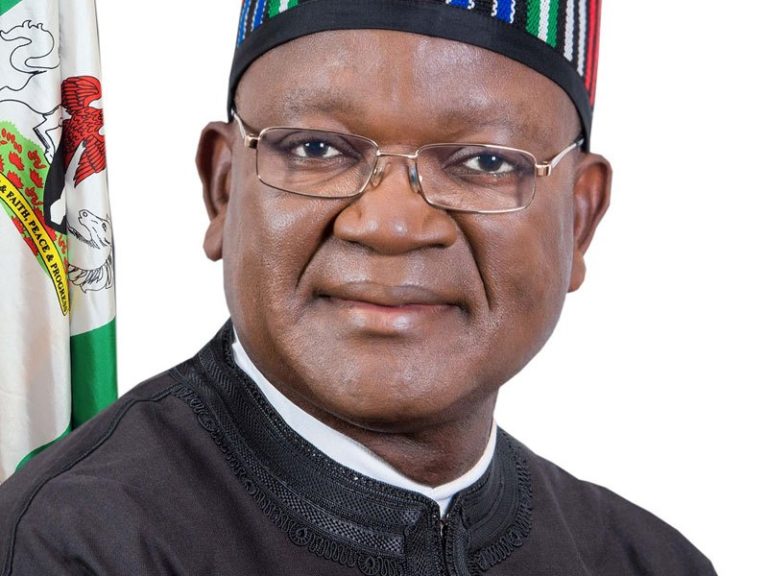
EFCC has powers to investigate Benue State accounts, court rules

THE Federal High Court in Abuja has directed the Economic and Financial Crimes Commission (EFCC) to move on with investigating Benue State government’s accounts.

The anti-graft agency, EFCC, had earlier in August froze three bank accounts of the state for investigation, alleging the government, under the governorship of Samuel Ortom, of misappropriation of its funds.

The Benue sued the commission, claiming that EFCC had no power to either freeze the state’s bank account or investigate it.

The court dismissed the suit at the hearing on Monday, according to News Agency of Nigeria.

The judge, Nnamdi Dimgba, in his judgment said that the suit was lacking in merit.

The judge noted that the case was built on a misconception that the EFCC lacked statutory powers to investigate the financial activities of a state government.

“I must make clear from the very beginning that it appears to me that this suit rests on a very serious factual fallacy and misconception.

“This misconception partly arises from the collapse of Sections 6 and 7 and 38 of the EFCC Act by the plaintiff, and on that basis, submitting that a state government does not fall within the definition of any of the subjects that can be open to the investigative measures under sections 7 and 38 of the Act.

“As stated, it seems issues are being mixed up here and the court must be careful not to allow itself to be pulled into this deep gully of misconception,” Dimgba said.

He added that the definition of economic and financial crimes under Section 46 of the Act is “so broad” that it could address the management of the financial resources of a state.

“I am, therefore, in total disagreement with the proposition that the EFCC is foreclosed from investigating an allegation of corruption when it has to do with the finances of a state government.”

However, the court cautioned the commission to carry out its statutory functions with impartiality and neutrality, thereby earning public confidence.

Emeka Etiaba (SAN), Counsel to the Benue State  government, who was accompanied by the state’s attorney general stated that the state would challenge the judgment at the Court of Appeal.

The suit filed through the office of the state  Attorney-General and commissioner for justice, Michael Gusa, sought the verdict of the court to the effect that a state government’s account maintained with any bank or financial institution in Nigeria does not fall within the class of bank accounts liable to be frozen by EFCC.

The state argued that the house of assembly must first make its resolution before the commission could investigate its accounts, adding that EFCC was not empowered by law to inquire into investigating the financial affairs of Benue State.