Home Blog Page 2516

Osun Decides 2018: Oshiomhole inadvertently ‘admits’ rigging election

“WE won and PDP lost. I think that for democracy to flourish, only people who can accept the pain of rigging, sorry, of defeat, should participate in an election.”

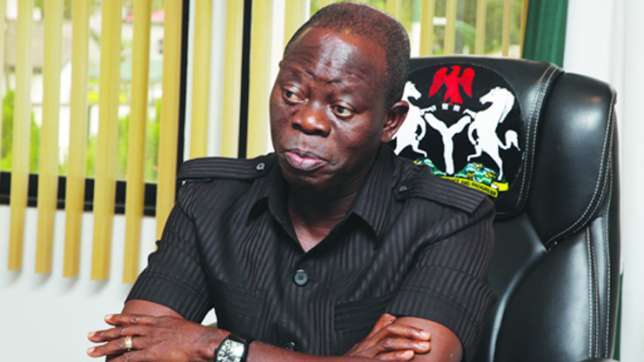
Those were the exact words of the National Chairman of the All Progressives Congress (APC), Adams Oshiomhole, when he spoke to journalists on Friday with regards to the just concluded Osun State governorship election.

Adegboyega Oyetola of the APC was declared the winner of the election by the Independent National Electoral Commission (INEC) but many, including international and local observers, have criticised the entire process, especially the supplementary poll that held on Thursday, September 27.

Watch the video below, as shared on Twitter by former Chairman of the National Human Rights Commission (NHRC), Chidi Odinkalu.

Oshiomhole’s comments may well be a slip of tongue, but many say he was stating the facts, albeit inadvertently.

Farooq Kperogi, a Nigerian-born, US-based journalist and academic, described the phenomenon as “a Freudian slip”. The Urban online dictionary describes the term thus: “A Freudian Slip is when someone means to say something but accidentally says something else, which reflects their true thoughts/ opinions or suppressed desires about something.”

The opposition Peoples Democratic Party (PDP) were leading in the Osun governorship poll with over 300 votes when the election was declared inconclusive because the number of cancelled votes in seven polling units across four local government areas, was higher than the number of votes with which PDP led.

However, the result of the supplementary polls, as announced by INEC saw PDP polling just 325 votes to APC’s 1160, enabling the ruling party to close up the gap and emerge victorious with a total of 255,505 votes to PDP’s 255,023.

In one of the polling units where the supplementary election was held, the PDP had as little as two votes while the APC 126. In another polling unit, the APC scored 455 and the PDP, just 36. And the fact that in some of the polling units, security agents and thugs refused to grant access to accredited journalists and observers to monitor the voting process, further fueled speculations of malpractice.

Meanwhile, the candidate of the PDP in the Osun election, Ademola Adeleke has vowed to challenge the INEC’s decision to announce Oyetola as the winner of the election in court.

Adeleke said he has concrete evidence of malpractice against the APC and he is ready to bring all the facts when the matter is taken to court.

“I don’t want the APC to know about what we have on them until we get to court. I am so confident (of victory),” he told Channels Television.

Tributes pour in for Bello Baba-Ari, Nigerian pilot who died in Abuja crash

FOR a pilot to be chosen to take part in an air show on the celebration of his country’s 58th independence anniversary must have been a dream come true, but for Bell Baba-Ari, that dream will never see the light of day.

Baba-Ari, a Squadron Leader in the Nigeria Air Force, was one of the pilots that lost his life when his F-Ni fighter jet collided with another during the final drill for the air parade that was to be displayed on Monday, October 1, during the celebration of Nigeria’s 58th independence anniversary.

Reports say three pilots were involved in the crash but two were able to eject from their aircraft, apparently, Baba-Ari’s aircraft’s ejection mechanism failed, and as the fighter jet crash-landed on the rocks of Katampe, Abuja, he died on the spot.

According to TheCable, one of the two pilots who successfully ejected from their own jets, later died in hospital, leaving only one survivor. The identity of the second deceased pilot is yet to be made clear.

Already, President Muhammadu Buhari has commiserated with the Nigeria Air Force, as well as the families of the deceased officers, while a presidential delegation had visited the lone survivor in the hospital where he is currently receiving treatment.

Chief of Staff to President Buhari, Abba Kyari, and presidential spokesman, Garba Shehu, at the Defence Intelligence Agency Hospital on Friday to visit the surviving pilot.

On the social media, tributes have been pouring in for Baba-Ari, who many described as one of Nigeria’s finest fighter jet pilot. Some who knew the deceased personally narrated how warm and friendly he was and how his death has left them heartbroken.

A Twitter user, whose handle read @Avm_ahmid, and whose profile suggests that he is also an officer of the Air Force, wrote: “You gave me your gloves just before your flight. I still can’t stop crying. A WARRIOR WITH METAL WINGS.”

Similarly, Shehu Sani, the Senator representing Kaduna Central in the National Assembly described Baba-Ari as a dedicated and dutiful soldier and prayed to God to grant him eternal rest.

“Squadron leader Bello Muhammed Baba Ari lost his life in the Abuja AirForce plane crash. He was a man passionate about his country and his duty. He was one of the nation’s best. May Allah grant him Aljanna Firdausi. Amin,” Sani wrote.

The deceased, who is survived by a wife, was buried Friday evening according to Islamic rites. The burial was attended by the Chief of Air Staff, Sadiq Abubakar, Secretary to the Government of the Federation, Boss Mustapha, Chief of Staff to the President, Abba Kyari, and other top government functionaries, as well as the deceased’s family members.

The Late Baba-Ari was buried later on Friday.

Read more tributes below:

Seven years after, only two MDAs and two security agencies obey FOI Act

DESPITE the passage of Freedom of Information (FOI) Act by the National Assembly seven years ago, Nigerian public and security institutions are still hoarding information relating to the procurement process, the Public and Private Development Centre (PPDC) reveals.

According to the 2018 FOI compliance ranking for  187 public institutions and 11 security sector organisations conducted by PPDC, only the Corporate Affairs Commission (CAC) and the Infrastructure Concession Regulatory Commission (ICR) in the public institutions category, the Nigeria Security and Civil Defence Corps (NSCDC) and Police Service Commission in the security institutions category complied with the FOI Act.

The two security organisations came first and second respectively in the ranking of 12 security organisations which included the Nigerian Immigration Service, Office of the National Security Adviser (ONSA), Defence Headquarters, Military Pension Board and National Defence College.

Others were Federal Ministry of Defence, Federal Ministry of Interior, Nigerian Prison Service and Federal Fire Service.

Speaking at the launch of the FOI ranking compliance report which was also used to commemorate the International Right To Know Day, Jonathan Ebe Lafae, Data Analyst of PPDC, explained that the ranking was based on an assessment of the level of access to procurement related information from the public institutions and security agencies.

He said the ranking since 2014 has been used extensively for advocacy and has contributed immensely to the responsiveness of public institutions to FOI requests.

Specifically, the Ministry of Information — the custodian of information in the country, State House, Ministries of communication, Health, Communication, Finance; National Television Authority (NTA), Office of the Accountant General of the Federation, Office of the Auditor General of the Federation all ranked last among other public institutions as they could not do proactive disclosure, respond to request for information or give full disclosure of public information at their disposal.

Bureau of Public Service Reforms (BPSR) which came first last year dropped to the fifth position, Independent Corrupt Practices and Other Related Offences Commission (ICPC) which came third last year also dropped to the fifth position this year.

In the last four months, The ICIR has sent FOI requests to 11 public institutions, including INEC, Ministry of Finance and the Central Bank of Nigeria (CBN), the Nigerian Postal Service, NIPOST among others, but only three of these institutions responded. They are the Universal Basic Education Commission (UBEC), Accountant General of the Federation and INEC.

Right to Know Day: PPDC advocates compliance with FOIA, releases 2018 ranking

0

IN celebrating the International Right to Know Day, the Public and Private Development Centre (PPDC) has implored Nigerian public institutions to improve compliance with requirements of the Freedom of Information Act.

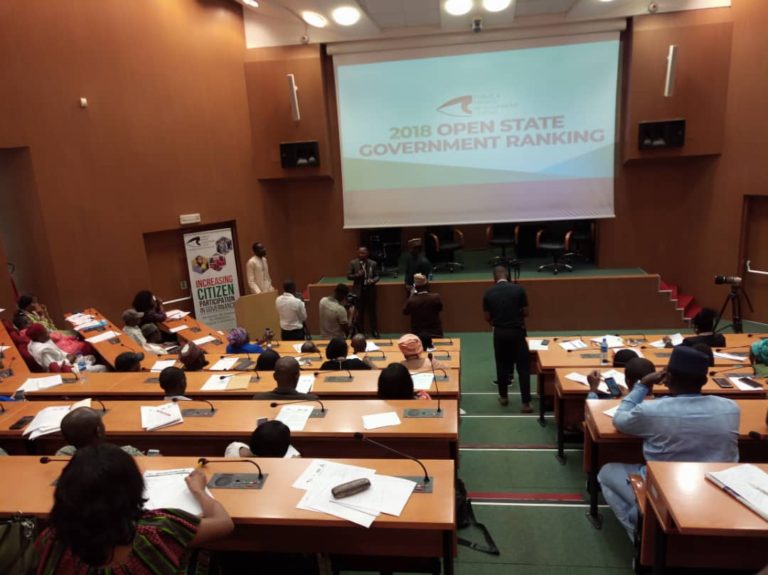
At an event held on Friday at the CBN International Training Institute, Abuja, the centre also released the 2018 compliance and transparency ranking of public institutions as well as state governments.

The ranking is an annual tradition started in 2013, put in place to assess how much access public institutions grant citizens to public expenditure information among others contained in the FOI Act.

During his presentation, Jonathan Ebe Lefae, PPDC data analyst, said security institutions in the country have not been compliant in proactively disclosing information and urged them to adjust.

“We don’t know why but we urge security institutions to do the needful and respond to FOI requests,” he said.

“As we continue to advocate for open contracting, for transparency and accountability as a civil society organisation, we urge public institutions and MDAs to do their best in being proactive in exposing information for the overall interest of everyone — citizens and those in government.”

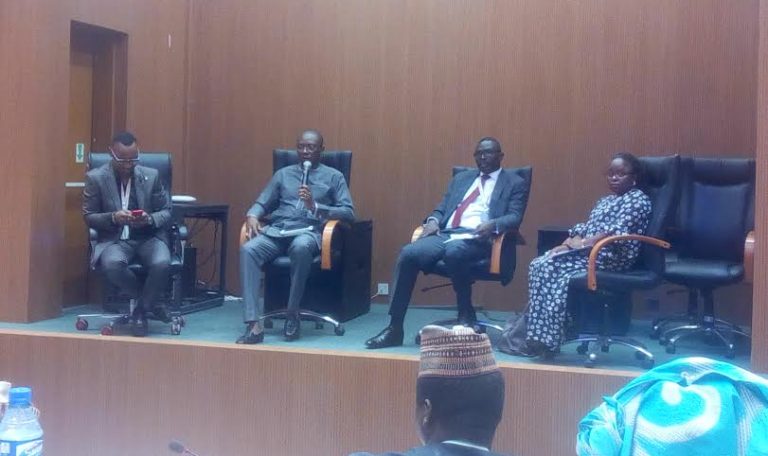
Featured at the programme was a panel discussion around the role of access to information in strengthening good governance. The panelists included Joe Abah, DAI country director in Nigeria, Dayo Aiyetan, executive director of the International Centre for Investigative Reporting, and Kemi Okenyodo of Partners West Africa Nigeria who was represented by Barbara Maiga, the organisation’s programme manager.

In his contribution, Abah argued that access to information is beneficial to both citizens and government officials. It is first of all a right predicated on the fact that government exists to serve the people, he said. With it, the public is able to hold officials accountable.

“Many times, public servants don’t actually internalise the meaning of their names, because a public servant is actually a servant who serves the public. And so the right of information is the right to hold your servants to account.”

He added that access to information also builds the credibility of government and people tend to ask less questions believing an MDA has little to hide.

He said: “So, on the part of public servants, it reduces the amount of stress. I can remember that when I was Director General [of the Bureau of Public Service Reforms], for the last year of my tenure, I didn’t get a single FOI request. Not one. And that’s because everything had been proactively disclosed. I didn’t need to have staff dedicated to answering FOI requests.”

Aiyetan, giving his remark on the importance of accessible information in governance, said the reason corruption is so widespread in the country is the secrecy surrounding government activities and policies.

“For me, information is power,” he said. “Without information for the people, the contractors can go away with money, government officials can collude with contractors so that monies meant for communities would disappear.”

“The reason why government officials relate with Nigerians the way they do, like masters, is that they have all the information available around government activity. People do not have the information. If they do, then the person who wants to represent them will find himself at some point becoming answerable because the people have information and will be able to ask questions

“For example, if Nigerians know how much their representatives receive every year for what they call constituency projects, there will be riots on the streets of Nigeria. But because they don’t have the information, people are complacent and they can’t react.”

The Right to Know Day, otherwise called the International Day for the Universal Access to Information, was inaugurated by the United Nations in 2015, and was first observed on September 28, 2016.

According to Transparency International, Nigeria is one of about 120 countries of the world to have enacted laws protecting the right of citizens to access information and government data.

Curfew imposed in Jos after fresh killings led to protest

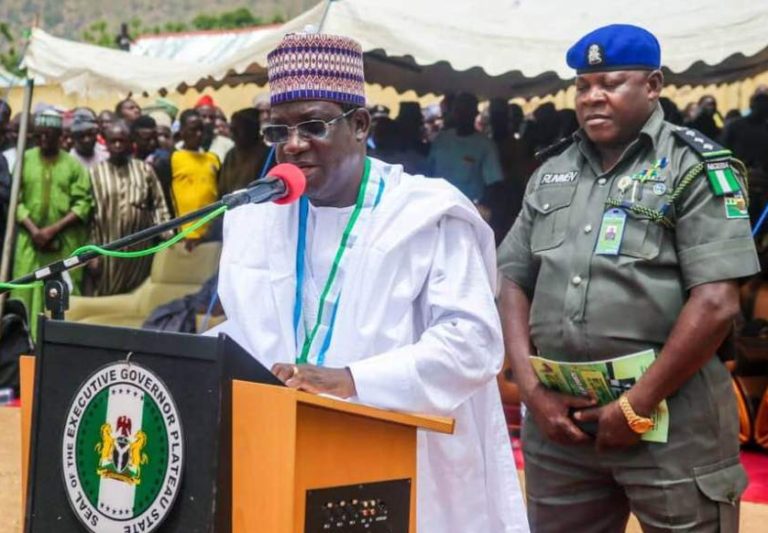
THE Governor of Plateau State, Simon Lalong has imposed a dusk-to-dawn curfew in Jos North and South local government areas following the eruption of protests which were caused by a fresh attack by hoodlums in the area.

About 14 people were reportedly killed when unknown gunmen attacked the Rukuba Road axis of Jos North LGA on Thursday.

A statement issued by the Plateau State Police command said the hoodlums took advantage of the rain to attack the area.

“The unknown gunmen who took advantage of the ongoing rain in the area to attack residents were forced to run from the scene by the combined superior gunfire of the Police and the Operation Safe Haven (STF).

“Some people who reside close to the hills were rescued while some persons lost their lives as a result of the attack and some others sustained gunshot injuries and were rushed to Bingham University Teaching Hospital, Jos and are currently receiving treatment.

“The combined security is out to contain the situation in Jos. As such, members of the public are to remain calm and law abiding. A patrol of the area is being intensified and investigation of the crime has commenced.”

The police statement, however, did not state the number of persons that were killed in the attack but residents told journalists that 14 people died.

Angered by the attack, youths in Jos, the Plateau State capital, blocked major roads on Friday, chanting songs and burning tyres on the roads, prompting the state government to declare a curfew to prevent the situation from further degenerating.

“Sequel to (the) security breach in some parts of the Jos North, Gov. Simon Lalong, has approved the imposition of a disk-to-down curfew from 6: P.M to 6: A.M in Jos North and Jos South LGAs with immediate effect,” read a statement issued by Richard Tokma, Secretary to the Plateau State government.

“While assuring the protection of lives and properties of the people, citizens are advised to exercise restraint, to remain calm and report any suspicious movement to the law enforcement agents.”

Plateau State has witnessed several violent attacks and clashes over the years.

UPDATE: Airforce confirms death of pilot in Abuja jet crash

0

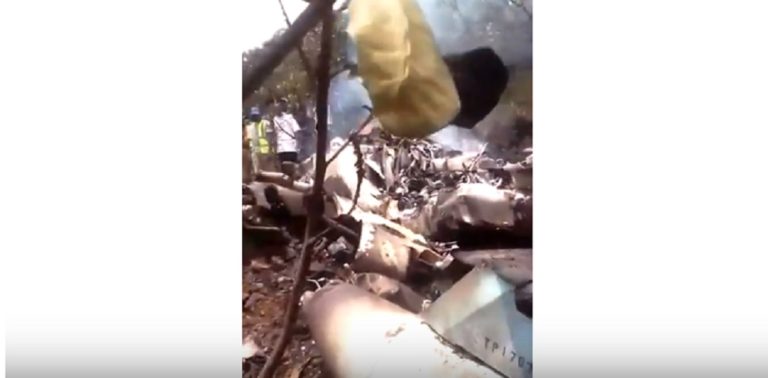
AFTER initial denial that there was no casualty in the incident of the air crash that involved two fighter jets of the Nigerian Airforce, the military authority has confirmed the death of one of the pilots in the two ill-fated F-7Ni jets that crashed in Abuja, on Friday.

His parachute failed when he ejected from the jet fighter and died as he landed on a rock, The ICIR gathered.

“It is with a heavy heart that I regretfully announce that one of the pilots who successfully ejected from one of the F-7Ni aircraft that crashed earlier today has passed on. May his soul RIP,” said the Nigeria Air Force Director of Public Relations and Information, Ibikunle Daramola, in a statement

“Additional details on the incident will be communicated later,” he added

Daramola who had earlier confirmed the crash of the two aircrafts taking part in the rehearsals for the 58th Independence Day Celebrations said there was no casualty.

“I wish to confirm an air incident involving two Nigerian Air Force aircraft taking part in the rehearsals for the 58th Independence Day Celebrations. Thankfully no lives were lost. Details will be communicated later,” Daramola had said.

An eyewitness had confirmed the death of one of the pilots to The ICIR.

“I witnessed the crash soon as it happened,” the witness said, “two pilots ejected and are being searched for now,” he added.

He revealed that the other pilot ejected but “his parachute failed and he died on the spot.”


Buhari: People in the North East now sleep with two eyes closed

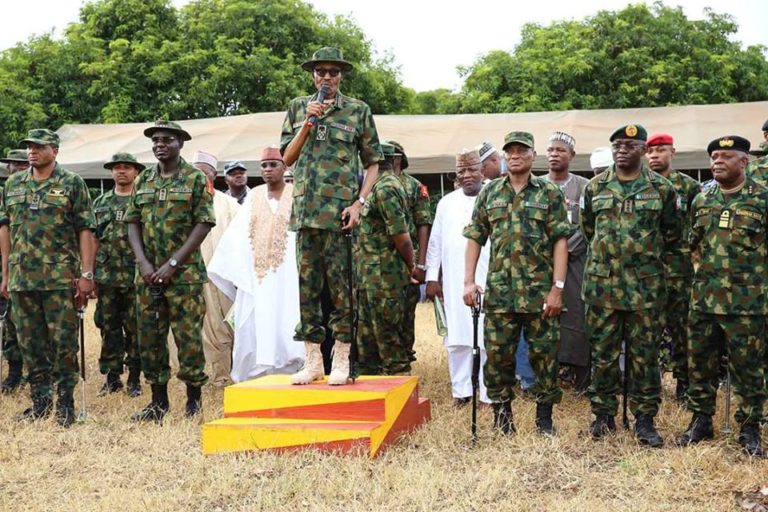
PRESIDENT Muhammadu Buhari says his administration is successfully tackling the Boko Haram insurgency in the North East region of Nigeria and that people in the area can now sleep with to eyes closed.

Presidential spokesman, Femi Adesina, quoted Buhari as saying this while addressing Nigerian professionals practicing in the US and Canada.

The parley was organised by the Special Adviser to the President on diaspora matters, Abike Dabiri-Erewa.

“I’ve tried to do my best since I came. Security-wise, we are better. Boko Haram still conducts cowardly attacks, but the insurgency is not the same as it used to be,” Buhari said.

“They are terrorists and have nothing to do with religion. We will continue to deal with them. Ask people in the North-east, especially in Borno State, they will tell you they can sleep with two eyes closed now.”

However, it may not be exactly correct that citizens in the North East “sleep with two eyes closed”, as recent reports from suggest that Boko Haram is far from having been defeated as has constantly been claimed by the government. Though the insurgents are not known to still hold any territory at present, they have continued to attack civilian locations as well as military formations with some degree of frequency.

On September 1, about 48 personnel of the Nigerian Army (two officers and 46 soldiers) were reported killed when Boko Haram attacked a military post. “Scores of Nigerian troops were killed in successive attacks between mid and late July, raising fresh concerns about a resurgent sect amongst top military chiefs. At least 90 soldiers have now been confirmed killed within the past six weeks,” Premium Times reported at the time.

President Buhari (seated middle), flanked to the right and the left by the Minister of foreign affairs, Geoffrey Onyeama, and Governor of Edo State, Godwin Obaseki, respectively, as the special adviser on the diaspora, Abike Dabiri-Erewa moderates the meeting on Thursday.

Buhari also assured his listeners that if he wins a second term, he will do better. “If I win the next election and I survive the next four years, I will do better… I will leave some difference in that office,” he said.

The President added that the so-called elites have never supported him, perhaps because they are corrupt, but that his greatest supporters over the years had been the ordinary citizens.

He said: “In 1983, military officers gathered and made me Head of State. I packed the politicians into jail, told them they were guilty until they could prove their innocence. We seized what they had looted, but after I myself was put in detention, the politicians were given back what they had looted. How many elites complained about that?

“Three times I contested elections; three times I went to court after the elections were rigged against me. No justice, but I said ‘God dey.’

“It was mainly the ordinary people that stood by me. That is why I am always conscious of them. They are my constituency. Even pregnant women on the queue would fall into labour, go to have their babies, and still come back to vote for me. I will keep doing my best for the country.”

The President invited those in the diaspora to come home and invest in the Nigerian economy especially in the education sector.

“You are contributing to this great country (America). If you want to help back home, invest in education in your constituencies. If you educate people, they won’t then accept nonsense from anybody,” he said.

Buhari traveled to the United States to participate in the United Nations General Assembly which held in New York.

Race to climate action:Is Africa being left behind?

0

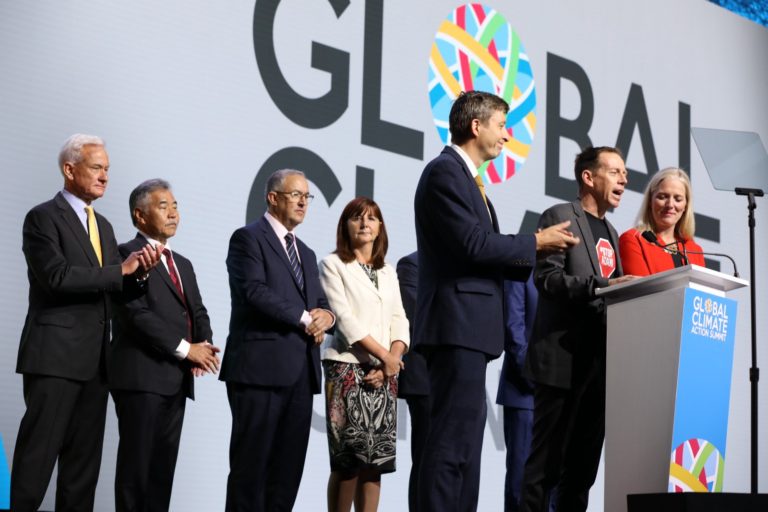
EARLIER in September – when leaders from states and regions, cities, business, investors and civil society around the world gathered at the Global Climate Action Summit in San Francisco – a plethora of commitments were made by the leaders to accelerate climate action. From renewable energy targets to zero carbon emission targets, hundreds of commitments were announced at the Summit. Conspicuously, Africa was almost absent in the roll call of ambitious and bold climate actions.

Although, there were about eleven African cities among the 73 cities around the world committed to achieving emission peak by 2020, only Cape Town joined 25 other cities to sign the Green and Healthy Streets (Fossil Fuel Free Streets) Declaration at the Summit. These cities will be buying only zero emission buses from 2025. They will make a major area of their city zero emission by 2030 and encourage a shift to walking, cycling, and public transport.

Cities pledging to remove as much carbon dioxide from the atmosphere as they emit – new plans to work together to reduce global emissions – are  crucial to meeting the 2020 target when global greenhouse gases need to peak and begin to fall to avoid the worst impact of climate change. However, carbon neutrality targets of these cities seem to be a luxury of developed countries which African cities cannot afford. The continent has contributed the least in global greenhouse gas emissions; the sentiment is that it needs to develop its economy before contemplating of zero or low carbon emissions.

“Africa needs to change the thinking,” said Erik Solheim, Executive Director of United Nations Environment, when he answered a question from The ICIR at a side event with a group of journalists at the San Francisco Summit. “The old thinking was that first you need to develop and then you take care of the environment,” Solheim said. “There is no need for that any longer because you can all develop, bring people out of poverty and take care of the environment with the same policies.”

He said solar energy has become competitive to coal, not just in being environmental friendly but also in price.  He added that solar can be cheaper than establishing new coal plant.

“There’s no choice to be made between development and environment,” Solheim said.

Based on the commitments announced at the Summit, it is obvious that if Africa will catch up to climate action, the continent needs the help of developed countries which have contributed largely to climate change since the industrial revolution.  The need for assistance is an essential element of the Paris Agreement which recognises the role that developed countries have to play to help developing countries to mitigate and adapt to climate change.

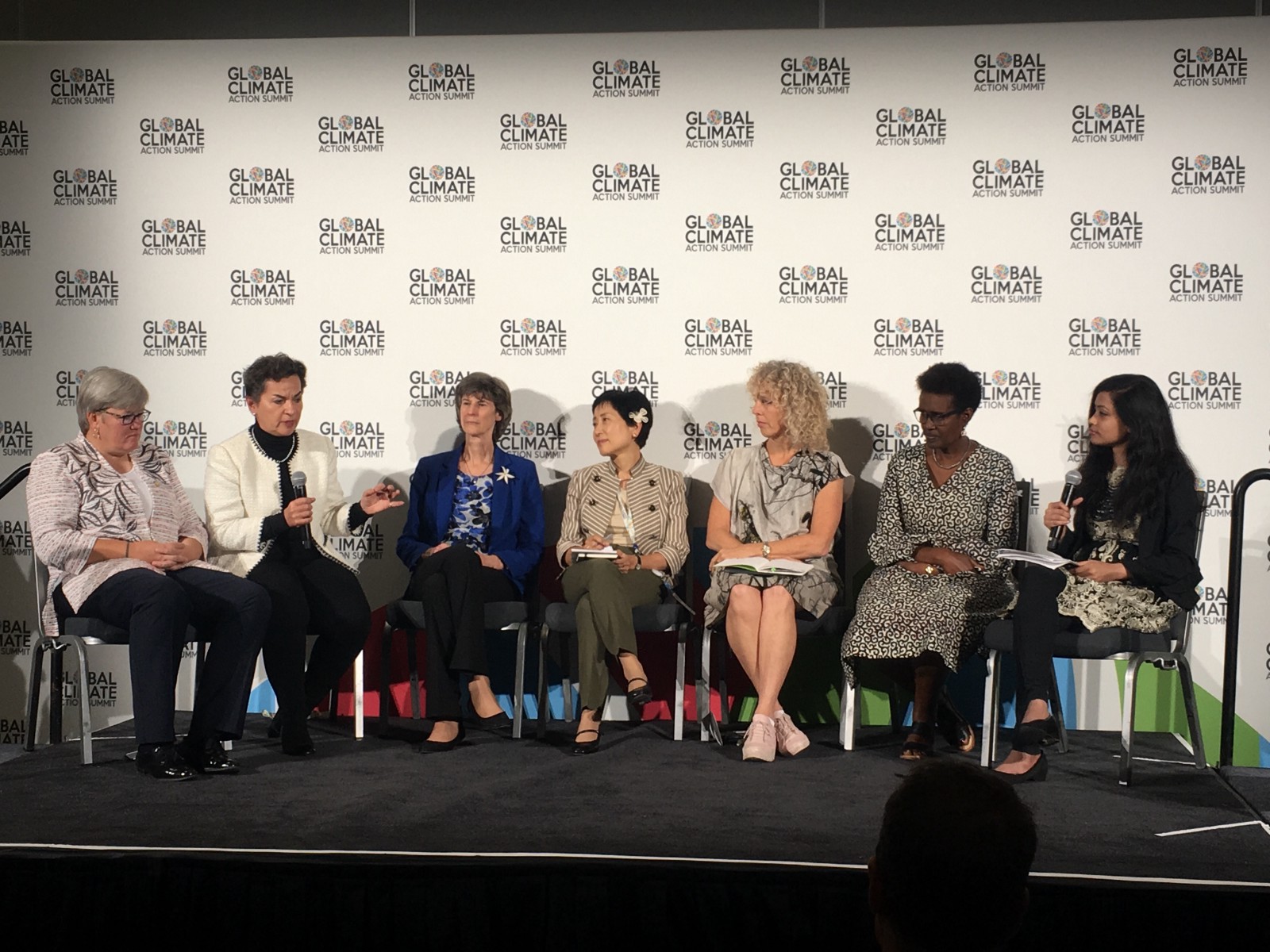
An all-woman panel of leaders convened on the sidelines of GCAS to promote a zero-carbon online summit of world leaders. Photo Credit: Climate Nexus

The failure of developed countries to fully redeem their pledge will slow down climate action in Africa.  The Green Climate Fund which was established in 2010 to help developing countries mitigate and adapt to climate change has only committed about $3.5 billion to 74 projects in 79 countries.

Speaking at the plenary session on Climate Leadership at the Summit, Winnie Byanyim, Executive Director of Oxfam International, said climate change is not a technical challenge but a political challenge which has to do with the issue of justice and fairness.

“If I think of my uncle who lives in a village in Uganda and he is a farmer, it will take him 129 years to emit the same amount of carbon dioxide as an average American citizen emits in one year. So the climate crisis was caused by the emissions of rich people but it is the poor people who are hit the hardest,” Byanyim said.

Africa is already facing climate change in its dangerous dimension. Persistent drought is threatening the livelihood of millions of people in the continent.

Shukri Haji Ismail Bandare, Minister of Environment and Rural Development, Somaliland Region shared at the Summit how drought has wiped out livestock in her country and displaced overwhelming number of people. She said, in the past, the country used to experience drought once in 15 years but it has now become more extreme and frequent due to climate change.

As much as Africa needs assistance in tackling climate change, it also needs to step up climate action to create opportunities for its rapidly growing population. New analysis shows that taking climate action will yield more economic gains than the usual carbon-driven investments. A report by the Global Commission on the Economy and Climate Change points out that bold climate action could result in $26 trillion in economic benefits worldwide through 2030 and generate over 65 million new low-carbon jobs by 2030.

Ngozi Okonjo-Iweala, Co-Chair of the Global Commission on the Economy and Climate and former Finance Minister of Nigeria – who gave example of how reform in Nigeria’s petrol subsidy in 2012 freed up funds for investments in critical areas – said the most urgent priorities in climate action over the next two to three years are implementing carbon pricing and removing fossil fuels subsidies.

Even though investments in high-tech climate change solutions, like electric vehicles, have not taken shape in the continent, removing fossil fuel subsidies and adopting more sustainable forms of agriculture as well as strong forest protection could make a huge difference in meeting the targets of Paris Agreement.

Regardless of the politics around global climate leadership – like Donald Trump announcing the withdrawal of United States from the Paris Agreement – taking climate action may be the key to unlocking the economic potential of Africa faster than the business as usual.


Nigeria must wake up to the changing role of state governments

0

THERE have been sustained efforts to diversify Nigeria’s economy since the country returned to democratic civilian rule in 1999. Successive governments have made foreign direct investment a priority to achieve this aim.

Originally, the organised private sector was intended as the primary driver of investment-led economic reforms. But, in the process, the policy space was inadvertently opened up for state governments. Nigeria has three constitutionally recognised levels of government. These are the federal government, 36 state governments and 774 local governments. Each level of government has defined powers under the constitution. States are not meant to engage in foreign economic relations.

However, successive economic reforms have given impetus to Nigerian states to grow in stature as gatekeepers to foreign direct investment. It’s now common to hear of states introducing specialised agencies to facilitate and coordinate investment inflows. Examples include the Kaduna State Investment Promotion Agency, the Lagos Office of Overseas Affairs and Investment and the Anambra State Investment Promotion and Protection Agency.

Some states have also floated development focused corporate entities in which they have controlling stakes. A recent example is the Development Agenda for Western Nigeria Commission. This was set up by the six state governments in Nigeria’s South-West. They are pursuing a regional economic integration strategy.

All these initiatives invariably lead to foreign entities including diplomatic envoys, multinational companies and international organisations getting directly involved at the state level.

The emerging practice is an interesting example of bottom-up economic development. However, the current state of affairs isn’t optimal. This is because having states all pursuing separate deals and arrangements makes central coordination problematic. If coordination is weak, there’s the potential for unnecessary duplication of processes and institutions. This, in turn, would have a knock-on effect on the ease of doing business in Nigeria.

There are also constitutional questions over the legality of agreements which Nigeria’s state governments have signed with foreign entities. If left unchecked, these could expose the Nigerian state to legal claims by foreign investors. And there’s a question mark over the constitutional status of states opening foreign offices, as Bayelsa state did in 2013. On the face of it, this was unconstitutional. States in Nigeria don’t have constitutional powers to operate quasi-diplomatic offices.

The trend of decentralised economic development has striking similarities with how things worked in the first Nigerian Republic, from 1960 to 1966. Regional governments in this era had a constitutional authority to participate in Nigeria’s foreign economic engagements.

An example was the control of commodity boards by states (then regions). Surplus from levies imposed on export commodities was a vital source of funds for economic development in the respective regions.

Given this history, it’s not surprising that states today are keen to take control of foreign investment inflows to fund their economic development objectives.

Why action is needed

No constitutional disputes have been raised between the federal government and the states. This can be taken as tacit acceptance of these emerging practices by states. Alternatively, the federal government prefers to deal with any fall-out on an ad hoc basis. This would make sense, given the benefits that can accrue from the arrangements.

But those responsible for Nigeria’s economic development policy coordination need to wake up to the changing realities of the times. Other federal systems have been proactive in restructuring the cooperation mechanisms for foreign relations. These include the US, Canada, Belgium, Argentina, Austria, and Germany.

These countries have recognised the need to adjust their existing regime to catch up with an emerging reality about sub-national governments – like states. These groupings are critical stakeholders in the 21st-century global economy.

In Nigeria, meanwhile, there’s little evidence that states going abroad is viewed as a matter of urgency. It’s time it was.

Time to review

The emergence of states as gatekeepers of Nigeria’s investment-led economic reforms demonstrates the dynamic nature of federalism. States have already carved out the autonomy they need to determine the pace of their economic development. And they have done so with no formal constitutional changes.

Now the federal government must realise that it’s no longer the sole determinant of Nigeria’s foreign economic policy. It would be both impossible and undesirable to try and reverse the trend.

Instead, there’s an urgent need to review existing arrangements for cooperation. These reviews must happen at the constitutional and institutional levels. The aim should be to maximise the benefits of the drive and impetus that states are bringing to the Nigerian economic reform agenda.

Nigeria stands to benefit immensely if states drive economic development. But effective coordination is critical.

The article was first published in The Conversation by Ohio Omiunu, a Senior Lecturer in Law, De Montfort University.

Elections becoming less free and fair under PMB… Reactions to Osun Election

MANY Nigerians and foreigners alike have criticised the just concluded Osun State governorship election which was controversially won by the candidate of the ruling All Progressives Congress (APC).

Adegboyega Oyetola was declared the winner of the election and was returned elected by Joseph Fuwape, Vice Chancellor of Federal University of Technology Akure (FUTA), who served as the returning officer.

A supplementary poll had been held on Thursday after the actual election on September 22, 2018, was declared inconclusive by the Independent National Electoral Commission (INEC). Unlike what obtained on Saturday, here the exercise had been smooth, Thursday’s rerun as characterises with the alleged irregularities and violence.

Both local and international observers criticised the process, as there were several reports high-handedness and harassment by security agencies or thugs.

Though the election has been won and lost, many have expressed worry at how Ekiti and Osun states have so far been conducted.

Writing on Twitter, Mathew T. Page, a US author and diplomat who has been in Nigeria for more than a decade, said: “If I were the international community, I would be having some very frank conversations with PMB (President Muhammadu Buhari) and Co. about how Ekiti and Osun were red flags for 2019. Nigeria’s elections have become less credible on PMB’s watch and ultimately the buck stops with him.”


Similarly, the Director of African Program at the Center for Strategic and International Studies (CSIS), Judd Devermont, tweeted that “there is going to be a lot of heated debate and finger-pointing over APC’s razor-thin in Osun State”.

Also, a group known as “The Situation Room”, made up of a coalition of civil society organisations, noted that Thursday’s Osun rerun election “derogates from the recent gains made in our election process”.

“The lapses in the Osun rerun elections have put a serious question mark on the electoral process and raises concerns about the forthcoming 2019 Nigeria general election,” the group wrote in a statement on Friday.

Many others blamed INEC for not improving on the noticeable lapses in previous elections and thereby eroding public trust ahead of 2019.

“INEC might have very well nailed its coffin by the embarrassment Osun has become. This is a self-inflicted wound that will forever tarnish this INEC and destroy faith in the upcoming election. Really sad!” a Twitter user, Udo Ilo wrote.

https://twitter.com/Kelvin_Odanz/status/1045283400121307136