FEDERATION revenue distributed by the Federation Account Allocation Committee (FAAC) to the federal government, 36 state governments, and 774 local government councils (LGCs) dropped to N1.659 trillion in May.
It represents a decrease of N22 billion from the N1.681 trillion shared in April.
The Office of the Accountant General of the Federation disclosed this in a statement on Wednesday, June 18, by the director of press and public relations, Bawa Mokwa.
It stated that the total revenue was shared among the three tiers of government in line with the revenue-sharing formula.
The distributable revenue consisted of N863.895 billion statutory revenue, N691.714 billion Value Added Tax (VAT) revenue, N27.667 billion electronic money transfer levy (EMTL), and N76.614 billion exchange difference revenue.
The total gross revenue for May stood at N2.942 trillion, which was, however, higher than N2.084 trillion for April.
But after deductions of N111.908 billion for cost of collection and transfers, interventions, and N1.171 trillion for refunds, the distributable revenue came to N1.659 trillion.
From the N1.659 trillion, the federal government received N538.004 billion, states got N577.841 billion, and LGCs were allocated N419.968 billion.
States benefiting from the 13 per cent mineral revenue got additional N124.076 billion as derivation revenue.
In the review month, significant increases were recorded from revenues from companies’ income tax (CIT), VAT, and import duty, while several other levies experienced a decline.
The ICIR can report that since the removal of the petrol subsidy in May 2023, the federal, state, and LGCs have seen a sharp increase in the monthly revenue allocation from FAAC, which is expected to ensure a steady flow of funds to support their operations at various levels.
PRESIDENT Bola Tinubu, on Wednesday, June 18, told the people of Benue State to learn how to accommodate anyone seeking to live and conduct business in the state.
He said this was important for peace to reign in the troubled state.
The president gave the advice when he visited the state to condole with the government and others who lost loved ones to a chain of attacks that have been unleashed on the state by gunmen.
The ICIR reports that killings in the state have spanned several years, and more than 200 residents have reportedly died in the onslaughts since the beginning of this month.
While some blame cropper-herders’ conflict on the carnage, others label the assailants as foreign terrorists.
Addressing the state’s present and past leaders, as well as other residents on Wednesday, Tinubu said that if the state accommodated non-indigenes seeking to live and conduct their businesses, there would be less conflict in the land.
“We have enough land to feed, to raise our children, to cultivate happiness and prosperity. We must do it. We will change that attitude of hate.
“We sang through the national anthem, we said, ‘though tribes and tongues may differ, in brotherhood we stand.’ It must reflect in everything we do, in agriculture, in the economy, in sharing, in developing our people,” he stated.
The president emphasised the importance of unity and cooperation among Nigerians, saying, “As Nigerians, we are members of the same family, living in the same house, but sleeping in different rooms.”
He emphasised unity and cooperation as means to addressing the root causes of the conflict and promoting sustainable peace.
Tinubu directed security agencies to take decisive action against the killers. He demanded to know why Nigerian security institutions, including the Nigeria Police Force (NPF), State Security Service (SSS), National Intelligence Agency (NIA), and Defence Intelligence Agency (DIA), failed to make any arrests from several attacks on the state.
“How come no arrest has been made? I expect there should be arrests of those criminals,” he queried.
He then challenged the Chief of Defence Staff, Christopher Musa, “Christopher, we need to get our ears to the ground. Let’s get those criminals. Let’s get them out.”
He also told the state governor, Hyacinth Alia, “We are here to govern, not to bury. We are here to raise families, not to lose them. Provide healthcare, water for them to drink, and food to eat.”
The president stressed the importance of peace for development, as he challenged the governor to provide land for ranching in the state to accommodate herders.
He also proposed establishing a committee of elders to find a permanent solution to the conflict.
“Let us please find a way to form a committee of elders here, that committee to comprise those who had governed these states before, to really find a permanent accommodation,” Tinubu stated.
The ICIR reports that the state governor had said politicians and terrorists were behind the attacks. However, the National Security Adviser, Nuhu Ribadu, disagreed with him that parts of the state were occupied by terrorists.
Earlier in his welcome address during the president’s visit, the state governor asked the Federal Government to establish state police and an intervention fund to support the victims of the attacks.
According to him, the establishment of state police is critical to stemming the tide of violence in the state.
The Tor Tiv, James Ayatse, a professor, who spoke before the governor, dismissed claims that the killings in the state were the products of clashes between herders and farmers.
Ayatse said the killings were “a calculated, well-planned, full-scale genocidal invasion and land-grabbing campaign.”
“We do have grave concerns about the misinformation and misrepresentation of the security crisis in Benue State. Your Excellency, it’s not herder-farmers clashes, it’s not communal clashes, it’s not reprisal attacks or skirmishes.
“What we are dealing with here in Benue is a calculated, well-planned, full-scale genocidal invasion and land-grabbing campaign by herder terrorists and bandits, which has been going on for decades and is worsening every year,” he stated.
The ICIR reported that schoolchildren in Makurdi, the state capital, were ‘forced’ to file on major roads under heavy rain to welcome the president.
This scene unfolded despite a public holiday declared by the state government and severe weather conditions that left many of the children drenched, shivering, and without proper cover.
The ICIR reported that the president’s convoy waded through floodwaters along the Lafia-Makurdi road due to torrential rainfall in the early hours of the day.
Tinubu blamed the rain for his failure to visit the Yelewata and Daudu communities in Guma Local Government Area, where the latest attack in the state took place.
THE Petroleum Products Retail Outlets Owners Association of Nigeria (PETROAN) said a large chunk of its business would be disrupted when the Dangote Refinery implements its new nationwide market distribution plan.
PETROAN fears arose from Dangote Refinery’s proposed nationwide distribution plan at a significantly subsidised rate to major dealers and certain filling station retail outlets, which would eliminate the market distribution network that PETROAN, as a major supplier, services.
On Sunday, June 15, the Dangote Petroleum Refinery announced plans to begin a nationwide targeted distribution of premium motor spirit (PMS) and diesel to major retail outlets across the country.
The distribution is to serve marketers, petrol dealers, manufacturers, telecoms firms, aviation, and other large users across the country.
It is to commence on August 15, and according to the oil giant, it has procured 4,000 brand-new compressed natural gas (CNG)-powered tankers to ensure smooth take-off of the scheme.
It has also invested in CNG stations, supported by a fleet of over 100 CNG tankers across the country to ensure seamless distribution of the products.
But reactions from stakeholders in the sub-sector show that the Dangote Refinery’s decision has not gone down well with them.
In a chat with The ICIR on Wednesday, June 18, the national president of Petroleum Products Retail Outlets Owners Association of Nigeria (PETROAN), Billy Gillis-Harry, expressed worry that the Dangote Refinery plan would disrupt the operations in the oil and gas value chain.
He said, “If one company that is as massive as the Dangote Petroleum Refinery Limited is now going to refine, store, transport, and ensure that retail outlets have products, by the overview, it will look like a very attractive thing, but it is going to kick businesses out of the way.
“It is going to create so many job losses. That is the concern we are expressing.”
Gillis-Harry, who sees this as a distortion to the entire value chain, noted that stakeholders within the sub-sector have earlier recommended that refiners should be allowed to refine and storage facilities owners to store for adequate energy security in all areas of petroleum products.
He said it was also recommended that distributors and logistics operators should be allowed to do their work both marine and land, and that marketers should supply the products while retail outlets sell the products.
“So, that value chain should be protected and kept. That is what we see that is being threatened by this decision by one company to refine, to store, and to distribute.
“Also, the irregular price changes have been affecting our buying power. It is not a PETROAN thing but a concern for the whole country,” Gillis-Harry said.
According to the PETROAN president, there are legal frameworks to support the action.
He cited that in 1975, a former head of state, Yakubu Gowon, set up Decree 9 to ensure that Petroleum products are equitably distributed across Nigeria.
He further cited that in 1989, another former head of state, Ibrahim Babangida, amended the decree.
“So, there are rules and I don’t think any one company should be able to interpret and operationalise what the regulator should do. This is what we need the regulator to interpret efficiently.
“And if a company as big as that our brother carries with its plans, that means it is going to take us out of business,” he expressed concern.
He vehemently opposed the Dangote Refinery’s distribution plan as it would take off transporters, retail outlets, marketers, and others out of business and affect all the jobs created by those operators.
He believes that the Dangote Refinery should expand, but such expansion should be a win-win situation and not to the detriment of other value chain players.
He faulted why such a critical decision was brought to a round table before stakeholders in the sub-sector.
“We want Dangote’s success, but we don’t want the success to tie everybody else’s efforts. There have been so many efforts made in the past 54 years in the sector, so we all must look at the reality, the effects of what some of our decisions, actions, or inactions will bring. That way, we can serve Nigeria better.
If this kind of decision is made, we are afraid that we could be thrown out of business. That is our concern,” he stressed.
Noting that the Petroleum Industry Act (PIA) guides operations in the industry, he cited that licensing has its procedure and that pricing is regulated by the whole of Article 207.
“So, if you have a licence to refine, then refine. And let those who have licences for operational facilities for storage do so, and let those who have permits for logistics do so, and let those of us who have approvals for retail outlets do our little bit and efficiently,” Gillis-Harry said.
If the plan takes effect, Gillis-Harry said the losses could run into trillions of naira for the various operators in the value chain, calling on the regulator to engage in productive discussion.
“We hope the industry leaders will be able to get everybody together on the same table to address issues so that everybody would be at peace and we can know exactly what to do,” he added.
THE United Nations Office on Drugs and Crime (UNODC) has said over 3 million Nigerians suffered from drug use disorders.
It put the national drug use prevalence at 14.4 per cent, nearly three times the global average..
The organisation added that the abuse of opioids, especially tramadol, had reached alarming levels.
According to the UNODC, the situation is “not just a health crisis; it is a development, security, and peace-building concern.”
The organisation highlighted the link between drug trafficking and other crimes, including human trafficking, illegal mining, and environmental destruction, noting that the illicit drug trade often finances violent extremist groups.
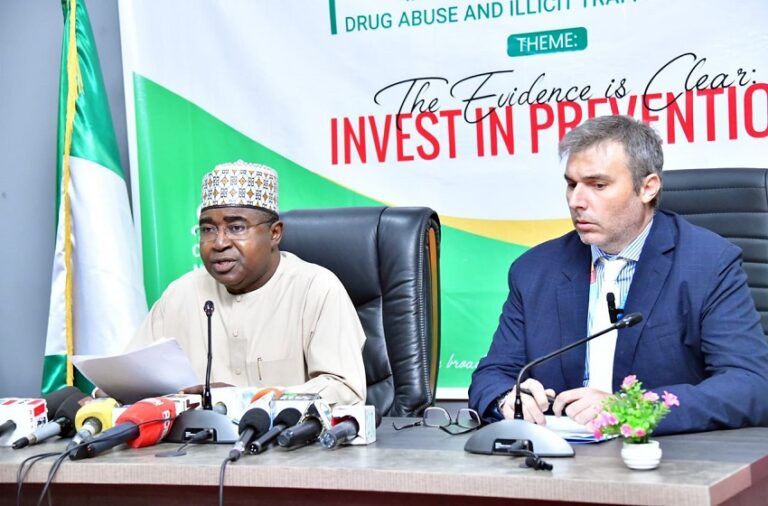
These were disclosed by the UNODC’s Country Representative, Cheikh Ousman Toure,at the National Drug Law Enforcement Agency (NDLEA) National Headquarters in Abuja on Wednesday, June 18,2025, while declaring weeklong activities to commemorate this year’s World Drug Day.
Represented by the Deputy Head of UNODC in Nigeria, Danilo Campisi, Tourestressed that state governments should work with relevant agencies to provide evidence-based drug prevention and treatment programmes.
“We must involve the sub-nationals. The state governments must be actively involved in drug control efforts, working with NDADA and other relevant entities to ensure the availability of evidence-based prevention and treatment programs in their states,” he emphasised.
He also commended the NDLEA for working to reduce drug use in the country.
“Prevention, treatment, and recovery are not luxuries. They are life-saving investments. Together, we can break these vicious circles of drug abuse, organised crime, and marginalisation. And together, we can build a safer, healthier, and more hopeful Nigeria,” he stated.
The UNODC pledged to work with the Nigerian government and civil society partners to build a health-centred, human rights-based response to drug use across the country.
Speaking at the event, the chief executive officer of the NDLEA, Mohamed Buba Marwa, challenged the Nigerians to be involved and take full ownership of the fight against substance abuse and illicit drug trafficking.
Marwa emphasised that shielding citizens from harmful substances was a collective duty that required the involvement of all, including the general public.
He noted that each year, World Drug Day is guided by a unique theme that shapes the global response to the challenges of drug abuse and illicit trafficking.
The NDLEA boss said as part of efforts to address the country’s drug use crisis, the NDLEA had continued on an upward trajectory in terms of arrests, convictions, and seizures of drugs.
“We are also modernising our approach to the enforcement of drug laws by embedding innovation in our operations. Notably, the use of body cameras has now been fully integrated into our field activities. Overall, the past year has witnessed significant positive developments in our offensive against drug traffickers and barons,” he stated.
The theme for this year’s World Drug Day is “The Evidence is Clear: Invest in Prevention.”
SCHOOL children in Makurdi, the Benue State capital, were ‘forced’ to file on major roads under heavy rain on Tuesday, 18 June, to welcome President Bola Ahmed Tinubu during his one-day visit to the state.
This scene unfolded despite a public holiday declared by the state government and severe weather conditions that left many of the children drenched, shivering, and without proper cover.
The children, drawn from both primary and secondary schools, said they were instructed by school authorities to assemble along the streets hours before the president’s motorcade passed through the city.
The ICIR reports that the president flew into Makurdi, the state capital, and it remains unclear if many of the children saw him.
Addressing journalists, many of the pupils expressed confusion and discomfort, noting that the directive came without regard for the weather or their safety. Some described how vehicles splashed dirty water on them as they waited in the rain to catch a glimpse of the president’s convoy, according to a report.
Tinubu is in the state to commiserate with the residents following recent attacks allegedly carried out by herdsmen in the state. His arrival at the Nigerian Air Force Base in Makurdi was confirmed around 12:58 p.m.
The ICIRreported that the president’s convoy waded through floods along the Makurdi–Lafia–Abuja highway earlier today.
A torrential early morning rain made the road impassable due to severe flooding.
ZENITH Bank Plc has admitted to breaching the Central Bank of Nigeria (CBN) rules on credit facilities to customers.
The bank admitted to this in a statement it posted on its official social media page on Wednesday, June 18, and signed by Michael O. Otu, the company secretary.
Its reaction followed a recent directive by the CBN, mandating banks under regulatory forbearance to halt certain operational activities.
“We refer to the recent circular issued by the Central Bank of Nigeria, CBN (Reference No BSD/DIR/CON/LAB/018/008) concerning regulatory forbearance in respect of Single Obligor Limit (SOL) and other credit facilities,” Zenith Bank stated.
The ICIRreported that CBN had, on June 13, in the referenced circular, instructed all the banks with unresolved forbearance exposures to halt dividend payments, defer executive bonuses, and suspend all new investments in offshore subsidiaries.
It was directed to strengthen capital buffers and ensure adequate provisioning against impaired loans, particularly those that risk breaching the regulatory Solvency of Obligations (SOL).
The suspension is to remain in place until affected banks have fully provisioned for their forbearance exposures and phased them out entirely.
A new report titled ‘Nigerian Banks, Cash is King’, released by Renaissance Capital, indicated that Zenith Bank ranked highest among the affected banks, The ICIRreported.
As such, the bank was likely to suspend dividend payments to its shareholders until 2028, arising from its loan exposure and breach of the SOL rule.
The report revealed that Zenith has a significant $1.6 billion loan exposure, accounting for 23 percent of its gross loan book, to rank highest among other tier-1 banks.
In its reaction, Zenith Bank hinted that its exposure under the SOL forbearance relates solely to a single obligor.
“We are confident that this exposure will be brought within the applicable regulatory limit on or before 30 June 2025,” it said.
With respect to the forbearance granted in other credit facilities, the bank hinted that it only applied to two of its customers.
“We have made substantial provisions in respect of facilities and have taken appropriate and comprehensive steps to ensure full provisioning by 30 June 2025,” the bank stated.
The bank added that it expects to have exited all CBN forbearance arrangements by the end of the first half of the year.
PRESIDENT Bola Tinubu’s convoy waded through heavy floods Wednesday morning as the president headed to Benue State to condole with families affected by incessant killings in the state.
The president flew to the state capital, Makurdi, where he is scheduled to meet stakeholders and some of the bereaved families.
The Makurdi–Lafia road was impassable following hours of downpours.
The ICIR reports that a series of social media posts showed heavy floods overtaking the highway, leaving motorists and passengers stranded.
“Situation report: Flood along Makurdi-Lafia, Abuja road this morning. People travelling or with the intention to travel through Makurdi-Lafia Road should park and cancel the trip. The water on the road is moving even big vehicles,” a news blog, Follow Kwara, wrote on Facebook.
A video shared by TVC News shows the president’s convoy navigating through the floods on its way to Makurdi.
Tinubu announced on Monday that he would visit the state on Wednesday, following heavy backlash from Nigerians who called him out for failing to empathise with the families affected by recent attacks by gunmen in the state.
Labour Party (LP) presidential candidate in the 2023 poll, Peter Obi, was among those who demanded that the president visit the state.
He expressed concern over Tinubu’s failure to visit Benue and Niger, where hundreds of residents died in overnight flooding recently.
He contrasted the president’s action with the swift responses of leaders in countries like India and South Africa during similar crises.
The ICIRreported on Saturday, June 14, that fresh attacks on two local government areas of Benue State resulted in the death of 26 persons.
The victims were killed in overnight attacks on communities in the Makurdi and Katsina-Ala local government areas.
Hours later, about 200 people were reportedly killed again in the state.
The state has faced incessant attacks from gunmen, with such attacks spanning more than a decade, but coming more frequently in recent weeks.
“COMMENT is free, but facts are sacred. “Propaganda,” so called, by this means is hateful” – CP Scott
In trivialising the interesting exchanges between Lere Olayinka, senior special assistant on public communication and social media to the Federal Capital Territory (FCT) minister, Nyesom Wike and Rufai Oseni of Arise TV, the media industry is missing the chance to take a hard look at its ugly self and start a serious conversation on fundamental issues.
For, make no mistake, the incident is just a symptom of a deep-seated culture that threatens an institution, that along the executive, lEdiroegislative, and judiciary branches of government, ought to be the foundation of our national development.
I totally agree with those who believe that the quality of the media determines the quality of democracy, hence my consternation at the obvious attempt to befuddle the arguments of ‘who is a journalist,’ that have commanded attention in the last few weeks.
This is not an attempt to join the silly arguments about whether or not going to Journalism school alone makes one a good journalist. I have dealt with a similar issue on the incursion of citizen journalists into the space once reserved for reporters with institutional affiliations and why performing acts of journalism does not necessarily make one a journalist. Instead, this is an attempt to make sense of what will easily qualify for an open show of shame on national TV.
The most recent showdown between Arise TV’s Rufai Oseni and Lere Olayinka over FCT Minister Nyesom Wike’s policies may have provided some people another outlet catch cruise but it looks like a good case study on Nigeria’s journalism dilemma. The short clip went viral within hours, splitting Nigeria into two camps: those praising Oseni for “speaking truth to power” and those accusing him of “emotional grandstanding.” Beneath the noise, though, this confrontation appears to have once again exposed journalism’s existential crisis in a failing state – when the elite fail the leadership test, should reporters be referees or rebels? Regardless, there is a line between news and commentary, which ought to be inviolable.
As far as I can tell, Nigeria’s media industry has always thrived when it is in permanent crisis mode. With deep-rooted corruption and years of wasteful resource management pushing about two-third of the population under multidimensional poverty according to National Bureau of Statistics data, it probably makes sense to question the traditional notions of journalistic detachment.
There are well-meaning journalists who sincerely believe that the unbiased and unaligned reporting that defines independence journalism is outdated and actually makes those who continue to operate in that mode complicit.
The roots of this crisis run deep and one only needs to look at the history of media practice in the country to know that objectivity in a broken system is probably a myth. Nigeria’s media inherited the British model of objective reporting, but the adversarial press-government relationship had always been a permanent fixture, which is best illustrated by the heavy-handed treatment of journalists and media houses under decades of military rule, with many forced to blend reporting with activism. The result: many, like Dele Giwa and Bagauda Kaltho, paid with their lives and are remembered as casualties in the struggle to rid the country of dictatorship. Today, with democratic institutions failing to deliver, for those who care about the quality of the media, the question is no longer whether journalists should take sides, but which sides they’re choosing.
If the government-press relationship of the military era forced journalists and media houses into an adversarial mode, the rise of the activist-journalist hybrid has removed whatever thin line that existed between reporting and advocacy. Their methodology would make traditionalists balk: crowdsourced leaks, overtly partisan anti-corruption campaigns, and a rejection of the advertising-dependent revenue model they view as too compromising.
However, high quality of the investigative reporting delivered by the likes of Premium Times relative to their short history in the industry might rubbish the arguments against running advocacy campaigns alongside news reporting . True, the approach deliberately blurs lines but in Nigeria’s context, where official channels for accountability are often blocked, such distinctions may be meaningless.
The digital disruption of the media industry has upended traditional power dynamics. So, as citizen journalists armed with nothing but smartphones document and publish events in real-time, the suggestion is that a fifth estate – made up of bloggers and the social media – is now accepted as a legitimate node of influence holding power to account. Of course, the democratisation of access to the media came with costs: unverified claims spreading as rapidly as documented ones, and emotional outrage often overshadowing factual reporting.
Jürgen Habermas, who argued that the press was a vital part of the pillars of democracy because they are the primary sources for informing the public; Noam Chomsky and Edward Herman, who challenged this idealistic view and highlighted the corrosive influence of the elite on corporate media have all framed the concept of the Fourth Estate differently.
The contestation between journalism’s watchdog aspirations and its commercial was the focus of Julian Schultz’s work on the concept and he rightly called attention to how market pressures was beginning to impact adversarial reporting. They all help us in our understanding of the Fourth Estate not as a static institution but as a hotly contested space between forces with eyes on the power and its use in democracies.
Mainstream outlets face their own contradictions and the numbers tell a sobering story. A 2023 Reuters Institute survey found 68 per cent of Nigerians distrust mainstream media, viewing it as either too close to power or too timid in challenging it. Meanwhile, advocacy-driven platforms enjoy higher credibility despite – or perhaps because of – their overt stance against corruption.
Given what we are seeing, it is tempting to believe that traditional journalism is changing to accommodate networked individuals – bloggers, activists, and social media users who now actively participate in the ‘business’ holding both governments and the press itself accountable. This reinvention of the Fourth Estate its normative role indicate changing environment for oversight, but at the same time lead to critical issues fragmentation, misinformation, and whether that sort of environment would allow watchdogs to lead and sustain coherent civic discourse.
Perhaps we’re asking the wrong question and just maybe journalism ought to be redefined for crisis conditions. In well-functioning societies, the checks and balances role of traditional journalism might be in order. However, as we all know, Nigeria is anything but normal. When government budgets disappear before reaching services; the police routinely demand bribes to investigate crimes and court rulings are routinely ignored by the powerful; is there a chance that the most “neutral” reporting may be the most misleading?
Emerging models suggest potential paths, including transparent advocacy that requires explicitly labelling pieces while maintaining rigorous standards for news reporting; participatory journalism, which crowdsource investigations while verifying submissions and movement journalism – where reporters are embedded with protesters provided both documentation and amplification. Given the uniquely Nigerian environment, could it just be that the solution is not in abandoning standards but redefining them for crisis conditions
Verification remains sacred, but detachment may be unsustainable. As most senior journalists would agree, there are times when staying neutral may amount to shirking the sacred duties of a watchdog. However, it is also pertinent to ask if the blurring of the lines between news and commentary as we are witnessing on national television is not more harmful than staying neutral.
Two years ahead of what promises to be a testy national elections, it won’t be too extreme to agree with those who suggest that Nigeria faces existential threats – from armed insurgencies to economic freefall and to divisive politics. In this context, journalism isn’t just about informing citizens but equipping them to survive. The line of least resistance is to agree with those who believe that when Rufai Oseni grills officials about failed infrastructure, he is not abandoning journalism – he is reasserting its original purpose: giving voice to the powerless and holding power to account. For this school of thought, it can refer to the words of Elie Wiesel, “we must always take sides. Neutrality helps the oppressor, never the victim. Silence encourages the tormentor, never the tormented.” Those in this camp can argue that a nation teetering on the brink, the most ethical journalism may be the kind that does not just report on the crisis, but works to end it.
This sort of argument might be persuasive but certainly illogical. The sight of combative broadcasters and on-air-personalities like Rufai Oseni, struggling to mask their advocacy as journalism raises questions around the media’s constitutional role as arbiter. That approach might be popular and appealing to those frustrated with institutional failure, there is a risk that it might be replicating the very dysfunctions it claims to be aiming to eradicate. The approach collapses the essential distinction between journalism and polemic, reducing complex governance issues to theatrical binaries of “heroes versus villains.” The ‘us’ against ‘them’ mindset produces terrible journalism because it prioritises emotional catharsis over substantive accountability.
By transforming interviews into ideological battlegrounds rather than truth-seeking exercises, practitioners like Oseni inadvertently contribute to the erosion of institutional credibility as they allow themselves to become participants rather than observers thereby sacrificing their unique societal role as trusted referees. As we already see from the most recent example of the outburst on that Arise TV, there is a real chance that such attitudes actually amplify polarisation and end up distorting policy discourse by attempting to personalise systemic failures in ways that only obscures structural solutions.
Habermas’ warning about the refeudalisation of the public sphere is particularly salient here – when journalists abandon their curatorial role for activist posturing, they surrender the field to emotional manipulation over rational deliberation. The paradox is acute: in seeking to combat government failures, this model replicates the same anti-deliberative tendencies that enable bad governance. Modern journalism’s crisis demands not less neutrality, but better neutrality – one that, combines verification rigour with explicit moral framing. The alternative – Oseni’s path of conflating journalism with activism – risks reducing the fourth estate to just another faction in Nigeria’s political arena, rather than the platform that transcends them.
Olaniyan is a former news editor with Punch Newspaper.
NOTE: This report contains descriptions of violence. Reader discretion is advised.
IN Zike, 18 children were among the 54 victims killed, while another seven lost their lives in Hurti and its surrounding villages. Among the casualties of the onslaught on these Plateau communities were dozens of women. Despite government claim that the violence was communal clashes, community leaders and victims insist there was no provocation and that the attacks were meant to instil fear and intimidation.
It was going to be a night of bloodletting, but Moses Asabe sensed no danger. Just hours after she alongside her four children, her husband and her mother-in-law went to bed, gun-wielding men launched an attack on their community, Zikke.
It started with sporadic gunshots into the air, to firing directly at the residents scampering to find refuge in the forest or hills. Those who hid in their houses were ransacked, killed and set on fire.
Moses Asabe, now in her relative’s house, narrating her ordeal to The ICIR. Beneath her dress were severe burns suffered when the gunmen set her house on fire. Photo: Mustapha Usman\ICIR
When the attackers reached their home, her first son Jerry, 14, was dragged out from the living room after the door was broken through and killed at the doorstep. The other two, Jacob, 3, and James, 10, who had hidden in their room, were thrown into fire and burnt alive.
Asabe’s house as burnt by gunmen. Photo: Mustapha Usman\ICIR.
Asabe and her husband knew their only hope was to remain calm and hide with their youngest daughter and mother-in-law. The husband had locked the women in a room and hidden himself under the ceiling, but it wasn’t enough to save them. Their entire house was set ablaze, and they were forced to endure the flames until the assailants left. It took hours before help came their way.
Burns suffered by Moses Asabe during the attack that left three of her children dead, alongside her husband. Photo: Mustapha Usman\ICIR.
Although she and her daughter survived, they suffered a severe burn, alongside her mother-in-law. “My husband was burnt beyond recognition. He didn’t survive it. He died in the hospital.”
The attack was the first in Zike. Asabe and a number of villagers who spoke with The ICIR, said they were caught off guard. They are a helpless and unarmed group, who stood no chance against the gun-blazing men that invaded their village. The locals said the attackers came with sophisticated arms and used night vision gadgets to carry out their mission, The ICIR could not independently verify this claim.
Healing burns on Asabe’s daughter’s leg. Photo: Mustapha Usman\ICIR.
When The ICIR visited Asabe, she lay quietly on a worn rubber mat spread on the floor, body barely shifting except when she raised herself, slowly to speak. Her entire right hand, from the shoulder down to her wrist, bore scars and raw patches that reflected the extent of the fire burn on her body. Her one-year-old daughter slept close to her. She bore the same injury as that of her mum. Her leg was also dotted with burns.
Asabe is not alone. Other families in the village shared similar experiences. Children killed in their sleep, fathers and mothers killed while shielding their families and homes reduced to ashes.
Twenty-year-old Mwa Jerry lost his mother to the attack. Photo: Mustapha Usman\ICIR
That was the night twenty-year-old Mwa Jerry’s mother died. About two hours into their sleep, the family was jolted by the sound of gunshots. At first, Jerry thought the attack was from neighbouring towns, but the gunshot later grew louder and closer to their house. Jerry’s household, including his mother, joined other residents to flee their houses and hide in the bush.
His mother, Asi, who had been battling tuberculosis, struggled to keep up. She was not feeling too well and had to hide somewhere separately from the rest of the family a little farther away. But the cough later gave her away; Asi was killed while her son grieved in silence.
“They killed her on the spot. We were watching from our hiding place, and we couldn’t do anything to help. It was the most painful thing I’ve ever experienced,” Jerry said.
“It has been devastating. I’m the last born, and she meant everything to me. Her death left a hole in our lives, especially for me. I miss her every single day,” Jerry said.
Zike attack
It was on Sunday night, April 13, when many residents in the Zike community had gone to bed. But not long after, the villagers began to flee for their lives. The ICIR gathered that while the community was just suffering its first attacks from the gunmen suspected to be ‘Fulani’, several of the surrounding villages had been targeted and attacked in the past. One of such attacks led to the setting up of a small camp of a military base in a village, not so far from Zike.
There were about five other checkpoints leading into the town from Jos. However, as is common with such attacks, the assailants bypassed security by heading through surrounding bushes and hills and later connecting the same way. Locals said the attackers were heavily armed and communicated in Fulfulde.
During the attack, the assailants killed 51 people and scared away other residents with sporadic and indiscriminate shooting. Six persons were injured and at least 88 houses were burnt or destroyed, The ICIR gathered from multiple accounts.
Three more victims later died in the hospital from gunshot wounds and burns.
Mass burial ground in Zikke, where 51 residents were buried in the aftermath of the April 13 attack by suspected armed herdsmen. Photo: Mustapha Usman\ICIR
The attackers, who started right behind the Kimakpa district head’s house, followed a single path leading into the village. The assailants were said to have retreated into the bush at the far end of the community, an area surrounded by hills and dense vegetation.
It was near this same location that the community conducted a mass burial for 51 victims. The village shares a boundary with Kamaru Ward in Kauru Local Government Area of Kaduna State.
Zike is surrounded by villages such as Pankeh, Zonhu, Mangu-Reni, and Ngbranvie to the northeast and west. Some of the villages have over the years endured attacks from gunmen.
The village is encircled by tall hills and vast forested areas, situated about 24 kilometres from Jos. Zike is home to more than 2,500 people, with over 700 households, the population being predominantly Christians.
“This particular incident stands out because of the devastating number of lives lost. No single attack in our history has claimed as many as 54 lives. The only event close to this tragedy was in 2018, when 27 people died, and another series of coordinated attacks on 11 villages, which claimed 76 lives in total,” the District Head of Kimakpa Luka Miri said.
Infographics detailing the impact of the ttacks on Zike community
Women, Children hit hard
Adamu Dogara still remembers the night clearly. He’s still haunted by the pain that has refused to leave. If grief had an address, it might be his household, where he lost two of his sons, a 4-year-old Reuben and 9-years-old Dogara.
On the night of the assault, the two were asleep alongside their parents and siblings when their mother shook them awake. But they stood a slim chance of fleeing together alive. The gunmen had already surrounded their house.
While trying to sneak out of the building, the gunmen caught the first son and slaughtered him. The eldest child was also hacked with a machete in the back, before being slaughtered.
Since that night, life has been a daily torture for Dogara.
“It was a terrible night for us in this village. The two sons were buried alongside others at the mass burial site,” he said.
The children in Zike still live with the mental torture of losing their parents to the attacks. Some of them displaced and now wonder how they can go on living their life.
Kaja Daniel Mwa sitting alongside his grandmother. Daniel has three siblings, now left in the care of the grandmother and her mother.Photo: Mustapha Usman\ICIR.
For instance, it was during the night, while Kaja Daniel Mwa lost her father during the attack. His father had gone out to survey the area when he was gunned down. He and other members of the family, including his three siblings were huddled in one of the rooms by their mother.
“My dad went outside after hearing the gunshots, but sadly, he was killed. I’m still trying to understand and accept what happened. It’s been really hard to lose him at this point of our lives,” he said.
Kaja Daniel Mwa holding photograph of his later father. Photo: Mustapha Usman\ICIR
The Adamus are among the 18 children (aged 0-17) killed in Zike during the attack, according to the data obtained from the community leaders. Out of this nine were under 10, while the remaining were under 18. The children were either shot dead, slaughtered or burnt alive. Meanwhile, out of the 54 deaths recorded, 20 were females.
‘Not communal, religious clashes. Our attackers are known’
When LukaMiri, District Head of Kimakpa, sat outside his house, attending to sympathisers, his face told the story long before he opened his mouth. He had also been busy telling the story of Zike, which is one of the many villages under his care.
Luka Miri District Head of Kimakpa. Photo: Mustapha Usman\ICIR
Although he, alongside locals, said this is the first time the community would be attacked by gunmen, he stressed that the it wasn’t the first time Kimakpa had experienced such. However, it was the worst Miri had ever seen in a lifetime of watching his people bury their dead after similar invasions.
“This recent attack is not the first of its kind. It has occurred repeatedly and countless times over the years. However, this particular incident stands out because of the devastating number of lives lost. No single attack in our history has claimed as many as 54 lives,” Miri said.
Contrary to being dubbed by the presidency as community clash, Miri explained that the attack was unprovoked and was never a communal clash.
Bokkos: ‘They slaughtered them like cows’
A 68-year-old Malo Yohanna had just finished bathing in the river in Hurti on April 2 and was preparing to head to the market square. It was a routine day for him in a place where life had to go on despite the continued threat of violence in the area.
68-year-old Malo Yohanna who lost his wife and his two nephews. Photo: Mustapha Usman\ICIR
“We heard gunshots around 12pm,” he recalled, adding, “But that’s common here. Sometimes we wait, and later we hear what happened. So, we didn’t panic.
“But my son called someone at Daffo asking what the gunshots were for and he told him that gunmen wanted to attack Malul, a community in Daffo but security were able to repel the attack,” he added.
But by 3 p.m. on the same day, Yohanna knew something was wrong. There were relentless gunshots. He was still on the mountain, just beside the river he took his bath, when his son came on bike to inform him about the attack on his village. The attackers, whom he said spoke Fulfulde, had come on bike in a group of three to attack his village, Hurti.
“I started running without even shoes, they came in their numbers on bikes three on one bike with black clothes. My wife was killed in the incident while running for her life. She was shot and they still used a machete to cut her head,” he said.
For over an hour, the attackers were conducting a house-to-house search for those in hiding. On that day, Yohanna said he lost two of his nephews who were in his care. The children, according to him, were killed in front of his house. “My two younger brother’s children who could not run were slaughtered like cows and burnt.”
Some of the survivors who spoke to The ICIR in Hurti are still grieving the loss of their loved ones. Photo: Mustapha Usman\ICIR.
This was the same story by many people in Hurti who spoke with The ICIR. Survivors narrated how the attackers stormed the village in a coordinated force, riding on motorcycles. Some of them covered their faces while others did not mind. They wielded both guns and machetes.
The assault, residents said, lasted for nearly two hours, during which homes and farm produce were set ablaze, and anyone who couldn’t escape was either gunned down or butchered. Among them were children and elderly people who couldn’t flee.
A coordinated attack
Like Zike, Hurti, a community in Manguna , had been spared of attacks from gunmen over the years. The community was relatively peaceful compared to other neighbouring villages. Hurti is only a few metres away from villages plagued by insecurity.
The ICIR gathered that the community had never experienced any attacks before.
Photo showing how houses were ransacked, destroyed and burned down by the gunmen. Photo: Mustapha Usman\ICIR.
However, on the afternoon of Friday, April 2, when most residents were in the farm, mining site and others gearing up to go to the evening market, the gun wielding men surrounded Hurti and the neighbouring villages. They came in over 20 bicycles. They rode in threes – a rider and two others facing different directions, shooting indiscriminately at residents.
During the attacks, 43were killed including children, hundreds displaced and many houses burnt.
Locals said the casualties could have been lower but the gunmen laid siege in other villages. As the residents fled from Tala Hurti, the largest village in Manguna district, they were ambushed in the neighbouring villages like Doi, Radish, Waya, Tukuwai, as their other gunmen lay in wait for them.
The mass burial site where most of the victims were laid to rest in Hurti. Photo: Mustapha Usman\ICIR.
Before the 2023 incident, Bokkos Local Government Area (LGA) had only recorded a few isolated cases of violent attacks. However, the attacks became more frequent following a crisis that led to the mass displacement of Fulani inhabitants from neighbouring Mangu, it was gathered.
The conflict in Mangu reportedly began when tensions escalated between the indigenous Mwaghavul people and the Fulani, who are often regarded as settlers in the area. While the Mwaghavul people grow Irish potato, maize and other crops, the Fulani, who are pastoralists, carry on grazing.
For years, they lived like this, ignoring a few cases of open grazing, kidnapping and theft, until a severe crisis broke out between the two, which consequently led to hundreds of casualties on both sides. The crisis was said to have started over a piece of land in Murish, a community in Mangu.
“And the issue of grazing is settled by either taking the invader to the police station or the traditional council where the matter is resolved. If they are to pay a fine, of course they used to pay it,” said a resident of Bokkos town.
Residents of Bokkos said the 2023 incident triggered an influx of Fulani from Mangu into their communities around April that year. Although thousands of Fulani already lived in Mangu, the population nearly doubled over the past two years.
Due to the limited number of Fulani and their cattle in Mangu and the growing population of the tribe in Bokkos, it was gathered that cattle rustlers visit from Mangu often to steal cattle in Bokkos. Often when this happened the herders followed the rustlers but upon returning, regardless of whether they recovered their cattle, they allegedly attacked villages in Bokkos.
When The ICIR spoke with the residents and the head of the villages on what could have triggered the recent attacks, they had no idea. Although they mentioned their attackers were Fulani speaking men and are their neighbours whom they recognised, they explained that they had no prior issues with them.
This, the Fulani, have continuously dismissed. The chairman of the Fulani Association, Garba Abdullahi, dismissed the allegation that Fulani carried out the attacks on the affected communities, describing it as “a mere fabrication.”
Similarly, the chairman of the Miyetti Allah Cattle Breeders Association of Nigeria (MACBAN) in Bassa LGA, Ya’u Idris, told the media that at least 78 cattle were poisoned, resulting in the deaths of 36. According to him, the animals consumed poisoned garden eggs while grazing.
The incident occurred just days after the deadly attack on Zike community, where over 52 people were killed.
Killings in Plateau longstanding issue
The killings in Plateau State have persisted over the years, primarily fuelled by unidentified armed groups and ethnic militias. The civilians often bore the brunt of the violence. These attacks were frequently spontaneous and highly targeted, according to data by ACLED.
Between 2000 to April 2025, at least 8000 people have been killed either by state or non state actors, according to our analysis.
Infographics detailing the death recorded on plateau communities since 2000
The most devastating years were 2010, with 1,146 deaths, and 2004, with 930 deaths. In addition to identity-driven violence, religious riots have also been a major cause, resulting in 1,662 fatalities. The most lethal religious riot occurred in 2001, claiming 1,022 lives, followed by 631 deaths in 2008.
Bassa and Bokkos particularly have been impacted by the recurrent violence, recording substantial numbers of fatalities. The primary causes of killings in these areas are identity militia attacks targeting civilians and religious riots.
ACLED categorises ‘violence against civilians’ as incidents where organised armed groups deliberately attack unarmed non-combatants. Civilians, by definition, are unarmed and do not partake in political violence.
Both LGAs have witnessed frequent attacks that are often attributed to conflicts between identity groups. According to ACLED, identity militias encompass groups identified as tribal, communal, ethnic, local, clan, religious, and caste militias, as reported by sources.
Traumatised and hunted
When The ICIR visited one of the affected houses in Hurti, Ahwet Simon sat quietly on a faded plastic chair, pressed between his aged mother and other grieving mothers. The eleven-year-old-boy clutched the hem of his oversized shirt as his grandmother occasionally signalled him to continue narrating his ordeal.
Ahwet Simon, lost his father during the attack that led to the killing of 43 persons in Hurti Bokkos. Simon is one of the many children bearing the severe brunt of the insecurity in Plateau state. Photo: Mustapha Usman\ICIR.
Simon has visibly been weighed down by the killing of his father, whom he described as the the sole breadwinner of the entire family. Simon’s hands fidgeted in his lap whenever he described the attackers.
According to him, they spread in groups to carry on the attack that led to the death of his father and 43 others in the town.
“We just came back from the farm then we started hearing gunshots from one area called Doi and it were suspected Fulani from Tala Hurti that were shooting. My father who was in the market square, was killed while running for his life,” he said.
Seven children killed in Hurti
Simon, The ICIR gathered, is one of the many children who have been forced to face these harsh, life-altering realities following the brutal attacks on Hurti, Bokkos. According to data from the community leaders, 43 people have been confirmed dead, including seven children who were killed in Hurti, Bokkos during the attack.
Infographics detailing the impact of attacks in Hurti
In the wake of the attack, a four-year-old Victor Jambarang and one-year-old Bright Ephriam, both from Doi, were among the youngest casualties.
In the same attack, Ezekiel Tobias, seven, and Justice Mangut, also seven, along with four-year-old Saltifat Mangut, were killed in their own homes in Yukut village.
Others were 15-year-old Isa’ac Michael from Shokot village and Oji Tobias from Tukwai.
Attacks organised to spread fear – Commissioner
Speaking in a recent interview with Punch, the Plateau State Commissioner for Information, Joyce Ramnap, dismissed claims that the recent spate of killings in the state are farmer-herder clashes.
She described the attacks as organised, targeted attacks designed to instil fear, depopulate communities, and cripple livelihoods.
Ramnap stated that the brutal killings, including the recent massacre of children in Bassa were not spontaneous disputes but premeditated acts of terror aimed at destabilising communities, particularly during the farming season.
“When people say it’s a farmer-herder clash, the question is: which farmers and which herders are clashing? Where is this clash taking place? What we’re witnessing are coordinated attacks on entire communities. In such attacks, are all the victims farmers? Certainly not! When a community is invaded and people are indiscriminately killed, how can anyone say it’s a clash between farmers and herders?” she said.
Our attackers are known, not ghosts – Governor Muftwang
Plateau State Governor, Caleb Mutfwang, during his condolence visit to the affected communities, admitted that the government failed in its responsibility to protect a community recently devastated by a deadly attack.
Another burnt house in Shokot, one of the neighbouring villages in Hurti. Photo: Mustapha Usman\ICIR.
He also stressed that the perpetrators are not invisible or unknown, adding that they are known individuals being shielded by collaborators.
He also tasked the youths to stay vigilant and defend themselves against invaders.
“We are more determined than ever to ensure that no more innocent blood is shed on the Plateau. There’s no reason for anyone to take the law into their hands. While we continue to invest in security, communities must also rise to defend themselves. We can no longer afford to sleep while the enemy strikes at night,” he warned.
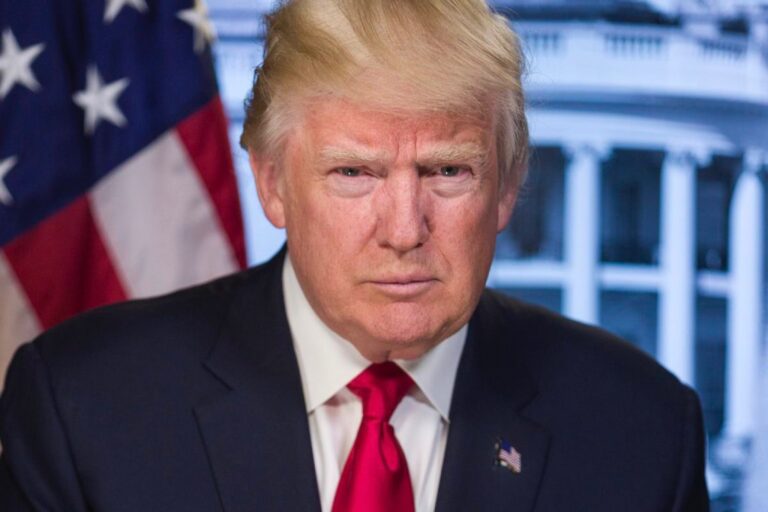
UNITED States (US) President Donald Trump has demanded Iran’s “unconditional surrender” and warned that he could no longer wait for the country to concede defeat.
Trump made his stance on the Israel-Iran conflict known on Tuesday, July 17, noting that there were no plans to target Iran’s leader, Ali Hosseini Khamenei as the conflict entered its fifth day.
“We know exactly where the so-called ‘Supreme Leader’ is hiding,” he wrote on Truth Social. “We are not going to take him out (kill!), at least not for now…Our patience is wearing thin,” he added.
Three minutes later, he posted, “Unconditional surrender!”
According to three US officials who spoke with Reuters, the US is sending additional fighter jets to the Middle East and extending the deployment of other warplanes.
The ICIRreported that Trump urged Iranians to evacuate Tehran, citing the Iranian government’s refusal to accept a deal aimed at limiting its nuclear weapons programme.
Trump departed the G7 summit early on Monday, citing the escalating Middle East crisis, but denied that his exit was related to any efforts to broker a ceasefire between Israel and Iran, adding that it was due to something “much bigger” on the horizon.
Meanwhile, Israeli Defence Minister, Israel Katz, warned that Iran’s Supreme Leader could meet the same fate as former Iraqi President Saddam Hussein, who was overthrown in a US-led invasion and executed in 2006, following a trial.
“I warn the Iranian dictator against continuing to commit war crimes and fire missiles at Israeli citizens,” Katz told top Israeli military officials.
Earlier, thousands of residents of the Iranian capital Tehran were said to be fleeing their homes and stockpiling essential supplies for fear that Israel’s airstrike campaign would escalate in the coming days.
The Israeli military had warned Iranian civilians in a series of messages to leave some areas for their own safety, raising the prospect of a widening barrage of aerial attacks.
On Monday, Trump predicted that Israel would continue its attacks on Iran without let-up. However, he added that he might consider sending US Middle East Envoy Steve Witkoff or Vice President JD Vance to hold talks with Iranian officials.
Vance said that the decision on whether to take further steps to halt Iran’s uranium enrichment programme, suspected by Western powers to be aimed at developing a nuclear weapon “ultimately rests with the president.”
A White House official said Trump was meeting with his National Security Council on Monday afternoon to discuss the ongoing conflict.
The ICIRreported how an Israeli strike on the central Iranian city of Kashan killed three people and injured four others.
Iranian media reported a series of explosions and intense air defence activity in Tehran early Tuesday, with smoke seen rising from the eastern part of the city following the suspected impact of Israeli projectiles.
Explosions were later reported in Tehran and in the central Iranian city of Isfahan, as Israel claimed Iran had launched additional missiles, triggering air raid sirens in Tel Aviv and southern parts of the country.
Israeli strikes have killed several Ayatollah Khamenei’s top military and security advisers, creating significant gaps in his inner circle and increasing the likelihood of strategic missteps, according to impeccable sources familiar with his decision-making process.
The Israeli military claimed that Iran’s military leadership was “on the run” and announced the killing of Iran’s wartime chief of staff, Ali Shadmani, overnight just four days after he replaced another senior commander killed in earlier strikes.