Home Blog Page 261

IBB apologised for annulling my father’s election – Lekan Abiola

LEKAN Abiola, son of Moshood Kashimawo Abiola, has revealed that former military president, Ibrahim Babangida, apologised to the Abiola family for annulling the June 12, 1993, presidential election.

He made this known on Thursday at the MKO Abiola Memorial Symposium in Lagos, during preparations for the launch of a book titled “MKO Abiola: Symbol of Democracy.”

Addressing journalists on the sidelines of the event, he disclosed that the apology, initially delivered in private, was later made public by the former head of state.

“We returned from the United States of America, we have met IBB and he has apologised privately to us. When he came out publicly to say that he was sorry for annulling the election and that MKO won the election, he did what he had done privately in public,” the younger Abiola said.

He further noted that the family found some measure of closure in the public apology, which he described as long overdue.

“Before now, for the private apology, there was nothing we could do about that. It is as though someone punched you in public and said sorry in private,” he added.

According to him, Babangida’s admission not only reaffirmed the legitimacy of MKO Abiola’s electoral victory but also helped to dispel lingering doubts surrounding the historic poll.

Babangida, a retired general, annulled the June 12, 1993, presidential election, widely regarded as Nigeria’s freest and fairest, despite national and international recognition of Abiola as the rightful winner.

For the first time in over 30 years, Babangida publicly acknowledged that Abiola, widely known by his initials MKO, won the election.

He revealed this while launching his autobiography, ‘A Journey in Service’, in Abuja on Thursday, February 20, this year.

He wrote: “Although I am on record to have stated after the elections that Abiola may not have won, upon deeper reflection and a closer examination of all available facts, particularly the detailed election results published as an appendix to this book, there was no doubt that M.K.O. Abiola won the June 12 elections.”

Babangida further noted that Abiola secured the mandatory one-third of the votes cast in 28 states, including Abuja, thereby fulfilling the constitutional requirement for victory.

“Upon closer examination of the original collated figures from the 110 polling booths nationwide, it was clear that he satisfied the two main constitutional requirements for winning the presidential elections, namely majority votes and geographical spread,” he added.

For decades, Babangida has faced criticism for annulling the poll. His military government, which ruled from 1985 to 1993, never officially declared a winner before cancelling the process, citing national security concerns.

It is noteworthy to state that Babangida and Abiola were very close friends.

Annulling the poll outcomes triggered nationwide unrest, leading to the brutal military regime of the late Sani Abacha.

Abiola was later arrested in 1994 while trying to reclaim his mandate and died in detention in 1998 under unclear circumstances. His wife, Kudirat Abiola, was also assassinated in her struggle to reclaim her husband’s mandate.


JUSUN strike over non-implementation of financial autonomy cripples Ondo judiciary

0

THE strike embarked upon by the Judiciary Staff Union of Nigeria (JUSUN) in Ondo State has crippled the state courts.

The indefinite strike, which commenced on Friday, June 13, has stopped judges, lawyers, and litigants from accessing the courts’ premises. 

Media reports showed that the Akure Division of the State High Court complex and Magistrates’ Court had their gates locked, effectively shutting down all activities within the premises.

 The JUSUN chairman, Ondo State chapter, Oluwafemi Afolabi, who spoke on the strike, confirmed the industrial action and added that the decision followed the end of the seven-day ultimatum given to the state government last week. 

He said he had directed all members to shun work starting today, June 13, and to adhere strictly to the industrial action guidelines.

He added that the decision to cripple activities in “all courts across the 18 local government areas of the state” was over the failure of the state government to implement the Memorandum of Understanding (MOU) granting financial autonomy to the state judiciary. 

Judiciary workers in the state had given Governor Lucky Aiyedatiwa a seven-day ultimatum last Wednesday to implement the MOU on financial autonomy for the judiciary or face a strike.

The ultimatum was announced in a statement by Afolabi and the JUSUN Secretary, Kehinde Alade.

The union said it observed with regret the state government’s failure to implement the MOU.

Meanwhile, the Ondo State Commissioner for Justice and Attorney General, Kayode Ajulo, a senior advocate, has yet to react to the strike. 

Recall that in 2021, judicial workers in the state joined a nationwide strike declared by JUSUN’s national leadership. 

The union declared the strike to protest the non-implementation of financial autonomy for the judiciary.

Keyamo directs aviation agencies to probe Oshiomhole-Air Peace incident

The Minister of Aviation and Aerospace Development, Festus Keyamo, said he has directed the aviation agencies to investigate the matter involving Adams Oshiomhole, who represents Edo North at the Senate, and the staff of Air Peace at Murtala Muhammed Airport Terminal 1 (Zulu Hall) on the morning of Wednesday, June 11.

Keyamo made this known in a statement shared on his X handle on Friday, June 13.

He said, “Whilst appealing to both sides to halt the public accusations and counter-accusations, I am further directing the relevant aviation agencies to thoroughly look into the issue, collect all available evidence and revert to my office so we can deal with the problem in such a way as to guide future conducts in similar situations.

According to Keyamo, in the wake of the incident at the Lagos Airport on Wednesday involving Air Peace and Oshiomhole, he has been in direct contact with both parties since then.

“I also directed the aviation agencies to exercise restraint in jumping to conclusions in line with the time-honoured legal principle of ‘hear all sides’ before reaching judgment,” the minister added.

The ICIR reported that a mild drama and public altercation broke out between Oshiomhole and Air Peace at the Zulu Hall terminal Wednesday morning after the Senator was refused boarding the airline’s first flight along with other passengers.

The incident immediately resulted in accusations and counter-accusations from both parties and attracted public concern and reactions.

According to the airline, Oshiomhole arrived late at the terminal at about 6:10 am for a flight to Abuja, scheduled to depart at 6:30 am, and upon being refused boarding, disrupted flight operations.

It criticised Oshiomhole for allegedly exhibiting “unruly conduct,” insisted that the boarding process had closed, and the flight departed as scheduled in line with its standard on-time departure policy.

In his reaction, Oshiomhole accused the airline of double standard, stating that despite having checked in online and arriving 30 minutes before the counter was closed, he and other passengers who came much earlier were denied boarding.

He further accused the airline of selling tickets on the spot at higher prices upon observing what played out, urging the Air Peace management to follow the rules.

Air Peace, however, denied the allegation, challenging Oshiomhole to bring up evidence of any passenger who was extorted.

It claimed that Oshiomhole’s accusation of extortion was very defamatory and his conduct was very violent, unbecoming, unfortunate, and above all, shameful.

The airline had called on the Federal Airport Authority of Nigeria (FAAN) to release the Closed Circuit Television (CCTV) coverage starting from the time Oshiomole entered the airport, for Nigerians to see, The ICIR reported.

Israel attacks Iran’s nuclear, military sites, kills top commander, civilians

ISRAEL launched large-scale strikes on Iran on Friday, June 13, claiming it targeted nuclear sites, ballistic missile production facilities, and senior military commanders as part of a broader operation aimed at preventing Tehran from developing a nuclear weapon.

This was revealed by Israeli military spokesperson, Effie Defrin, a Brigadier General, who said Iran had launched about 100 drones towards Israeli territory in retaliation, which Israel was intercepting.

Iranian media and eyewitnesses reported explosions, including at the country’s primary uranium enrichment site in Natanz, as Israel declared a state of emergency in anticipation of potential missile and drone attacks.

The International Atomic Energy Agency stated on Friday that there was no increase in radiation levels at the Natanz nuclear site, citing information provided by Iranian authorities.

Iran’s elite Revolutionary Guards corps said its top commander, Hossein Salami, was killed, and state media reported the unit’s headquarters in Tehran had been hit. Several children were killed in a strike on a residential area in the capital, it said.

“We are at a decisive moment in Israel’s history,” Israeli Prime Minister Benjamin Netanyahu said in a recorded video message.

“Moments ago, Israel launched Operation Rising Lion, a targeted military operation to roll back the Iranian threat to Israel’s very survival. This operation will continue for as many days as it takes to remove this threat.”

Defrin said 200 Israeli fighter jets took part in the strikes, hitting more than 100 targets in Iran.

Iran’s Supreme Leader, Ayatollah Ali Khamenei, condemned the attack, accusing Israel of unleashing its “wicked and bloody” hand in a crime against Iran. He warned that it would face “a bitter fate” in return.

Iranian state media reported that Israeli strikes in Tehran killed at least two prominent nuclear scientists, Fereydoun Abbasi and Mohammad Mehdi Tehranchi. In total, six Iranian nuclear scientists were reported dead.

Meanwhile, President Donald Trump’s administration has distanced the United States from the attacks.

Trump’s Secretary of State and National Security Adviser, Marco Rubio, emphasised that Israel acted independently in carrying out the strikes. However, he acknowledged the United States was aware the attacks were planned.

“We are not involved in strikes against Iran and our top priority is protecting American forces in the region,” Rubio said in a statement. “Israel advised us that they believe this action was necessary for its self-defence.”

Just hours before the strikes, Trump had urged a diplomatic solution to the tensions, while saying a strike on Iran “could very well happen.”

A day after the US ordered some of its personnel to leave the Middle East amid rising tensions, Rubio issued a stern warning to Iran: “Let me be clear: Iran should not target US interests or personnel.”


Dangote retires as chairman of his sugar refinery after 2 decades

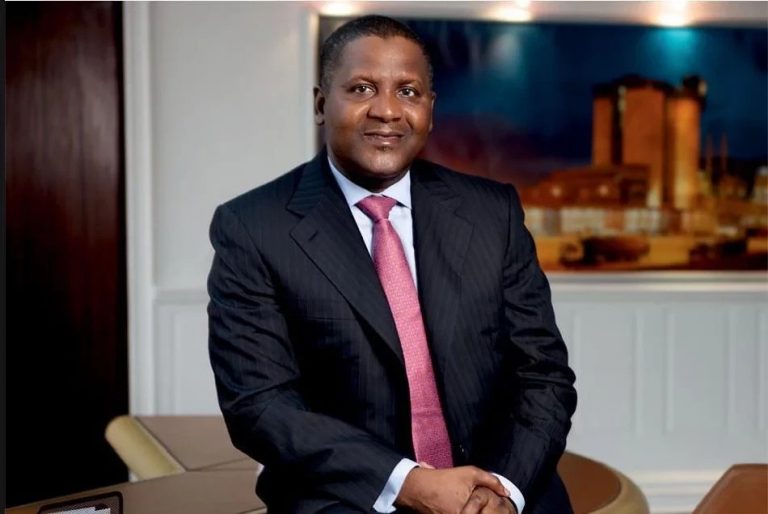
ALIKO Dangote has officially retired as chairman of the Board of Directors of Dangote Sugar Refinery Plc, having served for 20 years, to comply with corporate governance guidelines.

The Dangote Sugar Refinery announced this in a statement on Thursday, June 12, signed by its company secretary, Temitope Hassan.

His retirement is to take effect on June 16, 2025.

A founding director of the Dangote Sugar Refinery, Dangote has, during his tenure, shaped the company’s growth and market leadership.

The renowned industrialist has played a pivotal role in the company’s expansion, ensuring steady shareholder value, solidifying its corporate governance framework, and navigating key industry developments.

“In line with the principles of good corporate governance and succession planning, Dangote Sugar Refinery Plc hereby announces the retirement of our esteemed Chairman of the Board of Directors of the Company, Alhaji Aliko Dangote (GCON), effective June 16, 2025,” the company stated.

During his tenure, the company executed major backward integration Projects in Adamawa, Taraba, and Nasarawa States, aimed at strengthening its supply chain and boosting domestic sugar production.

“He also played an instrumental role in shaping the company’s strategy and culture, thereby building a robust foundation for growth and sustenance,” the company noted.

Following his retirement, the board of the Dangote Sugar Refinery Plc said it had appointed Arnold Ekpe, an independent non-executive director, as the company’s new chairman effective June 16, 2025.

A renowned banking executive, Ekpe brings extensive leadership experience to the role, having previously held senior positions in the financial sector and other key industries.

Ekpe is expected to build upon the company’s successes, further solidifying its market position and long-term sustainability.

FG to bridge internet gaps with fibre optic layout,says Tinubu

PRESIDENT Bola Tinubu said that his administration has initiated a project to install fibre optic cables across the country, aimed at enhancing the socio-economic development of Nigeria.

His plans were contained in a speech he delivered at a joint session of the National Assembly in commemoration of Democracy Day on Thursday, June 12.

He said the fibre optic layout is part of other projects being embarked on.

“In addition, we have embarked on an ambitious project to lay fibre optic cables across the nation, a transformative step toward bridging the digital divide and fostering greater connectivity.

“This initiative promises not only to enhance the speed and reliability of internet access but also to revolutionise how businesses operate, how students learn, and how communities stay connected,” Tinubu stated.

He maintained that by extending this critical infrastructure, his government is empowering entrepreneurs, enabling digital education, and providing the tools for our youth to compete in a globalised world.

In a most recent report on Internet connectivity, The ICIR pointed out how Nigeria has faced setbacks in its deployment of fibre optic cables and needs a transformation.

The challenges revolve around vandalism, inadequate coordination between road construction and telecom infrastructure, and varying right-of-way (RoW) charges across states.

Among industry experts, these issues impact network outages, increase repair costs, and hinder broadband expansion efforts.

It has also further threatened the digital economy, leading to slower Internet speeds, dropped calls, and unreliable connectivity among others.

For some analysts, the policy initiative could improve financial inclusion for most small businesses that have to sustain their customer base in internet-underserved areas.

“Improving Nigeria’s broadband access will spike inclusive economic growth and ensure financial inclusion in most underserved areas across the country. It’s a good step for the advancement of the economy, especially small and medium enterprises, many of whom transact their businesses in digital platforms,” a development economist, Kingsley Obiakor, said.

Addressing the legislature, Tinubu called on them to join hands with him to put forth innovative legislation that further encourages industrial development and job creation in urban centres while also drafting laws that improve food security and production.

Upon assuming office on May 29, 2023, Tinubu noted that he had introduced reforms to correct structural imbalances that prevented maximum growth.

“We are already seeing results. GDP (gross domestic product) grew by 3.4 per cent in 2024, with Q4 (quarter four) hitting 4.6 per cent, the highest quarter of growth in over a decade,” he said.

He highlighted that inflation has started easing gradually, steadying the price of food staples like rice and
beans.

“Our net foreign reserves have increased fivefold, and the Naira exchange rate has stabilised. Our balance of payments position is positive.
Our sovereign credit rating is improving as we continue to promote oil and non-oil exports. States now do not need to go about borrowing to pay salaries,” he added.

The President also stated that in less than one year that over one hundred thousand Nigerians, including thirty-five thousand civil servants, have benefited from affordable consumer credit through the Nigerian Consumer Credit Corporation (CREDICORP), enabling them to purchase vehicles, light up and improve their homes, and purchase life essentials.

“This July, we will launch a bold new initiative to empower four hundred thousand young Nigerians, including youth corps, with consumer credit.

“Our ‘Nigeria First’ policy will further enhance progress as we consolidate market-driven growth. The improved economic performance is encouraging and validates the soundness of our policy measures. Our medium-term growth target remains an economy growing at a 7 per cent clip with a stronger manufacturing base. We must learn to produce and grow most of our food, and we are on the path to achieving food sovereignty,” he said.

Tinubu confers national honours on Shehu Yar’Adua, Kudirat Abiola, Soyinka, Saro-Wiwa, others

0

PRESIDENT Bola Tinubu has conferred national honours on eminent Nigerians who fought for Nigeria’s democracy, as part of events marking this year’s Democracy Day.

Tinubu announced the honours while addressing a joint session of the National Assembly in Abuja on Thursday.

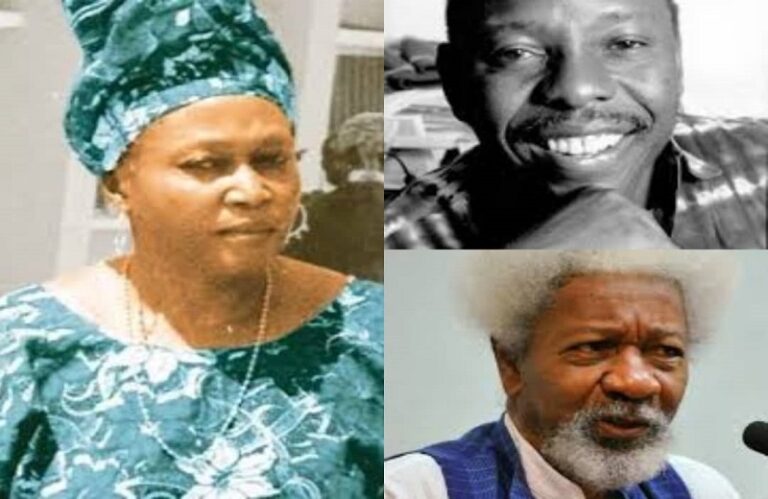
Among the honorees are the former Chief of Staff and politician, late Shehu Musa Yar’Adua, who received Grand Commander of the Order of the Federal Republic (GCFR); wife of the winner of the 1993 presidential election, late Kudirat Abiola, who was conferred with a posthumous Commander of the Federal Republic (CFR); and Wole Soyinka, a professor and Nobel laureate who got the Grand Commander of the Order of the Niger (GCON).

The President also honoured human rights advocate Ken Saro-Wiwa posthumously. Exercising powers granted to him by the Constitution under the prerogative of mercy, he pardoned the Ogoni Nine, including Saro-Wiwa, who were sentenced and killed during the regime of military dictator Sani Abacha.

Full list of the awardees as announced by the President:

  • Shehu Musa Yar’Adua – GCFR (Grand Commander of the Order of the Federal Republic)
  • Kudirat Abiola – CFR  (Commander of the Federal Republic)
  • Prof. Humphrey Nwosu – CON  (Commander of the Order of Niger)
  • Rear Admiral Ndubuisi Kanu – CON
  • Alhaji Balarabe Musa – CFR
  • Pa Alfred Rewane – CFR
  • Dr. Beko Ransome-Kuti – CON
  • Alao Aka Bashorun – CON
  • Chief Frank Kokori – CON
  • Bagauda Kaltho – OON   (Officer of the Order of the Niger)
  • Chima Ubani – OON
  • Emma Ezeazu – OON
  • Bamidele Aturu – OON
  • Fredrick Fasehun – CON  (Commander of the Order of the Niger)
  • Prof. Festus Iyayi – CON
  • Dr. John Yima Sen – OON
  • Alhaja Sawaba Gambo – CON
  • Dr. Edwin Madunagu – CON
  • Dr. Alex Ibru – CON
  • Chief Bola Ige – CFR
  • Pa Reuben Fasoranti – CFR
  • Senator Ayo Fasanmi – CON
  • Senator Polycarp Nwite – CON
  • Dr. Nurudeen Olowopopo – CON
  • Prof. Wole Soyinka – GCON
  • Prof. Olatunji Dare – CON
  • Kunle Ajibade – OON
  • Nosa Igiebor – OON
  • Dapo Olorunyomi – OON
  • Dare Babarinsa – CON
  • Bayo Onanuga – CON
  • Ayo Obe – OON
  • Bishop Matthew Hassan Kukah – CON
  • Senator Shehu Sani – CON
  • Governor Uba Sani – CON
  • Senator Tokunbo Afikuyomi – CON
  • Hon. Labaran Maku – OON
  • Barrister Femi Falana, SAN – CON
  • Prof. Shafideen Amuwo – CON
  • Barrister Luke Aghanenu – OON
  • Dr. Tunji Alausa – CON
  • Mr Nick Dazang – OON
  • Hon Abdul Oroh – OON
  • Odia Ofeimun – CON
  • Seye Kehinde – OON
  • Barrister Felix Morka – CON
  • Barrister Ledum Mitee – CON
  • Hon. Olawale Osun – CON
  • Dr. Amos Akingba – CON
  • Prof. Segun Gbadegesin – CON
  • Mobolaji Akinyemi – CFR
  • Dr. Kayode Shonoiki – CON
  • Prof. Julius Ihonvbere – CON
  • Prof. Bayo Williams – CON
  • Senator Abu Ibrahim – CFR
  • Senator Ame Ebute – CFR
  • Uncle Sam Amuka Pemu – CON
  • Ken Saro-Wiwa – CON
  • Saturday Dobee – OON
  • Baribor Bera – OON
  • Barinem Kiobel – OON
  • John Kpuine – OON
  • Nordu Eawo – OON
  • Daniel Gbooko – OON
  • Paul Levera – OON
  • Felix Nuate – OON

In addition, Tinubu also adorned National Assembly leaders with the honours earlier conferred upon them in 2024. They include Senate President Godswill Akpabio and Speaker Tajudeen Abbas (GCON), Deputy Senate President Jibrin Barau, and Deputy Speaker Benjamin Kalu (CFR).

World Child Labour Day: UNESCO, stakeholders, urge global action

TODAY marks World International Day for the Elimination of Child Labour. Themed, “Progress is clear, but there’s more to do: Let’s speed up efforts!”, UNESCO, among other advocates, have highlighted overlooked stories of child labour, drawing attention to the hidden struggles faced by vulnerable children across the country.

When Margaret Joshua’s parents living in Kebbi State agreed to send their daughter to Plateau as a domestic servant in 2021, fleeing from insecurity in her community, they were reassured by promises of enrolling her in a good school. They had no idea the decision would mark the beginning of a life-altering ordeal for their child.

On the cold night of November 2022, Nneamaka Nwachuku, Margaret’s guardian started confronting her with the claims that she caught her masturbating and forced her to sit in a container of hot water, which was said to have burned her buttocks.

Margaret ran out of the house in pains and didn’t come back until some neighbours saw her almost 24 hours later and took her to the Police station. Sadly, she was said to have given up the ghost hours after she was taken to the hospital on November 14, 2022.

Margaret’s case reflects the story of many other children in Nigeria that are trapped in child labour, as contained in data released by the National Bureau of Statistics (NBS) in 2024.

The data established that 39.2 per cent of Nigerian children between 5-17 years  were in forced labour.

According to NBS, child labour is endemic in Nigeria, with children aged five to 14 years accounting for 39.7 per cent of the incidences, while those aged 15 and 17 years accounted for 37.3 per of minors in forced labour.

The agency noted that the prevalence of child labour was higher in rural areas, where 44.8 per cent of children were engaged in the activity compared to 30.0 per cent in urban areas.

Call for concerted action

The United Nations Children’s Fund, in a statement , said that child labour still affects around 138 million children globally, with 54 million of them involved in dangerous occupations.

“In 2024, nearly 138 million children were engaged in child labour. Though progress has been made, millions are still being denied their right to learn, play and simply be children. UNICEF and is urging governments to take action.” 

In commemoration of the 2025 World Day Against Child Labour, the United Nations Educational, Scientific and Cultural Organisation,(UNESCO) President of Read and Earn Federation, Abdulsalami Ladigbolu-Oranmiyan have called for a unified national and global action to end child labour.

He said the coincidence of celebration of World Day Against Child Labour with Nigeria’s Democracy Day on the same day, was indeed instructive and symbolic, saying both had same theme of rights and protection of the peoples right.

According to him, genuine democracy must prioritise the protection and empowerment of children.

“Today is more than symbolic, it is a call to action. Democracy must not only be about elections and institutions, it must protect the rights, dignity, and future of our children,” Oranmiyan said.

Similarly, the Nigeria Employers’ Consultative Association (NECA) Director-General, Adewale-Smatt Oyerinde, called for concerted and concrete action against child labour, as Nigeria joins the global community to mark the World Day Against Child Labour.

“June 12 presents a critical opportunity to remember the plight of underaged children trapped in hazardous and exploitative labour conditions. Despite Nigeria’s ratification of key international conventions—including ILO Convention No. 138 on Minimum Age and Convention number 182 on the Worst Forms of Child Labour—millions of Nigerian children continue to engage in dangerous work, sacrificing their health, education, and future potential.

“Child labour not only robs children of their childhood, it erodes the foundation of national development. While we have made commendable progress, we must accelerate our efforts.

“We need to move from intention to action through stronger enforcement, greater investment in education, and robust support systems for vulnerable families.”

The Plateau State Coordinator and Director Legal, National Human Rights Commission, Kiyenpiya Mafuyai, recalled the case of an 8-year-old boy who was living with his grandfather’s sister that was subjecting him to physical abuse, despite making him work above his age.

“On this fateful day, she was beating him, neighbours intervened with her to stop but she didn’t and he eventually slumped,” Mafuyai said.

She explained that the boy was rushed to the hospital and his guardian claimed it was a fever but when he was undressed, there were so many marks of physical beating that the doctor suspected there might be internal bleeding.

“As they put him in a scan to check for internal injuries, he went unconscious and died. The incident was reported to the commission by the doctors and the commission ensured that she was arrested and is presently being prosecuted,” she revealed.

Similarly, in April 2024, an 8-year-old boy who was brought from Akwa Ibom State by his aunty to live with guardians in Jos, was reported to the commission.

“These guardians refused to send him to school and he was being maltreated. He was not given food and was sent to fetch water at night,” the coordinator said, adding that the female guardian beat the boy on every slightest provocation. 

“Anonymous neighbours reported the matter to the commission. We invited the police to be involved and arrested the suspects who were later granted bail.-

The Coordinator said that the Plateau State office of the National Human Rights Commission (NHRC) has handled sixteen cases of child labour from 2024 to date.

Mafuyai said that the most common types of child labour the commission has encountered in the state include, domestic servitude, child labour in mining, hawking and begging for alms.

“You find children employed as domestic servants in homes, sometimes it is not even employment, they are not being paid, their parents are often sent the money, or in some instances are not even sent the money at all,” she said.

Mafuyai said that the World Day for the Elimination of Child Labour is significant for the humanitarian workers in the front lines to create awareness and amplify the voices of children.

“Many people don’t realise that what they have sent their children into is child labour. Many families that have children as domestic servants don’t realise that what they are doing is exploitation of these children,” she said.

She added that the exploitation of children through labour is punishable by law in Nigeria.

Mafuyai cited that Section 28 of the Child Rights Act 2003, makes it punishable to exploit children through labour, even as domestic help. 

“The sanction for this crime is imprisonment for a term of five years, a fine of 50,000 or both. Section 30 of the Act also prohibits children begging for alms, or hawking. 

“The Child Rights Act has been adopted as law in 25 states so far and Plateau enacted the law in 2005,” she added.

Meanwhile, the UNESCO leader also warned that the persistence of child labour undermined Nigeria’s development goals and the global commitment to the UN Sustainable Development Goals, especially SDG 8.7, which targeted the elimination of child labour in all its forms.

Oranmiyan called for stronger political will while also urging President Bola Tinubu to intensify efforts under the “Renewed Hope” agenda by aligning national policies with the United Nations framework for sustainable development.

“Ending child labour is not merely a policy issue, it is a moral and democratic responsibility.

“We must invest in stronger educational systems, provide economic support for vulnerable families, and ensure every child is safe from exploitation,” he said.

Oshiomhole-Air Peace trade blames over flight disruption at Lagos airport

THE mild drama and public altercation involving the Senator representing Edo North, Adams Oshiomhole, and staff of Air Peace at Murtala Muhammed Airport Terminal 1 (Zulu Hall) on the morning of Wednesday, June 11, have resulted in accusations and counter-accusations from both parties.

The incident had attracted public concern as Nigerians reacted to the altercation, The ICIR reported.

Following the incident, which trended on social media, Air Peace, in its earlier statement, claimed that Oshiomhole arrived late at the terminal at about 6:10 am for a flight to Abuja, scheduled to depart at 6:30 am, and upon being refused boarding, disrupted flight operations.

The airline further claimed that, in line with its standard on-time departure policy, the boarding process had closed and the flight departed as scheduled, criticising Oshiomhole for exhibiting “unruly conduct.”

In his reaction, Oshiomhole, in a video clip seen by The ICIR, countered the airline’s claims, narrating how passengers, including himself, were prevented from boarding the Air Peace flight to Abuja despite having checked in online and arriving 30 minutes before the counter was closed.

According to his account, he booked the Air Peace flight for 6:30 a.m., which was their first flight for the day.

“I booked and asked them to check me in online, which I did, along with two other Ghanaians who met me in Lagos. We checked in online just to avoid the last-minute issues I’ve had with them a couple of times.

“I got there at about five minutes past six. They told me the counter was closed. I told them, ‘No, I’ve already checked in.’ I showed them the evidence of my online check-in,” he said.

Even before then, the airline attendant had asked if he had checked in, and he told them yes, and that he had no luggage.

He claimed to have shown them his checks, but they still insisted that the gate had been closed. He, however, asserted that he noticed they were still taking other people in.

“How can you close boarding for a 6:30 flight at 6:05? What is the purpose of online check-in, then?’ If I had to go through another check-in process, then what’s the point of checking in online?”Oshiomole queried.

They were selling tickets on the spot at higher prices, Oshiomhole claimed. “Meanwhile, the airline was selling tickets on the spot for between N200,000 and N300,000.”

He said, upon observing that, he told the manager, ‘You must follow the rules.’

He said he was touched that many people were stranded, except those who could afford another ticket.

Among others, Oshiomhole also accused the airline of attempting to offer him preferential treatment, which he claimed he rejected, and that the issue was not about him but about enforcing the rule.

Although the airline initially was silent, naming Oshiomhole as the “prominent politician” referred to in its first statement, however, in another statement on Thursday, June 12, Air Peace debunked some of the Senator’s accusations.

It stated that Oshiomhole lied blatantly when he accused the airline of extorting its passengers.

“We challenge Senator Oshiomole to bring one evidence of a passenger that was extorted,” it demanded.

It claimed no ticket was sold after the closure of check-in and that every passenger who flew bought their ticket before the flight closure.

The airline also countered that its flight was never overbooked as some videos alleged, claiming that the aircraft took off with over 30 empty seats.

“It would have been in our interest to carry Oshiomhole and those others who missed their flights for lateness on this flight, instead of flying many empty seats; but we will never sacrifice our strict on-time performance for monetary gains,” it said.

It also debunked the offer of preferential treatment to Oshiomhole.

However, the airline did not counter Oshiomhole’s claim that he had checked in online a day before. It also did not clarify the 30-minute rule for closing the counter before the flight departure, as Oshiomhole claimed that many passengers who came much earlier were not allowed to board the flight.

Air Peace only added, “We call on the Federal Airport Authority of Nigeria (FAAN) to release the CCTV coverage starting from the time Senator Oshiomole entered the airport, for Nigerians to see.

“His accusation of extortion is very defamatory. His conduct was very violent, unbecoming, unfortunate, and above all, shameful.”

One-party state not good for Nigeria – Tinubu

0

PRESIDENT Bola Tinubu has dismissed the notion that he supports a one-party state in Nigeria.

Tinubu stated this while addressing the joint session of the National Assembly in commemoration of June 12 Democracy Day in Abuja on Thursday, June 12.

He said he was addressing the matter, which has raised serious concerns across Nigeria for weeks, to “put a terrible rumour to bed.”

The president said those who believed that the APC was pushing for a one-party state were wrong.

“While your alarm may be a result of your panic, it rings in error. At no time in the past, nor any instance in the present, and at no future juncture shall I view the notion of a one-party state as good for Nigeria.

“I have never attempted to alter any political party registration with INEC,” Tinubu stated.

According to him, no one should blame anybody seeking to escape from a sinking ship, even without a life jacket.

He pointed to his political history, emphasising he would be the last person to advocate a one-party state.

The president said in 2003, when the Peoples Democratic Party (PDP) held sway and “tried to sweep the nation clean of political opposition through plot and manipulation”, he was the last of the progressive governors that stood in his region – the South-West.

“In all their numbers and false grandeur, they boasted of ruling, not governing, Nigeria for the next half century or more. Where are they now? Yet, I stood alone. My allies had been induced into defeat. My adversaries held all the cards that mortal man could carry.

“Even with all of that, they could not control our national destiny because fate is written from above. A greater power did not want Nigeria to become a one-party state back then. Nigeria will not become such a state now. I dare not do such a favour to any political adversary by repeating the same mistake of political overreach,” Tinubu stated.

He assured that a one-party state was not in the offing and would never be in Nigeria.

He, however, stated that the ruling party would be guilty of political malpractice if it closed the door on those from other parties seeking to join the APC.

He used the opportunity to welcome governors Sheriff Oborevwori of Delta and Umo Eno of Akwa Ibom States, and other members of the National Assembly who recently defected to the APC.

He added that political parties fearing their members leaving should examine their internal processes and affairs rather than blaming him or the APC.

“I will not help you do so,” he said of the troubled parties failing to put their homes in order, adding, “It is, indeed, a pleasure to witness you in such disarray.”