Home Blog Page 2645

Kebbi first lady unveils team of consultants treating Buhari’s son


Zainab Bagudu, wife of Atiku Bagudu, Governor of Kebbi State, has unveiled the team of over 10 top medical consultants that took care of Yusuf, President Muhammau Buhari’s only son, who was involved in a crash while riding on a power bike in December.

Bagudu, herself a medical doctor, shared a picture on Twitter where the team posed with Aisha Buhari, Yusuf’s mother, and wrote: “The wonderful team of doctors that cared for Yusuf. Thank you. #Madeinnigeria”

Members of the team include Isaac Adewole, Minister of Health; Osagie Ehanire, Minister of State for Health; Bello Bala Shehu, globally acclaimed Neurosurgeon and Vice Chancellor of the Federal University, Birnin Kebbi.

Bagudu’s tweet seems an indication that Yusuf is doing well, after initial reports of original plans to fly him to Germany for treatment.

Many Nigerians who reacted to the tweet expressed happiness that the President’s son was doing well, but majority reminded the first family that good healthcare should not be an exclusive preserve of the few elites.

Some other tweets had a tone of sarcasm to them.

Time for Nigeria to scrap polytechnics and colleges of education, says Adeyeye


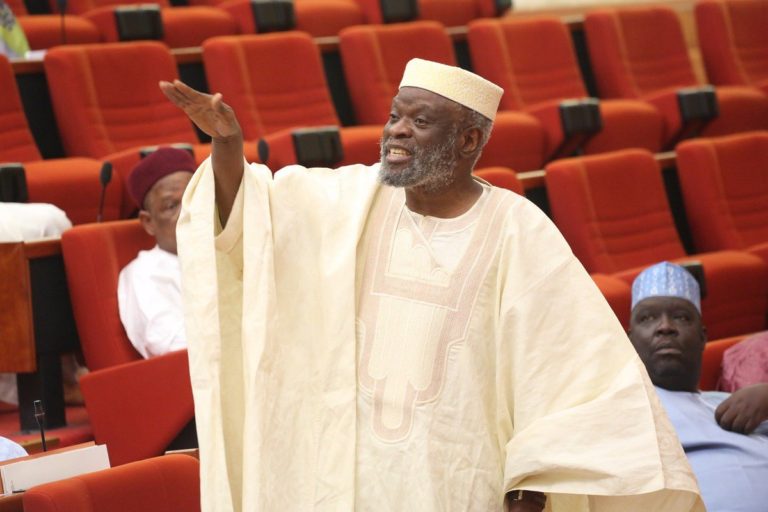
Sola Adeyeye, senator representing Osun Central Senatorial District in the National Assembly, says the nation should consider scrapping its polytechnics and colleges of education if it must develop.

“Honestly, give me a chance, I would have an education system where, in less than 10 years, we will phase out all the polytechnics and colleges of education and we strengthen our universities,” Adeyeye said on Tuesday at a stakeholders’ meeting on the 2108 Unified Tertiary Matriculation Examination (UTME), organised by the Joint Admission and Matriculation Board (JAMB).

Adeyeye, who also said he does not believe God will solve Nigeria’s problems, argued that the weakest brains are those who are pushed to the other two tiers of tertiary education after the best have been admitted into universities.

“My own greatest sorrow, and I have said it to the Registrar of JAMB before, is that the best students want to study maybe Medicine, Engineering, and Law. The next set wants to study science and by the time you finish, your worst students are pushed to education,” he said.

“There cannot be a serious future for a society that makes its weakest students to be their teachers. What we need is a reward system where teachers are paid so well that a brilliant boy will know that there is no higher reward for an engineer than being a teacher. When we begin to pay our teachers well, this apartheid system that we have now will be demolished.”

Describing the system as ‘apartheid’, he stressed that the countries that introduced the system of education with polytechnics and colleges of education have since phased them out.

“I’m an eternal optimist. There are problems. I was on television preaching nationhood before Adeboye. I don’t believe God will solve Nigeria’s problems. If Nigerians problems will be solved because they were created by Nigerians, they will be solved by Nigerians.

“And I thank you, Professor Oloyede, for showing us that it doesn’t matter how big a problem is if we are determined; we can’t solve it alone but together. We can summon the courage and the wisdom to solve them. He would succeed so well in JAMB.

“If you want to see the future of a nation or of any society, what you ought to do is to go to their schools. If you want to see the future of your universities, go to your secondary and primary schools.

“As you drive through much of Nigeria, when you see the public schools, it should not allow that given the saying ‘rubbish in, rubbish out’ that our universities are having the products that they have.

“My primary school in 1955, my teacher was a Standard 6 graduate; eventually, Standard 6 could not teach again. You have to go to Grade III, eventually Grade III couldn’t teach again; you have to have Grade II, and eventually Grade II could not teach again; you have to have Grade I.

“The ‘ogas’ at the Colleges of Education claim they are the best teachers; they forgot that they were first taught by universities graduates. And across the world, this apartheid system of three tiers of tertiary education is being phased out.”

Ortom reveals how herdsmen ‘slaughtered two mobile policemen like goats’


Samuel Ortom, Governor of Benue state, has revealed how herdsmen caught two mobile policemen and “slaughtered them like goats”.

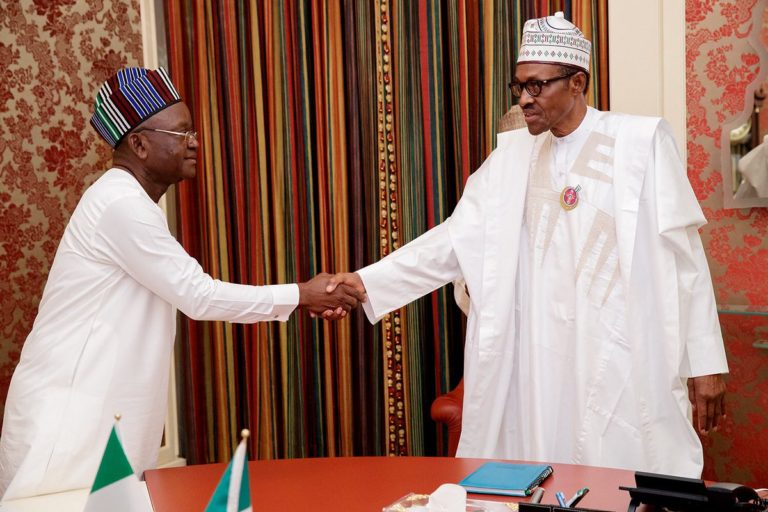
Ortom said this on Tuesday after meeting with President Muhammadu Buhari at the State House to brief him on the action so far taken with regards to the New Year’s Day attack by herdsmen on five communities in the state.

He said the President had ordered the deployment of adequate security forces to the state to protect the citizens from further attacks by rampaging herdsmen, and is currently considering his next line of action.

I briefed Mr President when this incident took place on January 1. After staying back on the ground to do the needful to ensure that we restore normalcy, I said it was important for me to come personally and brief him and that has been done,” he said.

“Already, because of the communications we have been having when these incidents started, actions have been taken as directed by him.

“The movement of the DIG, the movement of the IG now to relocate to Benue state to ensure that this challenge is surmounted was at the instance of Mr President.

“Of course, additional personnel of DSS and Police have been deployed and even the army. We have additional personnel on ground now. We have adequately and fully given them the logistics support to ensure that our people are protected.

“I had to brief him, he is also doing further investigation to know the next line of action. I have been writing to the leadership of security agencies, that these people are a threat to our collective interest and they must be dealt with.

“They must be arrested and prosecuted because we cannot allow impunity to continue to thrive. And of course, threat and no action has resulted in this killing and I think that Mr President will also do the needful to ensure something is done.”

Ortom said two of the mobile policemen deployed to the state were killed by the herdsmen on Monday, while one was lucky to have survived the attack.

“Just yesterday in Logo local government, mobile policemen that were deployed to Logo to keep vigil to protect the people and the land; these militia came, exchanged fire with them, caught two of them and slaughtered them like goats — mobile policemen!,” he said.

“They shot another one, ‘machete’ him and left him in the pool of his blood but luckily he did not die. We have taken him to the hospital, we are treating him, the other one that was declared missing was found today.”

More than 60 persons lost their lives in attacks by herdsmen on five Benue communities between January 1 and 6.

The state government subsequently announced that a funeral service would be organised for 59 of the deceased victims on Thursday, after which they would be buried.

Oloyode: UTME is a ‘one-chance exam’… its validity cannot be extended


Ishaq Oloyede, Registrar, Joint Admission and Matriculation Board (JAMB), says the board cannot extend the validity of Unified Tertiary Matriculation Examination (UTME) results, as it is “a one-chance examination”.

Oloyede said the validity of the examination cannot be extended as wanted by candidates and their parents, noting that the examination is just a screening exercise, which is different from a certification examination.

He was speaking in Abuja on Tuesday at a stakeholders’ meeting on the 2018 UTME organized by JAMB.

“It is a screening examination and not a certification examination. Adis Ababa Convention, which Nigeria is a signatory to, stipulates qualifications for admission, which are O’ level exams; UTME is not part of them.

“It is a screening examination – a one-chance examination. Whereas achievement examination is not a one-chance examination, universities do not have enough space; candidates have to be screened and that is why we have JAMB.

“All over the world, such examinations cannot be extended; they cannot be used for any other purpose.”

He stressed that extension of validity of the examination would only complicate issues for the candidates.

Speaking on the conduct of Post-UTME by universities, Oloyede said there was nothing wrong in conducting such examinations, noting that the University Senate has the responsibility to admit candidates and screen them before admission.

He said what is only frowned at is using the examination to exploit the candidates.

Oloyede disclosed that 42 universities who were found to have charged more than the N2,000 stipulated as fee for Post-UTME have already been sanctioned by Adamu Adamu, Minister of Education.

He did not mention the affected universities and the amount they were to refund.


Security expert: ISIS loyalists may have mixed with returning migrants


Ona Ekhomu, President of the Association of Industrial Security and Safety Operators of Nigeria, says the Islamic State (IS) could infiltrate Nigeria through returning Libyan Migrants if care is not taken.

Ekhomu said that given the threat of terrorism in the West African sub-region, proper documentation and thorough vetting of the returnees is necessary before they are reintegrated into the society.

“Some of these people may have pledged loyalty to ISIS.  They should be separated from those who migrated for economic reasons,” Ekhomu said.

“There is no way of knowing a Nigerian by face.  It is presumed that most of the returnees do not have travel documents.  So, it is merely assumed that they are Nigerians.

“A questionnaire must be quickly drawn up to enable the returnees to prove their national identities.

“These should include questions about their dates of birth, places of birth, LGAs, names of traditional rulers, primary and secondary schools, ethnicity and native languages.”

Ekhomu further suggested that the returnees should be asked to provide information on how they were able to fund their trip to Libya in the first place. This will enable the authorities ascertain whether they left Nigeria for economic reasons.

“All information provided must be quickly investigated (verified) and each individual cleared to enter society,” he stated.

“Nigeria has too many active killing fields right now and does not need the threat of ISIS infiltration.

“There is a high probability that a few of them may be ISIS fighters escaping from Libya, or coming to Nigeria to execute a possible terrorist plot.”

‘It’s based on wrong advice’ — herdsmen kick against anti-grazing law


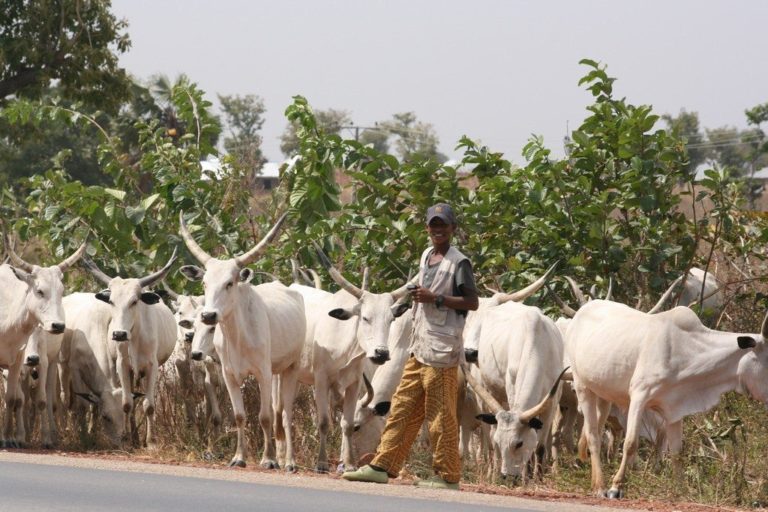
The Miyetti Allah Cattle Breeders Association of Nigeria (MACBAN) says the Benue State government must revisit its anti-grazing law for peace to reign.

Usman Ngelzerma, Secretary-General of the association, said this during a chat with journalists, stressing that the way of life of a people should not be toiled with.

“I like the Benue State governor (Samuel Ortom). He is a peace-loving person, but [he] is working on wrong advice,” Ngelzerma said.

“The approach he took is wrong. You cannot change the way of life of a people like the way you turn off a light switch.

“We don’t wish for the crisis to continue but let us give it (the anti-grazing law) another look. We don’t like the killings; we will never condone the killing of people. Give the farmers their rights but consider the pastoralists too.”

Ngelzerma also said that the livestock guards that were employed by the state government to enforce the anti-open grazing law were also to blame for the January 1 crisis.

“The livestock guards have constituted themselves to the police and the court at the same time. They impose penalties on herdsmen, fine them huge sums of money before releasing them. That was the situation before this crisis erupted,” he said.

In an interview with BBC Pidgin, Garos Gololo, Chairman of the Benue State chapter of MACBAN, said the recent killings were in retaliation for the theft of 1,000 cows by some people in the state.

“After the Benue government banned grazing, we were relocating to Taraba State through Nengere border town of Nasarawa State. They came and stole one thousand cows from us, so we retaliated,” Gololo was quoted as saying.

Meanwhile, the Nigeria Police Force said it was making progress with investigations into the crisis.

Joshak Habila, Deputy Inspector-General of Police, Operations, said detectives had been sent all over the state and leaders of the herdsmen association invited and questioned.

“They (Miyetti Allah) have given their statements and we are verifying,” Habila said.

“We have been able to gather a lot of intelligence from the communities that were affected and also picked some traces of evidence.

“I’m sure we are going to get a window, we are going to get a lead; it is never too late. But I can assure you that those who would be connected to the killings would not be spared.”

No more ’empathy’… 150 Borno doctors issue 21-day strike ultimatum


A total of 150 medical doctors in Borno State have issued a 21-day ultimatum to embark on an indefinite strike over non-payment of allowances by the government.

The doctors are those in the employ of the Borno State government, Bukar Abbagana, Chairman of the Medical Doctors Association in the state disclosed this on Monday at a press conference.

The association, he explained, unanimously resolved to embark on industrial action following failure of the state government to settle backlog of unpaid allowances.

Abbagana was quoted as saying that the government owed over N300 million arrears of skipping allowances to 150 doctors in the past four years.

He said that the association had not joined the nationwide strike before now, based on humanitarian gesture and security challenges in the state.

“Doctors out of loyalty and empathy for the people, refused to down tools with the belief that the state government will extend similar gesture to them,” he said.


READ ALSO:


“Four years down the line, there was no single acknowledgement for the correspondences to the government, and all avenues for dialogue were exhausted.”

He said the association issued a 21-day ultimatum between January 8 and February 5 to enable the state government meet their demands.

Abbagana disclosed that the association had registered members in secondary and primary health facilities in the state.

He noted that the association was mindful of the grave consequences of such industrial disharmony on the people, and called on individuals and organisations to prevail on the government to avert the strike.

Malami tries — and fails — in court mission to stop Senate from probing Maina’s recall


Abubakar Malami, Attorney-General of the Federation, has asked the Federal High Court in Abuja to stop the Senate from further investigating the circumstances that prompted the reinstatement of Abdulrasheed Maina, former Chairman of the Pension Reforms Task Team.

According to court papers seen by TheCable, Malami is arguing that the Senate lacks the competence and legitimacy “to investigate the employment, attendance at work, disengagement, reinstatement and or promotion of a civil servant”.

Malami is believed to have kick-started the series of actions that culminated in Maina’s recall. This was attested to by Winifred Oyo-Ita, Head of Service of the Federation, during a hearing by the House of Representatives into the matter.

But Malami has consistently denied authoring or accenting to any letter requesting or approving the reinstatement of Maina.

Malami’s recent law suit follows the decision of the Senate to begin its own probe into the Maina recall saga.

In the suit, Malami asked the court to declare “that the National Assembly lacks the legislative competence to investigate the employment, attendance at work, disengagement, reinstatement and or promotion of a civil servant which are matters exclusively within the purview of the Federal Civil Service Commission under the Constitution of the Federal Republic of Nigeria1999 (as amended)”.

Malami maintained that “the power of investigation vested in the national assembly by section 88 (1) of the Constitution of the Federal Republic of Nigeria 1999 (as amended) is limited and such that can only be exercised within the confines of Section 88 (2) of the Constitution of the Federal Republic of Nigeria 1999 (as amended)”.

As the chief law officer and Minister of Justice of the Federation, Malam said he is “bound to ensure compliance … with the express or implied contents of extant Judgements and Orders of competent courts in Nigeria”.

“The defendant (i.e. the Nigerian Senate) cannot constitute itself into a quasi-appellate court, tribunal or panel with a view to reviewing any executive action taken in compliance with the adverse judgment in the said Suit No: FHC/ABJ/CS/65/2013,” he said.

However, the ex parte motion was stuck out by Justice Binta Murtala Nyako, who went ahead to order the applicant‎ to put the National Assembly on notice as there was no urgency to grant it.

The motion on notice will now be heard on January 15.

Maina is currently wanted by the Police and EFCC over allegations of pension fraud amounting to over N100 billion.

He is believed to have fled to Dubai in 2013, remaining there until last year when he was secretly recalled and reinstated into the civil service.

Following an uproar from the public over the controversial reinstatement, President Muhammadu Buhari ordered that Maina’s sack.

He also ordered the office of the Head of Service to explain in writing how and why Maina was reinstated in the first place.

The explanation had since been submitted to the Presidency but nothing else has been heard of it.

Meanwhile, Maina has released a number of video clips from his hiding place, asking Buhari to provide an appropriate atmosphere to enable him come forward with the real truth behind the pension fraud saga.

Is God venting his anger on Buhari through Tunde Bakare?

0


Sooner or later, Tunde Bakare, fiery preacher and founder of The Latter Rain Assembly, will be running for president. This may be 2019 or 2023; it may even be 2027. After all, the man himself stated that in asking him to run, God had told him it would be done “at the appointed time”.

Still, we know Bakare is unlikely to run in 2027. By then he would be 73 — one more than President Muhammadu Buhari’s age when he assumed office in 2015. Given his Nigeria-needs-an-energetic-President comment in the heat of Buhari’s lengthy medical trip to the UK in 2017, and given his reputation as man of integrity whose word is his bond, we can mathematically calculate Bakare’s presidential chase to happen before 2027.

We can’t expect it to be 2023, either. If that was the plan, he would have ‘tarried a while’ before regaling the public with details of his private conversation with God, especially knowing that the man to whom he was vice presidential running mate in 2011 is all but set to seek re-election next year. By inference, in 2019, Bakare will (assumption purely mine) contest against the man he once described as “carrying a dimension of grace that if you deal with him, and betray him, you pay with your life”. A potential Buhari-ally-turned-opponent? What a twist!

GOD MUST BE LIVID
Bakare’s announcement of God’s mandate for him to run has been greeted with skepticism from no less a quarter than his immediate constituency, the Christendom. Many have asked: did God actually nominate the pastor as a future presidential aspirant? Some even quoted Bible passages — such as John 18:36, John15:19 and Luke 4:43 — supposedly separating religion from politics. But really, no one should doubt that God spoke to Bakare; no one — because God must be terribly wicked not to be worried about the state of the country under Buhari; God must be heartless not to be angry about the sufferings of his people in the hands of a man who was welcomed to office by enough goodwill to last a generation of presidents. If God is real, and he is not discussing the future of this country with some of his servants (if they exist), then there can no longer be any hope for Nigeria.

Take, for instance, the series of brutal killings in Benue State. Herdsmen have struck at least three of the seven days so far in the new year, killing close to 100 and displacing 40,000, yet it makes no meaning for the President to personally visit the state, have firsthand assessment of the crisis and offer soothing words to families of victims. His supporters would argue that his visit would not revive the dead, but nothing is more reassuring to the bereaved than seeing the country’s chief security officer visit affected zones and physically pledge his determination to halt the loss of lives. Meanwhile, the same President could embark on a train ride from Rigasa to kakuri, on the outskirts of Kaduna, to commission new rail vehicles for the Kaduna–Abuja train service. He chose an inanimate project — transport, business — over human life, and God must be livid.

SEARCHING FOR THE RIGHT LEADER
God must be tired of Buhari; and if in his wish for a better Nigeria he indeed chose Bakare, he probably must have figured an answer to the power of Nigerians to self-implode, to use their hands to alter their destiny for the negative. This is because majority of the electorate will never judge Bakare on the merits of his leadership strengths versus weaknesses but on the basis of his religion. His popularity with the pulpit will work against him when it matters most; there will always be talks that a Bakare presidency is an attempt to Christianise Nigeria. But is Bakare the kind of President Nigeria needs? Absolutely.

Ironically, his number-one disadvantage is also his strongest asset. Anyone who has founded or worked at a start-up will understand that building The Latter Rain Assembly to the internationally-acclaimed Christian centre it is today is no mean feat. What he lacks in political office holding he gains in honing his leadership experience over decades of raising his church.

Bakare’s passion for Nigeria is contagious — that kind of infectiousness neither Buhari nor Goodluck Jonathan can boast of. He is the kind of leader who can inspire hope. You can feel it every time he speaks. Should a Bakare receive half the goodwill Buhari had in 2015, he is the kind of leader who can double it up by stirring the people to believe this country can still be useful to its citizens.

He is a man who cannot be bought. Time after time, he has proven this. In 2010 when President Goodluck Jonathan offered a $50,000 ‘transport fare’ of a bribe to the visiting Save Nigeria Group (SNG), Bakare and co turned it down. In 2014, shortly before he turned 60, Coscharis Motors (believed to be acting on Jonathan’s instructions) sent him a Rolls Royce Phantom, but he rejected it, saying: “I saw a button. They said: ‘It is an umbrella, sir. It is on every door in case it is raining, you just push it and the umbrella comes out.’ I said: ‘Na wa o.’ Then I said: ‘Oya, leave this place.’ Where is the road that I will ride it upon? My heart is not in things like this.”

If truly we say we are tired of corrupt leaders, tired of seeing the same old faces who have dominated our political space for decades, of leaders lacking in integrity and moral presence, of ex-PDP-turned-APC leaders or ex-APC-turned-PDP leaders, of humble political-office aspirants who become arrogant after ascent to power, then we must, with a very open mind, welcome the likes of Bakare to the race. There are no guarantees that he would win; he admitted that much himself when he said God told him to “run”; he never said God assured him of victory.

Whether Bakare wins or not, his potential entry to the presidential race is big evidence of God’s anger that Buhari has ultimately flattered to deceive. This may help Buhari to take a long, hard look at himself and make the most of his remaining 16 months in office. Or it may mean that should he be booted out of office in 2019 on account of his poor performance, he would look back at a moment like Bakare’s ‘declaration of presidential ambition’ and say to himself: “God gave me a sign”!

Soyombo, Editor of the International Centre for Investigative Reporting (ICIR), tweets @fisayosoyombo

Hassan, a captain in the league of Abu Ali, ‘killed by Boko Haram’


The Nigerian army has lost another outstanding soldier in the ongoing counter-insurgency operation in the North East. He is Munir M. Hassan, a Captain.

According to Ahmad Salkida, a journalist who has covered the Boko Haram insurgency over the years, Hassan was killed on Friday during an offensive against the insurgents, alongside some other soldiers.

Salkida said Hassan belonged in the class of the late Abu Ali, the brave Army Colonel who was killed in battle in November 2016.

“The ongoing ‘Operation Deep Punch,’ the NA (Nigerian Army) lost some personnel amongst whom is Capt MM Hassan of the artillery corps based in Damboa,” Salkida tweeted on Sunday.

“He was a brave, disciplined and a highly motivated Officer; that earned him the title — Sarkin Yakin Damboa by colleagues and the civil population.

“Capt Hassan was killed two days ago. His end is ‘being mourned all over the theatre’ as he was always assigned ‘difficult tasks’ to different areas to assist soldiers.

“Military sources confirm the insurgents are witnessing ‘unprecedented pressure’, with the operation Deep Punch.

“He is in the same league with Col. Abu Ali. Capt. MM Hassan is a soldier’s soldier. His colleagues pay tribute and local residents described him as ‘kind and humble’.”

Capt. Hassan in a handshake with Kashim Shettima, Governor of Borno State

The Army has not issued an official statement on the current development, though pictures of Friday’s attack on the insurgents were shared on its Twitter handle.

The army described the operation as recording tremendous successes, but it said nothing about the casualty toll on its side.

“Gallant troops a dealt decisive blow on the Boko Haram terrorists by inflicting heavy casualty on them and capturing the … high calibre weapons and equipment from the Boko Haram terrorists in Sambisa Forest,” the army tweet read.