Home Blog Page 2644

Tears aplenty as Benue mass-buries more than 80 slain by herdsmen


It rained tears in Markudi, the Benue State Capital, on Thursday as victims of the recent herdsmen attacks in the state were buried.

Trucks conveyed dozens of coffins to the ground where a funeral service was held for deceased – more than 80 of them – most of whom were killed in an attack by armed herdsmen on January 1 and 2.

Offices, schools, banks and markets were closed, as Samuel Ortom, the State Governor, declared a work-free day in honour of the victims.

Ortom also declared a three-day mourning period for victims of the attacks.

Residents of the state expressed sadness at the unfortunate attacks, and called on the Federal Government to ensure the protection of lives and property of the people.

Some say they remain apprehensive as nobody knows when the next attack will happen, given that this is not the first herdsmen attack in the state.

“We are mourning today; we still don’t know tomorrow,” Thomas Shima, one of the residents who attended the funeral service, told NAN.

Ortom has accused a faction of the cattle breeders association called ‘Miyetti Allah Kautal Hore’ of orchestrating the massacre.

He said the group had threatened to oppose the anti-open grazing law, which was recently signed into law in Benue State.

Speaking after an audience with Buhari, Ortom said he informed the President that the “leadership of Miyetti Allah Kautal Hore had earlier threatened (the state) and I accused them directly”.

“Since June last year, I have been writing to the leadership of security agencies, that these people are a threat to our collective interest and they must be dealt with,” Ortom said.

“They must be arrested and prosecuted because we cannot allow impunity to continue to thrive.”

President Muhammadu Buhari had ordered Ibrahim Idris, Inspector General of Police, to relocate to Benue State and personally coordinate the operation to apprehend the killer herdsmen.

Video Credit: TheCable

In major cabinet reshuffle, Ambode sacks three commissioners


Akinwumi Ambode, Governor of Lagos State, has shown three former commissioners the exit door in a major cabinet reshuffle on Thursday.

Five new commissioners were also named.

The sacked commissioners are Adebimpe Akinsola, Femi Odubiyi and Anifowoshe Abiola; while the newly-appointed ones are Hakeem Fahm, Ministry of Science and Technology; Ladi Lawanson, Ministry of Transportation; Segun Banjo, Ministry of Economic Planning and Budget; Olayinka Oladunjoye, Ministry of Commerce and Industry and Hakeem Sulaiman, Communities and Communications.

According to a Statement by Tunji Bello, Secretary to the Lagos State Government, the move is aimed at creating “a new vigour and vitality for service delivery”.

The new commissioners will undergo a screening process by the State House of Assembly before fully assuming their duties.

All the other commissioners were redeployed to other ministries while special assistants to the governor were assigned new portfolios.

They include Rotimi Ogunleye, from the Ministry of Commerce and Industry to that of Physical Planning and Urban Development; Steve Ayorinde, from Ministry of Information and Strategy to Ministry of Tourism, Arts and Culture; and Babatunde Durosinmi Etti, from Ministry of Wealth Creation to Ministry of the Environment, among others.

Benjamin Olabinjo, former Special Adviser to the Lagos State Governor on Commerce and Industry, is now the Special Adviser on Civic Engagement, while Kehinde Joseph moved from Special Adviser Civic Engagement to become Special Adviser Housing.

In the same vein, Deji Tinubu, Special Adviser Sports, now becomes Special Adviser to on Commerce and Industry, while Anofiu Elegushi moves from Special Adviser Transport to become Special Adviser, Central Business District.

Maimuna Aliyu pleads not guilty to fraud charges, gets N10 million bail

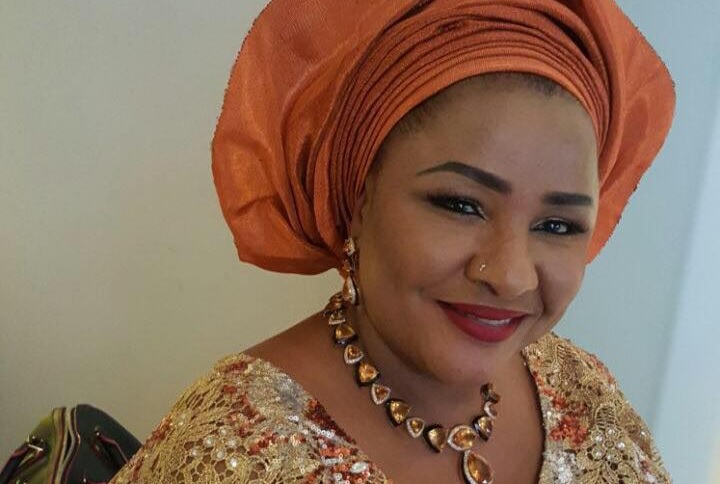
Maimuna Aliyu, former Executive Director of Aso Savings and Loans Plc, has pleaded not guilty to a three-count corruption charge brought against her by the Independent Corrupt Practices and Other Related Offences Commission (ICPC).

Aliyu, whose nomination into the board of ICPC was stepped down after the ICIR reported that she was being investigated for corruption by the same commission, was arraigned before Justice M. A. Nasir of the FCT High Court, Jabi, Abuja, on Thursday.

She was accused of defrauding Aso Savings and Loans Plc, a microfinance bank, of a total of N57 million.

The ICPC alleged that Aliyu “used her position as the Executive Director of Aso Savings and Loans Plc, to confer corrupt advantage upon herself when she received the sum of N57million, being the proceeds of the sale of three plots of land in Jahi District, Abuja, and failed to remit the said amount to Aso Savings”.

Aliyu is also accused of making false statement to ICPC officials, “thereby contravening the provisions of Sections 19 and 25 of the Corrupt Practices and Other Related Offences Act”.

She pleaded not guilty to all the charges, and Joe Gadzama, her counsel, urged the court to grant her bail on self-recognition and also on the basis that she is a first offender.

But the presiding Judge, in her ruling, granted the accused bail in the sum of N10 million and two sureties in like sum who must also be resident within the jurisdiction of the court.

The matter was adjourned to March 12, 2018, for commencement of hearing.

Aliyu is facing another charge, alongside Maryam Sanda, her daughter, who is accused of stabbing her husband, Bilyamin Bello, to death in November 2017. She was joined in the suit on allegations that she tampered with the crime scene before investigators arrived.

Sanda, the alleged murderer, has been remanded in prison and the case adjourned to February 5, 6 and 7 for continuation of hearing.

Letter to a Nigerian voter — give that red card with your story

0


By Timi Olagunju

Over the past years, I have had the rare privilege of observing two sides of the leadership pendulum; military leadership and democratic leadership. I remember June 12, 1992, when, below our house, I saw people stand in a long queue in front of SDP (Social Democratic Party) to exercise their fundamental human rights to vote.

I grew up listening to my grandfather talk about his political life during Awolowo, when he served as Constituency Party Secretary. But like many of my peers, I never really had the opportunities my grandfather had, and never really saw democracy practised fully for until 1999.

Unlike most kids, I was raised by my mother later in life, and we didn’t have all but we had love. I remember at age 10, when things were rough and I had to sell ice-cream on the streets of Akoka. I remembered those times when I had to serve as the Acting Editor of St. Finbarrs’ College Editorial Board, and as Acting Library Prefect for a while.

Fast-track through the university, I remembered when I ran for Chairman, Nnamdi Azikiwe hall, University of Ibadan, and the first news that came out from the Press was that I was too young to lead the largest undergraduate hostel and consequently provide leadership for the university. In fact, the exact title was “Timi is Timid”. Stereotyping me because of my so called “chronic youth” compared to those who lead before me.

Despite all that, I emerged in that election victorious by a landslide victory, through a campaign of love, and I was eventually nominated for the UI ‘JCI’ award for outstanding leadership of Halls and Faculties, as well as the awarded the Hon. Chris Asoluka Award for Most Politically Productive Student in the University of Ibadan and the Professor H.O. Nottidge Award for Selfless Leadership, after my tenure.

Little did I know that my childhood circumstances, academic training, and leadership engagements, built in me a consciousness and hunger for empathetic leadership. It built in me a passion for advocating institutional opportunities (and security) for the young, the elderly, and vulnerable.

This has influenced my work as a lawyer, development practitioner, and leader for nine years. For me, gathering the fire of my story within me and boldly working to run for the House of Representatives (in a moneybag-driven polity) in the coming elections (and shaping the conversation) is how I intend to give my bold “RED CARD” to all that isn’t deserving for Nigeria and Nigerians.

But this is not about me, it is also about you. This is your story too – a story through the unknown, the disappointments, and the successes. That story is what the new Nigeria needs. That story is what you need to not only get your PVC but also join political parties from the ward and local government levels.

You might say, well, “politics not me”, but if you are tired about the options political parties throw at us to choose from, especially the major ones, then join and get more people joining. By the time we all get resourceful people into the leadership at the party levels, then we are one step closer to getting a new leadership for a new Nigeria; the sort of leadership that will do away with colonialist thinking and embrace an African-centric strategic thinking and policies.

Interestingly, such leadership will have to come from a critical mass of emerging young leaders starting with you and me.  Although, I believe the emerging leaders must come from a blend of the young and the old; mostly from the young, energetic, and innovative. I do not believe in generational shift alone, rather, I believe in generational co-mingling, where the young and old support a new Nigeria through innovation and experience respectively.

The leadership we had after independence did not engage our colonialist programming and process of development; whether in politics, education, or even as little as it sounds ‘our formal clothings’. For example, imagine the economic and creative benefit to the fashion industry in Nigeria, if after independence, Nigeria had abolished the mundane wearing of suits and tie (in a sunny weather) inherited from the colonialist, and embraced traditional Nigerian attires, as part of the official and corporate clothing. Further imagine the economic benefits of re-designing our education, our style of government, and our laws.

Therefore, if you desire a new Nigeria, give a “RED CARD” by getting involved and supporting those getting involved. Let the story of suffering, pain, discrimination push you! For Nigerians in the diaspora, why not find ways to support us against the money bags. Our collective resources can trump and triumph over their ill-gotten resources in the coming elections. You can support and make donations to my electoral campaign on votetimi.com/donate and let’s make it happen together.

Timi Olagunju, a technology lawyer and design thinking consultant, is an aspirant for the Federal House of Representatives, Ibadan North Constituency. He can be reached on timithelawgmail.com or on www.voteTimi.com, Twitter/Instagram: @timithelaw.

Witness narrates how Justice Ngwuta hid cash in his house before DSS raid

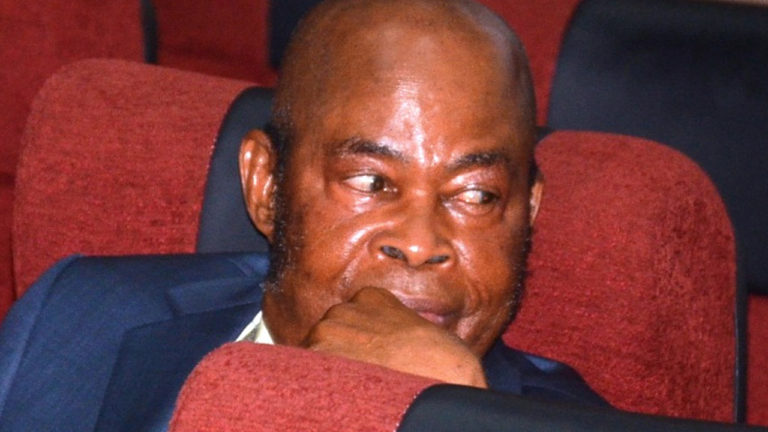
The corruption trial of Sylvestre Ngwuta, a Justice of the Supreme Court, continued on Wednesday with a prosecution witness narrating how Ngwuta instructed his boy to remove incriminating evidences from his house in Abakiliki, Ebonyi State, before law enforcement agents could search the place.

Ngwuta is one of the judges whose residences were raided by operatives of the Department of State Services (DSS) in October 2016.

He was accused of corruption and arraigned before Justice John Tsoho of the Federal High Court, Abuja, and was granted bail  in the sum of N100 million.

At the resumption of trial on Wednesday, Ibrahim Ndakpoto, a prosecution witness, tendered the sum of N4 million before the court, being money allegedly recovered from Ngwuta’s house in Abakiliki.

Ndakpoto, a DSS official, told the court that Ngwuta had called one of his boys named Linus Chukwuebuka and instructed him to remove all the cash and exotic vehicles in the building so that nothing would be found there should the authorities decide to conduct a search.

“Chukwuebuka told me that Justice Ngwuta called him and asked him to go to his bedroom and remove the documents and the bag containing the money and hide them because if the DSS should lay eyes on it, he would be in trouble,” Ndakpoto said.

“He also told us that Ngwuta asked him to move some cars, a BMW, a Wrangler jeep and a Hummer jeep and that he further asked him to disappear afterwards so that he will not be arrested.”

Justice Tsoho ordered that the money tendered as evidence be counted right there in the courtroom to ensure that it was complete.

The case was adjourned till Thursday, January 11, for continuation of hearing.

After his house was raided, Ngwuta wrote an open letter to Mahmud Mohammed, then Chief Justice of Nigeria, accusing Rotimi Amaechi, Minister of Transportation, and Ogbonnaya Onu, Minister of Science of Technology, of orchestrating his ordeal.

Ngwuta said Amaechi and Onu had vowed to get back at him for his refusal to cooperate with them and pervert justice in some electoral cases that he presided over.

Fayose encourages local hunters to ‘defend’ Ekiti people against herdsmen


Ayodele Fayose, Governor of Ekiti State, has directed hunters in the state to defend Ekiti and its people against the marauding and killer herdsmen.

After meeting with the hunters on Wednesday in Ado Ekiti, the state capital, Fayose tweeted that he would not run to Abuja for help over the problem of the herdsmen.

Rather, he said he had told the local hunters not to take laws into their hands but to defend Ekiti and its people.

“On the herdsmen’s menace, I met with local hunters in Ekiti State today and charged them to protect the people since I won’t run to anyone in Abuja for help that is not available. They must not take laws into their hands, but they should defend Ekiti & its people,” Fayose said.

Reacting to the attack on Mopol 13 in Benue State, where two officers were killed, he wondered whether those who carried out such dastardly act could be regarded as herdsmen.

“Just now, we heard news of the herdsmen attacking the camp of Mobile policemen, Mopol 13 in Benue, killing two officers by slitting their throats. Do you call people who could invade the camp of mobile policemen in a guerilla manner & overpower armed Mopol mere Fulani herdsmen?

“What is happening in Benue and other middle-belt States is more than a strive between herdsmen and local farmers, it has gotten to the level of terrorism and ethnic cleansing. FG must act now.”

Impunity rides again

0

By Wole Soyinka

It is happening all over again. History is repeating itself and, alas, within such an agonizingly short span of time. How often must we warn against the enervating lure of appeasement in face of aggression and will to dominate!

I do not hesitate to draw attention to Volume III of my INTERVENTION Series, and to the chapter on The Unappeasable Price of Appeasement. There is little to add, but it does appear that even the tragically fulfilled warnings of the past leave no impression on leadership, not even when identical signs of impending cardiac arrest loom over the nation.

Boko Haram was still at that stage of putative probes when cries of alarm emerged. Then the fashion ideologues of society deployed their distancing turns of phrase to rationalize what were so obviously discernable as an agenda of ruthless fundamentalism and internal domination. Boko Haram was a product of social inequities, they preached – one even chortled: We stand for justice, so we are all Boko Haram!

We warned that – yes indeed – the inequities of society were indeed part of the story, but why do you close your eyes against other, and more critical malfunctions of the human mind, such as theocratic lunacy? Now it is happening again. The nation is being smothered in Vaseline when the diagnosis is so clearly – cancer!

We have been here before – now, ‘before’ is back with a vengeance. President Goodluck Jonathan refused to accept that marauders had carried off the nation’s daughters; President Muhammed Buhari and his government – including his Inspector-General of Police – in near identical denial, appear to believe that killer herdsmen who strike again and again at will from one corner of the nation to the other, are merely hot-tempered citizens whose scraps occasionally degenerate into “communal clashes” – I believe I have summarized him accurately. The marauders are naughty children who can be admonished, paternalistically, into good neighbourly conduct. Sometimes of course, the killers were also said be non-Nigerians after all. The contradictions are mind-boggling.

First, the active policy of appeasement, then the language of endorsement. El-Rufai, governor of Kaduna state, proudly announced that, on assuming office, he had raised a peace committee and successfully traced the herdsmen to locations outside Nigerian borders. He then made payments to them from state coffers to cure them of their homicidal urge which, according to these herdsmen, were reprisals for some ancient history and the loss of cattle through rustling.

The public was up in arms against this astonishing revelation. I could only call to mind a statement by the same El Rufai after a prior election which led to a rampage in parts of the nation, and cost even the lives of National Youth Service corpers. They were hunted down by aggrieved mobs and even states had to organize rescue missions for their  citizens.

Countering protests that the nation owed a special duty of protection to her youth, especially those who are co-opted to serve the nation in any capacity, El Rufai’s comment then was: No life is more important than another. Today, that statement needs to be adjusted, to read perhaps – apologies to George Orwell: “All lives are equal, but a cow’s is more equal than others.”

This seems to be the government view, one that, overtly or by implication, is being amplified through act and pronouncement, through clamorous absence, by this administration. It appears to have infected even my good friend and highly capable Minister, Audu Ogbeh, however insidiously. What else does one make of his statements in an interview where he generously lays the blame for ongoing killings everywhere but at the feet of the actual perpetrators!  His words, as carried by The Nation Newspapers:

“The inability of the government to pay attention to herdsmen and cow farming, unlike other developed countries, contributed to the killings.”  The Minister continued:


READ ALSO:


“Over the years, we have not done much to look seriously into the issue of livestock development in the country….we may have done enough for the rice farmer, the cassava farmer, the maize farmer, the cocoa farmer, but we haven’t done enough for herdsmen, and that inability and omission on our part is resulting in the crisis we are witnessing today”

No, no, not so, Audu! It is true that I called upon the government a week ago to stop passing the buck over the petroleum situation. I assure you however that I never intended that a reverse policy should lead to exonerating – or appearing to exonerate – mass killers, rapists and economic saboteurs – saboteurs, since their conduct subverts the efforts of others to economically secure their own existence, drives other producers off their land in fear and terror.

This promises the same plague of starvation that afflicts zones of conflict all over this continent where liberally sown landmines prevent farmers from venturing near their prime source, the farm, often their only source of livelihood, and has created a whole population of amputees.

At least, those victims in Angola, Mozambique and other former war theatres, mostly lived to tell the tale. These herdsmen, arrogant and unconscionable, have adopted a scorched-earth policy, so that those other producers – the cassava, cocoa, sorghum, rice etc farmers are brutally expelled from farm and dwelling.

Government neglect? You may not have intended it, but you made it sound like the full story. I applaud the plans of your ministry, I am in a position to know that much thought – and practical steps – have gone into long term plans for bringing about the creation of ‘ranches’, ‘colonies’ – whatever the name – including the special cultivation of fodder for animal feed and so on and on. However, the present national outrage is over impunity.

It rejects the right of any set of people, for whatever reason, to take arms against their fellow men and women, to acknowledge their exploits in boastful and justifying accents and, in effect, promise more of the same as long as their terms and demands are not met. In plain language, they have declared war against the nation, and their weapon is undiluted terror. Why have they been permitted to become a menace to the rest of us? That is the issue!

Permit me to remind you that, early in 2016, an even more hideous massacre was perpetrated by this same Murder Incorporated – that is, a numerical climax to what had been a series across a number of Middle Belt and neighbouring states, with Benue taking the brunt of the butchery.

A peace meeting was called, attended by the state government and security agencies of the nation, including the Inspector General of Police. This group attended – according to reports – with AK47s and other weapons of mass intimidation visible under their garments. They were neither disarmed nor turned back. They freely admitted the killings but justified them by claims that they had lost their cattle to the host community.

It is important to emphasize that none of their spokesmen referred to any government neglect, such as refusal to pay subsidy for their cows or failure to accord them the same facilities that had been extended to cassava or millet farmers. Such are the monstrous beginnings of the culture of impunity. We are reaping, yet again, the consequences of such tolerance of the intolerable. Yes, there indeed the government is culpable, definitely guilty of “looking the other way”. Indeed, it must be held complicit.

This question is now current, and justified:  just when is terror? I am not aware that IPOB came anywhere close to this homicidal propensity and will to dominance before it was declared a terrorist organization. The international community rightly refused to go along with such an absurdity.

For the avoidance of doubt, let me state right here, and yet again, that IPOB leadership is its own worst enemy. It repels public empathy, indeed, I suspect that it deliberately cultivates an obnoxious image, especially among its internet mouthers who make rational discourse impossible. However, as we pointed out at the time, the conduct of that movement, even at its most extreme, could by no means be reckoned as terrorism.

By contrast, how do we categorize Miyeti? How do we assess a mental state that cannot distinguish between a stolen cow – which is always recoverable – and human life, which is not?

Villages have been depopulated far wider than those outside their operational zones can conceive. They swoop on sleeping settlements, kill and strut. They glory in their seeming supremacy. Cocoa farmers do not kill when there is a cocoa blight. Rice farmers, cassava and tomato farmers do not burn. The herdsmen cynically dredge up decades-old affronts – they did at the 2016  Benue “peace meeting” to justify the killings of innocents in the present – These crimes are treated like the norm.

Once again, the nation is being massaged by specious rationalisations while the rampage intensifies and the spread spirals out of control. When we open the dailies tomorrow morning, there is certain to have been a new body count, to be followed by the arrogant justification of the Miyeti Allah.

The warnings pile up, the distress signals have turned into a prolonged howl of despair and rage. The answer is not to be found in pietistic appeals to victims to avoid ‘hate language’ and divisive attributions. The sustained, killing monologue of the herdsmen is what is at issue. It must be curbed, decisively and without further evasiveness.

Yes, Jonathan only saw ‘ghosts’ when Boko Haram was already excising swathes of territory from the nation space and abducting school pupils. The ghosts of Jonathan seem poised to haunt the tenure of Mohammed Buhari.

Army saves female suicide bomber from killing herself in Borno


Soldiers of the Operation Lafiya Dole have foiled a suicide attempt by three teenage girls, saving one of the would-be bombers in the process.

The incident took place at Gamboru, a town located in Ngala Local Government Area of Borno State.

According to Onyema Nwachukwu, Deputy Director, Army Public Relations, Operation Lafiya Dole, two of the attackers were “neutralized” at about 6. 45 a.m. on Tuesday.

“A third female suicide bomber was intercepted within the same general area,” Nwachukwu said, adding that “she confessed that they were deployed at about 3.30 a.m. on Tuesday to unleash mayhem on Gamboru town”.

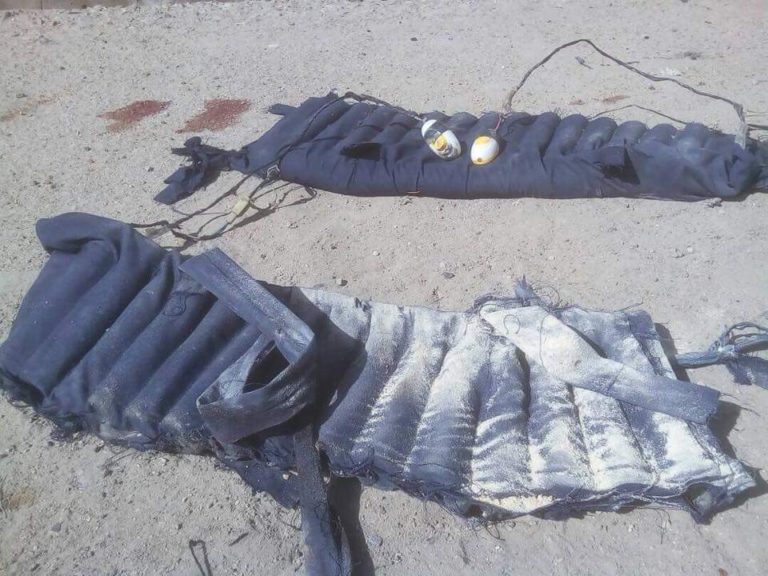
“The suicide bomber also revealed the location where she hid her IED vest and led the troops to recover it,” added.

“The recovered vests and the surviving suicide bomber have been taken into custody for further interrogations,” he said.

The surviving ‘suicide bomber’

Nwachukwu urged citizens of Borno State to be vigilant and “report suspicious persons to security agencies”.

Sagay urges Buhari to investigate Malami over Maina

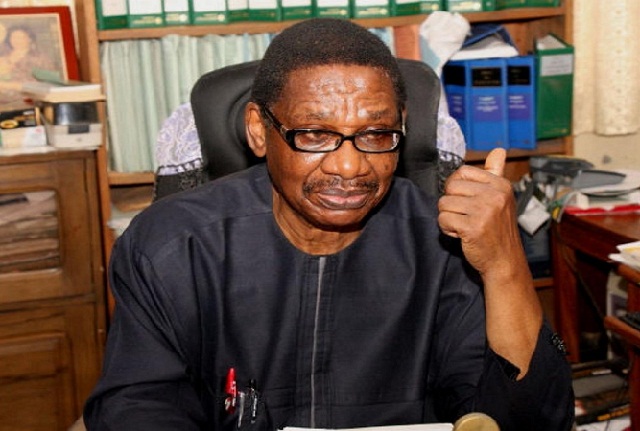
Itse Sagay, Chairman of the Presidential Advisory Committee on Anti-Corruption (PACAC), has urged President Muhammadu Buhari to investigate Abubakar Malami, Attorney General of the Federation (AGF), over his role in the reinstatement of Abdulrasheed Maina.

Speaking with journalists on Tuesday, Sagay, who has never hidden his disaffection for the upper legislative chamber, also said the Senate spends too much time “setting up sub-committees to investigate everything”.

Although Sagay agreed that Malami should be probed, he expressed belief that Buhari, not the National Assembly, should order such.

The professor of law said Malami has no business holding meetings and discussions with Maina, when the latter is still a fugitive, having fled the country after he was declared wanted for pension fraud.

“As the Attorney General, you met a fugitive who is wanted for a very heinous crime of depriving thousands of elderly people of their rights. You don’t, for any reason, go to hold discussions with such a person,” Sagay said.

“Your job should be to extradite and try him. He (Malami) compromised himself by meeting with him (Maina).

“He says he didn’t write any letter regarding the reinstatement of Maina but the letter emanated from his ministry. So, let the President investigate the attorney general.

“I think the Senate is overzealous in its approach. It investigates everything and in the end, we hardly see anything. I think it is spending too much time setting up sub-committees to investigate everything.”

Meanwhile, the Senate has expressed surprise at Malami’s “desperate” quest to stop ongoing investigations into the ‘Mainagate’ saga.

Aliyu Sabi-Abdullahi, Chairman of the Senate Committee on Media and Publicity, made this known in a statement on Tuesday.

“We are wondering what the AGF is afraid of. When he appeared before our committee, he was well-received and fairly treated,” Sabi-Abdullahi stated.

“He indeed expressed his happiness with the protection given to him by the committee handling the Maina case.

“Why then is it very important and urgent for him to stop the investigative hearing? What is the AGF trying to hide?”

Both chambers of the National Assembly had constituted ad hoc panels to look into the circumstances that led to the surreptitious recall and reinstatement of Maina, former Chairman of the Pension Reforms Task Team (PRTT) under the Goodluck Jonathan administration.

Maina’s committee said it recovered over N1 trillion in cash and assets from pension thieves, but he was later accused of helping himself to some of the loots he purportedly recovered.

In 2013, Maina was sacked from the Civil Service for absconding from duty. He was later declared wanted by the EFCC and the police on allegations of pension fraud, but he fled the country.

He was secretly reinstated into the Service in October, but his reinstatement was short-lived, as Buhari ordered that the move be reversed.

So far, the ministries of justice and interior, as well as the Office of the Head of Service of the Federation, have been traded blames over the reinstatement.

401 days to go… INEC begins countdown to 2019 general election

The Independent National Electoral Commission (INEC) has released the timetable for the 2019 general election, stating, among other things, that the Presidential and National Assembly elections will hold on the same day, February 12, 2019.

Here are other highlights of the timetable, which was announced on Tuesday by Mahmood Yakubu, INEC’s National Chairman, during a press conference.

  • Publication of Notice for National and State Elections to take place on August 17;  that of the FCT Area Council Elections will be on September 3, 2018.
  • Collection of nomination forms by political parties for national and state elections begins August 11 to 24; while that of the FCT Area Council elections takes place from November 3 to 10, 2018.
  • Commencement of campaign for Presidential and National Assembly Elections fixed for November 18;  that of Governorship and State Assembly elections begins December 1 while that of FCT Area Council elections starts December 2, 2018.
  • Deadline for submission of nomination forms to INEC is December 3 for Presidential and National Assembly Elections; December 17 for Governorship and State Assembly and December 14 for FCT Area Council Elections.
  • Last day for campaigns for Presidential and National Assembly Elections is Valentine’s Day – February 14, 2019, while that of Governorship, State Assembly and FCT Area Council Elections stops on February 28.
  •  Presidential and National Assembly elections will hold same day, February 16, 2019.
  • Governorship, State Assembly and FCT Area Council elections will also hold on the same day, March 2, 2019, two weeks after the presidential election.

Going forward, Yakubu said INEC had decided “that henceforth our Presidential and National Assembly elections will hold on the 3rd Saturday of the month of February of each election year, while Governorship and State Assembly elections will hold two weeks later”.

“When the end of tenure of the FCT Area Councils coincide with the general election, the FCT Council elections are to be combined with the Governorship and State Assembly elections,” Yakubu said.

“Today [Tuesday], it is exactly 402 days to the opening of polling units nationwide at 8am on Saturday 16th February 2019.

“As political parties and candidates canvass the support of the electorate, the Commission wishes to appeal to all and sundry to eschew bitterness and conduct their activities with decorum.

“The 2015 General Election was a watershed in the history of our democracy. The Commission is determined to build on this legacy by ensuring that our elections keep getting better.

“The Commission is moving away from the culture of quick-fix, fire brigade approach to the management of elections in Nigeria. As our democracy matures, the planning and implementation of electoral activities should be predictable and systematic.”

A further breakdown shows that INEC will conduct election for “1,558 Constituencies made up of one Presidential Constituency, 29 Governorship constituencies out of 36 (7 Governorship elections are staggered and conducted off-cycle), 109 Senatorial Districts, 360 Federal Constituencies, 991 State Assembly Constituencies, 6 Area Council Chairmen as well as 62 Councillorship positions for the FCT”.

Also, INEC issued certificates to 21 new political parties that registered in December 2017.