A MALE student of Nnamdi Azikiwe University (UNIZIK), Awka, died after jumping from the third floor of a private lodge near Royal Kitchen Junction, Ifite-Awka, on Thursday.
Eyewitnesses and preliminary reports suggest he might have consumed a dangerous substance suspected to be ‘mkpurummiri’ before falling from the building.
Attempts to revive him failed, and he was confirmed dead at a nearby hospital. His roommate, who was found in an incoherent state in their shared room, is currently in custody and will be questioned once stable.
The UNIZIK’s Chief Safety Officer, Ken Chukwurah, confirmed the incident but emphasised that the university had no control over students living in off-campus lodges. “We are still investigating to determine what happened, how it happened, and to properly identify the victim,” he stated.
The incident has reignited fears over the growing use of hard substances among students and the limited oversight available in off-campus accommodations.
Just days earlier, on Monday, tragedy struck when 22-year-old Feranmi Akin-Akinye, a recent graduate of Afe Babalola University (ABUAD), fell from the 24th floor of the Cocoa House in Ibadan.
‘He was reportedly carrying out a work-related task to mount a banner at the top of the building when the platform beneath him gave way.
Feranmi, who had been undergoing cybersecurity training at a company on the building’s eighth floor, died instantly from the fall.
Contrary to initial media reports suggesting suicide, sources close to the family have insisted the death was accidental and blamed the company for negligence.
They alleged Feranmi was made to perform a risky task typically reserved for trained professionals.
A neighbour said, “I blame the company for his death. He was humble, responsible, and had a promising future. They gave him a job he wasn’t trained for.”
The company reportedly delayed informing the family.
Odu’a Investment Company Limited, which manages Cocoa House, acknowledged the incident in a statement but did not name the victim. They promised to cooperate with authorities as investigations continue.
AKWA Ibom State Governor, Umo Eno, has defected to the All Progressives Congress (APC)
He joined the party on Friday, June 6, at the Government House in Uyo, the state capital, amid cheers from the APC governors who had stormed the state preparatory to the defection.
Eno defected to the party from the Peoples Democratic Party (PDP) after weeks of speculations by Nigerians that he was on his way to the APC.
The governor had attributed his defection to the crisis in the PDP.
“If you wanted to travel with Ibom Airline, and on the verge of taking off, it developed a fault that won’t enable it to fly, wouldn’t you board the next available plane to take you to your destination?
“Whether Ibom Air or Air Peace, board the flight that is ready to take you to your destination. Board the flight and forget the name of the airline.”
He also directed his state executive council members, comprising all his appointees, to be ready to defect to the party or resign.
The governor had expelled Channel TV’s crew members from the Government House for reporting that he issued the order.
Eno joins his counterpart from Delta State, Sheriff Oborevwori, who had abandoned the PDP for the APC.
The ICIR reports that APC now controls four of the six states in the South-South region of Nigeria.
The states are Edo, Delta, Cross River and Akwa Ibom. Those controlled by the PDP are Bayelsa and Rivers.
The ICIRreported key politicians who have joined the APC since January this year.
MOHAMMED Lawal Uwais, former Chief Justice of Nigeria (CJN), has passed away bringing to a close a judicial career that spanned over four decades. He died on June 6, 2025. Uwais served as Chief Justice from 1995 to 2006.
Born on June 12, 1936, in Zaria, Kaduna State, he began his education at the Native Authority Elementary School in Kaduna and later attended Barewa College, completing his secondary education in 1957.
In 1959, he joined the civil service as a Publicity Assistant in the Ministry of Information, Kaduna. He later served as Editor of the Law Reports of the Northern States of Nigeria from 1974 to 1978. He studied at the Institute of Administration, Ahmadu Bello University, and was called to the Nigerian Bar on January 17, 1964.
Following his call to the Bar, in the early days of his legal career, Uwais worked at the Ministry of Justice of Northern Nigeria as a Pupil State Counsel. By 1971, he had become Solicitor-General and Permanent Secretary of the North-Central State.
In 1973, he was appointed as Acting Judge of the High Court of the North Eastern States and became a substantive judge in 1974. He briefly served as Acting Chief Judge of Kaduna State in 1976 before being appointed to the Federal Court of Appeal on January 1, 1977. In 1979, he was elevated to the Supreme Court, where he served for 27 years.
Uwais was involved in several landmark cases, including A-G Federation vs. A-G Abia State (2001), INEC vs. Musa (2002), and Fawehinmi vs. I.G.P. (2002).
Post-retirement, he chaired the Presidential Electoral Reform Committee, which submitted a report in 2008 recommending electoral reforms such as the establishment of independent commissions and a proportional representation system. Some proposals from the report sparked public debate.
Uwais received several national and international honours, including the Commander of the Order of the Niger (1980) and Grand Commander of the Order of the Niger (2000). He also served as Chairman of the Body of Benchers (1993–1994) and held roles with international legal organizations.
He is survived by his wife, Mariam Uwais, a lawyer and former Special Adviser on Social Investment to President Muhammadu Buhari.
A book titled Uwais Through Cases, edited by Chief Gani Fawehinmi, documents many of his significant judgments.
THE people of Gaba in Lavun Local Government Area of Niger State have rejected the recent state pardon granted to 11 people sentenced to death for the 2018 killing of seven farmers from the community.
They warned that the move could escalate tensions and further erode trust in the Nigerian justice system.
Their outrage, expressed during a press conference on Thursday, June 5, in Minna by the Chairman of Gaba Development Association, Paul Gana, comes amid heightened insecurity in the state.
Gana expressed shock and disappointment at the governor’s decision, warning that it could reignite communal tensions.
He further called on the state government to withdraw the pardon and respect the court judgment.
According to him, the men were convicted and sentenced to death by hanging by a judge, Maimuna A. Abubakar of the Niger State High Court on February 2, 2022, following a four-year legal process.
He noted that the judge, in her 779-page judgment, found the 11 defendants guilty of conspiracy and culpable homicide in connection with the attack, which left seven dead and two injured.
Backstory
Recall that on Tuesday, June 3, the state government announced that all 11 men had been granted an unconditional pardon.
Niger State Attorney General and Commissioner for Justice, Nasiru Mu’azu, confirmed the development during a briefing at the Government House in the state capital.
He explained that the pardon followed a formal plea from the convicts and subsequent review by the State Advisory Committee on the Prerogative of Mercy, with the governor signing the instrument on May 28, 2025.
He also noted that the pardon was issued under Section 212(1) of the 1999 Constitution (as amended), which empowers the governor to exercise the prerogative of mercy.
“After thorough consideration and on the council’s recommendation, Governor Bago signed the pardon instrument on May 28, 2025,” Muazu said, adding that the pardon had been officially gazetted.
The commissioner stressed that “the pardon is aimed at fostering unity, healing, and lasting peace between the two communities.”
He also noted that several peace-building meetings had been held with local leaders before the clemency decision.
Those granted the pardon were Mohammed Mohammed, Nana Alhaji Sheshi, Isah Baba Nmadu, Mohammed Mohammed Ndabida, Abubakar Baba Salihu, Baba Mohammed Shaba, Adamu Mohammed Babaminin, Haruna Mohammed, Isah Mohammed Alhaji Inuwa, Ibrahim Mohammed and Mohammed Isah.
Growing culture of clemency amid rising insecurity
The Gaba community’s outrage also reflects a broader frustration with how the Nigerian government has, in recent years, handled accountability in cases of mass violence, insecurity and terrorism.
Across Niger State, which has suffered repeated attacks by bandits, herdsmen, and armed militias, communities continue to live under the threat of violence.
According to reports, large parts of Shiroro, Munya, and Rafi LGAs have been overrun by criminal groups. Residents have been displaced, schools shut down, and farmlands abandoned.
Even more controversially, the Federal Government has at various times granted amnesty and reintegration to ‘repentant’ Boko Haram fighters — a move that has been criticised for failing to bring closure to victims of terror attacks, while allowing former insurgents to rejoin society with little accountability.
The ICIRreported how some of the terrorists’ commanders who repented and reintegrated into society by the government have taken up deadlier arms again with their foot soldiers and are unleashing mayhem on Nigerians.
INFORMANT247, a digital newsroom, has faced a troubling pattern of intimidation and harassment over exposing corruption in Kwara State. A notable example occurred in February 2024 when the Rector of Kwara State Polytechnic, Abdul Jimoh Muhammed, an engineer, filed a petition to the Kwara State police headquarters leading to the arrest and detention of the Editor-in-Chief, Salihu Ayatullahi, and Managing Director, Adisa-Jaji Azeez.
Their arrest followed the publication of a two-part investigation alleging financial mismanagement and the commissioning of uncompleted projects at the polytechnic.
Aminat Adebayo Jaji, 28, was pregnant on the afternoon of February 4, 2024, when her husband, Azeez, Managing Director of Informant247, received a phone call from the Ilorin police command headquarters. He was informed that a petition had been filed against him and his colleagues over the first and second parts of an investigative report published in November 2023 and February 2024, and that their presence was required at the station.
When Aminat inquired about the issue, Azeez explained that the invitation was connected to a complaint from the Rector of Kwara Polytechnic. At that moment, she became visibly unsettled. However, her husband reassured her, saying, “The worst that could happen is they detain us.” Being five months pregnant, Aminat was who noted she was anxious went to work the next morning. What kept her going was her husband’s promise that everything would be fine. They had agreed to stay in touch via phone. Everything went according to plan until she began calling him and received no response.
“I became so worried that I had to leave work early. My blood pressure shot up when I was denied access to see my husband. I lost control, I even had a confrontation with the publisher of Informant247 that same day,” Aminat told The ICIR.
Before responding to the police invitation, Azeez and Ayatullahi contacted their lawyer, Muhammad Edun, who filed a fundamental human rights application to prevent their detention. Although the application was submitted to the Commissioner of Police on February 5, they were still detained that same day.
When Aminat couldn’t see her husband she was forced to return home where she met family members, including her husband’s parents, already gathered, anxiously waiting for an update. Under pressure, she eventually revealed that her husband and his colleagues had been locked up in a cell and that she could not see him.
Adisa-Jaji Azeez, the Managing Director of the informant247. Credit: Abdullahi Muritala/ICIR
On February 6, 2024, the journalists were arraigned before a magistrate court on charges of criminal conspiracy, cyberstalking, and defamation. Their legal counsel argued that the magistrate lacked jurisdiction over cybercrime cases, which fall under federal authority. The court granted them bail and struck out the case due to lack of jurisdiction and diligent prosecution.
Azeez and Ayatullahi’s arrest was among at least five incidents of journalist arrests and detentions in Nigeria in 2024 alone – a troubling indicator of the growing threats and intimidation faced by media professionals in the country. The pattern reflects a continuing trend of arrests, harassment, threats, and even killing of journalists despite repeated pledges by the government to uphold press freedom.
A January 2025 report on Media and Expression in Nigeria by the Centre for Media and Society (CEMESO) revealed that attacks on journalists and media practitioners accounted for 71.4 per cent of press freedom violations.
court document of cyberstalking filed to magistrate obtained by the ICIR: Credit: Abdullahi Muritala/ICIRsecond page of the court document obtained.
Background of the reports
The original series began with a report titled: “Just a paint job: Inside Kwara Polytechnic’s shoddy project commissioning,” published in November 2023. Following the first publication, Azeez said the Polytechnic authorities tried to halt the investigation. He added that the Rector attempted to persuade him to not continue with the second part.
“When he (Rector) asked why I went to press without reaching out to him, I replied that I spoke to his PRO before we published the story,” Azeez told The ICIR
Despite this, a second report was published in February 2024.
“We had to dig deeper to expose the systemic corruption within the institution. We launched what was supposed to be a series of investigations – 10 parts in total.
“After publishing the second report, we were invited by the police,” Ayatullahi, the Editor – in- chief, added.
Despite voluntarily honouring the police invitation, Ayatullahi and Azeez were detained by officers from the Anti-Kidnapping and Cultism Unit – a section typically reserved for violent crimes. What was initially considered a routine inquiry quickly escalated and saw the journalists locked up in a cell overnight.
“That night felt surreal. I remember I honestly couldn’t sleep overnight,” Ayatullahi recalled. “We were thrown into a dark, cramped room – no bed, no light, just a cold floor and the stares of inmates who had clearly been there for days.
“All I kept asking myself was, how did we get to a point in this country where telling the truth lands you here?”
Salihu Ayatullahi the editor-in-chief of Informant247
The next morning, they were charged to court with criminal conspiracy and defamation, with an ex-parte motion seeking their remand in Okekura Prison. The magistrate rejected the motion and granted them bail.
Legal retaliation and Federal charges
Despite the magistrate court striking out the original charges, a new case was filed at the Federal High Court in Ilorin, with the Federal Government now named as the complainant.
Their lawyer, Edun, described the refiled charges as an abuse of legal process noting that state actors exploit procedural tools to intimidate journalists.
“They moved the same allegations to a new charge, even though it’s based on identical facts,” Edun told The ICIR.
New criminal charges against informant247 now ongoing at the federal high court: Source: Muhammed Edun. Credit: Abdullahi Muritala/ICIR
“It’s a clear case of legal harassment,” he noted, noting that such tactics send a chilling message to journalists, that exposing corruption may lead not just to arrests, but to relentless legal battles dressed in procedural legitimacy.
He argued that procedural tools are being used to intimidate journalists, sending a message that exposing corruption could lead to prolonged legal battles.
informant247 legal counsel, Muhammed Edun
Official response
When contacted, the rector, Muhammed initially did not respond. Later, in an email, he stated: “Currently the matter is before the Federal High Court in Ilorin. For now, it’s unethical to speak on it. Therefore, I urge you to be patient till the outcome of the court.”
Impact on newsroom and continued investigations
Before the arrest, “We were in full swing, everyone was motivated, knowing the impact of our work on the community,” Ayatullahi recalled.
The arrest disrupted operations at Informant247, but the newsroom responded by deepening its investigations. “We knew we were being punished for doing our job, so we decided to keep doing it louder,” he said.
Over the past 11 months, while the Federal High Court trial continues, the outlet has published over ten reports including four additional stories on Kwara Polytechnic.
“It wasn’t easy,” said Ayatullahi. “But we found purpose in the pressure. If anything, the attack made us more united, more intentional about our work, and more resolved to protect press freedom.”
Calls for reform
Busola Ajibola, Deputy Director at the Centre for Journalism Innovation and Development (CJID), has been a prominent voice on the challenges facing press freedom in Nigeria. In her report, “Exploring the Interface of Press Freedom and Technology in Nigeria,” she highlights how digital platforms, while offering new avenues for information dissemination, have also introduced threats such as cyberbullying, surveillance, and the misuse of cybercrime laws to stifle journalistic work. Ajibola emphasises that these challenges are not just technological but also legal and ethical, requiring a multifaceted approach to safeguard press freedom.
In a workshop reported by Premium Times, Ajibola addressed the increasing use of Strategic Lawsuits Against Public Participation (SLAPPs) to intimidate journalists. She noted that these legal tactics are designed to burden journalists with the cost and stress of legal defense, thereby deterring them from pursuing investigative reporting.
Ajibola called for stronger legal protections and support systems for journalists to ensure they can continue their work without fear of retribution.
speaking with The ICIR, Abdulwasiu Mujeeb, a Lagos based legal practitioner, said there’s no provision in Nigerian law that criminalises the demand for accountability.
The lawyer said that Section 24 of the Cybercrime Act, which was cited in Informant247 case, was intended to address threats to public peace or personal safety, not to silence investigative journalism.
“That publication was simply demanding accountability. The provisions concerning this subject matter is Section 24. What the provisions simply say is that no one should publish a statement that threatens another person’s peace or a statement that would breach public peace.”
“Unfortunately, powerful individuals now misuse this law to harass reporters and suppress press freedom. If this trend continues, we’ll see fewer calls for accountability, and impunity will only deepen in our institutions,” Wasiu said.
This report was produced by ICIR in collaboration with the Centre for Journalism Innovation and Development (CJID) as part of a project documenting issues focused on press freedom in Nigeria.
THE Federal Government said it has approached the Japan International Cooperation Agency (JICA) to advance the implementation of a ¥15 billion (approximately $110 million) emergency loan facility for it to strengthen food security in the country.
Minister of Finance and Coordinating Minister of the Economy, Wale Edun, disclosed the plan in a statement issued by the ministry on Wednesday, June 4.
The meeting was attended by the Minister of Agriculture and Food Security, Abubakar Kyari, and senior JICA officials, it stated.
The ministry explained that the plan is under the implementation of the Food Security Emergency Loan Support Programme and that the loan is to be targeted at enhancing food production systems and increasing resilience across the country.
“The Honourable Minister of Finance and Coordinating Minister of the Economy, Mr. Wale Edun, and the Honourable Minister of Agriculture and Food Security, Senator Abubakar Kyari, today met with senior representatives of the Japan International Cooperation Agency (JICA) to advance the implementation of the Food Security Emergency Loan Support Programme.
“The JPY 15 billion facility (approximately $110 million) aims to support Nigeria’s food production systems and enhance resilience amid ongoing global supply challenges,” the ministry said.
It stated that the ministers said it was urgent to execute core components of the programme to ensure timely support for farmers and rural communities.
“Both Ministers emphasised the importance of swift, coordinated action to maximise impact for farmers and rural communities,” the ministry added.
The JICA, in its response, reaffirmed its commitment to partner with Nigeria but requested formal clarification on proposed implementation changes.
As such, immediate production activities were said to continue as planned, while other components, such as aggregation and financing, would be reviewed against the terms of the original agreement, the ministry maintained.
“JICA welcomed the government’s commitment to delivery and requested formal clarification on proposed implementation adjustments. It was jointly agreed that core production activities would proceed immediately under the existing framework, while additional components, such as aggregation and financing, would be reviewed in line with the original loan agreement,” it added.
The ICIR reports that Tinubu had in July 2023 declared a state of emergency to tackle rising food prices and shortages, but the price of foodstuffs and other commodities have continued to surge since his two years in office, with the country’s food inflation peaking at over 40 per cent in June last year.
The Japanese loan request comes just after a week, President Bola Tinubu sought the National Assembly’s approval to borrow foreign loans worth $24.14 billion to finance critical projects across various sectors of the economy.
His demand, which drew the ire of many concerned Nigerians when approved, is expected to put the country’s total debt at N183 trillion and further impoverish the citizens.
The ICIRreported that even the Centre for Social Justice (CSJ) raised concerns that Tinubu’s new loan request breaches the provisions of the Fiscal Responsibility Act (FRA).
He passed away on Thursday, June 5, while receiving treatment at a medical centre in South Africa. He was 68.
The news of his death was contained in a statement issued by his daughter, Tasila Lungu, shared on his late father’s political party – the Patriotic Front’s – Facebook page on Thursday.
“Fellow Zambians, It is with profound sorrow that we announce the passing of His Excellency Dr. Edgar Chagwa Lungu, who departed this morning at 06:hours at Medforum Clinic, a medical centre in South Africa. My father, President Lungu, had been under medical supervision in recent weeks” she wrote.
Tasila, a member of parliament in Zambia, said that Lungu’s condition was managed with dignity, with support from well wishers.
“In this moment of grief, we invoke the spirit of “One Zambia, One Nation” – the timeless creed that guided President Lungu’s service to our country” she added.
She noted that the nation would be informed of other arrangements about his funeral plans.
Lungu was the sixth leader of the Southern African country. He lead Zambia between 2015 and 2021, when he lost an election to long-time opposition leader and current President Hakainde Hichilema.
Lungu assumed the presidency in 2015 following the death of then-president Michael Sata. He was subsequently elected in a presidential poll, serving from August 2016 to August 2021.
The former lawyer previously served as Minister of Justice and Minister of Defence.
Following his defeat in the 2021 election, Lungu retired from politics but returned in 2023 and was eventually confirmed as the leader and presidential candidate of the alliance that includes the Patriotic Front.
However, in December 2024, Zambia’s Constitutional Court ruled that he was not eligible to contest another term in office.
AS Muslim faithful across Nigeria prepare for the Eid-el-Kabir celebrations, holding tomorrow, Friday, June 6, the traditional Durbar festival may not hold in Kano and Niger states.
The ICIR reports that the durbar festival is usually held twice yearly in Kano and some other ancient towns in Northern Nigeria, to mark the Eid-el-Fitr and Eid-el-Kabir celebrations.
It is a colourful event that often lasts for three or four days, with the festival characterised by processions through the city, led by the emir, a key player in the event.
The emir leads about five processions throughout the festival.
Less than 48 hours to the Sallah festival, the Kano State Police Command on Tuesday, June 3, announced a ban on all Durbar activities across the state during the celebrations.
The command, in a statement released by its spokesperson, Abdullahi Haruna Kiyawa, cited security concerns and the need to ensure law and order for the ban.
“To maintain law and order, the Command outlined a series of restrictions, including a ban on horse or animal riding (Kilisa); ban on car racing and reckless driving; prohibition of unlawful possession or display of firearms or weapons; and warning against carrying dangerous or suspicious items in public,” the statement read.
The police directive was issued hours after the Kano Emirate Council led by Emir Muhammadu Sanusi released a circular inviting traditional leaders, including district heads and their horsemen, to take part in the annual Sallah Durbar festivities.
The ICIR reports that emirship tussle in the Kano Emirate between Sanusi and Aminu Bayero who have claimed to be lawful Emir of the ancient city, after conflicting court judgements, led to the police declaring a similar ban on durbar in 2024.
The issue of rightful occupant of the throne is currently before the Supreme Court, which will take a final stance on the matter.
The Kano State Police Command said based on credible intelligence and earlier security assessments, all forms of durbar activities remained banned across the state.
The ICIRreports that Kano has been facing crisis following the state Assembly’s repeal of the Kano Emirate Council Law of 2019, which resulted in the dethronement of the five emirs appointed in 2020 by former governor Abdullahi Ganduje.
The Assembly replaced the 2019 Kano Emirate Council Law with a new 2024 version, dissolving the five emirates into a single entity and clearing the way for the reinstatement of Sanusi, a former Central Bank of Nigeria’s governor, wjo.was installed as the 16th Emir of Kano.
He replaced Ado Bayero, the 15th Emir.
After several court orders, seen by many Nigerians as controversial, Sanusi has continued to operate from the main palace, while Bayero has occupied the mini palace in Nassarawa area of the city..
Similarly, Niger State Governor Umar Bago has suspended celebrations, in the state, including Hawan Bariki, Durbar, and other public events in honour of flood victims
In a statement released on Wednesday, June 4, the Secretary to the State Government, Abubakar Usman, announced the directive in response to a devastating flood in Mokwa that killed over 200 and displaced many families.
“This decision was taken as a mark of respect for the victims of the tragic flood in Mokwa.
“As we commemorate Eid, let us do so with humility, empathy, and a deep sense of community,” the governor said.
Bago condoled with the affected communities and encouraged people of the state to use the occasion of Eid to pray for those lost in the tragedy, perform acts of charity, and stand in solidarity with those facing hardship.
Recall that the Federal Government declared Friday, June 6, and Monday, June 9, 2025, as public holidays to mark this year’s Sallah celebration.
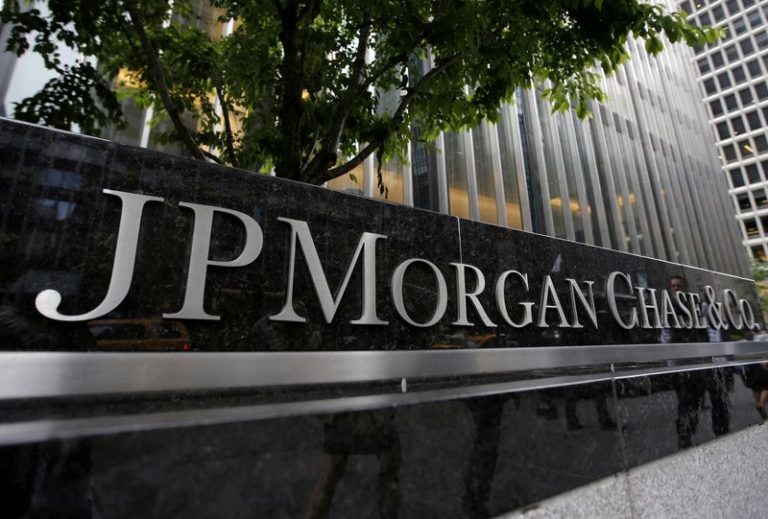
JPMorgan Chase & Co., the largest bank in the United States, is set to begin accepting certain cryptocurrency-linked assets as collateral for loans, expanding its footprint in the digital finance space.
According to a Bloomberg report published Wednesday, June 4, the bank plans to offer financing against crypto exchange-traded funds (ETFs), beginning with BlackRock’s iShares Bitcoin Trust (IBIT), in the coming weeks. Additional ETFs are expected to be included over time.
This move reflects JPMorgan’s continued embrace of blockchain technology and digital assets, even as its CEO, Jamie Dimon, remains publicly skeptical of Bitcoin itself.
At JPMorgan’s investor day in May, Dimon reiterated his reservations, stating, “I’m not a fan of Bitcoin.”
In Nigeria, the bank is also advancing efforts to expand its local presence. Having operated in the country since the 1980s, JPMorgan is reportedly in the process of securing a merchant banking license from the Central Bank of Nigeria to transform its Lagos office into a fully operational branch.
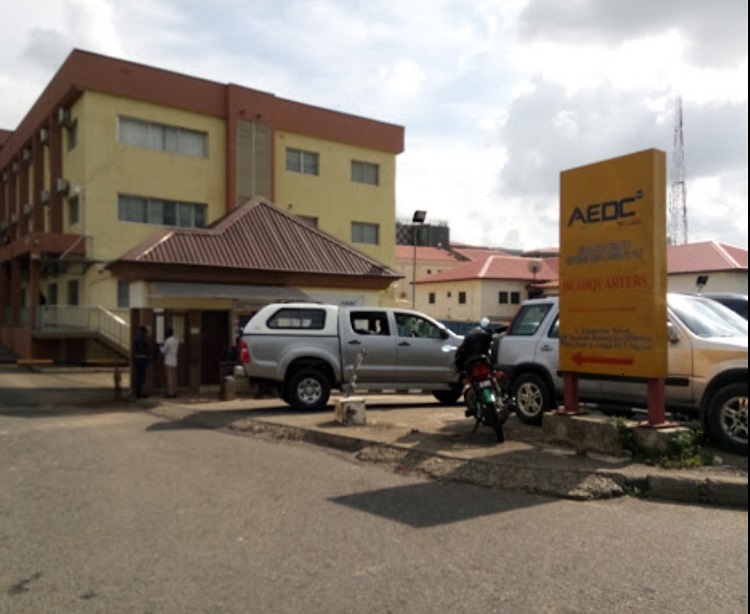
FOLLOWING threats of industrial action and shutting down operations, the Managing Director of Abuja Electricity Distribution Company (AEDC), Chijioke Okwuokenye, said the company’s management is engaging with representatives of electricity workers to pay outstanding entitlements.
Okwuokenye disclosed this in a statement issued on Thursday, June 5, to clarify earlier threats of industrial action issued by electricity workers.
He informed that the management has been engaging constructively with the union representatives regarding the notice of industrial action.
He said, “We are committed to ensuring that all legitimate allowances owed to staff are settled promptly, subject to our financial processes and regulatory compliance. We have already initiated dialogue with the union leadership to address their concerns transparently and to seek a mutually agreeable resolution.”
He stressed that through continued negotiation and open communication, management will find a way to avert any disruption to our operations and uphold its welfare commitment to employees.
“Our employees are at the heart of all we do, and their well-being and welfare are paramount to management,” he added.
The ICIR reports that the clarification statement followed a two-week ultimatum of industrial action issued by the Association of Electricity and Allied Companies (SSAEAC) to AEDC, demanding payment of productivity bonuses and other outstanding staff benefits, warning of a resumption of industrial action if their demands are not met.
The association in a letter dated 4th June, 2025, and signed by Rosemary Odey, Deputy General Secretary, Corporate Communications, cited management’s failure to clear all outstanding staff benefits outlined in a letter dated November 5, 2024, despite seven months having elapsed.
In the letter, the group emphasised said the recent significant improvement in cash collections—over 98 billion naira in the last three months—and other revenue milestones were achieved through the dedication of the workforce.
The union highlighted critical unresolved issues to include: “Collapse of health services due to high indebtedness, resulting in the deaths of about seven staff members in the past month, with more at risk. Other issues include, non-payment of the 2024 productivity bonus, non-remittance of 18 months of pension deductions, failure to implement the national minimum wage and incomplete review of conditions of service.”
Other unresolved issues include non-regularisation and improper placement of staff, lack of confirmation for staff on acting appointments and promotions conducted since 2013, and non-implementation of a career path.
It further includes non-remittance of third-party deduction (Union check off dues) and refusal to fund business districts and non-procurement of operational materials.
The association disclosed that the notice signals a potential return to industrial action, if AEDC management fail to address the stated grievances within the stipulated two-week period, underscoring serious staff welfare and operational concerns within the company.
It warns that the strike will resume immediately upon receipt of the letter, with full mobilisation of union councils across Kogi, Nasarawa, Niger, and the Federal Capital Territory (FCT). The union vows to sustain the industrial action until all demands are met, affirming the power of unity in their struggle.
This development signals escalating labour tensions that could impact operations across the AEDC’s franchise areas if unresolved.