Home Blog Page 267

Affordable homes elusive for Nigerians despite Tinubu housing initiatives

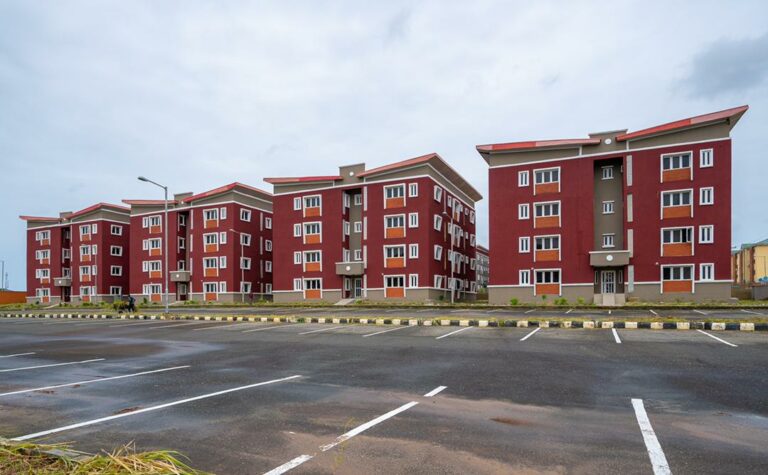
MANY middle-income earners are still struggling to access affordable homes, citing financial difficulties, rising inflation, and the weakening of the naira as major concerns, The ICIR findings have shown.

President Bola Tinubu’s administration came up with the Renewed Hope Housing scheme initiative aimed at providing affordable housing to Nigerians.

However, findings by The ICIR showed the scheme is falling short of its expected impact of bridging an estimated 20 million housing deficit.

When President Tinubu assumed office in May 2023, he admitted that access to decent housing is not just a matter of shelter but a cornerstone of national development, adding that it promotes social stability, improves health outcomes, reduces poverty, and drives inclusive economic growth.

Although the government has rolled out some policies, checks by The ICIR show that inflation, inefficient data, lack of local manufacturing hubs, as well as high interest rates, are still some of the issues affecting affordable housing for would-be homeowners.

Ayo Olowookere, the President of the Mortgage Bank Association of Nigeria (MBAN), faults the government’s strategy in bridging the housing deficit gap, while stressing the importance of attracting private capital with good policy initiatives to close the housing deficit gap.

“A lot of factors determine the price and affordability of a house. Location is a key component. When you say affordable housing, it ranges from N10 million to N100 million relatively. Can our mortgage systems, affected by high interest rates, policy inconsistency, and currency devaluation, allow a middle class to conveniently own a home?”

“The government needs to know that it’s not its duty to build 20 million houses. The focus should be ability to attract private capital into this industry with good policy incentives and intervention funds,” he said.

The government needs to know that it’s not its duty to build 20 million houses. The focus should be ability to attract private capital into this industry with good policy incentives and intervention funds,

He suggested to the government to step up arrangements that bring in capital that bridges the housing deficit gap.

“The government needs to understand also that from the supply side, we can only show ‘proof of consent'(build an estate in a certain area of Nigeria and work with manufacturers on supplying building material at a subsidised rate).

“Once you replicate this in some local government areas, you can work towards attracting private capital from investors because the government cannot bridge the housing gap alone,” he said.

He stressed the need for policy continuity, noting that,” it’s an assurance to investors as no one wants to invest in an area where there’s no clarity and policy consistency.”

Rising inflation and its impact on cost components of housing

Inflation remains the sector’s most severe challenge. The National Bureau of Statistics (NBS) released its Consumer Price Index report for April 2025, revealing a slight easing in Nigeria’s inflation rate compared to previous months and the same period last year.

The inflation rate moderated to 23.71 per cent year-on-year, marking a decline from 24.23 per cent recorded in March 2025 and a sharp reduction from 33.69 per cent in April 2024.

However, analysts say inflation at over 20 per cent remains high for meaningful development in the industry.

“Investors are eyeing huge returns from their investment. With high interest rates by commercial banks informed by the Central Bank of Nigeria’s monetary policy measures, it’s really difficult to attract private capital currently into Nigeria’s housing sector,” a development economist, Kingsley Obiakor, told The ICIR.

A key driver behind this inflationary pressure is the depreciation of the naira, coupled with global commodity price shocks, both of which have severely inflated the cost of building materials.

Another structural problem is the dearth of reliable housing data. The government has no comprehensive audit of existing, abandoned, or informal housing stock, thereby complicating effective policy formulation and resource allocation.

Civil servants difficulties accessing homes

For some civil servants, the experience of accessing housing through primary mortgage institutions is, in most cases, not a pleasant one.

“Most civil servants struggle to make the equity contributions to their primary mortgage institutions because of high inflation. In most cases, when they do, they are not guaranteed that their file will get the needed attention and access to own a home.

“Many of my colleagues made some equity contributions, followed through with the information they got from the website, yet they didn’t have a breakthrough. I got mine because I know someone in the Federal Mortgage Bank who was a classmate, and she assisted me, linked me with an estate owner. Sometimes, your file will be there without anyone pushing it,” Ebube Okafor, a civil servant, told The ICIR.

“I made efforts to get a N24 million 2-bedroom flat from Brains and Hammers last year. I am to pay 20 per cent as a precondition to access the house. How many civil servants can be able to pay this money with other conditions before accessing the house with the current level of food inflation?” she queried.

Experts’ concerns about affordable housing

Other experts in the real estate sector told The ICIR that with the devaluation of the naira, many mortgage institutions struggle for repayment, and are left with no option but to increase rents.

“The value of the naira three years ago is not the same today. Let’s say you translated N1.5 million into dollars three years ago; if translated today, can it fetch you a quarter of what it used to be years back? No! It’s the economy that’s driving the cost of rent,” Stephen Ola Jagun, a facility manager and the vice chairman of the Estate Surveyors and Valuers Registration Board of Nigeria, told The ICIR.

“The naira value of an investment 10 years ago is not the same today. Some clients told me that the annual returns from their investments can no longer take care of their mortgage because of the loss in naira value,” he added.

The ICIR reports that affordability remains an issue despite the government’s efforts, with some policy initiatives focused on the housing sector.

“Affordability is at the core of bridging the housing gap. How do people working afford a decent home? Every administration comes in with its initiatives, as we also have a growing population.

“The first problem that I see is that the government needs to come to terms that they need to provide leadership in the sector. We have the renewed hope housing initiatives. We also have social housing initiatives.

“All these initiatives give us roughly 800,000 units of housing per annum. We need to be consistent so that, at least in the next decade, we would have cracked the housing deficit numbers. This will come with lots of coordination of policy by the government,” he stressed further.

He added that the government needs to coordinate solutions geared towards solving housing problems by bringing all policy actors and stakeholders into a coordinated plan to achieve targeted results.

Can recapitalisation of Mortgage Bank do the magic?

The Federal Mortgage Bank of Nigeria (FMBN), which is tasked with promoting mortgage access in the country, has on several occasions called for its recapitalisation, from the current N2.5 billion to N500 billion.

According to its managing director, Shehu Usman Osidi, such recapitalisation would promote the growth and development of the mortgage system in Nigeria.

“To stem the national housing deficit, the country will need to produce an average of 550,000 housing units per annum for the next 10 years. The financial outlay for this annual housing target is over N5.5 trillion per annum,” Ahmed Dangiwa, Nigeria’s minister of housing and urban development, revealed at an international housing show recently.

On the flipside, according to the minister, the country’s average annual housing production is about 100,000 units, mostly through predominantly informal, incremental self-construction dictated by the availability of excess household income, scarce savings, or loans from friends and relatives.

To worsen this situation, the government’s budgetary provision to housing has never been allocated N11.5 billion for the construction of 20,000 housing units for the Renewed Hope Agenda’s housing scheme.

Besides finance, Nigeria is faced with a huge population. Estimated at over 200 million growing at about 2.52 percent per annum, the high urban-rural ratio of about 50 percent. Also, it is growing at an astronomical rate of 4.3 percent per annum, and perennial unfavourable regulatory and macroeconomic factors.

“The combination of these unfortunate circumstances has resulted in a significant housing gap estimated at millions in the double digits,” Shehu Osidi said.

“In addition, the nation’s dismal record of untitled land implies that about $300 billion, roughly 60 per cent of national GDP, is ‘dead capital’ as the owners cannot realise tangible earnings or utilise the assets to improve their economic status,” he added.
JEX Market secures licences for gas trading and settlement in Nigeria

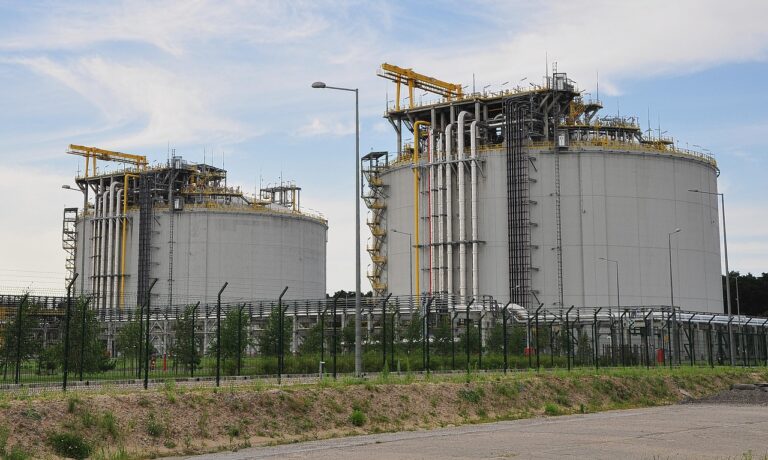
IN one of the most strategic collaborations between government agencies, the Nigerian Midstream and Downstream Petroleum Regulatory Authority (NMDPRA) in conjunction with the Securities and Exchange Commission (SEC) has issued licenses to JEX Market to establish and operate a Gas Clearing House and Settlement Authorisation Platform.

This would serve as a commodity exchange platform where natural gas and its derivatives would be traded in Nigeria.

The issuance of the licences is one of the game-changing outcomes of the Petroleum Industry Act, 2021 and the product of the strategic leadership acumen of President Bola Ahmed Tinubu.

It is also a testimony to the commitment and capacity of the JEX Market as a competent energy commodity trader and an exchange operator.

This followed a rigorous and extensive due process procedure leading to the issuance of a Gas Trading Licence and Gas Clearing House and Settlement Authorisation by the NMDPRA and an Approval for Registration as Licenced Commodity Exchange by the
SEC.

The platform is expected to become operational soon, making it the first of its kind on the African continent, thereby placing Nigeria in its rightful place as the hub for energy transactions in the region.

The platform would allow for more efficient, transparent, and swift trading of natural gas commodities in Nigeria and the African region, thereby accelerating the growth of the Nigerian energy sector towards a mature market.

As the market matures, it encourages more investment into the sector, creates more employment opportunities and wealth creation, increases government revenue, and allows easier auditing of transactions by relevant agencies and parties.

These licences are coming at an opportune time marking the two years of the progressive leadership of President Tinubu and as Nigeria approaches the half-mark of the Decade of Gas journey.

It is then appropriate to opine that the establishment of the exchange platform is indeed a testimony to the success of the policy decisions of the current administration and a clear indication that the Decade of Gas programme is well on track to achieve its objectives by the year 2030.

It is also quite instructive to note the regulatory synergy that led to the attainment of this feat between the NMDPRA and the SEC.

Indeed, it marks a very good example of the values that the nation stands to gain when agencies work together.

The establishment of the platform is a step further in the renaissance of the Nigerian energy landscape being championed by domestic entrepreneurs who are increasingly executing bold initiatives under the conducive environment being provided by regulatory agencies.

It is expected that this achievement would provide further impetus to other strategic undertakings by players in the energy sector to wean Nigeria from energy poverty, consolidate the country as the energy hub of the continent, spur industrialisation,
and deepen the hope for a sustainable and competitive future for the country.

Trump bars citizens of 12 countries from US

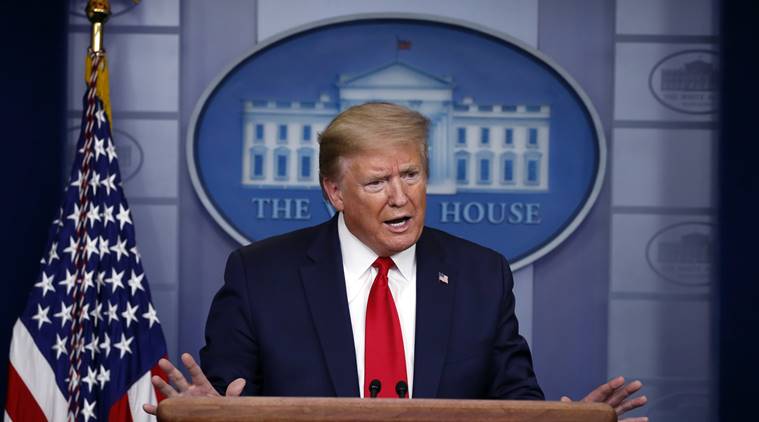
UNITED States (US) President Donald Trump has signed a proclamation prohibiting citizens from 12 countries from entering the US, citing the need to safeguard the nation against “foreign terrorists” and other potential security threats.

“We will not allow people to enter our country who wish to do us harm,” Trump said  on Wednesday June 4, in a video posted on X, noting that the list could be revised and new countries could be added.

The ICIR reports that the countries affected are Afghanistan, Myanmar, Chad, Congo, Equatorial Guinea, Eritrea, Haiti, Iran, Libya, Somalia, Sudan and Yemen, while the entry of people from seven other countries, namely Burundi, Cuba, Laos, Sierra Leone, Togo, Turkmenistan and Venezuela, will be partially restricted.

The order states that the proclamation will take effect on June 9, 2025, at 12:01 a.m. EDT (0401 GMT). Visas issued prior to that date will remain valid and will not be revoked.

“We cannot have open migration from any country where we cannot safely and reliably vet and screen those who seek to enter the United States,” Trump said.

Trump signed the directive, as a part of an immigration crackdown launched earlier this year at the beginning of his second term, which has also involved deporting hundreds of Venezuelans to El Salvador over suspected gang ties and taking steps to block the enrollment of certain foreign students while deporting others.

Trump said countries facing the strictest restrictions were identified to harbour “large-scale presence of terrorists,” failed to cooperate on visa security and had inability to verify travelers’ identities.

They also lacked cooperation on visa security, had poor criminal record-keeping, and high rates of visa overstays in the US, he stressed..

He pointed to an incident that happened on Sunday June 1, in Boulder, Colorado, where a man threw a gasoline bomb into a crowd of pro-Israel demonstrators as an example of why the new restrictions were necessary.

Meanwhile, Mohamed Sabry Soliman, an Egyptian national, was charged in connection with the attack. Federal officials said that Soliman had overstayed his tourist visa and was living in the US with an expired work permit.

The ICIR reports that Trump’s presidential campaign emphasised a hardline border policy, which he outlined in an October 2024 speech, vowing to restrict entry from the Gaza Strip, Libya, Somalia, Syria, Yemen, and “anywhere else that threatens our security.”

On January 20, Trump signed an executive order mandating enhanced security screening for all foreigners seeking entry into the US to identify potential national security threats. 

Former EFCC boss reveals Nigeria’s fuel subsidy fraud in new book

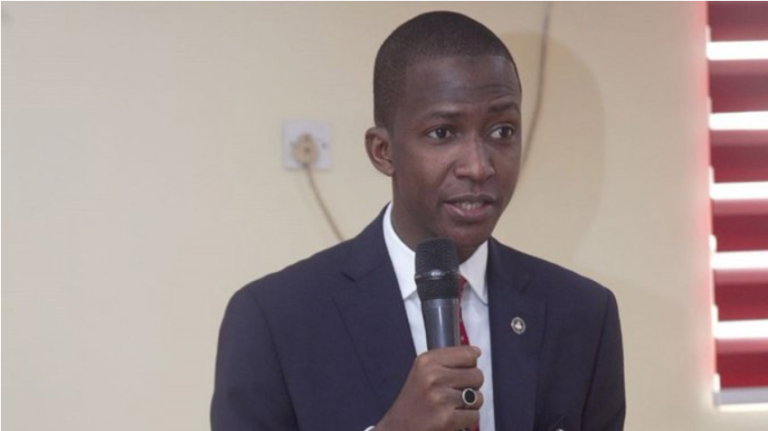
A FORMER chairman of the Economic and Financial Crimes Commission (EFCC), Abdulrasheed Bawa, has, in a new book, exposed fraudulent activities that characterised Nigeria’s fuel subsidy regime.

The book titled ‘The Shadow of Loot & Losses: Uncovering Nigeria’s Petroleum Subsidy Fraud’ is set for release on Thursday, June 5.

Published by Cable Books, the book will be distributed nationwide by Roving Heights Bookstore.

In the book, Bawa provides an exposé of the most authoritative account of Nigeria’s multi-trillion-naira fuel subsidy scandal.

He unravels the inner workings of one of the country’s most pervasive financial crimes.

“Drawing from his firsthand experience as a key investigator on the EFCC’s special team that probed the 2012 subsidy fraud, Bawa reveals the staggering scale, complexity, and audacity of the schemes used to siphon public funds under the guise of fuel subsidy payments.

“His insider narrative chronicles how billions of naira were recovered and several culprits brought to justice, while also shedding light on how entrenched corruption allowed the fraud to flourish for years,” a statement seen by The ICIR read.

According to the statement, Bawa detailed multiple fraudulent strategies, including ghost importing and over-invoicing, companies’ submission of claims for fuel that was never imported, and inflation of shipment volumes to receive excessive subsidy payouts.

He revealed the activities of the fraudsters in the manipulation of bills of lading by altering shipping documents. Fraudsters exploited international price fluctuations to claim higher subsidies.

He further exposed other fraudulent activities on round-tripping and double claims, where single shipments were often used to obtain multiple subsidy payments, diversion and smuggling, where subsidised fuel was frequently diverted to black markets or smuggled out of Nigeria for profit.

These practices were enabled by forged documents, weak regulatory oversight, and systemic collusion between corrupt government officials and private sector actors, Bawa explained in the book.

“The Shadow of Loot & Losses is not just a chronicle of fraud,” he was quoted to have said. “It is a call to action — a demand for transparency, accountability, and reform in Nigeria’s public finance management, especially in the oil sector.”

The book will be made available for policymakers, civil society advocates, journalists, and citizens interested in understanding how systemic fraud undermines development and how it can be confronted.

The ICIR reports that Bawa served as EFCC chairman from 2021 to 2023.

Upon assuming office on May 29, 2023, President Bola Tinubu declared that “fuel subsidy is gone,” arguing that the country could no longer sustain the subsidy regime due to dwindling resources.

This is not the first time a senior government official has raised concerns about Nigeria’s corrupt-ridden fuel subsidy.

In October 2021, The ICIR reported that the former Emir of Kano, Sanusi Lamido Sanusi, described Nigeria’s petrol subsidy regime as a scam, expressing regret over the nationwide protest that halted former President Jonathan’s planned removal of the subsidy in 2012.

Sanusi, who was the Central Bank of Nigeria governor at that time, said Nigerians made a huge mistake by protesting against subsidy removal despite efforts to explain its negative impact on the quality of life of the people.

Sanusi further said that subsidies in themselves were not bad, but many people made a kill from the spiralling figure and exploited the government.

Babcock University expels student over alleged drug peddling, fetish practices, others

BABCOCK University has dismissed a student, Oladipupo Siwajuola, following alleged infractions, including drug peddling, impersonation, and involvement in fetish practices.

The school disclosed this in a statement on Tuesday, June 4, signed by the institution’s Director of Marketing and Communication, Joshua Suleiman.

According to the university, Siwajuola left the school premises without authorisation on April 28, 2025. His disappearance gained public attention after his mother accused the institution of negligence and complicity in a viral social media post on May 3.

The university rejected the allegations, describing them as “malicious and unfounded.”

Siwajuola returned to campus on May 15, accompanied by his father, and subsequently submitted a written statement to the university’s Security Services Department. In it, he allegedly admitted to disguising himself in a hoodie as a hospital outpatient to evade campus security via the teaching hospital gate.

He was said to have confessed to spending two nights in the Ilishan community before travelling to Lagos to stay with a friend identified as Sodiq.

During investigations, Siwajuola was also said to have admitted to engaging in ritual practices involving the use of black soap, which he allegedly purchased for nearly ₦100,000 from a traditional herbalist, Alfa Yusuf. The rituals were reportedly linked to internet fraud activities known as “Yahoo Yahoo Plus.”

In addition, the university claimed he confessed to peddling prohibited drug substances on campus, impersonating another student by using their National Identification Number (NIN) to open a bank account, and borrowing ₦500,000 from an online loan platform to fund gambling.

Other reported infractions included selling his phone under false pretences and repeatedly violating university exit regulations.

Following a disciplinary hearing, the university’s committee found Siwajuola guilty of the offences and approved his immediate dismissal in line with institutional policies.

“In view of the gravity of these misconducts, and in line with the provisions of the university’s disciplinary policy aimed at maintaining a safe, secure, and morally sound learning environment, the university has taken the difficult but necessary decision to dismiss Master Oladipupo Siwajuola with immediate effect,” the statement read.

Although the university condemned the mother’s public accusations, it stated that it would not pursue legal action for libel, citing the father’s “responsible conduct” throughout the process.

Babcock University reaffirmed its commitment to transparency, moral integrity, and due process, urging the public to disregard circulating misinformation.

The institution also called on parents to instil values of accountability and uprightness in their children, in alignment with the school’s faith-based standards.

Lagosians face 3 months jail term or N250k fine for illegal refuse dumping

0

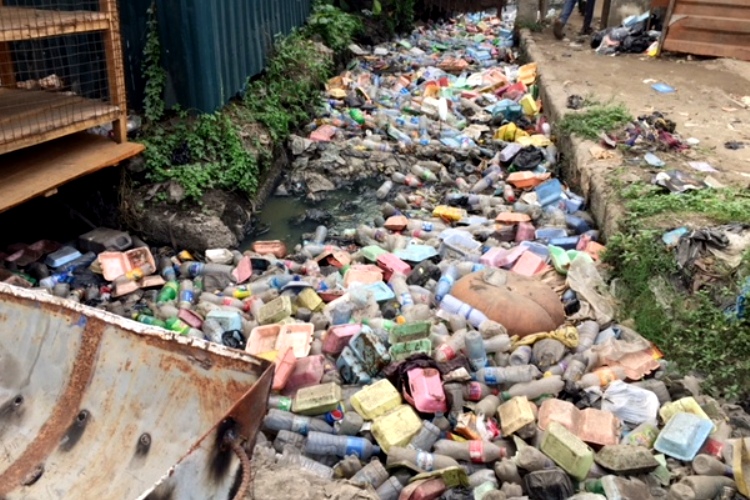
THE Lagos State Government has announced plans to enforce penalties for illegal dumping of refuse and littering within the state, warning residents that such actions may result in a three-month jail term or a fine of N250,000.

The state Commissioner for Environment and Water Resources, Tokunbo Wahab, made this known in a post on his X handle on Wednesday, June 4.

“During the Lagos State Ministry of the Environment and Water Resources Media Briefing yesterday, we made it clear that Lagos will no longer tolerate deliberate environmental abuse.

“From July 1, full enforcement of the ban on Single Use Plastics. Offenders who dump refuse illegally, litter the streets, or deface our environment will face stiff penalties, up to ₦250,000 fine or 3 months in jail,” Wahab stated in the post.

He disclosed that the government has arrested over 3,000 offenders, warning that anyone caught dumping refuse illegally or littering the environment would be dealt with in line with the provisions under the state sanitation and environmental law.

He further stressed that the law on cart pushers and public defaecation still stands, adding that “illegal street trading would not be tolerated.”

“This is about saving our environment, for us and the generations to come,” he stated.

He urged Lagos residents to celebrate the coming Sallah with cleanliness and responsibility, while stressing the importance of healthy waste disposal in the Lagos metropolis.

“Bag your waste, don’t dump in drains or medians, and hand over refuse to your assigned PSP operator,” Wahab urged.

He further warned that dumping waste in drains or roads causes flooding, harms public health, and spoils the city’s appearance.

Wahab urged Lagosians to utilise public facilities provided by the state to avoid open defecation, calling on squatters occupying pedestrian bridges, where open defecation and criminal activities occur, to vacate.

He also warned developers and builders against dumping construction materials on drains or roads, stating that offenders would face prosecution and have their structures sealed.

In a recent investigation, The ICIR spotlighted how poor sanitary conditions heighten cholera outbreaks and compromise the public health safety of Lagosians, and stressed that the state government appeared not to be enforcing its environmental law, as a majority of its provisions are openly flouted.

NEMA deploys teams in 15 flood high-risk states

THE National Emergency Management Agency (NEMA) has announced the deployment of its personnel to 15 high-risk states to raise awareness among residents about the looming threat of floods and the urgent need to relocate from vulnerable areas.    

The Head of the Press Unit at NEMA, Manzo Ezekiel, said that the affected states include Kogi, Imo, Enugu, Adamawa, Taraba, Borno, Zamfara, Katsina, and the Federal Capital Territory.

“We deployed anti-flooding advocacy teams to the 36 states of the federation and the Federal Capital Territory. The responses have been overwhelming. We sent messages to them, but most of them didn’t even know the implications until they saw members of our advocacy come to speak to them on the issues related to the flooding. So, we can say all hands are on deck in collaboration with states.” he said.

According to Ezekiel, the May 23 flooding in Mokwa Local Government Area, Niger State, took many residents by surprise, especially those living in gully-prone areas, despite earlier warnings issued by authorities, many victims of the flooding built their residences in the gully areas.

“Niger State, the largest in Nigeria by landmass, hosts three major dams which include Kainji, Jebba, and Shiroro that play a crucial role in powering the national electricity grid has been prone to flooding in recent times with water released from one of the dams in April that destroyed more than 5,000 farms in 30 communities, including in Mokwa” Ezekiel said. 

The ICIR reported that the Niger State Government said on Monday, June 2, that the death toll from last week’s flooding in the commercial hub of the State surged beyond 200, with more than 1,000 residents still missing.

The flood, which swept through three communities in Mokwa, displaced over 3,000 residents and destroyed at least 2,000 homes. Critical infrastructure, including three bridges and several roads, was also affected.

Recall that the Nigerian Meteorological Agency issued a warning on May 28, predicting heavy storms in Abuja and 14 of the country’s 36 states, including Niger.

The NEMA’s Head of Press emphasised that while official warnings had identified Niger State as being at risk of flooding, it was not classified as a ‘high-risk’ area, stressing that residents were still expected to stay vigilant.

“That is why we are saying that people should not relax, even those LGAs that were not identified. Because the forecasting agency did not mention that Mokwa LGA is at high risk, it is not an excuse for anybody or any community to relax. Everybody must be on alert. Every community needs to take a necessary step to forestall flooding in its area,” he added.

The NEMA official acknowledged that Nigeria had “numerous flood-prone areas,” referencing the 2024 flooding incident in Maiduguri as an example.

He warned every community to be on alert and take the necessary steps to forestall what happened in Mokwa from occurring in their area.

The agency stated that it had intensified its nationwide anti-flood advocacy efforts, particularly targeting communities where residents appear not to fully grasp the flood risk warnings.

“In some communities, we gave them first aid boxes and taught them how to administer them, because those are some of the immediate problems that may occur if there is a flood. We interact with the community, and the communities we visit are usually those that have been identified to be at risk” he added.

The ICIR reported that a large part of Maiduguri was submerged in the early hours of Tuesday, September 9, 2024, when the Alau Dam burst its banks after being overwhelmed by rainfall. 

It was not the first time Maiduguri residents had been put on the edge as a consequence of surging waters from the dam, which was built in 1986 to help farmers with irrigation.

Army chief Oluyede moves to Benue after ‘270 were killed in two months’

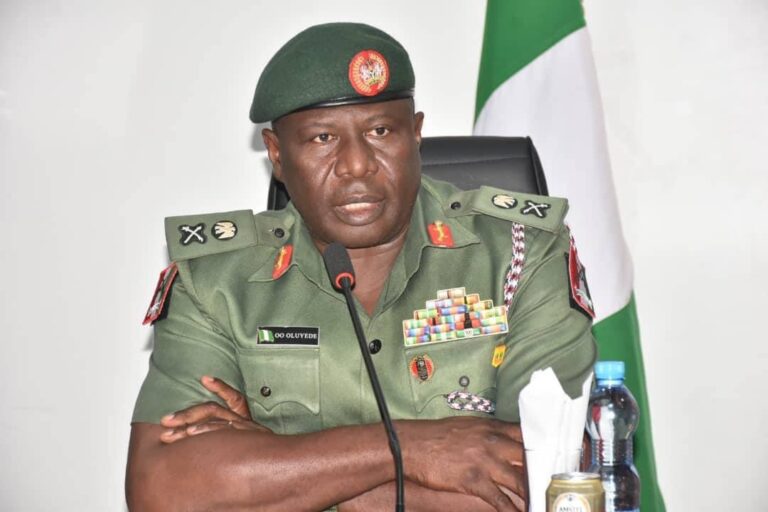
FOLLOWING the recent deadly attacks on Gwer West and Apa Local Government Areas of Benue State, the Chief of Army Staff (COAS), Olufemi Oluyede, has moved to the state in a strategic push to curb the escalating violence.

According to the News Agency of Nigeria (NAN), the COAS is accompanied by Principal Staff Officers (PSOs) and other senior army officials for an on-the-ground security assessment.

Oluyede is said to have ordered additional deployment of troops and logistics to the state, to pursue and dismantle criminal groups operating in the region.

His visit comes amid mounting concern over incessant killings of villagers and widespread displacement caused by suspected herders and armed militia groups.

According to Daily Trust, at least 270 people have been killed in the state in the last two months.

The COAS is expected to hold an on-the-ground assessment of the security situation and direct engagement with commanders overseeing ongoing operations in the state.

“The COAS is also expected to visit villages that have been attacked and reassure residents of their safety and the resolve of the Nigerian Army to protect lives and property of law-abiding citizens.

“General Oluyede, while in the state, will personally lead troops in the operation at the battlefront,” NAN quoted a source to have said.

The ICIR reports that the latest development followed the recent attacks on several communities in two LGAs in the state.

According to a report by Channels Television, the latest attacks occurred around 7 pm on Sunday, June 1, when gunmen stormed communities in Tse-Antswam of Gwer West LGA and Edikwu-Ankpali, Apa LGA, killing at least 33 people.

In Tse-Antswam, a community leader, Patrick Modoom, confirmed that 17 corpses had been recovered as of Monday morning, while many others remain missing. 

He noted that the attack took place near a military checkpoint, but residents received no response from security forces during the raid.

The situation is similarly grim in Edikwu and Ankpali communities of Apa LGA, where 16 more fatalities were confirmed by Abu Umoru, a member of the Benue State House of Assembly representing Apa Constituency. 

The attacks have triggered fresh displacements, with families now sheltering in primary schools and makeshift camps under local vigilante protection, according to the report.

South Korea’s new president assumes office, pledges reform after martial law crisis

SOUTH Korea’s newly-elected liberal President Lee Jae-myung has pledged to lead the nation out of what he called the brink of collapse following a recent attempt at martial law.  

Jae-myung made the declaration on Wednesday, June 4, after securing a decisive victory in Tuesday’s snap election, signalling a major turning point for Asia’s fourth-largest economy. 

“A Lee Jae-myung government will be a pragmatic pro-market government,” he said after taking the oath of office at parliament.

Lee was officially confirmed as president by the National Election Commission and immediately he assumed the duties of head of state and commander-in-chief. He spoke with the nation’s top military commander to receive a briefing on the current defence posture.

According to official data, with all ballots counted, Lee secured 49.42 per cent of the nearly 35 million votes cast, defeating conservative challenger Kim Moon-soo, who garnered 41.15 per cent. The election saw the highest voter turnout for a presidential race since 1997.

The ICIR reports that his victory followed a public backlash against a failed attempt at military rule, which led to the downfall of Yoon Suk Yeol just three years into his turbulent presidency.

The country’s Constitutional Court in April upheld the impeachment of Yeol, dismissing him from office four months after his short-lived imposition of martial law.

Six months ago, Lee Jae-myung famously scaled the perimeter wall of parliament to enter the chamber and help vote down a martial law decree, evading troops who had barricaded the building. 

Now as president, he has pledged to pursue deregulation to fuel innovation and economic growth, while also committing to renewed dialogue with North Korea alongside a continued strong security alliance with the United States.

“It is better to win without fighting than to win in a fight, and peace with no need to fight is the best security,” he said, referring to his country’s often violent ties with rival North Korea.

He also vowed to revitalise the struggling economy amid growing global protectionism.

Lee now faces what may be the most formidable set of challenges for a South Korean president in nearly 30 years, from mending a nation deeply wounded by the recent martial law attempt to navigating increasingly unpredictable protectionist policies from the United States, a key trading partner and vital security ally.

The new president must also confront an impending deadline set by the White House to negotiate import duties, which Washington claimed had contributed to a significant trade imbalance between the two nations.

Jae-myung has pledged to tackle South Korea’s urgent economic challenges from his very first day in office, prioritising cost-of-living issues impacting middle- and low-income households, as well as the financial hardships faced by small business owners.

The ICIR reported that the South Korean government announced in April its readiness to hold its presidential election on June 3, following the removal of the former leader from office after a controversial declaration of martial law.

Naira strengthens as deregistration of BDCs over recapitalisation failure looms

THE naira gained strength on Tuesday, June 3, amid concerns that there could be possible deregistration of some licensed Bureau De Change (BDC) operators yet to meet the Central Bank of Nigeria (CBN) requirement for their recapitalisation.

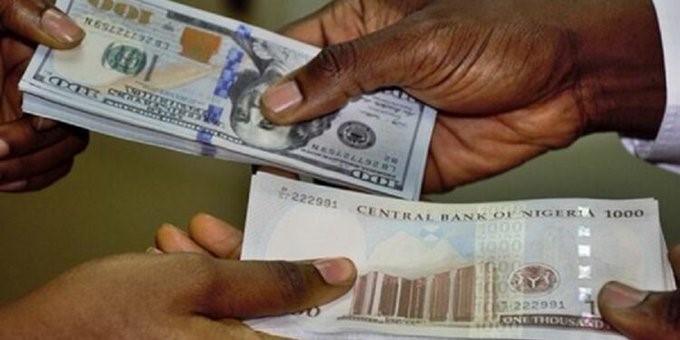
At the official Nigerian Autonomous Foreign Exchange Market (NAFEX), the naira appreciated by 0.29 percent to close at N1,581.59 against the dollar.

At the parallel market, it appreciated by 1.25 per cent to close at N1,595 against the dollar.

The significant improvement in the value of the naira in the parallel market comes amid the concern that most BDC operators have failed to meet the requirements for their recapitalisation.

The ICIR reports that the CBN had, in May 2024, issued new operational guidelines for BDCs.

The guidelines, effective June 3, 2024, directed all existing BDCs to reapply for new licences.

It provided that BDC operators with Tier 1 licences raised their capital base to N2 billion, while those with Tier 2 licences to N500 million.

The operators were also required to pay a non-refundable licence fee of N5 million and N2 million, respectively.

At the time, the CBN gave both the Tier 1 and Tier 2 BDC operators six months to meet the minimum capital requirement.

It later extended the deadline by an additional six months, which ended on Tuesday, June 3.

The Association of Bureau De Change Operators of Nigeria (ABCON) President, Aminu Gwadabe, has, however, raised concern that only about 10 per cent of the over 5,000 licensed BDC operators have met the new CBN minimum capital requirements.

Gwadabe, who commented recently on the matter, reportedly said the CBN’s June 3 recapitalisation deadline for the BDC operators remained “sacrosanct”.

His statement came after a stakeholder meeting with CBN the previous day, but the apex bank has yet to issue an official statement on its position on the deadline.

At a Nairametrics X Space on Tuesday, June 2, monitored by our correspondent, some financial analysts expressed mixed feelings about the deadline.

While some stand with the policy of the CBN as it will help sanitise the system, others think the apex bank is not enforcing the regulation of  BDCs correctly.

They argued that successive governments have been changing the operations of the BDCs without much effectiveness to show for it.

Some believe that if the CBN deadline remains sacrosanct, it might not lead to a monopoly in the market, but is likely to create a cartel of BDCs.

“If they become that kind of cartel, they will find a way to increase their profitability,” a business development manager and consultant, Daniel Effah, supported the argument.

The head of Financial Institutions Rating at Agusto & Co, Ayokunle Olubunmi, told The ICIR that with less than 10 per cent of BDCs meeting the deadline, it could help prone the number of licensed operators, which he believed were way more than needed in the economy.

“One of the obvious reasons for the recapitalisation is to try and see how the number can be pulled down.

“We knew that a lot of those licenses were not even genuine when you look at those that are actually in the business,” he said.

He stressed that, from the look of things, the CBN might have achieved its objectives.

He said it does appear that, since the BDC’s business is not as profitable as it used to be, a lot of the operators might not want to recapitalise.

He believes that the CBN has tried, given the constraints before it, to supply dollars to the BDCs, which are at the retail end of the forex market.

“Let’s not forget that the CBN is not meant to be the major supplier to that market. What it does is to stimulate the market and encourage the players and ensure policy consistency for the market,” Olubunmi added.