STEPHEN Ola Jagun, a seasoned facility manager and vice chairman of the Estate Surveyors and Valuers Registration Board of Nigeria, shares his insights on Nigeria’s deepening housing crisis in this interview with THE ICIR. Jagun explains why rents have skyrocketed across the country, how economic instability is driving displacement among tenants, and why government intervention, especially in infrastructure, mortgage access, and policy reform is critical to solving the problem.
The ICIR: Help us understand why rents are increasingly high these days, as it has more than tripled in most places?
Jagun: Generally, economies worldwide are going through challenges. Narrowing it to Nigeria, our economy has faced several challenges, particularly in the value of the naira. I can give you instances, in some places where rents used to cost N500,000, they have now gone to above N1.5 million. There’s a place in Lekki where a former tenant was paying N2.8 million. He packed out, and the landlord did some repairs and got another tenant who paid N8.5 million. That’s thrice what he used to earn. Looking at it from a layman’s angle, you could say the landlord wasn’t building a new house or buying costly cement or other materials. But he invested so that his investment could yield income and help cater to his needs.
The value of the naira three years ago is not the same today. Let’s say you translated N1.5 million into dollars three years ago; if translated today, can it fetch you a quarter of what it used to be years back? No! It’s the economy that’s driving the costs of rentals.
In some highbrow areas like Banana Island, Victoria Island, and Ikoyi, we can say it’s criminal to charge in dollars, but what the landlords do is convert the dollar value to naira and charge the tenants. Recently, I went to the market to purchase an item on Lagos Island. The attendant told me a price, but as I went to the boss to pay, he first calculated the dollar value before the item was sold to me. It may look shocking, but I understood immediately because the money he’s going to make from me, he’s going to use it to replenish his stock. If he sells below the dollar value, he’ll not be able to restock. That’s the reality, and it’s what’s making rentals increasingly high and creating a lot of friction between landlords and tenants.
Another major reason is that for an average flat in Ikoyi, you should be thinking of N15 or N20 million. To someone who has been living there and has been paying N10 million, if the landlord increases the rent to N15 or N18 million, he may go to Yaba or Surulere, which is not far from the Island, and offer a landlord N5 million, thereby displacing tenants struggling to sustain N2 million rents. What this means is that people relocating from Ikoyi will displace tenants in Yaba or Surulere, and likewise, people in Yaba will go and displace tenants in Agege or Egbeda. That’s exactly what we’re witnessing at the moment.
The ICIR: We can only imagine the huge investment in highbrow areas, but for average Nigerians who live in a single room, a mini or 2-bedroom flat built some 20 or even 30 years ago in a local environment with no proper maintenance on the facilities, does it justify the reasons you have given?
Jagun: Yes, people are displacing those who are below their cadre. For example, if somebody who used to live in a 3-bedroom flat suddenly can’t afford it again, they may move to a 2-bedroom flat in a neighbourhood that’s not too far away and displace other tenants. Those living in 2-bedroom flats will go and displace those living in single-bedroom flats, and so on.
Stephen Ola Jagun is a facility manager and the vice chairman of the Estate Surveyors and Valuers Registration Board of Nigeria.
The houses might have been built 15 or 20 years ago, but the purpose of a building is for it to bring returns. The naira value of an investment 10 years ago isn’t the same today. Some clients told me that the annual returns from their investment can no longer take care of their mortgage because of the loss in naira value.
Another reason is that the costs of repairs are not cheap these days. The awareness it’s bringing is that the tenants who used to bear some repairs and didn’t complain, won’t do so again. If a tenant lives in a house that was N500,000, and the landlord asks him to leave because the rent has increased, the tenant will stay if he discovers that the rent is higher somewhere. But he’ll want to fight for his rights by calling on the landlord to do every little repair he used to take care of. The landlord will also realise that he needs to continue to earn higher rent to plough it back into the investment to make the house conducive for the tenant. It’s not a matter of the age of the building but the returns it brings, so the investor is not short-changed.
The ICIR: The mortgage system has been introduced for decades. Do you think we’re getting it right?
Jagun: The mortgage system has not been up and doing, although the players in the industry are looking for creative ways to make it more accessible. If you check anywhere in the world, one of the primary needs of man is shelter. In Nigeria, people in the mortgage business are struggling to get funding with a benchmark interest rate above 27 per cent.
Also of concern is the duration of the mortgage. It takes close to 20 to 25 years for a mortgage to be fully settled. In a country where there’s no job security, it’s a challenge. It’s even harder for banks to stand on such long-term lending, or else they will go under. A former governor of Lagos State, Babatunde Fashola, started the Lagos HOMS (Lagos State Home Ownership Mortgage Scheme), but immediately he left, the government that succeeded him didn’t see the need to consolidate the scheme. He planned to put some seed funds down that would be revolving. Ask yourself, how many governments in Nigeria, as drivers of the economy, are renting out houses? I’m not sure there is anyone because it doesn’t pay them.
It takes close to 20 to 25 years for a mortgage to be fully settled. In a country where there’s no job security, it’s a challenge.
So, it’s the source and costs of funding that are making mortgages not viable. Some investors who would have loved to bring in money from abroad are afraid of the system and policies in Nigeria. They feel unsafe because most of our policies are based on sentiment and someone’s body language. When they do bring funds at all, they do so on a short-term basis.
I attended the launch of a mortgage bank that wants to partner with some developers to bring delivery and value to the market and deliver on the plans. The idea was for developers to bring something to the table, and the mortgage bank to take it from there. By so doing, the developers are not afraid their projects will get stuck as the mortgage bank is to fund it. When it’s between the developer and subscriber, at some point, the subscriber will default on payment, and the whole thing gets messed up with penalties and lawsuits. There are other concerns, too, that bother on affordability and whether a mortgage system is decent for individuals.
The ICIR: Since the mortgage system is not being effective, is a rent-to-own initiative a better choice?
Jagun: It’s a choice to adopt. The scheme that Fashola put in place was rent-to-own. If my house rent is N500,000 and I’m asked to pay N700,000 yearly for 10 years to own the house, I’d rather pay N700,000. Culturally, particularly in Nigeria, it’s a thing of pride for someone to own a roof over his head. When you give someone the opportunity, they will cut down on some expenses and luxuries. His wife and children will cooperate, knowing that the place will become theirs in a few years.
Check it, anywhere in the world, mortgages are better than paying rent.
If rent-to-own can be encouraged, it’s a good thing. Some people have been tenants in some houses for 15 years, and that doesn’t make them co-owners or rent-free. Rent-to-own is something that should be looked at, and I believe many Nigerians will jump at it. What it means is that the rent they’re paying for is an investment in their own houses. Check it, anywhere in the world, mortgages are better than paying rent.
The ICIR: With the increasing rate of rents, what should the government do differently to address issues in the housing sector?
Jagun: I always believe that the government has no business building houses. If they build 50 units of houses, the truth is that it would not even go around the official in the governor’s office. My advice would be that the government make accessible and easy and simple, and bring infrastructure to every nook and cranny of the land. You’ll be shocked that in most of the places we call bush today, people bought land there five or 10 years ago, but they couldn’t move there to start anything because if they did, they would be the ones to construct roads, bring electricity, water, and other amenities. But if infrastructures are available, it will aid development, make construction rapid, and provide an avenue for the government to charge taxes and grow the economy. In some countries, you see them opening new sites and creating roads and infrastructure so that people can go there to live. As people go there to construct, the industry will grow and help the economy.
The current laws on land, particularly the Land Use Act, are also a concern. For instance, a governor can just wake up and cancel somebody’s C of O (Certificate of Occupancy) if he perceives his enemies own the land and straight away take a bulldozer and demolish the structure.
Another major thing the government can do is in the issue of funding. The government has access to so much money that is idle money that it can redirect to the housing sector.
Also, the government can encourage the use of local materials. Virtually, 80 to 90 per cent of what we use, apart from sand and water, is imported. Is the government encouraging research in schools and universities on building materials? Even the ones that have been carried out, what has the government done to encourage the researchers? What roofing systems and building materials can we use that are good for our environment and affordable should be of concern to the government.
The current laws on land, particularly the Land Use Act, are also a concern. For instance, a governor can just wake up and cancel somebody’s C of O
I can recall a time they were talking about a land swap in Abuja, but it was another fraud. Some people wrote a proposal for the government to give a large expanse of land to private investors to provide infrastructure and sell the land to people. But it ended up in the hands of friends of government officials, who then started selling the land at their own prices instead of providing infrastructure. Was that the purpose? No! It happened because their friends were in the government. Another government came and demolished it, but that demolition destroyed wealth. Instead of looking at these problems and solving them once and for all, we look for a quick-fix answer that suits us. It’s the government that can give direction to where we’re going, but most of the time, they do so based on personal interests.
I can guarantee you that if a governor oversees the construction of a thousand units of houses, he and his commissioners will go away with almost 15 per cent of those units of houses. Some other party chieftains will come and take part. Is that place going to spread? No.
For example, if the government of Lagos State moves to Ikorodu and starts providing sites and services, won’t everybody who owns land there build? With that provision of infrastructure, you can be sure that in the next two years or so, houses will spring up, and the government can then go there and charge taxes. Other things will come up – residential houses will spring, commercial activities will rise, and employment will be created. You can imagine the scale it’ll have not only for the building industry but also for the economy.
Dubai has the least oil of all the Emirates, but was very creative, focusing on items. I got to know years back that what a tourist spend [averagely] in Dubai was about $2,000. What did the Dubai government do? They started bringing people, making it as easy as possible for you to come. They went into construction, which generates activities for their economy to run. But in Nigeria, when a person is in government, his brother is the one building, his wife is the one supplying the materials, and his children are the ones selling the buildings. It’s not circulating. The government needs to rise and help the economy.
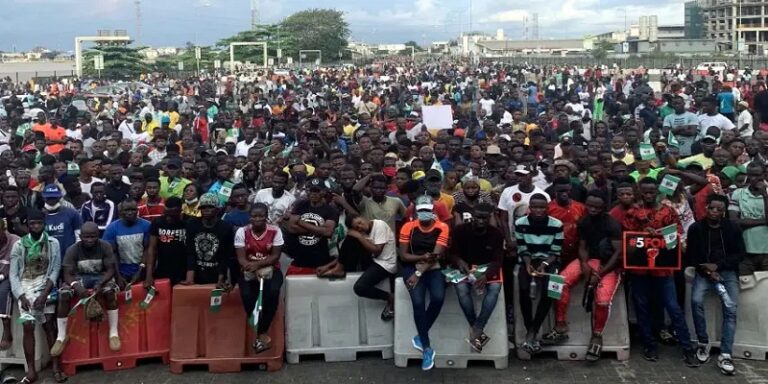
TAKE-It-Back Movement, a good governance advocacy group, led by activist Omoyele Sowore, has vowed to hold a national protest on June 12, in response to ongoing killings and undemocratic actions by those in power.
The group’s National Coordinator, Juwon Sanyaolu, announced this in a statement on Tuesday June 3.
He said the movement “rejects the hollow ceremonies and official pageantry” typically associated with the Democracy Day.
“This June 12, we march not just for ourselves, but for the slain in Benue, the displaced in Plateau, the silenced in detention, and the starving masses abandoned by the corrupt elite” Sanyaolu said.
The group’s leader appealed to all Nigerians to stand up against “undemocratic forces in power.”
“We will not participate in the hypocrisy of celebrating freedom where none exists. Instead, we declare this day a National Day of Resistance, a day to stand against tyranny and bad governance.
“Freedom of speech is under attack. The state has turned on its citizens with an unrelenting campaign of intimidation and censorship,” the group stated..
It expressed sadness that democracy, hard-won through struggle, sweat, and blood of patriots, had been “dismantled by the same forces that once vowed to bring change.”
“Journalists are harassed. Activists are detained. Citizens are arrested for social media posts. Through weaponisation of the Cybercrime Act, government agents now stalk the digital footprints of dissenters, silencing legitimate criticism and criminalising free expression.
“And while the voices in the streets are silenced, the cries from rural communities echo unheard. In Plateau, Benue, Southern Kaduna, and across the Middle Belt, mass killings continue with terrifying frequency. Whole communities are decimated. Lives are snuffed out without consequences.”
The group also decried the number of internally displaced persons in the country, while perpetrators roam free, noting that the bloodletting had become a routine, while the state remains complicit through its inaction, negligence, or outright denial.
The ICIRreported in August 2024, many Nigerians trooped to the streets to protest poor governance and economic hardships occasioned by President Bola Ahmed Tinubu’s reforms.
The protests were marred with violence, largely caused by security operatives in places like Lagos and Abuja, where protesters were subjected to tear gas and harassment.
THE House of Representatives has criticised the management of the West African Examinations Council (WAEC) over widespread irregularities and operational lapses that marred the conduct of the 2025 Senior Secondary School Certificate Examination.
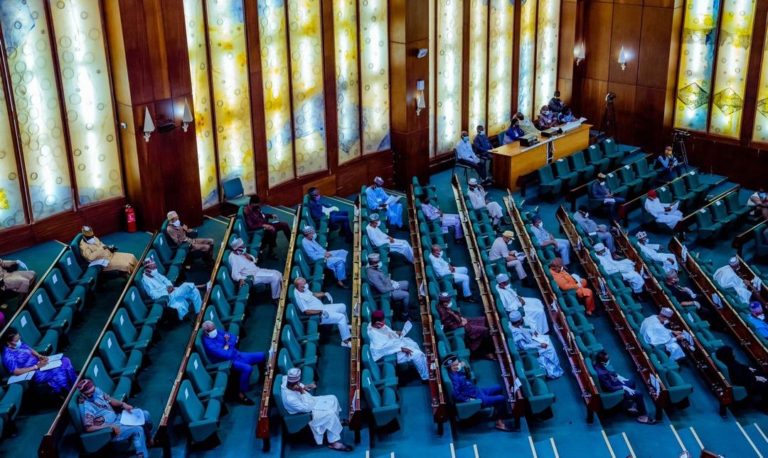
The House, through it Committee on Basic Education and Examination Bodies, questioned the Head of WAEC Nigeria, Amos Dangut, during an investigative hearing at the National Assembly on Monday, June 2, over it they described as systemic failures that had undermined public confidence in the country’s examination system.
Opening the session, the committee chairman, Oforji Oboku, representing Yenagoa/Opokuma Federal Constituency, Bayelsa State, expressed dissatisfaction with WAEC’s performance, appreciating his fellow lawmakers for making the oversight meeting a priority, even though the National Assembly was not in session.
“On behalf of this committee, I offer an unreserved apology to Nigerian parents, guardians, and candidates who suffered the chaos of the last examination cycle. We are committed to ensuring this never happens again,” Oboku said.
Reflecting on a previous meeting with WAEC held on May 30, Oboku described as appalling the revelations that students in numerous centres were forced to take their exams under harsh conditions, including late-night sessions illuminated only by torch lights.
The ICIR reports that stakeholders, including parents, students and education experts, voiced serious concerns over logistical failures, security challenges, and poor administration of the examination..
The ICIRreported that the Katsina State Government called for the cancellation of the West Africa Senior School Certificate Examination (WASSCE) English Language Paper 2 conducted by WAEC on Wednesday, May 28.
The State Commissioner for Basic and Secondary Education, Zainab Musa-Musawa, delivered a petition containing the state government’s position on the exam.at the WAEC office in Katsina on May 31.
During the House of Representatives hearing, lawmakers criticised widespread reports of irregularities and operational failures that marred the examination.
“It is unacceptable that in 2025, students are sitting for exams at 11 pm under torchlight. This is not just a failure of logistics, it is a failure of leadership,” Oboku stated.
While stressing that the committee’s investigation was not a witch-hunt, the lawmaker maintained a firm stance on uncovering the root causes of the council’s inefficiencies.
“We must identify the underlying causes of these repeated failures, address them decisively, and hold those responsible to account,” he vowed.
Lawmakers also criticised Dangut’s assertion that WAEC would roll out computer-based testing centres nationwide by 2026 and called for a national education summit to assess the real state of secondary school infrastructure across the country.
“You talk of CBT readiness, yet many local governments lack a single CBT centre. That’s like saying you own a car and a driver, but there’s no road. It’s fantasy, not capacity,” Oboku added.
Defending the council, Dangut cited unforeseen logistical challenges and insecurity in parts of the country.
The ICIR reported how students were kept in examination halls in several states in the country by WAEC after the English Language they were to write leaked. Many of the students did not return home until midnight after they were forced to wait to write the examination at night.
THE Niger State Government has said that the death toll from last week’s flooding in Mokwa Local Government Area has surged beyond 200, with more than 1,000 residents still missing.
The state Deputy Governor, Yakubu Garba, gave the update on Monday while receiving former Labour Party presidential candidate, Peter Obi, at the Government House in Minna, the state capital.
“If we say this is the number today, the next day you see the number going up again. But I know from the people that there were people displaced, and nobody has seen them.
“For now, we don’t know where they are. Those people have actually been swept away by water. We have reviewed house-to-house and based on that, the number of people that are yet to be seen is more than 1,000.
“But the dead that have been seen are close to 200 now. And the displaced persons are more than 3,000 plus and the affected direct properties are more than 2,000.
The deputy governor said the greatest challenge facing the government over the tragedy was the fate of those missing.
He warned that the death toll could surge as search and rescue operations continued.
The flood, which swept through three communities in Mokwa, displaced over 3,000 residents and destroyed at least 2,000 homes. Critical infrastructure, including three bridges and several roads, was also affected.
The ICIR reports that Obi was in the state to condole with the government and affected communities.
The former Anambra State governor donated ₦20 million to support the victims and called for more efforts to assist the displaced residents.
“We felt that we had to physically visit here and show solidarity,” he said, adding, “Whatever happened here happened to Nigeria. We are all brothers and sisters.”
Obi prayed for the repose of the deceased and the speedy recovery of those hospitalised, urging both government and citizens to work together in addressing the aftermath of the disaster.
He promised to visit the victims at a later date in their communities..
In a similar visit, Hajiya Fatima Bago, the wife of the state Governor Mohammed Bago, toured some of the affected areas and donated ₦50 million on behalf of her family.
She advised residents to avoid building on waterways and pledged continued support for the victims.
“We are here to condole with the victims and assess the situation,” she said.
“The ongoing rescue operations using excavators are encouraging, and we hope more people can be found,” she stressed.
Secretary to the State Government, Abubakar Usman, described the tragedy as “an act of God” and urged survivors to remain hopeful.
The head of Mokwa town, Mohammed Aliyu, expressed gratitude for the visit and called on the government to compensate affected households.
Meanwhile, the state Commissioner for Humanitarian Affairs, Ahmad Suleiman, reportedly said on Tuesday, June 3, that the toll had exceeded 200.
He said this while featuring om Channels Television’s “The Morning Brief.”
“We are still recovering corpses up till now. Nobody can tell you the number of casualties in Niger State right now because up till now, we are still looking for some corpses,” he said.
The ICIR reports that search and rescue efforts are ongoing as local authorities and volunteers continue to search for the missing victims in the area.
BUSINESS activity in Nigeria’s private sector slowed in May, even though inflation showed signs of easing, according to data from the National Bureau of Statistics (NBS) and Stanbic IBTC Bank.
The Stanbic IBTC’s latest Purchasing Managers’ Index (PMI) report shows that private sector growth dipped to a four-month low, with the PMI falling to 52.7 in May from 54.2 in April. While a PMI above 50 still signals growth, the drop indicates that the pace of business activity and new orders slowed noticeably.
The PMI is a key economic indicator that gauges the health of the manufacturing and services sectors. It reflects trends in new business, output, inventories, and employment.
The ICIR reports that the PMI is used to measure the health and direction of the manufacturing and services sectors’ businesses. It’s a key economic indicator that provides insights into business activity, including new orders, production, inventory (raw materials and finished goods), and employment.
Although the Nigerian private sector remained in growth territory midway through the second quarter of the year, the latest data showed there were signs of a slowdown in the latest survey period as inflationary pressures remained elevated.
“Inflationary pressures remained elevated in May, despite easing slightly from April. Purchase costs rose rapidly amid higher raw material prices, currency weakness, and increased transportation costs,” it stated.
The ICIRreported that Nigeria’s inflation eased to 23.71 per cent in April, from 24.23 per cent in March.
The latest inflation figures dropped sharply since January after the NBS adopted a new methodology for calculating the country’s consumer price index.
Stanbic IBTC specified that the rates of expansion in the production level and new businesses eased while employment data decreased for the first time in six months.
It said workforce numbers decreased for the first time in six months as some firms reported that difficulties paying staff had led to resignations.
The report noted that the drop in business confidence for the fourth consecutive month was among the lowest on record.
Commenting, the head of equity research in West Africa at Stanbic IBTC Bank, Muyiwa Oni, noted that business conditions remained in the expansionary territory for the sixth consecutive month in May.
He, however, said the pace of improvement slowed relative to April.
He, however, noted that input costs remain high in May, albeit slightly softer than April inflation, with the pace of price increase remaining well above the series average.
Oni believes that Nigeria’s business condition is on course to end the second quarter with a positive momentum, but at a weaker level than what was reported in the first quarter.
He said this is due to currency weakness, higher raw material costs, and increased transport prices have been more pronounced than seen in the first quarter.
“However, as inflation is expected to remain softer compared to the 2024 average, interest rates are likely to be lower this year, thereby helping to support the medium-term economic growth path.
“Therefore, we still maintain our expectation that the Nigerian economy is likely to grow by 3.5% y/y in real terms in 2025 relative to 3.4% y/y growth in 2024,” Oni added.
IN arenewed orgy of terror, Boko Haram and ISWAP insurgentshave, within the last couple of months, intensifiedcoordinated assaults on communities across the North-East States of Borno, Yobe and Adamawa, targeting mostly military formations. The terrorists, armed with sophisticated weaponry, havekilled scores of soldiers, and either carted away or destroyed equipment, drawing national attention. In exclusive encounters with The ICIR, two ex-commanders of the dreaded group gave insights into why repentant members are sliding back into the trenches and launching coordinated assault on communities in the region.
Harvest of attacks
THE rat-a-tat-tat burst of awful sounds, like those of submachine guns spitting pellets of death, rattledthe vicinity of the Forward Operation Base of the 153 Battalion in Marte LGA of Borno State with deafening intensity. It was in the wee hours of Monday, May 12, 2025 and the dusty community had been eerily quiet. As the military base slumbered, the silence was shattered by the sound of intense gunfire and explosions.
Members of the Boko Haram splinter group – the Islamic State of West Africa (ISWAP), armed to the teeth, had stormed the base, catching the soldiers off guard.
The attackers, numbering dozens, targeted key installations, including armoury, reportedly killing seven soldiers and seizing three-gun trucks. They were also said to have set fire to military equipment, vehicles and buildings, engulfing the base in flames. The armoury was reportedly looted with weapons and ammunition carted.
Although the embattled soldiers quickly regrouped and fought back, engaging the terrorists in a fierce battle, they were vastly outnumbered, and the attackers’ superior firepower took its toll.
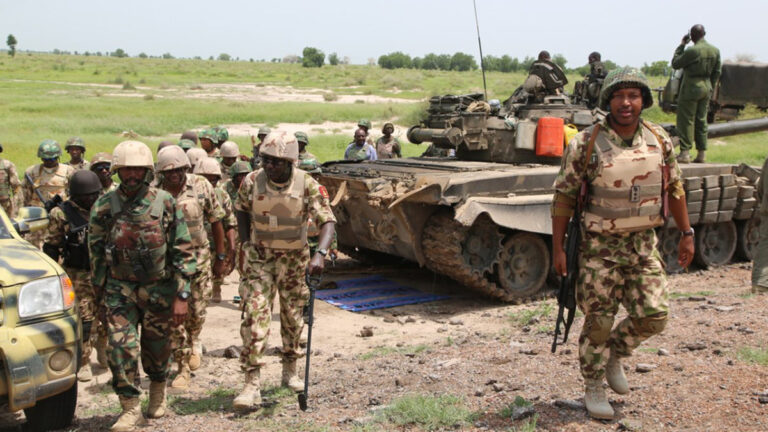
=Troops of the Nigerian Army. PC: Daily Trust
Nigerian Army. Photo Nigeria Army via X.
By dawn, the attack was over, and the base lay in ruins. The soldiers who had survived were, shell-shocked and grief-stricken.
The attack on the Marte military base was a stark reminder of the threat posed by renewed wave of terror by insurgents in the North-East, despite the bravery and sacrifice of the soldiers who fight to defeat them against overwhelming odds.
Ex-Boko Haram commanders speak on renewed attacks
Multiple sources, including ex-commanders of the Boko Haram terrorist group, who are among the over 30,000 that reportedly renounced the sect following overtures by government, have revealed to The ICIR why many of the ‘surrenderers’ were going back to the trenches to launch renewed attacks in the troubled region.
The commanders are among the over 400 members of the sect from Borno State who were profiled and engaged by the military to support its counter insurgency operations in the region, following their defection from the terror sect.
After being profiled, they were engaged as hybrid by the military to aid their counter insurgency operations due to their knowledge and understanding of the terrain. Hybrids are surrendered members of the insurgency group who are co-opted by the military to assist in the counter insurgency efforts.
One of the group’s ex-top commanders revealed to The ICIR that many of the surrendered commanders have gone back to the trenches because the Nigerian government has failed to keep to promises made when they surrendered. He listed the promises to include, houses and skills acquisition training.
The ex-commander (names withheld for security reason), who was among the lieutenants of Abubakar Shekau, the late leader of the group, said, “When the Nigerian government came up with the option of surrendering, some of us decided to embrace it so as to assist and reintegrate with our families.
“We felt it was better for us to lay down our arms rather than continue to stay in the bush and spill innocent blood. That was why we heeded the call of government and our family members to surrender.
“We abandoned our belongings and property; including livestock, in Sambisa Forest and were deployed to the theatre formations in the North-East to aid in their operations.”
The commander, who defected three years ago, disclosed that apart from belonging to the hybrid, he has personally participated in persuading other members who also left Sambisa to surrender.
He said even though he has resisted the temptation to go back to Sambisa, “One of my wives has run back to the forest due to hardship.”
He added, “We submitted ourselves with the willingness to assist the government in ending the insurgency. Due to our constant appeals, many others left Sambisa and surrendered.
“Unfortunately, many commanders were forced to return to Sambisa due to hardship and lack of assistance from the government.
“They were plunged into deep hardship which is why they returned and are currently carrying out attacks,” he said, adding that life in Sambisa was far better than what the repentant terrorists were experiencing outside.
“Aside terrorist attacks, we were farming and getting enough to fend for ourselves and families. We had livestock and engaged in businesses that took many of us to several countries, including Dubai,” he said, adding that all that had changed.
Although he did not specify the kind of businesses that took them to Dubai, The ICIR reports that in 2019 six Nigerians were convicted by an Abu Dhabi Federal Court of Appeal in the United Arab Emirates (UAE) over alleged funding of Boko Haram. Dubai is in the UAE. The families of the convicts had alleged “frame up” claiming they had been doing legitimate bureau de change business in the UAE before their arrest.
A file photo of Boko Haram.
Another ex-commander of the group from the ISWAP faction who is also assisting the military in the North-East said he regretted leaving his ‘comfort zone’ in the Sambisa Forest.
The ex-commander, who also sought identity protection for security reasons, said, “Each of us were given only N100,000 cash upon surrendering by the government and promised a house and skill acquisition training, among others.
“But none of these promises has been fulfilled, leaving us in untold hardship which has led to many of the surrenderers returning to Sambisa,” he said.
The commander who disclosed that he took part in the 2014 abduction of the Chibok schoolgirls, warned that if the right measures were not taken by government, many more surrendered Boko Haram members who are currently assisting the military would be compelled to go back to Sambisa Forest.
More attacks as local residents speak
Located 38 kilometres away from Dikwa, the headquarters of Dikwa Local Government (LGA) in the northern part of Borno State, Marte had remained an area of interest to terrorists since the early days of Boko Haram.
Local residents who spoke with The ICIR on the incident said the insurgents had infiltrated Marte from different directions, cordoned off the area and forced the soldiers to withdraw to Dikwa, a neighbouring community.
“The attack had caught the soldiers unawares,” a member of the Civilian Joint Task Force said, adding that apart from the seven soldiers killed, the whereabouts of a few others had remained unknown.
Another resident of Marte, who would not want to be named for security reasons, said the troops were overpowered during the assault.
“On that fateful Monday, the terrorists took control of Marte, killing at least seven soldiers. Many others fled and ran towards Dikwa and took refuge at the 24 Task Force Brigade.
Another source in Dikwa told The ICIR that gunfire was heard, and a Nigerian Air Force fighter jet was seen hovering over the area. “Operational vehicles were destroyed,” said the source, who wouldn’t want his name in print.
“It wasn’t long that the Malam Fatori military base was attacked where one of our commanders and many soldiers paid the supreme price,” a soldier said.
The Nigerian military later confirmed the series of recent attacks on its bases in parts of Borno State but reassured citizens of its capacity to subdue the terrorists.
The Theatre Commander of Operation Hadin Kai, A.E. Abubakar, a Major General (RIGHT). Photo Nigeria Army via X.
The Theatre Commander of Operation Hadin Kai, A.E. Abubakar, a Major General, confirmed the incidents at a press briefing in Maiduguri. Abubakar said while the attacks on Dikwa and Gajiram failed, troops slugged it out with the insurgents in Rann, the headquarters of Kala Balge Local LGA.
The theatre commander who confirmed attacks on three military bases, and the death of four soldiers in Rann, said, “In the last two months, we have been re-strategising and reorganising. The Chief of Army Staff was here just a week ago, and several changes have been made in the theatre. I am one of such changes, having just taken over command three weeks ago.”
The ICIR gathered that since January this year, several military formations have been targeted in renewed wave of onslaught by Boko Haram and ISWAP terrorists in the Lake Chad region and the Mandara Hills in the dreaded Sambisa Forest areas of Borno and Yobe states. In Adamawa State, communities in Hong LGA were targeted with devastating consequences, prompting the Senate to pass a resolution requesting the federal government to establish a military base in the area.
It was gathered that while tension had risen to a fever pitch over the Marte incident, less than 24 hours after, the insurgents also attacked three more military bases in Dikwa, Rann, and Gajiram.
However, in Dikwa, the terrorists were said to have had a fierce battle with Nigerian Army troops. A source who disclosed that the Dikwa attack was carried out about 13 hours after that of Marte, said the troops “dealt with the insurgents,” adding that it was quelled by the army, air force, and the civilian joint task force fighters after an hour.
The insurgents were also reported to have attacked the 3 Battalion of the Nigerian Army in Rann, the headquarters of Kala Balge LGA of Borno State, almost at the same time as they attacked Dikwa.
Sources said the attack was targeted at the military formation with heavy machinery, casting fear among the people of the community.
Terrorists’ two factions
The ICIR reports that Boko Haram has split into two factions over the years.
One is backed by the Islamic State group (ISIS) and is known as the Islamic State West Africa Province, or ISWAP. It has become notorious for targeting military formations and has attacked several military bases this year, killing soldiers and stealing weapons.
In recent weeks, ISWAP struck outposts in Gajibo, Buni Gari, Marte, Izge and Rann and they launched an assaults on the Nigeria-Cameroon joint base in Wulgo and Soueram in Cameroon. Other attacks this year have hit Malam Fatori, Goniri, Sabon Gari, Wajiroko and Monguno, among others. The group often attacks at night.
The other faction, Jama’atu Ahlis Sunna Lidda’awati wal-Jihad, or JAS, has increasingly resorted to attacking civilians and perceived collaborators. They also thrives on robberies and abductions for ransom.
Politicians, military officers aiding Boko Haram – Governor Zulum
Governor Babagana Zulum who visited Marte in the wake of the attacks appealed to the federal government to deploy strategies that would ensure that the town does not fall to the insurgents again.
Zulum accused some Nigerian politicians and members of the armed forces of serving as informants and working with Boko Haram insurgents.
Governor Babagana Zulum addressing military personnel during a visit to Marte. Photo: Govt House, Maiduguri
The ICIRreported that in an interview on News Central’s Breakfast Central, the governor said, “We should not politicise insecurity. The president needs to listen to the people who can tell them the right thing. He should listen to the Army.”
He said the real challenge was not insurgents who had laid down their arms, but the saboteurs among politicians, the armed forces and within local communities who fuel the insurgency.
“We have informants and collaborators within the Nigerian armed forces and within the communities…”
Earlier on Tuesday, May 13, 2025, Zulum had condemned the spate of attacks in various parts of the state. While sympathising with the victims of a bomb blast along the Maiduguri-Damboa Road, which occurred on Monday, May 12, Zulum said, “These acts of terror are deeply condemnable. The recent tragic loss of our education staff, gallant troops, and innocent civilians is a painful reminder of the challenges we continue to face.
“I am more determined than ever to support the military, security agencies, and our volunteer forces in the fight to end terrorism and insurgency in our state.
“The recent surge in attacks will not deter our resolve to tackle the scourge of the 16-year-long insurgency. I urge the people of Borno to remain resilient and prayerful. This is a partial eclipse, and we shall overcome it,” Zulum said through his spokesperson, Dauda Illiya.
Also, the Emir of Gwoza, Mohammed Shehu Timta, had cause to express worries following the death of an army captain and a private soldier during a deadly attack by on Izge community in Gwoza LGA of the state. Local sources, however, informed The ICIR in Gwoza that the Izge assault was met with fierce resistance from the military, the Civilian Joint Task Force (CJTF), local hunters, vigilantes, and members of the community.
In the ensuing confrontation, three suspected terrorists were reportedly killed, and several items recovered from the assailants, including over ten bicycles and motorcycles, an operational vehicle, and a sophisticated rifle with ammunition.
Confirming the attack, the Emir described it as tragic but praised the swift and coordinated response of security forces and community members, which helped repel the insurgents.
“My people in the Izge community came under Boko Haram invasion today at about 1 a.m. Unfortunately, a captain and a soldier paid the supreme price,” the Emir said, adding that “In a brave and swift reaction, the attack was repelled with the killing of three terrorists.”
Further attacks after defence chiefvisited
The ICIR gathered that hours after the Chief of Defence Staff, General Christopher Musa, concluded a visit to Maiduguri to assess the security situation and assure residents of strengthened military efforts, Malam Karanti, a village near Baga in Kukawa Local Government Area of Northern Borno State also came under attack by ISWAP elements.
The sun had barely risen over the sprawling fishing community when the calm was shattered by the invasion of the assailants. The terrorists, hiding in the shadows of the Lake Chad, had gathered their victims, primarily fishermen, beans farmers, and executed them, using axes and machetes, according to local and security sources.
The attack on Malam Karanti which occurred on Friday May 16, 2025, resulted in the deaths of at least 20 farmers and fishermen, with more than 10 others abducted.
In a second incident, the insurgents carried out a destructive raid on Wulgo community, near Gamboru Ngala where they razed a hospital, a military base, and a school.
Yobe, Adamawa not spared
ln neighbouring Yobe State, suspected Boko Haram terrorists had attacked the 27 Task Force Brigade of the Nigerian Army in Buni Yadi, Gujba Local Government Area.
The incident, which reportedly led to the killing of at least four soldiers and destruction of several operational equipment occurred at a time when the new Theatre Commander, Abdulsalam Abubakar, a Major General, took over the mantle of leadership, after his predecessor, Waidi Shaibu, also a Major General, was removed.
It also occurred less than 24 hours after Governor Mai Mala Buni hosted the 11th North-East Governors’ meeting in Damaturu, the Yobe State capital. Buni Yadi, a distance of 65km from Damaturu, is the hometown of Governor Buni.
Governor Buni of Yobe State
Multiple sources informed The ICIR that the terrorists who stormed the military formation under the cover of darkness, caught the soldiers off guard as they moved swiftly, targeting strategic positions within the Brigade. Although the military responded with force, the insurgents had already achieved their objective, leaving behind a trail of death and destruction.
A security source told The ICIR in Damaturu that the assailants stormed their location around 2:am on the fateful Saturday and opened fire.
“We were taken off guard by the heavy explosion and gunfire, but we stood our ground. A lot of our fighting equipment were destroyed during the encounter.
“Sadly, we lost four of our men, just as they (terrorists) also recorded casualties during the fierce battle that lasted for hours,” said the source who sought identity protection.”
The ICIR reports that the Nigeria army headquarters had confirmed the attack via its verified Facebook page, saying “Troops of Operation HADIN KAI are in a fierce battle against ISWAP attack at Buni Gari, Yobe State. Details later.”
Governor Buni had visited the headquarters of 27 the Task Force Brigade to commiserate with the troops over the attack.
During the visit, the governor announced a donation of N2 million each for families of fallen soldiers and N1 million each for the injured personnel.
Buni also pledged educational support to the children of the deceased soldiers and a donation of N50 million to be shared among troops of the brigade, in addition to food items, mattresses, blankets and other essential supplies from the state government.
In Adamawa State, seven people were reportedly killed by suspected Boko Haram insurgents in attacks on communities in Hong on Tuesday April 15, 2025.
According to residents the insurgents poured into the communities on the fateful day and left a trail of death and destruction, leading to the killing of six victims, including a vigilante who was hit by a detonated bomb in Banga.
The attack in Banga was said to have claimed three other lives in all; two men shot dead by the insurgents and a woman who fell and died as she made to run away. Two deaths were also recorded in a nearby village called Larh, bringing the accounted number of the dead in the two communities to six, according to locals.
Among assets that were destroyed was a police van from Garaha which was stationed in Banga but destroyed by a bomb, although all the occupants were spared as they had evacuated the vehicle before explosion.
In a separate attack on five villages – Kwapre, Dabna, Garha, Lar and Za – in the same Hong LGA of Adamawa State on April 26, Boko Haram insurgents launched a deadly assault on Kwapre village, killing 12 hunters and members of the civilian Joint Task Force (JTF) in an ambush.
Kwapre, which shares border with the Sambisa Forest – a notorious Boko Haram hideout – has been vulnerable to terrorist attacks. The slain civilian JTF members were said to be from Hawul LGA in Borno State, while the hunters were drawn from various LGAs within Adamawa State, who had been collaborating with security agencies to counter insurgency in the region.
It was gathered that since 2024, the community had suffered repeated assaults from terrorists, resulting in numerous deaths, abductions and widespread destruction.
Senate seeks military base in Adamawa
Amid rising attacks in Adamawa, the Senate on May 21, 2025, urged the federal government to establish a military base in Hong LGA to tackle insecurity.
The call followed a motion by a senator, Aminu Abbas (PDP) titled “Resurgence of Boko Haram Activities in Hong and Gombi Local Government Areas of Adamawa and other North-East State”.
“We need a full-fledged military base in Hong to support existing personnel and repel further attacks,” Abbas said.
He also warned that the violence was crippling local economies, “Thousands have been displaced. People can no longer farm or trade as they used to. The resurgence is not limited to Adamawa alone; Borno and Yobe States are also affected.”
Experts, others weigh in
Ibrahim Umara, a professor of Political Science and International Relations at the University of Maiduguri, said the renewed wave of attacks were meant to draw attention to the authorities that they are still there and active.
According to him, the over-concentration of attention by the current government on the North-West security crisis by redeploying most of the personnel from the North-East region was one of the reasons for renewed attacks by the insurgents.
“The current government gave both the Minister of Defence and that of State to the North-West which has diverted attention from the North-East.
“The Federal Government may have thought that the issue of Boko Haram in the North-East had been completely decapacitated and no longer a threat. As a result, the armed forces made a mistake by focussing -in line with political decisions- of redeploying most of the personnel from the theatre of operations in the North-East, Umara said.
Bunu Bukar Mustapha, Secretary Borno State Hunters Association, blamed the attacks on the failure of government to assist those that have repented with jobs.
“Lack of jobs or something doing led them back to the bushes, Bakar said, adding, “Most of the militants ran away within Borno, Yobe and Adamawa States territories, to Mali, Central African Republic, Niger and Chad where they regroup and obtain more arms to come back and fight.”
Bunu Bukar, Secretary Borno State Hunters Association. PC: Fidelis Mac-Leva/The ICIR
On why the insurgents are targeting the military, Bukar said the insurgents want to dominate “The reason is simply because if the military are eliminated, nobody will face them (terrorists).”
Bukar, however, said members of the Hunters Association, who assist the military, police and other security outfits in counter insurgency fight, have recorded successes in the past.
Other sources told The ICIR that the aggrieved repentant Boko Haram elements may have resorted to serving as informants and logistics suppliers to their colleagues that have returned to the trenches.
How we are dealing with the situation – Borno, Yobe governments
The Borno State Commissioner for Information and Internal Security, Usman Tar, told The ICIR that the state government was investing heavily in non kinetic approach, especially in the area of infrastructure, in order to address the root causes of terrorists’ resurgence in the state.
“The state government has also set up social orientation programme under its 25-year development plan. The government has established the Judicial Transition Programme which allows victims and perpetrators of the violence that have been properly processed to sit down under the alternative dispute resolution to reconcile and live together.
Special Adviser to Yobe State government on security, Abdulasalam Dahiru
“Another way is through the local government security council. Each of the 27 LGAs in the state has a security council comprising all the critical stakeholders; especially heads of military agencies, other security agencies and traditional rulers.
“They all sit, at least once in a month or when necessary to consider ways and means of securing lives and property of civilians.
He said under the transitional justice programme of the state government, the state has the, Reconciliation and Peace Building Committees comprising LG Chairmen, traditional rulers, community leaders, heads of military agencies.
“Under this platform if there are conflicts between returnee Boko Haram members who have been profiled and cleared and the community, or between those that are perceived to be of high risk to the community, the committee sits and uses alternative dispute resolution to bring peace among them.”
For his part, the Special Adviser to the Yobe State Government on Security, Abdulasalam Dahiru, a retired Brigadier General said the State government assists the military in the fight against insurgency by providing intelligence information.
“If there is information on the movement of the insurgents the government ensures such information is passed appropriately.
“Also, the state government provides infrastructure such as roads while creating access for the military to carry out their operations. As far as recruitment is concerned, government continuously sensitises the communities against the dangers of getting involve.
He, however, pointed out that the issues of poverty, illiteracy and youth unemployment must be addressed holistically.
“Most of these youths are ignorant and are usually carried away by the insurgents. But we continue to sensitise them through community and religious leaders.
Loss of soldiers Regrettable – Army Chief
The Chief of Army Staff, Olatunbosun Oluyede, a Lieutenant General, has described the loss of soldiers in the renewed attacks by insurgents in the North-East as regrettable.
Speaking at the opening ceremony of the 2025 Chief of Army first bi-annual conference held at the Command Guest House Maiduguri on May 20, 2025, Oluyede said, “The loss of these brave men is deeply regrettable and serves as a painful reminder of the depth of sacrifice that the officers and men of the Nigerian Army continue to make in defence of our great nation Nigeria.
While acknowledging that the terrorists have adopted new strategies aimed at shaping the battle space in their favour, the Army Chief said, “We must not allow these setbacks to dampen our spirit or diminish our collective resolve to stamp out that which seeks to ridicule the sanctity of our sovereignty.
Earlier, the Chief of Defence Staff, Christopher Musa, a General, who was in Maiduguri to access the security situation following the attacks attributed the renewed attacks to pressure on terrorists being mounted on terrorist groups in the Sahel region.
Musa, who fielded questions from journalists at the Maimalari Cantonment, Maiduguri said the pressure had forced the terrorists to intensify operations in Nigeria, particularly around the porous Chad borders.
He, however, assured that “We have procured more sophisticated weapons which will soon be deployed alongside new strategies to end the madness of terrorism.”
ONDO State Police Command has arrested a mother, Dorcas Asije, and four others over assault on Alexander Rotifa, the vice principal of Complete Child Development College, Aule, Akure.
Asije, mother of a student accused of cheating during the ongoing West African Senior School Certificate Examination (WASSCE), is alleged to have ochestrated the attack on the vice principal.
The attack, on May 26, has been widely condemned by Nigerians and the state government..
Police spokesperson, Olayinka Alayande, confirmed the arrests in a statement on Monday, June 2, noting that the operation was led by the Deputy Commissioner of Police (Operations) following a directive from the Commissioner of Police, CP Wilfred Olutokunbo Afolabi.
“Following the assault on the Vice Principal of Complete Child Development Centre Akure, the Ondo State Police Command arrested Mrs. Dorcas Asije and four other accomplices.
“Acting on the directive of the Commissioner of Police, CP Wilfred Olutokunbo Afolabi, the Deputy Commissioner of Police (Operations) led a tactical team to ensure their swift arrest. The case has been transferred to SCID and will be charged to court upon conclusion of investigation,” the statement read.
Backstory
According to the preliminary report issued by the Ondo Ministry of Education, the incident leading to the assault of Rotifa began on Monday, May 26, when he confiscated an Android phone from an SSS3 student, Wisdom Elisha, after he was allegedly caught using it to cheat during a WASSCE paper.
The confiscation sparked outrage from the student’s mother, who stormed the school days later and verbally assaulted the management.
She also reportedly threatened violence if her son was not allowed to use a phone in future exams.
The report noted that in an effort to de-escalate the situation, the school returned the seized phone.
However, the student’s older brother, who was said to be a former pupil of the school, later visited the premises and allegedly warned the vice principal that he would deal with him.
“After school hours, the boys were seen loitering in the street, and the proprietor was informed. He told Mr Rotifa to go to the police station to lodge a complaint. He went, and two policemen took him in their van to look for the boys, probably for arrest. They couldn’t get them. As they were going back to the station, the boys waylaid the police van, stopped it, brought out Mr Rotifa and beat him up. He was taken to the hospital for treatment.
“According to the principal of the school, he has been discharged from the hospital but did not go back to his house for fear of the boys coming back for him. Further investigations and efforts to get the culprit are in progress,” the statement added.
THE Minister of the Federal Capital Territory, Nyesom Wike, has accused former Rivers State Governor, Rotimi Amaechi, of lying after Amaechi claimed he was hungry while speaking about the state of the economy at an event held to celebrate his 60th birthday recently.
At a media parley on Monday, June 2, Wike said the former minister of transport was only hungry for power, and not food.
The ICIRreports that Amaechi during an event marking his 60th birthday on Friday, May 30, challenged Nigerians to speak out against hardship in the country.
“We’re all hungry, all of us are. If you’re not hungry, I am. For us, the opposition, if you want us to remove the man in power, we can remove him from this power. In Nigeria, there are no capitalist ideas among the politicians; it’s about sharing.” Amaechi had said.
Responding to the claims, Wike said he did not understand why a man like Ameachi who held political offices between 1999 and 2022 would choose his 60th birthday to deceive Nigerians about being hungry.
“We have no time to listen to nonsense in Nigeria. He was Speaker from 1999 to 2007, Governor from 2007 to 2015, and Minister from 2015 to 2023. He never spoke about hunger during those years.
“Now they are regrouping. They are only hungry for power. This shows his failure. How can you trivialise the issue of hunger? He joined Atiku and claimed hunger. It is clear he cannot stay out of power. From 1999 to 2023, Amaechi stood before Nigerians and claimed hunger,” Wike said.
He also said he was waiting to see how the former minister would remove the president from office in the next election.
“Let’s see how he plans to remove the president. Is it a military coup? The term ‘removal’ is synonymous with dictatorship or military coup. Nigerians remember what happened in 2015, and now he claims Nigerians are hungry.
The FCT minister bragged about being an asset in ensuring President Tinubu wins a second term.
The ICIR reports that both Wike and Amaechi served as governors of Rivers State. Amaechi was the Speaker of the Rivers House of Assembly between 1999 and 2007, a two-term governor from 2007 to 2015 before being appointed Minister of Transportation by former President Muhammadu Buhari. He also chaired the Nigerian Governors’ Forum from 2011 to 2015.
He also served as the pioneer chairman of Nigeria’s conference of speakers of state assemblies.
Amaechi contested against President Bola Tinubu at the All Progressives Congress (APC) presidential primary in 2022. He came second with 316 votes while Tinubu won the poll with 1,271 votes.
I enjoy stepping on big people’s toes – Wike
Fielding questions on the FCT Administration’s revocation of properties that failed to pay ground rent in the nation’s capital, Wike said he derived joy in stepping on big people’s toes.
He stressed that the elite should go to other countries and see how modern societies are run.
The minister argued that some of them come back to Nigeria and refuse to follow simple laws.
FROM Tuesday, June 3, 2025, banks and telecom companies will begin deducting USSD banking charges directly from customers’ airtime instead of their bank accounts.
First City Monument Bank (FCMB) announced this change in an e-mail message to customers, following a directive from the Nigerian Communications Commission (NCC).
Key details:
Each USSD session will cost ₦6.98 per 120 seconds, charged by your mobile network.
You wil be asked to approve the charge before it’s deducted from your airtime.
If you prefer, you can use other banking channels like ATMs, mobile apps, or internet banking.
This change is part of a move to end the long-standing debt dispute between banks and telecoms over unpaid USSD fees.
As of late 2024, banks owed telecom companies ₦160 billion. For example, MTN was owed ₦42 billion by Nigerian banks. By shifting USSD fees to customers’ airtime, the telcos aim to recover these debts and avoid future issues.
The ICIR reports that a USSD – Unstructured Supplementary Service Data – is a service that allows users to communicate with a mobile network operator’s computer, in which the provider charges a fee for the transaction
The USSD is one of the tariffs the NCC recently hiked following mounted pressures from the telcos from ₦4 to ₦6.98
The banks and telcos had earlier revealed the plan to switch to end-user billing for USSD, where customers will be charged directly from their airtime balance anytime they use the USSD code for transactions.
The chairman of the Association of Licensed Telecoms Operators of Nigeria (ALTON), Gbenga Adebayo, had in April hinted at the plan to switch to end-user billing for USSD.
He had argued it was what the banks wanted as the goal would put a stop to the USSD crisis debts, which had hit N160 billion as of late 2024, from piling up.
In March, The ICIRreported that MTN Nigeria Communications Plc recorded N42 billion USSD indebtedness against Nigerian banks.
The total USSD service debts the Central Bank of Nigeria (CBN) and NCC directed the banks to pay MTN an amount of N74 billion.
However, only a payment of N32 billion was made to MTN as of December 31, 2024, with the balance of N42 billion recognised as debt.
THE Ondo State Ministry of Education has condemned the assault on the Vice Principal of Complete Child Development Centre, Aule, Akure, who was beaten by suspected thugs allegedly hired by his student’s mother.
Identified as Rotifa, the vice principal was said to have enforced examination rules during the ongoing West African Senior School Certificate Examination (WASSCE) by seizing the student’s phone.
A preliminary report issued by the ministry, and reported on Sunday, June 1, described the attack as an affront to the education system and a dangerous precedent that threatened the integrity of Nigeria’s schools.
The ministry stated that it was working closely with security agencies to ensure the protection of all staff and students, especially during an examination period.
According to the ministry, the crisis began on Monday, May 26, when Rotifa confiscated an Android phone from an SS3 student, Wisdom Elisha, who was allegedly caught with the device in the exam hall.
It noted that the situation escalated when the student’s mother stormed the school on Thursday, verbally assaulting the management and threatening violence if her son was not allowed to cheat in future papers.
However, following the threats, the school’s management returned the phone.
“The brother of the student, who happens to be an old student of the school, later came to the school to harass the vice principal and threatened to deal with him.
“After school hours, the boys were seen loitering in the street, and the proprietor was informed, who told Mr Rotifa to go to the police station to lodge a complaint. He went, and two policemen took him in their van to look for the boys, probably for arrest. They couldn’t get them. As they were going back to the station, the boys waylaid the police van, stopped it, brought out Mr Rotifa and beat him up. He was taken to the hospital for treatment.
“According to the principal of the school, he has been discharged from the hospital but did not go back to his house for fear of the boys coming back for him. Further investigations and efforts to get the culprit are in progress,” the statement added.
Police launch manhunt
Responding to the incident, the Ondo State Police Command said it had launched a manhunt for those responsible for the attack.
A statement by the police spokesperson in the state, Olayinka Ayanlade, confirmed that tactical teams had been deployed, while additional security measures had been put in place to protect the school community for the remainder of the WASSCE.
“The Commissioner of Police has ordered the immediate deployment of tactical teams to arrest those involved. The operation has been taken over by the Deputy Commissioner of Police in charge of operations to ensure proper coordination and prevent further breakdown of law and order.
“The police, in collaboration with other security agencies, are on top of the situation, working to ensure the safety of staff and students of the school for the remaining WASSCE papers. The police are working to apprehend the culprits, and arrangements are ongoing to ensure the safety of the school community.”