Home Blog Page 2673

Nigerian students afraid to leave school due to unemployment, Saraki tells Buhari

Bukola Saraki, Senate President has told President Muhammadu Buhari that Nigerian students are afraid of graduating and leaving school due to the prevailing unemployment in the country.

“Looking around today, we see that many of our undergraduates are apprehensive about their graduation day; and our National Youth Corps members are not looking forward to the end of the service year, for fear of being tagged unemployed,” Saraki said during his opening remarks at the presentation of the 2018 proposed budget to the joint session of the National Assembly by Buhari on Tuesday.

Saraki urged Buhari to make the 2018 budget, termed ‘budget of consolidation’, a job oriented one.

“While I commend your current efforts at tackling unemployment – especially among the youth through Federal Youth Programmes such as YouWin, N-Power, and YES-Programme – deliberate steps must be taken to make the 2018 budget a job oriented one,”  Saraki said

Saraki also advised the President on the need for equity and balanced development across the entire spread of the country.

He said: “Let me now talk about mainstreaming social inclusion. Mr. President, each and every Nigerian wants to be part of the economic progress. We must never lose sight of the need for equity and balanced development across the entire spread of our country.

“Infrastructural development should be seen to be well distributed, to create growth pools away from the major city centres and drive the regeneration of our rural areas.

“Agriculture, for instance, is meaningless without those that will engage in farming in the countryside. The current rate of rural-to-urban migration is alarming and unsustainable – congesting the cities and stretching resources to breaking point, while undermining the economic viability of some states. People must be able to see a future for themselves in every corner of this country, not just in the big cities.”

On the achievement of exiting recession, the Senate President said that the real gains must be felt on a personal level by the individual, for economic recovery to have meaning.

His words: “As we are all aware, many businesses were adversely affected by the recession; many lost their means of livelihood. As the country emerges from that period of uncertainty, the question on the lips of many Nigerians has been this: How does the recovery translate into tangible economic benefits for me? We must remember that the real gains must be felt on a personal level by the individual, for economic recovery to have meaning.

People are seeking to get back to work but cannot find jobs. Entrepreneurs want to restart their businesses but are finding it difficult to access the needed capital. As for our farmers, the last thing they want is for produce to go to waste because people cannot afford to buy.”

Saraki warns against sliding back into recession after exiting it saying “As the country gradually recovers, it is important to reset the fundamentals that drive our economy – so we do not slide back into recession.

“We must reassess the relationship between oil and our economy. Oil prices are gradually inching up, but that is no reason for complacency in our diversification drive. We must grow our economy away from oil – as well as the need to increase non-oil revenue generation and collection.”

He noted that the implementation of the 2018 budget must also be anchored on the Made-In-Nigeria project

“In line with that, we must see to the implementation of the Procurement law, with particular relevance to the part that has to do with support for Made-In-Nigeria goods. The implementation of the 2018 budget must anchor on the Made-In-Nigeria project. This should be reflected in government procurements in 2018.” He said

Sacked UK minister takes own life

0

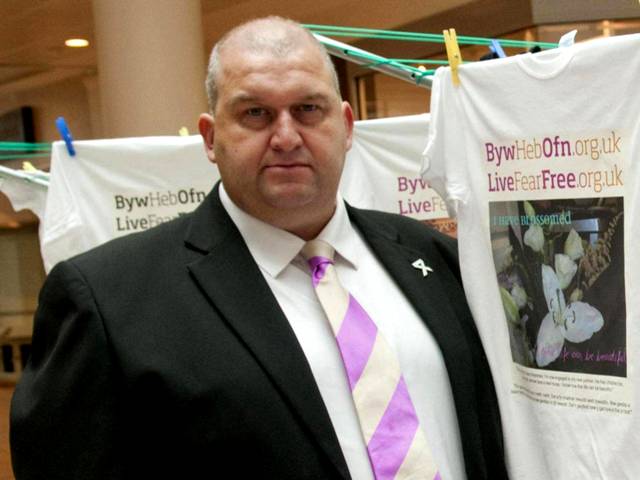
An ex-Welsh Labour minister who faced a party inquiry into allegations about his personal conduct has taken his own life, BBC Wales reports.

Carl Sargeant, 49, lost his ministerial job as cabinet secretary for communities and children last Friday.

He was sacked after charges about his behaviour were passed to First Minister Carwyn Jones’s office.

Jones had said on Monday that he had heard of Sargeant’s several alleged incidents with women, and felt he had no choice but to refer the matter to the party

Mark Pierce of the North Wales Police said officers were called at about 11:30 GMT on Tuesday to a report that a man’s body had been found at an address in Connah’s Quay, Flintshire.

“The man has been formally identified as local Assembly Member, Carl Sargeant. His next of kin have been informed and police are supporting the family,” Pierce said.

“North Wales Police are not treating his death as suspicious and the matter has been referred to HM (Her Majesty’s) Coroner.”

In a tribute by Jones, he said: “Carl was a friend as well as a colleague and I am shocked and deeply saddened by his death.

“He made a big contribution to Welsh public life and fought tirelessly for those he represented both as a minister and as a local assembly member.

“He will be a great loss both to our party and to the Senedd.”

Other members of the cabinet who paid tributes to the deceased, described his death as a great loss and a shock.

Elin Jones, Assembly Presiding Officer, said Sargeant “served the people of Alyn and Deeside with pride and determination” and that he had made an “enormous contribution to the development of this democratic institution”.

“On behalf of all the members and those who work at the National Assembly for Wales, I would like to express my deepest sympathy to his family and colleagues,” she added.

Andrew RT Davies, Welsh Conservative Leader said: “Our Parliament has lost a stalwart and many of us have lost a friend.”

Alun Cairns, Welsh Secretary said he was “shocked and saddened” by the news, adding that his heart “goes out to his family, friends and colleagues”.

Jeremy Corby, Labour Leader, said Sergeant’s death was “deeply shocking news”.

Sargeant was married and had two children. A family statement said they were “devastated beyond words” at the loss of “the glue that bound us together”.

The Welsh Assembly’s business for Tuesday has been cancelled as a mark of respect.


READ ALSO:

EXPOSED: Police demand money for bail in Lagos, Rivers and Abuja  more than other states

Again, Lagos State, Rivers and Federal Capital Territory (FCT) Abuja have topped the list of places where police commit acts of misconduct.

The third quarter report (Q3 2017) by the Public Complaint Rapid Response Unit (PCRRU) arm of the Nigeria Police release on Tuesday revealed that  Lagos State has 180 (23.56%) reported complaints, followed by River State that has 102 (13.35%) and FCT with 87 (11.39%) complaints out of the total 764 complaints received during the period under review.

The first quarter report by the unit released in August 2017 had Lagos, Rivers and FCT as the three places where Nigerians are most unhappy with the police.

According to the report, Sokoto and Plateau states Commands recorded no complaint in the periods under review which is July to September, 2017.

The report says a total of 16 officers have been sanctioned based on public complaints while a sum of N834,000 extorted money recovered.

It adds that high profile suspects were apprehended following PCRRU face-to-face engagement with citizens in Ondo state.

Out of the total of 764 complaints recorded in Q3 2017, 652 (86%) were resolved, 5 (1%) found to be false/unrelated and 107 (14%) are still under investigation.

In the categories of complaints, professional misconduct was the most complaint against the police which was 358, followed by demanding money for bail which was 240 and excessive use of force which was 155.

The report also revealed that the Police Service Commission approved the suspension of an Assistant Superintendent of Police (ASP) over corrupt practices.

UPDATED: Buhari presents N8.6 trillion 2018 budget to National Assembly

President Muhammadu Buhari has presented the 2018 budget proposal to a joint session of members of the Senate and House of Representatives on Tuesday.

A total of N8.612 trillion was proposed by the Executive as the total expenditure for 2018. This represents a 16 percent increase from last years budget of N7.44 trillion.

Out of this sum, a total of N2.652 trillion, or 30.8 percent of the budget proposal, has been mapped out for capital expenditure.

The 2018 budget was termed ‘Budget of consolidation’.

During his speech shortly before laying the budget before the lawmakers, Buhari expressed optimism that 2018 will be “a year of better outcomes” than 2017 which he said “has been a year of uncertainty on many fronts.”

“The tepid economic recovery is expected to pick up pace and the global political terrain is expected to stabilise,” Buhari said.

“The International Monetary Fund is anticipating global GDP growth of 3.7 percent in 2018. Emerging markets and developing economies are expected to lead with GDP growths of 4.9 percent, while advanced economies are projected to grow at a slower rate of 2 percent.

“Nigeria’s journey out of the recent recession was a revealing one, we had many opinions from within and outside Nigeria on how best to address our economic woes. We listened carefully and studied these proposals diligently.

“Our belief has always been that the quickest and easier solution may not necessarily be the best solution for an economy as diverse as ours. We took our time to create a balance and equitable response, keeping in mind that only Nigerian solutions can fix Nigeria’s unique problems, and from the recovery that we are seeing today, it is clear that we made the right decisions.”

Buhari said that crop production has been the major contributors to non-oil growth leading to a rise of 0.45 percent in the second quarter of 2017.

Also, significant progress has also been made in the solid minerals sector.

“In Ondo State for instance, work is going on to fully exploit the bitumen resources to meet the 600,000 metric tonnes of asphalt imported per annum for roads and other construction projects,” Buhari said.

“We have also established a N30 billion solid minerals development fund to support other minerals exploitation activities across the country.”

THE BUDGET

Buhari said the principal objective of the 2018 Budget will be to reinforce and build on recent accomplishments.

Explaining the key parameters and assumptions for the budget, Buhari said  oil price benchmark was pegged at $45 per barrel, while oil production estimate is expected to be 2.3 million barrels per day, including condensates.

Exchange rate is estimated to remain at N305 to $1 for 2018; the GDP is expected to grow at 3.5 percent; while Inflation Rate is expected to be at 12.4 percent.

ON OGONI CLEANUP

“We are working hard on the Ogoni Clean-up Project. During the year, we engaged 8 international and local companies proposing different technologies for the mandate,” Buhari said.

“To enable us select the best and most suitable technology for the remediation work, we asked each company to conduct Demonstration Clean-up Exercises in the 4 Local Government Areas of Ogoni Land.

“These Demonstrations were recently concluded and the results are being studied by the Governing Council of the Ogoni Clean-up Project.

“Although the Project will be funded by the International Oil Companies, we have made provisions in the 2018 Budget for the costs of oversight and governance, to ensure effective implementation.”

WHO GOT WHAT

For recurrent expenditure, the Ministry of Interior got the highest vote of N510.87b, followed by the Ministry of Education with N435.01b. Defence Ministry got N422.43b, while that of health got N269.34b.

Ministry of Power, Works and Housing got the highest vote for capital expenditure with N555.88b. Others include: Transportation: N263.10b;  Special Intervention Programmes: N150.00b; Defence: N145.00b; Agriculture and Rural Development N118.98b; Water Resources: N95.11b; Industry, Trade and Investment: N82.92b;  Interior: N63.26b; Education N61.73b; Universal Basic Education Commission: N109.06b; Health: N71.11b and the Federal Capital Territory: N40.30b.

Also, N100b was mapped out for Zonal intervention projects; N45b was voted for the North East Intervention Fund; the Ministry of Niger Delta got N53.89b and the Niger Delta Development Commission was allocated N71.20b.

Money was also voted for other “key projects” which Buhari said his administration is “determined to implement in 2018”.

They include: “N9.8b for the Mambilla hydro power project, including N8.5b as counterpart funding; N12b counterpart funding for earmarked transmission lines and substations; N35.41b for the National Housing Programme; N10.00b for the 2nd Niger Bridge; and N300b for the construction and rehabilitation of the strategic roads mentioned earlier.”

ON THE NIGER DELTA

Buhari said N65b has been mapped out in the 2018 budget for the Presidential Amnesty Programme to “maintain peace and security in the Niger Delta for economic and social activities to thrive”.

“In addition, the capital provision for the Ministry of Niger Delta has been increased to 53.89 billion Naira from the 34.20 billion Naira provided in 2017,” he said.

“This is to further support the development in the region. We will complete all critical projects, including the East-West Road, which has a provision of about 17.32 billion Naira in 2018.”

ON COUNTER TERRORISM AND NORTH EAST REHABILITATION

“Across the nation, and particularly in the North East region, our commitment to the security of life and property remains absolute,” Buhari said.

“We will ensure that our gallant men and women in arms are properly equipped and well-motivated. The result of our efforts is evident in the gradual return to normalcy in the North East.

“It is in this spirit that I recently assented to the North-East Development Commission Bill that was passed by this Distinguished House.

“We expect that this development will consolidate on our ongoing efforts to combat insurgency, reintegrate Internally Displaced Persons and rebuild communities in the North East Region, which have been adversely affected by the insurgency.”

Buhari said similar attention is being given to efforts to reduce the spate of kidnapping, cattle rustling, armed robbery and banditry across the country.

DEBT MANAGEMENT

Buhari said: “We are closely monitoring our debt service to revenue ratio. We shall address this ratio through our non-oil revenue-generation drive and restructuring of the existing debt portfolio.

“Presently, domestic debt accounts for about 79 percent of the total debt. Our medium-term strategy is to reduce the proportion of our domestic debt to 60% by the end of 2019 and increase external debt to 40 percent.

“It is noteworthy that rebalancing our debt portfolio will enhance private sector access to domestic credit.

“In addition, annual debt service costs will reduce as external debts are serviced at lower rates and repaid over a longer period than domestic debt.”

ESTIMATED EARNINGS

“The Federal Government’s estimated total revenue is 6.607 trillion Naira in 2018, which is about 30 percent more than the 2017 target.

“As we pursue our goal of revenue diversification, non-oil revenues will become a larger share of total revenues.

“In 2018, we project oil revenues of 2.442 trillion Naira, and non-oil as well as other revenues of 4.165 trillion Naira.”

“Total federally-collectible revenue is estimated at 11.983 trillion Naira in 2018. Thus, the three tiers of Government shall receive about 12 percent more revenues in 2018 than the 2017 estimate.

“Of the amount, the sum of 6.387 trillion Naira is expected to be realised from oil and gas sources. Total receipts from the non-oil sector are projected at 5.597 trillion Naira.”

Deadly viral disease similar to Ebola breaks out in Uganda

0

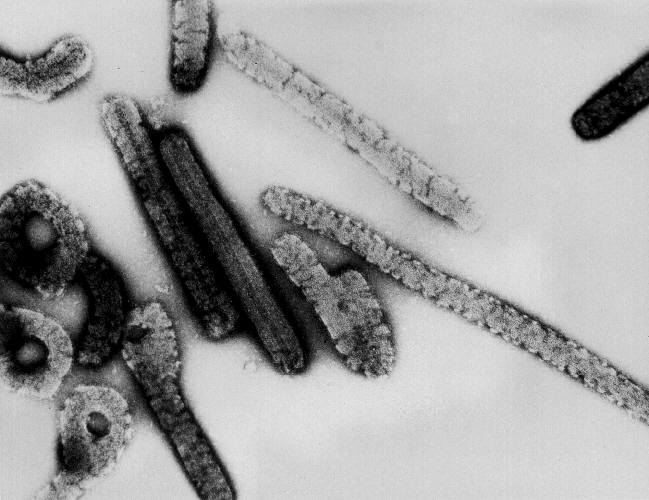
An outbreak of a ‘lethal virus’ – Marburg – clinically similar to Ebola with no known cure has broken out in Uganda, health chiefs have announced.

The virus is one of the ‘most deadly’ pathogens in existence as it kills up to 88 per cent of people that contacts it.

In Uganda, five cases have been identified and international aid agencies have sent medical teams to control the outbreak.

According to Daily Mail, two siblings have lost their lives to the disease, a brother and a sister in Kween district – close to the Kenyan border as confirmed by Dr Diana Atwine, Uganda’s health ministry permanent secretary.

MVD (Marburg Virus Disease) falls within the same family as the Ebola virus – the hemorrhagic fever that devastated West Africa and killed around 11,000 in 2014 and 2015.

The virus can be spread through bites from either fruit bats or monkeys, and can be passed from human-to-human through semen and blood

The World Health Organisation also confirmed that MVD can be spread through contaminated clothing and bedspreads

Dr. Atwine, said that the number of people infected is not ascertain currently infected, ‘Health experts are still investigating in addition to sensitising the population about the dangers of Marburg and we call for public vigilance.’

Hundreds of  people are known to have come into contact with the five MVD patients, prompting widespread panic to keep tabs on each person.

Emergency screening has begun at the Kenya-Uganda border to contain the outbreak.

The news comes amid a surge in cases of plague in Madagascar, which is the ‘worst outbreak in 50 years’ and now at ‘crisis’ point.

WHAT IS MVD?

Marburg virus disease (MVD) is a lethal virus that has a case fatality ratio that can be as high as 88 per cent, according to figures.

It was initially detected in 1967 after an outbreak in Marburg, Germany, among workers exposed to African green monkeys.

Marburg and Ebola viruses are both members of the Filoviridae family. Though caused by different viruses, the two diseases are clinically similar.

Both diseases are rare and have the capacity to cause dramatic outbreaks with high fatality rates, the World Health Organization states.

Initially, human MVD infection results from prolonged exposure to mines or caves inhabited by Rousettus bat colonies (fruit bats).

People remain infectious if their blood contains the virus.

 Six farmers injured in fresh suicide  attack in Maiduguri

Six persons working on their farms were injured on Tuesday when four suicide bombers attacked Mairi-Kwait, a suburb community located close to the University of Maiduguri.

Witnesses say multiple blasts were heard across the city at about 8.20 am to about 9.51 am on Tuesday.

Danbatta Bello, an official of the Civilian Joint Task Force, told newsmen that the attackers were trying to make their way through some barricades constructed around the University to ward off the numerous attacks that the school had witnessed since January this year.

According to him, one of the four female suicide bombers blew herself up in the bush not far away from the fortification, while three others came closer before detonating the explosives to their bodies.

The six farmers who were injured in the attacks were said to have been harvesting their crops at their nearby farm when the bombs went off.

“We have just returned from the scene of the blast which was near Mairi-Kwait,” Bello said.

“They were four female suicide bombers, and all of them got themselves killed in the blasts.

“One died in the bush, and three others died near the parapet after they detonated on a farmland where six farmers who were harvesting their crops got injured.”

The attacks come less than 24 hours after soldiers, supported by members of a local vigilante group and hunters, repelled an attack by Boko Haram insurgents in Gulak, headquarters of Madagali Local Government Area of Adamawa State.

The incident was confirmed by Muhammadu Jibrilla, Governor of Adamawa.

“Nigerian Army supported by local hunters have rolled back the invading terrorists in Gulak,” Jibrilla told journalists via a phone interview.

“Though the areas are under Chibok Brigade, but I do call for minute by minute report on what is happening over there. God is giving victory to our security and hunters.”

So far there has been no word on the number of casualties in the attack except for one woman who was said to have died after she was hit by stray bullet.

Court orders Concord Newspaper to pay Samuel Ortom N5 million

Justice Adam Onum, of the Makurdi High Court, has ordered Ab’iodun Oluwarotimi, Editor-in-Chief of Nigerian Concord Newspaper, to pay Samuel Ortom, Governor of Benue State, the sum of N5 million as damages for libel.

Ortom had approached the court asking it to grant the sum of N10 billion against Oluwarotimi for publishing an article which the Governor claimed defamed his character and reputation.

Throughout the trial, Oluwarotimi, the accused person, refused to appear in court, even when the presiding Judge directed that he be served the writ of summons through substituted means in two National Dailies and through his Facebook handle.

At an earlier hearing in October, the prosecution presented evidences, including Oluwarotimi’s comment on the writ of summons that was posted on his facebook timeline, to prove that he actually read the summons but deliberately refused to show up in court.

Justice Onum also ordered Oluwarotimi to retract all the libelous publications in national newspapers, television, radio and social media platforms as well as tender apologies which must be published in the national dailies within 14 days of the judgement.

Andrew Wombo, counsel to the Benue State government, expressed satisfaction with the judgement and said that he would take every legal step to ensure that the judgement will be enforced.

“Although the motive for instituting the case was not for financial benefit, we will make sure the defendant pays the money as a deterrent against those bent on publishing falsehood against others,” Wombo said.

For ‘a man of the people,’ Dapo Olorunyomi, at 60

0

By Chido Onumah

Dapo, ‘Daps,’ ‘Dapsy’ Olorunyomi who turns 60 on Wednesday, November 8, 2017, is your quintessential humanist. It is impossible to spend an hour with Dapo without being smitten by his humility, compassion, sense of humour and deep appreciation and concern for his environment, including its human challenges and foibles 

Since Dapo is not one to talk about himself, much less celebrate a milestone, it is only fitting to do this tribute—for the sake of the younger generation of Nigerian journalists—in a country where true heroes and heroines are in short supply and charlatans and scoundrels, whether as lawmakers or chief executives, have taken over our political and social spheres.

I met Dapo about a quarter of a century ago through another revolutionary humanist, journalist, and mathematician, Edwin Madunagu. Dapo had just left the African Guardian magazine and he and his friends had set up the The News magazine, an experiment that would define the future of journalism in Nigeria. Our paths would cross many times after that.

It was Dapo who “forced” me to return to Nigeria in September 2006 to join the Economic and Financial Crimes Commission (EFCC) as head of the civil society crime prevention unit tagged Fix Nigeria Initiative (FNI).

As Policy Director and Chief of Staff to then Executive Chairman of the Commission, Mallam Nuhu Ribadu, Dapo brought order and clarity to the work we did during those turbulent days at the Commission. But he did more than that. He provided a philosophical élan that refined the work of fighting corruption, part of which was to engage Nigerians, to reduce the dependence on traditional anti-corruption agencies, and create a public ownership of the fight through the engagement of trade and labour unions, media, civil society, women groups, youth, students, faith-based organizations, professional associations like the Nigerian Bar Association (NBA), Chartered Institute of Bankers of Nigeria (CIBN), Institute of Chartered Accountants of Nigeria (ICAN), Nollywood, Kannywood, Performing Musicians Association of Nigeria (PMAN), etc.

Dapo also made it possible to strengthen relationship with international anti-corruption agencies and development partners, providing guidance on global best practices, strategies and policy issues regarding anti-corruption. Of course, much credit would go to Mallam Ribadu who not only gave Dapo the opportunity but also the freedom to experiment with these ideas and to engage passionate and committed individuals dedicated to developing a professionally run anti-corruption agency.

Dapo’s idea was to enlist public participation and support in a way that would ensure not just a coherent philosophy and strategy but a community ownership of the anti-corruption war. This belief in community power—every group bringing its ideas and strength—is what our country so desperately needs to get it out of the doldrums. It is this obvious lack of belief and ownership of what some people call the Nigerian Project that explains the mindless pillage of public resources orchestrated by our rulers. For no sane person will steal from him or herself the way public officers do in Nigeria.

Unfortunately, that experiment didn’t last long. Dapo was sent on indefinite leave after Ribadu was suddenly removed—in a move inspired by reactionary politicians and enablers of corruption many of whom are still around—and Farida Waziri took over as chairman of the EFCC. Dapo resigned and would later come back to his first love, journalism, at 234Next.com, a journalistic experiment, though short-lived, that would define another phase of journalism in Nigeria. As Enterprise Editor, he set up and headed the Investigative Reporting Team of the newspaper.

Educated at the University of Ife (now Obafemi Awolowo University) where he earned a B.A in English and M.A in Literature, Dapo has attended several courses around the world and received many awards, including the Freedom to Write Award, Hellman Hemmett Grant, Press Freedom Award, and International Editor of the Year Award.

Your archetypal restless soul, Dapo is constantly innovating and experimenting with new areas of interest, from photography to human rights to management of natural resources. Even in the midst of his hectic schedule leading or managing different concerns, he has found time to  receive a Certificate in Human Rights Law from the Washington College of Law of the American University in Washington, DC, a Certificate in Natural Resource Management from the University of Oxford, and is currently completing an MBA from the Business School, Netherlands and is also registered for the graduate program in Futures Studies at the University of Stellenbosch Business School in South Africa.

Dapo is currently the Chief Judge for the Zimeo Award of the African Media Initiative (AMI), and a board member of the Norbert Zongo Cell for Investigative Journalism, an initiative of the UNODC to promote investigative journalism in West Africa.

A journalist and administrator per excellence, Dapo has been involved in setting up and managing several successful projects. He is part of the founding team of The News magazine that was launched in 1993. He served as deputy editor-in-chief of the magazine and groomed a generation of Nigerian journalists many of whom have made giant strides in journalism, academia and other areas.

Dapo was the heartbeat of the magazine and one of chief instigators of the samizdat press, or “guerilla journalism” in Nigerian media parlance, that defined that era of our political history. It was when the murderous dictator, Sani Abacha, held sway and closure of media houses, arrest, detention and disappearance of journalists was the directive principle of state policy. Dapo was caught in the web of violent persecution of perceived enemies perpetrated by the psychopathic Abacha and his goons and was forced into exile in 1995.

While in the US, Dapo would continue his passion for investigative journalism and deep concern for ethics and professionalism in the media. That passion found expression when he joined Panos Institute, Washington, DC, USA, as Director of Africa Programs in 1996, helping journalists in Nigeria and across West Africa deal with ethical and diversity issues. I was honoured when Dapo recommended that I replace him in 2002. He had moved to a bigger assignment with the Open Society Initiative (OSI) in Budapest, Hungary. Dapo and his family—Ladi, his wife, also a journalist, and children, Ifekitan, Aramide and Segun—opened their home to me and gave me all the support I needed.

Dapo returned to Nigeria in 2004 to work as Project Director of Freedom House, an independent organization that supports the expansion of freedom in the world. In 2005, he founded the Wole Soyinka Centre for Investigative Journalism (WSCIJ). Named after Africa’s first Noble laureate in literature, Professor Wole Soyinka, WSCIJ’s objective is “to mainstream the practice of investigative journalism as mechanism for exposing corruption, regulatory failures and human rights abuses in the Nigerian media as well as provide training, developing resources, and forming partnerships that encourage journalists to build a transparent and accountable Nigerian community via investigative reporting.”

When Nuhu Ribadu ran for president in 2011, Dapo was the lead strategist for the campaign. Though Ribadu lost the presidential election, thanks to Dapo’s creative ideas and supervision, the campaign built an unprecedented national youth volunteer initiative, Team Ribadu, that brought a refreshing perspective to volunteerism and youth involvement in politics in Nigeria.

After the campaign, Dapo, always in tune with the evolution of the press, founded Premium Times, undoubtedly Nigeria’s leading online investigative news platform. Shortly after, he would go on to launch another initiative, the Premium Times Centre for Investigative Journalism (PTCIJ), “to promote a truly independent media landscape that advances fundamental human rights, good governance and accountability in West Africa through investigative journalism, open data and civic technology.”

Dapo’s simplicity is infectious. He is kind and generous to a fault and many who have experienced his kindness and generosity know what I am talking about.

I salute this media icon, benefactor, selfless patriot, and exemplary humanist.

Onumah is Coordinator of the African Centre for Media & Information Literacy, Abuja.

‘Militants’ kill British missionary kidnapped in October

The British High Commission in Nigeria has confirmed that one of the four missionaries kidnapped in Delta State in October, by suspected militants, has been killed.

BBC reports that Ian Squire was an optician who, before his abduction and subsequent murder, was participating in a charity programme where the local residents were being administerd free medical.

The charity – New Foundations – is run by David and Shirley Donovan, husband and wife who have spent 14 years in Nigeria.

Both David and Shirley have been freed, alongside the other captive, Alanna Carson. They have since returned to the UK.

It was not clear whether any ransom was paid to secure their release.

“The British High Commission and Nigerian authorities negotiated the release of Alanna Carson, David Donovan and Shirley Donovan,” the report said, adding that it had been a “traumatic time” for the people involved.

Relatives of the four said they were “delighted and relieved” that Ms Carson and Dr and Mrs Donovan had returned safely.

“Our thoughts are now with the family and friends of Ian as we come to terms with his sad death,” they said in a statement issued on their behalf.

The UK Foreign Office advises against all but essential travel to much of Delta state, saying there is a “high threat of criminal kidnap”.

On October 19, six days after the missionaries were kidnapped, the Delta State Police Command told newsmen that four people had been arrested in connection to the crime.

“We are following up on a lead with the arrest of four persons in connection with the incident,” said Andrew Animaka, spokesman of the Police in the State.


Buratai assures soldiers will get outstanding allowances this week

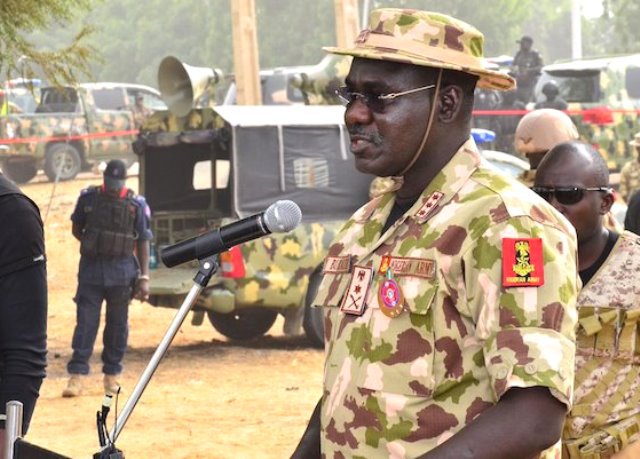
Tukur Buratai, Chief of Army Staff, says the two-month outstanding operational allowance of soldiers who are taking part in Operation Lafiya Dole will be cleared this week.

Buratai’s announcement is coming only a day after an undisclosed soldier wrote an open letter to President Muhammadu Buhari, alleging that there is massive corruption in the military’s prosecution of the war against Boko Haram.

Sani Usman, Director of Army Public Relations, issued a statement on Monday quoting Buratai as saying that the Ministry of Defence had released funds for the payment of the troops’ outstanding logistics and operational allowances for the third quarter of 2017.

Usman also said Buratai commended the troops for their unflinching loyalty, perseverance, courage and dedication to duty.

“The COAS has also assured troops especially those on Operation LAFIYA DOLE of their welfare. This is coming from the good news of the release of funds for the payment of operational allowances and logistics for the Third Quarter 2017 from the Ministry of Defence,” Usman stated

“He further stated that this would facilitate the payment of operational allowances owed to them for the last 2 months this week accordingly.

“The COAS while thanking them for their patriotism, patience and understanding, further reiterated that he will ensure that as usual, all funds meant for the troops and the Operation LAFIYA DOLE will always be paid promptly when received from the appropriate Ministries.”

On Sunday, several media organizations published an open letter purportedly written to President Buhari by an undisclosed soldier.

In the letter, the soldier alleged that he and his colleagues were being owed three months in operations allowances and have had to rely only on their “meager” salaries for all their expenses.

“Your Excellency, this is the third month in a row that we have been denied of our operations allowance. We have to rely ONLY on our meagre salary for everything,” the letter read.

“From battalion commanders, to Company and Sectors leaders, we are all in debt, because our salaries are not enough to sustain us at the battlefront while feeding our families back at home.

“It is a big shame that we have joined the Army to defend the civilians, yet we have to go to the civilians in town to borrow money to fend for ourselves at the battlefront.

“Take for instance the food that we are fed, most of the times it is not fit for human consumption.

“The taste of the food is so bad that we have to add surplus salt to be able to eat it. This is also dangerous for our health. A plate of our food per soldier is probably about two hundred Naira.

“It is said that the Federal Government spends about fourteen thousand Naira (N14,000) on each prisoner in Nigeria. Here, at the battlefront in Operation LAFIYA DOLE, the Army spends about six hundred Naira (N600) per day per soldier on feeding us, while in reality billions of Naira is appropriated per year for this purpose.

“We are treated like animals. Most of us are afraid to talk because of the dire consequence.

“Your Excellency, corruption in the Army is REAL, and it is killing us.

“Every man and woman who decided to join the Army knows the risks (but) while we expect to die in the hands of the enemy, we don’t expect to die in the hands of the Nigerian Army, due to corruption and criminal negligence.”