Home Blog Page 2674

Federal Mortgage Bank defies Fashola’s directive to reinstate sacked whistle blower

The Federal Mortgage Bank of Nigeria (FMBN) has refused to comply with the directive of Babatunde Fashola, Minister of Power, Works and Housing, ordering the immediate reinstatement of two officers who were sacked for blowing the whistle on corruption at the bank.

Murtala Ibrahim, Head of Special Investigation/ICT in the Audit Department was sacked on May 8, 2017, while his boss, Taslim Anibaba, Head of Internal Audit department, was placed on indefinite suspension on August 25, 2017.

Africa Centre for Media and Information Literacy, AFRICMIL, a Non-Governmental Organisation based in Abuja, has been fighting for the reinstatement of the sacked workers.

Chido Onumah, Coordinator of AFRICMIL, described the bank’s refusal to obey Fashola’s directive as unfortunate and an act of gross insubordination.

“These gentlemen committed no crime other than refusing to be coerced to cover up a doctored 2016 half-year financial report and other mind-boggling acts of corruption in the bank, including the N2.2billion contract for the renovation of Mamman Kontagora building,” Onumah said in a statement on Monday.

“The bank used the manipulated 2016 financial report to fraudulently earn the commendation of Mr. Fashola, the supervising minister of the institution who was misled into believing that the bank recorded profits in the stated period when in fact it recorded a loss.”

Fashola had ordered an investigation of the case and issued an order of immediate reinstatement of Messers Murtala Ibrahim and Taslim Anibaba but the management of FMBN has brazenly flouted the minister’s directives, refusing to reinstate the sacked and suspended staff while offering no explanation.

“It is unfortunate that the bank has refused to obey the minister’s directive. We view this as an act of gross insubordination and grave insult to the person and office of the Honourable Minister of Power, Works and Housing,” Onumah said.

He added that the bank’s attitude constitutes serious threat not only to the successful implementation of the whistleblower policy, but also endangers the anti-corruption campaign of the President Muhammadu Buhari administration.

Onumah reiterated the need to ensure the safety and protection of whistleblowers, adding that if people do not get protection they are not likely to report wrongdoings. This, he said, would render the whistleblower policy ineffective.

ICIR announces names of successful applicants for investigative journalism training

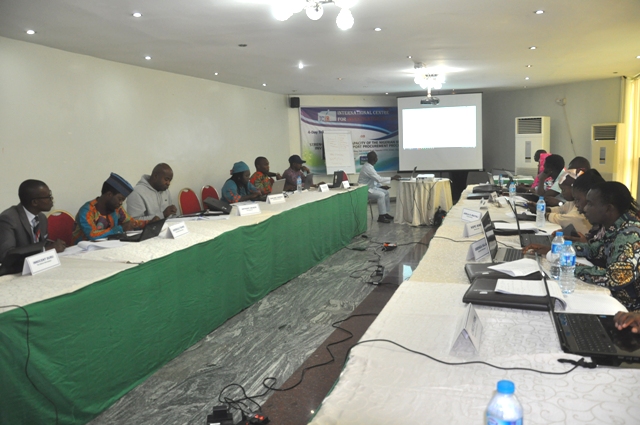
The International Center for Investigative Reporting, ICIR, is glad to announce names of successful applicants for its investigative reporting capacity building project for Nigerian journalists.

The project is aimed at building the capacity of journalists in investigative reporting and data journalism and also develop their skills in reporting issues like illicit international financial flows and tax matters to promote transparency, accountability and good governance in Nigeria.

The successful qualified journalists are drawn from the online, print and electronic (Television & Radio) media across the country.

The training programme is part of a project initiated by the ICIR and supported by the Ford Foundation aimed at bringing the media and civil society together to work on social accountability, equality and governance issues. The two-year project will see both journalists and civil society organisations collaborating and complementing each other’s work in promoting good governance.

The qualified journalists will participate in two intensive training programmes over a two-year period that will be delivered by professionals from within and outside the shores of Nigeria.

In addition, the successful candidates will partake in a mentoring program and will receive financial support to work with civil society organisations to undertake incisive reporting and investigations in critical sectors of the economy.

Successful candidates will soon be contacted for the next stage on the project. They are:

S/N Name Organisation Gender State
1 Ada Igboanugo The Cable Newspaper F Imo
2 Adedayo Adejobi ThisDay Newspaper M Osun
3 Aderemi Alex Ojekunle Nigeria Bulletin M Oyo
4 Adetola Bademosi Nigerian Tribune F Ondo
5 Bayo Akinloye The Punch M Oyo
6 Daniel Adugbo Daily Trust Newspaper M Imo
7 Etebong Akpan Pioneer Newspaper M Akwa Ibom
8 Shamsiyya Haruna Freedom Radio F Jigawa
9 Isaac Anyaogu Business Day Media M Abia
10 Lulu Bankong Independent Television F Cross River
11 Joseph Olaoluwa The Nation Newspaper M Ondo
12 Kelechukwu Iruoma Vanguard Newspapers M Imo
13 Mustapha Kaita Liberty Television & Radio M Katsina
14 Olu Phillips Channels TV M Imo
15 Oluwadare Taiwo The Sun Newspaper M Osun
16 Opeoluwani Akintayo Sweet Crude Reports F Oyo
17 Ruth Olurounbi Nigerian Tribune F Oyo
18 Ukamaka Owo NTA F Enugu
19 Wilfred Okiche YNaija M Anambra
20 Yekeen Akinwale ICIR M Oyo

ABOUT THE CENTER

The International Centre for Investigative Reporting is an independent, nonprofit investigative news organisation which aims to use watchdog reporting to promote transparency and accountability in Nigeria.

Principally, its mission is to popularize a culture of investigative reporting across newsrooms by building the capacity of journalists to do incisive, critical reporting. Last year the Centre concluded the Nigerian Investigative Reporting Project, NIRP, a two -year project supported by Ford Foundation which helped to train more than eighty (80) journalists in Investigative and Data Journalism.

It is currently implementing another big capacity building project for journalists in the area of open contracting and procurement. The Centre runs its own news website @ www.icirnigeria.org.

Buhari should recall Maina, says Ngozika Ihuoma

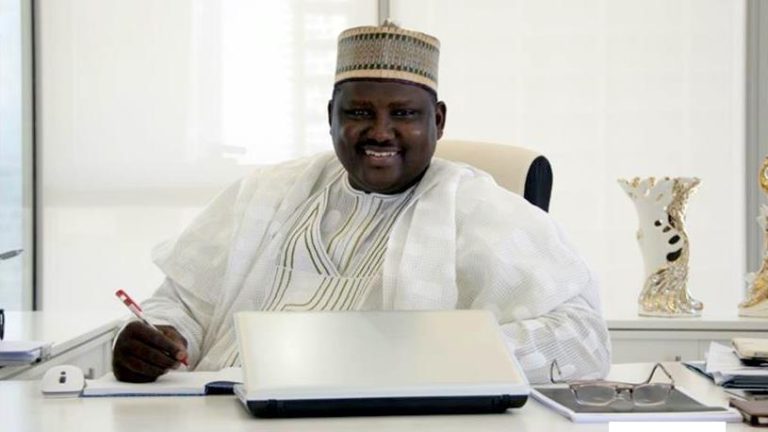
Ngozika Ihuoma, a former member of the House of Representative and Executive Director of Legislative Watch, says President Muhammadu Buhari should recall and reinstate Abdulrasheed Maina, wanted former Chairman of the Pension Reforms Task Team (PRTT).

Ihuoma, who spoke during AIT’s Focus Nigeria on Monday, said he worked with the PRTT as a consultant and was privy to all the activities of the team.

According to him, Maina is “innocent” and “a saint” who is being haunted by persons who have enriched themselves illegally from pension funds.

He also said it was wrong for the EFCC to claim that it invited Maina for questioning in 2015, when it only sent a letter through a former colleague of Maina’s who last saw him in 2012.

“The EFCC, in trying to be funny, sent invitation to him (Maina) through somebody who used to be his staff. This is what they are parading that they invited him,” Ihuoma said.

“Is this the proper way of inviting somebody? Ann (the person the letter was given to) saw Maina last in 2012, then in 2015 you gave Ann a letter under duress to go and give to Maina.

“Meanwhile, the EFCC Chairman from Larmode to Magu visits Maina in Dubai when he was in Dubai. They go there to collect instrument to get pension fund thieves.”

He said that the PRTT had recovered N282 billion in looted pension funds and more than N1 trillion in property, from only four of the over 90 agencies of government before the team was scrapped.

“The PRTT had only gone round four offices, and there are ninety-something offices where the pension racketeering is still ongoing,” Ihuoma said.

“No sooner than we were driven away, there was another N35 billion that got missing from the (office of) the Head of Service. I blew the whistle.

“ICPC was investigating till today. Ekpo Nta (former Chairman of ICPC) just left, he should tell Nigerians what he found out.

“It’s a goldmine, a goldmine that is bigger than the NNPC, people are wasting time. Funds are trapped here.

“Let the President bring back Maina. He is not on the run. (Shows a picture) This is that car he was in when he was shot severally. Is it when Maina is killed that we would sacrifice him?”

Asked when Maina will come out and face his probe, Ihuoma said “if the Senate and the House of Representatives invites him tomorrow, I will be there with him”.

“Let them send the invitation through me. We are expecting the Senate to reconvene and invite us between now and next week. Maina will be there live, I assure you.”

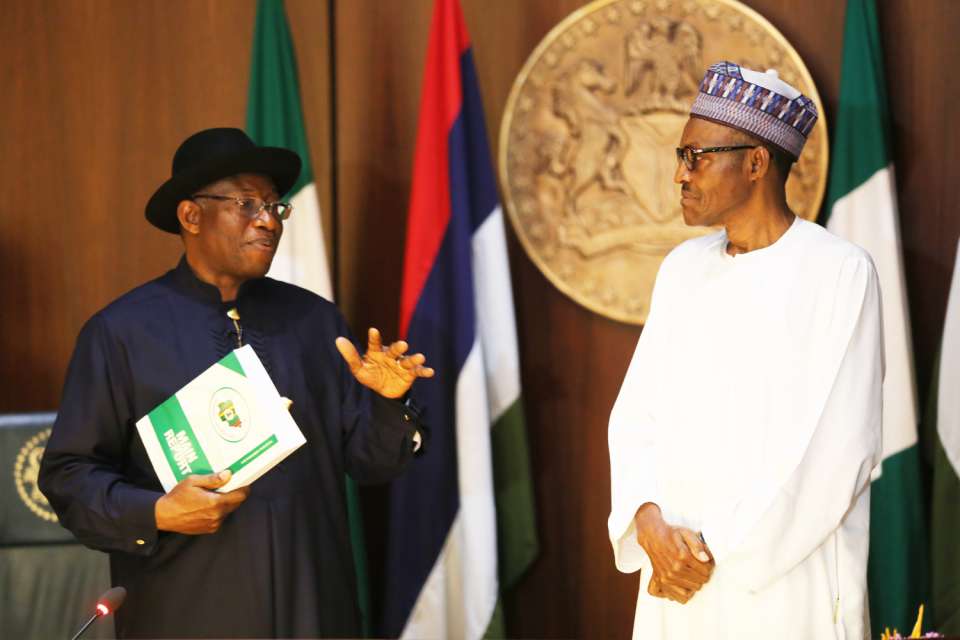
If you picked Buhari over Jonathan in 2015, you did no wrong

0

There are numerous disgruntled Muhammadu Buhari supporters straddling the social media space. Worried by a series of controversies in a government they placed high hopes in, many of Buhari’s supporters are penitent.

“Throwback to when I used my bike to campaign for Buhari preaching change. God forgive me,” one named ‘Hur’ recently wrote on social networking site Twitter, accompanied by teary emoticons.

Did people like Hur really have a choice in 2015?

THE JONATHAN YEARS

It was always clear to the neutrals that Buhari was not Nigeria’s best-possible presidential proposition in 2015. But weighing him against Goodluck Jonathan, he was the perceptibly better choice. Two disappointing Buhari years are not enough to exorcise the ghost of the Jonathan years. A quick rundown, for those who have forgotten.

What collective progress would Nigeria have made under a man who personalized and institutionalized corruption? This was a man, who, speaking of his aversion to assets declaration for public officials, as mandated by the Code of Conduct Bureau, said: “The issue of public asset declaration is a matter of personal principle. That is the way I see it, and I don’t give a damn about it, even if you criticise me from heaven.” That was in 2012.

Two years lateR, at a presidential media chat, he made a woeful attempt to separate corruption from stealing, saying: “Over 70 percent of what are called corruption, even by EFCC and other anti-corruption agencies, is not corruption but common stealing.”

Under Jonathan, common stealing was the norm — left, right and centre. It was so bad that a returning minister, seeing the scale of looting all over the place, would say in private circles: “I have not come to Abuja this time around to count the bridges; I must get my share.”

Of the numerous corruption cases under his watch, one was particularly problematic for Jonathan. Stella Oduah, his Aviation Minister, was found guilty of procedural breaches in the purchase of two bulletproof cars for $1.6m — about $1.2m more than the market price. Still, Oduah prospered under Jonathan and in fact played a big role in his 2015 campaign; he only dispensed with her when he sensed her baggage could hurt his reelection bid.

Let’s not even talk about Diepreye Alamieyeseigha, the Bayelsa ex-governor convicted for multi-million-pound corruption who disguised as a woman to jump bail in the UK but was eventually granted state pardon by Jonathan. In that administration, the nation’s treasury was national cake and anyone bold enough to approach it with a knife was free to have his cut! That is why there is nothing to show for the periods in his reign when crude oil prices were favourable; Buhari nevertheless ended up inheriting an economy in tatters, many states unable to pay workers’ salary.

How can we forget Jonathan’s handling of the Boko Haram insurgency? For so long, he viewed it as a plot of the opposition to hunt him down. And the Chibok girls’ abduction? As former President Olusegun Obasanjo would eventually reveal, Jonathan, for 18 days after the kidnap, insisted that no abduction took place. By the time he finally accepted he had the largest-scale abduction since the start of the insurgency on his hands, the girls’ captors were well and truly beyond overhauling.

That wasn’t just an odd error of judgement; it was the archetypal Jonathan. Remember when more than 80 people were bombed to death in Nyanya, Abuja, in April 2014? Two days later, the President was dancing away at a PDP rally in Kano. And only a day after at least 48 were killed in a blast in Potiskum in November 2014, Jonathan organised a colourful ceremony to announce his reelection ambition. What about parents of the abducted Chibok girls? The President refused to meet with them — until Malala Yousafzai, a 17-year-old, came here to beg him. Security of lives is one of the simplest responsibilities of a government. And when a government cannot guarantee this (and its head literally rubs it in), thereby leaving the people in a perpetual state of panic, such President deserves to be shown the exit door.

IT WILL BE DÉJÀ VU IN 2019

Why is it so important to harp on the talking points of an election that was staged two years ago? Because we’re inevitably going to find ourselves in a similar situation in 2019.

Like the litany of unfulfilled promises under Jonathan, Buhari has underwhelmed in that office. He promised to fight corruption but he didn’t tell us he would only fight it in the camp of his personal and political enemies; he didn’t tell us his cabinet members were immune from the much-vaunted anti-corruption campaign, that the war would be restricted to the PDP and the Jonathan regime. We didn’t expect that the economy would regress under his watch or that the administration would be so disjointed that government agencies would overtly and covertly antagonise one another. We didn’t expect that the regime of Buhari, a former military strongman, would be hijacked by a cabal.

Buhari has brought a new dimension to the people’s dissatisfaction with governance. To his credit, Jonathan assembled a fairly technocratic cabinet but Buhari’s is inferior by a distance. Buhari made enormous progress with limiting the Boko Haram damage but cronyism and ethnocentrism are some of the hallmarks of his reign. We chased Jonathan away and got rid of his problems; with Buhari, it’s fresh man, fresh problems.

The rising disillusionment with the current administration means Buhari’s long-time and newfound haters will likely be fixated on getting rid of him in 2019 — not necessarily finding the best possible replacement. That would mean we haven’t learnt a thing from the desperation to eject Jonathan and the disappointment of electing Buhari. It would also mean that rather than upgrade our political leadership from one election cycle to another, we’re only stuck in the vicious cycle of unseating one underwhelming government to make room for another.

LOOKING AHEAD TO 2023

For all the attention that the 2019 election has been recently generating, I’m struggling to see how it can become a watershed in Nigeria’s political history. Any serious challenge to Buhari’s reign will likely come from the PDP — a party still in tatters more than two years after losing power.

All those who have so far showed interest in the PDP ticket are the usual suspects — regular faces that have graced the political scene for years or sometimes decade; same old, same old! As it stands, none of the other registered parties is strong enough to gatecrash the PDP-APC hegemony. In 2019, the options will be either returning to messy way of old or sticking with the sticky patch of now. Neither is attractive prospect. We’ll be torn between the devil and the deep blue sea, like we were in 2015.

This is why, ahead of 2023, the electorate need to gravitate towards selection rather than election. There is an urgent need for a non-partisan movement to identify a genuine presidential material among us, and subsequently raise a partisan platform with which the selected material can challenge the PDP or APC. It is a long-term project, and it is far more difficult to achieve in reality than it looks on paper. But something is no longer difficult to see: we can no longer be satisfied with picking one of the two candidates thrown at us by the APC and PDP. It’s time we picked our candidate and threw it at them!

Soyombo, Editor of the International Centre for Investigative Reporting (ICIR), tweets @fisayosoyombo

Let’s renegotiate certain terms of our living together, says Gombe governor


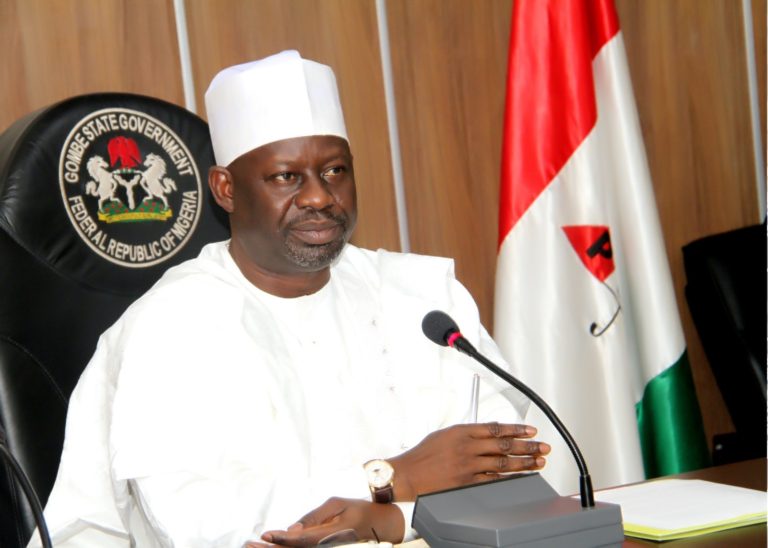
Ibrahim Dankwambo, Governor of Gombe State, has thrown his weight behind the agitation for restructuring, saying it will create a better federation.

Dankwambo, a former Accountant General of the Federation, said restructuring does not mean disintegration of the country but rather expression of unhappiness with the governance structure.

He urged the Federal Government to look into the grievances of the agitators for solution.

“When there are agitations, it means people are not happy, people are not satisfied,” Dankwambo said in an interview with the Guardian.

“So, this is a good time for leaders to look at the mirror, see themselves, look at the country and see why there are agitations. And from there, whatever they feel is the cause of agitation should be corrected.

“If restructuring is the solution, restructuring doesn’t mean A go, B go and C go; no. Maybe to restructure is some other ways of being a better federating country.

“I mean units in the country, meaning a better way of balancing things, meaning renegotiating certain terms of living together, meaning creating more confidence and being more comfortable with the units that are together.”

Meanwhile, the governor said the state had faced financial challenges since 2014 because of the dwindling oil revenue, lamenting that all the revenues in the country are connected to oil.

“I must tell you, nobody should deceive himself. If earnings fall from oil, any other revenue in Nigeria, from whichever state, would go down.

“All the revenues are linked to oil revenue: VAT, royalty, taxes, custom duties; all revolve around oil revenue.”

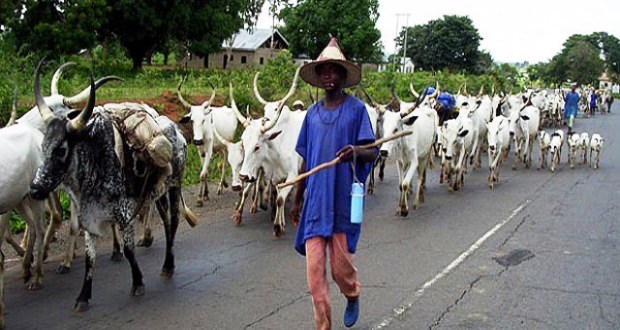
Herdsmen in Benue will NOT accept anti-grazing law, says leader

Garus Gololo, Benue State Coordinator of Miyetti Allah Cattle Breeders Association of Nigeria, says members of the association cannot accept the state’s anti-grazing law because they were never consulted before it was drawn up.

He also called on President Muhammadu Buhari to appoint an adviser on herdsmen matters, as the implementation of anti-grazing law begins in Benue State.

“At the moment, over 10 thousand Fulani herdsmen, including me, are currently moving away from Benue State, Gololo told the Punch.

“We want the Federal Government to intervene in this matter. President Muhammadu Buhari should appoint an adviser on herdsmen matters because during former President Goodluck Jonathan, he did that and it greatly helped.”

He said Benue people did not want Fulani herdsmen in their land and they were being driving away from where they were born and brought up.

“The Fulani have decided to leave Benue State because no provision is made for them to take care of their cattle before the implementation of the anti-open grazing law.

“There are no ranches and there is nowhere that the Fulani are shown to make their ranches. No provision for water for the cows to drink. So, where will the herdsmen stay in the state in a situation like this?”

He described the Fulani in Benue State as peace-loving people and denied that the herdsmen never threatened to attack the state following the anti-grazing law.

Gololo lamented that the Fulani were never consulted when the law was being made, adding that they would not accept the law that did not consider the situation of the herdsmen in the state.

“The first time that the state government conducted a public hearing, the herdsmen were not informed. As the leader of MACBAN in the state, l was not called to any public hearing.

“It was after the law had been passed that we got a copy of the document. How can we accept the provisions of a law that does not take our plights into consideration? Let us be realistic. If we claim to be one Nigeria, no tribe should claim superiority to the other.”

He accused the governor’s aides of harbouring an agenda to send the Fulani out of the state.

“It is not Governor Samuel Ortom who doesn’t want the Fulani; it is his advisers. We have lost confidence in some of them.”

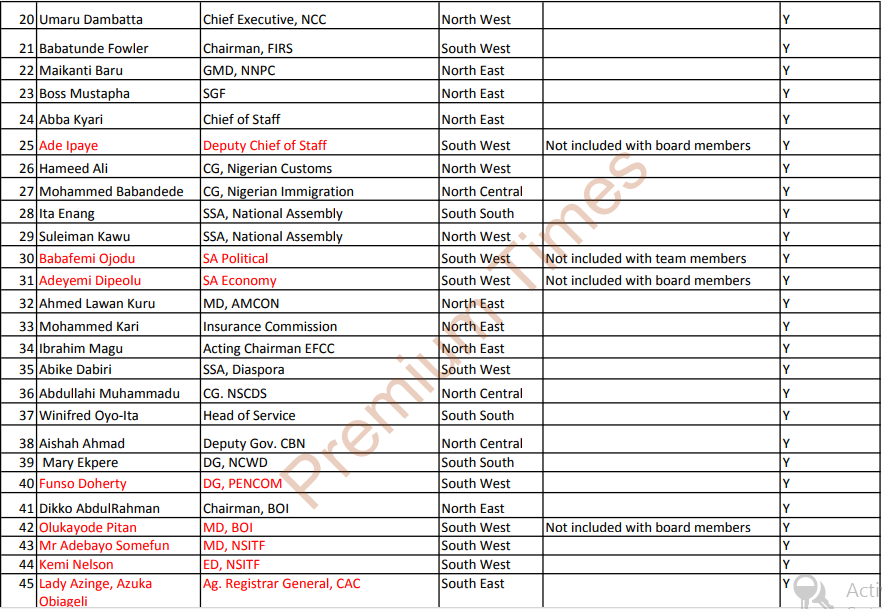
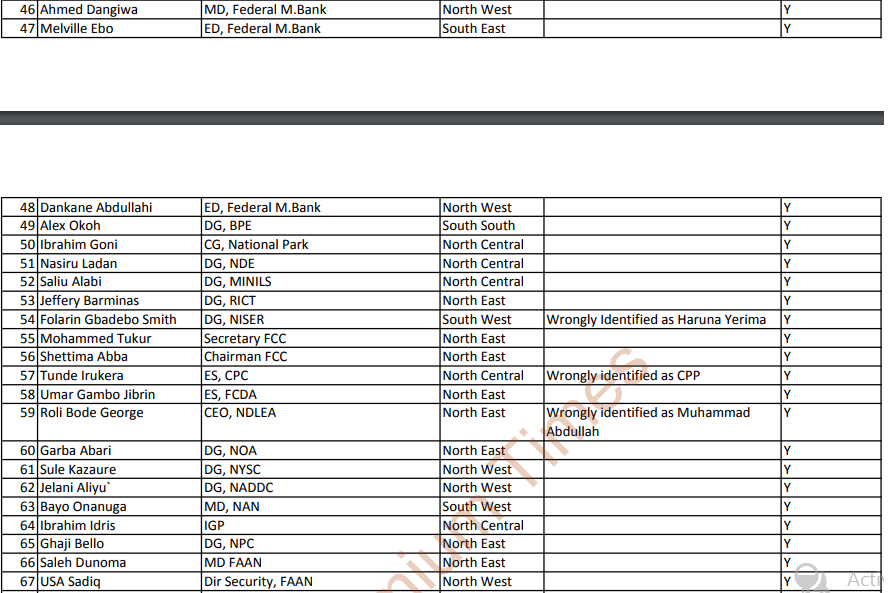
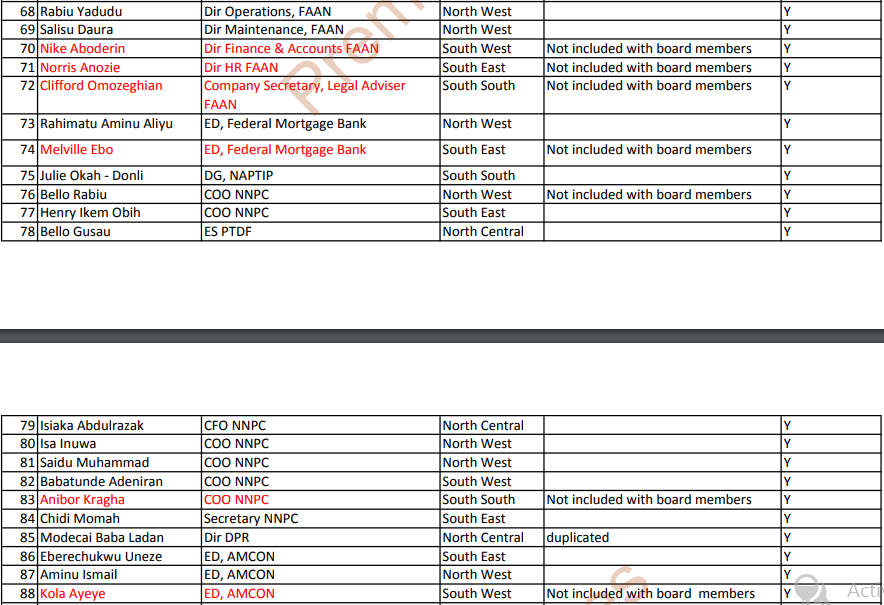
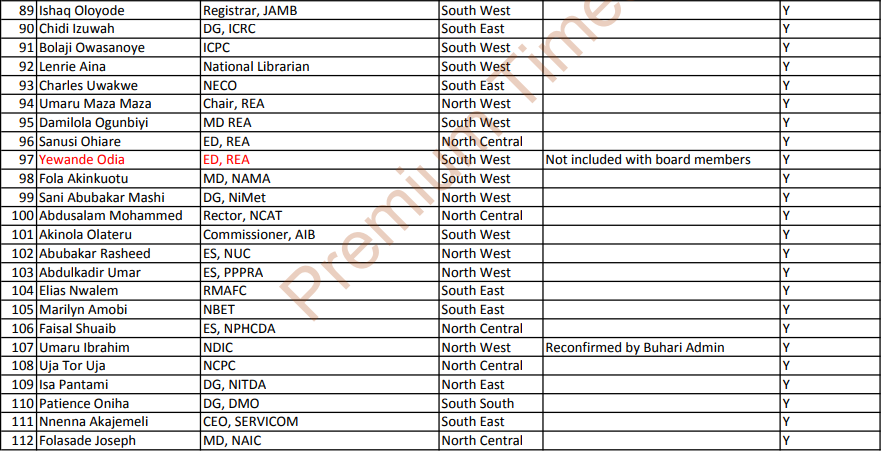
TABLE: Presidency says Buhari has picked more appointees from Osinbajo’s state than his

President Muhammadu Buhari has appointed more persons into top government offices, from Ogun State, where Vice President Yemi Osinbajo hails from, than from his own state, Katsina.

This was revealed by Femi Adesina, Special Assistant to Buhari on Media and Publicity, who released a list containing the names of all presidential appointees since Buhari assumed office in 2015.

Adesina released the list in response to a report by BusinessDay, which claimed that 81 out of the 100 persons appointed by Buhari are from the northern region of the country.

The list showed that the total number of appointees by Buhari is 159 and not 100 as claimed in the report.

However, when ICIR scrutinised the list, it was discovered that it actually contains 157 names as there was no column for numbers 118 and 151.

“To claim, suggest or attempt to insinuate that the President’s appointments are tilted in favour of a section of the country is simply untrue and certainly uncharitable,” Adesina said.

“From all records, majority of the President’s appointees across different portfolios are not from the North, as the publication erroneously alleged.”

The list released by Adesina showed that Ogun state has 21 appointees, the highest. Imo and Kano States have 15 each, while Edo and Katsina have 14 each.

Akwa-Ibom, Ekiti, Enugu, Oyo, Sokoto and Zamfara States have four appointees each, Kebbi has three, while Abia and Ebonyi has two each.

There is no appointee from the Federal Capital Territory, Abuja.

Further breakdown of the list shows that a total of 40 appointees are from the South West, 30 from the North West, 24 from the North East, 22 from the South East, 21 from the North Central and 20 from the South South.

Adesina identified the appointees that were not mentioned in the report by BusinessDay in red letters.

The list has not been independently verified.

See the list below:

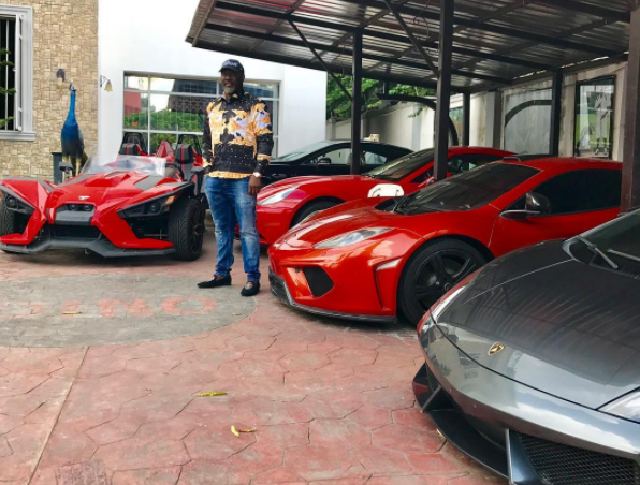
Melaye: Cocaine is the passion of some people, collecting automobiles is mine

Dino Melaye, the controversial Kogi State senator, says some people have passion for cocaine or blood or diamond, but his is collecting automobiles.

Melaye, a self-acclaimed anti-corruption campaigner, said this during an interview with The Punch, adding that he has no regrets about his love for cars.

He also said that his presence in the Senate had brought lots of relief for ordinary Nigerians, as he has sponsored over 30 motions and bills, most of which have created numerous opportunities for the common man and led to the recovery of billions of naira to government coffers.

“The truth of the matter is that my coming to the National Assembly is for service. I am here with a vision and a purpose, which is to make sure that we right the wrongs in the society,” Melaye said.

“I want to be the voice of the voiceless and speak for those who cannot speak for themselves. These are the principles behind my coming to the National Assembly.”

On the number of bills and motions he has sponsored, Melaye said: “To the glory of God, I have over 30 motions, which is unprecedented in the history of the National Assembly.

“Some of them are landmark motions that have created a lot of opportunities, while billions of naira have been recovered and returned to the government coffers.

“I moved the motion on the Treasury Single Account, which has led to the recovery of huge sums from unauthorised sources and taken to the government coffers. Even the percentage that the agency, Remita, was taking was reduced from five per cent to one per cent; and this is a considerable reduction.

“I moved the motion on MTN and how trillions of naira, through capital flight, left this country.

“I moved a lot of motions, including that of the Secretary to the Government of the Federation (Babachir Lawal) that led to his eventual suspension and sacking.

“Two of the bills have been passed into law while 13 have passed through second reading, which are either waiting for public hearing or third reading. I have another 10 that have crossed first reading and are now at second reading.

“They include that of facial mutilation (tribal marks) and the one seeking a stateless Nigeria; that instead of having states, which promotes disunity or having state of origin, we should have state of residence. The bill is awaiting second reading.

“I brought a motion that led to the revolution in the Ministry of Works, which has led to the massive construction of roads in this country.

“I brought a motion on Nigerian roads and specifically elucidated the road from Kabba (Kogi State) to Ilorin (Kwara State) and that of Kabba to Obajana. The Dangote (Cement) has agreed to start the construction of one of the first concrete roads in Nigeria with the Obajana-Kabba road and the work has started.

“Also, by the grace of God, my motion got the Kabba-Ilorin road into the budget last year and this year. It is one of the priority roads that the Federal Government is attending to.

“In fact, the contract for the construction of that road has been ratified by the Federal Executive Council and N21.6bn has been approved for the Kabba-Ilorin road.”

Melaye is popular for flaunting his fleet of exotic cars on social media and he says he has no regret about it.

“I don’t see it as a weakness. Every human has a passion for something. My passion is collection of automobiles.

“Some other people’s passion is cocaine. Some other people’s passion is blood; they are so diabolical that they can buy blood for any amount of money. Some other people’s passion is diamond; you can ask Diezani (Alison-Madueke).

“I love automobiles and I have no regrets about it.”

Asked how his new book – Antidotes for corruption – has fared since its launch in May, Melaye said he has been smiling to the bank as a result of the book’s reception around the world.

“As I speak to you, I have sold over 100,000 copies. I travelled recently to Germany and I took 500 copies along with me. I have been called that the copies have been exhausted.

“I went to Russia with 100 copies. As I speak to you, they’ve all been sold. I sent 1,000 copies to the United Kingdom; they’ve been completely sold. I sent 2,500 copies to five states in America and they are still demanding more.

“I want to believe that it has been properly received. Within the country here, I have also made huge sales. I am laughing all the way to the bank.”

I’ll present myself if Buhari doesn’t contest in 2019, says Yerima

Sani Yerima,  former Governor of Zamfara State, has stated his support for President Muhammadu Buhari if he decides to contest the 2019 presidential election.

Yerima, senator representing Zamfara West, who seconded the motion by the National Executive Committee (NEC) of All Progressives Congress (APC) for the President to run for the 2019 election, said he would not contest against him.

“Yes I seconded the motion: I will support the President if he decides to run in 2019,” he said on Saturday.

“I will not contest against him, but if he does not contest and I decide to come out, nobody will condemn me. That’s my personal decision.”

His declaration of support for the President to run for second term followed massive support by 186 groups under the aegis of Buhari Support Group for the President.

Vice President Yemi Osinbajo had on October 27 commissioned the secretariat of the Buhari Support Organization  (BSO)

Besides the commissioning, the Vice President also relaunched the Buhari Support Group at Utako, Abuja.

Cleric tells Buhari: If I were you, I would pack my bags out of Aso Rock in 2019

Geoffrey Enyinnaya Okorafor, the Anglican Bishop of Diocese of Egbu in Owerri North Local Government Area of Imo State, says President Muhammadu Buhari should ignore political sycophants and not run for a second term come 2019.

Okorafor said this in his address at the first session of the eighth synod of the Anglican church, which held at the Cathedral Church of all Saints Egbu.

He said that the people mounting pressure on Buhari to seek re-election do not mean well for him.

“My dear President, if you have ears hear this, these are your worst enemies and sycophants of the highest order. Do not listen to them,” The Guardian quoted Okorafor as saying.

“If I were you, Mr. President, I would pack all my bags and baggage from Aso Rock, if by God’s grace I pull through the hazards of governing this difficult and complex entity called Nigeria.

“To my mind, you have achieved your life ambition as military Head of State and a civilian President.”

Okorafor said Buhari’s administration has no regard for the opinion of ordinary Nigerians.

“Last year, we urged the President to do a house cleansing, beginning with his own house and office before engaging in the fight against corruption, but it fell on deaf ears,” he continued.

“That was expected because we have a government that has no regard for the opinion of the ordinary citizens.

“May we ask, what has happened to the looted funds that have been purportedly recovered? When will Nigerians be given the account? Are we sure they are not passing from one corrupt hand to another? We need an answer.”

Okorafor wondered why herdsmen still go about freely, some of them armed with rifles, but the Indigenous People of Biafra (IPOB), whose members bore no arms, were declared a terrorist group and proscribed.

Dignitaries that attended the event include Benjamin Njemanze, immediate past Chief Judge of Imo State; Oliver Enwerem, a former representative of Ezinihitte Mbaise constituency in the Imo House of Assembly; and some government and top religious officials.