Recently, a young man who teaches English at Abia State University phoned to inform me of an impending conference on the bicentenary of the birth of Karl Marx. But what the call provoked in me was not the remembrance of Marx and his enduring legacy but anger over the fact that some people still regularly irritate me with chants of “death of communism” and “disappearance of socialism”.
However, my voiced response was to play the “teacher on teacher” by calmly asking my telephone friend whether he meant the birth of Karl Marx or his death. He also calmly replied that Marx was born on May 5,1818. “Hence, May 5, 2018 makes it 200 years”, he said. I played on by pleading that I thought that May 5 was the date of Marx’s death. He again calmly responded that Marx died on March 14, 1883. I thanked him and pledged to assist in the bicentenary in whatever manner I could.
For a considerable length of time after my telephone chat with the university teacher, my mind remained with the subject: Karl Marx and his legacy, or more specifically, Marx’s political legacy. From political legacy—which is a very large subject—my mind zeroed on Marxist politics. And in Marxist politics, my mind selected and focused on Marxist political strategy and vanguardism. Hence, if I were to contribute to ideas informing the planning of Marx’s bicentenary conference I would advise the organizers to begin from Marx in historical context.
From there, move on to Marx’s total legacy; then proceed to Marx political legacy, Marxist politics and Marx’s political strategy and vanguardism. Finally, it is necessary to place a theme like “The relevance of Karl Marx today” in the agenda of the conference. This is not because it is logically expected but because the current calamities, monstrosities and historical retreats in Nigeria—of which we are all living witnesses—clearly appear to summon Leftists of Marxist persuasion as well as patriots of popular-democratic credentials.
Karl Marx was born in Germany. He had his primary and secondary education in his home town, Trier. For his university education he went to Bonn and Berlin, both in Germany. He studied law, history and philosophy, obtaining his doctorate in philosophy at the age of 23. His doctoral dissertation is usually taken by academics as the beginning of his work. But I find his letters to his parents, before this, as very indicative.
Marx died a poor man on March 14, 1883, at the age of 65. He died in London where he had settled 35 years earlier. So much was the official prejudice against this man that, according to Isaiah Berlin, one of his biographers, his death was treated almost as a non-event by the European press. Although Marx died in London, The Times of London reported the event as a short obituary notice, quoting its Paris correspondent.
At his graveside Engels, Marx’s life-long friend and collaborator, said: “Karl Marx’s mission in life was to contribute in one way or another to the overthrow of capitalist society. Fighting was his element. And he fought with a passion, a tenacity and a success which few could rival. His name will endure for ages, so will his work”.
On Sunday, October 10, 1999, my essay, Marx as thinker of the millennium, was published by The Guardian newspaper. A week earlier, according to the newspaper, he had been voted the greatest thinker of the millennium in a BBC news online poll.
Marx was reported to have beaten several great thinkers, including Albert Einstein, Isaac Newton, Charles Darwin, Thomas Aquinas, Stephen Hawking, Emmanuel Kant, Rene Descartes, James Clark Maxwell and Friedrich Nietzsche.
In the second paragraph of that essay, I proposed: “I would say humbly but responsibly that Karl Marx deserves to be named not only the greatest thinker of the millennium but also the greatest thinker humanity has so far produced among mortals. Even if he had been killed in 1848, at the age of 30, after the publication of his and Engels’ Communist Manifesto, he would still have emerged the greatest thinker since antiquity”. Today, I re-endorse this 19-year-old assessment.
Activist Leftists who are inspired by ideas whose origins are attributed to Karl Marx conceive politics in two senses: the broad and the narrow, or the general and the restricted. In the broad or general sense politics refers to the “totality of all guiding principles, methods, systems that determine collective activities in all domains of public life”. But in the narrow or restricted sense politics is used to designate a “definite part of public activity directly concerned with the struggle for power”.
From this understanding follows the definition of Leftist politics and Conservative politics. Leftist politics is broad while Conservative politics is narrow. You may see this difference clearly in the character, programmes and methods of non-governmental organizations (NGOs) organized and led by Leftists and in the careers of Leftist teachers, lawyers, writers, journalists and priests, for example. Whereas, Leftists actively recognize the relationship between the broad and narrow dimensions of politics as that between water and fish, conservatives recognize only the narrow dimension and play politics like fish trying to swim on dry land.
Leftist politics is broad because it is aimed at the total transformation of society and not just the capture of political power. Its ultimate objective is the liberation of society—the oppressed as well as the oppressor. Leftist politics is broad because liberation—from exploitation, oppression and humiliation—which is its mission is essentially self-liberation. And this demands popular education for critical consciousness. Leftist politics is conscious of itself as the movement of victims of injustice: “not a particular injustice or a set of injustices, but injustice in general”, as Marx put it as a young man. All these attributes inform the methods of Leftist politics.
In Leftist politics, vanguards may be recognised and described by three main attributes. One: In the struggles of the working, toiling and oppressed masses of all nationalities and all regional, ethnic and religious groups, vanguards point out and bring out the common interest. Two: In the various stages of development which the struggle of the masses has to pass through vanguards always and everywhere represent the historical continuity. Three: Vanguards are very resolute segments that seek to defend, unite, invigorate and push forward all other segments. They care passionately for the present; but in caring for the present, they do not forget the future of the struggle.
The following eight components of the strategy of Nigeria’s Leftist vanguard can be distilled from Leftist politics as a whole: One: Strengthening the vanguard and its capacity to ensure minimum continuity of popular-democratic struggles across the country at all times and in all conditions. Two: Expanding alliances, collaboration and networking in the national movement for popular democracy. Three: Expanding popular-democratic and socialist education among the toiling and working masses and all strata and segments that suffer specific or general oppression under the present social order. Four: Engaging in systematic research, information and documentation and building institutions and centres for this engagement. Five: Expanding fronts of popular-democratic struggle across the country and in all strategic segments of the working, toiling and oppressed masses: women, workers, peasants, students and youths, the intelligentsia and intellectuals and strata of middle classes. Six: Uniting organisations of popular-democratic struggle across the country. Seven: Supporting and learning from popular-democratic struggles in Nigeria, in Africa, in black diaspora and in the world. Eight: Struggling for political power—alone or in alliance—as a realizable political objective.
Madunagu, mathematician and journalist, writes from Calabar, Cross River State.
Medical students — especially those of the University of Ibadan — are some of the most conservative students you’d ever find around. Usually, whenever the rest of the school boils, they can hardly be found anywhere near the protest spots. However, as we speak, they are currently protesting.
That is because the management of the university has introduced a new schedule of levies for the 2017/2018 academic session, which saw accommodation levy rise by 114% from N14,000 to N40,000 for medical students — although other students saw theirs rise to ‘only’ N30,000.
A new levy was also introduced for students of clinical sciences, dentistry, basic medical sciences and public health, called ‘Health Professional Pre-Clinical and Clinical Training Levy’. It ranges between ₦75,000 and ₦100,000, depending on the level of each student.
Students of the university have consequently embarked on a demonstration to express their grievances and demand a reversal of the hike. They are seen wielding placards, with inscriptions such as ‘Save Ibadan Medicine’, ‘No to Fee Hike’, ‘Education: The Hope of the Common Man’, ‘No to COMUI Extortion’, among others.
At a meeting held on Wednesday, they had resolved to boycott lectures, commence a sit-at-home movement and lock down Alexander Brown Hall.
Business owners in Abakaliki, capital city of Ebonyi State, are currently groaning under excessive taxes and molestation by the state government and its agents, who use all forms of force and violence to collect taxes from them, the ICIR can report.
The Ebonyi State Government under Dave Umahi is on an aggressive search for ways of boosting its internally generated revenue (IGIR) and thus recently introduced some taxes which citizens in the states say are not only strange but also outrageous.
Speaking at a round table between officials of the state government and different youth groups, concerned citizens lamented that taxes such as tenement rate and land rents had been increased by 200 percent.
The meeting was organized by South Saharan Social Development Organisation, a civil society organization, as a response to cries and hues by citizens over the tax burdens. The engagement was done under its South East Zonal radio broadcast known as “The Awakening,” an OSIWA and DFID project.
The state government was represented at the meeting by Okwuegbu Sunday, Senior Special Assistant to the Governor on IGR, and Chima Esema, head of the Department of Integrated Revenue Department at the State Board of Internal Revenue.
While the government claims that nobody has paid tenement rate in the state since 2012 and the rate given is an accumulated debt, citizens say heavy taxes are already forcing many small business owners out of the business.
Iduma Mayor, a landlord in Abakaliki, has been served a demand notice to pay a total of N546, 600 as tenement rate for his three-bedroom apartment. He was served the demand notice on March 3, 2018.
Among the charges on the demand notice are fire service and waste management.
Ukpabi Chris, leader of a youth organization, the Salt Youth Network, narrated how one of the beneficiaries of skill acquisition programme who just relocated from a village to Abakaliki was charged with N36,000 tax.
“This amount exceeds his rent and business capital put together,” Chris said.
Also speaking, Nwogodo Vincent of Young Visioners Association of Nigeria (YVAN) said agents of the state waste management board were in the habit of confiscating goods belonging to traders at their business premises while insisting they must purchase waste bins.
“These agents also beat up citizens in the process of recovering such levies,” Vincent alleged “They go as far as removing their sticker from the bin and say the individual has none. So they insist the bin must be the one they sell, and when you buy they insist on an annual renewal whether or not it is okay.”
He lamented that as a result of the heavy tax and recovery agents’ molestation, several entrepreneurs in the state capital had closed up their businesses, while some others only opened their shops at odd hours when the tax force agents must have closed for the day.
But reacting to these allegations, Esema said the tenement rate was only five percent increase, contrary to the 200 percent claim. He noted that incompetence on the part of the tax agents is the reason landlords are asked to pay as much 200 percent increment.
He said that the agents need more training on the job, adding that his department had held a meeting with landlords and property owners to tell them the actual rate to be paid as against current demands of agents.
Esema said the previous administrations in the state did not enforce the law guiding the payment of tax, noting that the demand being served is for three years. “The rate being given now is an accumulated tax,” he explained.
Both Esema and Sunday called on the youth to support the effort of the government, as the dividend of their taxes could be seen in the development of the state.
They admitted that some of the agents responsible for the recovery are incompetent and as a result overcharge the citizens. The youths suggested solutions to the problem which were documented in a communique.
In the end, it was agreed that the youths would work with the government in the interest of the development of the state, and that they would pay tax. However, they demanded from the government a more transparent process subject to assessment in the determination of taxes.
Students of the University of Ibadan have embarked on a protest, following the management’s announcement of an increase in accommodation levies by at least 114%.
Information regarding the new levies,released on the university website on Wednesday, show an increase in accommodation levy generally from ₦14,000 to ₦30,000, and to ₦40,000 for medical students. A study of the document, titled ‘Undergraduate Students’ Schedule of Levies for 2017/2018 Academic Session’, revealed that school levies had also been slightly increased.
According to the revised schedule, students of the faculties of clinical sciences, dentistry, basic medical sciences and public health, are required to pay between ₦75,000 and ₦100,000, depending on their level, for a newly-introduced Health Professional Pre-Clinical and Clinical Training Levies.
In reaction to the release, students of the College of Medicine resolved at a meeting held on Wednesday evening to commence a sit-at-home movement and lock down Alexander Brown Hall, where most students of the College reside.
Gbenga Sadik, a witness and President of the University’s Literary and Debating Society, told the ICIR that “medical students are currently protesting this in their hall”.
This was confirmed by Bodunrin Ogeleyinbo, a medical student at the university, who said that the “ABH gate has been on lock for everyone to be in, and no one can come in”.
Gbenga described the levy increase as a direct attack on students of the university, especially the poor. “Over the years, the university management has argued that there is insufficient funding,” he said. “However, it has refused to be transparent about how much exactly it takes to run the university, and the direct impact of these unbearable levies on our learning experience. They want us to pay more for less.”
On his part, Bodunrin said this was the first time he had seen fellow medical students protest against the management. “Everyone here is surprised,” he said. “No one remembers when last medical students did this. It underscores the cruelty of the decision to hike the fee.”
Habeeb Yekeen, a Law student who resides in Tedder Hall, observed that while the university gave maintenance and renovation of halls as reason for the policy, nothing has been done so far.
“No move for renovations has begun in most halls and that was the reason for elongating resumption date initially,” he said. “I bet nothing much will change after payment. No matter how much we pay, if an ineffective management remains, it all amounts to nothing.”
Bello Onifade, former Speaker of the Students’ Union, told the ICIR that the increase in levy “shows that our academics have consciously alienated themselves from the sufferings caused by the economic downturn”.
“There’s too much emphasis on lack of funds. But no, there are other problems like insincerity in using the funds judiciously. The increase is a callous attempt and is unpleasant to students,” he said.
Also, in reaction to the fee hike, a graduate of Computer Science who identified himself simply as Spizo, said the root of the problems faced by federal universities is that the managements “feel they do not owe the student populace any explanation to whatever policies they make even when ti directly affects these students”.
“And this method is in stark contrast to how their counterparts in developed nations of the world operate,” he added.
He said the university should have engaged in a dialogue with the students and assessed their opinions before going ahead with its plans. Instead, he said, they “exhibited the highest level of hypocrisy by going ahead with the increment plan and thereafter calling a meeting”.
Kolade Ayobami, former Chairman of Kuti Hall, however, maintained that the change of fees was “long overdue”. “Students themselves know that the facilities are not close to being good or what is obtainable elsewhere. Hence, there is need for collaborative efforts in contributing towards better living environments for students.”
But he added that the management could have consulted the students and carried them along in the process of review. “Probably they could even agree at a much higher amount for higher quality improvement,” he said.
Likewise, a resident of Queen Idia Hall who prefers to remain anonymous told ICIR she believes the increase in fees was bound to happen.
“It is fair when we consider how the price of everything has skyrocketed over the past year,” she said.
“School fees remained constant and accommodation increased, meaning the school tried to be student-conscious and it is really not worth a protest or anything. Let’s not forget accommodation is optional. But what’s important is that they make the hostels better so our money is worth it.”
On Saturday, Professor Idowu Olayinka, the Vice Chancellor, released a statement to clarify “the cost of hostel accommodation as from the 2017/2018 session”. In trying to justify to potential increase in levies, he had explained that it is difficult for the university to continue subsidising running of the halls of residence. He argued that “a slight adjustment in accommodation charges” is therefore necessary.
“In adjusting the fees, members of the public are to note that it is only the increase in accommodation fees that cuts across students who desire to stay in the halls of residence. It should also be noted that residency in the halls of residence is optional, and indeed, only about 30% of our students can find accommodation in the halls of residence,” he said.
“It is also important to note that the Federal Government, many years back, had stopped providing funds for the running of the halls. As a result, the university spends about N100 million over what is collected as accommodation fees, for the running of the halls. The university is no longer in a position to continue to provide this subsidy.”
Reports say that the Vice Chancellor has scheduled a meeting with faculty presidents, hall chairmen and general secretaries, to be held by 6pm on Thursday at the university’s Senate Chambers.
Students presently have no union officials to represent them, as the University Senate suspended all Students’ Union activities in May, following a student demonstration that led to the shutdown of the school.
Despite the multibillion-naira interventions of the Federal Government to curb the rising rate of maternal and Infant mortality in the country, women and children still die daily in the rural areas of the country due to inaccessible and non-functional health centres, REGINA OTOKPA reports.
Modupe Ogunleye is a certified medical record officer with a private hospital in Lagos. On her way to work every day, she shakes her head in suppressed anger when passing by the Agunfoye Imota Ijede Community Primary Health Centre.
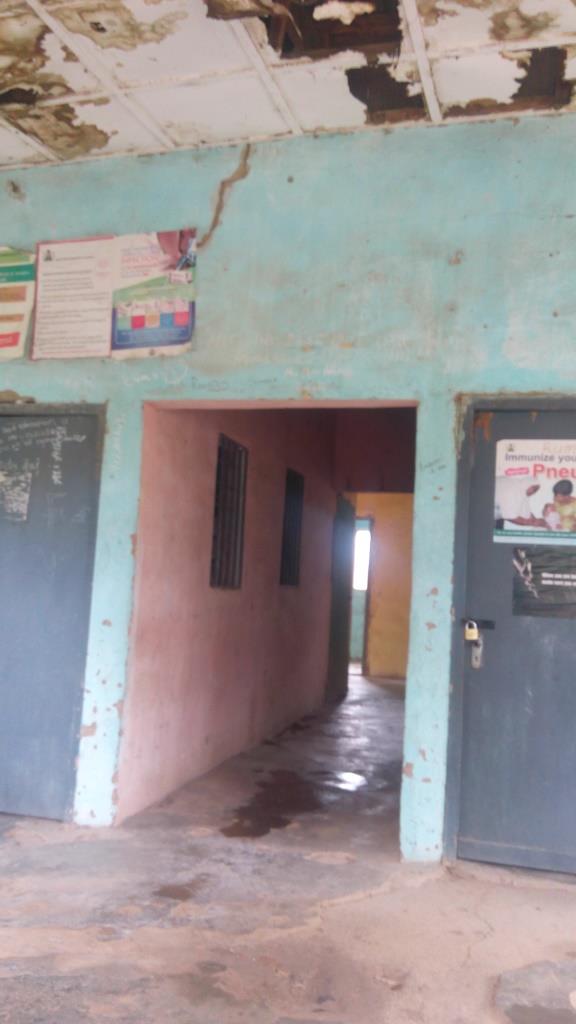
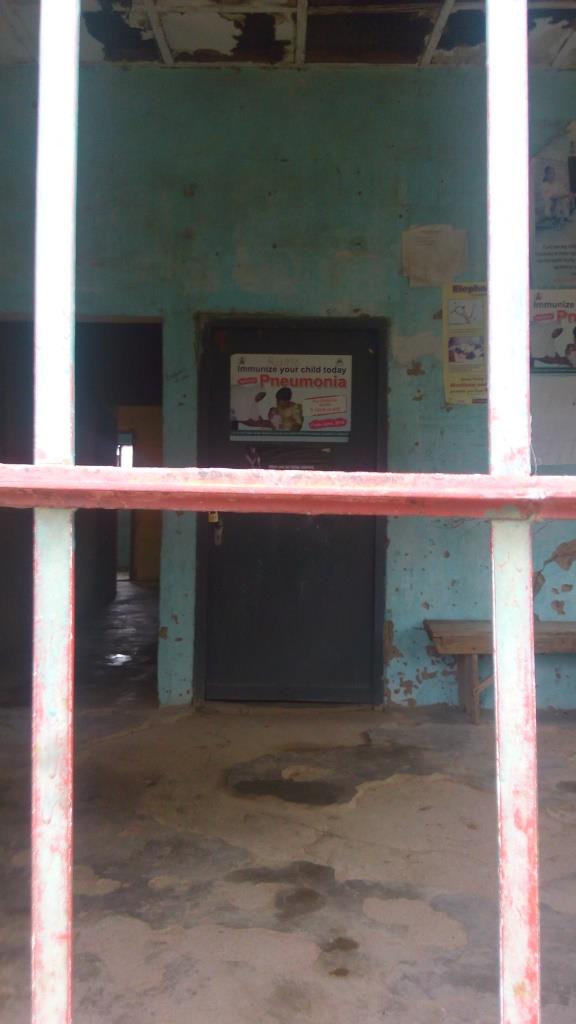
For 26 years, the primary healthcare centre in Ikorodu Local Government Area of Lagos State has been under lock and key. Not even the official unveiling of the public health facility on July 29th, 1993 by the then Chairman, National Directorate of Food, Roads and Rural Infrastructures, Air Vice-Marshal Larry Koniyan (Rtd), could initiate the commencement of public health delivery in the PHC, which has now been overrun with thick bushes.
Each time Ogunleye passes through the dilapidated building, her heart skips a beat when she remembers the number of lives that could have been saved if the PHC was functional. In cases of emergency, residents of the community have to evacuate patients to far away health centres in Gbogbo or Bayegu areas of the local government. Many, she said, died before they could get medical attention.
Although the initial amount released for the construction of the health facility in 1993 is not known, in 2014, the National Primary Health Care Development Agency (NPHCDA), once again released the staggering sum of N18,420,948.00 to Strasbourg Investment Nigeria Limited, to construct a Primary Health Care (PHC) in Agunfoye, Imota Ijede.
The second PHC was never built, and neither was the existing centre completed and put to use to reduce the impact of health issues ravaging the Community.
At numerous occasions, mothers have had to back a sick child and trek all the way to Bayeju of Gbogbo because they don’t have money for transportation. If they are lucky, no complications or death may arise but in most severe cases in need of immediate attention by a health official, the risk is too grave that the story does not always end well.
“But most importantly, we need health workers to come and enlighten the women on the importance of immunization and family planning commodities in the community PHC,” laments Ogunleye.
State of Primary Healthcare Facilities
Between 2004 to 2014, the Federal Government awarded over 1250 contracts valued at N30.59bn to various contractors for the supply of equipment and construction of PHCs across the country. Between 2014 and 2015 alone, the NPHCDA awarded 91 contracts for the construction of PHCs at a uniform sum of N21, 986,893.00 to different contractors.
However, despite the release of billions of naira since 2004 till date towards the attainment of a functional health system in the rural areas, a large number of the PHCs have either been abandoned or not fully functional.
The result is that millions of Nigerians living in rural areas are denied access to basic healthcare capable of trimming down the rate of maternal and infant mortality in the country. A visit to Kano, Enugu and Lagos states, revealed a dismal picture of the state of primary healthcare infrastructure in the country.
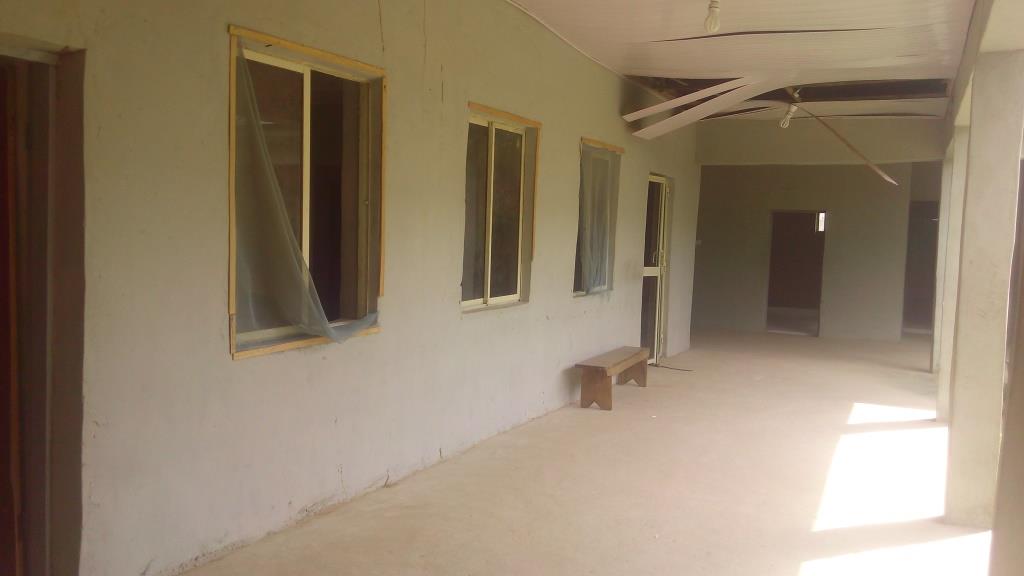
In 2014, the Federal Government approved the construction of PHC’s in Rumo and Yaryarsa communities in Kano State at the sum of N22 million, each to Drumlyn Nigeria Limited and Milagari Global Servces Ltd respectively. But the project was started and abandoned halfway. More than three years after, the buildings have been swallowed by bushes, have become an abode for reptiles. Effort by this reporter to locate the contractor was abortive as the address was non-existent.
Inner view of old PHC
Outer view of old PHC
Shaking his head in disgust while leaning on a ramshackle building which used to be a health centre, a resident of Rumo, Zaharadeen Usman said, “When there is a serious issue we take the person to Sumaila General Hospital about 38 kilometers away. Sometimes before people succeed in getting a vehicle to convey their loved ones who are sick to the hospital which is usually from N1,000 and above, they die before they get there because it is very far from here. Most times I use my bike to take them to the junction where they can get a car.”
For residents of Rumo and 25 surrounding communities who cannot afford the cost of transportation, they look for care with traditional ‘doctors’ and ‘mid-wives’ whose ‘professionalism’ are well advertised in the communities. And when it results in deaths, as it most often does, it is attributed to some ill-fortune or divine destiny.
Abandoned construction of new PHC
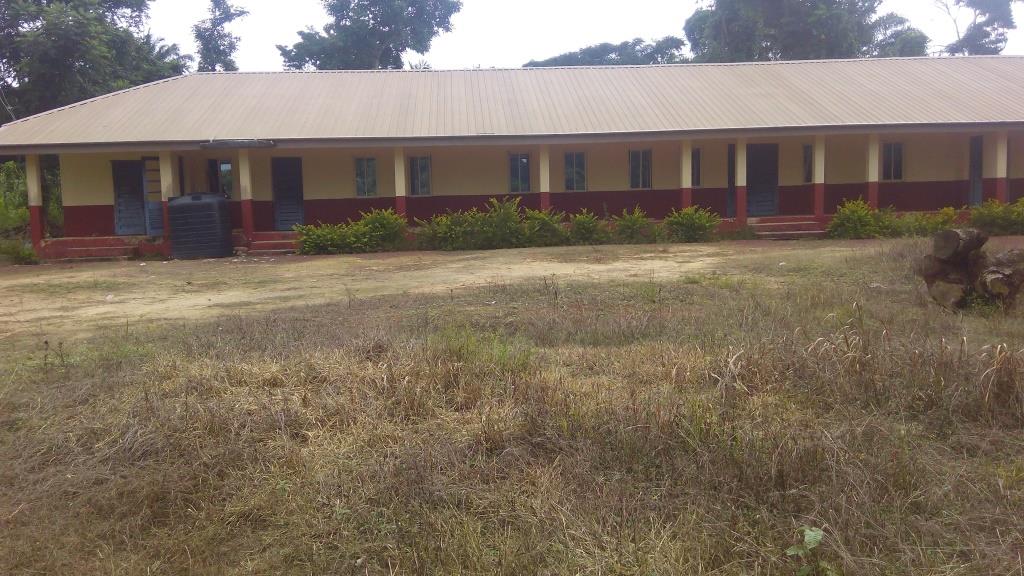
The story is only slightly different for the residents of Yaryasa whose PHC was commissioned on the 8th of April. 2015. But unlike the case of Rumo, the new but abandoned PHC at Yaryasa was expected to have four patient wards and 12 rooms, but has only one functional room. This room is used as a dispensary where drugs are prescribed without running the necessary tests due to absence of basic equipment. In serious medical cases, residents are subjected to the rigors of accessing health care at the Tidun Wada General Hospital located about 24 kilometers away.
The wife of the Sarikin Yaryasa, Hajara Jemilu, lamented that the lives of many women and infants in the community were at risk as a result of the various complications arising from difficulty to access basic health care promptly. Hajara could not hide her disappointment when she said, “The health workers don’t live here, they start work from 8am to 2pm in a small office in the hospital but they don’t have drugs there, they only write drugs for us to buy and if the disease is beyond their control they refer us to Tudun Wada general hospital which is about N100 from here.
“For most families here, we have difficulty getting to the hospital. If our husbands don’t have the N100, we have to go round seeking for whom to borrow from to enable us go to the hospital. There was a time my son was sick, when I couldn’t get the money at all, I backed my son to the hospital in Tudun Wada Things are difficult and for most of the women here, we refer to the traditional birth attendant. We have 14 of them here but they don’t give drugs.”
Outer view of Yaryarsa PHC in Kano State
Inner view of Yaryarsa PHC in Kano State
Residents told the reporter that in the last 10 years, they have had to seek medical attention outside the community. Since the hospital was commissioned, they claimed it had never dispensed any government-supplied drug. The drugs dispensed are those bought from donations by the community.
The situation at Ehandiagu-Eka-Alumona community, EnuguState, is even more pathetic. The community has a well-equipped primary health care facility donated by Marie Stopes and the United Nations Children Education Fund (UNICEF), however, the PHC is located far away from the communities and does not get many patients due to the terrible state of the road.
According to one of the nurses, Mrs. Jecinta Ugwuja, since the commissioning of the health facility on the 9th of July, 2011, only few women and children patronize the facility for ante natal services, child birth or even child immunization because the bike fare to the facility costs over N500. Moreover riding on the road requires expertise and patience by the rider to navigate the bumpy road to ensure the passenger does not fall on the ground.
PHC at Ehandiagu-Eka-Alumona, Enugu State: not accessed by community due to distance and bad road
“The women in this community respond to health care poorly. Most of them prefer to go to traditional birth attendants or resort to treating their families with local herbs when they fall ill because of the nature of the road.
“A good number of women are dying there. Some while giving birth, some days or few weeks after child birth.”
Another PHC in the state located at Amechi Idodo which was expected to serve Ezeobodo, Obinagu, Ohanu, and Eziama communities is not only in a grossly dilapidated shape, but located in a forest of bushes.
Ngozi Ogbu has been the only nurse at this PHC for over seven years. She affirmed that a lot of women and children have died from the four communities as a result of health complications arising from late access to health care. Further providing reasons behind the extreme low patronage of the health facility, she noted that the facility is far from the communities and anyone coming would spend at least N200 on transportation-money that is hard to come by for most residents.
Outer view of PHC in Amechi Idodo, Enugu stateShots from the main compoundMajor road leading to the PHCMrs. Ngozi Ogbu, only stationed nurse at Amechi Idodo PHC
“In the past seven years, there have been many issues of complications, the people here especially women are suffering. We have a Health committee whose duty is to go round health facilities to supervise activities but they don’t do their job. Since I started work here over seven years ago, not once has anyone come to supervise me,” she stated.
Effects of Non-Functional PHCs
Primary Healthcare Centres are the most crucial in providing basic health care services to the people at the community level. Ordinarily, a PHC should offer effective delivery of healthcare services made possible through the availability of adequate infrastructures, diagnostic medical equipment, drugs and well trained medical personnel.
However, coverage and quality of healthcare delivery is perpetually threatened by poor planning, inaccessible healthcare centres, poor funding, lack of adequate health care personnel, lack of drugs and essential interventions, poor environment and bad roads.
Over the years these factors have hindered women and children from accessing basic healthcare services and unfortunately, the resultant effect has been loss of countless women and children to preventable deaths.
Without access to essential interventions, 71.20 per cent of 1000 children die at birth and about 814 out of 1000 women lose their lives while giving birth. This means that five women die of child birth every hour in both rural and poor urban centres and over 400,000 women die annually in Nigeria from child birth related complications. While one in 15 babies will die before their first birthday and about one in eight before their fifth birthday.
A recent World Bank report noted that in 2016, nearly ten percent of new born deaths in the world occurred in Nigeria. Based on its ranking, Nigeria emerged third out of five countries accounting for half of all new born deaths in 2016.
According to the Senior Director of Health Nutrition and Population at the World Bank Group, Tim Evans, it is unconscionable that in 2017, pregnancy and child birth are still life threatening conditions for women.
Based on a United Children’s Emergency Fund (UNICEF) report, he argued that the death of new born babies in Nigeria represents a quarter of the total number of deaths of children under age five, majority within the first week of life due to complications during pregnancy and delivery. Similarly, a woman’s chance of dying from pregnancy in Nigeria is 1 in 13, where less than 20 per cent of health facilities offer emergency obstetric care and only 35 per cent of deliveries are attended by skilled birth attendants.
Lamenting these figures, the minister of Health, Prof. Isaac Adewole said, “Nigeria is next to the worst which is Chad. While Nigeria contributed only 2.4 percent to the global population; it is unfortunate that we contribute 14 percent to global maternal mortality, a trend which needs to be reversed.”
Not deterred by the figures, Adewole is optimistic that Nigeria could achieve below 100 ratio by the year 2030 and 300 maternal mortality rate in 2018, only if government strengthens the various social intervention programmes.
Federal Government’s Response to Community Health
Several interventions have come and gone but amongst the notable ones is the National Primary Healthcare Revitalization Initiative, flagged off on January 2017, for the revitalization of 10,000 healthcare centres in the 774 local government areas in the country. The scheme is aimed at availing poor Nigerians with qualitative and affordable health services with at least one functional PHC per ward to deliver a number of services.
The Midwives Service Scheme, (MSS) was also launched to mobilize midwives to selected primary healthcare facilities in rural areas to increase availability of skilled birth attendants and boost safe delivery services. The Minister of Health, Prof. Isaac Adewole, also Inaugurated a task force on accelerated reduction of maternal mortality in Nigeria in July 2017, even as the National Primary Healthcare Development Agency (NPHCDA), launched the eHub to ensure all primary health care centers in the country were brought under one roof to tackle all issues confronting effective primary health care delivery at the grass roots.
These interventions are aside the $1.5 million the Federal Government released to each state government to ensure quality health care delivery for women and children through the Saving One Million Lives initiative.
Taking his commitment to improving health care delivery at the rural areas a step further, President Muhammadu Buhari only recently directed the ministry of health to ensure the Community Health Influencers, Promoters and Services (CHIPS) Programme, was launched in all the states including the Federal Capital Territory, to enable the less-privileged and the rural dwellers have access to health services. But the Executive Director NPHCDA, Dr. Faisal Shuaib, immediately responded that plans are presently underway to roll out about 200,000 CHIPS agents, who would move from house to house to provide first aid care and health education to people.
The CHIPS programme is part of the federal government’s effort to provide effective primary health care services to the citizenry, aimed at improving and providing equitable coverage for essential health services especially for maternal and child survival, and also designed to improve on the Village Health Worker (VHW) concept established by the NPHCDA and endorsed by the federal government.
“They will play roles of effective demand generation and health behaviour change communication, provide basic emergency services to households, support community surveillance, collect and transmit household level health-related information on a regular basis and so much more,” he said
Why are the PHCs not functioning?
Despite these interventions especially President Buhari’s Primary Health Care Revitalization Programme, over 90 percent of the PHCs located across the country are still not functional. In addition, most of the PHCs are either cited at extreme locations, or in places with lack of motorable roads that impede access. In health centres that are accessible, many are characterised obsolete equipment, lack of manpower and basic hygiene that all serve as turn off to most residents. As a result, the staggering statistics of women dying during childbirth has remained constant despite these initiatives.
The Chairman National Immunization Financing Tax Team (NIFT), Dr. Ben Anyene, argued that government’s failure to prioritize the health of Nigerians was reason behind the nonfunctional state of over 60 percent of health care facilities across the country and the increased infant and maternal mortality rate in the country.
According to him, it behoves on state governments to address the challenges in primary health care centres by cutting down the expenditures on frivolities, security votes and increase its investment in health.
He stated: “60 percent of health facilities in this country are not functioning, If we remove the private facilities we will have problem not to talk of Patent medicine vendors. It is lack of seriousness, commitment and understanding of what government is all about.
“To be a government of healthy people you have to invest to make sure they are healthy. 70 percent of our health problems are in the primary healthcare sector, it presupposes that 70 percent of our investment should be there but 70 percent of the federal is at the tertiary level, there is a mismatch.”
The Head Public Relations Unit of NPHCDA, Mr. Saadu Salahu, who corroborated Anyene’s conspiracy theory, disclosed that a huge percent of the facilities have gone moribund. “As of now, we have 30,000 of such primary health care centres in various parts of the country, but the record is that less than 10% of them are functional.”
Salahu further argued that the problem of ownership was also part of the problems confronting an effective and efficient PHC system in the country. According to him, the local government chairmen see the construction of PHCs as the responsibility of the state or federal government. He however clarified that while primary health care is the responsibility of local governments, NPHCDA is only saddled with the responsibility of ensuring standards and giving technical and financial support to further strengthen and develop the PHCs.
“NPHCDA is not in charge of healthcare centres. The Local government build primary health care centres; state governments build some primary health care centres, some partners build primary health care centres, individuals and senators can also build a primary health care centres.
You build the structure, you provide them drugs, you even give them equipment and when it is handed over to the local government who in turn hand over to the community takes over begin running it.
“We only regulate, we support states technically, we help them develop the work plan, we make the vaccines available, we train them on maternal and child health intervention and we train their staff to improve their capacities to develop and strengthen their primary health care system.”
However, few weeks ago the minister of Health, Prof. Isaac Adewole, disclosed that the federal government is collaborating with the state and local governments on primary health care to enrich ownership and participation.
This is perhaps the much needed wake-up call for government to do something urgently to ensure all modalities are put in place to increase coverage, enforce discipline and monitor quality of health care services at the grass roots.
This would help secure more lives, and ensure that no woman dies while giving birth and that no woman is denied information or health care that can save their lives and the lives of their unborn children.
This investigation is supported by the John D. and Catherine T. MacArthur Foundation and the International Centre for Investigative Reporting.
Shehu Sani, the senator representing Kaduna Central at the National Assembly, says a “billion dollars to purchase arms will not make sense” if the Federal Government fails to factor in the “welfare and well-being of the officers and soldiers fighting the war”.
Sani was reacting to the $1 billion approved by President Muhammadu Buhari on Wednesday for the purchase of arms to fight insecurity in the country.
Writing on his Facebook page shortly after the President gave the approval, Sani said “there must also be a special fund for the injured, the orphans and widows of our fallen soldiers”.
“A billion dollars to purchase arms will not make sense if we don’t factor the welfare and well-being of the officers and soldiers fighting the war,” he said.
“A special fund for the injured, the orphans and widows of our fallen soldiers need also to be factored in. A weapon cannot fight a war without the men to use it.”
Sani, a member of the All Progressives Congress (APC) who has always picked holes in many of the administration’s policies, also reminded the President of the need to revive the nation’s defence sector.
“We also need to remind ourselves that our defence industry is moribund, before we enrich arms manufacturers in other nations. Our self-sufficiency should not be about rice alone.”
Mansur Dan Ali, Minister of Defence announced after a security meeting between the President and service chiefs at the Presidential Villa that “of recent, our leader, President Muhammadu Buhari gave approval for the purchase of more equipment for the military, worth $1 billion”.
Sixty-three-year-old Mustapha Bukar, the senator representing Katsina North Senatorial District (where President Muhammadu Buhari hails from) at the National Assembly, has been confirmed dead.
Umar Bukar, his elder brother, confirmed that he died on Wednesday after a brief illness.
A first-time federal lawmaker, the late Bukar was Chairman of the Senate Committee on Capital Market. His death brings to three the number of federal lawmakers who have passed on within the past three weeks.
UMAR BUBA JIBRIL
On Friday, less than a week ago, Umar Buba Jibril, who represented Lokoja/Kogi Federal constituency in the House of Representatives, died. The 58-year-old was also said to have passed away after a “brief illness”. He became infamous for sponsoring a controversial bill for regulation of Non-Governmental Organisations (NGOs).
Jibril, a Peoples Democratic Party (PDP) member, was Deputy Majority Leader of the House of Representatives and a former Speaker of the Kogi State House of Assembly.
ALI WAKIL
Also, roughly three weeks ago, the death of 58-year-oldAli Wakil, the All Progressives Congress (APC) senator representing Bauchi South Senatorial District at the upper chamber, was confirmed.
The incident happened at his Abuja residence on Saturday, March 17. He was dressed up and ready to travel to Yola, Adamawa State, to attend the wedding of Boss Mustapha’s daughter. But, before leaving, he had asked his wife to prepare a meal for him to eat, but he couldn’t.
According to Mohammed Sani-Abdu, a member of the House of Representatives, “she prepared porridge and brought it for him to eat. But, Wakil told her he wanted something light instead, like tea. She went back to get the tea only for her to return and find her husband slumped on the floor.”
In the 2017 budget of the National Assembly, the Senate allotted the sum of N247,082,400 for drugs and medical supplies, as well as N411,804,000 for medical expenses. The House of Representatives has similar budgetary allocations to cater for the medical well-being of members.
It is therefore astonishing to have three members of the federal legislative chambers give up the ghost in less than three weeks.
APC MOURNS
Back to Bukar’s death, the All Progressives Congress (APC) says it is mourning the death.
“At party level, we have indeed lost a dependable and loyal Party man who contributed immensely to the growth and strength of our great Party,” it said in a statement by Bolaji Abdullahi, its National Publicity Secretary.
“We extend deep condolences to his family, constituents, National Assembly, particularly the Senate, President Muhammadu Buhari and the government and people of Katsina State over the sad and painful loss. It is our prayer that the Almighty Allah grants the late Senator Aljannah Firdaus.”
In addition to the prayers, APC must surely be wondering what it must do to stem the tide of untimely deaths in the legislature.
Aisha Wakil, popularly known as Mama Boko Haram for her close ties to the insurgents, says she is not afraid of getting close to Boko Haram because Allah and his angels are guiding her.
Speaking while appearing as a guest on AIT’s Focus Nigeria, Wakil urged the Federal Government to show sincerity in the negotiation with Boko Haram by coming down to their level and engaging some elders whom the insurgents listen to.
She expressed optimism about the return of peace to the North East but said government must take the right steps.
“Government must come down to the roots, come down to Borno. There are people like me and you that know them and they listen to them,” Wakil said.
“They [negotiators] shouldn’t come from upstairs, inside air-conditioned rooms. You can’t stay in Abuja and be talking to somebody in Maiduguri bush or the Sambisa forest.
“They have people down there they listen to. If they [government] can come, we organise ourselves, those people will talk to them and they will come out.”
Wakil said she had earned the confidence of the insurgents because they came to the realisation that she is genuinely advocating for their best interest.
She reiterated that majority of the Boko Haram fighters had told her in confidence that they would like to come out of the bush and reunite with their families.
“They said they want to come back home, stay with their wives, in their hometowns and do genuine business. These are their words,” Wakil said.
“There was even a time I asked them, ‘do you need any country you can go to?’ They said no, we want to stay in our village.
“So it means, honestly, that they really want this peace. So let government just come down to the roots and talk to them.”
Asked whether she had ever feared for her life during her many interactions with the insurgents, Wakil said she was 100 per cent confident that they would never harm her.
“How can I be afraid? Afraid of who? No. Allah and his angels are guiding me. And why should I be afraid? I’m doing a good job, I’m doing something good, they should tap my shoulder and say well done, so why should I be afraid?
“If Boko Haram turns to Snake or Scorpion, it won’t bite me. They won’t hurt me. Nobody will hurt me.”
Narrating how she was able to gain the confidence of the insurgents during peace and dialogue programme of the past administration, Wakil said Boko Haram representatives insisted they would stay in the same hotel she stayed so that “if they die, she dies”.
“They will tell me ‘Mama we will stay with you in one hotel. If we die you die. Whatever we eat, you eat’.
“At times they will ask me, ‘come with your husband and your kids’. When we are having a meeting, this one will sit here, my daughter will sit, my son will sit, my husband will sit, Boko Haram will sit, that’s how all of us will sit. They’ll say ‘if anything happens, all of us will die’ and I agreed.
“So that built a lot of confidence in them, that if they die, I and my family will go, and I agreed.”
Wakil also said adequate attention still needs to be paid to the plight of the internally displaced persons in the North East, especially the girls and women who cannot afford even sanitary pads.
“I saw some women with my two naked eyes, using sand and old dresses, some are using ash, as (sanitary) pads,” she said. “Some will use their head-ties as pants to hold their monthly flow. It’s a horrible situation. Nigerians should come out and help us.”
For a few months now, I have had this question on my mind and I have been about the business of seeking answers to it; did Jesus die for good governance? Yes? No? Maybe? Or do you think it is really none of God’s business to allow good governance reign among men and women of this age?
This past weekend, and of course this Monday, was for the remembrance of the death, and the celebration of the resurrection of Jesus Christ — the author and the finisher of the Christian faith. So, a friend, whom I once asked the same question, suggested this would be a good time to discuss this issue and present my findings while listening to what everyone else thinks about God and governance.
Tunde Bakare, Poju Oyemade, Sam Adeyemi, Yemi Osinbajo, Ejike Mbaka, Matthew Kukah, John Onaiyekan, are perhaps top on the list of Christian teachers, who have been prominent on the Nigerian political scene, either as active teachers and active participants in the business of politics.
For almost two decades now, I have followed Tunde Bakare, the serving overseer of the Latter Rain Assembly, as he pushes for the participation of Christians in politics, a message he himself lived when he joined Muhammadu Buhari on the campaign train in 2011. Before then, Bakare had led a group called Arrow Heads, which included Oby Ezekwesili, Ngozi Okonjo-Iweala, Donald Duke, Nasir El-Rufai, Nuhu Ribadu, Fola Adeola, Jimi Lawal, Yinka Odumakin, Jimi Agbaje, Wale Osun and a number of today’s prominent figures. He has also spoken truth to power; to Sani Abacha, MKO Abiola, Olusegun Obasanjo (who, by the way, ensured the SSS arrested him in the early 2000s), to Goodluck Jonathan and now Muhammadu Buhari.
Poju Oyemade, the senior pastor of the Covenant Christian Centre, started a national dialogue for good governance and national development 11 years ago — and called it The Platform. In his words, “The Platform simply has the prophetic function of preservation” — I will get to this later on. The Platform “saw” Yemi Osinbajo, long before he became a household name.
Sam Adeyemi, the senior pastor of Daystar Christian Centre, has been passionate about leadership since I first heard of him, about a decade ago, till date. His Excellence in Leadership Conference was the first place I heard Yemi Osinbajo speak, and those words resonate with me to date.
Time will not permit me to speak of Kukah, Onaiyekan, Mbaka, and a host of other Christian leaders who have strong voices in Nigeria’s political landscape. I would head straight to explain my thoughts on what I think about God and governance.
IS GOD INTERESTED IN GOVERNANCE?
“For the LORD is our Judge, The LORD is our Lawgiver, The LORD is our King; He will save us”. This is the description of God according to the prophet Isaiah. Here, we see God in the judiciary (the judge), we see him in as the legislator (the lawgiver), and as the president (the king). So long before democracy became the order, God has laid out an example, showing that he is interested in the rule of law, and the leadership of men.
The book of Proverbs, one of the 66 books in the Bible says in its 29th chapter: “when the righteous are in authority, the people rejoice; But when a wicked man rules, the people groan“. Also suggesting that God is interested in governance and of course, in righteous rule. King Nebuchadnezzar of Babylon (605 BC – 562 BC), who had the longest and most powerful reign of any monarch in the neo-Babylonian empire, in one of his confessions said “the Most High rules in the kingdom of men, Gives it to whomever He will, And sets over it [even] the lowest of men”.
The character of God shows that God is particularly interested in public health, security, and order. And we know that everything rises or falls on the basis of governance. Logic definitely shows that God is interested in governance. Ultimately, Paul’s letter to the Church in Rome revealed that one of the spiritual gifts of God to man is the ability to lead or govern well. So, I dare say God is interested in governance.
DID JESUS DIE FOR GOOD GOVERNANCE?
It may not be easy to conclude on the reality of Jesus dying for good governance. But every Christian may easily agree on other things Jesus died for. So, what did Jesus die for? There is an easy consensus among Christians that Jesus died for the Redemption of mankind; to reconcile man to God.
Hence, the big question; Is good governance part of the redemption work Jesus did?
God has a pattern, and the devil has his; God’s pattern is to build, the devil’s way is to destroy; God brings light, the devil ensures darkness. At creation, God said “let there be light, and there was light”, after which he began to create the world and put things in order.
As man fell, man lost the absolute order God had put in place, and was in dire need of reconciliation and redemption, which Jesus came to give by his death and resurrection. His plan was to create or “make men” who have come to be called Christians, known as the light and salt of the earth. As we see in God’s pattern, light comes before creation, and after creation, salt is needed for preservation. So Jesus’ work was to restore light and ensure the continued presence of salt, all necessary for good governance.
Poju Oyemade argues, and I agree, that “God does his work based on compassion”. “Will God ignore the pain of a woman who lost her baby while giving birth because of a lack of proper infrastructure at the hospital? Will God ignore the anguish of a medical doctor who knows how to save a life, but the lack of proper infrastructure makes him lose that patient? Will God ignore the pain of a family who lost their breadwinner, and the children are now struggling because their father died due to a road accident caused by a pothole that could have been easily avoided?”
I do not think God would ignore this. Jesus came not just to win souls but to seek and save that which was lost; good governance was lost on the earth, and He died also to restore this. So in the spirit of this season, we are all reminded that Jesus also wants to see good governance in Nigeria. His death was for this too.
What are your thoughts?
Follow Tijani on Twitter and across major social media platforms @OluwamayowaTJ
Forget reciting the alphabet or memorizing the numbers from one to 10 or 100. For children, play is actually a better way to learn than traditional school work. Studies have found evidence that play is the natural way which children learn.
“Asking a three-year-old to recite the alphabet is not learning,” Andre Viviers, early childhood education specialist with Unicef South Africa, told a group of journalists on study tour of the country’s early childhood development programmes.
Viviers argues that children actually need to learn the alphabet but they should do so through songs, to give meaning and understanding to the sound. It is pointless, he says, to make a six-year-old count 1 to 100. “It doesn’t show necessarily that the child is smart or that good learning is taking place,” he adds.
Play-based learning helps children develop cognitive, emotional, social and motor skills. These skills, according to early childhood specialists, are the foundation for later learning. Rote learning has long been the basis on which many schools operate. But evidence from numerous studies suggest that undue emphasis on memorisation is a bad idea; such studies suggest that play should be the fulcrum of early learning.
WILD GAP BETWEEN POLICY AND PRACTICE
The official education policy in Nigeria recognises the importance of play-based learning by specifically pointing out that the main method of teaching at pre-primary school shall be through play. To achieve this goal, the policy holds that the teacher-pupil ratio shall be 1:25. But in most public schools, the number of pupils per teacher can be triple of the recommended ratio.
While the official policy emphasises the pivotal role of play in preschool, the actual incorporation of play into the curriculum remains a big challenge. Much of learning in nursery schools across the country still focuses on children memorising alphabets, numbers and the names of the 36 states of the federation.
Swachet Sankey, Unicef’s early childhood education specialist in Nigeria, says the problem is that teachers do not know how to make learning play-based or activity-based. Teacher training institutions do not teach students how to organise play-based learning and the national curriculum does not specify the activities that make up play-based learning.
“There is a very poor understanding of what should be going on in pre-primary class,” Sankey told the ICIR. “So, you go to certain schools – even so-called private schools – and parents are agitating.”
She says parents demand quick, visible results – like evidence that their children can read and write. Rote learning can produce visible results, but children may just be displaying skills they have memorised when they have not really mastered the underlying skills.
The idea of preschool, Sankey argues, is to build in the children concepts and skills that will make them ready for primary school, not to learn how to read and write. “They are supposed to be exposed to pre-reading skills — basic concepts of letters, alphabets and prints.
“They should understand that a book is made of words, and words are made up of sounds. They are supposed to be able to look at pictures in a book and talk about those pictures because they are supposed to be developing oral language skill.”
NEED TO CHANGE
A study in New Zealand indicates that early formal literacy does not make children better readers. The study compared groups of children who started formal literacy lessons at ages five and seven. By the age of 11, the study found that there was no difference in reading ability between the two groups, but that the children who started at five showed less positive attitudes to reading and had poorer text comprehension than children who had started at seven.
This evidence raises serious questions about pre-primary schools in Nigeria, which selling point to parents is that they teach children to read before entering primary school at age of six. Evidence indicates that pressuring children to start reading at preschool when their neural connections are still being formed may not be in the interest of their emotional well-being and academic achievement.
Essienanwan Bangwell, children and teens coach, told the ICIR that Nigeria’s educational system has failed the children, pointing that the government has to invest in producing learning tools to engage the children in early learning.
“They are sitting in the classroom and the learning is boring,” says Bangwell. “Nigerian children can do a lot better. They are more intelligent than the academic reflects but they are shaking of boredom.”
TOOLS FOR EARLY LEARNING
Cotlands’ toys library, Johannesburg, South Africa
In South Africa, non-governmental organisations (NGOs) are stepping up to fill the gaps in play-based learning. Cotlands, a non-profit organisation based in Johannesburg, has set up toys library where children from disadvantaged background can access toys. The organisation supports more than 12,000 children in 260 play groups.
Monica Stach, CEO of Cotlands, says the NGO is igniting potential of children through play because early learning activities are best achieved though play so that children can build confidence and learn to express themselves in ways that expand their critical thinking.
Questions have been raised on why play-based learning should be about toys and sophisticated tools that the poor people cannot afford. If play is so important in early learning, children should be allowed to play in their traditional ways, rather than promoting the products of toy companies.
Stach responds that the problem with traditional games as learning tools is that they are not structured with learning outcomes in mind and cannot be used to build the important skills that the children need. “Children playing for the sake of play has its great value, but when you think about the skills they need to be successful at school, that is where they have to play differently.”
Brent Hutcheson, CEO of Care for Education, a non-profit organisation in Johannesburg, told the ICIR that manipulation of objects is critical to early learning. In partnership with LEGO Foundation, the world’s leading supplier of early learning tools, Hutcheson has developed Six Bricks which playfully engages children in a variety of skills development.
CHANGE IS FAR AWAY
A common misconception is to think that play-based learning is all about expensive toys, says Swadchat Sankey, Unicef’s early childhood education specialist. She argues that children can still have quality pre-primary education if the teachers are properly trained how to set up play and activity-based learning environment.
The majority of children in preschool in Nigeria still do not have access to play-based learning because most teachers do not know the concept. About 85 percent of caregivers in early childhood centres do not possess basic qualifications, and more than half have no formal education, according to Unicef.
Through her Odyssey Foundation, Stella Uzochukwu is trying to promote LEGO Education: “hands-on playful learning tools that engage every student’s natural curiosity, and help them develop the skills they will need to succeed in the future”. But she faces obstacles from government and parents. Bureaucracy is making it hard to introduce the innovative concepts in the curriculum, she says.
In her after-school classes in Gwarimpa, Abuja, she introduces LEGO products and robotics to her students. But the parents would rather want her to concentrate on teaching the children skills they think will put them at the top of their classes in school.
“We can’t continue to do things the old way,” Uzochukwu quips. “We have moved from chalk and board to allowing the children to even teach themselves.”