Home Blog Page 2680

INVESTIGATION: Survivors of herdsmen attacks tormented by deaths, rape at Benue IDP camps

Fear of the known – killer herdsmen – dissuaded taxi drivers in Makurdi, the Benue State capital, from taking the ICIR reporter to Guma and Logo, the two local government areas in the state that have become the epicentre of repeated hate crimes since the beginning of the year. It was until the next day that a car was arranged for the journey. From Makurdi to Agasha on the sandy bush road and crossing the River Benue on the ferry to Tse-Ikyo and getting to Tse-Ginde, there were neither soldiers nor police in a journey of about three hours. Desolate farming villages laid across in Guma and Logo but those who deserted their communities face another horror in camps – deaths, rape, malnutrition and other indignities – reports CHIKEZIE OMEJE, who visited all the eight recognised camps in the state.


On the first night of 2018, people in Tseghem village in Guma were awoken by sporadic gunshots in Timota, another village about two kilometres away.  Williams Jime, 34, and other villagers gathered their families and fled.  Some men stayed.

His 28-year-old brother Pever Kwaghando was among the villagers who did not run away. When the attackers approached the village by motorcycles and the courageous men realised they were Fulani militants, they began to run to different directions.

“My brother was the only one killed in our village,” Jime told the ICIR at Tse-Ginde Primary School in Guma where he has been sheltered along with his wife and two children since the attack. The primary school accommodates 20,928 Internally Displaced Persons (IDPs) forced out of their villages by the lingering crisis between Fulani herdsmen and Tiv farmers.

The car being ferried across the River Benue in a journey to Tse-Ginde in Guma

His brother’s corpse was not discovered until after three days. Shot from behind on the head, the corpse was already decomposing when his cousin discovered it. With their noses covered, they hurriedly dug a shallow grave and pushed the corpse inside it before the attackers whom they alleged had occupied their village could sight them.

Jime’s brother was not among the 73 who were given a mass burial in Makurdi on January 11 after the attacks in several villages in Guma and Logo by the Fulani extremists. “There was nothing we could do than to bury the decaying corpse there in the bush,” Jime says, wiping away the tears that ran down his cheeks with the back of his palm. This was the second time that he was being displaced; his village was attacked and burned by herdsmen in 2014.

Sewuese Mhile, a 15-year-old junior secondary school student, told the ICIR that her father and three uncles were killed in Timota by the herdsmen. She was cooking rice on firewood – with only groundnut oil and seasoning as an ingredient – while her mother sat on the pavement of the school with hundreds of others, monitoring her progress. Every family cooks their own foods, often given to them by the state’s emergency management agents, and usually involving rice and noodles without additional ingredients to cook them.

IDPs at Tse-Ginde camp

Since 2013, the Benue State government has documented more than 50 attacks against farmers by the pastoralists, with more than 1,600 people killed in those attacks. The frequent clashes made the state to pass a law banning open grazing of cattle in late last year. Rather than halt the attacks, the anti-open grazing law has sparked another wave of killings since January, the state enduring its worst-ever humanitarian crisis. More than 170,000 people have been registered in eight camps while an unknown number of affected people are taking shelter with relatives in safe communities in and outside the state.

“Generally talking about statistics of IDPs in Benue State is very challenging,” Emmanuel Shior, Executive Director of the State Emergency Management Agency (SEMA), told the ICIR. The reason, he says, is that as the attacks continue, more people desert their villages, increasing the number of IDPs daily. The last figure the state registered three weeks earlier was 176,070 IDPs in the eight camps in Makurdi, Guma, and Logo.

Desolate farming village in Guma. Several villages have been deserted for fear of attacks by herdsmen.

Haruna Ubi, Benue State Chairman of Miyetti Allah, the association of Fulani cattle breeders, blamed the Tiv for the protracted violence and accused them of confiscating cows of Fulani herders.

“When we sit and discuss reconciliation, a binding document must be signed between the Fulani and the Tiv so that they cannot attack them and collect their cows,” Ubi told the ICIR. “If they can stop killing the Fulani and collecting their cows, that is fine. Nobody wants war. We need peace also.”

When Ubi was reminded that the state’s law bans open grazing, he claimed that the herders had relocated to Nasarawa State but the Benue State’s agents had been entering Nasarawa State to confiscate their cows. The ICIR did not see herdsmen or cattle in any of the deserted communities in Guma and Logo. Nevertheless, a day after the ICIR reporter visited communities in Guma, a village was attacked in the morning, with two killed and one injured.

Bernard Ahmbe, 45, his wife and two children were one of the latest arrivals to Daudu camp after his village, Torkula, was attacked by the herdsmen two weeks earlier. He told the ICIR that he had been sleeping outside the camp. “We can’t go back,” he says. “The Fulani will kill us all.”

Children make up at least 60 percent of IDPs in camps

The two most affected local government areas – very large and sparsely populated by Tiv farmers living in round huts made of leaves – are particularly vulnerable because they share borders with Nasarawa and Taraba states that do not have laws banning open grazing. Only Ekiti and Benue states have passed anti-open grazing laws in the country.

The invincibility of the borders between the states complicates the crisis. In Logo, one side of a dusty and bumpy road is Wukari in Taraba State, while the other side is Logo. Guma also borders Awe and Keana local government areas in Nasarawa State. Most communities in these border areas in the three states are Tiv – the biggest ethnic group in the Middle Belt – constituting about 3.5 percent of Nigerian population.

The renewed crisis has assumed a darker ethnic dimension, as the Fulani herdsmen who left Benue in droves were alleged to have expressed their anger on these Tiv farming communities by burning their huts, destroying their crops and feeding their cows with the farmers’ yam seedlings.

In retaliation, the Tiv have allegedly killed the herders and their cows. As the cycle of violence continues, the Tiv are suffering the heavier causalities. They have been forced out of their ancestral homes into overcrowded camps as the migratory herders attack their communities and disappear into the bushes.

SURVIVED ATTACKS, NOW FACE DEATH IN CAMPS

IDPs in Daudu camp walk about 20 minutes to get this unclean water from a stream because the camp’s borehole is not functioning.

The death toll in the camps is rising and children are mostly affected. Six out of the eight camps in the state are primary schools with no provision to accommodate the number of IDPs. Usually, up to 300 people are put up in a classroom while others sleep in the field.

At the NKST camp in Logo, Mercy Akaabo, a community health extension worker who is in charge of the camp clinic, records hundreds of cases of urinary tract infection, diarrhoea and malaria every day. The camp does not have water, so IDPs all go to a particular swampy area in the community where they get water from a contaminated stream. Two children have died of diarrhoea in this camp.

In Ayiin camp in Logo where Gabriel Suswam, the former Governor of the state comes from, four children have died in the camp. One of the children had HIV, while others died of suspected cases of malaria and diarrhoea. The intervention of Médecins Sans Frontières (Doctors Without Borders) in providing water storage tanks in the camp and filling them with safe drinking water has improved sanitation but open defecation is still rampant.

Hannah Iorkaa gave birth to a set of twins on January 13, the day she arrived Gbagimba camp. Her first daughter assists her with babysitting. She does not know the whereabouts of her husband and three other children, and she has not seen them since she was delivered of the twins.

Simon Otuba from Tombo-Shagbao village in Logo told the ICIR that he shared a classroom with a teenage girl who would go on to “die mysteriously”. But this was not the only so-called mysterious death that the IDPs had witnessed in the camp.

At Gbagimba camp in Guma, where Samuel Ortom the governor comes from, a young bride scared off the IDPs before she later died in the hospital. Nadoo Asaamoga, the 18-year-old from Iorhom village, was married on December 30 but she and her husband started running from the attacks on December 31.

Two days after standing under the sun to register for the Red Cross’ relief materials, Asaamoga started complaining that her body was on fire. She was asked to bathe to cool down her body temperature but she slumped in the bathroom.

“She was screaming and we asked her whether she was ‘Adzov’ but she said no,” James Terkura, Coordinator of Gbagimba told the ICIR. In Tiv, ‘Adzov’ is the same as Ogbanje in Igbo or Abiku in Yoruba, an evil spirit that is widely believed to have the power to torment its host. “She was repeatedly screaming and saying ‘snakes are coming. Snakes want to bite her,’” Terkura says.

The bride was given malaria drugs in the camp clinic, which she vomited. An injection was administered and her pains subsided. Later in the middle of the night, she vomited black substance. Her eyes became blank; she was opening her mouth and closing it. That was when she was taken to a nearby general hospital where she died within an hour. Three other children and one older woman have also died in Gbajimba camp.

Cecelia Ojabo, Benue State Commissioner for Health and Human Services, told the ICIR that the level of infections does not suggest that there has been an outbreak of diseases. “If there is one case of diarrhoea and vomiting, it is not an outbreak,” Ojabo says. “To be an outbreak, it has to be a significant number of cases.”

So far the state government has provided ambulance in each of the camps for emergency referrals. But the risk of death is still very high in the overcrowded camps lacking access to safe drinking water and bedevilled by open defecation and generally poor sanitation.

RAPE IN CAMP

IDPs in Gbagimba camp

Apart from the Gbagimba and Makurdi camps, all other camps have no fence around the perimeter. Lapses in security have exposed the women to the danger of rape and sexual harassment.

Ayiin camp, which is the biggest camp with over 35,000 IDPs, has been particularly notorious in rape cases. A rapist pretended to be one of the IDPs and followed a teenager to one of the classes where he lay down beside her. In the camps, everyone sleeps where there is a space with no segregation of men and women, as well as children.

The rapist waited until late at night when hundreds of people in the classroom seemed to have fallen asleep. He used one hand to cover the girl’s mouth and used the other to grope her private part. The girl’s mother, who was also lying beside her, was alert to grab the rapist’s hand and shouted. When the rapist was interrogated on why he attempted to rape a girl in such crowded space, he said he felt the girl would start enjoying it after a while. He was eventually given 20 strokes of cane and set free by community stakeholders.

When two women from the camp went into the bush to fetch firewood to cook, they were sexually molested. The camp coordinators could not prove whether the women were assaulted by the herdsmen or the locals.

The rape cases have not just been about outsiders; at least seven attempted rape cases have been perpetuated by the IDPs. The culprits were decamped.

“The hosted community stakeholders and committee in the camp decided to handle the cases,” Johnson Labe, a member of Benue NGO Network (BENGONET) who works in the camp told the ICIR. Camp coordinators, he says, have decided henceforth to report any new case of rape to the police and ministry of women affairs.

Rape has not been reported in other camps but, Emmanuella Ingoroko, a midwife at Daudu camp, believes that such cases might have been happening but the IDPs chose not to report them. “The people understand one another,” Ingoroko says. “They commit it but they understand one another so they will resolve any case among themselves.”

RISK OF NATIONWIDE VIOLENCE

IDPs at Daudu camp play draft game in the sand

The north-central part of the country, also known as Middle Belt, has been the hardest hit in the clashes between farmers and cattle herders. This year alone, hundreds of people have been killed and houses destroyed in Benue, Kogi, Nasarawa, Plateau and Taraba state.

On February 20, the Nigerian Army launched operation ‘Ayem Akpatuma’ or ‘Cat Race’ in Tiv to halt the violence, yet attacks in the farming communities by the herdsmen have continued.

Theophilus Danjuma, Nigeria-Biafra Civil War veteran, former Chief of Army Staff and former Minister of Defence accused the army of bias in curtailing the violence. “Every one of us must rise up,” he said recently. “The armed forces are not neutral. They collude. They collude. They collude with the armed bandits that kill people, kill Nigerians. They facilitate their movement, they cover them.

“If you are depending on the armed forces to stop the killings, you will all die one by one. The ethnic cleansing must stop in Taraba State, must stop in all the states of Nigeria. Otherwise, Somalia will be a child’s play. I ask every one of you to be alert and defend your country, defend your territory, defend your state. You have nowhere else to go.”

The clashes between farmers and herdsmen have claimed thousands of lives across the country, particularly in the Middle Belt. According to the Global Terrorism Index, Fulani herdsmen were responsible for more deaths than Boko Haram in 2016. The Fulani militants were named the fourth deadliest terrorist group in the world in 2014 and the Global Terrorism Index shows that the Fulani extremists have killed over 2,500 people in Nigeria between 2012 and 2016.

A knee-jerk reaction by the Federal Government has given rise to speculation of a sinister plan by the Fulani pastorialists to dispossess inhabitants of their ancestral farmlands.

Mansur Dan-Ali, Minister of Defense, blamed farmers and anti-open grazing law for the crisis. “Since the nation’s Independence, we know there used to be a route followed by the cattle-rearers because they are all over the nation,” he said.  “You go to Bayelsa, Ogun, you will see them. If those routes are blocked, what do you expect will happen? These people are Nigerians. It is just like one going to block shoreline, does that make sense to you?”

The cattle route, if it existed as the defence minister described, is certainly no longer visible in the states where clashes between farmers and herders have been frequently occurring. Or rather, the herders have not been adhering to the route. The herdsmen are certainly everywhere – in cities and villages – grazing their cattle indiscriminately and sometimes destroying farms.

The Federal Government has over the years budgeted for the creation of grazing reserves but there is no evidence of these grazing areas in most of the states, suggesting that the money has either been mismanaged or was never released.

The victims of clashes between farmers and herders over grazing rights, who are mostly peasants in remote communities, may not understand the politics of their fate but they feel abandoned and neglected by the Federal Government.

In Benue, the neglect is not just about the failure of the government to protect them and their property but also that the National Emergency Management Agency (NEMA) has only sent paltry relief materials to the burgeoning displaced persons in the state once.

N14bn in 2017, N72bn in five years — FG’s loss to ‘ghost police officers’


The Federal Government lost the sum of N14,341,364,756 — N1.2 billion monthly — to “ghost police officers” who appeared on it payroll in 2017.

The disclosure came after staff count and full integration of payrolls across the country’s 42 police commands and formations into the Federal Government Integrated Payroll and Personnel Information System (IPPIS) in February.

As of February, the staff count of officers in the Nigerian Police Force stood at 291,685, with gross salary of N22.3 billion, which invalidates the assertion that there are 371,800 officers in the Nigerian Police Force.

A DAMNING INDICTMENT OF IPPIS

For decades, payroll fraud has continued to drain incredible sums of money from the Nigerian civil service. Infamously known as the ‘ghost workers’ syndrome, various methods have been employed to check it, but the beneficiaries continue to find new techniques. At all levels of government — federal and state — there is renewed passion to tackle the problem, especially since the coming of President Muhammadu Buhari’s ascendancy to power.

Ngozi Okonjo Iweala, former Minister of Finance and Coordinating Minister for the Economy, once revealed how the Federal Government blocked a N208.7 billion ghost workers scam in government parastatals and agencies after a biometric collection exercise implemented to get a proper data of federal civil servants revealed that 62,893 of the workers who were hitherto on FG’s payroll were ghost workers.

The minister said at the time that when the integrated Personnel and Payroll Information System (IPPIS) was implemented, most of the civil servants did not show up — an indication that they were ghost workers. After their disengagement, the Federal Government succeeded in saving about N208.7 billion usually expended as salaries and benefits on these ghost workers.

The IPPIS is one of the World Bank-engineered public sector reform programme in Nigeria coordinated by the Bureau of Public Service Reform (BPSR).

According to the BPSR, the IPPIS project, a World Bank-assisted programme of FG’s Economic Reforms and Governance Project (ERGP), was instituted in 2007 to provide a reliable and comprehensive database for the public service, facilitate manpower planning, eliminate record and payroll frauds, facilitate easy storage, update and retrieve personnel records for administrative and pension processes and facilitate staff remuneration payment with minimal waste and leakages.

According to findings, out of the over 46,821 ghost workers, one out of every three workers in the audited MDAs were found to be ghosts on the payrolls. Perhaps upon further scrutiny, the figures could have been higher.

GHOST OFFICERS DISCOVERY NOT THE FIRST

That ghost police officers were discovered in February 2018 is not the first of it kind. In 2010, more than 100,000 ghost policemen were discovered too.

Back then, a financial audit carried out by the Ministry of Police Affairs uncovered about 107, 000 ghost officers in the Police and billions lost to fraud by police accountants and pay officers.

The exercise, which started in September 2010, uncovered fraudulent bank accounts through which officers in charge of Mechanised Salary Sections, Police Pay Officers and accountants in all the states of the federation, including the Federal Capital Territory, siphoned funds.

About N6 billion, which would have been stolen by the pay officers and their collaborators in some commercial banks, was recovered within two months.

N72 BILLION LOST IN FIVE YEARS GONE FOREVER

Data from the budget office show the amount of money expended for personnel cost of police officers in the 42 commands and formation across the country. Personnel cost, as defined in the budget, covers the salaries and wages of officers, coupled with allowances and social contributions.

In 2013, N216.9 billion was earmarked for salaries and wages of police officers, while the sum of N70.4 billion was allocated to settle their allowances and other social contributions, a total of N287.3 billion. In 2014, N287.1 billion was allocated for the cause. In 2015, the amount increased by roughly N10.9 billion for reasons not known from N287.1 billion in the previous year, to N297.9 billion. The figure dropped to N283.6 billion in 2016 and N281.6 billion in 2017.

Kemi Adeousn, Minister of Finance, did not state the span of years they considered to discover the 80,000 ghost officers. But simple analysis shows it was five years.

If the Minister said the staff count of officers in the Police as of February after full integration of the IPPIS was 291,685 and with a gross salary of N22.3 billion monthly as against the 371,800 police officers with a gross count of N23.4 billion, then it means about N1.2 billion was siphoned by unknown persons monthly, making N14 billion in a year.

So, on the average, if N14 billion was siphoned yearly, simple calculation shows that the sum of N72 billion went into the pocket of officers who didn’t work but got paid for five years, which may be difficult to trace.

2018 PERSONNEL COST FOR POLICEMEN

Going forward, the question that should be asked is: now that 80,000 ghost officers have been discovered, what will happen to the excess funds from the personnel cost of police officers already incorporated in the 2018 budget?

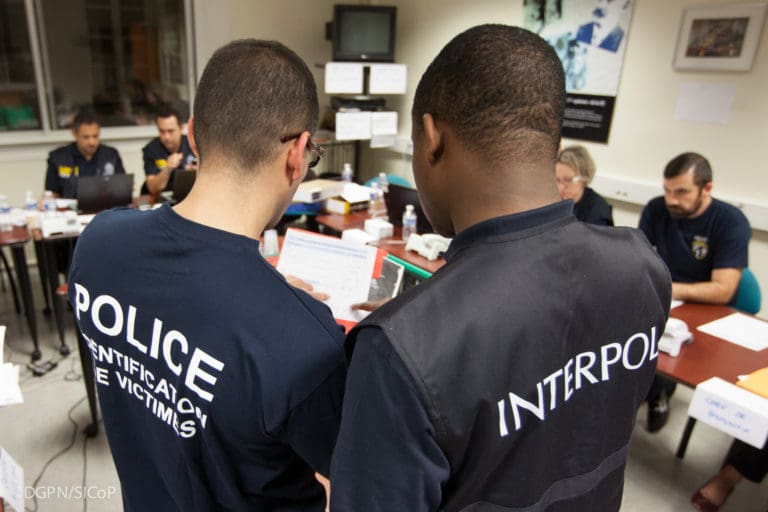
‘We don’t meddle into politics’ — INTERPOL denies placing Melaye on watch list


The International Police Organisation, commonly referred to as INTERPOL, says Dino Melaye, controversial Kogi State senator, is not on its watch list, contrary to the claims by the Nigeria Police Force.

Ali Janga, Kogi State Commissioner of Police, had released a statement last week declaring Melaye wanted following the escape of two criminal suspects (who had confessed that the lawmaker supplied them guns with which they carried out robberies and assassinations) from police custody .

Janga added that both Melaye and Mohammed Audu, son of late politician Abubakar Audu, had been placed on INTERPOL’s watch list.

But  responding to an inquiry by Premium Times, INTERPOL said even if the police in Nigeria had filed a formal complaint against Melaye, the request may not have been approved.

“It is strictly forbidden for the organisation to undertake any intervention or activities of a political, military, religious or racial character,” the agency said.

“INTERPOL evaluates legal and quality compliance issues in individual cases if it becomes aware of information that may prompt reevaluation of a case.

“If no Red Notice is published on INTERPOL’s public website, this is either because one has not been requested or issued for that person, or the requesting country has asked that it not be made public, or the Red Notice did not meet the criteria for publication on INTERPOL’s public website.”

In October 2017, Garba Shehu, Special Assistant to President Muhammadu Buhari on Media and Publicity, had told journalists that Abdulrasheed Maina had been placed on INTERPOL’s watch list. But the agency denied the claim.

Maina is the former Chairman of the Pension Reforms Task Team, who has been on the run since he was declared wanted for embezzling billions of recovered pension funds.

But unlike Maina, Melaye is not on the run. In fact, he has continued to carry out his business as usual, attending Senate plenaries and other social functions despite having been declared wanted by the police.

Gideon Ayodele, Melaye’s spokesman said on Tuesday that the police orderly attached to his principal was still with him.

“You’re talking about the INTERPOL which is a reputable international organisation, there’s no way they could have acted like our police,” Ayodele said.

“Don’t forget that the police don’t even have a valid arrest warrant issued by any court of law in Nigeria to be looking for my boss.

“Did they think INTERPOL will just declare a serving senator wanted without doing the due diligence and professionalism? All the allegations against my boss are political and we shall overcome this situation.”

Meanwhile, the Kogi State police command says all the suspects who escaped from detention last week, including the two who indicted Melaye, have bee rearrested.

The suspects were said to have been arrested at different locations last week, with the last, Seidu, arrested on Sunday night in Bauchi State.

ALERT: Stolen iPhones in the UK are ending up in Nigeria as ‘UK-used’


Ever heard of the term ‘London-used’ phones in Nigeria? Well, reports say they are phones snatched by acid-wielding hoodlums from unsuspecting pedestrians in the UK, and shipped down to Nigeria.

“UK-used” iPhones [are] being sold for £560 in stores and markets in Nigeria’s largest city Lagos,” according to an investigation by The Sun.

“Business is booming for the Nigerian racketeers because of soaring demand from the oil-rich middle classes in a country where hi-tech gadgets are relatively scarce.

“And because Nigeria has not signed up to a global deal blacklisting stolen phones, British moped gangs are able to keep the crime bosses supplied by exporting tens of thousands of snatched mobiles.”

In 2016, there were 60,000 cases of mobile thefts and robberies in London alone. In the whole of UK, reported cases were as high as 446,000, almost two-thirds of the cases involved iPhones.

Similarly, the London Metropolitan Police recorded 16,158 phone crimes-related incidents, “more than three times those reported in the year to June 2016”, according to the report.

HOW THE GANGS OPERATE

The moped thugs travel in packs of two, usually on motor bikes. The rider rides close to the pedestrian, close enough to enable the passenger grab the victim’s phone as they ride past.

They are usually armed with corrosive chemicals and knives as a backup plan should the victim prove stubborn.

“Three weeks ago raider Derryck John was jailed for 10.5 years for hurling acid in the face of six people in London, the Sun reports.

“He is one of an increasingly violent breed of young criminals hunting in packs armed with corrosive chemicals and knives.

“They travel two to a moped so the passenger can grab valuables as they pass a victim. The phones they grab are first plundered of data which is used to try to hack bank accounts.”

According to the report, many of the stolen iPhones stolen from the UK end up in the popular computer village in Lagos, Nigeria.

“We found iPhones at sale for £560 — £310 cheaper than the authorised Apple dealer’s price. Another store in Computer Village offered an iPhone 6 for £230,” investigators said.

“Nigeria’s lack of phone network regulation makes it an easy target for crooks.

“Countries across Europe, the US and South America have signed a deal to effectively blacklist stolen devices. It gives each phone a unique number which is added to a global database when it is reported stolen — making it useless in those nations who are part of the agreement.

“But Nigeria is yet to sign up. And a mobile industry source said: “By staying off the blacklist they are creating the market for stolen mobile phones. If all nations stood together, a mobile would be useless once reported stolen. But countries like Nigeria are effectively inviting illicit imports.”

A Nigerian police spokesman told The Sun that he was unaware that phones stolen from UK were being sold in Nigerian markets, adding that “If there is a complaint about a stolen phone in Lagos we shall investigate it”.

FILE: Mantu, Akpabio, Tope Aluko…politicians who’ve confessed to rigging on TV


Senator Ibrahim Mantu, former Deputy Senate President, is no ordinary politician. He is “born-again”. He laid claim to this in September and said he now speaks only the truth. He also urged leaders of his party to elect Tunde Adeniran as the National Chairman because he “fasted for 30 days and night” asking God to show him who would lead the party, and God showed him Adeniran!

He has also been an advent critic of impunity in the People’s Democratic Party (PDP), citing it as the cause of the party’s downfall in 2015. “When PDP is mentioned today, what comes to mind is how the party introduced impunity, fraud and corruption into governance,” he said in  an interview with Vanguard in 2016.

In another interview with The Sun, he again emphasised that the party lost the 2015 presidential election because it allowed impunity to grow within its ranks. It is thus baffling that Mantu is also lending a hand to the reign of impunity by not handing himself over to the police following a claim that he helped rig elections.

On Friday, while being interviewed on Channels TV’s Hard Copy, Mantu explicitly confessed to rigging elections. Maupe Ogun, the presenter, was unsure she heard him correctly, so she sought clarification, to which he replied: “Let me tell you one thing, yes I did. I am now confessing the truth.

“What do I mean? I don’t have to go and change election… but you know, when you provide money; you give money to INEC boys to help you, if they see any chance, that they should favour you. You [also] provide money to the security. All our elections in the past. And I tell you, it’s not necessarily when I’m contesting election but when my party sponsors a candidate.”

As Femi Falana, lawyer and activist, has noted, it is unlikely the government will take any legal actions in reaction to this confession. He said he is convinced the Buhari will not follow-up this revelation “because we operate in an atmosphere of impunity. The country is run on the basis of official impunity.”

Falana’s greatest source of conviction must be the nonchalant reaction of government and law enforcement agencies to similar revelations in the past.

Here are two of these cases:

TOPE ALUKO ON 2014 EKITI ELECTIONS

Still fresh in the minds of many is the detailed revelation from Temitope Aluko, former Secretary of Ekiti PDP. The platform was also Channels, but ‘Politics Today’ this time. Aluko didn’t mince words in discussing how the 2014 election was rigged in favour of Ayodele Fayose, the PDP governorship candidate, the breaking point of their relationship being Fayose’s failure to appoint him as his Chief of Staff “as agreed”.

“So, you are saying that the election was rigged?” asked Seun Okinbaloye, the presenter.

“Yes,” came the response.

“The election in Ekiti?”

“Yes.”

“The 2014 governorship election?”

“Yes, it was rigged systemically.”

In all, his allegations implicated former President Goodluck Jonathan; Adamu Mu’azu, former Chairman of the PDP National Working Committee; Musiliu Obanikoro, former Minister for State for Defence; Jelili Adesiyan, Minister of Police Affairs; and Iyiola Omisore, former Deputy Governor of Osun State; among others. He took time to reveal the actors, their conspiracies, and how the military was used to engineer the results.

Both Adesiyan and Omisore admitted the authenticity of a released tape containing record of a meeting with a Nigerian Army General, on the subject of electoral malpractice.

Two years after, however, none of the persons mentioned has been questioned on these allegations ― except that a court warrant was secured by the Ekiti State Government to arrest Aluko for perjury. As a matter of fact, Aluko later released a press statement apologising to Fayose for all he had done.

“By the grace of God, we have resolved all issues and I have apologized to him for whatever wrong steps that I took in the past,” he said. “The Governor took me back without consideration for the past and for this, I have vowed to remain committed and loyal to him and all that he represents.”

AKPABIO ON 2007 PDP SENATORIAL PRIMARIES

Three years earlier, Godswill Akpabio, then Governor of Akwa Ibom state, made a similar revelation on live television during the Federal Government’s ‘Good Governance Tour’ in Uyo. In trying to convince the audience of his generosity, Akpabio admitted to falsifying a senatorial election result and personally replacing the winner with his preferred candidate, Aloysius Etok.

“The people of Ikono and Ini (Local Government Areas) from 1960 have never produced a Senator,” he stated.

“I used my own hand to strike out the name of the person who had won before, and I said it was important for me to give that region a Senator in 2007, and I produced Senator Aloysius Etok for you; that’s where he comes from.”

Labaran Maku, former Information Minister, who was also at the event, later dismissed the weight of the Governor’s statement, telling Channels’ Sunrise Daily: “The Governor of Akwa Ibom is a very bold man. He goes out for what he believes in.”

Akpabio is today the Senate Minority Leader and, as predecessor and “godfather” of the current Governor, he still calls the shots in Akwa Ibom politics.

Reno Omokri, Jonathan’s media aide, releases ‘APC looters list’

Reno Omokri, former aide to ex-President Goodluck Jonathan, has released a list of alleged looters of public funds who are members of the ruling All Progressives Congress (APC).

Omokri’s list containing names such as  Rotimi Amaechi, Minister of Transportation; Timipre Sylva, former Bayelsa State Governor; Kayode Fayemi, Minister of Solid Minerals Development; Babachir Lawal, former Secretary to the Government of the Federation — was a counter to two separate lists earlier made by Lai Mohammed, Minister of Information, which contained mainly the names of Peoples Democratic Party (PDP) members.

He criticised Mohammed’s list for not containing the name of even one member of the APC.

“If the list proves anything, it is that President Buhari, Lai Mohammed and their All Progressive Congress are not fighting corruption. Instead they are fighting opposition,” Omokri said.

“I have taken the pains to produce a ‘teaser’ looters list of APC members who are collectively alleged to have looted over $2 billion (when you convert the dollar value of what they allegedly looted at the time they allegedly looted it).

“I challenge President Buhari and Lai Mohammed to explain why these men did not feature on their list and why they continue to remain in this APC government where they wield immense powers and influence, even over the Economic and Financial Crimes Commission that is meant to prosecute them.”

Omokri claimed that that Sambo Dasuki, former National Security Adviser, is not in jail for a crime he committed in 2015 but he is rather being persecuted for a ‘crime’ he committed in 1985.

“I further challenge President Buhari and Lai Mohammed to explain to Nigerians why they failed to reveal to Nigerians that President Buhari himself is a MAJOR beneficiary of the funds that the former National Security Adviser, Colonel Sambo Dasuki, received from the treasury for the security of Nigerians.”

Omokri added that his list of looters was just a teaser and he could release more names depending on the reaction of the Buhari-led government.

RENO OMOKRI’S ‘LOOTERS’ LIST

Rotimi Amaechi: Indicted by the Justice George Omeregi led Rivers State Judicial Commission of Inquiry of looting ₦97 billion along with co indictees including a former army general.

Saminu Turaki: Alleged to have looted ₦36 billion. First charged before Justice Sabi’u Yahuza of the Federal High Court in Dutse, Jigawa State. Currently facing trial before justice Nnamdi Dimgba at the FCT High Court.

Timipre Sylva: A well known financier and supporter of the APC administration of President Muhammadu Buhari. Alleged to have looted ₦19.7 billion. Was facing trial before Justice A. Y. Mohammed of the Federal High Court, Abuja. However, two days after President Buhari was sworn in, the new APC government WITHDREW the charges preferred against Sylva on June 1, 2015 and on October 3, 2018, the EFCC returned to Sylva, 48 houses seized from him during the administration of former president, Goodluck Jonathan in 2013 to him.

Murtala Nyako: Alleged to have looted ₦29 billion. Currently facing trial before Justice Okon Abang of the Federal High Court sitting in Maitama, Abuja

Senator Danjuma Goje: Alleged to have looted ₦25 billion. Currently facing trial before the Federal High Court, sitting in Jos, Plateau State.

Senator Abdullahi Adamu: Alleged to have looted ₦15 billion with the help of 18 co accused. Charged on March 3, 2010. The case continues to linger in court.

Orji Kalu: Alleged to have looted ₦3.2 billion. Currently facing trial before Justice Mohammed Idris of the Federal High Court sitting in Lagos.

Kayode Fayemi: Indicted by the Ekiti Judicial Commission of Inquiry headed by former Ekiti State chief judge and the Oluyin of Iyin-Ekiti, Ademola Ajakaiye, of sundry financial malfeasance totaling over ₦2 billion.

Senator Joshua Dariye: Alleged to have looted ₦1.2 billion. Currently facing trial before Justice Adebukola Banjoko at an FCT High Court.

Babachir Lawal: former Secretary to the Government of the Federation. Allegedly gave a ₦200 million contract to his own company from monies meant to look after Internally Displaced Persons. Has been sacked after protest by the opposition and civil society. Has still not been charged. Was allowed to be replaced by his own cousin.

VIDEO: Pro-El-Zakzaky protesters hurl expletives at Buhari, Saraki


Members of the Islamic Movement in Nigeria (IMN), also known as the Shi’ia Islamic sect, have described President Muhammadu Buhari and Senate President Bukola Saraki as criminals for the continued detention of Ibrahim El-Zakzaky, leader of the sect, since December 2015.

In a video that has gone viral on the social media, a large crowd of protesters carrying El-Zakzaky’s picture was seen sitting at the gate of the National Assembly complex, chanting songs.

“President Buhari is a criminal. Lawal Daura (Director General of DSS) is a criminal. (Bukola) Saraki is a criminal. Yakubu Dogara is a criminal. Abubakar Malami is a criminal,” the protesters chanted.

They would later change their chants to “illegal detention is injustice”.

It is not immediately clear when the video was shot, but members of the IMN have held several protests in Abuja, asking the Federal Government to obey the court ruling ordering the immediate release of El-Zakzaky.

Many of the protests have been met with harsh treatment from the police and other security agencies who usually dispersed the crowds using tear gas and water canons, ad sometimes, live bullets.

Watch the video below.

The Federal Government says El-Zakzay is not in detention, rather he is being kept in voluntary custody for his own protection.

“Government has a responsibility to ensure his safety. He is not in a prison type of detention. He is in the company of his wife and children voluntarily. Government is being compassionate on this matter. There is an overall public good that government is looking at in this matter,” Garba Shehu, a presidential spokesman told journalists in May 2017.

El-Zakzaky’s arrest and subsequent detention followed a deadly clash between members of the IMN and soldiers, in December 2015. More than 300 of the Shi’ia Muslims, as well as one soldier, were killed in the clash, according to a panel of inquiry set up by the Kaduna State government to investigate the crisis.

Consequently, the state government declared the IMN an unlawful organisation, adding that anyone who takes part in their activities commits an offence.

Ogunlesi, Shittu, Shehu… Buhari’s key men who assaulted Nigerians during Easter


Only days ago, Tolu Ogunlesi, Special Assistant to the President on Digital and New Media, was in the hot seat after he referred to Nigerians who “slandered” British model Naomi Campbell as “animals”.

“Naomi Campbell met Nelson Mandela more than once. He hugged her, called her his ‘honorary granddaughter’. She visits Nigeria for a fashion festival and meets President @MBuhari, and some of you animals are slandering her. YOU’RE RAVING MAD WITH NOBODY TO TELL YOU,” Ogunlesi had tweeted on Friday.

The following day, he proceeded to “clarify” the statement by saying it was not directed to all Nigerians or those who disagree with him. “My comment [sic] were specific to those who thought it appropriate to denigrate/’slander’ Naomi Campbell,” he said.

He added that he has learnt his lesson and the tweet should have been “worded clearer & less provocatively”. Nigerians were dissatisfied still, with many commentators on the thread replying that the so-called apology reeked of arrogance. In the end, it seems Ogunlesi was only preparing Nigerians for a weekend filled with further assaults.

SHITTU: BENUE KILLINGS SHOULD NOT STOP POLITICAL CAMPAIGNS

In an interview with Punch published on Saturday, Adebayo Shittu, Minister of Communications, was asked why he distributed “caps and other campaign materials among the ministers” at a time Nigerians were mourning killings in Benue.

This is what the Honourable Minister had to say: “What could have happened? Could anybody have given me notice that there were killings somewhere? And did that stop the fact that people who wanted to eat would have eaten or people who wanted to hold meeting would have been holding their meeting? People who wanted to do so many other things would have been doing them. So, I don’t see the connection.”

“The connection is that we were in mourning mood,” the interviewer, Everest Amaefule, replied. But Shittu had his mind made up.

“Who was in mourning mood?” he asked.

“Nigerians,” he was told.

“I don’t know what you mean by mourning mood. Killings have always been happening in so many areas. And to the best of my knowledge, the security people who should take action had been mobilised. So, I don’t see the way the issue of holding our meetings and engaging in what you call distribution of caps make the mourners not to mourn again (or that reduces whatever was happening),” he said.

“Engagements happen every now and then. As far as I am concerned, there was nothing to discourage me from what I did or prevent me from what I did at that time.”

Realising the Minister’s level of conviction, the interviewer asked if his statements meant he would do the same thing again given similar circumstances. The short answer was yes.

The long answer: “Do what again? Are you saying that people should continue killing themselves? You see, the issue of my support for Mr. President is a national duty. It is a patriotic duty because for once, we have a leader that we can trust will not steal our money; we have a leader who can be trusted to be focused … So, as far I am concerned, what I did was patriotic duty as and I will continue to do it.”

The Minister’s remarks are notably in conflict with those of Vice President Yemi Osinbajo who, last month, had insisted against a “grand wedding” for his daughter “especially given the current mood of the nation”.

GARBA SHEHU: FIND A JOB IF YOU ARE HUNGRY

Also, on April Fools’ Day, a day after the Punch interview with Shittu was published, Garba Shehu was reported to have told “everyone complaining of hunger” to “go and work”. And he wasn’t fooling around.

The Senior Special Assistant on Media and Publicity to the President made this statement during an interview with Ben TV, while praising the administration’s social investment schemes.

“There is a lot going for people who really want to go out there to work especially in agriculture,” he said.

It is however doubtful that Nigeria’s 16 million unemployed persons have no jobs simply because they are not willing to “go and work”. It is perhaps closer to the truth as Oloruntoba Oke, Chairman of Ifako Ijaiye Local Government Area of Lagos, put it: “There are no jobs anywhere.”

AT A GLANCE: All the people who ‘looted’ Nigeria — according to Lai


At a press conference in Lagos on Friday, Lai Mohammed, Minister of Information, released a list of individuals who have allegedly looted from the country’s treasury. The list contained six names, including Uche Secondus, the Chairman of the People’s Democratic Party (PDP).

On Sunday, just two days after, he said that list was just a “tip of the iceberg” and proceeded to release an even longer one containing a total of 23 names.

Though some of the facts and figures in the initial list are questionable and have been challenged, here is the full list of all 29 alleged looters mentioned so far by the ruling party.

S/N NAME OF ‘LOOTER’ ALLEGATIONS
1. Ahmad Idris, former NSA Dasuki’s PA N1.5 billion
2. Air Marshal Adesola Amosun N21.4 billion. N2.8 billion recovered in cash. 28 properties and 3 vehicles also recovered.
3. Alex Badeh, former Chief of Defence Staff N8 billion, and EFCC recovered almost N4 billion in cash and property already.
4. Alison-Madueke, former Petroleum Resources Minister Diezani In just one of the cases the EFCC is investigating involving her, about N23 billion is alleged to have been embezzled. She is also involved in the Strategic Alliance Contracts of the NNPC, where the firms of Jide Omokore and Kola Aluko got oil blocks but never paid government taxes and royalty. About $3 billion was involved. The Federal Government is charging Omokore and Aluko and will use all legal instruments local and international to ensure justice.
5. Aliyu Usman Jawaz, close ally of former NSA Dasuki N882 million
6. Aliyu Usman, former NSA Dasuki’s aide N512 million
7. Babangida Aliyu, former Niger State Governor N1.6 billion – from NSA.
8. Bashir Yuguda, former Minister of State for Finance N1.5 billion. $829,800 recovered.
9. Benedicta Iroha N1.7 billion
10. Dr. Raymond Dokpesi, Chairman of DAAR Communications On trial for allegedly taking N2.1 billion from the office of the former NSA.
11. Dudafa Waripamo-Owei, former SSA to President Goodluck Jonathan On trial, over N830 million allegedly kept in accounts of four different companies.
12. Femi Fani-Kayode N866 million
13. Former PDP Financial Secretary On the 24th of Oct 2014, he took N600 million only from the office of former NSA.
14. Godknows Igali Over N7 billion
15. Hassan Tukur, former PPS to President Goodluck $1.7 million
16. Inde Dikko, former CG Customs N40 billion, and N1.1 billion in cash recovered in cash and choice properties.
17. Lt.-Gen. Azubuike Ihejirika N4.5 billion. N29m recovered by the EFCC so far.
18. Nenadi Usman N1.5 billion
19. Olisah Metuh, former National Publicity Secretary On trial for allegedly collecting N1.4bn from the office of former NSA.
20. Rasheed Ladoja, former Oyo Governor N500 million
21. Robert Azibaola, former President Goodluck Jonathan’s Cousin A Federal High Court ruled that he has a case to answer for allegedly collecting $40 million from the office of former NSA.
22. Rtd. Lt.-Gen. Kenneth Minimah N13.9 billion. N4.8 billion recovered by EFCC in cash and property
23. Sambo Dasuki, former NSA Based on EFCC investigations and findings alone (this is beside the ongoing $2.1 billion military equipment
scandal), a total of N126 billion, over $1.5 billion and 5.5 million British Pounds was embezzled through his office. A good number of these monies were simply shared to persons and companies without any formal contract awards.
24. Senator Bala Abdulkadir, former FCT Minister N5 billion. Interim forfeiture order on some property secured.
25. Senator Jonah Jang, former Plateau State Governor N12.5 billion.
26. Senator Peter Nwaboshi N1.5 billion
27. Senator Stella Oduah N9.8 billion. Interim forfeiture order on some property secured.
28. Tom Ikimi N300 million
29. Uche Secondus, PDP Chairman On the 19th of Feb 2015, he took N200 million only from the office of the NSA.


Lai names 23 PDP-era public officials who ‘looted’ the treasury


Lai Mohammed, Minister of Information, has released more names of alleged looters of the treasury during the administration of former President Goodluck Jonathan.

Top of the 23-man list are Dasuki Sambo, detained former National Security Adviser; and Dizeani Alison-Madueke, former Minister of Petroleum Resources.

Releasing the list in Lagos on Sunday, Mohammed criticised the Peoples Democratic Party (PDP) for its reaction to the first names of alleged looters he mentioned.

He said those complaining that the list was too short apparently did not understand that it was strategically released as a teaser.

”At the press conference where the list was released, I did say it was a tip of the iceberg,” he said.

“Apparently, this does not mean anything to people whose style is to comment on issues they barely understand, or just to shoot down anything coming from the government.”

He added that the Federal Government has a large number of “looters” on its list.

”What was the PDP expecting when it challenged the FG to name the looters of the public treasury under the party’s watch? Did the PDP actually believe that the massive looting under its watch was a joke? Did they think it is April Fool?” he queried.

The minister said the PDP’s reaction to the looters’ list had shown that its recent apology was an election-induced act, contrived to deceive unsuspecting Nigerians to vote for the party in the 2019 general election, even when it has not come clean on its looting spree during its time in office.

”The hysterical and panicky reaction from the PDP has shown that the party is not at all sincere about its choreographed apology,” he said.

“Were it not the case, the party would have followed in the footsteps of one of its leaders, Senator Ibrahim Mantu, who simply owned up to his role in the party’s rigging in the past elections and said he had turned a new leaf.

”It is said that a true confession is done in humility with an attitude of repentance. It is clear that the PDP does not know this, hence its resort to hubris instead of humility and genuine penitence.”

Mohammed said the Federal Government would neither be intimidated nor blackmailed into silence, adding that it would also not rest until all those who looted the public treasury have been brought to justice.

THE LIST

1. Former NSA Sambo Dasuki: Based on EFCC investigations and findings alone (this is besides the ongoing $2.1 billion military equipment scandal), a total of N126 billion, over $1.5 billion and 5.5 million British Pounds was embezzled through his office. A good number of these monies were simply shared to persons and companies without any formal contract awards.

2. Former Petroleum Resources Minister Diezani Alison-Madueke: In just one of the cases the EFCC is investigating involving her, about N23 billion is alleged to have been embezzled. She is also involved in the Strategic Alliance Contracts of the NNPC, where the firms of Jide Omokore and Kola Aluko got oil blocks but never paid government taxes and royalty. About $3 billion was involved. The Federal Government is charging Omokore and Aluko and will use all legal instruments local and international to ensure justice.

3. Rtd. Lt.-Gen. Kenneth Minimah: N13.9 billion. N4.8 billion recovered by EFCC in cash and property

4. Lt.-Gen. Azubuike Ihejirika: N4.5 billion. N29m recovered by the EFCC so far.

5. Alex Badeh, former Chief of Defence Staff: N8 billion, and EFCC recovered almost N4 billion in cash and property already.

6. Inde Dikko, former CG Customs: N40 billion, and N1.1 billion in cash recovered in cash and choice properties.

7. Air Marshal Adesola Amosun: N21.4 billion. N2.8 billion recovered in cash. 28 properties and 3 vehicles also recovered.

8. Senator Bala Abdulkadir, former FCT Minister: N5 billion. Interim forfeiture order on some property secured.

9. Senator Stella Oduah: N9.8 billion. Interim forfeiture order on some property secured.

10. Former Niger State Governor Babangida Aliyu: N1.6 billion – from NSA.

11. Senator Jonah Jang, former Plateau State Governor: N12.5 billion.

12. Bashir Yuguda, former Minister of State for Finance: N1.5 billion. $829,800 recovered.

13. Senator Peter Nwaboshi: N1.5 billion

14. Aliyu Usman, Former NSA Dasuki’s aide: N512 million

15. Ahmad Idris: Former NSA Dasuki’s PA: N1.5 billion

16. Rasheed Ladoja: Former Oyo Governor: N500 million

17. Tom Ikimi: N300 million

18. Femi Fani-Kayode: N866 million

19. Hassan Tukur, former PPS to President Goodluck: $1.7 million

20. Nenadi Usman: N1.5 billion

21. Benedicta Iroha: N1.7 billion

22. Aliyu Usman Jawaz: Close ally of former NSA Dasuki: N882 million

23. Jonah Jang, former Plateau State Governor: N12.5 billion

24 Godknows Igali: Over N7 billion